Get 20% OFF All Premium 3D & STL Models!

Unreal Engine’s Material Editor is an incredibly powerful and intuitive visual scripting environment that allows artists and developers to create breathtaking materials with ease. However, for those pushing the absolute boundaries of real-time rendering, especially in demanding fields like automotive visualization and high-fidelity game development, there comes a point where the visual nodes alone may not suffice. This is where the true power of custom High-Level Shading Language (HLSL) development within Unreal Engine unveils itself.
HLSL is Microsoft’s proprietary shading language, used to program the GPU. By diving into custom HLSL, you gain unparalleled control over how your 3D models interact with light, shadow, and other visual phenomena. Imagine crafting a car paint material with multi-layered metallic flakes that shimmer uniquely, or a glass shader with accurate light dispersion and absorption – effects that are incredibly complex, if not impossible, to achieve purely with standard Material Editor nodes. This deep dive into HLSL empowers you to unlock cutting-edge visual fidelity, optimize performance for specific scenarios, and implement unique rendering techniques that set your projects apart.
This comprehensive guide will demystify the process of developing custom HLSL shaders within Unreal Engine. We’ll explore the foundational concepts, walk through the setup of your development environment, demonstrate how to write and integrate custom shader modules, delve into advanced techniques specifically tailored for automotive visualization, and cover crucial optimization and debugging strategies. By the end, you’ll have a solid understanding of how to leverage HLSL to elevate your Unreal Engine projects, bringing your automotive models to life with unprecedented realism and performance.
At its core, Unreal Engine’s Material Editor visually represents a complex network of computations that ultimately compile down into HLSL code. Every node you connect, from a simple constant to a sophisticated Physically Based Material (PBR) setup, contributes to the final shader program executed on the GPU. While the Material Editor offers incredible flexibility and hides much of the underlying complexity, direct HLSL access becomes essential when you need to implement algorithms that are either not exposed through existing nodes, or require highly optimized, custom-tailored solutions.
Think of the Material Editor as a high-level abstraction layer. It’s fantastic for rapid prototyping and standard PBR workflows, but it can sometimes generate less-than-optimal HLSL or restrict your ability to implement novel rendering techniques. Custom HLSL allows you to bypass these limitations, writing precise instructions for the GPU, giving you absolute control over vertex transformations, pixel color calculations, and even compute shader operations for more general purpose GPU tasks. This level of control is paramount for achieving hyper-realistic results, especially when dealing with the intricate reflective properties of automotive surfaces or simulating complex physical interactions.
Unreal Engine offers two primary avenues for integrating custom HLSL code into your materials without leaving the Material Editor entirely: the “Custom” node and Material Functions. The “Custom” node is a single node within the Material Editor where you can paste small snippets of HLSL code. It provides inputs and outputs, allowing you to feed data into your custom code and receive results that can then be processed further by other material nodes. This is excellent for small, isolated calculations, like a custom noise function, a unique blending mode, or a specialized Fresnel term.
Material Functions, on the other hand, allow you to encapsulate a reusable network of nodes, including “Custom” nodes. While primarily a Material Editor feature, they can include custom HLSL snippets within their graphs. Material Functions promote modularity and reusability, allowing you to create complex effects once and then reuse them across multiple materials. For example, a custom car paint flake generator built with HLSL in a “Custom” node could be wrapped in a Material Function, enabling easy application to various car models, perhaps sourced from 88cars3d.com, with different parameters.
Despite the utility of the “Custom” node, there are scenarios where full-blown shader modules written in HLSL are indispensable. This typically involves features like: custom lighting models that deviate from Unreal’s standard deferred renderer, highly optimized vertex shaders for unique mesh manipulation, compute shaders for tasks like procedural generation or advanced physics simulations, or when you need to implement a shading model that interacts deeply with Unreal Engine’s rendering pipeline features (e.g., custom G-Buffer outputs, modifying how Lumen or Nanite interact with your specific material). For example, a truly unique car paint shader might require modifying the G-buffer output directly to achieve specific effects not achievable through standard PBR parameters, or a custom refraction model for automotive glass could benefit from direct access to scene color buffers and depth information, which is more robustly handled in full shader modules.
Developing custom HLSL shaders in Unreal Engine requires a slightly different workflow than typical Blueprint or C++ development. Instead of relying solely on the Material Editor, you’ll be creating new shader files (`.usf` and `.ush`), organizing them within a plugin or your game module, and configuring Unreal Engine to compile and recognize them. This process involves C++ module setup, file path conventions, and understanding Unreal’s shader compilation pipeline.
The most robust way to manage custom shaders is within an Unreal Engine plugin. This keeps your custom code modular, portable, and easily shareable between projects. A typical plugin structure would include a `Shaders` directory where your HLSL files reside, and a C++ module that tells Unreal Engine where to find these shaders and how to expose them. For detailed information on plugin creation, refer to the official Unreal Engine documentation on plugins at dev.epicgames.com/community/unreal-engine/learning.
First, create a new plugin in your Unreal Engine project (e.g., File -> New C++ Class -> All Classes -> Plugin; or Edit -> Plugins -> New Plugin). Let’s call it “MyCustomShaders”. Inside your plugin’s main module folder (e.g., `MyCustomShaders/Source/MyCustomShaders/`), you’ll need to modify the `MyCustomShaders.Build.cs` file. This C# build script tells Unreal’s build system about your module’s dependencies and where to find your shader files. You need to add `ShaderCore` to your `PublicDependencyModuleNames` and specify your shader directory:
PublicDependencyModuleNames.AddRange(
    new string[]
    {
        "Core",
        "CoreUObject",
        "Engine",
        "ShaderCore" // Required for custom shaders
        // ... add other public dependencies that you statically link with here ...
    }
);

// Add your shader directory
PrivateShaderSourceDirectory = "Runtime/MyCustomShaders/Shaders"; // Path relative to plugin root
Next, create the `Shaders` directory within your plugin’s runtime folder: `MyCustomShaders/Shaders/`. This is where your `.usf` (Unreal Shader File) and `.ush` (Unreal Shader Header) files will live. `.usf` files are the entry points for your shaders, while `.ush` files contain reusable functions, structs, and constants, similar to C++ header files.
Once you’ve set up your `Build.cs` and created the `Shaders` directory, you can start adding your HLSL code. Unreal Engine will automatically detect and compile these `.usf` files when you build your project or when you open a material that references them. It’s important to restart the Unreal Editor after making changes to your `Build.cs` file or adding new `.usf` files to ensure they are properly picked up by the engine’s shader compiler. The engine compiles shaders into a platform-agnostic intermediate format, which is then translated into platform-specific code (e.g., DXBC for DirectX, SPIR-V for Vulkan). This compilation process is highly optimized and often occurs in the background, but understanding its structure is key to effective debugging.
Let’s walk through creating a simple custom shader module that applies a solid color to our geometry, demonstrating the fundamental structure of an Unreal Engine shader file. This will involve defining inputs, outputs, and the main shader functions for both vertex and pixel stages. Our goal here is to understand the basic syntax and how Unreal Engine expects our HLSL code to be structured.
Inside your `MyCustomShaders/Shaders/` directory, create a new file named `MySimpleColorShader.usf`. This file will contain both our vertex and pixel shader logic. For clarity, we’ll keep it simple, but in real-world scenarios, you’d often separate complex logic into included `.ush` files.
Unreal Engine shaders typically use predefined structs for inputs and outputs between shader stages (e.g., vertex shader output becomes pixel shader input). These structs define the data passed along, such as position, UVs, normals, and colors. We’ll define a simple vertex shader output struct:
// MySimpleColorShader.usf

// Struct for vertex shader output, which becomes pixel shader input
struct FVertexFactoryInput
{
    // POSITION is a semantic for the vertex position
    // SV_POSITION is the system-value semantic for the clip-space position
    // TEXCOORD0 is a generic texture coordinate semantic
    float4 Position : SV_POSITION;
    float2 UV0      : TEXCOORD0;
};

// Global parameters can be passed from the Material Editor or C++
float4 MyShaderColor; // Our custom color parameter
Here, `MyShaderColor` is a uniform parameter that we’ll expose to the Material Editor. `FVertexFactoryInput` is a standard convention, though for more complex shaders, you might define your own vertex factory to control input layout precisely.
The vertex shader is responsible for processing each vertex of your 3D model. Its primary role is to transform the vertex’s position from model space to clip space, which is what the GPU ultimately uses for rendering. It can also pass other per-vertex data (like UVs, normals, tangents) to the pixel shader after interpolation across the triangle. For our simple shader, we’ll just pass through the UVs and transform the position:
// Entry point for the vertex shader
void MainVS(
    in  float4 Position    : ATTRIBUTE0, // Vertex position from mesh
    in  float2 TexCoord0   : ATTRIBUTE1, // Primary UV from mesh
    out FVertexFactoryInput Output
)
{
    // Apply standard engine vertex transformation (WorldViewProjection matrix)
    Output.Position = mul(Position, GetWorldViewProjectionMatrix());
    Output.UV0 = TexCoord0;
}
ATTRIBUTE0 and ATTRIBUTE1 are typical semantics for vertex buffer attributes. GetWorldViewProjectionMatrix() is an engine-provided global function that gives us the combined world, view, and projection matrices, essential for standard 3D rendering. This function (and many others) are part of Unreal Engine’s extensive shader library, which you can explore in the `Engine/Shaders` directory of your Unreal Engine installation.
The pixel shader (also known as fragment shader) processes each pixel (or fragment) that covers a primitive after the vertex shader and rasterization stage. Its main job is to determine the final color of that pixel. For our simple shader, we’ll just output our `MyShaderColor` parameter:
// Entry point for the pixel shader
void MainPS(
    in FVertexFactoryInput Input, // Interpolated data from the vertex shader
    out float4 OutColor : SV_TARGET0 // Output color to the render target
)
{
    // Output our custom color
    OutColor = MyShaderColor;
}
SV_TARGET0 is the semantic for the first render target output. This is where the final color for the pixel is written. After saving `MySimpleColorShader.usf`, you’ll need to rebuild your plugin (or project) in Visual Studio. Unreal Engine will then detect and compile this new shader. If there are any syntax errors, you’ll see them in the Output Log within the editor or Visual Studio during compilation. Debugging these initial errors is crucial and often involves careful review of HLSL syntax and Unreal Engine’s specific shader macros and functions.
Once you’ve written your custom HLSL shader module, the next critical step is to integrate it seamlessly into Unreal Engine’s Material Editor. This allows artists to utilize your powerful custom code without ever leaving the visual material graph. The primary method for doing this is through a C++ class that creates a new Material Expression, which then references your custom `.usf` file and exposes its parameters. This approach offers robustness, proper parameter exposure, and integrates with Unreal’s material system features like caching and serialization.
To expose our `MySimpleColorShader.usf` to the Material Editor, we need to create a new C++ class that inherits from `UMaterialExpressionCustomOutput` (or `UMaterialExpression` for more general purposes). This class acts as a bridge, telling the Material Editor how to display your node, what inputs it has, and which shader code it should use. In your `MyCustomShaders` plugin, create a new C++ class, let’s call it `UMaterialExpressionMySimpleColor`.
In the header file (`UMaterialExpressionMySimpleColor.h`), you’ll declare properties for any parameters you want to expose (like our `MyShaderColor`). In the source file (`UMaterialExpressionMySimpleColor.cpp`), you’ll override functions to specify the shader file and map your C++ properties to shader parameters. The key function to override is `Get=CodeChunkExpression()`, where you return a string that references your `.usf` file and passes parameters. You also typically override `GetInputType()` and `GetOutputType()` to define what kind of data your expression expects and produces.
// UMaterialExpressionMySimpleColor.h
#pragma once

#include "CoreMinimal.h"
#include "MaterialExpressionIO.h" // For FExpressionInput and FExpressionOutput
#include "Materials/MaterialExpressionCustomOutput.h"
#include "MaterialExpressionMySimpleColor.generated.h"

UCLASS(CollapseCategories, HideCategories = Object)
class MYCUSTOMSHADERS_API UMaterialExpressionMySimpleColor : public UMaterialExpressionCustomOutput
{
    GENERATED_BODY()

public:
    UMaterialExpressionMySimpleColor(const FObjectInitializer& ObjectInitializer);

    UPROPERTY(EditAnywhere, Category="MySimpleColorShader")
    FExpressionInput ColorInput; // Expose an input for our color

    //~ Begin UMaterialExpressionCustomOutput Interface
    virtual FString Get=CodeChunkExpression(FMaterialExpressionContext& Context) const override;
    virtual void Get='edShaderCode(FMaterialExpressionContext& Context, TArray& Out=Code) override;
    virtual FExpressionInput* GetInput(int32 InputIndex) override;
    virtual FString GetInputName(int32 InputIndex) const override;
    virtual uint32 Get='putType(int32 InputIndex) override;
    virtual uint32 Get='putType() override;
    //~ End UMaterialExpressionCustomOutput Interface

    // For Material Editor UI
    virtual FText GetExpressionName() const override { return FText::FromString(TEXT("My Simple Color Shader")); }
};

// UMaterialExpressionMySimpleColor.cpp (simplified for brevity)
#include "MaterialExpressionMySimpleColor.h"
#include "MaterialCompiler.h" // For FMaterialCompiler and FMaterialExpressionContext

#define LOCTEXT_NAMESPACE "MyCustomShaders"

UMaterialExpressionMySimpleColor::UMaterialExpressionMySimpleColor(const FObjectInitializer& ObjectInitializer)
    : Super(ObjectInitializer)
{
    // Define inputs
    ColorInput.bShowInputName = true;
    ColorInput.InputName = TEXT("Input Color");
    Outputs.Empty(); // We are a custom output, so we don't have standard outputs
}

FString UMaterialExpressionMySimpleColor::Get=CodeChunkExpression(FMaterialExpressionContext& Context) const
{
    // This is where we specify our shader file and pass parameters
    // The "MySimpleColorShader" refers to our .usf file
    // "MyShaderColor" is the global parameter defined in our .usf
    return FString::Printf(TEXT("MySimpleColorShader(GetInputColor(%d))"), Context.GenerateTempMaterialExpressionInputName(ColorInput, TEXT("MyShaderColor")));
}

void UMaterialExpressionMySimpleColor::Get='edShaderCode(FMaterialExpressionContext& Context, TArray& Out=Code)
{
    // Include our shader file
    Out=Code.Add(TEXT("#include \"/Plugin/MyCustomShaders/MySimpleColorShader.usf\""));
    // Add the function call to our shader (passing the parameter from the material graph)
    Out=Code.Add(TEXT("MainPS(GetInputColor(%d));"), Context.GenerateTempMaterialExpressionInputName(ColorInput, TEXT("MyShaderColor")));
}

FExpressionInput* UMaterialExpressionMySimpleColor::GetInput(int32 InputIndex)
{
    if (InputIndex == 0) return &ColorInput;
    return nullptr;
}

FString UMaterialExpressionMySimpleColor::GetInputName(int32 InputIndex) const
{
    if (InputIndex == 0) return TEXT("Input Color");
    return TEXT("");
}

uint32 UMaterialExpressionMySimpleColor::Get='putType(int32 InputIndex)
{
    return MCT_Float4; // We expect a float4 color
}

uint32 UMaterialExpressionMySimpleColor::Get='putType()
{
    return MCT_Float4; // We are outputting a float4 color (to the renderer)
}

#undef LOCTEXT_NAMESPACE
This C++ code needs to be compiled. After successful compilation, when you open the Material Editor and right-click, you should find “My Simple Color Shader” under the Custom category. You can drag a Constant4Vector node and connect it to the “Input Color” of your custom expression. This demonstrates how data flows from the visual graph into your HLSL shader.
For more complex shaders, you’ll have many parameters (textures, floats, vectors). Instead of passing them individually, HLSL uses constant buffers (cbuffers) to efficiently group and manage data passed from the CPU to the GPU. In Unreal Engine, you declare your parameters globally in your `.usf` or `.ush` files, and Unreal’s material system automatically handles packing them into cbuffers when you expose them via C++ or even directly via the “Custom” node with appropriate syntax (e.g., `float3 MyParam;`).
When creating a full shader module, you’ll define a C++ struct that mirrors the layout of your HLSL parameters. This struct will then be used to send data from your Material Expression to the shader. Unreal’s shader compilation system is smart enough to match these up. This explicit parameter management ensures robust data transfer and can be further optimized by grouping frequently updated parameters separately from static ones. For high-fidelity models, such as the premium 3D car models available on 88cars3d.com, custom shaders often require a large array of specific parameters to control the nuances of metallic flakes, clear coat imperfections, and intricate lighting interactions, making efficient cbuffer usage vital for performance.
Automotive visualization demands an extraordinary level of realism, particularly for materials like car paint, glass, and intricate interior details. Custom HLSL shaders are essential for capturing these nuances, going beyond what standard PBR workflows can achieve. We’ll explore some key techniques that leverage HLSL to create visually stunning and physically accurate automotive materials.
Modern car paint is a complex material, typically consisting of multiple layers: a base coat (color, metallic flakes), a clear coat (glossy, protective layer), and sometimes a primer layer underneath. Simulating this accurately in real-time requires sophisticated shading. In HLSL, you can implement a multi-layered approach by calculating reflections and diffuse components for each layer independently and then compositing them. A basic structure involves:
// Pseudo-code for car paint layering in HLSL
float3 =CustomCarPaintPS(
    float3 BaseColor,
    float Metallic,
    float Roughness,
    float FlakeIntensity,
    float ClearCoatRoughness,
    float ClearCoatIOR,
    // ... other inputs like Normal, ViewDir, LightDir ...
)
{
    // 1. Calculate base coat contribution
    float3 BaseDiffuse = CalculateDiffuse(BaseColor, Normal, LightDir);
    float3 BaseSpecular = CalculateMicrofacetSpecular(Normal, ViewDir, LightDir, Roughness, Metallic);

    // 2. Add metallic flakes (e.g., perturb normals, use a custom noise/mask)
    // This could involve a custom noise texture lookup or a procedural pattern
    // to simulate small, reflective flakes within the base coat.
    float3 FlakeNormal = PerturbNormalWithFlakes(Normal, ViewDir, FlakeIntensity);
    float3 FlakeSpecular = CalculateMicrofacetSpecular(FlakeNormal, ViewDir, LightDir, Roughness * 0.5, 1.0);
    BaseSpecular = lerp(BaseSpecular, FlakeSpecular, FlakeIntensity); // Blend in flake reflections

    // 3. Calculate clear coat contribution
    float ClearCoatFresnel = SchlickFresnel(ClearCoatIOR, dot(Normal, ViewDir));
    float3 ClearCoatSpecular = CalculateMicrofacetSpecular(Normal, ViewDir, LightDir, ClearCoatRoughness, 1.0);

    // 4. Combine layers
    float3 FinalColor = lerp(BaseDiffuse + BaseSpecular, ClearCoatSpecular, ClearCoatFresnel);

    return FinalColor;
}
Implementing a proper microfacet BRDF (e.g., Cook-Torrance, GGX) directly in HLSL allows for precise control over the roughness and metallic properties of each layer. For more details on BRDFs and PBR shading, Epic Games’ excellent PBR course materials are invaluable resources.
Automotive glass, such as windshields and windows, presents unique challenges due to refraction, absorption, and potential dispersion. While Unreal Engine’s translucency features are good, custom HLSL offers more control:
For performance, techniques like screen-space reflections (SSR) and planar reflections can be integrated for realistic reflections on glass surfaces, and the custom shader can blend between them based on factors like roughness and viewing angle. Nanite, while primarily a geometry system, supports custom depth and custom stencil writes, which can be useful for defining specific regions for your glass shaders to interact with.
Custom shaders are perfect for implementing dynamic effects like dirt, grime, or wear layers that accumulate over time or are painted on interactively. You could have a separate texture mask for dirt, and in your HLSL, blend between your clean car paint and a dirty version based on the mask’s value. This can be driven by a Blueprint, allowing for interactive dirt accumulation in a configurator or game. Similarly, for models like those from 88cars3d.com, you could apply custom rust, scratches, or weather effects dynamically via shader parameters, enhancing realism without modifying the base mesh.
Custom HLSL shaders offer unparalleled flexibility, but with great power comes great responsibility, especially regarding performance. Unoptimized shaders can quickly cripple frame rates, particularly in real-time applications like games or interactive automotive configurators. Understanding optimization techniques and effective debugging workflows is crucial for delivering high-fidelity visuals without sacrificing performance.
Debugging HLSL shaders can be challenging due to their parallel nature and execution on the GPU. Unreal Engine provides several tools to assist:
Effective debugging often involves a combination of these tools. Start broad with viewmodes and GPU profilers, then drill down with specific commands or external debuggers to precisely locate and fix issues in your HLSL code. Regular profiling is essential to ensure that your advanced visual effects remain performant across target hardware.
The mastery of custom HLSL shader development within Unreal Engine extends far beyond mere aesthetic improvements; it unlocks a realm of real-time applications and future-proofs your skills in an ever-evolving industry. From interactive automotive configurators to advanced virtual production scenarios, custom shaders are the backbone of next-generation visuals and experiences.
For automotive brands, custom shaders are a game-changer for interactive configurators. Imagine a customer changing car paint colors and seeing the metallic flakes react realistically to a dynamically changing environment map, or observing how interior leathers subtly reflect ambient light based on a custom subsurface scattering model. These experiences demand precision that standard materials often cannot provide. Custom HLSL allows developers to:
In virtual production, where high-resolution LED walls display real-time environments, custom shaders play a vital role. Specific challenges arise with light interaction between physical foreground elements and the digital background. Custom HLSL can be used to:
For cinematic content created with Unreal Engine’s Sequencer, custom shaders allow directors and cinematographers to achieve highly stylized or photorealistic looks that are impossible with standard materials. Think of a unique visual filter, a dreamlike glow, or a custom distortion effect on a character’s skin – all crafted with HLSL.
Augmented Reality (AR) and Virtual Reality (VR) experiences, particularly for automotive design reviews or virtual showrooms, demand extremely high performance. Custom HLSL shaders are essential for achieving visual quality while maintaining strict frame rate targets (e.g., 90 FPS for VR). This often involves:
As Unreal Engine continues to evolve, with features like Nanite and Lumen pushing the boundaries of real-time rendering, the role of custom HLSL remains critical. Nanite’s virtualized geometry allows for unprecedented polygon counts, but how those polygons are shaded can still be entirely customized with HLSL. Lumen’s global illumination system provides incredible realism, and custom shaders can interact with and contribute to this system in novel ways. The trend towards physically accurate rendering, coupled with the need for unique artistic expressions, ensures that deep knowledge of HLSL will remain a highly valued skill for any Unreal Engine developer aiming for the pinnacle of visual fidelity and performance.
In conclusion, mastering custom HLSL shader development in Unreal Engine is a profound step for any artist or developer seeking to push the limits of real-time graphics. While the Material Editor is a fantastic tool, HLSL provides the granular control necessary for truly bespoke and high-performance visual effects, especially in demanding fields like automotive visualization. We’ve explored the foundational setup, walked through creating a simple shader module, delved into advanced techniques for realistic car paint and glass, and discussed crucial optimization and debugging strategies. Remember to leverage Unreal Engine’s excellent documentation at dev.epicgames.com/community/unreal-engine/learning for further in-depth study and specific API references.
By integrating custom HLSL, you gain the power to craft materials that go beyond standard PBR, delivering unparalleled realism and artistic control. This expertise is invaluable for creating stunning automotive configurators, immersive virtual production scenes, and optimized AR/VR experiences. The journey into shader programming may seem daunting at first, but the rewards—the ability to precisely dictate how light interacts with your 3D worlds—are immeasurable. Start experimenting, break down complex visual effects into manageable HLSL snippets, and soon you’ll be creating visuals that truly captivate and inspire. Your projects, whether built upon assets from 88cars3d.com or custom-made, will achieve a level of realism and performance that sets them apart.

Meta Description:
Texture: Yes
Material: Yes
Download the Porsche Cayenne 3D Model featuring realistic exterior styling and detailed interior design. Includes .blend, .fbx, .obj, .glb, .stl, .ply, .unreal, and .max formats for rendering, simulation, AR VR, and game development.
Price: $19.9
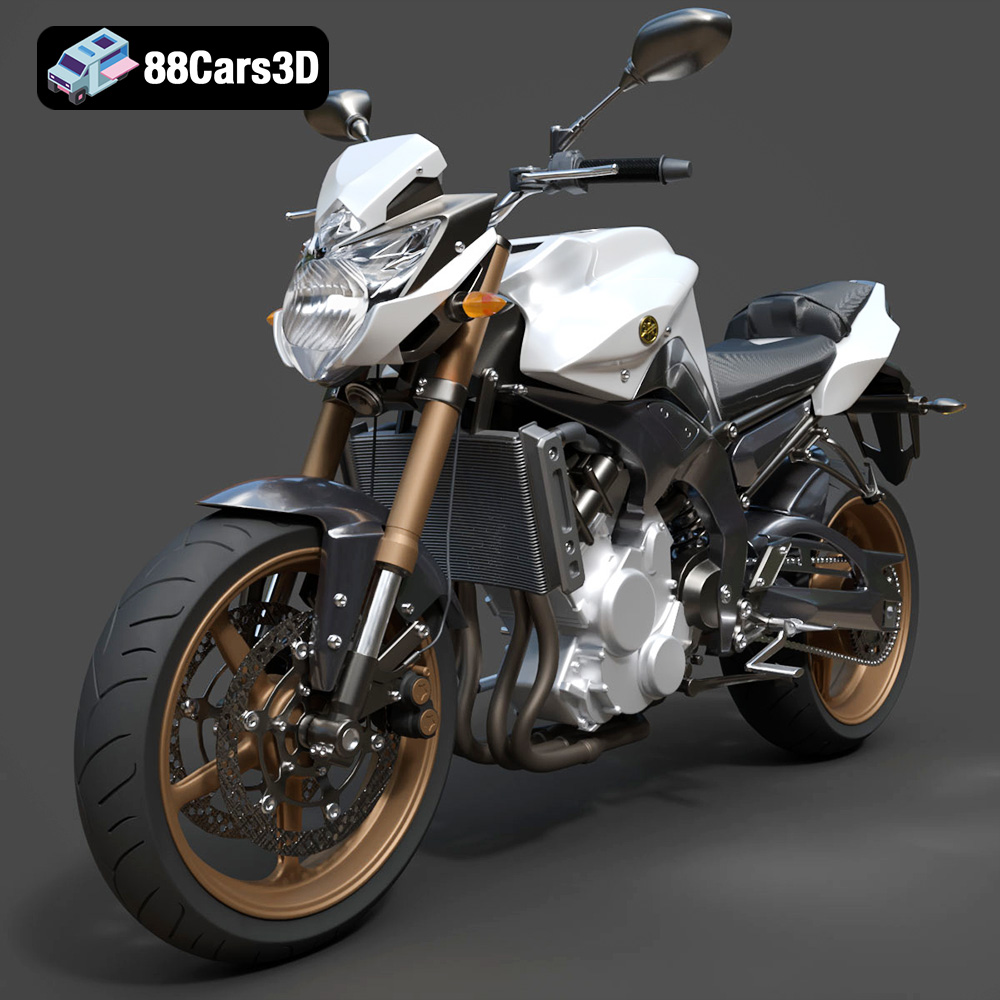
Texture: Yes
Material: Yes
Download the Yamaha FZ8 2011 3D Model featuring clean geometry, realistic detailing, and a fully modeled interior. Includes .blend, .fbx, .obj, .glb, .stl, .ply, .unreal, and .max formats for rendering, simulation, and game development.
Price: $19.99
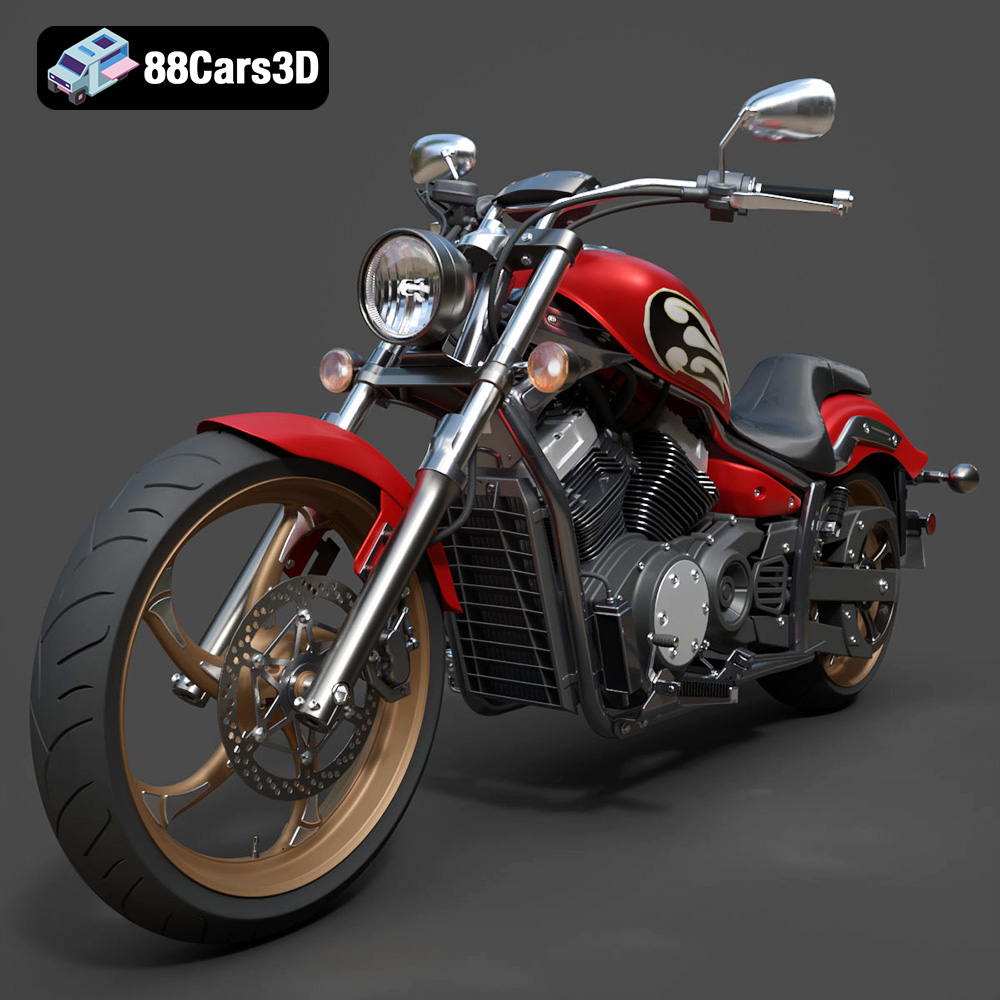
Texture: Yes
Material: Yes
Download the Yamaha Stryker 2012 3D Model featuring clean geometry, realistic detailing, and a fully modeled interior. Includes .blend, .fbx, .obj, .glb, .stl, .ply, .unreal, and .max formats for rendering, simulation, and game development.
Price: $19.99
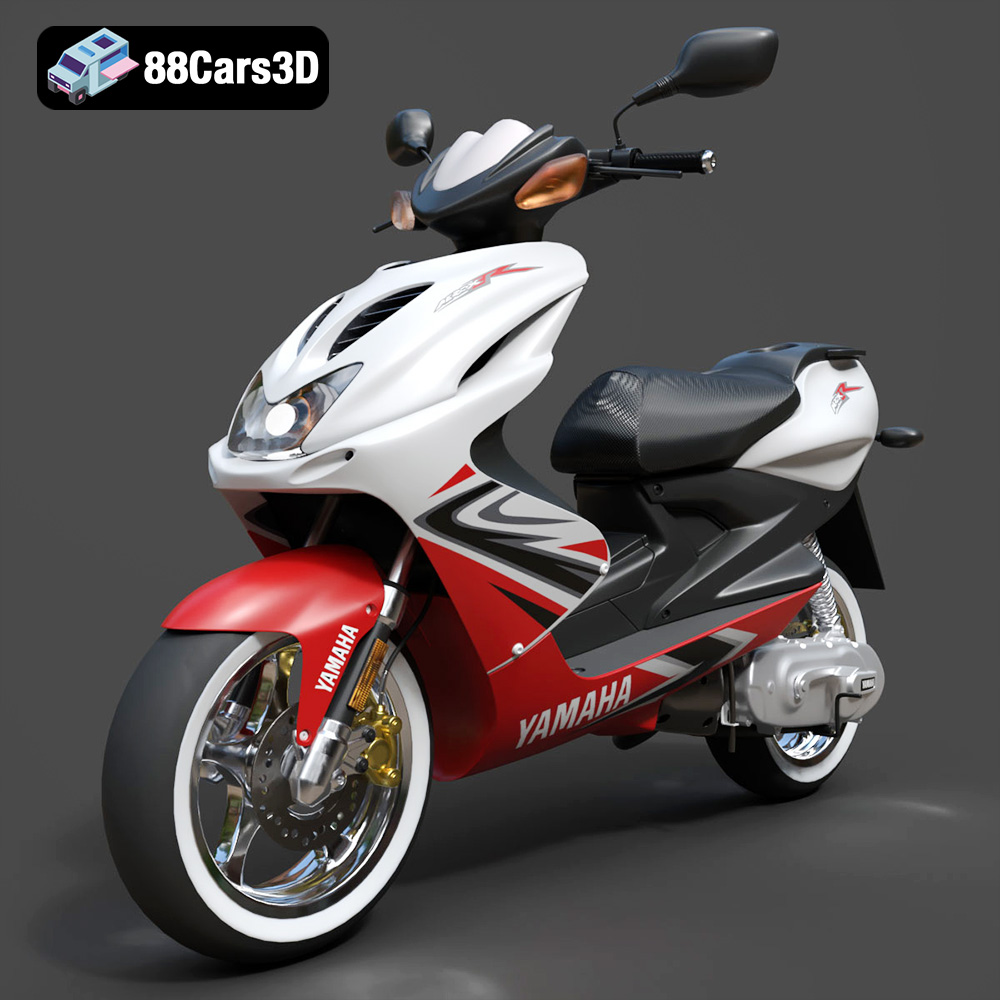
Texture: Yes
Material: Yes
Download the Yamaha Aerox R-002 2024 3D Model featuring clean geometry, realistic detailing, and a fully modeled interior. Includes .blend, .fbx, .obj, .glb, .stl, .ply, .unreal, and .max formats for rendering, simulation, and game development.
Price: $19.99

Texture: Yes
Material: Yes
Download the Mototsikly Downhill Bike-002 3D Model featuring clean geometry, realistic detailing, and precise mechanical components. Includes .blend, .fbx, .obj, .glb, .stl, .ply, .unreal, and .max formats for rendering, simulation, and game development.
Price: $19.99
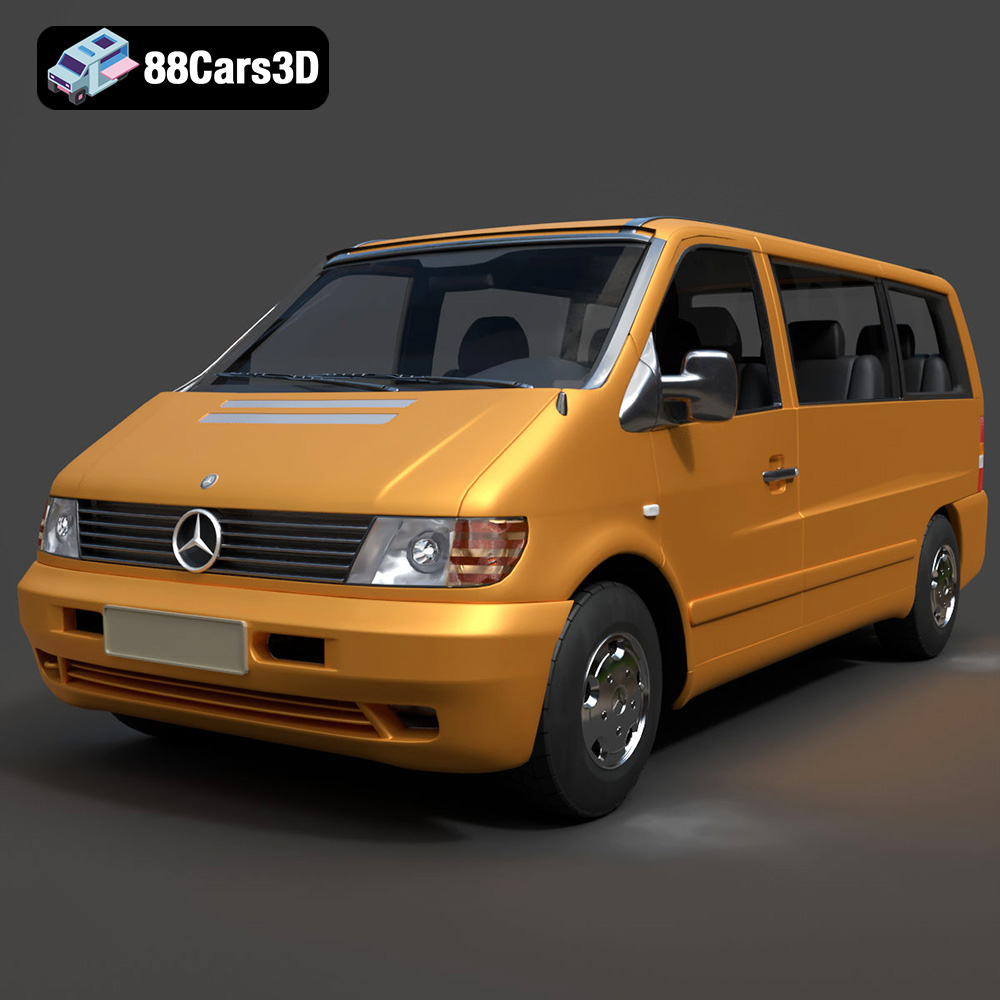
Texture: Yes
Material: Yes
Download the Mercedes-Benz Vito Passenger Van 3D Model featuring clean geometry, realistic detailing, and a fully modeled interior. Includes .blend, .fbx, .obj, .glb, .stl, .ply, .unreal, and .max formats for rendering, simulation, and game development.
Price: $19.99

Texture: Yes
Material: Yes
Download the Mercedes-Benz Viano 2010 3D Model featuring clean geometry, realistic detailing, and a fully modeled interior. Includes .blend, .fbx, .obj, .glb, .stl, .ply, .unreal, and .max formats for rendering, simulation, and game development.
Price: $19.99

Texture: Yes
Material: Yes
Download the Emt Avtobus 007 3D Model featuring clean geometry, realistic detailing, and a fully modeled interior. Includes .blend, .fbx, .obj, .glb, .stl, .ply, .unreal, and .max formats for rendering, simulation, and game development.
Price: $19.99
Texture: Yes
Material: Yes
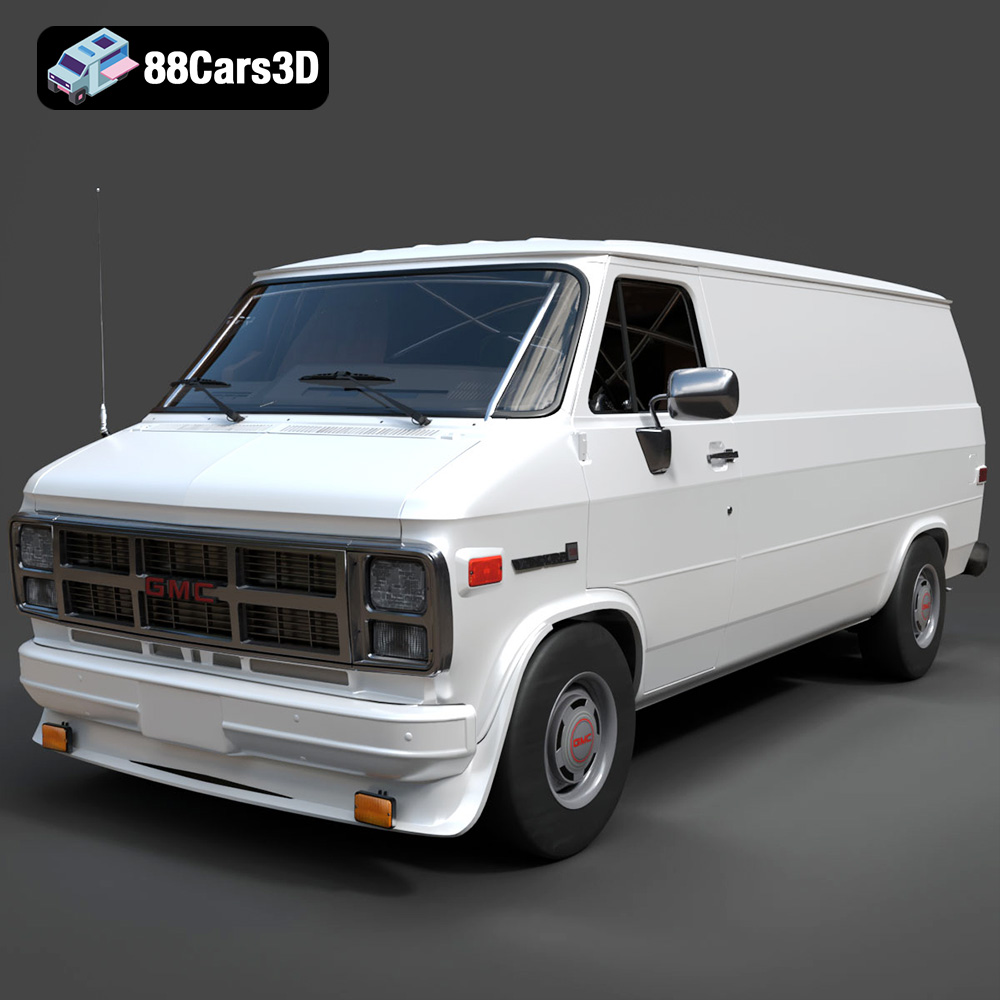
Download the GMC Vandura G-1500 1983 3D Model featuring clean geometry, realistic detailing, and a fully modeled interior. Includes .blend, .fbx, .obj, .glb, .stl, .ply, .unreal, and .max formats for rendering, simulation, and game development.
Price: $19.99

Texture: Yes
Material: Yes
Download the Ford E-450 Ambulance 3D Model featuring clean geometry, realistic detailing, and a fully modeled interior. Includes .blend, .fbx, .obj, .glb, .stl, .ply, .unreal, and .max formats for rendering, simulation, and game development.
Price: $19.99

