Elevating Visuals: The BMW M3 E46 3D Model as a Cornerstone for Professional Projects
In the dynamic world of 3D visualization, automotive rendering, and game development, the demand for exceptionally detailed and accurate 3D car models is ceaseless. Artists, developers, and engineers alike seek assets that not only look stunning but also integrate seamlessly into their complex workflows. Among the pantheon of iconic vehicles, the BMW M3 E46 stands as a legendary sports car, revered for its blend of performance, aesthetics, and driving purity. Recreating such a masterpiece in three dimensions requires an understanding of intricate design, precise engineering, and meticulous digital craftsmanship.
This is precisely where professional-grade assets, like the BMW M3 E46 3D Model available on 88cars3d.com, become indispensable. Far beyond a mere digital representation, this model embodies a commitment to visual fidelity and technical optimization, making it an invaluable tool for a wide array of applications, from breathtaking studio renders to immersive real-time simulations. This article delves deep into the technical intricacies and practical applications of such a high-quality 3D car model, demonstrating why it’s an essential asset for anyone serious about elevating their automotive projects.
The Imperative of High-Quality 3D Automotive Models
The success of any project involving vehicles often hinges on the quality of its 3D assets. In an era where visual expectations are continually rising, generic or poorly optimized models simply will not suffice. Professional workflows demand precision, realism, and efficiency, all of which are hallmarks of a meticulously crafted 3D car model.
Precision in Design and Realism in Rendering
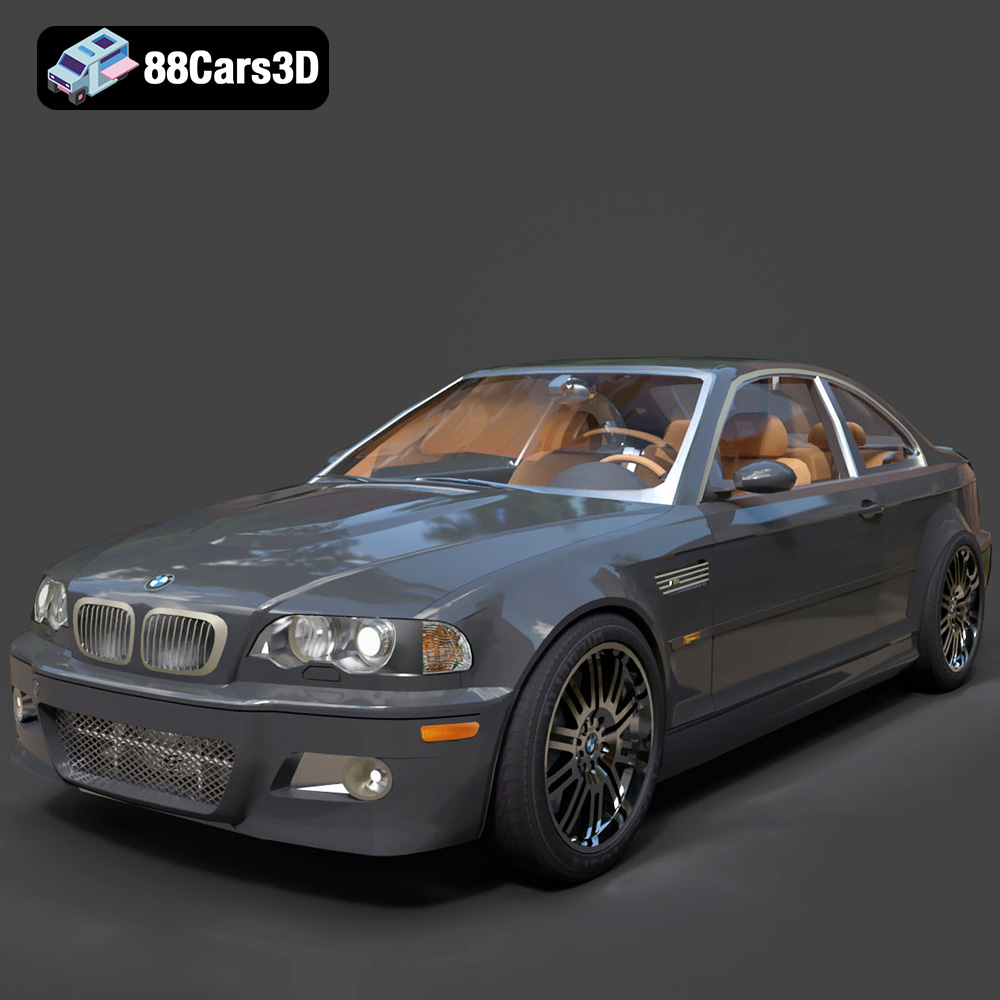
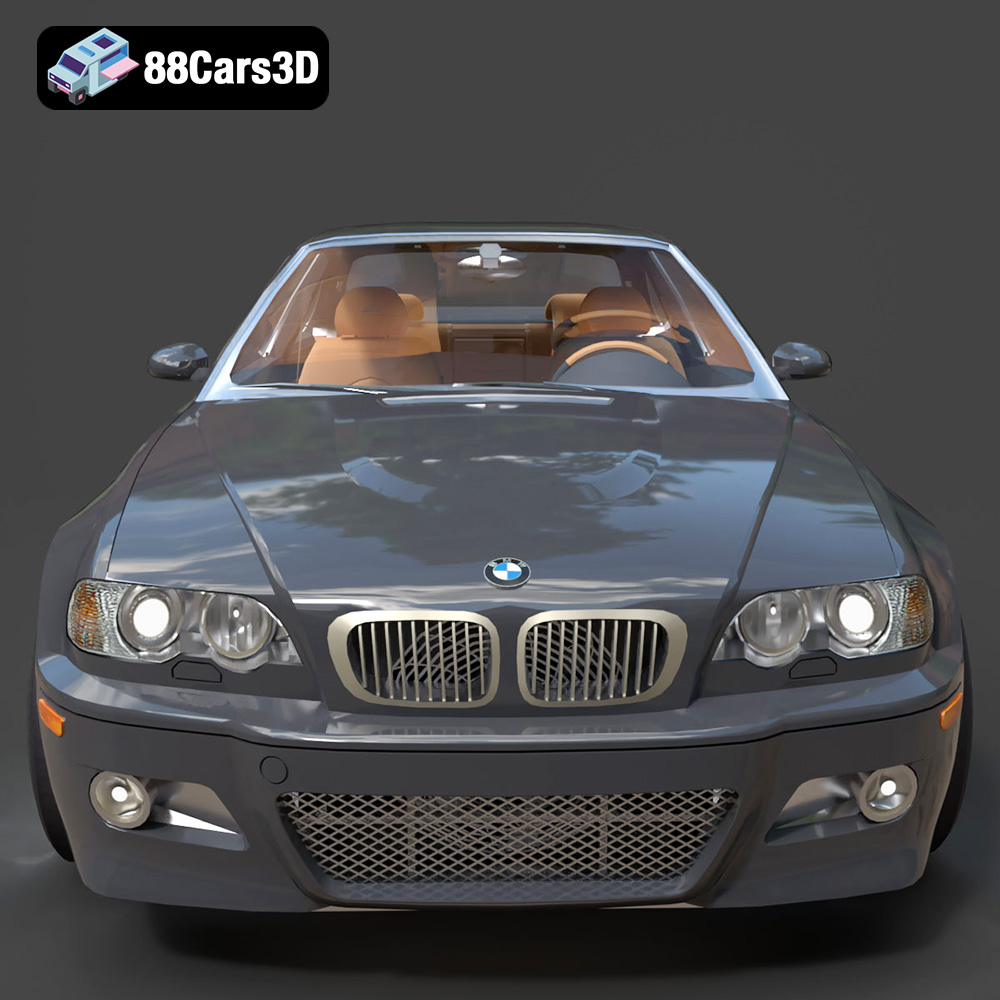
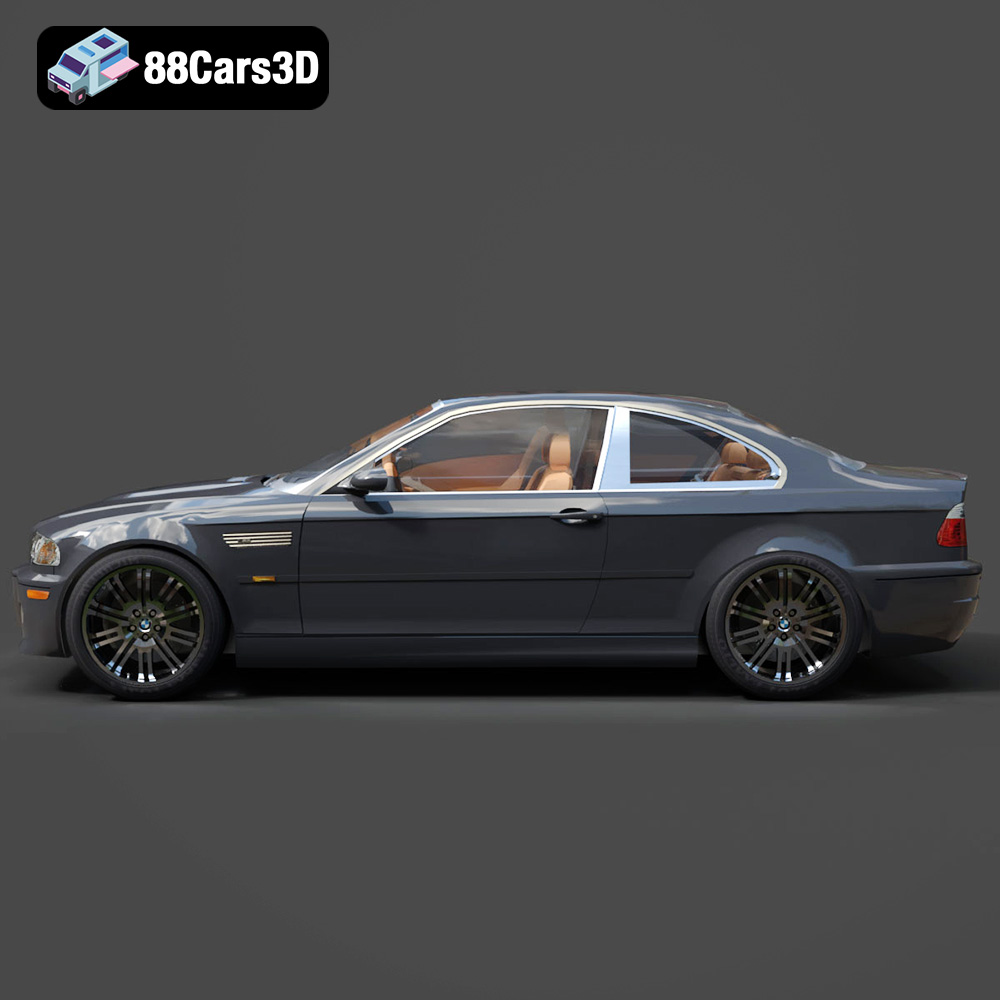
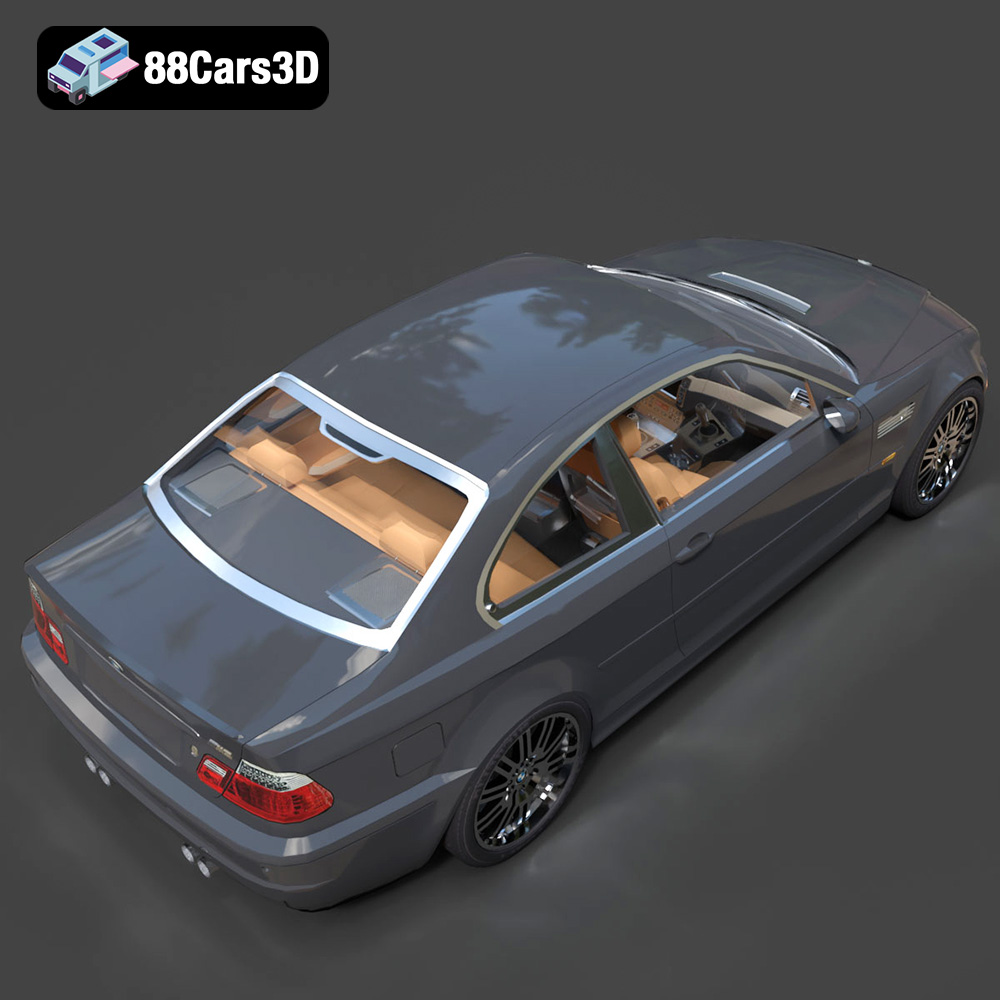
Achieving photorealism in automotive rendering is an art form that blends technical prowess with artistic vision. A high-quality 3D car model provides the foundational accuracy needed for this endeavor. For instance, the BMW M3 E46 3D Model boasts accurate body panels with its distinctive M3 wide-body flares, detailed front grille, and authentic M-series specific wheels. These details are not just superficial; they are modeled with precision, ensuring that reflections behave correctly, contours flow naturally, and the vehicle’s true character shines through in every render. Without this underlying geometric fidelity, even the most sophisticated lighting and material setups would struggle to convey true realism.
Efficiency in Professional Workflows
Time is a critical resource in any production pipeline. Sourcing pre-made, optimized 3D car models significantly reduces development time and costs compared to building assets from scratch. A professional asset, such as the BMW M3 E46 3D Model, arrives with clean, quad-dominant topology, logical hierarchy, and properly set pivot points for all movable parts. This means less time spent on mesh cleanup, rigging, and material setup, allowing artists and developers to focus on creative tasks like scene composition, animation, and interaction. The versatility of such a model, provided in multiple industry-standard formats, further enhances efficiency by ensuring broad compatibility across various software environments.
Understanding 3D Model File Formats
The choice of file format is a critical technical decision that dictates compatibility, functionality, and workflow efficiency. A truly professional 3D car model, like the BMW M3 E46 on 88cars3d.com, offers a suite of formats to cater to diverse industry needs. Each format has its strengths and specific use cases, and understanding them is key to maximizing an asset’s potential.
.blend – Native Blender Power
The .blend file format is the native project file for Blender, a powerful and increasingly popular open-source 3D creation suite. When a 3D car model is provided in this format, it means you receive the fully editable Blender scene. This includes all geometry, materials, textures, lighting setups, and even animation data as configured by the artist. For users deeply integrated into the Blender ecosystem, a .blend file offers unparalleled flexibility for customization, direct manipulation of modifiers, node-based material adjustments, and immediate rendering with Cycles or Eevee. It’s ideal for those who want to fully dissect and personalize the model within its native environment.
.fbx – The Real-Time Engine Standard
FBX (Filmbox) is a proprietary file format developed by Autodesk, widely recognized as the industry standard for interoperability between 3D software applications and real-time game engines like Unreal Engine and Unity. An .fbx file efficiently stores 3D model data, including geometry, materials (with texture references), cameras, lights, and crucially, animation and skeletal information. For game developers or those needing to transfer animated assets, .fbx is the go-to. It preserves transformations, hierarchical structures, and often includes baked animations, making it an excellent choice for dynamic scenes and interactive experiences.
.obj – Universal Compatibility for Exchange
The Wavefront OBJ (.obj) format is one of the oldest and most universally supported file formats for 3D graphics. It’s a simple, text-based format that primarily stores geometric data such (vertices, normals, UV coordinates) and can reference external material files (.mtl) and texture maps. While it doesn’t store animation or scene information like cameras or lights, its widespread compatibility makes it excellent for basic mesh exchange between virtually any 3D software. If you need a clean mesh to start with in a niche application or for a simple import, .obj is a reliable choice.
.glb – Optimized for Web and Immersive Experiences
GLB (GL Transmission Format Binary) is the binary version of glTF, a royalty-free specification for the efficient transmission and loading of 3D scenes and models by applications. .glb files are self-contained, including all textures and materials embedded directly into the single file. This makes them incredibly efficient and performant for web-based 3D viewers, AR/VR applications, and mobile platforms. When a 3D car model is provided as .glb, it’s optimized for quick loading and display, often featuring PBR (Physically Based Rendering) materials for realistic appearance in real-time contexts.
.stl – Precision for Physical Manifestation
STL (STereoLithography) is the de facto standard file format for 3D printing. Unlike other formats that store surface geometry, .stl represents a 3D model as a series of connected triangles. It lacks color, texture, and material information, focusing purely on the geometric shape. While ideal for additive manufacturing, it requires a watertight mesh (no holes or non-manifold geometry) for successful printing. The BMW M3 E46 3D Model’s clean topology ensures it’s easily convertible to .stl, allowing users to produce high-fidelity physical replicas.
.ply – Advanced Mesh Data for Engineering
PLY (Polygon File Format) is another format for storing 3D data, particularly useful for scanned data, point clouds, and more complex mesh properties. It can store not just geometry but also color, transparency, normals, texture coordinates, and other data associated with the vertices and faces. While less common for general 3D model exchange, it’s valuable in scientific, engineering, and CAD workflows where precise mesh analysis and handling of attribute-rich geometry are required.
.unreal – Seamless Integration into Unreal Engine
When a 3D car model is provided in an .unreal format (often a packaged asset or a project file fragment specifically set up for Unreal Engine), it signifies that the asset has been pre-configured for the engine. This can include optimized meshes, correctly set up materials with Unreal’s shader system, collision meshes, LODs (Levels of Detail), and even basic Blueprints for interactive elements. This format drastically streamlines the import process, allowing developers to drop the asset directly into their Unreal Engine projects with minimal setup, maximizing performance and visual quality within the engine.
.max – Mastering 3ds Max for Advanced Production
The .max file is the native project format for Autodesk 3ds Max, a leading 3D modeling, animation, and rendering software. Similar to .blend, an .max file provides the complete scene, including the model’s geometry, modifiers, materials, textures, lights, cameras, and animation data within the 3ds Max environment. For professionals working with V-Ray, Corona Renderer, or engaging in advanced character rigging and animation within 3ds Max, this format offers the most control and fidelity, allowing for complex scene setups and high-end cinematic rendering.
Crafting Realism: Technical Excellence of the BMW M3 E46 3D Model
The true value of a premium 3D car model lies in its underlying technical quality. The BMW M3 E46 3D Model from 88cars3d.com exemplifies this, boasting features that ensure both visual excellence and operational efficiency across diverse professional applications.
Clean Topology and Mesh Optimization
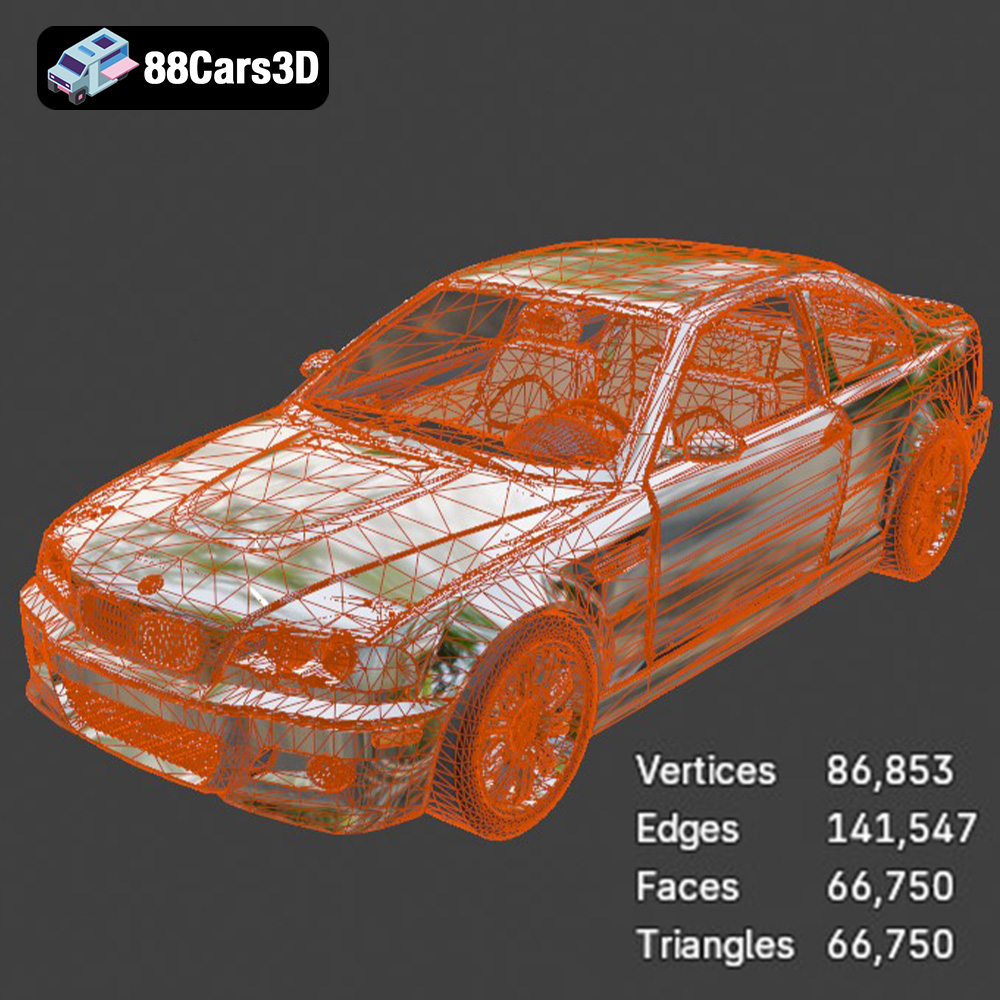
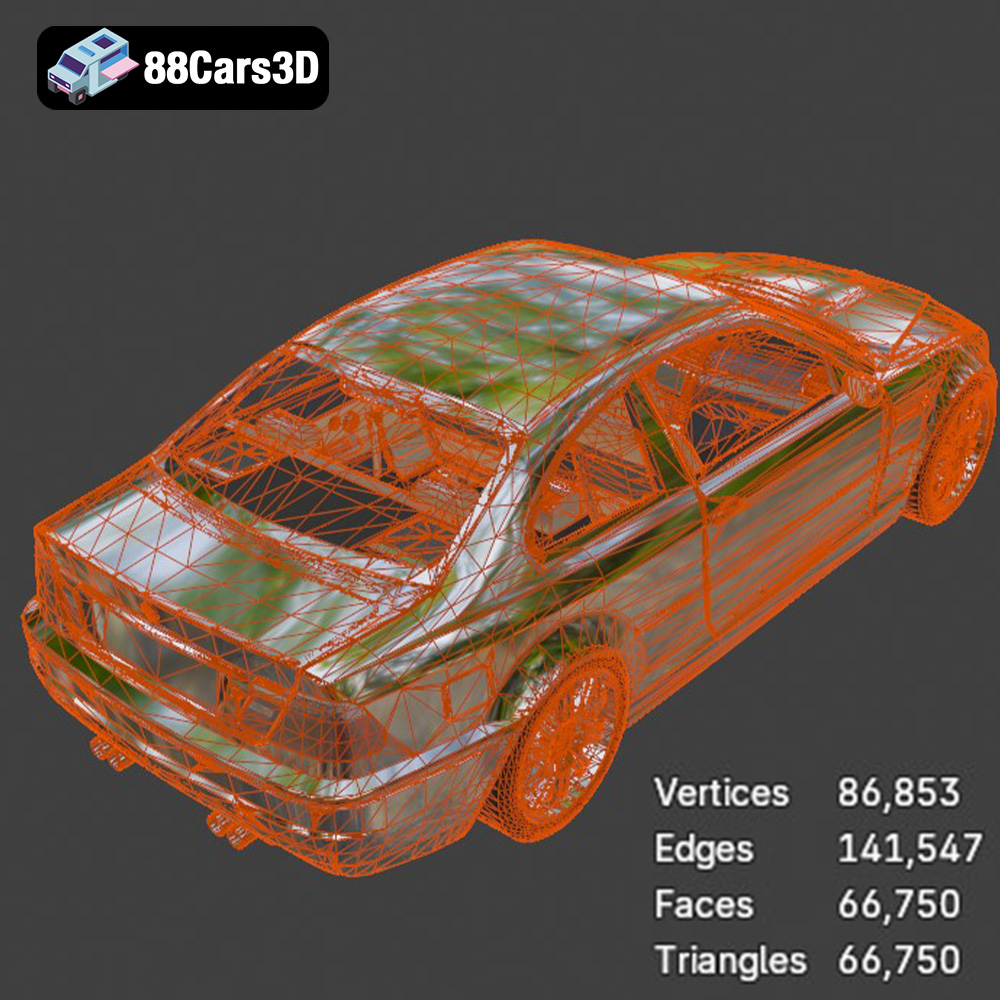
One of the most crucial aspects of a professional 3D model is its topology. This BMW M3 E46 model features clean, quad-dominant topology. This means the mesh is primarily constructed from four-sided polygons, which is ideal for smooth deformation during animation and allows for easy subdivision without creating artifacts. Whether you need to render the model at a distance with lower poly counts or up close with extreme detail by applying subdivision modifiers, the underlying mesh ensures predictable and high-quality results. Optimized mesh density further guarantees high visual quality without unnecessarily burdening rendering engines or real-time performance.
Authentic Detailing: Exterior and Interior Fidelity
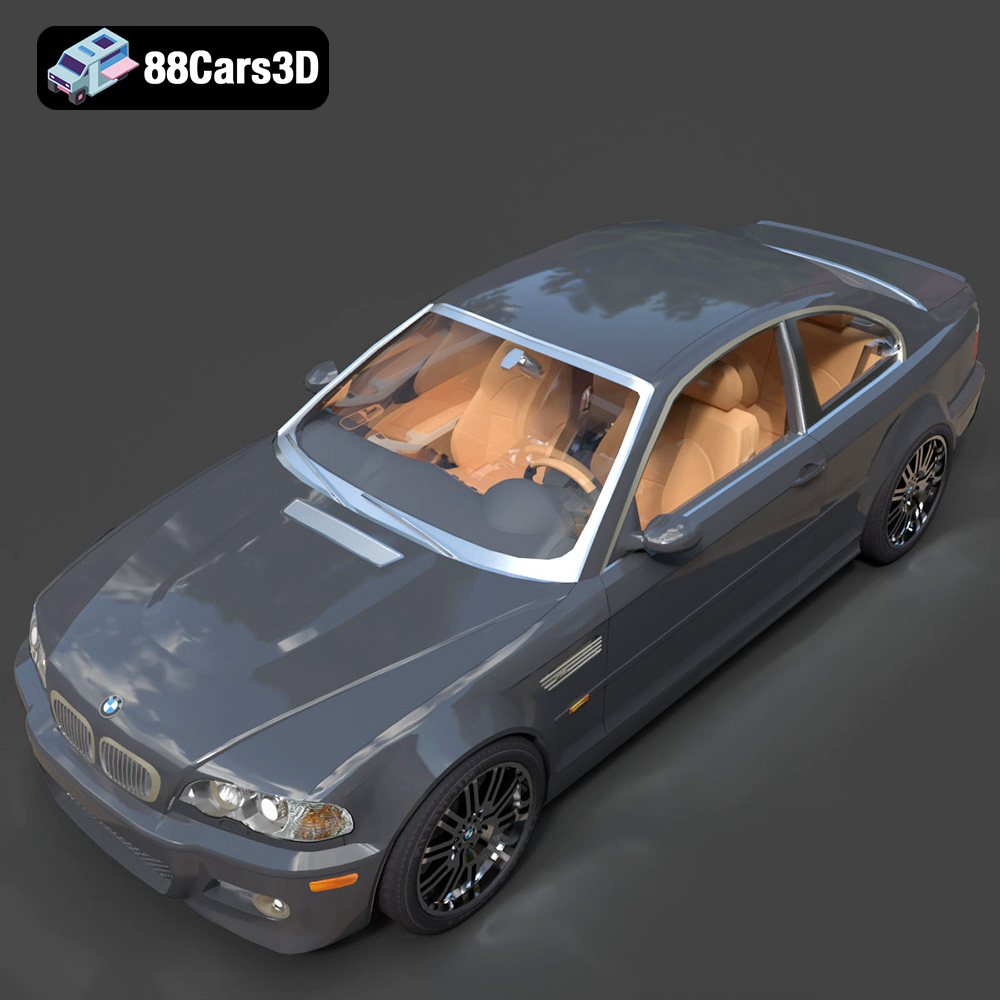
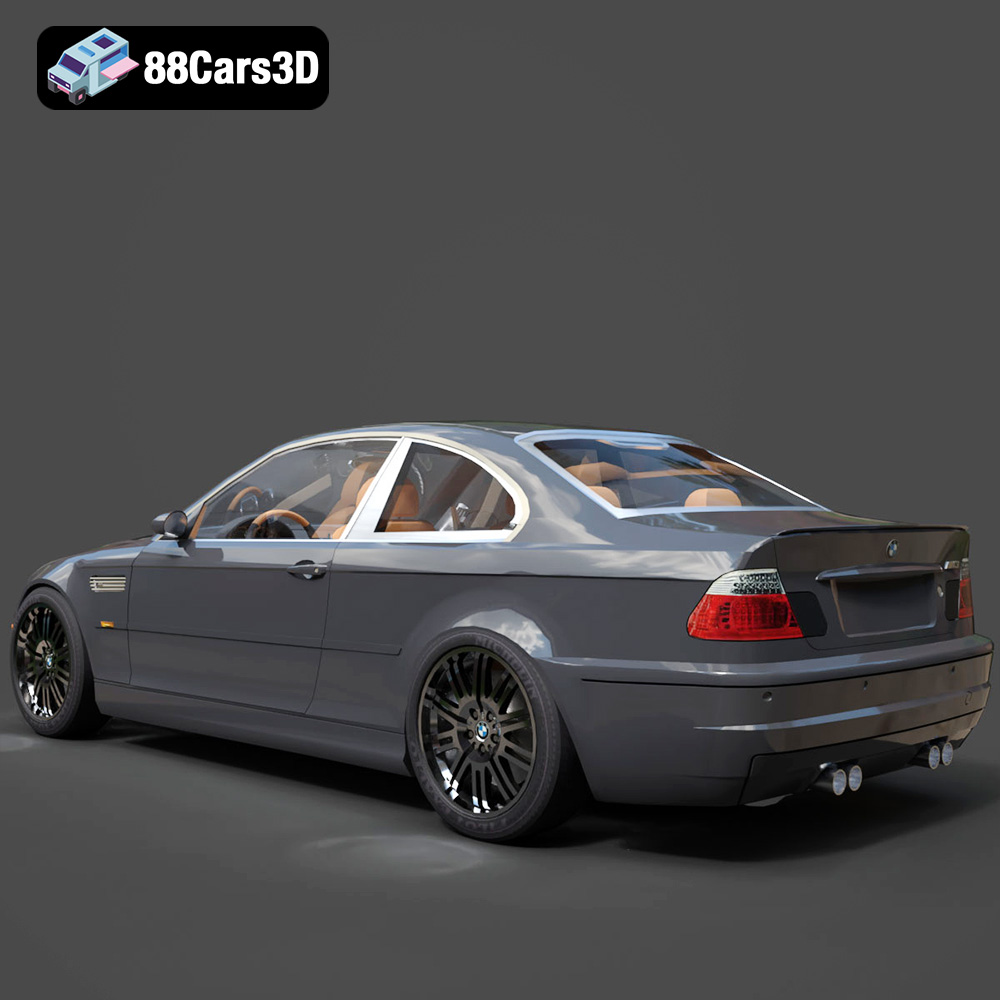
Realism is built upon meticulously recreated details. This 3D car model excels in capturing the essence of the M3 E46, from its aggressive exterior to its driver-focused interior. Exterior features include accurate body panels, distinctive M3 wide-body flares, detailed front grille, and headlights with clear glass materials. The authentic M-series specific wheels and high-performance tires are not merely approximations but accurate representations. Inside, the model presents a detailed dashboard, instrument cluster, center console, and sport bucket seats, alongside the iconic M-badged steering wheel. Even basic engine bay details are present for external viewing angles, ensuring comprehensive realism for varied presentation needs.
Animation-Ready Structure
For applications like cinematic sequences, virtual configurators, or game development, a model’s readiness for animation is paramount. The BMW M3 E46 3D Model is built with a logically organized hierarchy, where components like doors, hood, trunk, and wheels are separated and properly parented. Crucially, all movable parts have correctly set pivot points. This thoughtful structuring eliminates tedious setup work, allowing animators to quickly rig and animate car features like opening doors, rotating wheels, or adjusting suspension components with precision and ease, directly contributing to a streamlined production pipeline.
Unleashing the Power: Applications Across Industries
The versatility of a high-quality 3D car model extends across a multitude of industries, providing solutions for complex visualization, interactive experiences, and even physical production.
Automotive Rendering and Visualization
For automotive studios, advertising agencies, and product designers, the BMW M3 E46 3D Model is an ideal asset for creating stunning studio renders and cinematic sequences. It can be placed in virtual showrooms, integrated into architectural visualizations to add a sense of scale and lifestyle, or used for creating marketing collateral that showcases the vehicle in its best light. The ability to easily modify paint finishes, apply custom liveries, and adjust material properties allows for endless creative possibilities without the need for physical prototypes or expensive photoshoots.
Game Development and Interactive Experiences
In the realm of game development, realistic 3D car models are the bedrock of immersive racing games, open-world simulations, and driving experiences. The optimized mesh density and animation-ready structure of this M3 E46 model make it perfect for integration into game engines. Developers can use it to populate virtual environments, create playable vehicles with accurate physics, or design interactive scenarios where players can explore the car’s features. Its balanced detailing ensures that it looks excellent up close in garages or during replays, while also performing efficiently in fast-paced gameplay.
AR/VR and Immersive Showrooms
Augmented Reality (AR) and Virtual Reality (VR) are transforming how we interact with digital content. The BMW M3 E46 3D Model is perfectly suited for immersive virtual showrooms, where potential buyers can explore the car in a 360-degree environment. It can be used for AR applications that superimpose the car onto a real-world setting, allowing users to “see” it in their driveway. For interactive training modules, the model can provide a highly detailed visual aid for learning about vehicle components or maintenance procedures, offering a level of engagement unmatched by traditional methods.
Simulation, Training, and 3D Printing
Beyond visual media, professional 3D car models find significant use in technical applications. For driving simulators, this model can provide the accurate visual representation needed for realistic training scenarios. In automotive engineering analysis, it can serve as a detailed reference for aerodynamic studies or structural simulations. Furthermore, its clean geometry makes it easily convertible to .stl format, opening the door to 3D printing high-fidelity physical models, prototypes, or collectibles. This bridges the gap between digital design and tangible output, demonstrating the model’s profound utility.
Workflow Integration: A Deeper Dive into Professional Use Cases
Integrating a new 3D asset into an existing professional workflow requires flexibility and compatibility. The BMW M3 E46 3D Model is designed with this in mind, offering multiple formats that cater to the leading 3D software and game engines.
3ds Max for Studio Rendering and Animation
For artists leveraging Autodesk 3ds Max, the included .max file provides a fully prepared scene. This means materials are often set up for common renderers like V-Ray or Corona, light rigs might be pre-configured, and the model hierarchy is ready for advanced animation. Users can easily integrate the BMW M3 E46 into their scenes, apply complex textures, fine-tune reflections, and set up intricate camera paths for cinematic animations. The organized structure with proper pivot points facilitates creating dynamic sequences like a car driving down a street, drifting, or showcasing its interior features with opening doors and rotating components.
Blender for Artistic Freedom and PBR Workflows
Blender users will find the native .blend file incredibly powerful. It offers complete control over the model, allowing for deep customization of materials using Blender’s node-based shader editor. Artists can easily adjust paint metallic flakes, tire rubber roughness, or glass transparency to achieve specific PBR (Physically Based Rendering) looks optimized for Cycles or Eevee. The clean quad-dominant topology means artists can sculpt additional details, apply modifiers like subdivision surfaces for ultra-smooth results, or integrate the M3 E46 into complex environmental scenes with ease, leveraging Blender’s robust toolset for modeling, texturing, and rendering.
Unreal Engine for Real-Time Interactivity
Game developers and real-time visualization specialists using Unreal Engine will benefit from the dedicated .unreal project setup and the robust .fbx compatibility. Importing the BMW M3 E46 3D Model allows for rapid material assignment (or use of pre-configured Unreal materials), setting up collision meshes for realistic physics, and creating interactive elements using Blueprints. Whether it’s for a high-fidelity driving simulator, an architectural visualization walkthrough, or a next-gen racing game, the model’s optimized geometry ensures excellent performance within Unreal Engine’s advanced rendering pipeline, leveraging features like Lumen for global illumination and Virtual Shadow Maps for crisp shadows.
Maximizing Your Investment: Customization and Future-Proofing
Purchasing a premium 3D asset is an investment. The BMW M3 E46 3D Model is designed not just for immediate use but also for long-term value, offering extensive customization options and adaptability to future project needs.
Material Versatility and Aesthetic Personalization
The ability to easily modify paint finishes, apply custom liveries, or integrate brand-specific graphics is a significant advantage. Professional 3D car models come with well-defined material IDs and clean UVs, making it straightforward to swap out textures or adjust material properties for metals, plastics, rubber, and glass. This allows artists to match specific rendering styles, from photorealistic showroom quality to stylized game aesthetics, ensuring the model fits perfectly into any creative vision. The flexibility to adjust lighting setups further enhances this, enabling various moods and environments, from bright studio light to gritty street-lit realism.
Adapting to Evolving Project Needs
Digital projects often evolve, and assets need to adapt. The clean, organized structure of this BMW M3 E46 model facilitates future modifications. Need to create a damaged version for a game? The clean topology makes sculpting or cutting easy. Want to add custom aftermarket parts? Its accurate scaling ensures new components integrate seamlessly. This inherent adaptability ensures that the model remains a valuable asset across multiple projects and iterations, providing a solid foundation that can be built upon rather than replaced. Investing in such a versatile 3D car model from 88cars3d.com ensures that your toolkit is robust and ready for whatever creative challenges lie ahead.
Conclusion
The journey through the intricacies of high-quality 3D car models reveals a landscape where technical precision meets artistic possibility. The BMW M3 E46 3D Model stands out as a prime example of a professional-grade asset, meticulously crafted to serve a diverse range of industries and applications. From its impeccable quad-dominant topology and accurate detailing to its comprehensive suite of industry-standard file formats, this model is designed to streamline workflows, enhance realism, and empower creators.
Whether you are producing breathtaking automotive renders, developing immersive game assets, designing interactive AR/VR experiences, or conducting detailed simulations, the technical advantages and inherent versatility of this model make it an indispensable tool. It represents more than just a digital car; it’s a foundation for creativity and a catalyst for efficiency, ensuring that your projects achieve the highest possible visual fidelity and performance. Explore this and other exceptional 3D car models at 88cars3d.com to unlock new levels of realism and productivity in your professional endeavors.
Featured 3D Model
BMW M3 E46 3D Model
Immerse yourself in the world of high-performance automotive design with this meticulously crafted 3D model of the BMW M3 E46. Representing a pinnacle of sports car engineering from its era, this model captures the aggressive stance, classic lines, and intricate details that define the iconic M3 E46. Built with clean, optimized geometry and balanced detailing, it ensures exceptional visual fidelity and performance across various applications. This professional-grade asset is perfectly suited for high-quality rendering, realistic animations, precise simulations, and robust game development.
$16.99
Product Image Gallery