Get 20% OFF All Premium 3D & STL Models!

In the fast-paced world of digital creation, the demand for photorealistic 3D assets continues to skyrocket across various industries. From cinematic automotive advertisements to immersive game environments and precise architectural visualizations, a high-quality 3D car model is often the centerpiece that defines a project’s visual integrity and overall success. Creators are constantly seeking models that not only look stunning but are also technically robust, offering seamless integration and flexibility across diverse software ecosystems.
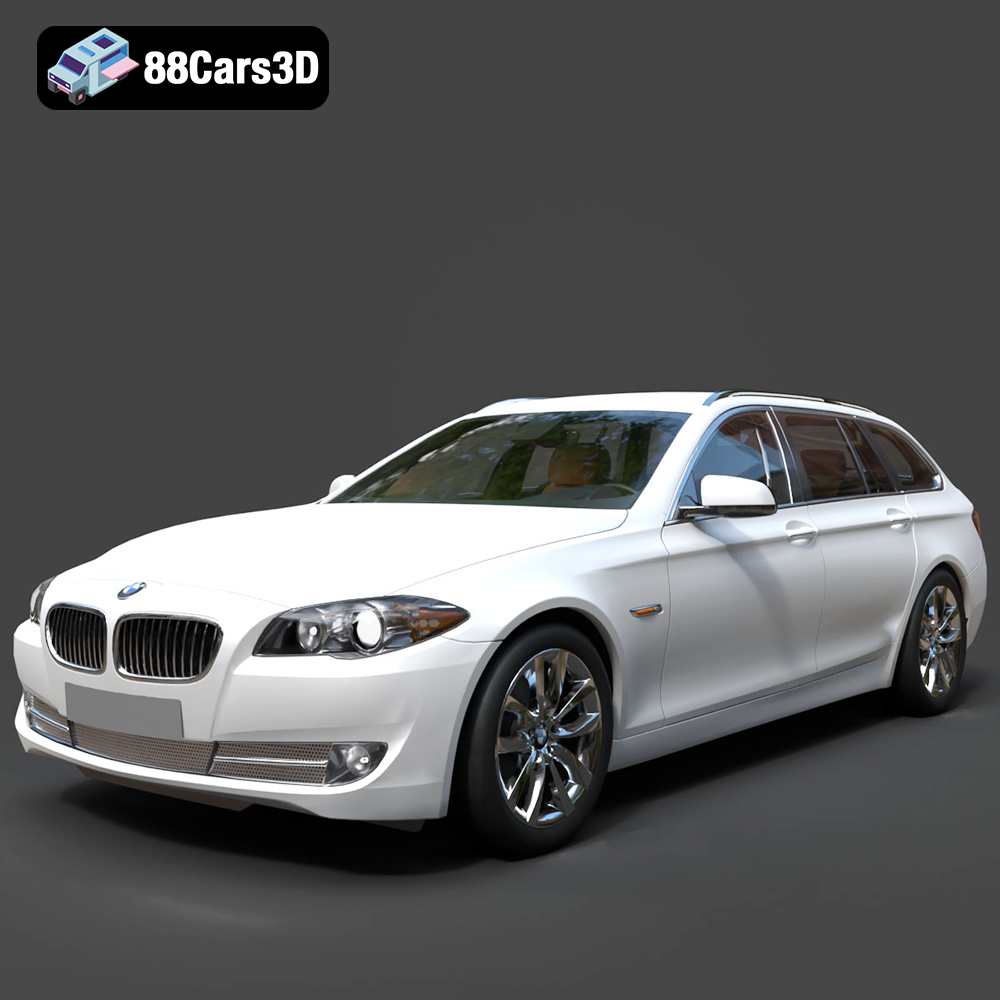
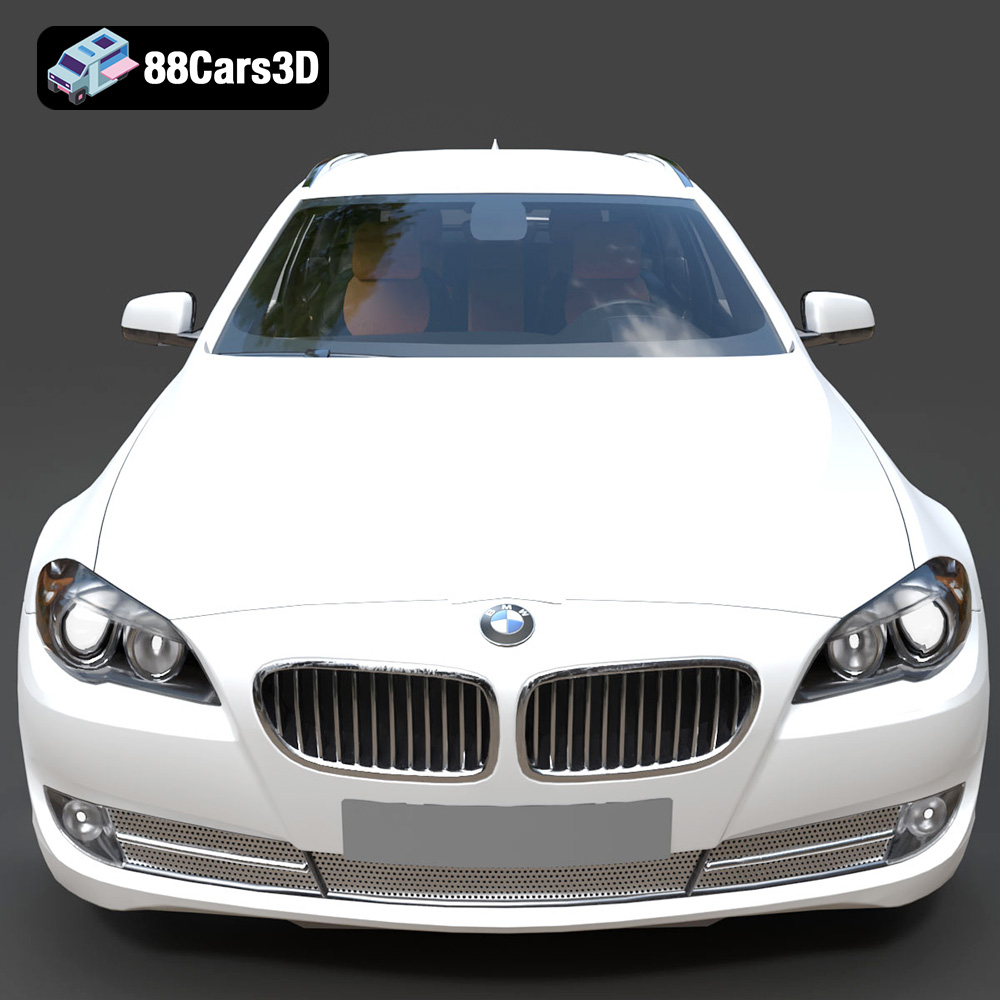
Today, we’ll delve deep into the technical intricacies and versatile applications of professional 3D car models, using the exceptional BMW 5 Series Touring F11-007 3D Model as our prime example. This meticulously crafted asset from 88cars3d.com exemplifies the blend of aesthetic precision and technical excellence required by professionals. We’ll explore how such a model streamlines workflows in rendering, game development, AR/VR, and even 3D printing, highlighting the critical role of clean geometry, optimized topology, and comprehensive file format support.
The automotive industry has long been at the forefront of adopting cutting-edge 3D visualization techniques. From initial concept design and engineering validation to marketing campaigns and virtual showrooms, 3D car models are indispensable. However, the expectations for realism and performance have never been higher. A generic, poorly constructed model can quickly become a bottleneck, leading to costly rework, compromised visual quality, and missed deadlines.
Professional artists and developers require assets that are “production-ready” straight out of the box. This means accurate real-world scale, logically organized hierarchies, and clean, animatable geometry. The BMW 5 Series Touring F11-007 3D Model addresses these needs directly, offering a robust foundation for any project. Its design reflects the sophisticated demands of creating compelling visuals, whether for a high-end commercial or an interactive driving experience.
For an automotive advertising agency, time is money. Integrating a high-detail car model like the BMW F11-007 allows them to rapidly iterate on camera angles, lighting setups, and material finishes without worrying about mesh issues or complex retopology. Similarly, game developers leverage such models to populate their virtual worlds with authentic vehicles that perform efficiently in real-time engines, providing players with an immersive and believable experience.
Beyond the model itself, the value of a 3D asset is significantly enhanced by the breadth of its included file formats and technical features. This versatility ensures that the model can be seamlessly integrated into virtually any professional pipeline, reducing conversion headaches and compatibility issues. The BMW 5 Series Touring F11-007 model is a prime example, offering a wide array of formats tailored for specific uses.
Choosing the right 3D file format is a critical decision that impacts workflow efficiency, compatibility, and ultimately, the success of a project. Each format is designed with specific use cases and software ecosystems in mind. Understanding their strengths and limitations is paramount for any professional working with 3D car models. The BMW 5 Series Touring F11-007 3D Model offers a comprehensive suite of these formats, ensuring maximum utility across diverse platforms.
The .blend format is native to Blender, the powerful open-source 3D creation suite. When you purchase a model in .blend format, you’re getting a fully editable Blender scene. This includes not just the mesh, but also materials, textures, lighting setups, camera positions, and even animation data if present. For Blender artists, this means immediate access to a production-ready asset, allowing for quick modifications to paint finishes, material properties, or integration into existing Blender projects. The BMW F11-007 model in .blend format allows artists to harness Blender’s Cycles or Eevee render engines directly, leveraging its robust toolset for detailed customization and rendering.
.fbx (Filmbox) is arguably the most widely used proprietary 3D file format for exchanging 3D data between various applications. Developed by Autodesk, it’s ideal for transferring models, animations, and rigs between software like 3ds Max, Maya, Cinema 4D, and most importantly, game engines like Unreal Engine and Unity. The .fbx format preserves crucial data such as mesh geometry, materials (with some limitations), textures, animations, and joint hierarchies. For the BMW 5 Series Touring F11-007, the .fbx file is the go-to for game developers and real-time visualization specialists, ensuring that the model’s clean hierarchy and separate components (doors, hood, trunk) are maintained for animation.
.obj (Wavefront OBJ) is a universal, open-standard format that has been around for decades. It’s incredibly robust for transferring raw polygonal mesh data, including vertices, normals, UV coordinates, and groups. While it’s less adept at handling advanced material definitions, animation data, or skeletal rigs compared to .fbx, its simplicity and widespread support make it compatible with virtually every 3D software package. The .obj version of the BMW F11-007 model serves as an excellent fallback or starting point for users of less common 3D applications, or for those who prefer to re-establish materials from scratch within their chosen software.
.glb (GL Transmission Format Binary) is a relatively newer format gaining significant traction, especially for augmented reality (AR), virtual reality (VR), and browser-based 3D applications. It’s an optimized, self-contained binary format that encapsulates geometry, materials, textures, and animation into a single file, making it highly efficient for web delivery and real-time display. For the BMW 5 Series Touring F11-007, the .glb format is perfect for embedding the model directly into a website for interactive viewing, deploying it in an AR app for virtual showrooms, or integrating it into a lightweight VR experience without complex setup.
.stl (STereoLithography) is the de facto standard file format for 3D printing. It represents a 3D model as a collection of unconnected triangles, defining only the surface geometry without color, texture, or material information. While less useful for rendering or animation, its simplicity makes it ideal for additive manufacturing. The .stl variant of the BMW F11-007 allows users to easily convert the digital asset into a physical prototype or collectible model, directly catering to those in product design, hobbyists, or educational settings.
.ply (Polygon File Format, or Stanford Triangle Format) is a versatile format often used for storing 3D data from 3D scanners, CAD applications, or for scientific analysis. It can store various properties for each vertex and face, including color, transparency, normals, and texture coordinates. While less common for everyday rendering, it offers a high level of precision, making it suitable for engineering, architectural visualizations requiring precise measurements, or advanced reverse-engineering workflows. The .ply version of the BMW F11-007 provides a robust and detailed mesh for such specific, analytical applications.
The .unreal designation often implies an asset package or project file specifically prepared for Unreal Engine. This typically means the model has been imported, materials are set up using Unreal’s physically based rendering (PBR) system, textures are correctly applied, and often includes optimized LODs (Levels of Detail) and collision meshes. For game developers or real-time configurator creators, having an .unreal project for the BMW 5 Series Touring F11-007 means significant time savings, allowing them to drop the asset directly into their project and begin immediate iteration without extensive setup.
Finally, the .max format is native to Autodesk 3ds Max, a leading software for 3D modeling, animation, rendering, and visualization. A .max file provides access to the complete 3ds Max scene, including all modifiers, material setups (often V-Ray or Corona Renderer materials), lighting rigs, and animation timelines. For professionals heavily invested in the 3ds Max ecosystem, the .max version of the BMW F11-007 is invaluable. It allows for advanced parametric editing, complex scene integration, and high-quality rendering using 3ds Max’s powerful rendering capabilities.
High-fidelity rendering is where the aesthetic and technical excellence of a 3D car model truly shines. The BMW 5 Series Touring F11-007 3D Model is engineered for breathtaking visuals, making it an ideal asset for anyone focused on producing stunning automotive imagery.
For many studios, 3ds Max remains the backbone of their rendering pipeline, often paired with V-Ray or Corona Renderer. The .max file provided with the BMW F11-007 model is a direct entry point into this powerful workflow. Users can load the scene and immediately begin crafting intricate lighting scenarios, from sun-drenched outdoor scenes to dramatic studio setups. The model’s “clean, quad-dominant topology” ensures smooth subdivisions for close-up renders, capturing every subtle curve of the BMW’s body panels without unsightly faceting. Its “logically organized hierarchy with proper pivot points” means doors, hood, and trunk can be easily opened and animated for dynamic product showcases.
Blender artists will find the .blend file for the BMW 5 Series Touring F11-007 equally compelling. Leveraging Blender’s Cycles or Eevee render engines, users can achieve stunning results with remarkable efficiency. The included materials within the .blend file provide a solid starting point, allowing artists to “easily modify paint finishes and apply custom graphics or liveries.” The detailed headlights and taillights with transparent materials allow for realistic illumination effects, adding an extra layer of authenticity to night renders or dynamic lighting sequences. Blender’s robust node-based shader system empowers artists to fine-tune every aspect of the car’s appearance, from the metallic flake in the paint to the subtle reflections on the chrome accents.
Achieving photorealism extends beyond just a great model; it requires masterful material definition and lighting. The BMW F11-007 model comes with “realistic material definitions for paintwork, glass, chrome accents, and rubber components.” This foundation allows artists to focus on refining the nuances. For instance, adjusting the roughness maps for the tires to convey wear, or tweaking the fresnel reflections on the glass to mimic real-world optical properties. Combining these detailed materials with sophisticated lighting – whether an HDR environment map for realistic global illumination or a complex studio light setup – transforms the raw 3D car model into a captivating visual narrative.
The performance demands of real-time applications, such as video games and interactive simulations, are unique. While visual fidelity is paramount, efficiency is equally critical. The BMW 5 Series Touring F11-007 3D Model is optimized to excel in these demanding environments.
For game developers, the inclusion of .fbx and dedicated .unreal files for the BMW F11-007 is a significant advantage. The .fbx format ensures seamless import into both Unreal Engine and Unity, preserving the model’s clean mesh and hierarchy. In Unreal Engine, the “engine-ready asset” typically means materials are configured using PBR (Physically Based Rendering) workflows, allowing for consistent and realistic lighting across various conditions. Developers can quickly set up car physics, integrate into driving mechanics, and customize the model with game-specific shaders for damage, dirt, or special effects. The “optimized mesh density” is crucial here, preventing performance bottlenecks in complex scenes with many vehicles.
Maintaining high frame rates in a game requires careful asset management, especially for detailed objects like cars. While the BMW F11-007 offers high detail, professional game studios will often generate Levels of Detail (LODs) for car models. This means creating progressively simpler versions of the model that are swapped in as the car moves further away from the camera, significantly reducing polygon count and improving performance without noticeable visual degradation. The model’s “clean, quad-dominant topology” makes generating these LODs much more straightforward. Its “accurate real-world scale” ensures it fits naturally within the game world alongside other assets and characters, enhancing player immersion.
The versatility of a high-quality 3D car model extends far beyond traditional rendering and game development, opening doors to innovative applications in emerging technologies.
Augmented Reality (AR) and Virtual Reality (VR) are transforming how we interact with digital content. The BMW 5 Series Touring F11-007 3D Model is perfectly suited for these immersive platforms, particularly with its .glb format. Imagine a potential customer using an AR app on their phone to virtually place the F11-007 in their driveway, rotating it, and even “opening” the doors. Or a VR experience that allows users to explore the detailed interior of the car, sitting in the driver’s seat and interacting with the dashboard. The model’s “optimized mesh density” and “accurate real-world scale” are critical for these applications, ensuring both visual fidelity and smooth performance in real-time AR/VR environments.
In simulation and training, accuracy is paramount. Whether it’s a professional driving simulator for training new drivers or an architectural visualization requiring a car to realistically populate a scene, the BMW F11-007’s “accurate real-world scale” and detailed geometry provide the necessary foundation. The model’s “basic engine bay and chassis components for exterior realism in open states” add an extra layer of authenticity for scenarios where the hood might be lifted. Furthermore, the inclusion of an .stl file makes the model directly convertible for 3D printing. This allows designers to create physical prototypes, model enthusiasts to print scaled replicas, or even for educational purposes, providing a tangible representation of the digital asset.
Beneath the polished surface of a stunning render or a smooth real-time experience lies the invisible scaffolding of technical excellence. This is where a high-quality 3D car model truly differentiates itself and provides long-term value to professionals.
The “clean, quad-dominant topology” of the BMW 5 Series Touring F11-007 is a cornerstone of its professional quality. Quads (four-sided polygons) are preferred over triangles for smoother deformation during animation, easier subdivision for high-detail renders, and more predictable UV mapping. This attention to underlying mesh structure saves countless hours of potential rework. Coupled with “accurate real-world scale,” the model seamlessly integrates into any scene without requiring manual adjustments, ensuring correct proportions and interactions with other assets.
A “logically organized hierarchy with proper pivot points for animation and manipulation” might sound like a minor detail, but it’s a massive time-saver for animators and scene assemblers. Having individual components like doors, hood, trunk, and wheels properly named and pivoted means they can be animated or repositioned with minimal effort. This level of organization speaks to the professional-grade nature of models available at 88cars3d.com, transforming what could be a frustrating integration process into a smooth, efficient workflow. The “optimized mesh density” further enhances efficiency by balancing detail with performance, ensuring the model is usable across a spectrum of projects from static renders to interactive applications.
In a competitive digital landscape, the quality of your assets directly impacts the quality of your output. Investing in a professional-grade 3D car model like the BMW 5 Series Touring F11-007 from 88cars3d.com isn’t just about buying a model; it’s about acquiring a reliable, versatile, and technically sound foundation for your creative endeavors. Whether you’re an automotive visualization artist, a game developer, or an AR/VR innovator, the precision and comprehensive file support of this model ensure that your projects stand out and perform flawlessly.
88cars3d.com is committed to providing assets that meet the rigorous demands of professional production, enabling artists and developers to focus on creativity rather than troubleshooting. Explore their range of high-quality 3D car models to find the perfect addition to your asset library.
The world of 3D modeling demands both artistic vision and technical mastery. High-quality 3D car models like the BMW 5 Series Touring F11-007 are essential tools that bridge this gap, providing artists and developers with the precision, versatility, and performance needed for modern projects. From its meticulously modeled exterior and interior to its clean topology and comprehensive file format support, this model is designed to excel in diverse applications, from high-fidelity rendering and cinematic animation to demanding real-time game environments and cutting-edge AR/VR experiences. By understanding the technical advantages and diverse uses of such a robust asset, creators can significantly enhance their workflows, elevate their visual output, and ultimately drive innovation in their respective fields.
Experience the precision and elegance of the BMW 5 Series Touring F11-007 with this professional 3D model. Meticulously crafted to capture the iconic design and functional aesthetics of the luxury station wagon, this model boasts clean geometry and balanced detailing. It is optimized for a wide range of applications, including high-fidelity rendering, realistic animation sequences, immersive simulation environments, and robust game development.
Exterior Features:
Interior / Mechanical Features:
Technical Advantages:
Applications:
Customization Options:
Elevate your projects with the authentic representation of the BMW 5 Series Touring F11-007 3D model. Its professional quality and versatile design make it an indispensable asset for any creative endeavor requiring precision and realism.
Included File Formats:
$10.79
.bmw.5series.touring.f11007.car.wagon.stationwagon.familycar.rendering.simulation.gameasset.arvr.blend.fbx.obj.glb.stl.ply.unreal.max