Get 20% OFF All Premium 3D & STL Models!

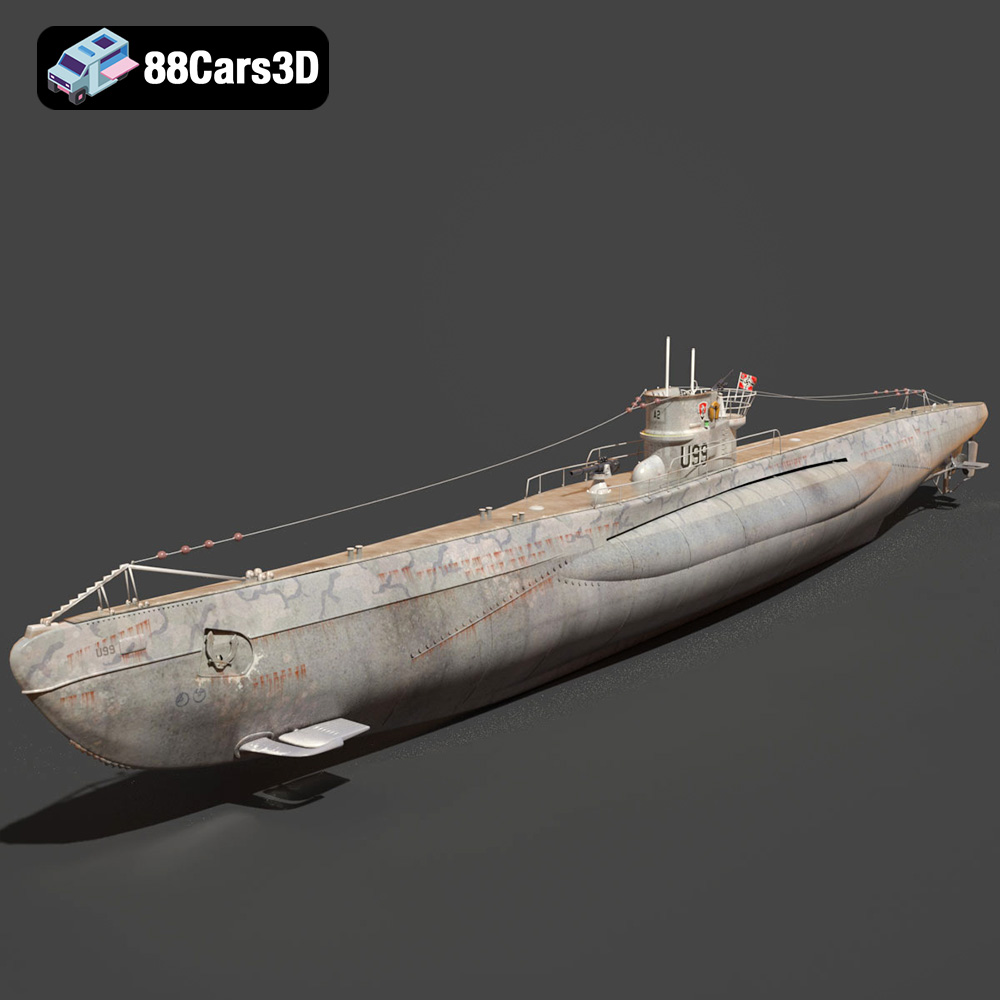
In the expansive world of 3D modeling, where imagination meets technical precision, the ability to recreate history with stunning accuracy holds immense power. Whether for educational purposes, immersive entertainment, or professional simulations, detailed historical assets are invaluable. Today, we delve into a prime example of such craftsmanship: the meticulously rendered German U-Boat U-99 Submarine 1940 3D Model. This asset isn’t just a collection of polygons; it’s a digital artifact, capturing the authentic scale and intricate design of a vessel renowned for its pivotal role in naval warfare during World War II.
The U-99, a Type VIIB U-Boat, commanded by the legendary Otto Kretschmer, etched its name into history with remarkable successes. Bringing such an iconic piece of maritime history into the digital realm requires a blend of artistic vision and rigorous technical execution. This professional-grade 3D model offers exceptional visual fidelity, making it suitable for everything from close-up cinematic renders to integration into large-scale virtual environments. Its clean, optimized geometry, realistic materials, and professionally created textures ensure an accurate representation of the weathered hull and complex mechanical components, ready for diverse applications from military game development to advanced AR/VR experiences. Through assets like this, sourced from platforms like 88cars3d.com, creators can build compelling narratives and immersive worlds that respect historical detail.
The versatility of any high-quality 3D asset lies not just in its visual fidelity but also in the range of file formats it supports. The German U-Boat U-99 Submarine 1940 3D Model exemplifies this by offering a comprehensive suite of formats, each tailored for specific professional workflows and applications. Understanding these formats is crucial for ensuring seamless integration and optimal performance in your projects.
The .blend file format is native to Blender, the popular open-source 3D creation suite. When you receive a .blend file for the U-Boat U-99, you’re not just getting the raw geometry; you’re getting a fully editable Blender scene. This typically includes the model, its materials, textures, a lighting setup, and often a camera configuration. This format is ideal for artists who primarily work in Blender, allowing for direct manipulation, re-texturing, animation, and rendering within a familiar environment without loss of data or needing to re-import assets. It retains all scene information, modifiers, and node-based materials, offering maximum flexibility for further development or customization.
.fbx (Filmbox) is one of the most widely adopted proprietary file formats for 3D content interchange, developed by Autodesk. It excels at transferring not just geometry and UVs but also materials (though often simplified), animations, cameras, and even skeletal data between different 3D software applications. For the U-Boat U-99, the .fbx version is designated as “game-engine ready.” This means it’s prepped for efficient import into engines like Unreal Engine and Unity, often with baked textures and optimized mesh topology. Its robust nature makes it an essential bridge between modeling software and real-time interactive platforms.
The .obj (Wavefront Object) format is a venerable and highly compatible format, often considered the “universal language” for 3D geometry. It stores vertex positions, UV coordinates, normals, and polygon faces, often accompanied by an .mtl (material library) file that defines basic material properties and links to texture maps. While it doesn’t support advanced features like animation or rigging, its simplicity ensures near-universal compatibility across virtually all 3D software packages, from Maya and 3ds Max to ZBrush and Substance Painter. The .obj version of the U-Boat U-99 ensures that the core geometric data is accessible to any artist, regardless of their primary software.
.glb (GLB format for GL Transmission Format) is a binary file format that encapsulates a 3D model, its textures, and PBR (Physically Based Rendering) materials into a single, self-contained file. It’s built for efficient transmission and loading in web applications, augmented reality (AR), virtual reality (VR), and mobile platforms. The .glb version of the U-Boat U-99 is specifically optimized for these performance-critical environments, providing a streamlined asset that loads quickly and renders accurately in real-time, making it perfect for interactive historical exhibits or educational AR apps.
.stl (STereoLithography) is the de facto standard file format for 3D printing. It represents a 3D object as a series of connected triangles (a tessellated surface) without color, texture, or other advanced attributes. When preparing the U-Boat U-99 for physical fabrication, the .stl format ensures that the geometric shell is accurately translated for FDM, SLA, or other 3D printing technologies. While it requires careful consideration of scale and detail resolution, it allows users to transform the digital model into a tangible replica.
The .ply (Polygon File Format or Stanford Triangle Format) is a format designed to store 3D data from 3D scanners, supporting a wider range of properties than .obj or .stl. It can include color, transparency, surface normals, and even data reliability for each vertex. For the U-Boat U-99, providing a .ply file offers a high-precision mesh suitable for advanced analysis, reverse engineering, or specialized scientific visualization where robust and detailed polygon information is paramount, potentially useful for engineering simulations or detailed historical documentation.
Specifically tailored for Unreal Engine, the .unreal format signifies an asset that has been pre-configured and optimized for direct integration into an Unreal Engine project. This often means textures are properly mapped, materials are set up with PBR principles in mind, and the mesh may already have appropriate collision data or LOD (Level of Detail) settings. For developers using Unreal Engine, this version of the U-Boat U-99 significantly reduces import and setup time, allowing for immediate use in game development or real-time architectural visualizations.
Similar to .blend for Blender, the .max file is the native format for Autodesk 3ds Max, a powerful 3D modeling, animation, and rendering software. This file contains the complete 3ds Max scene, including the U-Boat U-99 model, its materials (often V-Ray, Corona, or Standard Max materials), lighting, cameras, and any animation data. For professionals rooted in the Autodesk ecosystem, the .max file offers the highest degree of editability and control, enabling complex rendering setups, sophisticated animations, and seamless integration with other Autodesk products.
The availability of the U-Boat U-99 model in such a wide array of formats from 88cars3d.com underscores its professional utility and adaptability, ensuring that regardless of your software or project requirements, you have an optimal starting point.
Recreating a historical artifact like the German U-Boat U-99 demands more than just modeling skill; it requires a deep respect for historical accuracy and an unwavering commitment to technical precision. Every rivet, every weld line, and every functional component must be considered to truly bring the vessel to life in 3D.
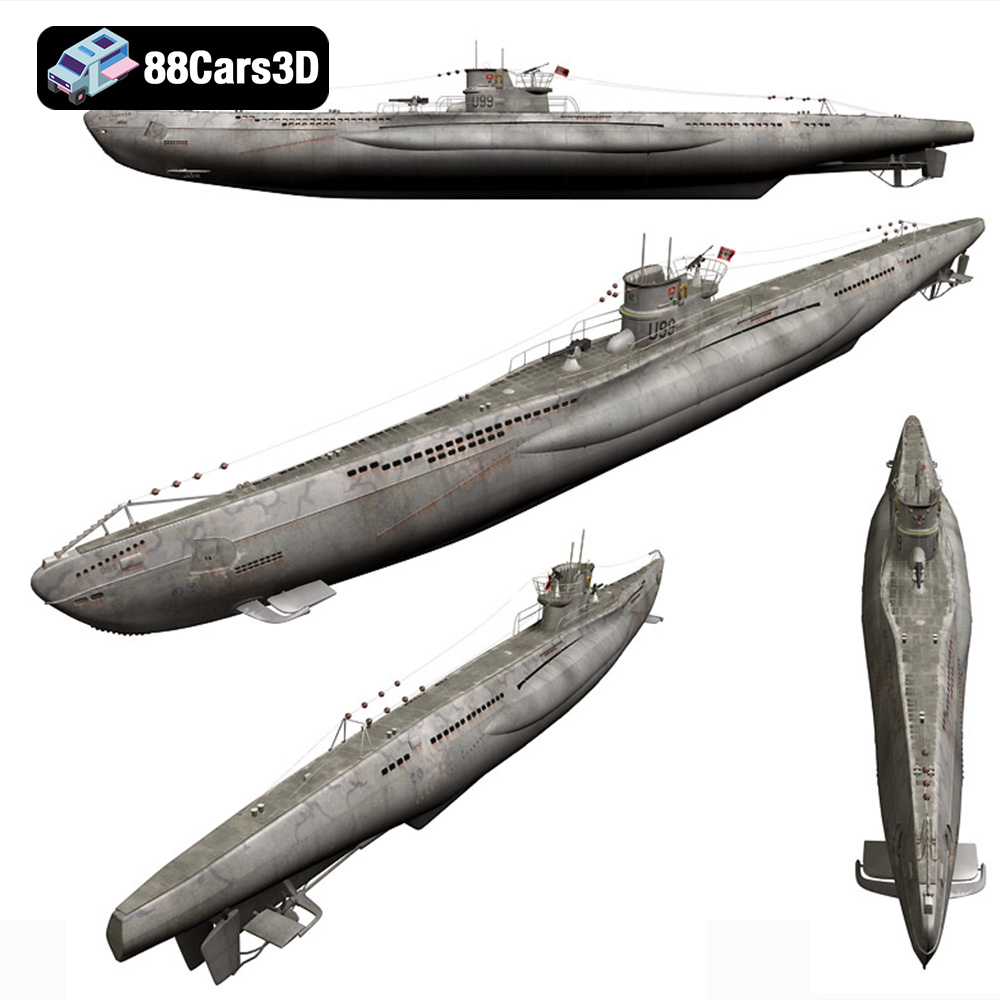
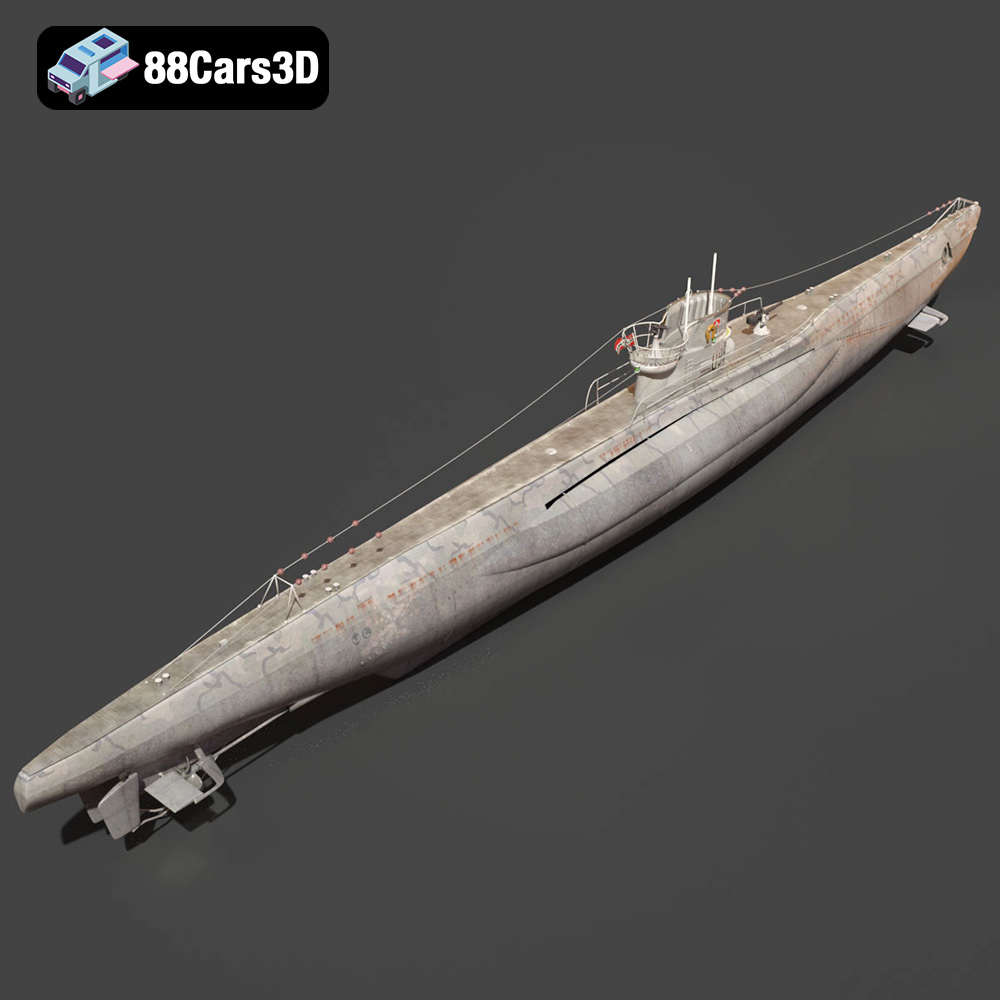
The German U-Boat U-99 Submarine 1940 3D Model stands as a testament to the meticulous work involved in historical recreation. The challenges are numerous: sourcing accurate blueprints and photographic references, understanding the construction methods of the era, and translating these details into a cohesive 3D form. For the U-99, this means accurately depicting the distinctive Type VIIB hull shape, the intricacies of the conning tower, the deck cannon, and even the subtle curves of the hydroplanes. It’s about capturing the functional aesthetic of a war machine, where every detail served a purpose, rather than merely creating a visually pleasing object. This model, available through 88cars3d.com, encapsulates that commitment to authenticity.
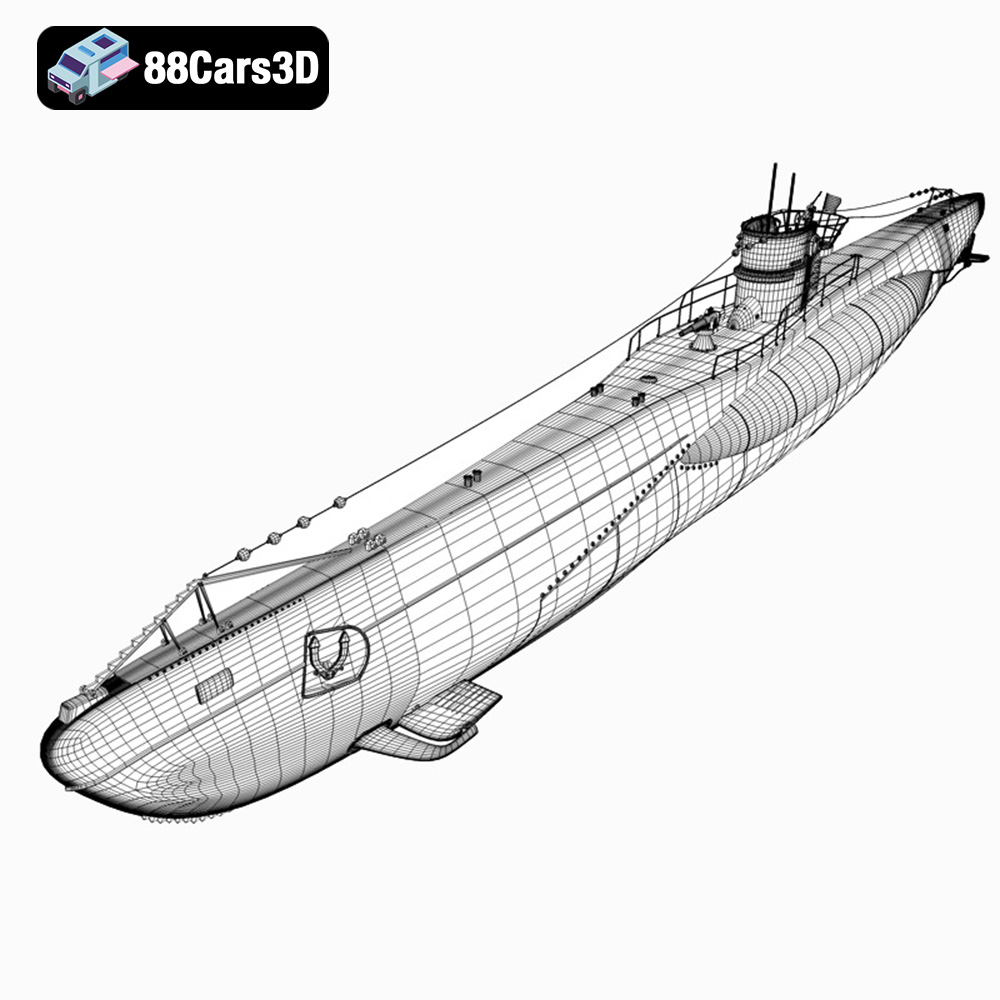
Professional 3D models must balance detail with performance. The U-Boat U-99 model achieves this through optimized geometry, ensuring a clean mesh that is efficient for real-time applications like game engines while retaining enough detail for high-resolution renders. This involves strategic polygon distribution, where crucial features are well-defined without excessive face counts. Furthermore, the model utilizes physically based rendering (PBR) materials and professionally created textures. PBR ensures that surfaces react to light in a realistic manner, accurately simulating the metallic sheen, the weathered paint, the rust streaks, and the grimy textures typical of a submarine that endured harsh naval operations. Clean UV unwrapping ensures texture fidelity and prevents stretching or distortion, making the asset ready for advanced rendering engines and game environments alike.
The versatility of the German U-Boat U-99 3D model makes it an invaluable asset across a spectrum of professional creative industries. Its availability in multiple formats ensures it can slot seamlessly into various production pipelines.
For game developers, historical accuracy combined with optimized performance is paramount. The U-Boat U-99 model, provided in game-engine-ready .fbx and pre-configured .unreal formats, is an ideal asset for military game development. Developers can import the model directly into Unreal Engine or Unity, utilizing its clean topology, optimized poly count, and PBR textures. It can serve as a primary player-controlled vessel, a crucial AI opponent, or a detailed background prop in naval battle simulations. The focus on intricate details, from the periscope to the deck railings, allows for a truly immersive experience where players can feel the history and engineering behind the vessel. This facilitates the creation of engaging WWII themes and realistic maritime strategy games.
The high visual fidelity of the U-Boat U-99 makes it perfect for cinematic sequences, documentary visualizations, and even as a striking centerpiece in architectural visualization projects that incorporate historical elements. Using the .max or .blend files, animators and rendering artists can leverage the full power of their chosen software – be it 3ds Max with V-Ray or Corona, or Blender with Cycles or Eevee. The detailed geometry and realistic materials ensure that the submarine holds up to extreme close-ups, allowing for dramatic camera angles and realistic lighting setups. Imagine a documentary sequence showing the U-99 surfacing, its weathered hull dripping water, brought to life with stunning realism. Even in an arch-viz context, perhaps for a museum exhibit conceptualization, the U-99 can provide a powerful historical anchor.
Augmented Reality (AR) and Virtual Reality (VR) platforms offer unparalleled opportunities for immersive learning and interactive experiences. The U-Boat U-99 model, especially in its optimized .glb format, is perfectly suited for these cutting-edge applications. Imagine a virtual museum tour where users can walk around, on, and even inside a historically accurate U-Boat, examining its features in 3D space. Educational visualizations can utilize AR to project the submarine into a classroom, allowing students to interact with a life-size digital replica. The efficiency of the .glb format ensures smooth performance on mobile devices and VR headsets, making these rich historical experiences accessible to a wider audience, transforming passive learning into active exploration.
While often associated with digital displays, 3D models can bridge the gap between virtual and physical realms. The U-Boat U-99 model extends its utility to physical fabrication and detailed geometric analysis.
The inclusion of the .stl format for the U-Boat U-99 opens up exciting possibilities for 3D printing. This format allows hobbyists, educators, and model makers to transform the digital design into a tangible, physical replica. Imagine printing a highly detailed scale model of the U-99 for display, a teaching aid for history classes, or even as a prototyping step for a larger model kit. While 3D printing requires careful consideration of scale, print resolution, and support structures for complex geometries, the .stl file provides a solid foundation. This capability underscores the tangible value of high-quality 3D assets from providers like 88cars3d.com, demonstrating that they are not just for screens but for real-world applications too.
The .ply file format, known for its ability to store precise polygon mesh data, offers unique applications beyond mere visualization. For projects requiring in-depth geometric analysis, reverse engineering studies, or historical data preservation, the .ply version of the U-Boat U-99 can be invaluable. Engineers or historians could use this data to perform structural integrity simulations (hypothetically, for educational purposes), analyze the vessel’s hydrodynamics, or simply archive an extremely accurate digital representation of the submarine’s form. While this is a more niche application, it highlights the comprehensive nature of the model and its potential for academic and specialized research, where the fidelity of the raw mesh data is critical.
In today’s fast-paced creative industries, time is often the most valuable commodity. Developing high-quality 3D models from scratch can be incredibly resource-intensive, requiring extensive research, modeling, texturing, and optimization. This is where professional-grade, ready-to-use assets like the German U-Boat U-99 Submarine 1940 3D Model prove their worth.
Acquiring a meticulously crafted 3D model like the U-Boat U-99 immediately saves countless hours of development time. Instead of spending weeks on research, modeling, and texturing, artists and developers can integrate the asset directly into their projects. This not only speeds up production cycles but also frees up valuable resources that can be allocated to other critical aspects of a project, such as gameplay mechanics, narrative development, or scene composition. The clean topology and optimized nature of the U-99 model ensure that less time is spent on clean-up or rework, allowing for immediate productivity.
The quality of individual assets directly impacts the overall quality and realism of a project. Using a professionally built model, such as this U-Boat, ensures that your project benefits from high-fidelity details, accurate proportions, and realistic materials. This elevation in quality is crucial for creating compelling visual experiences, whether it’s a historically accurate simulation that commands respect, a cinematic sequence that captivates an audience, or an interactive AR/VR experience that feels truly immersive. Investing in premium 3D models from reputable marketplaces like 88cars3d.com is an investment in the final output’s professional polish and impact.
The German U-Boat U-99 Submarine 1940 3D Model is more than just a digital asset; it’s a gateway to recreating history, building immersive worlds, and pushing the boundaries of visual storytelling. Its meticulous craftsmanship, historical accuracy, and comprehensive support for a multitude of file formats (from .blend and .max for detailed rendering to .fbx and .unreal for game development, and .glb for AR/VR) make it an exceptionally versatile tool for professionals across various industries. Whether your goal is to develop a historically accurate game, produce a compelling documentary, create an interactive educational experience, or even 3D print a physical replica, this model provides an unparalleled foundation.
By offering such a high-quality, ready-to-use asset, platforms like 88cars3d.com empower creators to focus on their vision, accelerating workflows and elevating the overall quality of their projects. This U-Boat U-99 model is a testament to the power of 3D to preserve history and inspire future generations. Explore the possibilities and integrate this iconic vessel into your next masterpiece.
Introducing the meticulously crafted 3D model of the German WWII Type VIIB U-Boat U-99, known for its pivotal role in naval warfare. This asset captures the authentic scale and detailed design of the historic naval vessel, providing exceptional visual fidelity suitable for close-up renders and detailed virtual environments. The geometry is clean and optimized for performance across various platforms while maintaining intricate details, including the conning tower, deck cannon, and hydroplanes. Realistic materials and professionally created textures ensure accurate representation of the weathered hull and mechanical components. This asset is built to professional standards for reliability and ease of integration. This detailed asset is ideal for historical simulations, military game development, educational visualization projects, cinematic sequences, and immersive AR/VR experiences focused on World War II themes or maritime history.
$10