Get 20% OFF All Premium 3D & STL Models!

The world of 3D modeling continually pushes the boundaries of digital realism, bringing everything from fantastical creatures to architectural marvels to life. Among the most challenging and rewarding subjects for 3D artists is the automobile. A true blend of engineering and design, cars possess a unique allure that translates powerfully into digital environments. Whether for high-octane racing games, stunning architectural visualizations, immersive AR/VR experiences, or captivating cinematic renders, the demand for meticulously crafted 3D car models remains consistently high.
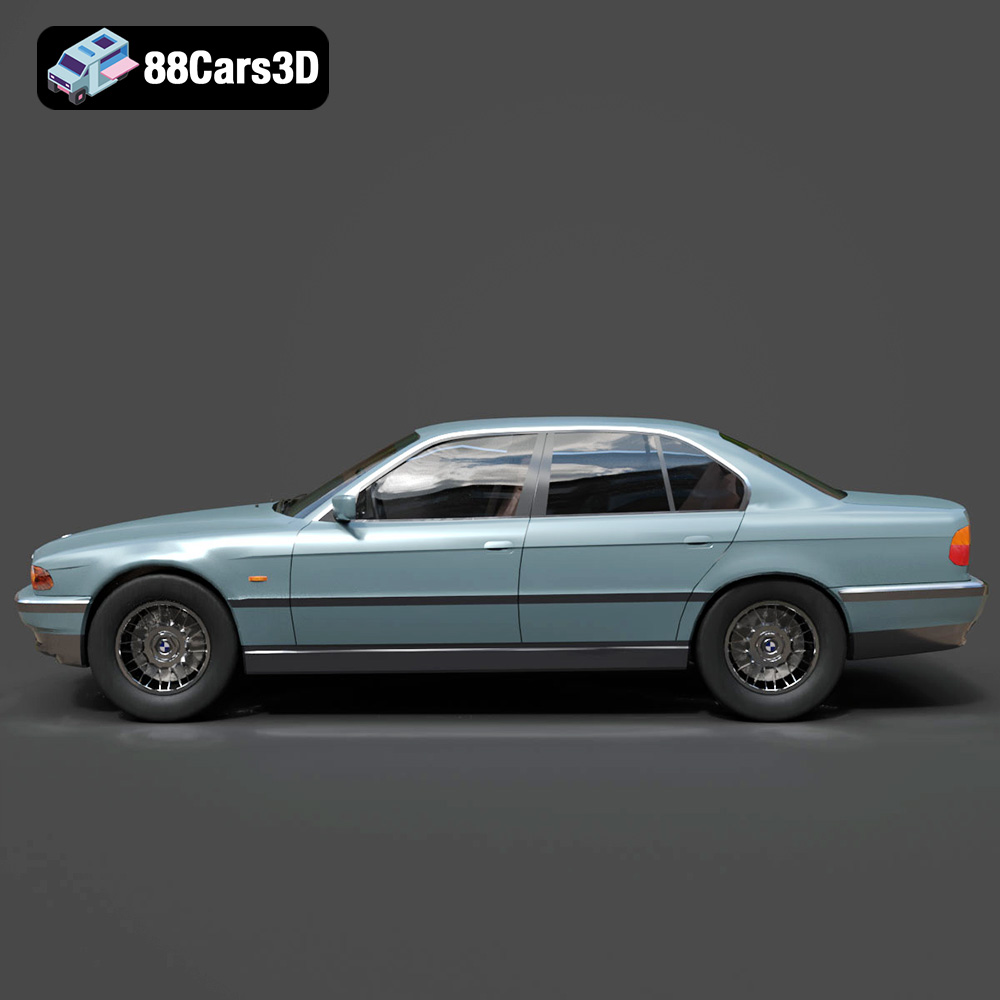
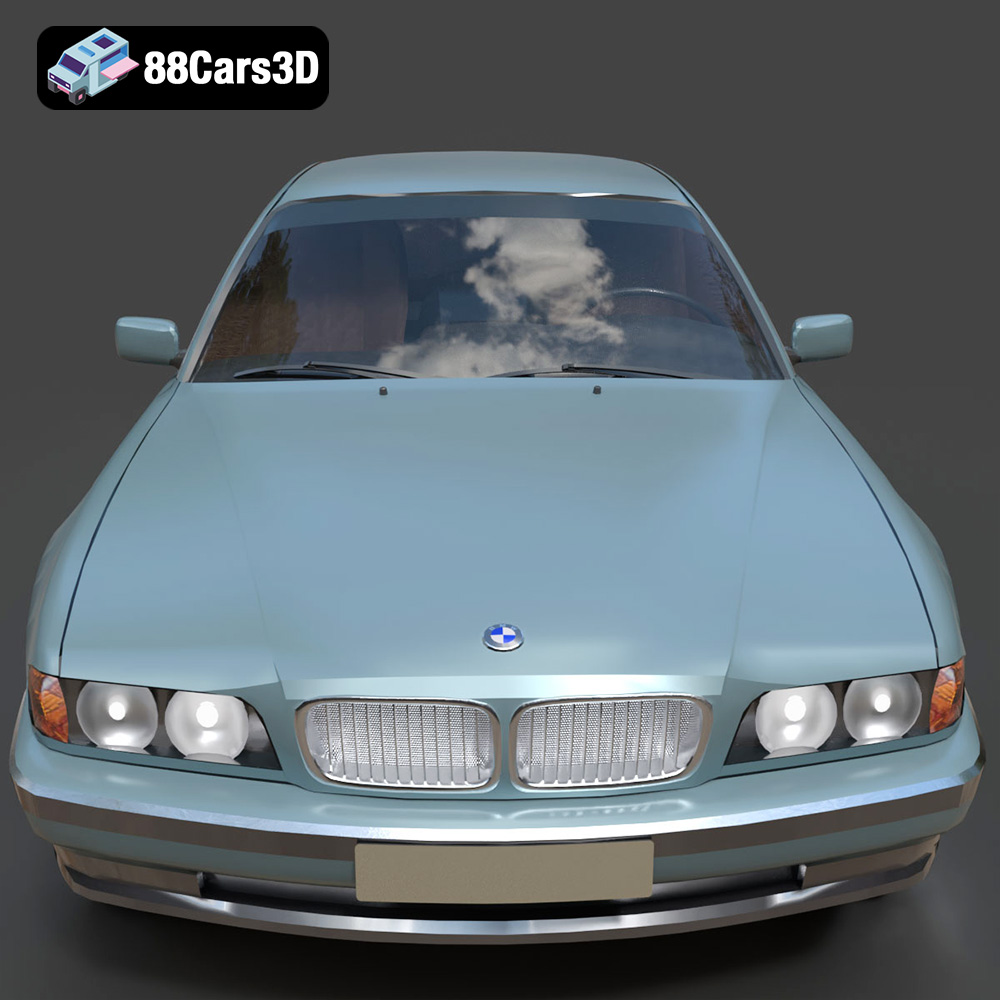
One such automotive icon, celebrated for its timeless elegance and sophisticated engineering, is the BMW 7 Series E38. Produced from 1994 to 2001, this luxury full-size sedan perfectly embodies a golden era of German automotive design. For 3D artists and developers looking to integrate this classic into their projects, acquiring a high-quality, pre-made model is often the most efficient and effective solution. This is where assets like the BMW 7 Series E38 3D Model from 88cars3d.com become invaluable, offering a blend of historical accuracy, technical robustness, and versatile compatibility.
In the complex ecosystem of 3D production, selecting the correct file format is paramount. It dictates not only compatibility across various software and engines but also influences workflow efficiency, data integrity, and the ultimate application of your 3D car models. A professional-grade asset, such as the BMW 7 Series E38 3D Model, typically provides a comprehensive suite of formats to ensure maximum versatility. Understanding each is crucial for any serious 3D artist or developer.
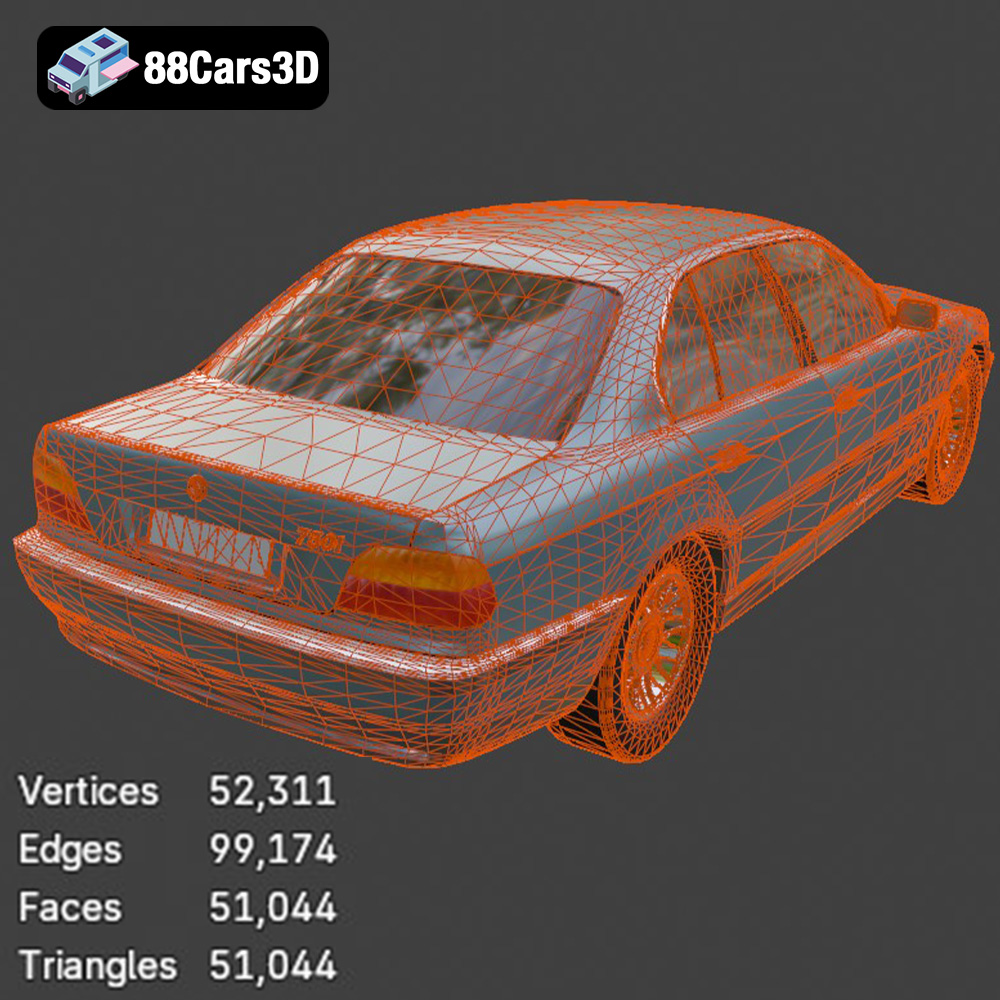
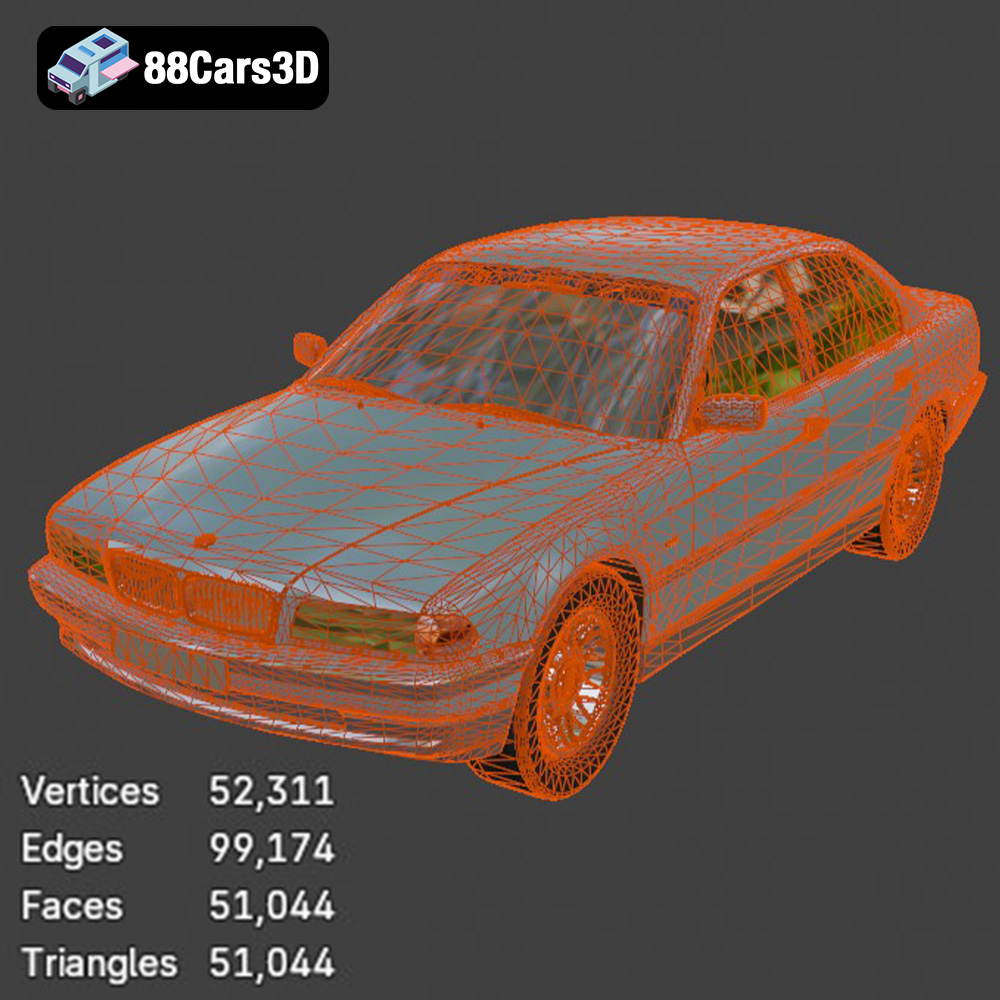
The .blend format is the native file type for Blender, one of the most popular open-source 3D content creation suites. When you receive a .blend file, you’re not just getting the mesh data; you’re getting a complete Blender scene. This includes all materials, textures, lighting setups, cameras, animations, modifiers, and even scene settings. For artists deeply integrated into the Blender ecosystem, this format offers the highest degree of editability and flexibility. It allows for direct manipulation of the model’s clean quad-dominant topology, easy adjustment of UV unwrapping, and full control over the PBR (Physically Based Rendering) materials, making it ideal for customization and further development.
Autodesk’s .fbx (Filmbox) format has long been the gold standard for exchanging 3D data between different software applications and real-time engines. It supports a vast array of 3D data, including mesh geometry, materials, textures, animations, rigging, and even camera and light information. Its robust support for animation makes it particularly crucial for game development with engines like Unreal and Unity, where animated car components (doors, wheels, suspensions) are essential. When importing an .fbx, artists can expect excellent preservation of hierarchical relationships and animation curves, making it highly reliable for complex automotive rendering and simulation projects.
The .obj (Object) format is one of the oldest and most widely supported 3D file formats. Often referred to as the “universal” format, it’s a simple, text-based format primarily used to store 3D geometry (vertices, normals, texture coordinates, and faces). While it doesn’t embed animations or complex material properties directly, it typically references external .mtl (Material Template Library) files for basic material definitions and texture paths. Its widespread compatibility makes it an excellent choice for cross-software integration when you primarily need to transfer mesh data, ensuring your BMW 7 Series E38 3D Model can be opened and worked with in virtually any 3D application.
.glb (GL Transmission Format Binary) is a modern, compact, and efficient file format designed specifically for the transmission and loading of 3D models in web-based, AR, and VR applications. It’s essentially a binary version of glTF, embedding all necessary assets—geometry, textures, animations, and PBR materials—into a single file. This self-contained nature and optimization for real-time rendering make it perfect for showcasing 3D car models directly in browsers, augmented reality apps, or lightweight virtual environments without complex setup. It’s an ideal choice for quickly deploying the BMW 7 Series E38 in interactive product configurators or mobile AR experiences.
The .stl (Stereolithography) format is the ubiquitous standard for 3D printing. It represents a 3D model as a collection of unconnected triangular facets, tessellating the surface of the object. While it carries no color or texture information, its simplicity makes it universally compatible with 3D printers and slicing software. For projects requiring a physical prototype or a scale model of the BMW 7 Series E38, converting the digital asset to .stl is the crucial first step. Designers can then fine-tune it for printability, ensuring optimal wall thickness and structural integrity.
The .ply (Polygon File Format) is another mesh format primarily used for storing 3D data from 3D scanners, CAD applications, or scientific data visualization. It supports a wider range of properties than .obj, including color, transparency, and even normal and depth information per vertex or face. This precision makes it valuable for engineering visualizations, reverse engineering workflows, or detailed analysis of the BMW E38’s geometry, especially if integrating with CAD software or simulation tools.
The .unreal designation often refers to an asset that has been specifically prepared or packaged for direct import and optimal performance within the Unreal Engine. This can include pre-configured material instances, LODs (Levels of Detail), collision meshes, and proper hierarchical setups tailored to Unreal’s asset pipeline. For game developers or real-time visualization specialists using Unreal Engine, this format streamlines the integration process, saving significant time on asset preparation and ensuring the BMW 7 Series E38 3D Model performs flawlessly within the engine’s demanding real-time environment.
Similar to .blend for Blender, .max is the native file format for Autodesk 3ds Max, a powerful and widely used software for 3D modeling, animation, and rendering in professional visualization and game development studios. A .max file includes all scene data, such as geometry, materials (V-Ray, Corona, Arnold setups), textures, lights, cameras, modifiers, and animations. For artists working within 3ds Max, this format provides full control over every aspect of the BMW 7 Series E38 3D Model, enabling complex animation sequences, advanced rendering setups, and seamless integration into existing 3ds Max projects.
Automotive rendering is an intricate discipline, blending technical prowess with artistic vision to create photorealistic or stylized depictions of vehicles. The quality of the underlying 3D car models is paramount to achieving stunning results. A model like the BMW 7 Series E38, meticulously crafted and optimized, provides the perfect foundation for high-end visualization.
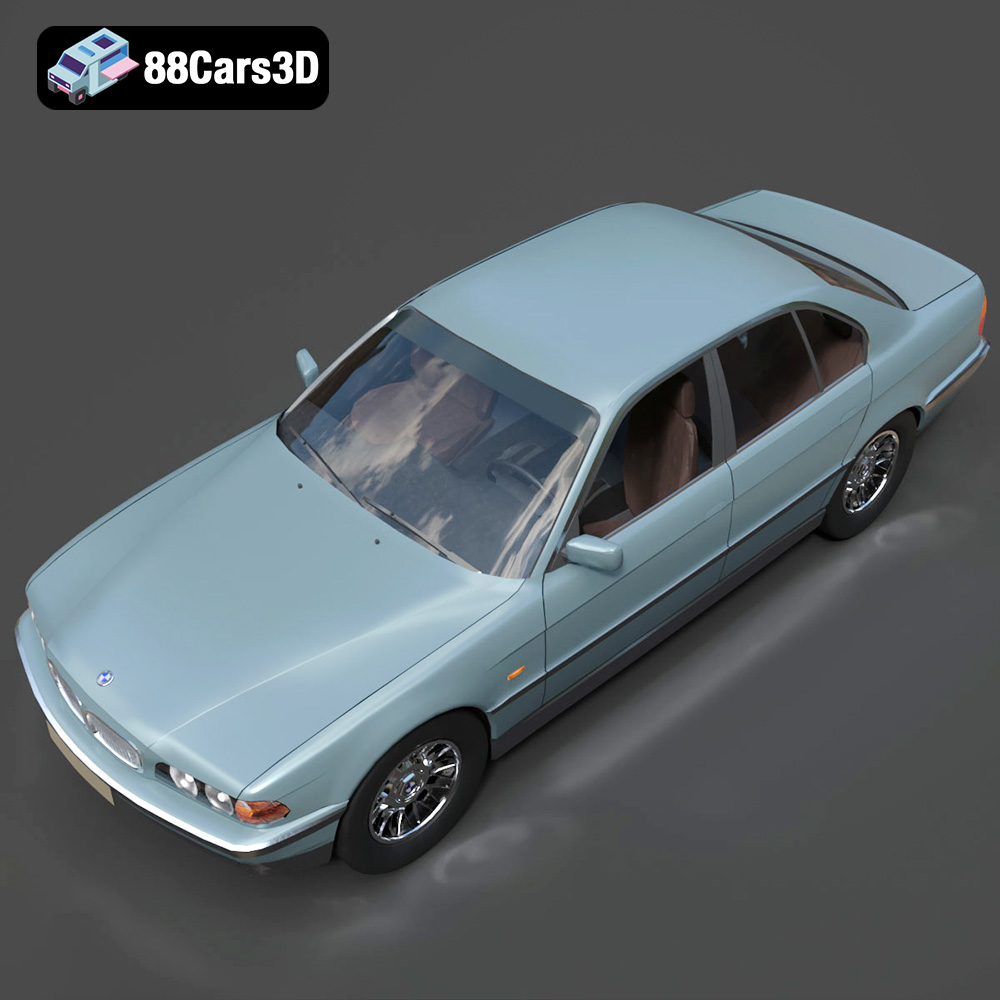
Achieving photorealism in automotive rendering hinges on several critical factors, primarily realistic lighting and physically accurate materials. Professionals often leverage HDRI (High Dynamic Range Image) maps for environment lighting, replicating real-world lighting conditions, or employ sophisticated studio lighting setups with virtual softboxes and area lights to highlight the vehicle’s curves and reflections. The BMW 7 Series E38 3D Model excels here with its accurately modeled body panels and separated components, allowing light to interact realistically with its surfaces. Furthermore, its UV unwrapping and appropriate texture mapping are crucial for applying high-fidelity PBR materials – think glossy car paint, reflective chrome, textured rubber, and clear glass. Every detail, from the authentic wheel designs to the transparent materials of headlights and taillights, contributes to the overall believability, making it ideal for cinematic scenes and architectural visualizations where the car serves as a hero asset.
Beyond static renders, animating 3D car models unlocks a world of storytelling possibilities. From dynamic turntable presentations to elaborate driving sequences, animation breathes life into the digital vehicle. A professional model like the BMW 7 Series E38 is built with animation in mind: its doors, hood, and trunk are separated components with proper pivot points, allowing for easy opening, closing, and other interactive animations. Imagine a cinematic sequence showcasing the E38 gliding through a city street, or a close-up revealing its luxurious interior as a door slowly opens. Artists working in 3ds Max or Blender can leverage these features to create compelling visual narratives, adding another layer of value to their projects. Such assets are fundamental for automotive configurators, marketing materials, and virtual presentations.
While photorealistic rendering aims for visual fidelity at any computational cost, game development and real-time applications demand a delicate balance between visual quality and performance. High-quality 3D car models that are optimized for real-time engines are essential for creating immersive and fluid interactive experiences.
Game assets, especially vehicles, must be efficient to render in real time, often appearing alongside numerous other objects and complex environments. This necessitates careful management of poly counts and polygon density. The BMW 7 Series E38 3D Model from 88cars3d.com is designed with “optimized mesh quality to balance detail with performance,” meaning it strikes this crucial equilibrium. For demanding scenarios, developers might employ LODs (Levels of Detail), where simplified versions of the model are rendered when the car is further from the camera, dynamically swapping to higher-detail versions as it approaches. The clean quad-dominant topology of the E38 model ensures smooth subdivision for high-detail close-ups, while also being efficient enough for lower LODs without major sacrifices in visual integrity.
Unreal Engine and Unity are the two titans of real-time development, and integrating 3D car models seamlessly into these platforms is a key workflow consideration. The inclusion of .fbx and .unreal formats for the BMW 7 Series E38 3D Model highlights its readiness for these environments. The .fbx format ensures that the mesh, UVs, and hierarchical structure (for animation) transfer cleanly. Once in the engine, PBR texture maps (albedo, normal, roughness, metallic, ambient occlusion) are applied to create realistic materials. For Unreal Engine users, the dedicated .unreal file often means a pre-setup project, potentially including materials, LODs, and even basic collision meshes, significantly accelerating the development pipeline. This “engine-ready” approach dramatically reduces the manual work involved, allowing game designers to focus on gameplay and interaction rather than asset cleanup.
The versatility of professional 3D car models extends far beyond traditional rendering and gaming. Emerging technologies like Augmented Reality (AR), Virtual Reality (VR), sophisticated simulations, and physical 3D printing are increasingly leveraging high-fidelity digital assets to create new experiences and products.
AR and VR offer unparalleled opportunities to interact with 3D car models in new ways. Imagine placing a virtual BMW 7 Series E38 in your driveway using an AR app on your phone, or exploring its meticulously detailed interior in a VR showroom. The .glb format included with the BMW 7 Series E38 3D Model is specifically optimized for these applications. Its compact size and embedded textures make it ideal for web-based AR/VR viewers, allowing for fast loading and smooth interaction across devices. Companies can use this for interactive product showcases, virtual dealerships, or even educational modules that allow users to virtually dismantle and reassemble components of the classic sedan.
For engineering, training, and automotive research, highly accurate 3D models are indispensable. The BMW 7 Series E38 3D Model, with its real-world scale and clean geometry, is perfectly suited for driving simulators, automotive training modules, and engineering visualizations. Formats like .ply, with their capability for precision mesh data, can be used in specialized analysis software where highly accurate surface information is crucial. This allows for detailed studies of aerodynamics, component fit, or even crash simulations, providing valuable insights without the need for physical prototypes. The basic undercarriage and engine bay details, though optimized for exterior renders, provide enough information for a convincing simulation environment.
The journey of a 3D model doesn’t always end on a screen; it can transition into the physical world through 3D printing. The inclusion of an .stl format for the BMW 7 Series E38 3D Model opens up avenues for creating tangible replicas. Artists and enthusiasts can print scale models, prototypes, or custom parts. While .stl is the standard, considerations for printability, such as ensuring sufficient wall thickness and minimizing overhangs, are important. The clean geometry of the source model makes this conversion and preparation process much smoother, resulting in higher quality physical prints that accurately reflect the E38’s distinctive lines and refined presence.
In professional 3D production pipelines, efficiency and quality are paramount. Ready-to-use, high-fidelity assets like the BMW 7 Series E38 3D Model from 88cars3d.com are not just time-savers; they are strategic investments that empower artists and studios to deliver exceptional results consistently.
While the BMW 7 Series E38 3D Model is delivered in a high-quality state, professional projects often require specific customization. Its clean quad-dominant topology and UV unwrapping are crucial here. Artists can easily modify paint finishes, experimenting with different metallic flakes, clear coat levels, and custom colors to match a brand’s aesthetic or a client’s vision. Adding custom graphics, racing liveries, or specific decals becomes straightforward due to the clean UVs. Beyond the exterior, adjusting material properties for metals, chrome, rubber, glass, and plastics allows for fine-tuning the visual style to match a specific rendering engine or lighting environment. This level of flexibility ensures that the classic E38 can be adapted to any contemporary or historical scene without compromise.
Time is a valuable commodity in any production. Starting a project with a scratch-built car model can consume weeks or even months of an artist’s time, especially for complex vehicles like the BMW 7 Series E38. By acquiring a pre-made, professional-grade 3D car model, studios can dramatically cut down on initial development time. The organized hierarchy of the E38 model, with proper pivot points for easy manipulation and animation of parts, further streamlines the workflow. This allows artists to immediately jump into scene assembly, lighting, animation, or engine integration. For studios operating under tight deadlines and budgets, investing in high-quality assets from reputable marketplaces like 88cars3d.com is not just a convenience; it’s a strategic decision that enhances productivity and project success.
The BMW 7 Series E38 stands as a testament to timeless automotive design, and its digital counterpart, the BMW 7 Series E38 3D Model, offers artists and developers an unparalleled opportunity to bring this classic to life in their projects. From the exacting standards of automotive rendering and visualization to the performance demands of game development and the innovative frontiers of AR/VR and 3D printing, this model proves its versatility and robust technical foundation.
With its clean geometry, detailed features, real-world scale, and a comprehensive suite of included file formats (.blend, .fbx, .obj, .glb, .stl, .ply, .unreal, .max), this asset is engineered for professional pipelines. It empowers creators to focus on their artistic vision and project goals, rather than wrestling with complex modeling challenges. For anyone seeking to integrate a blend of luxury, detail, and historical automotive significance into their digital creations, the BMW 7 Series E38 3D Model from 88cars3d.com is an indispensable addition to their asset library, promising quality and efficiency across the spectrum of 3D applications.
Experience the timeless elegance and sophisticated engineering of the BMW 7 Series E38 with this meticulously crafted 3D model. Representing the iconic luxury full-size sedan produced from 1994 to 2001, this model captures the distinctive lines and refined presence of a true automotive classic. Built with clean geometry and balanced detailing, it is optimized for high-quality rendering, realistic animation, immersive simulation, and efficient integration into game development projects.
Exterior Features:
Interior / Mechanical Features:
Technical Advantages:
Applications:
Customization Options:
This BMW 7 Series E38 3D model offers a professional-grade asset for any project requiring a blend of luxury, detail, and historical automotive significance. Its versatility across multiple platforms and applications makes it an indispensable addition to your 3D asset library.
Included File Formats:
Tags:
.bmw,.7seriese38,.luxurycar,.sedan,.classiccar,.rendering,.simulation,.gameasset,.arvr,.blend,.fbx,.obj,.glb,.stl,.ply,.unreal,.maxLamborghini Diablo SV 1995 3D Model
$10.79
.7seriese38
.arvr
.blend
.bmw
.classiccar
.fbx
.gameasset
.glb
.luxurycar
.max
.obj
.ply
.rendering
.sedan
.simulation
.stl
.unreal