

Unleashing Potential: The Versatility of High-Fidelity 3D Vehicle Models
In the dynamic world of digital content creation, the demand for highly detailed and accurate 3D models continues to skyrocket. From breathtaking cinematic sequences and immersive game environments to cutting-edge virtual reality experiences and precision engineering visualizations, the quality of a 3D asset can make or break a project. Automotive design, in particular, thrives on realism, requiring models that capture every curve, material property, and intricate detail with uncompromising fidelity.
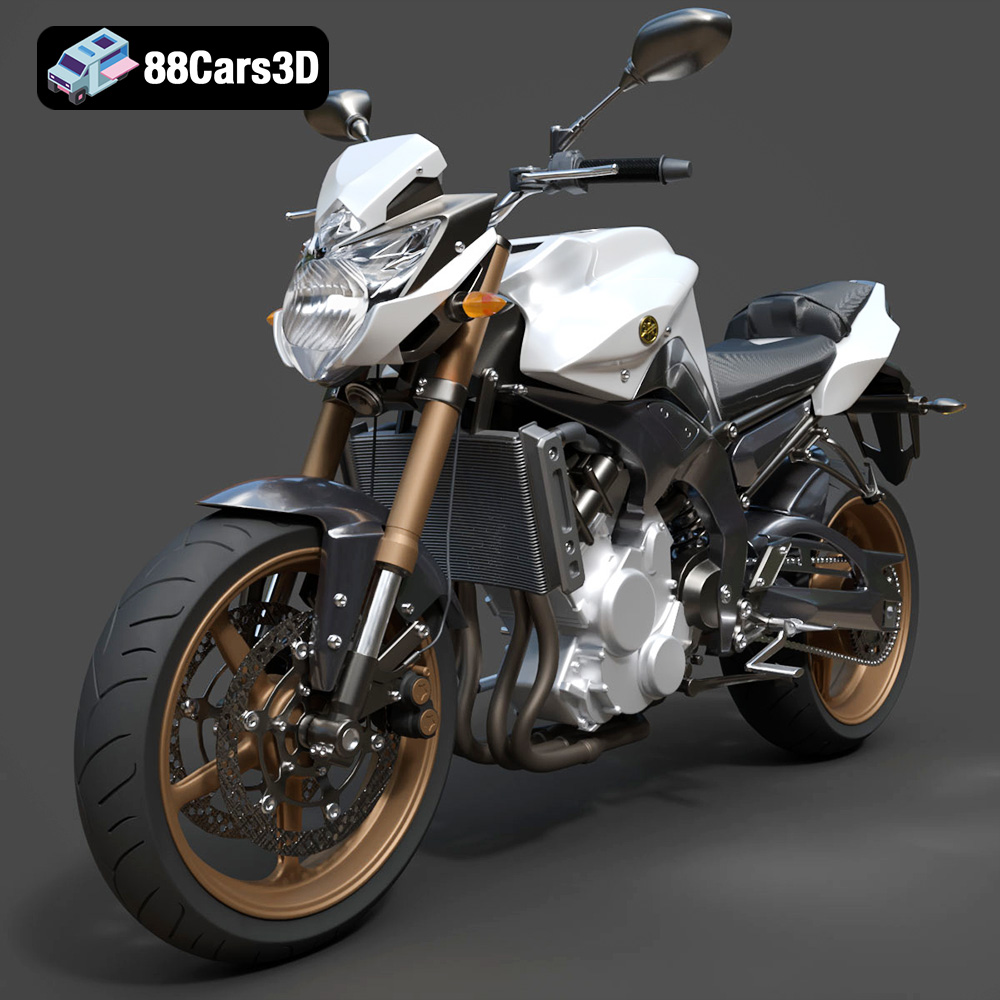
This pursuit of perfection is precisely where expertly crafted 3D vehicle assets prove invaluable. Imagine bringing the raw power and distinctive styling of an iconic naked sports bike, like the Yamaha FZ8 2011, directly into your digital workspace. A meticulously engineered 3D model of such a machine doesn’t just represent a vehicle; it embodies a design philosophy, ready to be showcased in demanding visualization projects. Whether you’re an independent game developer, a seasoned architectural visualiser, or an advertising agency striving for unparalleled realism, the right 3D model serves as the cornerstone of your creative endeavors. Models available on platforms like 88cars3d.com offer this level of professional-grade quality, streamlining workflows and elevating output across various industries.
Understanding 3D Model File Formats: The Backbone of Digital Assets
The choice of file format is a critical decision in any 3D workflow, directly impacting compatibility, functionality, and performance across different software and platforms. High-quality 3D car models, and indeed any complex asset like the Yamaha FZ8 2011 3D Model, are often provided in multiple formats to ensure maximum versatility. Understanding these formats is key to leveraging the full potential of your digital purchases.
.blend – The Power of Native Blender Scenes
The .blend format is the native file type for Blender, an incredibly popular open-source 3D creation suite. When a model is provided in .blend format, it typically includes the complete scene: mesh geometry, materials, textures, lighting setups, cameras, and even animation data. For users working within Blender, this means immediate access to a fully editable project, allowing for easy modifications, re-texturing, rigging, or integration into existing Blender scenes without any loss of data. The Yamaha FZ8 2011 model, offered as a native Blender file, empowers artists with complete creative freedom, making it an excellent starting point for custom rendering or animation projects.
.fbx – The Industry Standard for Interoperability
.fbx (Filmbox) stands as one of the most widely adopted proprietary file formats for 3D exchange across various software and game engines, including Unreal Engine and Unity. Developed by Autodesk, FBX excels at preserving a wide array of 3D data, such as geometry (meshes), materials, textures, animations, skinning, and camera information. Its robust support for animation data makes it an ideal choice for importing animated characters, vehicles, or complex scenes into real-time pipelines. For the Yamaha FZ8 2011 3D Model, the .fbx version is game-engine ready, signifying that it’s optimized for real-time performance, potentially including LODs (Levels of Detail) and proper scaling for immediate integration into interactive experiences.
.obj – The Universal Geometry Carrier
The .obj (Wavefront OBJ) format is a venerable and highly compatible format, often considered the “lowest common denominator” for 3D geometry exchange. It primarily stores vertex positions, UV texture coordinates, vertex normals, and polygonal faces. While it’s excellent for transferring static mesh data between almost any 3D software application, it generally doesn’t store advanced features like animation, rigging, or complex material networks (though it can reference external .mtl material library files). The .obj version of the Yamaha FZ8 2011 3D Model is perfect for users who need a clean, universal mesh to import into less common software packages or for those who prefer to set up materials and lighting from scratch in their chosen application.
.glb – Optimized for AR, VR, and Web
.glb is the binary version of the glTF (GL Transmission Format) format, specifically designed for efficient transmission and loading of 3D scenes and models by engines and applications. It packages all assets (geometry, textures, animations, PBR materials) into a single, compact file, making it incredibly popular for augmented reality (AR), virtual reality (VR), and web-based 3D applications. Its focus on real-time rendering and small file size makes the .glb variant of the Yamaha FZ8 2011 ideal for interactive web viewers, AR apps on mobile devices, or lightweight VR experiences where performance and quick loading are paramount.
.stl – The Standard for 3D Printing
.stl (STereoLithography) is the de facto standard file format for 3D printing. Unlike other formats that describe surfaces using NURBS or polygons, STL represents a 3D model as a series of connected triangles (a tessellation) that approximate the surface geometry. It’s a “dumb” format in that it carries no color, texture, or material information, focusing solely on the geometric shape. For the Yamaha FZ8 2011, the .stl file would enable physical prototyping or printing of the motorcycle, providing a tangible representation of the digital model. It’s essential that models for STL conversion have watertight geometry to ensure successful prints.
.ply – Precision Mesh for CAD or Analysis
The .ply (Polygon File Format, or Stanford Triangle Format) is a versatile format for storing 3D data, particularly known for its ability to save data from 3D scanners. It can store not just the geometry but also color, transparency, and even properties like normals and texture coordinates for each vertex or face. While not as universally supported for general 3D work as .obj or .fbx, .ply is a precision mesh format often used in scientific, medical, and engineering fields for detailed analysis, reverse engineering, or high-fidelity visualization where capturing surface properties is crucial. Its inclusion for the Yamaha FZ8 2011 suggests a commitment to detailed polygon mesh data, useful for specific analytical or high-precision rendering tasks.
.unreal – Engine-Ready for Real-time Environments
The .unreal designation typically refers to assets specifically configured for Unreal Engine, often supplied as a native .uasset file or a folder structure ready for direct import and use within the engine. This means the model has likely undergone specific optimization steps, such as proper scaling, collision setup, material instances, and possibly even Blueprint configurations, to ensure seamless integration and optimal performance within Unreal Engine’s real-time environment. For game developers or real-time configurators, the .unreal version of the Yamaha FZ8 2011 3D Model drastically reduces setup time and ensures compatibility, allowing for immediate iteration and deployment.
.max – The Versatility of Native 3ds Max Projects
The .max format is the native file type for Autodesk 3ds Max, another industry-leading 3D modeling, animation, and rendering software. Similar to .blend, a .max file contains the entire scene, including all geometry, modifiers, materials, textures, lighting, cameras, and animation data. For professionals relying on 3ds Max for their architectural visualization, product rendering, or automotive advertising projects, having the Yamaha FZ8 2011 model in its native .max format offers unparalleled flexibility. It allows artists to leverage 3ds Max’s powerful toolset, specific renderers like V-Ray or Corona, and extensive plugin ecosystem without any translation or conversion issues.
The availability of the Yamaha FZ8 2011 3D Model in such a comprehensive range of formats underscores its versatility and the producer’s understanding of diverse professional needs. This multi-format approach ensures that whether your workflow centers around rendering, game development, AR/VR, or even 3D printing, you have the right asset for the job.
Crafting Realism: The Art and Science of Automotive Rendering
Automotive rendering is an exacting discipline, demanding a perfect blend of artistic vision and technical prowess. High-quality 3D car models are the foundation upon which stunning visual narratives are built. For a model like the Yamaha FZ8 2011, its meticulous engineering translates directly into superior rendering results, whether for advertising campaigns, design reviews, or film productions.
Advanced Material Creation for Photo-Realism
Achieving photo-realism hinges on sophisticated material setups. The Yamaha FZ8 2011 3D Model, with its fully textured components and realistic material definitions, provides an excellent starting point. Modern rendering engines utilize Physically Based Rendering (PBR) workflows, where materials are defined by properties like albedo (base color), roughness, metallic, normal maps, and displacement maps. For a motorcycle, this means accurately replicating the subtle sheen of painted metal, the rough texture of tire rubber, the transparency of headlights, and the complex reflections on chrome elements. A well-constructed 3D model like this one provides optimized UVs (Unwrap UVW) and texture maps, allowing artists to immediately apply or customize these PBR shaders with confidence that the textures will align perfectly and react realistically to light.
Lighting Techniques for Dynamic Visuals
Just as in traditional photography, lighting is paramount in 3D rendering. The quality of a 3D model allows artists to focus on creative lighting without being bogged down by mesh issues. For automotive rendering, common techniques include High Dynamic Range Imaging (HDRI) environments to simulate real-world lighting conditions, often combined with targeted area lights or spotlights to highlight specific features of the Yamaha FZ8 2011. Studio lighting setups, using softboxes and reflectors, create clean, controlled reflections ideal for product shots. Dynamic lighting, such as simulating dawn or dusk, adds dramatic flair, while the model’s precise geometry ensures accurate shadows and reflections, enhancing the sense of depth and realism.
Post-Production and Compositing for Impact
The rendering process doesn’t end when the image is calculated. Post-production and compositing are crucial steps to elevate raw renders into compelling final images. A clean, well-rendered base image from a high-quality 3D model provides ample data for adjustments. This can involve color grading, adding atmospheric effects like fog or dust, lens flares, depth of field, and motion blur. For the Yamaha FZ8 2011 in an advertising context, compositing it into a photographic backplate or integrating it with other CGI elements demands precision. The robust nature of the model ensures that elements like reflections and shadows integrate seamlessly, making the digital bike indistinguishable from a real photograph.
Game Development Integration: From Concept to Console
The game industry stands as a colossal consumer of 3D assets, where the line between cinematic quality and real-time performance is constantly blurring. Integrating detailed 3D car models or motorcycles into game engines like Unreal Engine and Unity requires a specific approach to optimization without sacrificing visual integrity. The Yamaha FZ8 2011 3D Model is described as “game-engine ready,” a testament to its suitability for this demanding environment.
Optimizing for Real-time Performance
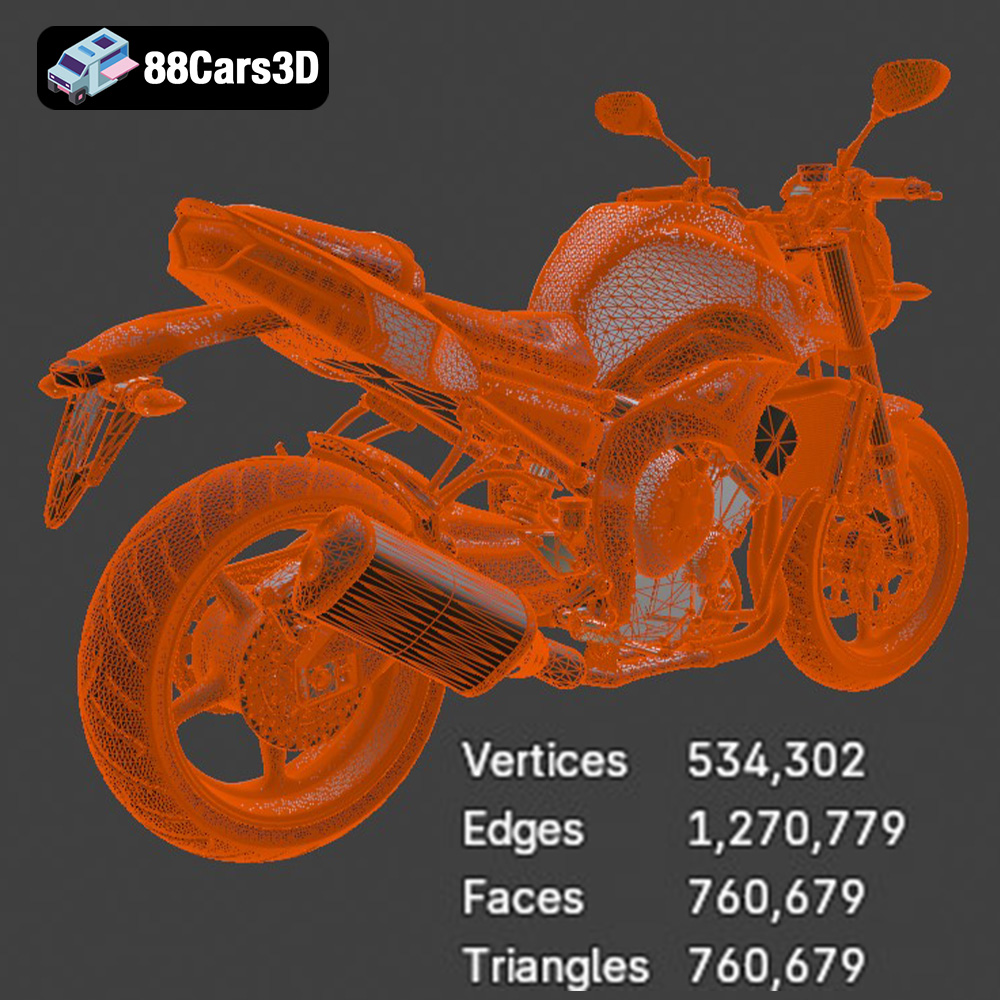
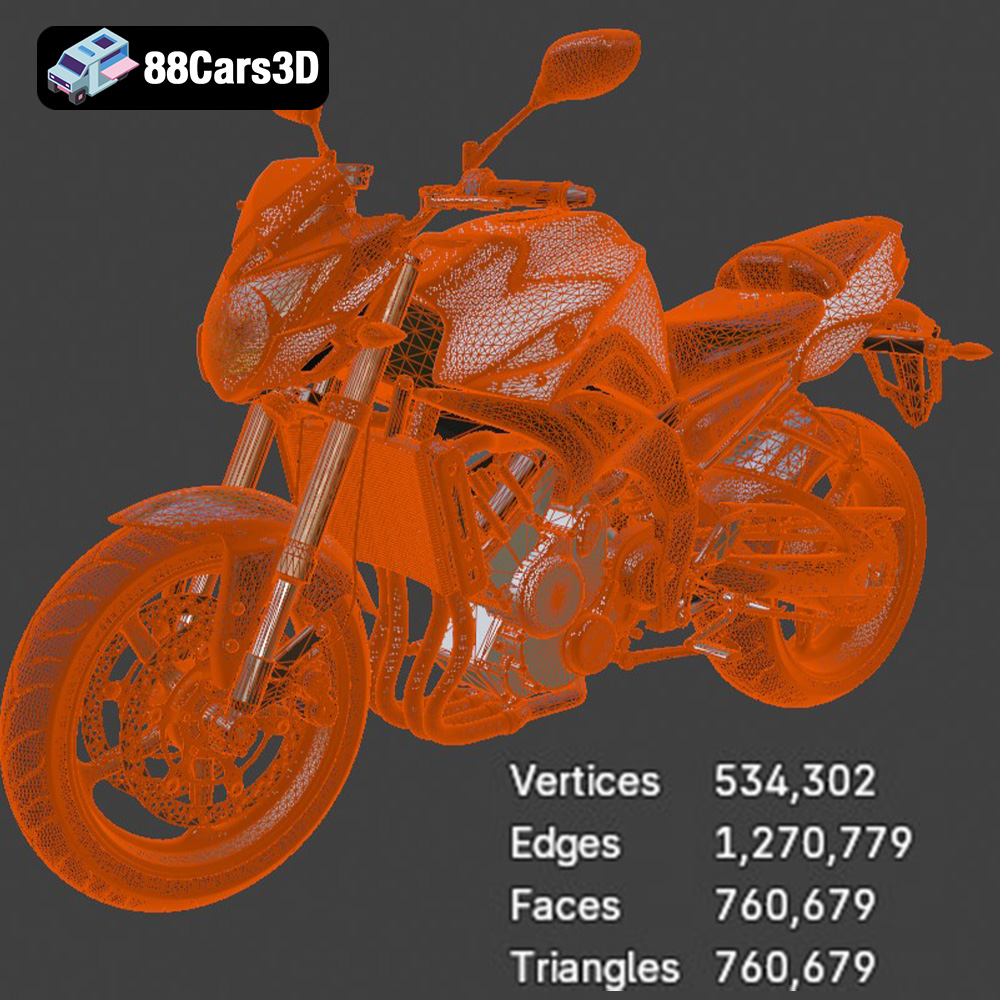
While cinematic renders can afford incredibly high polygon counts, game engines require efficiency. A well-optimized 3D model balances visual detail with performance considerations. This often involves clean geometry with logical mesh subdivision, which means polygons are distributed efficiently, avoiding unnecessary density in flat areas. Crucially, Levels of Detail (LODs) are implemented. These are progressively simpler versions of the model that are swapped in as the camera moves further away, drastically reducing the poly count and draw calls, thereby improving frame rates. For the Yamaha FZ8 2011, a game-ready asset would likely come with multiple LODs, ensuring it looks great up close and performs efficiently in a busy open-world environment.
Setting Up Physics and Interactivity
Beyond visual fidelity, game assets need to be interactive. For a motorcycle, this involves setting up physics, collision detection, and potentially animation for wheels, suspension, and handlebars. A clean mesh structure allows for easier creation of collision meshes – simplified versions of the model used purely for physics calculations. Joint hierarchies for rigging the wheels, steering, and suspension components are also essential. The accuracy of the Yamaha FZ8 2011 model’s dimensions ensures that its physics simulation will behave realistically within the game engine, providing an authentic driving experience.
Leveraging the .fbx and .unreal Formats
The inclusion of both .fbx and .unreal formats for the Yamaha FZ8 2011 3D Model is particularly beneficial for game developers. The .fbx format provides a versatile pipeline for initial import into Unreal or Unity, carrying over meshes, materials, and potential skeletal rigging. However, the .unreal format goes a step further by offering a pre-configured, engine-native asset. This means the model has likely been imported, optimized, and set up within Unreal Engine already, saving countless hours for developers. This could include pre-built Material Instances, optimized texture atlases, proper collision volumes, and possibly even basic Blueprint scripts for vehicle control, making it a true plug-and-play solution for game projects. Assets from 88cars3d.com are designed with such practical applications in mind, ensuring a smooth transition from marketplace to project.
Expanding Horizons: AR/VR, Simulation, and 3D Printing
The applications of high-quality 3D models extend far beyond traditional rendering and game development. The immersive nature of AR/VR, the precision required for simulations, and the tangible results of 3D printing all benefit immensely from well-constructed digital assets like the Yamaha FZ8 2011.
Immersive Experiences with AR/VR
Augmented Reality (AR) and Virtual Reality (VR) environments demand highly optimized 3D models to maintain smooth frame rates and prevent motion sickness. The Yamaha FZ8 2011 3D Model, optimized for these platforms, is perfect for creating interactive showrooms, virtual test drives, or immersive training simulations. Its .glb format is particularly suited for this, as it bundles all necessary data into a single, compact file, ideal for quick loading in mobile AR apps or standalone VR headsets. Imagine walking around the FZ8 in a virtual garage, examining its details up close, or even placing it in your real-world driveway via AR – all made possible by a meticulously prepared model.
High-Fidelity Simulations and Training
Beyond entertainment, 3D models are critical tools in professional simulations and training. From driver training programs to mechanic diagnostics, accurate vehicle models provide a safe and cost-effective way to practice complex procedures. The detailed construction and accurately scaled dimensions of the Yamaha FZ8 2011 make it ideal for such applications. Training simulations can leverage its realistic material setups to show wear and tear, or its internal geometry (if included) for maintenance training. Its clean geometry ensures reliable performance, whether in a high-fidelity vehicle simulator or an interactive educational module.
Prototyping and Manufacturing with 3D Printing
The inclusion of the .stl format for the Yamaha FZ8 2011 3D Model opens up avenues for rapid prototyping and even small-scale manufacturing. While an entire motorcycle might be too large for a single print, individual components or scaled-down versions can be printed for physical review. Engineers and designers can use the .stl file to create tangible models for design validation, ergonomic testing, or presentation. This bridge between the digital and physical realms is invaluable for product development cycles, allowing for iterative design improvements before committing to expensive production tooling. The .ply format, with its ability to store precision mesh data, could also be used for detailed surface analysis or for generating manufacturing toolpaths.
Professional Workflows: Leveraging High-Quality Assets
In a professional environment, time is money, and efficiency is paramount. The strategic use of pre-made, high-quality 3D assets is a powerful way to streamline production, ensure consistency, and elevate the overall standard of work. The Yamaha FZ8 2011 3D Model exemplifies an asset designed to fit seamlessly into demanding professional workflows across various creative industries.
Accelerating Production Schedules
Developing a 3D model from scratch, especially one as intricate as a modern motorcycle, is a time-consuming and resource-intensive process. It requires expert modeling skills, meticulous attention to detail, and a deep understanding of PBR texturing. By purchasing a ready-made asset like the Yamaha FZ8 2011 from 88cars3d.com, studios and individual artists can dramatically reduce their production timeline. Instead of spending weeks or months on modeling and texturing, they can immediately integrate the bike into their scenes, freeing up valuable time to focus on creative direction, animation, lighting, and rendering. This acceleration is crucial for meeting tight deadlines in advertising, film, and game development.
Maintaining Visual Consistency Across Projects
For agencies and studios working on multiple projects, maintaining a consistent level of visual quality and style is essential for brand identity and client satisfaction. High-quality 3D models provide a reliable baseline. When using the Yamaha FZ8 2011 in various renders, animations, or interactive experiences, artists know they are starting with an asset built to a professional standard. This consistency is particularly important in large-scale game development, where many assets must blend seamlessly together, or in automotive advertising, where brand perception is critical. The meticulous engineering of such models ensures that they will look exceptional regardless of the specific project context.
Customization and Adaptability of the Yamaha FZ8 2011 Model
While ready-to-use, professional 3D models are also built for adaptability. The Yamaha FZ8 2011 3D Model, provided in fully editable formats like .blend and .max, offers extensive customization potential. Artists can easily modify materials to match specific brand colors, add custom decals, or even alter components to represent different aftermarket parts or concept designs. For game developers, this means the model can be skinned with different paint jobs or tweaked for specific in-game aesthetics. The clean geometry and logical mesh subdivision facilitate these modifications, ensuring that changes can be made efficiently without breaking the model’s structure or UVs. This flexibility makes it a valuable asset for a wide range of creative challenges, from faithful recreations to imaginative re-interpretations.
Conclusion: The Enduring Value of Precision 3D Assets
The digital landscape is one of constant innovation, where the demand for immersive experiences and visually stunning content only grows. At the heart of this evolution lies the unparalleled quality of expertly crafted 3D models. The Yamaha FZ8 2011 3D Model stands as a prime example of such an asset, meticulously engineered to meet the rigorous demands of modern visualization and interactive media.
From providing the foundational geometry for breathtaking automotive rendering to serving as an optimized game-ready asset for real-time engines, and even enabling physical prototyping through 3D printing, its versatility is unmatched. The comprehensive range of included file formats – from native .blend and .max scenes to industry-standard .fbx, universal .obj, web-optimized .glb, and specialized .stl and .unreal files – ensures that professionals across every discipline can seamlessly integrate this model into their workflows. It exemplifies how high-quality 3D car models not only accelerate production schedules but also elevate the final output to a level of realism and detail that captivates audiences.
For any professional seeking to enhance their projects with premium 3D assets, investing in a model like the Yamaha FZ8 2011 is a strategic decision. It’s an investment in efficiency, quality, and the boundless creative possibilities that only precision digital assets can unlock. Explore this model and many other exceptional 3D car models at 88cars3d.com, and take the first step towards transforming your digital creations.
Featured 3D Model
Yamaha FZ8 2011 3D Model
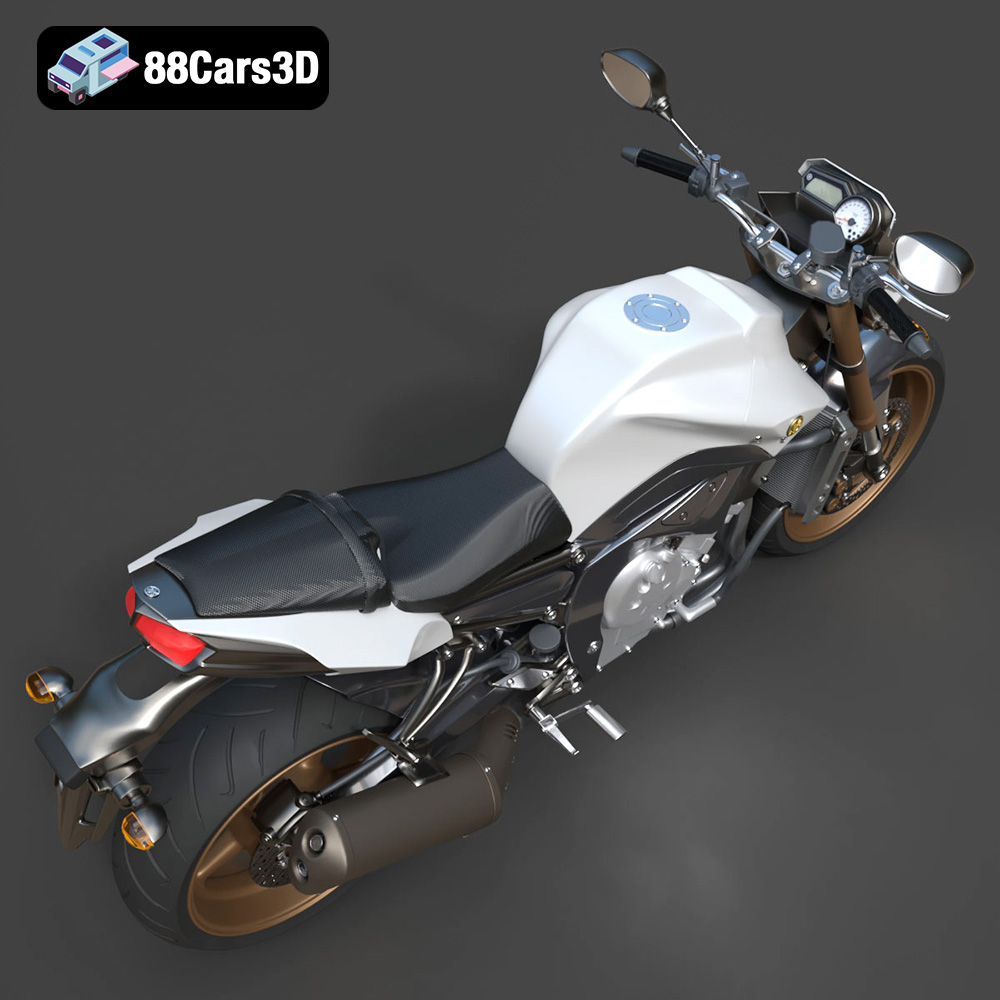
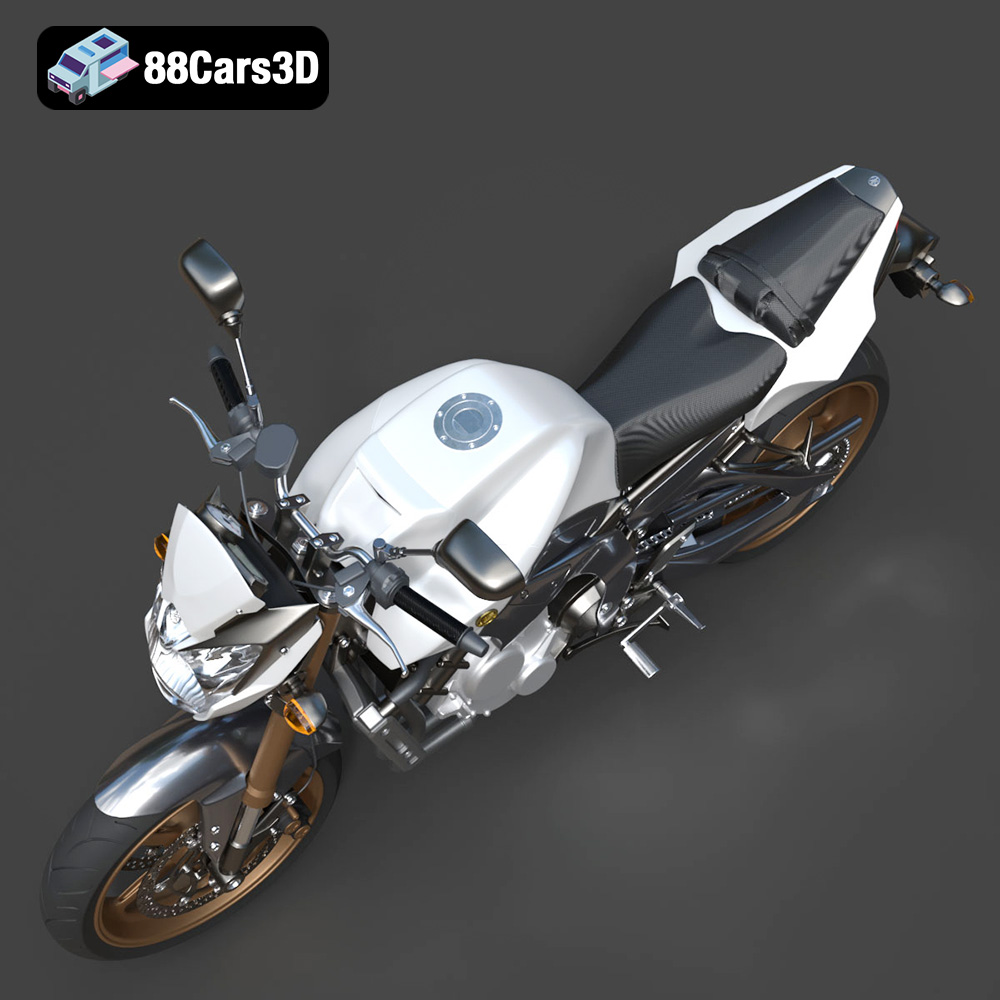
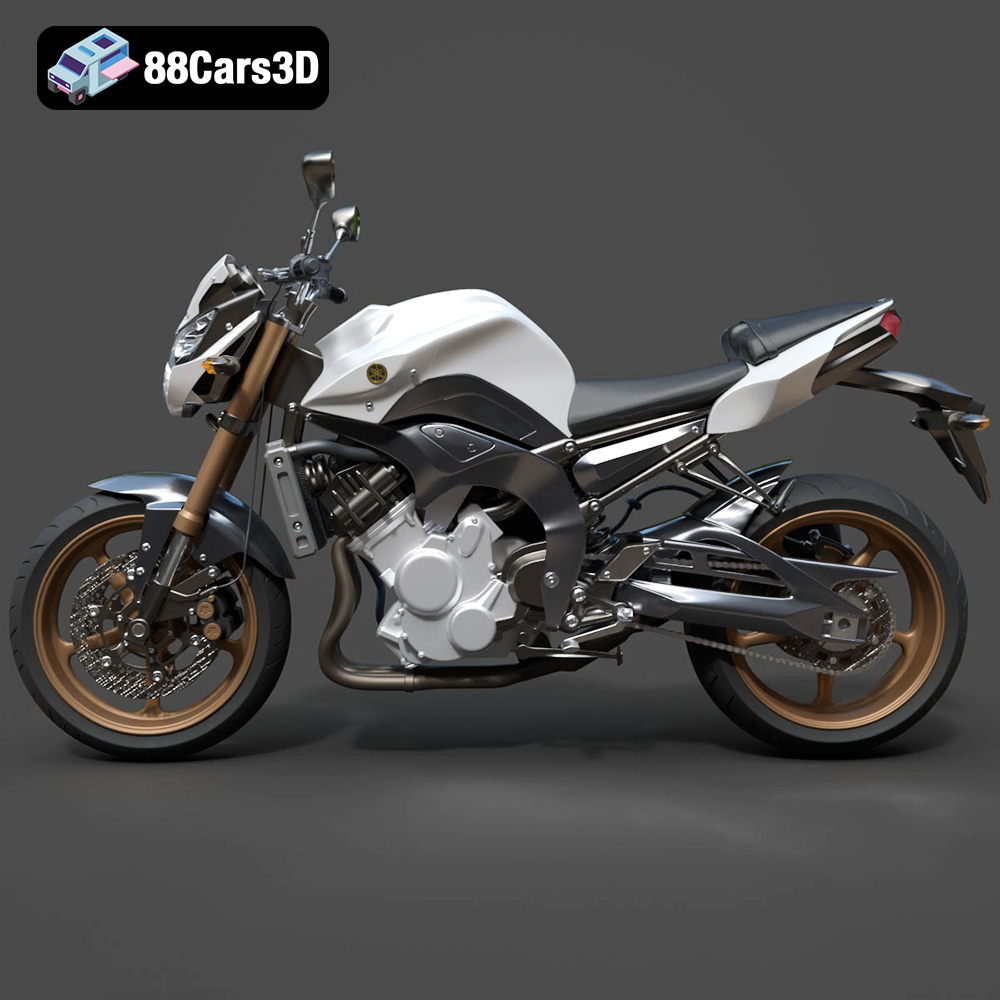
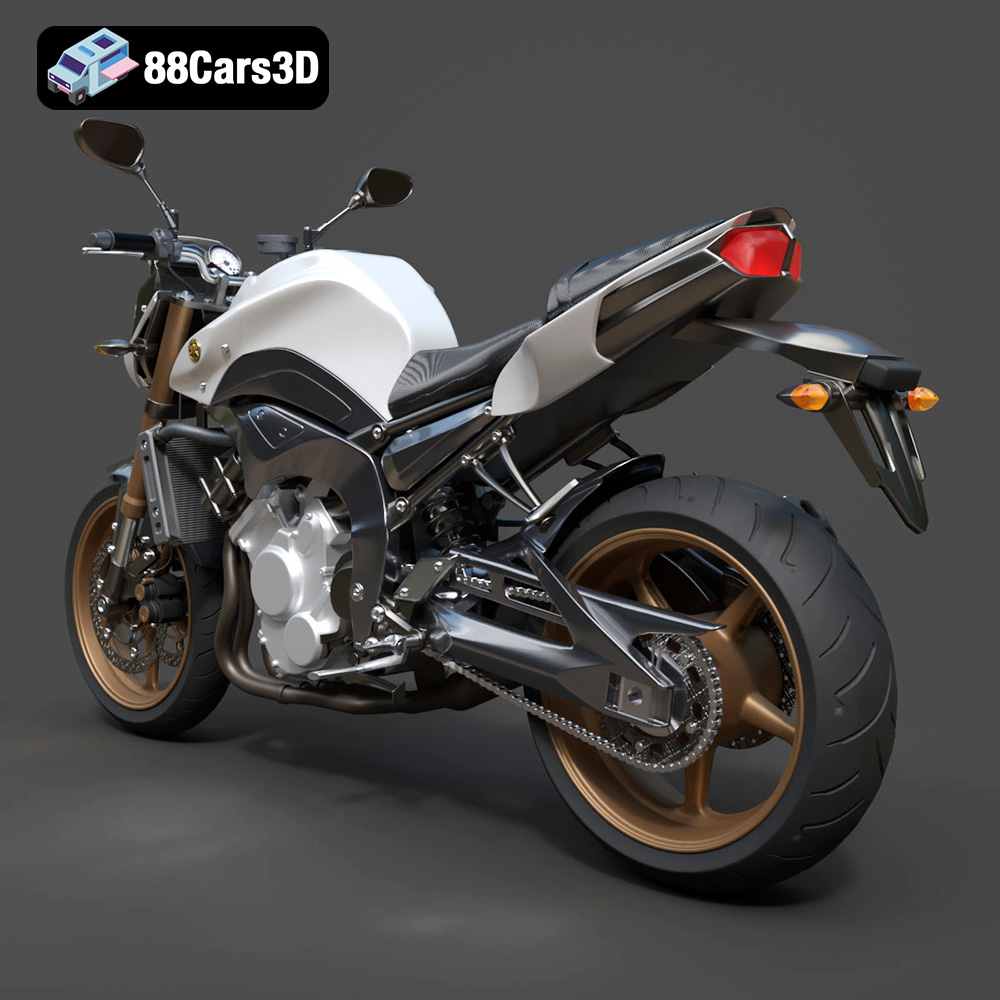
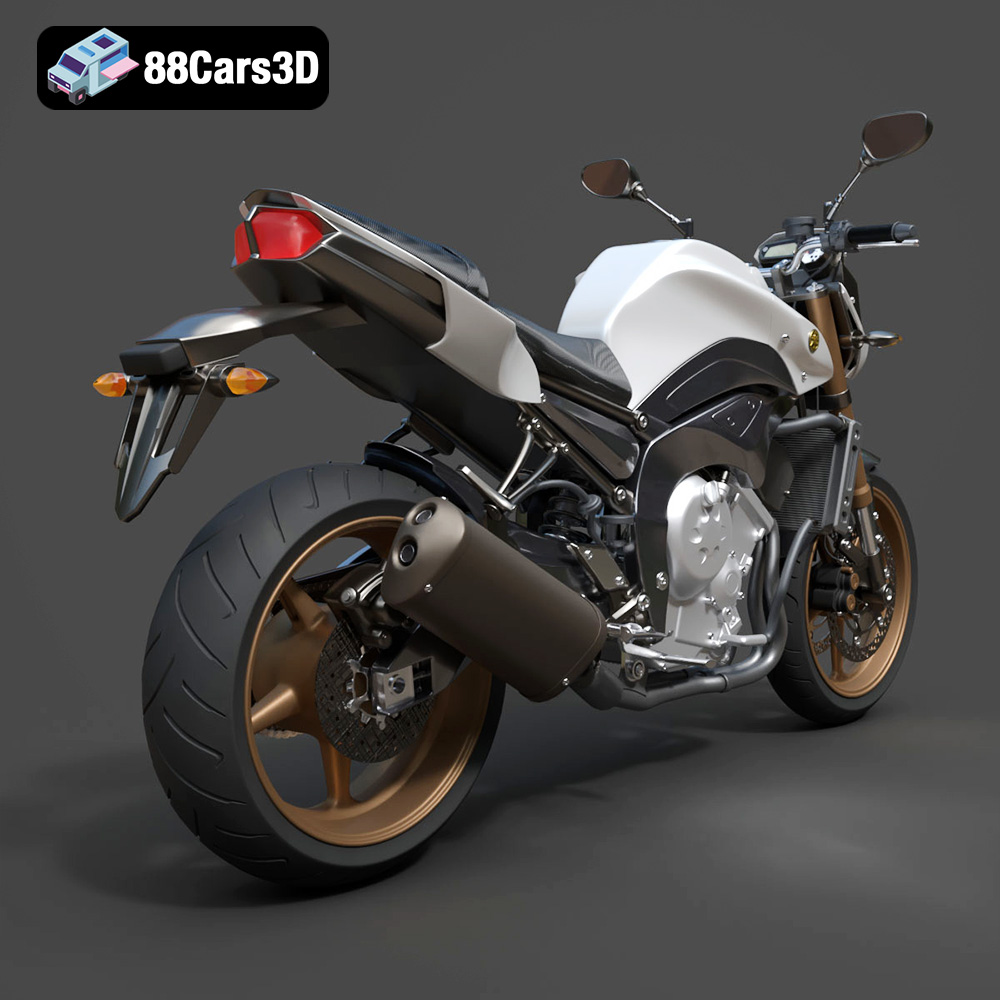
Capture the raw power and distinctive styling of the Yamaha FZ8 2011 with this meticulously engineered 3D model. Developed to reflect the exact specifications of the iconic naked sports bike, this asset provides exceptional visual fidelity suitable for demanding visualization projects. This 3D vehicle asset is built with optimized, clean geometry and logical mesh subdivision, ensuring smooth performance across various 3D applications. The model includes fully textured components, realistic material setups, and accurately scaled dimensions, ready for immediate integration into your scene or project. Ideal for diverse professional applications, including cinematic rendering, automotive advertising, immersive training simulations, virtual reality (VR) environments, and large-scale game development (Unreal Engine/Unity). The detailed construction ensures reliable performance whether viewed up close or integrated into a complex environment.
$19.99
Product Image Gallery
Related Tags
.arvr
.blend
.car3dmodel
.fbx
.fz8
.fzx
.gameasset
.glb
.max
.motorcycle
.nakedbike
.obj
.ply
.rendering
.simulation
.sportbike
.stl
.unreal
.yamaha
