Get 20% OFF All Premium 3D & STL Models!

The roar of a finely-tuned engine, the sleek lines of a performance chassis, and the exhilarating blend of luxury and raw power define the modern sports sedan. For automotive enthusiasts and digital creators alike, capturing this essence in the virtual realm presents a unique challenge and opportunity. Whether you’re a seasoned professional in game development, a meticulous artist focused on automotive rendering, or an innovator building immersive AR/VR experiences, the demand for exceptionally detailed and versatile 3D car models is ever-present.
In this comprehensive guide, we’ll explore the intricate world of professional 3D car modeling, focusing on the technical demands and creative possibilities it offers. We’ll delve into various workflows, file formats, and optimization techniques essential for bringing high-fidelity vehicles to life in diverse applications. Central to our discussion will be an exemplary asset: the BMW M3 2024 3D Model, a precision-engineered asset available on 88cars3d.com that perfectly encapsulates the blend of aggressive styling and dynamic performance of its real-world counterpart. This model serves as an ideal case study for understanding what makes a premium 3D vehicle asset invaluable to any professional pipeline.
Choosing the right 3D model file format is not a trivial decision; it’s a foundational step that dictates compatibility, performance, and the level of detail retained across different software and platforms. A high-quality asset like the BMW M3 2024 3D Model, designed for professional use, offers a range of formats to ensure seamless integration into any workflow. Understanding the nuances of each is crucial for maximizing their potential.
The .blend file is Blender’s native format and is a complete repository for your scene. When you acquire a .blend file for the BMW M3 2024, you’re not just getting the mesh; you’re getting the entire Blender project. This includes fully editable geometry, intricate material setups, lighting configurations (often with HDRIs), camera angles, and potentially even animation data or rigging. For artists and studios primarily operating within the Blender ecosystem, this format offers unparalleled creative control. You can dissect the model, understand its construction, modify materials, or adapt the scene to your specific rendering needs without any loss of fidelity or conversion headaches. It’s ideal for deep customization and leveraging Blender’s powerful rendering engines like Cycles and Eevee.
Developed by Autodesk, the .fbx (Filmbox) format is arguably the most widely adopted interchange format in the 3D industry, particularly for game development and real-time pipelines. An .fbx file can encapsulate a vast amount of data, including mesh geometry, materials, textures, animations, skinning (rigging), and camera information. Its robust nature makes it ideal for transferring complex animated assets between different software packages and game engines like Unreal Engine and Unity. When integrating the BMW M3 2024 3D Model into a game environment, the .fbx format ensures that all necessary components are transferred efficiently, ready for optimization and setup within the engine. Its reliability and comprehensive data support are why it’s a go-to for complex production pipelines.
The .obj (Wavefront OBJ) format is a venerable and universally compatible standard for static 3D geometry. While it doesn’t support advanced features like animations or rigging directly, it excels at storing mesh data (vertices, normals, UVs) and references to external material (.mtl) files. Its simplicity is its strength; almost every 3D software application can import and export .obj files reliably. This makes it an excellent choice for basic geometry transfer, especially if you need a clean mesh as a starting point for retopology, sculpting, or simply for rendering in a new environment where more complex formats might encounter compatibility issues. For the BMW M3 2024, the .obj version provides a stable, clean geometric base that can be imported almost anywhere.
The .glb (GL Transmission Format Binary) is the binary version of glTF, a modern, royalty-free specification for the efficient transmission and loading of 3D scenes and models by engines and applications. What makes .glb stand out is its “single file” nature, embedding all necessary data—geometry, materials, textures, and even animations—into one compact file. This optimization makes it perfect for web-based 3D viewers, augmented reality (AR), virtual reality (VR), and mobile applications where quick loading and efficient parsing are paramount. Displaying the BMW M3 2024 in an interactive web configurator or an AR application on a smartphone benefits immensely from the .glb format’s efficiency and streamlined delivery.
The .stl (Standard Tessellation Language) format is synonymous with 3D printing. It describes only the surface geometry of a 3D object using a mesh of triangles. While it doesn’t carry color or texture information, it is the undisputed standard for additive manufacturing. Engineers, product designers, and hobbyists use .stl files to translate digital designs into physical prototypes. If you ever wanted to 3D print a scale model of the BMW M3 2024, the .stl file would be your starting point, ensuring the model’s precise external geometry is captured for physical production.
The .ply (Polygon File Format), also known as the Stanford Triangle Format, is another widely used format for storing 3D data, particularly from 3D scanners or for CAD (Computer-Aided Design) applications. It’s highly versatile, capable of storing not just geometry but also color, transparency, surface normals, and texture coordinates. Unlike .obj, .ply can store more complex vertex properties and is often preferred for precision mesh data where a high degree of detail and additional per-vertex information is crucial for analysis or highly accurate visualization. For scientific visualization or detailed geometric analysis of the BMW M3 2024, the .ply format offers a robust solution.
The .unreal format isn’t a standalone file type in the traditional sense, but rather a package or collection of assets specifically pre-configured and optimized for direct import into Unreal Engine. This typically includes the .fbx mesh, alongside pre-built Unreal materials, textures organized into instances, optimized collision meshes, LOD (Level of Detail) setups, and even potentially basic lighting configurations. For game developers using Unreal, this format drastically reduces setup time, allowing the BMW M3 2024 3D Model to be dropped into a scene and look fantastic with minimal tweaking. It ensures consistency and adheres to best practices for engine performance.
Similar to .blend for Blender, the .max file is the native project file for Autodesk 3ds Max. It contains the complete scene, including geometry, complex material networks, lights, cameras, animations, and render settings. For professionals using 3ds Max for high-end automotive rendering, architectural visualization, or cinematic production, the .max file of the BMW M3 2024 offers the ultimate level of control. Artists can fully leverage 3ds Max’s advanced modeling tools, sophisticated rendering engines like V-Ray or Corona Renderer, and extensive animation capabilities without any data translation issues. It’s the format for studios that require absolute fidelity and maximum flexibility in their 3ds Max-centric pipelines.
Automotive rendering is a specialized field that demands a keen eye for detail and a deep understanding of lighting, materials, and composition. The BMW M3 2024 3D Model is engineered precisely for this, offering the fidelity needed to create stunning visuals.
For high-end cinematic sequences and promotional imagery, 3ds Max remains a cornerstone in many professional studios. Paired with powerful renderers like V-Ray or Corona Renderer, artists can achieve photorealistic results that are virtually indistinguishable from real-world photography. The .max file provided with the BMW M3 2024 3D Model is a treasure trove for this. It typically includes meticulously set up materials for the car paint (multi-layered clear coat, flakes), realistic glass refraction, intricate tire rubber, and detailed chrome finishes. Artists can refine studio lighting setups, experiment with dynamic camera angles, and meticulously craft every reflection to highlight the aggressive styling and iconic grille design of the M3, pushing the boundaries of virtual automotive photography.
Blender, with its powerful Cycles path tracer and real-time Eevee renderer, has become a formidable tool for automotive artists. The .blend file of the BMW M3 2024 3D Model empowers Blender users with an immediately usable, professionally configured scene. Artists can leverage Blender’s node-based material system to further customize the car’s appearance, integrating advanced shaders for nuanced paint effects or adjusting PBR (Physically Based Rendering) textures. HDRIs (High Dynamic Range Images) are often included or easily integrated to provide realistic environmental lighting, creating stunning renders whether you’re aiming for a static beauty shot or a dynamic animation sequence. Eevee, in contrast, offers incredibly fast, high-quality real-time renders, perfect for quick iterations or showcasing the model interactively.
Beyond standalone automotive showcases, 3D car models play a vital role in architectural visualization. Integrating a high-quality vehicle like the BMW M3 2024 into an exterior or interior architectural scene instantly adds scale, realism, and a sense of luxury. Imagine this sleek sedan parked gracefully outside a modern residential complex or within a luxurious showroom. Architects and visualization artists use these models to enhance the narrative of their designs, providing context and emotional appeal. The accurate scale and proportions of the BMW M3 2024 3D Model ensure it fits seamlessly into any architectural environment, making it an indispensable asset for conveying lifestyle and presence.
The demand for high-fidelity 3D car models in game development, AR/VR, and real-time simulations is continually growing. Performance is paramount, and the BMW M3 2024 3D Model is built with this in mind, offering multiple formats tailored for these demanding environments.
Game engines like Unreal Engine and Unity require meticulous optimization to ensure smooth performance without compromising visual quality. The .fbx and .unreal files of the BMW M3 2024 3D Model are specifically prepared for this purpose. This involves creating appropriate LODs (Level of Detail) – lower-polygon versions of the model that swap in as the car moves further from the camera, saving valuable processing power. Collision meshes are essential for realistic physics interactions. Furthermore, materials are often optimized using instances, allowing for efficient color variations or decal applications without creating new shaders. Clean UV mapping ensures textures are applied efficiently and look great even at high resolutions, making the M3 ready to race in any virtual world.
Augmented Reality (AR) and Virtual Reality (VR) applications push the boundaries of immersion, but they also have strict performance budgets. The BMW M3 2024 3D Model’s inclusion of the .glb format makes it an excellent candidate for these platforms. .glb files are highly optimized for fast loading and rendering on mobile devices and VR headsets, allowing for interactive experiences where users can explore the M3 from every angle, customize its features, or even place it in their real-world environment via AR. Developers can leverage the model to create virtual showrooms, interactive car configurators, or engaging educational content, delivering a truly captivating experience of the M3.
Beyond entertainment, high-fidelity 3D car models are crucial for various simulation environments. From advanced driver training simulators to autonomous vehicle development and urban planning, precise models are essential. The accurate dimensions and structurally clean topology of the BMW M3 2024 3D Model make it ideal for integration into physics-based simulations. Engineers and researchers can use such assets to test vehicle dynamics, study aerodynamic properties, or validate sensor performance in virtual environments. The attention to detail ensures that the simulation results are as close to real-world conditions as possible, contributing to safer and more efficient automotive innovations.
What truly elevates a 3D car model from good to exceptional is its underlying technical fidelity. The BMW M3 2024 3D Model exemplifies the rigorous standards expected in professional asset creation.
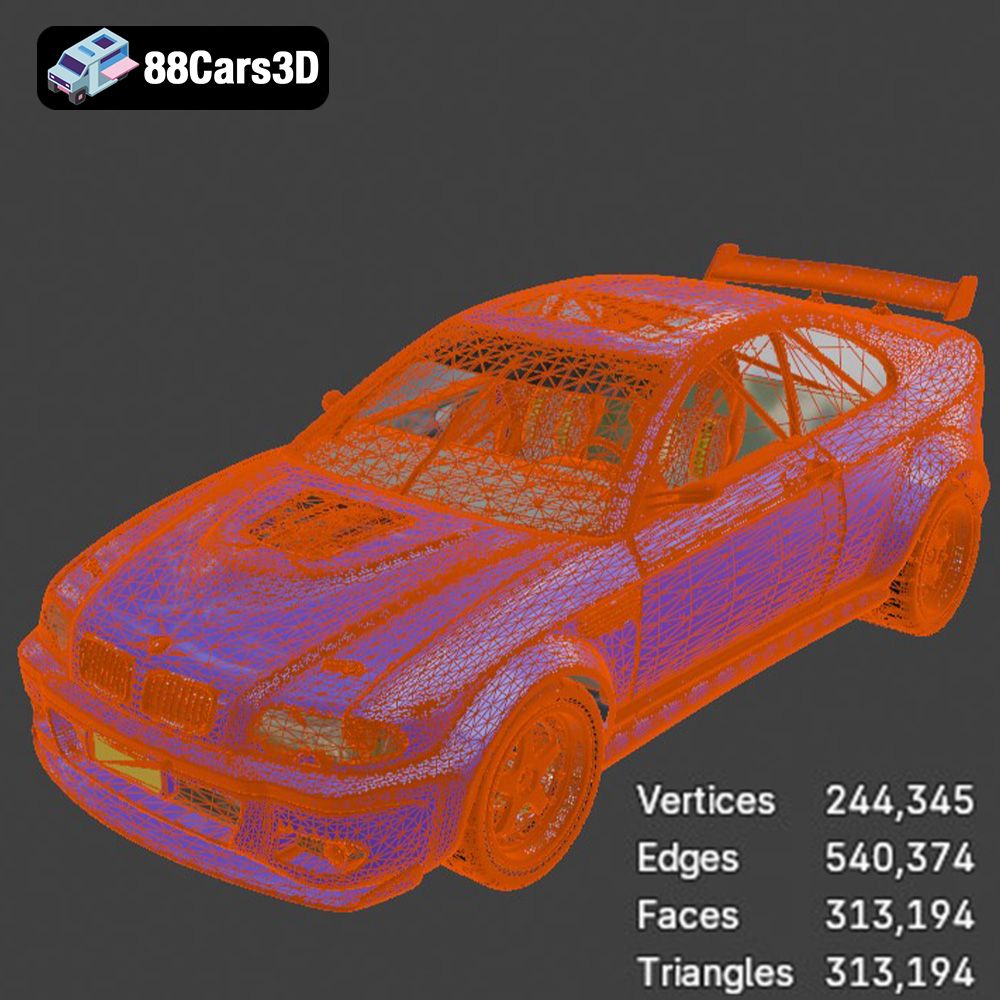
The foundation of any high-quality 3D model is its topology – the arrangement of polygons (primarily quads) that form the mesh. A structurally clean topology ensures smooth deformations during animation, predictable subdivision for high-detail renders, and ease of modification. The BMW M3 2024 3D Model boasts this clean topology, crucial for showcasing the car’s aggressive styling and dynamic silhouette without artifacts. Complementing this is meticulous UV mapping: the process of unwrapping the 3D surface into a 2D plane for texture application. Non-overlapping, optimized UVs are vital for efficient texture baking, consistent texture resolution across the model, and seamless material application, particularly important for complex car paint shaders and intricate decals.
Precision is paramount in automotive design. The BMW M3 2024 3D Model is meticulously built to accurate real-world scale and proportions. This isn’t just about aesthetics; it’s critical for functional integration. In architectural visualization, correct scale ensures the car looks natural within its environment. In simulations, accurate dimensions are fundamental for realistic physics and collision detection. For AR/VR experiences, a correctly scaled model helps maintain immersion and prevents “giant car” or “miniature car” syndrome. Every curve, panel gap, and component of the M3 is reproduced with exactitude, reflecting the engineering excellence of the real vehicle.
A beautiful mesh is only half the story; materials and textures bring it to life. The BMW M3 2024 3D Model features professionally configured materials designed to react realistically to virtual lighting. This involves sophisticated PBR (Physically Based Rendering) workflows, where attributes like base color, metallicness, roughness, and normal maps precisely mimic real-world surfaces. Expect highly detailed car paint with realistic reflections and clear coat effects, accurate tire rubber textures, convincing glass refraction and reflections, and intricate details on brake calipers and interior surfaces. These material setups are often tailored for specific renderers (like V-Ray in 3ds Max or Cycles in Blender) but are also structured to be adaptable for game engines, ensuring visual fidelity across all professional applications.
The versatility of premium 3D car models extends far beyond conventional rendering, opening doors to innovative applications and new workflows.
The digital model often serves as a blueprint for physical creation. The .stl format provided with the BMW M3 2024 3D Model makes it suitable for 3D printing and prototyping. Designers and engineers can use this to create tangible scale models of the car for design reviews, client presentations, or even for manufacturing specific custom parts or accessories. Preparing a model for additive manufacturing involves ensuring mesh integrity, proper wall thickness, and often simplifying certain internal structures, but the high-detail external shell is preserved. This bridges the gap between the virtual design and the physical world, making the M3 accessible in a whole new dimension.
With the rise of WebGL and modern browser capabilities, interactive 3D content on the web is becoming increasingly prevalent. The .glb format of the BMW M3 2024 3D Model is perfectly suited for online car configurators, virtual showrooms, and engaging web-based marketing experiences. Customers can rotate the car, change paint colors, view interior details, and explore features in real-time directly within their browser, without needing specialized software. This offers an incredibly powerful and engaging way for automotive brands to connect with their audience and showcase their latest models, bringing the thrill of the M3 directly to potential buyers’ screens.
In the automotive industry, high-fidelity 3D models are indispensable throughout the design and development cycle. From early concept validation to final production reviews, models like the BMW M3 2024 facilitate critical decisions. Designers can quickly iterate on styling cues, experiment with different body kits or wheel designs, and visualize these changes in photorealistic detail. It enables seamless collaboration among design, engineering, and marketing teams, allowing for comprehensive visualization of a vehicle’s evolution. This efficient workflow, supported by premium 3D car models, helps bring cutting-edge automotive designs to market faster and with greater precision.
The journey of a 3D car model, from concept to final render or real-time integration, is a testament to technical expertise and artistic vision. The BMW M3 2024 3D Model stands as a prime example of a premium asset that meets the rigorous demands of modern digital production. Its meticulously reproduced details, structurally clean topology, and versatile file format options make it an invaluable resource for automotive rendering, game development, AR/VR experiences, and high-fidelity simulations.
Whether you’re crafting cinematic visuals in 3ds Max, designing immersive game levels in Unreal Engine, or prototyping a physical model with 3D printing, this model offers the foundation for exceptional results. It embodies the precision and quality that professionals expect, ensuring that the essence of performance luxury is faithfully captured and delivered across every application. For creators seeking to elevate their projects with unparalleled realism and efficiency, investing in such a high-quality asset from a trusted marketplace like 88cars3d.com is a strategic decision that pays dividends in both time and visual impact.
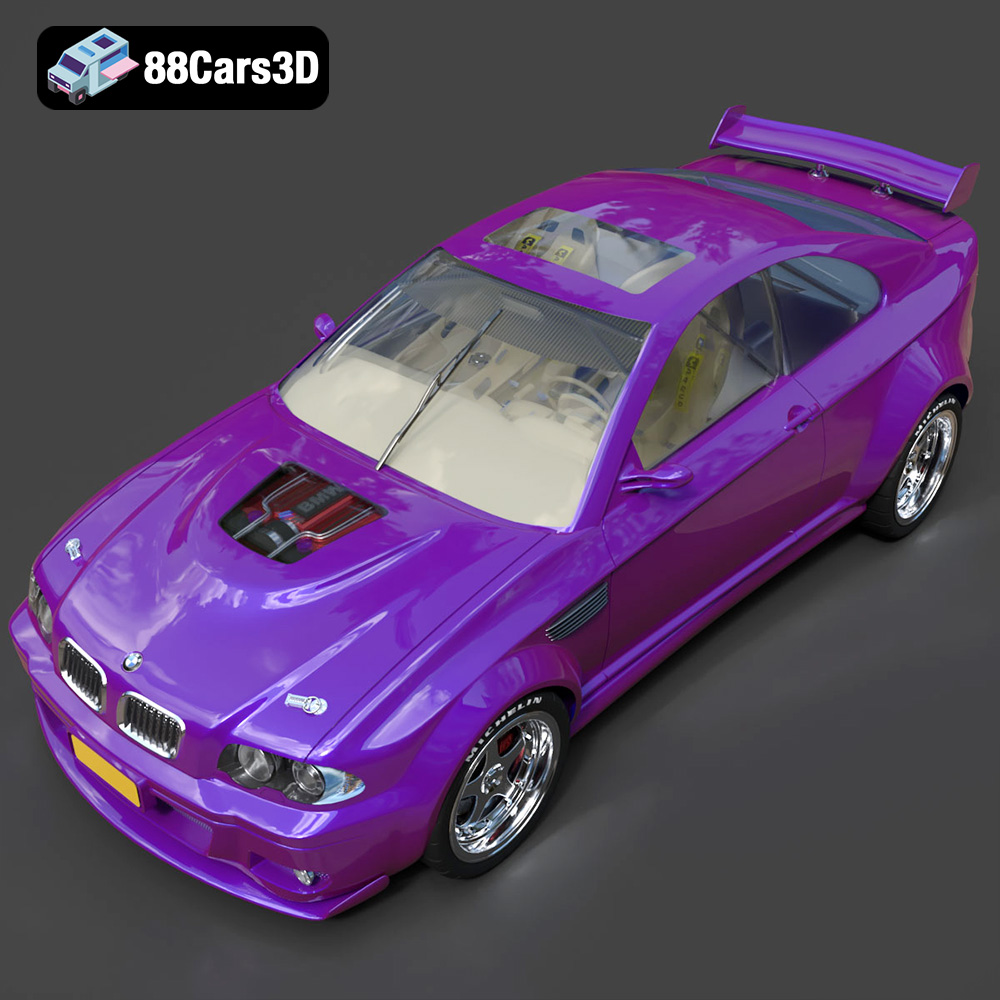
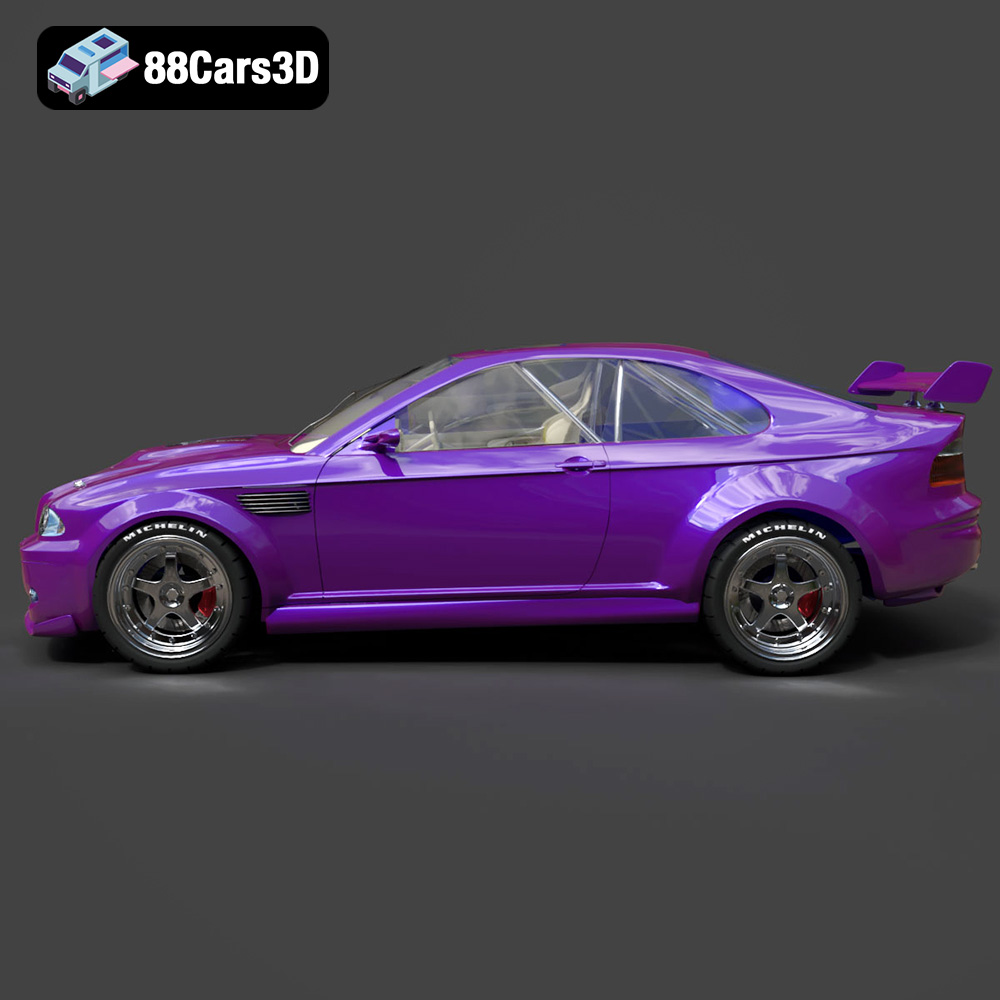
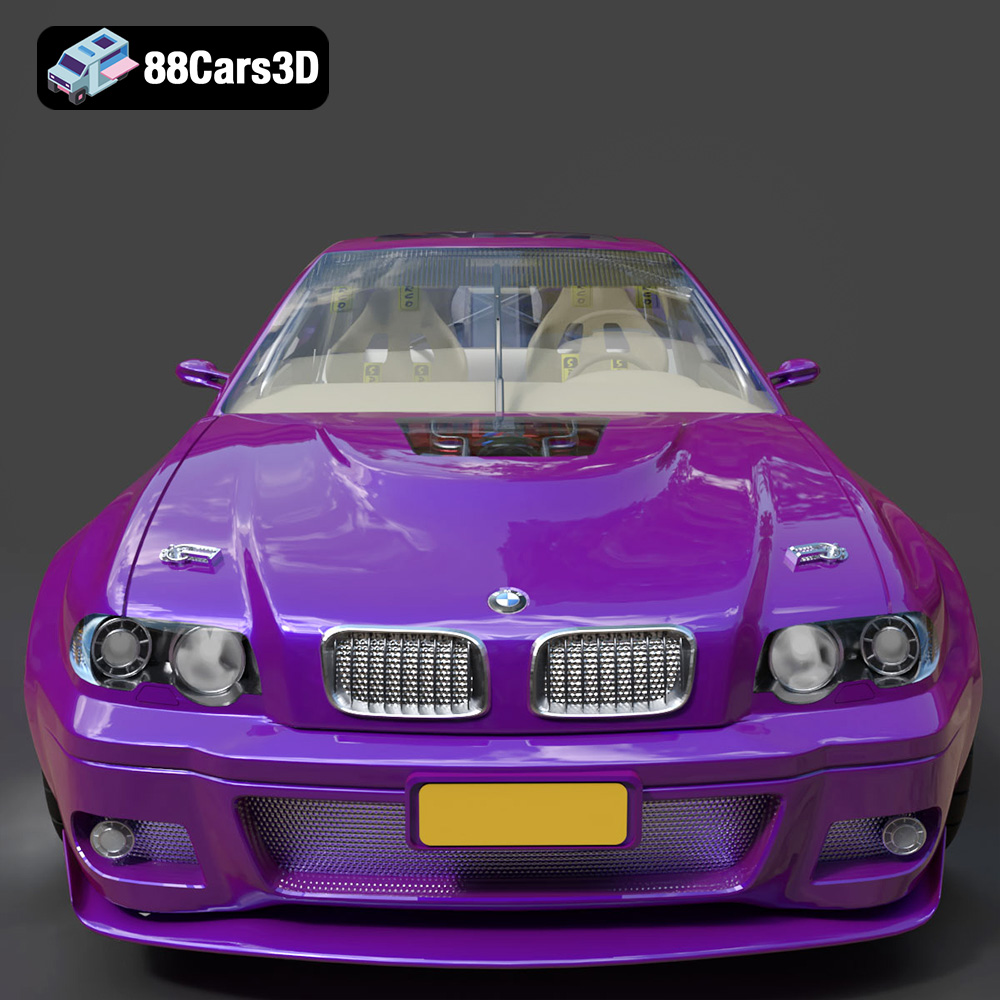
Capture the essence of performance luxury with the highly detailed BMW M3 2024 3D Model. This precision-engineered asset offers unparalleled realism, meticulously reproducing the aggressive styling, iconic grille design, and dynamic silhouette of the modern M3 generation. Optimized for close-up renders and demanding simulation environments, the model ensures visual fidelity across all professional applications.
Key features include structurally clean topology, accurate scale, and professionally configured materials designed to react realistically to virtual lighting. Every external detail, from the wheels and brake calipers to the subtle curves of the body paneling, has been accurately modeled. A fully realized interior is included, making this asset ideal for first-person views and immersive virtual experiences.
This versatile 3D asset is ready for immediate deployment in various projects, including cinematic rendering, architectural visualization, virtual reality (VR) and augmented reality (AR) experiences, high-fidelity simulations, and integration into major game development pipelines such as Unreal Engine and Unity.
.bmw, .m3, .sportssedan, .sedan, .performancecar, .car3dmodel, .rendering, .simulation, .gameasset, .arvr, .blend, .fbx, .obj, .glb, .stl, .ply, .unreal, .max
Tags:
.bmw, .m3, .sportssedan, .sedan, .performancecar, .car3dmodel, .rendering, .simulation, .gameasset, .arvr, .blend, .fbx, .obj, .glb, .stl, .ply, .unreal, .maxLamborghini Diablo SV 1995 3D Model
$13.99
.arvr
.blend
.bmw
.car3dmodel
.fbx
.gameasset
.glb
.m3
.max
.obj
.performancecar
.ply
.rendering
.sedan
.simulation
.sportssedan
.stl
.unreal