

Unleashing Digital Precision: The Power of High-Fidelity 3D Vehicle Models
In the rapidly evolving landscape of digital visualization, the demand for incredibly detailed and technically sound 3D assets has never been higher. From cinematic automotive rendering to immersive game development and sophisticated AR/VR experiences, the quality of a 3D model directly impacts the realism and overall impact of a project. Whether you’re crafting a high-octane racing scene or showcasing a vehicle in a virtual showroom, starting with a foundation of precise geometry and authentic textures is paramount.
Among the vast array of available 3D car models, motorcycles often present unique challenges due to their exposed mechanical components and intricate curves. It takes meticulous craftsmanship to replicate their distinctive styling and raw power in a digital format. Today, we’re diving deep into the technical prowess and versatile applications of such an asset: the Yamaha FZ8 2011 3D Model. This particular model stands as an excellent example of how a well-engineered 3D asset can serve as a cornerstone for diverse professional pipelines, offering exceptional visual fidelity and smooth performance across a multitude of platforms.
The Foundation of Digital Automotive Excellence: Why High-Quality 3D Models Matter
The success of any 3D project, especially those involving vehicles, hinges on the quality of its core assets. A cheap, poorly modeled asset can quickly derail a project, costing more in cleanup and optimization than the initial savings. Conversely, investing in a meticulously engineered model like the Yamaha FZ8 2011 3D Model from 88cars3d.com provides a robust foundation, allowing artists and developers to focus on creativity rather than remediation.
Precision in Design and Replication
High-quality 3D models are born from an obsessive attention to detail. For a vehicle like the Yamaha FZ8, this means replicating every curve, every component, and every material with photographic accuracy. This isn’t merely about visual appeal; it’s about authenticity. Accurate scaling ensures that the model integrates seamlessly with other scene elements without disproportionate resizing. Clean, optimized geometry with logical mesh subdivision is crucial for smooth deformations, accurate lighting calculations, and efficient rendering. When a model’s topology is sloppy, it can lead to shading artifacts, stretched textures, and difficulty in rigging or animating, undermining the entire project.
Bridging the Gap Between Concept and Reality
In industries like automotive design and advertising, 3D models serve as a critical bridge. They allow designers to visualize concepts before physical prototypes are built, advertisers to create compelling campaigns without costly photoshoots, and engineers to simulate performance in virtual environments. A high-fidelity model, complete with realistic material setups and accurately textured components, enables stakeholders to perceive the vehicle almost as if it were real, fostering clearer communication and faster decision-making. The Yamaha FZ8 2011 3D Model, with its “meticulously engineered” and “fully textured components,” exemplifies this capability, making it an invaluable tool for visualizing the bike in various scenarios.
The Efficiency of Pre-Built Assets
Time is a precious commodity in any production pipeline. Creating a complex vehicle model from scratch, including meticulous UV unwrapping, texturing, and material setup, can take hundreds of hours for even an experienced artist. This is where pre-built, production-ready assets like those found on 88cars3d.com provide immense value. By acquiring a model such as the Yamaha FZ8 2011, artists and studios can bypass the initial modeling phase, immediately moving on to lighting, rendering, integration, and other creative aspects. This not only accelerates project timelines but also ensures a consistent level of quality across different projects, leveraging the expertise of specialized modelers.
Understanding 3D Model File Formats
One of the most critical aspects of working with 3D models, especially when sourcing them from marketplaces, is understanding the various file formats. Each format serves a specific purpose, offering unique advantages for different stages of the production pipeline, software compatibility, and final deployment. The Yamaha FZ8 2011 3D Model thoughtfully includes a comprehensive suite of these formats, ensuring maximum utility for professionals across diverse fields.
Versatility for Production Pipelines
Let’s break down the included file formats and their ideal use cases:
- .blend – Fully editable Blender scene with materials: This is Blender’s native file format. For users of Blender, this is often the most desirable format as it preserves the entire scene, including mesh data, materials, textures, lighting setups, camera positions, animations, and even modifiers. It offers the most flexibility for editing, customization, and further development within the Blender ecosystem. If you’re planning extensive modifications or want to leverage Blender’s powerful Cycles or Eevee render engines, the .blend file for the Yamaha FZ8 2011 is your go-to.
- .fbx – Ideal for Unreal, Unity, and real-time pipelines: The Filmbox (.fbx) format is an industry-standard interchange format owned by Autodesk. It’s incredibly versatile, supporting not just mesh data, but also materials, textures, skeletal animation, camera data, and lights. Its robust nature makes it the preferred format for transferring assets between different 3D software and, crucially, for importing into game engines like Unreal Engine and Unity. When integrating the Yamaha FZ8 2011 into a game, the .fbx file ensures that all relevant data is efficiently transferred and optimized for real-time performance.
- .obj – Universal format for cross-software compatibility: The Wavefront .obj format is one of the oldest and most widely supported 3D file formats. It primarily stores geometric data (vertices, normals, texture coordinates) and references material libraries (.mtl files) for basic material properties. While it doesn’t support advanced features like animation or complex rigging, its universality makes it excellent for basic mesh exchange between virtually any 3D software application. If you need a clean mesh of the Yamaha FZ8 2011 for sculpting, retopology, or import into a niche application, .obj is a reliable choice.
- .glb – Optimized for AR, VR, and browser-based display: The GL Transmission Format (binary), or .glb, is a compact, single-file format designed for efficient transmission and loading of 3D scenes and models on the web and in AR/VR applications. It’s built upon the glTF specification, which aims to be the “JPEG for 3D.” .glb files package geometry, materials, textures, and even animations into a single binary file, making them highly efficient for interactive 3D experiences in browsers, social media, and dedicated AR/VR platforms. For deploying the Yamaha FZ8 2011 in a web-based configurator or an augmented reality app, .glb is the optimal format.
- .stl – Suitable for 3D printing output: Stereolithography (.stl) is the de facto standard file format for 3D printing. It represents a 3D model as a collection of unconnected triangular facets, without any color, texture, or material information. Its simplicity makes it universally compatible with 3D printing software (slicers). If the goal is to produce a physical prototype or a scale model of the Yamaha FZ8 2011 using a 3D printer, the .stl file is specifically prepared for that purpose.
- .ply – Precision mesh format for CAD or analysis: The Polygon File Format (.ply) is often used to store data from 3D scanners or for more advanced geometric analysis. It can store not only XYZ coordinates for vertices but also properties like color, transparency, normals, texture coordinates, and even scalar values per vertex. This makes it more feature-rich than .obj in some contexts and particularly useful for applications requiring precise mesh data, reverse engineering, or integration into CAD (Computer-Aided Design) workflows for detailed analysis of the Yamaha FZ8 2011’s geometry.
- .unreal – Engine-ready asset for real-time environments: While not a standalone file format in the traditional sense, an “.unreal” asset often implies a pre-configured asset or a package designed for direct import and optimal performance within Unreal Engine. This typically means the model (likely an FBX or a series of FBX files for different LODs) has been specifically prepared, potentially with Unreal-specific material setups, collision meshes, and sometimes even basic blueprints, significantly streamlining the integration process for the Yamaha FZ8 2011 into an Unreal project.
- .max – Editable 3ds Max project for animation and rendering: The .max format is Autodesk 3ds Max’s native scene file. Similar to .blend for Blender, it contains the complete scene data, including geometry, complex material setups (e.g., V-Ray or Corona materials), lighting, cameras, animation, and modifiers. For professionals working within 3ds Max for high-end rendering, animation, or architectural visualization, the .max file provides the fullest control and fidelity over the Yamaha FZ8 2011 model, allowing for extensive customization and leveraging Max’s advanced rendering capabilities.
Choosing the Right Format for Your Project
The selection of the appropriate file format is a critical decision that depends entirely on your project’s requirements. For a game developer aiming for real-time performance, .fbx and .unreal are indispensable. For a product designer seeking photorealistic renders, .blend or .max offer the most flexibility. An AR/VR developer will lean towards .glb for efficiency, while a hobbyist with a 3D printer will appreciate the .stl. The inclusion of such a comprehensive array of formats for the Yamaha FZ8 2011 3D Model signifies its readiness for a broad spectrum of professional applications, highlighting the forward-thinking approach of 88cars3d.com in providing truly versatile assets.
Mastering Automotive Rendering with the Yamaha FZ8 2011 3D Model
High-quality 3D car models like the Yamaha FZ8 2011 are designed to shine in photorealistic rendering scenarios. Achieving a stunning final image involves more than just a great model; it requires a deep understanding of lighting, materials, and camera work within your chosen render engine.
Photorealistic Visualization in 3ds Max and V-Ray/Corona
For many automotive visualization professionals, 3ds Max paired with renderers like V-Ray or Corona Renderer is the industry standard. The included .max file for the Yamaha FZ8 2011 3D Model provides a perfect starting point. The model’s “realistic material setups” would typically leverage Physical Based Rendering (PBR) workflows, where materials react realistically to light based on properties like albedo (base color), roughness, metallicness, and normal maps. To render the FZ8 effectively:
- Lighting Setup: Utilize High Dynamic Range Image (HDRI) environments for realistic ambient and reflective lighting, often combined with targeted physical lights (e.g., V-Ray Lights, Corona Lights) to highlight specific details, add rim lights, or simulate studio lighting. The FZ8’s glossy paint, chrome accents, and textured tires demand precise light interaction.
- Camera and Composition: Employ real-world camera settings, including aperture (for depth of field), shutter speed (for motion blur if animated), and ISO. Experiment with classic automotive photography angles – low shots to emphasize power, dynamic angles for speed, or close-ups to showcase intricate details like the engine block or dashboard.
- Shader Refinement: Even with included materials, fine-tuning roughness, metallic, and clear coat layers can elevate realism. For the FZ8’s tires, a subtle displacement map combined with anisotropic reflections can mimic the rubber texture authentically.
Cinematic Quality in Blender Cycles/Eevee
Blender has emerged as a powerhouse for 3D artists, with its Cycles renderer delivering exceptional photorealism and Eevee offering blazing-fast real-time rendering. The .blend file for the Yamaha FZ8 2011 3D Model allows Blender users to immediately tap into these capabilities.
- Node-Based Materials: Blender’s node editor for materials provides unparalleled control. You can layer shaders, create complex procedural textures, and precisely control how light interacts with surfaces. For the FZ8, this means crafting convincing paint shaders with metallic flakes, detailed tire treads, and realistic engine reflections.
- Cycles for Ultimate Fidelity: Cycles, Blender’s path-tracing renderer, excels at realistic global illumination and complex light bounces. Setting up an HDRI environment, adding area lights to simulate studio softboxes, and utilizing Cycles’ denoiser can quickly produce stunning, noise-free renders of the FZ8.
- Eevee for Real-Time Feedback: For quick previews, animation tests, or even real-time cinematic sequences, Eevee is incredibly powerful. While not as physically accurate as Cycles, judicious use of screen-space reflections, ambient occlusion, and volumetric lighting in Eevee can produce highly impressive results with rapid iteration times, perfect for setting up dynamic shots of the Yamaha FZ8.
Post-Production Techniques for Impact
Rendering is just one piece of the puzzle. Post-production in software like Adobe Photoshop or Affinity Photo can dramatically enhance the final image. Techniques include color grading to set the mood, adding subtle atmospheric effects like mist or dust, lens flares, chromatic aberration, and sharpening. Compositing rendered passes (such as diffuse, reflection, shadow, and depth passes) gives artists granular control over the final look, allowing them to truly make the Yamaha FZ8 2011 pop off the screen.
Integrating Motorcycle Assets into Game Development
Game development demands a different set of optimizations and considerations compared to cinematic rendering. Real-time performance is king, requiring careful management of polygon counts, textures, and material complexity. The Yamaha FZ8 2011 3D Model, with its “optimized, clean geometry” and included game-engine-ready formats, is perfectly suited for this environment.
Unreal Engine Workflow for High-Performance Vehicles
Unreal Engine is a dominant force in real-time visualization and game development. The inclusion of .fbx and “.unreal” formats for the Yamaha FZ8 2011 simplifies the integration process significantly:
- Import and Material Setup: Import the .fbx file directly into Unreal Engine. The engine will typically import the mesh, basic materials, and textures. You’ll then create advanced PBR materials using Unreal’s node-based material editor, linking the albedo, normal, roughness, metallic, and ambient occlusion maps. For the FZ8, ensure materials like chrome, plastic, and painted metal react correctly to light within the engine.
- Level of Detail (LODs): To maintain performance, especially for assets viewed at varying distances, implement LODs. The base model for the FZ8 will be highly detailed, but progressively simpler versions (lower poly counts) are created and switched out by the engine as the camera moves further away. This is crucial for environments with multiple vehicles.
- Collision Meshes: For vehicles, accurate collision meshes are vital for physics interactions. These are simplified versions of the model, often convex hulls or primitives, that the physics engine uses for collision detection, preventing the character or other objects from clipping through the bike.
- Vehicle Blueprints: For a drivable motorcycle, you’d create an Unreal Engine Blueprint. This visual scripting system allows you to define the FZ8’s physics (wheel setup, suspension, engine power), controls, and interactions without writing C++ code. The clean geometry of the base model ensures the physics system can accurately interpret the mesh.
Optimization Strategies for Mobile and VR
Developing for mobile platforms or VR brings even stricter performance budgets. The Yamaha FZ8 2011 3D Model, described as having “optimized, clean geometry,” provides a solid starting point for these demanding applications.
- Poly Count Reduction: Aggressive poly reduction is often necessary. This might involve using software to automatically decimate meshes or manually retopologizing parts of the FZ8 that aren’t visible up close. Aim for a balance between visual fidelity and performance targets.
- Texture Atlases: Instead of multiple small textures, combining several textures into a single large texture atlas reduces draw calls, improving rendering performance. All the components of the FZ8 can share one or two atlases.
- Batching and Instancing: If multiple FZ8 models are present in a scene, ensure they are instanced or batched correctly by the engine to minimize rendering overhead.
- Shader Complexity: Simplify materials where possible. Use fewer nodes, avoid complex calculations, and leverage mobile-optimized shaders provided by game engines.
Animation and Rigging for Dynamic Gameplay
While the Yamaha FZ8 2011 3D Model is presented as a static asset, its “logical mesh subdivision” makes it ideal for future rigging and animation. For game applications, this would involve:
- Skeletal Rig: Creating a skeletal rig for components like wheels, suspension, handlebars, and kickstand. This allows for realistic movement and interaction within the game.
- Driving Animations: Basic animations for suspension compression, wheel rotation, and handlebar turning are essential for a convincing player experience.
- Damage States: For more complex games, different models or texture sets representing various damage levels can be swapped in, further enhancing realism.
Beyond Rendering: AR/VR, Simulations, and 3D Printing
The utility of a high-quality 3D model like the Yamaha FZ8 2011 extends far beyond traditional rendering and game development. Its precise construction and versatile file formats open doors to cutting-edge applications in augmented reality, virtual reality, detailed simulations, and even physical prototyping.
Immersive Experiences with the Yamaha FZ8
Augmented Reality (AR) and Virtual Reality (VR) are transforming how we interact with digital content. The Yamaha FZ8 2011 3D Model is an ideal candidate for creating immersive vehicle experiences.
- AR Showrooms and Configurators: Imagine pointing your smartphone at your driveway and seeing the FZ8 appear realistically scaled in your environment. Leveraging the .glb format, this model can be integrated into web AR experiences, allowing potential buyers to explore the motorcycle from every angle, customize colors, and even “sit” on it virtually, all within their own space. This level of interaction drives engagement and offers a unique pre-purchase experience for dealerships and manufacturers.
- VR Training Simulations: For motorcycle training, a VR simulation using a highly accurate model like the FZ8 can be invaluable. Trainees can learn controls, practice maneuvers in a safe environment, and develop muscle memory without the risks of a real bike. The detailed construction ensures a realistic perception of the vehicle’s components and their functions, enhancing the learning experience.
- Virtual Tours and Exhibitions: In a virtual museum or exhibition, the Yamaha FZ8 2011 can be presented as a fully interactive exhibit, allowing users to inspect its design, engine, and features up close in a way that might not be possible with a physical exhibit. The “exceptional visual fidelity” of the model ensures these virtual interactions are as compelling as real-world ones.
Prototyping and Physical Models via 3D Printing
The world of physical prototyping has been revolutionized by 3D printing, and high-quality 3D models are its foundation. The inclusion of the .stl file for the Yamaha FZ8 2011 3D Model directly caters to this application.
- Creating Scale Models: Product designers, collectors, or enthusiasts can use the .stl file to 3D print a physical scale model of the FZ8. This allows for tactile inspection of its form and proportions, which can be critical in design reviews or simply for personal enjoyment.
- Prototyping Custom Parts: While the primary model is for the full bike, individual components could theoretically be extracted, modified, and printed for rapid prototyping of custom accessories or design tweaks. The “detailed construction” means that even small parts of the model hold enough fidelity for such purposes.
- Educational Tools: Printed models can serve as excellent educational aids, helping students understand vehicle mechanics or design principles in a tangible way.
Case Studies: From Advertising Campaigns to Virtual Showrooms
Consider how the Yamaha FZ8 2011 3D Model might be deployed in real-world scenarios:
- Automotive Advertising: A marketing agency could use the FZ8 model to create a dynamic commercial without the logistical complexities and costs of a physical photoshoot. Different lighting setups, environments, and camera moves could be explored rapidly, generating high-impact visuals for print, web, or video campaigns.
- Product Development Visualizations: Yamaha itself could utilize such a model for internal design reviews, marketing material generation, or even as a benchmark for future motorcycle designs, showcasing the lineage and evolution of their FZ series.
- Educational Content: Publishers creating interactive textbooks or online courses about motorcycle mechanics could integrate the FZ8 model to provide detailed, explorable 3D diagrams, allowing students to dissect and understand complex engine components.
The 88cars3d.com Advantage: Quality and Efficiency
In a competitive digital marketplace, choosing the right asset provider is as crucial as selecting the right software. 88cars3d.com distinguishes itself by offering assets that meet the rigorous demands of professional production pipelines, exemplified by the Yamaha FZ8 2011 3D Model.
The Value of Production-Ready Assets
The true value of a premium 3D model lies not just in its visual appeal, but in its readiness for immediate deployment. The Yamaha FZ8 2011 3D Model is described as “ready for immediate integration into your scene or project,” which translates directly into time saved. Artists can forgo the laborious tasks of cleaning up geometry, optimizing meshes, fixing UVs, or setting up PBR materials from scratch. Instead, they can focus their creative energy on lighting, composition, animation, or scene dressing, accelerating project completion and reducing overall costs. This efficiency is a cornerstone of modern 3D production.
Ensuring Technical Fidelity
At 88cars3d.com, the emphasis is on “meticulously engineered” and “optimized, clean geometry and logical mesh subdivision.” This level of technical fidelity ensures:
- Smooth Performance: Whether rendering in V-Ray or running in Unreal Engine, clean geometry with optimized polygon counts prevents performance bottlenecks and rendering artifacts.
- Seamless Integration: Accurately scaled dimensions mean the model drops into any scene without needing extensive adjustments, ensuring consistency across different projects and environments.
- Future-Proofing: A well-structured model with clean UVs and PBR materials is easier to update, re-texture, or adapt for future technologies and renderers, protecting your investment in the asset. The comprehensive file formats further bolster this versatility, making the Yamaha FZ8 2011 3D Model a robust, long-term asset for any professional toolkit.
Conclusion
The journey from a blank canvas to a stunning digital visualization or an immersive interactive experience is complex and demanding. At its heart lies the quality of the assets used. As we’ve explored, a high-fidelity 3D model like the Yamaha FZ8 2011 3D Model provides an indispensable foundation for professionals across industries, from cinematic automotive rendering to cutting-edge game assets, AR/VR applications, and even 3D printing.
Its meticulously engineered geometry, realistic material setups, accurate scaling, and comprehensive suite of industry-standard file formats (.blend, .fbx, .obj, .glb, .stl, .ply, .unreal, .max) ensure unparalleled versatility and efficiency. This model is not just a digital representation of an iconic naked sports bike; it’s a production-ready toolkit designed to accelerate workflows, enhance visual realism, and unlock new creative possibilities.
For artists, developers, and designers seeking to elevate their projects with premium 3D car models and vehicle assets, understanding the technical specifications and application breadth of such models is paramount. The Yamaha FZ8 2011 3D Model stands as a testament to the quality and convenience that 88cars3d.com consistently delivers, enabling you to capture raw power and distinctive styling with exceptional visual fidelity in your next demanding visualization project. Explore this model and many other high-quality assets at 88cars3d.com to bring your digital visions to life with confidence and precision.
Featured 3D Model
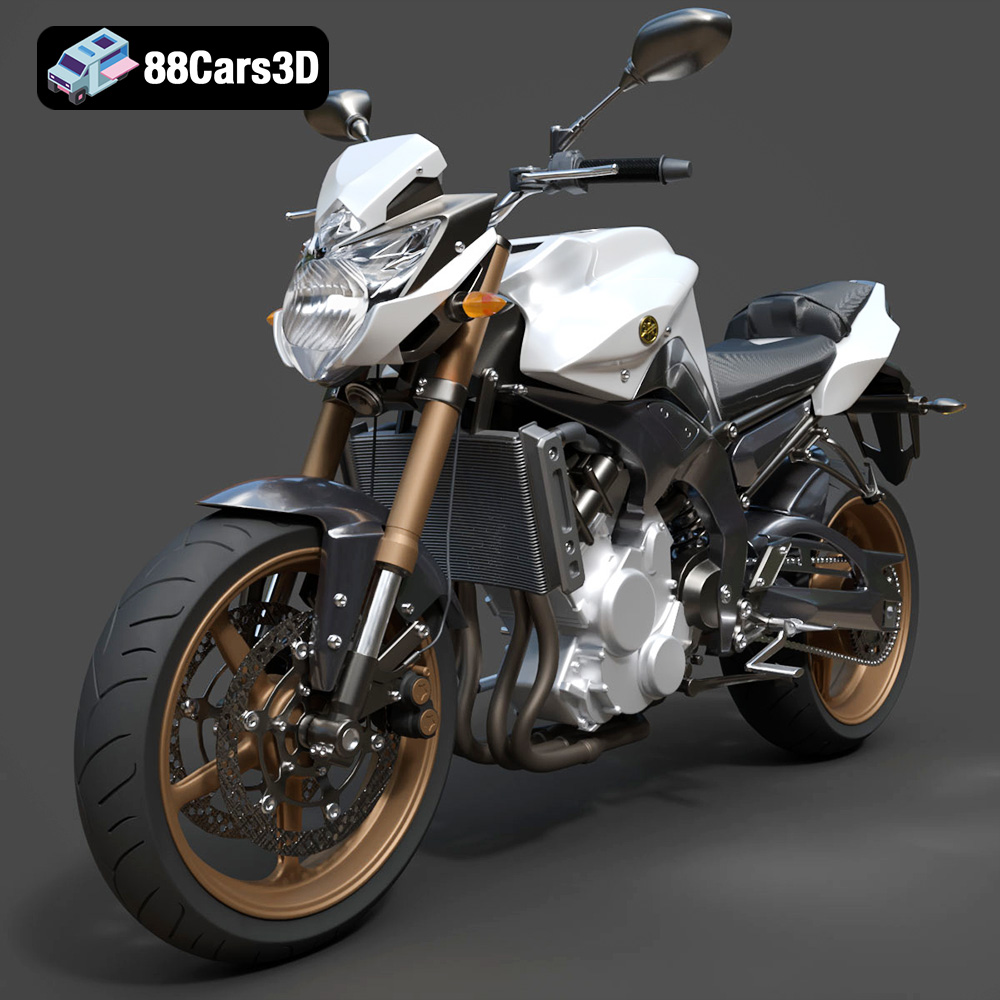
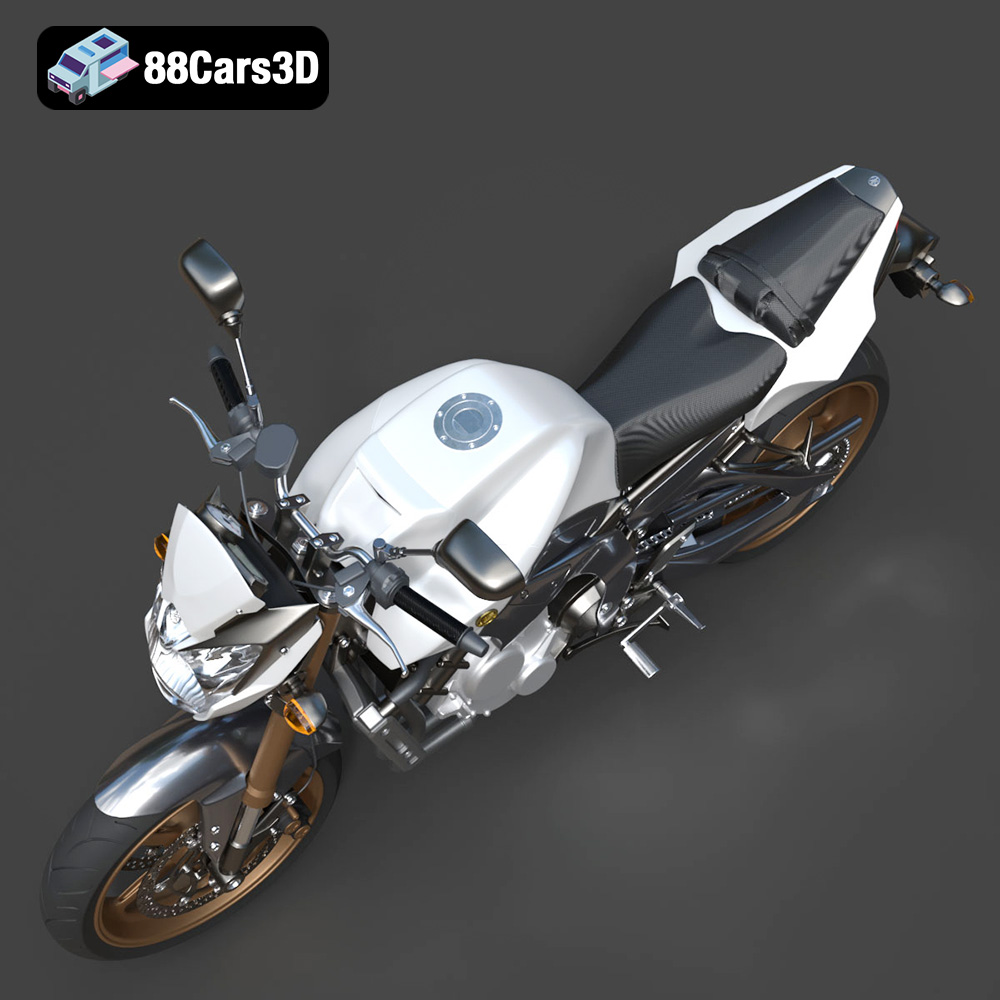
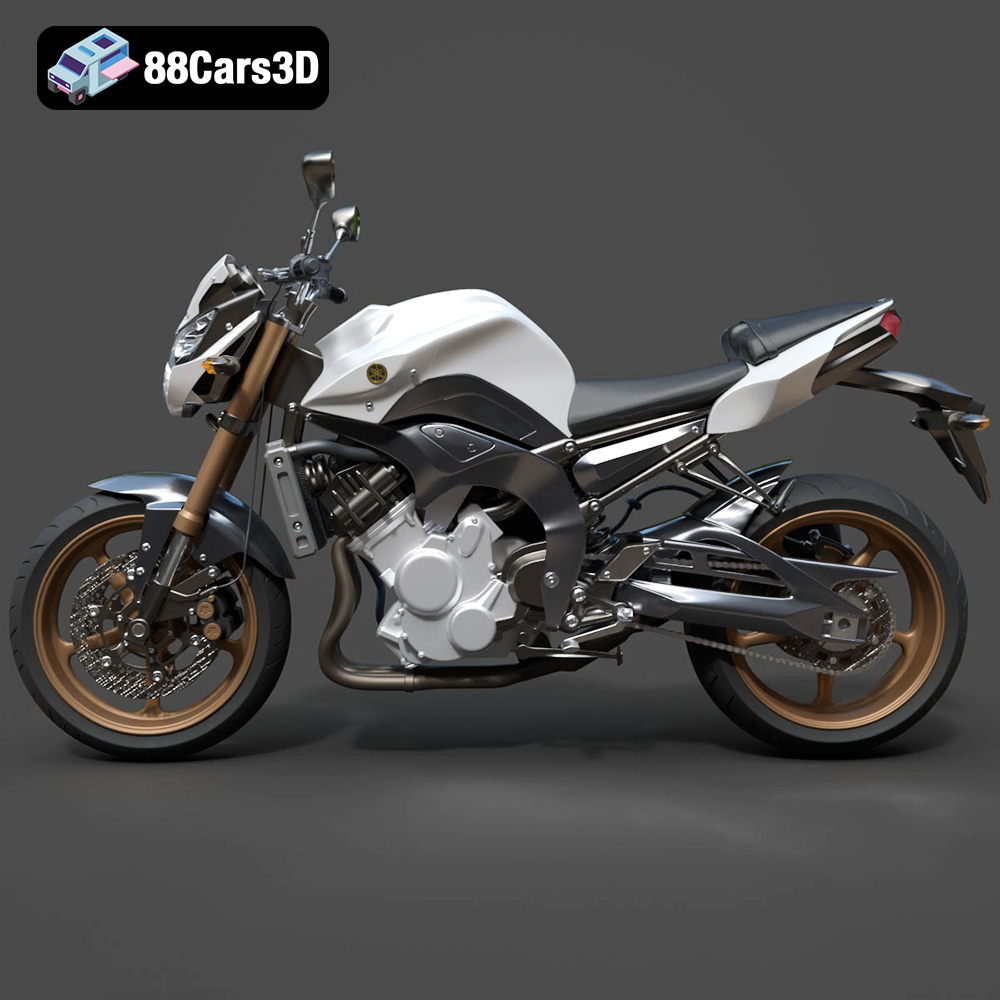
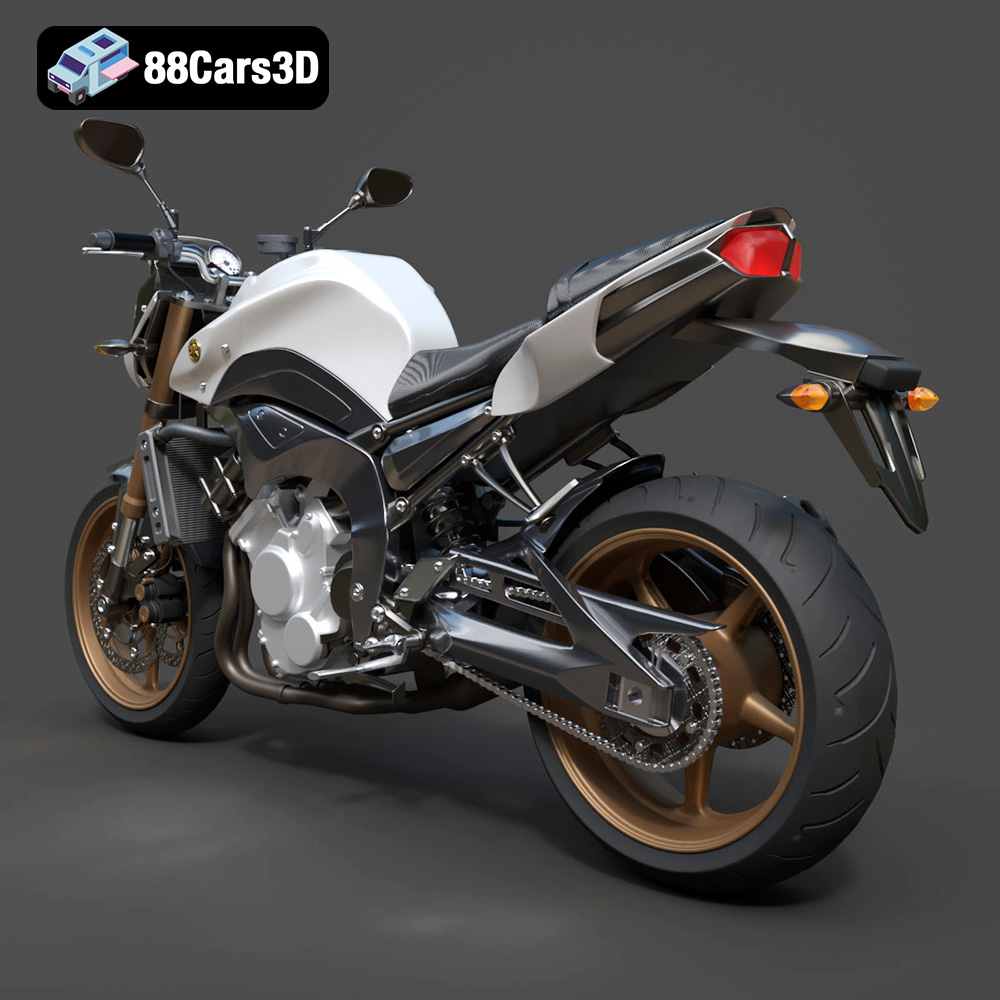
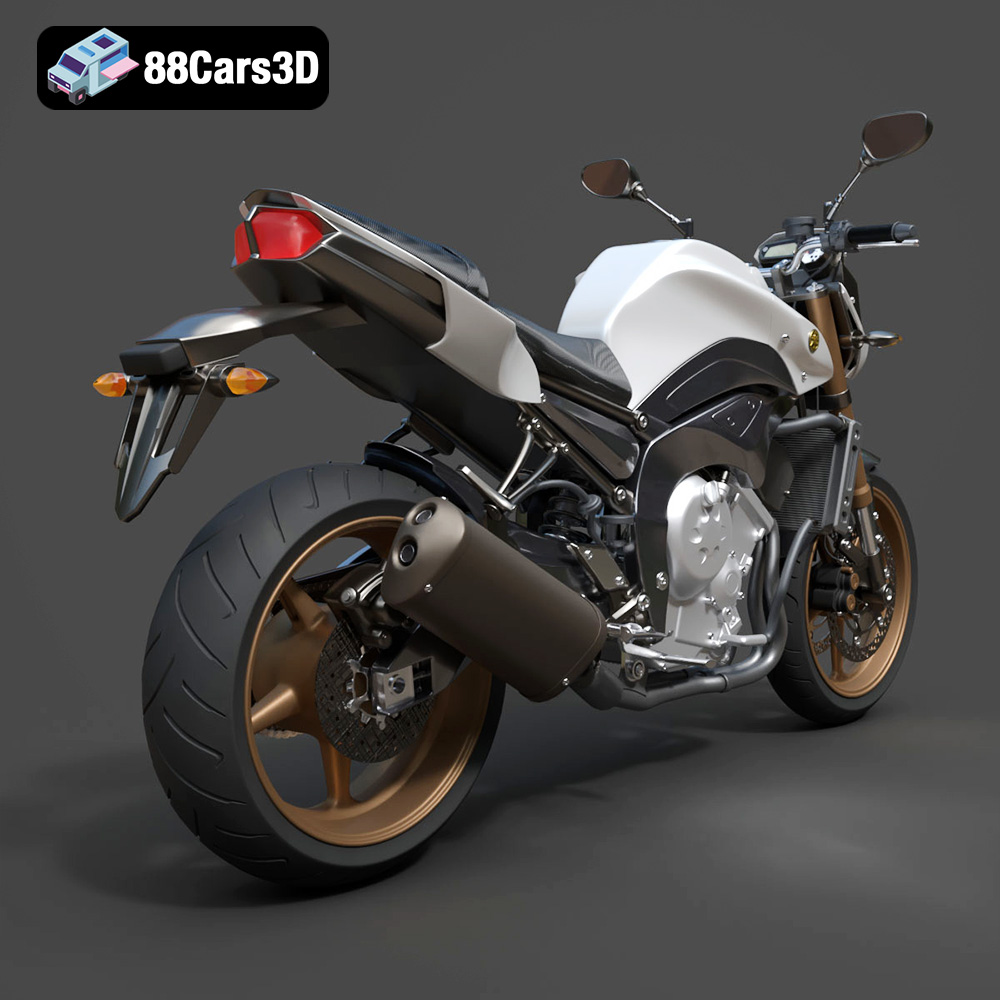
Yamaha FZ8 2011 3D Model
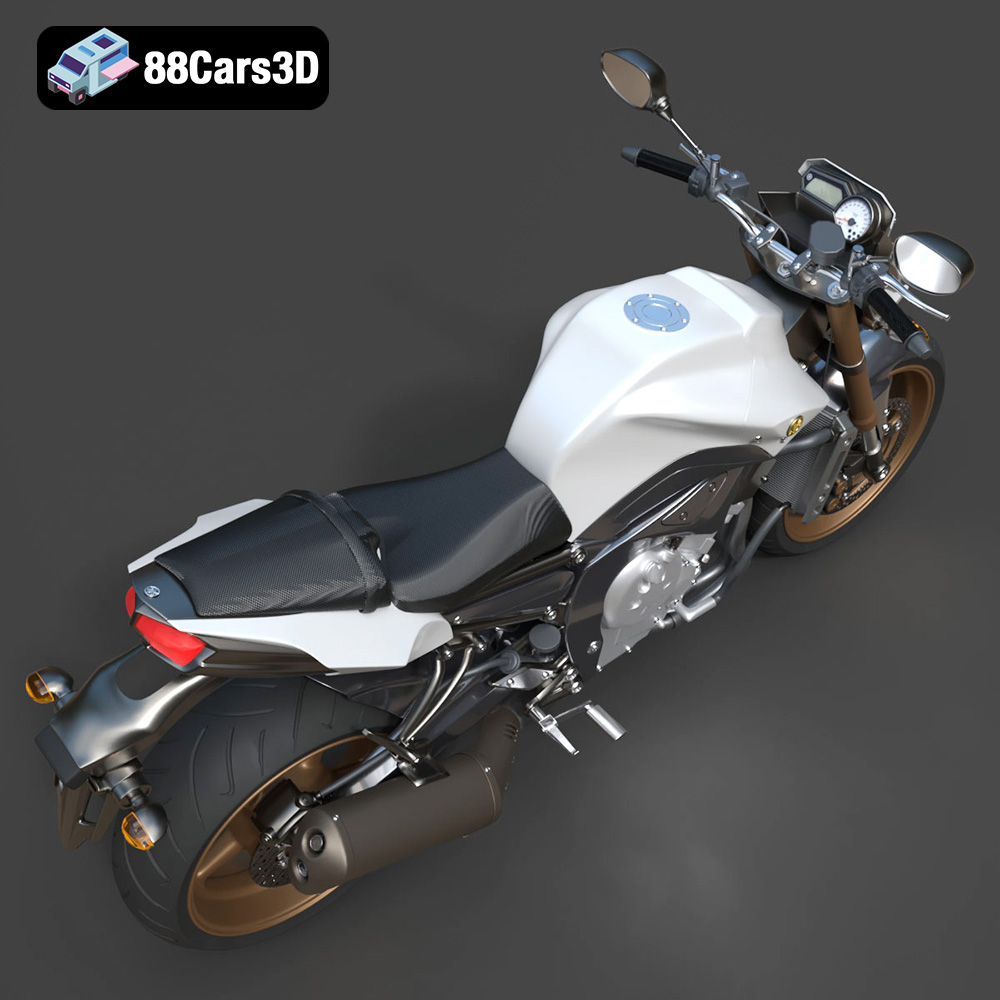
Capture the raw power and distinctive styling of the Yamaha FZ8 2011 with this meticulously engineered 3D model. Developed to reflect the exact specifications of the iconic naked sports bike, this asset provides exceptional visual fidelity suitable for demanding visualization projects.
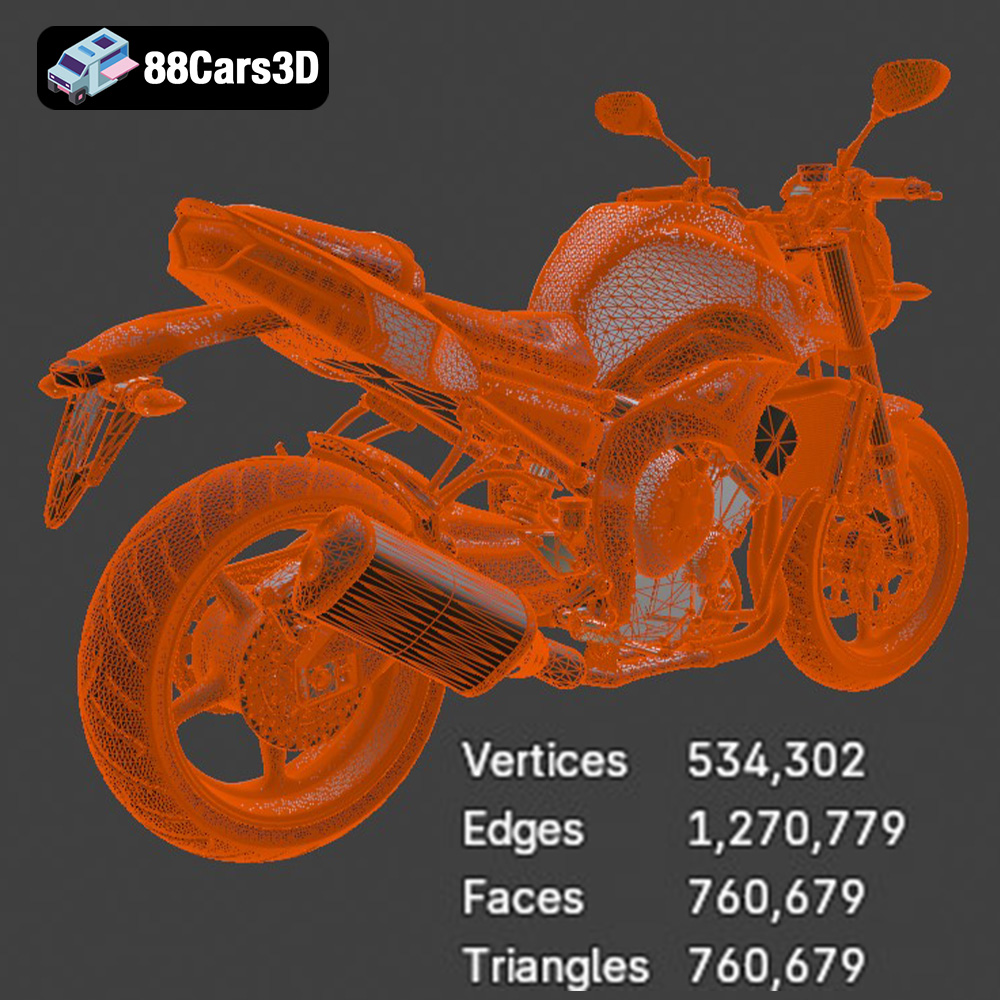
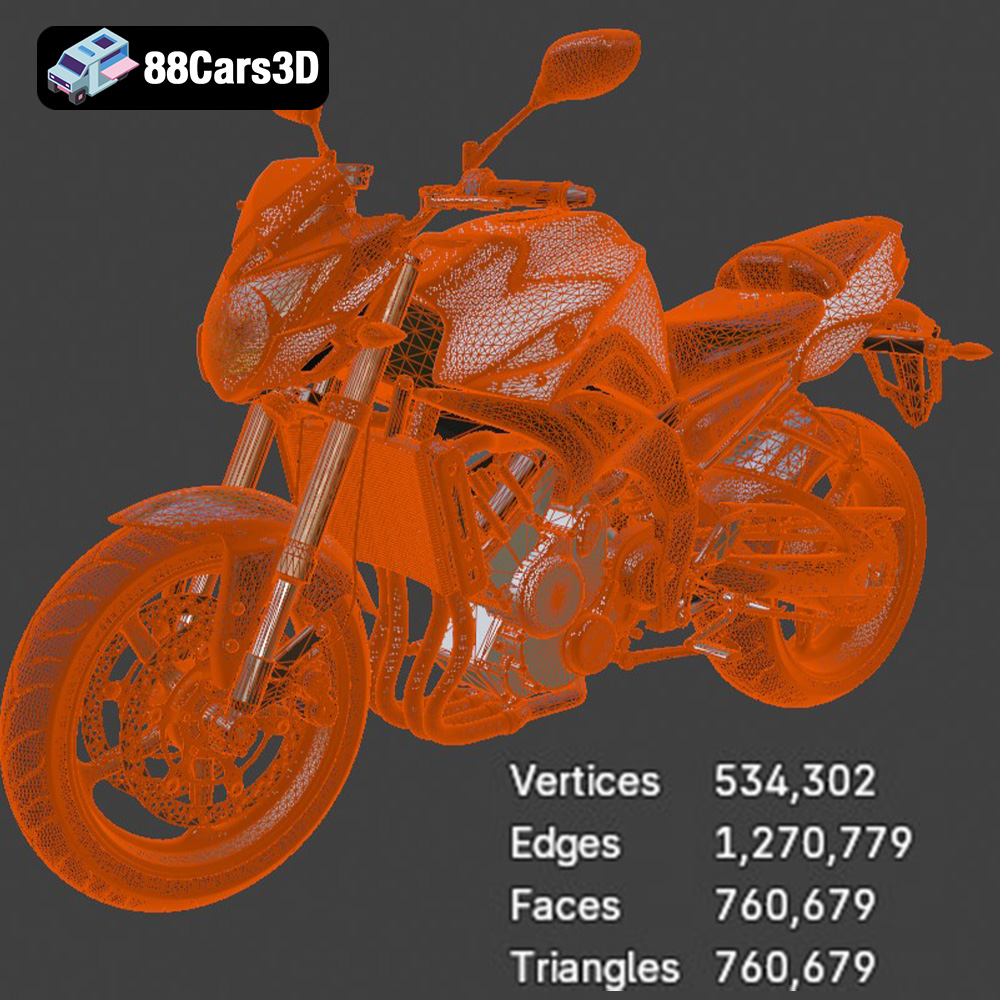
This 3D vehicle asset is built with optimized, clean geometry and logical mesh subdivision, ensuring smooth performance across various 3D applications. The model includes fully textured components, realistic material setups, and accurately scaled dimensions, ready for immediate integration into your scene or project.
Ideal for diverse professional applications, including cinematic rendering, automotive advertising, immersive training simulations, virtual reality (VR) environments, and large-scale game development (Unreal Engine/Unity). The detailed construction ensures reliable performance whether viewed up close or integrated into a complex environment.
$19.99
Product Image Gallery
Related Tags
.arvr
.blend
.car3dmodel
.fbx
.fz8
.fzx
.gameasset
.glb
.max
.motorcycle
.nakedbike
.obj
.ply
.rendering
.simulation
.sportbike
.stl
.unreal
.yamaha
