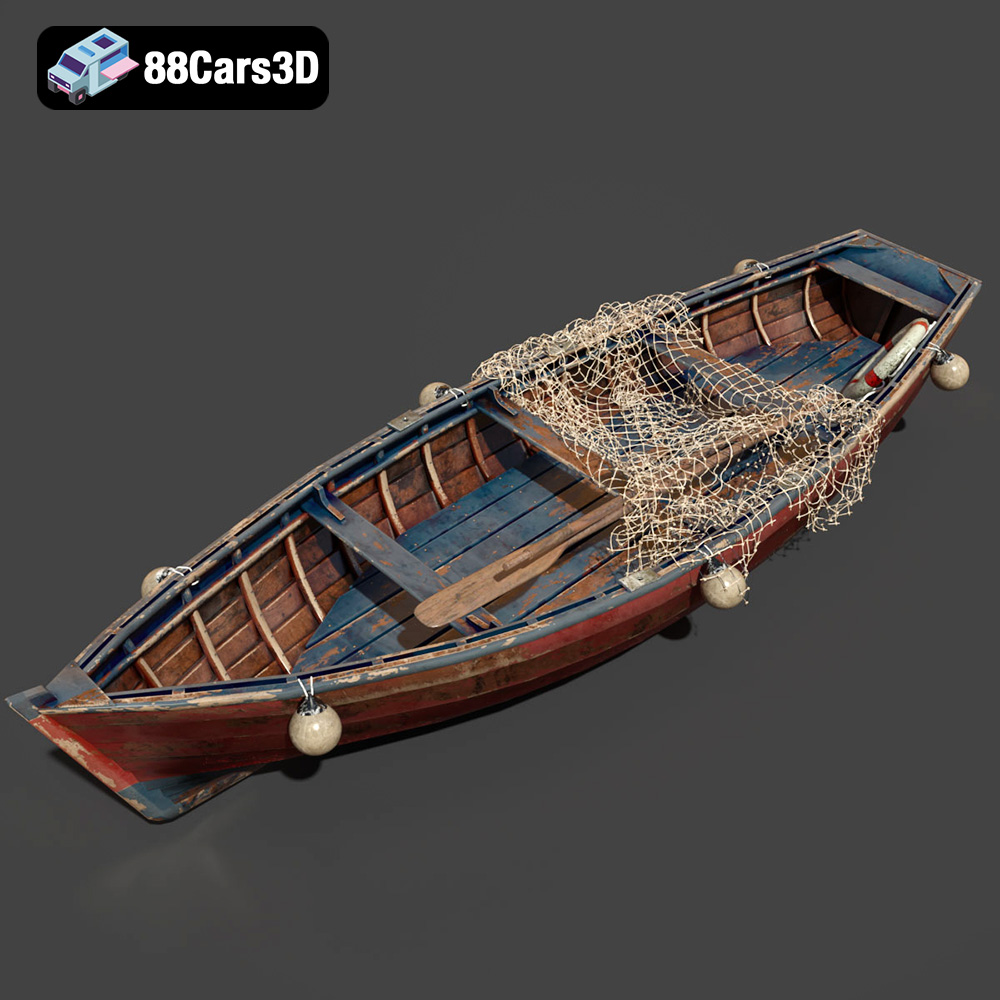
Get 20% OFF All Premium 3D & STL Models!

In the vibrant landscape of digital content creation, the pursuit of realism and efficiency is paramount. Whether you’re an architect visualizing a future masterpiece, a game developer building an expansive open world, or a filmmaker crafting a compelling scene, the quality of your 3D assets can make or break a project. The foundation of any truly immersive experience lies in detailed, well-optimized 3D models that can seamlessly integrate into diverse pipelines and deliver stunning visual fidelity.
The demand for assets that not only look good but also perform flawlessly is higher than ever. From meticulous 3D car models that capture every curve and reflection to intricate environmental props that tell a story, artists and developers constantly seek resources that can accelerate their workflows without compromising on quality. It’s within this context that specialized models, like the Old Fishing Boat 2014 3D Model, prove invaluable. This particular asset exemplifies the blend of artistic detail and technical precision required to elevate any digital scene, bringing a weathered, authentic character to your maritime or historical visualizations.
The versatility of a 3D model is often defined by the range of file formats it supports. Each format serves specific purposes, catering to different software ecosystems, project requirements, and optimization needs. Choosing the right format is crucial for maintaining data integrity, optimizing performance, and ensuring seamless integration into your workflow. The Old Fishing Boat 2014 3D Model, for instance, comes equipped with a comprehensive suite of formats, highlighting its adaptability across various professional applications.
The .blend format is native to Blender, an open-source 3D creation suite. A .blend file typically includes the entire scene setup: geometry, materials, textures, lighting, cameras, animations, and even physics simulations. This format is ideal for users working entirely within Blender, providing full editability and preserving all scene data. For the Old Fishing Boat 2014 model, the .blend file offers a complete, ready-to-render scene, allowing artists to easily modify textures, adjust lighting, or integrate it into larger Blender projects with minimal effort.
.fbx (Filmbox) is a proprietary file format owned by Autodesk, widely adopted across the 3D industry due to its robust support for geometry, animation, and material data. It’s the go-to format for interoperability between different 3D software and is particularly favored in game development for engines like Unreal and Unity. An .fbx file from a quality asset like the Old Fishing Boat 2014 ensures that mesh data, UVs, and PBR (Physically Based Rendering) material assignments transfer accurately, making it game-engine ready and a cornerstone for real-time pipelines.
The .obj (Wavefront OBJ) format is one of the oldest and most universally supported 3D formats. It’s a simple, text-based format that primarily stores geometry (vertices, normals, texture coordinates, and faces) and references material libraries (.mtl files) for basic material properties. While it doesn’t support animation or complex material setups directly, its simplicity makes it incredibly stable for cross-software compatibility. For the Old Fishing Boat 2014, the .obj provides a clean, reliable mesh for import into virtually any 3D application, serving as an excellent fallback or starting point for custom material setups.
.glb (GLB, Binary glTF) is the binary version of the glTF (Graphics Language Transmission Format) standard. Designed for efficient transmission and loading of 3D scenes and models by applications, it’s quickly becoming the “JPEG of 3D.” .glb files package all assets (geometry, materials, textures, animations) into a single, self-contained file, making them highly optimized for web-based 3D, augmented reality (AR), and virtual reality (VR) experiences. The Old Fishing Boat 2014 in .glb format is perfect for integrating into browser-based configurators or AR apps, offering fast load times and consistent rendering across devices.
.stl (Stereolithography) is the standard file format for 3D printing and rapid prototyping. It describes only the surface geometry of a 3D object using a collection of interconnected triangles, without any color, texture, or material information. When planning to physically manifest the detailed geometry of the Old Fishing Boat 2014, the .stl file provides the necessary data for a 3D printer to accurately reproduce the model layer by layer, perfect for scale models or architectural representations.
The .ply (Polygon File Format or Stanford Triangle Format) is another format for storing 3D data, particularly useful for high-resolution scan data and scientific visualization. It can store a wider range of properties than .obj, including color per vertex, normal information, and even material properties. For highly detailed assets or those requiring precise mesh analysis, the .ply format for the Old Fishing Boat 2014 ensures that intricate surface data is preserved for specialized rendering or analytical tasks.
The .unreal file type specifically indicates an asset pre-configured and optimized for direct import into Unreal Engine projects. This often means textures are properly packed, materials are set up with appropriate shaders (e.g., master materials for PBR), and mesh collision is potentially generated. For a complex asset like the Old Fishing Boat 2014, an .unreal file drastically reduces setup time for game developers, providing an engine-ready model that can be dropped straight into a scene with minimal adjustments to look and function as intended within the Unreal ecosystem.
Similar to .blend for Blender, the .max format is native to Autodesk 3ds Max. It stores all scene information including geometry, modifiers, materials, lights, cameras, animations, and render settings. For professionals deeply embedded in 3ds Max workflows, the .max file for the Old Fishing Boat 2014 offers the most comprehensive editing capabilities. Artists can leverage 3ds Max’s powerful modeling tools, advanced rendering engines like V-Ray or Corona, and extensive animation features to fully customize and integrate the boat into high-end automotive rendering or environmental scenes.
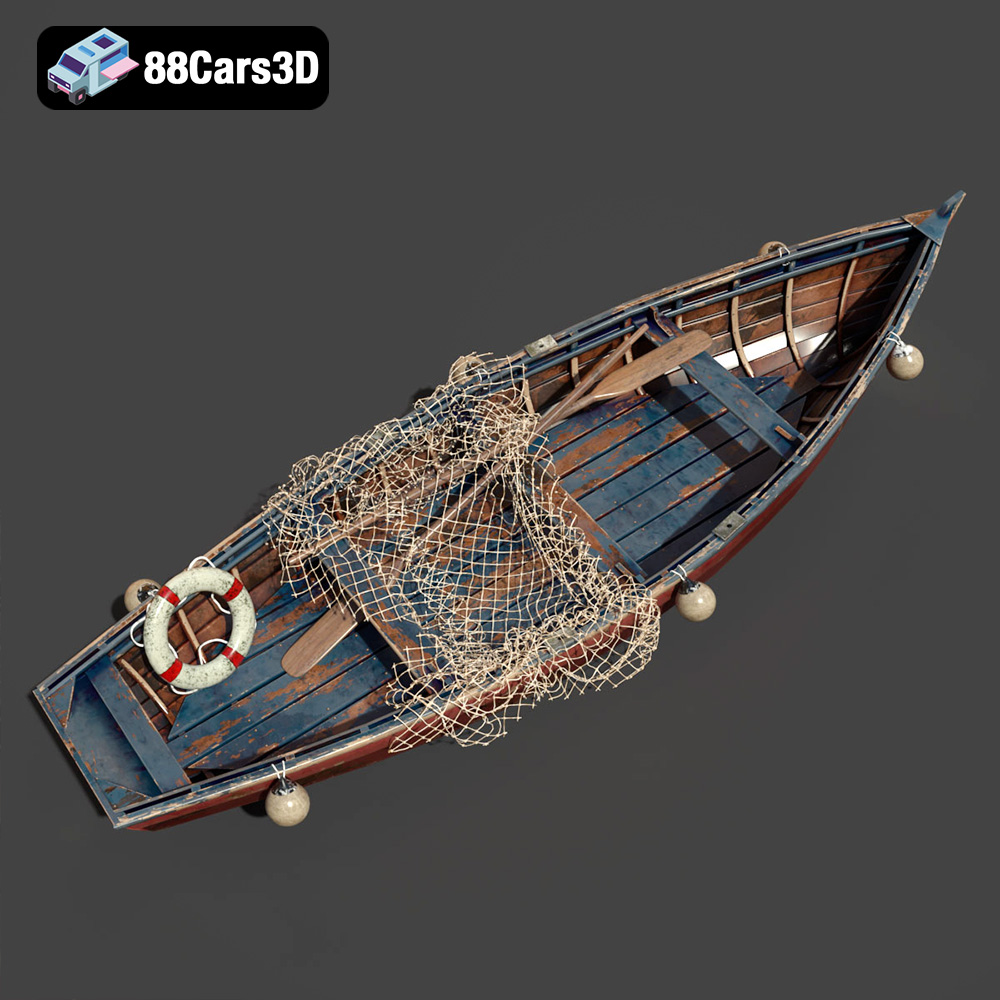
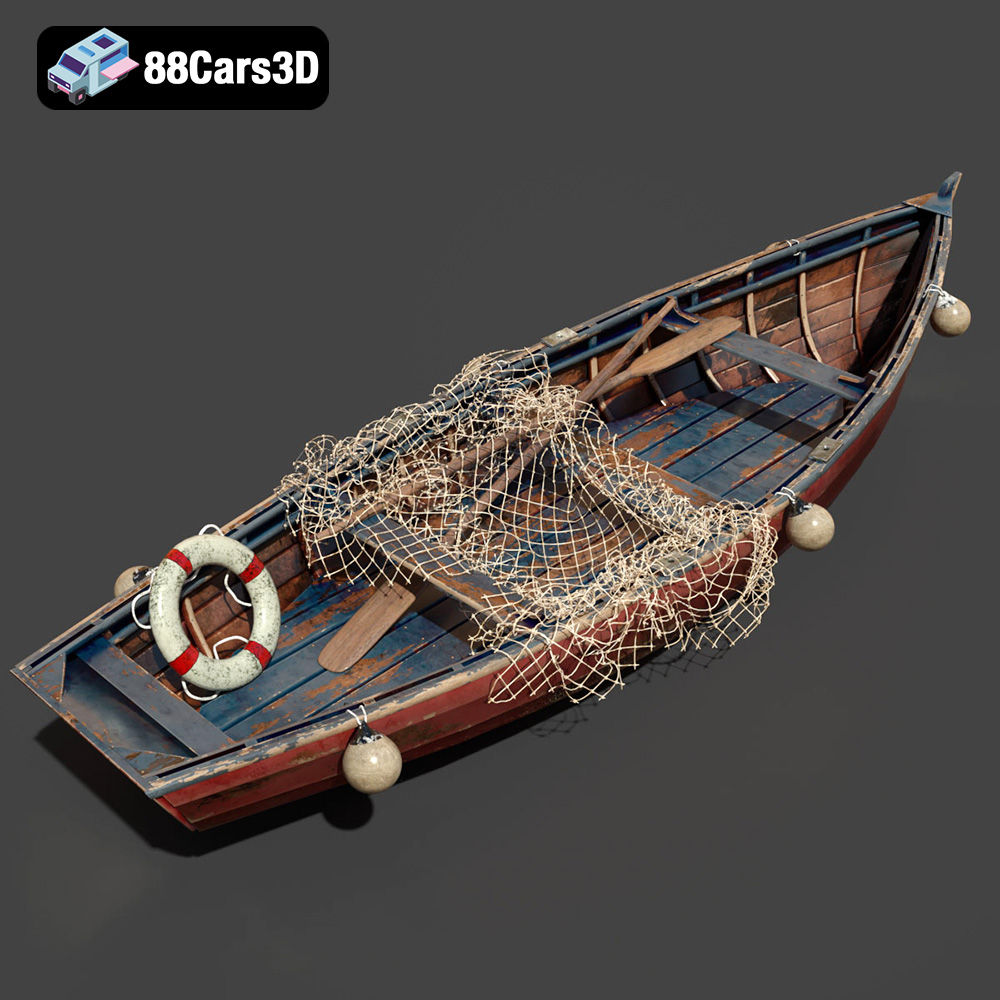
The Old Fishing Boat 2014 3D Model stands out as an exemplary asset for any digital creator seeking authenticity and technical excellence. Far from a generic prop, this model is a meticulously crafted piece of digital artistry, designed to meet the rigorous demands of professional visualization and interactive experiences. Its strength lies in its ability to tell a story through its very construction – a narrative of weathered wood, peeling paint, and the enduring spirit of maritime life.
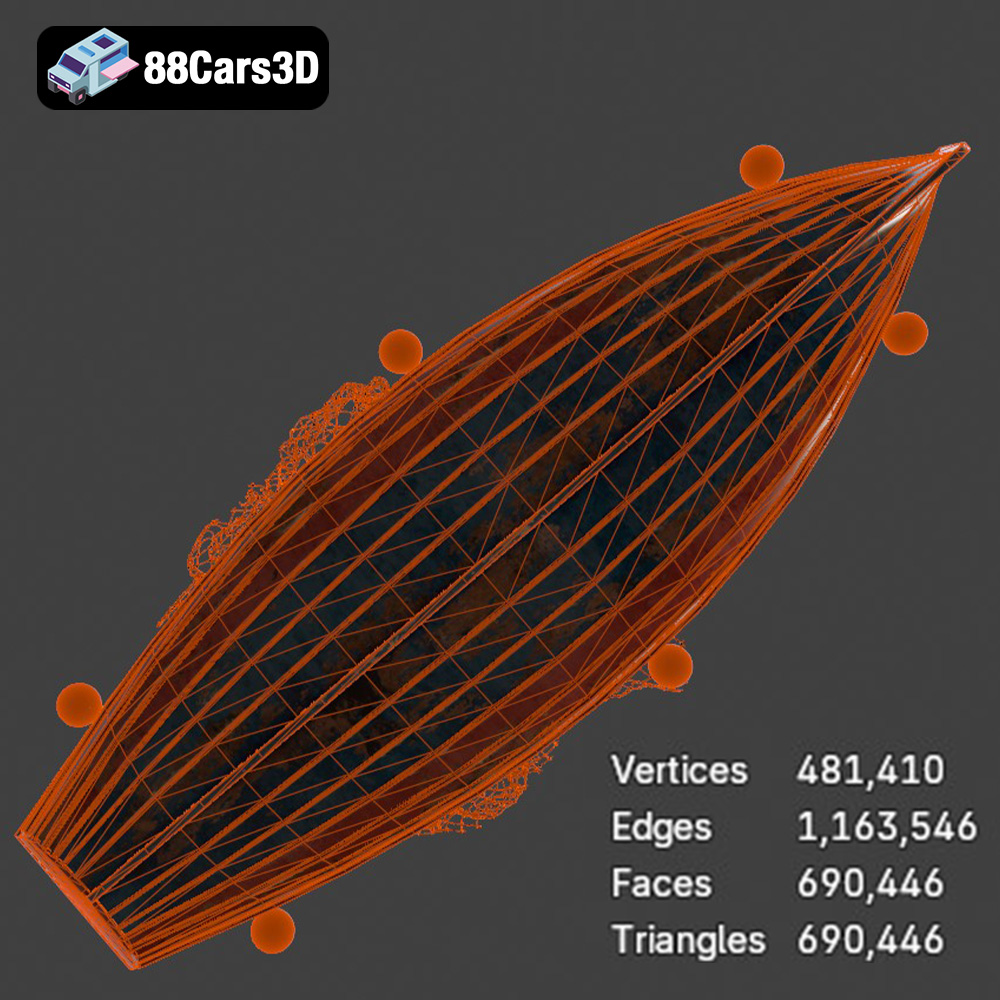
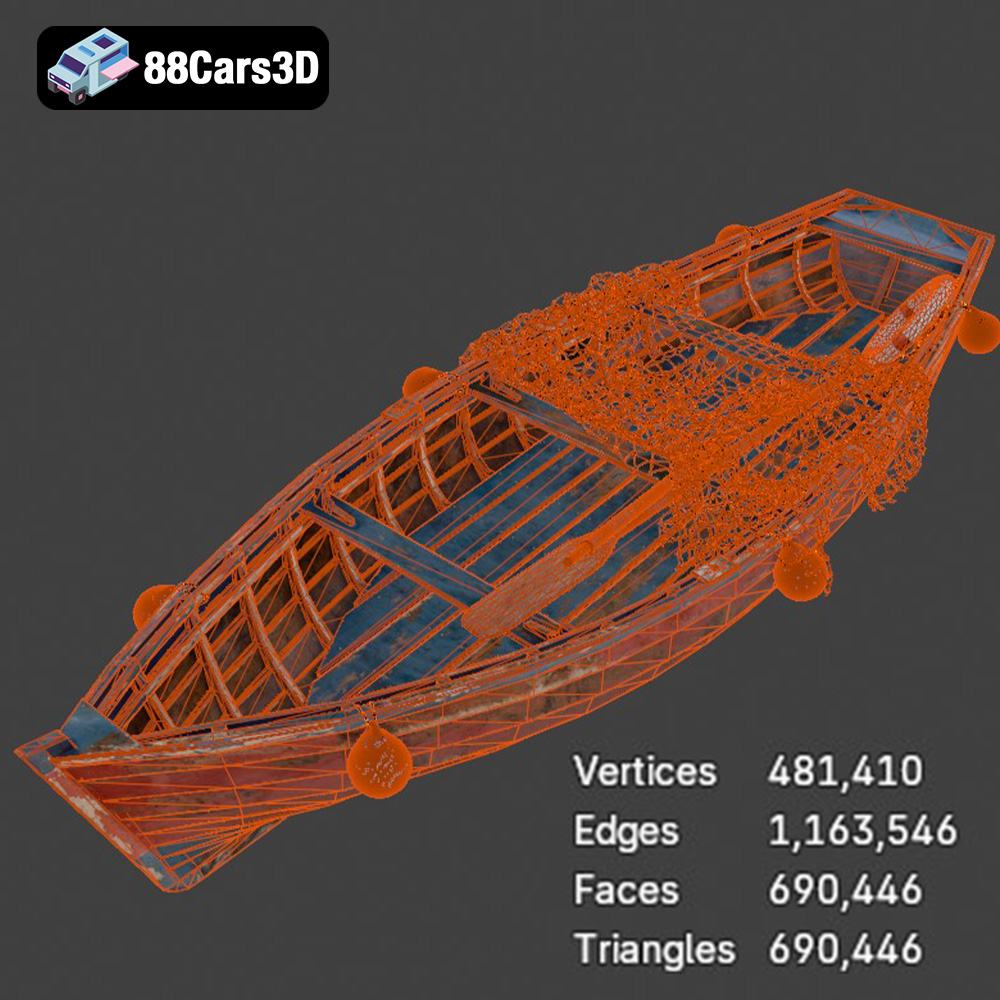
At its core, the Old Fishing Boat 2014 model is built with professional, clean geometry. This isn’t merely about aesthetic appeal; it’s about performance and flexibility. Clean topology, characterized by efficient poly counts and well-defined edge flow, ensures that the model deforms correctly if animated, renders smoothly without artifacts, and performs optimally in real-time environments. For a detailed asset like this, a balanced poly count (e.g., 50,000-150,000 triangles, depending on the level of detail) would allow for intricate features without bogging down a scene. The model captures the functional structure of a classic fishing vessel, from its sturdy hull to its deck equipment, all modeled to accurate scale and proportions. This precision is vital for believable scene composition and ensuring compatibility with other real-world scaled assets.
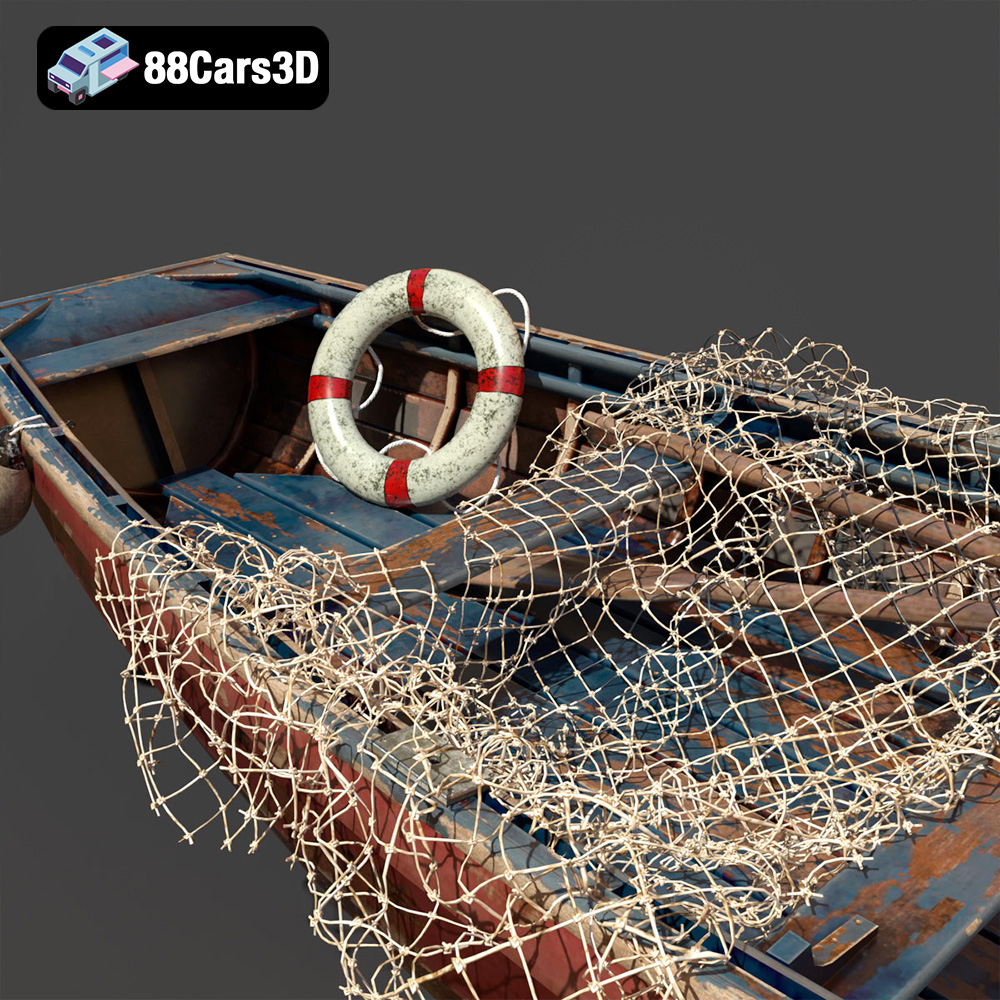
Beyond the mesh, the model’s surfaces and components are textured with realistic materials. The description highlights aged wood, rust, and worn paint – these aren’t just colors; they’re complex PBR materials. This means they include diffuse/albedo, roughness, metallic, normal, and sometimes ambient occlusion maps. These maps, often at resolutions like 2K or 4K, work in conjunction to simulate how light interacts with the surfaces, creating truly convincing visual effects. The careful application of these textures, combined with professional UV mapping (ensuring no stretching or seams, and efficient use of texture space), allows for stunning close-up renders where every imperfection contributes to the model’s realism.
The versatility of the Old Fishing Boat 2014 model is one of its most compelling attributes. For game developers, it’s an ideal game asset for creating atmospheric coastal towns, abandoned docks, or post-apocalyptic water levels. Its optimized geometry and PBR materials are crucial for maintaining high frame rates while still delivering visual fidelity. In the realm of virtual reality (VR) and augmented reality (AR), this model can serve as an anchor point for immersive experiences, providing a tangible, aged object for users to interact with or observe in their digital or mixed realities. For architectural visualization, the boat can lend context and character to waterfront developments, marina designs, or historical recreations. Its detailed nature also makes it suitable for high-resolution rendering in film, advertising, or product visualization, where every rivet and splinter matters.
While specific technical figures aren’t always immediately apparent, understanding what goes into a professional asset is key. For a model like the Old Fishing Boat 2014, expect clean, non-overlapping UVs that are essential for texture clarity and lightmap generation in game engines. The materials would typically be set up using a PBR workflow, compatible with modern renderers and real-time engines. Poly counts would be carefully managed, often offering different levels of detail (LODs) if specifically designed for high-performance games, though the primary model itself would strike a balance between detail and efficiency. The inclusion of various file formats like .blend, .fbx, .obj, and .unreal is a testament to its readiness for immediate deployment across virtually any professional pipeline, saving artists hundreds of hours in modeling and texturing.
The true power of a meticulously crafted 3D model like the Old Fishing Boat 2014 is realized when it’s integrated into professional production pipelines. High-quality assets are not merely decorative elements; they are foundational components that accelerate development, enhance visual impact, and free up artists to focus on creative direction rather than repetitive modeling tasks. Let’s explore how this asset can be put to work in various industry-standard workflows.
For artists working with traditional 3D DCC (Digital Content Creation) software, the Old Fishing Boat 2014 provides a robust starting point. In 3ds Max, the provided .max file allows for complete manipulation. Imagine placing the boat in a detailed maritime scene, perhaps with animated water simulations, dynamic lighting reflecting off its aged surfaces, and atmospheric effects like fog or rain. 3ds Max, combined with powerful renderers like V-Ray or Corona, enables photorealistic automotive rendering and environmental visualization. The boat could be rigged for subtle motion, such as swaying with the waves, or props on its deck could be animated to tell a story of a recent catch. Similarly, in Blender, the .blend file allows for extensive customization. Artists can leverage Blender’s Cycles or Eevee renderers to achieve stunning visuals, integrate the boat into animated shorts, or use its geometry for sculpting additional details. The clean UVs and PBR textures mean the model will respond beautifully to Blender’s robust material nodes, enabling complex shader development for even more unique looks.
Game development relies heavily on optimized game assets that can perform efficiently in real-time environments. The Old Fishing Boat 2014, with its .fbx and .unreal formats, is perfectly suited for engines like Unreal Engine and Unity. For Unreal Engine, the .unreal file often means a direct drag-and-drop experience, with materials, textures, and even basic collision already configured. Developers can place the boat in a game level, set up interactive elements, and apply physics for dynamic behavior. Its optimized geometry ensures it won’t be a performance bottleneck, crucial for open-world games or VR experiences. In Unity, the .fbx file imports seamlessly, allowing developers to set up PBR materials, add colliders, and integrate it into game logic. The realistic textures and detailed model enhance environmental storytelling, adding depth and character to virtual landscapes.
The scope of 3D models extends beyond traditional rendering and gaming. With the rise of immersive technologies, assets like the Old Fishing Boat 2014 are finding new homes. The .glb format is tailor-made for AR/VR applications, providing an optimized, single-file solution for quick deployment on web platforms or mobile devices. Imagine experiencing the boat in AR, placed realistically within your physical environment, or exploring its weathered details up close in a VR tour. Furthermore, the inclusion of an .stl file opens doors to 3D printing. Hobbyists and professionals alike can use this format to create physical miniatures of the boat, ideal for dioramas, tabletop gaming, or even as a detailed prototype for model making. The precision of the mesh in the .stl and .ply formats ensures that the physical print accurately reflects the digital model’s intricate structure.
In the fast-paced world of 3D production, time is a precious commodity. Creating highly detailed, production-ready assets from scratch is an incredibly time-consuming and skill-intensive process. This is where online marketplaces offering premium 3D models become indispensable resources for studios and independent artists alike. Investing in quality pre-made assets, such as the Old Fishing Boat 2014 3D Model, allows creators to allocate their valuable time to more critical aspects of a project, like creative direction, scene composition, and optimization, rather than foundational asset creation.
A key advantage of sourcing models from reputable platforms like 88cars3d.com is the assurance of quality and optimization. Each asset is typically designed with specific use cases in mind, meaning they come with clean geometry, optimized UVs, and PBR textures. This “ready-to-use” nature significantly reduces iteration cycles and compatibility issues, a common headache with less professionally prepared models. For instance, the Old Fishing Boat 2014 isn’t just a pretty mesh; it’s engineered for performance across various platforms, from high-resolution cinematic rendering to demanding real-time game simulations. This inherent quality means less time spent cleaning up meshes, re-texturing, or fixing broken UVs, allowing artists to focus on integrating the asset seamlessly and achieving their creative vision faster.
While the featured asset is a charming old fishing boat, 88cars3d.com is known for its extensive range of high-quality 3D models catering to diverse needs. From meticulously detailed 3D car models perfectly suited for automotive rendering, virtual showrooms, and game development, to various environmental props and architectural elements, the marketplace offers a rich selection designed to elevate any project. Whether you’re building a bustling cityscape, a serene natural landscape, or a dynamic game environment, having access to a library of professionally crafted assets like the Old Fishing Boat 2014 ensures consistency in quality and reduces development overhead. This curated selection empowers creators to build rich, believable digital worlds with confidence and efficiency.
The journey of creating immersive digital experiences is paved with countless technical and artistic decisions, none more crucial than the choice of 3D assets. The Old Fishing Boat 2014 3D Model exemplifies the pinnacle of professional asset creation, offering a blend of detailed realism, versatile file formats, and optimized performance. From its clean geometry and PBR textures to its compatibility across major software like Blender, 3ds Max, Unreal Engine, and Unity, it is an invaluable resource for anyone looking to add authentic maritime character to their projects.
By providing a comprehensive suite of file formats, including .blend, .fbx, .obj, .glb, .stl, .ply, .unreal, and .max, this model ensures seamless integration into virtually any workflow, whether for high-resolution rendering, interactive game development, AR/VR experiences, or even 3D printing. It underscores the importance of choosing assets that not only look fantastic but are also technically sound and production-ready.
For artists and developers committed to delivering high-quality visual content efficiently, resources like the Old Fishing Boat 2014, available at 88cars3d.com, are essential. They represent an investment in both time-saving and quality assurance, empowering creators to focus on the art of storytelling and world-building rather than the intricacies of asset development. Elevate your next project with assets that bring your digital visions to life with unparalleled realism and technical precision.
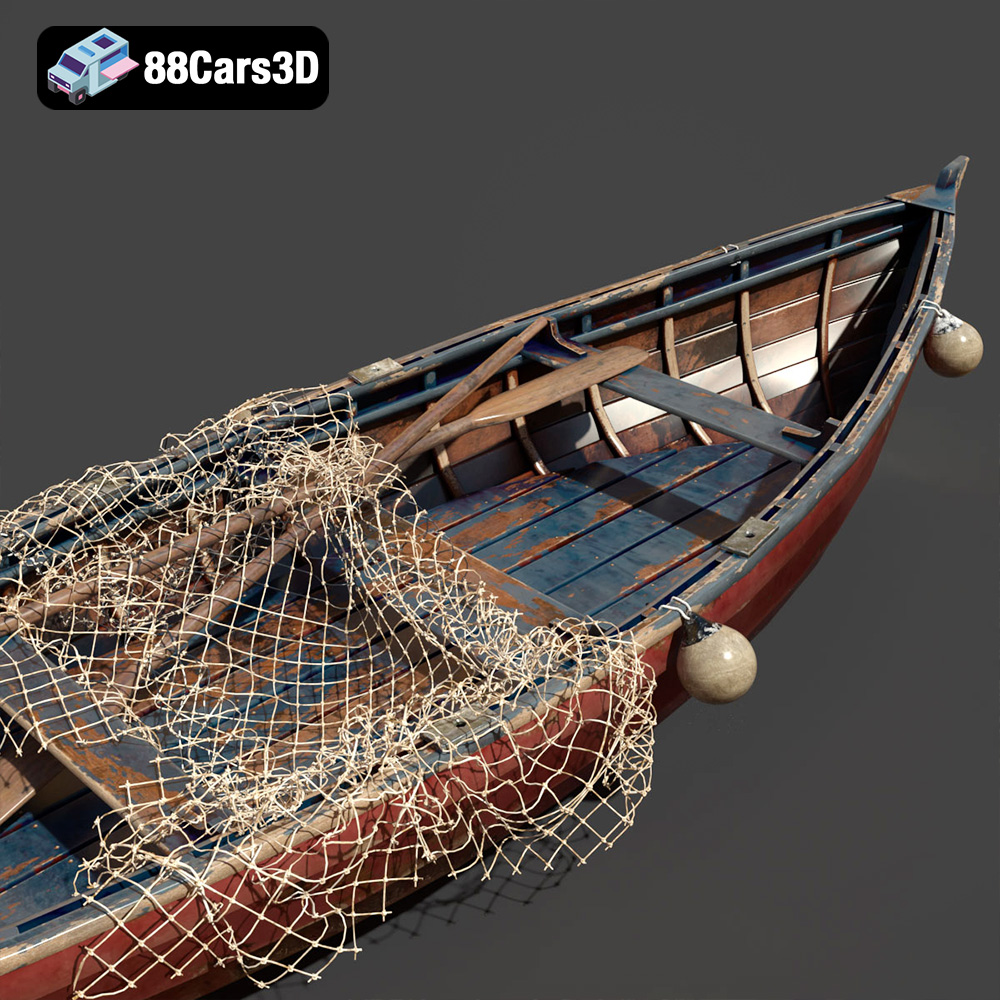
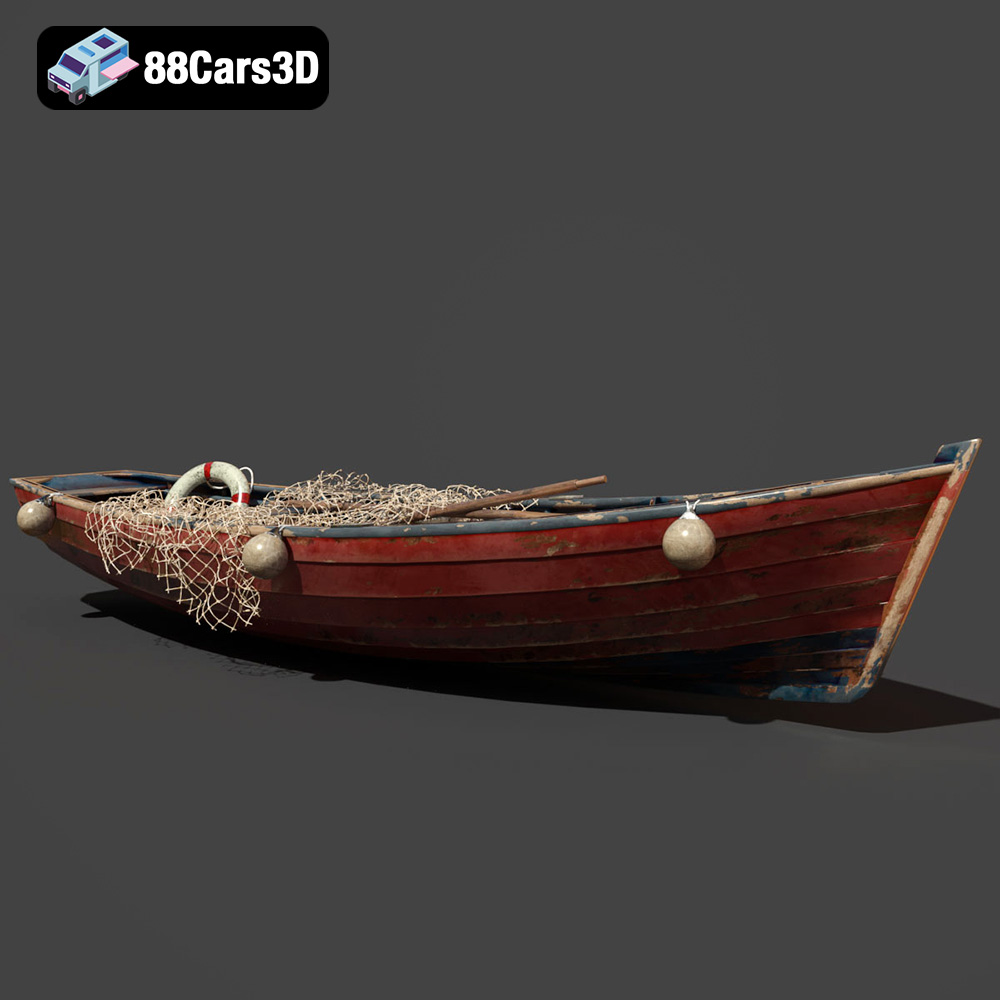
Introduce professional realism to your visualizations and projects with the Old Fishing Boat 2014 3D Model. This detailed asset captures the weathered character and functional structure of a classic maritime vessel, modeled precisely to ensure accurate scale and proportions. This 3D model features professional, clean geometry optimized for performance across various platforms. All surfaces and components are textured with realistic materials, simulating aged wood, rust, and worn paint, making it suitable for close-up renders and demanding simulations. The Old Fishing Boat 2014 model is a versatile asset engineered for immediate integration into multiple pipelines. It is perfect for nautical simulation, environmental scene creation, virtual reality (VR) and augmented reality (AR) experiences, high-resolution rendering, and commercial game development.
$9.99