Unleashing Digital Precision: The Power of High-Quality 3D Car Models
In the dynamic world of digital content creation, the demand for photorealistic and performant 3D assets has never been higher. From breathtaking automotive renders that grace magazine covers and advertisements to immersive interactive experiences in games and virtual reality, the foundation of excellence lies in meticulously crafted 3D models. Professionals across various industries – including automotive design, visualization, film, and game development – constantly seek assets that offer both aesthetic fidelity and technical robustness.
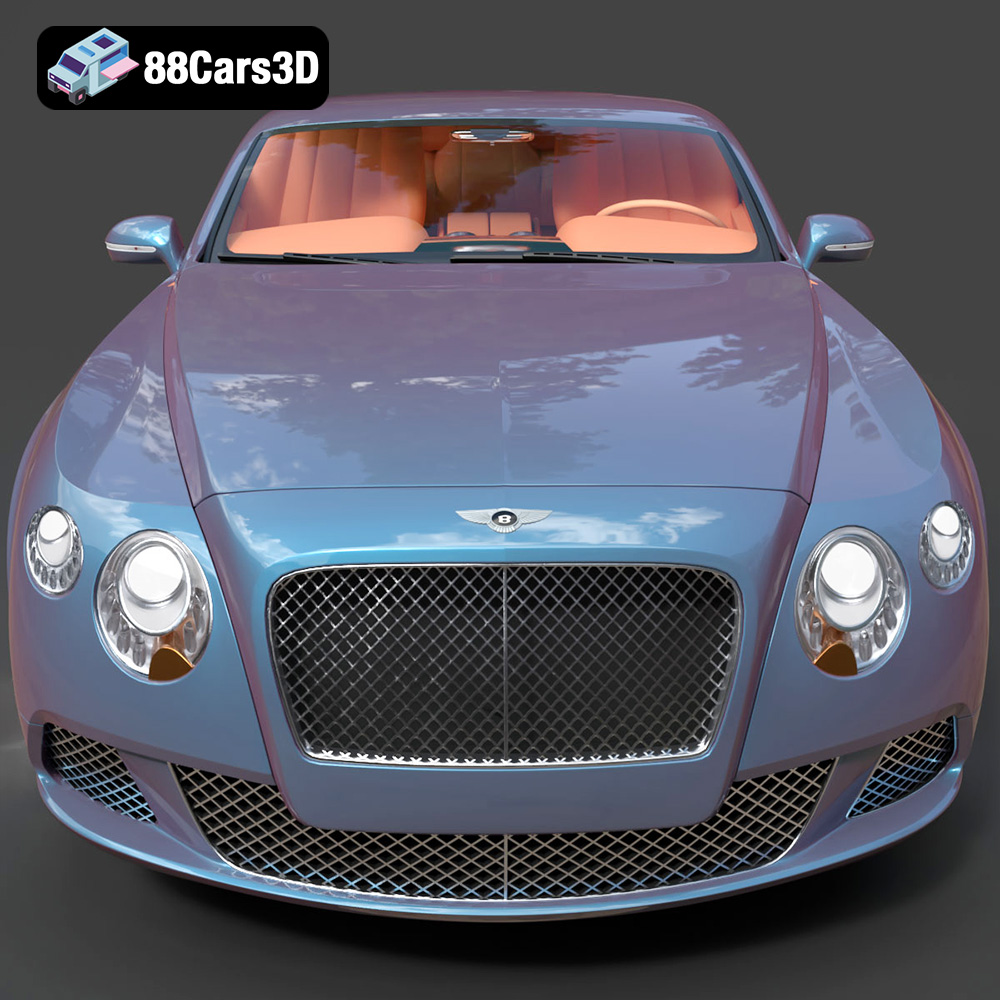
A prime example of such a high-caliber asset is the Bentley Continental GT 2011 3D Model available on 88cars3d.com. This exceptional model serves as a testament to the intricate balance between artistic detail and technical optimization. Engineered for accurate visualization, it encapsulates the essence of the luxury grand tourer, making it an indispensable tool for anyone aiming to produce top-tier digital media. Whether you’re a seasoned 3D artist, a game developer, or an architect integrating vehicles into your scene, understanding the nuances of professional-grade 3D car models and their diverse applications is crucial for elevating your projects.
Understanding 3D Model File Formats
The choice of file format is often as critical as the model itself, dictating compatibility, feature retention, and the ultimate utility across different software and platforms. High-quality 3D car models like the Bentley Continental GT 2011 from 88cars3d.com are typically offered in multiple formats to cater to diverse professional workflows. Let’s delve into the specifics of these essential formats and their optimal use cases.
.blend – The Power of Blender Integration
The .blend format is native to Blender, a powerful and increasingly popular open-source 3D creation suite. When you acquire a .blend file, you’re not just getting the raw mesh; you’re typically receiving a fully editable Blender scene. This often includes materials, textures, lighting setups, camera configurations, and even animation data, all pre-configured within the Blender environment. This makes it incredibly convenient for artists already working in Blender, allowing for immediate modification, rendering with Cycles or Eevee, and seamless integration into existing projects without the need for extensive re-setup. For the Bentley Continental GT 2011 3D model, a .blend file ensures that all the intricate material details and scene elements are preserved exactly as intended by the creator, providing a perfect starting point for customization.
.fbx – The Universal Pipeline Workhorse
.fbx (Filmbox) is a proprietary file format developed by Autodesk, renowned for its excellent support for 3D model data, including geometry, materials, textures, animations, and skeletal deformation. It has become an industry standard for data exchange between various 3D applications like 3ds Max, Maya, Blender, and crucially, game engines such as Unreal Engine and Unity. Its strength lies in its ability to encapsulate complex scene data reliably, making it ideal for real-time pipelines where maintaining consistency across different software is paramount. When integrating a 3D car model into a game, an .fbx file ensures that UV maps, material assignments, and even basic collision meshes can be imported cleanly, minimizing rework.
.obj – The Universal Geometry Standard
The .obj (Wavefront Object) format is one of the oldest and most widely supported 3D file formats. It is a simple, text-based format primarily designed to store geometry data, including vertex positions, UV coordinates, normals, and polygonal faces. While it doesn’t typically embed animations or complex material properties directly (materials are often referenced in a separate .mtl file), its universality is its greatest strength. Virtually every 3D software can import and export .obj files, making it an excellent choice for cross-software compatibility. For artists needing a clean, universal mesh to start with, or for those working with software that has limited .fbx support, .obj remains an indispensable format.
.glb – Optimized for AR, VR, and Web
.glb (GL Transmission Format Binary) is the binary version of glTF, a royalty-free specification for the efficient transmission and loading of 3D scenes and models by applications. Developed by the Khronos Group, .glb is highly optimized for performance, making it the format of choice for web-based 3D, augmented reality (AR), and virtual reality (VR) experiences. It packages 3D model data, textures, and animations into a single binary file, facilitating faster loading times and easier deployment. For visualizing the Bentley Continental GT 2011 in a web configurator or an AR app on a mobile device, .glb offers an unmatched combination of visual quality and lean file size.
.stl – The Gateway to 3D Printing
.stl (STereoLithography) is the de facto standard file format for 3D printing. It represents a 3D model as a series of connected triangles, describing only the surface geometry of an object without color, texture, or other CAD attributes. While not ideal for rendering or animation, it is perfect for transforming a digital model into a physical object. For prototyping a miniature version of the Bentley Continental GT 2011 or creating custom accessories, the .stl format provides the precise polygonal data required by 3D printers, ensuring accurate physical replication.
.ply – Precision Mesh for CAD or Analysis
.ply (Polygon File Format or Stanford Triangle Format) is another format that stores 3D data, often used for scanned 3D objects or point cloud data. It can store a variety of information including color, transparency, surface normals, and range data, making it more versatile than .stl for certain applications. .ply files are particularly useful in scientific visualization, CAD, and analysis tools where a detailed and precise representation of mesh data is required. For intricate analysis or specific manufacturing processes that go beyond basic 3D printing, .ply can offer a more robust data set for complex geometric data.
.unreal – Engine-Ready for Real-Time Environments
The .unreal format signifies an asset that is specifically pre-configured and optimized for Unreal Engine. This isn’t a standard external file format like .fbx or .obj; rather, it often implies a proprietary asset package or a project file structure ready for direct import or even existing within an Unreal Engine project. These assets have typically undergone a rigorous pipeline of optimization, material setup using Unreal’s physically based rendering (PBR) system, collision generation, LOD (Level of Detail) creation, and potentially blueprinting. For developers working with Unreal Engine, an “.unreal” asset like the Bentley Continental GT 2011 3D model means immediate plug-and-play functionality, drastically reducing setup time and ensuring optimal performance within the engine.
.max – The 3ds Max Project File
Finally, the .max format is the native scene file for Autodesk 3ds Max, a long-standing industry leader in 3D modeling, animation, and rendering. Similar to .blend files, a .max file provides a complete 3ds Max scene including all geometry, materials (often V-Ray, Corona, or Arnold specific), textures, lighting, cameras, and animation data. For professionals deeply embedded in the 3ds Max ecosystem, this format offers the highest level of editability and ensures that all intricate details and studio-standard setups for rendering the Bentley Continental GT 2011 are immediately accessible, allowing for full control over every aspect of the scene.
The Art of Automotive Rendering: Bringing Luxury to Life
Automotive rendering is a specialized field that demands an exceptional eye for detail and a deep understanding of light, materials, and composition. With high-quality 3D car models, such as the Bentley Continental GT 2011 available on 88cars3d.com, artists can create visuals indistinguishable from reality. This process involves intricate workflows within industry-standard software.
Photorealistic Setup in 3ds Max and V-Ray/Corona
For many automotive visualization studios, 3ds Max coupled with render engines like V-Ray or Corona is the go-to combination. When working with a .max file of the Bentley Continental GT 2011, artists benefit from a pre-configured scene. The focus then shifts to refining specific elements:
- Materials and Textures: The Bentley’s sleek exterior paint, the intricate details of its grille, the luxurious leather interior, and the subtle reflections on chrome need precise PBR material setup. This involves configuring albedo, roughness, metallic, normal, and displacement maps to perfectly simulate real-world surfaces.
- Lighting: A studio lighting setup, often using HDRI (High Dynamic Range Image) environments combined with targeted area lights, is crucial to highlight the car’s form and reflections. Understanding how light interacts with the car’s curves and contours is paramount for achieving a compelling render.
- Cameras and Composition: Just like a professional photographer, the 3D artist positions virtual cameras, adjusts focal lengths, and applies depth of field to create dynamic compositions that emphasize the car’s elegance and power.
Leveraging Blender for Stunning Visuals with Cycles/Eevee
Blender has emerged as a formidable contender in the rendering space, with its powerful Cycles and real-time Eevee render engines. A .blend file of the Bentley Continental GT 2011 provides an excellent foundation. Artists can:
- Nodal Material System: Blender’s node-based material editor offers unparalleled flexibility to create complex and layered shaders, allowing for highly realistic car paint, glass, and interior fabrics. Fine-tuning parameters for clear coat, metallic flakes, and subsurface scattering can dramatically enhance realism.
- Environment and Scene Composition: Utilizing Blender’s built-in environment textures or custom HDRI maps, artists can quickly set up compelling backdrops. Integration with other scene elements, such as architectural structures or natural landscapes, creates a complete narrative for the render.
- Eevee for Fast Previews and Animations: For quick iterations, animations, or even interactive presentations, Eevee provides near real-time rendering capabilities, making the workflow incredibly efficient without sacrificing too much visual quality.
Post-Processing and Final Touches
Even the most perfect render benefits from post-processing. Tools like Adobe Photoshop or dedicated compositing software can elevate the final image:
- Color Grading and Tone Mapping: Adjusting colors, contrast, and overall tone to create a specific mood or to match a brand’s aesthetic.
- Glows and Glare: Adding subtle bloom, lens flares, or glare to headlights and reflective surfaces enhances realism and visual appeal.
- Refinement and Detail: Minor touch-ups, sharpening, and adding atmospheric effects like subtle fog or dust can imbue the render with a sense of place and presence.
Driving Immersion: Integrating 3D Car Models into Game Engines
Game development demands an entirely different set of considerations for 3D assets, balancing visual fidelity with performance. A well-optimized 3D car model, such as the Bentley Continental GT 2011, is essential for creating believable and responsive interactive experiences, whether for high-end racing simulations or detailed open-world environments.
Unreal Engine Workflow with the Bentley Model
Unreal Engine is a powerhouse for real-time applications, and integrating a complex 3D car model requires a systematic approach:
- Importing the Asset: Utilizing the .fbx or the dedicated .unreal file, the Bentley model can be directly imported. The .unreal package often includes pre-set materials, collision meshes, and even basic LODs, significantly accelerating the process.
- Material Setup and PBR: Unreal Engine’s Physically Based Rendering (PBR) system requires textures (albedo, normal, roughness, metallic, ambient occlusion) to be properly linked in material instances. The model’s clean UVs ensure textures map correctly without distortion.
- LODs and Optimization: For game assets, Level of Detail (LOD) models are crucial. Multiple versions of the Bentley Continental GT 2011, with progressively lower polygon counts, are used depending on the camera’s distance, ensuring smooth performance without noticeable pop-in.
- Collision and Physics: Setting up accurate collision meshes and configuring vehicle physics (suspension, engine torque, tire friction) is vital for realistic driving mechanics.
Unity Integration for Interactive Experiences
Unity, another widely used game engine, offers a similar yet distinct workflow:
- Asset Import and Configuration: The .fbx file is the primary choice for importing into Unity. Artists then configure import settings for mesh, materials, and animations.
- Shader Development: Unity’s Shader Graph or standard PBR shaders are used to replicate the car’s luxurious finishes. The high-quality textures provided with the Bentley model ensure rich visual details even within a real-time context.
- Optimizing for Mobile and VR: Unity is excellent for multi-platform deployment. Further optimization, such as texture atlasing, draw call reduction, and meticulous LOD setup, is critical for delivering the Bentley model on less powerful hardware or in demanding VR environments.
Real-Time Optimization Strategies
Regardless of the engine, efficient real-time performance hinges on smart optimization:
- Polygon Count Management: While high-poly models are great for rendering, game engines require balanced poly counts. The Bentley Continental GT 2011 model’s “optimized geometry” means it strikes this balance, offering detail where needed but keeping unnecessary polygons at bay.
- Texture Resolution and Atlasing: Using appropriate texture resolutions and combining multiple smaller textures into larger atlases reduces draw calls, improving performance.
- Occlusion Culling and Frustum Culling: Implementing engine-specific culling techniques ensures that only visible parts of the model are rendered, saving valuable processing power.
Beyond the Screen: AR/VR and 3D Printing Applications
The utility of high-fidelity 3D car models extends far beyond traditional rendering and game development. Augmented Reality (AR), Virtual Reality (VR), and 3D printing represent exciting frontiers where assets like the Bentley Continental GT 2011 3D Model prove invaluable, enabling immersive experiences and tangible prototypes.
Augmented Reality with .glb
AR overlays digital content onto the real world, and a well-optimized 3D car model is the cornerstone of compelling AR experiences. The .glb format, included with the Bentley model from 88cars3d.com, is specifically designed for this purpose:
- Web-Based AR: Imagine placing the Bentley Continental GT 2011 directly in your driveway using just a smartphone browser. The .glb format’s efficiency and single-file nature make it perfect for web AR solutions, allowing users to interact with a virtual car in their physical environment without app downloads.
- Mobile AR Applications: For more sophisticated AR apps, the optimized geometry and textures of the Bentley model ensure smooth performance on mobile devices, providing a highly realistic and interactive experience, whether for car configurators or virtual showrooms.
- Interactive Product Visualization: Automotive manufacturers can use AR to showcase new models or custom options to potential buyers, allowing them to explore every angle and detail of a vehicle before it’s even built.
Virtual Reality Experiences
VR transports users into fully digital environments, offering unparalleled immersion. High-quality 3D car models are central to creating believable VR worlds:
- Immersive Showrooms: Experience the Bentley Continental GT 2011 in a luxurious virtual showroom, complete with interactive features like opening doors, changing paint colors, or exploring the interior in full 360 degrees. The model’s “meticulously detailed digital representation” is critical here, as users will be up close and personal.
- Simulation Training: For driver training or automotive mechanics, VR simulations powered by accurate 3D models provide realistic environments for learning and practice. The authentic representation of the Bentley’s interior and exterior ensures a true-to-life training scenario.
- Design Review and Collaboration: Automotive designers can use VR to review new car designs or iterations of existing models, allowing teams to collaborate in an immersive virtual space and make design decisions more effectively.
Prototyping and Production with .stl
The digital world can also bridge into the physical through 3D printing. The .stl format of the Bentley Continental GT 2011 3D Model facilitates this transition:
- Rapid Prototyping: Designers can quickly print physical scale models of the Bentley for concept evaluation, aerodynamic testing, or aesthetic review. This allows for tangible interaction with a design that initially only existed digitally.
- Custom Accessories: The model can serve as a base for designing and 3D printing custom parts, scale model accessories, or even functional components for physical prototypes.
- Educational Models: For educational purposes, 3D printed versions of complex vehicles like the Bentley offer a tactile way to study automotive design and engineering.
The Value of Professional-Grade 3D Assets for Modern Workflows
In today’s fast-paced digital production environment, time is money. Relying on professional-grade 3D assets like those found on 88cars3d.com is not just a convenience; it’s a strategic investment that yields significant returns in efficiency, quality, and creative freedom. The Bentley Continental GT 2011 3D Model exemplifies these advantages, offering a robust solution for a myriad of projects.
Time-Saving and Efficiency in Production
Creating a high-fidelity 3D car model from scratch is an incredibly time-consuming and labor-intensive process, often requiring hundreds of hours of expert modeling, texturing, and optimization. By acquiring a pre-made, production-ready asset:
- Reduced Development Cycles: Artists and developers can skip the initial modeling phase entirely, dramatically cutting down project timelines. This allows them to focus on creative tasks like scene composition, animation, or interactive logic.
- Immediate Integration: With multiple file formats tailored for different software and engines (.max, .blend, .fbx, .unreal), the Bentley model can be integrated into existing pipelines almost immediately, minimizing conversion issues and re-setup time.
- Cost-Effectiveness: The cost of purchasing a premium 3D model is typically a fraction of the expense involved in commissioning or producing one internally, freeing up budget for other aspects of a project.
Consistency and Quality Across Projects
Professional 3D car models are developed by experienced artists, adhering to industry best practices for topology, UV mapping, material setup, and optimization. This ensures a consistent level of quality that is difficult to achieve with hurried or inexperienced efforts:
- Photorealistic Results: The “meticulously detailed digital representation” and “materials set up for photorealistic results” of the Bentley Continental GT 2011 model guarantee stunning visuals straight out of the box, maintaining high standards for automotive rendering and visualization.
- Reliable Performance: “Clean, optimized geometry” means the model will perform well in real-time applications, reducing potential bottlenecks in game engines or AR/VR experiences.
- Brand Integrity: For projects involving specific car brands, accuracy is paramount. A professionally created model ensures the brand’s aesthetics and details are faithfully replicated, upholding brand integrity in all digital media.
Case Study: The Bentley Continental GT 2011 in a Professional Studio
Consider an advertising agency tasked with creating a high-impact digital campaign for a luxury brand. They need a sophisticated car to feature in a virtual showroom video, an interactive web banner, and potentially a physical miniature for a press kit. Rather than spending weeks modeling and texturing a car from scratch, the studio could acquire the Bentley Continental GT 2011 3D Model from 88cars3d.com.
- Using the .max file, their lead renderer quickly sets up cinematic shots with V-Ray for the video ad.
- Concurrently, a web developer optimizes the .glb version for an interactive 360-degree viewer on the campaign landing page.
- Meanwhile, the .stl file is sent to a 3D printing service for creating elegant, branded desk models for VIP clients.
This multi-faceted approach, powered by a single, versatile asset, demonstrates the immense value and efficiency that professional-grade 3D car models bring to complex, demanding projects.
Conclusion
The landscape of digital content creation is ever-evolving, driven by a relentless pursuit of realism, immersion, and efficiency. At the heart of this pursuit are high-quality 3D assets, which serve as the fundamental building blocks for everything from cinematic automotive rendering to interactive game environments and groundbreaking AR/VR experiences. Understanding the technical nuances of various file formats and the specific workflows they enable empowers artists and developers to make informed choices that elevate their projects.
The Bentley Continental GT 2011 3D Model stands as an exemplary product in this domain, offering meticulous detail, optimized geometry, and a comprehensive suite of file formats to meet diverse professional needs. Whether you’re aiming for a photorealistic render in 3ds Max, a high-performance game asset for Unreal Engine, an engaging AR visualization, or even a physical prototype through 3D printing, this model provides the quality and versatility required for modern production pipelines. By investing in such premium 3D car models, professionals can significantly enhance their creative output, save invaluable time, and consistently deliver exceptional results that captivate and impress. Explore the possibilities and elevate your next project with a professional 3D car model from 88cars3d.com.
Featured 3D Model
Bentley Continental GT 2011 3D Model
Presenting the Bentley Continental GT 2011 3D model, engineered for accurate visualization. This asset captures the essence of the luxury grand tourer, offering a meticulously detailed digital representation ready for professional pipelines and detailed rendering. The model features clean, optimized geometry suitable for close-up renders and demanding real-time applications. Materials are set up for photorealistic results, accurately replicating the sleek exterior finish and luxurious interior components of the Continental GT. Every effort was made to ensure the structure is well-organized, facilitating easy integration and modification within your existing projects. Versatile for various industry needs, this asset is ideal for automotive visualization, architecture visualization (ArchViz), simulation training, interactive augmented reality (AR) and virtual reality (VR) experiences, and high-fidelity game development projects.
$14.99
Product Image Gallery