Get 20% OFF All Premium 3D & STL Models!

In the dynamic realm of digital content creation, the demand for truly exceptional 3D assets continues to escalate. From photorealistic architectural visualizations to immersive game worlds and compelling cinematic sequences, the quality of a 3D model can profoundly impact the final output. Nowhere is this more evident than in automotive visualization, where capturing the intricate details and luxurious essence of a vehicle is paramount. This pursuit of digital realism drives professionals to seek out meticulously crafted 3D car models that not only look authentic but also perform flawlessly across diverse software environments and applications.
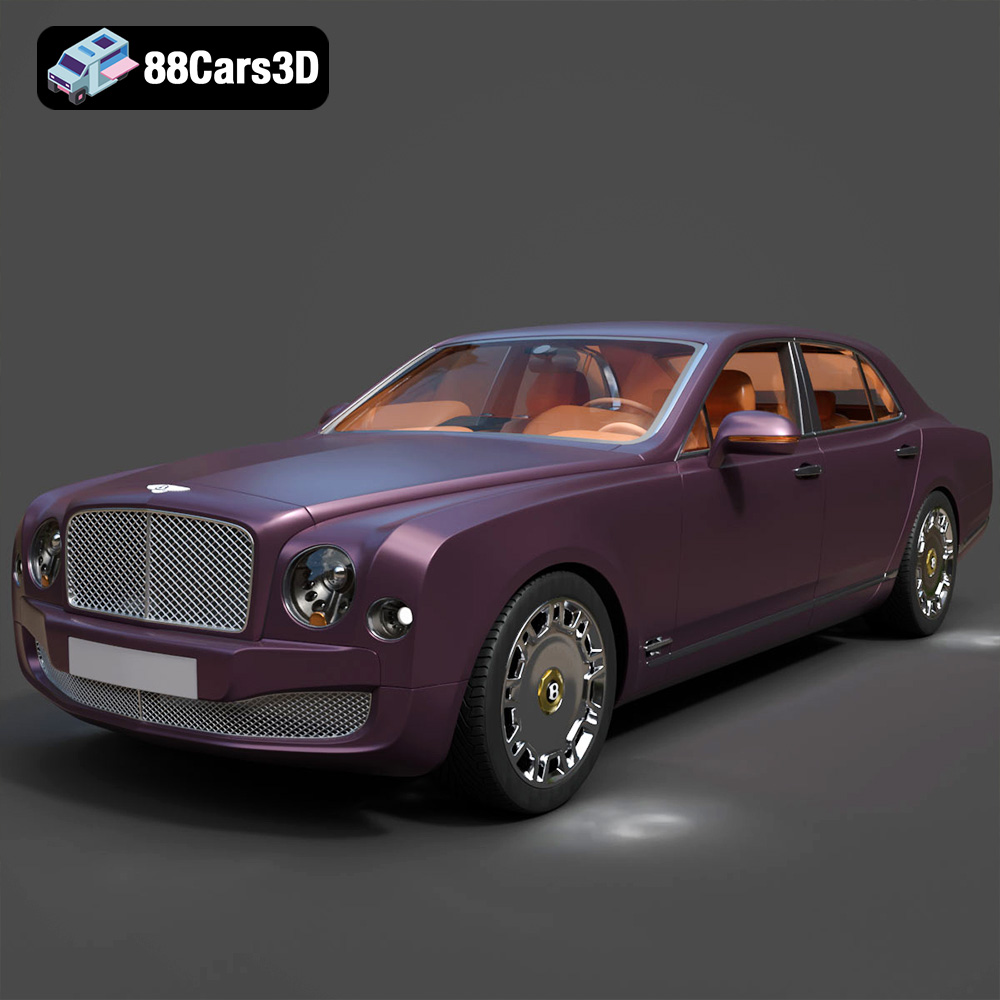
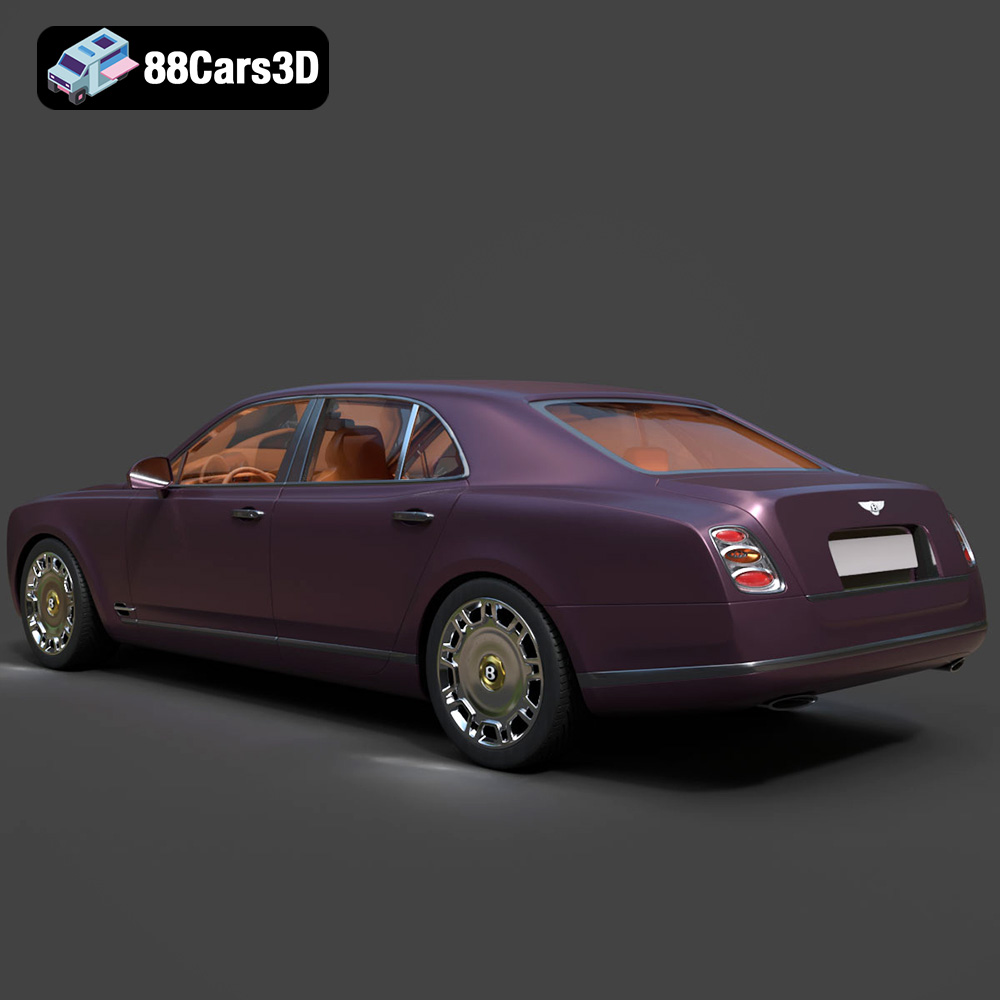
Today, we’re taking a closer look at an exemplary asset that embodies this commitment to quality: the Bentley Mulsanne Luxury Sedan 3D Model. Available on 88cars3d.com, this model represents the pinnacle of digital automotive artistry, designed to elevate any project it graces. Whether you’re an architect needing a stunning vehicle to populate a high-end scene, a game developer requiring optimized yet detailed assets, or a cinematic artist crafting a compelling narrative, understanding the technical underpinnings and vast potential of such a model is crucial. Let’s explore what makes a premium 3D car model indispensable in today’s demanding digital landscape.
The success of any visual project, particularly those involving realistic subjects like automobiles, hinges on the credibility of its assets. A high-fidelity 3D car model is not merely a geometric representation; it’s a meticulously engineered digital twin, designed to replicate every curve, reflection, and texture of its real-world counterpart. This level of detail isn’t just about aesthetics; it profoundly impacts the audience’s perception and the overall effectiveness of the visualization.
In professional workflows, a detailed 3D car model serves multiple functional purposes. For automotive rendering, it provides the foundation for stunning marketing materials, design reviews, and virtual showrooms. Each chrome accent, every stitch on the leather interior, and the intricate patterns of the grille contribute to an unparalleled sense of luxury and authenticity. In game development, even models optimized for real-time engines must convey enough detail to immerse players without compromising performance. The Bentley Mulsanne Luxury Sedan 3D Model, for instance, is crafted with optimized geometry, ensuring it can be utilized effectively across various platforms, from high-end cinematic rendering to interactive AR/VR experiences, all while maintaining its visual integrity.
The journey from a designer’s concept to a photorealistic digital image requires precision at every step. High-quality 3D car models act as a critical bridge in this process. They allow designers, marketers, and artists to visualize, iterate, and present ideas with astounding realism long before physical prototypes are created. The meticulous construction of assets like those found on 88cars3d.com ensures that lighting interacts physically correctly with materials, reflections behave as expected, and the overall presence of the vehicle is accurately conveyed, making the digital indistinguishable from reality.
The versatility of a professional 3D car model is often defined by the array of file formats it provides, catering to different software ecosystems and end-use scenarios. The Bentley Mulsanne Luxury Sedan 3D Model exemplifies this, offering a comprehensive suite of formats, each optimized for specific applications. Understanding these formats is crucial for seamless integration into your workflow and for maximizing the utility of your assets.
The .blend format is Blender’s native file type. For users of this powerful open-source 3D software, the .blend file provides a complete scene, including the model’s geometry, materials, textures, lighting setups, and even camera positions. This is the ideal format for artists who wish to delve deep into the model’s construction, make custom modifications, animate specific parts, or integrate it into complex Blender projects. It offers maximum editability and flexibility within the Blender ecosystem, making it a favorite for many artists seeking full control over their 3D car models.
The .fbx (Filmbox) format is an industry-standard proprietary file format developed by Autodesk, renowned for its ability to store entire 3D scenes including geometry, materials, textures, animations, and skeletal data. It is the go-to format for transferring 3D assets between different software applications, especially for game development engines like Unreal Engine and Unity. The .fbx variant provided for the Bentley Mulsanne model ensures that it can be imported with its hierarchy, basic materials, and UVs intact, streamlining the process of getting the car into a real-time environment for game assets or interactive simulations.
The .obj (Wavefront OBJ) format is one of the most widely supported and simplest 3D geometry formats. It primarily stores vertex positions, UV coordinates, normals, and face information, along with references to external material files (.mtl). While it doesn’t typically store animation or rigging data, its universal compatibility makes it an excellent choice for straightforward mesh transfer between virtually any 3D software, from Maya to Cinema 4D. For general rendering and visualization tasks where extreme software interoperability is needed, the .obj version of this Bentley Mulsanne 3D model offers reliable performance.
The .glb (GL Transmission Format Binary) is a compact, binary version of the glTF format. It’s designed for efficient transmission and loading of 3D scenes and models, particularly optimized for web-based 3D, augmented reality (AR), and virtual reality (VR) applications. A single .glb file can contain geometry, materials (PBR-ready), textures, and animations, making it a self-contained and highly efficient package. The Bentley Mulsanne .glb file is perfect for showcasing the car in a browser-based configurator, integrating it into an AR app on a mobile device, or populating a VR experience with minimal load times.
The .stl (Stereolithography) format is the standard file type for 3D printing. It represents a 3D model as a series of connected triangles, describing only the surface geometry without color or texture information. For designers and enthusiasts looking to bring the Bentley Mulsanne into the physical world through 3D printing, the .stl file ensures that the model’s watertight mesh is prepared for prototyping, scale models, or custom fabrications. Precision in the .stl export is critical for successful printing, avoiding errors like non-manifold geometry.
The .ply (Polygon File Format) is often used to store 3D data from 3D scanners, CAD software, and other precision measurement devices. It can store a variety of properties including color, transparency, surface normals, and range data, per vertex or per face. While less common for general rendering, its ability to represent very precise polygon meshes makes the .ply version of the Bentley Mulsanne 3D model valuable for applications requiring analytical scrutiny, reverse engineering, or integration into specialized CAD pipelines.
The .unreal designation indicates a file or package specifically configured for Unreal Engine. This often means the asset has been processed and packaged within Unreal Engine itself, potentially including pre-configured materials, textures, collision meshes, and even Level of Detail (LOD) setups. Importing a .unreal ready file for the Bentley Mulsanne greatly accelerates workflow for Unreal Engine developers, as it minimizes the need for extensive post-import setup and optimization, allowing for immediate integration into real-time environments.
The .max format is the native file type for Autodesk 3ds Max, a leading software for 3D modeling, animation, and rendering. Similar to .blend for Blender, the .max file contains the complete scene data, including geometry, materials (often V-Ray, Corona, or standard Max materials), textures, lighting, cameras, and animation curves. For professionals deeply entrenched in 3ds Max workflows, this provides the highest level of detail and editability, perfect for high-end automotive rendering, complex animations, or integrating the Bentley Mulsanne into existing large-scale architectural visualization scenes.
The provision of all these formats with the Bentley Mulsanne Luxury Sedan 3D Model highlights its professional-grade versatility and why assets from 88cars3d.com are a smart investment for any digital artist or studio.
The hallmark of a truly professional 3D car model lies in its underlying structure and the meticulous attention to detail during its creation. The Bentley Mulsanne Luxury Sedan 3D Model is a testament to this, showcasing engineering precision in its digital form.
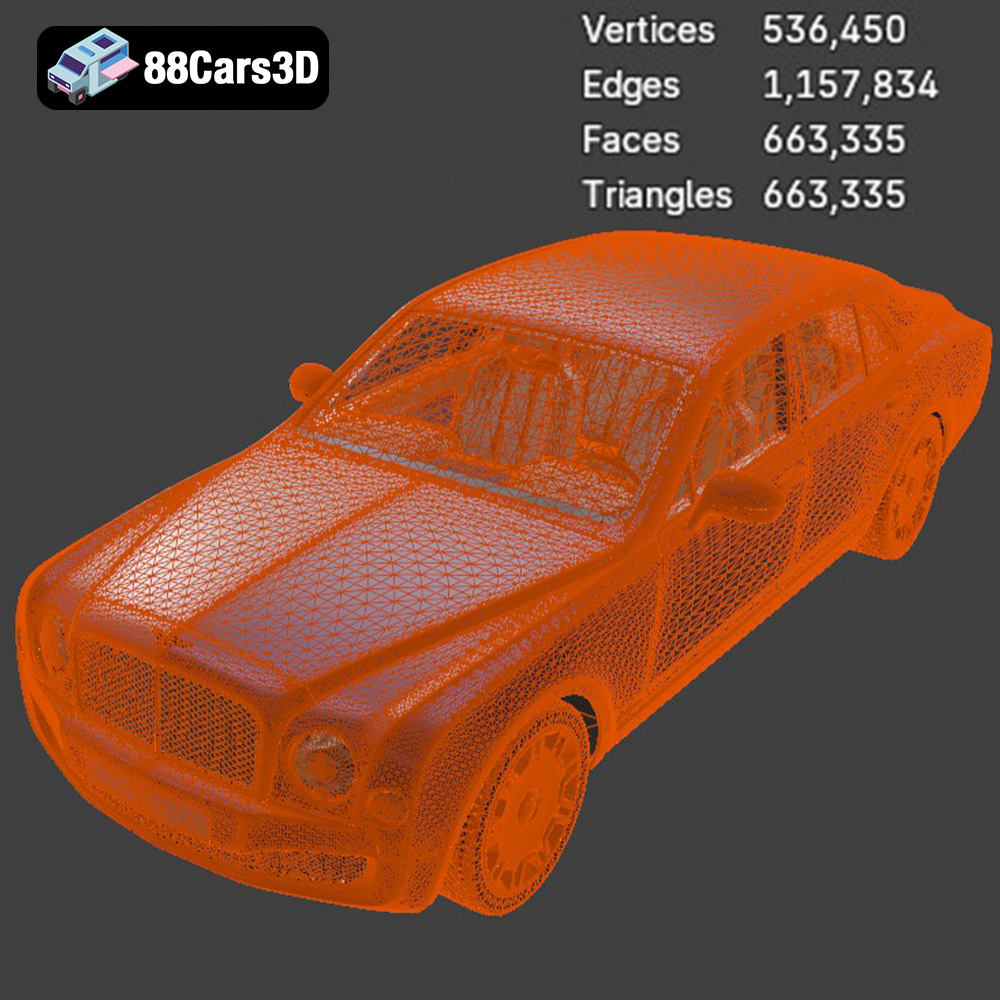
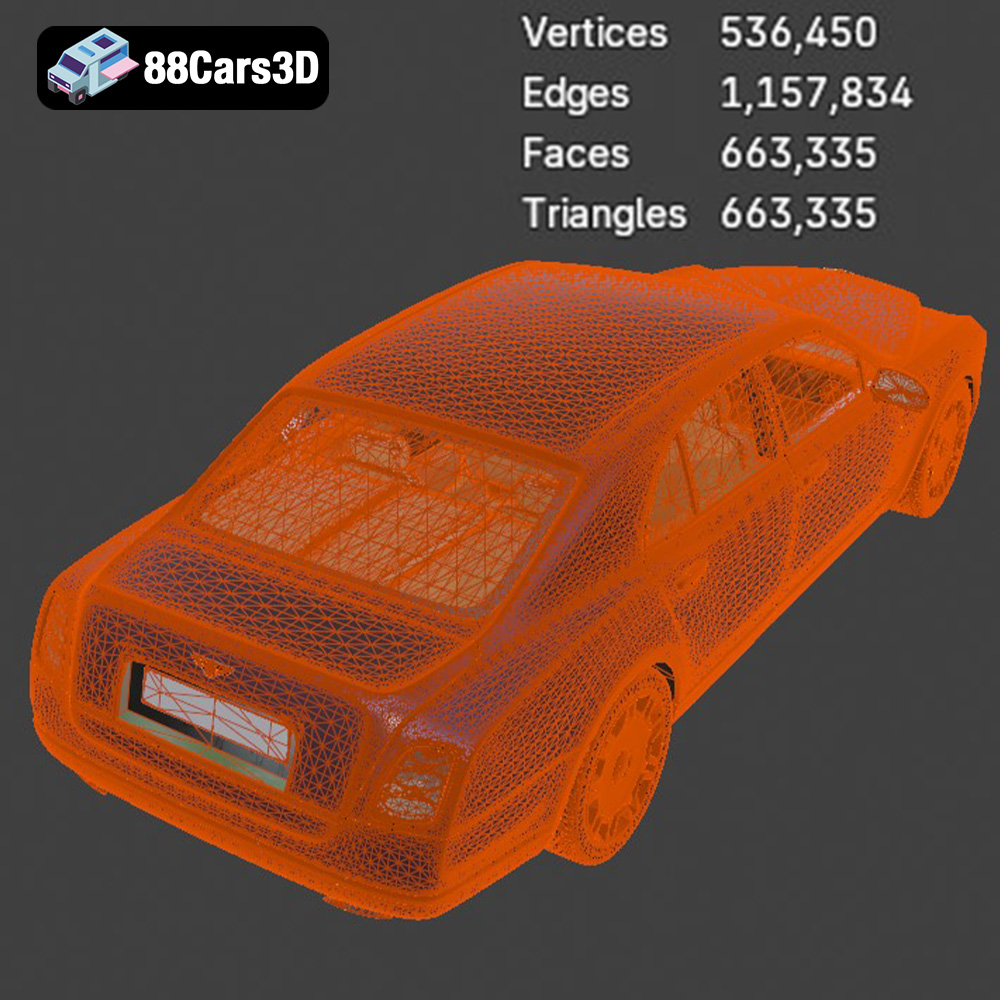
At the core of any high-quality 3D model is its geometry and topology. The Bentley Mulsanne model features clean, optimized geometry, predominantly quad-based. This ensures smooth subdivision for close-up rendering and simplifies deformation if the model is animated. While exact poly counts vary depending on the level of detail (LODs) provided for different formats, a professional model for a luxury car like this would typically range from several hundred thousand polygons for an optimized real-time version to several million for a high-detail rendering version, particularly if the interior is fully modeled. Efficient UV unwrapping is also crucial; the model comes with logically organized UV maps, preventing texture stretching and simplifying material application across its complex surfaces. This clean topology is vital for reliable subdivision, realistic reflections, and easy integration into various lighting environments.
Modern rendering relies heavily on Physically Based Rendering (PBR) workflows. The Bentley Mulsanne 3D Model comes with materials logically structured and configured for PBR, meaning textures and shaders accurately simulate how light interacts with real-world surfaces. This includes sophisticated maps for:
This comprehensive PBR setup ensures that the model looks consistent and realistic under any lighting condition, from a stark studio setup to a dynamic outdoor environment, making it incredibly versatile for automotive rendering and visualization projects.
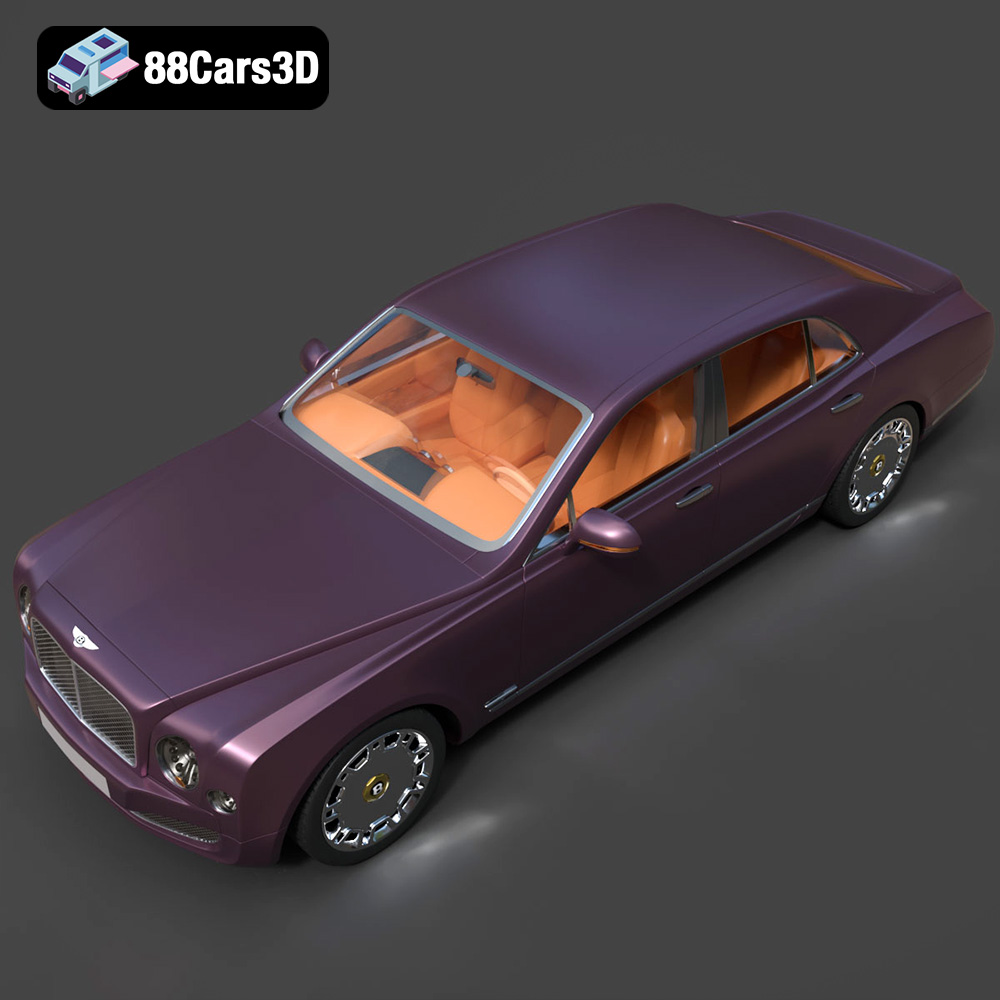
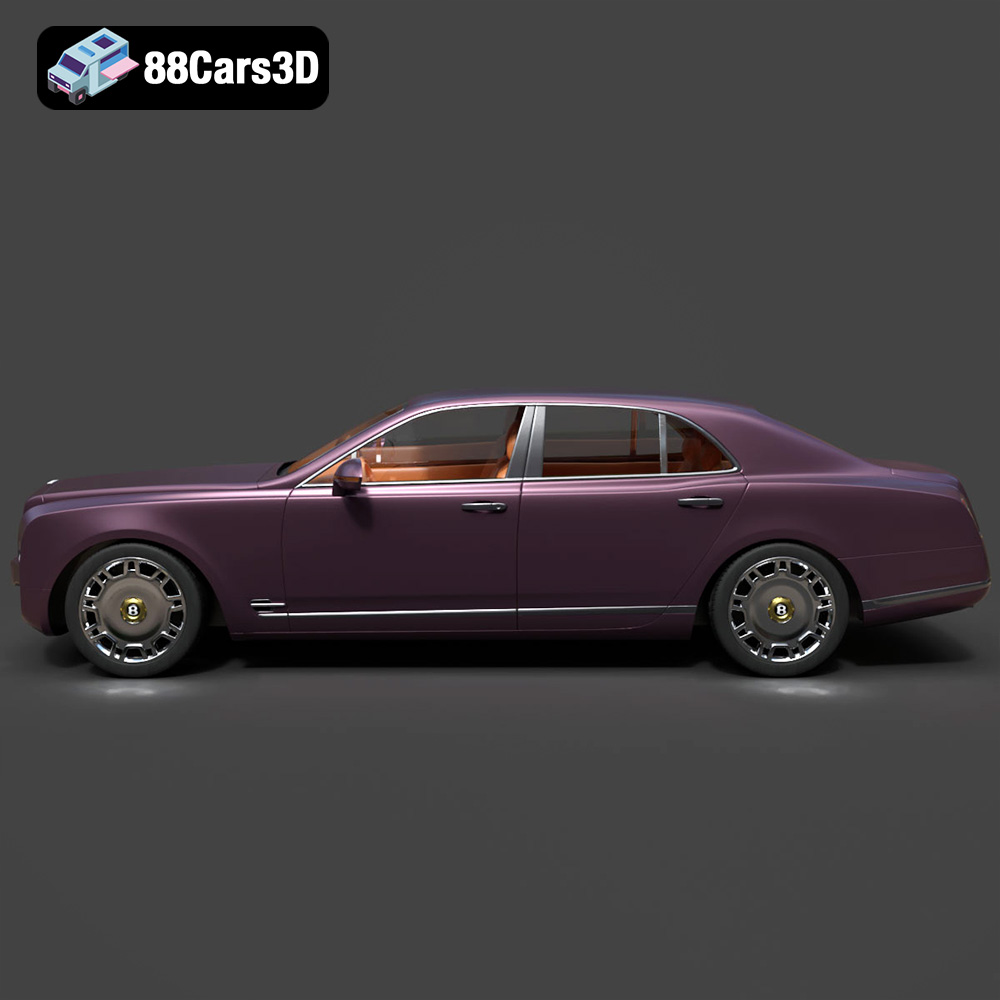
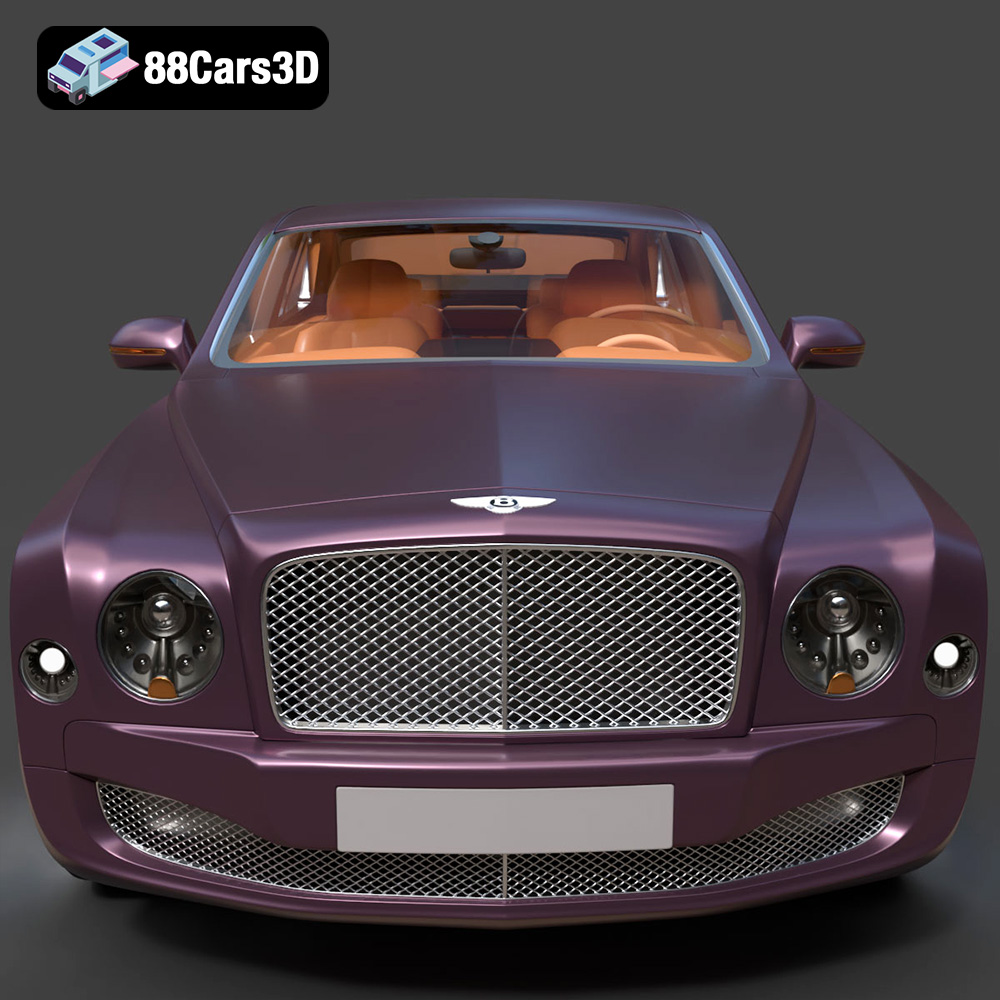
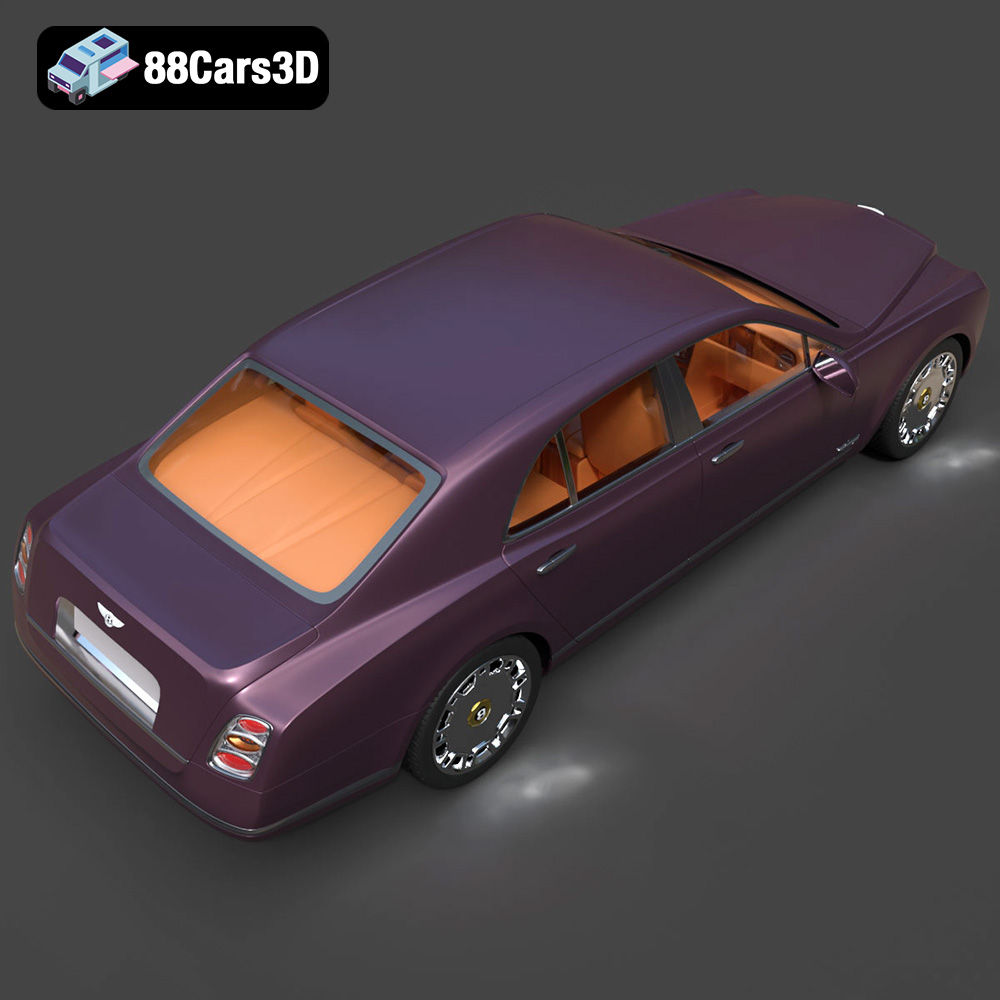
The true luxury of a Bentley Mulsanne lies in its exquisite details, and the 3D model doesn’t disappoint. The exterior features precisely modeled elements such as the iconic matrix grille, intricate headlight and taillight assemblies, detailed badging, realistic tire treads, and meticulously reproduced alloy wheels. Moving to the interior, the model captures the essence of luxury with detailed dashboards, steering wheel, seats with visible stitching, door panels, and even subtle elements like infotainment screens and control knobs. This level of comprehensive detailing ensures that the model holds up even under extreme close-ups, critical for cinematic animations, virtual reality tours, or high-resolution marketing imagery.
The true value of a versatile 3D asset, such as the Bentley Mulsanne Luxury Sedan 3D Model from 88cars3d.com, lies in its seamless integration into a variety of professional pipelines. Its multi-format availability ensures that artists and developers can leverage its quality across different software and applications.
For high-end automotive rendering, both 3ds Max and Blender offer robust toolsets. Using the provided .max or .blend files, artists can import the Bentley Mulsanne model directly into their preferred environment. The workflow typically involves:
This detailed control allows for the creation of marketing imagery, configurators, and design review presentations that are virtually indistinguishable from real photography.
Integrating a high-quality 3D car model into a game engine requires careful optimization for real-time performance. With the .fbx and .unreal formats specifically, the Bentley Mulsanne model is tailored for this purpose:
This careful preparation allows the Bentley Mulsanne to function as a seamless game asset, whether it’s a drivable vehicle, an AI car in traffic, or a backdrop prop in a richly detailed environment.
Beyond traditional rendering and game development, the Bentley Mulsanne Luxury Sedan 3D Model offers exciting possibilities in emerging technologies:
The breadth of formats and applications ensures that this Bentley Mulsanne 3D model is a versatile asset for any professional endeavor.
High-quality 3D car models like the Bentley Mulsanne Luxury Sedan 3D Model are not just theoretical assets; they are indispensable tools that drive innovation and elevate presentations across numerous industries. Their application extends far beyond simple imagery, impacting design, marketing, and interactive experiences.
In architectural visualization, the context surrounding a building is almost as important as the building itself. A high-end 3D car model, particularly a luxury sedan like the Bentley Mulsanne, can dramatically enhance the perceived value and realism of an architectural rendering. Imagine a sleek, modern residence with this elegant vehicle parked in its driveway, or a bustling urban scene where it adds a touch of sophistication to the street. Such details are critical for:
The inclusion of a meticulously crafted vehicle like the Bentley Mulsanne from 88cars3d.com instantly elevates the quality and impact of any architectural visualization.
The film, television, and advertising industries frequently rely on 3D car models for a variety of purposes. From special effects sequences to virtual production sets, a detailed vehicle is often a central element. The Bentley Mulsanne 3D model can be utilized in:
Its realistic geometry and PBR materials ensure it renders beautifully, blending seamlessly with live-action footage or other CGI elements.
Even outside of direct automotive design, detailed 3D car models play a role in product visualization and conceptualization. For industries that create accessories, car care products, or even design virtual showrooms, having a realistic vehicle model is invaluable:
The ability to accurately represent such a high-value item digitally, complete with its luxurious finishes, is critical for successful product development and marketing in today’s digital-first economy.
The world of 3D visualization thrives on detail, realism, and versatility. As industries push the boundaries of digital content, the demand for high-quality assets like the Bentley Mulsanne Luxury Sedan 3D Model becomes increasingly critical. We’ve explored how its meticulous craftsmanship, comprehensive file format support, and PBR-ready materials make it an indispensable tool for automotive rendering, game development, AR/VR experiences, and high-end architectural visualization.
Investing in a professional-grade 3D car model like this isn’t just about acquiring a digital object; it’s about empowering your projects with unparalleled realism, streamlining your workflows, and delivering visual content that truly stands out. Whether you’re a seasoned professional or an aspiring artist, the technical excellence and adaptability of such a model provide a robust foundation for your creative endeavors. For those seeking the highest standards in 3D car models and other automotive assets, look no further than 88cars3d.com, where quality and versatility converge to bring your digital visions to life.
Experience the ultimate in digital luxury with this meticulously crafted Bentley Mulsanne 3D model. Designed for precision and realism, this asset captures the imposing presence and refined details of the iconic British sedan. Every element, from the distinct grille geometry to the interior layout, has been constructed to meet professional visualization standards.
This asset features clean, optimized geometry suitable for both real-time applications and demanding high-resolution rendering tasks. Materials are logically structured and configured for PBR workflows, ensuring physically accurate light interaction on all metallic, glass, and leather surfaces. This provides maximum versatility for artists integrating the model into various lighting environments and scenes.
The Bentley Mulsanne model is an essential resource for automotive visualization, architectural walkthroughs, cinematic animations, and serious game development (including integration into Unreal Engine or Unity projects). It is also perfectly suited for creating high-fidelity assets for virtual reality (VR) and augmented reality (AR) experiences.
$14.99