

In the vibrant and ever-evolving landscape of 3D visualization, the demand for high-quality, meticulously crafted 3D car models and vehicle assets has never been greater. From blockbuster game titles and cinematic sequences to sophisticated architectural walkthroughs and immersive AR/VR experiences, the foundational element remains the same: accurate, performant, and visually stunning digital assets. Professionals in these fields understand that the integrity of a project often hinges on the quality of its components. It’s not just about having a model; it’s about having a production-ready asset that seamlessly integrates into diverse pipelines and delivers photorealistic results.
Today, we’re diving deep into the technical intricacies and creative potential offered by such premium assets, exemplified by the Yamaha Stryker 2012 3D model available on 88cars3d.com. This model isn’t just a static representation; it’s a dynamic tool designed to empower creators with its accurate proportions, detailed mechanical components, and PBR-ready materials. Whether you’re an automotive renderer, a game developer, or a visualization artist, understanding the technical underpinnings of such a model is crucial for maximizing its utility and achieving unparalleled realism in your projects.
The Imperative of High-Fidelity 3D Vehicle Models in Modern Visualization
The pursuit of realism in digital environments demands more than just aesthetic appeal; it requires an unwavering commitment to technical precision. High-fidelity 3D vehicle models, such as the Yamaha Stryker 2012, are not mere props but critical elements that can elevate an entire project. Their complexity lies in capturing the nuanced interplay of form, material, and function, transforming a digital mesh into a believable object that interacts authentically with its virtual surroundings.
Beyond Aesthetics: The Role of Accuracy in Automotive Rendering
For automotive rendering, accuracy is paramount. Every curve, every weld, and every chrome reflection must be meticulously represented. A high-quality 3D model starts with precise reference data, ensuring that proportions are exact and mechanical components are faithfully recreated. This level of detail is essential for clients who demand showroom-quality visuals, where even the smallest deviation can undermine credibility. When rendering a vehicle like the Yamaha Stryker 2012, the subtle contours of its fuel tank, the intricate spokes of its wheels, or the precise engineering of its engine block all contribute to the overall authenticity. These are the details that separate a convincing visual from a merely acceptable one, making professional 3D car models indispensable for architects, advertisers, and product designers alike.
Bridging the Gap: From Concept to Photorealistic Output
The journey from a conceptual idea to a photorealistic output is often long and arduous, but high-quality 3D assets significantly streamline this process. By providing production-ready geometry and PBR materials out-of-the-box, these models accelerate workflow, allowing artists and designers to focus on creative direction rather than time-consuming modeling tasks. This efficiency is critical in fast-paced production environments, where deadlines are tight and quality cannot be compromised. The Yamaha Stryker 2012 3D model, for instance, offers a robust foundation that is already optimized for performance, meaning less time spent on mesh clean-up or material configuration and more time dedicated to lighting, animation, and final composition. This bridge from concept to final render is fortified by assets that meet rigorous industry standards.
Understanding 3D Model File Formats
The versatility of a 3D model is often defined by the range of file formats it supports. Each format serves a specific purpose, optimized for different software, engines, or end-use applications. Understanding these distinctions is crucial for anyone working with 3D car models or any other complex assets, as choosing the right format can significantly impact workflow efficiency, compatibility, and final output quality. The Yamaha Stryker 2012 3D model exemplifies this versatility by offering a comprehensive suite of formats, ensuring its adaptability across virtually any professional pipeline.
The Blender Ecosystem: .blend for Complete Control
The .blend format is native to Blender, the popular open-source 3D creation suite. When you receive a .blend file, you’re not just getting the model; you’re often getting a complete scene, including materials, textures, lighting setups, cameras, and even animation data. This makes .blend files incredibly powerful for users who work predominantly within Blender, offering full editability and access to all parameters of the asset. For the Yamaha Stryker 2012, the .blend file provides an editable scene with materials and lighting setup, allowing artists to delve deep into its construction, make modifications, or repurpose components with maximum flexibility.
Interoperability Kings: .fbx and .obj for Universal Use
.fbx (Filmbox) is an Autodesk-developed format widely recognized as the industry standard for exchanging 3D data between different software applications. It supports geometry, materials, textures, animations, and rigs, making it ideal for pipelines involving multiple software packages like 3ds Max, Maya, Cinema 4D, and critically, game engines like Unreal Engine and Unity. The .fbx variant of the Yamaha Stryker 2012 is “game-engine ready,” meaning it’s optimized for real-time performance with appropriate mesh density, UV mapping, and PBR material assignments, making it perfect for game asset integration.
.obj (Wavefront Object) is another ubiquitous format, renowned for its simplicity and near-universal compatibility. While it primarily stores geometric data (vertices, normals, UVs, faces) and references material files (.mtl), it doesn’t typically embed animations or advanced scene data. This makes .obj an excellent choice for basic mesh exchange and archiving, ensuring that the core geometry of the Yamaha Stryker 2012 is accessible in virtually any 3D software, regardless of its native format support. It serves as a reliable fallback for cross-software compatibility.
Emerging Standards: .glb, .stl, and .ply for Specialized Applications
.glb (GLB format, derived from glTF) is quickly becoming the standard for 3D models in web-based applications, AR (Augmented Reality), and VR (Virtual Reality). It’s a single-file format that contains model, texture, and animation data, optimized for efficient transmission and loading. Its compact nature and support for PBR materials make the .glb version of the Yamaha Stryker 2012 perfect for interactive web viewers, AR apps, and lightweight VR scenes, where performance and quick loading times are crucial.
.stl (Stereolithography) is the go-to format for 3D printing and rapid prototyping. It represents a 3D model as a collection of interconnected triangles, defining only the surface geometry without color or texture information. While not visually rich, its widespread support in slicing software and 3D printers makes the .stl version of the Yamaha Stryker 2012 essential for anyone looking to produce a physical replica or prototype of the motorcycle.
.ply (Polygon File Format) is often used for storing 3D scanner data and detailed polygon meshes. It can store various properties like color, transparency, and normal vectors for each vertex, and can even include texture coordinates. The .ply version offers a detailed polygon mesh suitable for advanced analysis, reverse engineering, or specific visualization needs where mesh integrity and data richness are prioritized, often found in CAD or scientific visualization contexts.
Native Engine Integration: .unreal and .max for Dedicated Workflows
The .unreal format, or rather, a pre-configured asset pack for Unreal Engine, signifies a model that has been specifically prepared and structured for direct import and optimal performance within the Unreal Engine ecosystem. This includes proper material setups (often with master materials and instances), collision meshes, LODs (Levels of Detail), and potentially Blueprints or sequencer animations. For the Yamaha Stryker 2012, the .unreal asset ensures that integration into an Unreal Engine project is as smooth and efficient as possible, saving countless hours of setup time for game developers and real-time visualization artists.
Finally, .max is the native format for Autodesk 3ds Max, a powerhouse in architectural visualization, product rendering, and animation. A .max file provides an editable 3ds Max project, containing all scene data, modifiers, materials, lighting, and animation tracks. This format offers maximum control for 3ds Max users to modify, animate, or render the Yamaha Stryker 2012 within their preferred environment, leveraging 3ds Max’s robust toolset for high-end rendering and detailed animations.
Together, these diverse formats ensure that a high-quality asset like the Yamaha Stryker 2012 3D model from 88cars3d.com is not just versatile, but truly production-ready for any imaginable application.
Crafting Realism: PBR Materials and Optimized Geometry
The journey to photorealism in 3D rendering is paved with two critical elements: meticulously crafted PBR (Physically Based Rendering) materials and intelligently optimized geometry. These are not merely technical specifications but artistic tools that allow a digital model to mimic real-world light interactions and maintain performance across various platforms. The Yamaha Stryker 2012 3D model stands as a prime example of how these principles converge to create a truly professional asset.
The Science of Light: Achieving Photorealism with PBR
PBR is more than just a buzzword; it’s a set of principles that accurately describe how light interacts with surfaces. Instead of faking light bounce, PBR materials define properties like roughness, metallicness, albedo (base color), and normal maps based on real-world physics. This means that a PBR material will react correctly to any lighting scenario, producing consistent and photorealistic results whether it’s bathed in harsh sunlight or subtle indoor ambient light. For the Yamaha Stryker 2012, the PBR materials are set up to capture the distinctive sheen of chrome, the texture of the seat leather, and the subtle reflections on painted metal, ensuring that every detail contributes to an immersive visual experience in any modern rendering engine, from V-Ray to Redshift to Unreal Engine.
Performance Meets Detail: Balancing Poly Count and Visual Fidelity
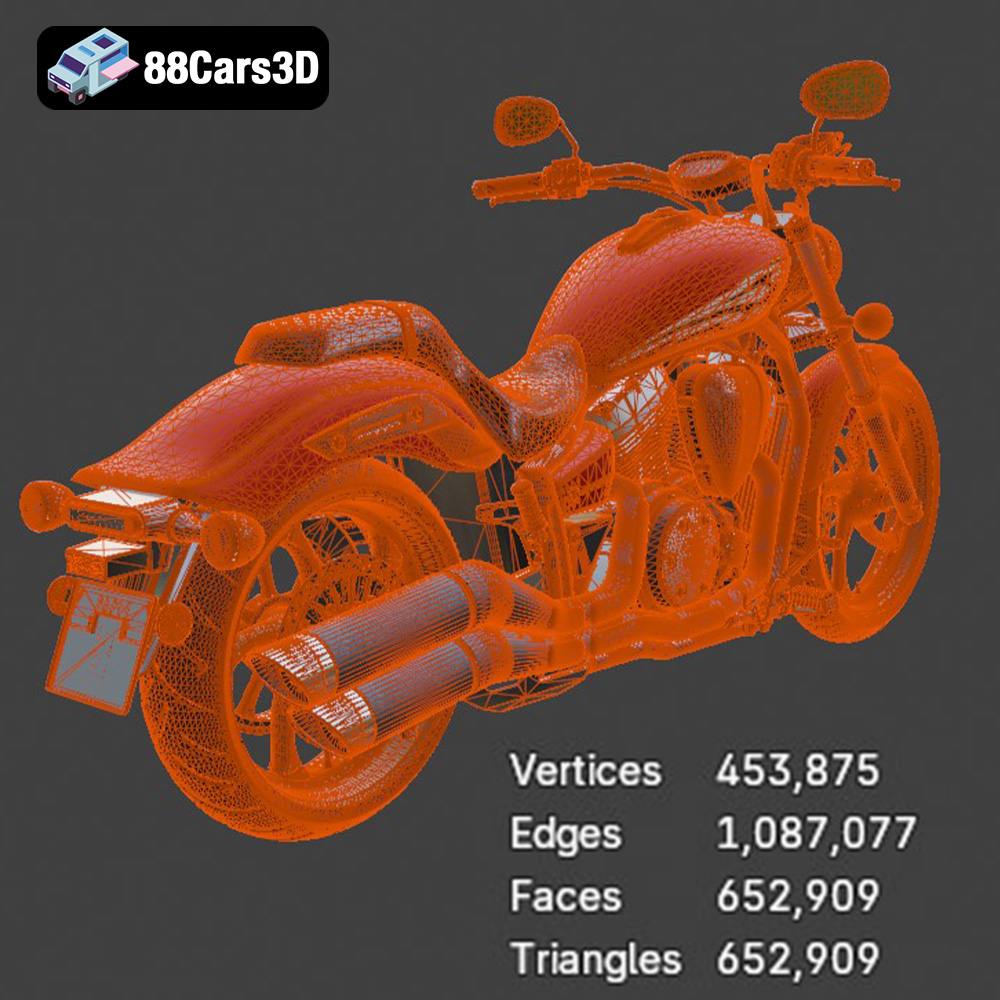
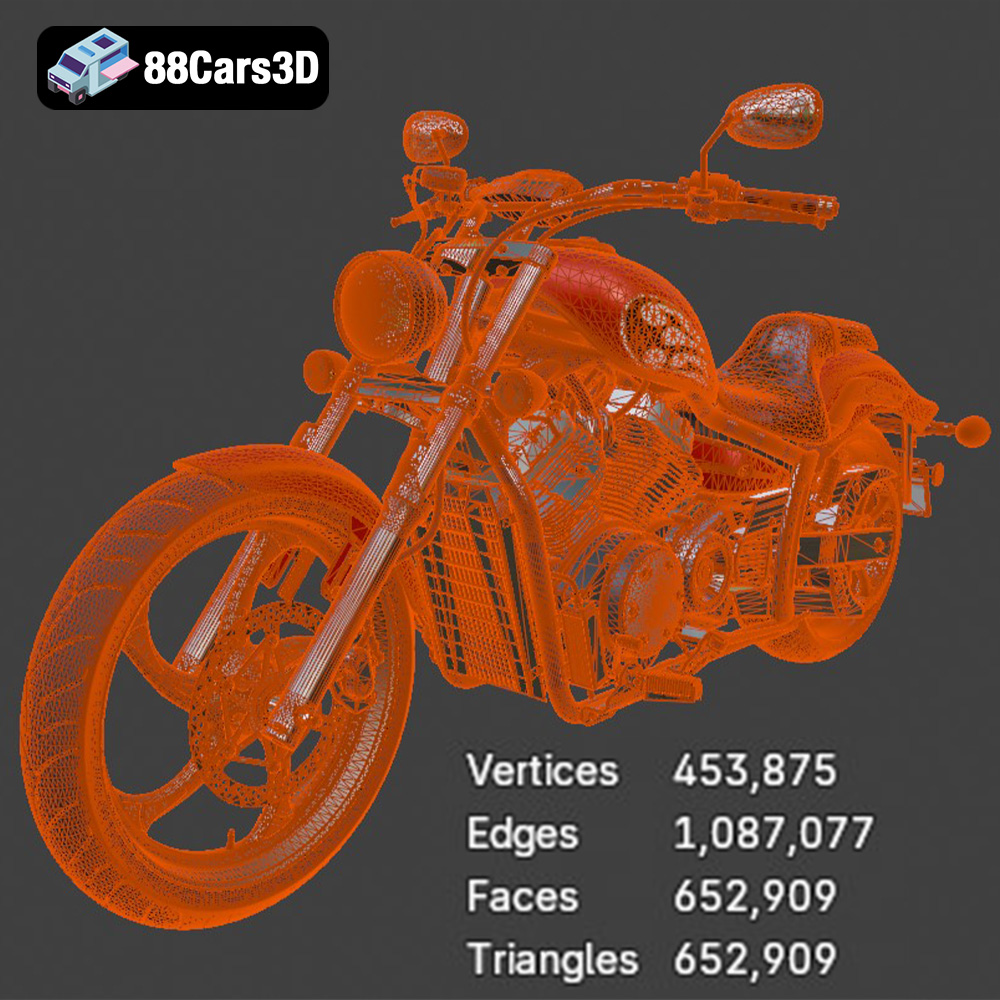
Optimized geometry is the backbone of a performant 3D model. It’s the art of achieving maximum visual detail with the minimum necessary polygon count. Too many polygons lead to sluggish performance, especially in real-time applications like games or AR/VR. Too few, and the model appears blocky or low-resolution. Production-ready geometry, like that found in the Yamaha Stryker 2012 3D model, strikes this delicate balance. It features clean topology, efficient edge flow, and often includes proper UV mapping for texture application. This optimization ensures that the model can be used effectively for close-up shots requiring high detail, as well as integrated into larger scenes or real-time environments without taxing system resources. It’s about delivering fidelity without compromise on performance.
The Yamaha Stryker 2012: A Case Study in Meticulous Detail
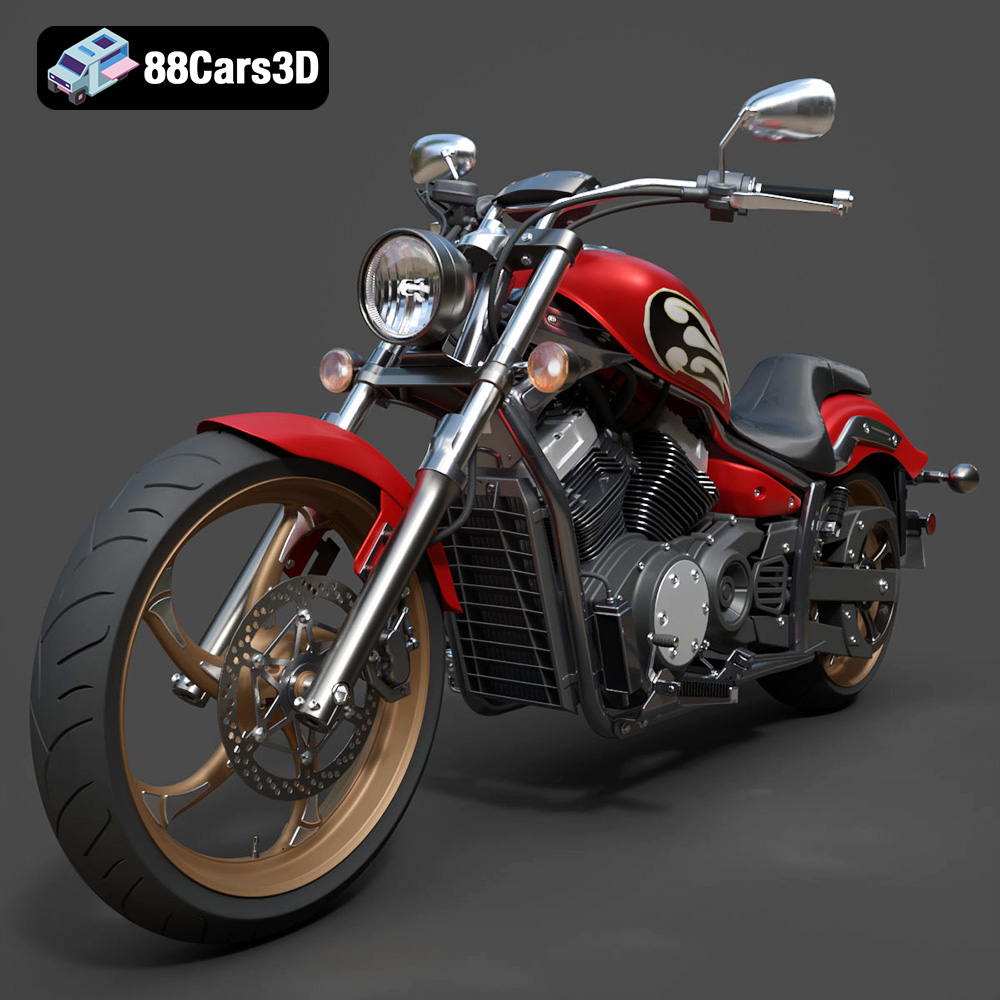
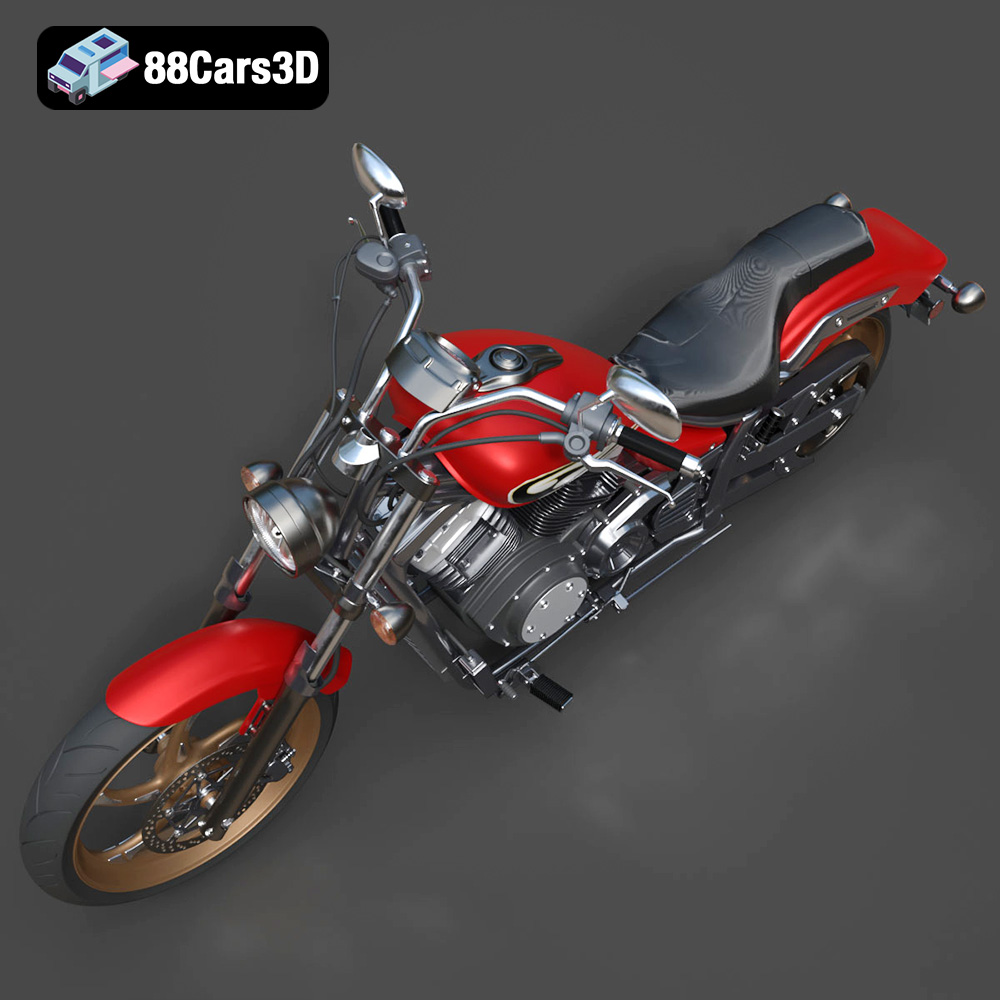
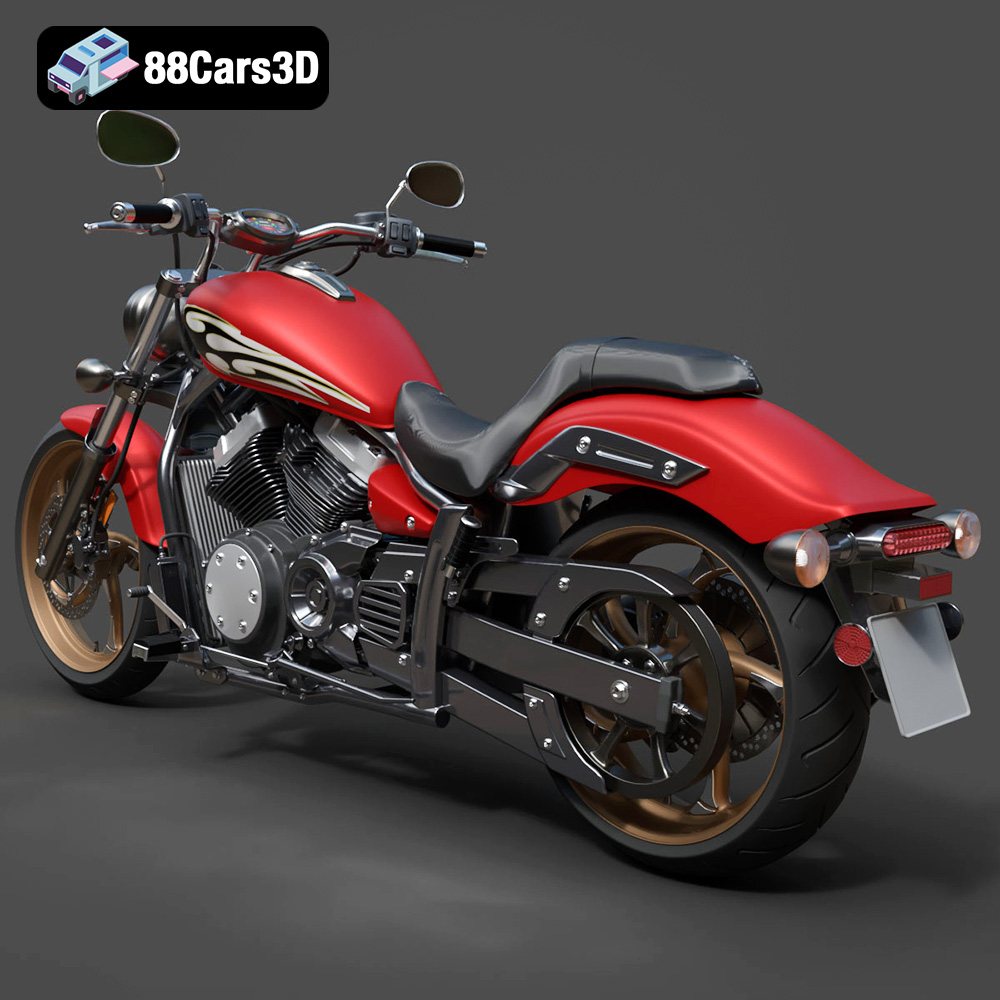
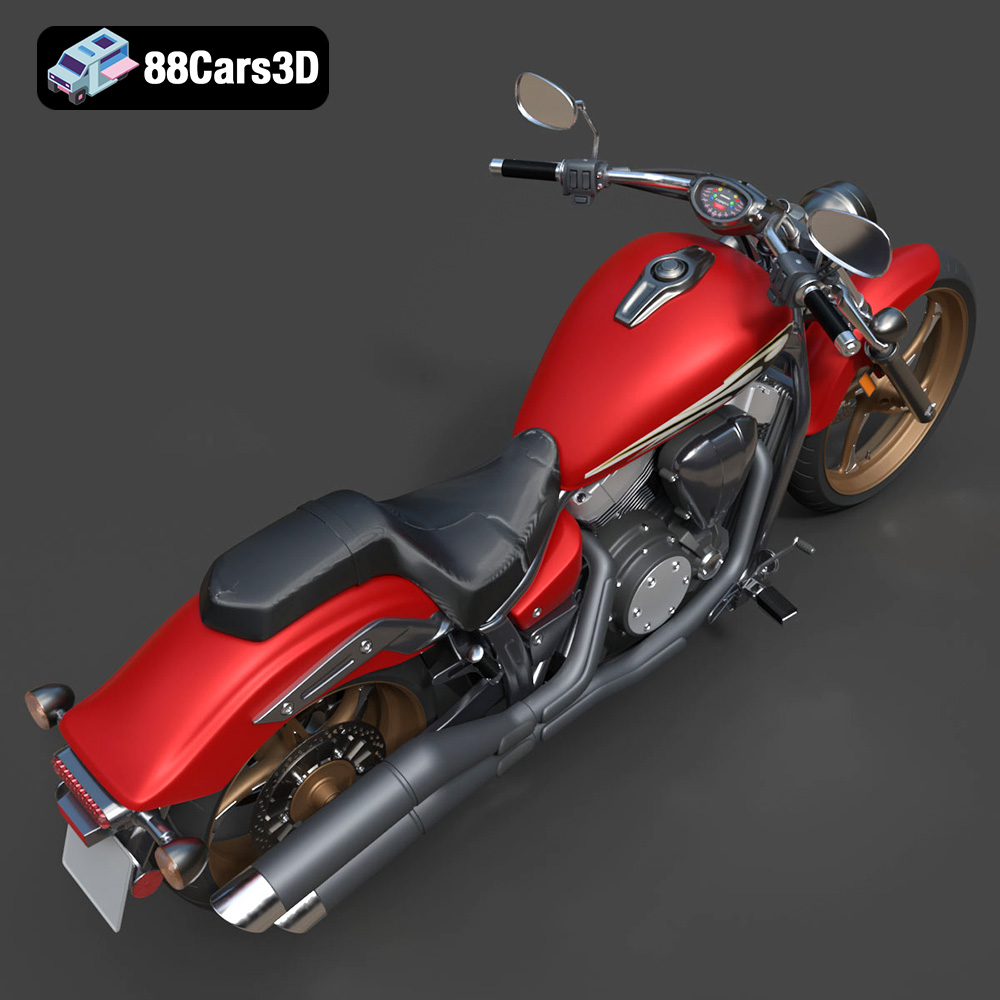
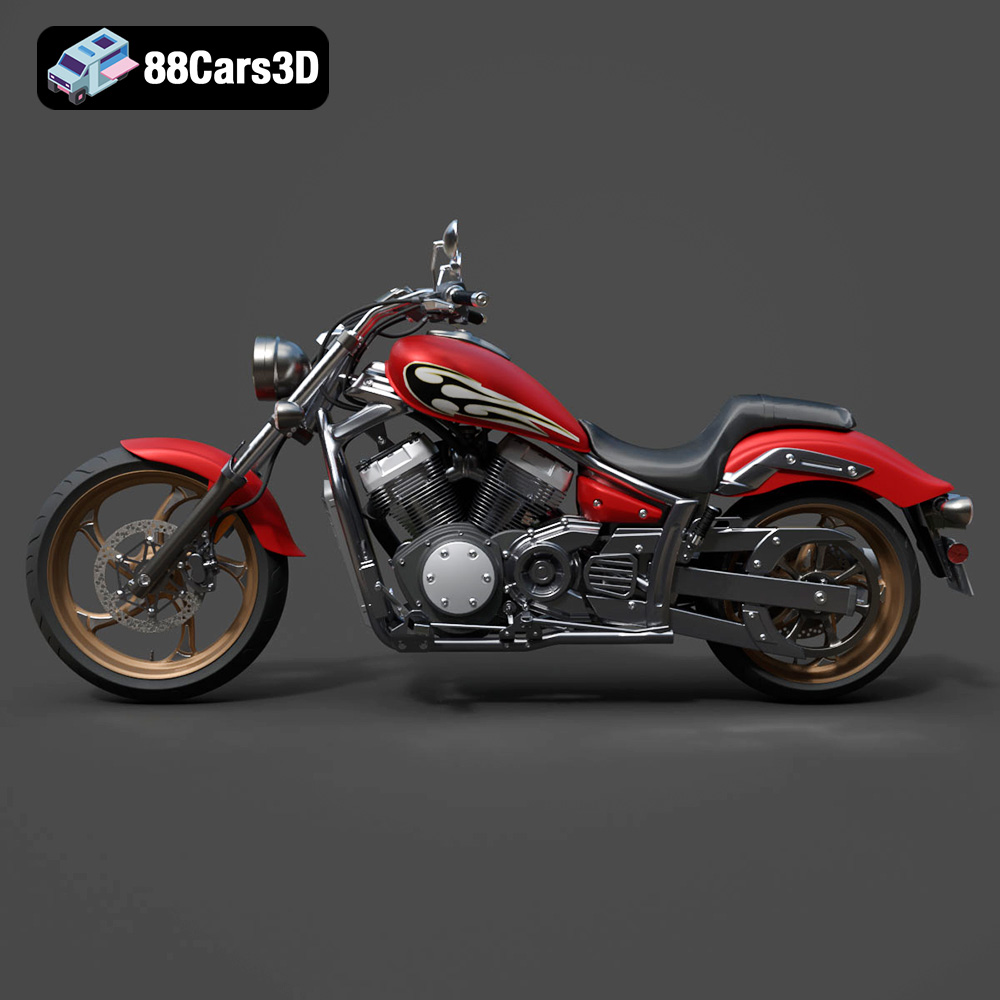
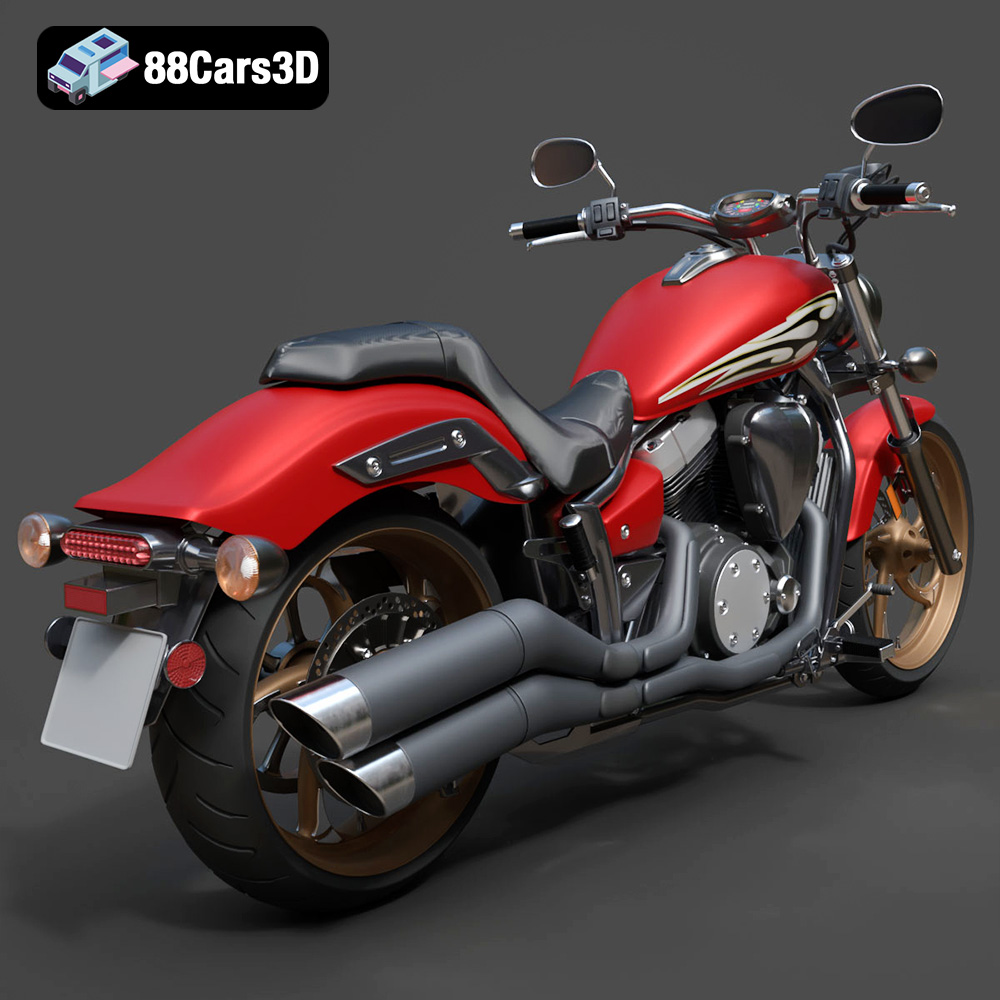
The Yamaha Stryker 2012 3D model from 88cars3d.com is a testament to the power of combining PBR materials with optimized geometry. Developed using precise reference data, it ensures accurate proportions and a detailed representation of mechanical components, chrome parts, and custom styling elements. Every screw, every cable, and every design line is considered, resulting in an asset that is not only visually stunning but also technically robust. Its meticulously modeled surfaces and PBR-ready materials mean that when rendered, the motorcycle doesn’t just look like a motorcycle; it looks like a real Yamaha Stryker 2012, reflecting light, casting shadows, and interacting with its environment in a believable, professional manner. This attention to detail makes it suitable for the most demanding professional visualization projects.
Integrating the Yamaha Stryker 2012 into Professional Workflows
The true value of a high-quality 3D asset like the Yamaha Stryker 2012 lies in its adaptability and seamless integration into various professional workflows. Designed for versatility, this model serves as a robust foundation for a wide array of commercial and creative applications, providing an immediate advantage to professionals seeking efficiency and excellence.
Architectural Visualization and Cinematic Rendering
In architectural visualization (arch-viz), placing realistic vehicles in a scene can dramatically enhance the believability and scale of a project. A precisely rendered Yamaha Stryker 2012 parked in front of a modern home or cruising down a virtual street adds life and context, making the architectural design more engaging. Similarly, in cinematic rendering, where every frame counts, a detailed 3D motorcycle model can become a focal point or a critical background element, enriching storytelling with its presence. The model’s PBR materials ensure it responds correctly to studio lighting setups or dynamic environment maps, yielding breathtaking, film-quality outputs. Its accurate proportions allow for believable camera angles and interactions within a digital set, crucial for productions where visual fidelity is paramount.
Immersive Experiences: AR/VR and Simulation Training
The immersive nature of Augmented Reality (AR) and Virtual Reality (VR) demands highly optimized yet visually compelling assets. The Yamaha Stryker 2012 3D model, with its included .glb format, is specifically tailored for these experiences. In AR, users can place the virtual motorcycle in their physical environment, interacting with it as if it were truly there, thanks to its optimized poly count and PBR textures that look great on mobile devices. For VR, the model can be part of virtual showrooms, interactive product showcases, or even simulation training modules. Imagine a mechanic learning to service a Stryker in a VR environment, where the digital replica needs to be accurate down to the smallest bolt. This model provides the necessary detail and optimization for a smooth, high-frame-rate immersive experience, vital for preventing motion sickness and enhancing user engagement.
Powering Virtual Worlds: Game Development with Unreal Engine and Unity
For game developers, integrating high-quality game assets efficiently is a constant challenge. The Yamaha Stryker 2012 3D model addresses this directly with its “game-engine ready” .fbx and pre-configured .unreal formats. In Unreal Engine and Unity, this means faster import times, correctly assigned PBR materials, and often, pre-built collision meshes and LODs (Levels of Detail). This allows developers to drop the motorcycle into their virtual worlds, whether it’s an open-world racing game, an urban simulation, or a narrative-driven adventure, with minimal setup. Its optimized geometry ensures smooth performance even when multiple vehicles are present, and its high-resolution textures hold up during close-up camera angles in cutscenes or gameplay. This model provides a solid foundation for vehicle physics implementation and dynamic visual effects, making it an invaluable asset for creating compelling and realistic game environments.
The Strategic Advantage of Sourcing Premium 3D Assets
In the competitive realm of 3D production, the strategic decision to source premium 3D assets is not just about convenience; it’s about achieving a significant competitive edge. Professionals know that investing in high-quality 3D car models and other complex assets pays dividends in efficiency, quality, and creative freedom. Websites like 88cars3d.com specialize in providing these meticulously crafted resources, directly impacting project timelines and final outcomes.
Time and Resource Optimization
Developing a complex 3D model from scratch, like a detailed motorcycle such as the Yamaha Stryker 2012, is an extremely time-consuming and resource-intensive endeavor. It requires specialized modeling skills, extensive knowledge of PBR material authoring, and meticulous optimization for various platforms. By acquiring a pre-made, production-ready asset, studios and individual artists can bypass these initial development stages entirely. This frees up valuable artist time, allowing teams to focus on higher-level creative tasks such as scene composition, lighting design, animation, or interactive logic. The time saved directly translates into reduced project costs and faster delivery schedules, which are critical in today’s fast-paced market.
Ensuring Consistent Quality Across Projects
Maintaining a consistent level of quality across multiple projects and assets can be challenging, especially within larger teams. Sourcing from a reputable marketplace like 88cars3d.com ensures that assets adhere to professional standards. These models are typically built with clean topology, proper UV mapping, and correctly configured PBR materials, guaranteeing a predictable and high-quality appearance. The Yamaha Stryker 2012 3D model, for example, is described as having “production-ready geometry optimized for performance” and “meticulously modeled surfaces,” which means it will integrate seamlessly with other professional assets and maintain visual integrity throughout a project pipeline. This consistency is vital for brand image, client satisfaction, and the overall professional polish of any 3D production.
Expanding Creative Possibilities with a Robust Asset Library
A rich library of premium 3D assets empowers artists and designers to experiment more freely and expand their creative horizons. Instead of being limited by the time constraints of custom modeling, they can quickly iterate on ideas, place diverse elements within a scene, and visualize concepts with greater speed and flexibility. Need a specific vehicle for an automotive rendering? A quick search on 88cars3d.com can yield the perfect solution, such as the Yamaha Stryker 2012, allowing the artist to focus on the artistic direction rather than the technical minutiae of asset creation. This not only speeds up the creative process but also encourages more ambitious and diverse projects, ultimately leading to more innovative and compelling visual content.
Conclusion
In the dynamic world of 3D visualization, the demand for high-quality, technically robust 3D assets continues to grow. From architectural visualizations and cinematic rendering to immersive AR/VR experiences and complex game environments, the foundational principle remains the same: the quality of your output is directly tied to the quality of your inputs. Investing in meticulously crafted 3D car models and other detailed assets is not merely a convenience but a strategic imperative for professionals aiming to achieve photorealism, optimize workflows, and deliver exceptional results.
The Yamaha Stryker 2012 3D model stands as a prime example of what a professional-grade asset should offer. With its accurate proportions, detailed mechanical components, PBR-ready materials, and comprehensive file format support (.blend, .fbx, .obj, .glb, .stl, .ply, .unreal, .max), it’s built to integrate seamlessly into virtually any professional pipeline. Whether you’re enhancing a scene in 3ds Max, building a virtual world in Unreal Engine, or prototyping a design for 3D printing, this model provides the versatility and fidelity required by demanding projects.
By leveraging premium assets like the Yamaha Stryker 2012 from marketplaces such as 88cars3d.com, creators can significantly streamline their production processes, maintain consistent quality, and free up valuable time to focus on the artistic and innovative aspects of their work. Ultimately, high-quality 3D assets are not just purchases; they are investments in efficiency, excellence, and the boundless potential of your creative endeavors.
Featured 3D Model
Yamaha Stryker 2012 3D Model
The Yamaha Stryker 2012 3D model captures the imposing style and intricate engineering of this modern cruiser motorcycle. Developed using precise reference data, this asset ensures accurate proportions and detailed representation of mechanical components, chrome parts, and custom styling elements, making it suitable for professional visualization projects. This asset features production-ready geometry optimized for performance across various platforms. Surfaces are meticulously modeled, and PBR (Physically Based Rendering) materials are set up to deliver photorealistic results in any modern rendering engine. The model provides a robust foundation for close-up shots and high-resolution outputs. Designed for versatility, the Yamaha Stryker 2012 3D model is ideal for various commercial and creative applications, including architectural visualization, cinematic rendering, immersive AR/VR experiences, simulation training, and integrating detailed vehicle assets into game environments like Unreal Engine and Unity.
$19.99
Product Image Gallery
Related Tags
.arvr
.bike
.bike3dmodel
.blend
.chopper
.cruiser
.fbx
.gameasset
.glb
.max
.motorcycle
.obj
.ply
.rendering
.simulation
.stl
.stryker
.unreal
.yamaha
