

Mastering Automotive 3D: A Deep Dive into High-Quality Car Models and Workflow Integration
In the dynamic world of 3D visualization, automotive design, and game development, the pursuit of realism and performance often hinges on the quality of your core assets. Creating a truly stunning virtual vehicle demands not just artistic skill, but a profound understanding of technical specifications, file formats, and integration workflows. Whether you’re a seasoned professional seeking to elevate your next project or an aspiring artist aiming for industry-standard quality, the foundation lies in meticulously crafted 3D car models.
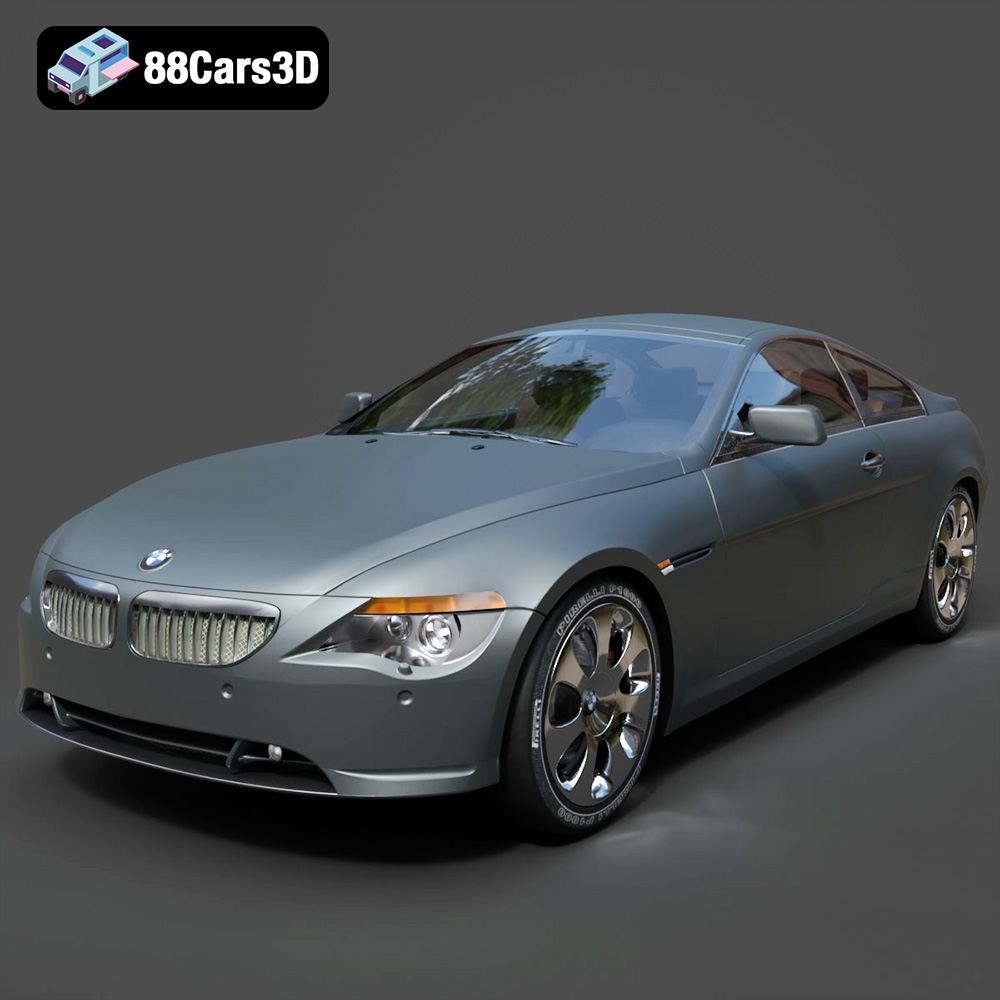
Imagine showcasing a luxury grand tourer with such precision that every curve, reflection, and material feels tangible. Or perhaps integrating a vehicle into a racing simulation where its handling and visual fidelity are indistinguishable from reality. This level of excellence is achievable with assets like the professional BMW 6 Series 3D Model, available on 88cars3d.com. This model exemplifies the balance between aesthetic accuracy and technical optimization, making it a versatile cornerstone for a multitude of creative and professional applications.
The Art and Science of High-Fidelity 3D Car Models
Producing a high-quality 3D car model is a complex endeavor that marries artistic vision with engineering precision. It’s about capturing the essence of an iconic design while ensuring the digital representation is robust enough for various demanding pipelines.
The Pursuit of Realism: Geometry and Materials
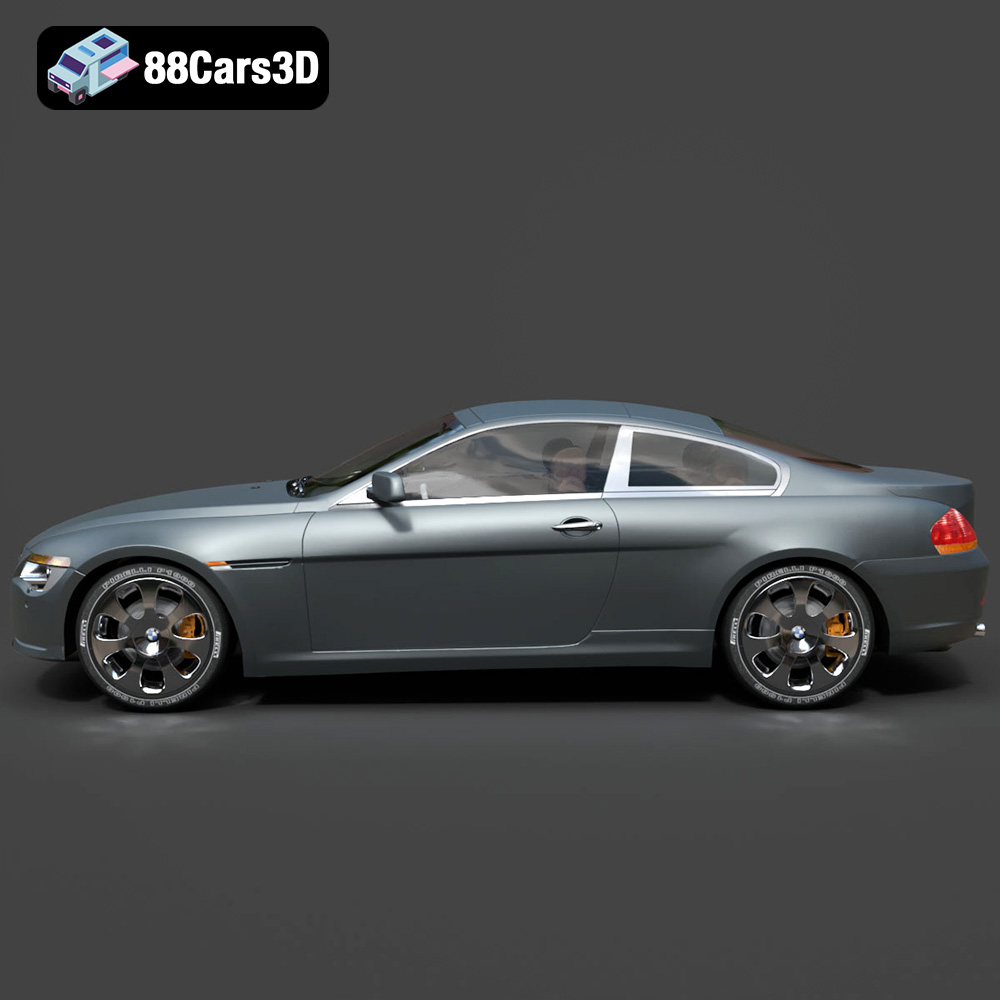
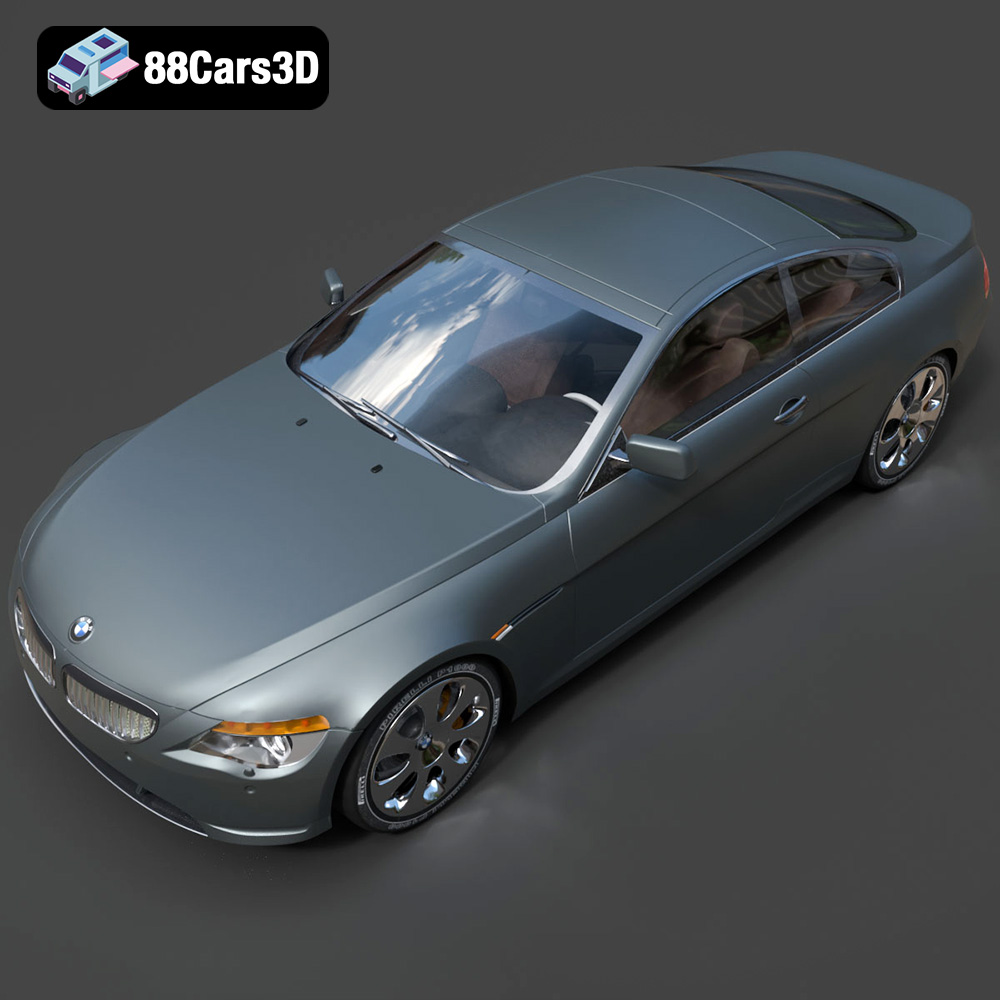
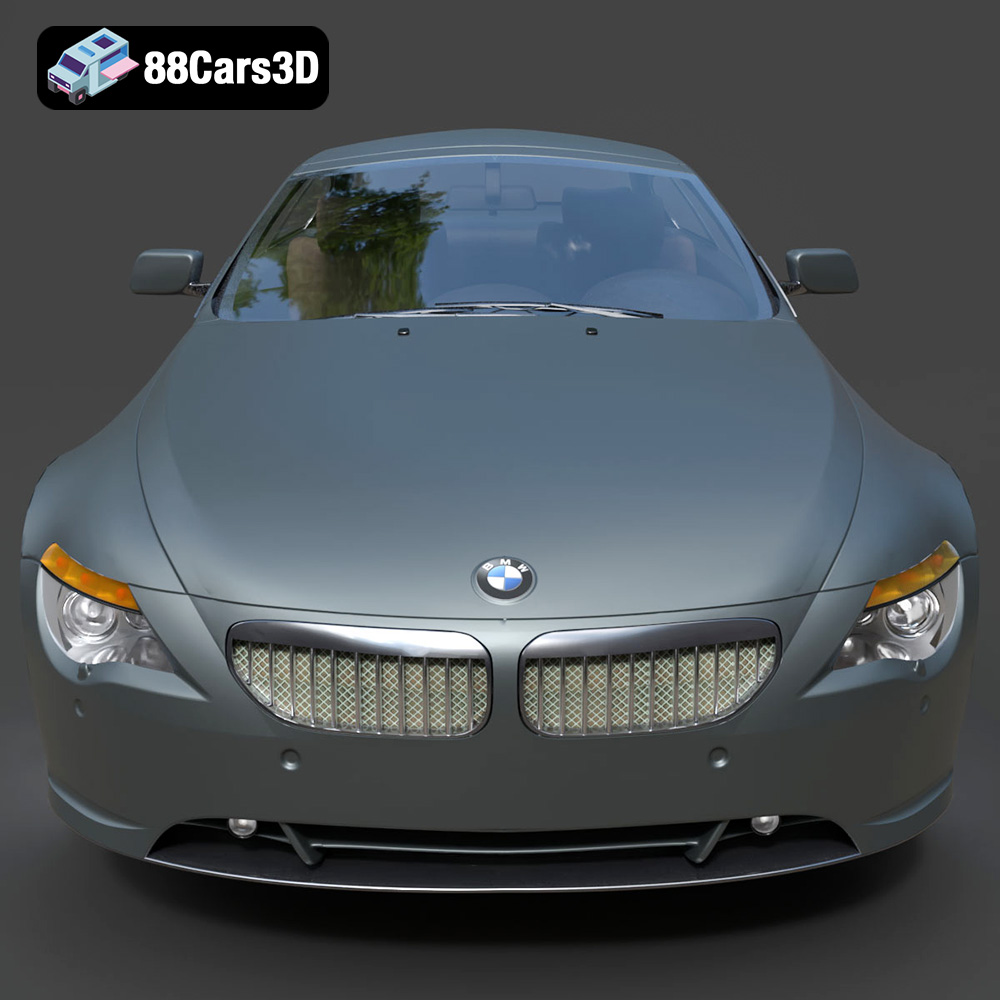
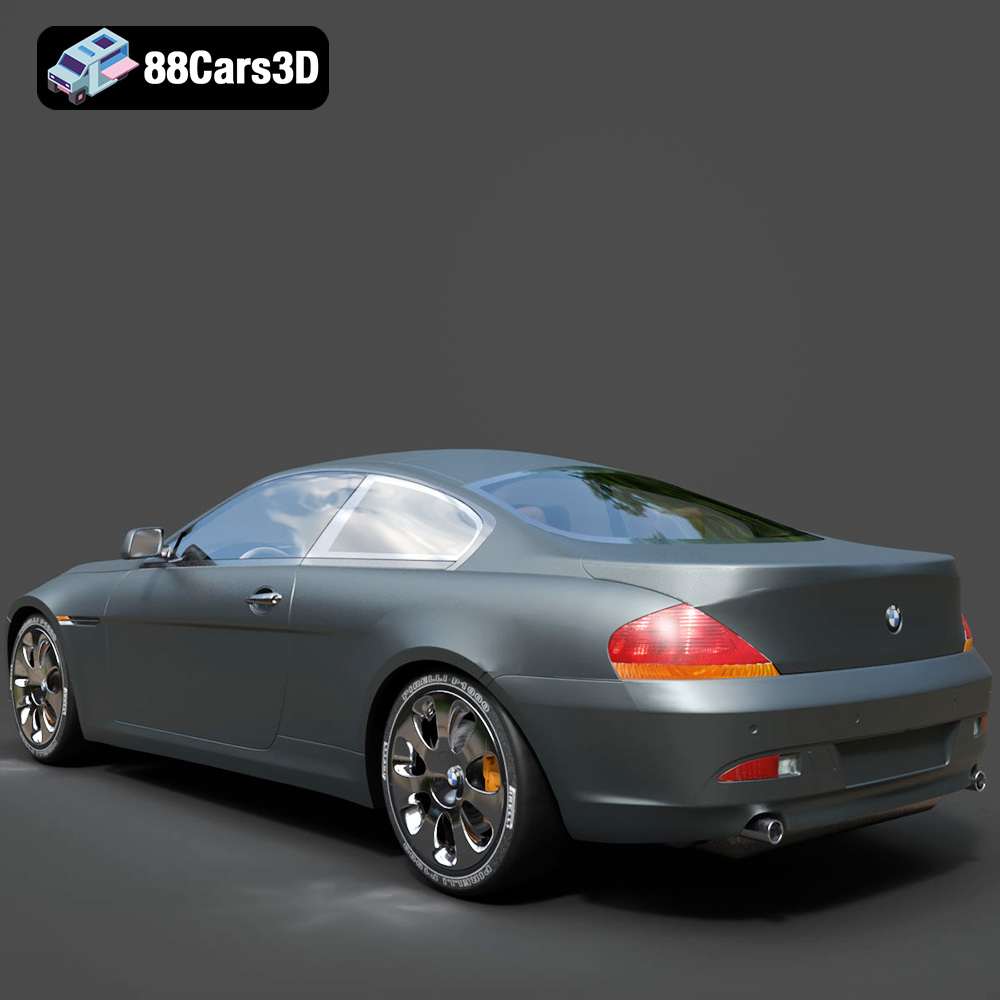
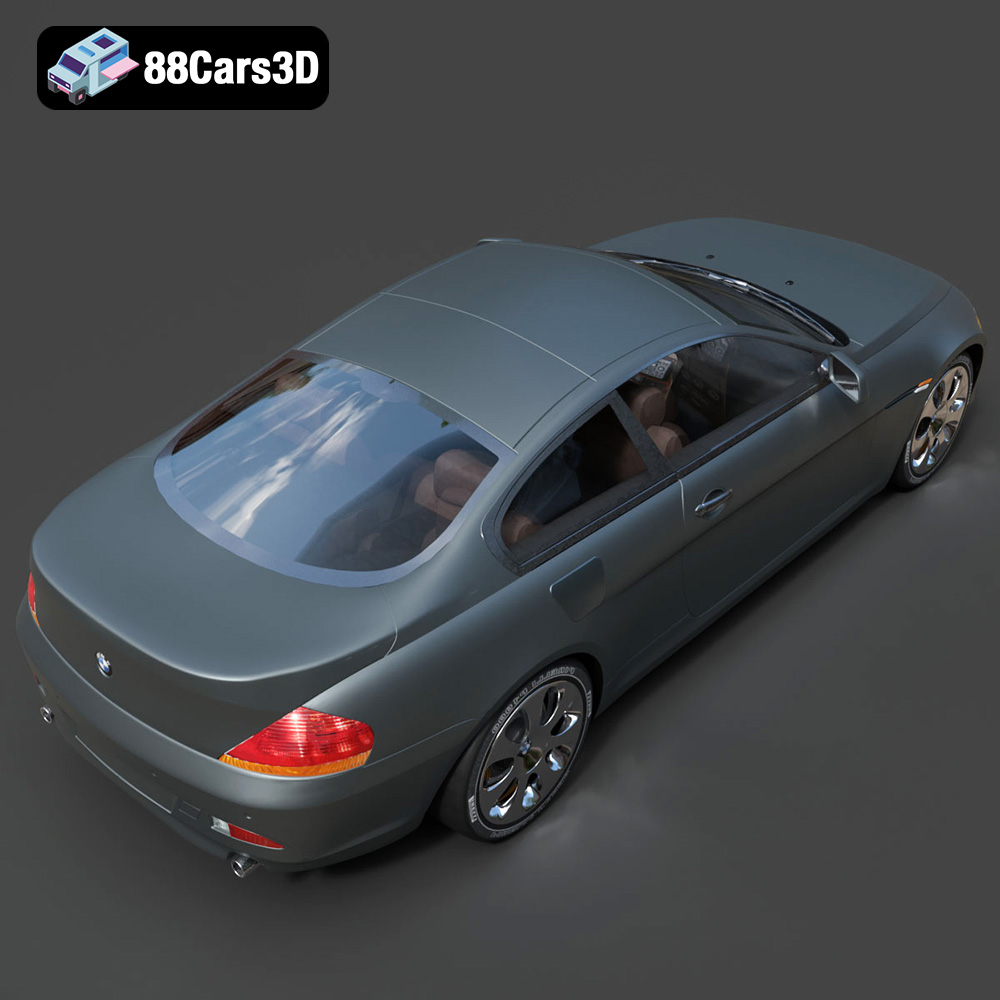
At its core, realism in 3D car models begins with accurate geometry. This means precise modeling of body panels, replicating the distinctive BMW design language with its subtle contours and sharp lines. Details like headlights and taillights aren’t just solid objects; they feature transparent materials that allow for realistic light refraction and emission. Authentic alloy wheels with detailed tire treads contribute significantly to the vehicle’s visual weight and presence, while chrome accents and intricate grille details add layers of visual richness that truly make the model pop. The BMW 6 Series 3D Model, for instance, goes further by separating components like doors, the hood, and trunk, providing animators with immediate flexibility and artists with easy customization options for paint finishes or custom graphics. Even high-resolution textures for badges and emblems play a crucial role in conveying authenticity down to the smallest detail.
Beyond Aesthetics: Optimization for Performance
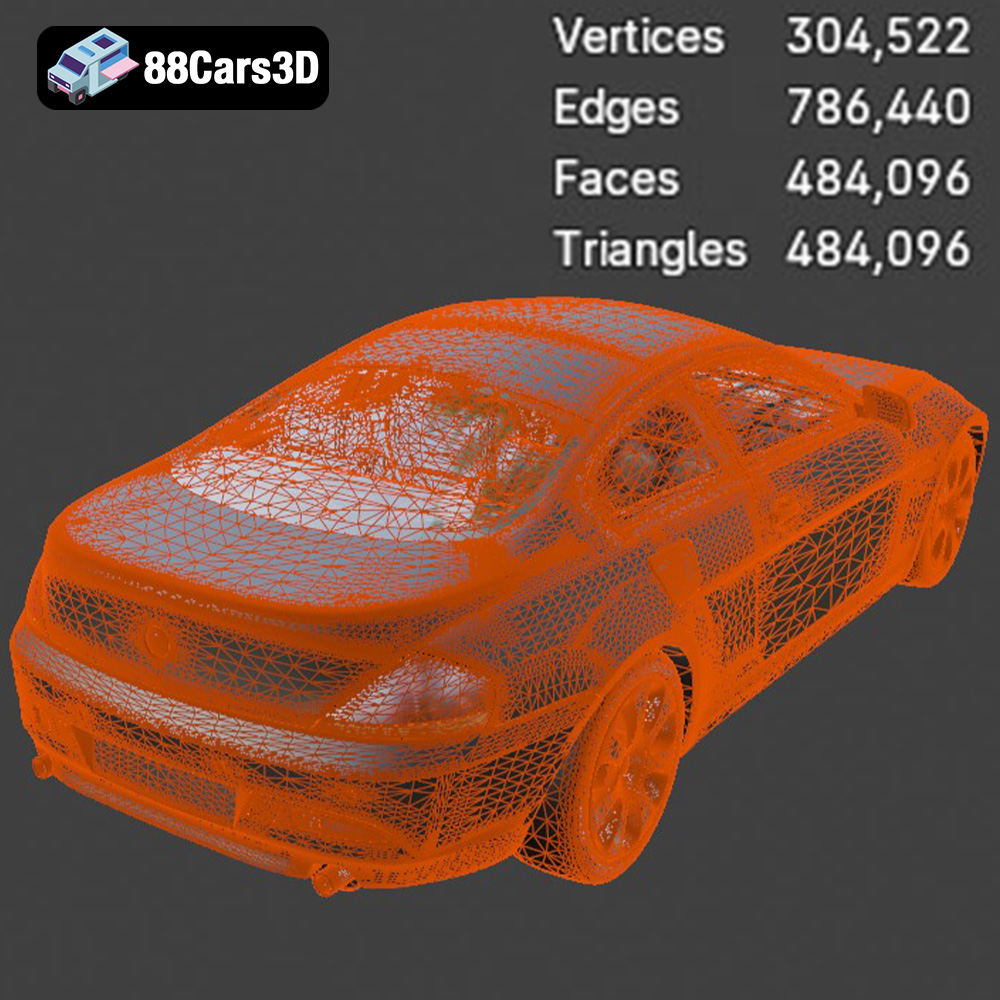
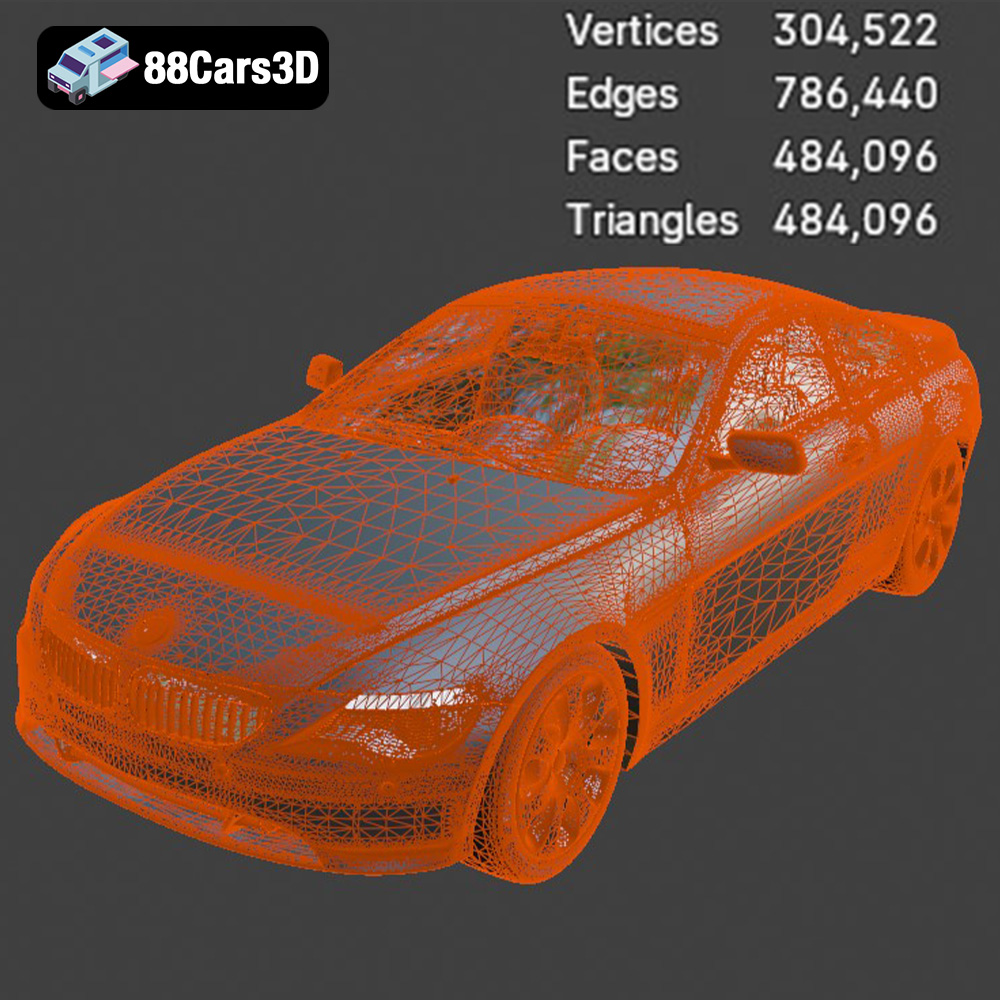
Beyond external beauty, a truly professional 3D car model must be optimized for performance. This includes a meticulously detailed interior, complete with a dashboard, steering wheel, seats, and center console, all designed to reflect authentic button and control layouts. However, this detail must be achieved without excessive polygon counts that could bog down real-time engines or increase rendering times exponentially. The mesh is optimized for efficient rendering, striking a balance between visual fidelity and computational efficiency. Even basic representations of undercarriage components can be critical for achieving realism in dynamic shots, providing a convincing silhouette and depth when viewed from below. This thoughtful approach to optimization is what distinguishes a high-quality asset from a generic one, ensuring it’s not only beautiful but also practical for demanding production environments.
Understanding 3D Model File Formats
The choice of file format for your 3D car models is a critical decision that impacts compatibility, workflow, and final output quality. Each format is designed with specific use cases and technical considerations in mind, making it essential to understand their strengths and limitations. The BMW 6 Series 3D Model comes with a comprehensive suite of formats, ensuring maximum versatility across different software and platforms.
Exchange Formats for Broad Compatibility
.blend – Blender project with materials: This is Blender’s native file format, offering a fully editable scene including all meshes, materials, textures, lighting, and animation data. It’s ideal for users who primarily work within Blender and need to make extensive modifications or render directly from the software. The .blend file for the BMW 6 Series 3D Model allows direct access to its clean quad-dominant topology and logically organized hierarchy, enabling artists to delve deep into its structure and customize every aspect.
.fbx – Compatible with Unreal, Unity, and major 3D engines: The Filmbox (.fbx) format is an industry-standard proprietary file format developed by Autodesk for 3D content exchange. It’s incredibly versatile, capable of storing not just mesh data but also materials, textures, animations, skinning, and camera information. Its robust support for animation makes it the go-to choice for importing complex 3D car models into game engines like Unreal Engine and Unity, or into other 3D software for animation and rendering. When working with the BMW 6 Series 3D Model, the .fbx version ensures that all necessary data, from geometry to basic material assignments, translates seamlessly, ready for engine-specific material setup.
.obj – Universal format for nearly all 3D software: The Wavefront .obj format is one of the most widely supported and simplest 3D geometry definitions. It primarily stores vertex positions, UV coordinates, normals, and polygonal faces, along with references to external material files (.mtl). While it doesn’t typically store animation or rigging data, its universal compatibility makes it an excellent choice for basic mesh exchange between almost any 3D application. For the BMW 6 Series 3D Model, the .obj version provides a clean, raw mesh, perfect for users who need to import the geometry into less common software or wish to rebuild materials from scratch.
.glb – Optimized for AR, VR, and web-based visualization: GL Transmission Format (.glb) is a royalty-free specification for the efficient transmission and loading of 3D scenes and models by applications. It’s a binary format that encapsulates geometry, materials, textures, and animation into a single file, making it highly optimized for web-based 3D viewers, augmented reality (AR), and virtual reality (VR) applications. Its efficiency and single-file nature mean faster loading times and easier distribution, ideal for showcasing the BMW 6 Series 3D Model in interactive web experiences or AR product configurators.
Engine-Specific and Specialized Formats
.stl – Ready for 3D printing: Stereolithography (.stl) is the standard file format for 3D printing. It represents a 3D model as a series of connected triangles (a tessellated surface) without color, texture, or other CAD attributes. While simple, it’s universally recognized by 3D printers and slicing software. The .stl variant of the BMW 6 Series 3D Model allows artists and designers to quickly convert the digital asset into a physical prototype or collectible, making it perfect for rapid prototyping or producing scaled models.
.ply – Mesh format for analysis and CAD workflows: The Polygon File Format (.ply) is a flexible format for storing three-dimensional data from 3D scanners. It supports properties like color, transparency, normals, texture coordinates, and even reliability information. It’s often used in scientific, engineering, and CAD applications where precise mesh data and associated attributes are crucial for analysis or manufacturing processes. For advanced users working with the BMW 6 Series 3D Model, the .ply format offers a robust dataset for detailed analysis or integration into specialized CAD pipelines.
.unreal – Unreal Engine project setup: This isn’t a single file format in the traditional sense, but rather a structured setup within an Unreal Engine project. It typically involves a pre-configured scene or asset package that includes the 3D car model, optimized materials, collision meshes, LODs (Levels of Detail), and sometimes even basic blueprints for functionality (like spinning wheels). The “.unreal” offering for the BMW 6 Series 3D Model provides an immediate, ready-to-use asset within Unreal Engine, saving developers countless hours of setup and optimization. It signifies an engine-ready asset, often with carefully prepared PBR (Physically Based Rendering) materials and optimized meshes.
.max – Editable 3ds Max scene for rendering and animation: This is the native file format for Autodesk 3ds Max, a leading software for 3D modeling, animation, and rendering. A .max file contains the entire scene, including geometry, materials, textures, lighting, cameras, animation, and scene settings. It allows for full editability and leveraging of 3ds Max’s powerful rendering engines like V-Ray or Corona. The .max version of the BMW 6 Series 3D Model is invaluable for professionals whose primary workflow revolves around 3ds Max, providing full control over the asset for detailed animation, complex scene integration, and high-end cinematic rendering.
Integrating the BMW 6 Series 3D Model into Professional Workflows
The true value of a versatile 3D asset lies in its seamless integration into various professional pipelines. The BMW 6 Series 3D Model from 88cars3d.com is engineered for this adaptability, providing an efficient starting point for diverse creative and technical projects.
Photorealistic Automotive Rendering with 3ds Max and Blender
For cinematic visuals and high-definition marketing materials, rendering is paramount. In 3ds Max, artists can utilize the provided .max file, which offers an editable scene ready for advanced material adjustments and lighting setups. Leveraging rendering engines like V-Ray or Corona, the clean quad-dominant topology of the BMW 6 Series ensures smooth subdivision for incredibly detailed close-ups without artifacts. Customization extends to modifying paint finishes – perhaps a vibrant metallic blue or a classic alpine white – and fine-tuning material properties for glass, rubber, and chrome to achieve hyper-realistic reflections and refractions. Similarly, Blender users can dive into the .blend file, which includes pre-configured materials, ready to be tweaked within Cycles or Eevee. The logical hierarchy with proper pivot points makes it trivial to animate doors opening, wheels turning, or steering wheel rotation for dynamic studio renders or full-blown cinematic sequences.
Real-Time Performance in Unreal Engine and Unity
Game developers demand not just visual fidelity but also stringent performance optimization. The .fbx and .unreal formats of the BMW 6 Series 3D Model are specifically tailored for integration into game engines like Unreal Engine and Unity. The .fbx provides a robust exchange format for geometry and basic materials, allowing developers to set up advanced PBR (Physically Based Rendering) shaders within the engine’s material editor, creating realistic paint, glass, and tire shaders that react accurately to in-game lighting. For Unreal Engine, the dedicated .unreal package often includes optimized meshes, collision volumes, LODs (Levels of Detail) for efficient rendering at varying distances, and even basic physics assets. This allows for immediate integration into racing simulations, open-world environments, or interactive garages, ensuring the car looks stunning while maintaining high frame rates.
Extending Creativity: AR/VR and 3D Printing Applications
Beyond traditional rendering and game development, the BMW 6 Series 3D Model opens doors to innovative applications. For Augmented Reality (AR) and Virtual Reality (VR) experiences, the .glb format is invaluable. This optimized, single-file format packages all necessary data for efficient streaming and real-time display, perfect for immersive product showcases, virtual showrooms, or interactive driving experiences on mobile devices or VR headsets. Imagine walking around the BMW 6 Series in your living room via AR, examining its sleek lines up close. Furthermore, the .stl format facilitates 3D printing, allowing for the creation of physical models and prototypes. This is particularly useful for designers who want to hold a tangible representation of the digital asset, or for hobbyists looking to add a precisely scaled replica to their collection.
Deconstructing Quality: Technical Advantages of a Premium 3D Car Model
What truly sets a professional 3D car model apart is not just its visual accuracy but the underlying technical craftsmanship. The BMW 6 Series 3D Model embodies these principles, offering substantial advantages that streamline workflows and ensure superior results.
Clean Topology and Subdivision Readiness
The foundation of any high-quality 3D model is its topology – the arrangement of its polygons. The BMW 6 Series model boasts clean, quad-dominant topology, meaning the vast majority of its faces are quadrilaterals rather than triangles. This is crucial for several reasons: it ensures smooth subdivision, allowing artists to easily increase the mesh resolution for close-up shots without introducing unsightly pinches or distortions. It also makes the model far more predictable for deformation, which is vital for animations where body panels might flex or distort slightly. Clean topology also simplifies UV mapping, texture painting, and rigging processes, making the asset much more manageable and flexible for future modifications or enhancements.
Logical Hierarchy and Animation Preparation
A well-organized model is a productive model. This asset features a logically organized hierarchy, where components like wheels, doors, hood, and trunk are grouped and parented correctly. Crucially, these elements have proper pivot points already set up. This means an animator doesn’t have to spend hours tweaking pivot orientations for a door to swing open naturally or a wheel to rotate on its true axis. This thoughtful preparation drastically cuts down on setup time, allowing animators to focus on crafting realistic movement immediately. Whether it’s a simple turntable animation or a complex driving sequence, the model’s pre-configured structure ensures ease of use and consistent results.
Material Versatility and Customization Potential
While the model comes with initial material setups, its inherent design facilitates extensive customization. The separation of components and logical material IDs allows artists to easily modify paint finishes, apply custom graphics, or create unique liveries with minimal effort. You can adjust the glossiness and reflectivity of metal components, the transparency and refraction of glass, or the subtle textures of rubber and plastic to match specific rendering styles or achieve varied atmospheric effects. This flexibility extends to implementing diverse lighting setups – from a dramatic studio environment to an expansive outdoor scene – ensuring the BMW 6 Series 3D Model can be adapted to perfectly suit any visual narrative.
Case Studies: Real-World Applications of Advanced 3D Automotive Assets
High-quality 3D car models are more than just digital sculptures; they are powerful tools that drive innovation across various industries. The BMW 6 Series 3D Model, with its professional features and broad compatibility, perfectly illustrates this versatility through practical applications.
Elevating Marketing & Product Visualization
Consider a luxury automotive brand preparing a new marketing campaign for the BMW 6 Series. Instead of expensive physical photoshoots or complex CGI productions from scratch, they can leverage this meticulously crafted 3D model. Imagine a series of stunning studio renders showcasing the car’s sleek lines in different colors and environments, all without ever leaving the digital realm. An architectural firm might integrate the 6 Series into a visualization of a high-end residential development, instantly adding a touch of luxury and realism to their exterior shots. The ability to modify paint finishes, lighting, and environments dynamically saves time and resources, allowing for rapid iteration and tailored visual content for diverse audiences, from print ads to interactive web experiences powered by the .glb format.
Driving Immersion in Game Development
In the fiercely competitive world of game development, realistic vehicles are crucial for immersion. A racing game studio developing a new simulation title would find the BMW 6 Series 3D Model invaluable. Its optimized mesh and well-prepared .fbx or .unreal formats allow for direct integration into their engine, providing a high-fidelity asset that performs efficiently. Developers can focus on refining the driving physics and gameplay, knowing the visual asset is already up to par. For open-world games, having a diverse fleet of detailed 3D car models, like those offered on 88cars3d.com, is essential for populating the environment and enhancing player engagement, ensuring every vehicle, whether player-controlled or AI-driven, contributes to the overall realism of the virtual world.
Innovation in Simulation and Training
Beyond entertainment, professional 3D car models play a significant role in simulation and training. Flight schools and military trainers have long used simulators, and the automotive industry is rapidly adopting similar technologies. A driving simulator manufacturer could integrate the BMW 6 Series 3D Model into their software to provide realistic training scenarios for new drivers, or even for engineers testing new vehicle control systems. The model’s detailed interior, with authentic button and control layouts, creates a convincing cockpit environment, allowing trainees to interact with a virtual vehicle that mirrors its real-world counterpart. Furthermore, for technical training, the separated components (doors, hood, trunk) and logical hierarchy could be used to create interactive modules for mechanics, demonstrating assembly, maintenance, or repair procedures in a safe, digital environment.
Conclusion: The Foundation of Digital Automotive Excellence
In the expansive and ever-evolving landscape of 3D content creation, the quality of your foundational assets can be the deciding factor between a good project and an exceptional one. Whether your focus is on hyper-realistic automotive rendering, immersive game development, cutting-edge AR/VR experiences, or precision-driven simulations, the need for professionally crafted 3D car models is paramount. Such assets significantly reduce development time, enhance visual fidelity, and provide the flexibility needed to adapt to diverse project requirements.
The BMW 6 Series 3D Model stands as a testament to this commitment to quality. Its meticulous attention to exterior and interior detail, combined with technical advantages like clean quad-dominant topology, a logical hierarchy, and broad file format compatibility, makes it an indispensable tool for any serious 3D artist or developer. By choosing assets from trusted sources like 88cars3d.com, you are investing in a foundation that empowers creativity, streamlines workflows, and ultimately elevates the standard of your digital automotive projects.
Featured 3D Model
BMW 6 Series 3D Model
This professional 3D model accurately represents the iconic BMW 6 Series, a luxurious grand tourer known for its sleek lines, sporty elegance, and powerful performance. Crafted with clean geometry and a balanced level of detail, this model is optimized for high-quality rendering, realistic animations, detailed simulations, and robust integration into game development projects.
Exterior Features:
- Precisely modeled body panels reflecting the distinctive BMW design language.
- Detailed headlights and taillights with transparent materials for realistic lighting effects.
- Authentic BMW alloy wheels with detailed tire treads.
- Chrome accents and intricate grille details.
- Separated doors, hood, and trunk for ease of animation and customization.
- High-resolution textures for badges and emblems.
Interior / Mechanical Features:
- Detailed interior including dashboard, steering wheel, seats, and center console.
- Authentic button and control layouts for a realistic cockpit feel.
- Optimized mesh for efficient rendering without sacrificing key interior elements.
- Basic representation of undercarriage components for realism in dynamic shots.
Technical Advantages:
- Clean, quad-dominant topology ensures smooth subdivision and deformation.
- Modeled to real-world scale for accurate integration into scenes.
- Logically organized hierarchy with proper pivot points for easy animation of doors, wheels, and steering.
Applications:
- Rendering & Visualization: Perfect for high-definition studio renders, cinematic sequences, and architectural visualizations requiring a premium vehicle.
- Game Development: Optimized for use as a game asset in racing simulations, open-world environments, and interactive experiences.
- AR/VR: Seamless integration into augmented and virtual reality applications for immersive product showcases or interactive experiences.
- Simulation & Training: Suitable for driving simulators, educational modules, and technical training scenarios.
- 3D Printing: Can be easily converted to .stl format for creating physical models and prototypes.
Customization Options:
- Easily modify paint finishes, apply custom graphics, or create unique liveries.
- Adjust material properties for metal, glass, rubber, and plastic components to match specific rendering styles.
- Implement diverse lighting setups to achieve varied atmospheric effects and scene moods.
Elevate your projects with this meticulously crafted BMW 6 Series 3D model. Its professional quality, extensive features, and broad compatibility make it an invaluable asset for any serious 3D artist or developer seeking unparalleled realism and versatility.
Included File Formats:
- .blend – Blender project with materials
- .fbx – Compatible with Unreal, Unity, and major 3D engines
- .obj – Universal format for nearly all 3D software
- .glb – Optimized for AR, VR, and web-based visualization
- .stl – Ready for 3D printing
- .ply – Mesh format for analysis and CAD workflows
- .unreal – Unreal Engine project setup
- .max – Editable 3ds Max scene for rendering and animation
Tags:
.bmw, .6series, .coupe, .luxurycar, .grandtourer, .rendering, .simulation, .gameasset, .arvr, .blend, .fbx, .obj, .glb, .stl, .ply, .unreal, .maxMercedes Benz CLS 500 3D Model
$10.79
Product Image Gallery
Related Tags
.6series
.arvr
.blend
.bmw
.coupe
.fbx
.gameasset
.glb
.grandtourer
.luxurycar
.max
.obj
.ply
.rendering
.simulation
.stl
.unreal
