Get 20% OFF All Premium 3D & STL Models!

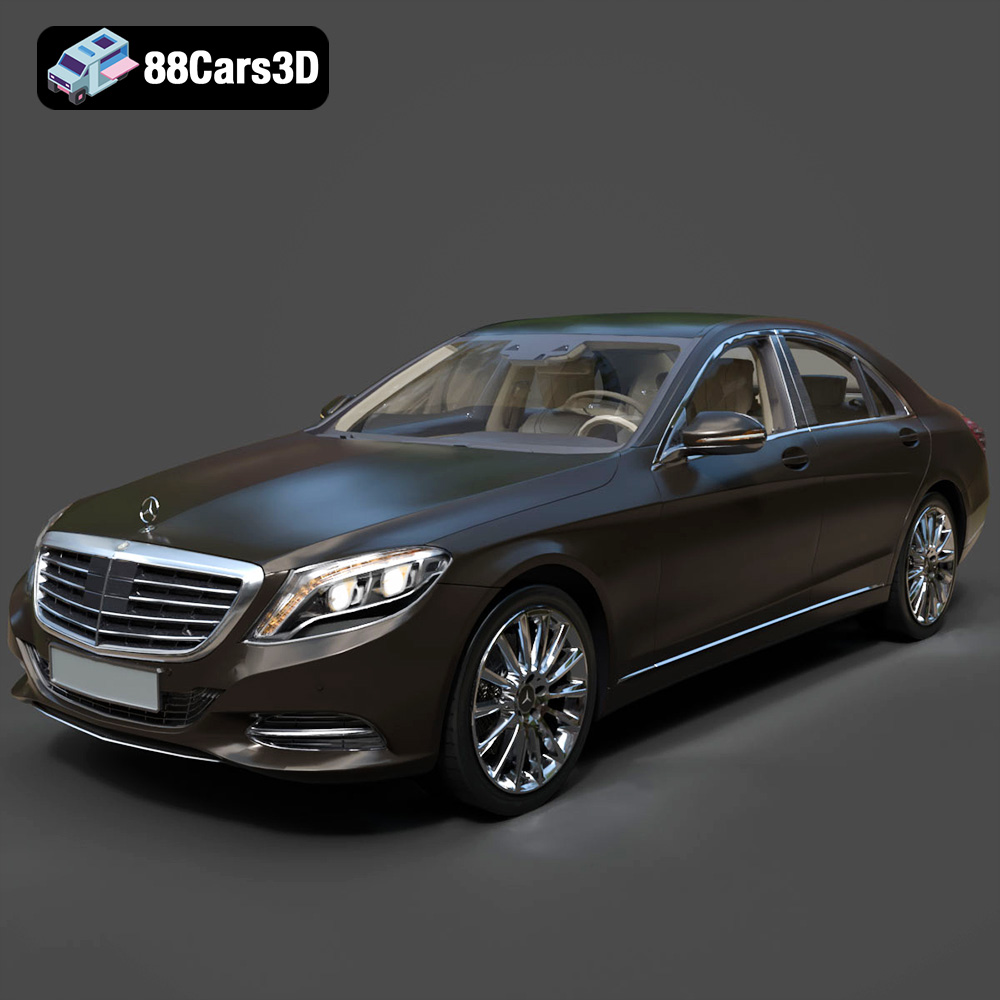
In the rapidly evolving world of 3D visualization, the demand for high-fidelity, production-ready assets is ceaseless. From cinematic automotive rendering to real-time game development, a detailed and accurate 3D car model can be the cornerstone of a successful project. Imagine bringing the epitome of luxury and sophisticated engineering into your digital scene, not just as a static object, but as a fully realized, interactive component. This is precisely what the Mercedes-Benz S500 2022 3D Model offers, setting a benchmark for quality and versatility in the premium vehicle asset category.
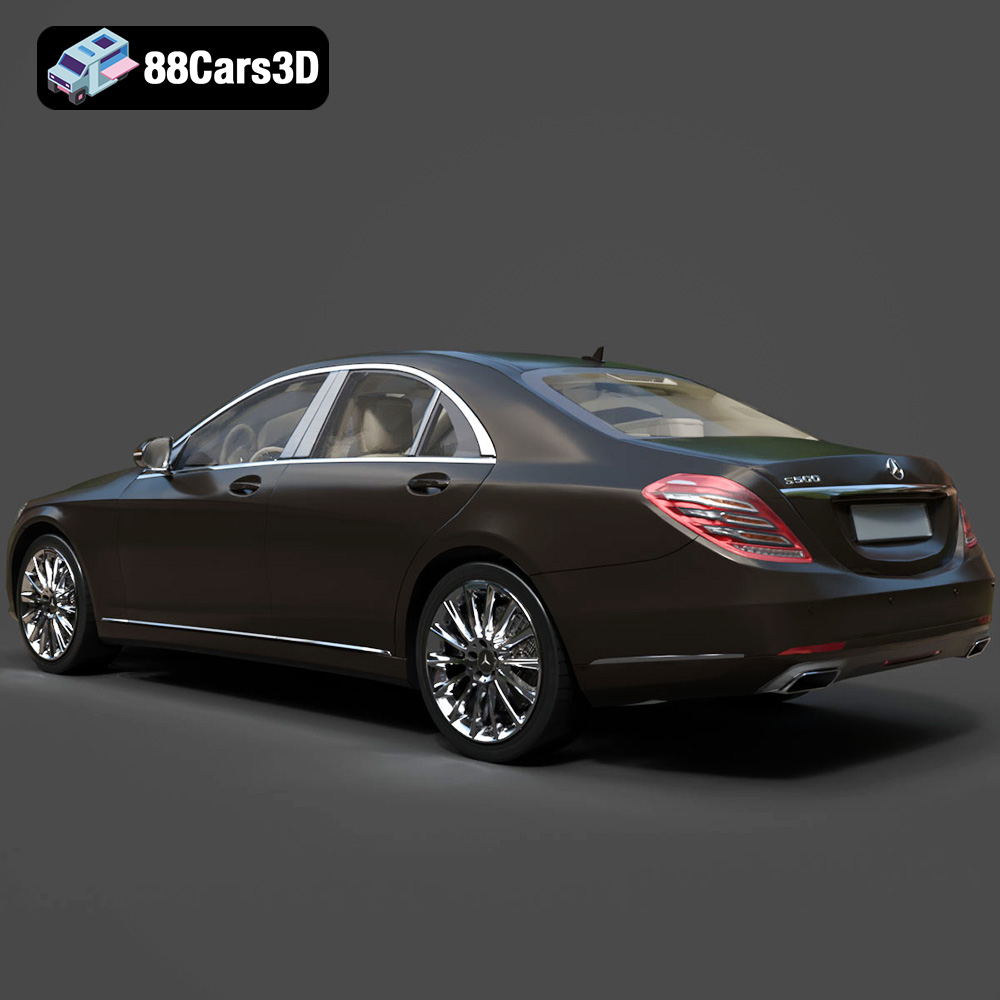
The Mercedes-Benz S500 2022 3D Model transcends mere aesthetics; it’s a meticulously crafted digital twin, built to professional standards. Its intricate details, from the elegant exterior lines to the complex interior architecture, are captured with exceptional accuracy. This attention to detail makes it an indispensable asset for any project demanding precision and realism, whether you’re working on architectural visualizations, interactive training simulations, or next-generation game environments. Throughout this extensive guide, we’ll delve into the technical intricacies, practical applications, and strategic advantages of incorporating such a high-caliber 3D model into your pipeline, showcasing why assets from marketplaces like 88cars3d.com are essential for modern digital artists and developers.
The versatility of a professional 3D car model is often defined by the array of file formats it provides, each tailored for specific software, workflows, and output requirements. The Mercedes-Benz S500 2022 3D Model, for instance, comes equipped with a comprehensive suite of formats, ensuring seamless integration across various industry-standard applications. Understanding these formats is crucial for optimizing your workflow and achieving the desired outcome.
The .blend file is the native format for Blender, a powerful open-source 3D creation suite. When you receive a .blend file for the S500 model, it typically means a fully editable Blender scene. This includes not just the mesh data, but also the materials configured with Blender’s Cycles or Eevee render engines, lighting setups, camera positions, and potentially even animation data. For artists primarily working in Blender for automotive rendering, animation, or general 3D work, this format provides the most flexibility for customization and iteration within their preferred environment. It allows for direct manipulation of geometry, material tweaks, and easy integration into existing Blender projects.
.fbx (Filmbox) is arguably one of the most popular and robust interchange formats in the 3D industry, especially favored for game development. It’s designed to carry a broad range of 3D data, including geometry, materials (with PBR maps), textures, rigging, animation, and even camera and light information, all within a single file. For game engines like Unreal Engine and Unity, an .fbx file for the S500 is often the go-to choice due to its efficient handling of complex data structures and excellent compatibility. Developers can import the S500 model into their engine with its materials and skeletal data largely intact, ready for optimization and integration into real-time environments.
The .obj (Wavefront OBJ) format is a widely supported, universal 3D model format. It primarily stores geometry (vertices, normals, texture coordinates, and faces) and can reference external material definition files (.mtl) for basic material properties and texture maps. While it doesn’t support advanced features like animation or rigging, its simplicity and widespread compatibility make it an excellent choice for cross-software transfers. If you’re moving the Mercedes-Benz S500 2022 3D Model between different modeling or rendering packages that may not natively support more complex formats, .obj is a reliable fallback, ensuring the core mesh data is preserved.
.glb (GLB format, derived from glTF) is a relatively newer format gaining significant traction, particularly for augmented reality (AR), virtual reality (VR), and web-based 3D applications. It’s designed for efficient transmission and loading of 3D scenes and models. A .glb file essentially bundles the 3D model, textures, and animation into a single, compact binary file, making it ideal for quick deployment in environments where file size and performance are critical. For showcasing the Mercedes-Benz S500 model in a web viewer or an interactive AR experience, .glb offers an optimized, streamlined solution.
.stl (STereoLithography) is the standard file format for 3D printing. It represents a 3D model as a series of connected triangles, describing only the surface geometry of an object without color, texture, or other CAD attributes. While the Mercedes-Benz S500 2022 3D Model is primarily for digital visualization, providing an .stl option means it can also be used for rapid prototyping or creating physical scale models of the vehicle. This is particularly useful in design review processes or for creating tangible representations of the digital asset.
The .ply (Polygon File Format) is another format that describes a 3D object as a collection of polygons. It’s often used for scanned 3D data and can store additional properties like color, transparency, and even normal vectors per vertex or face. For the Mercedes-Benz S500, a .ply file might be beneficial for engineers or designers needing a precise mesh for analysis, measurement, or highly detailed visualization in specific CAD or scientific software, offering a robust representation of the model’s geometric integrity.
The .unreal format signifies an asset specifically prepared and often pre-configured for direct use within Unreal Engine. This could mean the asset has already undergone optimizations, material setup, and potentially even LOD (Level of Detail) generation within an Unreal project. For developers focused on creating stunning real-time experiences with the S500 model, this format offers the highest level of integration and ease of use, drastically reducing setup time and ensuring consistency with Unreal’s rendering pipeline.
Finally, the .max file is the native format for Autodesk 3ds Max, a leading software for 3D modeling, animation, and rendering, especially prevalent in architectural visualization and product design. Similar to .blend, a .max file for the S500 model would include the complete scene data, materials (e.g., V-Ray, Corona, Arnold), lighting, and camera setups tailored for 3ds Max. This provides maximum editability and full access to 3ds Max’s extensive toolset for high-end rendering and complex animation sequences.
The provision of these diverse formats with the Mercedes-Benz S500 2022 3D Model underscores its professional-grade nature and adaptability, making it an invaluable asset for virtually any 3D project.
Automotive rendering is a specialized field that demands an acute understanding of light, materials, and composition to produce photorealistic results. The Mercedes-Benz S500 2022 3D Model is engineered to excel in this domain, providing a foundation for stunning visualizations that can easily be mistaken for photographs.
A crucial aspect of the S500 model’s quality lies in its PBR (Physically Based Rendering) materials. PBR workflows simulate how light interacts with surfaces in the real world, leading to more consistent and believable results across various lighting conditions. For the S500, this means meticulously crafted shaders for:
Working with the .max or .blend files, artists have full control to fine-tune these materials. In 3ds Max, this might involve using V-Ray or Corona Renderer materials, while Blender users will leverage Cycles or Eevee’s node-based material system. Experimenting with different HDRI (High Dynamic Range Image) environments is key to showcasing the materials’ true fidelity, allowing the car to reflect its surroundings authentically.
Beyond materials, skilled lighting and composition transform a good render into an exceptional one. With the Mercedes-Benz S500 2022 3D Model, artists can explore:
The clean geometry of the S500 model ensures that subdivided meshes remain smooth and artifact-free, essential for close-up shots and high-resolution output. This makes it an ideal asset for marketing materials, virtual showrooms, and concept presentations where visual perfection is paramount.
The demands of real-time environments, such as those found in video games or interactive AR/VR applications, are fundamentally different from those of cinematic rendering. Performance, poly count, and efficient asset streaming are critical. The Mercedes-Benz S500 2022 3D Model is specifically designed with these considerations in mind, making it an excellent game asset.
A key challenge in real-time visualization is balancing visual fidelity with performance. The S500 model’s “clean, optimized geometry” implies a sensible poly count that minimizes overhead without sacrificing detail. For true scalability in games, developers will often implement Level of Detail (LOD) systems:
The .fbx and .unreal formats are particularly well-suited for this, allowing developers to import the base mesh and then generate or integrate custom LODs within Unreal Engine or Unity. Proper UV mapping, which the S500 model possesses for its PBR textures, is also vital for efficient texture application and avoiding seams or distortion in real-time engines.
The “game-engine ready format for Unreal Engine and Unity” statement is a significant advantage. For Unreal Engine, the dedicated .unreal file takes this a step further, often providing a pre-configured asset that includes:
In Unity, importing the .fbx file allows developers to bring in the S500 model with its mesh, materials, and textures. Artists would then typically create Unity materials and assign the PBR texture maps (Albedo, Normal, Metallic, Roughness, AO) to achieve the desired look. Collision geometry would also be set up to enable realistic physics interactions.
For AR/VR experiences, the .glb format becomes invaluable. Its optimized nature ensures quick loading times and smooth performance on mobile devices or VR headsets, making it perfect for interactive product showcases or virtual test drives of the Mercedes-Benz S500 2022 3D Model.
Beyond standalone renders and game development, a high-quality 3D car model like the Mercedes-Benz S500 2022 finds extensive utility across various professional sectors. Its versatility makes it a critical asset for a multitude of applications, enhancing realism and engagement.
In architectural visualization, adding realistic vehicles is paramount for grounding a scene and conveying scale, lifestyle, and atmosphere. A premium 3D car model like the S500 elevates an ArchViz project from good to exceptional. Imagine a sleek S500 parked outside a modern luxury villa or driving through a meticulously rendered urban landscape. The detail of the model means it holds up to close-ups, making it suitable for hero shots where the car itself is a focal point, rather than just background filler.
Using the .max or .blend files within 3ds Max or Blender, ArchViz artists can seamlessly integrate the S500 into their scene, utilizing existing lighting and rendering setups for cohesive results. The PBR materials ensure that the car reacts appropriately to the scene’s ambient light and reflections.
The rise of augmented and virtual reality has opened new avenues for interactive product experiences. The Mercedes-Benz S500 2022 3D Model is perfectly suited for these emerging technologies. For instance:
This level of detail and adaptability significantly enhances user engagement and offers novel ways for brands to present their products. Finding such versatile 3D car models on platforms like 88cars3d.com streamlines the development of these cutting-edge applications.
While primarily a digital asset, the provision of the .stl file format opens up possibilities for physical prototyping. Engineers, designers, or hobbyists can leverage the S500 model to:
The .ply format further supports detailed geometric analysis, which can be beneficial in certain prototyping stages or for comparing digital models with physical scans.
The value of a professional 3D model, especially for a complex object like a luxury car, lies deep within its technical specifications. The Mercedes-Benz S500 2022 3D Model is built upon a foundation of precision and best practices, ensuring its high quality across various applications.
A “clean, optimized geometry” is not just a marketing term; it’s a technical necessity. This means:
This attention to topology ensures that the model can be smoothly subdivided for cinematic renders or efficiently optimized for real-time applications without significant rework.
The reliance on a PBR workflow is a testament to the model’s professional-grade nature. PBR materials, as mentioned, accurately simulate light-material interaction. For the S500 model, this involves:
These maps are meticulously crafted and properly UV-mapped to the model, ensuring consistent and high-fidelity rendering across all compatible software and engines.
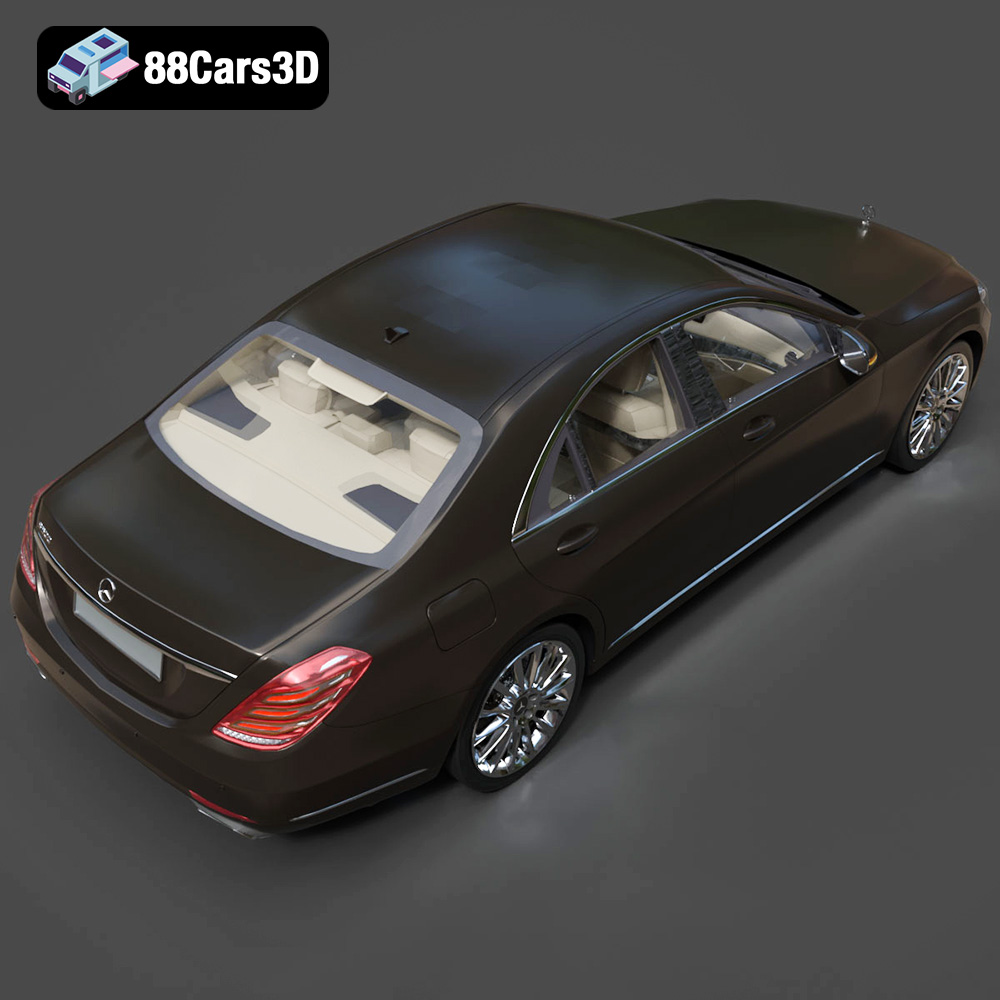
Often, 3D car models cut corners on the interior to save on poly count or production time. However, the Mercedes-Benz S500 2022 3D Model boasts a “complex interior structure, including dashboard layout and seating, is fully modeled.” This means:
This level of interior detail is crucial for ArchViz projects showcasing a car’s interior, virtual reality experiences where users can “sit inside,” or cinematic shots that feature the luxurious cabin. It underscores the model’s value as a comprehensive digital asset, not just an exterior shell.
The applications for a high-quality 3D car model like the Mercedes-Benz S500 2022 are truly extensive, touching various industries that benefit from advanced visualization and simulation.
For the automotive industry itself, such a model is invaluable. Before a physical car is even produced, 3D models are used for:
The S500 model’s accuracy and PBR materials make it perfectly suited for these high-stakes applications, where brand image and visual integrity are paramount. It allows designers to experiment with different paint finishes, wheel designs, or interior materials in a cost-effective, digital space.
The entertainment industry frequently uses 3D car models for visual effects (VFX) in films, television shows, and commercials. Whether it’s for digital doubles, impossible stunts, or futuristic environments, the S500 3D model can be seamlessly integrated:
The model’s clean geometry and high detail ensure it holds up even under the scrutiny of large-format cinema screens, making it a reliable asset for VFX studios.
Beyond entertainment, the S500 3D model can serve vital roles in education and training. For instance:
The extensive detailing, especially of the interior, makes it particularly useful for these scenarios, providing a rich and informative digital experience.
In the expansive and demanding landscape of 3D visualization, the quality of your assets directly dictates the quality of your output. The Mercedes-Benz S500 2022 3D Model stands out as a prime example of a premium, production-ready asset designed to meet and exceed professional expectations. Its exceptional accuracy, meticulous detailing, PBR-configured materials, and optimized geometry make it a crucial component for a vast array of applications – from breathtaking automotive rendering and engaging game development to sophisticated architectural visualizations and immersive AR/VR experiences.
By providing a comprehensive suite of file formats, including .blend, .fbx, .obj, .glb, .stl, .ply, .unreal, and .max, this model ensures seamless integration into virtually any professional workflow. Whether you’re an ArchViz artist striving for photorealism, a game developer building a cutting-edge open world, or a designer creating interactive product showcases, the S500 model offers the flexibility and fidelity you need. Investing in such a high-caliber 3D car model, readily available from trusted sources like 88cars3d.com, is not just about acquiring a digital object; it’s about acquiring a powerful tool that accelerates workflows, enhances realism, and ultimately elevates the quality of your entire project. It’s a testament to the power of precision in the digital realm, enabling creators to push the boundaries of what’s possible in automotive visualization.
The Mercedes-Benz S500 2022 3D Model delivers exceptional accuracy, capturing the luxurious styling and sophisticated details of the flagship sedan. Designed from the ground up to meet professional standards, this model is a crucial asset for visualizations requiring precision and detailed vehicle representation. This asset features clean, optimized geometry suitable for real-time applications and demanding cinematic renders. Materials are configured for PBR workflows, ensuring surfaces like the chrome trim, paint finish, and interior leather render with impressive fidelity across various lighting conditions. The complex interior structure, including dashboard layout and seating, is fully modeled. Ideal for a wide range of uses, the Mercedes-Benz S500 model is perfect for architectural visualization (ArchViz) projects, interactive training simulations, AAA game development, augmented reality (AR), virtual reality (VR) experiences, and large-scale rendering pipelines.
$19.99