

Driving Innovation: The Power of Premium 3D Car Models in Modern Visualization
In the dynamic world of 3D visualization, the demand for high-fidelity assets is ever-increasing. From blockbuster game titles to photorealistic architectural walkthroughs, and cutting-edge automotive marketing campaigns, the quality of a 3D model can significantly impact the final output and overall project success. This is particularly true for automotive subjects, where intricate design, reflective surfaces, and the iconic presence of a vehicle demand unparalleled attention to detail.
Today, we’re delving into how expertly crafted 3D car models empower professionals across various industries, using the remarkable BMW M3 2024 3D Model as a prime example. This asset, available on 88cars3d.com, encapsulates the essence of performance luxury, meticulously reproducing the aggressive styling, iconic grille design, and dynamic silhouette of the modern M3 generation. It’s not just a model; it’s a foundational tool designed for close-up renders, demanding simulation environments, and immersive virtual experiences. Let’s explore the technical depths and creative potential these high-quality assets unlock.
The Art and Engineering of High-Fidelity 3D Car Models
Creating a truly photorealistic 3D car model is a fusion of artistic skill and engineering precision. It requires more than just replicating shapes; it involves understanding automotive design principles, material physics, and optimization for diverse digital environments. The journey from concept to a deployable 3D asset is rigorous, ensuring every curve, vent, and component contributes to an authentic representation.
Precision Modeling for Unparalleled Realism
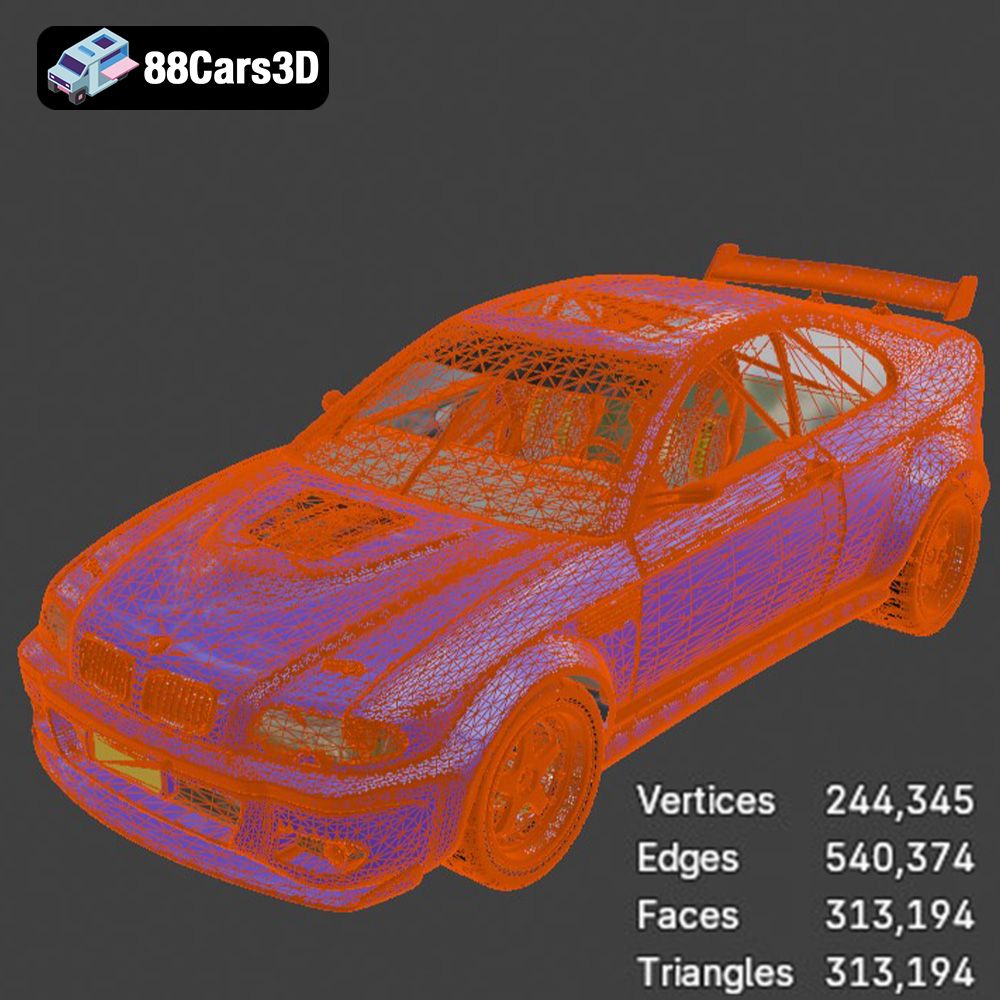
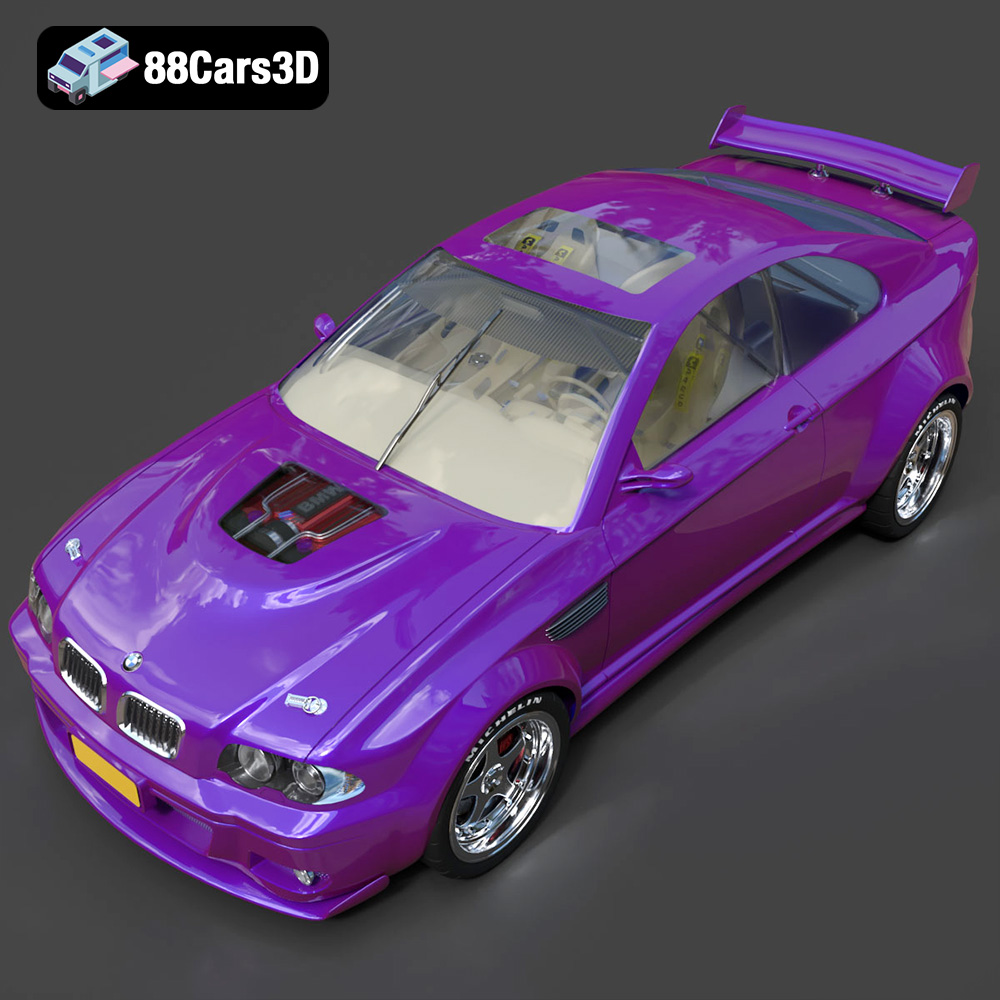
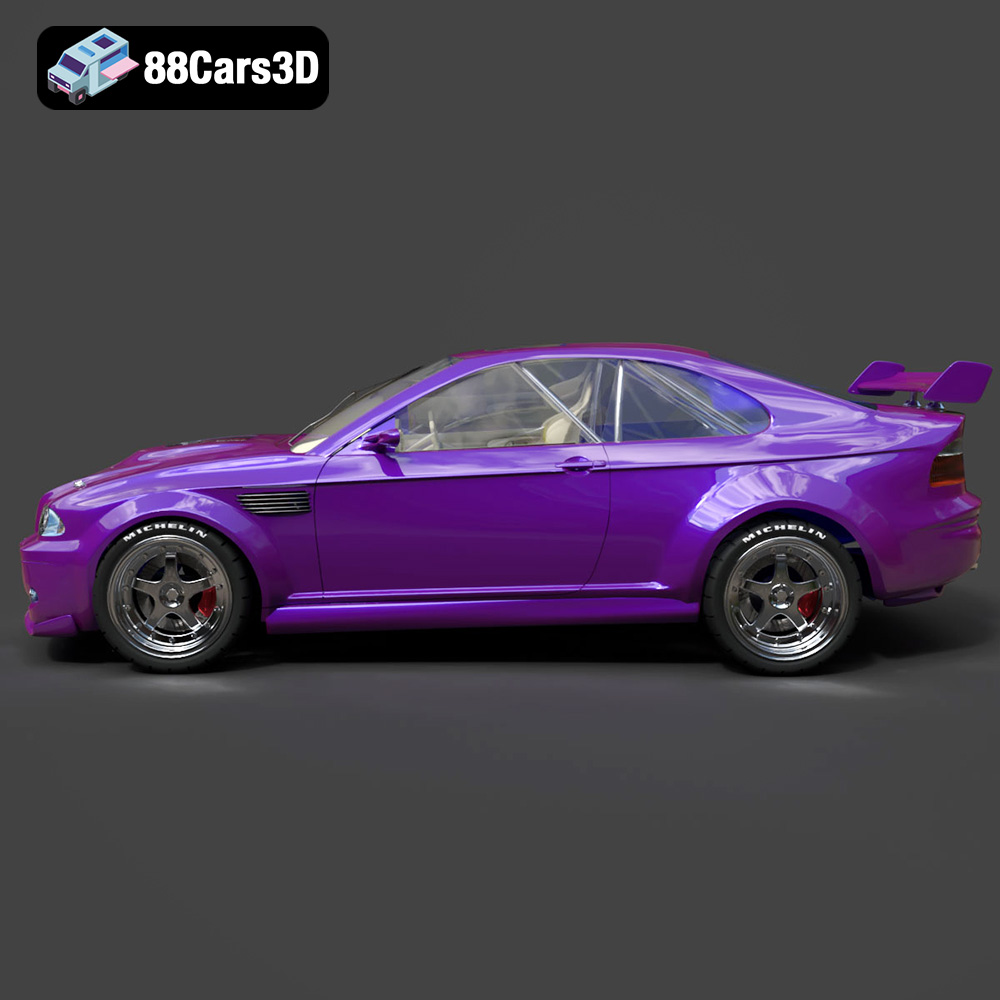
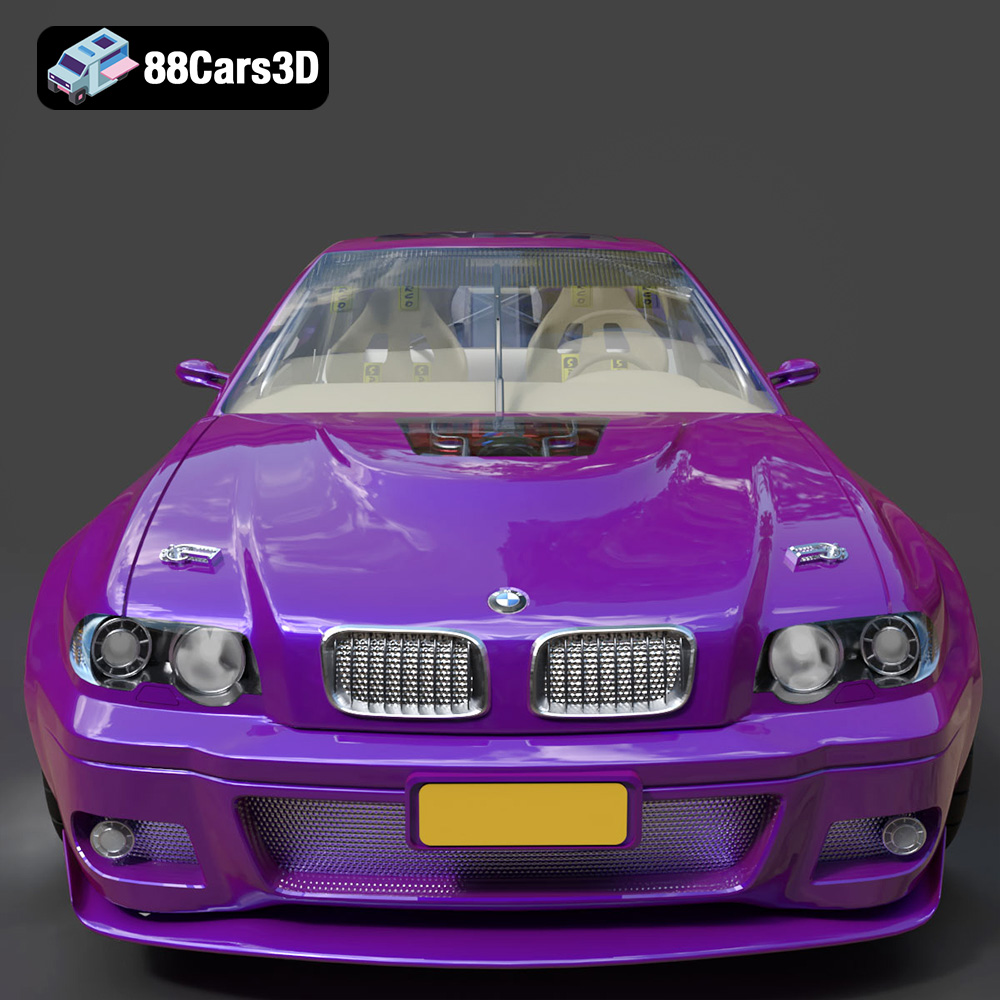
The core of any premium 3D car model lies in its geometric accuracy. For an asset like the BMW M3 2024, this means meticulously reproducing every external detail. We’re talking about structurally clean topology – often predominantly quads – which is crucial for smooth subdivision, clean deformation, and optimal rendering. The iconic grille design, the intricate headlight clusters, the subtle curves of the body paneling, and the sharp lines defining the vehicle’s aerodynamics must all be replicated with millimeter-level precision. This level of detail extends to the wheels and brake calipers, ensuring that even in extreme close-up renders, visual fidelity remains uncompromised. Such attention to detail is what separates a generic model from a professional-grade asset ready for prime-time use in automotive rendering or high-end simulations.
Interior Detailing: Beyond the Surface
While the exterior captures immediate attention, a truly comprehensive 3D car model includes a fully realized interior. For projects requiring first-person views, virtual tours, or immersive VR experiences, the cabin’s realism is paramount. This involves modeling the dashboard, steering wheel, seats, door panels, and even smaller elements like buttons, stitching, and textures. The BMW M3 2024 3D Model excels here, providing an interior detailed enough to support intricate lighting setups and realistic material shaders, ensuring that virtual occupants feel genuinely immersed. This comprehensive approach expands the model’s utility dramatically, making it suitable for a wider range of professional applications, from automotive configurators to driver training simulations.
Understanding 3D Model File Formats
The versatility of a 3D model is often defined by the range of file formats it offers. Each format serves a specific purpose, catering to different software ecosystems, project requirements, and optimization needs. Understanding these distinctions is crucial for selecting the right asset for your workflow. The BMW M3 2024 3D Model, for instance, provides a robust collection of formats, ensuring broad compatibility and immediate deployment.
The Ecosystem of Editable Project Files
- .blend – Fully editable Blender scene with materials: Blender is a powerful open-source 3D suite, and the `.blend` file format is its native project file. This format is invaluable because it typically includes not just the mesh data, but also the full scene setup: materials, textures, lighting, cameras, and sometimes even animations or rigging. For users working within the Blender ecosystem, this offers maximum flexibility for customization, allowing artists to tweak shaders, adjust scene lighting, or modify the geometry directly. It’s a complete package for rendering, animation, and further development within Blender.
- .max – Editable 3ds Max project for animation and rendering: Similar to `.blend` for Blender, the `.max` file is the native project format for Autodesk 3ds Max, a long-standing industry standard, especially in architectural visualization and high-end rendering. A `.max` file contains all scene data, including geometry, materials, lighting, animations, and render settings. Having the BMW M3 2024 3D Model in `.max` format means professionals using 3ds Max can immediately open, render, animate, or integrate the car into complex architectural scenes with minimal setup, leveraging 3ds Max’s powerful rendering engines like V-Ray or Corona.
Universal Exchange and Real-Time Optimization
- .fbx – Ideal for Unreal, Unity, and real-time pipelines: The Filmbox (.fbx) format is arguably the most widely used exchange format in the 3D industry, particularly for game development and real-time applications. Developed by Autodesk, it supports geometry, materials, textures, animations, and skeletal data. Its strength lies in its ability to transfer complex 3D scenes between different software applications (e.g., from 3ds Max to Unreal Engine) while preserving as much data as possible. For game engines like Unreal Engine and Unity, `.fbx` is the de facto standard for importing assets, making the included `.fbx` for the BMW M3 2024 3D Model crucial for game developers.
- .obj – Universal format for cross-software compatibility: The Wavefront .obj format is one of the oldest and most universally supported 3D file formats. It’s excellent for geometry transfer, providing a simple, text-based description of 3D models. While it typically doesn’t support advanced features like animation or rigging, it’s robust for transferring mesh data (vertices, normals, UVs, faces) and references external material definition files (.mtl). When maximum compatibility across virtually any 3D software is needed, `.obj` is the reliable choice.
- .glb – Optimized for AR, VR, and browser-based display: The GL Transmission Format Binary (.glb) is a compact, binary format for 3D scenes and models, specifically designed for efficient transmission and loading in web and real-time applications. It encapsulates textures, animations, and other data within a single file, making it perfect for augmented reality (AR), virtual reality (VR), and displaying 3D models directly in web browsers. Its optimization for lightweight deployment makes it ideal for showcasing the BMW M3 2024 in interactive online experiences.
- .unreal – Engine-ready asset for real-time environments: While not a generic file extension, “unreal” typically implies a highly optimized or even pre-packaged asset designed for direct import and use within Unreal Engine. This often means the model has been correctly scaled, materials configured with Unreal’s PBR workflow, LODs (Levels of Detail) generated, and collision meshes set up. This dramatically reduces setup time for game developers and real-time visualization artists, allowing them to drop the BMW M3 2024 directly into their Unreal projects with minimal fuss.
Specialized Formats for Niche Applications
- .stl – Suitable for 3D printing output: The Stereolithography (.stl) format is the standard file type for 3D printing. It represents a 3D model as a series of connected triangles (a tessellated surface). While it doesn’t store color or texture information, it accurately defines the surface geometry, making it perfect for manufacturing physical prototypes of the BMW M3 2024 or custom accessories.
- .ply – Precision mesh format for CAD or analysis: The Polygon File Format (.ply) is a flexible format for storing graphical objects composed of polygons. It can store various properties beyond just geometry, such as color, transparency, and even specific data for each vertex or face. It’s often used in scientific and engineering applications, including CAD (Computer-Aided Design) and 3D scanning, where precise mesh data and attribute storage are important for analysis or complex visualizations.
The comprehensive range of formats included with the BMW M3 2024 3D Model ensures that no matter your project’s specific needs, you have the right tool for the job.
Integrating the BMW M3 2024 into Professional Workflows
The true value of a professional 3D asset lies in its seamless integration into diverse production pipelines. The BMW M3 2024 3D Model is designed precisely for this, offering immediate deployment capabilities across various software and industry sectors.
Cinematic Rendering in 3ds Max and Blender
For cinematic visuals, automotive advertising, or high-end architectural visualization, the ability to produce photorealistic renders is paramount. With the BMW M3 2024 model, artists can leverage the full power of industry-leading renderers like V-Ray, Corona, Arnold (in 3ds Max), or Cycles and Eevee (in Blender). The model’s clean topology and professionally configured materials are critical here. Artists can easily set up studio lighting rigs, apply advanced automotive paint shaders, and composite the vehicle into virtual environments. The included .max and .blend files often come with pre-configured materials, drastically reducing setup time and allowing artists to focus on scene composition, camera angles, and lighting to create stunning, magazine-quality images or animated sequences. Imagine the BMW M3 2024 dramatically lit against a futuristic cityscape or dynamically drifting on a virtual track, all made possible by the asset’s high fidelity.
Game Development with Unreal Engine and Unity
In the realm of interactive experiences, game assets demand not only visual quality but also rigorous optimization. The BMW M3 2024 3D Model, with its game-engine ready .fbx and .unreal formats, is perfectly suited for integration into major game development pipelines. Developers can import the model directly into Unreal Engine or Unity, where its PBR (Physically Based Rendering) materials will react correctly to the engine’s lighting systems. Crucially, professional models often come with optimized mesh density, and potentially even LODs (Levels of Detail), ensuring excellent performance across different hardware configurations without sacrificing visual quality at close distances. This makes it an ideal choice for racing games, open-world environments, or even interactive car configurators built within these engines. The fully realized interior also makes it perfect for first-person driving mechanics or detailed cutscenes.
Real-World Applications and Case Studies
The utility of a high-quality 3D car model extends far beyond simple imagery, impacting various real-world professional scenarios. The BMW M3 2024 3D Model serves as a versatile tool for driving innovation.
Automotive Visualization for Marketing and Design Review
Automotive manufacturers and marketing agencies heavily rely on 3D models for concept visualization, pre-production marketing, and interactive configurators. Before a physical car is even produced, detailed 3D models allow designers to review aesthetics, test different color schemes and material finishes, and present the vehicle to stakeholders. For marketing, these models enable the creation of high-impact visuals and animations for commercials, brochures, and online campaigns, significantly reducing the cost and logistical challenges of traditional photography and videography. The BMW M3 2024 3D Model, with its unparalleled realism and accurate scale, is perfect for such applications, offering a dynamic way to showcase the vehicle’s features and design language.
Immersive Experiences: AR/VR and High-Fidelity Simulations
Augmented Reality (AR) and Virtual Reality (VR) are transforming how we interact with products. With a model like the BMW M3 2024 in .glb format, developers can create stunning AR experiences where users can place a virtual car in their driveway via their smartphone, or fully immersive VR showrooms where potential buyers can explore the interior and exterior in a truly interactive way. Beyond marketing, such models are crucial for high-fidelity simulations, from professional driver training to virtual test drives and even vehicle dynamics research. The precision of the BMW M3 2024 3D Model ensures that these simulations are not only visually convincing but also functionally accurate where applicable, providing a robust foundation for serious applications.
Prototyping and Customization via 3D Printing
While digital visualization is powerful, the physical world still holds sway. The inclusion of an .stl file format for the BMW M3 2024 3D Model opens up possibilities for 3D printing and rapid prototyping. While not typically for printing a full-scale car, it’s invaluable for creating highly detailed scale models, custom accessories, or testing specific design elements physically. Designers can use the base model to print custom body kits, unique wheel designs, or even miniature collectibles. This bridges the gap between digital design and tangible output, allowing for physical evaluation and customization that complements purely digital workflows.
Technical Excellence: The Foundation of a Premium Asset
The difference between a usable 3D model and a truly professional-grade asset lies in its underlying technical quality. This invisible infrastructure ensures stability, performance, and versatility across all project types.
Clean Topology and UV Mapping for Flawless Renders
At the heart of a high-quality model like the BMW M3 2024 is its “structurally clean topology.” This means the mesh is composed primarily of quads (four-sided polygons), avoiding N-gons (polygons with more than four sides) and excessive triangles where possible. Clean topology ensures smooth subdivision surfaces, predictable deformation for animation, and eliminates rendering artifacts like pinching or faceting. Equally important is professional UV mapping – the process of unwrapping the 3D model’s surface into a 2D space for texture application. Proper UVs are non-overlapping, efficiently packed, and have minimal stretching, allowing textures to be applied flawlessly without distortion. This attention to detail is critical for achieving photorealistic results, especially with complex paint shaders and intricate decals.
PBR Materials and Lighting Setup
Modern rendering relies heavily on Physically Based Rendering (PBR) workflows. The BMW M3 2024 3D Model comes with professionally configured materials designed to react realistically to virtual lighting. This means textures for diffuse (albedo), roughness, metallic, normal, and possibly ambient occlusion are created to simulate how light interacts with real-world surfaces. When integrated into a PBR-compliant renderer (like V-Ray, Corona, Cycles, or Unreal Engine), these materials ensure that the car’s paintwork, glass, chrome accents, and tire rubber look authentic under any lighting condition, from harsh sunlight to soft studio illumination. The model often includes basic lighting setups within the native project files, providing a perfect starting point for artists to immediately achieve compelling renders.
Scalability and Optimization
A truly versatile 3D model is designed with scalability in mind. This means it can perform well in various contexts, from high-resolution cinematic renders to real-time game engines. While the BMW M3 2024 is “optimized for close-up renders,” implying a high poly count, a professional asset often includes considerations for lower-detail versions (LODs) or clear guidelines for creating them. This allows developers to use the same base model across different platforms or performance tiers, ensuring consistency in visual identity while managing computational resources. The “accurate scale” mentioned in the description is also vital for seamless integration into existing scenes, whether architectural visualizations or game worlds, avoiding issues with proportion and perspective.
Conclusion
The world of 3D visualization is a testament to the blend of artistry and technical mastery. High-quality 3D car models like the BMW M3 2024 3D Model are not merely digital representations; they are robust, versatile tools that empower professionals across industries. From automotive rendering and immersive game development to cutting-edge AR/VR experiences and even 3D printing, the precision-engineered details, clean topology, and broad file format support ensure that creative visions can be realized with unparalleled realism and efficiency.
For designers, artists, and developers seeking to elevate their projects, investing in such a meticulously crafted asset is a strategic decision. It saves invaluable production time, guarantees visual fidelity, and provides a solid foundation for innovation. Explore the potential of premium 3D car models and discover how assets like the BMW M3 2024 can transform your next project by visiting 88cars3d.com.
Featured 3D Model
BMW M3 2024 3D Model
Capture the essence of performance luxury with the highly detailed BMW M3 2024 3D Model. This precision-engineered asset offers unparalleled realism, meticulously reproducing the aggressive styling, iconic grille design, and dynamic silhouette of the modern M3 generation. Optimized for close-up renders and demanding simulation environments, the model ensures visual fidelity across all professional applications.
Key features include structurally clean topology, accurate scale, and professionally configured materials designed to react realistically to virtual lighting. Every external detail, from the wheels and brake calipers to the subtle curves of the body paneling, has been accurately modeled. A fully realized interior is included, making this asset ideal for first-person views and immersive virtual experiences.
This versatile 3D asset is ready for immediate deployment in various projects, including cinematic rendering, architectural visualization, virtual reality (VR) and augmented reality (AR) experiences, high-fidelity simulations, and integration into major game development pipelines such as Unreal Engine and Unity.
Included File Formats
- .blend – Editable Blender file with materials and lighting setup
- .fbx – Game-engine ready format for Unreal Engine and Unity
- .obj – Standard 3D model format compatible with all major software
- .glb – Optimized for AR/VR and web-based visualization
- .stl – Suitable for 3D printing and prototyping
- .ply – Detailed polygon mesh for analysis and visualization
- .unreal – Pre-configured for Unreal Engine use
- .max – Editable 3ds Max file for rendering and animation
Tags:
.bmw, .m3, .sportssedan, .sedan, .performancecar, .car3dmodel, .rendering, .simulation, .gameasset, .arvr, .blend, .fbx, .obj, .glb, .stl, .ply, .unreal, .max
Tags:
.bmw, .m3, .sportssedan, .sedan, .performancecar, .car3dmodel, .rendering, .simulation, .gameasset, .arvr, .blend, .fbx, .obj, .glb, .stl, .ply, .unreal, .maxLamborghini Diablo SV 1995 3D Model
$13.99
Product Image Gallery



Related Tags
.arvr
.blend
.bmw
.car3dmodel
.fbx
.gameasset
.glb
.m3
.max
.obj
.performancecar
.ply
.rendering
.sedan
.simulation
.sportssedan
.stl
.unreal
