Get 20% OFF All Premium 3D & STL Models!

In the vibrant and ever-evolving landscape of digital creation, high-quality 3D assets are the lifeblood of compelling visuals and immersive experiences. From blockbuster films and cutting-edge video games to intricate architectural visualizations and interactive product configurators, the demand for meticulously crafted 3D car models continues to soar. These aren’t just static images; they are dynamic tools that bring narratives to life, enhance realism, and streamline professional workflows across countless industries.
At the heart of this demand lies the need for accuracy, versatility, and technical prowess. Professionals require assets that are not only visually stunning but also optimized for performance and compatible with their chosen software ecosystems. This is where a model like the Volkswagen Transporter T5 FL 2010 3D Model truly shines. It embodies the precision and adaptability that modern 3D artists, developers, and designers seek, offering an authentic digital representation of a widely recognized and versatile commercial vehicle. Its meticulously crafted geometry, realistic materials, and extensive format support make it an indispensable tool for anyone aiming to achieve professional-grade results.
Whether you’re an automotive designer seeking a realistic vehicle for a visualization, a game developer integrating a believable asset into a new world, or an architect populating a scene with a functional utility vehicle, the quality of your 3D assets directly impacts the final outcome. This deep dive will explore the intricate world of professional 3D car models, using the Volkswagen Transporter T5 FL 2010 3D Model as a prime example of an asset engineered for peak performance and visual fidelity across diverse applications.
The digital age has ushered in an unprecedented era of visual storytelling and interactive experiences. At the core of this transformation are high-fidelity 3D assets, particularly 3D car models, which play a pivotal role in creating believable and engaging digital environments. The difference between a generic, low-quality model and a professional, production-ready asset can profoundly impact the perceived quality and success of a project.
Automotive rendering is an art form that blends technical precision with artistic vision. Whether it’s showcasing a new concept car, creating marketing materials, or developing product configurators, authenticity is paramount. Clients and audiences alike expect nothing less than photorealism. This demands 3D car models that not only accurately replicate external contours but also feature precise interior details, realistic material properties, and immaculate surface finishes. A model like the Volkswagen Transporter T5 FL 2010 3D Model, with its meticulous attention to detail, allows artists to achieve stunning renders that are indistinguishable from real-world photography, enhancing brand perception and product appeal.
Time is a critical resource in any professional production pipeline. Starting from scratch to model every detail of a vehicle is not only time-consuming but also costly. Production-ready 3D assets, like those found on 88cars3d.com, offer an immediate solution. These models are designed to be plug-and-play, featuring clean topology, organized UVs, and pre-configured materials that minimize setup time. For instance, the Volkswagen Transporter T5 FL 2010 3D Model comes with optimized geometry and realistic textures, meaning artists can spend less time fixing mesh errors or unwrapping UVs and more time on creative aspects like lighting, staging, and animation. This efficiency is crucial for meeting tight deadlines and managing project budgets effectively.
In game development, AR/VR experiences, and real-time simulations, visual fidelity must be balanced with performance. High-polygon models can cripple frame rates and lead to a poor user experience. Therefore, 3D car models intended for these environments must be expertly optimized. This involves techniques like judicious polygon reduction, efficient UV mapping for texture atlases, and proper material setup for physically based rendering (PBR) workflows. The Volkswagen Transporter T5 FL 2010 3D Model is described as having “exceptionally clean, production-ready geometry optimized for performance across different platforms,” highlighting its suitability for demanding real-time applications where every polygon and draw call counts towards a smooth, immersive experience.
The world of 3D modeling is rich with diverse software and applications, each with its strengths and specific requirements. To ensure maximum compatibility and flexibility, professional 3D car models are often provided in a variety of file formats. Each format serves a distinct purpose, offering specific advantages for different stages of the production pipeline, from initial modeling and animation to real-time rendering and 3D printing. Understanding these formats is crucial for any professional working with digital assets.
The Volkswagen Transporter T5 FL 2010 3D Model from 88cars3d.com exemplifies this comprehensive approach by offering a full suite of widely used formats, ensuring it can be integrated seamlessly into virtually any project.
The .blend format is the native file type for Blender, a powerful and increasingly popular open-source 3D creation suite. A .blend file typically includes the full scene setup: mesh data, materials, textures, lighting, cameras, animations, and even physics simulations. This format is ideal for users working within the Blender ecosystem as it offers full editability and preserves all proprietary Blender features. For the Volkswagen Transporter T5 FL 2010 3D Model, the .blend file provides an editable scene with pre-configured materials and lighting, allowing Blender artists to immediately modify, animate, or render the model without any conversion or setup hassles.
FBX (Filmbox) is a proprietary file format owned by Autodesk, widely regarded as the industry standard for interoperability between various 3D applications, particularly for game development. It efficiently stores 3D models, animation data, cameras, and lights. .fbx is particularly favored by game engines like Unreal Engine and Unity due to its robust support for mesh, skeletal animation, and PBR material definitions. When importing the Volkswagen Transporter T5 FL 2010 3D Model in .fbx format, developers can expect optimized geometry and correctly mapped PBR textures, making it “game-engine ready” for immediate deployment into real-time environments.
OBJ (or .obj) is one of the oldest and most universally supported 3D file formats. It’s an open standard that primarily stores geometry data (vertices, normals, texture coordinates, and faces) and can reference external material files (.mtl). Its widespread adoption makes it an excellent choice for basic cross-software compatibility. While it doesn’t store animation or advanced scene data, its simplicity ensures that the core mesh of the Volkswagen Transporter T5 FL 2010 3D Model can be opened and worked with in virtually any 3D software package, making it a reliable fallback for diverse workflows.
GLB (GL Transmission Format Binary) is the binary version of glTF, a royalty-free specification for the efficient transmission and loading of 3D scenes and models by applications. .glb files contain 3D model data, textures, and animations in a single binary file, making them highly portable and optimized for web-based, AR (Augmented Reality), and VR (Virtual Reality) applications. Its small file size and quick loading times are critical for interactive experiences. The inclusion of the .glb format for the Volkswagen Transporter T5 FL 2010 3D Model means it’s perfectly suited for showcasing on websites, interactive product views, or integrating into AR/VR projects.
STL (Stereolithography) is a standard file format used for 3D printing. It describes only the surface geometry of a 3D object without any color, texture, or material information. The surface is represented by a series of connected triangles. While not ideal for visual rendering, .stl is essential for physical prototyping and manufacturing. The Volkswagen Transporter T5 FL 2010 3D Model, provided in .stl format, allows designers and engineers to quickly generate a physical prototype of the vehicle, facilitating design review or scale model production.
PLY (Polygon File Format) is a file format for storing 3D data from 3D scanners or other sources. It can store a wider range of properties than .obj or .stl, including color, transparency, surface normals, and range data. It’s often used in academic, scientific, or reverse-engineering contexts where precise mesh data for analysis or CAD workflows is required. The .ply version of the Volkswagen Transporter T5 FL 2010 3D Model offers a detailed polygon mesh for users needing high precision for analytical or specialized visualization tasks.
While not a universal file extension in the same way as .fbx or .obj, “unreal” here signifies a pre-configured or specifically prepared asset for direct import and optimal performance within Unreal Engine. This often implies that the asset has undergone specific optimizations, material setups using Unreal’s PBR system, collision meshes, LODs (Levels of Detail), and potentially even Blueprint integrations. Having a “.unreal” version of the Volkswagen Transporter T5 FL 2010 3D Model significantly reduces the setup time for Unreal Engine developers, allowing for “immediate deployment” into their projects with minimal additional work.
The .max format is the native file type for Autodesk 3ds Max, a powerful 3D modeling, animation, rendering, and compositing software. Similar to .blend, a .max file contains the complete scene data, including geometry, materials, lighting, animation, and rendering settings. It is indispensable for professionals who rely on 3ds Max for high-end visualization and animation. The .max file for the Volkswagen Transporter T5 FL 2010 3D Model offers an editable project, granting 3ds Max users full control over the asset for detailed rendering, custom animation sequences, or integration into larger architectural or automotive scenes.
The true value of a versatile 3D asset like the Volkswagen Transporter T5 FL 2010 3D Model lies in its adaptability across various professional workflows. Whether your expertise lies in photorealistic rendering, game development, or creating interactive experiences, this model provides the foundational quality necessary to excel.
Achieving photorealistic renders is a hallmark of professional visualization. With the Volkswagen Transporter T5 FL 2010 3D Model, artists using 3ds Max or Blender have a robust starting point. In 3ds Max, the provided .max file allows direct access to the model, often with pre-configured V-Ray or Corona Renderer materials, simplifying the process of setting up complex lighting environments and camera angles. Artists can focus on refining global illumination, adjusting reflections, and adding subtle atmospheric effects. Similarly, Blender users can leverage the .blend file with its Cycles or Eevee renderer setup. The model’s clean topology and well-defined UVs ensure that textures apply seamlessly, and subdivision surface modifiers can be used to achieve incredibly smooth contours without introducing artifacts, leading to stunning automotive rendering results for marketing, concept art, or architectural visualization projects.
For game developers, the challenge is always to strike a balance between visual quality and real-time performance. The Volkswagen Transporter T5 FL 2010 3D Model is specifically designed with this in mind. Its .fbx format is a direct pathway to Unreal Engine and Unity, allowing for easy import with materials that translate well into each engine’s PBR workflow. The “unreal” version, specifically, provides an even smoother transition for Unreal Engine users. Developers can immediately set up physically based materials, apply proper collision meshes, and potentially even implement simple vehicle physics. The model’s optimized geometry helps maintain high frame rates, making it an excellent game asset for populating open worlds, creating realistic driving simulations, or adding a touch of authenticity to urban environments. Its use as a background or interactive element in a diverse range of games is a testament to its optimized construction.
The burgeoning fields of Augmented Reality (AR) and Virtual Reality (VR) demand highly optimized assets that can load quickly and render efficiently on a variety of devices, from high-end VR headsets to mobile phones. The .glb format of the Volkswagen Transporter T5 FL 2010 3D Model is specifically tailored for these applications, as well as for web-based display via WebGL. The single-file binary nature of .glb ensures faster loading times and easier distribution. This means designers can effortlessly integrate the T5 model into interactive AR experiences where users can view it in their physical space, or into VR training simulations where users can interact with a virtual replica. For web developers, the .glb format enables dynamic, real-time 3D viewers on product pages or interactive configurators, allowing customers to explore the vehicle in their browser without requiring powerful dedicated software.
Behind every visually stunning 3D model lies a foundation of meticulous technical craftsmanship. It’s not just about what a model looks like, but how it’s built. The Volkswagen Transporter T5 FL 2010 3D Model exemplifies the blend of artistic fidelity and technical optimization required for professional-grade 3D car models.
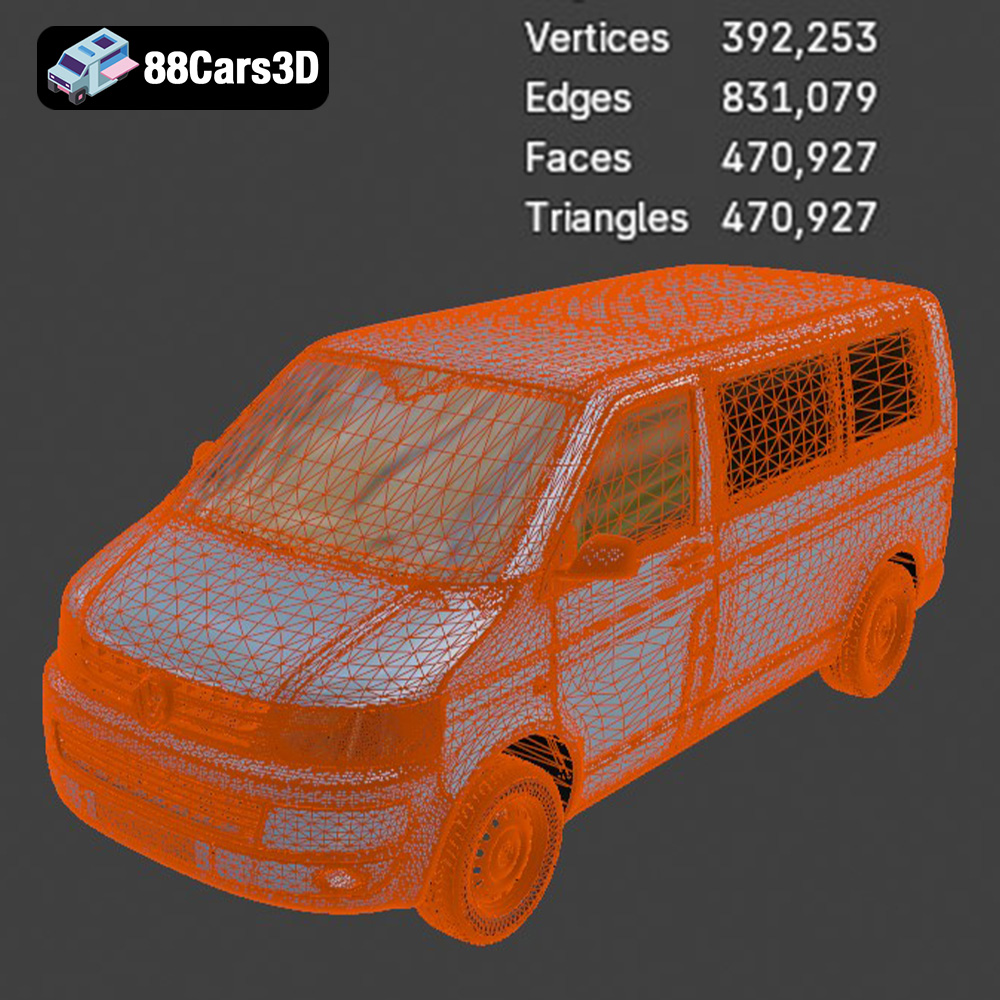
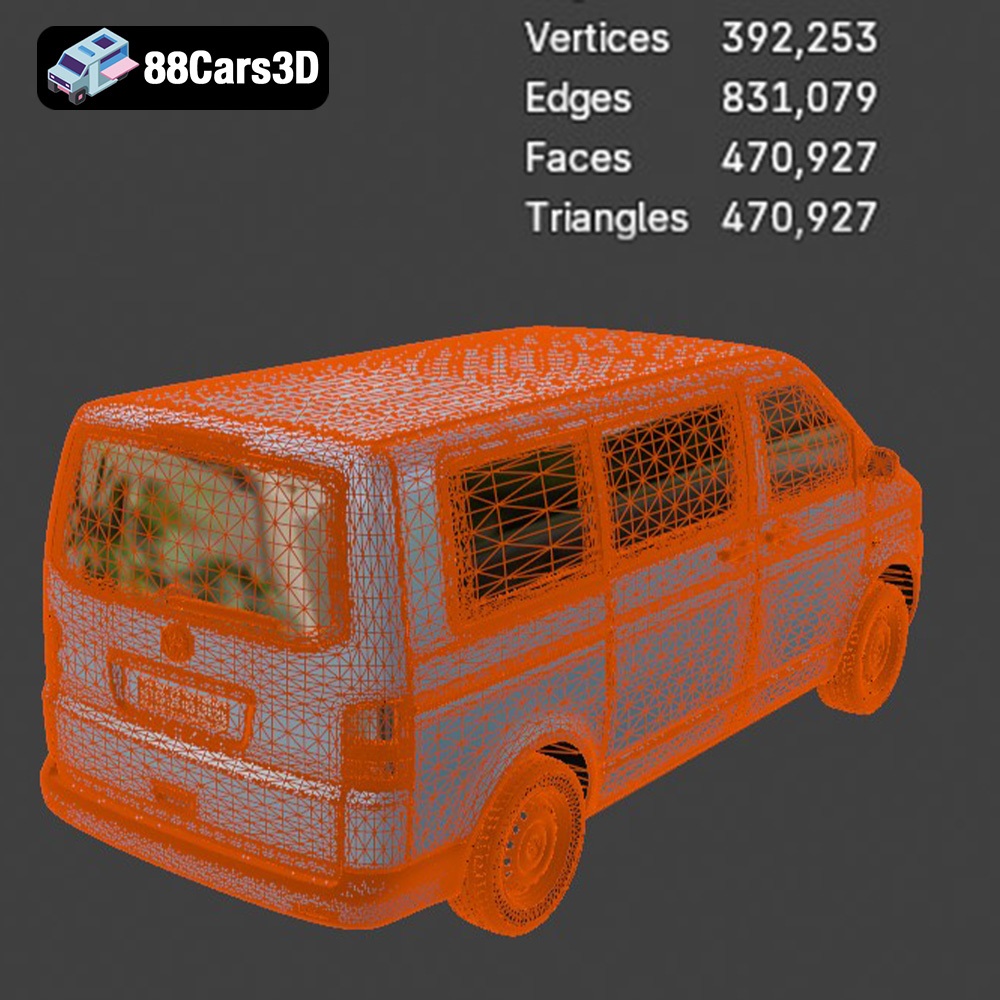
The “exceptionally clean, production-ready geometry” mentioned in the product description is a critical attribute. Good topology means the mesh is constructed primarily with quads (four-sided polygons), allowing for smooth subdivision and predictable deformation. This is crucial for both photorealistic rendering, where smooth surfaces are paramount, and for animation, where consistent mesh flow prevents undesirable pinching or stretching. An optimized poly count, achieved through efficient modeling practices, ensures the model is lightweight enough for real-time applications like game assets or AR/VR, while still retaining enough detail for close-up renders. The T5 model likely features well-planned edge loops that define key contours, enabling artists to easily adjust or enhance details without rebuilding large sections of the mesh, thereby accelerating workflow.
The realism of a 3D model largely depends on its materials and textures. The Volkswagen Transporter T5 FL 2010 3D Model boasts “realistic materials and textures applied across the body, lighting units, wheels, and interior components.” This implies a physically based rendering (PBR) workflow, where material properties like albedo (base color), roughness, metallic, and normal maps accurately simulate how light interacts with different surfaces. High-resolution textures ensure crisp details on the paintwork, the subtle wear on tires, the intricate patterns of headlights, and the various interior fabrics and plastics. For example, the precise reflections on the T5’s paint job or the refractive qualities of its glass elements are achieved through finely tuned PBR material parameters and high-quality texture maps, contributing significantly to the model’s authentic appearance.
Efficient UV mapping is foundational for applying textures accurately. Non-overlapping UVs ensure that textures don’t stretch or distort, and that different parts of the model can be textured uniquely without bleeding. For the Volkswagen Transporter T5 FL 2010 3D Model, this means that custom decals or liveries can be applied cleanly, and dirt or damage textures can be painted precisely onto specific areas. Beyond UVs, a well-organized scene hierarchy, with logically named objects and grouped components (e.g., body, wheels, interior elements), drastically improves usability. This organization allows artists to easily select specific parts, hide components for interior access, or apply animations to individual elements, ensuring that integrating and working with the model is intuitive and efficient, saving valuable production time.
The versatility and high quality of the Volkswagen Transporter T5 FL 2010 3D Model make it an invaluable asset across a spectrum of professional fields. Its robust design and multiple file formats ensure it can adapt to diverse needs, becoming a workhorse in various digital pipelines.
In architectural visualization, vehicles are essential for bringing scenes to life, establishing scale, and adding a sense of realism and daily activity. The T5, a common sight in urban and suburban landscapes, is perfect for populating renders of commercial buildings, residential developments, or logistical hubs. Its accurate representation allows architects and visualizers to seamlessly integrate it into their scenes, enhancing believability. For automotive configurators, the model can serve as the basis for a customizable experience, allowing potential buyers to explore different paint colors, wheel options, or interior trims in a real-time 3D environment. This interactive capability, often powered by .glb formats, provides an engaging preview of the product, revolutionizing the sales experience.
The film and animation industries constantly require believable vehicles for background elements, chase sequences, or character transportation. A high-quality 3D car model like the Volkswagen Transporter T5 FL 2010 can be integrated into live-action footage for visual effects, used as a hero vehicle in animated shorts, or featured in commercials where CGI is blended with real-world scenarios. Its accurate proportions and realistic material properties ensure it holds up under cinematic lighting and rendering conditions. From providing a realistic backdrop to a dramatic scene to being the focus of a product advertisement, the T5 model offers the fidelity needed for broadcast-quality output.
For applications demanding a high degree of fidelity in simulated environments, the Volkswagen Transporter T5 FL 2010 3D Model is an excellent candidate. This could include driving simulators for training commercial drivers, logistics simulations for optimizing fleet management, or emergency services training where precise vehicle interaction is crucial. The model’s clean geometry and optimized performance, especially in formats like .fbx or .unreal, make it suitable for these demanding real-time scenarios. Its functional aesthetic allows for believable interaction and immersion, contributing to effective training outcomes and realistic simulation experiences that prepare professionals for real-world challenges.
In a world saturated with digital assets, distinguishing between adequate and exceptional quality is vital for professionals. When it comes to 3D car models, the choice can significantly impact project outcomes, efficiency, and overall visual integrity. This is precisely why platforms like 88cars3d.com are indispensable resources for the creative industry, offering a curated selection of premium assets like the Volkswagen Transporter T5 FL 2010 3D Model.
The term “production-ready” isn’t just marketing jargon; it signifies a commitment to professional standards. A production-ready 3D car model is one that has been rigorously checked for clean geometry, optimized topology, accurate UV mapping, and properly configured materials. It means less time spent by the artist on fixing errors and more time on creative iteration. Models sourced from 88cars3d.com, such as the Volkswagen Transporter T5 FL 2010, arrive in a state that allows for immediate integration into complex scenes or demanding real-time engines. This inherent quality prevents workflow bottlenecks, reduces unforeseen technical challenges, and ensures a smooth journey from concept to final render or interactive experience.
Developing a high-fidelity 3D car model from scratch is a labor-intensive and expensive undertaking, requiring specialized skills in modeling, texturing, and optimization. For many projects, particularly those with tight deadlines and budgets, this is simply not feasible. Purchasing a pre-made, high-quality asset from a reputable marketplace like 88cars3d.com offers significant cost-effectiveness and invaluable time savings. The investment in a model like the Volkswagen Transporter T5 FL 2010 3D Model is quickly recouped through accelerated production schedules, reduced labor costs, and the assurance of a professional-grade outcome. It allows artists and studios to allocate their resources more efficiently, focusing on core creative tasks rather than repetitive modeling work.
88cars3d.com positions itself as a marketplace dedicated to providing “high-quality 3D car models.” This commitment translates into several key benefits for users. Firstly, the emphasis on quality means that each model is likely subjected to stringent checks, ensuring adherence to industry best practices in terms of geometry, textures, and optimization. Secondly, the comprehensive file format support, as seen with the Volkswagen Transporter T5 FL 2010, ensures unparalleled compatibility across various software and engines, empowering artists regardless of their preferred tools. Lastly, by offering a diverse range of vehicles, 88cars3d.com serves as a reliable source for specific and general-purpose automotive assets, making it a go-to platform for professionals seeking dependable and versatile 3D car models to elevate their projects.
In the demanding world of 3D visualization, game development, and interactive media, the quality of your assets is paramount. The Volkswagen Transporter T5 FL 2010 3D Model stands as a testament to what a truly professional 3D car model should be: meticulously crafted, technically robust, and supremely versatile. Its clean geometry, realistic materials, and extensive support for various file formats — from .blend and .max for rendering to .fbx and .unreal for real-time engines, and even .glb for AR/VR — ensure it integrates flawlessly into any professional pipeline.
Whether you’re crafting photorealistic automotive renders, populating a vast open-world game, or developing an interactive product configurator, this model provides the accuracy and performance required to achieve stunning results. It streamlines workflows, reduces development time, and ultimately empowers creators to focus on their artistic vision without being bogged down by technical deficiencies. For any project demanding a reliable and visually authentic commercial vehicle, the Volkswagen Transporter T5 FL 2010 3D Model is an exceptional choice.
Discover the difference that high-quality, production-ready 3D car models can make for your next project. Explore this exceptional asset and many others at 88cars3d.com, your trusted source for premium digital vehicles.
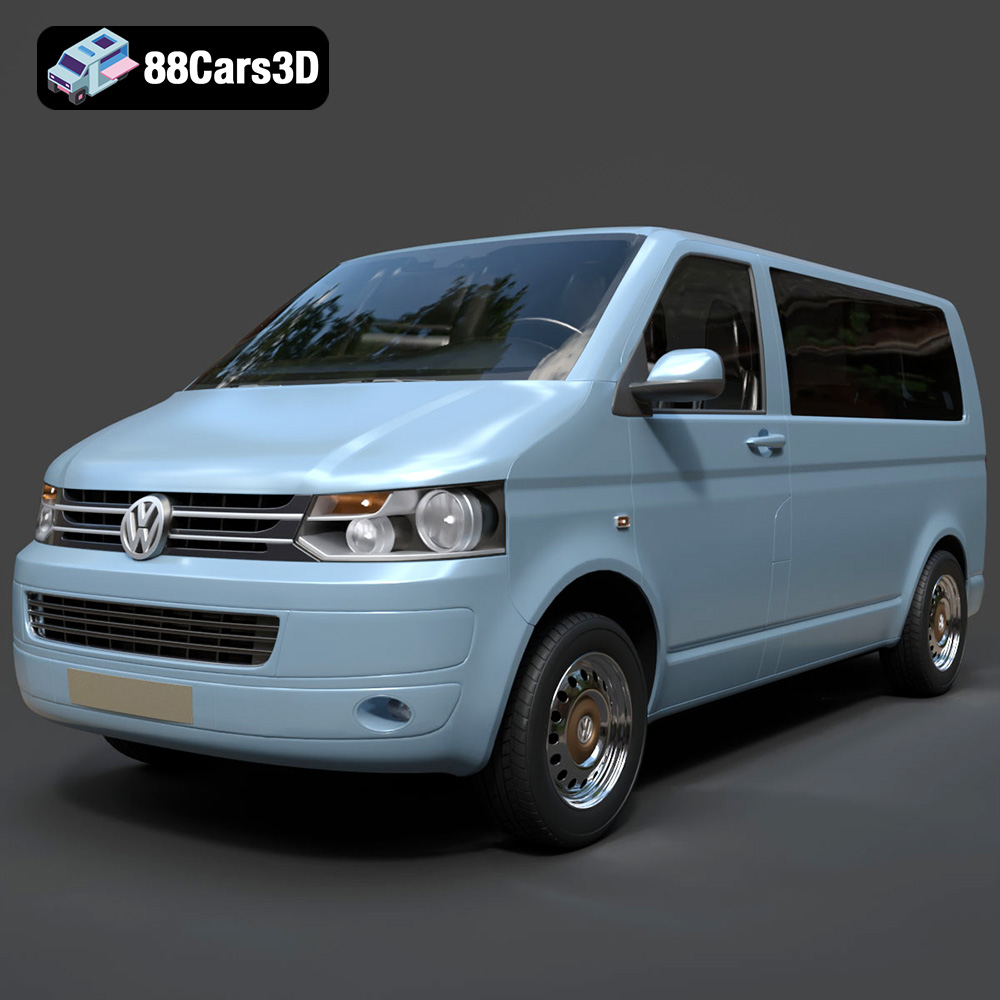
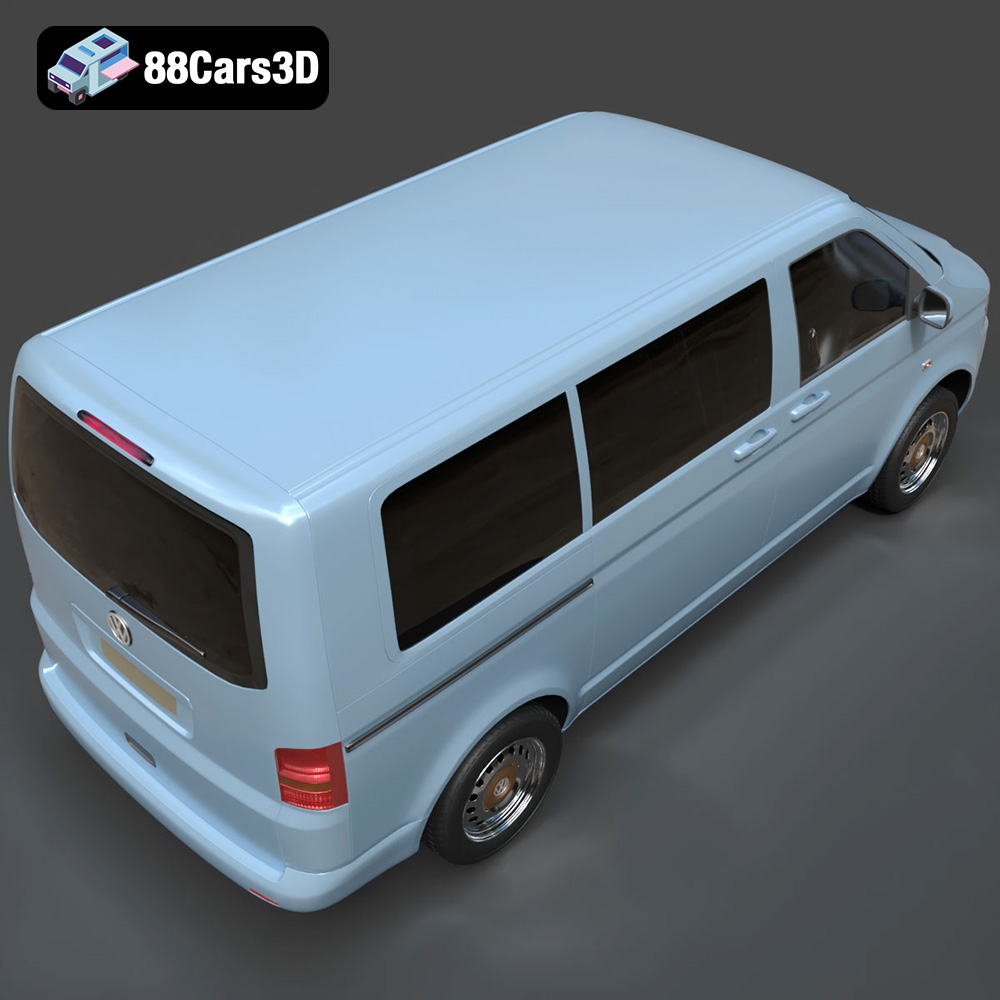
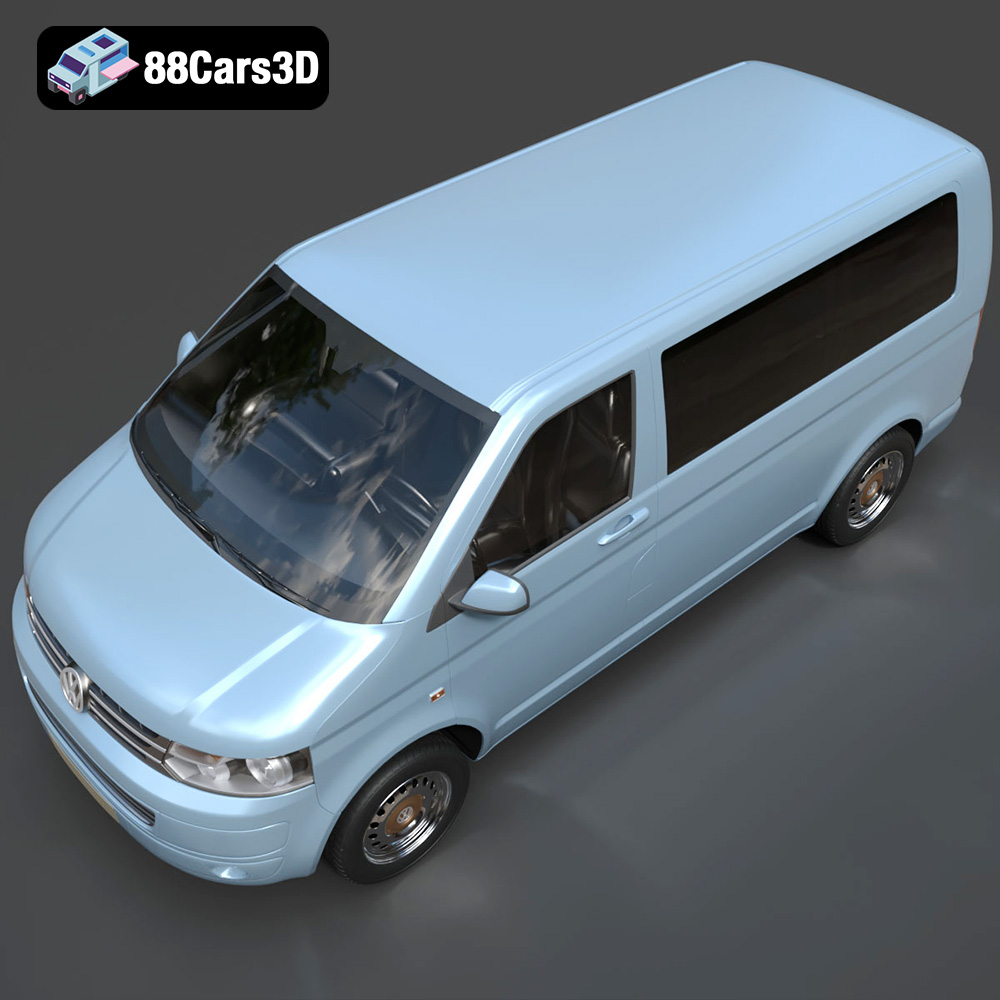
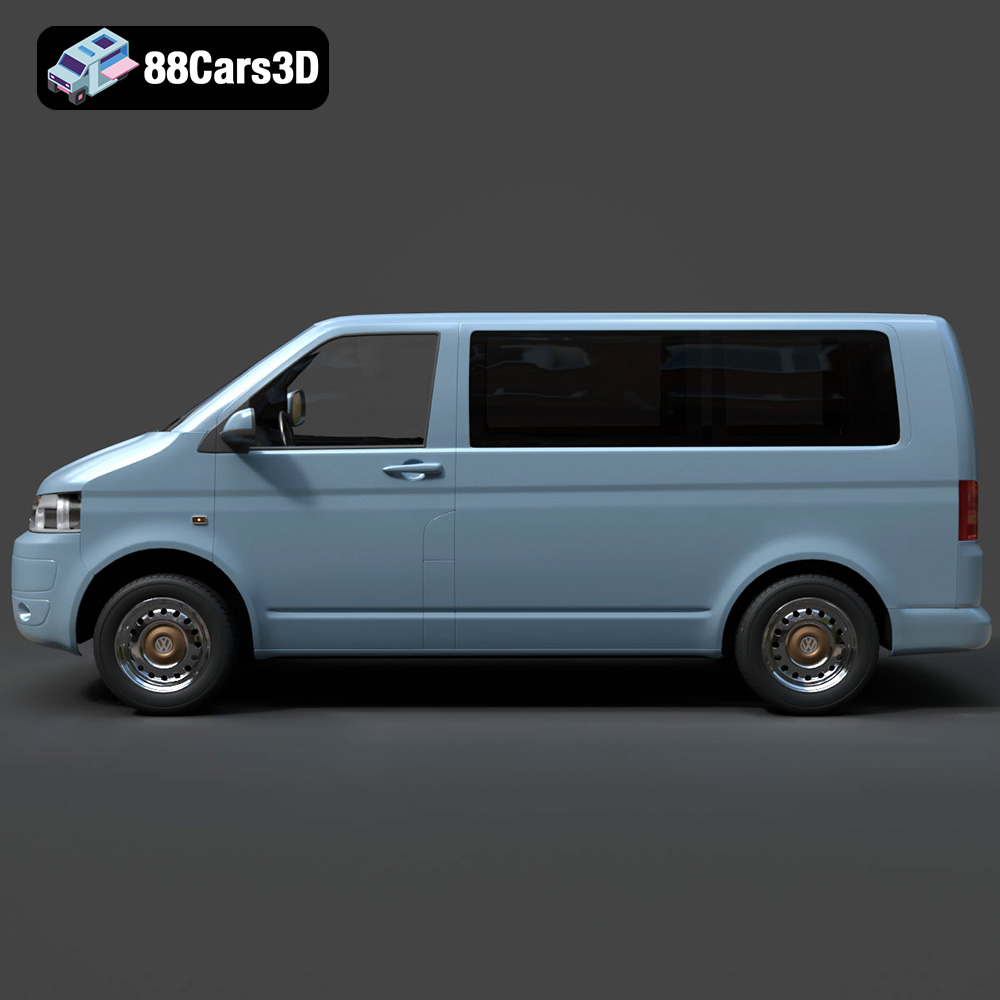
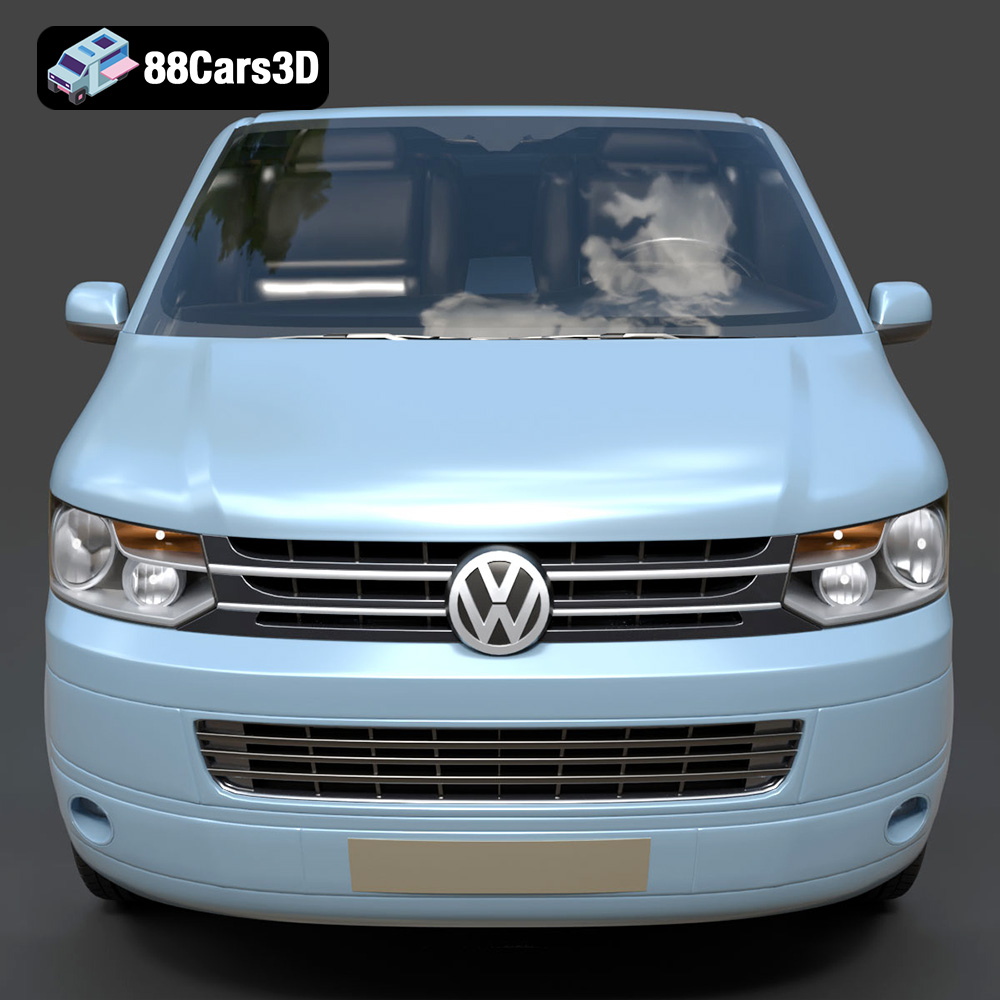
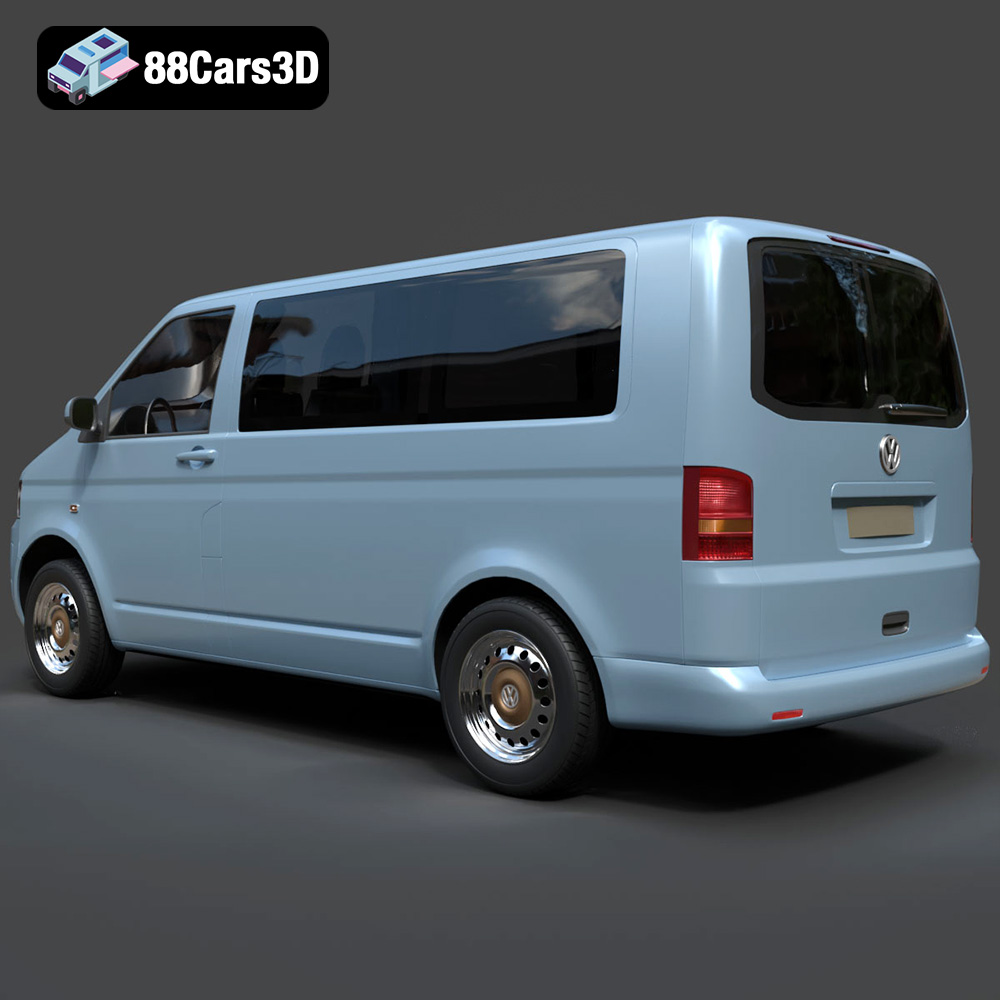
Explore the precision of the Volkswagen Transporter T5 FL 2010 3D Model. This asset provides an accurate digital representation of the versatile commercial vehicle, meticulously crafted to ensure visual fidelity for professional production pipelines. It captures the characteristic design and functional aesthetic of the T5 generation facelift.
The model boasts exceptionally clean, production-ready geometry optimized for performance across different platforms. It features realistic materials and textures applied across the body, lighting units, wheels, and interior components, guaranteeing a detailed and authentic appearance in every scene.
Perfect for integration into simulations, architectural visualizations, automotive configurators, and immersive game environments. The included file set offers comprehensive compatibility, allowing immediate deployment into both real-time engines and advanced rendering software.
$22.99