

Beyond Nostalgia: The Technical Excellence of the GMC Vandura G-1500 1983 3D Model in Modern Digital Production
In the vast landscape of digital content creation, the appeal of classic vehicles transcends mere aesthetics; they offer a unique blend of character, historical context, and technical challenges for 3D artists and developers. From period-accurate cinematic scenes to immersive game environments and detailed architectural visualizations, a meticulously crafted vintage vehicle can elevate a project from good to truly exceptional. Today, we’re diving deep into an iconic piece of American automotive history, digitally resurrected with professional precision: the GMC Vandura G-1500 1983 3D Model.
This isn’t just a nostalgic nod to the 80s; it’s a testament to the intricate art and science of 3D modeling, optimized for today’s demanding workflows. Whether you’re a game developer seeking authentic vehicular assets, an architectural renderer needing context for an urban scene, or a VR/AR designer building immersive experiences, understanding the technical underpinnings of such a model is crucial. The GMC Vandura G-1500 1983 3D Model offers not just an authentic visual representation, but a robust, production-ready asset designed for versatility and performance across various professional applications, a prime example of the quality found at 88cars3d.com.
Understanding 3D Model File Formats
The choice of file format is often as critical as the model itself, dictating compatibility, feature retention, and overall workflow efficiency. For a versatile asset like the GMC Vandura G-1500 1983 3D Model, its availability in multiple professional formats ensures seamless integration into diverse pipelines. Understanding each format’s strengths and typical use cases is paramount for any serious 3D professional.
.blend – The Native Blender Ecosystem
The .blend format is Blender’s native file type, offering a comprehensive and fully editable scene. When you acquire the GMC Vandura as a .blend file, you’re getting more than just geometry; you’re receiving the entire Blender project. This typically includes the mesh data, all materials with their node setups, textures packed or linked, lighting configurations, camera setups, and even any animation data or modifiers applied during its creation. This format is ideal for artists who primarily work within Blender, allowing for direct access to every parameter and non-destructive editing. It ensures that the original artistic intent and technical setups are preserved, offering maximum flexibility for customization, re-texturing, or further refinement of the model.
.fbx – The Industry Standard for Interoperability
As Autodesk’s proprietary format, .fbx (Filmbox) has become an industry workhorse for exchanging 3D data between different applications and, critically, for game engine integration. It supports not only mesh and material definitions but also complex scene data like skeletal animations, blend shapes, cameras, and lighting. For assets like the GMC Vandura, the .fbx version is often meticulously prepared for game engines like Unreal and Unity, ensuring optimized mesh data, proper UV layouts, and material assignments that translate cleanly. It’s the go-to choice for transferring models with intricate hierarchies and animation potential, making it indispensable for real-time pipelines and cinematic projects requiring asset portability.
.obj – The Universal Mesh Exchange
The .obj (Wavefront Object) format is a venerable and highly compatible format, often considered the “universal” choice for simple mesh exchange. It stores geometry (vertices, faces, UVs, normals) and can reference external .mtl (material library) files for basic material properties and texture maps. While it lacks support for advanced features like animation or scene hierarchy, its simplicity ensures near-universal compatibility across virtually all 3D software packages. For the GMC Vandura, an .obj file provides a clean, raw mesh that can be easily imported into any application for re-texturing, re-shading, or use as a base mesh, making it a reliable fallback for cross-software compatibility.
.glb – Optimized for AR, VR, and Web
.glb (GLB, the binary version of glTF) is an increasingly popular format, especially for modern applications in Augmented Reality (AR), Virtual Reality (VR), and web-based 3D viewing. It’s designed for efficient transmission and loading of 3D scenes and models, encapsulating geometry, materials (PBR-ready), textures, animations, and even scene graphs into a single, compact file. Its optimization for real-time rendering makes it perfect for interactive web viewers or deploying the GMC Vandura into mobile AR experiences or lightweight VR simulations, offering excellent visual quality with minimal overhead.
.stl – The Prototyping Workhorse
The .stl (Stereolithography) format is almost exclusively associated with 3D printing and rapid prototyping. It describes only the surface geometry of a 3D object using a collection of interconnected triangles. It does not carry color, texture, or material information. When considering the GMC Vandura G-1500 in .stl, it means the model’s physical dimensions and intricate forms are suitable for generating a tangible replica, whether for architectural models, scale prototypes, or collectible figures. This format is crucial for bridging the gap between digital design and physical fabrication.
.ply – Precision Mesh for Analysis
The .ply (Polygon File Format, or Stanford Triangle Format) is another format for storing 3D data, particularly useful for scanned data, point clouds, and precision meshes. It can store various properties beyond just geometry, such as color, transparency, normals, texture coordinates, and data confidence values per vertex or face. While less common for everyday asset exchange, its ability to store detailed polygon information makes it valuable for scientific visualization, CAD applications, or when a highly precise, unfiltered mesh representation of the GMC Vandura is required for analysis or specialized processing.
.unreal – Engine-Ready for Epic Workflows
The inclusion of a dedicated .unreal file signifies an asset specifically packaged and optimized for direct import and use within Unreal Engine. This often implies that the model has undergone specific preparation, such as correct scale, optimized LODs (Levels of Detail), collision meshes, and perhaps even basic material setups configured to Unreal’s PBR workflow. For the GMC Vandura G-1500 1983, this means reduced setup time and a smoother integration into complex Unreal Engine projects, reflecting a professional standard of asset delivery.
.max – The 3ds Max Powerhouse
Finally, the .max format is the native file type for Autodesk 3ds Max, a long-standing industry leader for architectural visualization, animation, and high-fidelity rendering. Similar to .blend, a .max file encapsulates the entire scene, including geometry, materials (V-Ray, Corona, or Standard Max materials), lighting, cameras, modifiers, and animation data. For professionals using 3ds Max for automotive rendering or detailed scene creation, the .max version of the GMC Vandura offers full editability and preserves all the detailed setups used by the original artists, ensuring the highest fidelity for production-level renders and animations.
The provision of the GMC Vandura G-1500 1983 3D Model in this comprehensive array of formats from 88cars3d.com underscores its utility and flexibility, catering to virtually every professional workflow in 3D content creation.
The Craft of Digital Preservation: Modeling the GMC Vandura G-1500 1983
Recreating a classic vehicle in 3D is a nuanced process that demands not only artistic skill but also a deep technical understanding of automotive design and digital modeling principles. The GMC Vandura G-1500 1983 3D Model stands as a prime example of this intricate balance, meticulously crafted to capture the essence of its real-world counterpart.
Capturing Authentic Detail and Proportions
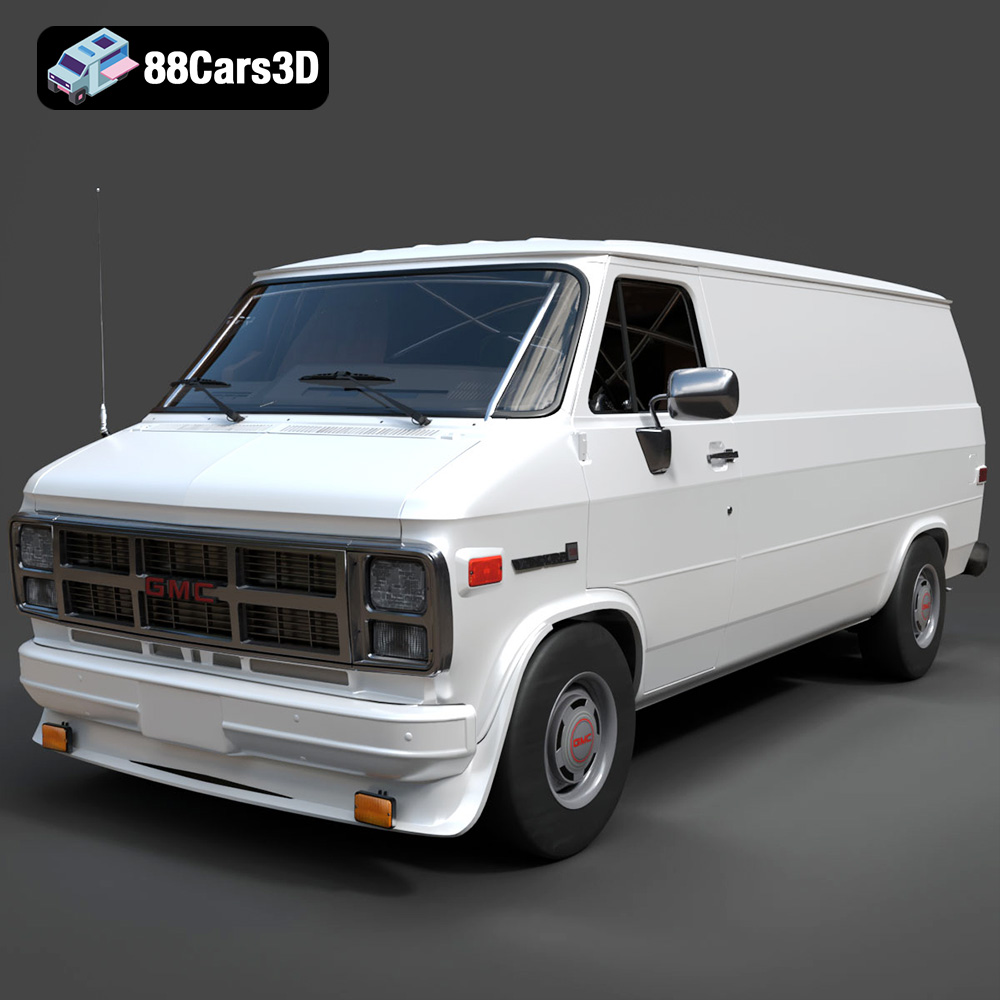
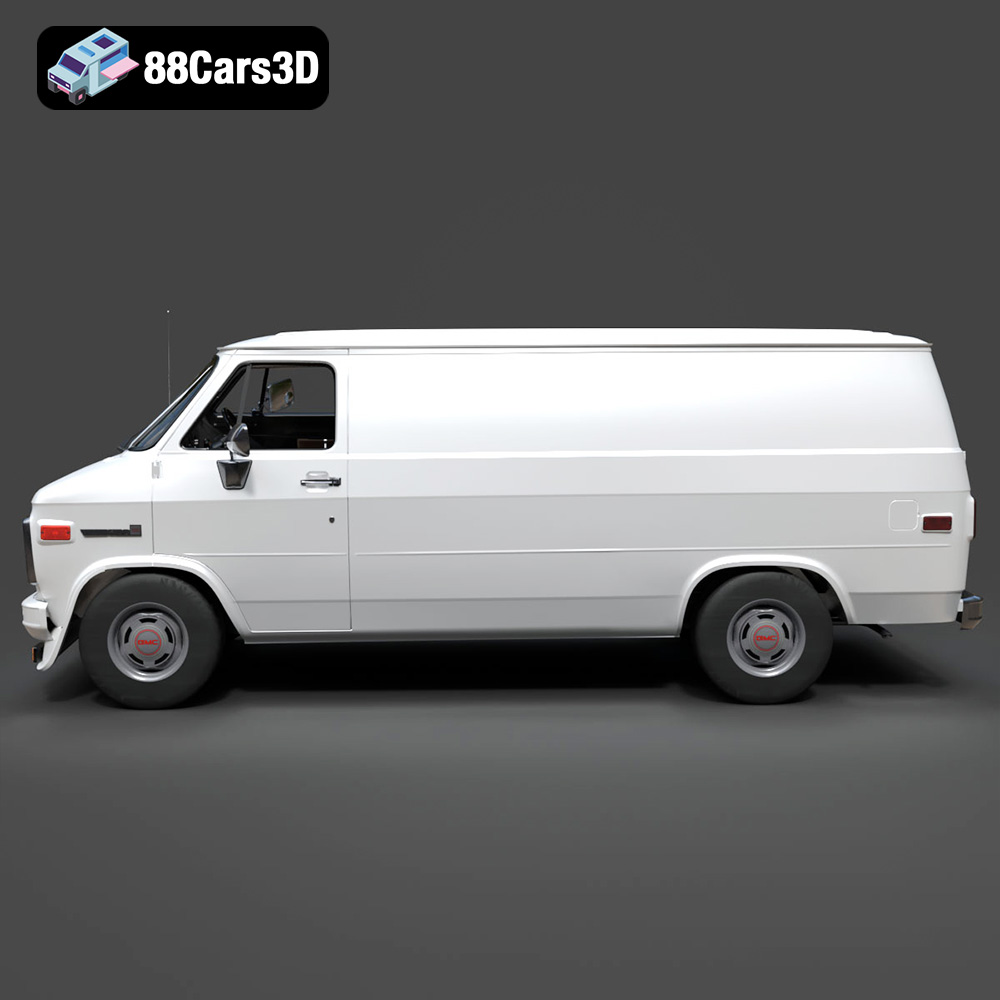
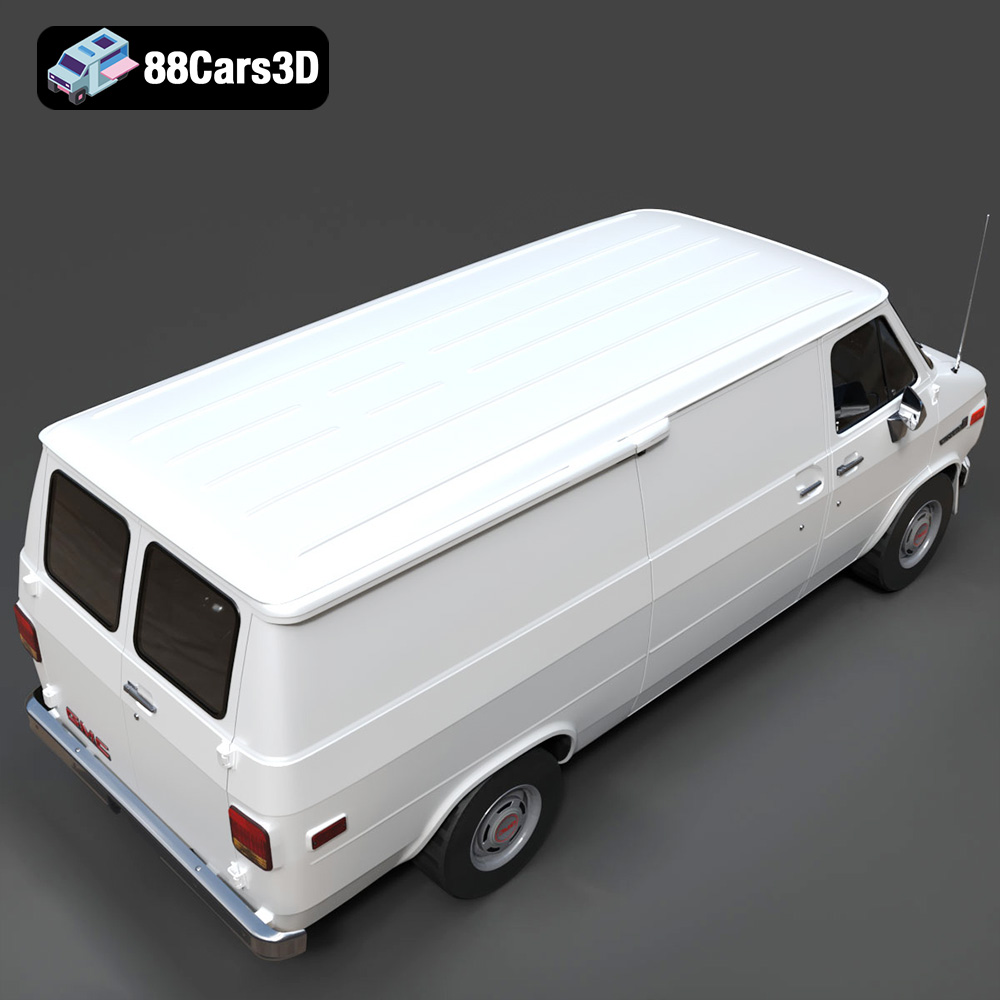
The foundation of any high-quality 3D car model lies in its accuracy. For the GMC Vandura, this meant a rigorous process of reference gathering, utilizing blueprints, historical photographs, and real-world measurements to ensure every dimension and curve was faithfully replicated. The signature boxy bodywork of the Vandura, while seemingly simple, requires precise attention to panel gaps, curvature transitions, and the subtle nuances that define its robust character. Every exterior detail, from the distinctive grille and headlights to the door handles, mirrors, and even the vehicle badging, has been carefully modeled. This level of granular detail is critical for close-up shots and ensuring the model holds up under intense scrutiny in high-resolution renders.
Interior Fidelity and Functional Realism
While the exterior catches the initial eye, a fully detailed interior is what truly sets a professional-grade automotive model apart. The GMC Vandura G-1500 1983 3D Model boasts a complete interior, vital for applications like virtual tours, driving simulations, and cinematic sequences where a camera might pass through the cabin or focus on internal elements. This includes the dashboard layout, steering wheel, seats, door panels, and internal fittings. Each component is modeled with an appropriate level of detail, taking into account the vehicle’s era and utilitarian nature. The textures applied to these interior elements – such as fabric for seats, plastic for the dashboard, and chrome for accents – further enhance the sense of realism, creating an immersive experience for the user.
Topology Optimization for Performance
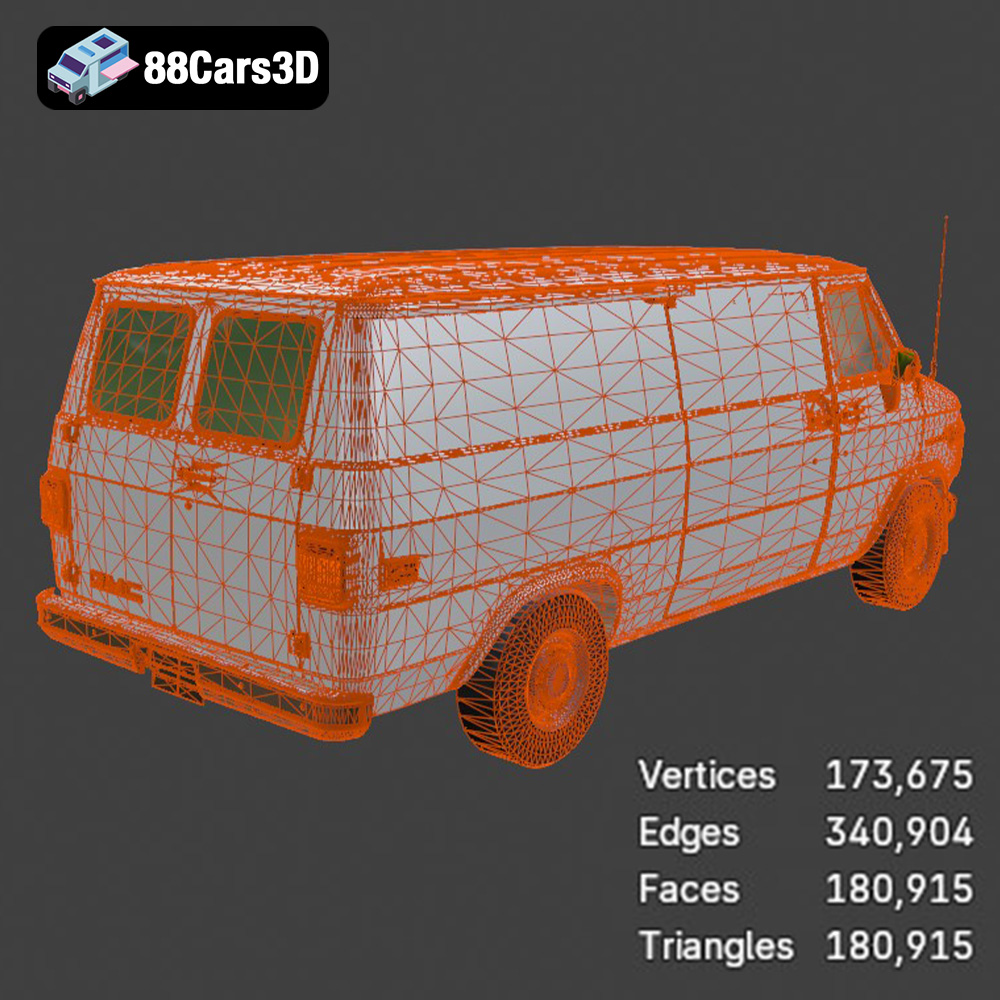
Beyond visual accuracy, the underlying mesh topology is a critical technical consideration. The GMC Vandura G-1500 1983 3D Model is built with “highly optimized mesh topology,” meaning the polygon count is efficient, and the edge flow is clean and quad-based. This optimization is crucial for several reasons: it ensures predictable deformation during animation (e.g., opening doors or turning wheels), facilitates clean UV unwrapping for texturing, and most importantly, contributes to superior performance in real-time engines like Unreal and Unity. A clean mesh reduces rendering overhead, allowing for smoother frame rates and a more responsive interactive experience, which is paramount for game development and AR/VR applications.
Bringing Automotive Renders to Life: Materials, Textures, and Lighting
A beautifully modeled vehicle is only half the equation; it’s the realistic application of materials, high-fidelity textures, and thoughtful lighting that truly brings it to life in a digital scene. The GMC Vandura G-1500 1983 3D Model excels in this domain, ready to produce stunning visual results straight out of the box.
PBR Workflows and Realistic Materials
The backbone of modern photorealistic rendering is Physically Based Rendering (PBR). This methodology simulates how light interacts with surfaces in the real world, producing highly accurate and consistent results across different lighting conditions and rendering engines. The GMC Vandura G-1500 1983 3D Model features “realistic material definitions and texturing” built with PBR principles in mind. This means the model comes with a suite of texture maps – including Base Color (Albedo), Metallic, Roughness, Normal, and potentially Ambient Occlusion maps – for various components like the vehicle body, glass, tires, chrome, and interior fabrics. These maps accurately describe surface properties, from the specular reflections on glossy paint to the subtle imperfections on worn rubber, resulting in visually authentic renders.
Advanced Shading and Texturing Techniques
Achieving true realism goes beyond basic PBR maps. The textures for the Vandura model are likely created with meticulous attention to detail, employing techniques such as seamless UV mapping to avoid distortion, and appropriate texel density to ensure sharp details even in close-up shots. Materials are often layered and blended to simulate complex surface characteristics, such as paint flakes, subtle rust, or accumulated dirt in crevices, even if the base model is pristine. This careful texturing ensures the model performs optimally in various rendering contexts, whether it’s a pristine showroom look or a rugged, weathered appearance in an urban environment. This level of detail ensures the asset is “production-ready” for demanding cinematic and visualization tasks.
Lighting Setups for Impactful Renders
While the model itself is a masterpiece, its true potential is unleashed through expert lighting. The robust materials of the GMC Vandura G-1500 1983 3D Model are designed to react realistically to diverse lighting scenarios. Whether it’s a dramatic studio lighting setup emphasizing its rugged contours, an outdoor HDRI (High Dynamic Range Image) environment simulating a sunny 1980s street, or dynamic game lighting within a real-time engine, the model’s PBR materials will respond predictably and beautifully. Artists can experiment with various light sources, bounce light, and global illumination settings to evoke different moods and highlights, making the model a versatile canvas for visual storytelling.
Integrating the GMC Vandura G-1500 1983 into Professional Workflows
The true value of a premium 3D asset lies in its seamless integration into diverse professional pipelines. The GMC Vandura G-1500 1983 3D Model is designed with versatility at its core, making it an invaluable tool across various industries.
Game Development (Unreal Engine & Unity)
For game developers, performance and visual fidelity must go hand-in-hand. The GMC Vandura model is “optimized for performance in engines like Unreal and Unity,” addressing the critical needs of real-time applications. This optimization typically includes:
- Efficient Poly Count: A balanced polygon count ensures visual detail without bogging down the game engine.
- LODs (Levels of Detail): Multiple versions of the model with decreasing polygon counts are often provided or easily generated, allowing the engine to dynamically swap models based on distance from the camera, optimizing rendering performance.
- Collision Meshes: Simplified meshes are created specifically for physics calculations, ensuring accurate vehicle interactions within the game world without using the high-detail visual mesh.
- Game-Ready Materials: PBR materials are set up to translate directly into engine-specific material systems, reducing setup time.
The inclusion of .fbx and .unreal file formats makes integration into these engines remarkably straightforward, saving developers countless hours of preparation and ensuring a high-quality “game asset” from 88cars3d.com.
Architectural and Cinematic Visualization
In architectural visualization (ArchViz), vehicles often serve as crucial context elements, breathing life into static renders of buildings and urban landscapes. The GMC Vandura G-1500 1983 can instantly transport an ArchViz scene back to the 80s or provide a utilitarian aesthetic to a modern industrial project. For cinematic productions, especially period pieces or projects requiring authentic street scenes, sourcing a physically accurate vintage vehicle can be prohibitively expensive and logistically challenging. A high-fidelity 3D model like the Vandura offers an ideal solution, providing “production-ready asset suitable for cinematic rendering” that can be duplicated, customized, and animated to fit any narrative requirement. Its detailed exterior and interior make it perfect for both background dressing and hero shots.
AR/VR and Real-time Applications
The burgeoning fields of Augmented Reality (AR) and Virtual Reality (VR) demand models that are not only visually impressive but also highly efficient to render in real-time. The GMC Vandura G-1500 1983 3D Model, particularly in its optimized .glb format, is well-suited for these demanding environments. Its optimized mesh topology and PBR textures ensure a smooth, immersive experience in VR simulations or interactive AR experiences where users can explore the vehicle in detail. Whether it’s a virtual car showroom, an interactive educational module about 80s vehicles, or a digital exhibit, this model provides the visual fidelity and performance required for cutting-edge “AR/VR” applications.
Case Studies: The Impact of High-Quality 3D Car Models
The theoretical benefits of a professionally made 3D car model are best illustrated through its practical applications. The GMC Vandura G-1500 1983 3D Model, available at 88cars3d.com, exemplifies how a single asset can catalyze diverse creative projects.
Recreating Historical Context
Imagine a historical drama set in a bustling 1980s American city. Achieving authenticity requires more than just costumes and set dressing; it demands period-accurate vehicles. Sourcing, restoring, and maintaining real vintage vans for a film or TV production can be an enormous logistical and financial burden. This is where a 3D model like the GMC Vandura G-1500 1983 becomes indispensable. CGI artists can easily populate digital backgrounds, integrate it into live-action plates, or even feature it as a hero vehicle, perfectly matching the era. The ability to control lighting, damage, and paint schemes digitally offers unparalleled flexibility, ensuring historical accuracy without compromise. Directors and production designers rely on such assets to build believable worlds that resonate with audiences.
Enhancing Interactive Experiences
Consider the immersive world of an open-world driving game or a detailed urban simulator. The quality and variety of vehicles directly impact player immersion. Using a high-quality, optimized asset like the Vandura allows developers to add a unique flavor to their virtual streets. Players might encounter it as a background vehicle, a mission objective, or even a customizable vehicle they can drive. Its optimized mesh ensures smooth performance even when dozens of cars are on screen, while its detailed interior enhances the first-person driving experience. For training simulations, such as police or delivery driver training, the accurate dimensions and functional realism of the Vandura can provide a highly effective virtual training environment, simulating real-world scenarios with a vehicle that truly feels authentic.
Product Prototyping and Customization
While primarily a visual asset, the detailed and accurate geometry of the GMC Vandura G-1500 1983 3D Model also lends itself to more niche applications, such as product prototyping or custom modification. For designers creating aftermarket accessories or interior modifications for classic vans, the 3D model can serve as a precise base for digital mock-ups and fitment tests. Furthermore, with its .stl format included, enthusiasts and manufacturers alike can leverage the model for 3D printing scale replicas, custom parts, or even as a reference for physical fabrication. This demonstrates the profound utility of a well-engineered 3D model, extending its value far beyond traditional rendering and animation.
Conclusion
The journey through the technical specifications and creative applications of the GMC Vandura G-1500 1983 3D Model reveals more than just a digital replica; it unveils a meticulously engineered asset designed to meet the rigorous demands of modern 3D production. From its “highly optimized mesh topology” and “realistic material definitions” to its availability in a comprehensive array of industry-standard file formats – .blend, .fbx, .obj, .glb, .stl, .ply, .unreal, and .max – this model is a testament to professional-grade digital craftsmanship.
Whether your project requires the nostalgic charm of an 80s utility van for automotive rendering, a robust vehicle for game development, or a detailed prop for AR/VR experiences, the Vandura delivers on all fronts. It exemplifies the blend of artistic accuracy and technical prowess that is essential for success in today’s fast-paced digital landscape. For professionals seeking premium 3D car models that stand out for their quality, versatility, and production-readiness, the GMC Vandura G-1500 1983 3D Model is an exceptional choice. Explore this model and many others at 88cars3d.com, your trusted source for high-quality 3D assets.
Featured 3D Model
GMC Vandura G-1500 1983 3D Model
Bring authentic 1980s utility and nostalgia to your projects with the GMC Vandura G-1500 1983 3D Model. This meticulously recreated classic American van captures the robust design and iconic silhouette of the original vehicle, perfect for period pieces, urban simulations, and retro-themed visualizations.
The model is built with professional standards in mind, ensuring clean, optimized geometry and accurate scaling. Every exterior detail, from the signature boxy bodywork to the vehicle badging and lighting elements, has been carefully modeled. The interior is also fully detailed, providing complete realism for close-up shots and simulation environments.
$19.99
Product Image Gallery



Related Tags
.1983
.arvr
.blend
.car3dmodel
.classicvan
.fbx
.g1500
.gameasset
.glb
.gmc
.max
.obj
.ply
.rendering
.simulation
.stl
.unreal
.utilityvehicle
.van
.vandura
