Get 20% OFF All Premium 3D & STL Models!

The world of 3D visualization is a fascinating intersection of art and engineering, particularly when it comes to automotive design. From breathtaking cinematic renders to hyper-realistic driving simulations, the demand for high-quality 3D car models is constantly escalating. Professionals across various industries – game development, architectural visualization, advertising, and product design – rely on meticulously crafted digital assets to bring their visions to life. These aren’t just pretty pictures; they are complex digital blueprints, engineered for performance, versatility, and visual fidelity.
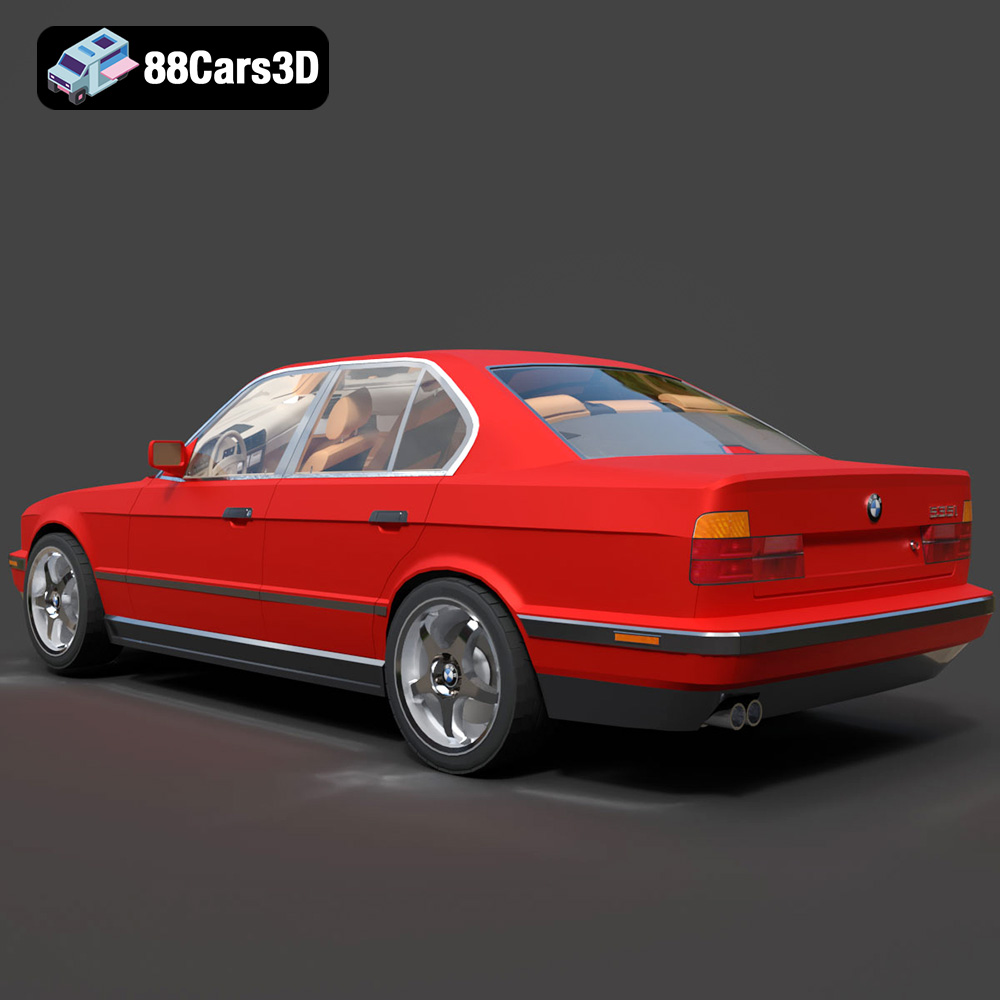
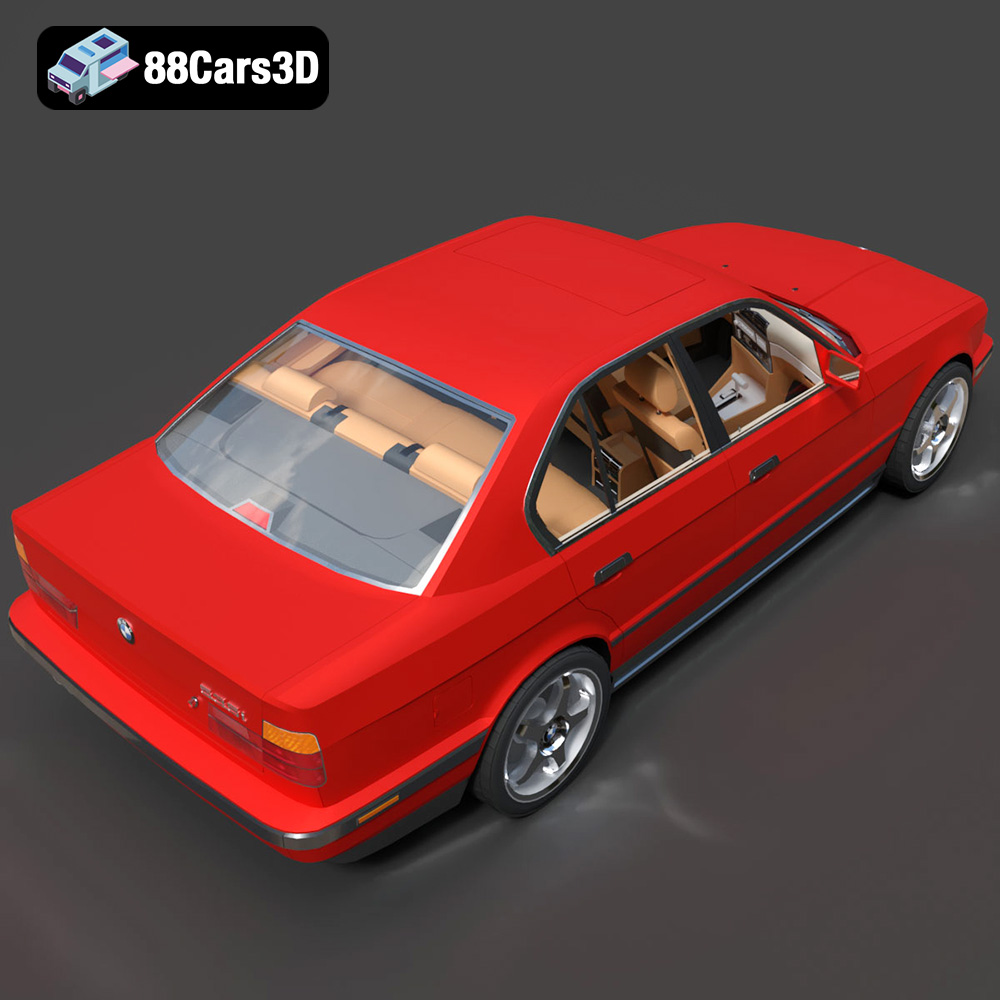
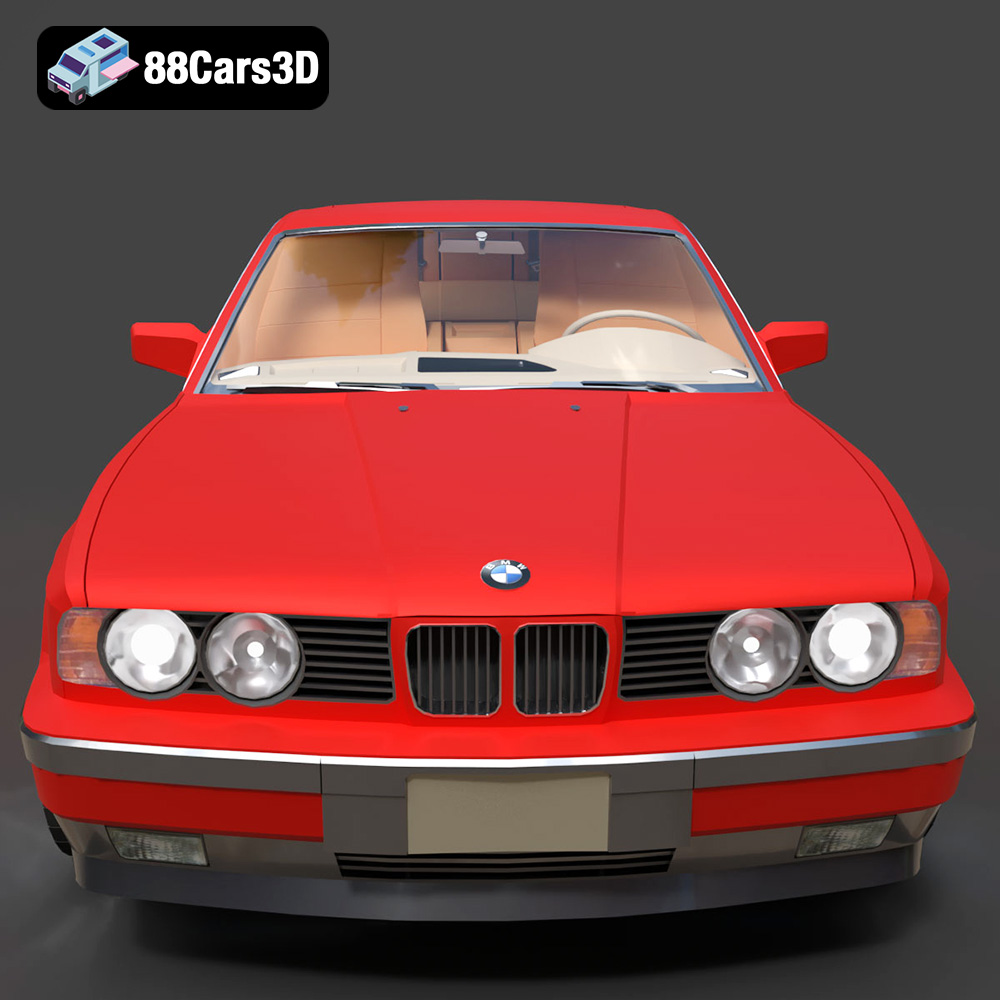
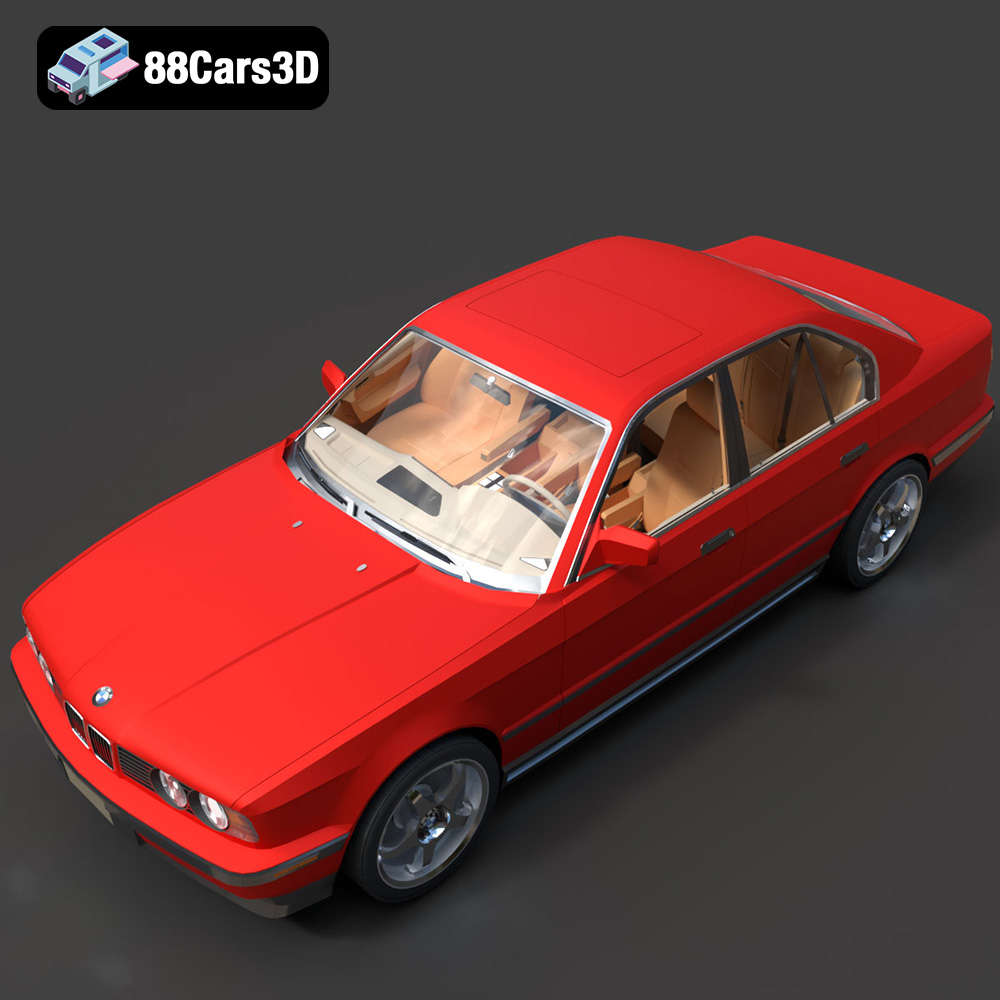
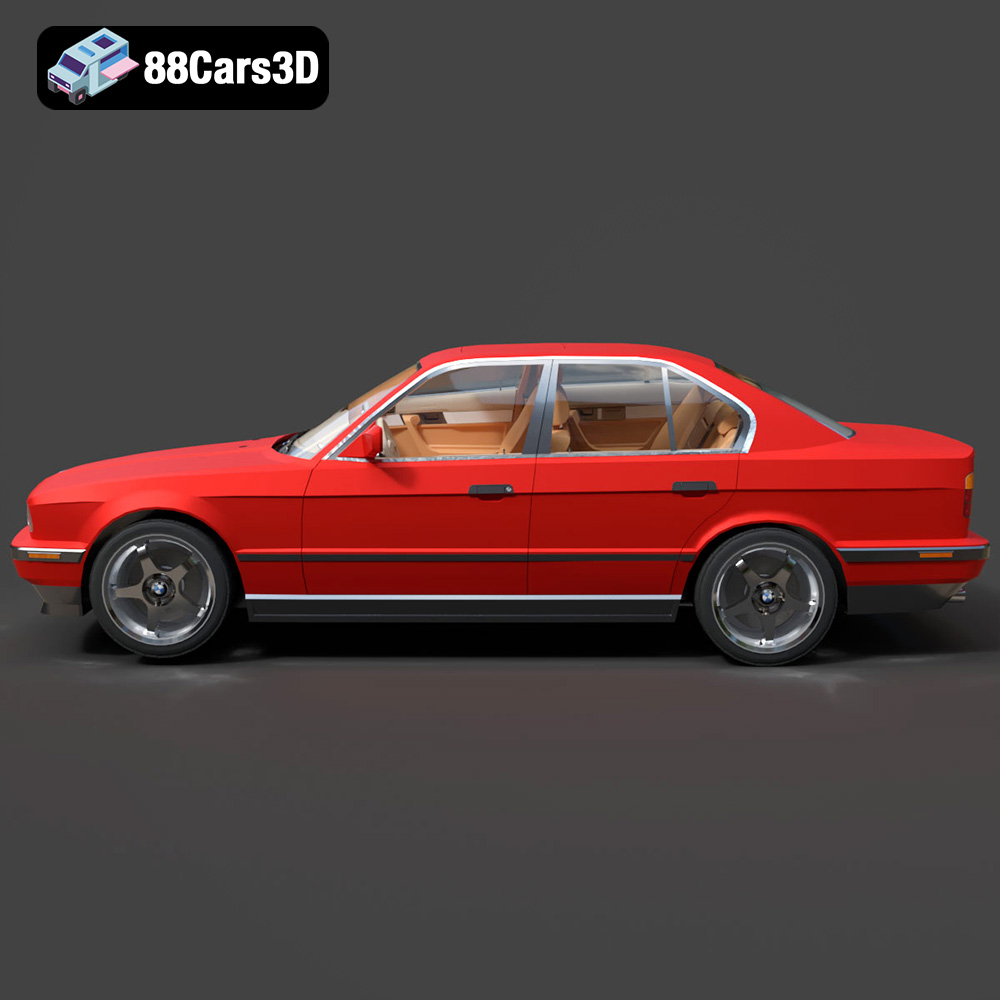
At the heart of many such professional endeavors lies the need for assets that marry historical significance with modern technical precision. Consider, for instance, a timeless classic like the BMW 5 Series E34-535i. This iconic executive sedan, a testament to BMW’s engineering prowess from a pivotal era, holds a special place in automotive history. Recreating such a vehicle in 3D demands an extraordinary level of detail and accuracy. The BMW 5 E34-535i 3D Model available on 88cars3d.com stands as a prime example of this commitment. It’s a comprehensive asset, built with clean geometry and balanced detailing, ready to integrate seamlessly into high-fidelity rendering projects, realistic animations, and immersive game environments. This model isn’t just an object; it’s a gateway to recreating an era, enhancing a scene, or building an experience with authenticity.
When working with 3D models, especially complex automotive designs, understanding the various file formats is paramount. Each format serves a specific purpose, offering unique advantages in terms of compatibility, features, and optimization for different applications. Selecting the correct format can significantly streamline your workflow, preserve data integrity, and ensure your 3D car models perform optimally across diverse platforms and software.
The .blend format is the native file type for Blender, a powerful and widely-used open-source 3D creation suite. A .blend file is much more than just a mesh; it’s a complete scene package. This includes the model’s geometry, materials, textures, lighting setups, camera positions, animation data, physics simulations, and even the user interface layout. For the BMW 5 E34-535i 3D Model, a .blend file offers maximum flexibility if Blender is your primary software. It allows for immediate editing of every aspect, from adjusting the vehicle’s paint shader to fine-tuning internal components or setting up complex rigging for animation.
.fbx (Filmbox) is arguably the most common and robust interchange format in the 3D industry, especially prevalent in game development. Developed by Autodesk, FBX files can store a wide range of 3D data, including models, materials (with basic properties), textures, animations, skinning, and camera/light information. Its strength lies in its ability to transfer data between different 3D applications like 3ds Max, Maya, Blender, and directly into game engines such as Unreal Engine and Unity. When downloading a 3D car model, an .fbx file is often the go-to for its broad compatibility and ability to retain complex scene data, making it ideal for real-time pipelines where animation and hierarchy are critical.
The .obj (Wavefront OBJ) format is a venerable and highly universal 3D file format. It primarily stores geometric data – vertices, normals, UV coordinates, and faces – along with references to external material files (.mtl). While it doesn’t store animation or advanced scene data, its simplicity and widespread support make it an excellent choice for cross-software compatibility. Nearly every 3D modeling and rendering application can import and export .obj files. For users who need to import the BMW 5 E34-535i into older software or less common applications, or simply need the raw mesh data, .obj is a reliable fallback.
.glb (GL Transmission Format Binary) is a relatively newer format that’s rapidly gaining traction, particularly for augmented reality (AR), virtual reality (VR), and web-based 3D applications. It’s a binary version of the glTF format, designed for efficient transmission and loading of 3D scenes and models. A key advantage of .glb is that it embeds all assets (geometry, materials, textures, animations) into a single file, making it incredibly portable and easy to share. Its optimization for real-time rendering makes it perfect for interactive web viewers or AR experiences where the BMW E34-535i model could be placed in a real-world environment via a smartphone.
.stl (STereoLithography) is the de facto standard file format for 3D printing. Unlike other formats, .stl only describes the surface geometry of a 3D object using a collection of interconnected triangles, without color, texture, or material information. While this means it’s not suitable for rendering, it is precisely what 3D printers need to understand the shape of an object to print it layer by layer. If your goal is to create a physical scale model of the BMW 5 E34-535i, converting the digital asset to .stl is the necessary step before sending it to a 3D printer.
The .ply (Polygon File Format or Stanford Triangle Format) is another format primarily used for storing 3D scanner data and meshes. It can store a wider range of properties than .obj or .stl, including color, transparency, texture coordinates, and even properties like confidence and normal vectors for each vertex. It’s often favored in academic and research settings for its precision and ability to handle point clouds and complex mesh data, making it useful for CAD, engineering analysis, or precise reverse-engineering workflows where the BMW E34-535i’s exact physical properties might be under scrutiny.
While not a universal file extension in the same way .fbx or .obj are, an .unreal file (or more accurately, a specific asset structure pre-configured for Unreal Engine) signifies that the model has been specifically prepared and optimized for Epic Games’ powerful real-time engine. This often means the model is already imported into an Unreal project, with materials set up using Unreal’s physically-based rendering (PBR) system, collision meshes generated, and level of detail (LOD) assets configured. For game developers or real-time visualization specialists, an “Unreal-ready” BMW 5 E34-535i 3D Model significantly reduces setup time and ensures optimal performance directly within the engine.
The .max format is the native file type for Autodesk 3ds Max, a leading software for 3D modeling, animation, and rendering, particularly strong in architectural visualization and product design. A .max file, similar to a .blend file, contains the complete scene data, including all objects, modifiers, materials, textures, lights, cameras, animation tracks, and render settings. For artists and studios whose pipeline is centered around 3ds Max, having the BMW 5 E34-535i 3D Model in .max format provides the ultimate level of control and editability, allowing for complex scene assembly, advanced material tweaking, and high-quality V-Ray or Corona renders.
Creating a truly high-fidelity 3D car model, such as the BMW 5 E34-535i, is a multi-faceted process that combines artistic skill with stringent technical requirements. It’s a delicate balance between capturing aesthetic essence and ensuring functional utility across diverse applications.
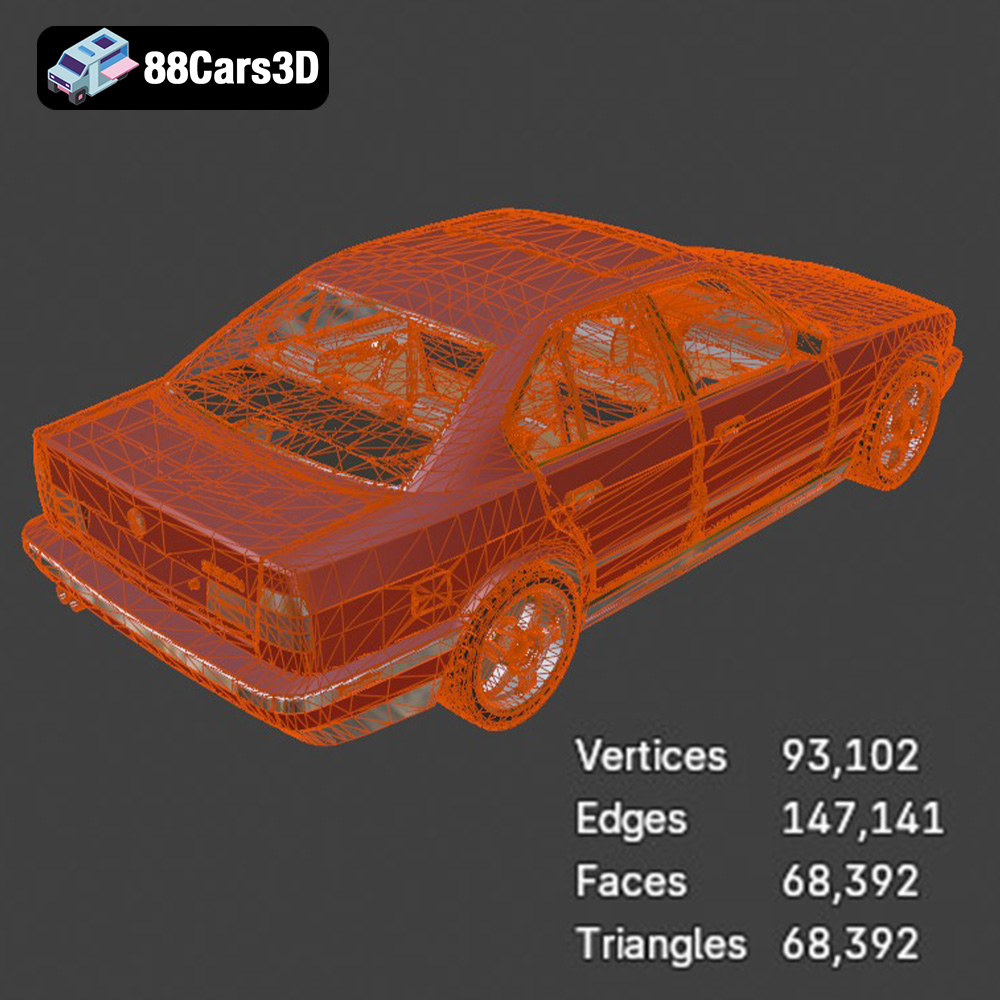
At the core of any excellent 3D model is its geometry. For automotive assets, this means meticulous attention to curves, panel gaps, and intricate details. The BMW 5 E34-535i 3D Model exemplifies this with its quad-dominant topology. This is crucial because quad-based meshes (faces made of four vertices) deform predictably and smoothly, especially when subdivision surface modifiers are applied for higher detail levels. This ensures that when the model is animated, bent, or even physically simulated, it maintains its integrity without unsightly pinching or tearing. Accurate real-world scale is equally vital, guaranteeing the model integrates seamlessly into existing scenes, whether for architectural visualization alongside a building or for accurate physics in a simulation.
Beyond the mesh, the surface qualities of a 3D car model dictate its realism. High-quality 3D car models feature sophisticated material setups that replicate the properties of real-world substances. This involves detailed PBR (Physically Based Rendering) workflows, where attributes like metallicness, roughness, normal maps, and diffuse textures are carefully crafted. For the BMW E34-535i, this means accurately representing the subtle reflections of polished paint, the distinct sheen of chrome trim, the matte finish of rubber tires, and the intricate patterns of interior upholstery. The inclusion of transparent materials for headlights and taillights, combined with realistic alloy wheels, elevates the visual fidelity, making the car look truly integrated into any rendered environment.
A high-quality 3D model isn’t just about raw detail; it’s about intelligent detail. This means optimizing the mesh structure to achieve visual fidelity without excessive polygon counts, which can cripple real-time performance or bloat render times. Furthermore, a well-constructed model, like those found on 88cars3d.com, provides for easy customization. This includes logically organized hierarchies, allowing individual components like doors, wheels, or engine parts to be isolated and animated. Properly set pivot points are essential for realistic rotation and movement. The flexibility to adjust paint finishes, apply custom graphics, or modify material properties (like the reflectivity of chrome or the transparency of glass) empowers artists to adapt the model to specific project needs, from subtle color shifts to radical custom builds.
The true value of a versatile 3D asset like the BMW 5 E34-535i 3D Model lies in its ability to enhance diverse professional pipelines. Its multi-format availability ensures that it can be a cornerstone asset for artists and developers working across different software ecosystems.
For architectural visualization studios, integrating realistic vehicles is essential for adding life and context to static building renders. Imagine a sleek, modern skyscraper, and parked gracefully in its foreground, the classic lines of the BMW E34-535i. Using 3ds Max (with its native .max file) or Blender (with its .blend file), artists can quickly set up studio lighting, apply advanced shaders, and produce stunning, photorealistic images. The model’s accurate real-world scale ensures it fits perfectly into exterior scenes, providing a sense of proportion and luxury. Its separated exterior and interior components also allow for dramatic close-ups or even animated sequences, showcasing the vehicle’s elegance as it drives into a scene.
Game developers demand not only visual quality but also extreme optimization for real-time performance. The BMW 5 E34-535i 3D Model, provided in .fbx and .unreal formats, is perfectly poised for integration into engines like Unreal Engine and Unity. Its clean, optimized mesh structure is designed to minimize draw calls and polygon count without sacrificing visual detail. Game artists can leverage the logically organized hierarchy to rig the wheels, doors, and steering wheel for interactive gameplay. This model could serve as a hero vehicle in a racing simulator, a background prop in an open-world game, or an interactive element in a VR driving experience, offering players an authentic encounter with a piece of automotive history.
The immersive capabilities of Augmented Reality and Virtual Reality applications require highly optimized assets that can render smoothly in real-time. The .glb format, included with the BMW E34-535i, is specifically tailored for these uses, allowing for efficient web-based or mobile AR/VR deployment. Imagine an educational AR app where users can explore the BMW E34-535i, zooming in on its engine block or peeking into its meticulously detailed interior. For driving simulators or technical training programs, the model’s detailed dashboard, steering wheel, and visible drivetrain components provide invaluable realism, allowing for immersive and accurate learning experiences.
Real-time applications, encompassing video games, AR/VR, and interactive visualizations, present a unique set of challenges for 3D car models. Unlike pre-rendered cinematic sequences where render time is less critical, real-time demands split-second frame rates and efficient resource management. The BMW 5 E34-535i 3D Model has been engineered with these considerations in mind.
Maintaining a balanced polygon count is paramount for real-time performance. While a high-resolution model might look stunning in a static render, it can quickly overwhelm a game engine. Professional 3D car models often come with different Levels of Detail (LODs) – simplified versions of the mesh that are swapped in when the car is further from the camera. This ensures that close-up shots showcase all the intricate details of the BMW E34-535i, while distant views use a less complex, performance-friendly version. The “clean and optimized mesh structure” of this model is a direct indicator that it’s designed with polygon budgeting in mind, making it suitable for varying LOD requirements.
In real-time environments, the number of materials and textures used can impact performance. Efficient material setups often involve physically based rendering (PBR) workflows, where a small set of textures (albedo, normal, roughness, metallic, ambient occlusion) accurately define a material’s appearance. Furthermore, texture atlasing – combining multiple smaller textures into one larger image – reduces draw calls, which significantly boosts rendering speed. A well-prepared 3D car model, like the BMW 5 E34-535i from 88cars3d.com, would typically have its materials and textures configured for optimal real-time display within engines like Unreal or Unity.
For game development and simulations, a static model is rarely enough. The BMW E34-535i’s logically organized hierarchy and properly set pivot points are crucial for rigging. This involves creating a skeletal structure (bones) that allows parts like wheels, doors, hood, and trunk to be animated realistically. Physics assets (collision meshes) are also vital, enabling the car to interact naturally with the environment – driving over terrain, colliding with objects, or experiencing realistic suspension movement. These foundational elements, often prepared within the .fbx or .unreal formats, are what transform a beautiful 3D model into an interactive vehicle.
While stunning visuals are a primary use case, the utility of a meticulously crafted 3D car model like the BMW 5 E34-535i extends far beyond traditional rendering. Its versatility opens doors to innovative applications across multiple industries.
For automotive designers and engineers, 3D models are invaluable tools. The BMW E34-535i model, with its authentic body panels and “optimized engine block and visible drivetrain components,” can be used for conceptual design, engineering visualization, or even historical analysis. Engineers can use the .ply format for precise mesh analysis or integrate the model into CAD software for examining fit and finish, simulating aerodynamic flows, or planning modifications. The ability to separate major exterior components allows for a modular approach, enabling designers to experiment with different body kits or accessories digitally before physical prototyping.
In the competitive world of advertising, compelling visuals are key. A high-fidelity 3D car model like the BMW 5 E34-535i offers unparalleled flexibility for marketing campaigns. Instead of costly live-action shoots, agencies can create dynamic commercials, product showcases, or interactive configurators entirely in 3D. The model’s adaptable lighting setups and flexible material properties mean it can be placed in any imaginable scenario – cruising through a futuristic city, parked elegantly by a historical landmark, or featured in an abstract, artistic composition. Its cinematic quality makes it perfect for sequences that demand emotional resonance and visual impact.
The digital realm often inspires physical creations. The inclusion of an .stl file format for the BMW 5 E34-535i model means it’s ready for 3D printing. Hobbyists, collectors, or even professional model makers can translate the digital design into a tangible, physical scale model. This allows for rapid prototyping of custom parts, creation of collectible figurines, or the development of unique display pieces. The precision of the original digital sculpt ensures that the 3D-printed output faithfully represents the iconic lines and details of the classic E34-535i, bringing the virtual asset into the real world.
One of the most powerful aspects of working with professional 3D car models is the inherent flexibility for customization. The BMW 5 E34-535i 3D Model is built with this in mind, offering artists and developers extensive control over its appearance and behavior.
The base model comes with sophisticated material setups, but true power lies in their modifiability. Artists can easily adjust paint finishes, from a glossy metallic sheen to a matte satin look, simply by tweaking a few parameters in their rendering software (like 3ds Max or Blender). Beyond base colors, the model’s clean UV mapping (implied by a “meticulously crafted” model designed for rendering) facilitates the seamless application of custom graphics, racing stripes, or corporate decals. This transforms the classic E34-535i into a personalized vehicle, tailored to any brand or project aesthetic, all without affecting the underlying geometry.
Realism in 3D often hinges on the subtle nuances of material interaction with light. The BMW E34-535i model’s flexible material setups allow for granular control over various surface properties. Want a brighter, more polished chrome trim? Adjust the metallicness and roughness values. Need slightly grittier tires for a rugged scene? Modify the rubber texture and roughness. The ability to tweak parameters like refraction and transparency for glass, or the specific specular response of interior plastics, empowers artists to achieve precise visual effects that elevate the overall realism and mood of a scene. This level of control is essential for achieving photorealistic results in a variety of lighting conditions.
A 3D model doesn’t exist in a vacuum; its appearance is heavily influenced by the lighting environment. The BMW E34-535i’s robust material definitions ensure it reacts accurately to different lighting setups. Whether it’s a dramatic studio setup with focused spotlights, an outdoor scene under a bright sun, or a moody evening ambiance, the model will respond predictably and beautifully. Artists can experiment with High Dynamic Range Images (HDRIs) for realistic global illumination, add volumetric fog for atmospheric effects, or place specific lights to highlight the car’s iconic contours. This adaptability makes the model an invaluable asset for conveying different moods and telling diverse visual stories, further demonstrating the quality found at 88cars3d.com.
In the dynamic realm of 3D content creation, the difference between good and great often lies in the quality of foundational assets. A truly professional 3D car model is more than just a collection of polygons; it’s a carefully engineered digital product, designed for versatility, performance, and aesthetic excellence across a multitude of applications. The journey through understanding file formats, appreciating the meticulous creation process, and exploring integration into diverse workflows reveals the profound impact such an asset can have.
The BMW 5 E34-535i 3D Model from 88cars3d.com stands as a testament to this philosophy. From its authentic E34 styling and detailed interior to its quad-dominant topology and multi-format compatibility, it embodies the qualities that professionals demand. Whether you’re an automotive renderer aiming for photorealism, a game developer building an immersive world, or a designer creating interactive AR/VR experiences, this model provides a robust and flexible foundation. It empowers you to not just visualize, but to truly bring to life the timeless elegance and robust engineering of a classic automotive icon, proving itself an indispensable tool in any serious 3D artist’s toolkit.
Experience the timeless elegance and robust engineering of the classic BMW 5 Series E34-535i with this meticulously crafted 3D model. Representing a pivotal era in BMW’s design philosophy, this model captures the essence of the executive sedan, blending performance aesthetics with sophisticated lines. Built with clean geometry and balanced detailing, it is engineered for optimal performance across a variety of professional applications, including high-fidelity rendering, realistic animations, detailed simulations, and immersive game development.Exterior Features:
Interior / Mechanical Features:
Technical Advantages:
Applications:
Customization Options:
This BMW 5 E34-535i 3D model offers unparalleled quality and versatility, making it an invaluable asset for designers, developers, and artists seeking a high-fidelity representation of a classic automotive icon.
$10.79
.535i
.5e34
.arvr
.blend
.bmw
.classiccar
.executivecar
.fbx
.gameasset
.glb
.max
.obj
.ply
.rendering
.retromodel
.sedan
.simulation
.stl
.unreal