Get 20% OFF All Premium 3D & STL Models!

The allure of classic vehicles transcends mere transportation; it’s a journey back in time, a tangible piece of history that evokes specific eras and emotions. For 3D artists, game developers, automotive designers, and visualization specialists, accurately recreating these iconic machines in a digital realm presents a unique blend of challenge and opportunity. It demands not just an eye for detail, but a deep understanding of technical precision, optimized workflows, and multi-platform compatibility.
Among the pantheon of American utility vehicles, the GMC Vandura G-1500 from 1983 stands out with its distinctive, boxy silhouette, a symbol of an era defined by rugged practicality and a certain no-nonsense charm. It’s a vehicle that sparks immediate recognition, whether from classic films, television series, or simply the memory of its omnipresence on the roads of the 1980s. Capturing this essence in a high-fidelity 3D model is crucial for artists aiming to infuse their projects with authentic period detail and robust character.
This article delves into the meticulous process and technical considerations behind creating and utilizing a professional-grade 3D car model, specifically focusing on a masterful recreation like the GMC Vandura G-1500 1983 3D Model available on 88cars3d.com. We’ll explore how such assets are crafted to meet the stringent demands of cinematic rendering, game development, AR/VR, and architectural visualization, ensuring they are not just visually appealing, but also technically robust and versatile across diverse creative pipelines.
In the complex ecosystem of 3D production, the choice of file format is paramount. It dictates compatibility, workflow efficiency, and the successful transfer of intricate data—from geometry and materials to animations and rigging—between different software applications and platforms. A high-quality 3D car model like the GMC Vandura G-1500 1983 needs to be available in multiple formats to cater to the diverse needs of professionals. Let’s break down the most essential formats provided and their specific use cases:
The .blend file format is native to Blender, the powerful open-source 3D creation suite. When you receive a .blend file, you’re getting a complete, fully editable Blender scene. This includes not only the meticulously modeled geometry of the GMC Vandura G-1500 but also its material definitions, textures, lighting setup, and potentially even camera angles or animation data. For Blender users, this is the most flexible format, allowing for direct modification, custom scene integration, and leveraging Blender’s extensive toolset for rendering with Cycles or Eevee, further animation, or exporting to other formats with maximum control. It’s ideal for artists who want to deeply customize the asset or integrate it into an existing Blender-centric workflow.
Developed by Autodesk, the .fbx format is arguably the industry standard for interoperability between various 3D software applications and, critically, for transferring assets into game engines like Unreal Engine and Unity. It supports a comprehensive range of data, including mesh geometry, materials, textures, animations, rigging, and camera data, making it incredibly versatile for complex scenes. When working with the GMC Vandura G-1500 1983 3D Model for real-time projects or transferring it between 3ds Max, Maya, and Blender, the .fbx file is often your first choice. It ensures that all transform data, UVs, and material assignments are cleanly imported, maintaining the integrity of the asset across different platforms.
The .obj (Wavefront OBJ) format is a universal 3D model format known for its simplicity and wide compatibility. It primarily stores geometric data—vertices, normals, texture coordinates, and faces—along with references to external material files (.mtl). While it doesn’t support animations or rigging, its widespread acceptance makes it a reliable choice for transferring static models across virtually any 3D software. For artists needing to import the GMC Vandura G-1500 into niche software or older pipelines, the .obj provides a robust, common denominator for geometric data transfer, serving as a fundamental backup or a starting point for re-texturing.
.glb (GL Transmission Format Binary) is a modern, compact 3D file format optimized for efficient transmission and loading in AR, VR, and web-based applications. It encapsulates all necessary data—geometry, materials, textures, and animation—into a single binary file, making it incredibly streamlined for real-time display. For developers creating interactive web experiences, augmented reality filters, or virtual reality environments featuring the GMC Vandura G-1500, the .glb format is indispensable. Its optimization for rapid display ensures smooth performance without sacrificing visual quality, making it a cornerstone for immersive media.
The .stl (Stereolithography) format is the de facto standard for 3D printing. It represents a 3D model as a series of connected triangles, describing only the surface geometry of an object without color, texture, or other properties. While not used for rendering or animation, the .stl version of the GMC Vandura G-1500 1983 3D Model allows designers to translate the digital asset into a physical prototype or collectible. This is invaluable for rapid prototyping, physical scale models, or even creating custom accessories that require precise three-dimensional forms.
.ply (Polygon File Format, or Stanford Triangle Format) is another format for storing 3D data, particularly useful for high-resolution scan data and applications requiring precise mesh information. It can store various properties like color, transparency, and normals per vertex or face, and is often used in scientific visualization, CAD, and 3D scanning workflows. For engineers or researchers needing a detailed polygon mesh of the Vandura for analysis, simulation, or precise measurement, the .ply format offers a robust, structured representation of the geometry.
The inclusion of an .unreal file signifies an asset specifically configured for Unreal Engine. This often means the model, materials, and textures are already imported, organized, and optimized within an Unreal Engine project structure, potentially including collision meshes, LODs (Levels of Detail), and appropriate material instances. For game developers or real-time visualization artists working with Unreal Engine, this format drastically cuts down on import time and setup, allowing immediate integration of the GMC Vandura G-1500 1983 3D Model into their scenes with minimal fuss.
The .max file is the native project format for Autodesk 3ds Max, a leading software for 3D modeling, animation, and rendering in the design and entertainment industries. A .max file of the GMC Vandura G-1500 contains the complete scene, including all modeling data, material setups (often with advanced renderers like V-Ray or Corona), lighting, cameras, and any animation. This is the ultimate format for 3ds Max users who require full control for high-end rendering, complex animation sequences, or integration into architectural visualization (arch-viz) projects where precision and photorealism are paramount.
Providing this comprehensive suite of formats, as done with the GMC Vandura G-1500 1983 3D Model on 88cars3d.com, ensures that artists and developers can seamlessly integrate the model into virtually any professional pipeline, maximizing its value and utility.
Bringing a classic vehicle like the GMC Vandura G-1500 1983 to life in 3D is a testament to the artist’s dedication to historical accuracy and technical prowess. It’s more than just modeling a shape; it’s about capturing the soul of the machine.
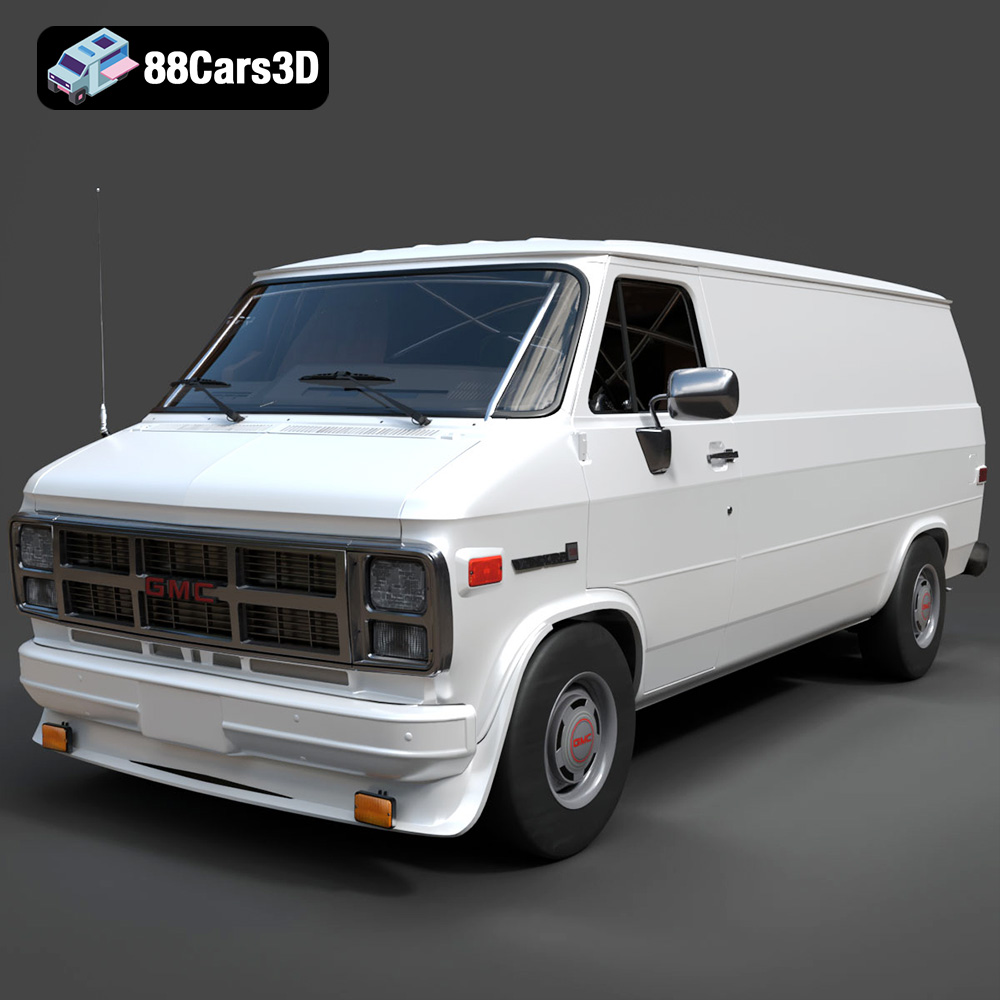
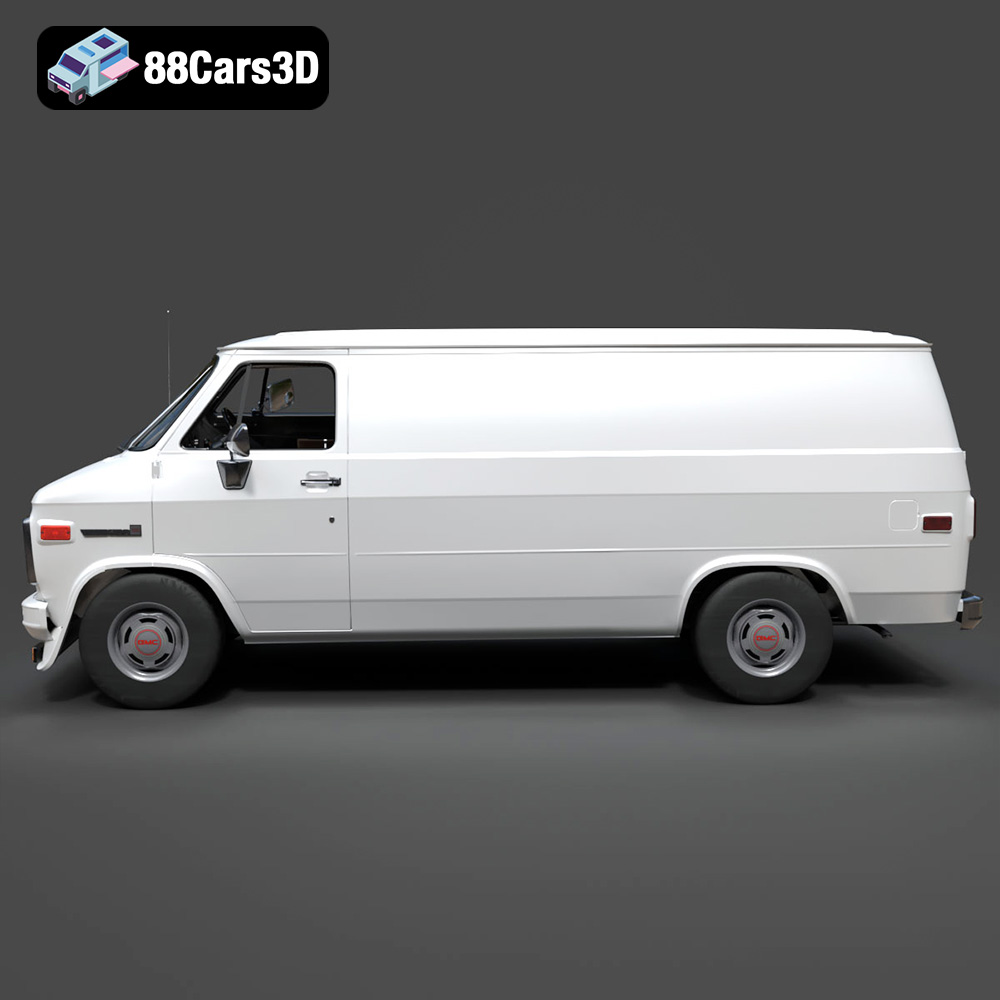
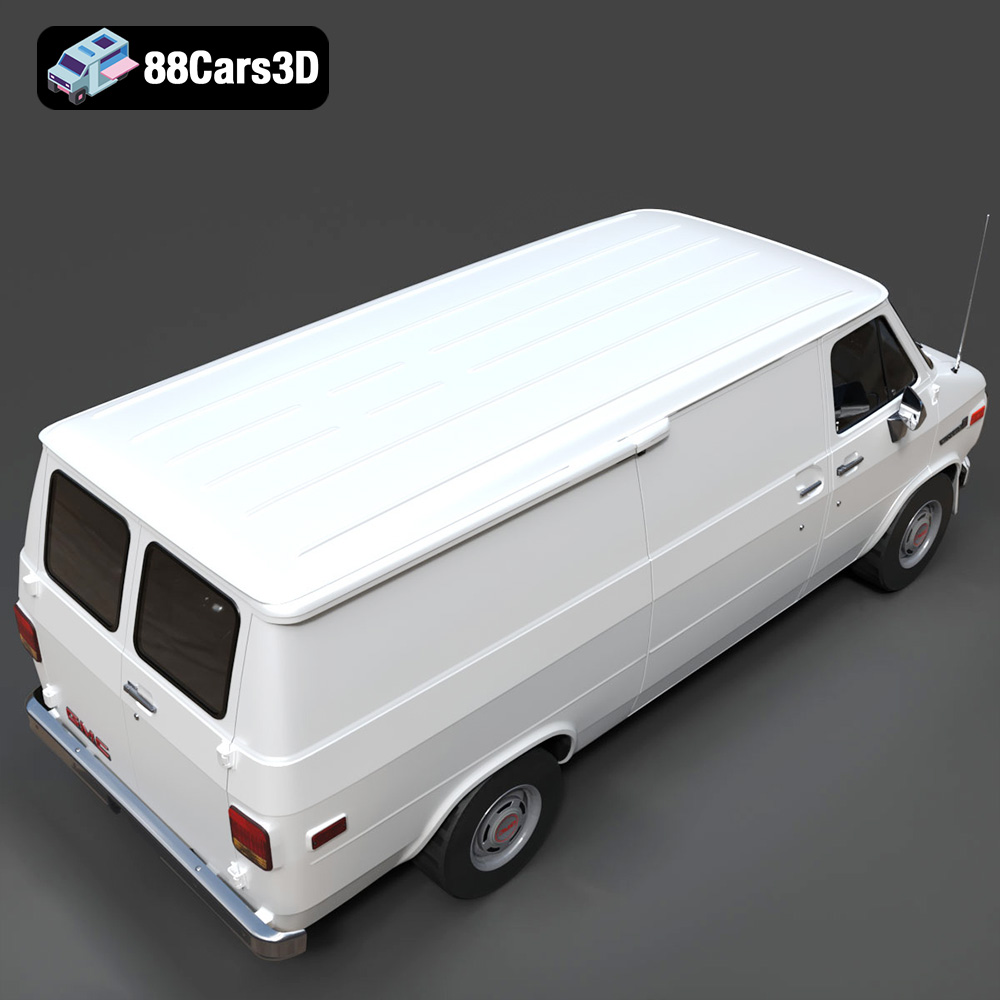
The Vandura’s defining characteristic is its utilitarian, robust design. The 3D model must perfectly translate this signature boxy bodywork into a digital form. This involves careful study of blueprints, photographic references, and even physical inspections of the actual vehicle to ensure every curve, panel gap, and proportion is precisely represented. Details often overlooked, such as the specific contours of the wheel arches, the mounting points for side mirrors, or the subtle indentations for door handles, are critical. The success of a classic 3D car model lies in its ability to withstand intense scrutiny, even in high-resolution renders where imperfections become glaringly obvious.
The “1983” aspect is equally important. This means replicating era-specific elements: the design of headlights and taillights, the style of the grille, and any unique trim pieces or badging pertinent to that specific year. A well-crafted model, like the GMC Vandura G-1500 1983 from 88cars3d.com, doesn’t just look like “a van”; it specifically looks like a 1983 Vandura, imbuing projects with an immediate sense of accurate nostalgia.
A truly professional 3D car model doesn’t stop at a beautiful exterior. The interior, though sometimes unseen, is vital for scenarios demanding realism, such as close-up cinematic shots, virtual reality experiences, or detailed simulations. For the GMC Vandura G-1500 1983, this means accurately modeling the dashboard layout, steering wheel, seats, door panels, and even subtle elements like rearview mirrors and sun visors. Textures must reflect the materials common to the period—vinyls, specific fabric patterns, and dashboard plastics—with appropriate wear and tear if desired, further enhancing the historical authenticity.
The interplay between exterior and interior, especially when viewed through windows or open doors, contributes significantly to the overall believability. A fully detailed interior, as promised by this Vandura model, ensures that the asset is versatile enough for any camera angle or interactive requirement, providing complete realism for even the most demanding projects.
High-quality 3D assets are indispensable tools across a multitude of creative industries. The GMC Vandura G-1500 1983 3D Model, with its optimized geometry and diverse file formats, is designed to seamlessly integrate into professional pipelines from film to real-time interactive media.
For cinematic productions, advertising, or high-end architectural visualization, the demand for photorealism is absolute. The GMC Vandura G-1500 1983 3D Model, optimized with realistic material definitions and accurate scaling, is a prime candidate for these applications. In 3ds Max or Blender, artists can leverage advanced rendering engines like V-Ray, Corona Renderer, Arnold, or Cycles to achieve stunning visual results. Imagine the Vandura parked in front of a meticulously rendered 1980s gas station, or serving as a background element in a period film short – the model’s fidelity ensures it holds up under the harsh scrutiny of high-resolution stills and animated sequences. Its clean topology also makes it suitable for advanced lighting techniques, global illumination, and depth-of-field effects, crucial for capturing that cinematic look.
The real-time demands of game development present a different set of challenges. Assets must be visually rich yet incredibly efficient. The GMC Vandura G-1500 1983 3D Model is described as “game-engine ready” and “optimized for performance in engines like Unreal and Unity,” which is critical. This implies smart polygon budgeting, efficient UV unwrapping, and PBR (Physically Based Rendering) texture maps that are compatible with modern game engine shaders. Developers can use the .fbx or .unreal formats to quickly import and set up the vehicle, potentially adding collision meshes, levels of detail (LODs) for performance scaling, and physics-based driving mechanics. Whether it’s for a retro-themed racing game, an urban simulation, or a narrative-driven adventure, this 3D car model provides a solid foundation for immersive interactive experiences.
The burgeoning fields of Augmented Reality (AR) and Virtual Reality (VR) require assets that are not only high-quality but also highly optimized for real-time performance on a variety of devices, from powerful headsets to mobile phones. The inclusion of the .glb format for the GMC Vandura G-1500 1983 3D Model is a key indicator of its suitability for these applications. .glb files are lightweight and self-contained, perfect for streaming on the web or embedding in AR apps. Imagine a virtual showroom where users can walk around, inspect, or even sit inside the classic Vandura, or an AR application that places the van directly into your driveway. These experiences rely on efficiently loaded and rendered 3D assets, making the versatile format support invaluable for modern interactive media.
Behind the glossy renders and seamless game integration of any 3D car model lies a bedrock of technical decisions and meticulous craftsmanship. The GMC Vandura G-1500 1983 3D Model exemplifies the balance between visual fidelity and technical efficiency.
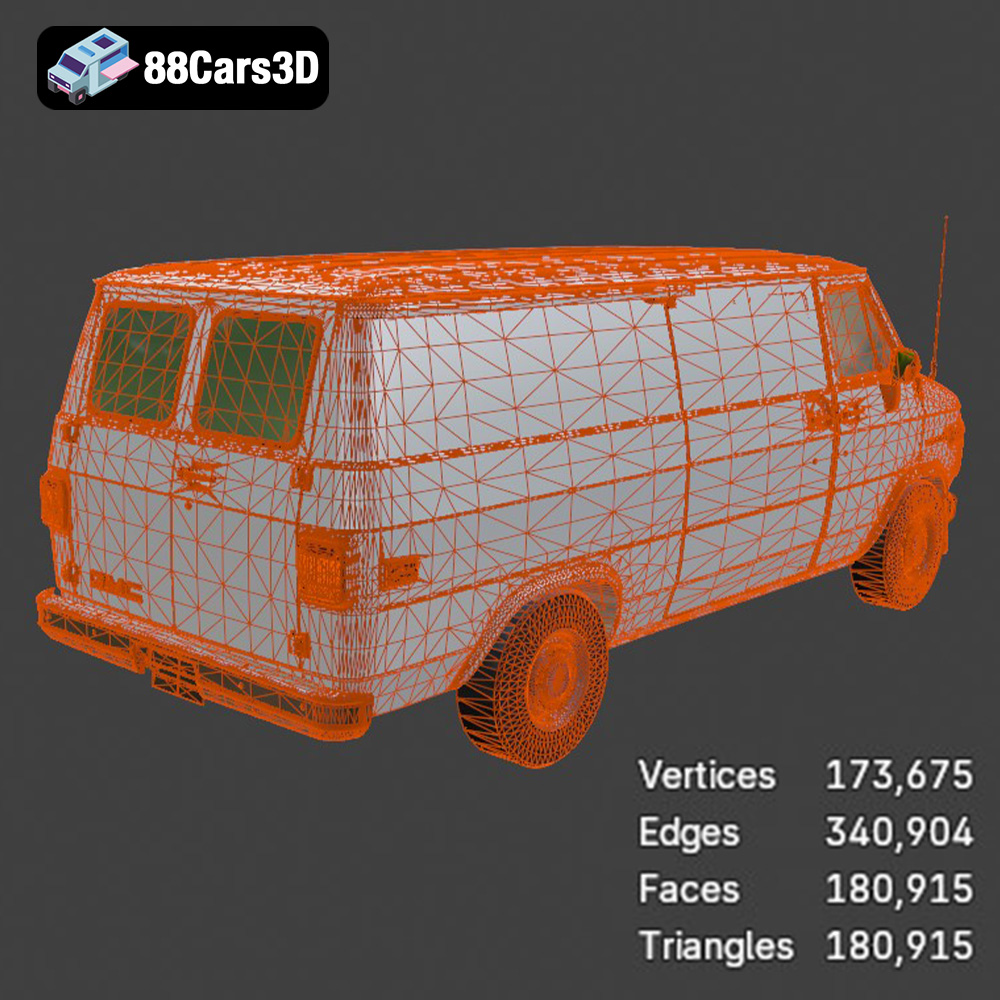
The description “highly optimized mesh topology” is a crucial indicator of a professional-grade asset. Good mesh topology means the polygons (typically quads for subdivision readiness) are evenly distributed, follow the natural curves and forms of the vehicle, and allow for clean deformation if the model were to be animated or damaged. For a vehicle like the Vandura, this translates to smooth surfaces without visible faceting, even in close-up shots. Optimization also refers to intelligent polygon budgeting: ensuring enough detail where it matters (like the grill or badges) while keeping less critical areas efficient. For real-time applications, polygon count directly impacts frame rates. A well-optimized model provides a balance, often allowing for the generation of LODs, which dynamically swap lower-polygon versions of the model as it moves further from the camera, conserving GPU resources.
Accurate scaling is another non-negotiable aspect. The model is “accurately scaled to the dimensions of the real-world GMC Vandura G-1500.” This is vital for maintaining visual consistency when integrating the model into scenes with other assets or into real-world environments via AR. Incorrect scaling can break immersion and lead to proportional inaccuracies that are jarring to the viewer.
Realistic material definitions and texturing are the visual icing on the cake, transforming geometry into believable surfaces. Modern pipelines overwhelmingly rely on Physically Based Rendering (PBR) workflows. This involves a set of texture maps—typically Albedo (color), Normal (surface detail), Roughness (how diffuse or reflective a surface is), Metallic (whether a surface is metallic or dielectric), and Ambient Occlusion (soft self-shadowing). The GMC Vandura G-1500 1983 3D Model would utilize these maps to simulate the various materials of the van: the reflective sheen of the paint, the matte texture of rubber tires, the distinct appearance of chrome trim, and the subtle variations of the interior fabrics and plastics.
High-resolution, clean UV unwrapping is foundational for good texturing. Non-overlapping UVs ensure that texture maps are applied without distortion and allow for effective light baking in game engines. The quality of these textures, combined with the precision of the PBR material definitions, is what ultimately gives the 3D model its authentic visual results, making it suitable for production-ready cinematic rendering and interactive media.
The versatility of a well-crafted 3D car model like the GMC Vandura G-1500 1983 means it finds its place in a surprising array of projects, solving diverse creative and technical challenges for professionals.
Consider an independent game studio developing a retro-styled open-world driving game set in the American suburbs of the 1980s. Sourcing a high-quality, game-ready classic van model like the GMC Vandura G-1500 1983 from 88cars3d.com significantly accelerates their development timeline. They can quickly integrate the .fbx or .unreal version, saving countless hours on modeling, texturing, and optimization, allowing them to focus on unique gameplay mechanics and narrative. The accurate scaling and optimized mesh ensure it performs well on target platforms.
On the cinematic front, imagine a VFX studio tasked with creating a short film requiring a chase scene featuring a period-correct van. The .max or .blend file provides the highest fidelity for rendering, allowing artists to add dust, scratches, and damage effects with incredible realism. The detailed interior and exterior mean they can use any camera angle without needing to create bespoke models for specific shots, offering maximum flexibility and cost efficiency for a professional production.
Architectural visualization firms often incorporate vehicles into their renders to bring scale and life to a scene. If an arch-viz project involves a vintage garage, a period-specific street scene, or a classic car showroom, the GMC Vandura G-1500 1983 3D Model is an ideal asset. Its authentic design grounds the visualization in a specific historical context, adding layers of realism and narrative. The ability to render it with powerful engines in 3ds Max ensures it integrates seamlessly with the architectural models, sharing realistic lighting and reflections.
Furthermore, educational institutions or museums developing virtual exhibits could use the Vandura model to present historical context. Visitors could interact with the van in VR, inspecting its interior and exterior, learning about its place in American automotive history. The .glb format would be perfect for browser-based VR tours, making the experience accessible to a wide audience without requiring specialized software installations.
The pursuit of realism and technical excellence in 3D modeling is an ongoing journey, and high-quality 3D car models stand as a testament to this endeavor. The GMC Vandura G-1500 1983 3D Model is far more than just a nostalgic visual; it’s a meticulously crafted digital asset engineered for the rigorous demands of contemporary creative pipelines.
From its “highly optimized mesh topology” and “realistic material definitions” to its “accurately scaled” dimensions and comprehensive suite of “production-ready” file formats (.blend, .fbx, .obj, .glb, .stl, .ply, .unreal, .max), this model represents the pinnacle of what a professional 3D vehicle asset should be. Whether your project calls for the cinematic grandeur of a period film, the interactive performance of a modern game, the immersive detail of an AR/VR experience, or the precise context of an architectural visualization, the GMC Vandura G-1500 1983 is designed to deliver.
Investing in such a versatile and technically robust 3D car model empowers artists and developers to elevate their projects, saving invaluable time and resources while achieving unparalleled levels of authenticity. Discover this exceptional model and a wide range of other professional-grade 3D assets at 88cars3d.com, where quality and versatility drive digital creativity.
Bring authentic 1980s utility and nostalgia to your projects with the GMC Vandura G-1500 1983 3D Model. This meticulously recreated classic American van captures the robust design and iconic silhouette of the original vehicle, perfect for period pieces, urban simulations, and retro-themed visualizations. The model is built with professional standards in mind, ensuring clean, optimized geometry and accurate scaling. Every exterior detail, from the signature boxy bodywork to the vehicle badging and lighting elements, has been carefully modeled. The interior is also fully detailed, providing complete realism for close-up shots and simulation environments.
$19.99
.1983
.arvr
.blend
.car3dmodel
.classicvan
.fbx
.g1500
.gameasset
.glb
.gmc
.max
.obj
.ply
.rendering
.simulation
.stl
.unreal
.utilityvehicle
.van
.vandura