Get 20% OFF All Premium 3D & STL Models!

In the vast ocean of 3D modeling, creating assets that are both historically accurate and technically robust presents a unique challenge. From meticulously crafting a sleek sports car for automotive rendering to recreating a pivotal piece of naval history, the demands for detail, performance, and versatility are immense. Few subjects capture the imagination quite like the German WWII Type VIIB U-Boat U-99 Submarine. Known for its significant role in naval warfare, its recreation as a 3D model is a testament to the power of digital artistry and engineering. This article delves into the technical considerations, workflow advantages, and diverse applications of high-quality 3D models, exemplified by the exceptional German U-Boat U-99 Submarine 1940 3D Model available at 88cars3d.com.
Whether your project involves cinematic visualization, interactive game development, or historical preservation, the underlying principles of creating and utilizing detailed 3D assets remain critical. The U-99 model, with its authentic scale, intricate design, and optimized geometry, stands as a prime example of what professional-grade 3D assets can offer. It’s not merely a static representation; it’s a foundation for immersive experiences, rigorous simulations, and stunning renders.
One of the most crucial aspects of working with professional 3D models, such as the German U-Boat U-99, is understanding the array of file formats provided. Each format serves a specific purpose, offering unique advantages for different stages of your creative or technical pipeline. The availability of multiple formats ensures maximum compatibility and efficiency, allowing you to seamlessly integrate the asset into your preferred software and final application.
The .blend format provides a fully editable Blender scene, complete with materials, textures, and often a basic lighting setup. For Blender users, this is the most flexible option. It allows for direct manipulation of the mesh, modification of materials, custom animation, and integration into existing Blender projects without any loss of data. Technical advantages include access to modifiers, node-based materials, and Blender’s physics engine, making it ideal for artists who want to deeply customize the U-Boat or use it as a base for further development.
.fbx (Filmbox) is a proprietary file format owned by Autodesk and is widely regarded as the industry standard for 3D data exchange, especially for game development. It efficiently stores not only mesh data but also materials, textures, animations, and skeletal information. The .fbx format is ideal for transitioning the U-Boat model into real-time pipelines like Unreal Engine and Unity due to its robust support for game engine asset import. Its binary structure ensures relatively small file sizes and fast loading times, crucial for performance-sensitive applications.
The .obj (Wavefront Object) format is one of the oldest and most universally supported 3D file formats. It’s a simple, text-based format that stores geometric data (vertices, UVs, normals) and references to external material files (.mtl). While it doesn’t support animation or advanced scene data, its broad compatibility makes it an excellent choice for cross-software transfers. If you need to import the U-Boat model into almost any 3D application without worrying about proprietary features, .obj is a reliable fallback.
.glb (GLB format, often associated with glTF) is an increasingly popular format optimized for efficient transmission and loading of 3D scenes and models in web, AR (Augmented Reality), and VR (Virtual Reality) environments. It’s a binary format that bundles the model, textures, and animations into a single file, making it incredibly easy to deploy. For interactive historical displays of the U-Boat in a web browser or an AR educational experience, .glb offers superior performance and integration.
.stl (STereoLithography) is the de facto standard file format for 3D printing. It represents a 3D model as a collection of unconnected triangular facets, without color, texture, or other CAD attributes. While simple, it’s perfect for describing the surface geometry required by 3D printers. If your goal is to physically manifest a miniature replica of the U-99 submarine, the .stl file is what you’ll feed into your slicing software.
The .ply (Polygon File Format or Stanford Triangle Format) is a file format for storing 3D data from 3D scanners. It supports properties such as color, transparency, surface normals, and texture coordinates. While not as common in general 3D art pipelines, it is a precision mesh format often used in CAD, scientific visualization, or scenarios where highly accurate geometric data from scans is paramount. It can be useful for analysis or specialized industrial applications of the U-Boat model.
The .unreal designation implies a format or asset optimized and potentially pre-configured specifically for Unreal Engine. This often means the asset has been imported, materials set up, collisions generated, and potentially even LODs (Levels of Detail) configured within Unreal Engine itself. This provides a significant head start for game developers and real-time visualization artists, minimizing setup time and ensuring the U-Boat model performs optimally within the engine environment.
Similar to .blend for Blender users, the .max format is the native file type for Autodesk 3ds Max. It contains the complete 3ds Max project, including geometry, materials, lighting, cameras, animation, and any scene-specific settings. For professionals working in 3ds Max for high-fidelity rendering or complex animation sequences involving the U-Boat, the .max file offers unparalleled control and flexibility for customization and advanced production.
Recreating a historical vessel like the German U-Boat U-99 is not merely about modeling an object; it’s about resurrecting a piece of history. The meticulous effort invested in ensuring historical authenticity is what elevates a good 3D model to an exceptional one. This extends beyond basic shapes to the nuanced details that define its era and purpose.
The journey to historical accuracy begins with extensive research. For a model like the German U-Boat U-99, this involves poring over archival photographs, engineering blueprints, historical documents, and survivor accounts. Every rivet, every access hatch, the specific layout of the conning tower, and the type of deck cannon must be accurately represented. The goal is to capture the essence of the U-99 as it appeared in 1940, reflecting its Type VIIB characteristics and specific modifications. High-quality 3D assets, such as those found on 88cars3d.com, often represent hundreds of hours of such diligent research and cross-referencing, translating complex historical data into tangible 3D geometry.
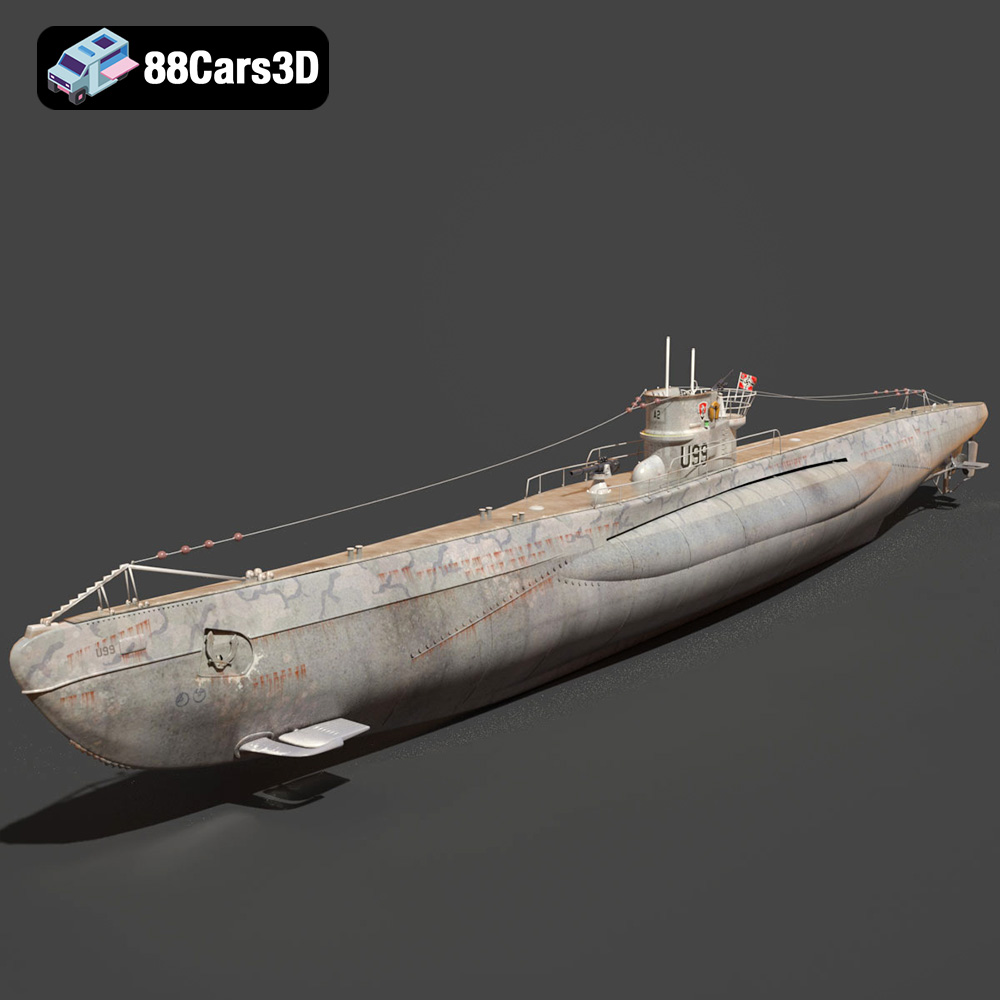
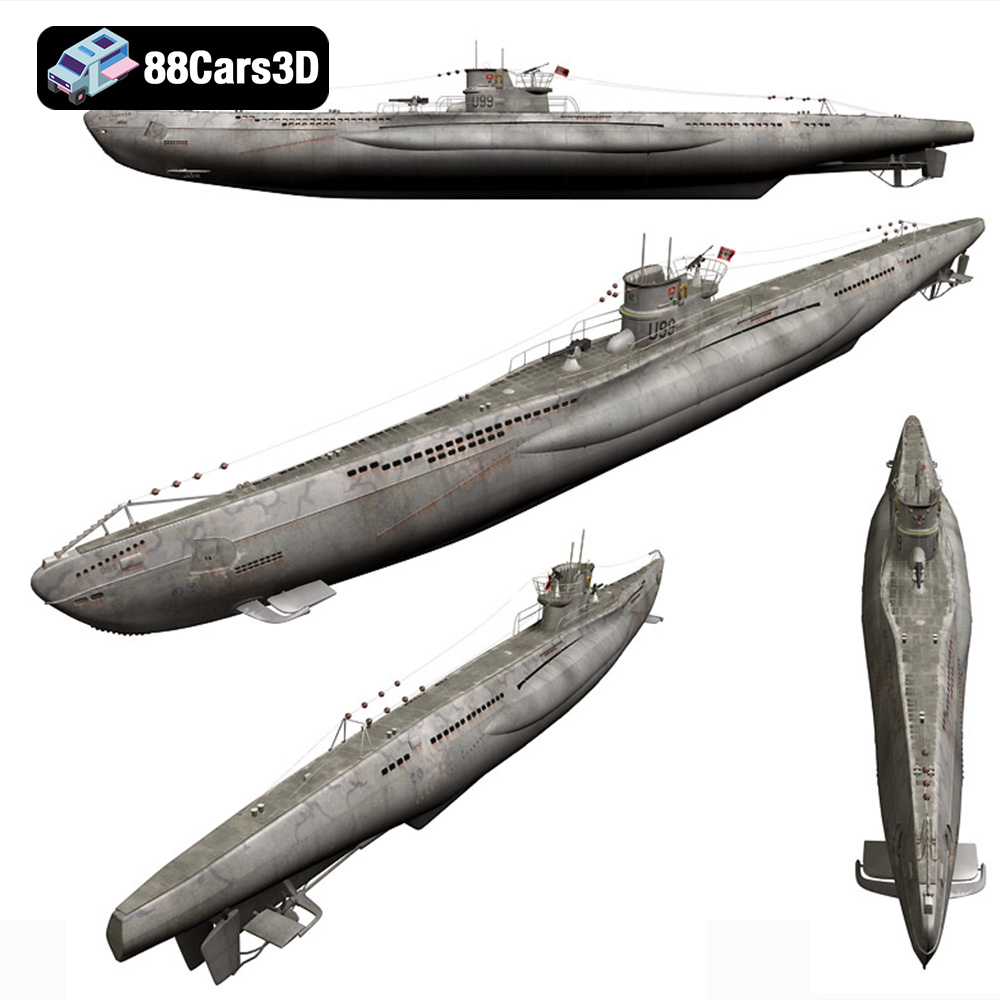
Translating research into 3D requires a keen eye for proportion and a steady hand for detail. The authentic scale of the U-99 is paramount, ensuring that the model feels correctly sized within any virtual environment. Beyond scale, intricate details like the hydroplanes, the periscope mast, railings, ventilation grilles, and even the subtle curvature of the hull are crucial. These elements, though small, contribute significantly to the visual fidelity and believability of the model. The U-99 model captures these nuances, making it suitable for close-up renders where such fine points become highly visible and impactful.
A truly professional 3D model, like the German U-Boat U-99, is designed with versatility in mind. It must perform admirably whether it’s destined for a cinematic sequence, a real-time game, or an interactive AR/VR experience. This requires a careful balance between detail and optimization.
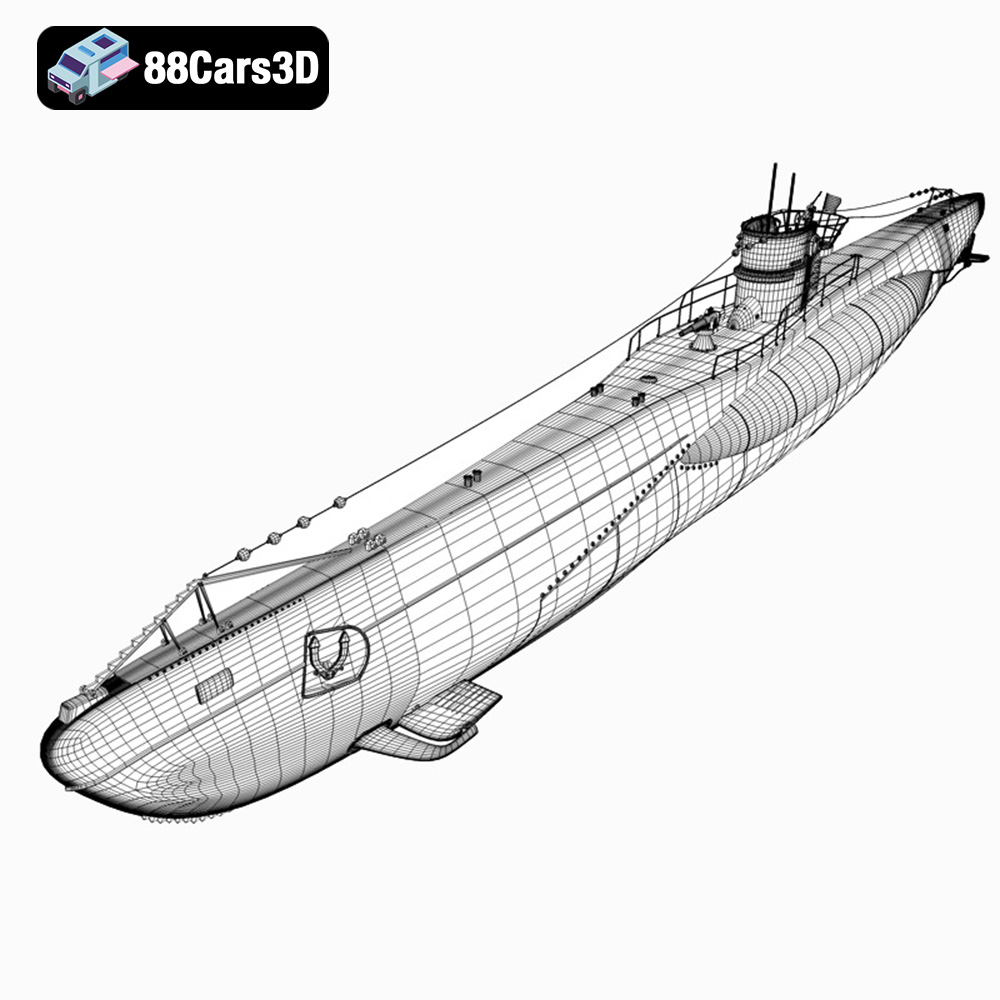
In game development and AR/VR, performance is key. Highly detailed models with excessive polygon counts can cripple frame rates. Professional 3D artists employ various techniques to optimize models without sacrificing visual quality. This includes clean, efficient topology, judicious use of polygons, and potentially implementing Levels of Detail (LODs), where simpler versions of the model are rendered at greater distances. The German U-Boat U-99 Submarine 1940 3D Model is described as having clean geometry optimized for performance, meaning it’s ready for demanding real-time applications while still retaining intricate details for visual authenticity.
The requirements for a high-fidelity rendering differ from those for an interactive experience. For static renders or cinematic sequences, poly count is less of a concern, and models can lean heavily into extreme geometric detail. However, the same model needs to be adaptable for real-time engines. This often involves careful UV mapping and texture baking to transfer high-resolution details from a sculpt to a lower-polygon mesh. The flexibility of the U-99 model across various formats (like .max for rendering and .fbx/.unreal for real-time) highlights this adaptable design philosophy.
While geometry provides the shape, textures and materials breathe life into a 3D model. For a historical asset like the U-99, the realism of its surface properties is critical to conveying its age, environment, and operational history.
Modern rendering relies heavily on Physically Based Rendering (PBR) workflows. PBR materials accurately simulate how light interacts with surfaces in the real world, based on properties like albedo (color), roughness, metallicness, and normal maps. For the U-99 model, this means surfaces that correctly reflect light whether they are painted metal, rusty components, or wet decks. The use of professionally created PBR textures ensures that the model will look consistent and realistic under various lighting conditions in different rendering engines and real-time environments.
The German U-Boat U-99, having operated in the harsh North Atlantic, would undoubtedly bear the marks of its service. Realistic materials and textures go beyond basic colors to include subtle details of wear and tear: chipped paint, rust stains, barnacles on the hull below the waterline, and the general weathering effects of salt water and constant exposure. These details are often achieved through layering textures, using dirt and grunge maps, and employing procedural techniques to add organic imperfections. The description of the U-99 model mentions “realistic materials and professionally created textures” that ensure an “accurate representation of the weathered hull and mechanical components,” which is crucial for historical immersion.
Acquiring a high-quality 3D model is just the first step. The true value lies in its seamless integration into established professional workflows, whether for animation, game development, or visualization.
For artists and studios utilizing Blender or 3ds Max, the native .blend and .max files offer unparalleled control. Users can open the German U-Boat U-99 model and immediately begin customizing it. This could involve:
The flexibility of these native formats ensures that the U-99 model isn’t just an endpoint, but a robust starting point for limitless creative possibilities, even for projects requiring 3D car models for comparative scale or diverse scenes.
Game developers and real-time visualization specialists will leverage the .fbx and .unreal formats. Importing the German U-Boat U-99 model into Unreal Engine or Unity is designed to be straightforward:
This streamlined integration significantly reduces development time, allowing teams to focus on gameplay and immersive experiences rather than basic asset preparation. For those focusing on automotive rendering, the efficiency of these formats holds similar benefits for detailed vehicle simulations.
The applications for a meticulously crafted 3D model like the German U-Boat U-99 extend far beyond conventional rendering, touching various industries that demand high visual fidelity and historical accuracy.
Museums, educational institutions, and documentary filmmakers can utilize the U-99 model for powerful historical visualization. Imagine an interactive exhibit where visitors can explore the U-Boat in AR, viewing its internal structure or understanding its operational mechanics through a virtual tour. Detailed renders can be used in documentaries to accurately depict historical events, offering an unprecedented level of visual clarity that static images cannot provide. This allows for immersive learning about World War II themes and maritime history, bringing the past to life.
For game developers, the U-99 model is a game-ready asset that can be dropped directly into military simulations, naval combat games, or historical adventure titles. Its optimized geometry and game-engine-ready formats make it ideal for populating virtual worlds with authentic vehicles. Beyond games, it can be used for professional training simulations for naval personnel, offering a realistic platform for understanding historical vessel operations or practicing virtual maneuvers. The attention to detail ensures that the asset fits seamlessly into the high standards expected from modern game assets.
The .glb format makes the U-Boat U-99 perfect for AR/VR experiences. Users could place a virtual U-Boat in their living room via their phone’s camera, or explore it in a fully immersive VR environment, understanding its scale and design firsthand. Furthermore, such high-quality 3D models serve as valuable tools for digital archiving of historical artifacts. Should physical examples deteriorate, a detailed 3D model ensures its preservation and accessibility for future generations, contributing to the broader field of digital heritage.
Developing a complex 3D model from scratch, especially one requiring historical accuracy and technical optimization like the German U-Boat U-99, is an incredibly time-consuming and resource-intensive endeavor. This is where pre-made, professional-grade assets prove their immense value.
For studios and individual artists alike, time is often the most critical factor. Sourcing ready-made assets like the U-99 model from platforms like 88cars3d.com dramatically reduces development cycles. Instead of spending weeks or months on modeling, texturing, and optimizing a complex vessel, teams can acquire a production-ready asset and immediately integrate it into their project. This acceleration allows for more focus on creative direction, gameplay mechanics, or narrative development, ultimately leading to higher quality final products delivered more efficiently. This applies equally to complex 3D car models for a racing game or a detailed submarine for a historical simulation.
When purchasing a pre-made asset, quality assurance is paramount. Professional marketplaces like 88cars3d.com ensure that their offerings meet industry standards for clean geometry, accurate UVs, PBR-compliant materials, and proper file organization. The German U-Boat U-99 Submarine 1940 3D Model exemplifies this commitment to quality, described as “built to professional standards for reliability and ease of integration.” This means fewer headaches, less troubleshooting, and a smooth experience from acquisition to deployment, whether you’re working on automotive rendering, game assets, or intricate architectural visualization.
The German U-Boat U-99 Submarine 1940 3D Model is more than just a digital asset; it’s a meticulously crafted piece of history brought to life through advanced 3D modeling techniques. Its authentic scale, intricate details, realistic materials, and optimized geometry make it an invaluable resource for a broad spectrum of professional applications, from immersive game development and cinematic rendering to educational visualization and AR/VR experiences. The availability of multiple file formats ensures seamless integration into virtually any workflow, providing maximum flexibility and efficiency for artists and developers.
By leveraging such high-quality, pre-made assets, creators can significantly accelerate their production pipelines, achieve unparalleled levels of detail, and focus their energies on innovation and storytelling. For anyone seeking to bring historical depth and technical excellence to their projects, the German U-Boat U-99 Submarine 1940 3D Model, available at 88cars3d.com, stands as a testament to the power of expertly crafted 3D resources.
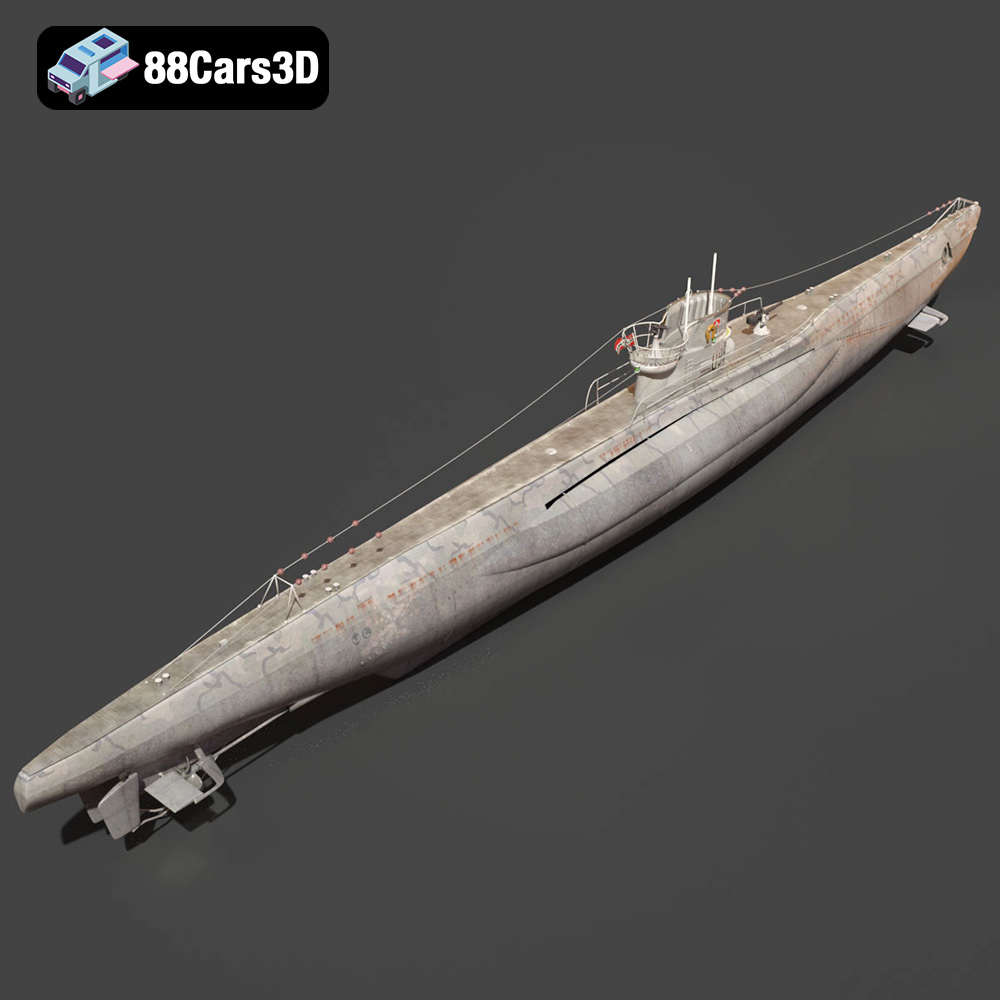
Introducing the meticulously crafted 3D model of the German WWII Type VIIB U-Boat U-99, known for its pivotal role in naval warfare. This asset captures the authentic scale and detailed design of the historic naval vessel, providing exceptional visual fidelity suitable for close-up renders and detailed virtual environments. The geometry is clean and optimized for performance across various platforms while maintaining intricate details, including the conning tower, deck cannon, and hydroplanes. Realistic materials and professionally created textures ensure accurate representation of the weathered hull and mechanical components. This asset is built to professional standards for reliability and ease of integration. This detailed asset is ideal for historical simulations, military game development, educational visualization projects, cinematic sequences, and immersive AR/VR experiences focused on World War II themes or maritime history.
$10