Get 20% OFF All Premium 3D & STL Models!

In the vast landscape of 3D visualization and digital content creation, the allure of classic automobiles holds a unique power. These machines are not merely vehicles; they are cultural touchstones, engineering marvels, and expressions of design philosophy. Bringing such iconic vehicles into the digital realm with authenticity and technical precision is an art form in itself. For professionals in automotive rendering, game development, AR/VR experiences, and architectural visualization, a high-quality 3D model of a classic car can be the cornerstone of a compelling project.
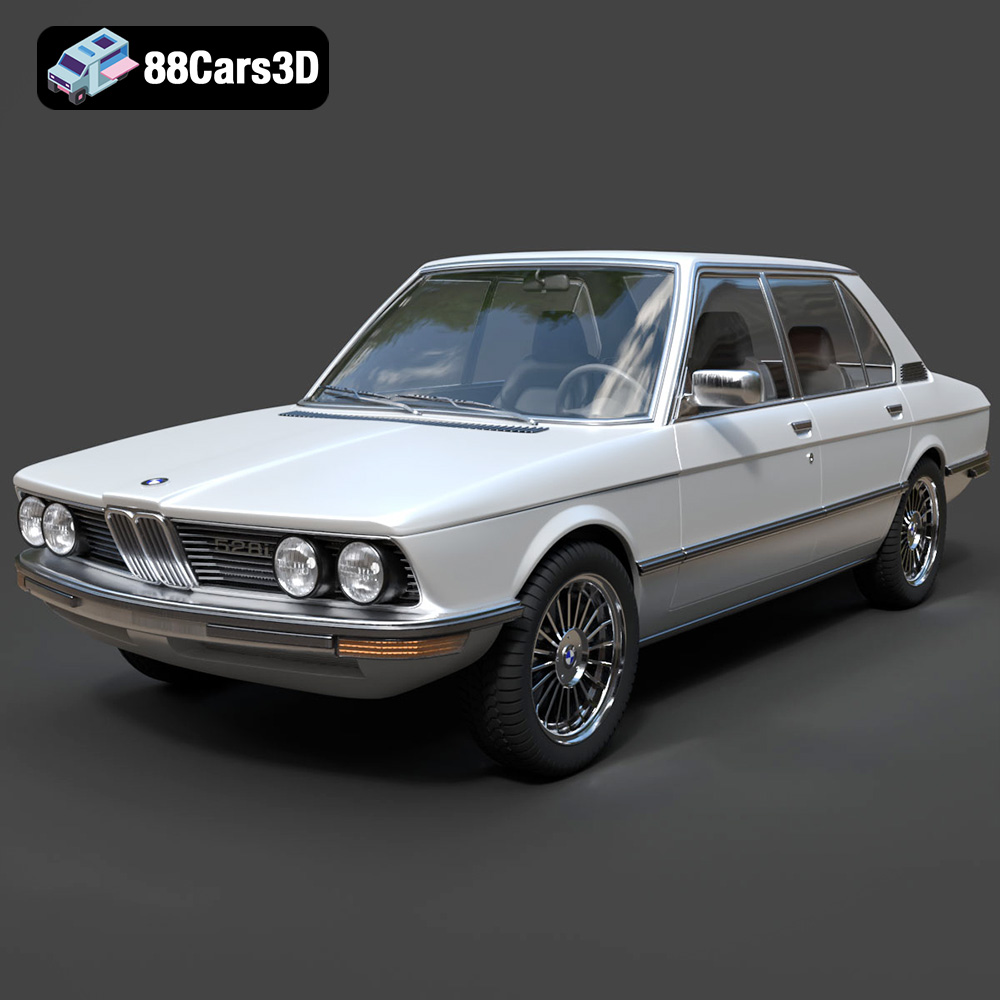
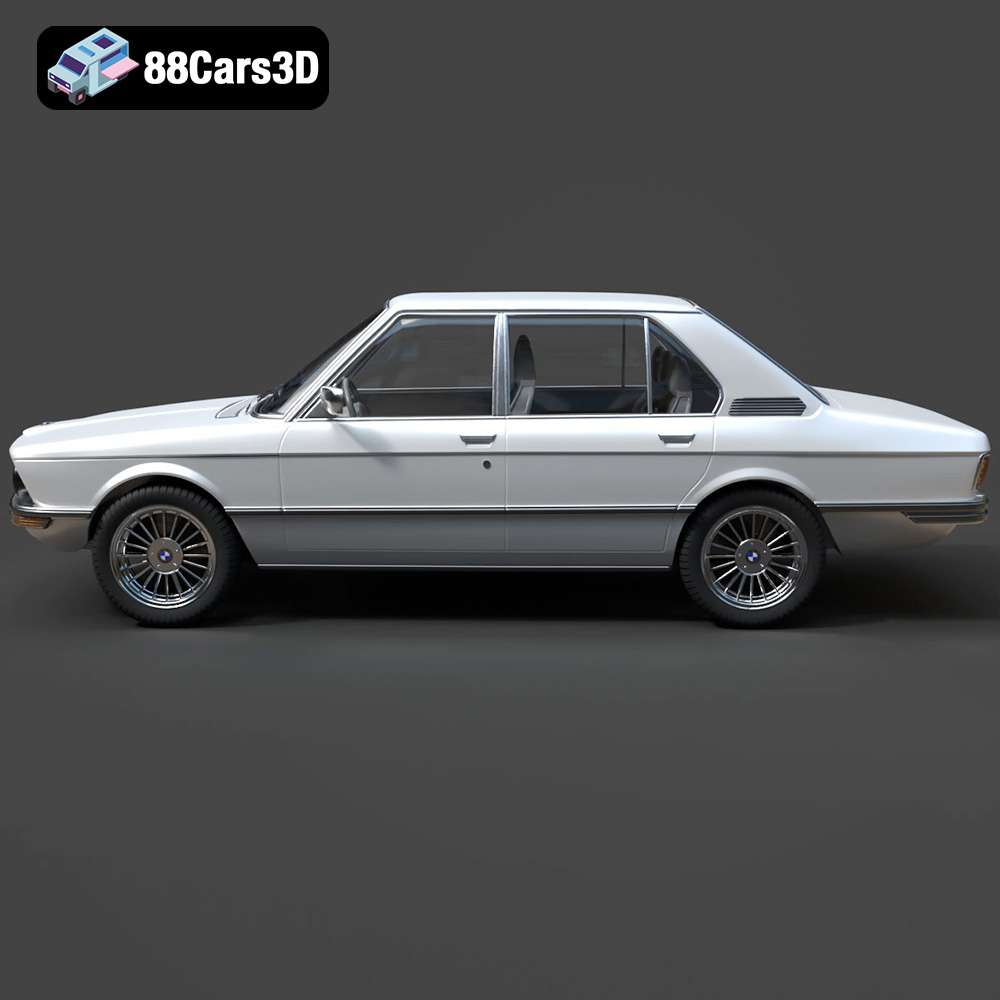
One such masterpiece of digital automotive preservation is the BMW 5 Series E12 528i 3D Model. This meticulously crafted asset captures the essence of the first-generation 5 Series with breathtaking accuracy, from its signature kidney grille to the subtle curves of its body panels. It’s an exemplary illustration of how technical prowess meets artistic dedication to deliver a digital asset that not only looks stunning but also performs flawlessly across diverse professional workflows. Whether you’re aiming for photorealistic renders that evoke nostalgia or integrating a vintage icon into a dynamic game environment, this model provides the foundational quality needed to achieve outstanding results.
The versatility of a 3D model is often defined by the file formats it supports. Each format is designed with specific use cases and technical considerations in mind, making the selection of the correct format crucial for efficient workflow and optimal results. The BMW 5 Series E12 528i 3D Model, available on 88cars3d.com, exemplifies this versatility by offering a comprehensive suite of industry-standard formats, ensuring it can be integrated into virtually any project pipeline.
The `.blend` file is the native format for Blender, a powerful open-source 3D creation suite. When a model is provided in `.blend` format, it means you’re getting a fully editable scene, complete with materials, textures, lighting setups, and sometimes even animation data. For the BMW E12 model, this translates to having direct access to its meticulously organized geometry, PBR (Physically Based Rendering) materials, and potentially even studio lighting configurations ready for immediate rendering within Blender’s Cycles or Eevee engines. This format is ideal for artists who use Blender as their primary DCC (Digital Content Creation) tool and require maximum flexibility for modifications, custom animations, or scene integration.
FBX (Filmbox) is a proprietary file format owned by Autodesk and is one of the most widely adopted interchange formats in the 3D industry. It excels at transferring comprehensive scene data, including meshes, materials, textures, animations, and even rigging information, between different software applications. For game development, particularly with Unreal Engine and Unity, `.fbx` is the de facto standard. Its ability to maintain hierarchical structures and embed textures makes it a robust choice for exporting 3D car models like the BMW E12 into real-time environments while preserving their intricate details and material assignments for game-ready performance.
OBJ (or .obj) is a simple, universally compatible 3D geometry definition file format. While it doesn’t support complex features like animation or rigging, it is excellent for transferring mesh data, UV coordinates, and basic material group information across virtually any 3D software. For the BMW E12 model, the `.obj` format guarantees that the core mesh structure, with its professional-grade topology, can be opened and utilized in any 3D application, from ZBrush to Maya to 3ds Max, making it an indispensable backup or foundational file for broad compatibility. Material definitions are often handled separately via an accompanying .mtl file.
GLB (GL Transmission Format Binary) is a modern, compact, and efficient format designed for delivering 3D models with materials and animations, specifically optimized for web-based applications, augmented reality (AR), and virtual reality (VR). It bundles all necessary assets (geometry, textures, animations) into a single binary file, making it incredibly fast to load and display. The BMW E12 model in `.glb` format is perfectly suited for showcasing the classic sedan in interactive web viewers, AR apps on mobile devices, or VR experiences, offering a seamless and performant visualization.
STL (Stereolithography) is another widely used format primarily for 3D printing and rapid prototyping. It represents a 3D model as a series of connected triangles (tessellation), describing only the surface geometry without color, texture, or other CAD attributes. While not ideal for rendering, the `.stl` version of the BMW E12 allows designers and enthusiasts to bring the digital model into the physical world, creating miniature replicas or conceptual prototypes. The quality of the `.stl` output directly depends on the cleanliness and manifold nature of the source mesh, which high-quality models like this one typically ensure.
PLY (Polygon File Format) is a versatile format for storing 3D data, particularly useful for scanned data, CAD, and scientific applications where precise mesh information is crucial. It can store various properties for each vertex and face, including color, transparency, normals, and texture coordinates. For the BMW E12, a `.ply` export offers a highly detailed, raw mesh representation that can be used for engineering analysis, reverse engineering workflows, or integration into specialized CAD software, providing a high degree of fidelity for technical review.
While not a universal file extension in the traditional sense, an “.unreal” file often refers to a pre-configured asset package or project snippet specifically set up for Unreal Engine. This means the BMW 5 Series E12 528i 3D Model isn’t just an `.fbx` dump; it likely includes optimized meshes, material instances with proper PBR setups, possibly LODs (Levels of Detail), and even basic physics assets, all within an Unreal Engine project structure. This provides a direct, plug-and-play solution for game developers and real-time visualization artists using Unreal, significantly cutting down on setup time and ensuring optimal performance within the engine.
The `.max` file is the native project format for Autodesk 3ds Max, a leading software for 3D modeling, animation, and rendering in professional visualization and design. Similar to the `.blend` file for Blender, a `.max` file for the BMW E12 model provides full access to the original scene, including editable geometry, V-Ray or Corona-ready materials, lighting, and camera setups. This is invaluable for professionals who use 3ds Max for high-end automotive rendering, architectural visualization integration, or complex animation sequences, allowing for complete customization and leveraging the full power of the software.
Recreating a classic vehicle like the BMW 5 Series E12 528i in 3D is a demanding endeavor that goes beyond simple modeling. It’s an act of digital preservation, requiring a deep appreciation for the original design and an obsessive commitment to accuracy. The appeal of such models lies in their ability to transport viewers back in time, evoking the spirit of an era through a perfectly rendered digital replica.
The journey of a high-quality 3D car model begins with extensive research. This involves gathering a wealth of reference images, blueprints, and even physical measurements of the actual vehicle. For the BMW E12 528i, this would have included studying various angles of the exterior, scrutinizing details like the chrome trim, headlight design, and wheel archeology. Expert modelers then translate these references into 3D geometry, building the car piece by piece. The process demands a keen eye for proportion, curvature, and surface fidelity. The “professional-grade topology and clean, optimized geometry” of the BMW E12 model attest to this meticulous approach, ensuring that every panel and component flows seamlessly, just as it would on the real car. This precision prevents common modeling issues like pinching or distortion during subdivision, crucial for photorealistic results.
While the exterior often grabs immediate attention, the true mark of a professional 3D car model lies in its hidden depths. A fully detailed interior and engine bay, as featured in the BMW E12 528i 3D Model, elevate its utility dramatically. For close-up renders, cinematic shots, or virtual tours, an accurately modeled dashboard, seats, steering wheel, and door panels are indispensable. Similarly, a detailed engine bay allows for compelling shots of the vehicle’s mechanics, essential for technical visualizations or educational content. This level of comprehensive detailing transforms a static model into a versatile asset capable of fulfilling a broad spectrum of professional demands, proving its worth for even the most demanding simulation environments.
Automotive rendering is a specialized field where the pursuit of photorealism is paramount. Whether for advertising, film, or architectural visualization, the goal is to produce images indistinguishable from actual photographs. The quality of the 3D car model is the single most critical factor in achieving this level of realism.
Modern photorealistic rendering relies heavily on Physically Based Rendering (PBR) workflows. This means materials are defined not by how they *look* but by how light interacts with their physical properties. The BMW 5 Series E12 528i 3D Model comes with “materials configured for realism, delivering accurate reflections and surface textures on paint, glass, rubber, and chrome components.” This indicates that the model utilizes PBR textures (Albedo/Base Color, Metallic, Roughness, Normal, etc.) that accurately simulate the metallic flake of the paint, the subtle imperfections of rubber, and the reflective qualities of chrome. Proper PBR setup ensures that the model reacts correctly to any lighting environment, producing consistent and believable results across different rendering engines like V-Ray, Corona Renderer, or OctaneRender in 3ds Max, or Cycles/Eevee in Blender.
Even the most perfectly textured model can look flat without skillful lighting. For classic cars, lighting plays a crucial role in highlighting their unique contours and reflecting their heritage. Studio lighting setups, often using large softboxes and rim lights, help accentuate the body lines and create dramatic reflections. Environmental lighting, mimicking real-world scenarios (e.g., golden hour sunlight in a scenic drive), can evoke a powerful sense of place and mood. With the BMW E12 528i 3D Model’s robust PBR materials, artists have the freedom to experiment with various lighting schemes, knowing the materials will respond realistically, bringing out the timeless elegance of the E12 silhouette.
The provision of both `.max` and `.blend` native files for the BMW E12 528i 3D Model is a significant advantage for rendering artists. For 3ds Max users, the `.max` file offers an immediate entry point into a production-ready scene. This often means pre-assigned materials, correctly scaled models, and sometimes even basic render setups. Artists can directly utilize their preferred renderers (V-Ray, Corona) to fine-tune materials, set up complex camera animations, or integrate the car into architectural visualization scenes with ease. Similarly, Blender artists benefit from the `.blend` file, allowing direct manipulation within their native environment. This eliminates tedious import processes, potential scaling issues, or the need to re-create materials from scratch, accelerating the rendering workflow significantly for both ecosystems.
In the realm of game development, AR, and VR, the balance between visual fidelity and performance is critical. High-quality 3D car models that are also optimized for real-time engines are invaluable assets for creating immersive, interactive experiences.
Game assets need to be visually appealing without overtaxing a game engine’s resources. “Professional-grade topology and clean, optimized geometry” are key phrases for game developers. This means the mesh is efficient, with an appropriate poly count for its level of detail, and that it has clean UV maps for texturing. For game development, a sophisticated asset like the BMW E12 528i 3D Model often includes Levels of Detail (LODs) – progressively simpler versions of the mesh that are swapped in at greater distances from the camera. This ensures that the car looks great up close but doesn’t waste precious processing power rendering unnecessary detail when seen from afar. Such optimization is crucial for maintaining high frame rates in demanding game environments or complex AR/VR scenes.
The inclusion of an “.unreal” file format or pre-configured assets for Unreal Engine highlights the model’s readiness for high-fidelity game development. This means the BMW 5 Series E12 528i 3D Model isn’t just a static mesh; it’s likely been prepared with:
This “game-engine ready” nature significantly reduces the integration time, allowing developers to focus on gameplay mechanics and world-building rather than asset preparation. For those seeking premium game assets, this level of preparedness is a major selling point.
Beyond traditional games, high-quality 3D car models are vital for simulations and training. Imagine a driving simulator designed to teach defensive driving in classic cars, or a virtual museum exhibit showcasing the evolution of automotive design. The detailed interior and accurate exterior of the BMW E12 528i 3D Model make it an ideal candidate for such interactive experiences. The authenticity of the digital replica allows for a more immersive and educational simulation, where users can truly appreciate the design and engineering of a classic vehicle in a dynamic, virtual setting.
The utility of professional 3D car models extends far beyond traditional rendering and game engines, pushing into emerging technologies like augmented reality, virtual reality, and even physical production.
Augmented Reality (AR) and Virtual Reality (VR) are revolutionizing how we interact with digital content. The `.glb` format, optimized for these platforms, makes the BMW 5 Series E12 528i 3D Model an excellent choice for creating immersive AR/VR experiences. Imagine placing a lifelike digital BMW E12 on your driveway using an AR app, or exploring its interior in a fully immersive VR environment. The `.glb` format ensures that these experiences are visually rich, performant, and easily deployable across various devices, from smartphones to high-end VR headsets. This opens up new avenues for marketing, educational content, and interactive product showcases.
While the digital world is vast, sometimes a physical manifestation is desired. The inclusion of `.stl` and `.ply` formats for the BMW E12 528i 3D Model provides a direct bridge to 3D printing and physical prototyping. Designers can print detailed scale models of the E12 for concept visualization, collectible replicas, or even functional parts for miniature projects. The `.stl` format, being the standard for 3D printers, ensures compatibility and ease of use. For more specialized engineering or analysis, the `.ply` format offers a dense and precise mesh representation suitable for advanced manufacturing techniques or detailed surface inspection, reinforcing the model’s versatility for both digital and physical applications.
When embarking on any project that requires 3D car models, the initial choice of asset can profoundly impact the final outcome. Quality, versatility, and technical integrity are paramount.
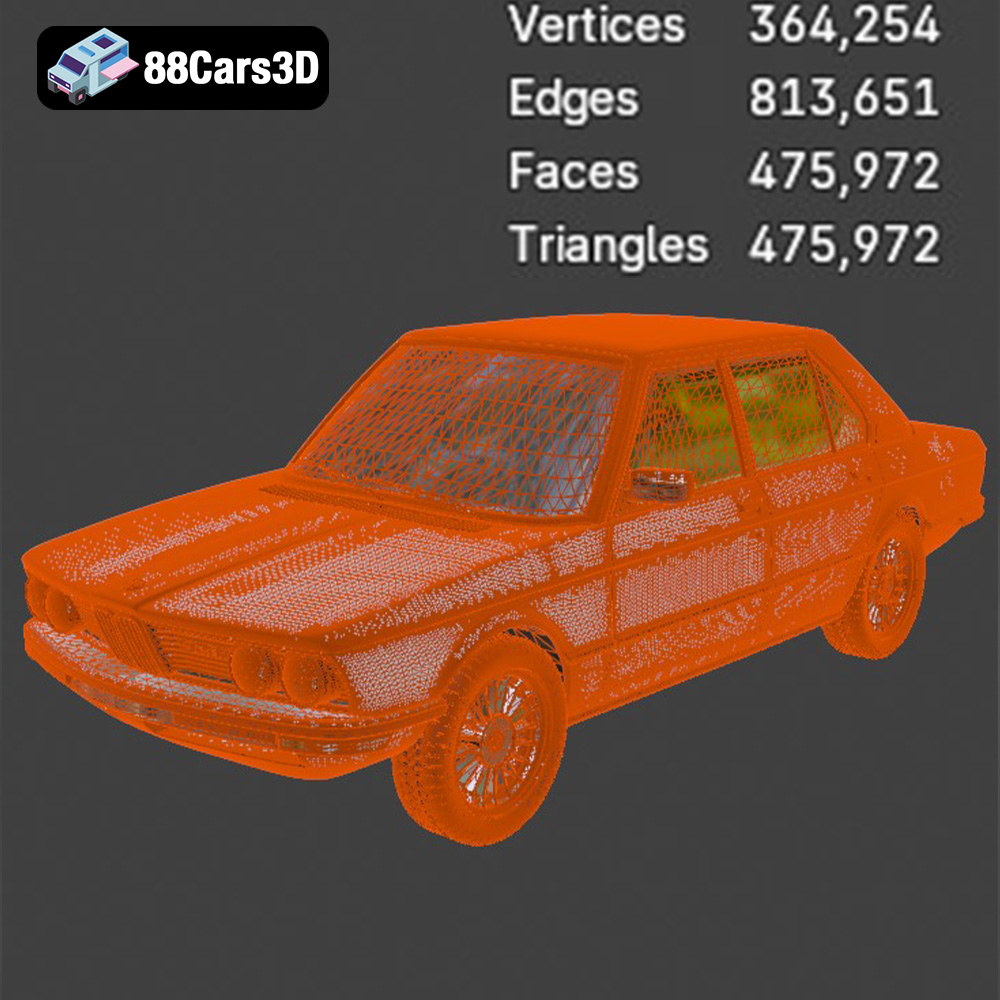
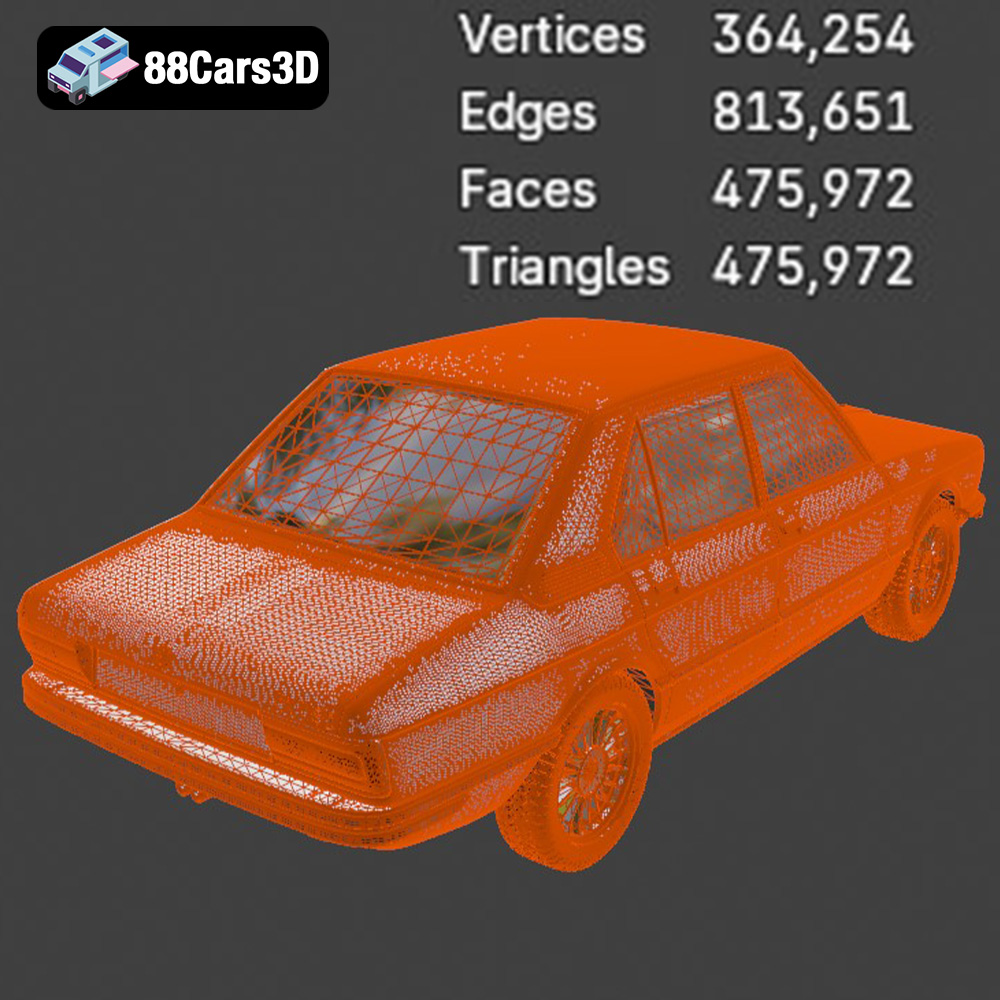
A high-quality 3D model, like the BMW E12 528i 3D Model, is characterized by its “professional-grade topology.” This means the mesh is clean, uses quad-based polygons predominantly, and has a logical edge flow. Good topology is crucial for smooth subdivision, deformation (if animating), and avoiding rendering artifacts. Similarly, clean UV mapping is essential for proper texturing. Well-laid-out UVs prevent stretching or distortion of textures and simplify the material application process. Before purchasing, examine wireframe renders or request details about the model’s poly count and UV layout to ensure it meets your project’s technical requirements.
Beyond the mesh, the quality of materials and the organization of the asset are vital. PBR-configured materials, as seen in the BMW E12 model, ensure photorealistic results across various rendering engines. Furthermore, a well-organized asset with clearly named objects, layers, and material slots saves significant time in production. A professional asset should be easy to navigate, modify, and integrate without extensive cleanup or re-linking of textures. Models found on platforms like 88cars3d.com often excel in this regard, providing well-structured files that integrate seamlessly into professional pipelines.
The digital realm offers unprecedented opportunities to recreate, visualize, and interact with the world around us, and few subjects captivate as intensely as classic automobiles. A high-quality 3D car model serves as the foundation for countless creative and technical endeavors, from stunning advertising campaigns to immersive virtual experiences. The BMW 5 Series E12 528i 3D Model stands as a testament to the power of meticulous craftsmanship and technical excellence, providing artists and developers with an unparalleled asset for their projects.
With its exacting accuracy, professional-grade topology, PBR-ready materials, and comprehensive suite of file formats (including .blend, .fbx, .obj, .glb, .stl, .ply, .unreal, and .max), this model is engineered for versatility and performance. Whether your goal is to produce breathtaking automotive rendering, develop engaging game assets for the next big title, or explore the frontiers of AR/VR, the BMW E12 528i offers the fidelity and flexibility required to achieve professional-grade results. It’s an investment in quality that streamlines your workflow and elevates your output.
For those seeking premium 3D assets that blend historical authenticity with modern technical standards, the BMW 5 Series E12 528i 3D Model from 88cars3d.com represents an exceptional choice. It’s more than just a model; it’s a gateway to bringing your creative visions to life with precision and passion.
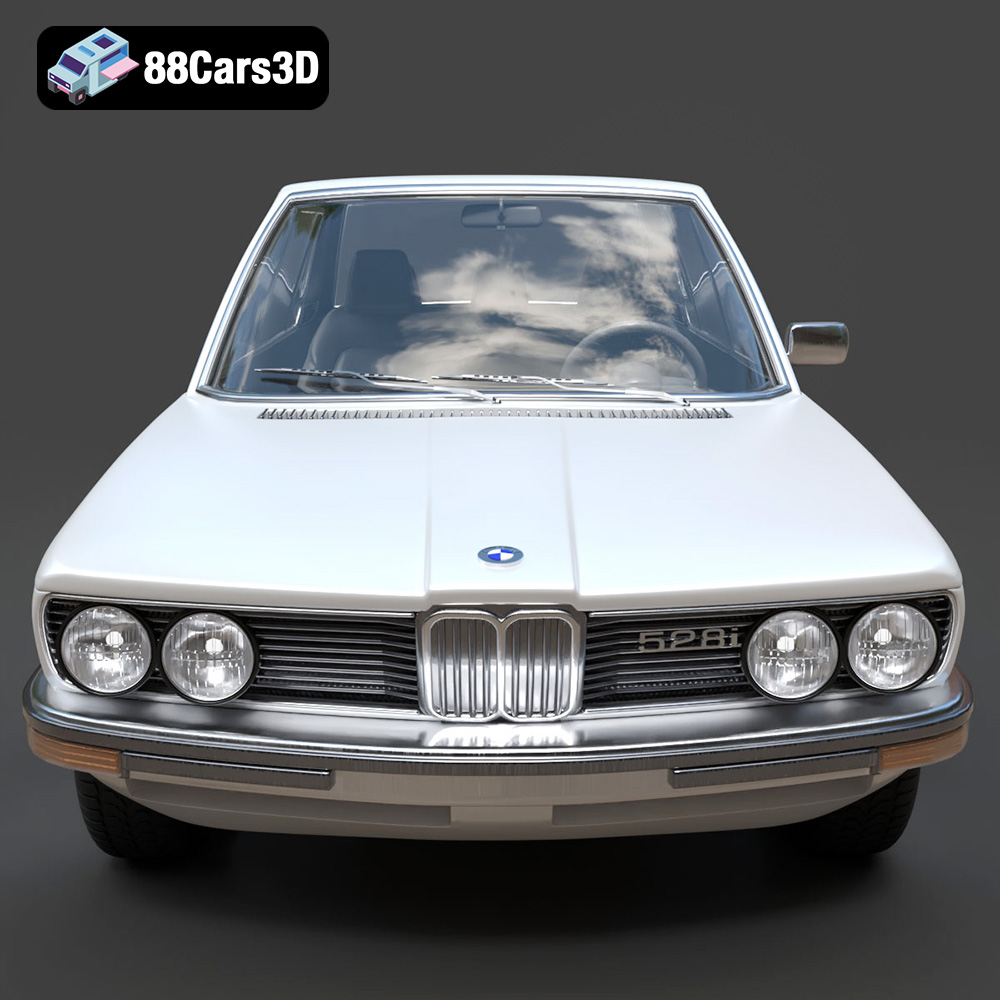
The BMW 5 Series E12 528i 3D model captures the essence of this influential classic sedan with uncompromising accuracy. Every exterior panel, lighting fixture, and badge has been meticulously recreated to deliver a digital asset suitable for professional visualization projects. This model provides an authentic representation of the first generation of the 5 Series, perfect for projects requiring automotive nostalgia and technical precision.
This product features professional-grade topology and clean, optimized geometry, ensuring smooth subdivision and reliable performance in various 3D environments. Materials are configured for realism, delivering accurate reflections and surface textures on paint, glass, rubber, and chrome components. The model includes a fully detailed interior and engine bay suitable for close-up renders and simulation environments.
Ideal for a wide range of applications, this vehicle model is ready for use in photorealistic rendering, film production, architectural visualization, dynamic game development (Unreal Engine, Unity), virtual reality (VR), and augmented reality (AR) experiences. Integrate this classic BMW into your digital scene instantly.
$14.99