Get 20% OFF All Premium 3D & STL Models!

In the fast-evolving world of digital content creation, the demand for high-fidelity 3D assets is skyrocketing across industries. From captivating automotive configurators and hyper-realistic product visualizations to immersive game environments and groundbreaking AR/VR experiences, the quality of 3D models directly impacts the final output’s realism and professional appeal. Achieving this level of detail and optimization from scratch requires immense time, skill, and resources. This is where pre-built, production-ready 3D car models become not just a convenience, but a critical component of efficient and high-quality workflows.
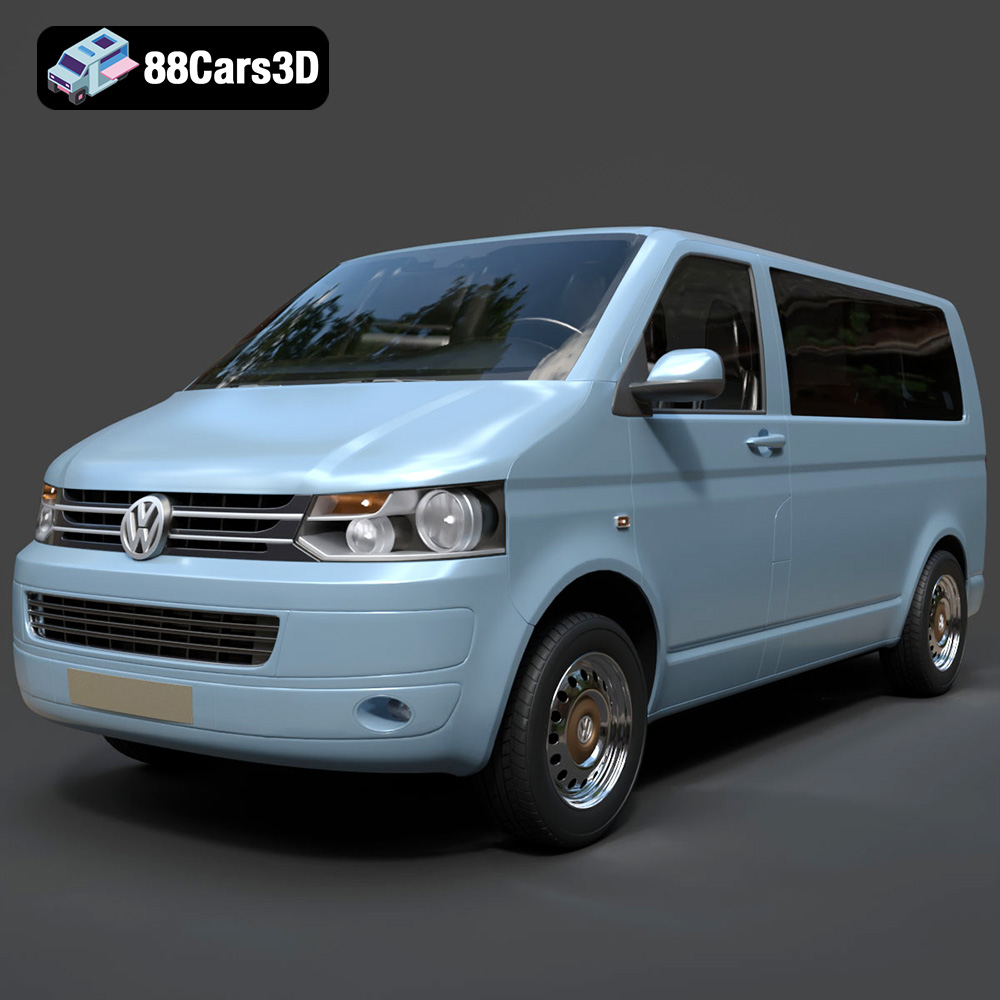
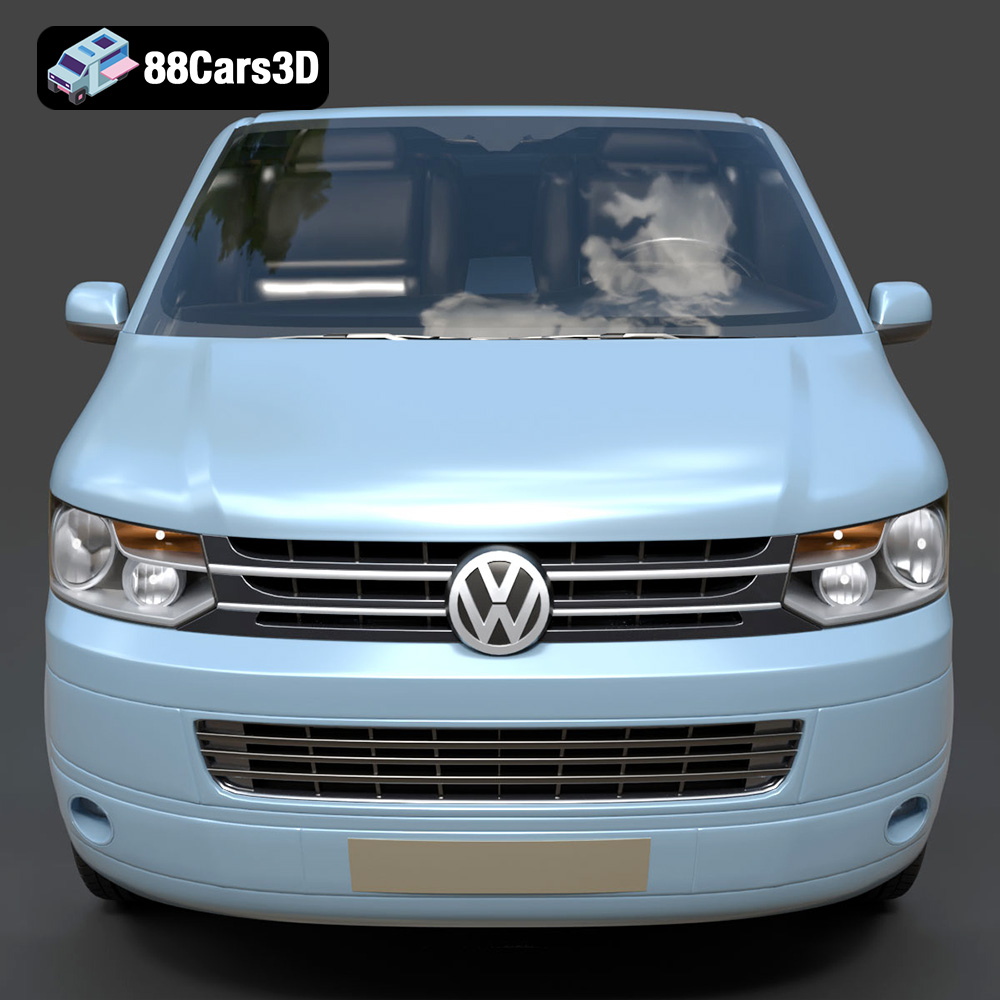
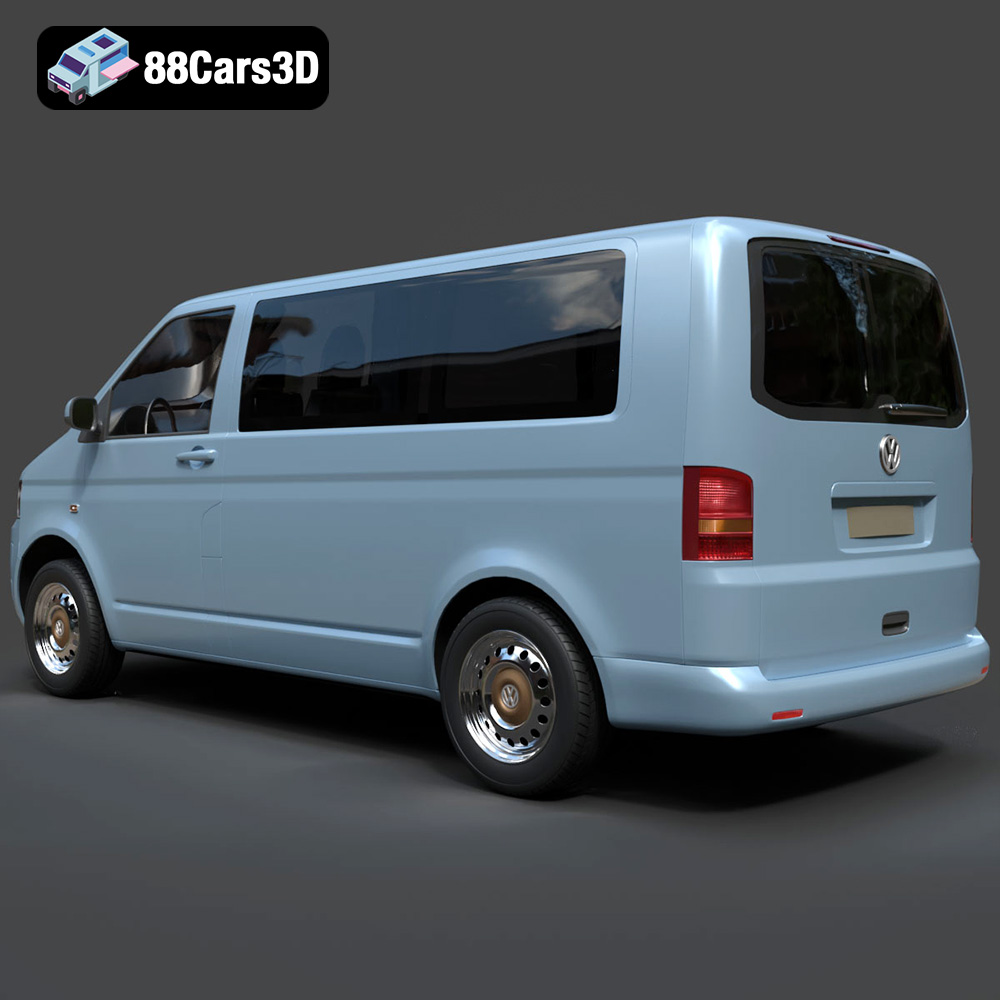
Today, we’ll delve into the technical intricacies that elevate a standard 3D vehicle model to a professional-grade asset, exploring its impact across various pipelines. We’ll specifically highlight how a versatile model like the Volkswagen Transporter T5 FL 2010 3D Model exemplifies these standards, offering a robust foundation for diverse creative and technical applications. This model, with its meticulously crafted geometry, realistic textures, and broad file format compatibility, stands as a prime example of the kind of asset that fuels modern digital production.
The automotive industry has been at the forefront of adopting 3D visualization, from concept design and engineering simulations to marketing campaigns and virtual showrooms. Beyond the traditional automotive sector, film, television, advertising, and even urban planning rely heavily on accurate vehicle representations. The increasing realism demanded by audiences means that 3D artists and developers must have access to assets that can seamlessly integrate into advanced rendering engines and real-time platforms, without compromising on visual fidelity or performance.
Consider the Volkswagen Transporter T5 FL 2010 3D Model. This isn’t just a generic van; it’s a precisely engineered digital replica of a widely recognized commercial vehicle. Its value lies not only in its aesthetic accuracy but in its underlying technical structure. Professionals seek models that are “production-ready”—meaning they come with clean topology, optimized UVs, and PBR-compliant materials, ensuring they behave predictably and consistently across different software and rendering pipelines. Such an asset saves countless hours of modeling, unwrapping, and texturing, allowing teams to focus on lighting, animation, and scene composition, ultimately accelerating project timelines and elevating the final product.
The choice of 3D model file format is critical and often dictated by the specific software, engine, or end-use case. A truly versatile asset, like the Volkswagen Transporter T5 FL 2010 3D Model available at 88cars3d.com, offers a suite of formats to ensure maximum compatibility and workflow efficiency. Understanding these formats is key to leveraging a 3D model’s full potential.
The .blend format is Blender’s native file type. When you purchase a model like the Volkswagen Transporter T5 FL 2010 3D Model with a .blend file included, you’re gaining access to a fully editable Blender scene. This typically means the mesh data, materials, textures, lighting setup, camera configurations, and even animation data are all contained within a single file. For Blender users, this offers unparalleled flexibility: you can dissect the model, modify its topology, adjust materials, or re-rig it directly within its native environment. It’s ideal for projects where extensive customization or integration into a Blender-centric pipeline is required, ensuring all original data and scene settings are preserved.
The .fbx (Filmbox) format is an industry-standard format developed by Autodesk, widely adopted for its excellent interoperability, especially between DCC (Digital Content Creation) software and game engines. It supports not only geometry and UVs but also materials, textures, animations, skinning, and camera data. This makes it the go-to format for complex scenes and animated assets destined for game engines like Unreal Engine and Unity, or for transferring models between 3ds Max, Maya, and Cinema 4D. Its robustness for real-time applications stems from its efficient handling of complex data hierarchies. The .obj (Wavefront OBJ) format, while older, remains a universal workhorse. It’s a simpler format, primarily storing geometry (vertices, normals, UVs, faces) and material references (.mtl file). While it doesn’t support animation or complex scene data, its widespread compatibility across virtually all 3D software makes it an excellent choice for basic mesh transfer and archiving, serving as a reliable fallback where other formats might fail. For simple model exchange, .obj is a solid, universally recognized standard.
The .glb (GLB, GL Transmission Format Binary) format is a relatively new but rapidly growing standard, particularly optimized for AR, VR, and web-based visualization. It’s the binary form of glTF, packaging 3D model data (geometry, materials, textures, animations) into a single, compact file. Its efficiency and native support in web browsers and many AR/VR platforms make it ideal for delivering interactive 3D content online. For users wanting to showcase the Volkswagen Transporter T5 FL 2010 in a web viewer or augmented reality experience, .glb is the perfect choice. The .stl (STereoLithography) format is synonymous with 3D printing. It represents a 3D model as a series of connected triangles, describing only the surface geometry without color, texture, or material information. While not suitable for rendering, it is the standard input for most 3D printers and CAD software, making it essential for physical prototyping or model fabrication. Lastly, the .ply (Polygon File Format) format is designed for storing 3D data from 3D scanners. It can store a wider range of properties than .stl, including color, transparency, and sometimes even confidence values for each vertex or face. It’s a precision mesh format often used in scientific visualization, reverse engineering, and applications where detailed point cloud or polygonal data analysis is paramount.
The .unreal format refers to assets specifically configured and sometimes exported directly from Unreal Engine, or prepared with specific Unreal Engine integrations in mind. While often based on .fbx for geometry, this designation implies a level of optimization and setup that makes it immediately deployable within the engine, possibly including collision meshes, LODs (Levels of Detail), and shader network references tailored for Unreal’s rendering pipeline. This streamlines the process of integrating complex assets like the Volkswagen Transporter T5 FL 2010 into real-time environments. Finally, the .max format is Autodesk 3ds Max’s native file format. Like .blend, it contains the complete scene data, including geometry, materials, textures, lighting, cameras, animation, and scene settings. For 3ds Max users, this format offers the highest degree of editability and preservation of all project information, making it essential for professional studios heavily reliant on 3ds Max for architectural visualization, animation, or high-end rendering.
The true value of a premium 3D car model, such as the Volkswagen Transporter T5 FL 2010, extends far beyond its surface appearance. It’s built upon a foundation of meticulous technical execution, ensuring it performs flawlessly and flexibly in any professional pipeline. This foundation comprises clean geometry, efficient UV mapping, and sophisticated material and texture application.
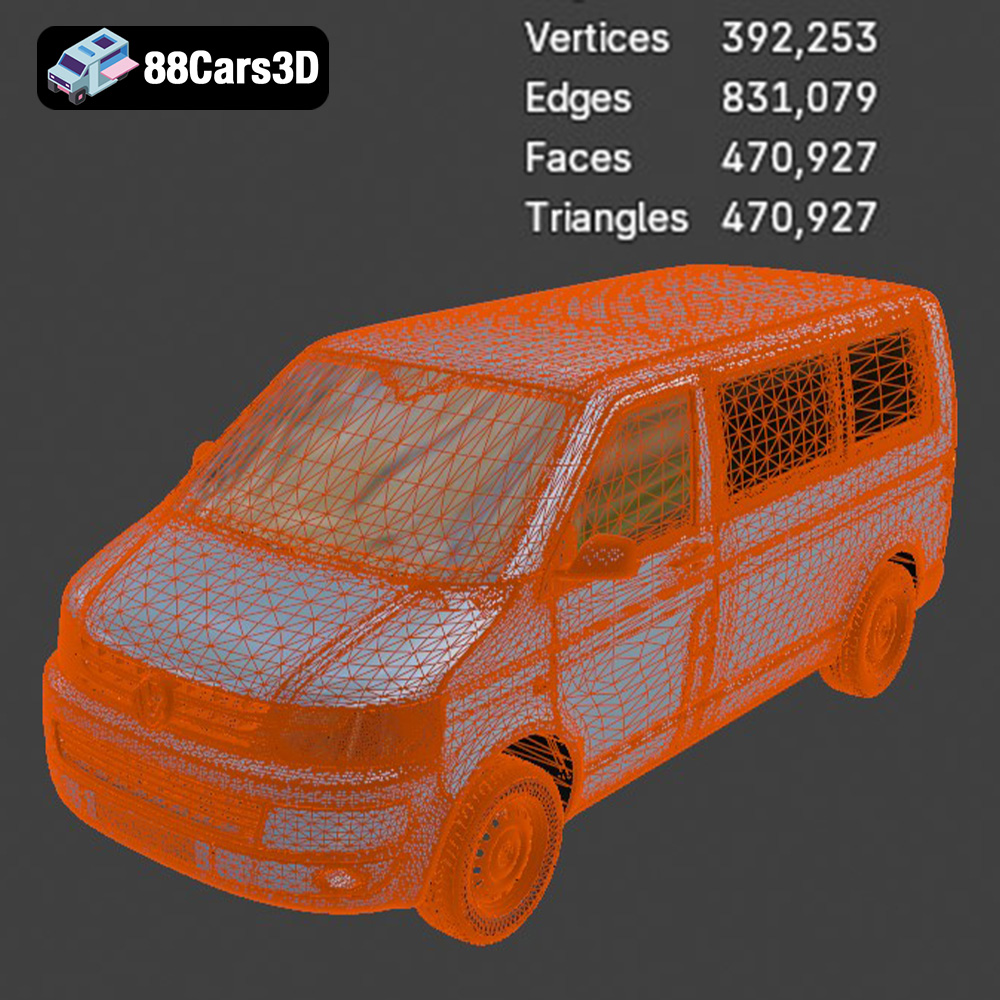
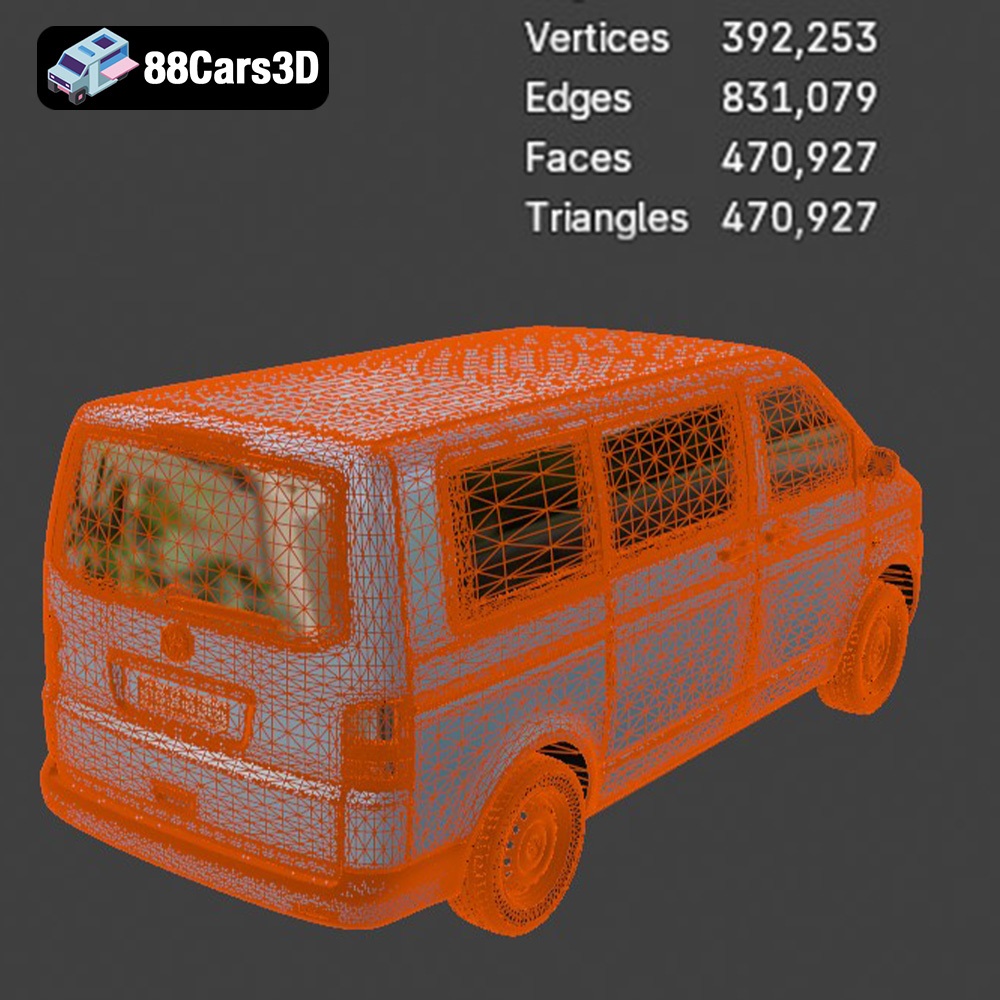
Clean topology is the bedrock of a high-quality 3D model. This means the mesh consists predominantly of four-sided polygons (quads), with a logical and flowing edge distribution. Good topology is crucial for several reasons: it ensures smooth deformations during animation, facilitates easy selection and modification during modeling, and prevents rendering artifacts such as pinching or undesirable shading. For an automotive model, areas like door seams, wheel arches, and panel lines demand particularly careful topological considerations to accurately capture the vehicle’s design language.
Optimal polygon count is equally vital. A professional model strikes a balance between visual detail and performance efficiency. For the Volkswagen Transporter T5 FL 2010 3D Model, this means enough polygons to capture the vehicle’s distinct curves and details without overburdening real-time engines or increasing render times unnecessarily. High-quality models often come with various Levels of Detail (LODs) to scale resolution based on distance from the camera, further enhancing performance without sacrificing close-up fidelity.
UV mapping is the process of flattening the 3D surface of a model into a 2D space, allowing textures to be painted or applied without distortion. Flawless UVs are non-overlapping, efficiently utilize the UV space, and have strategically placed seams that are hidden or minimized. For an automotive asset like our featured Transporter, distinct parts—body panels, windows, tires, interior elements—will have their own carefully unwrapped UVs, often spread across multiple UV tiles (UDIMs) for incredibly high-resolution texture application. This meticulous approach ensures that custom liveries, wear-and-tear details, or specific material properties (like the subtle imperfections on a painted surface) can be applied with precision, contributing significantly to the final realism.
Physically Based Rendering (PBR) is the modern standard for materials and texturing, aiming to simulate how light interacts with surfaces in the real world. A premium 3D model like the Volkswagen Transporter T5 FL 2010 will invariably feature PBR-compliant materials and textures. This involves a suite of texture maps—like Albedo/Base Color, Metallic, Roughness, Normal, and Ambient Occlusion—that accurately define the surface properties. When these maps are correctly implemented, the model reacts realistically to any lighting conditions, making it look convincing whether it’s in a studio render or a brightly lit outdoor scene in a game engine. The “realistic materials and textures” mentioned in the product description are a testament to this PBR methodology, ensuring authenticity down to the smallest details of the vehicle’s paint, glass, and rubber components.
The inherent versatility of a meticulously crafted 3D model like the Volkswagen Transporter T5 FL 2010 makes it an indispensable asset across a multitude of professional domains. Its robust design and multiple file formats ensure seamless integration into varied production pipelines, from high-fidelity rendering to interactive real-time experiences.
For advertising agencies, marketing departments, and automotive design studios, the ability to generate stunning, photorealistic renders is paramount. The Volkswagen Transporter T5 FL 2010 3D Model, with its detailed geometry and PBR textures, becomes a perfect candidate for creating compelling marketing visuals. Imagine showcasing the Transporter in a sleek urban setting or a rugged outdoor environment, highlighting its functional aesthetic and versatility. It can be integrated into architectural visualizations to populate scenes, giving context and life to unbuilt structures. Design reviews can use the model for quick visual iterations of new paint schemes, accessory placements, or even conceptual modifications without the need for physical prototypes, saving significant time and cost. The .max and .blend formats are especially valuable here, allowing artists to fully customize lighting, camera angles, and rendering parameters for maximum impact.
The gaming industry and real-time visualization platforms demand assets that are not only visually impressive but also highly optimized for performance. The Volkswagen Transporter T5 FL 2010 3D Model, provided in game-engine-ready formats like .fbx and .unreal, is ideally suited for this. Developers can quickly import the model into Unreal Engine or Unity, confident that its clean geometry and optimized materials will perform efficiently. It can serve as a key vehicle in open-world games, a background asset in racing simulations, or a functional element in urban planning simulators. Its inclusion of LODs (if applicable, which is standard for professional game assets) ensures that performance is maintained regardless of distance, contributing to a smoother and more immersive player experience. Collision meshes and proper material setup are typically part of a game-ready asset, facilitating quick implementation into physics engines.
With the rise of Augmented Reality (AR) and Virtual Reality (VR), companies are constantly seeking to create immersive experiences. The .glb format of the Volkswagen Transporter T5 FL 2010 3D Model makes it perfect for web-based AR configurators, virtual showrooms, or training simulations where users can interact with the vehicle in a digital space. Its optimized nature ensures quick loading times and smooth interactions in resource-constrained AR/VR environments. Beyond virtual applications, the .stl and .ply formats open doors for digital fabrication. Designers can use the model to create physical prototypes through 3D printing, enabling tangible review of scale models or custom parts, bridging the gap between digital design and the physical world for practical applications like miniature dioramas or engineering mock-ups.
The true measure of a professional 3D car model’s utility lies in its seamless integration into specific software workflows. The multi-format availability of the Volkswagen Transporter T5 FL 2010 3D Model ensures that artists and developers, regardless of their preferred DCC tool or game engine, can leverage its quality immediately.
For many veteran architectural visualization studios and automotive rendering houses, 3ds Max remains the cornerstone. When working with the .max file of the Volkswagen Transporter T5 FL 2010, artists gain full access to the original scene setup. This means they can:
This level of native file access greatly accelerates the creative process, enabling artists to achieve bespoke results without starting from scratch.
The open-source powerhouse Blender has seen a surge in professional adoption. With the .blend file for the Volkswagen Transporter T5 FL 2010, Blender artists receive a fully configured asset. This allows for:
The .blend file ensures that Blender users can hit the ground running, fully utilizing their familiar environment to push the model’s potential.
For game developers and real-time experience creators, Unreal Engine is a top choice. The .fbx and specifically the .unreal formats of the Volkswagen Transporter T5 FL 2010 3D Model are tailored for this environment:
This ready-to-use nature significantly reduces the technical overhead, allowing developers to focus on gameplay and interactive elements.
In a competitive digital landscape, efficiency and quality are paramount. Sourcing premium 3D models like the Volkswagen Transporter T5 FL 2010 from a reputable marketplace such as 88cars3d.com offers undeniable advantages that streamline production and elevate project outcomes.
The most immediate and significant benefit of acquiring a professional 3D car model is the tremendous time and resource savings. Building a high-fidelity vehicle from scratch—including meticulous modeling, UV unwrapping, PBR texturing, and multi-format export—can take hundreds of hours for even experienced artists. This time translates directly into significant labor costs. By investing in a pre-built asset from 88cars3d.com, studios can instantly integrate a production-ready model into their workflow, allowing their talented artists to focus on scene composition, lighting, animation, and other value-added creative tasks that cannot be outsourced. This not only accelerates project timelines but also reduces overall production expenses.
When you purchase a model like the Volkswagen Transporter T5 FL 2010 3D Model, you’re not just buying geometry; you’re investing in a proven standard of quality. Professional marketplaces like 88cars3d.com curate their collections, ensuring that models meet rigorous technical specifications for topology, UV layout, material consistency, and file format integrity. This means fewer surprises down the line:
In essence, buying from 88cars3d.com means leveraging expert craftsmanship to enhance your own projects, ensuring a solid foundation of quality that allows your creative vision to truly shine.
The digital frontier continues to expand, demanding ever-increasing levels of realism, performance, and creative flexibility. For professionals across automotive design, game development, architectural visualization, and interactive media, the quality of foundational 3D assets is paramount. We’ve explored how a meticulously crafted model, exemplified by the Volkswagen Transporter T5 FL 2010 3D Model, embodies the technical excellence required to thrive in this environment. Its clean geometry, PBR-ready materials, and comprehensive suite of file formats (.blend, .fbx, .obj, .glb, .stl, .ply, .unreal, .max) ensure unparalleled versatility and seamless integration into virtually any professional workflow.
From accelerating render times in 3ds Max, to empowering dynamic scene creation in Blender, and enabling fluid real-time experiences in Unreal Engine, such an asset is more than just a model—it’s a productivity enhancer and a quality guarantor. By choosing professionally developed 3D car models from trusted sources like 88cars3d.com, artists and studios can save invaluable time, maintain a high standard of visual fidelity, and allocate their creative energy where it matters most. Invest in quality assets, and build a future where your digital creations stand out with unparalleled realism and performance.
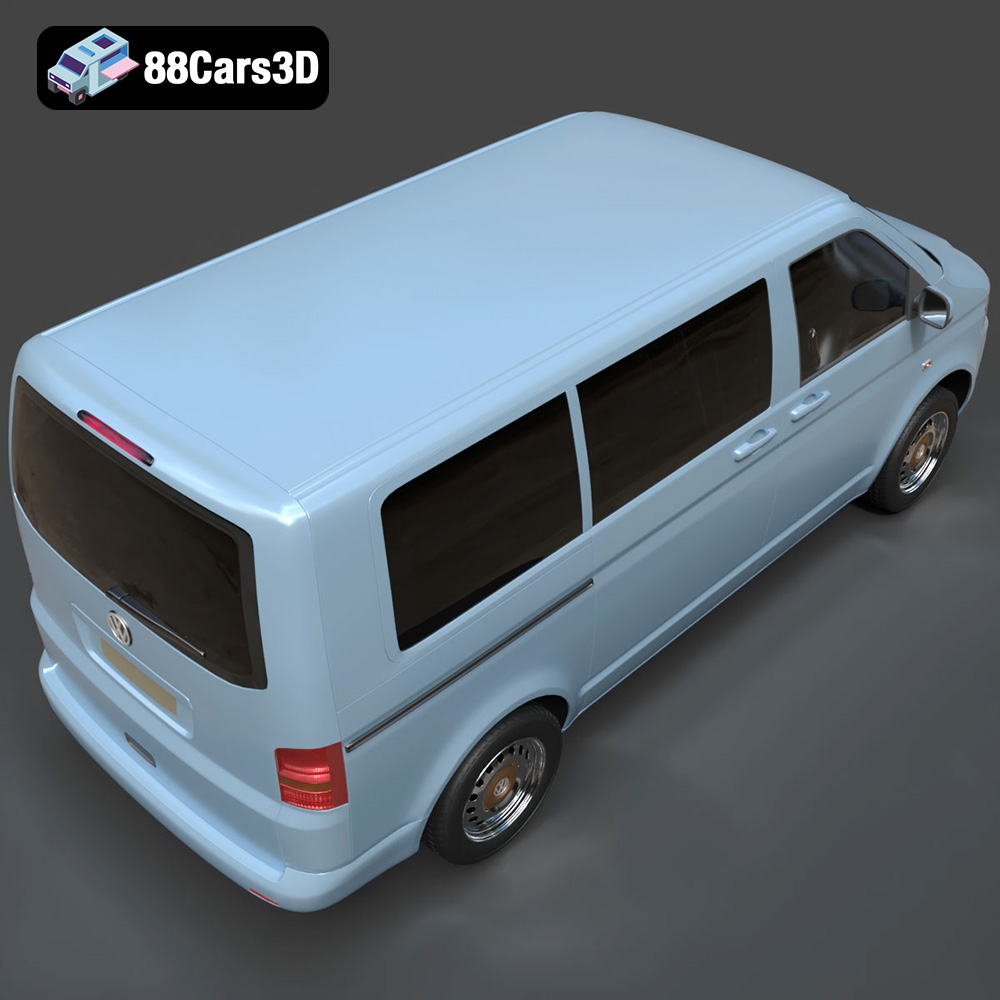
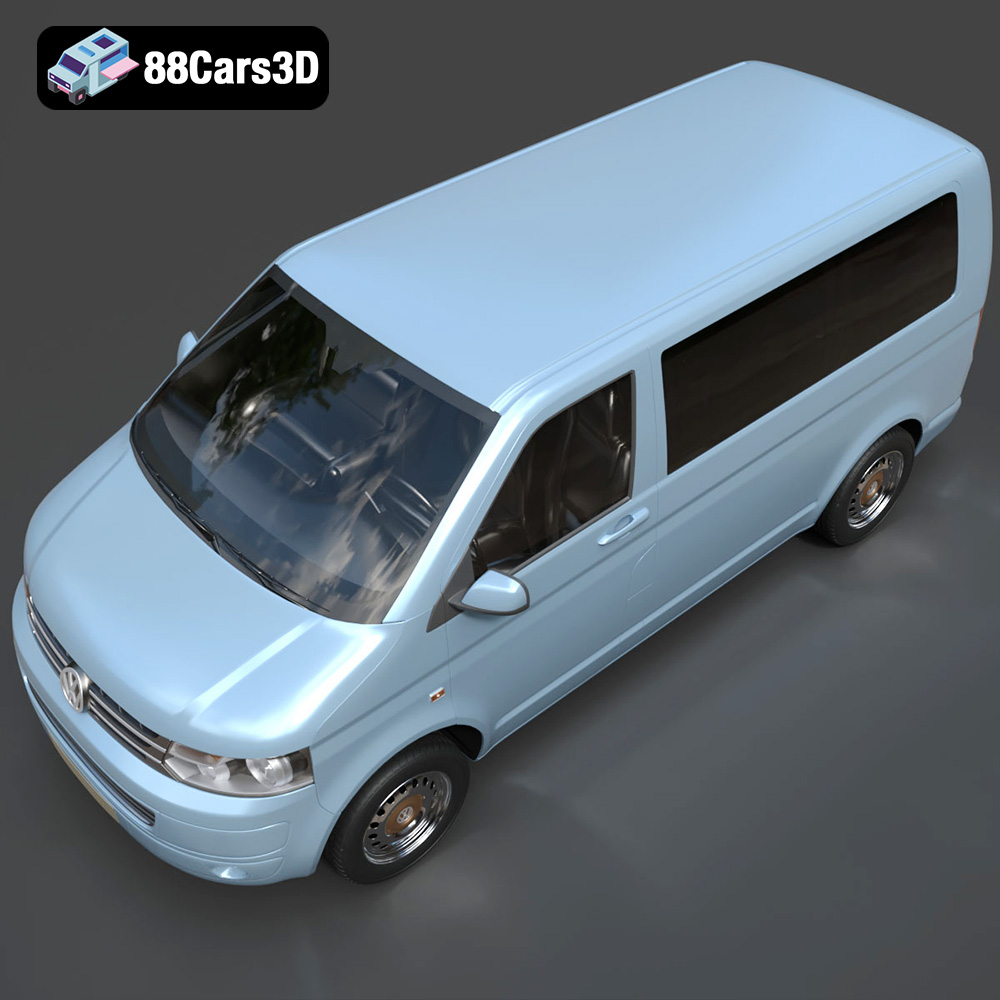
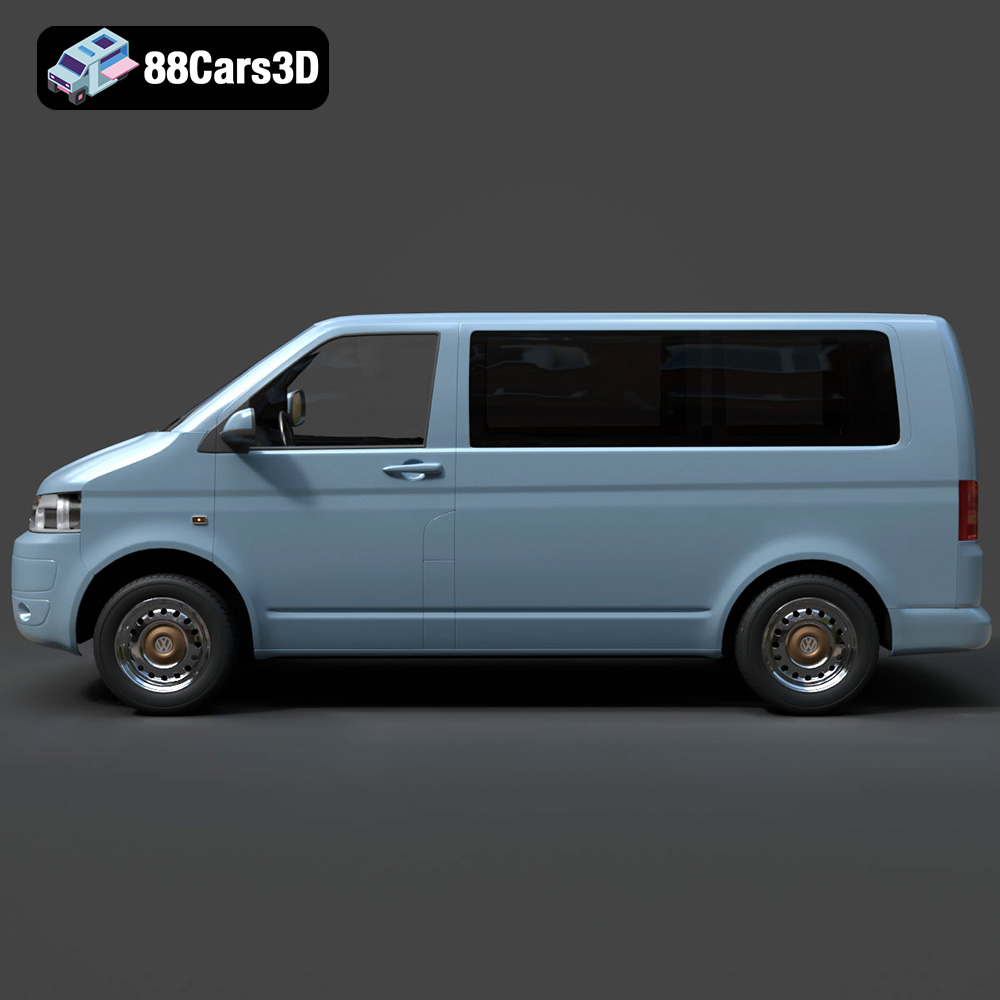
Explore the precision of the Volkswagen Transporter T5 FL 2010 3D Model. This asset provides an accurate digital representation of the versatile commercial vehicle, meticulously crafted to ensure visual fidelity for professional production pipelines. It captures the characteristic design and functional aesthetic of the T5 generation facelift. The model boasts exceptionally clean, production-ready geometry optimized for performance across different platforms. It features realistic materials and textures applied across the body, lighting units, wheels, and interior components, guaranteeing a detailed and authentic appearance in every scene. Perfect for integration into simulations, architectural visualizations, automotive configurators, and immersive game environments. The included file set offers comprehensive compatibility, allowing immediate deployment into both real-time engines and advanced rendering software.
$22.99