Get 20% OFF All Premium 3D & STL Models!

In the dynamic world of 3D visualization, game development, and simulation, the quality of your assets can make or break a project. From architectural fly-throughs to immersive open-world games, a highly detailed and technically sound 3D model brings an unparalleled level of authenticity. This is especially true when depicting urban environments, where realistic vehicles are essential for grounding scenes in reality and enhancing visual storytelling.
Professional designers, artists, and developers constantly seek assets that not only look exceptional but are also optimized for their specific workflows. This demand for quality and versatility is precisely what products like the New Bus For London 3D Model aim to fulfill. Capturing the iconic design and functional elegance of a modern city bus, this asset provides a robust foundation for a myriad of applications, demonstrating the pinnacle of professional 3D car models available today.
In this comprehensive guide, we will delve into the technical intricacies that define a superior 3D vehicle model, explore diverse professional applications, and highlight how a meticulously crafted asset, such as the New Bus For London, can streamline your production pipeline and elevate your final output. Whether your focus is on stunning automotive rendering, creating engaging game assets, or developing sophisticated simulations, understanding these principles is key to achieving photorealistic results and efficient project delivery.
At the heart of any outstanding 3D project lies the quality of its core assets. For vehicles, this means more than just a visually appealing exterior; it encompasses a complex interplay of technical specifications that ensure seamless integration, optimal performance, and future-proof adaptability. A truly professional 3D model, like the New Bus For London 3D Model available at 88cars3d.com, is built on principles of clean geometry, accurate scale, and meticulous organization.
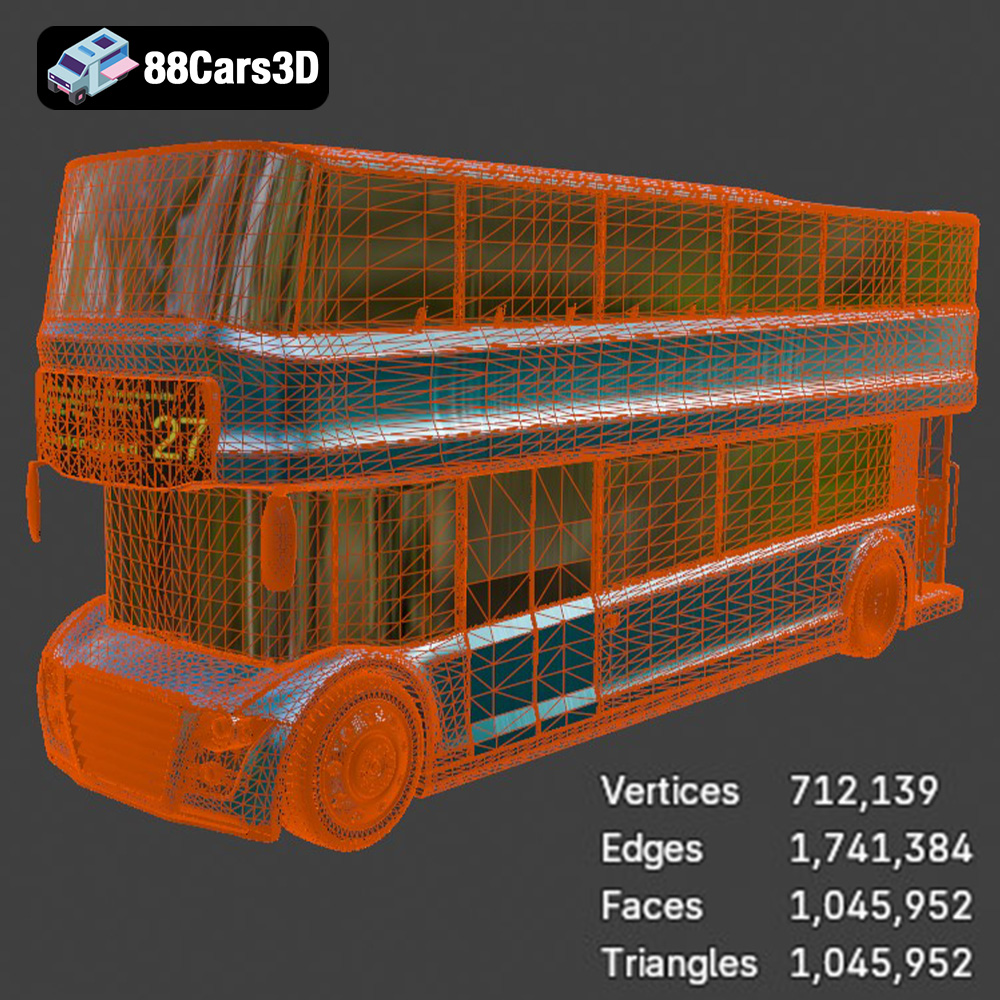
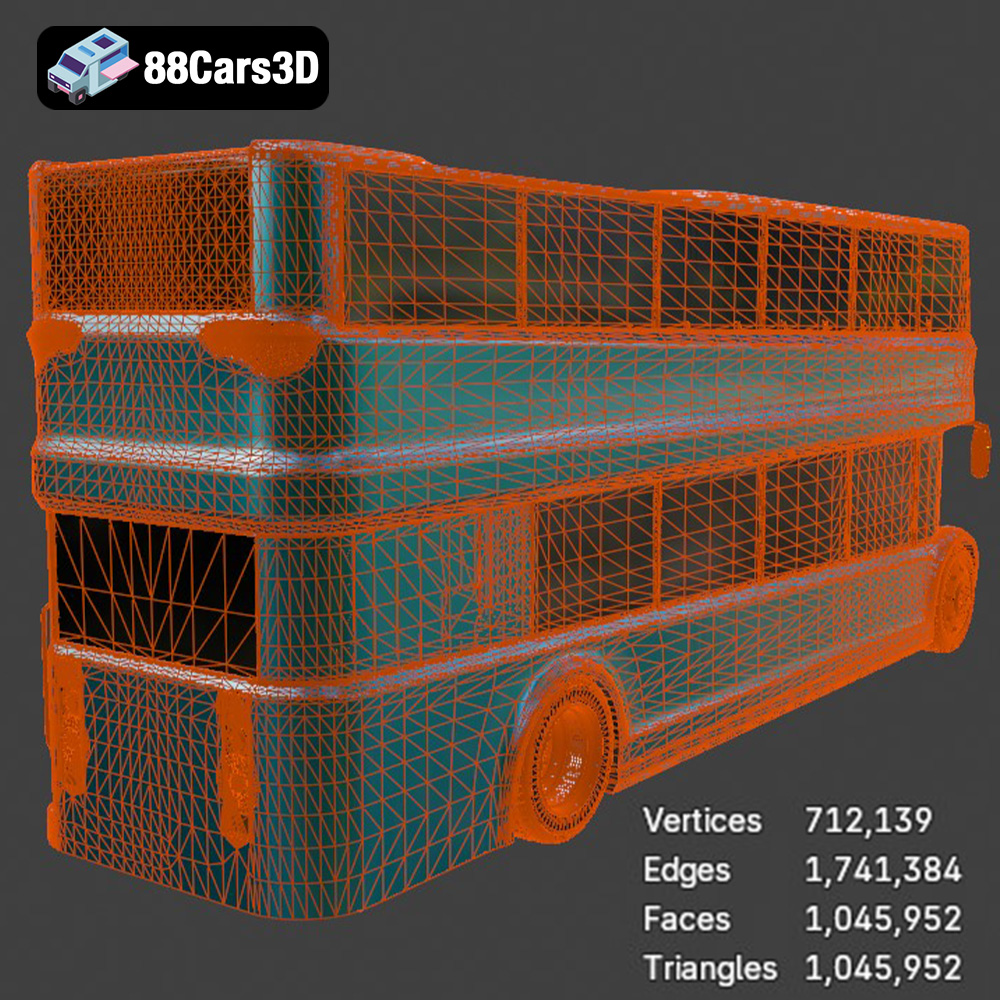
The mesh topology – the arrangement of polygons that form the surface of a 3D model – is paramount. The New Bus For London model boasts clean, quad-dominant topology, which is a gold standard in 3D modeling. Quads (four-sided polygons) deform more predictably than triangles (three-sided polygons) when animated or subdivided, leading to smoother results with less distortion. This makes the model ideal for animation workflows, where realistic movement of doors, wheels, or suspension components is critical. Furthermore, a clean mesh facilitates easier texture mapping, rigging, and future modifications.
Equally vital are optimized UV layouts. UV mapping is the process of flattening the 3D surface into a 2D space, allowing textures to be applied accurately. Well-prepared UVs minimize stretching and distortion of textures, making the most of texture resolution and allowing artists to paint details precisely. For complex assets like a city bus, efficient UV packing ensures that texture atlases are utilized effectively, reducing memory footprint in real-time applications and simplifying texturing efforts in rendering pipelines.
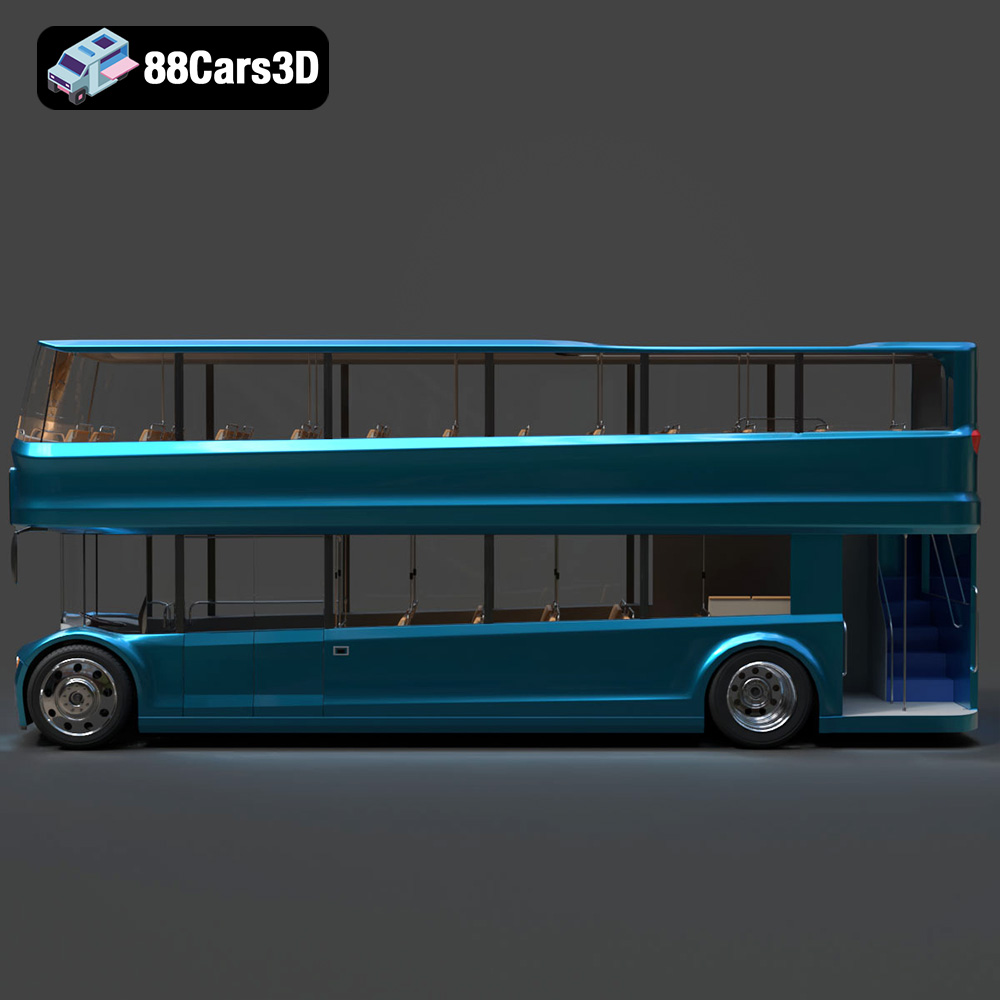
Accuracy in real-world scale is often overlooked but crucial for seamless integration. A 3D model built to correct dimensions instantly fits into architectural visualizations, urban planning scenarios, or simulations without requiring tedious resizing and recalibration. The New Bus For London 3D Model adheres to accurate real-world scale, ensuring it slots perfectly into any street scene or virtual environment you are building.
Beyond scale, the internal organization of a 3D asset significantly impacts its usability. A well-structured hierarchy with logically named objects, grouped components, and properly set pivot points is a hallmark of a professional asset. For instance, the doors of the New Bus For London model are separated and have their pivots correctly set, making them ready for immediate animation. The chassis, wheels, and interior elements are similarly organized, simplifying rigging, material assignments, and scene management for even the most complex automotive rendering projects.
Navigating the diverse landscape of 3D model file formats is a crucial skill for any professional working with digital assets. Each format serves specific purposes, offering unique advantages in terms of compatibility, data integrity, and optimization for particular workflows. Understanding which format to use and when can significantly streamline your production pipeline, prevent conversion headaches, and ensure your assets perform optimally across different software and platforms. The New Bus For London 3D Model exemplifies this versatility by providing a comprehensive suite of file formats, catering to virtually any professional need.
The availability of these diverse formats for the New Bus For London 3D Model underscores its professional-grade nature and commitment to broad compatibility, empowering artists and developers to choose the best option for their specific project needs.
For architectural visualization, urban planning, and cinematic productions, photorealism is the ultimate goal. The presence of believable 3D car models, especially iconic public transport vehicles, can transform a static scene into a living, breathing urban landscape. The New Bus For London 3D Model is meticulously crafted to excel in high-fidelity automotive rendering and visualization scenarios.
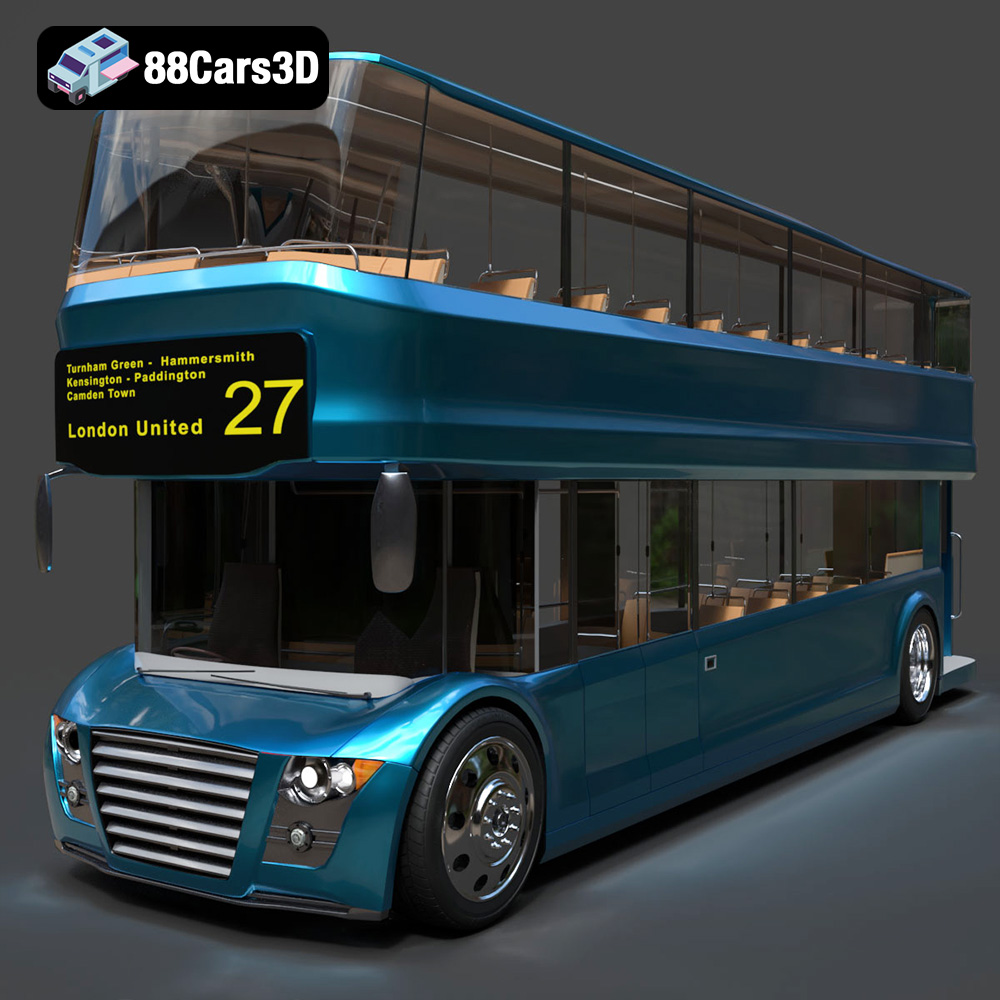
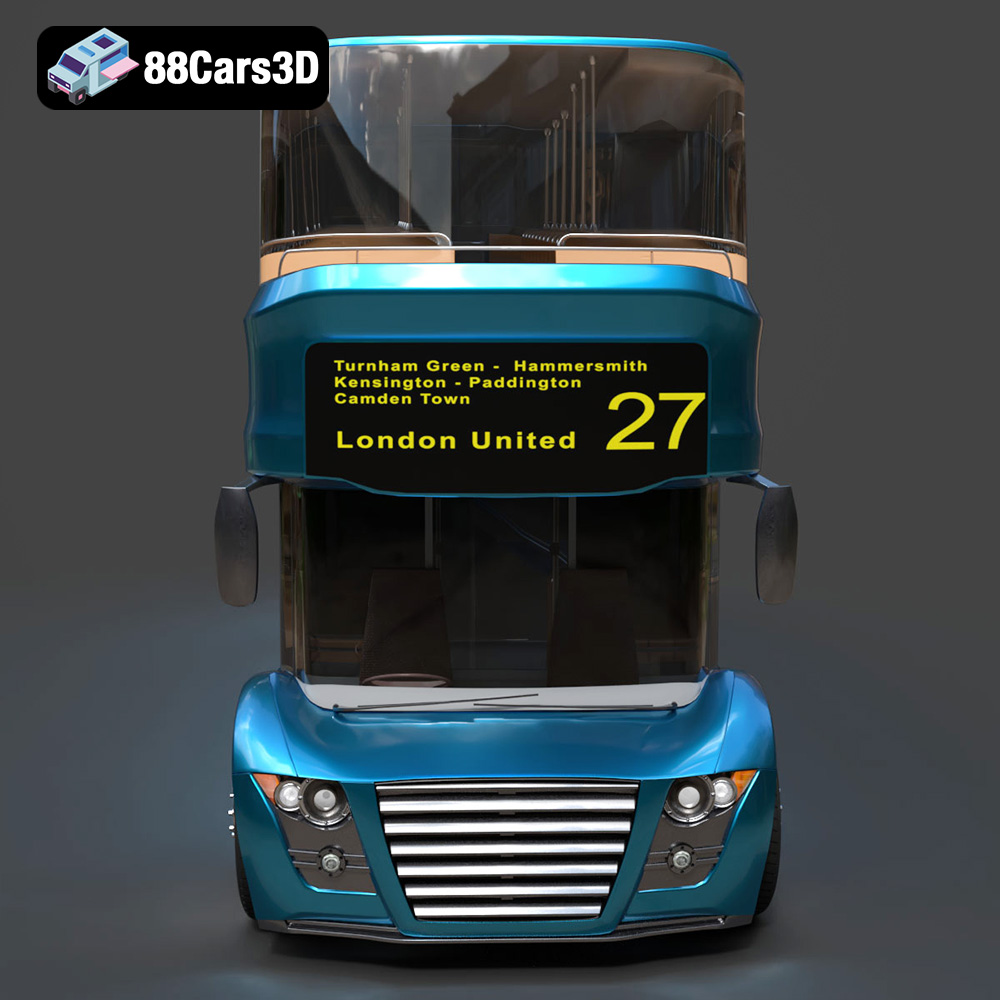
In industry-standard software like 3ds Max and Blender, the ability to produce stunning renders hinges on the quality of the assets. The `.max` and `.blend` files provided for the New Bus For London are complete scenes, often pre-configured with materials designed for leading render engines such as V-Ray, Corona Renderer (for 3ds Max), or Cycles and Eevee (for Blender). This means less time spent on material setup and more time on lighting and composition. The accurately modeled chassis, body panels, detailed headlights, taillights, and realistic textures for exterior signage contribute to an immediate sense of realism.
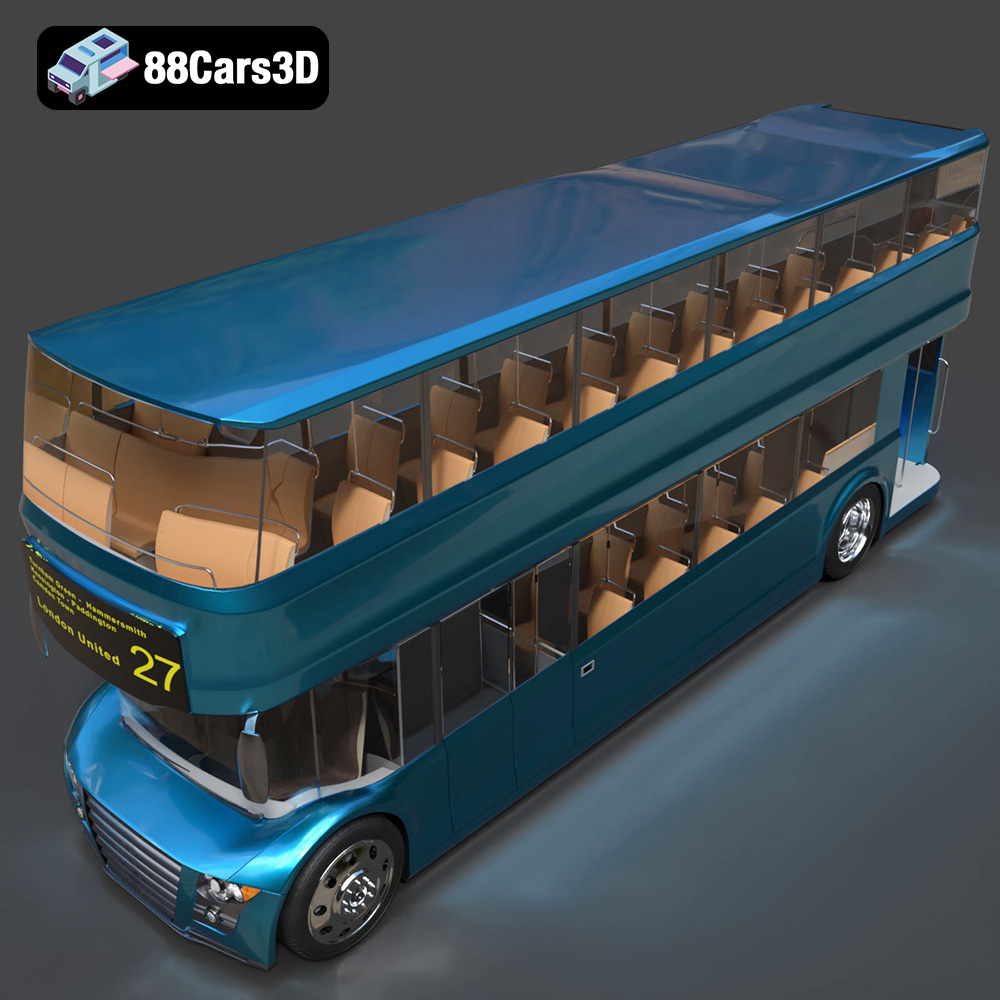
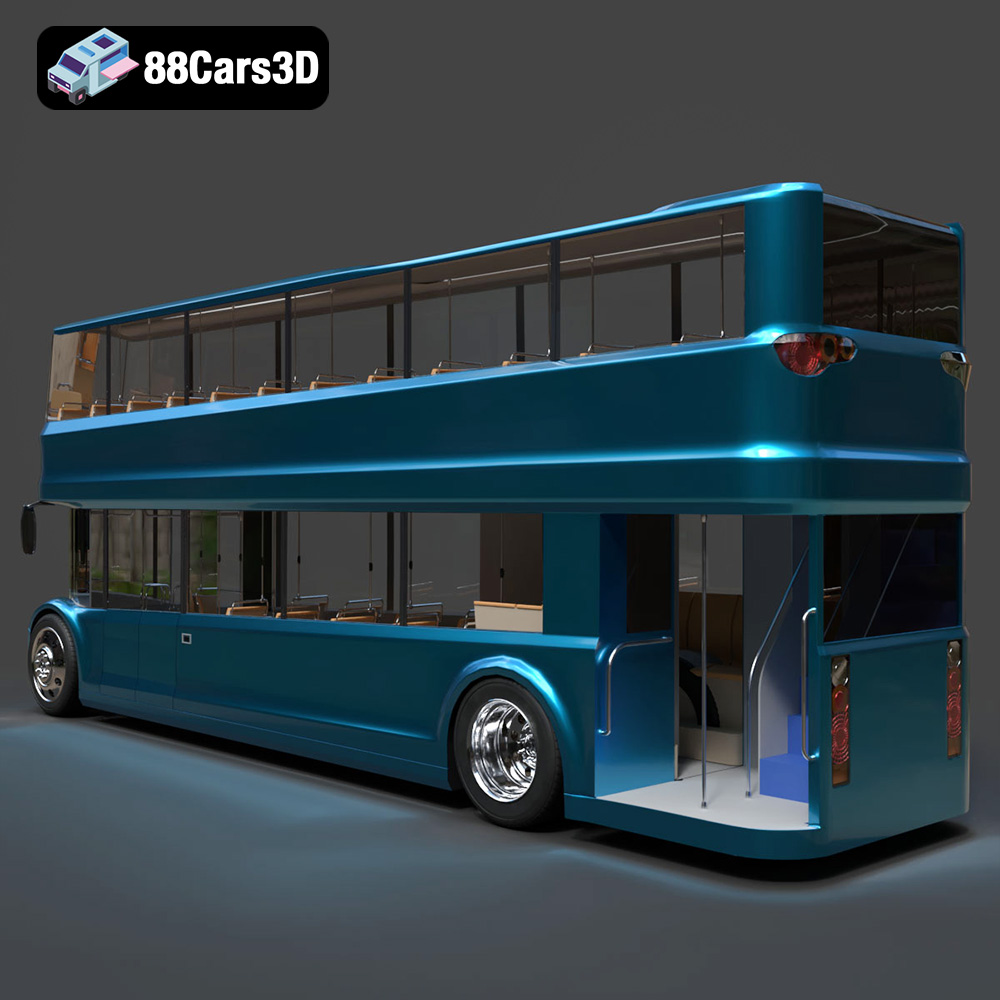
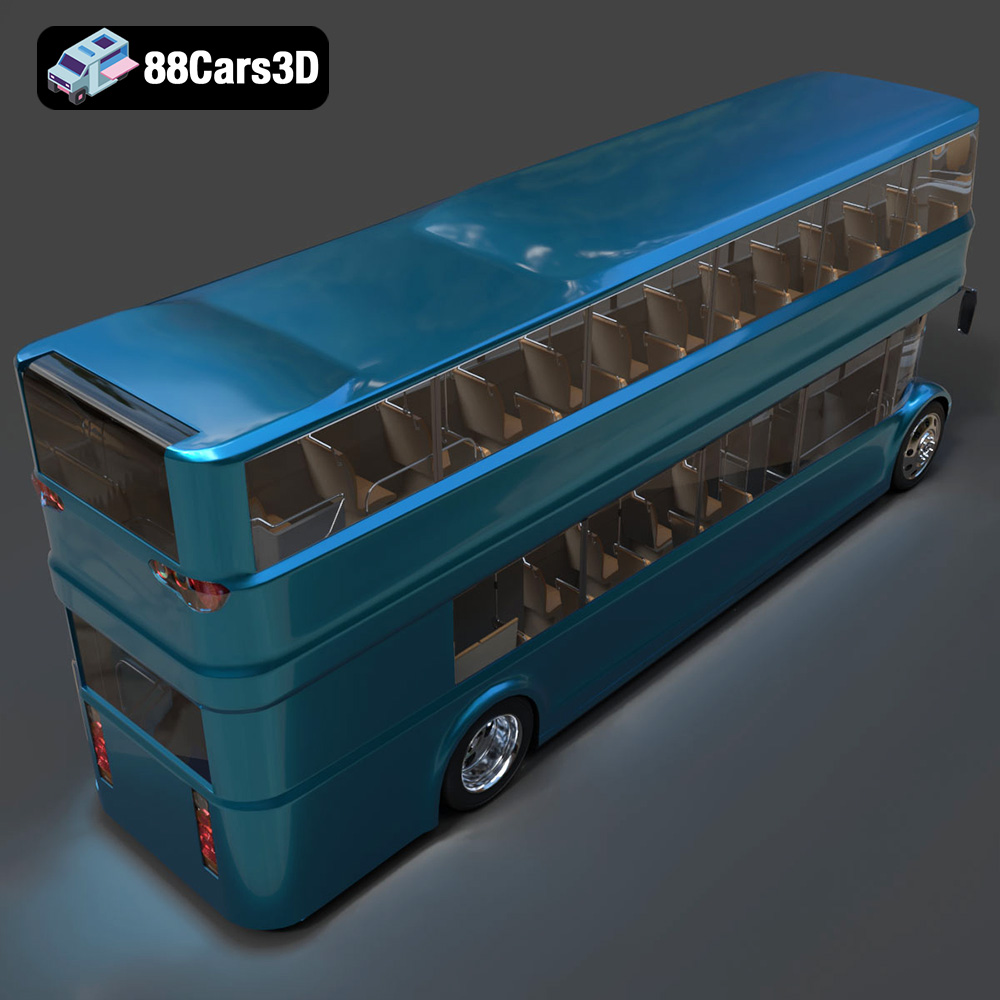
The interior detailing of the bus, including passenger seating, grab rails, a detailed driver’s cockpit, and even floor textures, allows for internal renders or camera fly-throughs that reveal a true sense of depth and activity. For architectural visualizations depicting a new housing development, or an urban planning project showcasing traffic flow, integrating such a detailed vehicle ensures the scene feels authentic and provides crucial context for the proposed environment.
Beyond the default setup, the New Bus For London 3D Model offers extensive customization options. Artists can easily modify paint finishes, apply custom graphics or branding, and adjust material properties for metal, glass, rubber, and plastics. This flexibility is vital for adapting the model to specific project requirements, whether it’s matching a particular color scheme or simulating different states of wear and tear.
Advanced lighting techniques can further enhance the realism. With properly set-up interior and exterior lights on the bus model, artists can simulate various environmental conditions – a sunny afternoon, a rainy night, or the soft glow of streetlights. The transparent window materials are crucial here, allowing interior lights to spill out and external light to realistically refract, adding to the visual fidelity. Paired with global illumination and volumetric effects in render engines, the New Bus For London can become a focal point of atmospheric and emotionally resonant urban visualizations.
The demands of real-time rendering environments, such as those found in game development, AR, and VR, are distinct from offline rendering. Here, optimization, performance, and interactive readiness take precedence. The New Bus For London 3D Model is designed to meet these rigorous requirements, making it an invaluable asset for creating immersive digital worlds and experiences.
For game developers using engines like Unreal Engine and Unity, the `.fbx` and dedicated `.unreal` formats of the New Bus For London are game-changers. The model is optimized as a game asset, meaning it balances visual fidelity with efficient polygon counts and draw calls. While specific poly counts aren’t listed, the “optimized mesh quality for mechanical components, ensuring efficiency without sacrificing visual fidelity” indicates a conscious effort to keep performance in mind.
The organized hierarchy with properly set pivots for doors, wheels, and other moving parts makes the bus animation-ready for game logic. Developers can easily script door openings, wheel rotations, and even passenger interactions. Materials are prepared for PBR (Physically Based Rendering) workflows common in modern game engines, ensuring that the bus reacts realistically to dynamic lighting conditions, whether in a sprawling open-world environment or a focused urban simulator. This level of preparation significantly reduces the asset integration time, allowing development teams to focus on gameplay mechanics and world-building.
The versatility of the New Bus For London extends to AR/VR applications and complex simulations. For augmented reality experiences that place the bus in a real-world camera feed, or virtual reality tours of futuristic cityscapes, the `.glb` format is a streamlined, single-file solution optimized for web and mobile display. Its efficient loading and rendering capabilities are crucial for maintaining high frame rates and a smooth user experience in these demanding interactive environments.
In urban simulations or even public transport management training modules, the bus model can be integrated into dynamic systems, responding to physics, AI drivers, and real-time traffic conditions. The separated elements and clean geometry facilitate advanced scripting and interaction, allowing for complex scenarios like passenger boarding, route deviations, and emergency braking simulations. Such detailed 3D car models are not just visual props; they are integral components of interactive systems designed to educate, entertain, and train.
The utility of a high-quality 3D model extends far beyond purely visual applications. For specialized fields like engineering, simulation, and manufacturing, the underlying geometric data and structural integrity of an asset like the New Bus For London 3D Model unlock a host of practical possibilities.
In the realm of professional training and simulation, realism is paramount. The comprehensive interior detailing, including the driver’s cockpit with dashboard instruments, steering wheel, and controls, makes the New Bus For London an excellent candidate for public transport simulation and driver training modules. Trainees can experience a highly accurate representation of the vehicle’s interior, practicing procedures, navigating virtual routes, and reacting to simulated traffic scenarios in a safe and controlled environment.
The optimized mesh quality for mechanical components ensures that even if certain elements are not directly visible, their structural integrity is maintained within the digital model, supporting robust physics simulations. This allows for realistic vehicle dynamics, suspension behavior, and collision responses, providing invaluable data and experience for improving safety and operational efficiency within public transport networks. Companies relying on 3D car models for these critical applications require the kind of precision and organization found in this asset.
For those who need to bridge the gap between digital design and physical reality, the ability to 3D print a model is a significant advantage. The New Bus For London 3D Model is supplied with an `.stl` file, ready for 3D printing. This means architects, urban planners, or even hobbyists can produce tangible, high-quality physical models of the bus. These physical models can be used for presentations, scale models of cityscapes, or as collectible items.
Furthermore, the `.ply` format, known for its precision, makes the model suitable for more analytical or CAD-oriented workflows. Engineers might use this format for structural analysis, aerodynamic studies, or even reverse engineering exercises. The capability to transition from a digital rendering to a physical prototype or a data-rich analytical model underscores the true versatility and engineering-grade quality of this asset.
In a competitive industry, leveraging high-quality, pre-made assets is a smart strategy for accelerating production and maintaining creative focus. 88cars3d.com stands as a reliable source for professional-grade 3D models, including the detailed New Bus For London 3D Model, designed to meet the rigorous demands of various industries.
Creating a highly detailed 3D vehicle from scratch is an incredibly time-consuming and resource-intensive endeavor. It requires specialized skills in modeling, texturing, rigging, and optimization. By investing in professional 3D car models from a marketplace like 88cars3d.com, artists and studios can save hundreds of hours of production time. This allows them to allocate resources to more complex, unique aspects of their projects, driving overall project acceleration and reducing time-to-market for games, visualizations, or simulations.
The New Bus For London 3D Model, with its “clean geometry,” “optimized UV layouts,” “organized hierarchy,” and “professionally prepared materials,” is a prime example of an asset that is ready to integrate with minimal fuss, providing immediate value to any project. Its included file formats further ensure compatibility across diverse pipelines.
Purchasing 3D assets from reputable sources guarantees a certain level of quality and consistency. 88cars3d.com is committed to providing assets that are technically sound, visually appealing, and suitable for professional use. This assurance means you don’t have to worry about problematic topology, messy UVs, or incorrectly scaled models, which can often plague cheaper or poorly produced assets.
Beyond this specific bus model, 88cars3d.com offers a diverse selection of high-quality 3D car models, catering to various automotive rendering, game development, and visualization needs. Whether you need contemporary vehicles, classic cars, or specialized transport, a curated marketplace ensures you have access to a reliable library of assets that can consistently elevate the visual fidelity and technical performance of your projects.
The journey from conceptual design to a photorealistic render or an immersive real-time experience is paved with countless technical considerations. The quality of your 3D assets is fundamental to success in any domain, be it automotive rendering, game development, AR/VR, or professional simulation. The New Bus For London 3D Model stands as a testament to what professional-grade 3D assets can achieve, offering an unparalleled blend of visual fidelity, technical optimization, and versatile compatibility.
From its meticulously crafted exterior and comprehensive interior details to its clean quad-dominant topology, optimized UVs, and wide array of included file formats (.blend, .fbx, .obj, .glb, .stl, .ply, .unreal, .max), this model is engineered for seamless integration into virtually any professional pipeline. It empowers artists and developers to create stunning visualizations, engaging game environments, realistic training simulations, and even physical prototypes with efficiency and confidence.
In a world where visual excellence and technical precision are paramount, leveraging expertly crafted 3D car models from trusted sources like 88cars3d.com is not just a convenience, but a strategic advantage. Elevate your next project with assets that are built to perform, designed to inspire, and ready to transform your digital visions into breathtaking realities.
Experience the essence of modern public transport with this highly detailed 3D model of the New Bus For London. This professional-grade model captures the iconic design and functional elegance of the contemporary city bus, built with clean geometry and a balanced level of detail. It is perfectly suited for a wide range of applications, including high-fidelity rendering, realistic animations, complex simulations, and immersive game development projects.
$21.99