Elevating Digital Realism: The Indispensable Role of Premium 3D Car Models
In the dynamic worlds of automotive design, cinematic rendering, immersive game development, and architectural visualization, the demand for unparalleled digital realism has never been higher. A truly convincing digital experience hinges on the quality of its assets, and few assets command as much attention as a meticulously crafted 3D vehicle. From the gleam of polished chrome to the subtle texture of leather interiors, every detail contributes to the overall suspension of disbelief, transforming a mere digital scene into a compelling visual narrative.
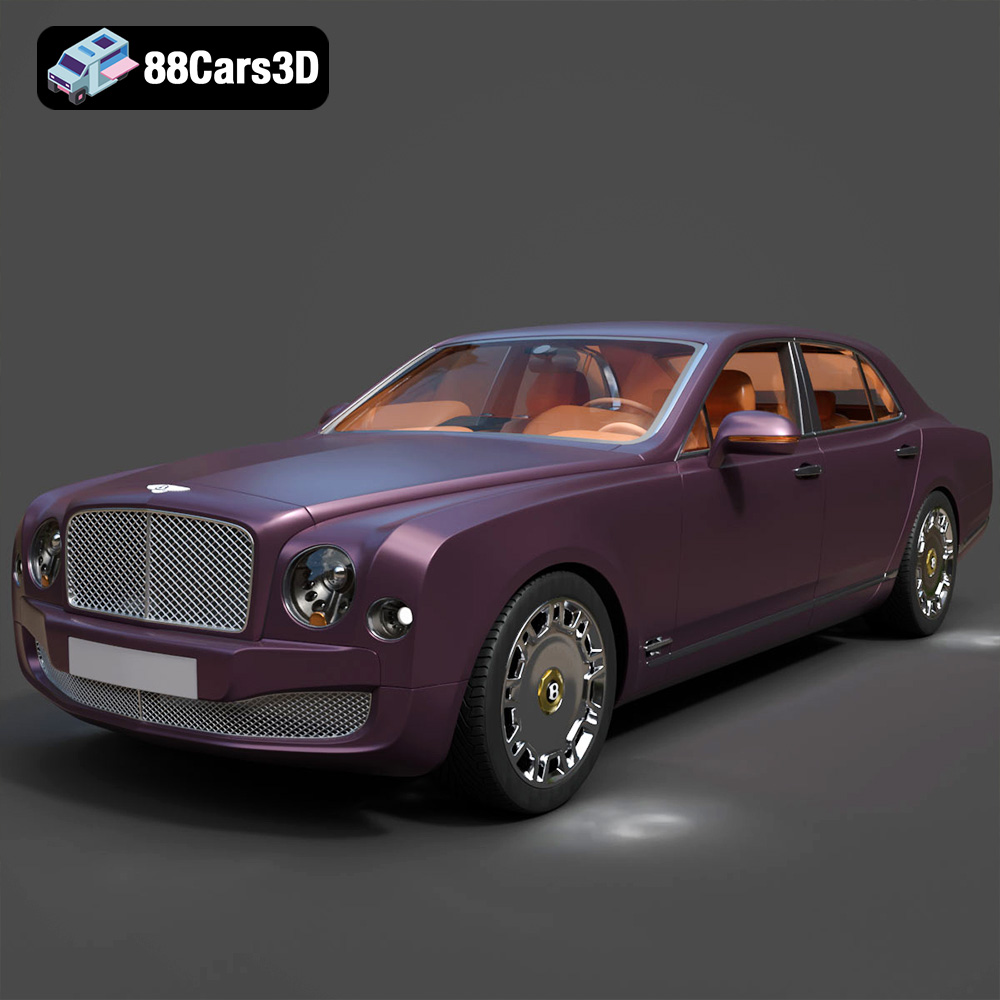
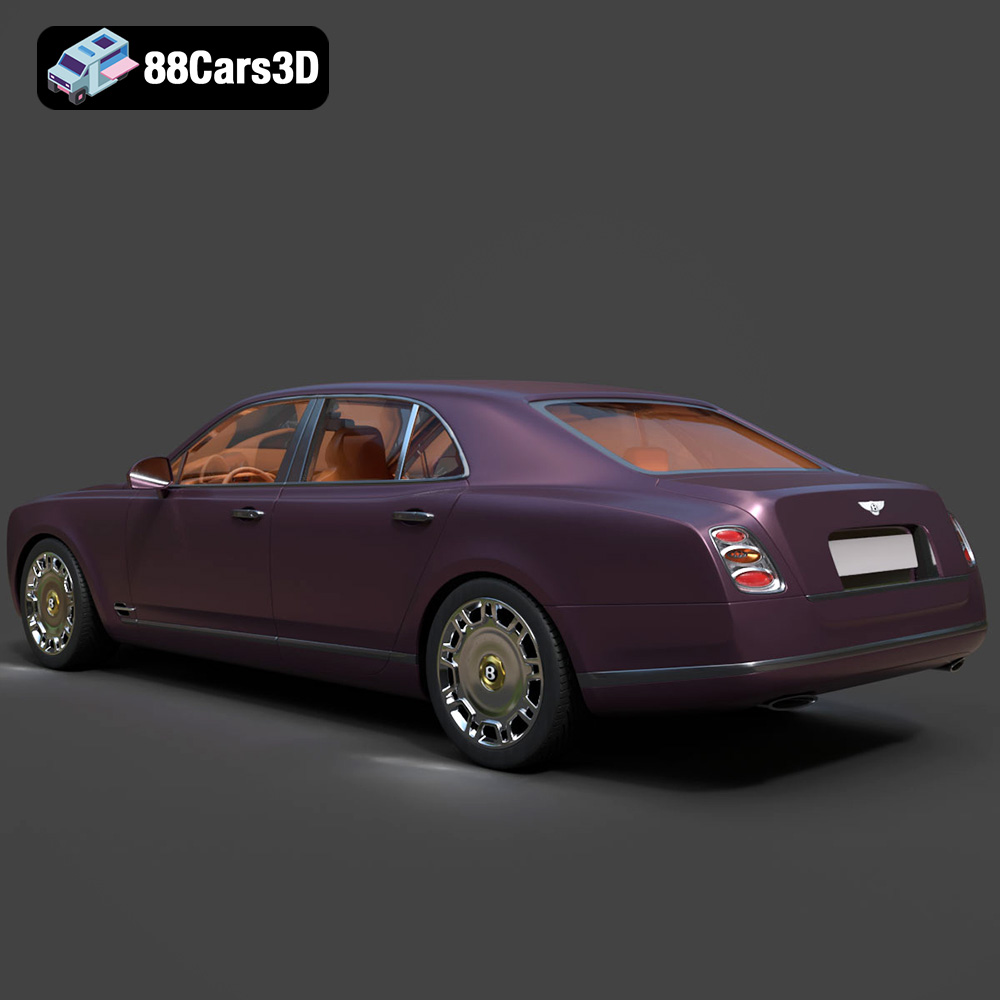
This pursuit of perfection drives professionals to seek out 3D car models that not only look authentic but are also technically robust and versatile enough to integrate seamlessly into diverse production pipelines. It’s about finding assets that are ready for prime time, whether destined for a high-resolution advertising campaign or a real-time interactive simulation. This is precisely where a model like the Bentley Mulsanne Luxury Sedan 3D Model from 88cars3d.com shines. It embodies the precision and realism that modern digital projects demand, offering a foundation of quality for artists and developers alike.
Understanding 3D Model File Formats: Choosing the Right Tool for the Job
Navigating the landscape of 3D modeling involves a critical understanding of various file formats, each designed with specific purposes, compatibilities, and technical advantages. The choice of format can significantly impact workflow efficiency, model fidelity, and ultimate project success. For a comprehensive asset like the Bentley Mulsanne Luxury Sedan 3D Model, having a range of formats ensures maximum utility across different professional applications.
.blend – The Blender Powerhouse for Creative Freedom
The .blend file format is native to Blender, the powerful open-source 3D creation suite. When you acquire a .blend file for a 3D car model, you’re not just getting the mesh; you’re often receiving a fully editable Blender scene. This includes the complete material setup, lighting configurations, camera perspectives, and sometimes even animation data. For artists deeply integrated into the Blender ecosystem, this format offers unparalleled flexibility for customization, allowing for immediate modification, re-texturing, or integration into existing Blender projects. It’s the ideal starting point for those who need to dive deep into the model’s construction and adapt it to their unique artistic vision for automotive rendering or game assets.
.fbx – The Industry Workhorse for Interoperability
Autodesk’s .fbx (Filmbox) format is arguably the most widely adopted proprietary 3D interchange format in the industry. Its strength lies in its ability to store a comprehensive range of 3D data, including geometry (meshes), materials, textures, animations, bones, cameras, and lights, all within a single file. This makes it an ideal choice for transferring complex 3D car models between different software applications like 3ds Max, Maya, Blender, and directly into game engines such as Unreal Engine and Unity. For real-time pipelines and game asset development, .fbx is often the go-to due to its robust support for animation and scene data, ensuring a smooth transition from creation to deployment.
.obj – The Universal Exchange Format for Core Geometry
The .obj (Wavefront Object) format is a simpler, text-based standard for exchanging 3D geometry data. It is highly universal, supported by virtually every 3D software application. An .obj file primarily contains vertex positions, UV coordinates, normals, and face definitions. While it’s excellent for transferring basic mesh data and can reference external material (.mtl) and texture files, it generally does not support advanced features like animation, rigging, or complex scene hierarchies. It serves as a reliable fallback or a primary choice when only the core mesh geometry of a 3D car model is needed for cross-software compatibility, offering a clean, widely accessible foundation.
.glb – Web and AR/VR Optimization for Modern Experiences
Standing for GL Transmission Format Binary, .glb is a binary version of the glTF format, specifically designed for efficient transmission and loading of 3D scenes and models in web and AR/VR environments. It bundles all assets—geometry, materials, textures, animations—into a single compact file, making it incredibly lightweight and fast to load. This optimization is crucial for immersive experiences and browser-based displays, where performance is paramount. For showcasing a high-quality 3D car model like the Bentley Mulsanne in augmented reality apps or on an interactive website, .glb is the definitive choice, ensuring a smooth and responsive user experience.
.stl – The Standard for 3D Printing and Prototyping
The .stl (STereoLithography) format is the ubiquitous standard for 3D printing. It represents the surface geometry of a 3D object using a collection of interconnected triangles (a tessellation). While simple and devoid of color, texture, or material information, its straightforward structure makes it perfect for additive manufacturing processes. If your project involves bringing a digital 3D car model to life as a physical prototype or scale model, an .stl file is what you’ll use to prepare it for a 3D printer. This allows for tangible output from digital assets, crucial for design validation or product displays.
.ply – Precision for CAD and Scanning Data
The .ply (Polygon File Format) is often used for storing 3D data from 3D scanners or for CAD applications where precise mesh information is critical. Unlike .stl, .ply can store a wider range of properties, including color, transparency, normals, and even texture coordinates, per vertex or per face. This makes it suitable for detailed analysis, scientific visualization, and when working with point cloud data or meshes that require additional attribute information beyond basic geometry. For specialized engineering or reverse-engineering tasks involving 3D car models, .ply offers a higher level of data integrity.
.unreal – Native Engine Integration for Seamless Development
A .unreal file signifies an asset package specifically configured for Unreal Engine. This often means the 3D car model has been meticulously prepared with optimized meshes, PBR-ready materials, collision geometry, Level of Detail (LOD) setups, and potentially even blueprint integrations. Acquiring a model in this format dramatically accelerates game development workflows, as it bypasses many of the manual import and setup steps typically required. It’s a testament to engine-specific optimization, ensuring the Bentley Mulsanne 3D model performs efficiently and looks stunning within the Unreal Engine environment.
.max – The 3ds Max Professional’s Choice for Advanced Production
The .max file is the native scene file format for Autodesk 3ds Max, a leading software for 3D modeling, animation, and rendering. A .max file contains the complete scene, including all objects, materials, textures, lighting, cameras, animation, and scene settings. For professionals who primarily work within 3ds Max for high-end automotive rendering or complex architectural visualizations, having a .max file provides full access to the original project structure. This allows for deep customization, advanced rendering setups, and the creation of intricate animations directly within the native environment, leveraging 3ds Max’s powerful toolset.
The Art and Science of Crafting High-Fidelity 3D Car Models
Creating a premium 3D car model is an intricate blend of artistic skill and technical precision. It demands an understanding of real-world automotive design, material science, and the nuances of digital geometry. The Bentley Mulsanne Luxury Sedan 3D Model exemplifies this mastery, built to deliver both visual splendor and practical functionality.
Geometry Optimization and Poly Count Management for Performance and Detail
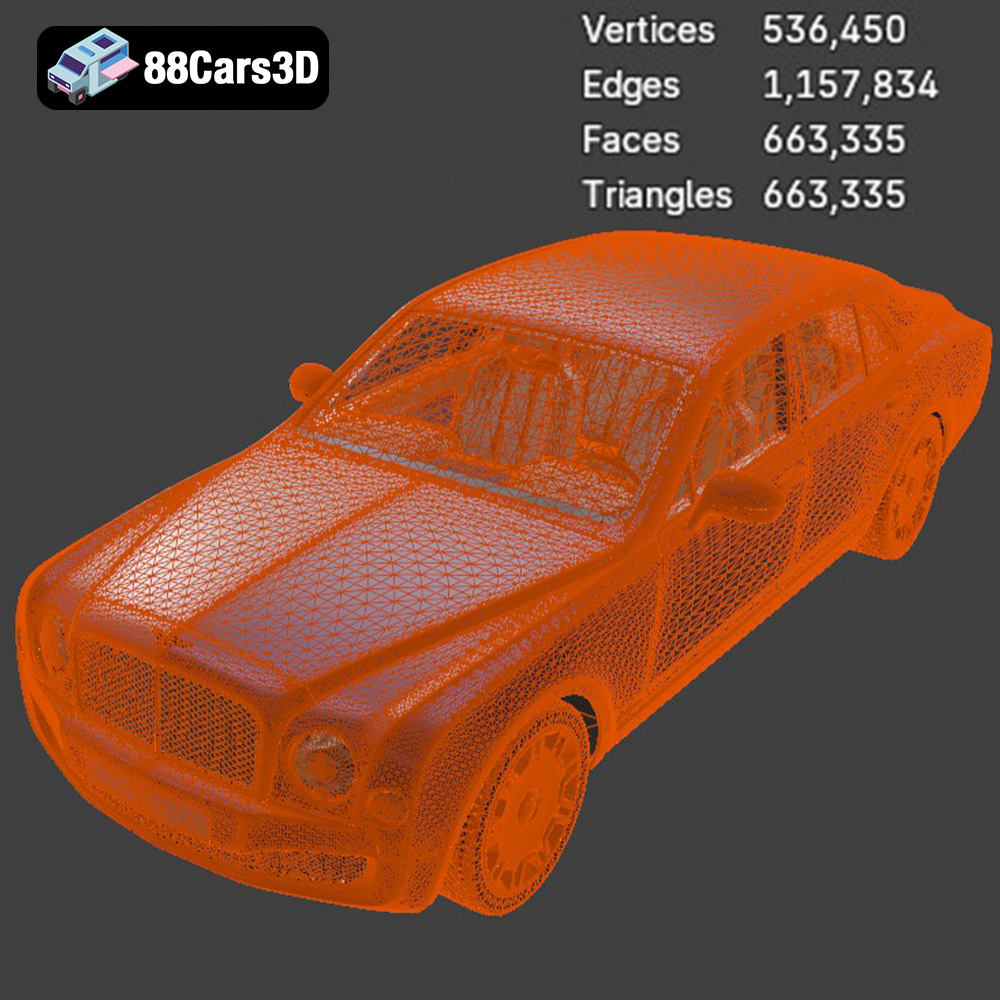
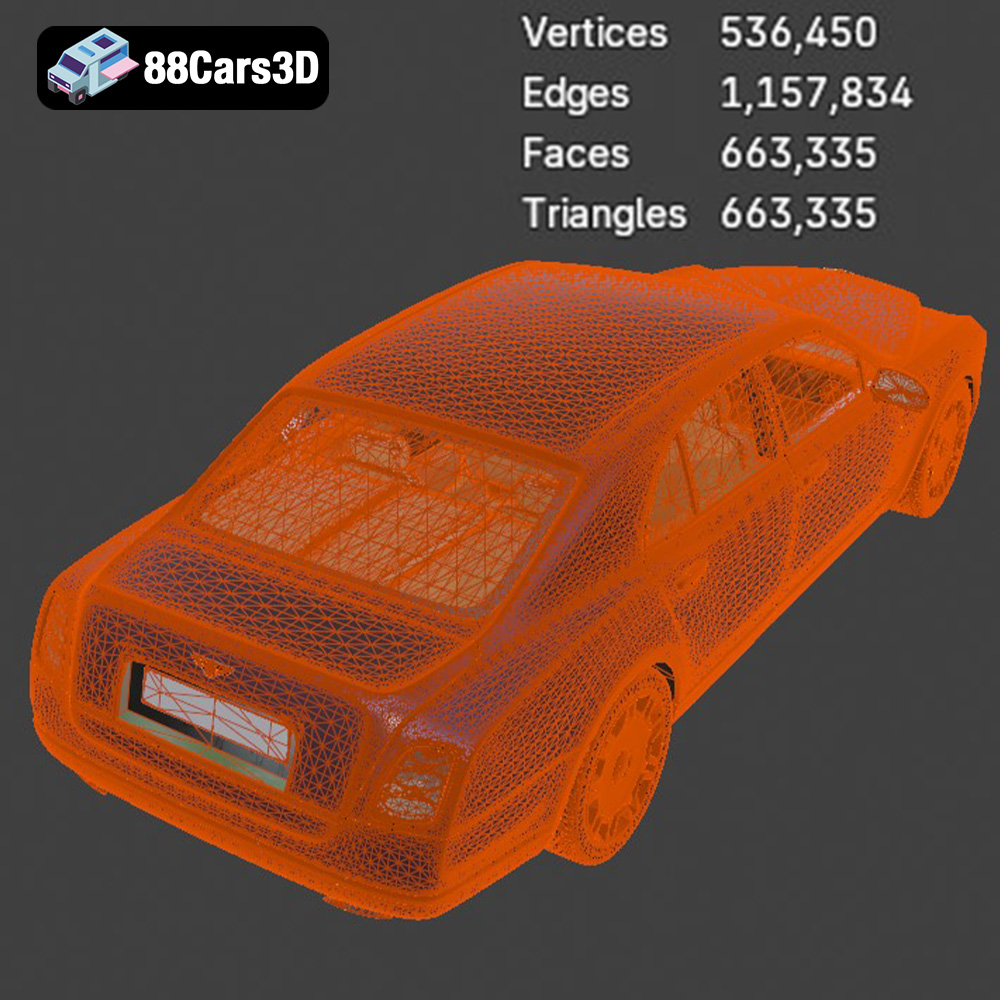
One of the foundational aspects of a professional 3D car model is its geometry. High-end automotive rendering requires a level of detail that accurately captures the vehicle’s curves, contours, and complex components. However, for real-time applications like game assets or AR/VR, excessive polygon counts can cripple performance. A truly optimized model strikes a delicate balance. The Bentley Mulsanne model features clean, optimized geometry, meaning it uses polygons efficiently. This typically involves maintaining an all-quad topology where possible, using subdivision surfaces for smooth curves, and carefully adding detail only where visually necessary. This meticulous approach ensures that the model can look stunning in a cinematic render while also being adaptable for real-time environments through techniques like Level of Detail (LOD) implementation.
PBR Texturing and Realistic Materials for Authentic Visuals
Beyond geometry, the materials and textures define a 3D model’s visual realism. Physically Based Rendering (PBR) workflows have become the industry standard for achieving consistent and accurate material responses under various lighting conditions. PBR relies on a set of maps—Albedo (color), Normal (surface detail), Roughness (micro-surface imperfections), Metallic (conductive vs. dielectric), and Ambient Occlusion (self-shadowing)—to simulate how light interacts with surfaces in the real world. For the Bentley Mulsanne 3D model, its logically structured materials and PBR configuration mean that metallic paints gleam realistically, glass reflects and refracts light correctly, and leather surfaces exhibit appropriate sheen and texture. This technical approach guarantees that whether placed in a bright outdoor scene or a dimly lit showroom, the model’s materials will react convincingly, enhancing the overall visual fidelity.
Integrating 3D Car Models into Professional Workflows
The true value of a high-quality 3D car model like the Bentley Mulsanne lies in its seamless integration into diverse professional pipelines. Developers and artists need assets that are not just beautiful but also functional within their chosen software environments, ready to become integral components of complex projects.
Automotive Rendering in 3ds Max and Blender
For high-resolution still images and cinematic animations, 3ds Max and Blender stand out as industry powerhouses. When working with the Bentley Mulsanne Luxury Sedan 3D Model in 3ds Max, users benefit from the provided .max file, offering a complete scene setup. Artists can leverage render engines like V-Ray or Corona to craft photorealistic visualizations. This involves meticulous lighting setup, environment creation (e.g., a luxury showroom, a dynamic cityscape, or a serene landscape), and camera composition. Similarly, Blender users can utilize the .blend file, tapping into Cycles or Eevee renderers. The model’s PBR materials ensure consistent results, making it straightforward to achieve stunning automotive rendering with accurate reflections, refractions, and global illumination, pushing the boundaries of digital photography.
Real-time Game Development with Unreal Engine and Unity
The advent of powerful game engines has blurred the lines between interactive experiences and cinematic visuals. For game developers, the Bentley Mulsanne model’s availability in .fbx and especially the pre-configured .unreal format is a significant advantage. Importing into Unreal Engine or Unity is streamlined, with materials often translating directly or requiring minimal adjustment thanks to the PBR setup. Developers can then focus on optimizing the asset for real-time performance, implementing LODs to manage polygon counts at varying distances, setting up accurate collision meshes for physics, and integrating it into gameplay or cinematic sequences. This allows the luxury sedan to serve as a stunning interactive vehicle, a background prop, or a hero asset in a game’s cutscene, contributing to immersive virtual worlds or serious simulation environments.
Beyond Rendering: Diverse Applications for 3D Vehicle Assets
The utility of a robust 3D car model extends far beyond traditional rendering and game development. Modern technologies like AR/VR and 3D printing open new frontiers for how these digital assets can be experienced and utilized, making a versatile model like the Bentley Mulsanne an invaluable resource.
AR/VR Experiences and Web Visualization
Augmented Reality (AR) and Virtual Reality (VR) are transforming how we interact with digital content, offering immersive and interactive experiences. For a luxury brand, showcasing a vehicle in AR/VR can allow potential customers to explore it virtually in their driveway or a digital showroom. The Bentley Mulsanne Luxury Sedan 3D Model, provided in the optimized .glb format, is perfectly suited for these applications. This format is lightweight and efficient, enabling smooth performance in web-based viewers, mobile AR apps, or high-fidelity VR simulations. Designers can create virtual test drives, interactive product configurators, or architectural walkthroughs where a high-detail car adds a layer of realism and context to the virtual environment.
3D Printing, Prototyping, and Digital Twins
While digital visualization is powerful, sometimes a physical representation is necessary. The .stl format provided for the Bentley Mulsanne model makes it ready for 3D printing. This capability allows designers to create accurate scale models for physical display, aerodynamic testing, or as tangible prototypes in the design validation process. Furthermore, the detailed mesh data in formats like .ply can be used for engineering analysis or to create “digital twins” – highly accurate virtual representations that mirror physical objects. This is crucial for simulations, maintenance planning, or even crash testing scenarios, where a precise digital counterpart can provide valuable insights without the need for physical destructive testing.
Why Quality Matters: The 88cars3d.com Advantage
In a competitive digital landscape, the difference between good and great often comes down to the quality of the assets used. Investing in premium 3D car models is not merely an expense; it’s a strategic decision that offers significant returns in terms of time, resources, and the overall impact of a project.
Saving Time and Resources with Ready-to-Use Assets
Building a high-fidelity 3D car model from scratch is an incredibly time-consuming and resource-intensive endeavor. It requires expert modeling skills, meticulous texturing, and extensive optimization. For many studios and individual artists, this is simply not feasible within project deadlines and budgets. By acquiring a professionally crafted asset like the Bentley Mulsanne Luxury Sedan 3D Model from 88cars3d.com, you bypass countless hours of development. The model is ready to use, pre-optimized, and available in multiple formats, allowing artists to immediately integrate it into their scenes and focus on lighting, composition, animation, or game logic, significantly accelerating production timelines.
Consistency and Reliability Across Professional Projects
Professional projects demand consistency and reliability. Low-quality or poorly optimized 3D car models can lead to numerous headaches: incorrect scaling, broken materials, excessive poly counts causing performance issues, or messy geometry that’s difficult to modify. Premium models, like those offered at 88cars3d.com, are built to rigorous standards. They feature clean topology, properly unwrapped UVs, and PBR-ready materials that ensure predictable and accurate rendering across various software and engines. This reliability means artists can trust that the asset will perform as expected, maintain visual integrity, and contribute positively to the overall quality and professionalism of their automotive rendering, game asset integration, or visualization projects.
Conclusion
The realm of 3D visualization and real-time experiences continues to evolve at a breathtaking pace, pushing the boundaries of realism and immersion. At the heart of this evolution lies the critical need for high-quality 3D assets, particularly intricate models like luxury vehicles. We’ve explored how a meticulously crafted 3D car model is not just a visual treat but a technical marvel, optimized for diverse applications ranging from photorealistic automotive rendering to seamless integration into demanding game assets.
Understanding the nuances of various file formats and leveraging professionally optimized geometry and PBR materials are paramount for success in any digital project. The Bentley Mulsanne Luxury Sedan 3D Model stands as a prime example of such an asset, offering unparalleled detail, robust technical specifications, and broad compatibility across industry-standard software and engines. Whether for a captivating cinematic, an interactive AR experience, or a high-fidelity simulation, investing in such a versatile and reliable asset from 88cars3d.com provides a significant advantage, empowering creators to bring their most ambitious visions to life with confidence and exceptional quality.
Featured 3D Model
Bentley Mulsanne Luxury Sedan 3D Model
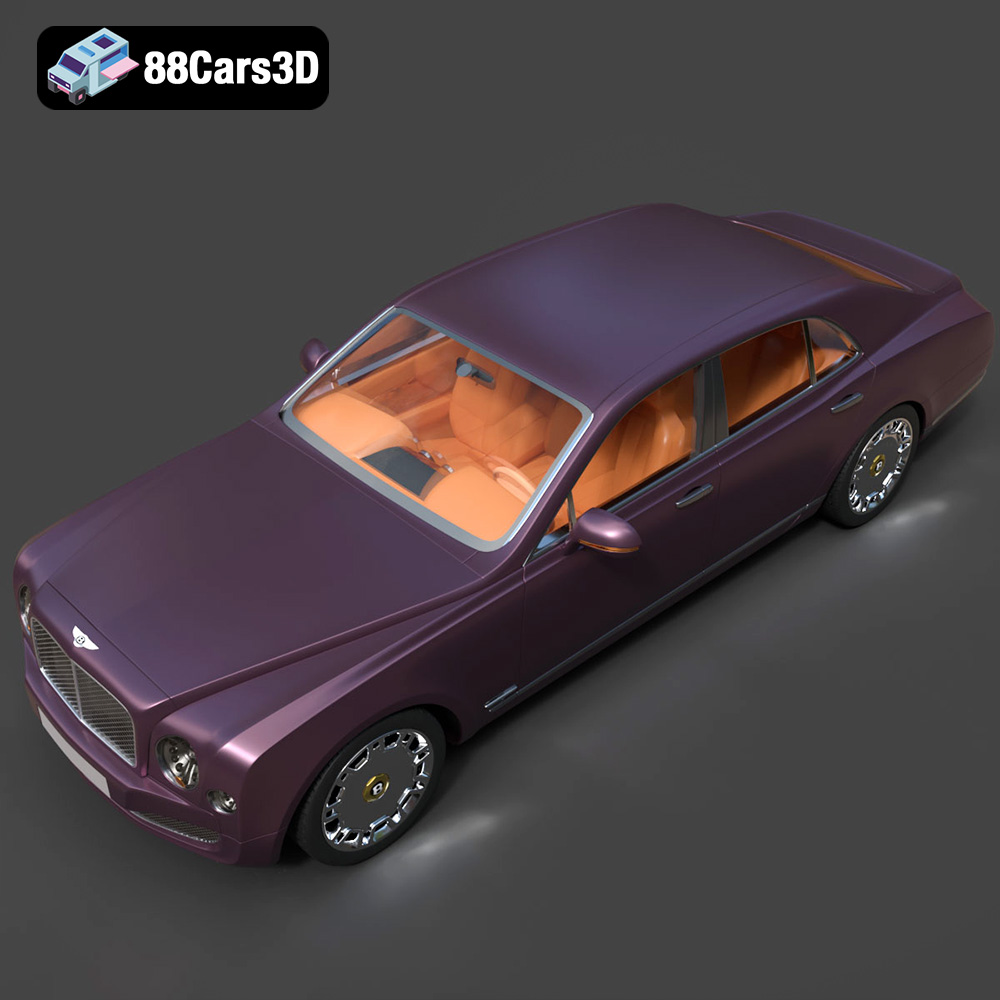
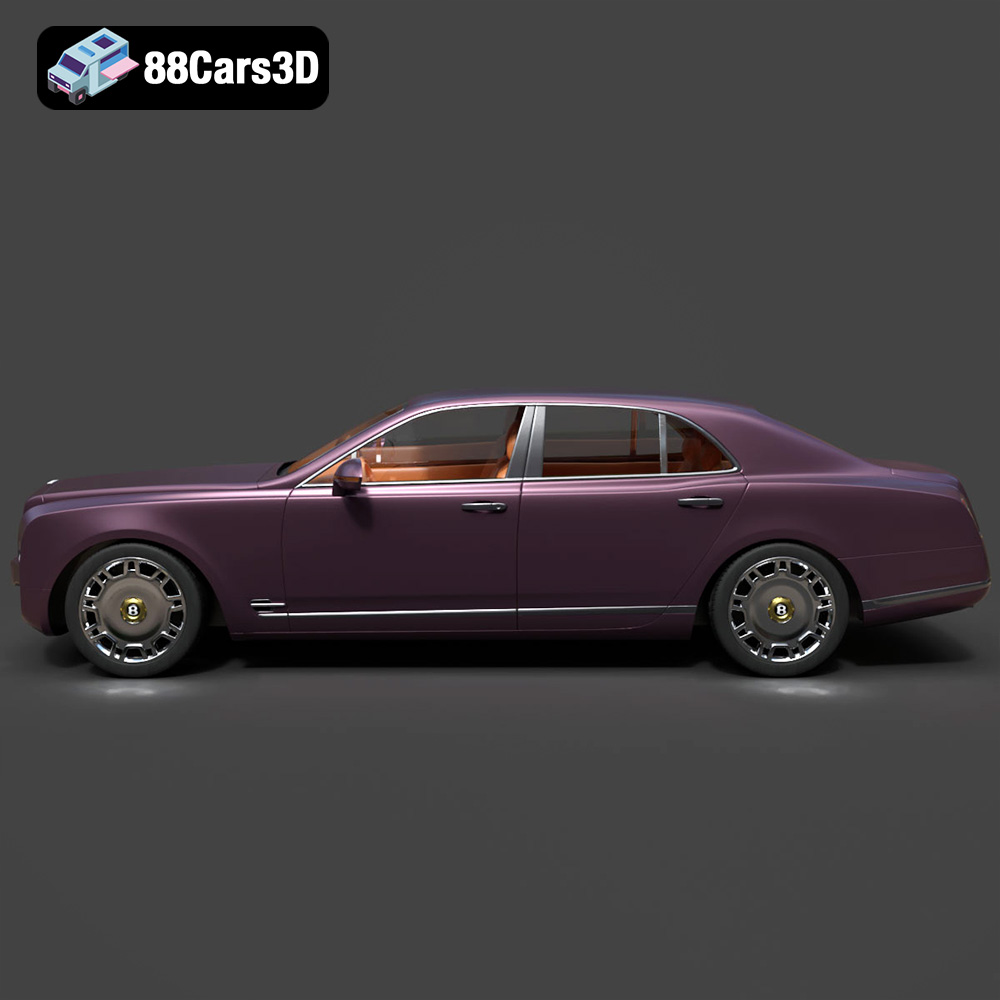
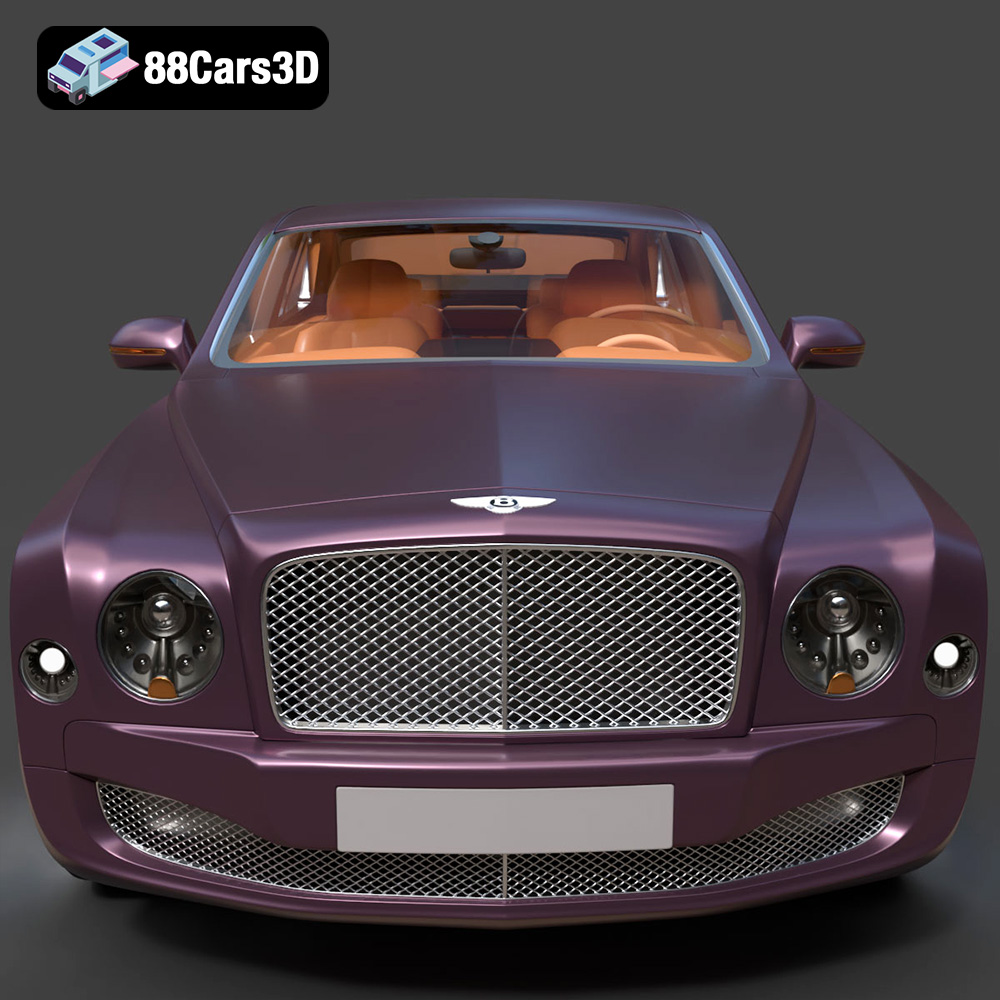
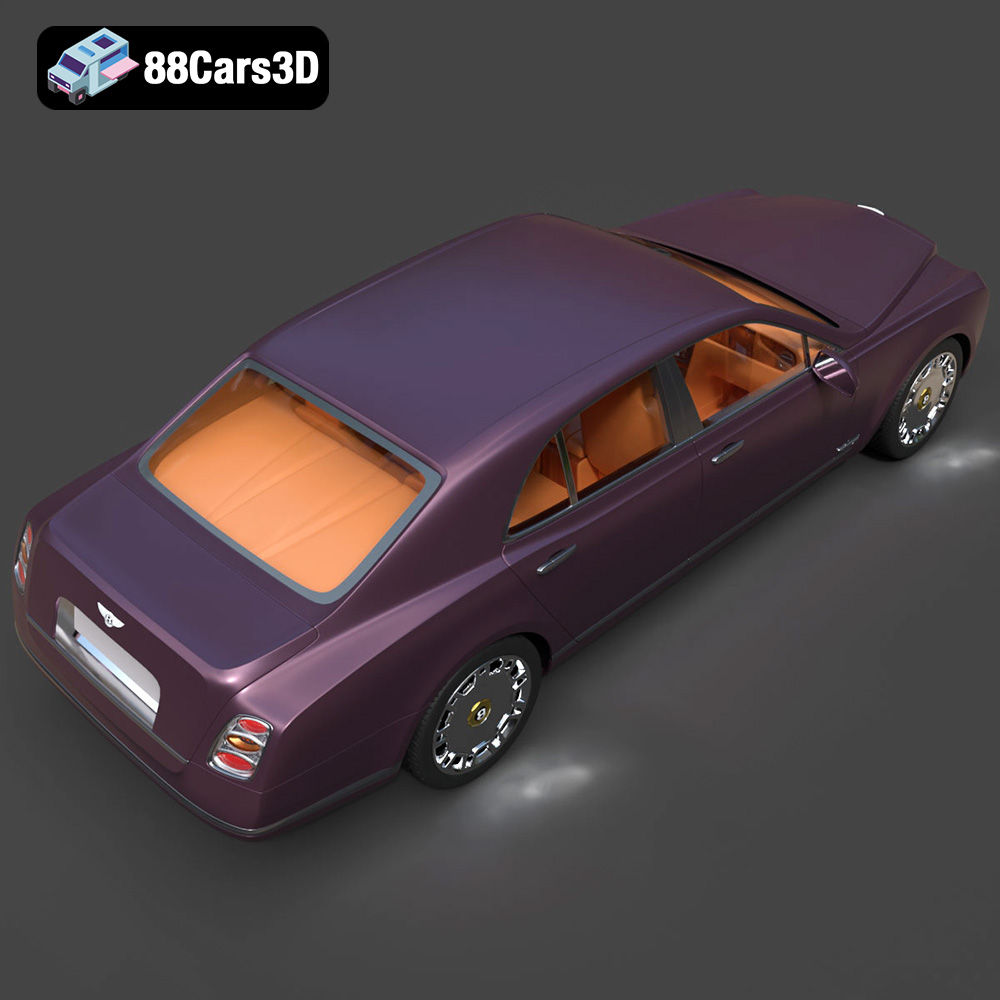
Experience the ultimate in digital luxury with this meticulously crafted Bentley Mulsanne 3D model. Designed for precision and realism, this asset captures the imposing presence and refined details of the iconic British sedan. Every element, from the distinct grille geometry to the interior layout, has been constructed to meet professional visualization standards.This asset features clean, optimized geometry suitable for both real-time applications and demanding high-resolution rendering tasks. Materials are logically structured and configured for PBR workflows, ensuring physically accurate light interaction on all metallic, glass, and leather surfaces. This provides maximum versatility for artists integrating the model into various lighting environments and scenes.The Bentley Mulsanne model is an essential resource for automotive visualization, architectural walkthroughs, cinematic animations, and serious game development (including integration into Unreal Engine or Unity projects). It is also perfectly suited for creating high-fidelity assets for virtual reality (VR) and augmented reality (AR) experiences.
$14.99
Product Image Gallery