Unleashing Potential: The Strategic Advantage of High-Fidelity 3D Models
In the rapidly evolving landscapes of digital visualization, game development, cinematic production, and advanced simulation, the quality of your 3D assets is paramount. It’s no longer sufficient to simply have a model; it must be a meticulously crafted digital artifact that meets rigorous technical specifications while offering unparalleled creative flexibility. Professional studios and individual artists alike constantly seek assets that can seamlessly integrate into complex pipelines, delivering both stunning visual fidelity and optimal performance.
High-quality 3D models serve as the foundational building blocks for immersive experiences, photorealistic renders, and functional interactive environments. From the sleek lines of a modern vehicle to the intricate details of a historical naval vessel, the pursuit of digital perfection drives innovation. This pursuit is precisely where assets like the Carrier 006 3D Model truly shine. This remarkable piece of digital engineering, available at 88cars3d.com, stands as a testament to what’s possible when technical precision meets artistic vision, offering a robust and versatile solution for a multitude of professional applications.
Understanding 3D Model File Formats
The journey of a 3D model from conception to final deployment involves navigating a complex ecosystem of file formats, each with its own strengths, limitations, and specific use cases. Understanding these formats is crucial for professionals to ensure compatibility, preserve data integrity, and optimize workflows across different software and platforms. The Carrier 006 3D Model exemplifies versatility by being available in a comprehensive suite of these essential formats, making it exceptionally adaptable.
.blend – The Blender Powerhouse
The .blend file format is the native format for Blender, a powerful, open-source 3D creation suite. A .blend file isn’t just a mesh; it’s a complete scene package. This includes not only the model’s geometry but also its materials, textures, lighting setups, cameras, animations, physics simulations, and even scripts. For users deeply integrated into the Blender ecosystem, a .blend file like that provided for the Carrier 006 offers the highest level of editability and preservation of all scene-specific data. It allows for immediate deep dives into the model’s construction, material nodes, and potential animation rigs, making it the preferred choice for detailed customization and advanced rendering within Blender’s Cycles or Eevee engines.
.fbx – The Industry Workhorse
FBX (Filmbox) is a proprietary file format developed by Autodesk, primarily used for interoperability between 3D software applications and game engines. It’s renowned for its robust support of 3D models, animation data, cameras, and lights. When you’re transferring a complex asset like the Carrier 006 into Unreal Engine or Unity, .fbx is almost always the go-to format. Its ability to encapsulate a wide array of data, while maintaining relative file size efficiency, makes it ideal for game development pipelines where assets need to move fluidly from DCC (Digital Content Creation) tools to real-time environments. It supports mesh data (including quads and triangles), UV mapping, normal maps, vertex colors, skeletal animations, and more, ensuring a high-fidelity transfer of your asset.
.obj – The Universal Standard
OBJ (or Wavefront OBJ) is one of the oldest and most widely supported 3D file formats, making it a truly universal choice for basic mesh data transfer. Almost every 3D software package can import and export .obj files. It primarily stores geometry data, including vertex positions, UV coordinates, normals, and face definitions. While it can reference external material files (.mtl), it doesn’t embed animation or advanced scene data like .fbx or .blend. Its simplicity is its strength, making it an excellent fallback or starting point for cross-software compatibility, especially when you need a clean mesh for sculpting, retopology, or basic rendering across disparate systems. For the Carrier 006, the .obj file provides a reliable, universally accessible mesh base.
.glb – Optimized for AR, VR, and Web
GLB (GL Transmission Format Binary) is an increasingly vital format, especially in the context of AR, VR, and web-based 3D applications. It’s a binary version of the .gltf format, designed for efficient transmission and loading of 3D scenes and models. What makes .glb so powerful is its ability to embed everything—geometry, materials, textures, animations—into a single, self-contained file. This significantly simplifies asset management and reduces latency when streaming 3D content over the internet or deploying it in performance-critical AR/VR experiences. For showcasing the Carrier 006 in an interactive web viewer or an augmented reality application, the .glb format is perfectly optimized for speed and fidelity.
.stl – The 3D Printing Blueprint
STL (STereoLithography) is the de facto standard file format for 3D printing. Unlike other formats that describe surfaces with mathematical curves or quads, .stl represents a 3D model as a series of connected triangles that define its outer surface. This triangulated mesh data is crucial for slicing software, which prepares the model for layer-by-layer additive manufacturing. For the Carrier 006, having an .stl version means it’s ready to be transformed from a digital asset into a tangible, physical model, suitable for prototyping, educational models, or collectible figurines. The model’s clean geometry is a significant advantage here, as “watertight” meshes are essential for successful 3D prints.
.ply – Precision Mesh for CAD and Analysis
PLY (Polygon File Format) is another format for storing 3D data, particularly useful for high-resolution scan data, scientific visualization, and specific CAD or engineering analysis workflows. It can store a variety of properties including color, transparency, normals, texture coordinates, and confidence values for each vertex. While not as universally common as .obj for general 3D work, .ply offers a precise and detailed representation of mesh data, often favored in applications requiring high geometric accuracy. For tasks involving reverse engineering, measurement, or specialized simulation, the Carrier 006’s .ply file provides an excellent foundation.
.unreal – Engine-Ready for Real-Time Environments
The inclusion of an .unreal format implies a pre-configured asset or project setup specifically for Unreal Engine. This is a game-changer for developers, as it means the model has likely been imported, scaled, had its materials set up with Unreal’s PBR shaders, potentially had collision meshes generated, and even basic LODs (Levels of Detail) configured. For a complex asset like the Carrier 006, an engine-ready file significantly cuts down on integration time, allowing developers to drop the asset directly into their projects and focus on scene building, gameplay mechanics, or cinematic sequencing, rather than tedious asset preparation.
.max – The 3ds Max Professional’s Choice
The .max file is the native project format for Autodesk 3ds Max, a leading software in architectural visualization, automotive rendering, and motion graphics. Similar to .blend, a .max file encapsulates the entire scene, including geometry, materials (with support for advanced renderers like V-Ray or Corona), lighting, cameras, animations, and modifiers. For professionals working within a 3ds Max pipeline, the .max file for the Carrier 006 offers complete control over every aspect of the model, enabling intricate rendering setups, complex animations, and advanced scene compositions. It provides the highest degree of flexibility for customization and integration into existing 3ds Max projects.
The Anatomy of a Professional 3D Model: Quality Beyond Aesthetics
While visual appeal is often the first thing noticed in a 3D model, true professionalism lies beneath the surface, within its technical construction. A high-quality model like the Carrier 006 3D Model is engineered for performance, flexibility, and longevity, ensuring it can be used effectively across diverse applications. This meticulous design is what distinguishes a usable asset from a mere visual spectacle.
Clean Quad-Dominant Topology and Optimized Mesh
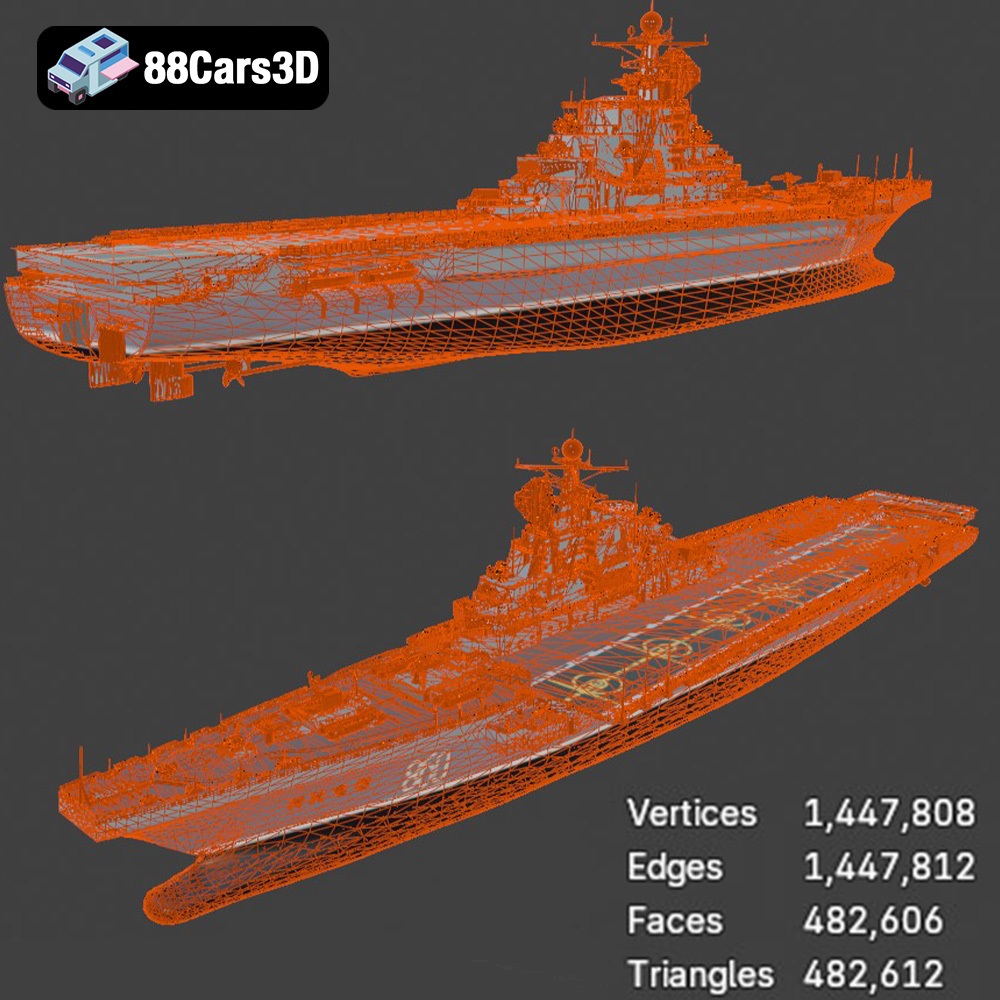
The bedrock of any professional 3D model is its topology. The Carrier 006 boasts “clean quad-dominant topology,” which is a golden standard in 3D modeling. Quads (four-sided polygons) allow for predictable deformation during animation, easier subdivision for adding detail (without introducing artifacts), and cleaner UV mapping. This is crucial for assets that might undergo rigging, animation, or require high-resolution close-ups. An “optimized mesh,” further enhances this by ensuring that the polygon count is efficient – high enough to capture intricate details without being overly dense, which can lead to performance bottlenecks in real-time engines or longer render times.
- Subdivision Readiness: Clean quad flow ensures smooth results when applying subdivision surface modifiers, essential for cinematic quality.
- Performance Efficiency: An optimized mesh balances visual fidelity with polygon count, critical for game assets and AR/VR experiences.
- Retopology & Sculpting: Good topology provides a stable base for further sculpting detail or for generating clean low-poly versions.
Accurate Scaling and Logical Hierarchy
Precision in 3D modeling extends to real-world measurements and organizational structure. “Accurately scaled to real-world dimensions” means the Carrier 006 3D Model will fit seamlessly into any scene without requiring manual adjustments, saving invaluable time in production. Furthermore, a “logically organized hierarchy with properly positioned pivots” is a hallmark of a professional asset. This means components like turrets, radar dishes, or landing gear are grouped intuitively, and their pivot points are correctly placed for natural rotation and movement. This foresight in organization significantly streamlines animation workflows, allowing animators to quickly and accurately manipulate different parts of the vessel.
- Seamless Integration: Correct scale ensures the model fits naturally within existing environments and scenes.
- Effortless Animation: Properly positioned pivots and a clear hierarchy make animating moving parts intuitive and efficient.
- Simplified Scene Management: Organized scene files prevent clutter and allow for easy selection and modification of individual components.
Mastering Photorealistic Rendering with Professional 3D Assets
Creating photorealistic imagery is a blend of technical mastery and artistic vision. With a high-quality 3D model as your foundation, the potential for stunning visuals becomes limitless. The Carrier 006 3D Model provides an exceptional starting point for artists aiming for top-tier renders, whether for marketing, cinematic sequences, or historical documentation.
Advanced Material Customization and Texturing
The description highlights “realistic surface textures” and the ability to “adjust material properties for metals, chrome, rubber, glass, and plastics.” This points to the use of physically-based rendering (PBR) materials, which accurately simulate how light interacts with surfaces in the real world. A well-constructed PBR workflow involves textures for albedo (base color), roughness, metallic, normal maps, and sometimes ambient occlusion or displacement. With the Carrier 006, artists can leverage these properties to create highly convincing reflections, refractions, and surface imperfections. Imagine customizing the carrier’s hull to show weathering, rust, or a pristine, freshly painted finish – the underlying material structure supports it all.
- PBR Workflow: Achieve realistic light interaction with surfaces, crucial for photorealism.
- Surface Imperfections: Custom textures can add dirt, scratches, and wear for enhanced realism.
- Dynamic Material Adjustments: Easily fine-tune reflectivity, gloss, and color to match specific scene requirements or brand aesthetics.
Lighting, Composition, and Cinematic Production
Beyond materials, effective lighting and compelling composition are key to producing breathtaking renders. With a detailed model like the Carrier 006, artists can experiment with various lighting setups – from dramatic studio lights to atmospheric outdoor scenarios – to evoke specific moods. The model’s “functional and accurate lighting components” (though referring to a car, conceptually applies to any vehicle’s built-in lights) can be activated for night scenes or warning signals, adding another layer of realism. In 3ds Max or Blender, combining global illumination, HDRI environments, and targeted lights allows for endless creative possibilities. For cinematic sequences, the model’s separate components (e.g., radar, cranes) could be animated to convey motion and scale, transforming a static scene into a dynamic narrative.
- Environmental Storytelling: Use lighting to establish time of day, weather, or emotional tone.
- Dynamic Camera Angles: The high detail allows for extreme close-ups and wide shots without loss of fidelity.
- Post-Production Enhancement: Renders can be further refined with depth of field, color grading, and lens effects in external editing software.
Integrating High-Quality 3D Models into Game Engines
The performance demands of real-time environments like game engines necessitate highly optimized assets. The Carrier 006 3D Model is explicitly designed with game development in mind, offering features that streamline integration and ensure smooth gameplay experiences across various platforms.
Asset Optimization and LODs for Real-time Performance
For game development, an “optimized mesh for efficient rendering and real-time application performance” is non-negotiable. This means the model’s polygon count is carefully managed, and its topology is clean, minimizing draw calls and maximizing frame rates. For large assets like an aircraft carrier, the implementation of Levels of Detail (LODs) is crucial. While not explicitly mentioned for the Carrier 006, a professional model is often designed to easily generate multiple LODs – lower polygon versions that are swapped in when the model is further from the camera, significantly reducing rendering overhead without noticeable visual degradation. This ensures the model performs well even in complex scenes with many objects.
- Engine-Ready: Models like the Carrier 006 are designed for immediate use in Unreal, Unity, or other engines.
- Scalable Detail: Essential for maintaining performance on diverse hardware and platforms.
- Efficient Resource Usage: Optimized textures and materials contribute to faster loading times and smoother gameplay.
Material Setup and Collision Generation in Unreal Engine
The inclusion of an “.unreal” file format is a significant advantage for developers working with Unreal Engine. This typically implies that the asset has been pre-processed and configured within the engine, meaning materials are set up using Unreal’s physically-based shading model, textures are correctly applied, and potential material instances are created for easy customization. Furthermore, for any interactive object in a game, collision meshes are vital. A professional asset considers how collision will be handled, either by providing simple collision primitives or a dedicated low-poly collision mesh, allowing for realistic physics interactions without adding undue complexity to the main render mesh. Developers can drop the Carrier 006 into their Unreal project and immediately begin developing gameplay, rather than spending hours on asset preparation.
- Direct Integration: Skip tedious setup with pre-configured Unreal Engine assets.
- Realistic Interactions: Properly configured collision allows for accurate physics and player interaction.
- Streamlined Development: Focus on gameplay and world-building with ready-to-use assets.
Beyond Visualization: AR/VR, Simulation, and 3D Printing
The versatility of a high-quality 3D model extends far beyond traditional rendering and game development. The Carrier 006 3D Model, with its diverse file formats, opens doors to cutting-edge applications in augmented reality, virtual reality, advanced simulations, and even physical prototyping through 3D printing.
Immersive AR/VR Experiences with Optimized Assets
Augmented Reality (AR) and Virtual Reality (VR) demand highly optimized assets that can render smoothly on a wide range of devices, from high-end VR headsets to mobile phones. The .glb format, specifically mentioned for the Carrier 006, is a perfect fit for this. Its compact, self-contained nature ensures quick loading times and efficient performance in AR/VR applications. Imagine a historical VR experience where users can walk the decks of the Soviet aircraft carrier Kiev, or an AR app that superimposes the vessel onto a tabletop, allowing for interactive study and exploration. The model’s “balanced detailing” ensures visual fidelity without compromising the crucial frame rates needed for a comfortable and immersive experience.
- Performance-Driven: Low polygon count (when optimized) and efficient texture packing are crucial for AR/VR.
- Interactive Exploration: Enables users to experience models in a dynamic and immersive environment.
- Cross-Platform Compatibility: Formats like GLB are ideal for deployment across various AR/VR devices.
High-Fidelity Simulation and Training Environments
For simulation and training, accuracy and detail are paramount. Whether it’s a naval operations simulator, a logistics training program, or an educational tool, the Carrier 006 3D Model can serve as a central asset. Its “accurately scaled to real-world dimensions” ensures that any simulations derived from it will reflect realistic spatial relationships and proportions. The “detailed body panels” and “intricate console details” (conceptually applying to an aircraft carrier’s bridge or operations room) provide the necessary visual cues for realistic interaction and decision-making within a simulated environment. Such models are invaluable for military training, academic research, and industrial design validation, offering a safe and controlled environment for learning and experimentation.
- Realistic Training Scenarios: High detail and accurate scaling provide immersive and effective learning tools.
- Operational Planning: Simulate complex maneuvers and scenarios with a high degree of fidelity.
- Technical Analysis: Use the model for visual inspection and understanding of complex machinery.
Transforming Digital to Physical with 3D Printing
The inclusion of an .stl file format for the Carrier 006 3D Model signifies its readiness for 3D printing. This capability is transformative, allowing designers, educators, and hobbyists to bring digital creations into the physical world. For 3D printing, a watertight mesh with no gaps or overlapping faces is essential – a feature often implied by “clean quad-dominant topology.” A physical model of the Kiev could be used for scale models, prototypes, educational aids, or even unique desktop collectibles. This bridges the gap between digital design and tangible output, extending the utility of the 3D asset significantly.
- Tangible Prototypes: Create physical representations for tactile review or display.
- Educational Tools: Produce hands-on models for learning about complex structures.
- Collectible Items: Unique physical objects derived directly from high-quality digital assets.
The Investment in Efficiency: Customization and Workflow Acceleration
Time is a precious commodity in any creative or technical field. Investing in a high-quality, versatile 3D asset like the Carrier 006 3D Model from 88cars3d.com is not just about acquiring an object; it’s about acquiring an accelerator for your entire workflow. The benefits of a well-constructed model ripple through every stage of production, enabling greater creativity and faster delivery.
Customization for Unique Project Needs
The ability to “modify paint finishes and apply custom graphics or liveries” allows artists and developers to tailor the Carrier 006 to fit specific narrative requirements or brand identities. For a game, this might mean different faction liveries or battle-damaged variants. For a cinematic, it could involve a historically accurate paint scheme for a particular era. The “separated components for easy animation of doors, hatches, and moving parts” further empowers customization, allowing for dynamic changes to the vessel’s state. This level of flexibility means the base model can be endlessly re-purposed, extending its value across multiple projects.
- Brand Integration: Easily apply custom logos, colors, and designs.
- Narrative Flexibility: Adapt the model’s appearance to suit different stories or scenarios.
- Modularity: Individual components can be swapped, animated, or replaced to create unique variants.
Accelerated Production and Reduced Iteration Time
Perhaps the most significant advantage of using professional 3D models is the drastic reduction in production time. Starting with a pre-built, optimized, and technically sound asset eliminates the need for modeling from scratch, allowing teams to jump directly into texturing, lighting, animation, or engine integration. This is particularly critical in fast-paced production environments, where deadlines are tight. The “logically organized hierarchy with properly positioned pivots” and “optimized mesh” of the Carrier 006 contribute directly to this efficiency, minimizing the time spent fixing topology, adjusting scale, or cleaning up messy scene files. This translates to lower costs, faster turnaround, and more resources dedicated to creative refinement rather than technical troubleshooting.
- Save Time and Resources: Avoid lengthy modeling and cleanup phases.
- Focus on Creativity: Dedicate more effort to artistic direction and scene development.
- Rapid Prototyping: Quickly integrate assets to test concepts and iterate designs.
Conclusion: The Enduring Value of Superior 3D Assets
In the demanding world of 3D production, the quality of your assets dictates the quality of your output. As we’ve explored, a truly professional 3D model goes far beyond surface aesthetics, encompassing meticulous technical construction, broad format compatibility, and intelligent optimization. From the nuanced interplay of light on its realistic textures to its seamless integration into complex real-time engines, the Carrier 006 3D Model embodies these principles, offering a strategic advantage to any project.
Whether you are crafting photorealistic renders for a cinematic masterpiece, developing an immersive game environment, building an advanced simulation for training, or exploring the frontiers of AR/VR, investing in high-fidelity assets is a decision that pays dividends. The Carrier 006 3D Model, with its “clean quad-dominant topology,” “accurately scaled dimensions,” and comprehensive file format support, is a prime example of such an investment. It simplifies complex workflows, accelerates production, and empowers artists and developers to realize their most ambitious visions.
For those seeking to elevate their digital projects with assets that truly deliver, exploring the curated selection at 88cars3d.com, including exemplary models like the Carrier 006, is a strategic move. It’s not just about buying a model; it’s about acquiring a powerful tool that unlocks new possibilities and sets the standard for digital excellence.
Featured 3D Model
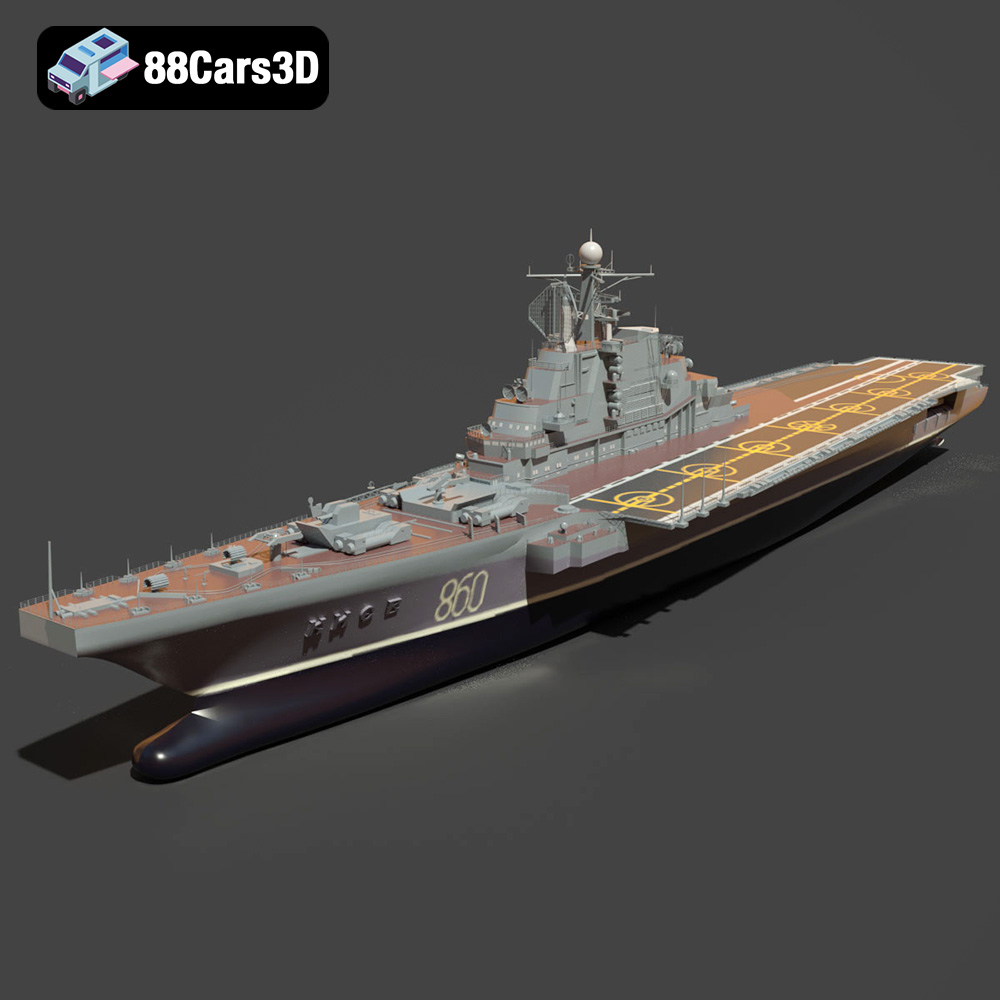
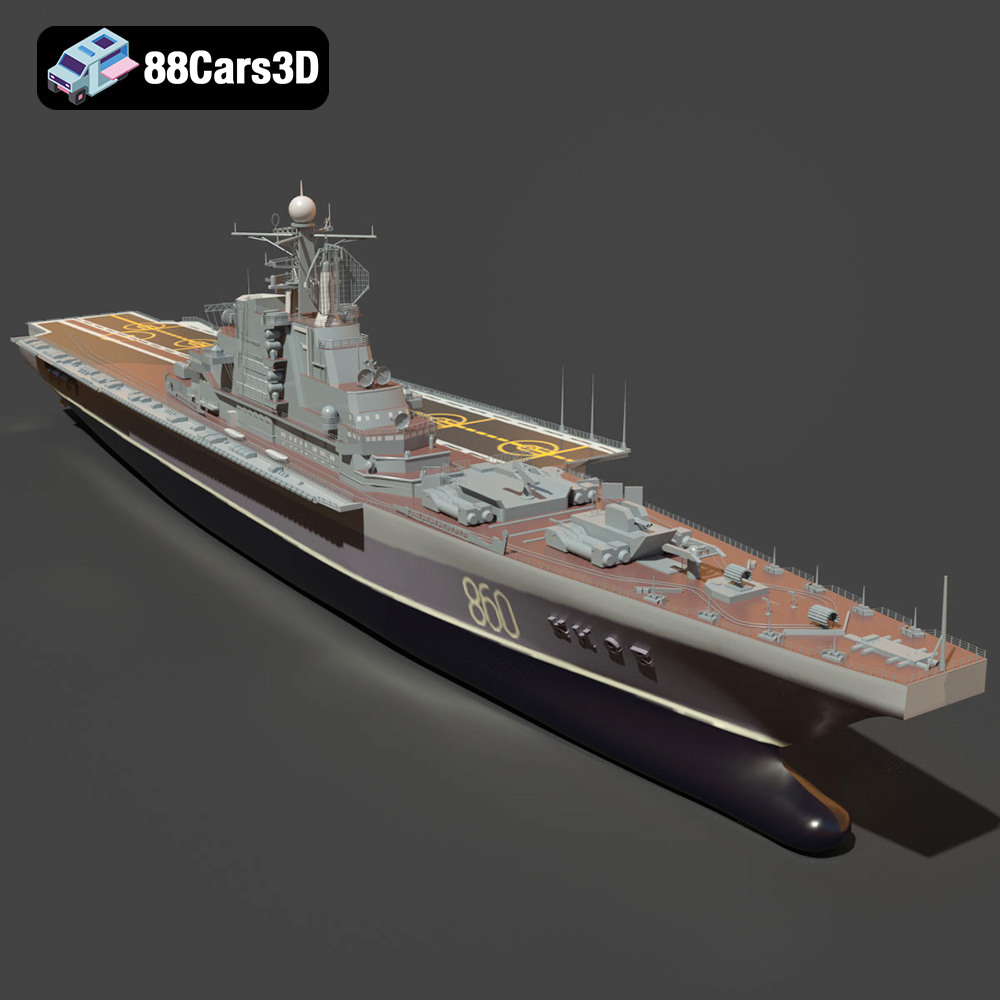
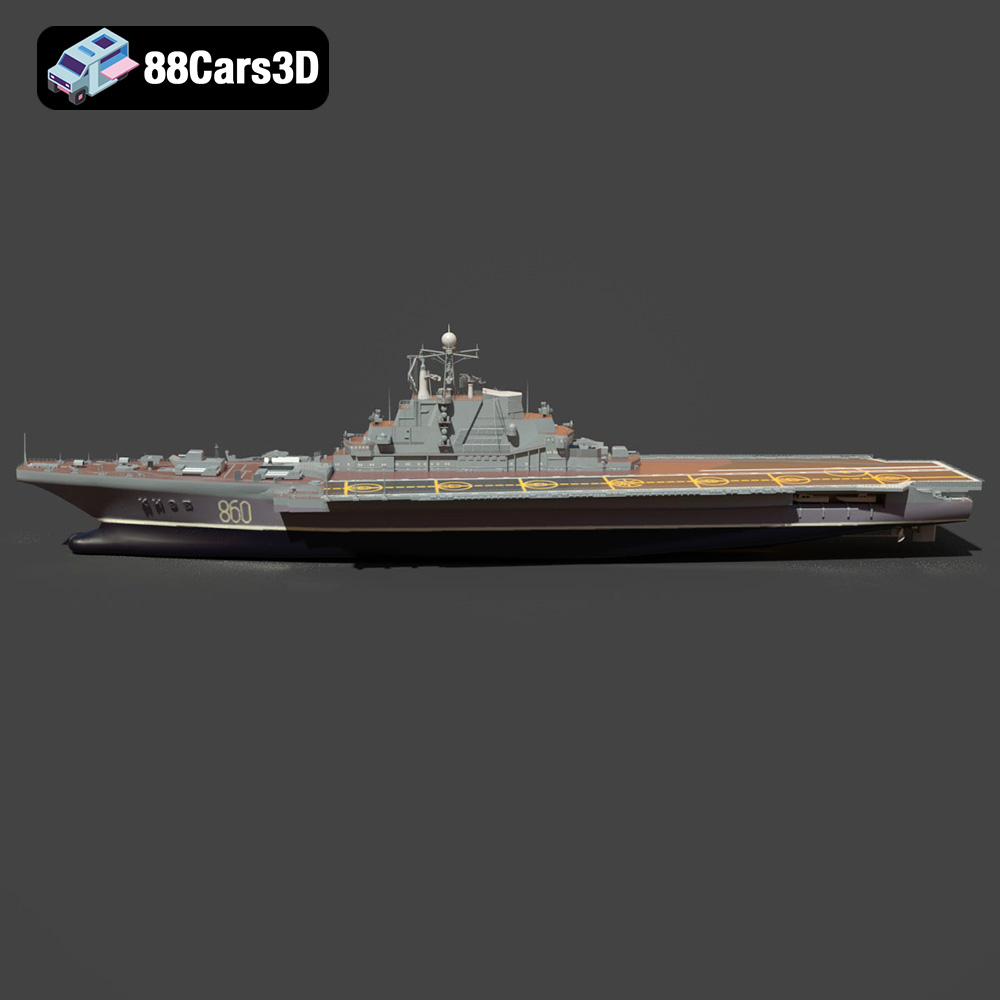
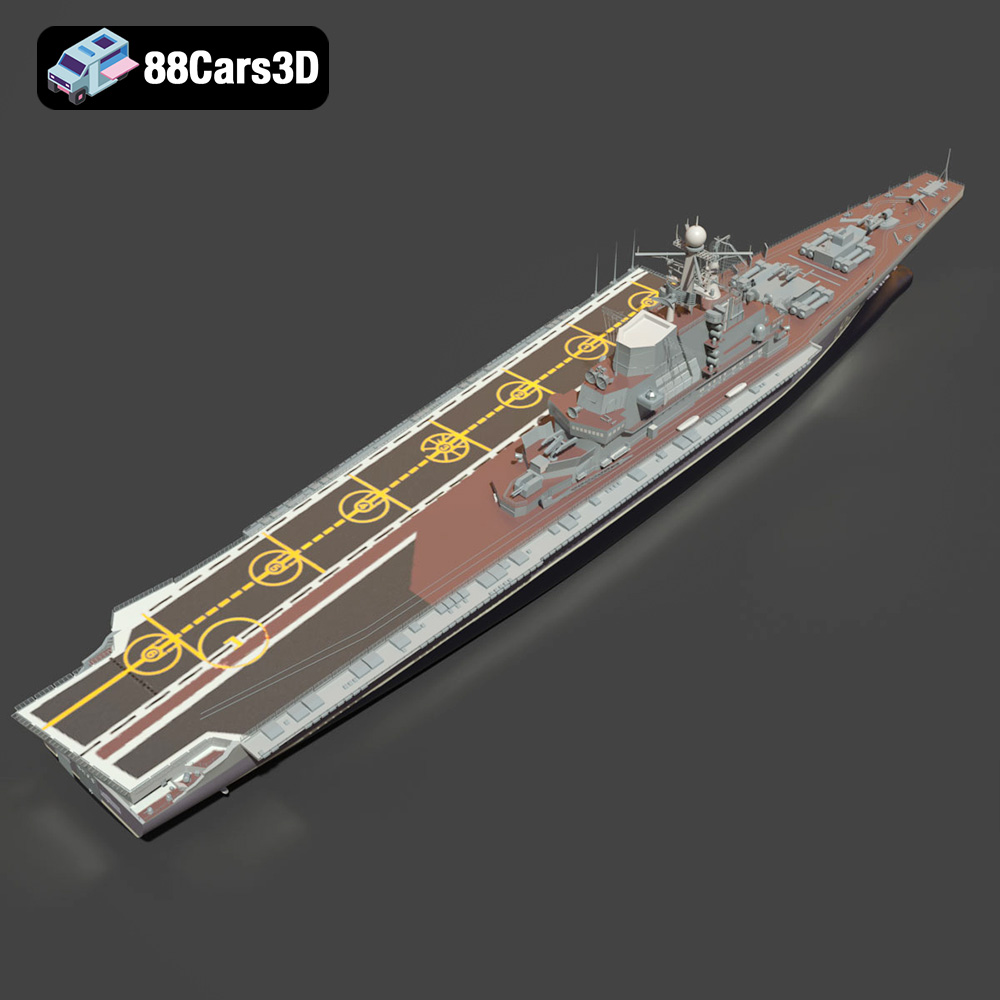
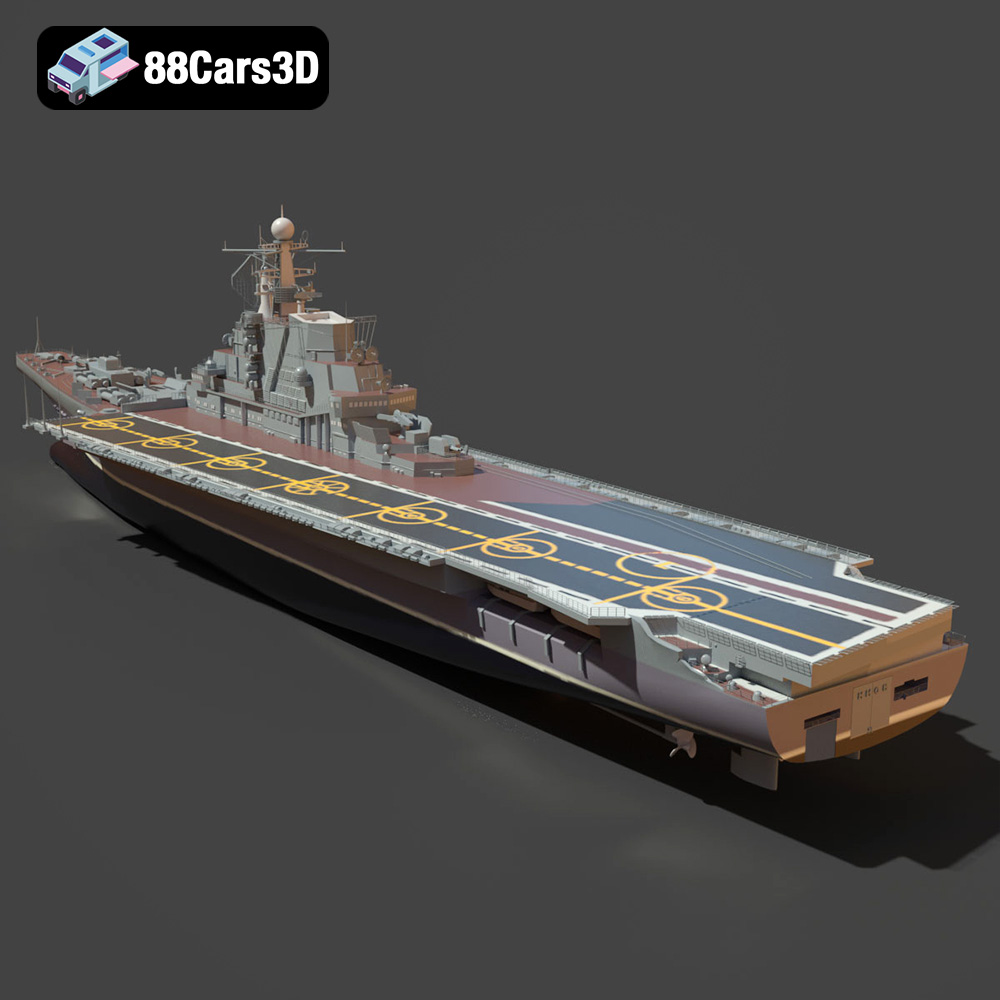
Soviet aircraft carrier Kiev 3D Model
Presenting the Carrier 006 3D Model, a meticulously crafted digital representation designed for exceptional detail and versatility. This model embodies a robust and functional aesthetic, making it ideal for a wide range of applications from conceptual visualization to detailed simulations. Built with clean geometry and balanced detailing, it ensures optimal performance across various platforms. Perfect for rendering photorealistic scenes, integrating into animations, enhancing simulations, and serving as a high-quality asset in game development projects.
Exterior Features:
- Detailed body panels with realistic surface textures
- Functional and accurate lighting components (headlights, tail lights, indicators)
- Precisely modeled wheels and tires with tread patterns
- Separated components for easy animation of doors, hatches, and moving parts
- Transparent materials for windows and light covers, allowing for realistic refractions and reflections
Interior / Mechanical Features:
- Optimized interior layout featuring dashboard controls, seating, and intricate console details
- Under-the-hood mechanical components, including a detailed engine block and essential drivetrain elements
- High-quality mesh optimized for performance while maintaining visual fidelity
Technical Advantages:
- Clean quad-dominant topology for easy subdivision and deformation
- Accurately scaled to real-world dimensions for precise integration into projects
- Logically organized hierarchy with properly positioned pivots for seamless animation workflows
- Optimized mesh for efficient rendering and real-time application performance
Applications:
- Rendering & Visualization: Create stunning studio renders, cinematic sequences, and product showcases.
- Game Development: Utilize as a high-quality vehicle asset for racing games, open-world simulations, or military titles.
- AR/VR: Develop immersive augmented and virtual reality experiences with a detailed and optimized model.
- Simulation & Training: Integrate into educational, technical, or operational simulation environments.
- 3D Printing: Easily convert to .stl for producing accurate physical models.
Customization Options:
- Modify paint finishes and apply custom graphics or liveries
- Adjust material properties for metals, chrome, rubber, glass, and plastics to match specific scene requirements
- Customize lighting setups to achieve various moods and atmospheric effects
Invest in the Carrier 006 3D Model for a versatile, high-quality asset that delivers professional results across diverse creative and technical applications. Its meticulous design and technical advantages ensure it will be a valuable addition to your digital library.
Included File Formats:
- .blend – Blender project with materials
- .fbx – Compatible with Unreal, Unity, and major 3D engines
- .obj – Universal format for nearly all 3D software
- .glb – Optimized for AR, VR, and web-based visualization
- .stl – Ready for 3D printing
- .ply – Mesh format for analysis and CAD workflows
- .unreal – Unreal Engine project setup
- .max – Editable 3ds Max scene for rendering and animation
$10.79
Product Image Gallery