

Driving Digital Excellence: The Power of Production-Ready 3D Car Models in Modern Workflows
In the fast-paced world of 3D visualization, automotive design, and real-time graphics, the demand for high-fidelity, production-ready 3D car models is ever-increasing. From stunning marketing renders to immersive game environments and interactive AR/VR experiences, the quality of your 3D assets can make or break a project. Creating a detailed vehicle from scratch is an incredibly time-consuming and technically demanding process, requiring expertise in modeling, texturing, rigging, and optimization.
Imagine needing a perfectly crafted luxury sports car for an architectural visualization, a new racing game, or a virtual showroom. The time spent on meticulous modeling of intricate details like panel gaps, interior components, or a retractable hardtop mechanism can eat significantly into project deadlines and budgets. This is where pre-made, professional-grade 3D car models become indispensable tools for artists and developers. They provide a critical shortcut, allowing creative teams to focus on overall scene composition, animation, and unique project elements, rather than reinventing the wheel.
Today, we’ll delve into the multifaceted world of professional 3D car models, exploring their applications, the technical considerations behind them, and how they seamlessly integrate into diverse workflows. We’ll highlight the value they bring to various industries and introduce an exceptional example that embodies these principles: the BMW Z4 Roadster E89 2012 3D Model available on 88cars3d.com, a platform dedicated to providing top-tier automotive digital assets.
Understanding 3D Model File Formats: The Backbone of Digital Assets
The versatility of a 3D model often hinges on the file formats it supports. Different formats are optimized for various purposes, from full-scene editing to real-time engine integration or even physical fabrication. Understanding these formats is crucial for any professional working with 3D assets, ensuring smooth interoperability and maximizing a model’s utility. The BMW Z4 Roadster E89 2012 3D Model, for instance, comes equipped with a comprehensive suite of formats, catering to virtually any professional need.
.blend – The Native Blender Ecosystem
The .blend format is the native file type for Blender, an increasingly popular open-source 3D creation suite. A .blend file typically contains not just the raw mesh data, but also materials, textures, lighting setups, cameras, animations, and even physics simulations. This makes it an incredibly powerful format for artists who want full editability. When you acquire a .blend file, you gain access to the complete scene as the artist intended, allowing for deep customization, adjustments to materials, modifications to the mesh, or even re-rigging for specific animation needs. For the BMW Z4 E89, the .blend file provides an editable scene with pre-configured materials and lighting, making it ready for immediate rendering or further development within Blender.
.fbx – The Industry Standard for Interoperability
.fbx (Filmbox) is a proprietary file format owned by Autodesk, but it has become the de facto industry standard for 3D data interchange, particularly between different software applications and real-time game engines like Unreal Engine and Unity. FBX files can store a vast array of 3D data, including geometry (meshes), materials (though often simplified), textures (references), animations, skeletal data, and even camera and light information. Its strength lies in its ability to consolidate complex scene data into a single, relatively portable package. For game developers using the BMW Z4 E89, the .fbx version is game-engine ready, pre-optimized for efficient import and performance within these demanding real-time environments.
.obj – The Universal Geometry Carrier
The .obj (Wavefront OBJ) format is one of the oldest and most widely supported 3D file formats. It’s a simple, human-readable text file that primarily defines geometric data: vertices, UV coordinates, normals, and faces. Material definitions are usually stored in an accompanying .mtl file. While .obj doesn’t support advanced features like animation or rigging, its universal compatibility makes it an excellent choice for basic mesh transfer between virtually any 3D software. If you need to bring the BMW Z4 E89 into a less common application or simply want a clean mesh to start with, .obj is the go-to format.
.glb – Optimized for AR, VR, and Web
.glb (GL Transmission Format Binary) is the binary version of glTF, a royalty-free specification for the efficient transmission and loading of 3D scenes and models by applications. Developed by the Khronos Group, .glb is often referred to as the “JPEG of 3D” due to its optimization for web-based, AR (Augmented Reality), and VR (Virtual Reality) experiences. It packages 3D model data, textures, and animations into a single file, making it incredibly easy to share and display across various platforms. The BMW Z4 E89 in .glb format is perfectly suited for integrating into online configurators, virtual showrooms, or smartphone AR apps.
.stl – The Prototyping and 3D Printing Workhorse
.stl (STereoLithography) is the standard file format for 3D printing and CAD software. It describes only the surface geometry of a 3D object using a collection of interconnected triangles, without any color, texture, or material information. While simple, its ubiquity in manufacturing makes it essential for physical prototyping. For designers who might want to 3D print a scaled model of the BMW Z4 E89 for concept review or physical display, the .stl format provides the precise mesh data required by 3D printers.
.ply – Precision Mesh for CAD and Analysis
The .ply (Polygon File Format, or Stanford Triangle Format) is another format that describes a 3D object as a collection of polygons. Unlike .stl, .ply can also store color, transparency, surface normals, and other attributes per vertex or per face. It’s often used in CAD, reverse engineering, and scientific applications where precise geometric data with additional properties is required for analysis or detailed visualization. The .ply version of the BMW Z4 E89 offers a detailed polygon mesh for those needing deep geometric scrutiny or integration into advanced analytical pipelines.
.unreal – Engine-Ready for Real-Time Environments
While .fbx is a general interchange format, a dedicated .unreal file (often a .uasset or associated files within an Unreal project structure) implies a model specifically configured and optimized for Unreal Engine. This might include pre-applied materials using Unreal’s PBR (Physically Based Rendering) system, collision meshes, LODs (Levels of Detail), and potentially even Blueprint integrations. This format ensures a smoother, more efficient import and immediate usability within Unreal Engine, saving significant time in asset preparation. The pre-configured .unreal asset for the BMW Z4 E89 underscores its readiness for demanding real-time projects.
.max – The Versatility of 3ds Max
The .max format is the native file type for Autodesk 3ds Max, a leading software for 3D modeling, animation, and rendering in the architecture, visualization, and entertainment industries. Like .blend, a .max file contains the complete scene, including geometry, materials, lighting, cameras, animations, and render settings. It provides full editability and access to all modifiers and parameters used during the model’s creation. For professionals deeply embedded in the 3ds Max ecosystem, the .max file for the BMW Z4 E89 is invaluable for rendering high-quality cinematics, integrating into complex architectural scenes, or developing detailed animations.
This array of formats ensures that a high-quality 3D asset like the BMW Z4 Roadster E89 2012 3D Model from 88cars3d.com isn’t just a static object, but a dynamic resource adaptable to nearly any professional workflow imaginable.
The Art and Science of Automotive Rendering: Bringing Cars to Life
Automotive rendering is a highly specialized field that blends technical precision with artistic vision. The goal is to create images and animations so realistic they are indistinguishable from photographs or live footage. This process is critical for marketing, product visualization, and cinematic productions.
High-Fidelity Models for Stunning Visuals
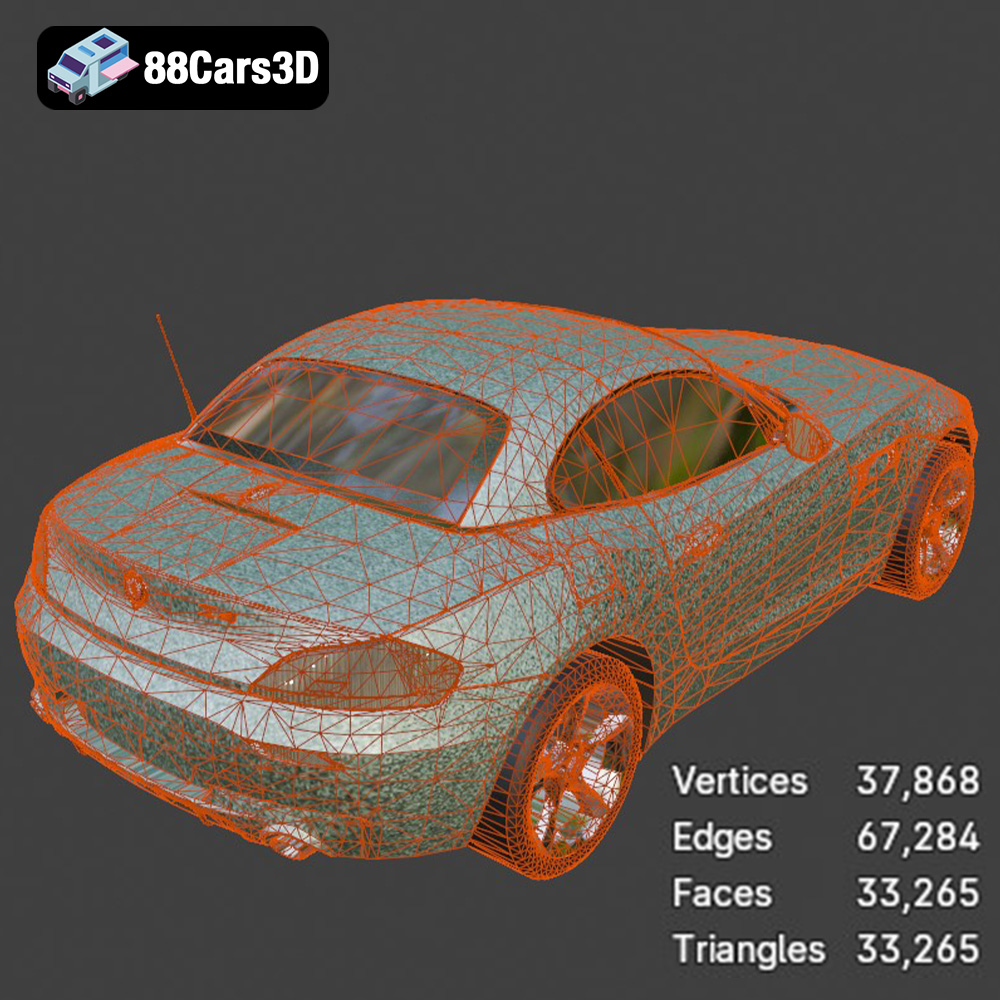
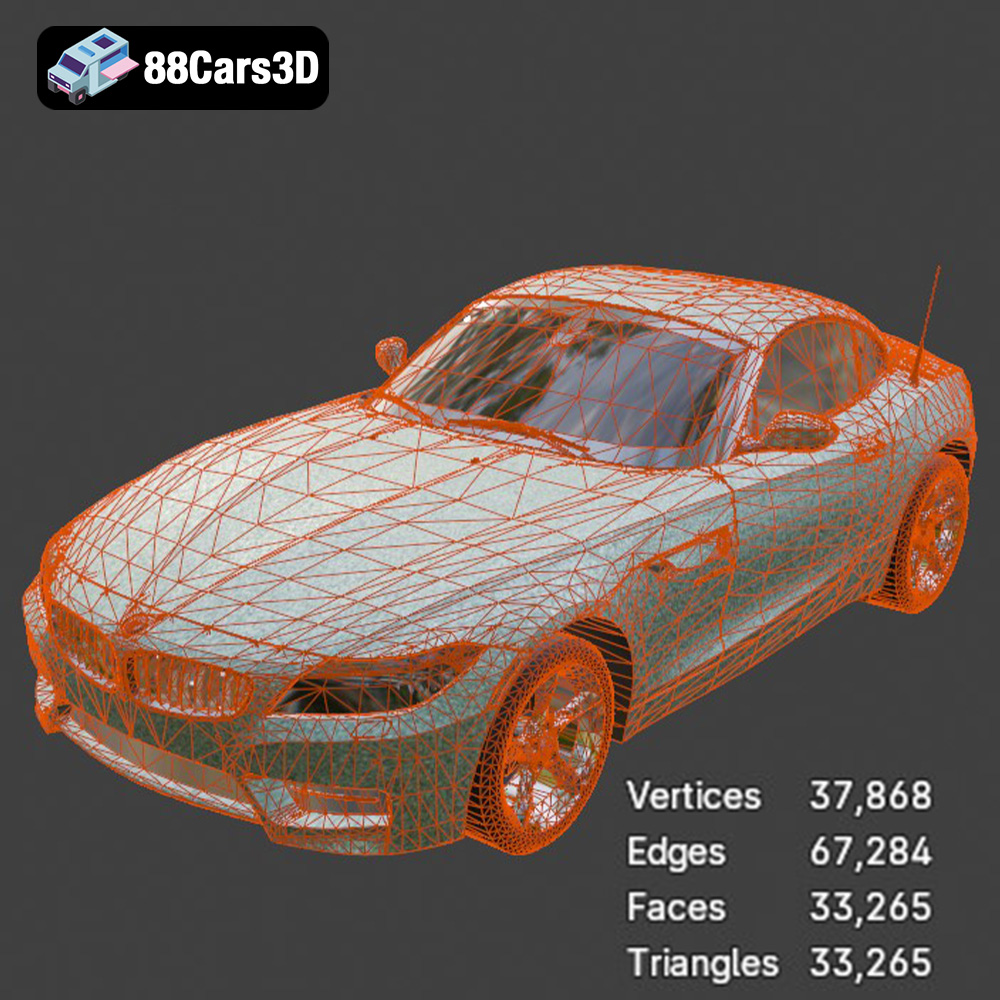
At the core of any exceptional automotive render is a meticulously crafted 3D model. Details like panel gaps, body curvature, headlight intricacies, and interior elements must be accurately represented. A production-ready model, such as the BMW Z4 Roadster E89 2012 3D Model, is built with optimized, clean quad geometry, which is essential for smooth subdivision surfaces and realistic reflections. This allows artists to zoom in for close-up shots without encountering jarring polygonal artifacts. The precise modeling of components like the retractable hardtop mechanism, wheels, and lighting fixtures ensures that every angle and detail contributes to visual fidelity.
Realistic Materials and Lighting for Authenticity
Beyond geometry, the setup of materials and lighting is paramount. Modern rendering relies heavily on Physically Based Rendering (PBR) workflows, where materials accurately simulate real-world physical properties like reflectivity, roughness, and metallic characteristics. The BMW Z4 E89 model includes materials set up for realistic light interaction, providing authentic reflections and surfaces. This means the paint gleams convincingly, chrome accents shimmer appropriately, and glass refracts light with true-to-life precision. Combining these PBR materials with sophisticated global illumination and HDRI lighting environments allows artists to create renders that perfectly mimic how the car would appear under various real-world conditions, from a sunny day to a dramatic studio setup.
Advanced Rendering Engines and Post-Production
Professionals often leverage powerful rendering engines like V-Ray, Corona Renderer, Arnold, or Cycles (in Blender) to achieve photorealistic results. These engines handle complex light calculations, reflections, and refractions with incredible accuracy. After the render, post-production in software like Adobe Photoshop or After Effects is crucial for finessing details, color grading, adding atmospheric effects, and achieving that final, polished look seen in professional advertisements. Having a robust and accurate base model like the one found on 88cars3d.com significantly streamlines this entire rendering pipeline, allowing artists to focus on the creative aspects rather than wrestling with foundational asset issues.
Integrating 3D Car Models into Game Development and Real-Time Applications
The demand for realistic vehicles in video games and interactive simulations has exploded. From open-world adventures to high-octane racing titles, the authenticity of car models directly impacts player immersion. However, game engines have strict performance requirements that necessitate careful optimization of 3D assets.
Optimized Assets for Performance and Fidelity
Unlike offline rendering, real-time applications must render complex scenes many times per second. This means 3D car models need to be optimized for polygon count, draw calls, and texture memory. While a model like the BMW Z4 Roadster E89 2012 3D Model maintains high detail, its “optimized, clean quad geometry” ensures it’s suitable for game-engine integration. This often involves creating multiple Levels of Detail (LODs) – lower-polygon versions of the model that are swapped in when the car is further from the camera – to maintain performance without sacrificing visual quality up close. Properly managed UV layouts are also crucial for efficient texture mapping and light baking within game engines.
Seamless Integration with Unreal Engine and Unity
The included .fbx and .unreal formats for the BMW Z4 E89 are specifically tailored for leading game engines like Unreal Engine and Unity. The .fbx format is versatile enough to transfer mesh, basic materials, and even skeletal data (for wheel rotation, suspension, or doors). For Unreal Engine, the pre-configured .unreal asset offers an even more streamlined workflow, potentially including Unreal-specific materials (using PBR workflows), collision meshes, and even basic physics setup. This significantly reduces the time developers spend on asset preparation, allowing them to focus on gameplay mechanics, AI, and environment design.
Interactive Features and Dynamic Systems
Beyond static models, modern game development requires cars to be interactive and dynamic. This involves rigging the vehicle for suspension, steering, and wheel rotation animations. The accurate modeling of elements like the BMW Z4’s retractable hardtop mechanism means it can be animated for in-game transformations, adding a layer of realism and interactivity. Physics engines within Unreal and Unity can then simulate realistic driving dynamics, crash deformation, and environmental interactions. Starting with a well-structured and accurately modeled base, such as the BMW Z4 E89 from 88cars3d.com, provides a solid foundation for building these complex interactive systems, saving hundreds of hours of development time.
Beyond the Screen: AR/VR, 3D Printing, and Simulation
The utility of high-quality 3D car models extends far beyond traditional screens, opening doors to innovative applications in augmented reality, virtual reality, 3D printing, and advanced simulations.
Immersive Experiences in AR/VR
Augmented Reality (AR) and Virtual Reality (VR) are transforming how we interact with digital content. For the automotive industry, AR/VR offers unparalleled opportunities for virtual showrooms, interactive car configurators, and immersive training simulations. Imagine a potential customer exploring the BMW Z4 E89 in a virtual environment, changing colors, opening doors, or even taking a virtual test drive from the comfort of their home. The .glb format included with the BMW Z4 Roadster E89 2012 3D Model is specifically optimized for these applications. Its compact, single-file structure makes it ideal for web-based AR experiences on smartphones or for quick loading into VR headsets, providing a smooth and highly realistic interactive experience.
Prototyping and Education with 3D Printing
The ability to transform digital models into physical objects via 3D printing has revolutionized product design and prototyping. While a full-scale car isn’t feasible for desktop printers, detailed scale models can be invaluable for design reviews, educational purposes, or creating unique merchandise. The .stl format, included with the BMW Z4 E89 model, is the industry standard for 3D printing. This triangulated mesh provides the necessary data for slicing software to prepare the model for fabrication, allowing designers and enthusiasts to bring a tangible representation of the iconic roadster into the physical world. For interactive training simulators, having a detailed physical model can complement digital experiences by providing a tactile reference.
Advanced Simulation and Training
In fields requiring rigorous training or detailed analysis, 3D car models serve as the foundation for sophisticated simulations. This includes driver training simulators for professional racing, military applications, or even public road safety programs. The precision of the BMW Z4 E89’s modeling allows for accurate physics calculations and visual feedback within these simulations. Furthermore, formats like .ply can be used for detailed polygon mesh analysis in CAD environments, enabling engineers to study aerodynamic properties or structural integrity in a digital twin scenario. The accuracy and comprehensive detail of models like those offered by 88cars3d.com make them ideal assets for these demanding, high-stakes applications.
Optimizing Workflow and Maximizing Value with Production-Ready Assets
In professional 3D production, time is money. Every hour saved on modeling and asset preparation translates directly into increased efficiency and the ability to take on more projects. This is where pre-made, production-ready 3D car models demonstrate their immense value.
Accelerated Production Cycles
One of the most significant advantages of using a pre-made asset like the BMW Z4 Roadster E89 2012 3D Model is the dramatic reduction in production time. Modeling a highly detailed car from scratch can take hundreds of hours, from gathering blueprints and reference images to sculpting, retopologizing, UV mapping, and texturing. By purchasing a model from a trusted source like 88cars3d.com, studios and individual artists can bypass these initial, labor-intensive stages entirely. They can immediately integrate the model into their scene, apply project-specific materials or lighting, and proceed directly to rendering or engine integration. This acceleration is critical for meeting tight deadlines and delivering projects on time and within budget.
Ensuring Quality and Consistency
Developing a 3D car model to a professional standard requires a specialized skillset and attention to detail. Production-ready assets are typically built by experienced modelers who understand the nuances of clean topology, efficient UV layouts, and PBR material setups. The BMW Z4 E89 model exemplifies this with its “optimized, clean quad geometry suitable for subdivision and animation” and “materials set up for realistic light interaction.” This level of quality ensures that the model will perform well across various applications, from high-resolution cinematic renders to real-time game engines, providing consistent visual fidelity. It eliminates the guesswork and potential quality inconsistencies that can arise from custom modeling by less experienced artists.
Cost-Effectiveness and Return on Investment
While purchasing a 3D model involves an upfront cost, it almost always represents a significant cost saving compared to commissioning a custom build or dedicating internal resources to model creation. The time and salary expenses associated with custom modeling far outweigh the price of a high-quality, pre-made asset. Furthermore, a versatile model available in multiple formats, like the BMW Z4 E89, offers excellent return on investment, as it can be reused across different projects, applications, and client needs. For studios, this means a growing library of reliable assets that enhance their capabilities and reduce overheads on future projects. Investing in professional assets empowers creative teams to deliver superior results more efficiently.
Conclusion
The digital landscape is evolving at a rapid pace, and the tools and assets available to 3D artists and developers must keep pace with these demands. High-quality 3D car models are no longer a luxury but a fundamental necessity for achieving excellence in automotive visualization, game development, AR/VR experiences, and advanced simulations. The technical intricacies of modeling, texturing, and optimizing vehicles are substantial, making production-ready assets an invaluable resource for accelerating workflows and ensuring top-tier results.
The BMW Z4 Roadster E89 2012 3D Model stands as a prime example of such an asset. Its meticulous detail, clean geometry, realistic materials, and comprehensive file format support (including .blend, .fbx, .obj, .glb, .stl, .ply, .unreal, and .max) make it an incredibly versatile tool. Whether you’re crafting cinematic renders in 3ds Max or Blender, integrating vehicles into Unreal Engine for a cutting-edge game, developing interactive AR/VR applications, or even prototyping with 3D printing, this model provides a robust foundation.
By leveraging professional 3D car models from platforms like 88cars3d.com, artists and developers can significantly reduce development time, maintain consistent quality, and focus their creative energy on bringing their unique visions to life. It’s an investment that pays dividends in efficiency, quality, and the ability to tackle the most demanding digital projects with confidence.
Featured 3D Model
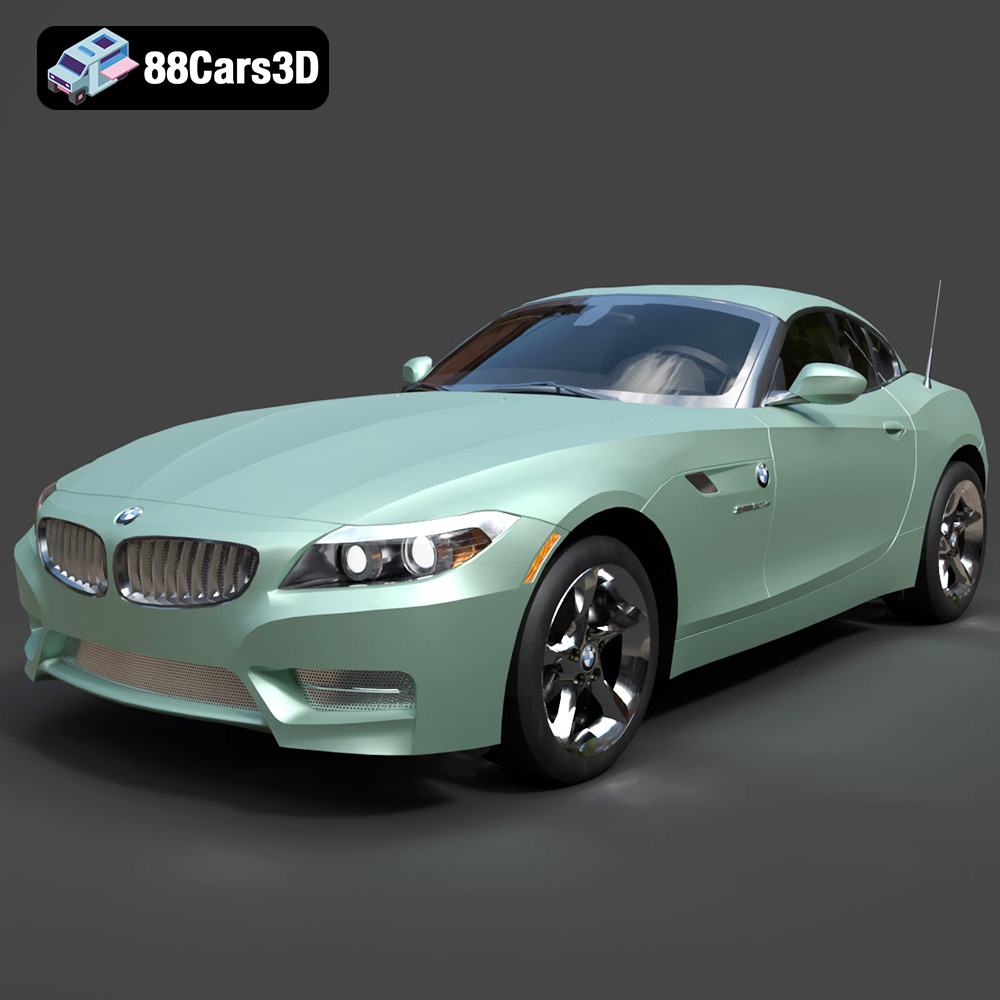
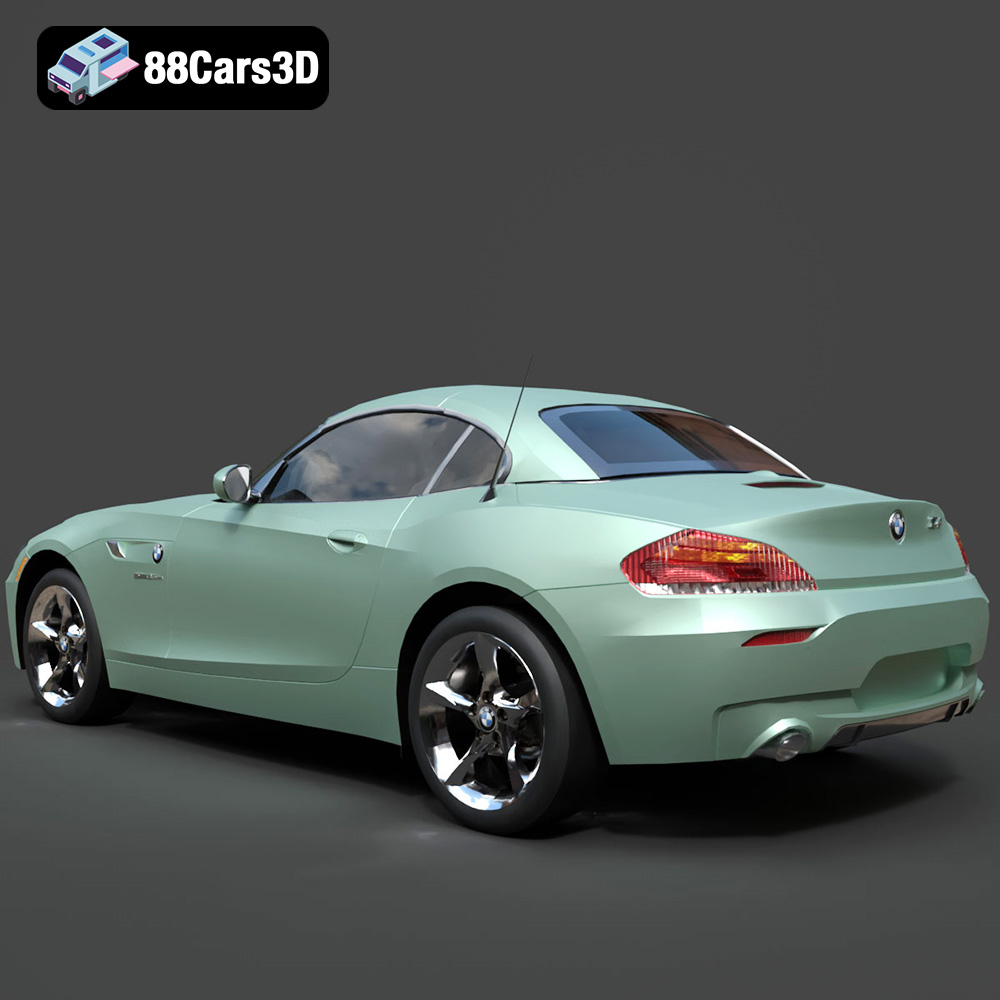
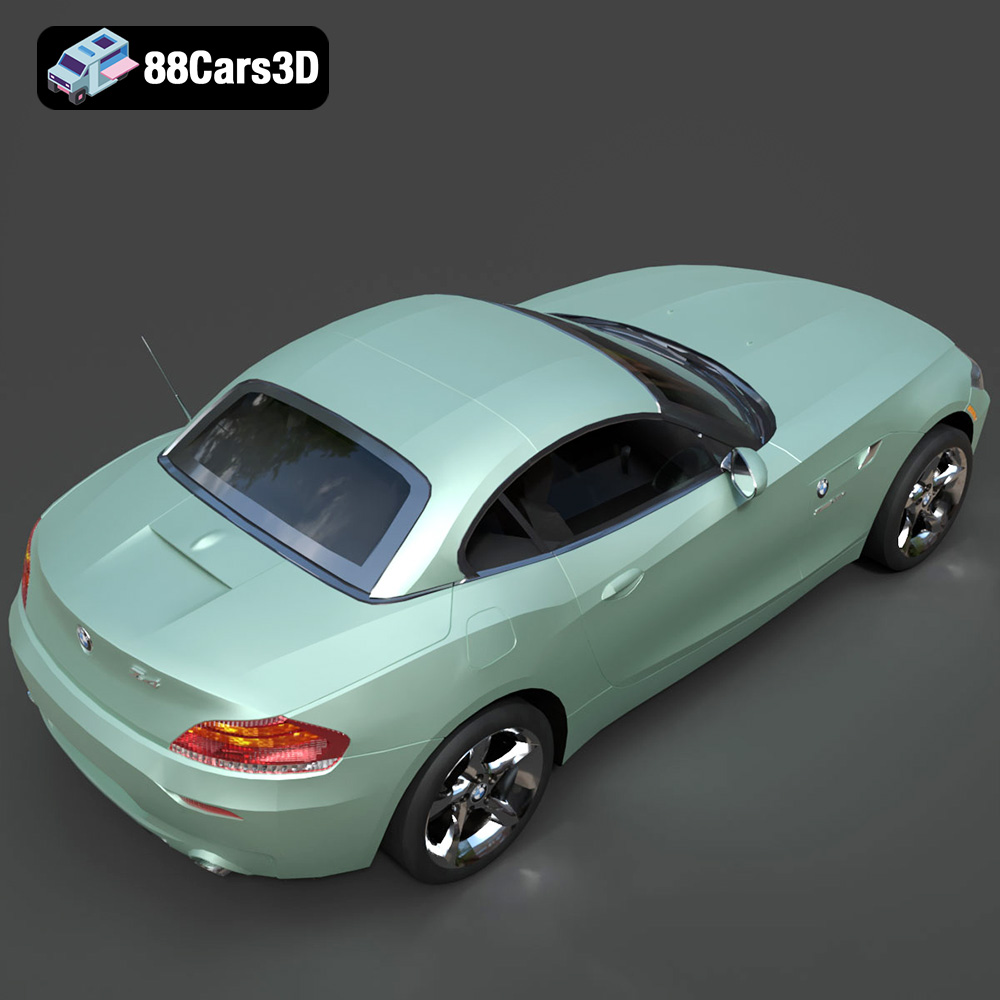
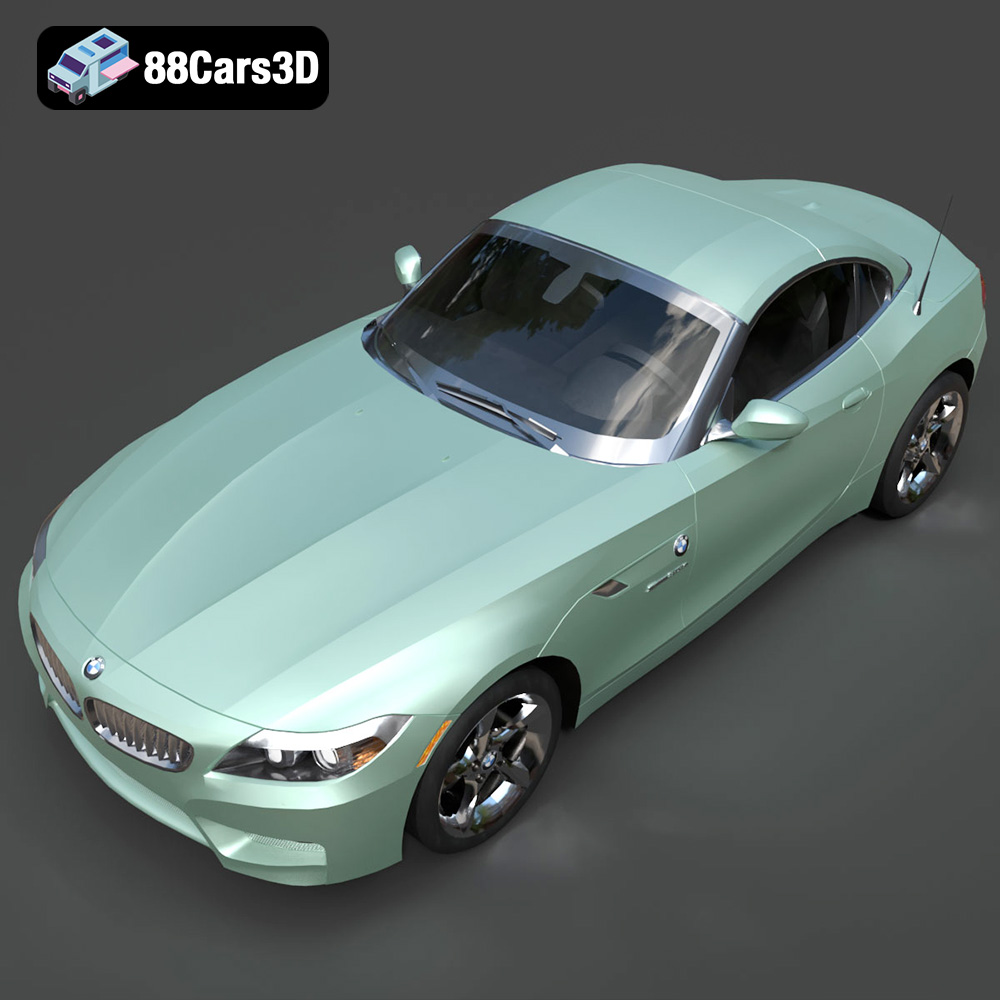
BMW Z4 Roadster E89 2012 3D Model
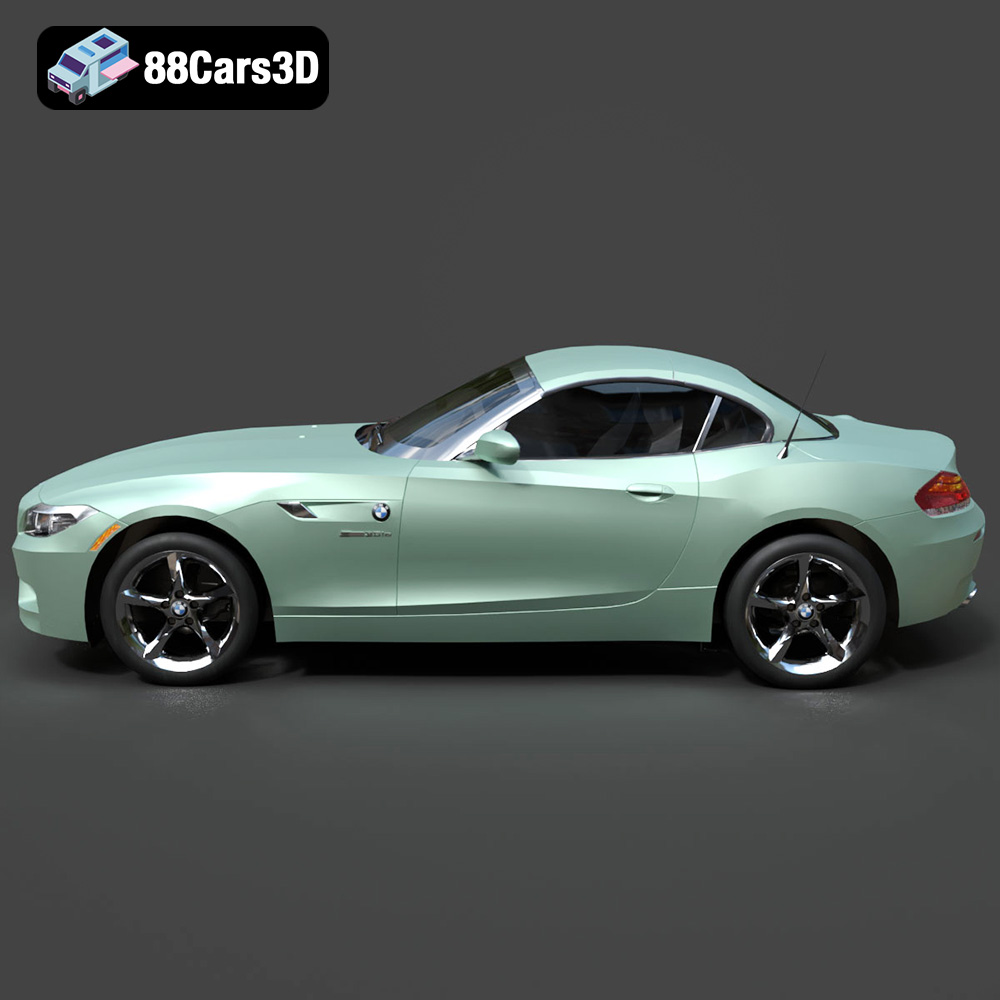
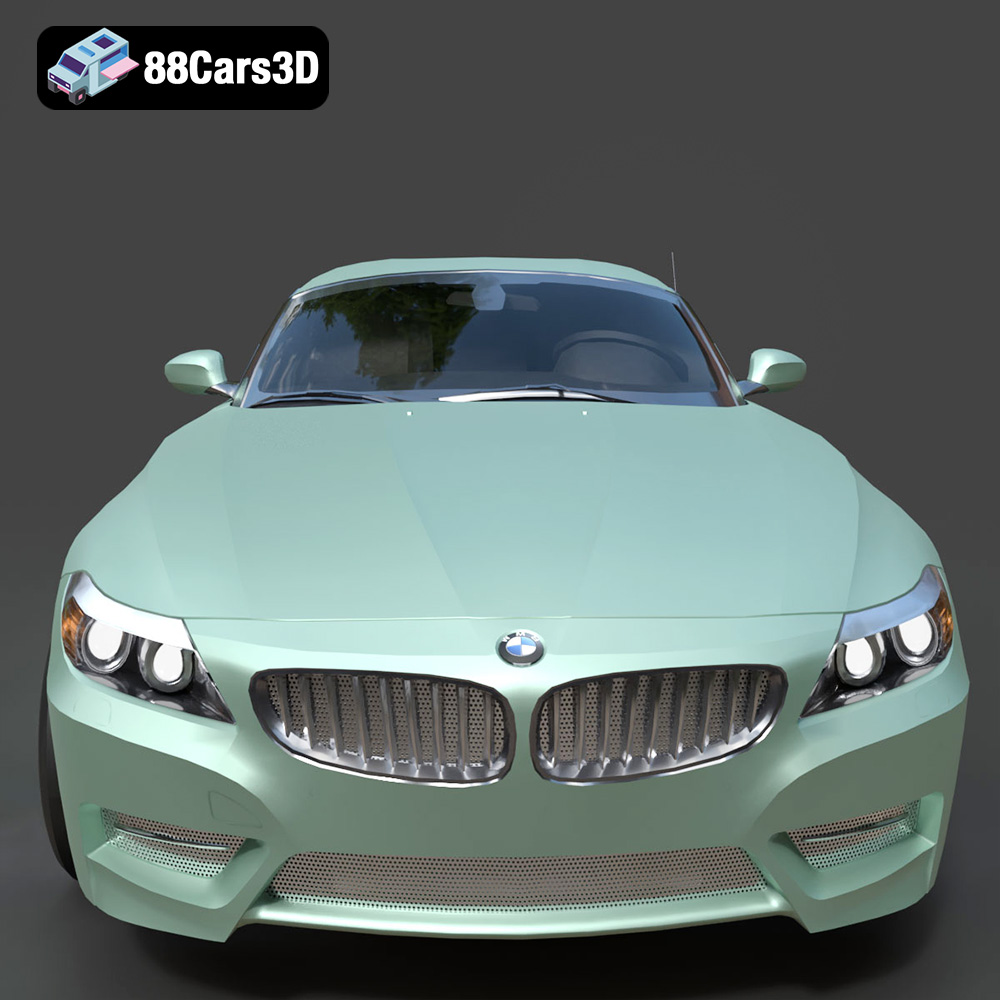
This detailed 3D representation of the BMW Z4 Roadster E89 provides an accurate, production-ready asset for professional digital projects. Developed with precision, the model captures the distinctive styling and dynamic lines of this modern German sports convertible, ensuring visual fidelity in any environment.
$13.99
Product Image Gallery
Related Tags
.arvr
.blend
.bmw
.car3dmodel
.convertible
.e89
.fbx
.gameasset
.germancar
.glb
.max
.obj
.ply
.rendering
.roadster
.simulation
.sportsCar
.stl
.unreal
.z4
.z4e89
