

Mastering Automotive 3D: Elevating Your Projects with the BMW 6 Series 3D Model
The world of 3D modeling for automotive design is a dynamic landscape, constantly pushing the boundaries of realism and immersion. From breathtaking cinematic renders to hyper-realistic racing simulations and cutting-edge AR/VR experiences, the demand for high-quality 3D car models is insatiable. Crafting these assets from scratch is an incredibly time-consuming and specialized endeavor, often requiring hundreds of hours of work from experienced artists. This is where pre-made, professional-grade 3D car models become invaluable, offering a shortcut to excellence without compromising on detail or technical integrity.
For discerning professionals and enthusiasts alike, selecting a model that strikes the perfect balance between aesthetic fidelity and technical optimization is crucial. We’re delving into precisely such an asset today: the BMW 6 Series 3D Model. This exquisite model encapsulates the luxurious grand tourer’s sleek lines, sporty elegance, and powerful presence, providing a versatile foundation for an array of demanding projects. Whether your goal is to produce stunning visualizations, integrate a premium vehicle into a game engine, or explore new frontiers in augmented reality, a meticulously crafted asset like this can dramatically enhance your workflow and the final output.
The Foundation of Realism: Understanding 3D Model File Formats
Navigating the diverse ecosystem of 3D software and platforms requires a deep understanding of file formats. Each format serves specific purposes, offering unique advantages for different stages of a project, from initial modeling to final rendering, game integration, or even physical manufacturing. The BMW 6 Series 3D Model available at 88cars3d.com comes equipped with an impressive array of these formats, ensuring maximum compatibility and utility across virtually any professional workflow. Understanding when and why to use each is paramount for an efficient and successful project.
.blend: Blender’s Native Powerhouse
The .blend file format is the native project file for Blender, the widely popular open-source 3D creation suite. When you receive a .blend file, you’re getting a fully editable Blender scene, complete with materials, textures, lighting, camera setups, and often, animation data. For artists primarily working in Blender, this format offers the most flexibility. You can easily modify the BMW 6 Series’ geometry, adjust its quad-dominant topology, tweak material nodes, or set up custom animation rigs directly within your preferred environment. It’s ideal for deep customization, advanced rendering with Cycles or Eevee, and integrating into existing Blender projects without any loss of data fidelity.
.fbx: The Industry Standard for Interoperability
Autodesk’s .fbx (Filmbox) format has become the de facto standard for exchanging 3D data between various applications. It’s particularly favored in game development and real-time pipelines due to its robust support for mesh data, materials, textures, animations, and skeletal rigs. For bringing the BMW 6 Series into Unreal Engine, Unity, or other game engines, .fbx is often the go-to choice. It provides a highly efficient way to transfer complex scenes while maintaining critical information, making it excellent for collaboration and multi-software workflows. Developers can import the .fbx, apply engine-specific materials, and quickly set up collisions and LODs (Levels of Detail).
.obj: Universal Compatibility and Simplicity
The .obj (Wavefront Object) format is one of the oldest and most universally supported 3D file types. It’s a simple, text-based format primarily used for transferring mesh geometry data, including vertices, normals, UV coordinates, and groups. While it doesn’t typically store advanced material properties or animation, its widespread compatibility makes it an excellent choice for cross-software integration. If you need to import the BMW 6 Series into virtually any 3D application for basic modeling, sculpting, or re-texturing, .obj is a reliable format. It acts as a robust fallback when more complex formats encounter compatibility issues.
.glb: Optimizing for Modern Web and Immersive Experiences
.glb (GL Transmission Format Binary) is a relatively newer format gaining significant traction, especially in the realms of AR, VR, and web-based 3D applications. It’s a binary version of glTF, designed to be compact, efficient, and “ready to render,” encapsulating not just geometry but also materials, textures, and even animations into a single, self-contained file. For showcasing the BMW 6 Series in an interactive web viewer, integrating it into an augmented reality app on a mobile device, or streaming it in a virtual reality environment, .glb offers optimal performance and ease of deployment. Its small file size and optimized structure are crucial for real-time loading and smooth user experiences.
.stl: Precision for Physical Fabrication
The .stl (Stereolithography) format is the standard for 3D printing and rapid prototyping. It represents a 3D model as a series of connected triangles, defining only the surface geometry without color, texture, or other attributes. For those looking to bring the digital BMW 6 Series into the physical world – perhaps for scale models, prototypes, or design studies – converting the high-quality mesh to .stl is essential. While the provided BMW 6 Series 3D Model is optimized for rendering, its clean topology ensures it can be easily processed and prepared for a precise 3D print without significant errors.
.ply: Detailed Meshes for Analysis and CAD
.ply (Polygon File Format) is another format often used for storing 3D data from 3D scanners, scientific applications, and CAD (Computer-Aided Design) workflows. It supports not only geometry but also properties like color, transparency, and sometimes even material properties per vertex or face. It’s a precise mesh format, often used in applications where detailed analysis, measurement, or specific engineering requirements are paramount. For scenarios involving the BMW 6 Series where highly accurate mesh data is required for simulations or integration into CAD environments, the .ply format provides a robust solution.
.unreal: Native Integration for Real-time Environments
The inclusion of a .unreal file specifically tailored for Unreal Engine is a significant advantage for game developers and real-time visualization artists. This isn’t just a raw mesh; it signifies an asset already packaged and configured within an Unreal Engine project. This could mean pre-configured materials using Unreal’s physically based rendering (PBR) pipeline, proper pivot points, LODs already set up, and perhaps even basic collision meshes. This dramatically cuts down on import and setup time, allowing developers to drop the BMW 6 Series straight into their virtual worlds and begin immediate testing or integration into game logic.
.max: 3ds Max for Advanced Animation and Rendering
For professionals entrenched in the Autodesk ecosystem, the .max file provides the native 3ds Max project scene. This format offers full access to all aspects of the BMW 6 Series 3D Model within 3ds Max, including its meticulously organized hierarchy, clean geometry, and potentially pre-configured V-Ray or Corona Renderer materials. This is the ideal format for advanced animation sequences, high-end studio renders, architectural visualizations, or any project requiring the robust modeling and rendering capabilities of 3ds Max. Artists can leverage the model’s separated doors, hood, and trunk for complex animations right out of the box.
Crafting Visual Masterpieces: Automotive Rendering Workflows
The true power of a high-quality 3D car model like the BMW 6 Series lies in its ability to produce stunning, photorealistic renders. Automotive rendering is an art form, demanding precision in lighting, materials, and composition. A well-built model forms the cornerstone of this process, enabling artists to focus on creative expression rather than fixing underlying mesh issues.
High-Fidelity Rendering in 3ds Max and V-Ray/Corona
3ds Max, often paired with render engines like V-Ray or Corona Renderer, remains a powerhouse for architectural visualization and high-end product rendering. The BMW 6 Series 3D Model, provided as a .max file, is perfectly suited for this environment. Its clean, quad-dominant topology is essential for smooth subdivision surfaces, which are critical for capturing the subtle curves and reflections of a luxury vehicle. Artists can load the model, apply sophisticated PBR (Physically Based Rendering) materials for car paint, glass, chrome, and rubber, and set up intricate studio lighting. The logically organized hierarchy and proper pivot points (for doors, wheels, and steering) allow for dynamic camera angles and subtle animations, enhancing the realism of any still image or cinematic sequence. Imagine a pristine BMW 6 Series showcased in a sleek virtual showroom, its polished surface reflecting ambient light, every detail from the grille to the detailed interior visible in exquisite clarity – this is where the model shines.
Cinematic Visuals with Blender and Cycles/Eevee
Blender has emerged as a formidable contender in professional 3D, and the included .blend file for the BMW 6 Series ensures a seamless experience for its users. Blender’s Cycles renderer, known for its unbiased, photorealistic output, can leverage the model’s clean geometry and UVs to produce breathtaking automotive renders. Alternatively, Eevee, Blender’s real-time renderer, allows for quick iterations and previews, making it excellent for design exploration or pre-visualization. Artists can easily customize the paint finishes, apply custom graphics, or create unique liveries directly within Blender. The model’s real-world scale ensures accurate integration into existing scenes, whether it’s a detailed street environment or an abstract promotional backdrop.
The Importance of Materials and Textures for Realism
Beyond the mesh, the quality of materials and textures defines realism. The BMW 6 Series 3D Model is described with transparent materials for headlights and taillights, high-resolution textures for badges, and the ability to adjust material properties for metal, glass, rubber, and plastic components. This level of detail allows artists to replicate the subtle nuances of automotive finishes, from the metallic flakes in a luxury paint job to the intricate patterns on tire treads and the subtle imperfections of glass. Proper UV mapping, often a hallmark of professional 3D car models, ensures that these textures wrap seamlessly and accurately around the model, preventing unsightly stretching or distortions during rendering.
Driving Innovation: Integrating 3D Car Models into Game Development
Game development demands a different kind of precision. While visual fidelity is crucial, performance optimization is king. A great 3D car model for games balances stunning aesthetics with efficient poly counts, well-structured LODs (Levels of Detail), and robust engine compatibility. The BMW 6 Series 3D Model is optimized for game development, making it an ideal asset for racing simulations, open-world environments, and interactive experiences.
Optimized Assets for Unreal Engine and Unity
With dedicated .fbx and .unreal files, the BMW 6 Series 3D Model is primed for integration into the leading game engines. The .fbx format facilitates a smooth import into both Unreal Engine and Unity, allowing developers to bring in the mesh, animations, and basic material assignments with ease. The .unreal package goes a step further for Unreal Engine users, potentially offering a pre-configured asset with PBR materials, collision meshes, and even basic vehicle blueprint setups. This dramatically reduces the integration time, enabling teams to spend more effort on gameplay mechanics and environmental design. The “optimized mesh” mentioned in the product description implies that the model’s polygon count is balanced for real-time performance without sacrificing key details, even for interior elements.
Performance Considerations: LODs, Poly Counts, and Collisions
For game assets, managing poly counts and implementing efficient LODs are critical for maintaining frame rates. While the product description emphasizes “balanced level of detail,” a professional game asset typically includes multiple versions of the model at varying poly counts. The highest detail model is used when the car is close to the camera, with progressively lower detail versions swapping in as the vehicle moves further away. This ensures visual quality up close while saving precious rendering resources at a distance. Furthermore, robust collision meshes are essential for realistic physics and interaction within the game world. The clean geometry of the BMW 6 Series 3D Model simplifies the process of generating these crucial game-specific components.
Animation and Rigging for Interactive Experiences
Interactive experiences require a vehicle that can move realistically. The BMW 6 Series 3D Model’s “logically organized hierarchy with proper pivot points for easy animation of doors, wheels, and steering” is a significant advantage. This means a game developer can quickly rig the car for driving physics, allowing wheels to turn and spin correctly. They can also animate doors opening and closing for player interaction, or even simulate engine bay access if the hood is separated. This pre-configured structure saves invaluable development time, letting teams focus on creating engaging driving mechanics and cinematic in-game moments rather than correcting fundamental rigging issues.
Beyond Visualization: AR/VR, Simulation, and 3D Printing
The versatility of a well-crafted 3D model extends far beyond traditional rendering and game development. As technology evolves, so do the applications for high-quality digital assets. The BMW 6 Series 3D Model is designed to meet these diverse needs, proving its value in cutting-edge fields like AR/VR, simulation, and even physical fabrication.
Immersive Experiences with AR/VR
Augmented Reality (AR) and Virtual Reality (VR) are transforming how we interact with digital content. For product showcases, interactive experiences, or virtual showrooms, a premium 3D car model is indispensable. The BMW 6 Series 3D Model’s inclusion of the .glb format is a testament to its readiness for these immersive platforms. .glb files are optimized for fast loading and efficient rendering in AR/VR environments, enabling seamless integration into mobile AR apps, web-based VR experiences, or dedicated headset applications. Imagine a potential customer exploring the BMW 6 Series in their driveway via AR, or taking a virtual test drive in a VR simulation – the model’s clean geometry and optimized textures ensure a smooth, high-fidelity experience.
Precision for Simulation and Training
Beyond entertainment, 3D car models play a critical role in professional simulation and training. Driving simulators, educational modules, and technical training scenarios all benefit from highly accurate and detailed vehicle representations. The BMW 6 Series 3D Model, modeled to real-world scale and featuring a basic representation of undercarriage components, provides the necessary accuracy for such applications. Its clean topology and logical hierarchy facilitate the integration of complex physics engines and interactive controls, making it suitable for training new drivers, simulating hazardous conditions, or even for engineering analysis in virtual environments. The .ply format, also included, could be particularly useful for integrating the model into advanced analysis software.
Bringing Digital to Physical: 3D Printing the BMW 6 Series
The boundary between the digital and physical worlds continues to blur with advancements in 3D printing. For designers, engineers, or enthusiasts who wish to create physical prototypes, scale models, or unique collectibles, the BMW 6 Series 3D Model can be readily converted to the .stl format. While some optimization may be required depending on the printing method and desired scale, the model’s clean, quad-dominant topology provides an excellent foundation. This allows for the creation of tangible objects that accurately reflect the intricate design and elegant proportions of the digital model, making it a valuable asset for product design, prototyping, or even architectural models requiring a premium vehicle.
The 88cars3d.com Advantage: Why Professional Models Matter
In a saturated market of 3D assets, distinguishing between amateur work and professional quality is paramount. Investing in a meticulously crafted model like the BMW 6 Series 3D Model from 88cars3d.com offers significant advantages, streamlining workflows and elevating the quality of your final output. It’s not just about getting a pretty model; it’s about acquiring a technically robust asset that saves time and avoids headaches down the line.
The Value of Clean Topology and Real-World Scale
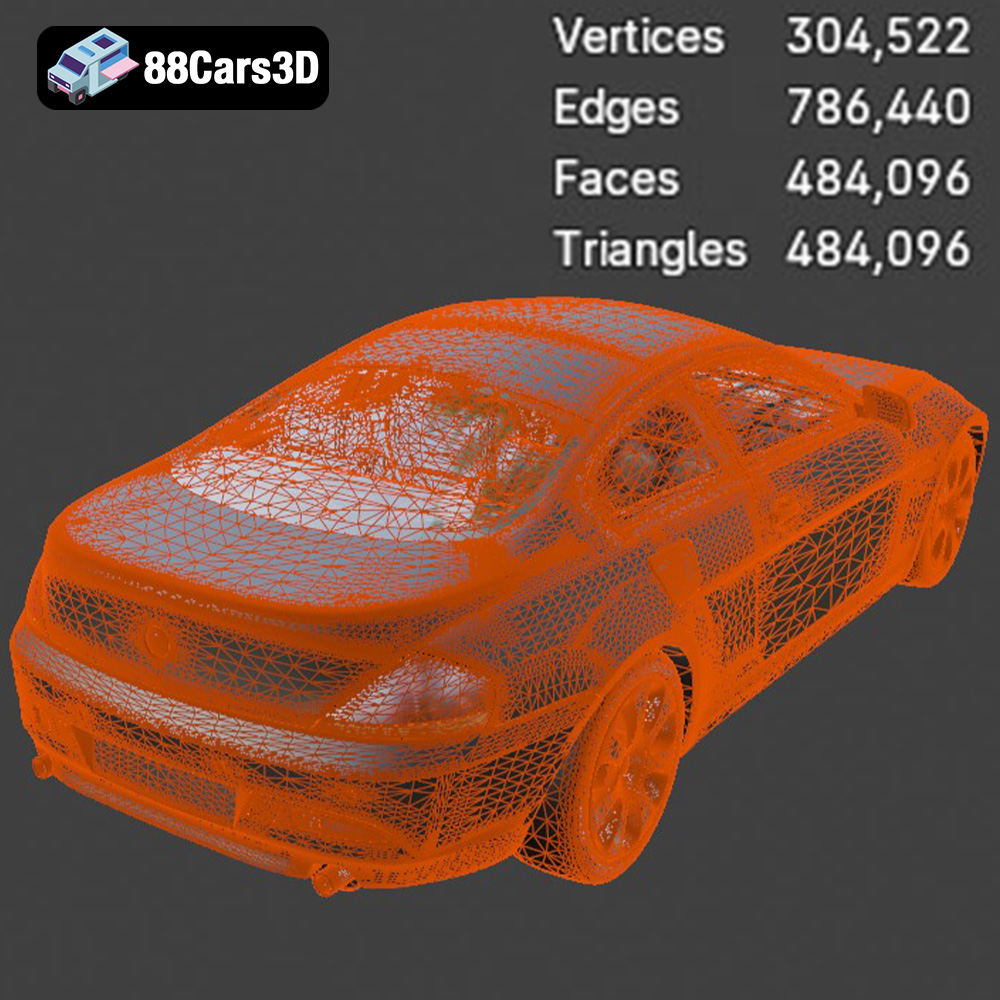
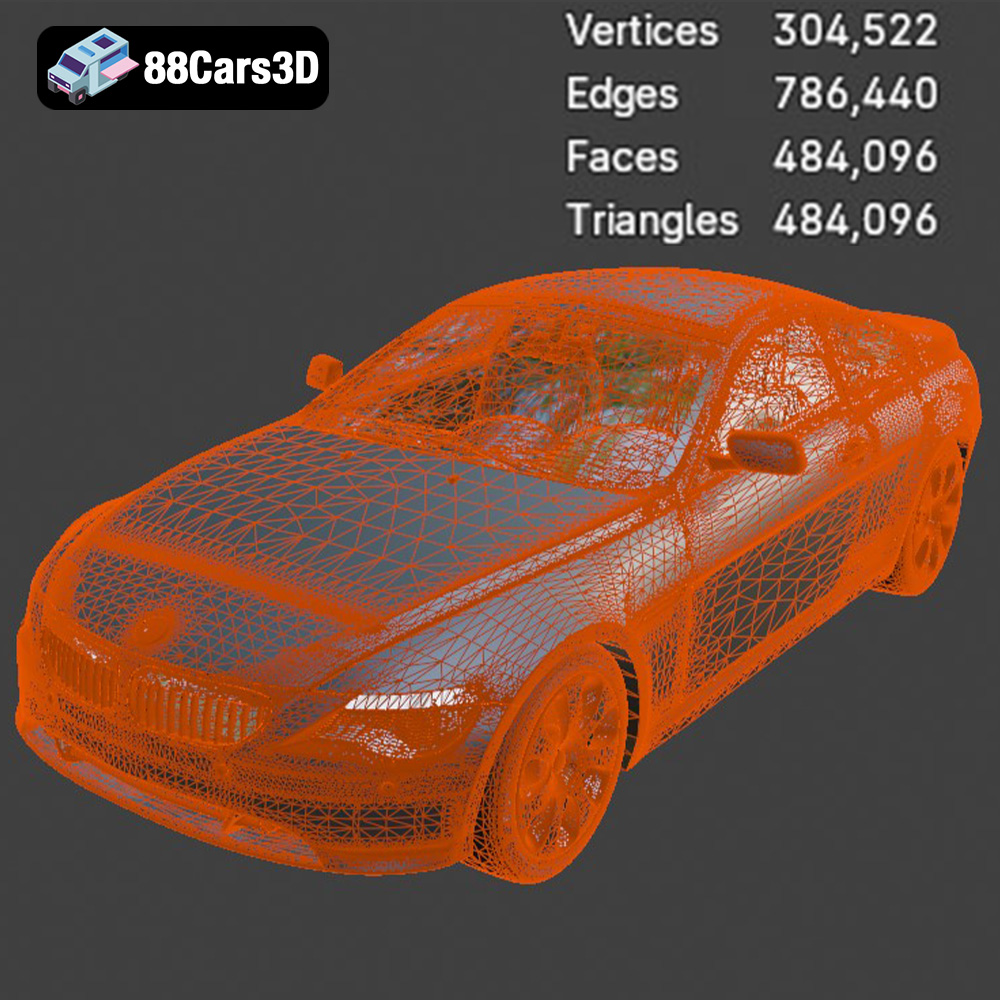
The product description highlights “clean, quad-dominant topology” and being “modeled to real-world scale.” These aren’t just buzzwords; they are fundamental indicators of a professional asset. Clean topology ensures that the mesh deforms smoothly during animation, subdivides without artifacts, and is easy to modify. This translates to less time spent fixing geometry issues and more time on creative iteration. Real-world scale is crucial for accurate integration into any scene, whether it’s an architectural visualization or a game environment, preventing disproportionate scaling and lighting errors. This BMW 6 Series model adheres to these best practices, providing a reliable foundation for any project.
Streamlining Your Production Pipeline
Time is money in any professional pipeline. The extensive range of included file formats (.blend, .fbx, .obj, .glb, .stl, .ply, .unreal, .max) means this BMW 6 Series 3D Model is ready to integrate into virtually any software or platform without the need for extensive conversion or re-setup. This broad compatibility, combined with a logically organized hierarchy and proper pivot points, minimizes friction in your workflow. Instead of spending hours preparing an asset, you can drop it in and immediately begin rendering, animating, or developing. This efficiency is a core advantage of purchasing high-quality, pre-made 3D car models.
Unlocking Customization and Creative Freedom
A professional model provides a solid base for creative exploration. The BMW 6 Series 3D Model allows for easy modification of paint finishes, application of custom graphics, and adjustment of material properties. Its separated parts (doors, hood, trunk) offer full customization potential, from creating unique liveries to developing intricate animations. This level of flexibility ensures that while you start with a premium, ready-to-use asset, you still have the freedom to imbue it with your unique creative vision, tailoring it perfectly to the specific needs of your project without being constrained by a rigid, unmodifiable model.
Conclusion
The journey through the intricate world of 3D automotive modeling reveals that the quality of your foundational assets directly impacts the success and realism of your final projects. From high-fidelity renders to performance-optimized game assets and cutting-edge AR/VR experiences, the demands on 3D car models are stringent and diverse. The BMW 6 Series 3D Model stands out as an exemplary solution, meticulously crafted to meet these professional requirements.
Its clean geometry, balanced level of detail, and comprehensive file format support ensure unparalleled versatility across all major 3D software and platforms. Whether you’re a seasoned artist leveraging 3ds Max for cinematic automotive rendering, a game developer integrating assets into Unreal Engine, or an innovator exploring the frontiers of AR/VR with .glb, this model offers a streamlined path to excellence. Its technical advantages, from quad-dominant topology to real-world scale and organized hierarchies, are designed to save you time and empower your creativity. Elevate your next project with an asset that combines professional quality with extensive features and broad compatibility. Explore the possibilities and acquire this exceptional BMW 6 Series 3D Model at 88cars3d.com today.
Featured 3D Model
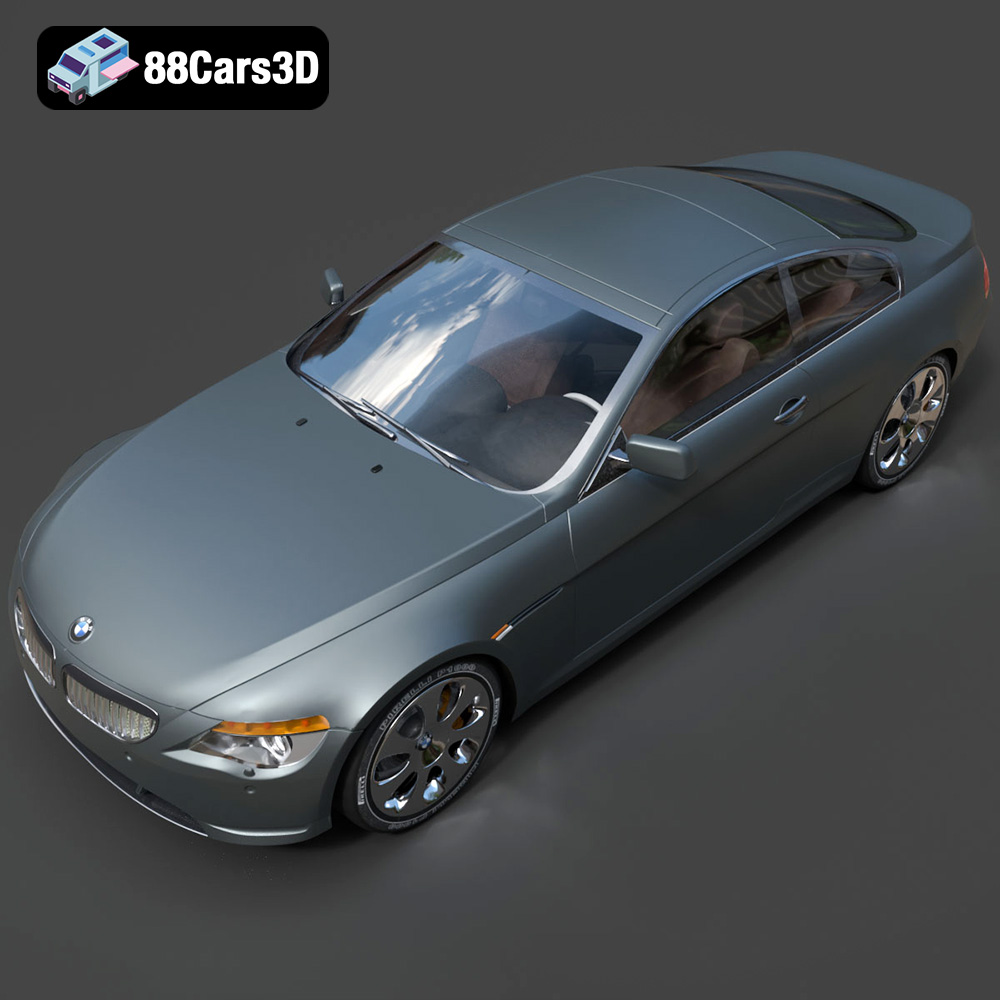
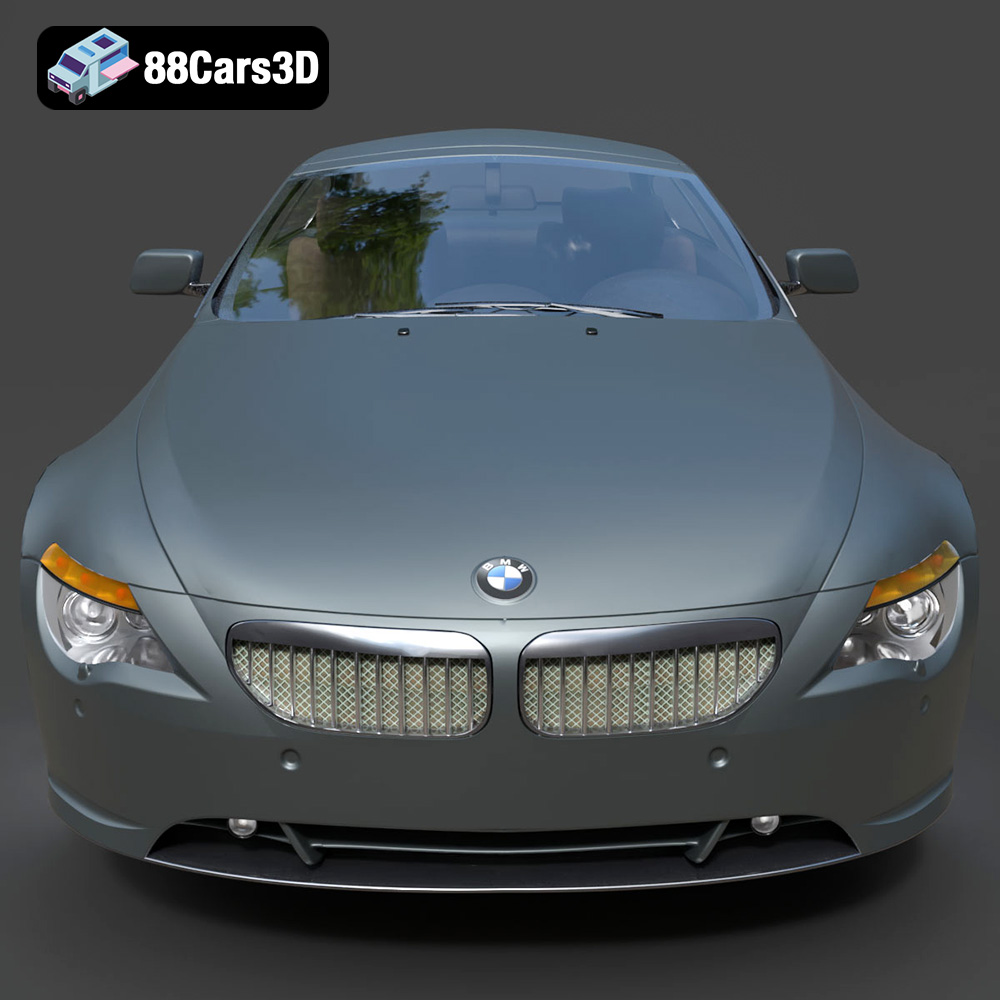
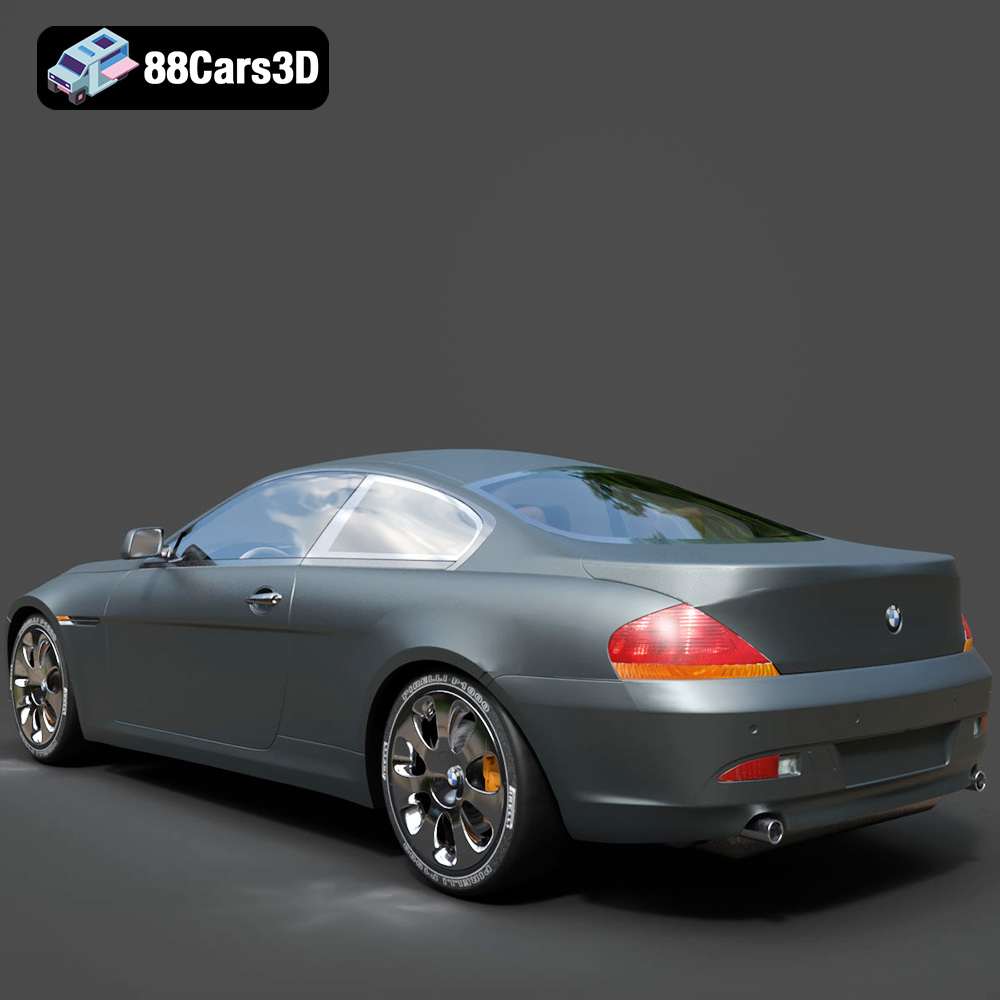
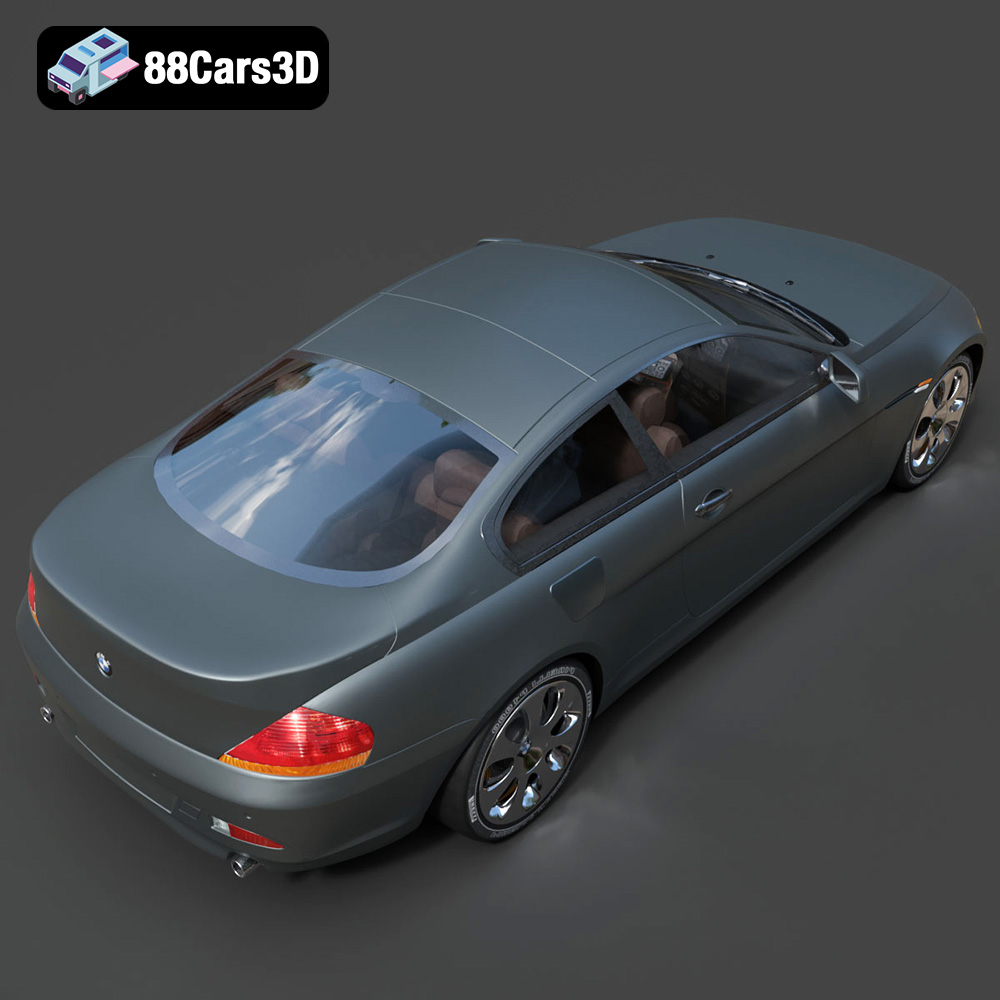
BMW 6 Series 3D Model
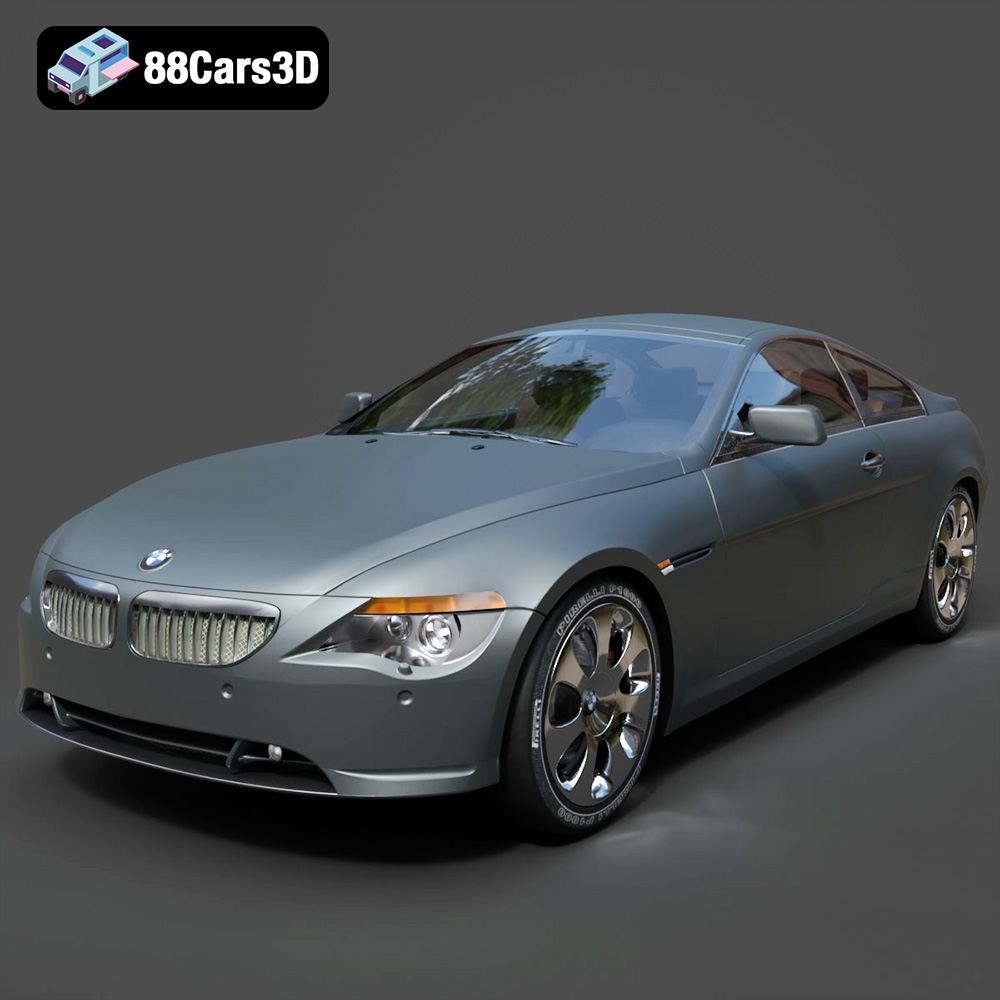
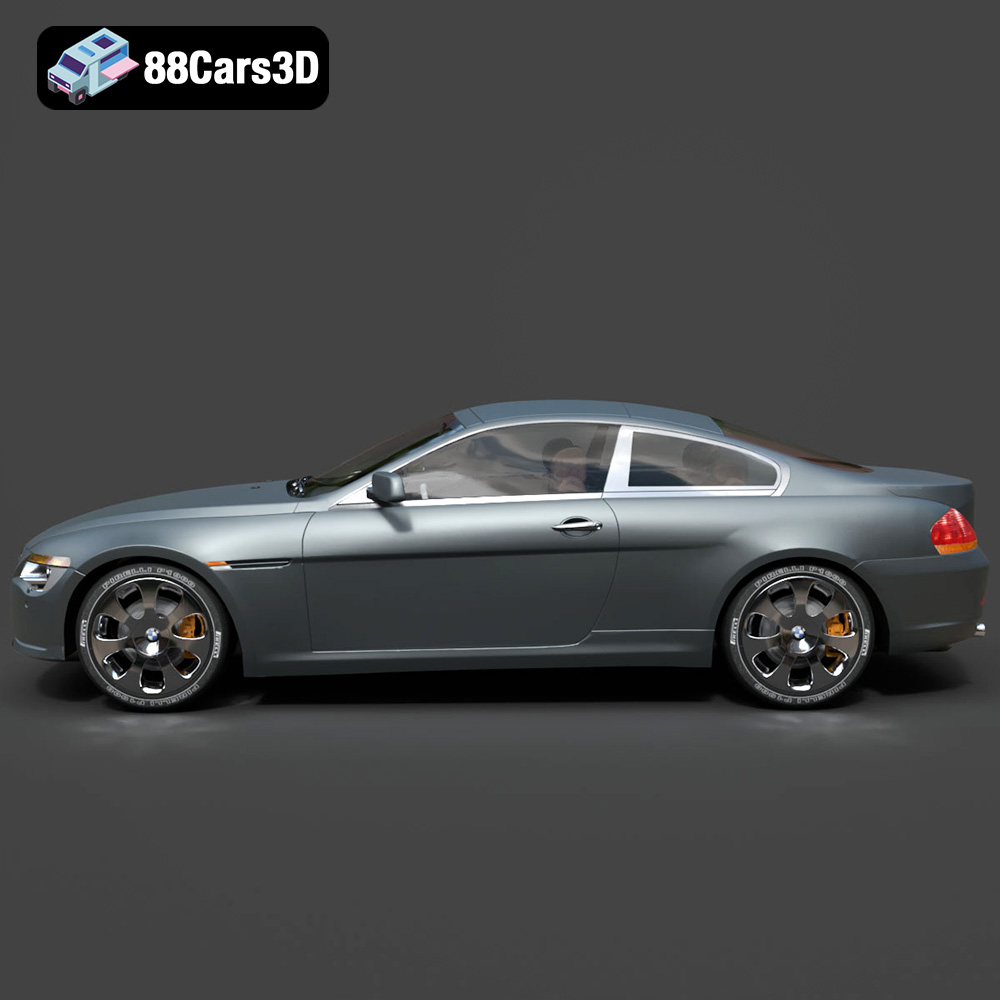
This professional 3D model accurately represents the iconic BMW 6 Series, a luxurious grand tourer known for its sleek lines, sporty elegance, and powerful performance. Crafted with clean geometry and a balanced level of detail, this model is optimized for high-quality rendering, realistic animations, detailed simulations, and robust integration into game development projects.
$10.79
Product Image Gallery
Related Tags
.6series
.arvr
.blend
.bmw
.coupe
.fbx
.gameasset
.glb
.grandtourer
.luxurycar
.max
.obj
.ply
.rendering
.simulation
.stl
.unreal
