Get 20% OFF All Premium 3D & STL Models!

In the demanding world of 3D visualization, automotive design, and game development, the foundation of any successful project lies in the quality of its assets. A truly exceptional 3D model isn’t just about aesthetics; it’s about precision, technical integrity, and versatility. Artists, designers, and developers constantly seek assets that not only look stunning but also integrate seamlessly into complex pipelines, reducing iteration times and enhancing final output.
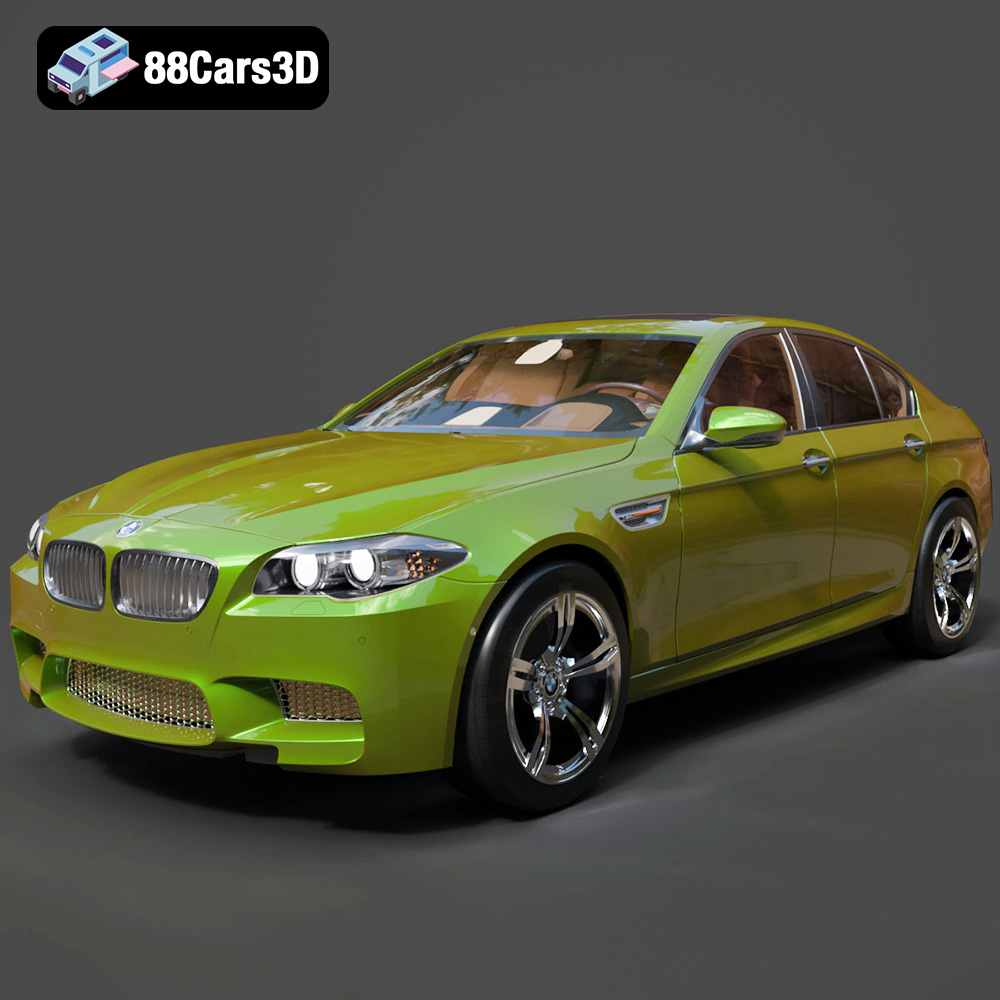
This quest for perfection often leads to the realm of high-performance vehicles, where every curve, every shadow, and every reflective surface tells a story of engineering prowess and design brilliance. Today, we’re diving deep into an example that epitomizes this standard: a meticulously crafted 3D model of the iconic BMW M5 F10. Known for its potent blend of luxury, aggressive styling, and formidable power, the F10 generation M5 is a definitive high-performance sedan. Capturing its essence in a digital format requires an acute eye for detail and a robust technical approach, elements that are crucial for any professional working with 3D car models.
Whether you’re an automotive renderer aiming for photorealistic marketing materials, a game developer building an immersive racing simulator, or an AR/VR specialist creating interactive experiences, the underlying quality of your 3D car models dictates the success of your vision. This article will explore the technical intricacies, workflow advantages, and diverse applications of professional-grade automotive 3D assets, using the BMW M5 F10 3D Model as a prime example of excellence available on platforms like 88cars3d.com.
The automotive industry has always been at the forefront of technological innovation, and its transition into the digital realm is no exception. From initial concept design to final marketing campaigns, 3D models are indispensable tools. They allow designers to iterate rapidly, engineers to simulate performance, and marketers to present vehicles in captivating new ways, long before a physical prototype exists.
In the early stages of vehicle development, 3D models serve as digital blueprints. Designers use them to sculpt forms, refine proportions, and experiment with styling cues without the constraints and costs associated with physical mock-ups. High-fidelity 3D car models, such as the BMW M5 F10, provide an accurate representation that can be viewed from any angle, under various lighting conditions, and even in virtual environments, offering unparalleled flexibility in the design review process. This digital approach significantly shortens development cycles and ensures that design intent is perfectly translated.
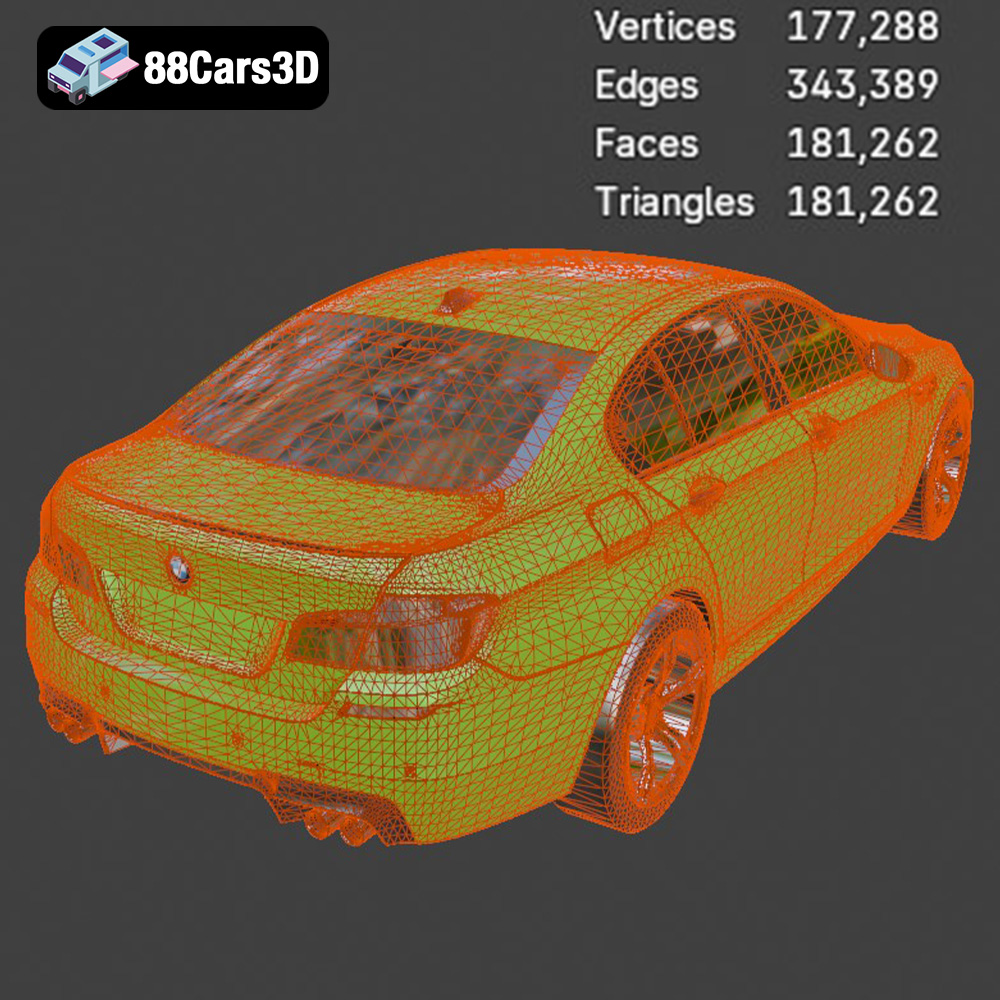
For rendering, game development, or any professional visualization, “good enough” is rarely sufficient. Low-quality models often come with problematic topology, inefficient UV layouts, and inaccurate material definitions, leading to endless hours of clean-up, poor performance, and subpar visual results. A high-quality 3D car model, conversely, offers clean, quad-dominant geometry, accurate real-world scale, and logically organized hierarchies. These attributes are critical for smooth animation, efficient rendering, and optimal real-time performance, saving countless hours and ensuring a polished final product that truly stands out.
Navigating the diverse landscape of 3D software and applications requires a solid understanding of file formats. Each format has its strengths, ideal use cases, and technical characteristics. The BMW M5 F10 3D Model, for instance, comes with a comprehensive suite of formats, ensuring maximum compatibility and flexibility for a wide range of professional workflows. Knowing which format to use and when is crucial for optimizing efficiency and achieving desired results.
This extensive range of formats ensures that the BMW M5 F10 3D Model from 88cars3d.com can be leveraged across virtually any 3D production pipeline, offering unparalleled versatility and future-proofing your projects.
Achieving photorealism and optimal performance in 3D automotive rendering or game environments requires more than just good modeling; it demands meticulous attention to technical details. The BMW M5 F10 3D Model exemplifies this technical precision, built to meet the rigorous demands of professional production.
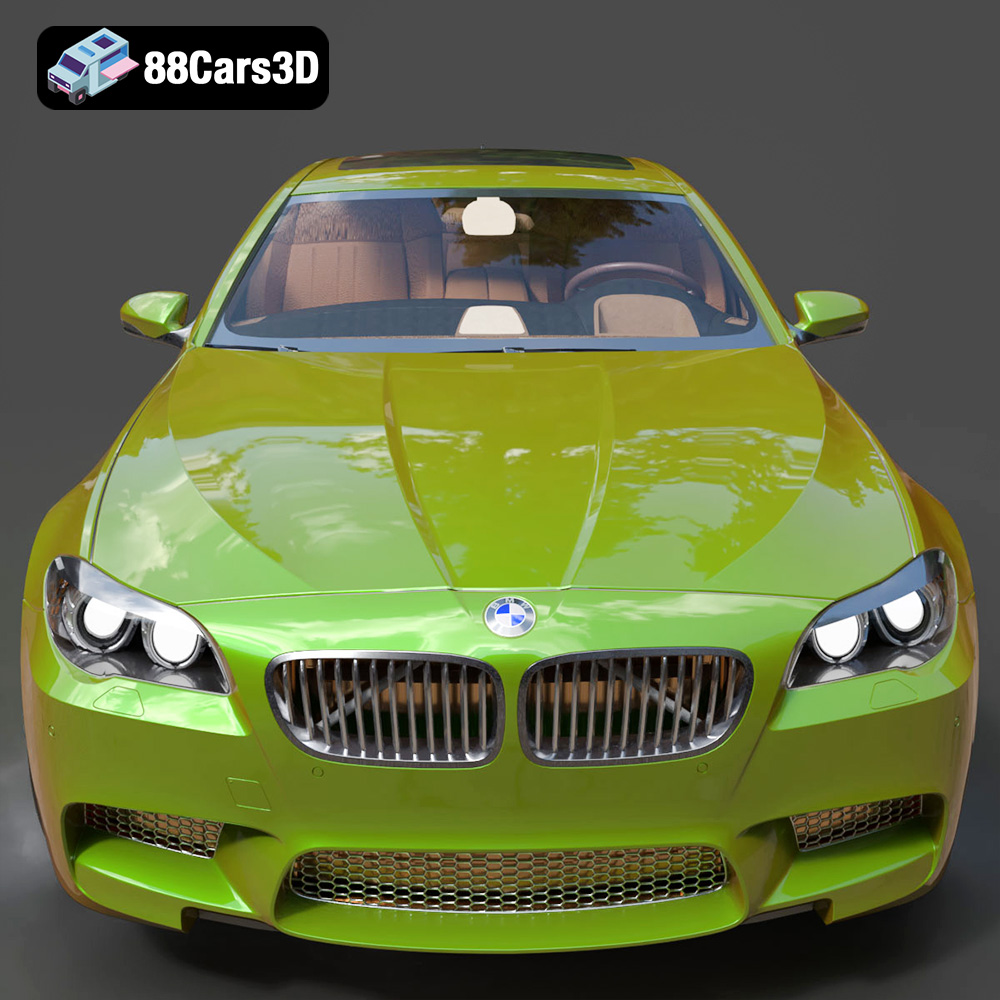
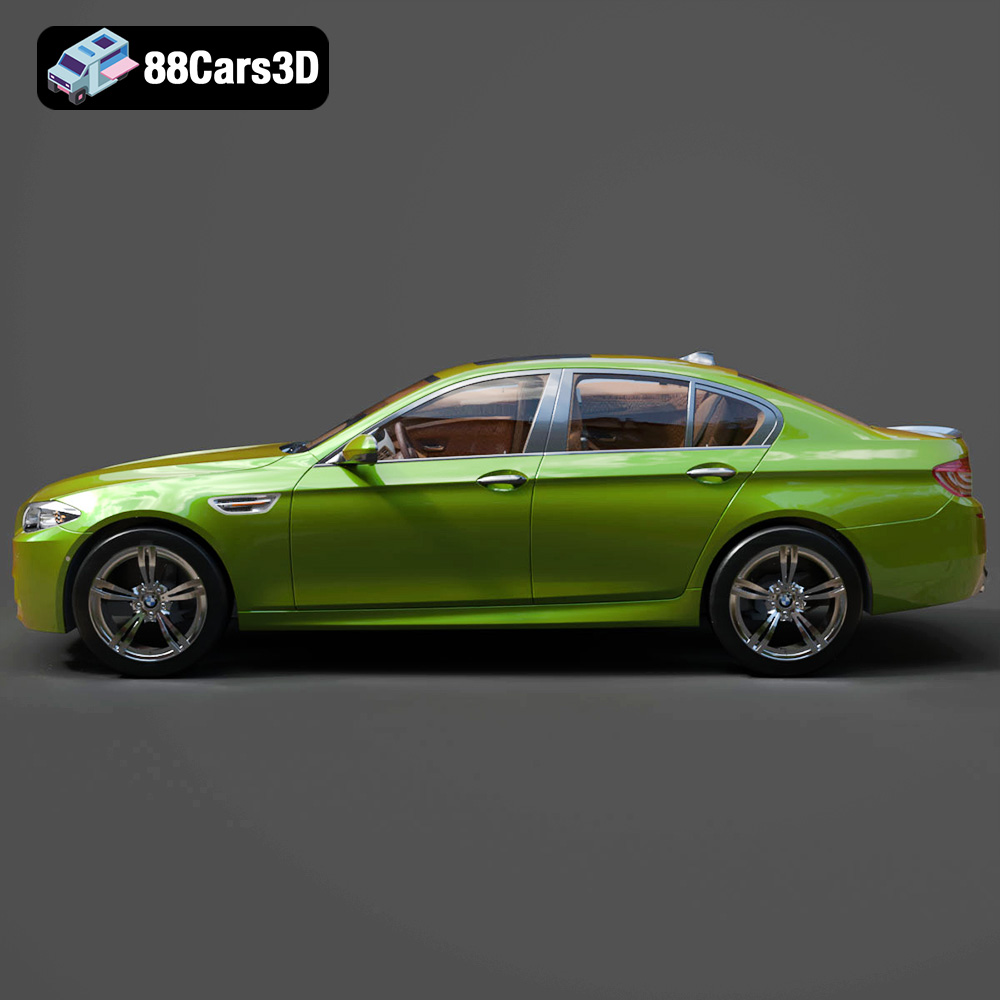
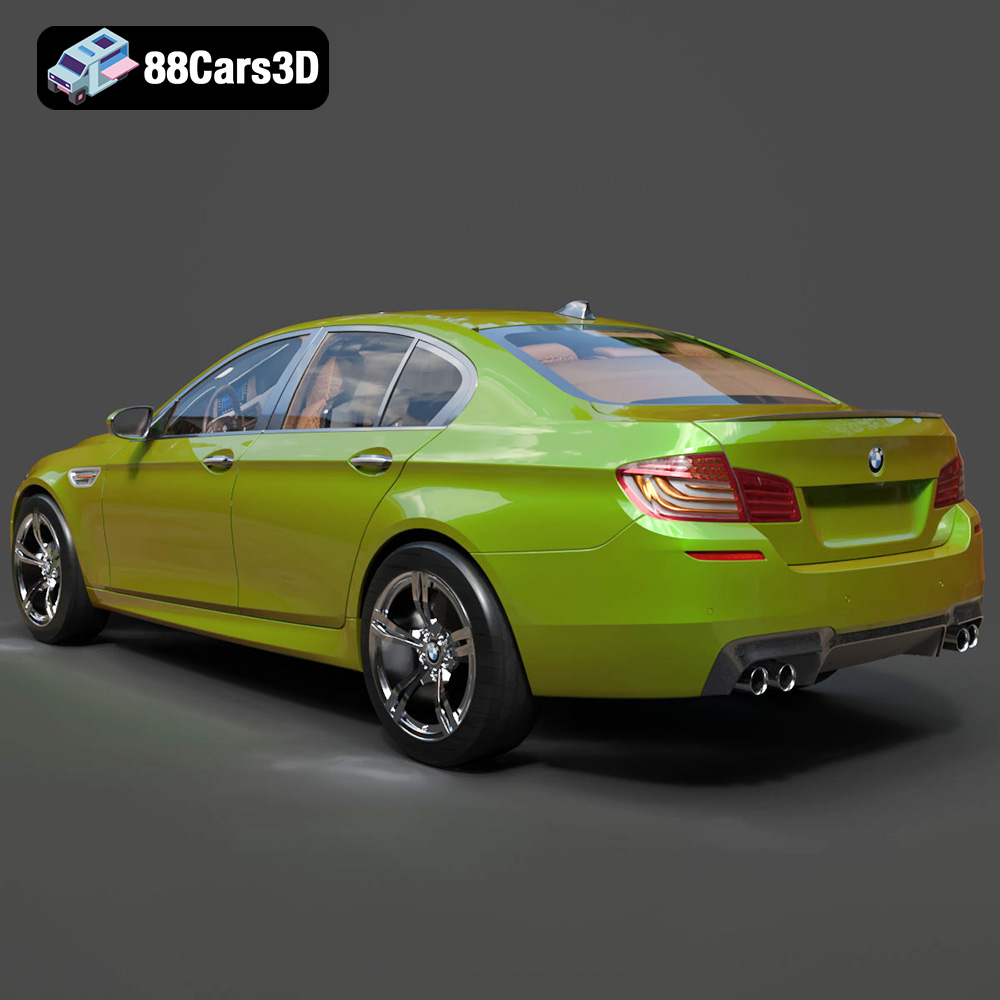
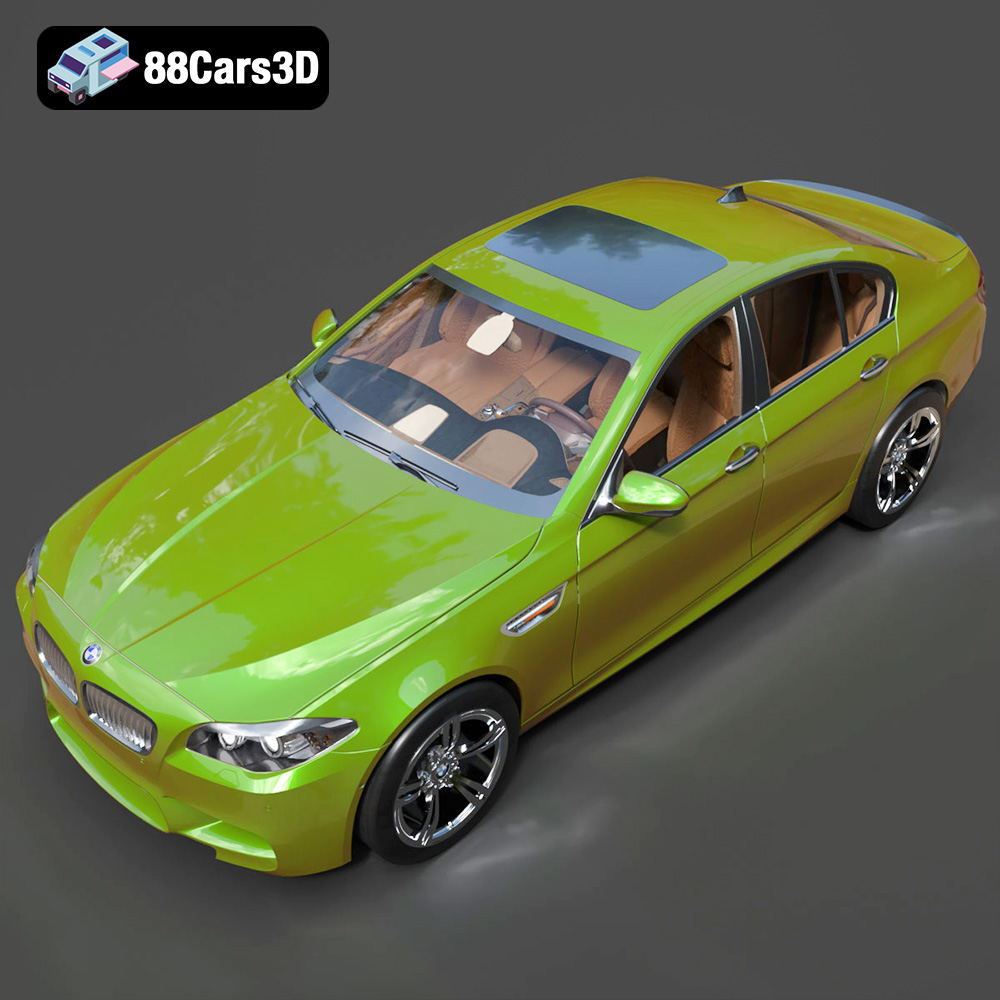
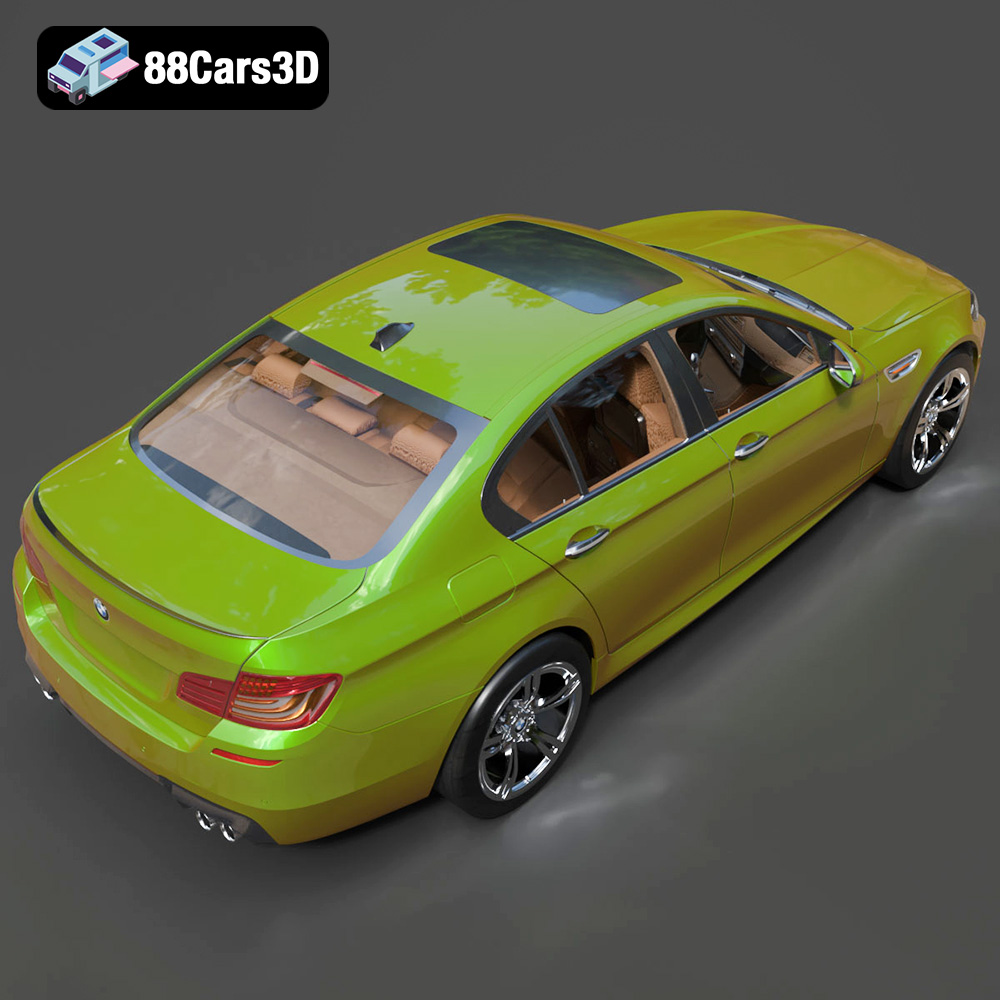
The exterior of a car model is often the first impression, and with the BMW M5 F10, that impression is one of aggressive elegance. The model features accurately modeled body panels that capture the M5 F10’s signature design, including its distinctive kidney grille, M-specific air intakes, and aerodynamic elements. This level of detail extends to functional components like headlights, taillights, and indicator lights, which are not merely textures but geometrically defined elements with realistic transparent materials, allowing for sophisticated lighting setups and reflections. High-resolution wheels, performance tires, and visible brake calipers further enhance realism, vital for close-up shots or interactive inspections.
Beyond geometry, material definitions play a critical role. The model boasts realistic material properties for paint (often utilizing complex shader networks for metallic flakes and clear coats), glass (with accurate refraction and reflection), rubber (for tires and seals), and chrome elements. These PBR-ready materials ensure consistent and physically accurate rendering across various lighting conditions and rendering engines.
A truly comprehensive automotive 3D model extends beyond its shell. The BMW M5 F10 3D Model includes a detailed interior, featuring an accurately reproduced dashboard, sport seats, steering wheel, center console, and door panels. Clear and legible instrument cluster and infotainment screen details are modeled to enhance realism for interior shots or driving simulations. This attention to inner workings is critical for projects requiring walk-throughs, virtual showrooms, or first-person driving perspectives.
Crucially, the model is built with animation in mind. Components like doors, the hood, trunk, wheels, and the steering wheel are separated and logically organized. This hierarchy, coupled with proper pivot points, simplifies the animation process, enabling artists to create realistic opening and closing sequences, steering movements, or wheel rotations without tedious setup.
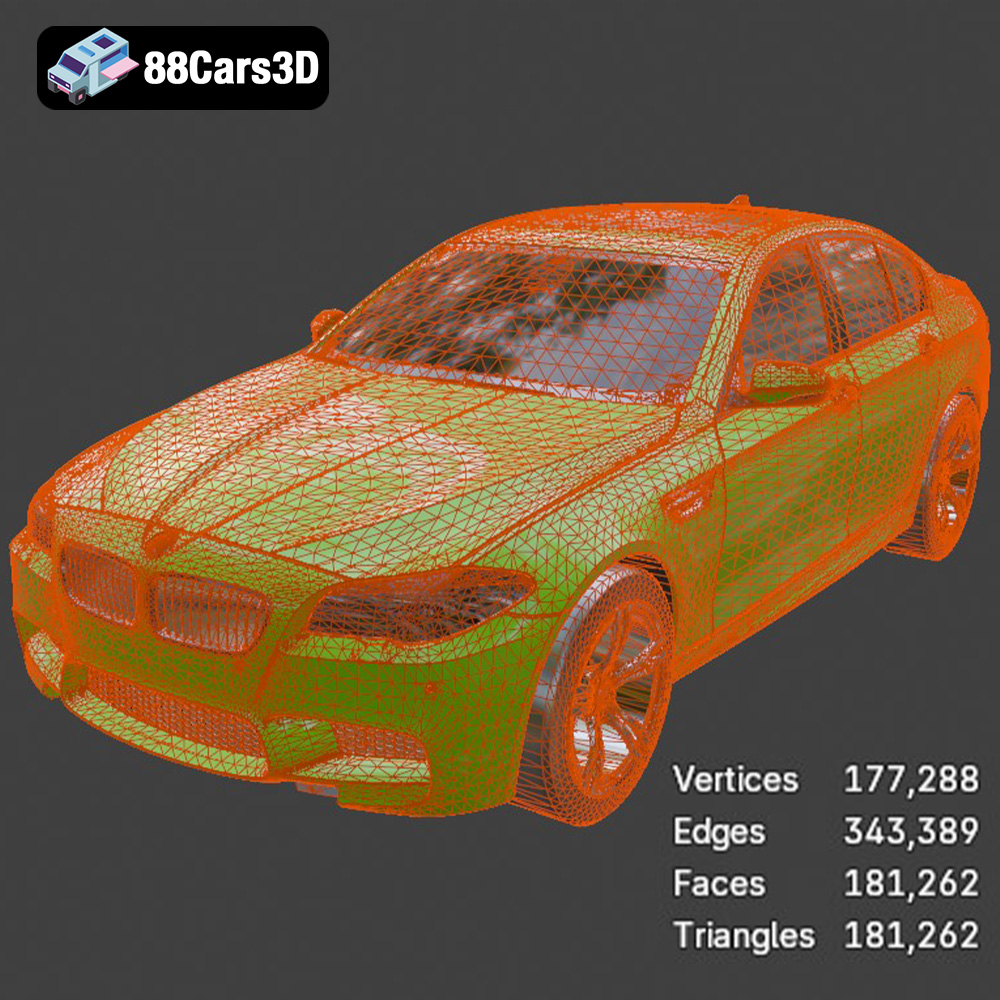
At the heart of any high-quality 3D model is its topology. The BMW M5 F10 3D Model features clean, quad-dominant topology, which is essential for several reasons. Quads (four-sided polygons) deform more predictably than triangles or N-gons, making the model easier to subdivide for higher detail without introducing artifacts. This clean mesh is also vital for smooth deformations during animation and for efficient UV unwrapping. Furthermore, the model is built to real-world scale, ensuring accurate integration into scenes, whether for architectural visualization, comparative studies, or physically accurate simulations. This adherence to real-world dimensions saves significant time and effort during scene assembly and ensures consistent results.
The true value of a professional-grade 3D model like the BMW M5 F10 lies in its ability to seamlessly integrate into diverse professional workflows, accelerating production and enhancing output quality across different industries.
In the realm of automotive rendering and visualization, precision and visual fidelity are paramount. Artists using software like 3ds Max, Blender, Cinema 4D, or Maya can immediately leverage the BMW M5 F10 3D Model for studio renders, cinematic sequences, and marketing materials. Its pre-defined materials and clean geometry mean less setup time, allowing artists to focus on lighting, camera angles, and scene composition. Imagine a sleek M5 F10 parked against a minimalist backdrop, or navigating a dynamic urban environment—the model’s quality ensures that every reflection and highlight contributes to a breathtaking image, captivating viewers and potential customers alike.
For game developers, performance is as crucial as visuals. The BMW M5 F10 3D Model is optimized as a game-ready asset, supporting seamless integration into leading game engines like Unreal Engine and Unity. The inclusion of .fbx and dedicated .unreal files significantly streamlines the import process. These formats often come with optimized mesh density, baked textures, and collision meshes, all critical for maintaining high frame rates in real-time applications. Developers can quickly deploy the M5 F10 in racing simulators, open-world environments, or interactive car configurators, knowing it will perform efficiently without sacrificing visual fidelity.
Beyond dedicated automotive projects, high-quality 3D car models are essential components of architectural visualization (arch-viz). Placing a realistic BMW M5 F10 in front of a modern building rendering instantly elevates the scene, adding a sense of scale, lifestyle, and realism. For marketing agencies, these models are invaluable for creating compelling advertisements, interactive presentations, and product configurators, allowing potential buyers to explore every detail of the car digitally, customized to their preferences. The versatility offered by the various file formats from 88cars3d.com ensures compatibility with leading arch-viz software.
The utility of a high-fidelity 3D car model extends far beyond traditional rendering and game development. Its robust technical foundation opens doors to innovative applications in emerging technologies and specialized fields.
Augmented Reality (AR) and Virtual Reality (VR) are transforming how we interact with digital content. High-quality 3D car models are the bedrock of these immersive experiences. The BMW M5 F10 3D Model, with its optimized mesh and .glb format, is perfectly suited for integration into AR/VR environments. Imagine a customer experiencing the M5 F10 in their driveway via AR on their phone, or sitting inside a VR simulation, exploring the detailed interior and feeling the virtual rush of a test drive. These applications offer unprecedented levels of engagement and product understanding, making the digital car model an invaluable asset for automotive brands.
While digital, a 3D model can also bridge the gap to the physical world. The .stl format included with the BMW M5 F10 3D Model makes it compatible with 3D printing. Designers can use this to create physical prototypes, scale models for presentations, or even collectible miniatures. This capability is particularly useful for design studios looking to quickly produce tangible representations of their digital concepts or for enthusiasts wanting a desktop replica of their dream car. The clean topology ensures a solid, manifold mesh, critical for successful 3D printing.
Automotive 3D models also find significant application in training and education. Driving simulators, for instance, rely on highly accurate car models to provide realistic physics and visual feedback for driver training. Similarly, educational modules can use animated 3D models to demonstrate mechanical components, explain aerodynamic principles, or illustrate complex assembly processes. The detailed interior and separated components of the BMW M5 F10 model allow for interactive explorations of its various systems, making it an excellent tool for automotive engineering students or service technicians.
Purchasing a professional 3D model is an investment. Ensuring that investment remains valuable over time means choosing assets that offer flexibility, adaptability, and room for customization. The BMW M5 F10 3D Model is designed with this principle in mind, providing ample opportunities for personalization and future-proofing.
One of the most immediate customization options is altering the vehicle’s appearance. The BMW M5 F10 3D Model’s clean material setup allows for easy modification of paint finishes. Artists can quickly experiment with different colors, metallic flake levels, or clear coat intensities to match specific branding, client requests, or creative visions. Furthermore, the clean UV mapping (a common feature of high-quality 3D car models) facilitates the application of custom decals, racing liveries, or corporate branding, transforming the base model into a unique asset for various campaigns or game themes. This flexibility ensures the model can be endlessly re-purposed without compromising quality.
Beyond paint, the model’s material definitions for metals, chrome accents, rubber, and glass can be easily adjusted. This means you can fine-tune reflections, refractions, glossiness, and other properties to suit a specific rendering style, whether you’re aiming for hyperrealism, a stylized look, or a particular atmospheric effect. Pairing these material adjustments with flexible lighting setup modifications opens up a world of creative possibilities. You can simulate different times of day, weather conditions, or studio lighting environments, giving the BMW M5 F10 3D Model a distinct mood and presence for each scene. This dynamic adaptability is a hallmark of truly professional 3D assets.
As projects evolve and technology advances, the ability to scale and adapt your 3D assets becomes paramount. A model built with clean, quad-dominant topology, like the BMW M5 F10, offers inherent scalability. It can be easily subdivided for ultra-high-resolution renders or decimated for optimized real-time performance, ensuring it remains viable for both current and future project requirements. This forward-thinking design principle ensures that the investment in a high-quality 3D car model from 88cars3d.com continues to pay dividends across a wide spectrum of applications and technological shifts.
In the fast-evolving landscape of 3D visualization, the demand for high-quality, technically sound, and versatile 3D assets is ever-present. Whether for automotive rendering, cutting-edge game development, immersive AR/VR experiences, or critical simulations, the foundation of success rests squarely on the precision and adaptability of your digital models.
The BMW M5 F10 3D Model stands as a testament to what professional-grade 3D car models can achieve. Its meticulous exterior and interior detailing, clean quad-dominant topology, real-world scale, and animation-ready setup underscore a commitment to excellence. Coupled with a comprehensive array of file formats—from native .blend and .max files to universal .fbx and .obj, and specialized .glb, .stl, .ply, and engine-ready .unreal assets—this model offers unparalleled flexibility for integration into virtually any professional pipeline.
Such assets empower artists and developers to streamline their workflows, reduce costly iterations, and focus on creative endeavors, knowing that the underlying technical integrity is robust. By investing in models like the BMW M5 F10, available through platforms dedicated to quality like 88cars3d.com, you are not just acquiring a digital representation; you are gaining a powerful tool that accelerates production, elevates visual fidelity, and ensures your projects stand out in a competitive digital world.
Elevate your next project with the professional-grade precision and versatility that only a truly exceptional 3D car model can provide.
Presenting a meticulously crafted 3D model of the iconic BMW M5 F10, a definitive high-performance luxury sports sedan known for its blend of aggressive styling and formidable power. This model captures the essence of the F10 generation, from its distinctive kidney grille to its muscular lines and sporty silhouette. Built with clean geometry and balanced detailing, it ensures professional quality for various applications, making it ideal for high-fidelity rendering, realistic animation sequences, immersive simulations, and robust game development.
Exterior Features:
Interior / Mechanical Features:
Technical Advantages:
Applications:
Customization Options:
Elevate your projects with the professional-grade 3D model of the BMW M5 F10. Its exceptional quality, versatility, and ease of use make it an indispensable asset for any demanding 3D production.
Included File Formats:
$10.79
.arvr
.blend
.bmw
.carmodel
.fbx
.gameasset
.glb
.luxurysedan
.m5f10
.max
.obj
.ply
.rendering
.sedan
.simulation
.sportsCar
.stl
.unreal
.vehicle
.visualization