Elevating Digital Cityscapes: The Indispensable Role of High-Quality 3D Transport Models
In the expansive and ever-evolving realms of 3D visualization, game development, and architectural rendering, the fidelity of every asset contributes significantly to the overall immersion and realism of a project. From the gleaming skyscrapers that define a skyline to the intricate details of street furniture, each element plays a crucial role. Among these, public transport vehicles hold a unique position, not just as functional components of a city, but as dynamic symbols of urban life. A well-crafted 3D bus model, for instance, can breathe life into a static scene, animate a virtual metropolis, or provide critical context for urban planning simulations.
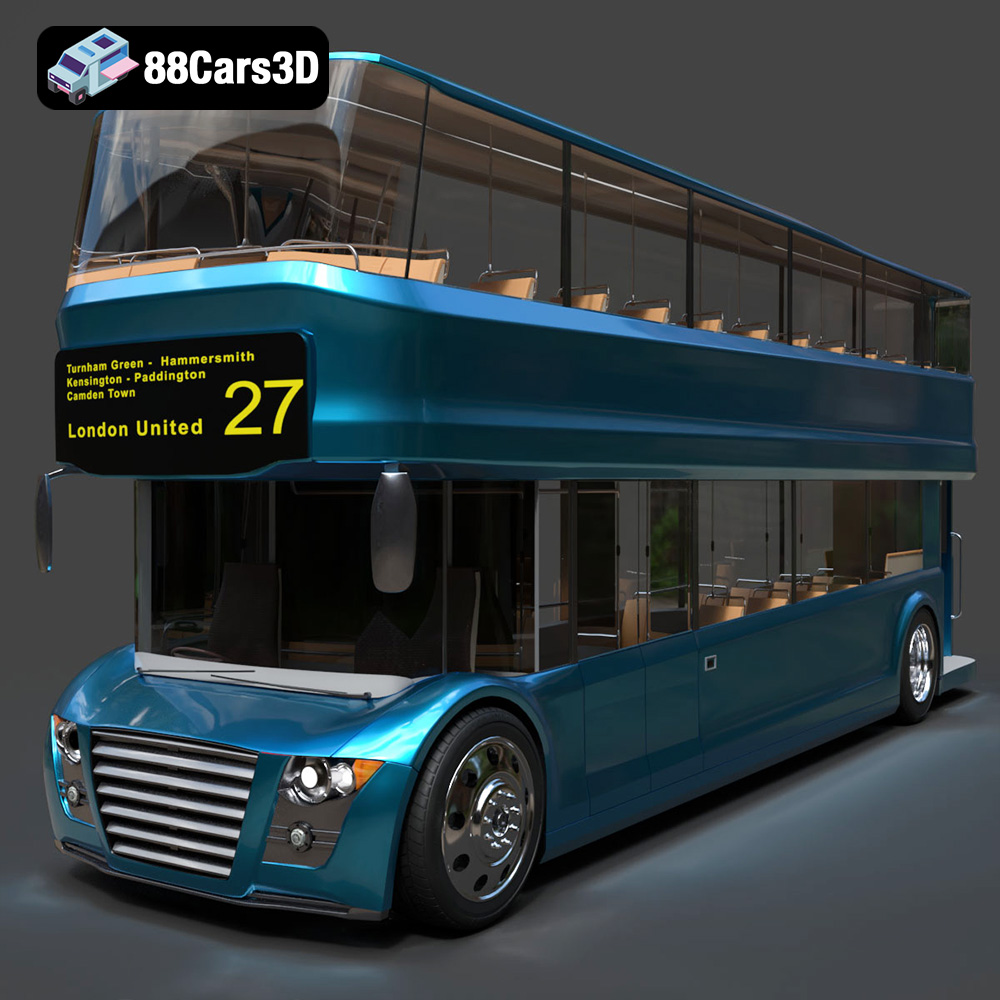
For professionals seeking to infuse their digital environments with unparalleled authenticity, the need for meticulously engineered 3D car models and other vehicles is paramount. These aren’t merely decorative items; they are foundational assets that underpin complex animations, interactive experiences, and high-resolution renders. It’s precisely this demand for excellence that products like the New Bus For London 3D Model from 88cars3d.com are designed to meet. Capturing the iconic design and functional elegance of a modern city bus, this professional-grade model offers a comprehensive solution for a diverse array of applications, ensuring that designers, developers, and artists can achieve their vision with precision and efficiency.
Understanding 3D Model File Formats: The Backbone of Digital Assets
The journey of a 3D model, from its initial creation in a digital content creation (DCC) tool to its final deployment in a game engine, renderer, or virtual reality environment, often involves navigating a complex ecosystem of file formats. Each format serves a specific purpose, offering unique advantages in terms of compatibility, data preservation, and optimization for particular workflows. Understanding these nuances is crucial for any professional working with 3D assets, ensuring seamless integration and optimal performance. The New Bus For London 3D Model, recognizing this critical need for versatility, is provided in a comprehensive suite of industry-standard formats, making it an incredibly flexible asset.
.blend – The Blender Project with Materials
The .blend format is native to Blender, the powerful open-source 3D suite. When you download a .blend file, you’re not just getting the mesh data; you’re receiving a complete Blender scene. This includes the model’s geometry, materials, textures, lighting setups, camera positions, animations, and even modifiers. For artists and studios primarily working within Blender, this format offers maximum editability and retains all the professional preparations made by the model’s creators. It’s ideal for those who need to deeply customize the asset, adjust shaders, or integrate it into an existing Blender-based pipeline with minimal friction.
.fbx – The Universal Exchange Format for Real-Time and Animation
FBX (Filmbox) is arguably one of the most widely supported 3D file formats, developed by Autodesk. It excels as an interoperability format, capable of storing not only mesh and material data but also complex animation, rigging, and skeletal information. Its robust support across major DCC applications like 3ds Max, Maya, and Blender, as well as game engines like Unreal Engine and Unity, makes it an indispensable tool for pipeline integration. For the New Bus For London, the .fbx version is optimized for real-time environments, ensuring that features like separated doors and destination displays are ready for animation and interactive systems without extensive re-work.
.obj – The Foundation of Cross-Software Compatibility
OBJ (Object) is a simple, widely supported geometry definition file format. It stores vertices, UV coordinates, normals, and face data, with material definitions often linked via a separate .mtl (material template library) file. While it typically doesn’t support animation or rigging, its universal compatibility makes it a safe fallback for transferring mesh data between virtually any 3D software. For the New Bus For London, the .obj format guarantees that the core model can be imported into almost any existing 3D software package, making it a truly universal asset for various studios and individual artists.
.glb – Optimized for AR, VR, and Web-Based Display
GLB (GL Transmission Format Binary) is the binary version of glTF, an API-neutral runtime asset delivery format. GLB files bundle textures, materials, and animations directly into a single, efficient file, making them highly optimized for web-based 3D applications, augmented reality (AR), and virtual reality (VR) experiences. Their compact size and ease of parsing make them perfect for quick loading and rendering in browsers or mobile AR/VR viewers. The .glb version of the New Bus For London 3D Model is specifically tailored for developers creating immersive AR/VR applications or interactive web content where performance and rapid loading are critical.
.stl – The Standard for 3D Printing Output
STL (Stereolithography) is the de facto standard file format for 3D printing. It represents a 3D model as a series of connected triangles (a triangular mesh) without color, texture, or other CAD attributes. While it lacks advanced features, its simplicity and widespread adoption ensure compatibility with virtually all 3D printers and slicing software. If your project involves bringing the New Bus For London into the physical world, perhaps for a detailed architectural model or a collectible, the .stl format is your go-to. The model’s clean, quad-dominant topology would convert exceptionally well to an efficient triangular mesh suitable for 3D printing.
.ply – Precision Mesh Format for CAD or Analysis
PLY (Polygon File Format, also known as Stanford Triangle Format) is a versatile format often used for storing 3D data from 3D scanners, CAD systems, and other precise measurement tools. It can store a wide range of properties beyond basic geometry, including color, transparency, normals, texture coordinates, and even reliability information for scanned data. While less common for general-purpose 3D asset exchange, the .ply format for the New Bus For London is excellent for scenarios requiring precision mesh analysis, scientific visualization, or integration into CAD-centric workflows where mesh integrity and additional per-vertex data are important.
.unreal – Engine-Ready Asset for Real-Time Environments
The .unreal format implies a dedicated Unreal Engine project setup, often provided as a content package or direct import ready for the engine. This means materials are pre-configured with Unreal’s Physically Based Rendering (PBR) shaders, textures are correctly linked, and asset hierarchies are optimized for the engine’s scene management. For game developers or real-time visualization artists working with Unreal Engine, this pre-packaged format eliminates significant setup time, allowing for immediate integration and iteration. The New Bus For London in .unreal format means an almost plug-and-play experience for creating dynamic, interactive city scenes or high-fidelity simulations within the engine.
.max – Editable 3ds Max Project for Animation and Rendering
The .max format is native to Autodesk 3ds Max, a leading software for 3D modeling, animation, rendering, and visualization. Like .blend, it encapsulates the entire scene, including geometry, materials, textures, lighting, cameras, animation data, and modifiers. For professionals ingrained in the 3ds Max ecosystem, this format offers complete control and editability. The .max version of the New Bus For London provides an ideal starting point for high-end automotive rendering, complex animations, or integrating the bus into detailed architectural visualization projects within 3ds Max, leveraging its robust rendering capabilities like V-Ray or Corona.
The availability of such a diverse array of formats for the New Bus For London 3D Model underscores its professional-grade nature and commitment to cross-platform compatibility, making it an invaluable addition to any digital asset library available on platforms like 88cars3d.com.
Architecting Realism: The Technical Excellence of the New Bus For London 3D Model
Creating a truly convincing 3D model of a real-world vehicle, especially one as recognizable as the New Bus For London, goes far beyond simply replicating its shape. It requires a deep understanding of geometry, materials, and workflow optimization. The technical specifications of this model highlight the craftsmanship that sets it apart, ensuring both visual fidelity and practical usability across diverse applications.
Clean, Quad-Dominant Topology and Real-World Scale
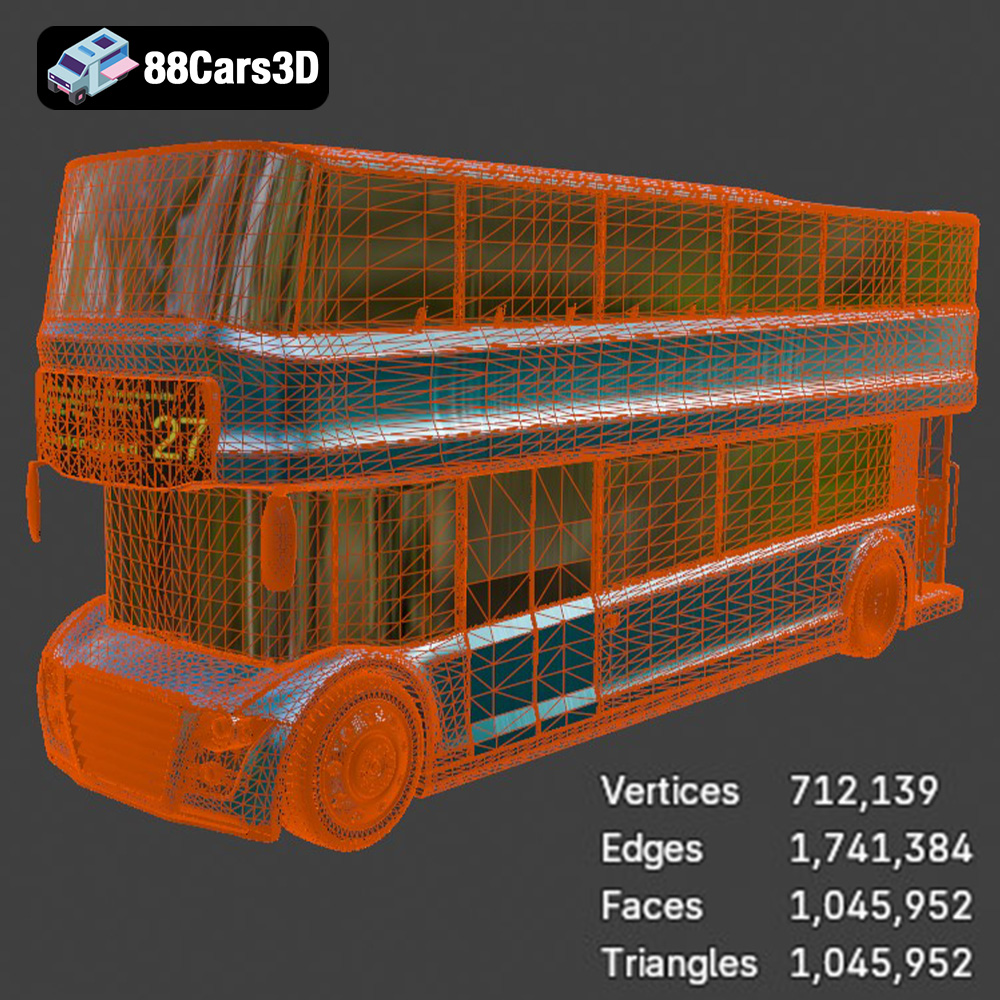
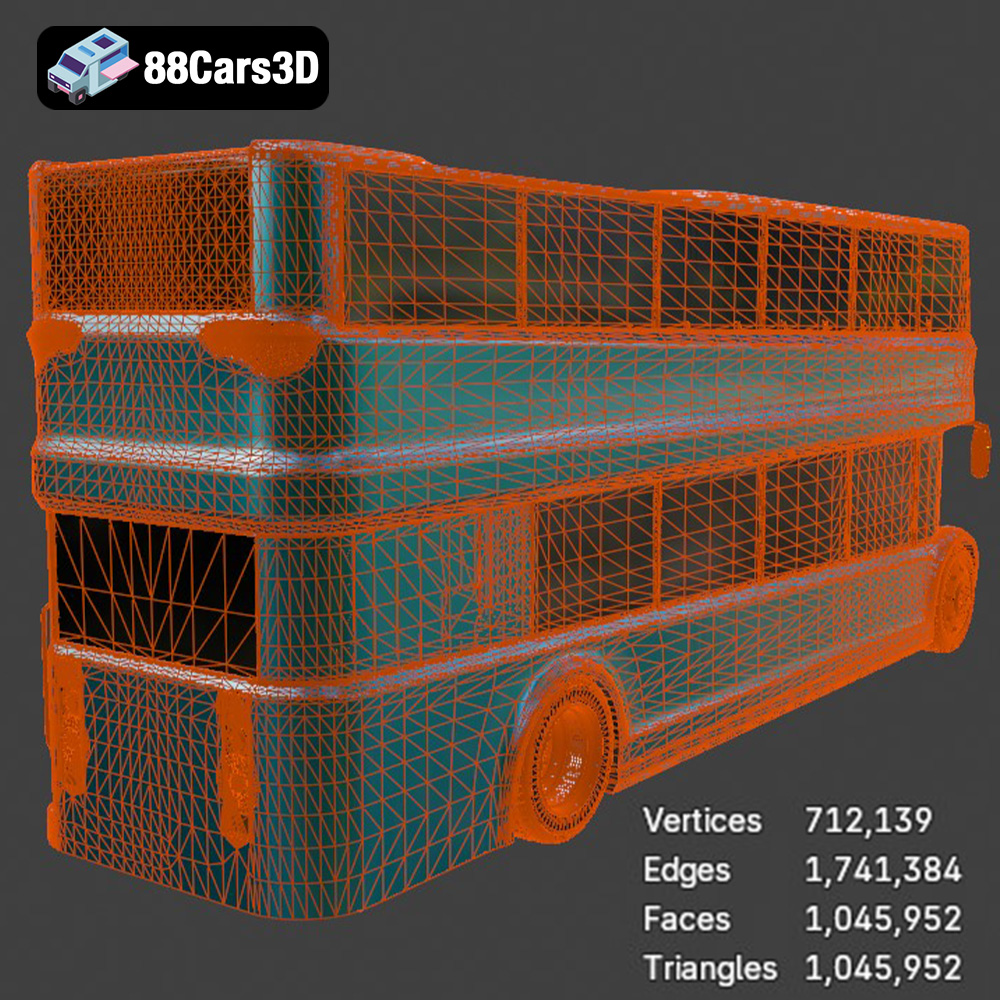
The foundation of any high-quality 3D model is its topology. The New Bus For London 3D Model boasts clean, quad-dominant geometry, which is the gold standard in professional 3D production. Quads (four-sided polygons) ensure predictable deformation when the model is animated or subdivided, leading to smoother surfaces and fewer rendering artifacts. This meticulous approach to modeling is critical for cinematic renders and realistic animations where subtle surface variations are highly visible. Furthermore, the model is built to accurate real-world scale. This isn’t just a minor detail; it’s essential for seamless integration into existing scenes, whether it’s an architectural visualization project, an urban planning simulation, or a game environment. Proportional accuracy eliminates the need for manual scaling and ensures that the bus interacts correctly with other assets, lighting, and physics simulations.
Detailed Material Assignments and Optimized UV Layouts
Realism in 3D often hinges on the quality of its materials and textures. This model features detailed headlights, taillights, indicators, and side mirrors with realistic material assignments, ensuring they react appropriately to light. Clear and transparent window materials allow for accurate interior rendering and passenger visibility, enhancing the overall scene immersion. Beyond individual material properties, the model benefits from optimized UV layouts. UV mapping is the process of flattening the 3D surface into a 2D space, allowing textures to be applied accurately. Well-optimized UVs minimize texture stretching, improve texture resolution, and streamline the texturing process, crucial for projects requiring custom liveries or detailed wear-and-tear effects. This level of preparation means artists can efficiently apply high-resolution textures and modify paint finishes or branding with ease.
Organized Hierarchy and Professionally Prepared Materials
A complex model like a bus needs a well-structured internal organization for ease of use. The New Bus For London 3D Model comes with an organized hierarchy and properly set pivots for easy rigging and animation. This means components like doors, wheels, and steering mechanisms are logically grouped and have their rotational centers correctly placed, significantly reducing the time and effort required for animators. Moreover, the model includes professionally prepared materials for various rendering engines. This often involves PBR (Physically Based Rendering) workflows, where materials are set up to accurately simulate how light interacts with different surfaces (metal, glass, rubber, plastics). These pre-configured materials save valuable setup time and ensure consistent, high-quality results across different rendering environments, whether you’re working in V-Ray, Corona, or a real-time engine like Unreal.
Integrating the Bus into Professional Workflows: From Rendering to Real-Time
A professional 3D asset’s true value is measured by its ability to seamlessly integrate into established production pipelines. The New Bus For London 3D Model, with its robust construction and versatile file formats, is designed to be a cornerstone asset across a spectrum of professional applications, from cinematic rendering to interactive game development.
High-Fidelity Rendering and Architectural Visualization (3ds Max, Blender)
For architectural visualization (arch-viz) and cinematic rendering, visual fidelity is paramount. Imagine integrating this bus model into a sprawling urban street scene rendered in 3ds Max using V-Ray or Corona. The clean topology ensures smooth reflections on its body panels, while the realistic glass materials accurately refract and reflect the surrounding environment. An arch-viz artist could populate an intersection with several of these buses, each with slightly varied paint finishes, to simulate peak hour traffic. In Blender, an artist could leverage the .blend file to animate the bus traversing a street, with its separated doors opening and closing at virtual stops, enhancing a city fly-through animation. The accurate real-world scale ensures that the bus fits perfectly into street dimensions and interacts convincingly with other architectural elements, elevating the realism of urban planning renders and marketing visuals.
Game Development and Real-Time Environments (Unreal Engine, Unity)
The demands of game development are unique, balancing visual quality with performance optimization. The New Bus For London 3D Model shines as an optimized game asset. When imported into Unreal Engine via the dedicated .unreal or .fbx formats, the model’s pre-configured materials and optimized mesh quality translate directly into engine-ready assets. Developers can use it to populate open-world environments, create interactive public transport systems in urban simulators, or even feature it as a central vehicle in a racing game. The organized hierarchy with properly set pivots means game developers can quickly rig the bus for vehicle physics and animation, allowing players to drive it or witness dynamic AI-controlled traffic. The efficient UV layouts are crucial for applying custom liveries or damage textures without performance overhead, making it an ideal choice for large-scale, interactive cityscapes.
Simulation and Training Modules (Custom Engines, AR/VR)
Beyond entertainment, the simulation and training sector heavily relies on accurate 3D models. A high-fidelity bus model is indispensable for public transport simulations, allowing new drivers to practice routes and emergency procedures in a safe, virtual environment. The detailed driver’s cockpit, complete with dashboard instruments, steering wheel, and controls, provides a realistic training ground. The optimized mesh quality for mechanical components ensures that the simulation can run efficiently without sacrificing visual immersion. Whether it’s for driver training, urban planning simulations to analyze traffic flow, or educational modules teaching about city infrastructure, the New Bus For London 3D Model provides a robust and reliable foundation for developing highly realistic and functional virtual experiences.
Beyond Visualization: The Versatility of the Bus in Specialized Applications
While rendering and game development are prominent uses, the technical merits of a high-quality 3D model extend into more specialized fields, providing innovative solutions for cutting-edge technologies and tangible outputs.
Immersive AR/VR Experiences
Augmented Reality (AR) and Virtual Reality (VR) thrive on realistic, performant 3D assets. The New Bus For London 3D Model is perfectly suited for creating immersive experiences within cityscapes. Imagine an AR application where a virtual bus drives down a real-world street viewed through a smartphone, providing information about routes or city history. The .glb format is specifically optimized for these applications, ensuring quick loading times and smooth performance on mobile devices or VR headsets. In a VR environment, users could explore the bus’s interior, simulating a passenger experience or even undergoing driver training with a heightened sense of presence. The model’s clean geometry and efficient textures contribute directly to maintaining high frame rates, crucial for preventing motion sickness in VR.
Robust Simulation and Training Platforms
The ability to create realistic simulations is vital for various industries, from logistics to emergency services. This 3D bus model can serve as a core component in complex public transport simulations, allowing urban planners to test new routes, analyze passenger flow, or evaluate the impact of new infrastructure. For driver training, the detailed cockpit and accurate scaling provide a highly realistic interface for learning. The model’s optimized mesh quality ensures that even with multiple instances in a simulation, performance remains stable. Furthermore, the separated doors and destination displays can be rigged for interactive functionality, allowing trainees to practice operational procedures within a dynamic, virtual environment.
Bringing Digital to Physical: 3D Printing and Prototyping
The journey of a 3D model doesn’t always end on a screen. For architects, product designers, or collectors, the ability to produce a physical model is invaluable. The New Bus For London 3D Model can be easily converted to the .stl format, making it ready for 3D printing. Its clean, quad-dominant topology translates into a robust mesh that can be accurately sliced and printed, whether for a detailed architectural scale model, a prototype for urban planning presentations, or a high-quality physical collectible. The precision offered by the .ply format also makes it suitable for detailed physical prototyping or analysis where exact dimensions and mesh integrity are paramount.
Optimizing for Performance and Customization: A Developer’s Advantage
A truly professional 3D asset provides not just a finished product, but a flexible foundation for further development and creative expression. The New Bus For London 3D Model excels in this regard, offering significant advantages for both performance optimization and creative customization.
Streamlined Customization Options for Branding and Aesthetics
One of the key advantages of a well-structured model is its ease of customization. Artists can easily modify paint finishes, allowing for the application of various city liveries or custom branding. This is critical for projects that require unique visual identities or need to reflect specific real-world services. The adjustability of material properties for metal, glass, rubber, and plastics means designers can fine-tune the visual style to match specific project aesthetics, from photo-realistic grunge to stylized clean looks. Configuring lighting setups within the scene further enhances this flexibility, allowing the bus to be presented under different environmental conditions or times of day, perfectly integrated into any visual narrative.
Pipeline Efficiency Through Organized Structure and LOD Readiness
The model’s organized hierarchy with properly set pivots is a boon for pipeline efficiency. This structure simplifies rigging and animation, reducing development cycles. For game developers and real-time artists, this also sets the stage for easy implementation of Levels of Detail (LODs). While the base model is highly detailed, a production environment often requires lower-polygon versions for distant objects to maintain performance. The clean topology of the New Bus For London model makes it straightforward to generate these LODs without introducing significant visual discrepancies, ensuring optimal rendering performance across varying distances. This attention to underlying structure is what makes the model truly production-ready.
Conclusion: The Definitive Asset for Dynamic Urban Environments
In the competitive landscape of 3D content creation, the difference between a good project and an exceptional one often lies in the quality and versatility of its assets. The New Bus For London 3D Model stands out as a prime example of a professional-grade asset that empowers creators across architectural visualization, game development, AR/VR, and simulation fields. Its meticulous attention to detail, from the accurately modeled chassis and comprehensive interior to the clean, quad-dominant topology and optimized UV layouts, ensures unparalleled realism and efficiency.
With a comprehensive suite of included file formats – from .blend and .max for full editability in leading DCC applications, to .fbx and .unreal for seamless integration into real-time engines, and specialized formats like .glb for AR/VR or .stl for 3D printing – this model offers unmatched flexibility. It’s more than just a static object; it’s a dynamic, adaptable component ready to infuse your digital cities with authentic movement and detail. For anyone seeking to elevate their projects with high-quality 3D car models and public transport assets, the New Bus For London 3D Model from 88cars3d.com is an indispensable investment, promising not only visual excellence but also significant time savings in professional workflows.
Featured 3D Model
New Bus For London 3D Model
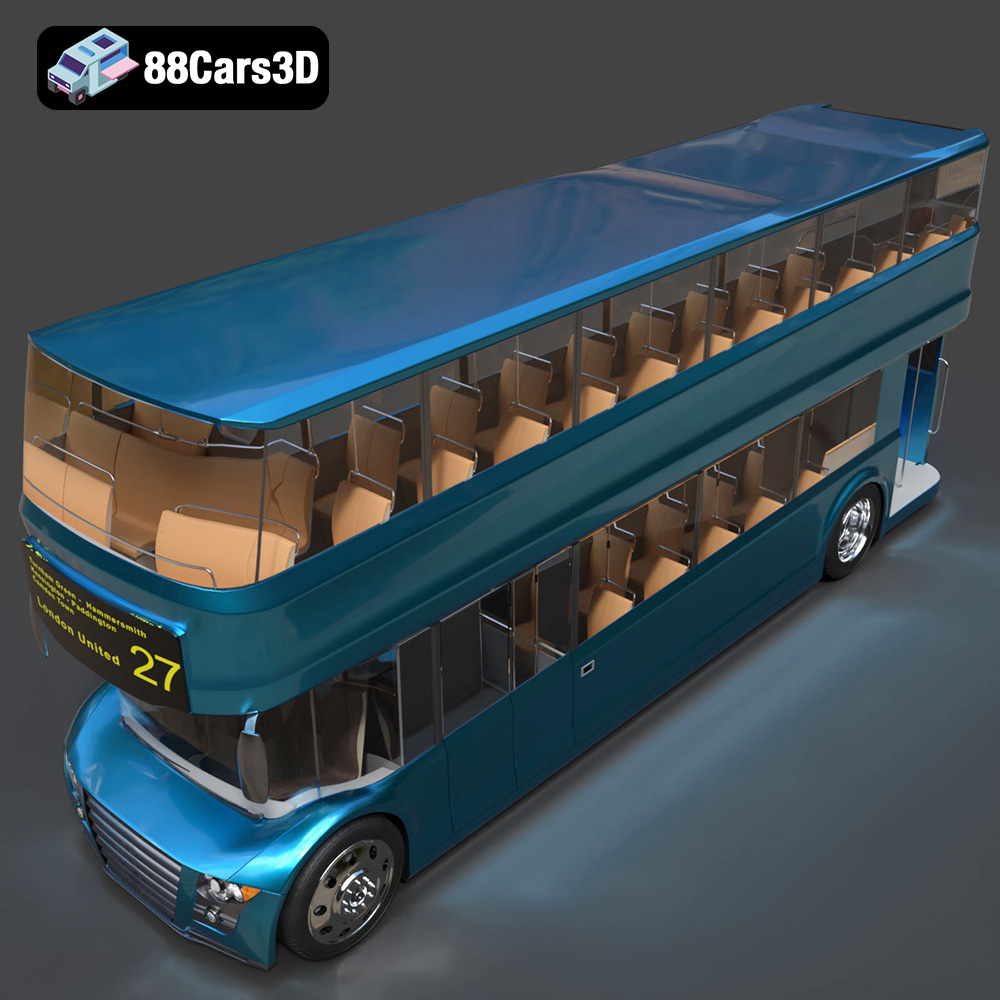
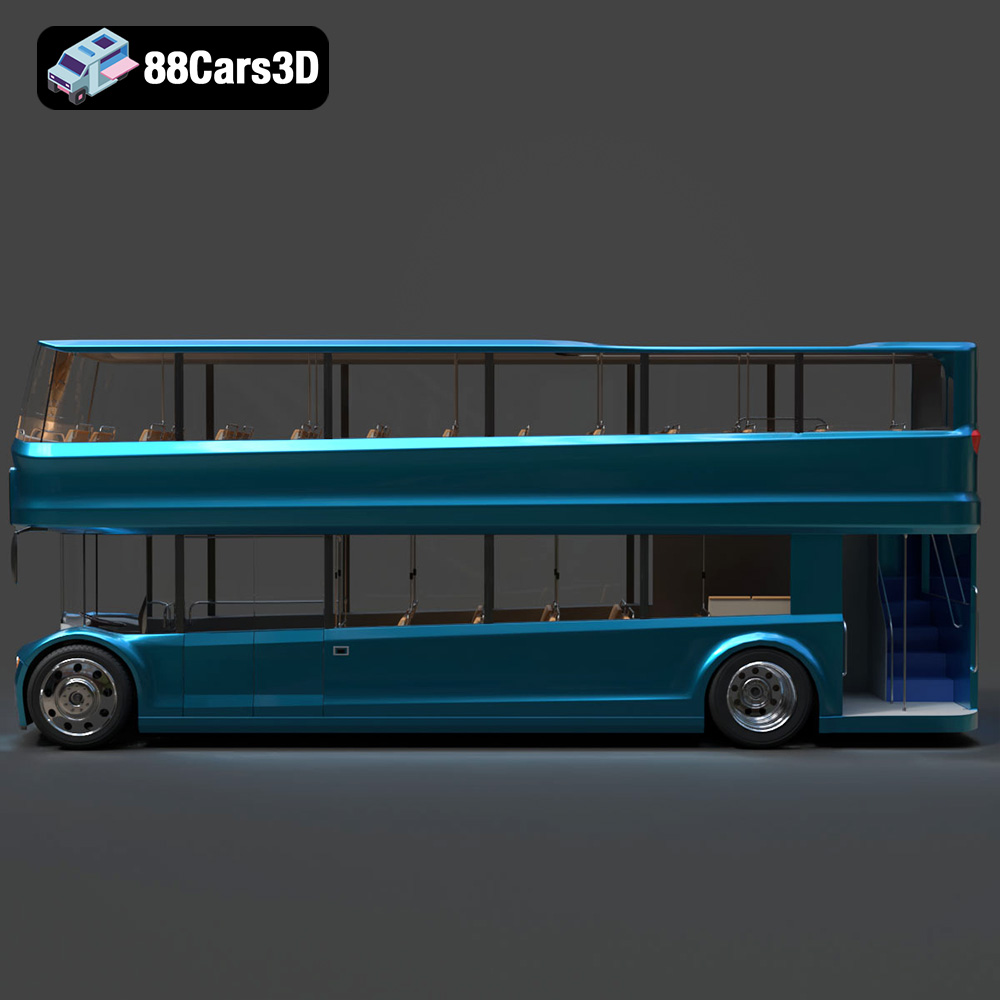
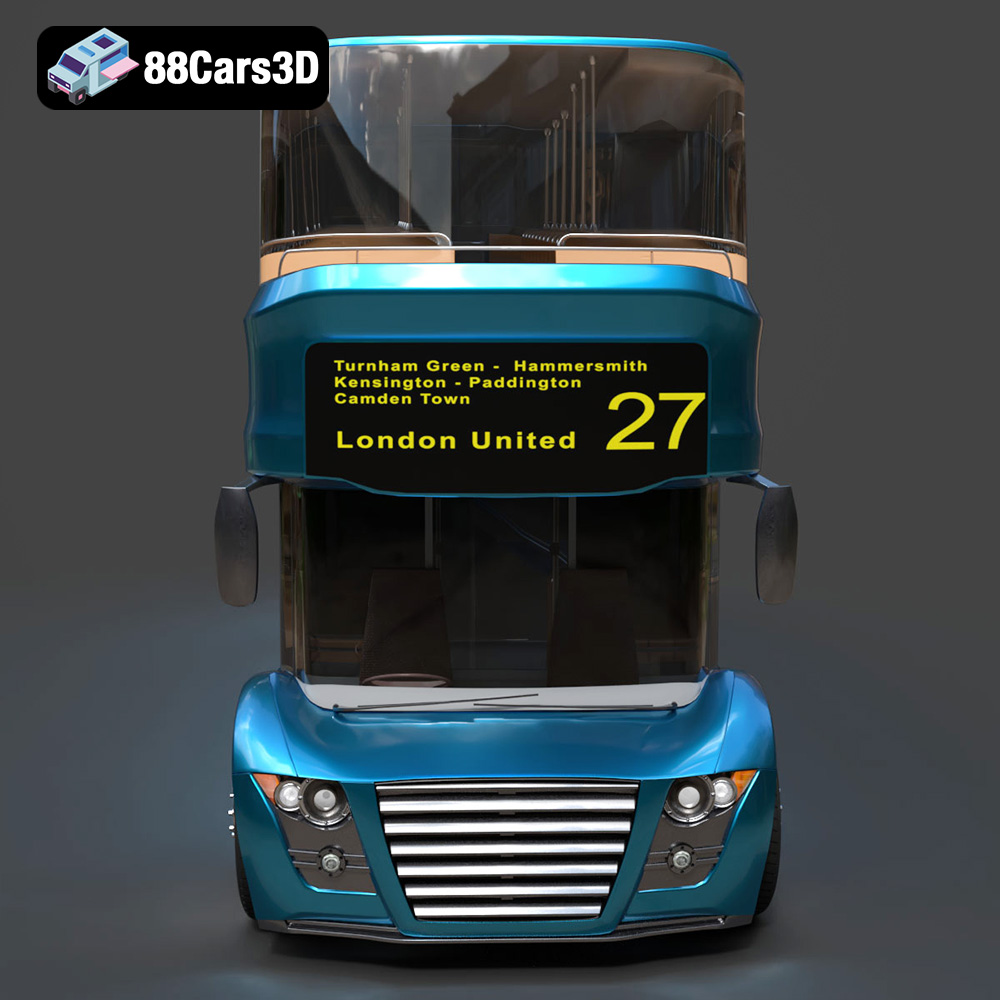
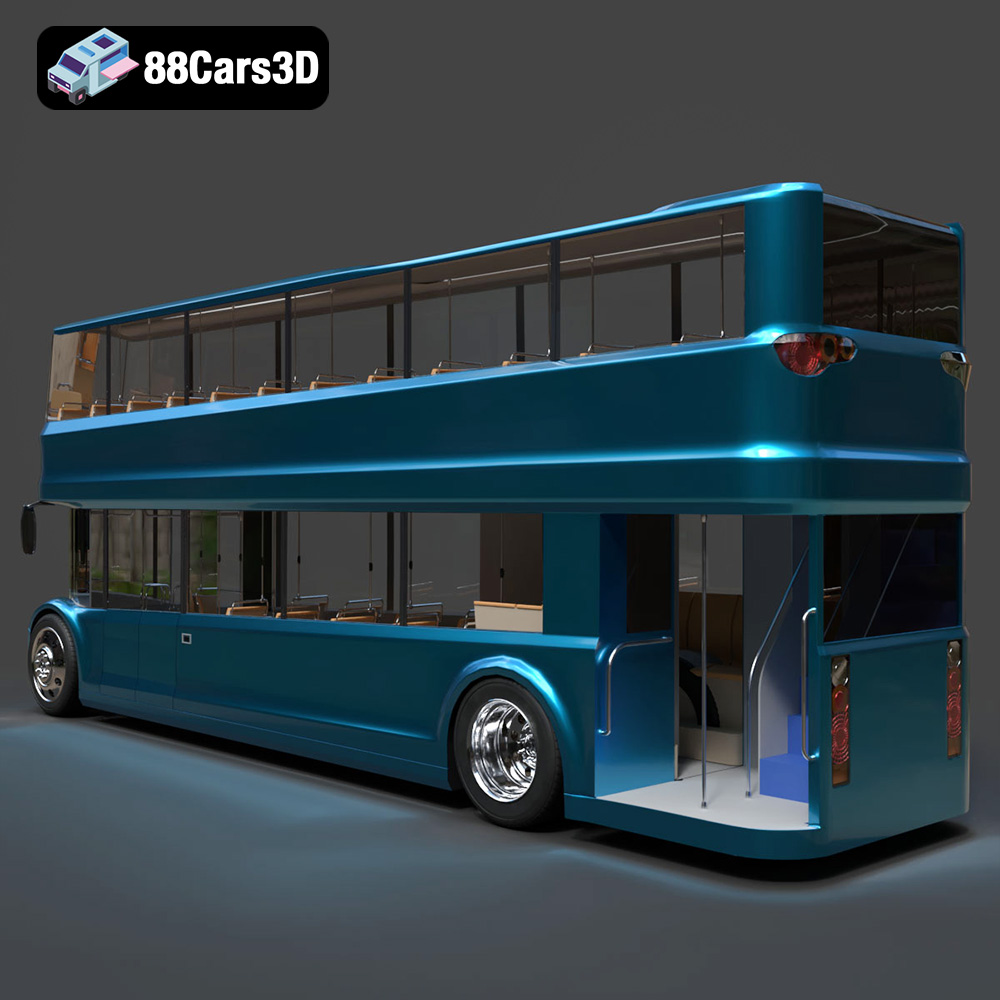
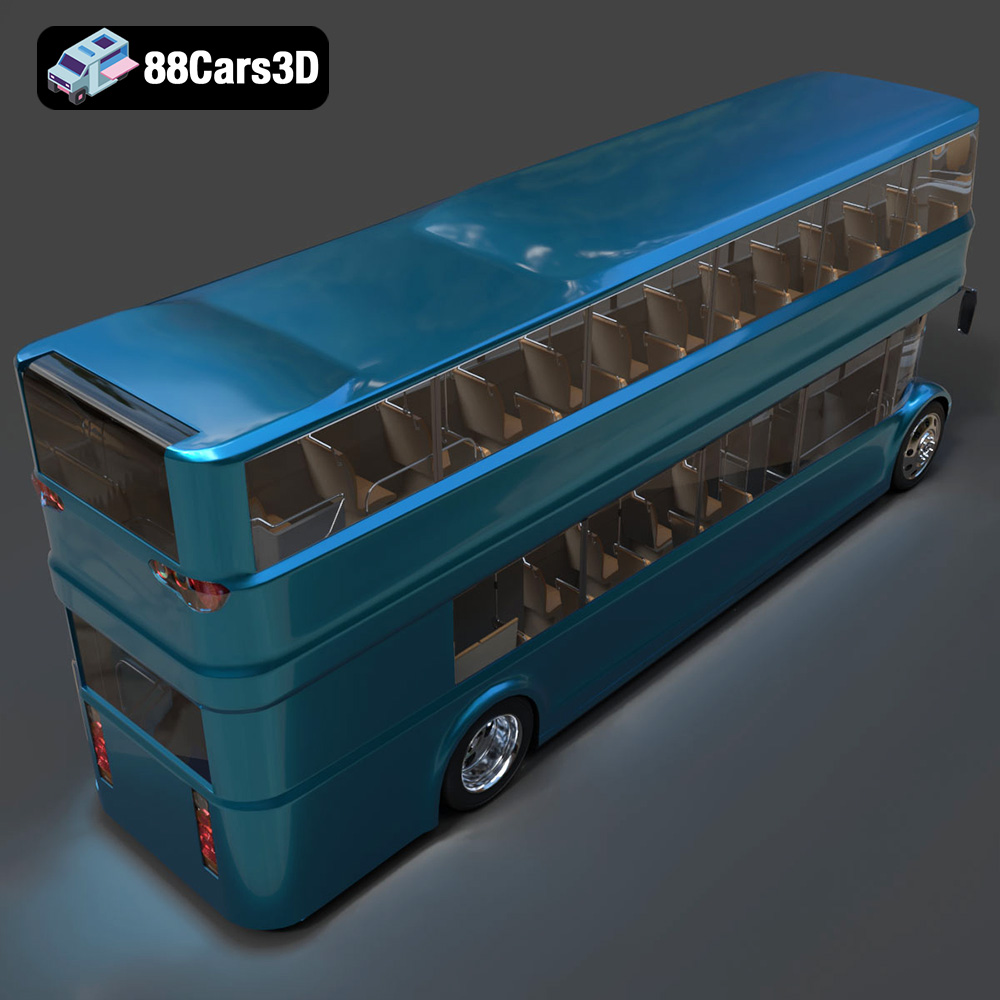
Experience the essence of modern public transport with this highly detailed 3D model of the New Bus For London. This professional-grade model captures the iconic design and functional elegance of the contemporary city bus, built with clean geometry and a balanced level of detail. It is perfectly suited for a wide range of applications, including high-fidelity rendering, realistic animations, complex simulations, and immersive game development projects.
Exterior Features:
- Accurately modeled chassis and body panels reflecting the distinctive New Bus For London aesthetic
- Detailed headlights, taillights, indicators, and side mirrors with realistic material assignments
- Precisely replicated wheels and tires, designed for authentic visual representation
- Clear and transparent window materials for passenger visibility and interior rendering
- Separated doors and destination displays, optimized for animation workflows and interactive simulations
- Realistic textures for exterior signage and branding elements
Interior / Mechanical Features:
- Comprehensive interior detailing, including passenger seating, grab rails, and standing areas
- Detailed driver’s cockpit with dashboard instruments, steering wheel, and controls
- Optimized mesh quality for mechanical components, ensuring efficiency without sacrificing visual fidelity
- Well-defined floor textures and interior lighting elements for realistic scenes
Technical Advantages:
- Clean, quad-dominant topology ensures smooth subdivisions and deformation
- Accurate real-world scale for seamless integration into existing scenes
- Organized hierarchy with properly set pivots for easy rigging and animation
- Optimized UV layouts for efficient texturing and material application
- Professionally prepared materials for various rendering engines
Applications:
- Rendering & Visualization: Ideal for architectural visualizations, urban planning renders, and cinematic scenes
- Game Development: Optimized as a game asset for racing games, urban simulators, and open-world environments
- AR/VR: Perfect for creating immersive augmented and virtual reality experiences within cityscapes
- Simulation & Training: Suitable for public transport simulations, driver training, and educational modules
- 3D Printing: Can be easily converted to .stl format for creating high-quality physical models
Customization Options:
- Easily modify paint finishes and apply custom graphics or branding
- Adjust material properties for metal, glass, rubber, and plastics to match specific visual styles
- Configure lighting setups to simulate different environmental conditions or times of day
Elevate your projects with the New Bus For London 3D model. Its exceptional quality, versatility, and organized structure make it an indispensable asset for any professional 3D production.
Included File Formats:
- .blend – Blender project with materials
- .fbx – Compatible with Unreal, Unity, and major 3D engines
- .obj – Universal format for nearly all 3D software
- .glb – Optimized for AR, VR, and web-based visualization
- .stl – Ready for 3D printing
- .ply – Mesh format for analysis and CAD workflows
- .unreal – Unreal Engine project setup
- .max – Editable 3ds Max scene for rendering and animation
Tags:
.londonbus,.newbusforlondon,.bus,.citybus,.publictransport,.transport,.vehicle,.rendering,.simulation,.gameasset,.arvr,.blend,.fbx,.obj,.glb,.stl,.ply,.unreal,.max
$21.99
Product Image Gallery