Elevating Automotive Visualization: A Deep Dive into High-Fidelity 3D Car Models and Professional Workflows
In the dynamic world of 3D visualization, game development, and immersive experiences, the quality of your assets can make or break a project. From breathtaking cinematic renders to hyper-realistic interactive simulations, the foundation of excellence lies in meticulously crafted 3D models. Automotive design, in particular, demands an exceptional level of detail and accuracy to truly capture the essence of a vehicle.
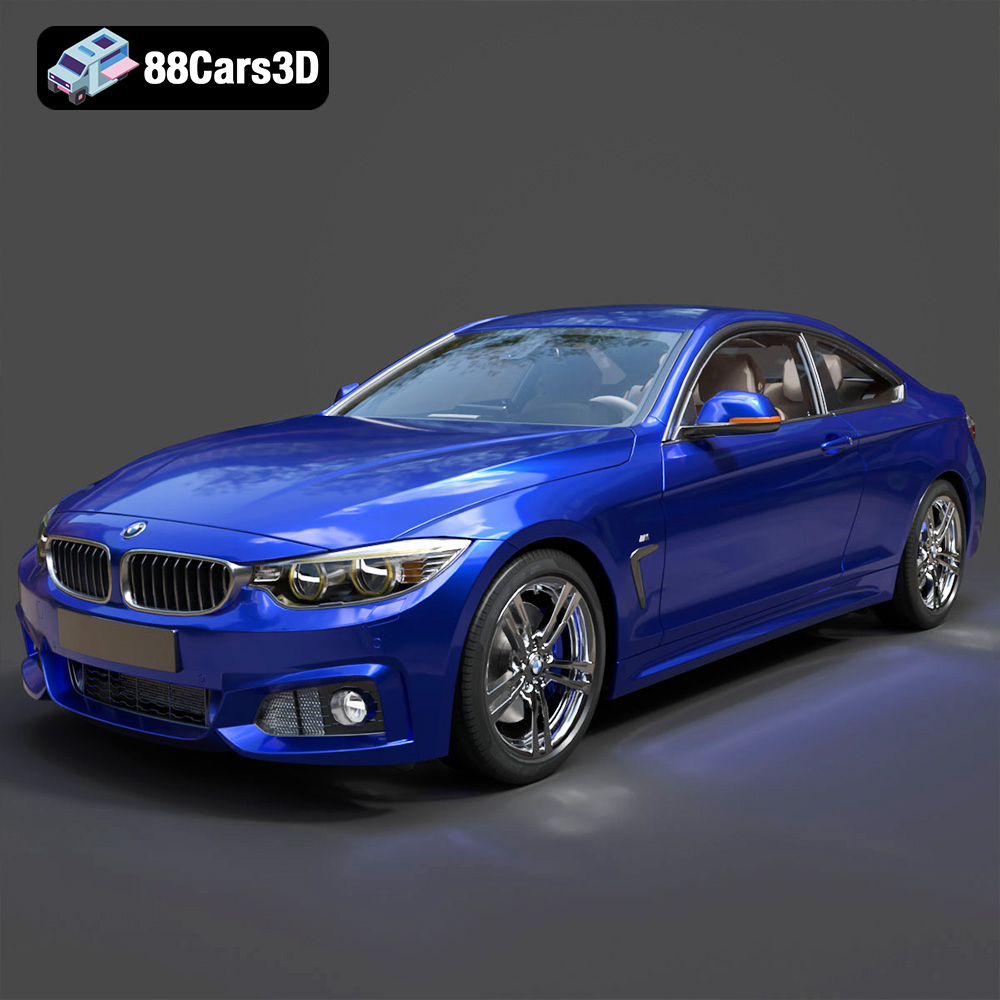
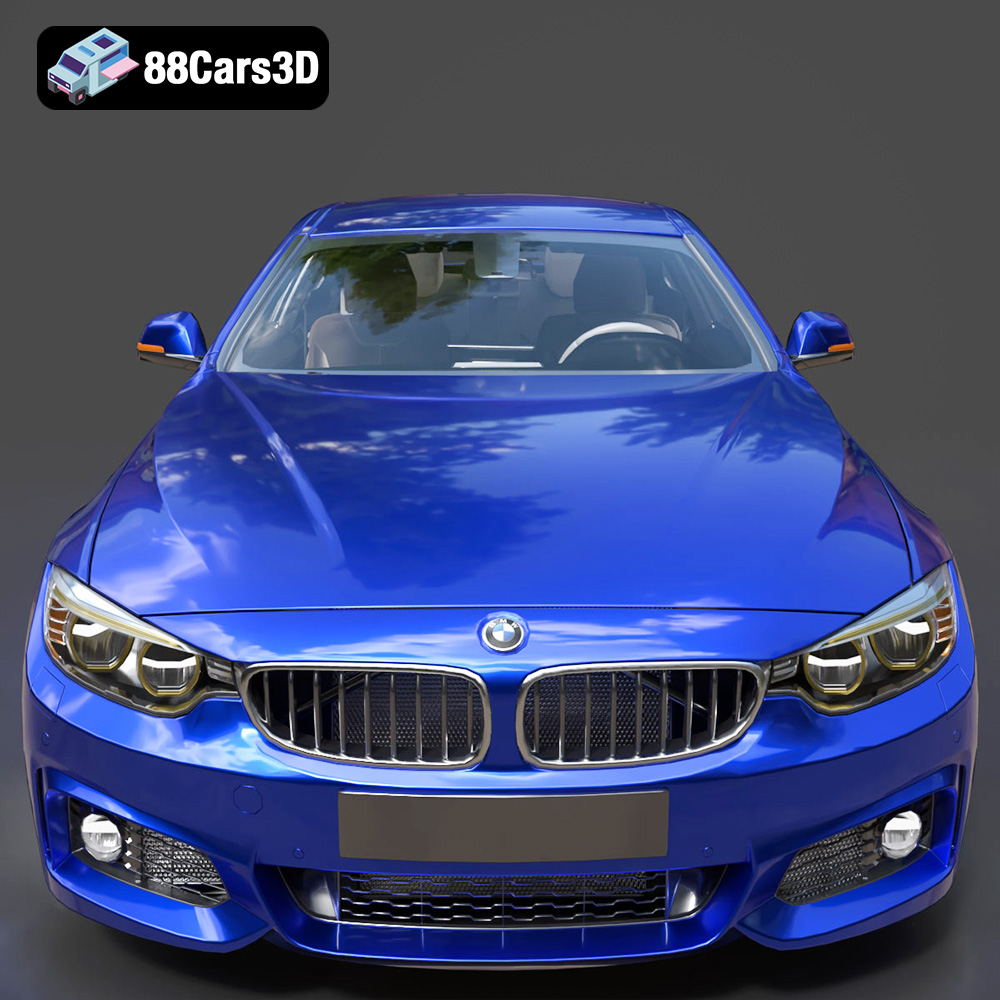
For professionals seeking to infuse their projects with unparalleled realism and performance, selecting the right 3D car models is paramount. These aren’t just decorative elements; they are complex digital blueprints that dictate everything from rendering quality to real-time performance. Consider the BMW 4 Series Coupe M Sport 2014 3D Model, a prime example of an asset engineered to meet rigorous industry standards. Its aggressive styling and dynamic characteristics, meticulously captured, make it a powerful tool for a diverse range of applications, from cutting-edge game development to sophisticated architectural visualization. This model, found at 88cars3d.com, exemplifies the kind of professional-grade geometry and PBR-ready materials that empower artists and developers to achieve stunning results.
The Demand for Precision in Automotive 3D Assets
Modern visual production pipelines require more than just aesthetic appeal. A truly valuable 3D car model must feature clean, optimized topology, efficient UV mapping, and materials that adhere to Physically Based Rendering (PBR) principles. This ensures seamless integration across various software platforms and rendering engines, guaranteeing consistent and predictable results. Whether you’re an architect envisioning a sleek vehicle parked outside a contemporary home, a game developer populating an open world, or a marketing professional creating a compelling car configurator, the underlying technical integrity of your 3D car models is non-negotiable.
The BMW 4 Series Coupe M Sport 2014 3D Model, with its logically grouped components and professional naming conventions, streamlines workflows, saving invaluable time and resources. Such an asset allows artists to focus on creative direction rather than wrestling with mesh errors or material inconsistencies. It’s an investment in efficiency and quality, proving its worth across multiple phases of production.
Understanding 3D Model File Formats: Choosing the Right Tool for Your Project
Navigating the landscape of 3D model file formats can be a daunting task, but understanding their individual strengths and typical use cases is crucial for any professional workflow. The BMW 4 Series Coupe M Sport 2014 3D Model exemplifies versatility by offering a comprehensive suite of formats, each tailored for specific industry needs. Selecting the correct format ensures optimal performance, compatibility, and fidelity, whether you’re working on a real-time game, an architectural render, or a 3D print.
The Versatility of .blend for Blender Enthusiasts
The .blend format is native to Blender, a powerful and widely adopted open-source 3D creation suite. When you acquire a .blend file, such as that provided for the BMW 4 Series, you gain access to a fully editable Blender scene. This typically includes not just the model’s geometry, but also its materials, textures, lighting setup, cameras, and even animation data. For Blender users, this means immediate access to a production-ready environment. You can easily modify the mesh, adjust shaders, reconfigure lighting, or even integrate the car into complex scenes with minimal setup. The .blend format preserves all aspects of the original artist’s scene, making it ideal for customization and detailed artistic refinement.
Streamlining Game Development with .fbx and .unreal
For game developers, efficiency and engine compatibility are paramount. The .fbx (Filmbox) format is an industry-standard interchange format widely used for transferring 3D data between various applications, especially game engines like Unreal Engine and Unity. An .fbx file for the BMW 4 Series Coupe M Sport 2014 will contain not only the mesh but also PBR material assignments, texture paths, animation rigs (if applicable), and scene hierarchy. Its strength lies in its robust support for complex data types, making it ideal for high-performance game assets. It ensures that the model’s appearance and structure are faithfully preserved when imported into a game engine, ready for collision setup, LOD (Level of Detail) implementation, and scripting.
The .unreal format, specifically tailored for Unreal Engine, takes engine-ready assets a step further. It typically implies a pre-configured asset that might include optimized meshes, material instances, appropriate collision meshes, and potentially even blueprint setups. This format significantly reduces the setup time within Unreal Engine, allowing developers to drag and drop the BMW 4 Series directly into their project and begin immediate integration, knowing it adheres to the engine’s best practices.
Universal Compatibility with .obj and Specialized Use with .glb
The .obj (Wavefront OBJ) format is a venerable and universally compatible 3D model format. It’s a simple, text-based format that primarily stores geometry (vertices, normals, texture coordinates, and faces) and can reference external material (.mtl) files for basic color and texture information. While it lacks support for advanced features like animation or complex scene data, its widespread adoption makes it an excellent choice for cross-software compatibility. If you need to import the BMW 4 Series into virtually any 3D software package, .obj is a reliable fallback, ensuring the core mesh data is always accessible.
The .glb (GL Transmission Format Binary) format is optimized for modern web-based applications, AR (Augmented Reality), and VR (Virtual Reality) experiences. It’s a binary version of glTF, designed for efficient transmission and loading of 3D scenes and models. A .glb file for the BMW 4 Series Coupe M Sport 2014 would be highly optimized for file size and real-time rendering, packing all necessary textures and animations directly into a single file. This makes it perfect for interactive product viewers on websites, mobile AR applications, or lightweight VR environments where performance and quick loading are critical.
Precision for Prototyping and Analysis: .stl, .ply, and .max
The .stl (Stereolithography) format is the de facto standard for 3D printing and rapid prototyping. It represents a 3D model as a series of connected triangles, defining only the surface geometry without color, texture, or material information. For designers looking to transform the BMW 4 Series Coupe M Sport 2014 from a digital concept into a physical prototype, an .stl file is essential. It provides a clean, watertight mesh suitable for slicer software and subsequent fabrication.
The .ply (Polygon File Format) is another precision mesh format often used in CAD, 3D scanning, and scientific applications for storing detailed polygon information, including color, normals, and transparency for each vertex or face. It’s more versatile than .stl for data analysis and visualization, offering a richer dataset for technical inspections or highly detailed renders where per-vertex data is important.
Finally, the .max format is the native file type for Autodesk 3ds Max, a leading software for 3D modeling, animation, and rendering. Similar to .blend, a .max file of the BMW 4 Series offers a fully editable project with all scene data, including modifiers, materials, lighting, and animation setups. For professionals working within the 3ds Max ecosystem, this format provides the most comprehensive and flexible starting point for further development, complex animations, or high-end cinematic automotive rendering.
The Anatomy of a High-Fidelity 3D Car Model
Beyond file formats, the intrinsic quality of a 3D model dictates its utility. A premium asset like the BMW 4 Series Coupe M Sport 2014 3D Model adheres to stringent technical specifications, ensuring it performs optimally across diverse applications.
Geometry and Topology: The Foundation of Realism
At the core of any realistic 3D car model is its geometry. High-fidelity models feature clean, subdivision-ready topology, typically composed primarily of quadrilaterals (quads). This structure allows for smooth subdivision surfacing, crucial for capturing the subtle curves and reflections of automotive bodies. The mesh density is carefully managed: areas requiring fine detail (like grilles, badges, or intricate panel lines) possess a higher polygon count, while flatter surfaces are optimized to reduce unnecessary geometry. This balance is key for both visual fidelity and performance, especially in real-time engines. For game assets, multiple Levels of Detail (LODs) are essential, providing simplified versions of the mesh that are swapped in and out based on distance from the camera, dramatically improving frame rates without noticeable visual degradation.
PBR Materials and Texturing: Bringing Surfaces to Life
Modern rendering relies heavily on Physically Based Rendering (PBR), a methodology that simulates how light interacts with materials in the real world. A professional 3D car model, such as the BMW 4 Series Coupe M Sport 2014, comes equipped with PBR-ready materials. This means it includes a set of texture maps (e.g., Albedo/Base Color, Metallic, Roughness, Normal, Ambient Occlusion) that accurately define the surface properties of the car’s paint, glass, rubber, chrome, and interior fabrics. These maps are meticulously crafted with non-overlapping UVs, ensuring that textures wrap seamlessly and efficiently. The result is a model that reacts predictably and realistically to various lighting conditions, making it suitable for both static renders and dynamic, real-time environments.
Organization and Scalability: Essential for Professional Pipelines
An often-overlooked aspect of quality is organization. A professional 3D model features a logical hierarchy of objects, with components (e.g., body panels, wheels, interior elements, lights) grouped and named intuitively. This makes scene management effortless, allowing artists to quickly select, manipulate, or hide parts as needed. Furthermore, the model should be scalable, meaning it can be easily adapted for different resolutions or levels of detail without significant rework. This forward-thinking approach ensures the asset remains valuable across various project requirements, from close-up hero shots to background elements.
Integrating the BMW 4 Series Coupe M Sport 2014 into Game Development Workflows
Game development demands assets that are not only visually impressive but also highly optimized for performance. The BMW 4 Series Coupe M Sport 2014 3D Model is specifically designed to excel in this environment, offering features crucial for real-time applications.
Optimized for Unreal Engine and Unity: A Practical Guide
Both Unreal Engine and Unity are leading platforms for game development, and high-quality 3D car models are essential for creating immersive worlds. When importing the BMW 4 Series into either engine, its .fbx or .unreal/.blend format (with appropriate export) ensures a smooth transition. For Unreal Engine, the .unreal file or a well-prepared .fbx can be directly imported, often with pre-configured material slots. Developers can then create material instances from the base PBR materials, allowing for quick adjustments to paint color, reflectivity, and other properties without modifying the original textures. Similarly, in Unity, the .fbx import brings in the mesh and PBR texture assignments, making it straightforward to apply standard PBR shaders and create custom materials.
The model’s optimized geometry and clean UVs are critical here. They minimize draw calls and ensure textures are rendered efficiently, preventing performance bottlenecks. Proper scale and pivot points are also typically set for game-ready assets, simplifying placement and interaction within the game world.
From Asset to Interactive Experience: Collision and LODs
For a car model to function realistically in a game, it needs proper collision detection and efficient Level of Detail (LOD) implementation. The BMW 4 Series Coupe M Sport 2014, as a professional game asset, should be prepared for these stages. Collision meshes, often simpler proxy geometries, are created to accurately represent the car’s physical boundaries for physics simulations and player interaction. These are vital for driving mechanics, car crashes, and environmental interactions. Furthermore, the inclusion of multiple LODs ensures that players experience smooth frame rates regardless of their proximity to the vehicle. Far away cars can use a very low-poly mesh and simplified materials, while close-up vehicles display the full detail, dynamically switching as the camera moves. This intelligent resource management is a hallmark of high-quality game assets available on platforms like 88cars3d.com.
Mastering Automotive Rendering and Visualization with 3ds Max and Blender
For artists and designers specializing in static renders, animations, or marketing visuals, the ability to control every aspect of a scene is paramount. The BMW 4 Series Coupe M Sport 2014 3D Model provides an excellent foundation for achieving stunning photorealistic results in leading rendering software.
Crafting Cinematic Scenes in 3ds Max
Autodesk 3ds Max, often paired with powerful renderers like V-Ray or Corona, is a staple in architectural visualization and automotive marketing. The .max file provided for the BMW 4 Series Coupe M Sport 2014 offers a fully editable scene, typically with pre-assigned PBR materials ready for fine-tuning. Artists can leverage 3ds Max’s robust modeling tools to make subtle modifications, animate doors, or simulate driving sequences. The software’s advanced lighting systems allow for meticulous control over studio lighting setups, high dynamic range imaging (HDRI) environments, and physically accurate light sources, all crucial for achieving those signature automotive reflections and gleam. Placing the BMW 4 Series in a meticulously designed environment, such as a luxurious garage or a scenic backdrop, allows for the creation of truly cinematic renders that captivate audiences.
Artistic Freedom and Workflow Efficiency in Blender
Blender has emerged as a powerhouse for 3D artists, offering unparalleled creative freedom and a robust PBR rendering engine (Cycles and Eevee). The .blend file for the BMW 4 Series is a complete package, allowing Blender users to dive straight into rendering. The included materials can be easily adjusted using Blender’s node-based shader editor, enabling artists to create custom paint finishes, experiment with different gloss levels for interior elements, or even add subtle imperfections for hyperrealism. Blender’s comprehensive toolset for scene composition, camera animation, and post-processing allows for a complete workflow within a single application. The efficiency of working with a well-organized model like the BMW 4 Series from 88cars3d.com minimizes setup time, letting artists focus on the creative lighting and camera work that brings automotive renders to life.
Leveraging the BMW 4 Series for Photorealistic Outputs
Whether in 3ds Max or Blender, the inherent quality of the BMW 4 Series Coupe M Sport 2014 3D Model simplifies the pursuit of photorealism. Its accurate geometry ensures correct reflections and refractions, while the PBR materials interact faithfully with light. Artists can experiment with different HDRI maps to simulate various lighting conditions—from a sunny afternoon to a dramatic sunset—watching as the car’s surfaces react authentically. The model’s attention to detail, down to the M Sport badging and intricate grille, provides a solid foundation for close-up shots that would be indistinguishable from reality, making it an invaluable asset for marketing campaigns, product showcases, and high-end visualization projects.
Expanding Horizons: AR/VR, 3D Printing, and Beyond
The utility of a versatile 3D car model extends far beyond traditional rendering and game development, opening doors to cutting-edge technologies and diverse commercial applications.
Immersive Experiences with AR/VR
Augmented Reality (AR) and Virtual Reality (VR) are transforming how we interact with digital content. A high-quality 3D car model like the BMW 4 Series Coupe M Sport 2014 is perfectly suited for these immersive environments. Using the optimized .glb format, developers can integrate the model into AR applications that allow users to place a virtual BMW in their real-world environment via a smartphone or tablet. Imagine configurators where a customer can “see” their chosen car in their driveway or parking spot before purchase. In VR, the model can be used to create interactive showrooms, driving simulations, or virtual tours that offer an unprecedented level of engagement. The model’s optimized geometry and PBR materials ensure smooth performance and visual fidelity, crucial for preventing motion sickness and delivering a compelling immersive experience.
Physical Prototypes through 3D Printing (.stl applications)
Beyond the digital realm, 3D printing offers a tangible connection to virtual designs. The .stl file included with the BMW 4 Series Coupe M Sport 2014 allows designers and enthusiasts to transform the digital model into a physical object. This is invaluable for rapid prototyping, creating scale models for design reviews, or even producing custom car accessories. The .stl format provides a clean, watertight mesh essential for successful 3D printing, ensuring that the intricate details of the M Sport package are accurately reproduced in plastic, resin, or metal. This bridge between digital design and physical manifestation showcases the multifaceted value of a well-prepared 3D asset.
Architectural Visualization and Marketing Excellence
In architectural visualization, vehicles add life and context to static building renders. Placing the BMW 4 Series Coupe M Sport 2014 in an architectural scene immediately elevates its realism and appeal. Whether it’s parked in a luxury garage, cruising down a street in an animated fly-through, or sitting elegantly in a showroom, the car enhances the overall composition and narrative. For automotive marketing, high-fidelity 3D car models are indispensable. They enable the creation of photorealistic advertisements, interactive web configurators, and compelling presentations long before a physical prototype exists. The ability to render the car in any color, with any backdrop, and from any angle offers unprecedented creative control, making assets from 88cars3d.com a powerful tool for visual storytelling.
Conclusion: The Enduring Value of Professional 3D Car Models
The journey through the intricacies of 3D car models, from their foundational file formats to their diverse applications across industries, underscores a fundamental truth: quality assets are the bedrock of exceptional digital content. Whether you are crafting a next-generation video game, producing a cinematic automotive advertisement, designing immersive AR/VR experiences, or simply needing a precise model for 3D printing, the technical integrity and artistic fidelity of your 3D models dictate the success of your project.
The BMW 4 Series Coupe M Sport 2014 3D Model stands as a testament to this principle. With its professional-grade geometry, PBR-ready materials, and comprehensive file format support (.blend, .fbx, .obj, .glb, .stl, .ply, .unreal, .max), it offers unparalleled versatility and ease of integration into any professional pipeline. It’s an asset designed not just to look good, but to perform flawlessly, saving artists and developers countless hours and allowing them to focus on their creative vision.
Investing in high-quality 3D car models from trusted marketplaces like 88cars3d.com is an investment in efficiency, realism, and future-proof design. Embrace the power of meticulously crafted digital assets and elevate your projects to new heights of visual excellence and technical sophistication.
Featured 3D Model
BMW 4 Series Coupe M Sport 2014 3D Model
Bring unparalleled realism to your projects with the BMW 4 Series Coupe M Sport 2014 3D Model. This asset meticulously captures the aggressive styling and dynamic characteristics of the M Sport package, making it perfect for high-fidelity simulations and visualizations. The model boasts professional-grade geometry optimized for performance and detail. It includes realistic, PBR-ready materials replicating paint, glass, and rubber textures. All components are logically grouped and named, ensuring easy manipulation and integration into any professional pipeline. This versatile asset is ideal for various industries, including video game development (optimized for both Unreal Engine and Unity), architectural visualization, automotive marketing, cinematic rendering, and interactive AR/VR experiences.
$14.99
Product Image Gallery