

Elevating Digital Automotive Design: The Power of Premium 3D Car Models
In the dynamic world of 3D visualization, automotive design, and game development, the quality of your foundational assets can make or break a project. From breathtaking cinematic sequences to highly interactive virtual experiences, the demand for realistic, meticulously crafted 3D car models is consistently on the rise. Professionals across industries require models that not only look authentic but also perform flawlessly within complex digital environments.
The quest for photorealism and efficiency leads many to seek out expertly prepared assets. This isn’t just about aesthetics; it’s about robust geometry, optimized performance, and versatile file formats that seamlessly integrate into diverse pipelines. Today, we’ll delve into the critical aspects that define a superior 3D vehicle asset, exploring its impact on various professional applications. We’ll also take a closer look at a prime example of such excellence: the BMW 7 Series 2016 3D Model, a testament to precision and utility available on 88cars3d.com.
The Foundation of Automotive Visualization: Why Quality 3D Models Matter
At the heart of any compelling automotive project, whether it’s a marketing campaign, a driving simulator, or an architectural visualization, lies the 3D model of the vehicle itself. A high-quality model serves as the canvas upon which all subsequent layers of detail, lighting, and animation are built. Without a solid foundation, even the most skilled renderer or game developer will struggle to achieve professional results.
Precision in Design and Engineering
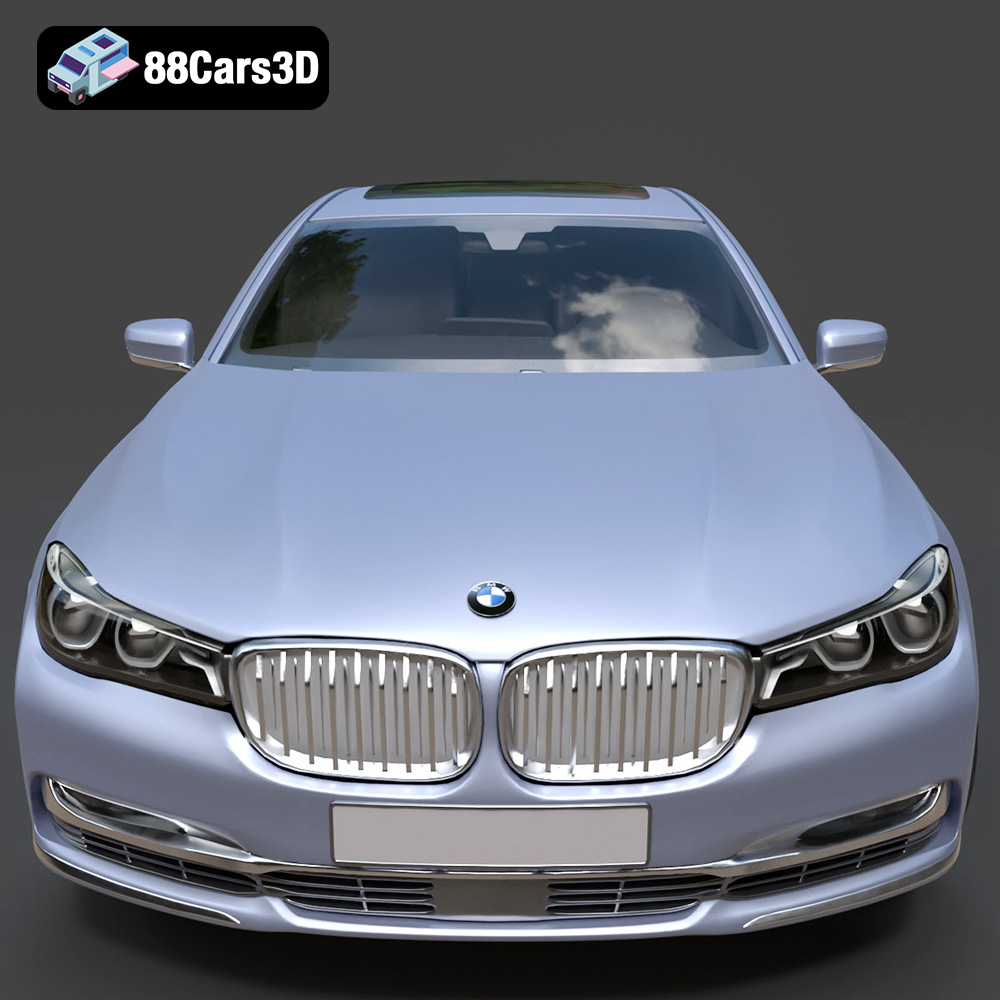
A truly professional 3D car model reflects the meticulous design and engineering of its real-world counterpart. This goes beyond just replicating the silhouette; it involves capturing the subtle curves, the sharp creases, and the intricate details that give a vehicle its unique character. For instance, the BMW 7 Series 2016 3D Model meticulously recreates the iconic kidney grille, the sophisticated lines of the body panels, and the detailed headlight clusters. This level of precision is crucial for achieving believability, ensuring that the digital representation evokes the same sense of luxury and performance as the actual car.
Bridging Concept to Reality
For designers and engineers, high-fidelity 3D car models are indispensable tools for bridging the gap between concept and reality. They allow for virtual prototyping, design reviews, and ergonomic studies long before any physical components are manufactured. For advertising agencies, these models enable the creation of stunning product showcases without the logistical complexities and costs associated with physical photography or videography. In gaming and AR/VR, they are the very essence of immersion, allowing users to interact with vehicles in ways previously unimaginable. The BMW 7 Series 2016 3D Model, with its real-world scale and accurate proportions, is perfectly suited for these demanding applications.
Understanding 3D Model File Formats
One of the most crucial aspects of working with 3D assets, especially 3D car models, is understanding the various file formats available. Each format serves a specific purpose, offering different levels of compatibility, feature retention, and optimization for particular workflows. Choosing the right format ensures a smooth pipeline and avoids potential headaches during project development. The BMW 7 Series 2016 3D Model, for example, is provided in a comprehensive suite of formats, catering to virtually any professional need.
Blender (.blend) and 3ds Max (.max) for Native Workflows
.blend: This is Blender’s native file format, an open-source 3D creation suite widely used for everything from modeling and animation to rendering and game development. A .blend file typically contains the complete scene, including the 3D model geometry, materials, textures, lighting setups, cameras, animation data, and even physics simulations. Its primary advantage is retaining all Blender-specific features, modifiers, and node-based material setups. When a model like the BMW 7 Series 2016 is provided as a .blend file, it offers maximum flexibility for users who work within the Blender ecosystem, allowing for easy modification and integration into existing Blender projects.
.max: The .max format is the native file type for Autodesk 3ds Max, a powerhouse in professional architectural visualization, automotive rendering, and animation. Similar to .blend, a .max file stores all scene data relevant to 3ds Max, including geometry, complex material definitions (like V-Ray or Corona materials), lighting, animation paths, and rigging information. Having the BMW 7 Series 2016 3D Model in .max format ensures that 3ds Max users can immediately open, render, animate, and customize the model with all its intended attributes intact, without needing to re-establish materials or hierarchies.
Universal Interoperability with .fbx, .obj, and .ply
.fbx: Developed by Autodesk, FBX (Filmbox) is one of the most widely adopted proprietary 3D exchange formats. It excels at transferring not just geometry but also animation, cameras, lights, and basic material properties between different 3D software applications and game engines. It’s the industry standard for interoperability between tools like Maya, 3ds Max, Cinema 4D, and critically, game engines like Unreal Engine and Unity. For game development and real-time visualization, an .fbx version of a 3D car model like the BMW 7 Series 2016 is indispensable due to its robust support for animation and clean mesh data transfer.
.obj: OBJ (Object) is a simpler, more universal file format that primarily stores 3D geometry (vertices, normals, texture coordinates, and faces) and references to external material (MTL) and texture files. While it doesn’t support animation or advanced material properties, its widespread compatibility makes it a go-to for cross-software sharing. Nearly every 3D application can import and export .obj files. It’s a reliable fallback for ensuring basic model geometry can be accessed in any environment.
.ply: PLY (Polygon File Format or Stanford Triangle Format) is often used to store 3D data from 3D scanners, CAD software, and scientific applications. It supports various properties for each vertex (such as color, normal, transparency) and face (such as color). It’s a robust format for precision mesh data and is particularly useful in workflows that involve mesh analysis, reverse engineering, or direct integration with CAD systems.
Specialized Formats for Emerging Technologies (.glb, .stl, .unreal)
.glb: GLB (GL Transmission Format Binary) is a binary version of glTF (GL Transmission Format), designed for efficient transmission and loading of 3D scenes and models by applications. It’s quickly becoming the standard for 3D web, AR (Augmented Reality), and VR (Virtual Reality) applications due to its compact size and ability to embed all assets (geometry, textures, animations) into a single file. For developers creating interactive experiences or web-based car configurators, the .glb version of the BMW 7 Series 2016 3D Model is highly optimized and ready for immediate deployment.
.stl: STL (STereoLithography) is the de facto standard file format for 3D printing. It represents a 3D model as a series of connected triangles, defining only the surface geometry of a three-dimensional object without color or texture information. While simple, it’s universally accepted by 3D printers and slicing software. If your project involves physical prototyping, scale models, or even creating custom parts, the .stl version of the BMW 7 Series 2016 3D Model is essential for a smooth transition from digital to tangible.
.unreal: While not a single file format in the traditional sense, “Unreal Engine project setup” implies a package or an asset imported and configured specifically for Unreal Engine. This might involve an .fbx file already imported into an Unreal project, with materials, textures, and possibly blueprints already set up and optimized for the engine’s rendering pipeline. This pre-configured asset dramatically reduces the setup time for game developers and real-time visualization artists, allowing them to drop the BMW 7 Series 2016 directly into their scenes with minimal effort.
The BMW 7 Series 2016 3D Model: A Deep Dive into Detail
The BMW 7 Series 2016 3D Model available on 88cars3d.com stands as a prime example of a premium 3D vehicle asset designed for professional use. Every aspect of this model has been carefully considered to ensure both visual fidelity and technical efficiency, making it an invaluable addition to any designer’s toolkit.
Exterior Fidelity: Capturing the Iconic Design
The exterior of the BMW 7 Series 2016 is renowned for its sophisticated lines and commanding presence, and this 3D model captures that essence flawlessly. From the accurately modeled body panels that reflect the car’s sleek aerodynamics to the highly detailed grille with its iconic ‘kidney’ design and authentic badging, no detail is overlooked. The precision-engineered headlights and taillights feature realistic transparent materials, designed to react convincingly to various lighting conditions, bringing your renders to life. Furthermore, high-resolution wheels and tires faithfully replicate the specific design for the 2016 model year, ensuring an authentic appearance right down to the tread patterns. For animators, components such as doors, hood, and trunk are separated, facilitating ease of animation for opening and closing sequences, perfect for configurators or cinematic shots.
Interior Sophistication and Functionality
The luxury of a BMW is as much about its interior as its exterior. This 3D model extends its comprehensive detailing to the cabin, providing a complete interior environment. The dashboard, steering wheel, seats, door panels, and center console are all meticulously modeled, including visible gauges and controls. This level of interior realism is paramount for close-up shots, virtual tours, or immersive AR/VR experiences where the user might explore the car from within. Despite this intricate detail, the mesh quality is optimized to ensure efficient performance, striking a perfect balance between visual richness and computational lightweightness.
Optimized Topology and Real-World Scale
Technical precision is where this model truly shines. It boasts clean, quad-dominant topology, which is crucial for smooth subdivisions and deformation, especially when animating or applying advanced sculpting techniques. This ensures that surfaces remain smooth and artifact-free, even under extreme close-ups. Modeled to real-world scale, the BMW 7 Series 2016 3D Model integrates seamlessly into existing scenes, whether they are architectural visualizations or realistic driving simulations, ensuring accurate physical interactions and proportions. The model also features an organized hierarchy with properly named components and pivot points, which makes manipulation, rigging, and animation workflows intuitive and efficient for any professional artist.
Professional Workflows: Integrating Premium 3D Car Models
The versatility of the BMW 7 Series 2016 3D Model allows it to integrate seamlessly into a multitude of professional workflows, enhancing projects across various industries. Its robust design and multiple file formats mean it’s ready for almost any task you can throw at it.
High-Fidelity Automotive Rendering in 3ds Max and Blender
For artists focused on automotive rendering, this model is a dream come true. In software like 3ds Max, artists can leverage the included .max file to instantly access a fully prepared scene. They can then utilize powerful renderers such as V-Ray or Corona to create stunning studio renders or dynamic environmental shots. The clean geometry and well-defined materials of the BMW 7 Series 2016 3D Model ensure that light interacts realistically with its surfaces, from the metallic paint to the reflective chrome accents. Similarly, Blender users can dive into the .blend file, harness Blender’s Cycles or Eevee render engines, and experiment with advanced node-based materials to achieve photorealistic results, showcasing the car in various settings, from urban landscapes to serene natural environments.
Game Development with Unreal Engine and Unity
The game industry demands highly optimized yet visually impressive assets. The BMW 7 Series 2016 3D Model is game-ready, particularly with its .fbx and .unreal file formats. Game developers can import the .fbx into Unreal Engine or Unity, utilizing its optimized mesh for efficient real-time performance without sacrificing detail. The organized hierarchy simplifies integration into complex game mechanics, allowing for easy setup of physics-based driving, interactive doors, or damage systems. For those working with Unreal Engine, the dedicated .unreal asset provides a head start, often including pre-configured materials, LODs (Levels of Detail), and collisions, significantly cutting down on development time for racing games, open-world environments, or interactive car configurators.
Beyond Visualization: AR/VR and Simulation
Augmented Reality (AR) and Virtual Reality (VR) applications represent a rapidly growing frontier for 3D car models. The .glb format, optimized for web and immersive experiences, makes the BMW 7 Series 2016 an ideal candidate for virtual showrooms, interactive car configurators, or even educational AR apps that allow users to explore the car’s mechanics in detail. In the realm of simulation and training, integrating this model into driving simulators or educational modules provides a highly realistic vehicle interaction. Its accurate dimensions and detailed components are crucial for physics-based simulations, offering a genuine sense of scale and presence for training scenarios or advanced vehicle dynamics studies.
Maximizing Your Investment: Customization and Future-Proofing
A premium 3D car model isn’t just about what it is out-of-the-box; it’s about its potential for customization and its adaptability to future projects. The BMW 7 Series 2016 3D Model offers extensive flexibility, ensuring it remains a valuable asset for years to come.
Material Versatility and Dynamic Environments
The ability to easily modify paint finishes, apply custom graphics, and adjust material properties is a hallmark of a truly versatile 3D model. With this BMW 7 Series 2016, artists can quickly re-texture the body to match specific branding, client requests, or to explore different aesthetic possibilities. Surfaces such as metal, plastic, leather, and chrome can be tweaked to react differently to various lighting environments, creating dynamic visual effects and moods. This flexibility allows the model to be repurposed for countless scenarios, from glossy studio shots to gritty, post-apocalyptic settings, all without compromising its underlying quality.
Animation and Interactive Experiences
Beyond static renders, the organized structure of the BMW 7 Series 2016 3D Model, with its separated and properly pivoted components, makes it perfectly suited for complex animations. Imagine a virtual presentation where doors gracefully open, the hood lifts to reveal engine details, or the car drives dynamically through a cityscape. This level of interactive capability is critical for creating engaging marketing content, training modules, or truly immersive game experiences. The clean geometry also supports advanced rigging setups, allowing for realistic suspension compression, wheel rotation, and steering articulation, further enhancing its utility in high-end simulations and interactive visualizations.
Conclusion
In the competitive landscape of digital content creation, the difference between good and great often lies in the quality of your core assets. A meticulously crafted 3D car model like the BMW 7 Series 2016 3D Model is not merely a visual element; it’s a foundational component that streamlines workflows, elevates visual fidelity, and empowers creative possibilities across diverse industries. From professional automotive rendering to high-performance game assets and immersive AR/VR experiences, this model delivers unparalleled quality and versatility.
Its comprehensive file format support ensures compatibility with leading software like Blender and 3ds Max, as well as game engines like Unreal, making it a future-proof investment for any serious 3D artist or developer. By providing clean topology, real-world scale, and detailed components, 88cars3d.com offers assets that not only meet but exceed professional standards. Explore the BMW 7 Series 2016 3D Model and other premium 3D car models at 88cars3d.com to take your projects to the next level.
Featured 3D Model
BMW 7 Series 2016 3D Model
Experience the epitome of automotive luxury with this professional 3D model of the BMW 7 Series 2016. Meticulously crafted to capture the essence of this executive sedan, the model boasts clean geometry and balanced detailing, making it ideal for a wide range of applications. Whether you’re working on high-fidelity renders, intricate animations, realistic simulations, or immersive game development, this 3D model provides a robust and accurate foundation for your projects.
$10.79
Product Image Gallery




Related Tags
.7series
.arvr
.blend
.bmw
.car
.fbx
.gameasset
.glb
.luxurycar
.max
.obj
.ply
.rendering
.sedan
.simulation
.stl
.unreal
