Driving Digital Realism: The Essential Role of High-Quality 3D Vehicle Models
In the vast and rapidly evolving landscape of 3D visualization, the demand for meticulously crafted, production-ready assets is at an all-time high. From blockbuster game titles and compelling automotive advertising campaigns to cutting-edge architectural walkthroughs and immersive AR/VR experiences, the foundation of every successful project lies in the quality of its digital components. Amongst these, 3D car models stand out as particularly challenging to create from scratch, requiring a blend of artistic skill and technical precision.
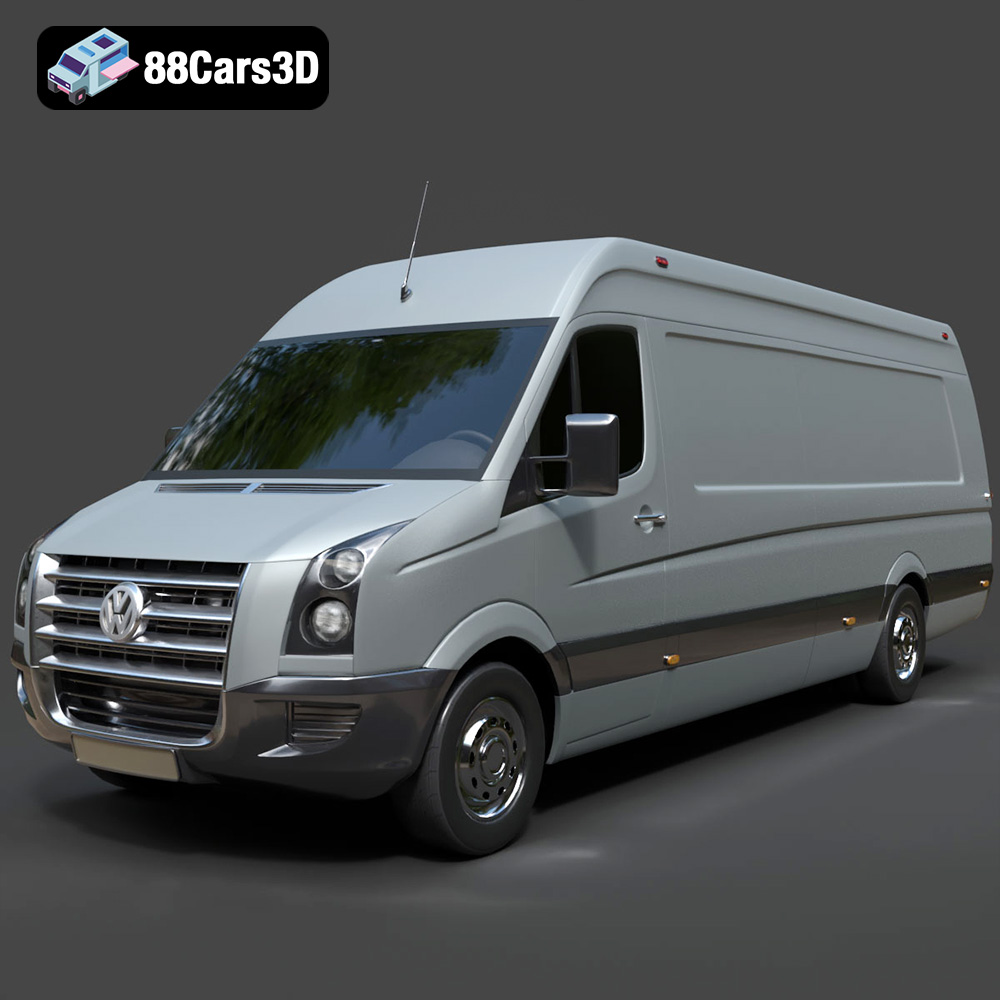
When it comes to commercial utility vehicles, the stakes are even higher. These workhorses of the modern economy need to be accurately represented, not just in their exterior aesthetics but also in their functional details and robust structure. This is where a high-quality asset like the Volkswagen Crafter 2020 3D Model becomes an invaluable resource. Designed for professional environments, this model offers outstanding visual accuracy, making it perfect for close-up renders, detailed animations, and complex simulations. It exemplifies the kind of precision and versatility that professionals seek, providing a robust foundation for a myriad of digital applications across various industries.
Understanding 3D Model File Formats
Navigating the world of 3D modeling often begins with understanding the myriad of file formats available. Each format serves a specific purpose, offering unique advantages in terms of compatibility, data retention, and optimization for particular workflows. When acquiring a professional 3D car model, such as the Volkswagen Crafter 2020 from 88cars3d.com, you’ll often find it packaged with multiple formats to ensure maximum usability across different software and platforms. Choosing the right format is crucial for maintaining data integrity and streamlining your production pipeline.
.blend – The Heart of Blender Projects
The .blend format is native to Blender, a powerful open-source 3D creation suite. A .blend file typically encapsulates an entire Blender scene, including the 3D model, its materials, textures, lighting setups, cameras, animations, and even custom scripts. This makes it an incredibly comprehensive format for users who work within the Blender ecosystem. When you receive a .blend file for a 3D car model like the Crafter, you’re getting a fully editable scene, allowing for direct manipulation of geometry, fine-tuning of PBR materials, adjusting scene lighting, or even re-rigging for custom animations. It’s the ideal starting point for anyone looking to deeply integrate and customize the asset within a Blender-centric workflow.
.fbx – The Industry Workhorse for Interoperability
Autodesk’s .fbx (Filmbox) format has become an industry standard for exchanging 3D data between different software applications. Its strength lies in its ability to store not only mesh data but also materials, textures, animations, skinning, and even camera and light information. For real-time applications like game development, .fbx is often the preferred choice. Engines like Unreal Engine and Unity have robust .fbx importers, making it straightforward to bring complex 3D car models, complete with their PBR materials and skeletal animations (if present), directly into your project. The Volkswagen Crafter 2020 3D Model, being game-engine ready, leverages .fbx for seamless integration into such pipelines.
.obj – The Universal Exchange Format
The .obj (Wavefront OBJ) format is one of the oldest and most widely supported 3D file formats. It’s a universal standard for exchanging geometry data and is compatible with virtually all 3D software. An .obj file primarily stores vertex positions, UV coordinates, normals, and polygonal faces. While it’s excellent for mesh data, it typically handles materials and textures through an associated .mtl (material template library) file, which defines basic material properties and references texture files. For simple mesh transfer or when you need a highly compatible base mesh to build upon, .obj is an excellent, reliable choice, offering foundational cross-software compatibility for the Volkswagen Crafter 2020.
.glb – Optimized for AR, VR, and Web
.glb (GL Transmission Format Binary) is the binary version of glTF, a royalty-free specification for the efficient transmission and loading of 3D scenes and models by engines and applications. It’s quickly becoming the standard for 3D content on the web, AR (Augmented Reality), and VR (Virtual Reality). A .glb file packages everything – geometry, materials, textures, and animations – into a single, compact file, making it incredibly efficient for streaming and display in browser-based viewers or immersive experiences. For projects targeting AR/VR applications or interactive web content, the .glb version of the Crafter model offers optimized performance and ease of deployment.
.stl – The Standard for 3D Printing
The .stl (STereoLithography) format is almost exclusively used for 3D printing and rapid prototyping. It represents a 3D model as a series of connected triangles (a tessellated surface) without any color, texture, or material information. While not suitable for rendering or animation due to its lack of visual data, it is the de facto standard for translating a digital model into a physical object. If your project involves creating a physical prototype of the Volkswagen Crafter 2020, the .stl file will be your go-to, ensuring a clean, watertight mesh ready for slicing and printing.
.ply – Precision Mesh for CAD or Analysis
.ply (Polygon File Format or Stanford Triangle Format) is another format that stores 3D data, typically from 3D scanners or CAD applications. It can store a wide range of properties, including color, transparency, normals, texture coordinates, and confidence values for each vertex. It’s particularly useful when precision mesh data is paramount, such as in scientific visualization, reverse engineering, or when detailed surface analysis is required. For certain highly technical applications of the Crafter model, .ply can provide the robust data needed.
.unreal – Engine-Ready for Real-Time Environments
The .unreal format, or more accurately, assets packaged and optimized specifically for Unreal Engine, represents a step beyond generic .fbx. While .fbx is the import mechanism, a .unreal ready asset implies it has been rigorously tested, configured, and perhaps even includes pre-built blueprints, materials instances, and collision meshes within an Unreal Engine project structure. This provides a truly plug-and-play solution, significantly reducing the setup time for game developers or virtual production teams looking to integrate the Volkswagen Crafter 2020 directly into their Unreal Engine projects without additional tweaking.
.max – The Power of 3ds Max Projects
Similar to .blend for Blender, .max is the native file format for Autodesk 3ds Max, a leading software for 3D modeling, animation, rendering, and visual effects. A .max file contains all scene data, including geometry, modifiers, materials, textures, lighting, cameras, animation keyframes, and render settings. It offers full editability and access to 3ds Max’s powerful toolset, making it ideal for high-fidelity architectural visualization, product rendering, and complex animation sequences. For professionals utilizing 3ds Max for their automotive rendering or simulation needs, the .max version of the Volkswagen Crafter 2020 provides a comprehensive and flexible working file.
Understanding these formats empowers you to choose the most efficient pathway for your specific project needs, ensuring that the premium 3D car models you acquire, like those from 88cars3d.com, seamlessly integrate into your creative pipeline.
The Essence of Professional 3D Car Models: Beyond Aesthetics
While visual appeal is paramount for any 3D asset, true professional-grade 3D car models like the Volkswagen Crafter 2020 go far beyond just looking good. They are built with an underlying structure that prioritizes performance, flexibility, and compatibility across various platforms and use cases. This foundation is critical for any project, from high-fidelity automotive rendering to demanding real-time game assets.
Clean Topology and Optimization for Performance
At the heart of every great 3D model is its topology – the arrangement of polygons that make up its surface. A professionally built model will feature clean, efficient topology, typically using quads (four-sided polygons) where possible, which ensures smooth deformations during animation and predictable subdivision. For the Volkswagen Crafter 2020, this means optimized, clean geometry that not only looks great in close-up renders but also performs well in real-time engines. It allows for efficient UV mapping and simplifies future modifications. Furthermore, poly count optimization is key; while high detail is desired, unnecessary polygons can bog down performance, especially in games or AR/VR. A balanced approach ensures visual fidelity without excessive computational overhead.
Mastering Materials and Textures for Photorealism
The realism of a 3D car model largely depends on its materials and textures. Modern workflows rely heavily on Physically Based Rendering (PBR), which accurately simulates how light interacts with surfaces in the real world. This involves meticulously crafted texture maps such as Albedo (base color), Roughness, Metallic, Normal, and Ambient Occlusion. The Volkswagen Crafter 2020 3D Model features professionally configured materials and textures, designed for photo-realistic results straight out of the package. This attention to detail ensures that the model reflects light accurately, showing the subtle nuances of its paintwork, tire rubber, and glass, making it indistinguishable from a real vehicle in a well-lit scene.
Integrating the Volkswagen Crafter 2020 into Diverse Workflows
The versatility of a well-crafted 3D car model is its greatest asset. The Volkswagen Crafter 2020 3D Model is designed to be a multi-purpose asset, fitting seamlessly into a variety of professional pipelines. Its robust design and comprehensive file format support make it an ideal choice for numerous digital projects.
Architectural Visualization and Urban Simulations
For architectural visualization (ArchViz) studios, adding realistic context to a scene is paramount. A meticulously detailed commercial vehicle like the Volkswagen Crafter 2020 can bring an urban streetscape or a logistics hub to life. Imagine a render of a modern office building or a new residential complex; populating the scene with believable traffic, including delivery vans, adds a layer of realism and relatability that generic stand-in models simply cannot achieve. In urban planning simulations, accurately scaled and detailed vehicles can help visualize traffic flow, logistical operations, or the impact of new infrastructure. The Crafter model, with its accurate dimensions and detailed exterior, serves this purpose perfectly, enhancing the perceived realism of any ArchViz project.
Game Development: From Open Worlds to Training Simulators
The demand for high-quality game assets is ever-increasing, particularly for vehicles that players interact with or encounter in open-world environments. The Volkswagen Crafter 2020 3D Model is game-engine ready, compatible with leading platforms like Unreal Engine and Unity. Its optimized geometry and PBR materials make it suitable for integration into large-scale game development, whether it’s for environmental dressing, AI-driven traffic, or even as a player-drivable vehicle. Beyond entertainment, the Crafter excels in advanced training simulations, such as those for logistics, emergency services, or driving schools. Simulators require high fidelity to mimic real-world conditions, and a model that accurately represents vehicle dimensions, handling, and interior layouts is crucial for an effective training experience.
AR/VR Experiences: Immersive Training and Product Showcases
Augmented Reality (AR) and Virtual Reality (VR) are transforming how we interact with digital content. For businesses, AR/VR can offer immersive training scenarios, virtual showrooms, or interactive product demonstrations. Imagine an AR application where you can place the Volkswagen Crafter 2020 in your driveway to see how it fits, or a VR training module for aspiring delivery drivers. The .glb file format, specifically optimized for AR/VR and web-based visualization, ensures that the Crafter model can be deployed efficiently in these cutting-edge environments, providing users with a truly immersive and realistic experience. Its fully modeled interior further enhances these applications, allowing for virtual walkthroughs and detailed interaction.
Advanced Workflows: Leveraging the Crafter in 3ds Max and Blender
Professional artists often rely on specific software environments for their primary work. The Volkswagen Crafter 2020 3D Model is supplied with native files for both 3ds Max and Blender, enabling deep integration and advanced customization for users of these powerful applications.
3ds Max: Precision Rendering and Animation
For professionals working with 3ds Max, the provided .max file offers a fully editable project. This means immediate access to the model’s clean topology, organized scene structure, and carefully configured V-Ray or Corona Renderer materials (depending on the setup). In architectural visualization, for instance, a 3ds Max user can easily integrate the Crafter into their scene, adjust its position, lighting, and even create complex animation paths for traffic simulations. The precision and control offered by 3ds Max allow for highly detailed automotive rendering, creating photorealistic images for marketing collateral, or developing intricate vehicle animations for broadcast or online media. The robust features of 3ds Max, combined with a high-quality asset like the Crafter, empower artists to achieve top-tier visual results.
Blender: Flexible Production Pipelines and Customization
Blender users benefit immensely from the native .blend file, which includes materials and often a basic lighting setup. This offers unparalleled flexibility for customization. Artists can easily modify the model, perhaps adding company branding to the side panels, reconfiguring interior elements, or creating custom damage states for simulations. Blender’s powerful Cycles and Eevee renderers can be leveraged to produce stunning imagery, while its comprehensive animation tools allow for dynamic vehicle movements. For indie game developers or artists working on smaller teams, having a production-ready asset like the Volkswagen Crafter 2020 in a native Blender format significantly accelerates their workflow, enabling rapid prototyping and iteration without needing to convert or re-import assets repeatedly.
The Value Proposition of Production-Ready Assets
In the fast-paced world of 3D production, time is a critical resource. Developing a complex 3D car model from scratch can take hundreds of hours, demanding significant expertise in modeling, texturing, and optimization. This is where the strategic acquisition of production-ready 3D car models from marketplaces like 88cars3d.com provides immense value.
Accelerating Project Timelines with Pre-Built Quality
The primary benefit of using a pre-built, high-quality asset like the Volkswagen Crafter 2020 3D Model is the dramatic reduction in project timelines. Instead of spending valuable artist hours on modeling and texturing a vehicle, a studio can instantly integrate a polished, optimized model into their scene. This frees up creative talent to focus on more complex, unique aspects of a project, such as scene composition, bespoke animations, or interactive elements. For studios operating under tight deadlines, the ability to ‘drop in’ a meticulously detailed vehicle like the Crafter can be the difference between meeting a client’s expectations and falling behind schedule.
Ensuring Consistency Across Large-Scale Projects
Consistency in visual quality is crucial, especially in large-scale productions like open-world games or extensive architectural visualizations with numerous vehicles. Using professionally created assets ensures a uniform level of detail, accurate scaling, and consistent material PBR setups across your entire project. The Volkswagen Crafter 2020, with its robust structure and professionally configured materials, guarantees that every instance of the model will maintain the same high standard, contributing to a cohesive and believable digital environment. This eliminates the visual discrepancies that can arise from using varied quality assets, ultimately enhancing the overall professionalism and realism of the final output.
Conclusion: Powering Your Projects with Premium 3D Vehicle Models
The role of high-quality 3D car models in contemporary digital production cannot be overstated. From breathing life into architectural renders and providing authentic elements for game worlds to facilitating immersive AR/VR training and delivering precise data for simulations, these assets are the backbone of many professional endeavors. The technical intricacies of clean topology, optimized UVs, PBR material accuracy, and comprehensive file format support are what truly distinguish a professional-grade model from a generic one.
The Volkswagen Crafter 2020 3D Model stands as an excellent example of such an asset. Its meticulous capture of the functional design and robust structure, coupled with its outstanding visual accuracy and compatibility across various software and engines, makes it an invaluable tool for any professional. Whether you’re an ArchViz artist, a game developer, or a VR content creator, this model provides the precision, versatility, and efficiency needed to elevate your projects.
Investing in production-ready 3D car models from reputable sources like 88cars3d.com not only saves precious development time but also ensures a consistent, high-fidelity aesthetic that will impress clients and users alike. Embrace the power of expertly crafted digital assets and drive your projects towards unparalleled realism and success.
Featured 3D Model
Volkswagen Crafter 2020 3D Model
Experience precision with the Volkswagen Crafter 2020 3D Model. This asset meticulously captures the functional design and robust structure of the modern commercial utility vehicle. Created for professional environments, this model offers outstanding visual accuracy, making it perfect for close-up renders, animations, and detailed simulations.
This 3D vehicle model is built with optimized, clean geometry suitable for real-time applications and rendering pipelines. It features professionally configured materials and textures to ensure photo-realistic results straight out of the package. The exterior body panels, detailed chassis, and fully modeled interior space are accurately represented, providing a complete and versatile 3D asset.
The Volkswagen Crafter model is ideal for various digital projects, including architectural visualization where realistic commercial traffic is needed, advanced training simulations, large-scale game development (compatible with Unreal Engine and Unity), and immersive Augmented Reality (AR) or Virtual Reality (VR) environments.
Provided File Formats:
- .blend – Editable Blender file with materials and lighting setup
- .fbx – Game-engine ready format for Unreal Engine and Unity
- .obj – Standard 3D model format compatible with all major software
- .glb – Optimized for AR/VR and web-based visualization
- .stl – Suitable for 3D printing and prototyping
- .ply – Detailed polygon mesh for analysis and visualization
- .unreal – Pre-configured for Unreal Engine use
- .max – Editable 3ds Max file for rendering and animation
Tags: .volkswagen, .crafter, .van, .commercialvehicle, .utilityvan, .deliveryvan, .commercial, .car3dmodel, .rendering, .simulation, .gameasset, .arvr, .blend, .fbx, .obj, .glb, .stl, .ply, .unreal, .max
Tags:
.volkswagen, .crafter, .van, .commercialvehicle, .utilityvan, .deliveryvan, .commercial, .car3dmodel, .rendering, .simulation, .gameasset, .arvr, .blend, .fbx, .obj, .glb, .stl, .ply, .unreal, .max
$22.99
Product Image Gallery