Unlocking Automotive Visualization: The Power of High-Fidelity 3D Car Models
In the fast-evolving landscape of digital content creation, the demand for exceptionally detailed and versatile 3D models has never been higher. From blockbuster cinematic productions and immersive game worlds to cutting-edge architectural visualizations and interactive AR/VR experiences, automotive assets play a crucial role in bringing virtual environments to life. Artists, designers, and developers constantly seek models that offer not just visual appeal, but also robust technical integrity and broad compatibility.
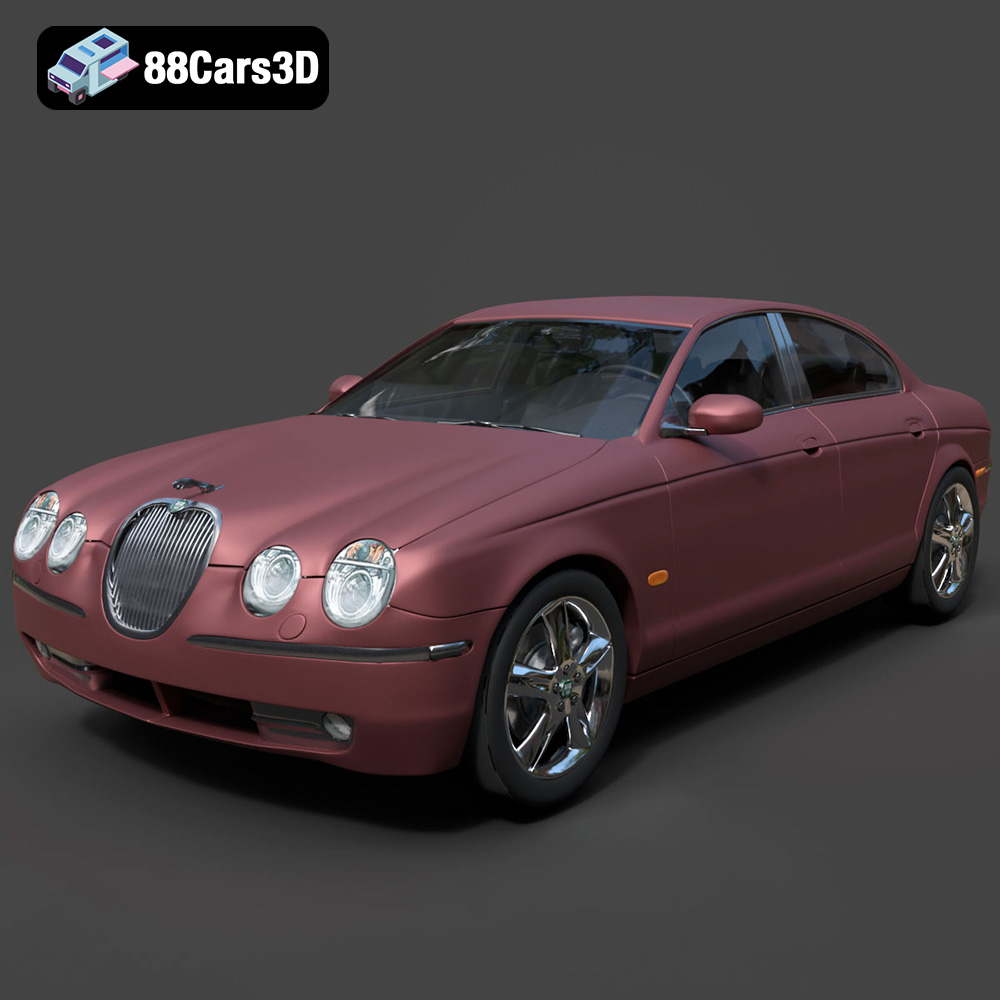
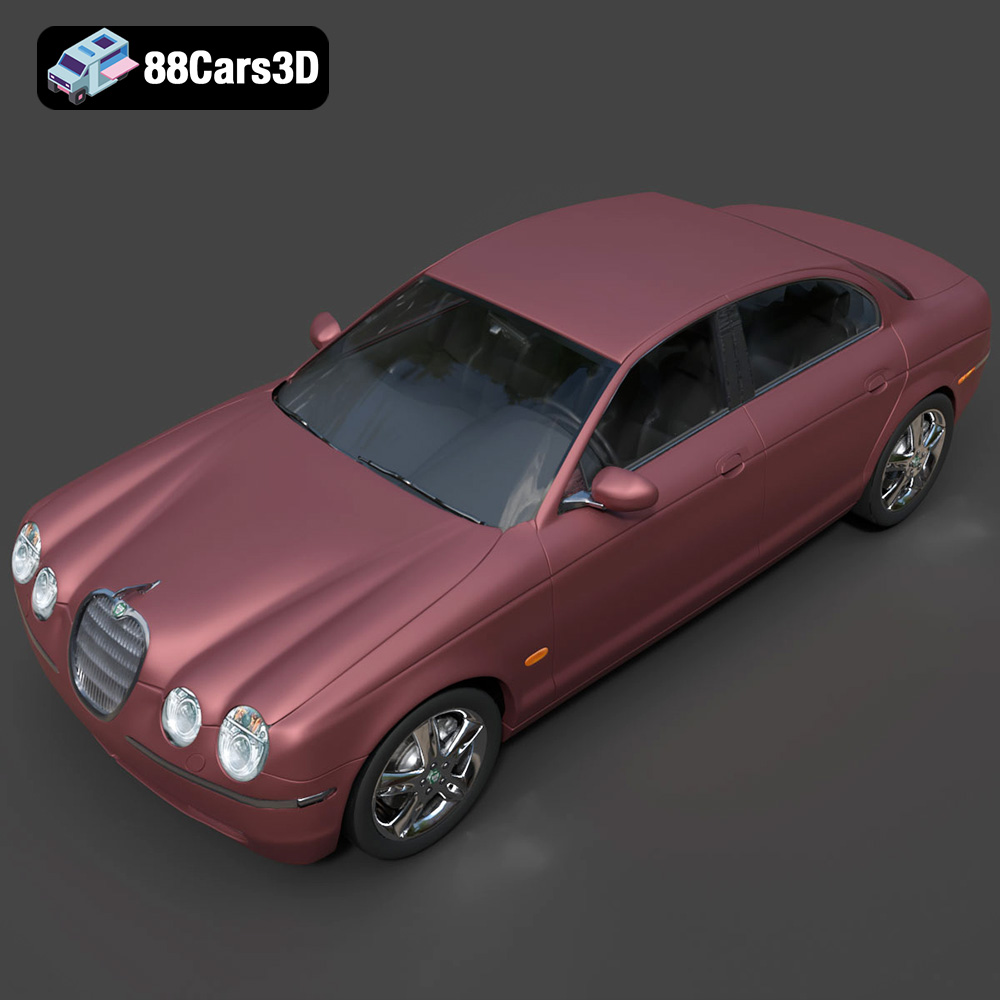
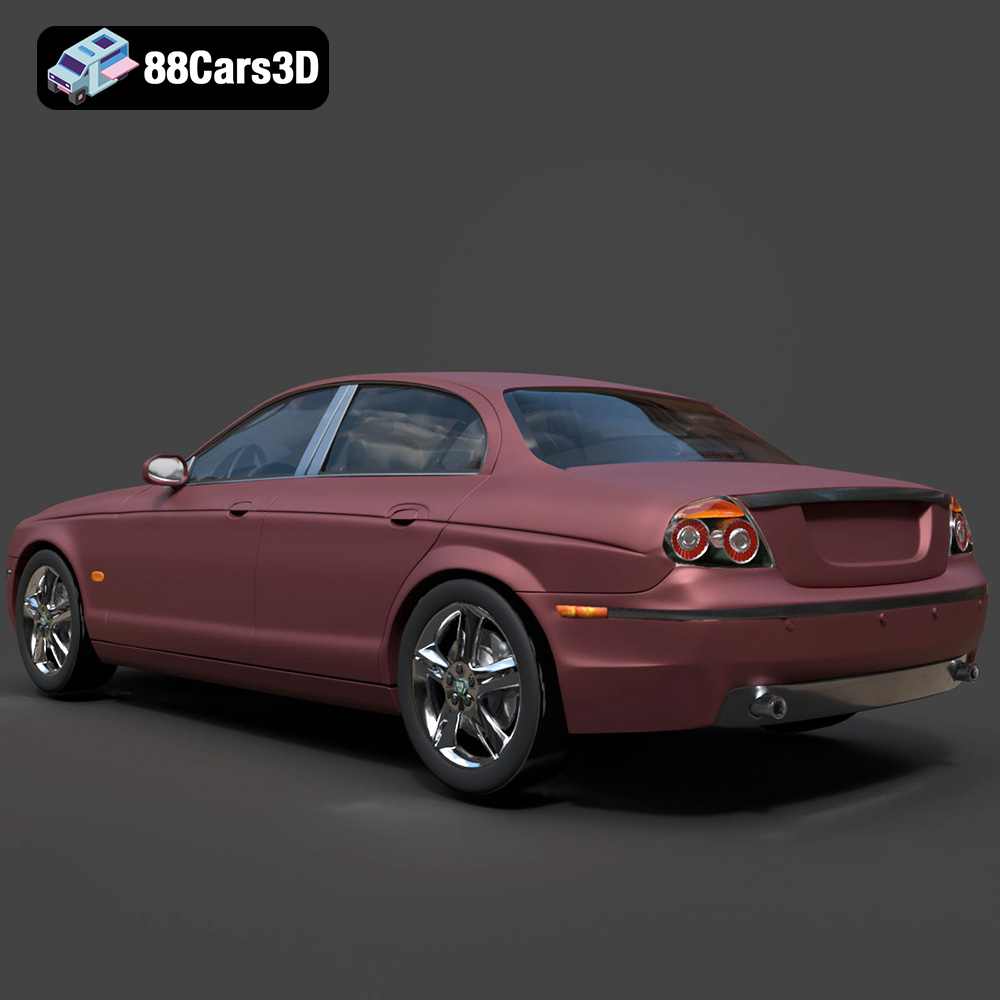
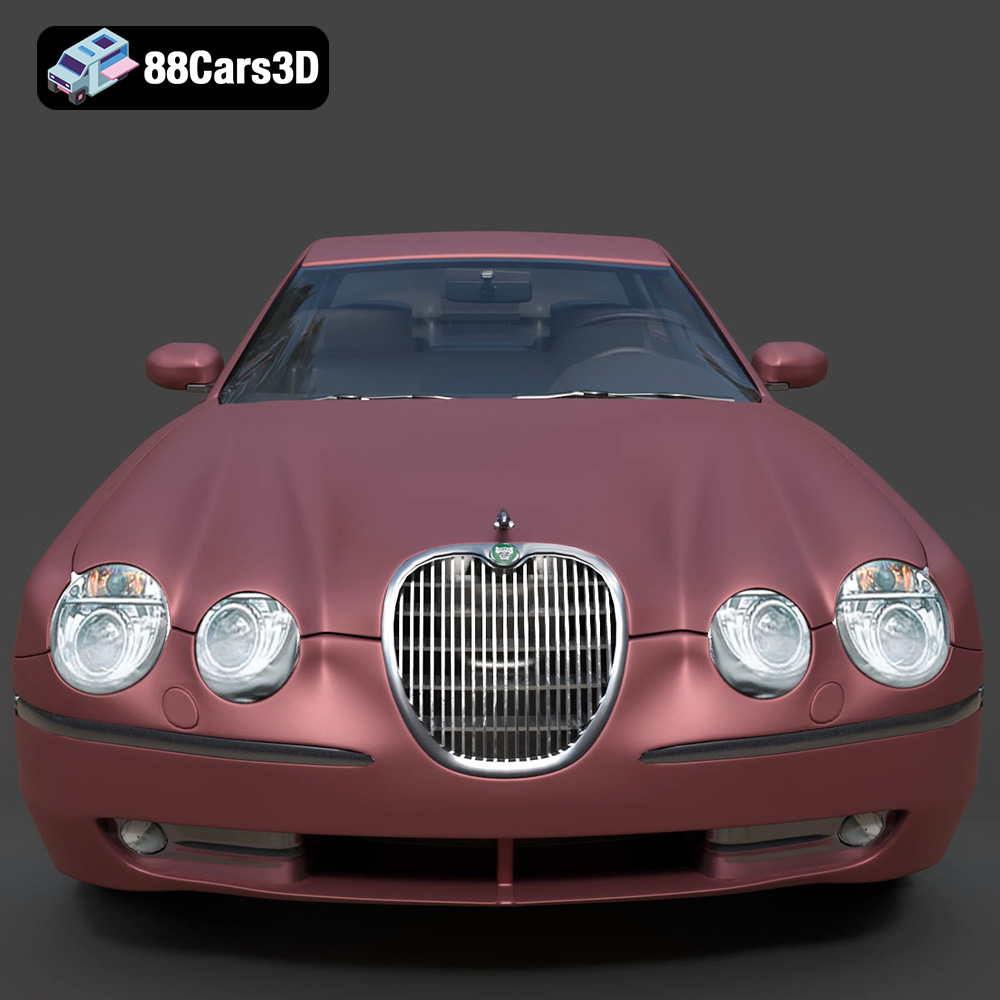
The pursuit of realism and efficiency drives innovation in 3D modeling, pushing the boundaries of what’s possible in digital environments. Whether you’re a seasoned professional or an aspiring enthusiast, having access to high-quality assets is paramount for achieving stunning results and streamlining your workflow. This is precisely where models like the **Jaguar S-Type Sedan 3D Model** truly shine, offering a meticulously crafted foundation for a myriad of professional applications. This particular model embodies the blend of artistic accuracy and technical optimization that modern 3D projects demand, providing an authentic replication of the iconic luxury sedan for any professional 3D library.
The Foundation of Digital Automotive Excellence: Understanding 3D Model File Formats
Choosing the right 3D model file format is not merely a technicality; it’s a strategic decision that dictates compatibility, functionality, and the overall efficiency of your workflow. Each format serves specific purposes, optimized for different software, engines, or end-use scenarios. Understanding their strengths and limitations is crucial for any professional working with 3D car models. The Jaguar S-Type Sedan 3D Model, for instance, comes equipped with a comprehensive suite of file types, ensuring maximum flexibility for diverse projects.
.blend – The Blender Powerhouse
The **.blend** file format is native to Blender, the popular open-source 3D creation suite. When you receive a .blend file, you’re getting a fully editable Blender scene, complete with the 3D model, its materials, textures, lighting setups, and even camera configurations. This makes it ideal for artists deeply integrated into the Blender ecosystem, allowing for immediate modification, animation, and rendering within a familiar environment. For the Jaguar S-Type Sedan 3D Model, the .blend file provides a complete project starting point, perfect for those who want to dive straight into customization or high-quality rendering using Cycles or Eevee.
.fbx – The Industry Workhorse for Real-Time
The Autodesk Filmbox (**.fbx**) format is arguably the most prevalent interchange format in the 3D industry, particularly favored for game development and animation pipelines. It excels at transferring 3D model data, including geometry, UVs, PBR textures, skeletal animations, and even blend shapes, between various software applications and game engines. For environments like Unreal Engine and Unity, an .fbx is often the go-to format due to its robust support for complex data structures and its optimized nature for real-time rendering. The Jaguar S-Type Sedan’s .fbx version is game-engine ready, providing a seamless import experience for creating immersive virtual driving experiences or integrating into larger game worlds.
.obj – The Universal Communicator
The Wavefront OBJ (**.obj**) format is one of the oldest and most universally supported 3D model formats. While it primarily handles geometry (vertices, normals, UVs, faces) and can reference external material (.mtl) files for basic color and texture mapping, it typically doesn’t support advanced features like animation, rigging, or complex material networks. However, its simplicity and widespread compatibility make it an excellent choice for static meshes, archival purposes, or as a base for re-topology and clean-up in almost any 3D software. The Jaguar S-Type Sedan 3D Model’s .obj variant ensures cross-software compatibility, making it accessible to virtually any 3D artist.
.glb – Streamlined for Web and AR/VR
The GLB (**.glb**) format is the binary version of the glTF (Graphics Language Transmission Format), designed for efficient transmission and loading of 3D scenes and models by applications. It packages all model data – geometry, materials, textures, and even animation – into a single, compact file. This optimization makes .glb an ideal choice for web-based 3D viewers, augmented reality (AR), virtual reality (VR) experiences, and mobile applications where file size and quick loading are critical. The Jaguar S-Type Sedan 3D Model’s .glb file is perfect for showcasing the vehicle in interactive online showrooms or integrating it into AR experiences.
.stl – Precision for Physical Manifestation
Stereolithography (**.stl**) is the standard file format for 3D printing. It represents a 3D model as a series of connected triangles, describing only the surface geometry without color, texture, or other model attributes. While it lacks visual fidelity features, its strength lies in its ability to define a manifold, watertight mesh suitable for physical fabrication. For designers looking to create a miniature prototype of the Jaguar S-Type or integrate it into a physical design study, the .stl file provides the necessary data for a clean print.
.ply – High-Fidelity for Analysis and Scan Data
The Polygon File Format (**.ply**) is designed to store 3D data from a variety of sources, including 3D scanners. It can store a wider range of information than .obj or .stl, including color, transparency, surface normals, and even confidence values for each vertex. This makes .ply a powerful format for scientific visualization, precision engineering, or when working with high-fidelity scan data where additional vertex attributes are crucial. For advanced analysis or highly detailed visualizations of the Jaguar S-Type’s mesh, the .ply format offers enhanced precision.
.unreal – Native Integration for Game Development
The **.unreal** format refers to assets specifically configured for Unreal Engine. While not a standalone file extension in the same vein as .fbx, it signifies a project-ready asset that has been optimized, set up with materials, collision meshes, LODs (Levels of Detail), and potentially even Blueprints within an Unreal Engine project. This dramatically accelerates development time, as much of the tedious import and setup work is already done. The Jaguar S-Type Sedan’s .unreal asset offers direct, plug-and-play functionality for developers working within Unreal Engine, promising efficiency and immediate integration.
.max – The Professional’s Choice for Arch-Viz and Animation
The **.max** file format is native to Autodesk 3ds Max, a powerful 3D modeling, animation, rendering, and visualization software. Like .blend files, .max files contain the complete scene, including geometry, materials, lighting, cameras, and animation data. It’s extensively used in architectural visualization, product design, and cinematic animation due to 3ds Max’s robust toolset and integration with high-end renderers like V-Ray and Corona. For those utilizing 3ds Max for complex rendering or animations involving the Jaguar S-Type, the .max file provides an editable project with full control over every aspect of the scene.
Each of these formats contributes to the comprehensive utility of the Jaguar S-Type Sedan 3D Model, allowing artists and developers to pick the perfect version for their specific software and project requirements. This versatility is a hallmark of premium 3D car models found on platforms like 88cars3d.com.
Crafting Realism: The Technical Nuances of the Jaguar S-Type Sedan 3D Model
Achieving photorealistic results in 3D visualization is a meticulous process, demanding not just artistic flair but also a deep understanding of technical parameters. The **Jaguar S-Type Sedan 3D Model** exemplifies this balance, offering a foundation built for precision and performance. Its construction prioritizes clean geometry, accurate proportions, and modern texturing techniques that collectively contribute to its exceptional visual fidelity.
Optimized Geometry and PBR Texturing
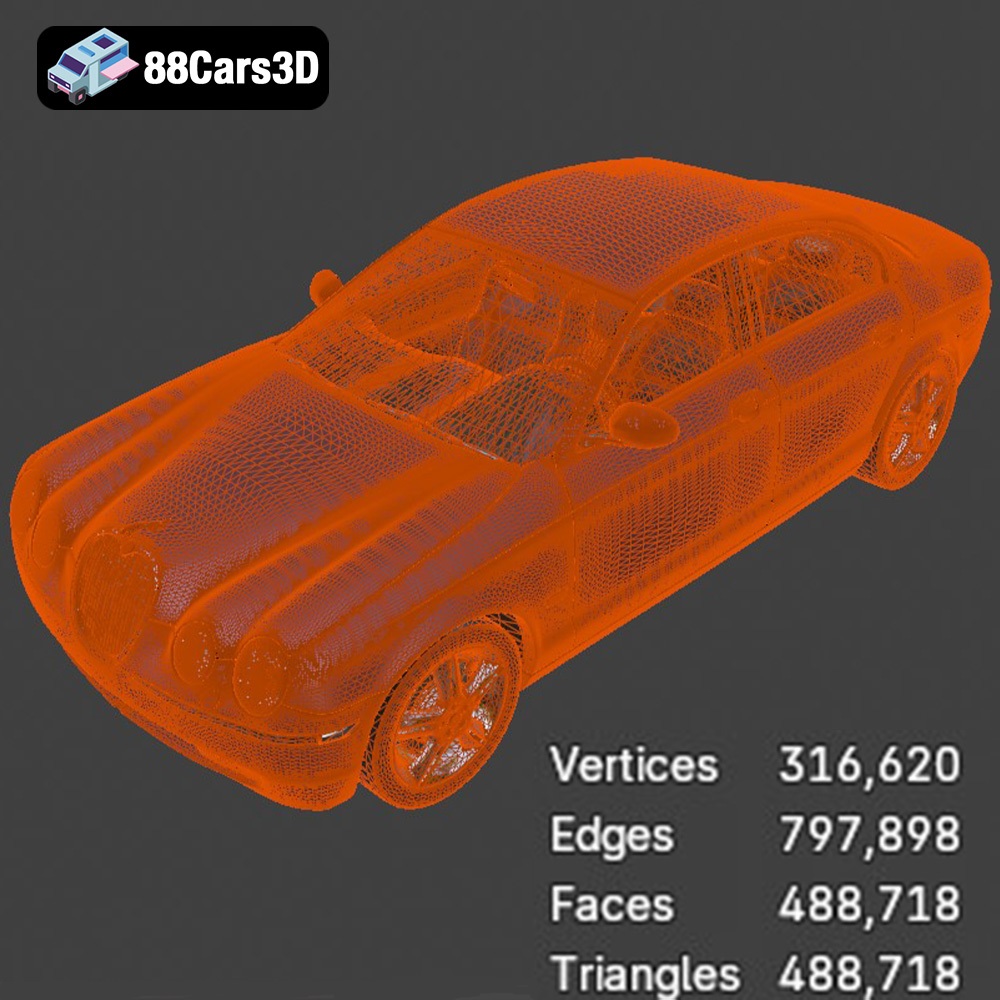
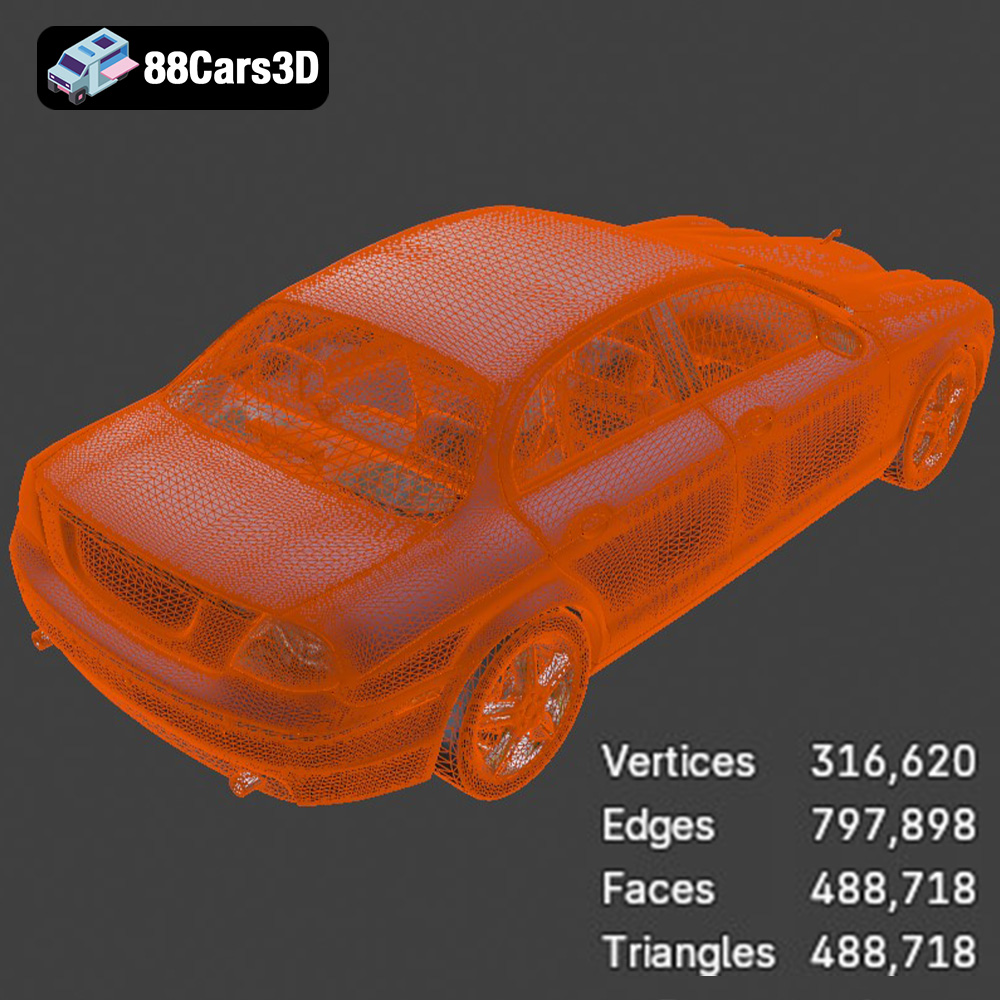
The backbone of any high-quality 3D model is its geometry. The Jaguar S-Type Sedan 3D Model features clean, optimized geometry, meaning it has an efficient poly count (number of polygons) that balances visual detail with performance. For rendering, a higher poly count allows for smoother curves and finer details, while for real-time applications like games or AR/VR, optimization ensures the model runs smoothly without taxing hardware. This model is carefully constructed with proper edge loops and quad-based topology where appropriate, facilitating deformations for animation and ensuring smooth subdivision if needed for ultra-close-up shots.
Accompanying this clean geometry are PBR (Physically Based Rendering) materials. PBR is a modern shading technique that accurately represents how light interacts with surfaces in the real world. Instead of simply painting a color, PBR textures define properties like albedo (base color), metallicness, roughness, normal maps (for surface detail without increasing geometry), and potentially emissive maps (for glowing parts). For the Jaguar S-Type, this means its paint gleams realistically, chrome elements reflect light with authentic brilliance, and tires exhibit a believable matte texture, all contributing to an immersive and authentic visualization. These PBR materials are key to the model’s ability to shine across different rendering engines and lighting conditions.
Accurate Proportions and Detail Fidelity
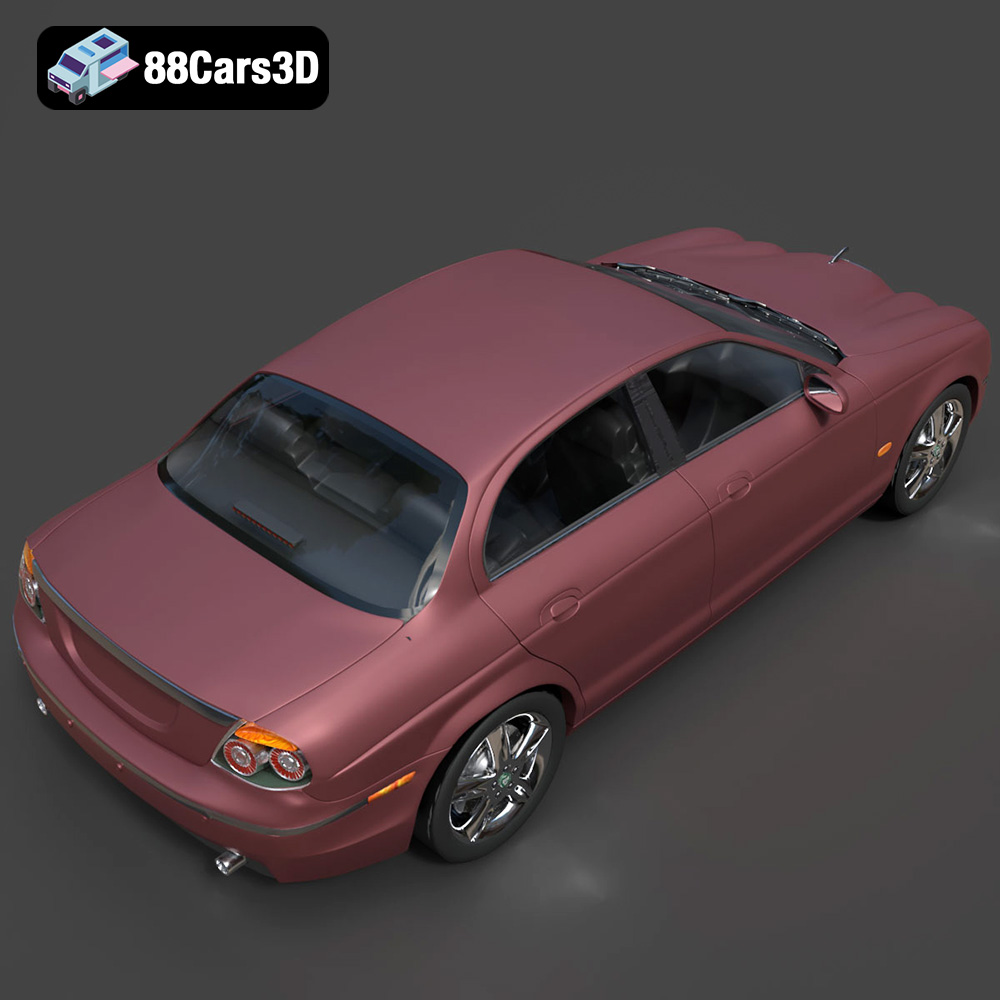
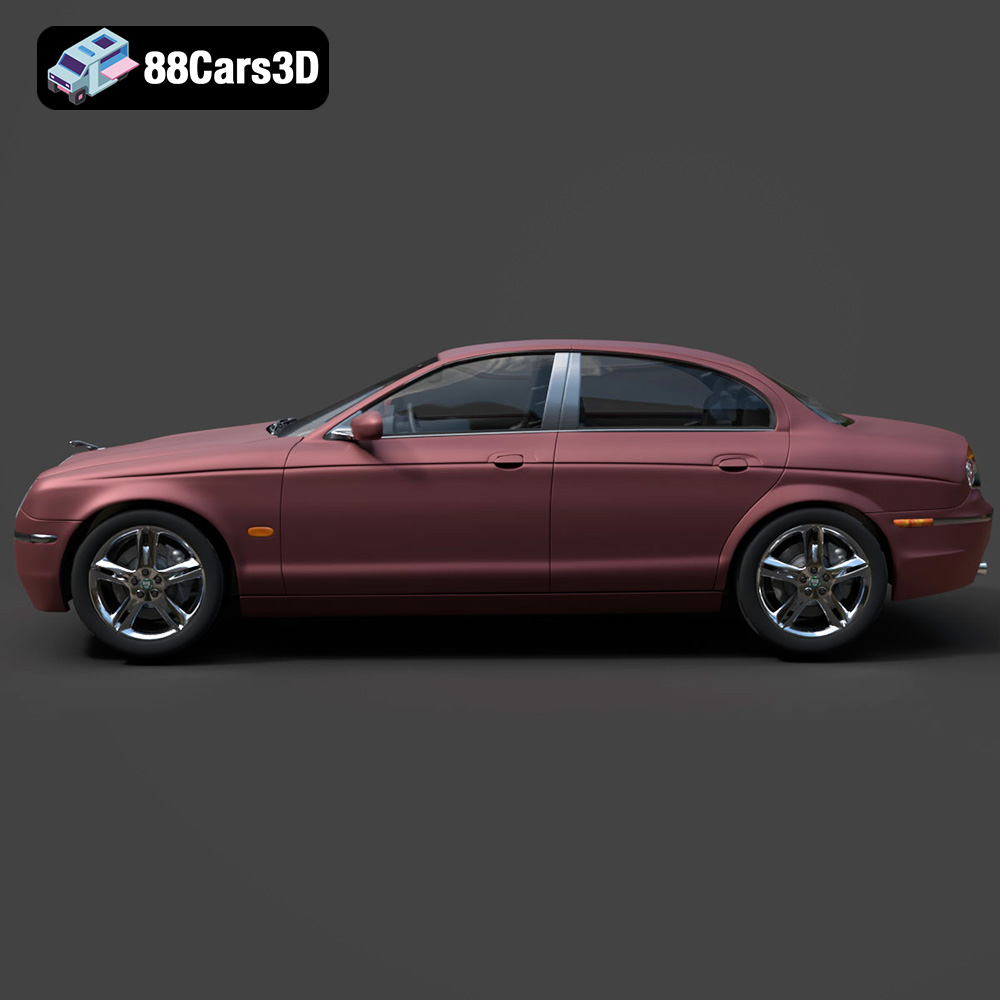
One of the most challenging aspects of recreating real-world vehicles in 3D is capturing their exact proportions and intricate details. The Jaguar S-Type Sedan 3D Model is “meticulously crafted to ensure accurate proportions and authentic replication.” This attention to detail extends beyond the overall silhouette to smaller, yet critical, elements like the grille, headlights, badges, and wheel designs. Every curve, panel gap, and vent is modeled with precision, relying on extensive real-world photographic references and blueprints. This dedication ensures that whether viewed from a distance or in a macro close-up, the model remains faithful to the iconic luxury sedan. Even interior elements, where applicable, are modeled and textured to maintain this high level of fidelity, creating a cohesive and believable representation suitable for interior shots or driving simulations.
UV Mapping and Material ID Organization
Effective UV mapping is indispensable for applying textures without distortion. The Jaguar S-Type Sedan 3D Model features well-organized, non-overlapping UV layouts, which are crucial for consistent texture application across different parts of the vehicle. Clean UVs prevent texture stretching or seams, allowing PBR materials to display flawlessly. Furthermore, the model likely incorporates logical material ID organization. This means that distinct parts of the car – body, windows, tires, brake calipers, interior fabrics – are assigned separate material slots or element IDs. This organization simplifies the texturing process, allows for easy material swapping, and makes customizing the car (e.g., changing paint color, wheel finish) a straightforward task for any artist. This foresight in setup saves countless hours in production and guarantees flexibility for diverse project requirements.
Integrating the Jaguar S-Type into Professional Workflows
The true value of a premium 3D asset lies in its seamless integration into diverse professional pipelines. The Jaguar S-Type Sedan 3D Model is engineered for this purpose, providing a robust foundation for everything from stunning cinematic renders to interactive real-time experiences.
High-Fidelity Automotive Rendering (3ds Max & V-Ray/Corona, Blender & Cycles/Eevee)
For cinematic quality and photorealistic imagery, the Jaguar S-Type 3D model is an invaluable asset. In software like 3ds Max, artists can import the .max file, which often comes with pre-configured materials and potentially even lighting setups. The workflow typically involves setting up a studio lighting environment using HDRI (High Dynamic Range Image) maps for realistic reflections and global illumination, complemented by targeted area lights to highlight specific contours. Camera angles are chosen to emphasize the car’s design, and depth of field is used to create a sense of scale and focus. With powerful renderers like V-Ray or Corona, subtle details like paint reflectivity, tire tread displacement, and interior stitching come to life. Similarly, Blender users can leverage the .blend file directly, taking advantage of Cycles for unbiased ray tracing or Eevee for real-time feedback with stunning results. This workflow is critical for automotive advertising, high-end product visualizations, and motion graphics, where every pixel counts in conveying luxury and performance. The “cinematic rendering” suitability of the Jaguar S-Type makes it perfect for such demanding projects.
Real-Time Game Development (Unreal Engine & Unity)
The world of game development requires assets that are not only visually compelling but also highly optimized for performance. The Jaguar S-Type Sedan 3D Model excels here with its “game-engine ready” .fbx and .unreal formats. For Unreal Engine, developers can import the pre-configured .unreal asset or the .fbx, which handles geometry, PBR materials, and UVs seamlessly. Key steps include setting up appropriate Levels of Detail (LODs) to swap out simpler versions of the model at a distance, ensuring efficient rendering. Collision meshes are added for realistic physics interactions, and material instances are created for quick customization of colors or textures within the engine. In Unity, a similar process applies with the .fbx file, integrating the model into gameplay mechanics, AI pathfinding, and vehicle physics systems. The clean geometry and optimized PBR materials of the Jaguar S-Type ensure that it can be dropped into a real-time environment, whether for a racing game, an open-world simulation, or a driving school training module, without causing significant performance bottlenecks.
AR/VR and Interactive Experiences (Blender, Unity/Unreal, glTF)
Augmented Reality (AR) and Virtual Reality (VR) are transforming how we interact with digital content, offering immersive experiences that demand specialized 3D assets. The Jaguar S-Type Sedan 3D Model, with its .glb format, is ideally suited for these cutting-edge applications. For web-based AR/VR, the .glb (glTF binary) format is lightweight and efficient, enabling quick loading and smooth interaction directly in a browser or on mobile devices. Developers can use engines like Unity or Unreal to build AR/VR applications, importing the optimized .fbx or .unreal versions, and then deploying to platforms like Meta Quest, HoloLens, or mobile AR kits. The model’s “optimized for AR/VR” nature means it has been carefully prepared to meet the strict performance requirements of these interactive environments, ensuring a fluid and realistic presence whether you’re virtually test-driving the car or placing it in your living room through an AR app. This makes it a powerful tool for interactive product showcases and virtual showrooms.
Beyond Visualization: Advanced Applications
The utility of a meticulously crafted 3D car model extends far beyond traditional rendering and game development. It serves as a versatile tool across various industries, addressing unique technical and creative challenges.
Architectural Visualization and Scene Integration
In architectural visualization (arch-viz), vehicles are not merely background elements; they are crucial components for grounding a scene in reality, conveying scale, and enhancing aesthetic appeal. Placing a high-quality 3D car model like the Jaguar S-Type Sedan into a rendering of a luxury home, a bustling street, or a new dealership showroom instantly adds context, lifestyle, and a sense of realism. The presence of a recognizable luxury vehicle can elevate the perceived value and sophistication of the architectural project itself. Artists can easily import the .max or .blend files into their arch-viz scenes, using its PBR materials to ensure it integrates seamlessly with the scene’s lighting environment. The model’s accurate proportions ensure it looks natural in relation to buildings and other environmental elements, creating a cohesive and believable visual narrative.
3D Printing and Prototyping
The physical manifestation of digital designs is a rapidly growing field, and the **Jaguar S-Type Sedan 3D Model** facilitates this with its dedicated .stl format. For designers, engineers, or hobbyists, the .stl file provides a solid, manifold mesh suitable for direct 3D printing. This allows for the creation of physical scale models, rapid prototyping of custom parts, or even generating physical mock-ups for design reviews. While .stl files lack color and texture, the precision of the model’s geometry ensures that the printed object accurately reflects the S-Type’s iconic shape and details. Considerations for 3D printing include ensuring appropriate wall thickness and preparing the model for the specific printing technology (FDM, SLA, SLS), but the clean mesh of this asset provides an excellent starting point for any physical reproduction.
Vehicle Simulations and Training
High-fidelity 3D car models are indispensable for advanced vehicle simulations, driver training programs, and autonomous vehicle research. In these contexts, accuracy is paramount – not just visual accuracy, but also the structural and physical properties of the model. The **Jaguar S-Type Sedan 3D Model**, with its “clean, optimized geometry” and authentic replication, provides a robust base for integrating sophisticated physics engines. Whether it’s for a professional driving simulator used to train emergency services, a virtual environment for testing advanced driver-assistance systems (ADAS), or an educational platform demonstrating automotive mechanics, the model’s detailed construction allows for realistic collision detection, accurate vehicle dynamics, and believable visual feedback. The .fbx and .unreal formats are particularly relevant here, facilitating integration into simulation platforms that demand real-time performance and dynamic interactivity.
Why Choose Premium 3D Car Models from 88cars3d.com?
In the competitive world of 3D content creation, quality, efficiency, and versatility are the pillars of success. Sourcing premium 3D car models is not just about aesthetics; it’s an investment in your project’s success and your professional reputation.
The Value of Production-Ready Assets
Time is a precious commodity in any production pipeline. Creating a highly detailed, production-ready 3D car model from scratch can take hundreds of hours, demanding specialized skills in modeling, sculpting, UV mapping, and PBR texturing. By opting for a professional asset like the Jaguar S-Type Sedan 3D Model from 88cars3d.com, artists and studios gain immediate access to a “meticulously crafted” asset. This means clean, optimized geometry, professionally prepared PBR materials, and a diverse range of file formats, ready to be dropped directly into your project. This significantly reduces development time, cuts costs, and frees up resources to focus on creative direction and other critical aspects of your project. The guarantee of quality ensures consistency and reliability across all your digital endeavors.
Versatility Across Industries
The demands of various industries on 3D assets are diverse. A model used in a high-end cinematic render might need different optimizations than one used in a mobile AR experience. Premium 3D car models are designed with this versatility in mind. The Jaguar S-Type Sedan 3D Model’s comprehensive suite of file formats – .blend, .fbx, .obj, .glb, .stl, .ply, .unreal, and .max – ensures that it can serve multiple masters. Whether you’re an automotive designer, a game developer, an arch-viz artist, or an AR/VR content creator, this single asset provides the flexibility to meet your specific technical requirements without compromising on visual quality. This adaptability makes 88cars3d.com a go-to resource for professionals seeking robust and future-proof 3D car models.
Conclusion
The pursuit of photorealism and immersive experiences in 3D visualization continues to drive innovation, placing a premium on high-quality, technically sound assets. The **Jaguar S-Type Sedan 3D Model** stands as a prime example of excellence in this domain, offering a blend of meticulous design, authentic replication, and broad technical compatibility. Its optimized geometry, PBR materials, and diverse file format support make it an indispensable tool for a wide array of professional applications – from high-fidelity automotive rendering and real-time game development to cutting-edge AR/VR experiences and precise 3D printing.
By investing in production-ready 3D car models from trusted sources like 88cars3d.com, artists and developers can significantly enhance their workflows, reduce development time, and elevate the quality of their final output. The Jaguar S-Type Sedan 3D Model isn’t just a digital representation of a classic vehicle; it’s a versatile foundation for your next groundbreaking project. Explore this exceptional model and countless other premium 3D car models designed to power your creative visions, available now on 88cars3d.com.
Featured 3D Model
Jaguar S-Type Sedan 3D Model
Experience automotive visualization excellence with this detailed 3D model of the Jaguar S-Type Sedan. This asset is meticulously crafted to ensure accurate proportions and authentic replication of the iconic luxury sedan, making it an essential addition to any professional 3D library.
This model features clean, optimized geometry suitable for demanding production environments. All components, including the exterior body, wheels, and interior elements, are realistically textured and mapped using PBR (Physically Based Rendering) materials. The structure is built with precision, providing an efficient foundation for rigging, animation, and close-up visualizations.
The Jaguar S-Type Sedan 3D model is ideal for a wide range of creative and professional applications, including cinematic rendering, automotive advertising, real-time game development (optimized for Unreal Engine and Unity), architectural visualization, interactive AR/VR experiences, and high-fidelity vehicle simulations.
Provided File Formats:
- .blend – Editable Blender file with materials and lighting setup
- .fbx – Game-engine ready format for Unreal Engine and Unity
- .obj – Standard 3D model format compatible with all major software
- .glb – Optimized for AR/VR and web-based visualization
- .stl – Suitable for 3D printing and prototyping
- .ply – Detailed polygon mesh for analysis and visualization
- .unreal – Pre-configured for Unreal Engine use
- .max – Editable 3ds Max file for rendering and animation
Tags: .jaguar, .stype, .sedan, .luxurycar, .car3dmodel, .rendering, .simulation, .gameasset, .arvr, .blend, .fbx, .obj, .glb, .stl, .ply, .unreal, .max
Tags:
.jaguar, .stype, .sedan, .luxurycar, .car3dmodel, .rendering, .simulation, .gameasset, .arvr, .blend, .fbx, .obj, .glb, .stl, .ply, .unreal, .max
$18.99
Product Image Gallery