In the dynamic world of 3D visualization, the demand for hyper-realistic and functionally versatile assets is ever-growing. From blockbuster game titles and cinematic sequences to cutting-edge architectural presentations and interactive training modules, the backbone of any compelling project lies in the quality of its foundational 3D models. Automotive models, in particular, present a unique challenge due to their intricate designs, reflective surfaces, and the expectation of photographic accuracy. Artists and developers are constantly seeking not just aesthetically pleasing models, but those engineered with precision for diverse professional pipelines.
The journey from concept to a fully rendered or real-time interactive vehicle is complex, requiring expertise in modeling, texturing, optimization, and software-specific configurations. High-quality 3D car models are not merely visual representations; they are technical marvels that must adhere to strict polygon budgets, clean UV layouts, and physically-based rendering (PBR) material standards to deliver consistent results across various platforms. This meticulous attention to detail is precisely what defines a premium asset.
For those engaged in projects demanding such excellence, the availability of pre-engineered, professional-grade models can be a game-changer. Imagine needing to populate an urban architectural scene or develop a new racing simulation, where every vehicle needs to look and perform flawlessly. This is where assets like the Mercedes-Benz S500 2022 3D Model from 88cars3d.com truly shine. It’s a prime example of a meticulously crafted vehicle asset designed to integrate seamlessly into the most demanding professional workflows, delivering both stunning visual fidelity and robust technical underpinnings.
Understanding 3D Model File Formats
The versatility of a 3D model often hinges on the range and quality of its provided file formats. Each format serves a specific purpose, optimized for different software, engines, or end-use scenarios. Understanding these distinctions is crucial for anyone working with 3D car models, ensuring smooth integration and optimal performance within their chosen pipeline. The Mercedes-Benz S500 2022 3D Model, for instance, comes equipped with a comprehensive suite of formats, each tailored for a particular professional application.
.blend – The Blender Powerhouse
The .blend file format is native to Blender, a powerful open-source 3D creation suite. When a model is provided in .blend, it typically means a fully editable scene is included, complete with mesh data, materials, textures, lighting setups, and even animation rigs if applicable. For artists working primarily in Blender, this format offers the most flexibility for customization, allowing for modifications to geometry, material tweaks, scene composition, and rendering directly within their preferred environment. It ensures that all aspects of the original creation are preserved and accessible.
.fbx – The Universal Pipeline Workhorse
The .fbx (Filmbox) format is perhaps the most widely used interchange format in 3D production, especially prevalent in game development. It’s ideal for transferring models between different software applications and is a staple for real-time engines like Unreal Engine and Unity. FBX files can store a vast array of data, including mesh, materials (often with PBR texture references), animations, skinning, and camera information. Its robustness and broad compatibility make it indispensable for collaborative workflows and for deploying assets into interactive environments where efficiency and fidelity are paramount.
.obj – The Foundation for Cross-Compatibility
The .obj (Wavefront OBJ) format is a universal, open standard for 3D geometry data. It’s revered for its simplicity and near-universal compatibility across almost all 3D software. While it primarily stores geometric information (vertices, UVs, normals), materials are typically referenced via a separate .mtl (material template library) file. OBJ is an excellent choice when you need a clean mesh that can be imported into virtually any 3D package for further texturing, rendering, or modification. It acts as a reliable fallback or a starting point for complex asset pipelines.
.glb – Optimized for AR, VR, and Web
The .glb (GL Transmission Format Binary) format is a modern, efficient, and increasingly popular format, particularly optimized for web-based 3D, Augmented Reality (AR), and Virtual Reality (VR) applications. It bundles the 3D model, textures, and animations into a single, compact binary file, making it incredibly fast to load and display. GLB’s efficiency and support for PBR materials make it perfect for interactive web experiences, mobile AR apps, and immersive VR environments where file size and performance are critical considerations.
.stl – Precision for 3D Printing
The .stl (Stereolithography) format is the standard for 3D printing. It represents a 3D model as a series of connected triangles, describing only the surface geometry of an object. STL files are used by 3D printers to understand the shape of an object and generate the necessary toolpaths for printing. While it doesn’t store color or material information, its precise representation of geometry is essential for physical prototyping and manufacturing. For the Mercedes-Benz S500 2022 3D Model, an STL version allows for physical scale models or custom parts to be fabricated.
.ply – Comprehensive Mesh Data for Analysis
The .ply (Polygon File Format or Stanford Triangle Format) is another common format for storing 3D data, particularly useful for scanned data and academic applications. It can store a wider range of properties than OBJ, including color, transparency, and normal vectors per vertex or face, and can handle both triangular and polygonal meshes. PLY is often used in fields requiring precise mesh data for analysis, simulation, or high-fidelity visualization where comprehensive geometric and attribute information is paramount.
.unreal – Engine-Ready for Real-Time
A dedicated .unreal file, or a highly optimized FBX package specifically configured for Unreal Engine, signifies a model that is truly “engine-ready.” This often means the asset has been properly scaled, collision meshes might be pre-generated, materials are set up with Unreal’s PBR shaders, and UV channels are correctly configured for lightmaps and texture tiling. For developers working with Unreal Engine, this format drastically reduces setup time, allowing for immediate integration into game development or real-time architectural visualization projects.
.max – The 3ds Max Professional Standard
The .max file is the native project format for Autodesk 3ds Max, a leading software in architectural visualization, cinematic rendering, and professional animation. Like .blend, a .max file provides a fully editable scene, preserving all aspects of the model’s creation within 3ds Max, including complex modifiers, V-Ray or Corona render setups, lighting, cameras, and animation data. For professionals entrenched in the Autodesk ecosystem, this format offers unparalleled control and flexibility for high-end rendering and detailed modifications.
The Art and Science of High-Fidelity Automotive Rendering
Achieving breathtaking realism in automotive rendering is a highly sought-after skill, critical for marketing, design reviews, and cinematic productions. It transcends merely placing a model in a scene; it involves a profound understanding of light, materials, and composition. The Mercedes-Benz S500 2022 3D Model is engineered to meet these exacting standards, providing a solid foundation for stunning visual outcomes.
Physically Based Rendering (PBR) Workflows
At the heart of modern rendering lies the PBR workflow. This approach simulates how light interacts with surfaces in the real world, producing consistent and accurate results across various lighting conditions. For a luxury sedan like the Mercedes-Benz S500, PBR materials are indispensable. This means that textures for paint, chrome, glass, and leather are created using maps like Albedo (or Base Color), Normal, Roughness, Metallic, and Ambient Occlusion. These maps dictate how light is absorbed, reflected, and scattered, resulting in realistic gloss, metallic sheen, and subtle surface imperfections. The provided PBR-configured materials ensure that the car’s paint gleams authentically, the chrome trim reflects its environment precisely, and the interior leather exhibits a lifelike tactile quality, whether rendered in V-Ray, Corona, Arnold, or Redshift.
Interior and Exterior Detailing for Cinematic Quality
A premium 3D car model doesn’t cut corners on detail. The Mercedes-Benz S500 2022 3D Model exemplifies this with its complex interior structure, which includes a fully modeled dashboard layout, intricate seating, and accurate trim elements. Such detail is crucial for close-up shots in animations or high-resolution stills for marketing. On the exterior, attention to subtleties like panel gaps, headlight intricacies, badging, and tire treads elevate the model from a basic representation to a photorealistic asset. Clean topology, meaning efficient and organized polygon flow, is vital here, not just for aesthetic smoothness but also for efficient deformation during animation or subdivision for even higher fidelity.
Lighting and Environment Integration
The best 3D model can still fall flat without proper lighting. For automotive renders, high dynamic range imaging (HDRI) environments are frequently used to capture real-world lighting conditions, providing realistic reflections and ambient light. Integrating the Mercedes-Benz S500 3D Model into such environments involves careful placement, camera angles, and rendering settings. Tools within 3ds Max and Blender allow artists to fine-tune reflections, shadows, and global illumination to match the desired mood and realism, ensuring the vehicle sits naturally within any digital scene, be it an urban street or a serene countryside.
Optimizing 3D Car Models for Real-Time Game Engines
The demands of real-time environments, such as those found in game development or interactive simulations, are distinctly different from offline rendering. Here, performance is paramount, requiring meticulously optimized game assets that balance visual fidelity with strict polygon budgets and draw call limits. The Mercedes-Benz S500 2022 3D Model is specifically designed with these considerations in mind, making it an excellent choice for AAA titles and other interactive experiences.
Poly Count and LOD Management
Game engines thrive on efficiency. High poly counts, while great for cinematic renders, can cripple real-time performance. Professional 3D car models for games undergo rigorous optimization to achieve a balanced poly count suitable for interactive frame rates without sacrificing visual detail. This often involves techniques like retopology and creating Level of Detail (LOD) models. LODs are simplified versions of the model that automatically switch based on the camera’s distance, ensuring that distant vehicles consume fewer resources while close-up vehicles retain their high detail. The Mercedes-Benz S500 model’s “clean, optimized geometry” is a direct testament to this engineering, ensuring smooth performance in game engines like Unreal and Unity.
Efficient UV Mapping and PBR Texturing for Games
Proper UV mapping is non-negotiable for game assets. Clean, non-overlapping UVs are essential for applying textures without distortion and for generating efficient lightmaps. In game engines, PBR texturing is crucial for consistent visual quality. The Mercedes-Benz S500 3D Model’s PBR materials translate directly into game engines, allowing its realistic paint, chrome, and interior textures to shine. Furthermore, game-specific optimizations often include texture atlasing (combining multiple textures into one larger sheet) to reduce draw calls and memory footprint, and using compressed texture formats for faster loading times.
Engine-Specific Integration (Unreal Engine & Unity)
Having formats like .fbx and .unreal specifically configured for Unreal Engine and Unity is a significant advantage. This means the model can be imported directly, often with materials largely pre-set, saving developers countless hours. For Unreal Engine, this might include correctly configured static meshes, material instances with exposed parameters for easy customization, and sometimes even pre-generated collision meshes. Similarly, for Unity, the FBX import pipeline is robust, allowing for quick setup of PBR materials and prefabs. Such assets accelerate development, allowing teams to focus on gameplay and interactive elements rather than asset preparation.
Beyond Visualization: Expanding Use Cases for Premium 3D Vehicles
The utility of high-quality 3D car models extends far beyond traditional rendering and game development. As technology advances, these assets are becoming foundational elements for a myriad of cutting-edge applications, from immersive augmented and virtual reality experiences to intricate industrial simulations and personalized 3D printing projects. The Mercedes-Benz S500 2022 3D Model’s robust design and multiple file formats make it exceptionally versatile across these emerging fields.
Augmented Reality (AR) and Virtual Reality (VR) Experiences
AR and VR demand highly optimized, yet visually rich, 3D assets to create convincing immersive environments. Whether it’s a virtual showroom allowing customers to explore a car’s interior in VR, or an AR application that places a realistic Mercedes-Benz S500 on your driveway via a smartphone, the model needs to perform flawlessly. The .glb format, specifically designed for web, AR, and VR, provides an efficient, bundled solution for fast loading and rendering in these demanding real-time contexts. Clean geometry and PBR materials are vital to maintain the illusion of reality within these interactive platforms, ensuring the virtual vehicle looks as impressive as its real-world counterpart.
Interactive Training Simulations and Automotive Design Reviews
In industries like automotive manufacturing and maintenance, interactive training simulations offer significant advantages over traditional methods. High-fidelity 3D models allow for realistic simulations of vehicle inspection, assembly, or repair procedures. Imagine engineers conducting design reviews in a collaborative VR space, examining every detail of the Mercedes-Benz S500 2022 3D Model before physical prototyping begins. The precision and detail of the model enable accurate representation of components and their interactions, facilitating better understanding and decision-making. These simulations save costs, reduce risks, and accelerate learning curves.
3D Printing and Rapid Prototyping
While often associated with digital realms, 3D car models also have a tangible presence. The inclusion of an .stl format for the Mercedes-Benz S500 2022 model unlocks its potential for 3D printing and rapid prototyping. Designers can print scale models for physical review, create custom parts, or even build intricate dioramas. The STL format ensures that the geometric integrity of the design is preserved, allowing for accurate physical reproductions. This blend of digital precision and physical manifestation offers unique opportunities for product development, collectibles, and educational tools.
Streamlining Your Workflow with Professional-Grade Assets
In any professional 3D production pipeline, time is a precious commodity. Creating a detailed 3D car model from scratch, especially one as intricate as a Mercedes-Benz S500, can take hundreds of hours of dedicated work from skilled artists. This extensive effort involves meticulous blueprint matching, precise modeling, complex UV unwrapping, PBR texture creation, and rigorous optimization. Investing in pre-made, high-quality assets offers a significant advantage, dramatically streamlining workflows and allowing teams to focus on creative direction and project execution rather than foundational asset creation.
Saving Time and Resources
The primary benefit of acquiring professional 3D car models like those found on 88cars3d.com is the immense time and resource savings. Instead of dedicating valuable artist time to modeling a vehicle from the ground up, teams can instantly integrate a ready-to-use asset. This is particularly crucial for projects with tight deadlines, where every hour saved translates directly into cost efficiency. The Mercedes-Benz S500 2022 3D Model, with its pre-configured materials, optimized geometry, and multiple file formats, is designed to be a plug-and-play solution, minimizing setup time across various software and engines.
Ensuring Consistency and Quality
Professional-grade assets adhere to industry best practices in terms of topology, UVs, and PBR material setup. This ensures a consistent level of quality across all assets in a project, preventing visual disparities that can arise from inconsistent asset creation. When an asset like the Mercedes-Benz S500 2022 3D Model is “designed from the ground up to meet professional standards,” it guarantees a certain level of fidelity and technical robustness that might be difficult to achieve consistently across multiple artists or with less experienced teams. This consistency is vital for maintaining brand image in marketing materials or delivering a polished experience in a game or simulation.
Facilitating Iteration and Experimentation
With a strong foundation of high-quality assets, artists and developers have more freedom to experiment and iterate on their creative visions. Instead of being bogged down by basic asset creation, they can spend more time on scene composition, lighting scenarios, animation sequences, or interactive mechanics. For example, quickly swapping out different car models or experimenting with various color schemes on the Mercedes-Benz S500 3D Model becomes a simple task, allowing for more creative exploration and refinement without significant overhead. This agility is invaluable in the iterative design processes common in game development and architectural visualization.
Choosing the Right 3D Car Models for Your Projects
Selecting the appropriate 3D car models is a critical decision that can significantly impact the visual quality, performance, and overall success of a project. With a multitude of options available, understanding what to look for beyond just the aesthetic appeal is key. Factors such as geometry, texturing, optimization, and format compatibility are paramount, especially when working on professional-grade productions. The Mercedes-Benz S500 2022 3D Model serves as an excellent benchmark for what to seek in a premium asset.
Assessing Model Fidelity and Accuracy
For projects requiring realism, fidelity and accuracy are non-negotiable. This means scrutinizing the model’s adherence to the real-world vehicle’s design, proportions, and intricate details. Look for clean, smooth surfaces, accurate panel gaps, and detailed components like headlights, grilles, and wheels. The product description for the Mercedes-Benz S500 2022 3D Model highlights “exceptional accuracy” and “capturing the luxurious styling and sophisticated details,” which are strong indicators of a high-fidelity asset. A fully modeled interior, as described for this S500 model, further underscores its suitability for close-up shots or interactive experiences.
Evaluating Technical Specifications and Optimization
Beyond aesthetics, examine the technical underpinnings. Is the geometry clean and optimized? This refers to efficient polygon distribution without unnecessary complexity or errors, which is crucial for performance. Are the UVs properly laid out? Clean UVs are essential for seamless texture application and lightmap generation. Are the materials configured for PBR workflows? This ensures realistic light interaction and compatibility across renderers and game engines. For real-time applications, investigate poly count suitability and whether LODs are included or easily achievable. The Mercedes-Benz S500 2022 3D Model explicitly states “clean, optimized geometry” and “PBR workflows,” indicating it meets these technical requirements.
Considering File Format Versatility and Support
The range of provided file formats speaks volumes about a model’s versatility. A comprehensive suite of formats, as offered with the Mercedes-Benz S500 2022 3D Model (.blend, .fbx, .obj, .glb, .stl, .ply, .unreal, .max), ensures maximum compatibility with diverse software and pipelines. Consider your primary software (Blender, 3ds Max), target platform (Unreal, Unity, AR/VR web), and specific needs (3D printing). Choosing a model that natively supports your ecosystem minimizes conversion issues and speeds up integration. Reputable marketplaces like 88cars3d.com prioritize providing assets with such extensive format support to cater to a broad professional audience.
Conclusion
The landscape of 3D visualization and interactive media continues to evolve at a rapid pace, pushing the boundaries of realism and immersion. For professionals navigating this exciting domain, the quality and versatility of their 3D assets are paramount. High-quality 3D car models are no longer just static representations; they are dynamic tools capable of driving complex simulations, enriching gaming experiences, and forming the visual core of cutting-edge AR/VR applications.
From the intricate details required for stunning automotive rendering to the precise optimization needed for seamless game assets, the technical demands are considerable. Understanding the nuances of file formats, PBR workflows, poly count management, and engine-specific integrations is crucial for achieving professional-grade results. Assets like the Mercedes-Benz S500 2022 3D Model exemplify the standard required in today’s demanding production environments, offering a meticulously crafted solution that saves time, ensures quality, and expands creative possibilities across diverse projects.
By leveraging such premium models, artists and developers can significantly streamline their workflows, allowing them to focus on the creative vision and unique aspects of their projects, rather than the arduous task of foundational asset creation. Whether your project involves cinematic visualization, interactive training, or immersive AR/VR, investing in technically robust and visually stunning assets from trusted sources like 88cars3d.com is a strategic move towards achieving unparalleled excellence.
Featured 3D Model
Mercedes-Benz S500 2022 3D Model
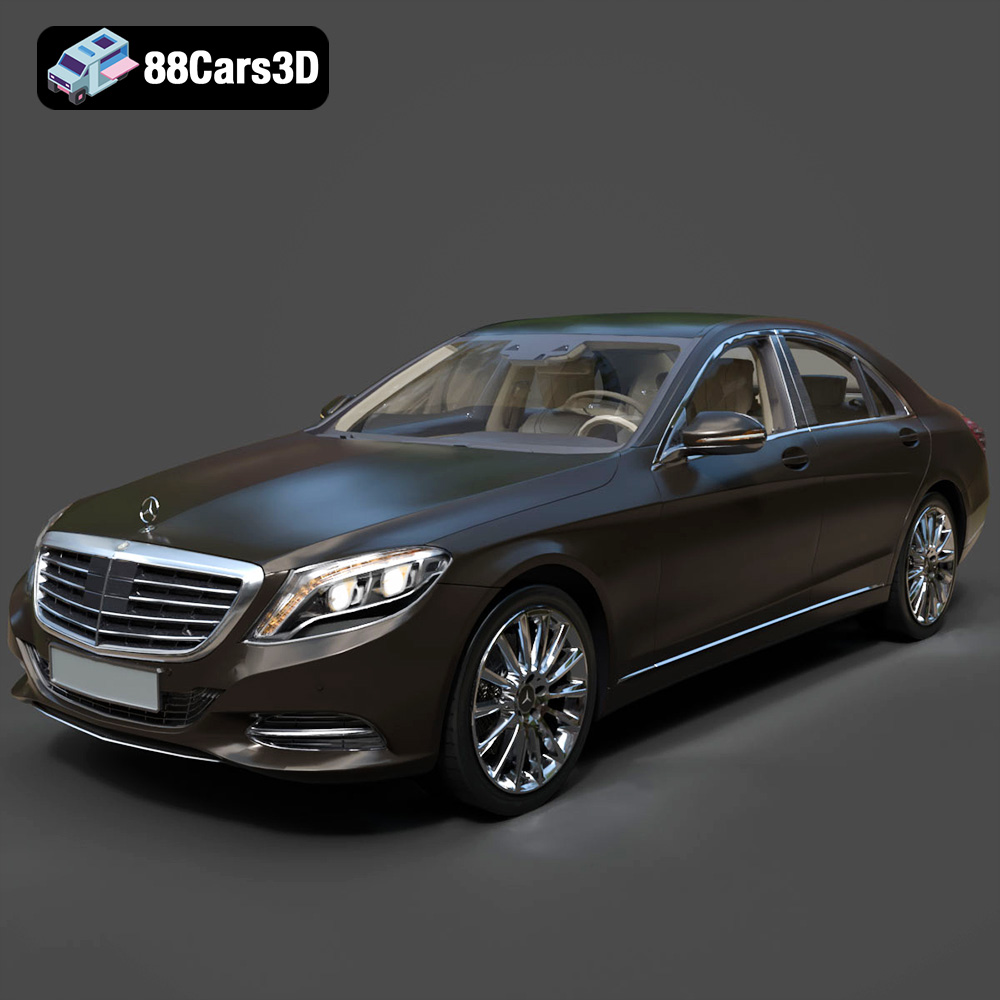
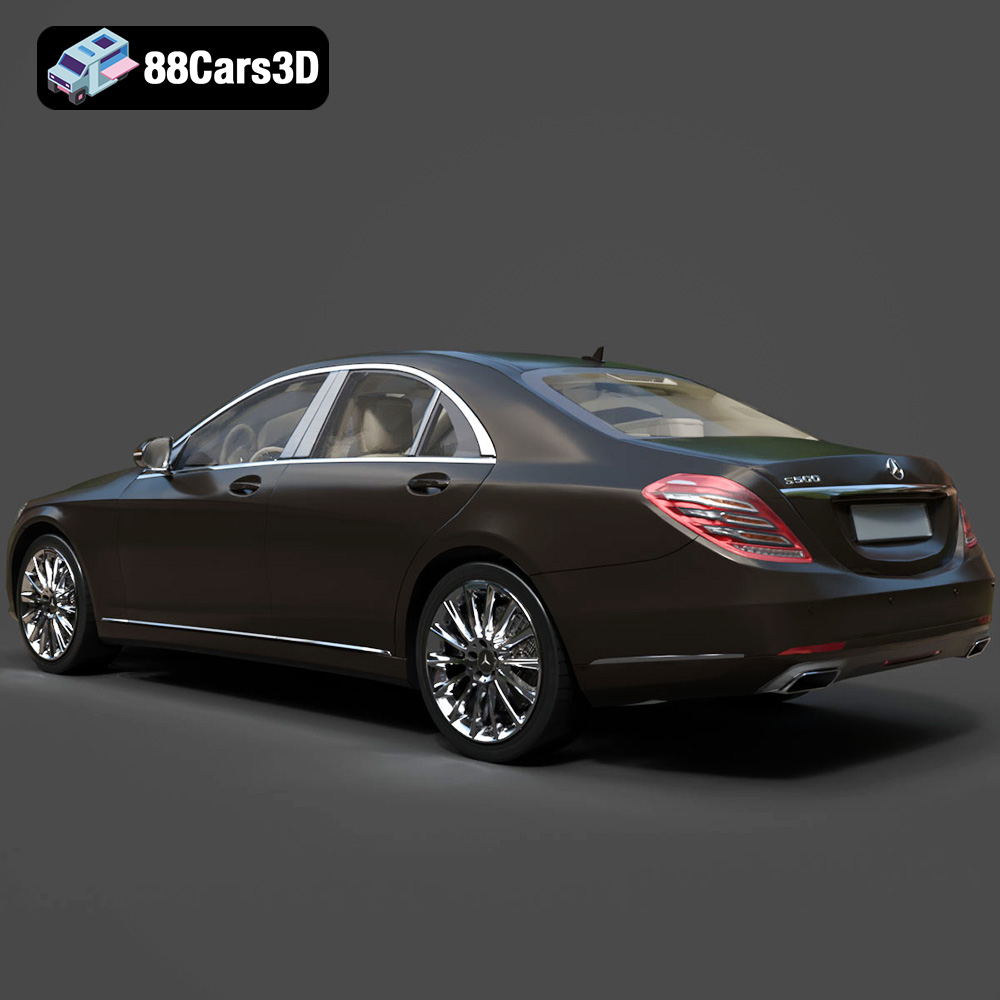
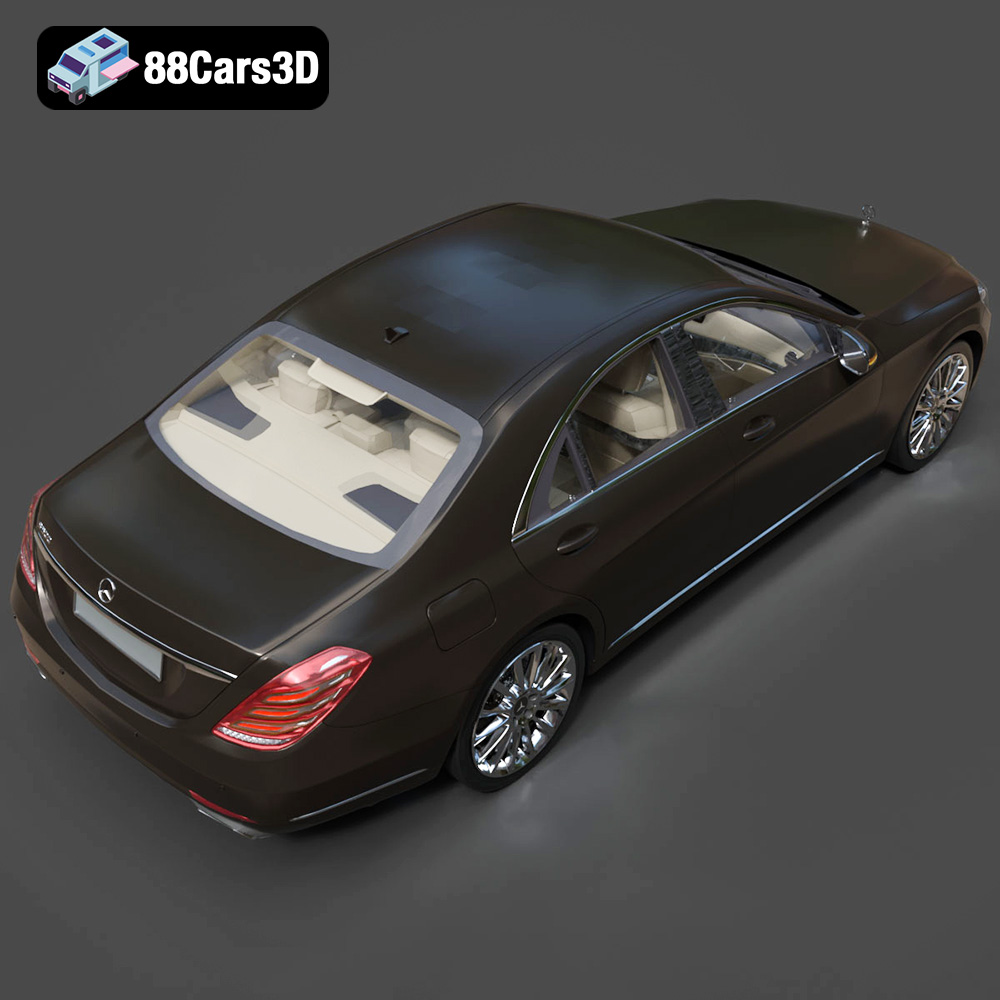
The Mercedes-Benz S500 2022 3D Model delivers exceptional accuracy, capturing the luxurious styling and sophisticated details of the flagship sedan. Designed from the ground up to meet professional standards, this model is a crucial asset for visualizations requiring precision and detailed vehicle representation. This asset features clean, optimized geometry suitable for real-time applications and demanding cinematic renders. Materials are configured for PBR workflows, ensuring surfaces like the chrome trim, paint finish, and interior leather render with impressive fidelity across various lighting conditions. The complex interior structure, including dashboard layout and seating, is fully modeled. Ideal for a wide range of uses, the Mercedes-Benz S500 model is perfect for architectural visualization (ArchViz) projects, interactive training simulations, AAA game development, augmented reality (AR), virtual reality (VR) experiences, and large-scale rendering pipelines.
$19.99
Product Image Gallery