Driving Digital Excellence: The Indispensable Role of Professional 3D Car Models in Modern Workflows
In the rapidly evolving landscape of digital content creation, the demand for high-quality, versatile 3D assets has never been greater. From captivating cinematic renders and immersive game worlds to precise architectural visualizations and critical simulation environments, the underlying quality of a 3D model directly impacts the final output. For professionals across industries, sourcing reliable, well-crafted assets is paramount to efficiency and artistic integrity.
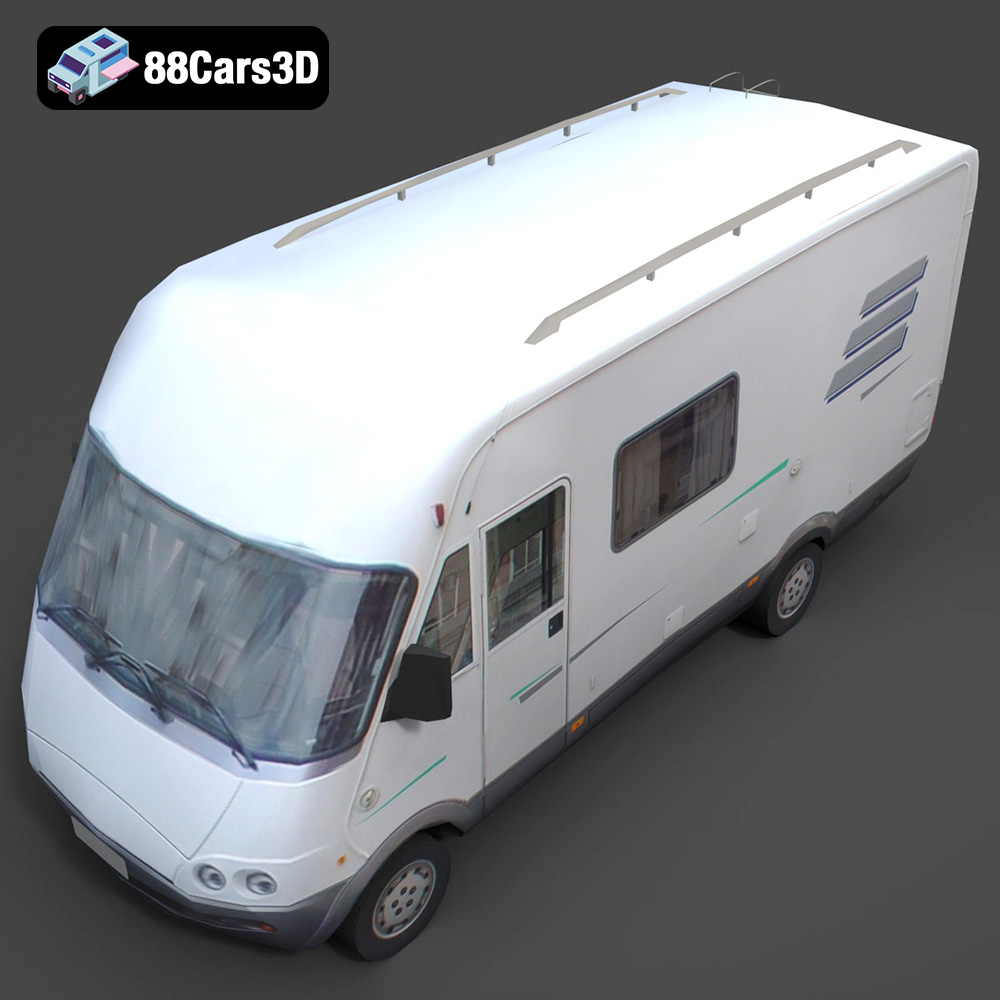
Today, we delve into the world of automotive 3D modeling, specifically focusing on the foundational elements that make a digital vehicle truly production-ready. We’ll explore technical considerations, professional workflows, and real-world applications, illustrating how a meticulously designed asset can elevate projects across diverse sectors. Throughout this discussion, we’ll reference a prime example of such an asset: the Generic Mini-Bus 3D Model, available on 88cars3d.com. This model encapsulates the versatility and attention to detail that professionals seek, providing a robust starting point for a myriad of digital ventures.
Understanding 3D Model File Formats: Choosing the Right Tool for the Job
The choice of file format for a 3D model is far more than a technicality; it’s a strategic decision that impacts compatibility, performance, and workflow efficiency. Different formats are optimized for distinct purposes, from real-time game engines to detailed rendering and even physical 3D printing. Understanding their nuances is crucial for any professional integrating 3D car models into their projects. The Generic Mini-Bus 3D Model, for instance, offers a comprehensive suite of formats, ensuring maximum adaptability.
.blend – The Native Blender Ecosystem
The .blend format is Blender’s native file type, offering a complete, editable scene with all materials, textures, lighting, and animation data embedded. For artists and studios primarily working within Blender, this format provides the most flexibility for modifications, rigging, and rendering using Cycles or Eevee. Its strength lies in preserving the entire creative context, making it ideal for iterative design and comprehensive project development without data loss during export/import cycles.
.fbx – The Industry Standard for Interoperability
.fbx (Filmbox) is arguably the most widely used interchange format in the 3D industry, especially crucial for real-time applications like Unreal Engine and Unity, and even for transferring data between major DCC (Digital Content Creation) software. It supports geometry, materials, animations, cameras, and skeletal data. Its binary nature makes it efficient, though it sometimes requires careful attention to scale and axis settings during export and import to maintain consistency across platforms. The .fbx version of the Generic Mini-Bus is optimized for seamless integration into game development pipelines.
.obj – The Universal Geometry Carrier
The .obj (Wavefront OBJ) format is a universal standard for storing 3D geometry data. It’s a simple, text-based format that primarily describes vertices, faces, normals, and UV coordinates, with materials typically stored in an accompanying .mtl file. While it lacks support for animation or advanced scene data, its widespread compatibility makes it an excellent choice for basic mesh transfer between virtually any 3D software. For foundational asset exchange, the .obj version of the Mini-Bus ensures broad cross-software accessibility.
.glb – Optimized for AR, VR, and Web
.glb (GL Transmission Format Binary) is increasingly becoming the go-to format for AR, VR, and web-based 3D applications. It’s a binary container format that includes geometry, materials, textures, and animation in a single, self-contained file. This optimization minimizes file size and load times, making it perfect for interactive web viewers, immersive AR experiences on mobile devices, or lightweight VR environments. The .glb rendition of the Mini-Bus ensures performant and visually accurate presentation in these emerging digital spaces.
.stl – The Standard for 3D Printing
The .stl (Stereolithography) format is the ubiquitous standard for 3D printing. It represents a 3D model as a series of connected triangles, defining only the surface geometry without color, texture, or material information. For precise physical replication, the .stl version of the Generic Mini-Bus allows designers to produce tangible prototypes or scaled models, bridging the gap between digital design and physical fabrication.
.ply – Precision Mesh for CAD and Analysis
.ply (Polygon File Format) is another format for storing 3D data, particularly useful for scanned data, CAD models, and scientific applications where precision and detailed mesh information are critical. It can store a wider range of properties than .obj, including color per vertex, normal information, and confidence values. For engineers or analysts requiring a robust mesh for simulations or measurements, the .ply format offers a detailed representation suitable for such demanding workflows.
.unreal – Engine-Ready for Real-Time Environments
A specific .unreal file (often a .uasset or an exported package) indicates an asset directly prepared for Unreal Engine. This means materials, textures, collision meshes, and sometimes even LODs (Levels of Detail) are pre-configured within the engine’s proprietary format. This dramatically streamlines integration, reducing the setup time for game developers and real-time visualization specialists. The Generic Mini-Bus available in this format means it’s ready to drop directly into an Unreal project, saving hours of configuration.
.max – The 3ds Max Professional Environment
The .max format is the native file type for Autodesk 3ds Max. Like .blend, it contains the entire scene, including geometry, materials, textures, lighting, cameras, and animation data specific to the 3ds Max environment. This format is crucial for professionals who rely on 3ds Max for high-end rendering with V-Ray or Corona, complex animation rigging, or architectural visualization. The .max file for the Mini-Bus ensures full editability and compatibility for those operating within this powerful ecosystem.
The Anatomy of a Professional 3D Mini-Bus Model: A Deep Dive into the Generic Mini-Bus
When investing in 3D car models, especially for demanding professional applications, the underlying structure and technical specifications are as important as the visual appeal. A truly professional asset, such as the Generic Mini-Bus 3D Model from 88cars3d.com, is built with precision, optimization, and future scalability in mind. It goes beyond mere aesthetics to provide a robust foundation for any project.
Exterior Detailing and Authenticity
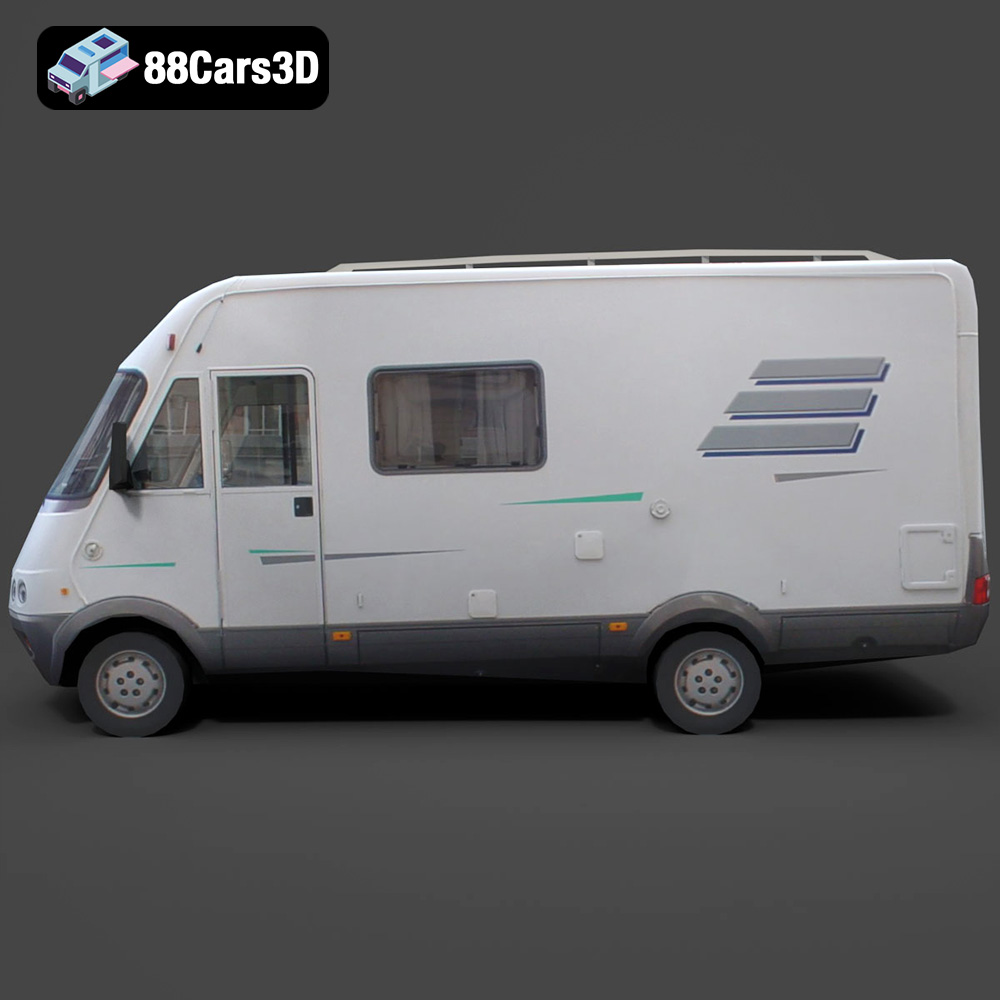
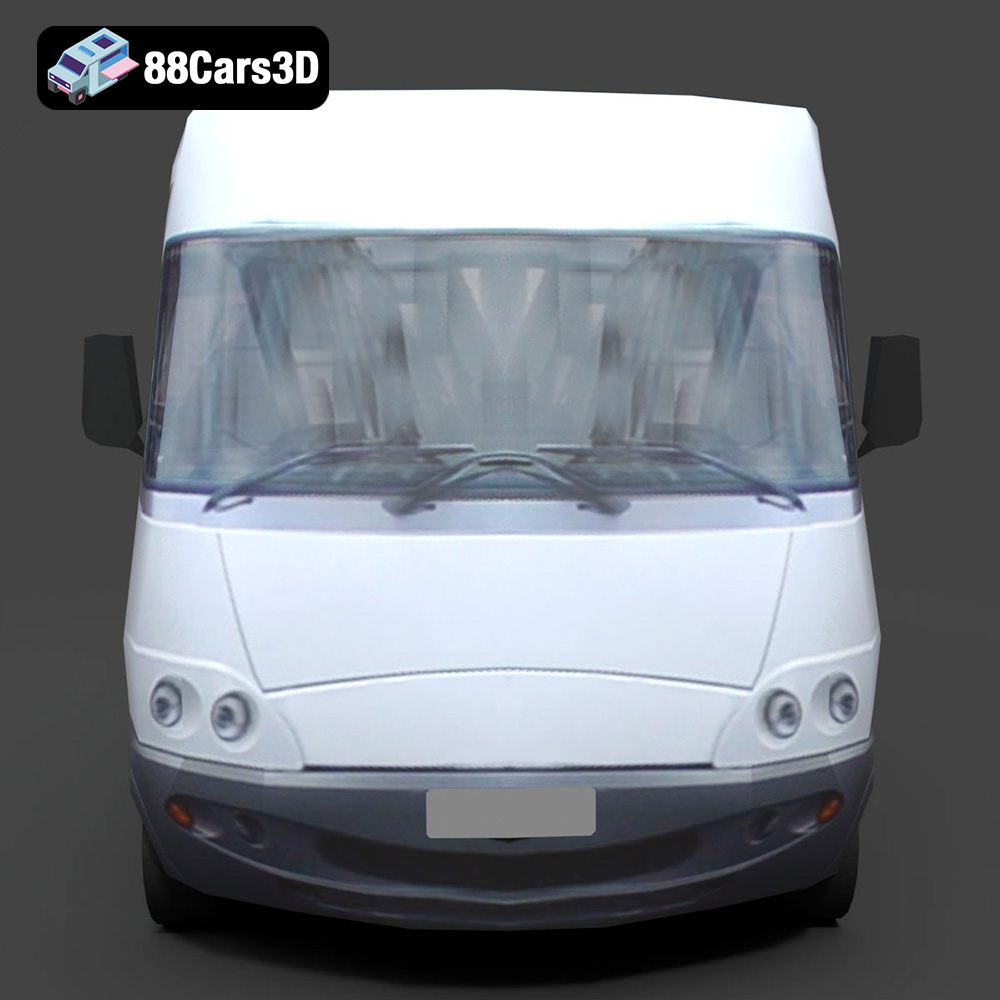
The exterior of any automotive model is its primary visual identifier. For the Generic Mini-Bus, meticulous attention has been paid to capturing the authentic body panels and chassis design typical of urban transport vehicles. This isn’t just about recreating shapes; it’s about understanding the subtle curvatures, panel gaps, and functional elements. Detailed headlights, taillights, and signal lights are included, not just as static geometry, but often with separated transparent materials ready for advanced lighting setups. Realistic windows and a windshield are modeled, prepared for dynamic tinting or reflectivity. Crucially, functional-looking passenger and driver doors are separated, prepped for animation, a vital feature for simulations or cinematic sequences. Robust wheels, with detailed rims and tires, complete the exterior, ensuring the vehicle feels grounded and substantial. Even subtle additions like a roof-mounted AC unit and accessible luggage rack elements contribute to its realism and versatility.
Interior Layout and Optimized Mechanics
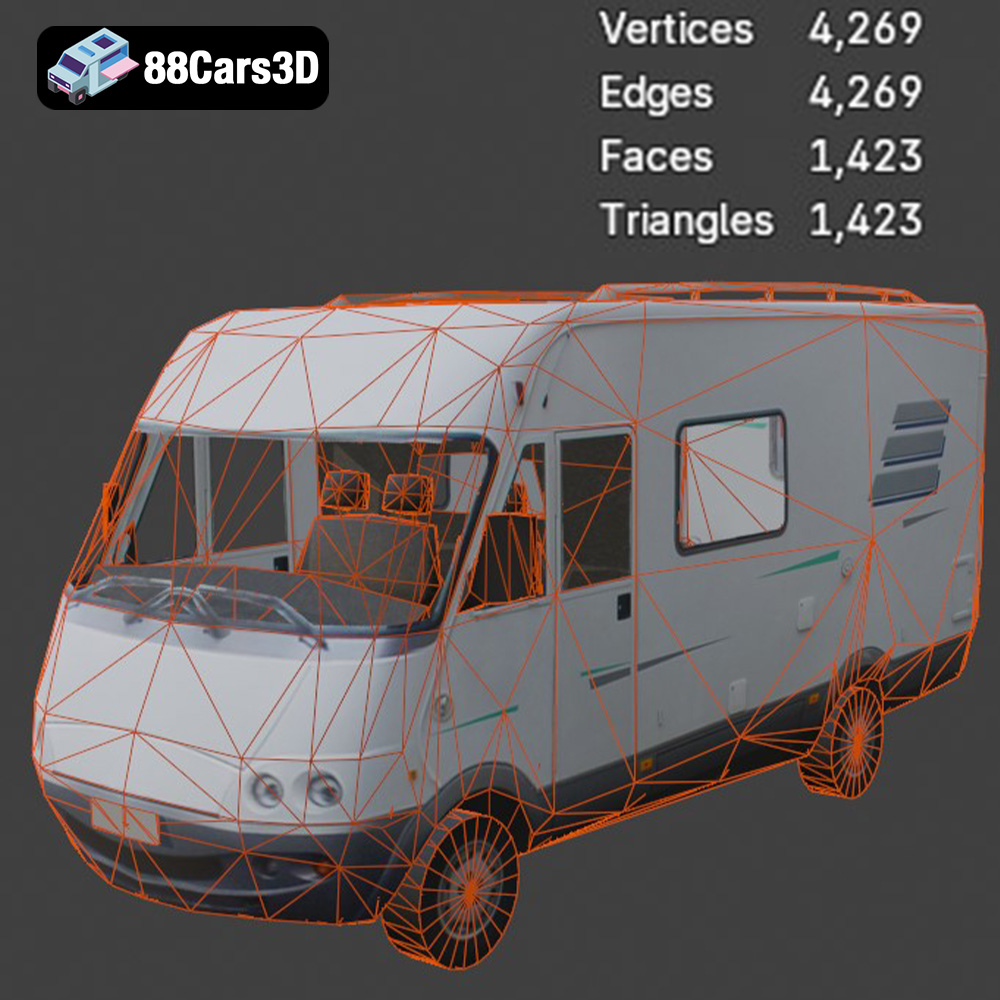
While often less visible, the interior and underbody details contribute significantly to the overall realism and utility of a 3D model. The Generic Mini-Bus features an optimized interior layout, including a driver cockpit with a detailed dashboard, steering wheel, and essential controls, alongside passenger seating rows. “Optimized” here means that polygons are judiciously used – enough detail for close-up renders and believable interiors, but not excessively high to bog down game engines. Similarly, the engine bay area includes basic mechanical components. These are typically optimized for external views, ensuring believability when visible through openings or in specific renders, without incurring the performance cost of a fully engineered engine. Underbody elements, such as suspension components and the exhaust system, are included where they would be visible, enhancing realism in animations or dynamic camera shots.
Technical Advantages: Precision and Performance
The true mark of a professional 3D model lies in its technical advantages. The Generic Mini-Bus boasts clean, quad-dominant topology. This is crucial for smooth subdivisions, preventing unwanted artifacts during rendering, and ensuring predictable deformations during rigging and animation. Accurate real-world scale is another non-negotiable feature, allowing for seamless integration into existing scenes, whether architectural visualizations or game environments, without constant scaling adjustments. A logically organized hierarchy with properly set pivots is foundational for easy rigging and animation. This means doors pivot correctly on their hinges, wheels rotate around their axes, and the entire vehicle can be effortlessly manipulated. Finally, efficient UV mapping ensures straightforward texture application, allowing artists to quickly apply custom liveries, decals, or material variations without wrestling with distorted or overlapping UVs. These technical underpinnings are what make the Mini-Bus a truly versatile and efficient asset for any digital production.
Streamlining Workflows: From Concept to Render with the Generic Mini-Bus
A professional 3D model’s value is truly realized when it seamlessly integrates into various production pipelines. The Generic Mini-Bus 3D Model exemplifies this, offering unparalleled flexibility across high-fidelity rendering, real-time game development, and emerging AR/VR applications.
Architectural Visualization & Cinematic Rendering with 3ds Max/Blender
For architectural visualization (arch-viz) artists and cinematic content creators, the Generic Mini-Bus acts as a vital prop to bring scenes to life. In software like 3ds Max or Blender, the .max or .blend files offer complete control. Artists can easily populate urban scenes, bus terminals, or streetscapes with this vehicle. The clean topology allows for smooth subdivisions, perfect for close-up renders using renderers like V-Ray, Corona, or Cycles. Material properties can be fine-tuned—adjusting the reflectivity of the body paint, the transparency and tint of the glass, or the subtle wear on the tires. The separated doors and properly set pivots are animation-ready, enabling dynamic sequences like passengers boarding or the bus driving through a bustling city, adding narrative depth to an architectural walkthrough or a product commercial. This precision makes it an ideal 3D car model for top-tier automotive rendering.
Game Development Integration with Unreal Engine/Unity
Game developers demand highly optimized yet visually rich assets. The Generic Mini-Bus meets this requirement through its game-ready .fbx and .unreal formats. Importing into engines like Unreal Engine or Unity is straightforward. Developers can leverage the efficient UV mapping for texture atlases and PBR (Physically Based Rendering) materials, ensuring consistent visual quality across different lighting conditions. The logical hierarchy simplifies rigging for physics-based driving mechanics or character entry/exit animations. For open-world games or simulation titles, the balanced detailing ensures it looks great both up close and at a distance. Furthermore, the model can be easily integrated with LOD (Levels of Detail) systems to manage performance by swapping out lower-polygon versions as the camera moves further away, a critical technique for maintaining high frame rates in complex game environments. This makes it a robust game asset.
AR/VR Experiences and Web Deployment via GLB
The rising prominence of Augmented Reality (AR), Virtual Reality (VR), and interactive web experiences necessitates models that are both visually compelling and highly performant. The .glb format of the Generic Mini-Bus is specifically optimized for these use cases. Its compact, single-file structure with embedded textures and materials makes it perfect for fast loading in browser-based viewers, mobile AR apps, or standalone VR headsets. Designers can integrate the Mini-Bus into interactive product configurators, virtual showrooms, or training simulations where users can explore the vehicle in a real-time, immersive environment. The clean geometry ensures smooth interaction and rendering performance on a variety of devices, opening up possibilities for new forms of engagement and visualization.
Beyond Visualization: Simulation, Training, and 3D Printing
The utility of a high-quality 3D car model extends far beyond simple visual representation. The Generic Mini-Bus 3D Model’s robust design and various file formats make it an invaluable asset for more analytical and tangible applications, demonstrating the comprehensive nature of modern 3D asset development.
Real-world Simulation and Training Modules
For industries focused on logistics, urban planning, or driver training, the Generic Mini-Bus offers a highly functional digital twin. In sophisticated simulation environments, this model can be integrated with physics engines to accurately replicate vehicle dynamics, including acceleration, braking, and steering. For driver training modules, the detailed interior and accurate external dimensions provide a realistic cockpit experience, allowing trainees to practice maneuvers, understand spatial awareness, and react to simulated traffic scenarios. Urban planners can utilize the model to analyze traffic flow, visualize public transport routes, or test the impact of new infrastructure projects. The clean topology and accurate scale are vital here, ensuring that simulations are based on precise geometric data, making it an ideal tool for serious simulation endeavors.
Prototyping and Physical Models via 3D Printing (STL)
The digital realm often intersects with the physical, and 3D printing provides that bridge. The .stl format included with the Generic Mini-Bus 3D Model makes it readily adaptable for physical output. Designers can prepare the model for 3D printing to create scale prototypes, architectural maquettes, or even collectibles. This is particularly useful for design reviews, where a physical model can offer a different perspective than a screen render, or for creating tangible assets for educational purposes. The model’s clean geometry ensures a smooth transition from digital mesh to physical object, minimizing common 3D printing issues like non-manifold geometry. From concept validation to producing detailed miniature replicas, the Mini-Bus can be easily converted into a high-fidelity physical asset.
Customization and Longevity of Your 3D Assets
Investing in a high-quality 3D car model is about more than just its immediate utility; it’s about its potential for adaptation and its long-term value. The Generic Mini-Bus 3D Model is designed with customization in mind, ensuring it remains relevant and useful across countless projects and evolving needs.
Material and Livery Customization
One of the most significant advantages of a well-structured 3D model is its ease of customization. The Generic Mini-Bus allows artists to effortlessly modify paint finishes, liveries, and graphics to match specific brands, company fleets, or project scenarios. Whether it’s applying a complex advertising wrap, changing the vehicle to a specific shade of public transport blue, or adding wear and tear for a post-apocalyptic scene, the efficient UV mapping and material separation make these tasks straightforward. Users can adjust material properties for metals (e.g., chrome, brushed aluminum), glass (e.g., tinted, reflective), rubber (e.g., tire tread), and plastics (e.g., interior components) to achieve any desired visual effect, from pristine showroom quality to weather-beaten utility. This level of control ensures the Mini-Bus can seamlessly integrate into diverse aesthetic requirements, making it a truly versatile 3D car model.
Future-Proofing Your Digital Investments
In the fast-paced world of digital content, asset longevity is key. A model like the Generic Mini-Bus, built with clean topology, real-world scale, and a comprehensive set of file formats, is inherently future-proof. Its clean foundation means it can be easily updated or re-textured for future rendering technologies or game engine iterations. The availability of multiple formats (.blend, .fbx, .obj, .glb, .stl, .ply, .unreal, .max) ensures compatibility with virtually any current or future software package. This means that an investment in such a robust 3D model today will continue to pay dividends years down the line, saving valuable production time and resources on future projects. Quality assets like those found on 88cars3d.com are not just purchases; they are strategic investments in a streamlined and successful workflow.
Conclusion: The Enduring Value of Professional 3D Car Models
The landscape of digital content creation demands assets that are not only visually striking but also technically robust and highly adaptable. As we’ve explored, a professional 3D car model like the Generic Mini-Bus serves as an indispensable tool across architectural visualization, cinematic rendering, game development, AR/VR, simulation, and even 3D printing. Its meticulous detailing, optimized geometry, and comprehensive file format support streamline workflows and unlock creative possibilities for professionals seeking excellence.
Investing in high-quality 3D car models fundamentally transforms project efficiency and output quality. The Generic Mini-Bus 3D Model, available on 88cars3d.com, stands as a testament to the power of well-crafted digital assets, offering versatility, performance, and a solid foundation for any digital endeavor. Whether you’re crafting an immersive game world, rendering a photorealistic advertisement, or building a critical training simulation, having access to such a versatile vehicle is an undeniable advantage. Explore the range of professional 3D car models and game assets at 88cars3d.com to elevate your next project.
Featured 3D Model
Generic Mini-Bus 3D Model
Experience the versatility and efficiency of our professional 3D model of a Mini-Bus. Designed with urban transport and passenger services in mind, this model features a clean, optimized geometry suitable for a wide range of applications. With balanced detailing and a realistic representation, it’s perfect for high-quality rendering, intricate animations, detailed simulations, and robust game development.
$21.99
Product Image Gallery