

Mastering Digital Automotive Design: A Deep Dive into High-Fidelity 3D Models
The digital realm has revolutionized how we perceive and interact with automotive design. From groundbreaking cinematic renders that blur the line between virtual and reality to immersive game experiences and innovative AR/VR applications, the demand for exceptionally detailed and versatile 3D car models is higher than ever. At the heart of these advancements lies the meticulous creation of digital assets that accurately reflect their real-world counterparts, capturing every curve, material, and mechanical nuance.
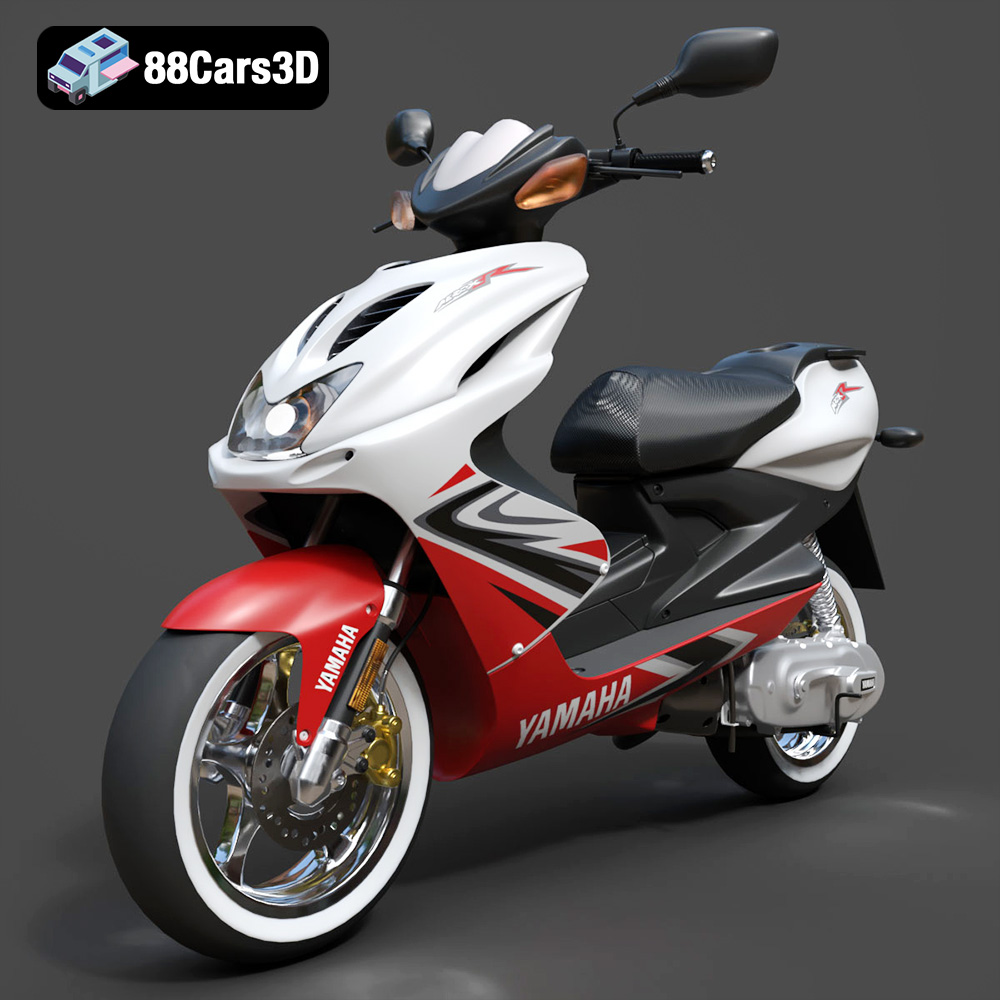
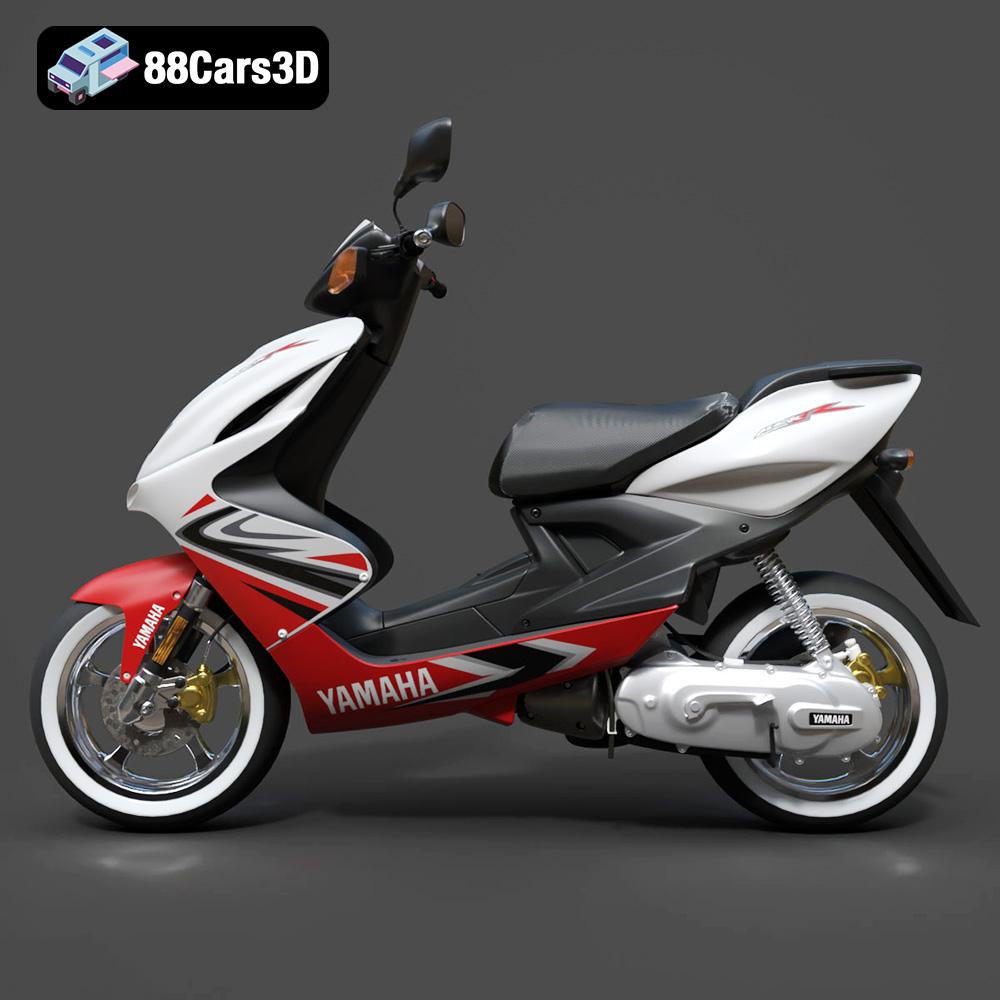
Today, we’re taking a closer look at what makes a premium 3D vehicle model indispensable for professionals across various industries. A perfect example of this precision and adaptability is the Yamaha Aerox R-002 2024 3D Model. This asset embodies the blend of artistic skill and technical proficiency required to deliver a high-quality, game-ready, and render-ready digital representation of a modern urban scooter, crucial for projects demanding accuracy and visual fidelity.
Understanding 3D Model File Formats: The Backbone of Digital Assets
Choosing the right file format for your 3D models is critical for ensuring compatibility, performance, and functionality across different software and platforms. The Yamaha Aerox R-002 2024 3D Model, like many professional assets available on 88cars3d.com, comes equipped with a comprehensive suite of formats, each serving distinct purposes. Understanding these formats is key to streamlining your workflow and maximizing the utility of your purchased assets.
.blend – The Native Blender Powerhouse
The .blend format is the native file type for Blender, a powerful and increasingly popular open-source 3D creation suite. When you receive a .blend file, you’re getting a fully editable Blender scene. This typically includes the model’s geometry, materials, textures, lighting setups, cameras, and even animations. For the Yamaha Aerox R-002, this means a complete project file where artists can tweak shaders, adjust lighting, modify the mesh, or extract specific components with ease. It offers maximum flexibility for artists primarily working within the Blender ecosystem, allowing for deep customization and iteration.
.fbx – The Industry Standard for Interoperability
.fbx (Filmbox) is a proprietary file format owned by Autodesk, widely recognized as the industry standard for 3D data exchange. Its strength lies in its ability to encapsulate a vast array of 3D data, including geometry, materials, textures, rigging, animation, and blend shapes, making it incredibly versatile. For game development, .fbx is often the go-to format for importing assets into engines like Unreal Engine and Unity due to its robust support for animations and hierarchies. The Yamaha Aerox R-002’s .fbx version is optimized for these real-time pipelines, ensuring a smooth transition into game environments with minimal setup.
.obj – The Universal Mesh Format
The .obj (Object) format is one of the oldest and most universally compatible 3D file formats. It primarily stores geometric data (vertices, normals, texture coordinates) and group information, often accompanied by a separate .mtl (material) file for basic material definitions. While it doesn’t support rigging or animation, its simplicity and widespread adoption make it an excellent choice for cross-software compatibility. If you need to import the Yamaha Aerox R-002 into less common 3D software or simply require the raw mesh data, .obj is your reliable fallback.
.glb – Optimized for AR, VR, and Web
.glb (GL Transmission Format Binary) is a modern, compact, and efficient 3D file format designed specifically for the web, augmented reality (AR), and virtual reality (VR) applications. It’s the binary version of glTF (GL Transmission Format), embedding all assets (models, textures, animations) into a single file. This self-contained nature makes .glb incredibly efficient for streaming and displaying 3D content in browsers or AR/VR viewers. The Yamaha Aerox R-002 in .glb format is perfectly suited for interactive web experiences, product configurators, or integrating the scooter into mobile AR applications.
.stl – Precision Mesh for 3D Printing
.stl (STereoLithography) is the standard file format for 3D printing and rapid prototyping. It represents a 3D model as a series of connected triangles, describing only the surface geometry of an object. It lacks color, material, or texture information, focusing solely on the shape. While the Yamaha Aerox R-002 3D model is primarily for digital visualization, providing an .stl version allows designers to physically prototype scale models of the scooter, valuable for concept validation or display purposes.
.ply – Detailed Polygon Mesh for Analysis
.ply (Polygon File Format or Stanford Triangle Format) is a versatile format for storing 3D data, often used in scientific and engineering applications, especially for data from 3D scanners. It can store not only geometry but also color, transparency, normals, and even confidence values for each vertex or face. The .ply format for the Yamaha Aerox R-002 is ideal for precision analysis, reverse engineering, or integrating the model into CAD pipelines where highly detailed and structured polygon data is essential.
.unreal – Engine-Ready for Real-Time Environments
The inclusion of a .unreal file signifies an asset specifically packaged and configured for direct use within Unreal Engine. This often means the model has already been imported, scaled, had its materials set up with PBR shaders, and potentially includes collision meshes, LODs (Levels of Detail), and other engine-specific optimizations. For the Yamaha Aerox R-002, a .unreal file represents a significant time-saver for game developers, offering a near plug-and-play solution for integrating this high-quality vehicle asset into their virtual worlds.
.max – The 3ds Max Project File
Finally, the .max format is the native file type for Autodesk 3ds Max, another industry-leading 3D modeling, animation, and rendering software. Similar to .blend, a .max file provides the complete scene, including geometry, materials, textures, lighting, cameras, and any animation data. For professionals using 3ds Max for high-end automotive rendering or complex animations, the .max file of the Yamaha Aerox R-002 offers full editing capabilities and access to the original project structure, making it perfect for custom modifications and advanced rendering setups.
The Art and Science of High-Fidelity Automotive 3D Models
Creating a truly high-fidelity 3D model like the Yamaha Aerox R-002 2024 isn’t merely about replicating an object; it’s about understanding the intricate balance between artistic vision and technical precision. Every detail, from the overall silhouette to the smallest bolt, must be meticulously crafted to achieve photorealism and optimal performance across diverse applications.
Meticulous Topology and Clean Geometry
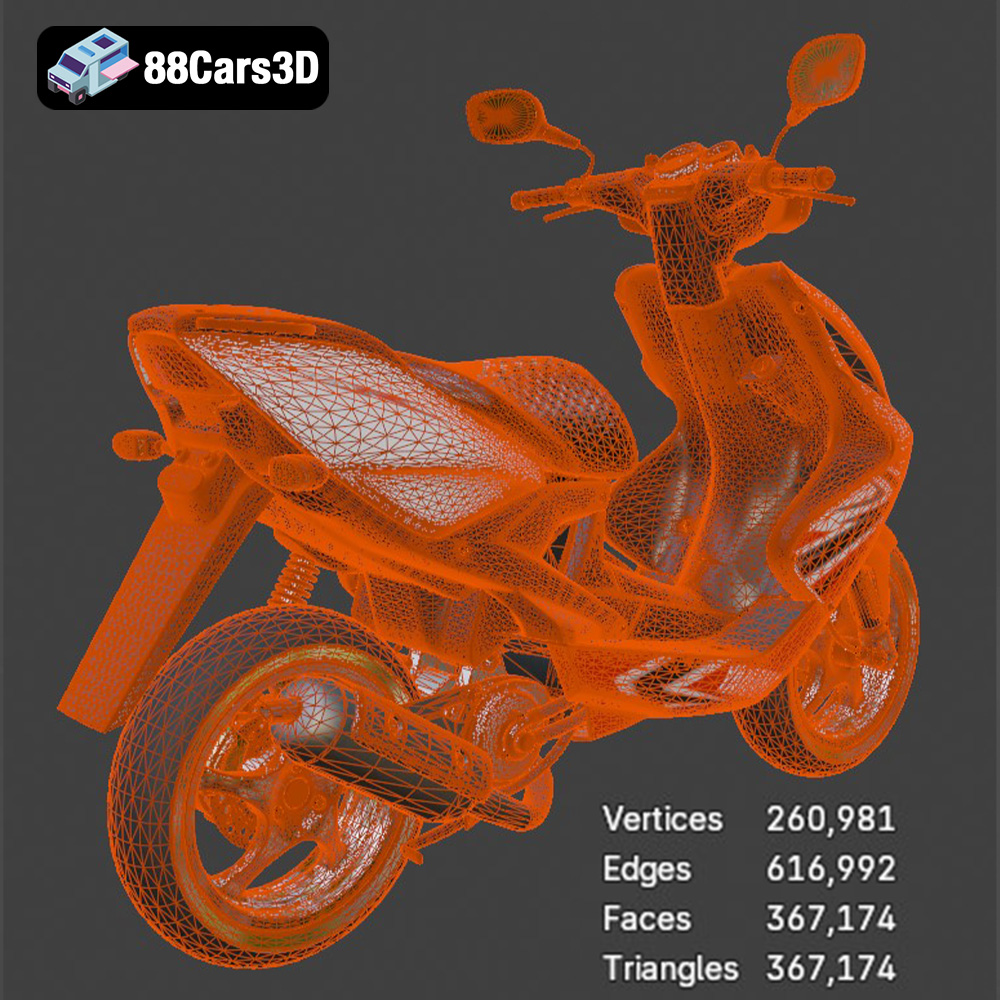
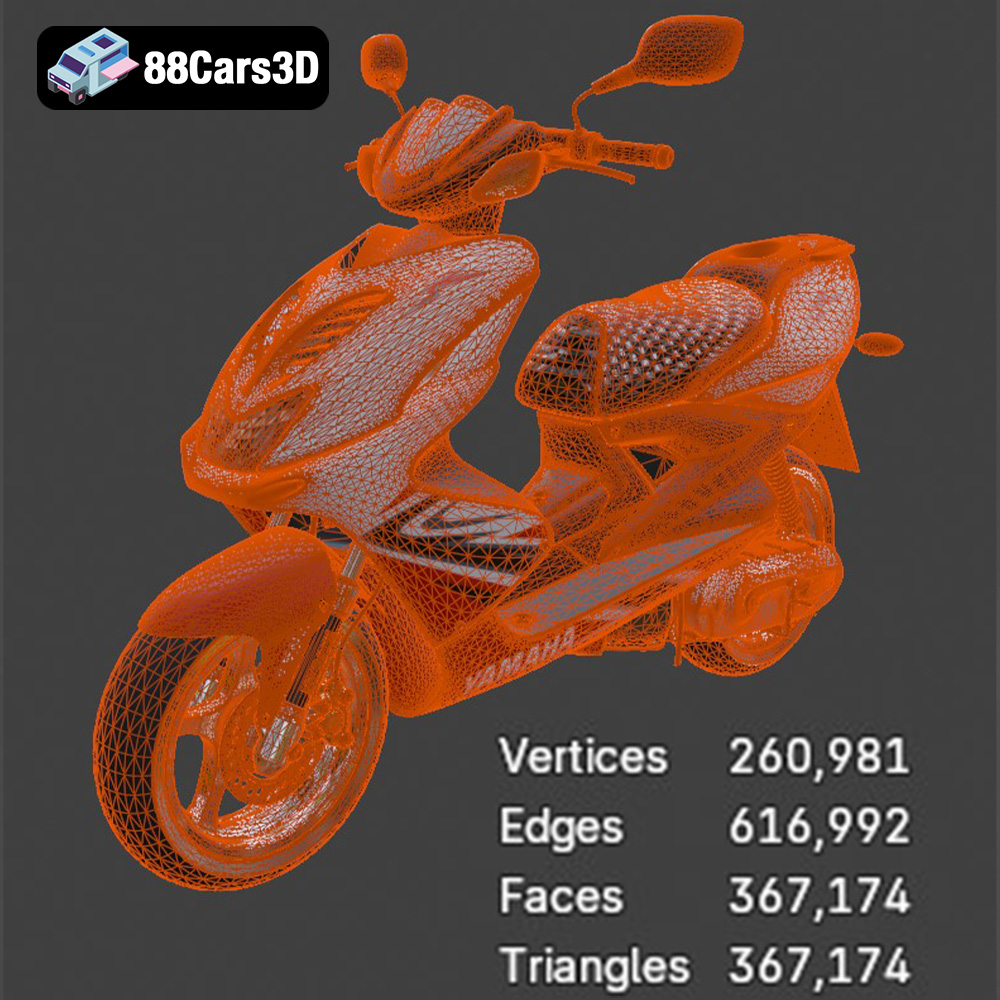
The foundation of any great 3D model is its geometry and topology. “Clean geometry” refers to a mesh that is well-structured, typically using quads (four-sided polygons) rather than triangles where possible, which ensures smooth deformation during animation and predictable subdivision. For the Yamaha Aerox R-002, this means:
- Optimized Poly Counts: The model is designed with an appropriate polygon count, balancing detail for close-up renders with efficiency for real-time environments. A high-fidelity model will often include multiple Levels of Detail (LODs) to automatically swap lower-poly versions when the object is further from the camera in games, maximizing performance without sacrificing visual quality up close.
- Logical Edge Flow: Edges are placed strategically to follow the natural contours and design lines of the scooter. This not only makes the model look accurate but also simplifies UV mapping and ensures proper deformation if the model is animated (e.g., suspension movement).
- Manifold Meshes: Ensuring the mesh is “watertight” with no holes or intersecting geometry is crucial for 3D printing and stable physics simulations in game engines.
PBR Texturing and Realistic Materials
Physically Based Rendering (PBR) has become the gold standard for achieving photorealistic results in 3D. PBR materials simulate how light interacts with surfaces in the real world, leading to more consistent and believable visuals under varying lighting conditions. The Yamaha Aerox R-002 3D Model features fully PBR-ready materials, meaning it includes:
- Albedo/Base Color Maps: These define the base color of the surface without any lighting information.
- Normal Maps: Used to add intricate surface detail without increasing the polygon count, simulating bumps and grooves (like plastic textures or panel lines) through tricking the lighting engine.
- Roughness Maps: Dictate how rough or smooth a surface appears, influencing how light scatters (e.g., matte plastic vs. glossy paint).
- Metallic Maps: Specify which parts of a material behave like metal and which behave like a dielectric (non-metal).
- Ambient Occlusion (AO) Maps: Simulate soft shadowing where surfaces are close together, adding depth and realism.
These maps, applied to the carefully crafted geometry, give the Yamaha Aerox R-002 its authentic appearance, from the subtle sheen of its bodywork to the texture of its tires and seat.
UV Mapping and Seamless Textures
UV mapping is the process of flattening the 3D surface of a model into a 2D space, allowing 2D texture images to be applied seamlessly. For a complex object like a scooter, expert UV unwrapping is critical:
- No Overlapping UVs: Ensures that each part of the texture map corresponds to a unique part of the model, preventing texture stretching or repetition.
- Consistent Texel Density: Maintaining a uniform resolution of texture pixels (texels) across the model ensures details appear sharp and consistent, regardless of the surface area.
- Logical Seams: UV seams are carefully placed in less visible areas to minimize their impact on the visual integrity of the textures, creating a smooth and cohesive appearance.
The thoughtful UV layout of the Yamaha Aerox R-002 ensures that its detailed PBR textures can be projected accurately, resulting in a flawless final render or in-game appearance.
Integrating the Yamaha Aerox R-002 into Professional Workflows
A truly valuable 3D asset is one that seamlessly integrates into diverse professional pipelines. The Yamaha Aerox R-002 2024 3D Model is designed with this versatility in mind, offering solutions for game development, high-end rendering, and immersive experiences.
Game Development: Unreal Engine & Unity
For game developers, efficiency and optimization are paramount. The Yamaha Aerox R-002 is provided with game-engine-ready formats like .fbx and a pre-configured .unreal file, significantly cutting down on integration time.
- Importing and Setup: With the .fbx or .unreal file, developers can swiftly import the scooter into Unreal Engine or Unity. The PBR materials are typically set up to work directly with the engine’s standard shaders, requiring minimal tweaking.
- Optimization for Real-Time: High-quality 3D car models or other vehicles for games often come with pre-calculated collision meshes and multiple LODs. This allows the engine to display a simpler version of the model when it’s far away, boosting frame rates without noticeable visual degradation.
- Animation and Interaction: Game developers can rig and animate the Yamaha Aerox R-002 for in-game mechanics, such as wheel rotation, suspension compression, or even rider animations, making it a dynamic game asset within virtual environments.
Cinematic Rendering and Product Visualization: 3ds Max, Blender
When the goal is photorealism for advertising, film, or product showcases, the .max and .blend files of the Yamaha Aerox R-002 offer unparalleled flexibility.
- Advanced Lighting Setups: Artists can leverage the full power of rendering engines like V-Ray, Corona, or Cycles within 3ds Max or Blender. This involves setting up complex studio lighting, HDRI (High Dynamic Range Image) environments for realistic reflections, and physically accurate camera settings to achieve stunning automotive rendering.
- Material Customization: While PBR materials are provided, artists can dive deep into the material graphs to create bespoke finishes, apply custom decals, or experiment with unique paint shaders specific to a client’s brief.
- Dynamic Scenes and Animation: Beyond static renders, the editable files allow for creating cinematic sequences, such as the scooter driving through an urban landscape, showcasing its design with elegant camera movements and dynamic lighting.
AR/VR Experiences and Web Integration: GLB
The burgeoning fields of Augmented Reality (AR) and Virtual Reality (VR), along with interactive web experiences, demand lightweight yet visually compelling assets. The .glb format of the Yamaha Aerox R-002 is purpose-built for these applications.
- Performance-Optimized: .glb files are highly optimized for fast loading and rendering in real-time AR/VR viewers and web browsers, crucial for smooth user experiences on devices with varying computational power.
- Interactive Product Showcases: Businesses can embed the Yamaha Aerox R-002 directly onto their websites, allowing potential customers to explore the scooter in 3D, rotate it, zoom in on details, and even change colors without needing powerful plugins.
- Immersive AR/VR: The model can be placed into real-world environments via AR apps (e.g., seeing the scooter parked in your driveway) or experienced in a fully immersive VR showroom, offering an unparalleled sense of presence and scale.
Real-World Applications and Case Studies for 3D Vehicle Models
The utility of high-quality 3D car models and other vehicle assets extends far beyond simple rendering or game development. They are integral tools across a spectrum of industries, driving innovation and enhancing communication.
Automotive Design and Prototyping
Before a single physical prototype is built, 3D models are the backbone of the automotive design process. Models like the Yamaha Aerox R-002 allow designers to:
- Iterate Rapidly: Design teams can quickly modify shapes, experiment with different components, and test various color and trim combinations in a virtual environment, drastically reducing development time and cost.
- Virtual Prototypes: High-fidelity models serve as virtual prototypes, enabling engineers to perform aerodynamic simulations, ergonomic studies, and assembly analyses long before physical production begins.
- Concept Visualization: Presenting new vehicle concepts to stakeholders or focus groups becomes incredibly powerful with photorealistic renders and interactive 3D models, conveying the design intent with clarity and impact.
Marketing and Advertising
The visual appeal of 3D renders is unmatched in modern marketing campaigns. Assets from 88cars3d.com, such as the Yamaha Aerox R-002, are invaluable for:
- High-Impact Visuals: Creating stunning, photorealistic images and animations for brochures, commercials, and online advertisements without the cost and logistical challenges of physical photoshoots.
- Customization and Configurators: Interactive 3D configurators on websites allow customers to personalize vehicles, seeing their choices reflected instantly in 3D, enhancing engagement and decision-making.
- Virtual Showrooms: Brands can create immersive virtual showrooms where customers can explore vehicles in detail, open doors, and even “sit inside” from the comfort of their homes.
Training and Simulation
Simulation environments are becoming increasingly sophisticated, and accurate 3D models are fundamental to their effectiveness.
- Driving Simulators: For driver training, racing simulations, or autonomous vehicle development, highly detailed 3D car models and environments provide critical realism, allowing for safe and controlled testing of scenarios that would be dangerous or impractical in the real world.
- Maintenance Training: Technical training for mechanics can utilize interactive 3D models to visualize complex component layouts, assembly processes, and troubleshooting steps in an engaging and accessible format.
- Architectural Fly-Throughs and Urban Planning: Urban vehicles like the Yamaha Aerox R-002 can populate architectural visualizations and city planning simulations, adding a layer of realism and context to proposed developments.
The Advantage of Sourcing Quality 3D Assets from 88cars3d.com
In a fast-paced digital production environment, time is a precious commodity. Creating a complex 3D car model like the Yamaha Aerox R-002 2024 from scratch requires hundreds of hours of expert modeling, texturing, and optimization. This is where a specialized marketplace like 88cars3d.com proves invaluable, providing a curated selection of professional-grade 3D assets.
Time and Cost Efficiency
For many projects, the most efficient solution is to leverage expertly pre-made assets. Purchasing a meticulously crafted 3D model like the Yamaha Aerox R-002 saves:
- Modeling Time: Bypassing the entire modeling process, from reference gathering to detailed sculpting and retopology.
- Texturing Time: Eliminating the need to create PBR textures from scratch, including baking normal maps, generating roughness, and metallic maps.
- Optimization Time: Avoiding the complex task of optimizing geometry, creating LODs, and setting up materials for different engines and rendering pipelines.
This allows designers and studios to allocate their resources to other critical aspects of their projects, such as scene composition, animation, or custom effects, ultimately leading to faster project completion and reduced labor costs.
Professional Standards and Support
When you acquire assets from 88cars3d.com, you are investing in quality. Each model is crafted by industry experts who understand the nuances of clean topology, PBR material creation, and multi-format compatibility. The Yamaha Aerox R-002 is a testament to this commitment, offering:
- Guaranteed Quality: Assets are vetted for technical correctness, ensuring clean meshes, proper UVs, and accurate scale.
- PBR Readiness: All materials are set up for physically accurate rendering, ensuring consistent and realistic results across different lighting environments.
- Versatile Formats: The extensive range of file formats (from .blend and .max for editable projects to .fbx and .unreal for game engines, and .glb for web/AR/VR) ensures the asset is immediately usable in virtually any professional workflow.
Diverse Catalog for Every Project
Whether you need modern electric vehicles, classic cars, heavy machinery, or urban scooters like the Yamaha Aerox R-002, 88cars3d.com offers a diverse and growing catalog of high-quality 3D car models and other automotive assets. This breadth of choice ensures that professionals can find the exact vehicle they need to populate their scenes, enhance their simulations, or bring their creative visions to life without compromise.
Conclusion
In the ever-evolving landscape of digital content creation, the demand for high-quality 3D assets remains constant. A meticulously crafted 3D model, such as the Yamaha Aerox R-002 2024 3D Model, serves as a cornerstone for diverse applications, from cutting-edge game development and cinematic automotive rendering to innovative AR/VR experiences and detailed product visualization. Its clean geometry, PBR-ready materials, and comprehensive suite of file formats underscore the technical excellence required to meet today’s professional demands.
By understanding the intricacies of 3D file formats, appreciating the dedication behind high-fidelity modeling, and recognizing the vast potential applications, professionals can fully leverage these powerful digital tools. Sourcing such assets from trusted platforms like 88cars3d.com not only streamlines workflows but also ensures access to industry-standard quality, freeing up valuable time and resources for creative innovation. The digital future of automotive visualization is here, and it’s built on assets like the Yamaha Aerox R-002, ready to accelerate your next project.
Featured 3D Model
Yamaha Aerox R-002 2024 3D Model
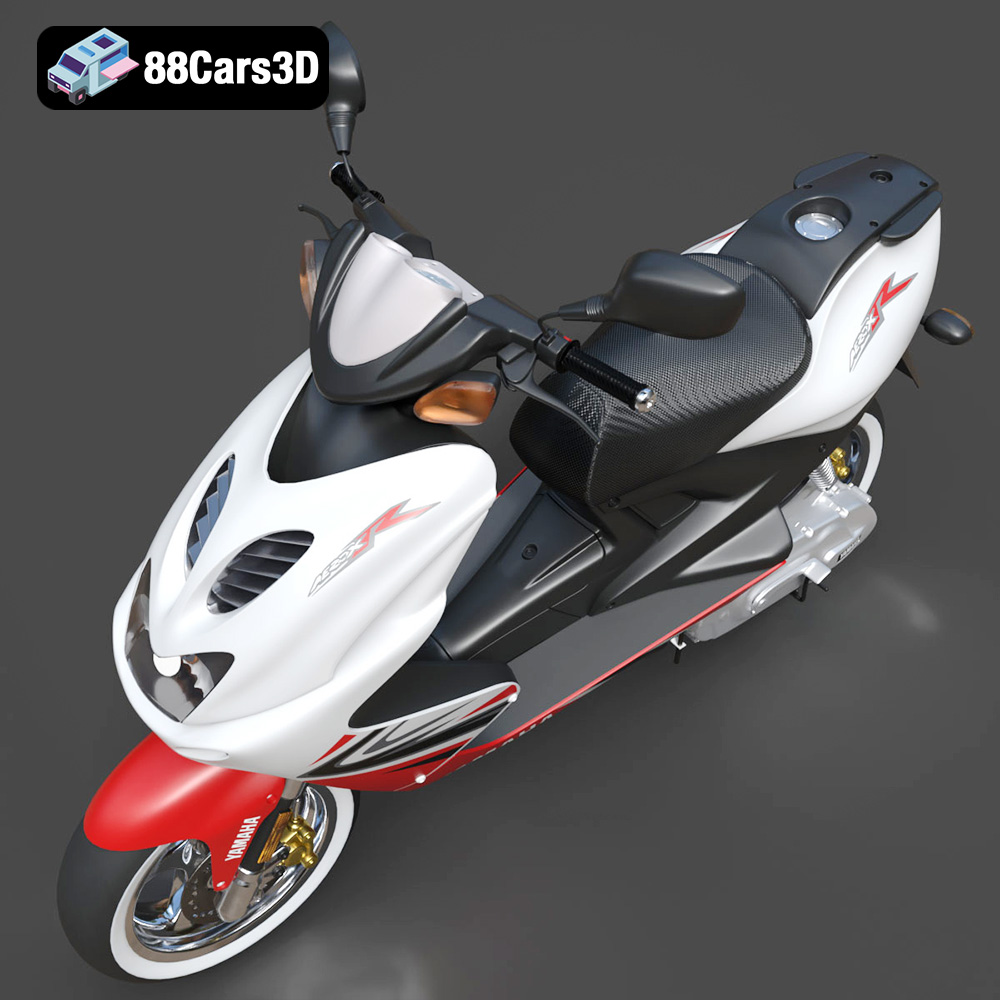
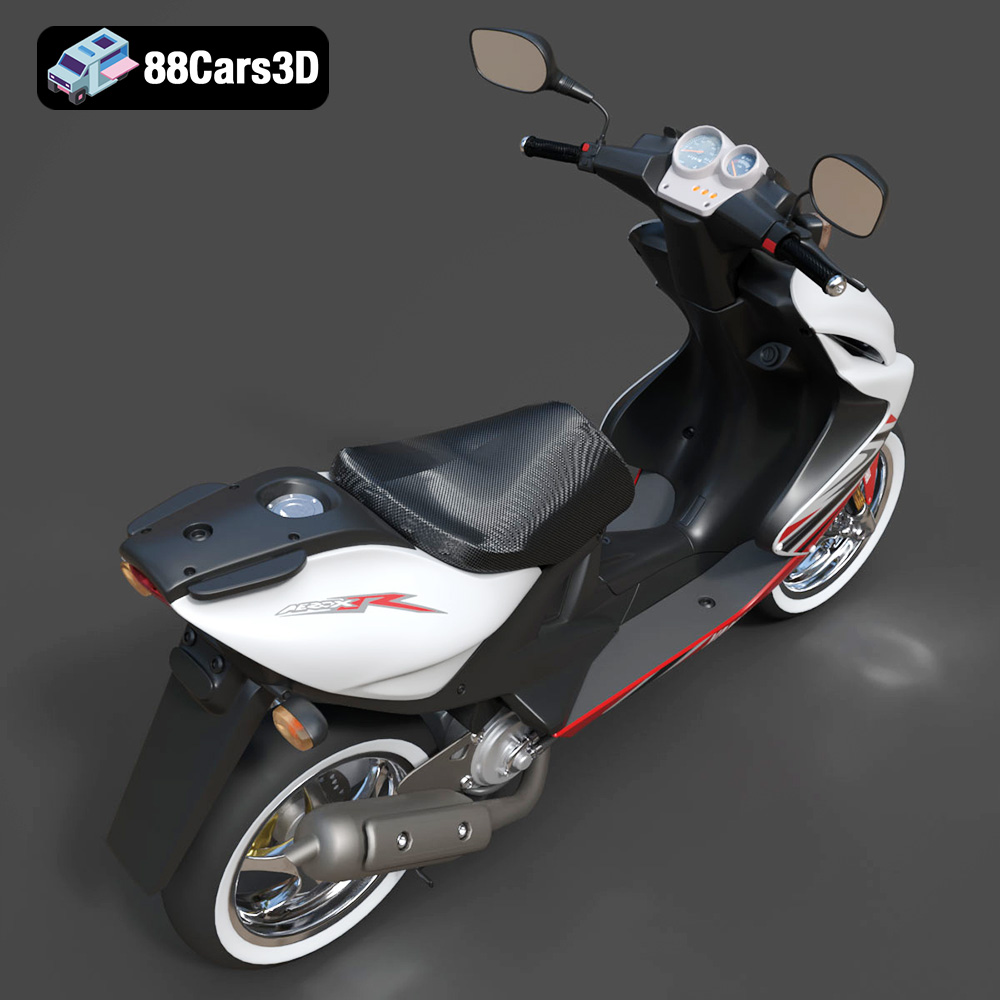
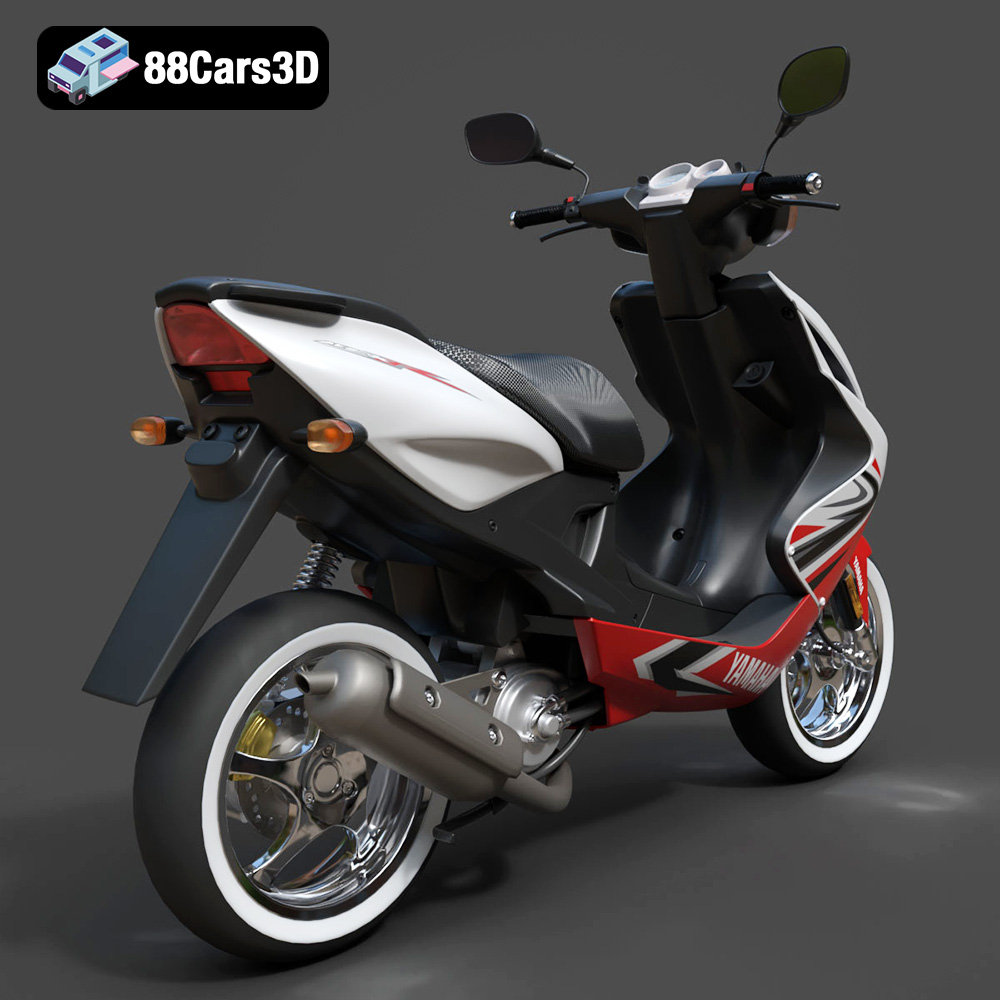
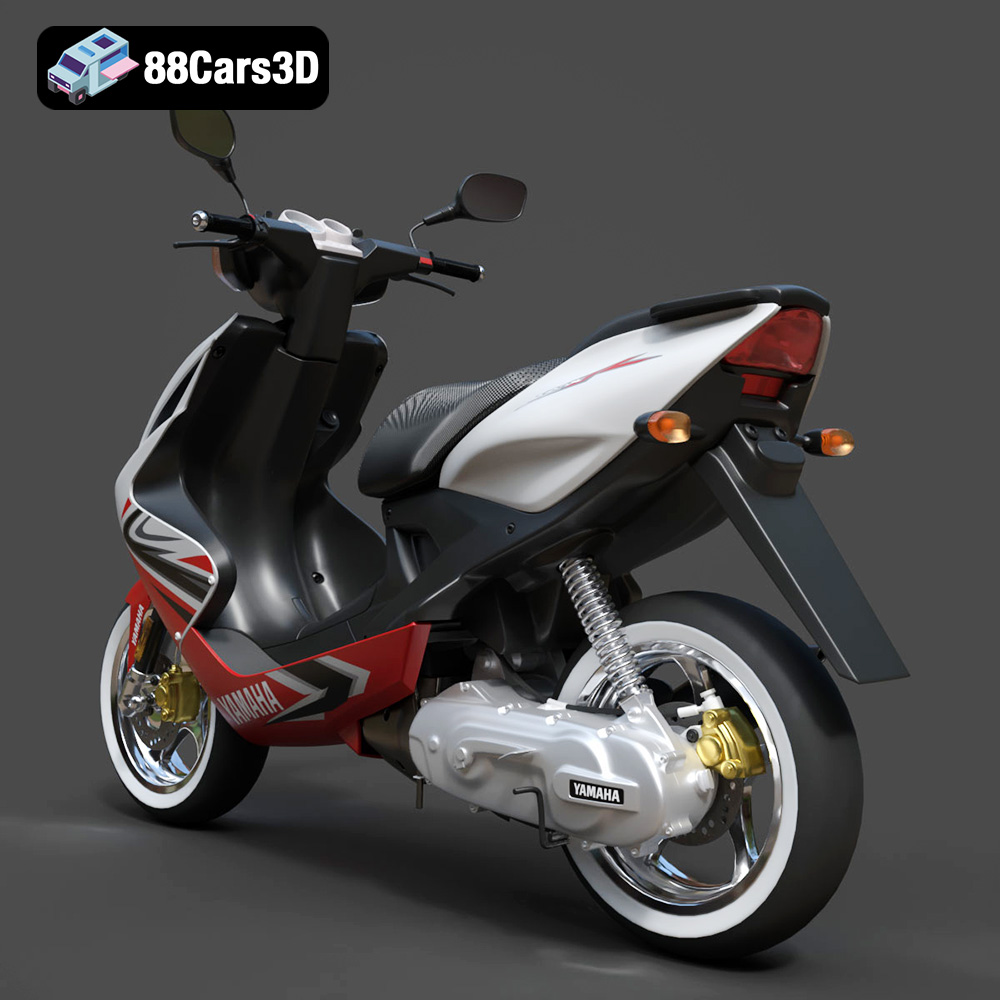
This is an immersive and accurate digital recreation of the Yamaha Aerox R-002 2024 scooter. This vehicle model is built to meticulous standards, capturing the distinct urban styling, ergonomic details, and component complexity of the real-world machine. It is ideal for projects requiring a modern, high-fidelity motorcycle asset.
The model features optimized, clean geometry suitable for both real-time applications and demanding cinematic renders. The mesh topology is carefully structured, facilitating easy UV unwrapping and texture manipulation. Materials are fully PBR-ready (Physically Based Rendering), ensuring physical accuracy and consistent appearance under various complex lighting setups. This asset is prepared by industry experts for immediate integration into professional digital pipelines.
This versatile asset is perfect for a wide range of digital projects including virtual reality (VR) simulations, augmented reality (AR) experiences, high-fidelity product visualization, architectural fly-throughs, and seamless integration into major game engines like Unreal Engine and Unity.
$19.99
Product Image Gallery
Related Tags
.aerox
.arvr
.blend
.car3dmodel
.fbx
.gameasset
.glb
.max
.moped
.motorcycle
.obj
.ply
.r002
.rendering
.scooter
.simulation
.stl
.unreal
.urbanvehicle
.yamaha
