

In the expansive and ever-evolving landscape of 3D modeling, the pursuit of realism and technical precision is paramount. Whether for breathtaking cinematic renders, immersive game environments, or detailed product visualizations, the quality of a 3D asset dictates the success of a project. Automotive models, in particular, demand an exceptional level of detail and structural integrity to accurately represent their real-world counterparts. This is where premium 3D car models shine, offering a foundation of excellence for any digital endeavor. Today, we’ll delve into the intricacies of integrating high-quality automotive assets into diverse workflows, highlighting the remarkable capabilities of the BMW 6 Series Gran Coupe 2013 3D Model from 88cars3d.com.
The BMW 6 Series Gran Coupe 2013 is a vehicle synonymous with luxury, performance, and sophisticated design. Capturing its essence in a digital format requires meticulous attention to every curve, every reflection, and every interior detail. A truly professional 3D model of such a car offers not just aesthetic appeal, but also robust technical advantages, including clean geometry, optimized materials, and versatile file formats, making it an invaluable asset for professionals across various industries, from automotive rendering specialists to game developers and AR/VR content creators.
Understanding 3D Model File Formats
The choice of file format for a 3D model is often as crucial as the model’s quality itself, dictating its compatibility, functionality, and performance across different software and platforms. Professionals must understand the strengths and weaknesses of each to streamline their workflows. The BMW 6 Series Gran Coupe 2013 3D Model, for instance, comes with an impressive array of formats, ensuring broad applicability. Let’s explore these essential file types:
.blend – Fully Editable Blender Scene with Materials
The .blend format is native to Blender, a powerful open-source 3D creation suite. When a model is provided in .blend, it means users receive a complete Blender project file. This includes not just the mesh data, but also all associated materials, textures, lighting setups, camera positions, and even animation data if present. For users deeply integrated into the Blender ecosystem, this offers unparalleled flexibility. They can immediately open the scene, inspect the modifiers, adjust shader nodes, or prepare the model for rendering with Cycles or Eevee, making it ideal for customization and advanced artistic control over the BMW 6 Series Gran Coupe 2013.
.fbx – Ideal for Unreal, Unity, and Real-Time Pipelines
.fbx (Filmbox) is arguably the most widely adopted proprietary file format for 3D exchange, particularly favored in game development and animation. Developed by Autodesk, FBX excels at preserving a wide range of data, including mesh geometry, materials, textures, bones, skinning, animations, and camera information. Its robustness and widespread support make it the go-to format for importing assets into game engines like Unreal Engine and Unity, as well as other DCC (Digital Content Creation) software. For the BMW 6 Series Gran Coupe 2013, the .fbx version ensures seamless integration into real-time environments, maintaining material assignments and hierarchical structures critical for interactivity and performance.
.obj – Universal Format for Cross-Software Compatibility
The .obj (Wavefront OBJ) format is a classic, universal standard for exchanging 3D geometry. It’s a simple, text-based format that primarily stores vertex positions, UV coordinates, normals, and face information. While it doesn’t typically encapsulate animation or advanced material properties directly within the file (often referencing external .mtl files for basic materials), its simplicity and compatibility with virtually every 3D software make it indispensable. When maximum compatibility across disparate pipelines is required, the .obj version of the BMW 6 Series Gran Coupe 2013 provides a reliable geometric foundation, ready for new material setups in any environment.
.glb – Optimized for AR, VR, and Browser-Based Display
.glb (GL Transmission Format Binary) is a modern, efficient format optimized for the web and real-time applications, especially AR (Augmented Reality) and VR (Virtual Reality). It’s a binary container format that includes 3D models, textures, animations, and other scene data in a single, compact file. GLB is increasingly supported directly by browsers and AR/VR platforms, offering rapid loading times and ease of integration for interactive experiences. The BMW 6 Series Gran Coupe 2013 in .glb format would be perfect for showcasing the model directly on a website, in an AR app, or within a WebXR experience, offering interactive 3D viewing without complex setups.
.stl – Suitable for 3D Printing Output
.stl (Stereolithography) is the de facto standard for 3D printing. It represents a 3D model as a collection of triangular facets, defining only the surface geometry without color, texture, or other properties. While simpler, this format is precisely what 3D printers and CAD software use to understand the physical shape to be produced. For those looking to physically prototype or create scale models of the BMW 6 Series Gran Coupe 2013, the .stl file ensures direct compatibility with printing services and software, allowing for tangible outputs from a digital design.
.ply – Precision Mesh Format for CAD or Analysis
The .ply (Polygon File Format) is another popular format for storing 3D data, particularly useful for scanned data, CAD, and scientific analysis. Like OBJ, it supports vertex positions, normals, and faces, but it can also store additional properties like color per vertex, transparency, and range data. PLY offers more flexibility than STL for complex data sets and is often preferred in applications requiring high precision or direct manipulation of point cloud data. For detailed analysis or specialized engineering workflows of the BMW 6 Series Gran Coupe 2013, the .ply format provides a robust mesh representation.
.unreal – Engine-Ready Asset for Real-Time Environments
The inclusion of an .unreal file, or a specific Unreal Engine project setup, indicates a model meticulously prepared for the Unreal Engine environment. This typically means the asset has been imported, materials are set up with PBR (Physically Based Rendering) principles, textures are correctly applied, collision meshes might be generated, and the asset is ready to be dropped into an Unreal scene. This saves countless hours for game developers and real-time visualization artists, ensuring that the BMW 6 Series Gran Coupe 2013 3D model looks and performs optimally right out of the box within Unreal Engine, ready for interactive simulations or high-end game development.
.max – Editable 3ds Max Project for Animation and Rendering
Similar to .blend for Blender, the .max format is native to Autodesk 3ds Max. This file provides a full 3ds Max scene, complete with geometry, materials (V-Ray, Corona, or standard Max materials), lighting, cameras, and any animation. For users of 3ds Max, this is the ultimate format for advanced rendering and animation projects, offering complete access to the model’s construction, enabling detailed customization of materials, rigging for complex animations, and integration into existing architectural visualization or product rendering scenes. The .max version of the BMW 6 Series Gran Coupe 2013 allows professionals to leverage the full power of 3ds Max for their most demanding rendering tasks.
The comprehensive file format support for the BMW 6 Series Gran Coupe 2013 3D Model underscores its versatility, making it a valuable investment for any digital artist or developer working across diverse platforms and creative goals.
The Art of Automotive Rendering: Bringing the BMW to Life
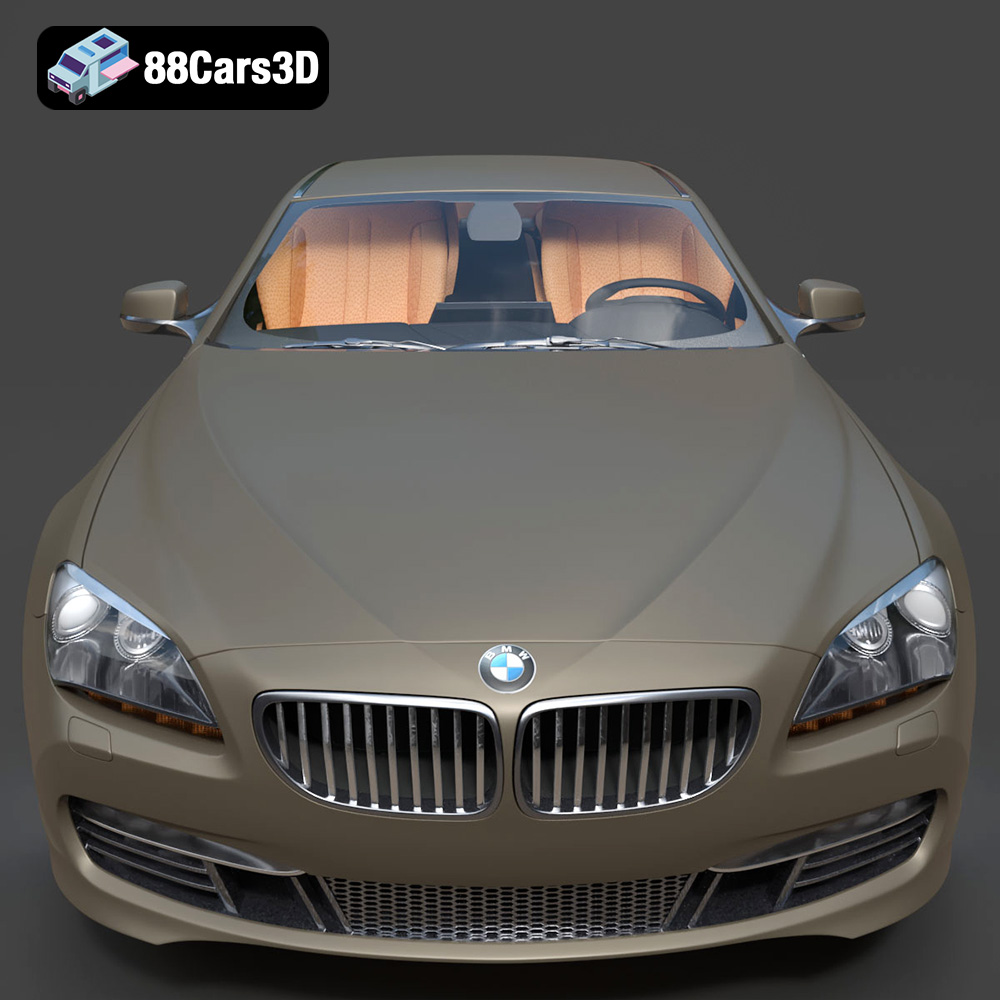
Automotive rendering is a specialized field that demands an acute understanding of lighting, materials, and composition to produce photorealistic images. A high-quality 3D car model, such as the BMW 6 Series Gran Coupe 2013 from 88cars3d.com, provides the perfect canvas for such endeavors. Its meticulously crafted exterior features, including accurately modeled body panels, detailed headlights, authentic kidney grille, and high-resolution wheels, translate directly into stunning visual fidelity.
High-Fidelity Visuals in 3ds Max
For professionals leveraging 3ds Max, the provided .max file offers a rich environment for creating breathtaking renders. Users can benefit from pre-configured V-Ray or Corona Renderer materials, allowing for quick scene setup and iteration. The model’s clean, quad-dominant topology is crucial here, ensuring smooth subdivision for close-up shots without unsightly artifacts. Artists can manipulate studio lighting setups, experiment with HDRIs (High Dynamic Range Images) for realistic reflections, and fine-tune material properties—from the metallic flake in the paint to the nuanced reflections on chrome and glass—to achieve true-to-life automotive visuals that captivate audiences in advertising or design presentations.
Cinematic Quality with Blender Cycles/Eevee
Blender, with its powerful Cycles and Eevee render engines, is equally capable of producing cinematic automotive visuals. The .blend file provides a native starting point, allowing artists to dive directly into Blender’s node-based material system. Cycles, the physically based renderer, is perfect for achieving highly realistic global illumination and intricate light bounces, essential for showcasing the luxurious finish of the BMW 6 Series Gran Coupe 2013. Eevee, Blender’s real-time renderer, offers a fantastic solution for quick previews and even final renders when speed is a priority, without sacrificing too much visual quality. The separated components like doors, hood, and trunk facilitate advanced animation for virtual showrooms or cinematic sequences.
Leveraging PBR Materials and Textures
A significant factor in modern rendering is the use of PBR (Physically Based Rendering) materials. These materials simulate how light behaves in the real world, leading to more consistent and realistic results across different lighting conditions and rendering engines. The BMW 6 Series Gran Coupe 2013 3D model is optimized with PBR principles, featuring diffuse, normal, roughness, metallic, and sometimes ambient occlusion maps. This sophisticated material setup ensures that whether rendered in 3ds Max, Blender, or a game engine, the car’s surfaces—from the glossy paintwork to the textured tires and intricate interior elements—respond to light in a believable manner, elevating the visual fidelity to professional standards.
Game Development and Real-Time Applications
Beyond static renders, the demand for high-quality 3D car models in interactive, real-time environments is skyrocketing. Game development, AR/VR experiences, and interactive simulations all require assets that are not only visually appealing but also optimized for performance. The BMW 6 Series Gran Coupe 2013 3D model is engineered with this balance in mind, making it an excellent candidate for demanding real-time projects.
Optimizing for Performance in Unreal Engine
For game developers and real-time artists using Unreal Engine, the dedicated .unreal or .fbx formats are invaluable. The model’s optimized mesh quality, ensuring a balance between detail and polygon count, is critical for maintaining high frame rates. Unreal Engine’s advanced material system allows artists to easily integrate the model’s PBR textures, fine-tune car paint shaders, and set up dynamic lighting. The logically organized hierarchy with proper pivot points for separated components (doors, hood, trunk) means developers can implement complex interactions like opening doors, custom damage systems, or animated vehicle entry/exit sequences with ease. This significantly accelerates the development process for racing games, open-world titles, or automotive configurators.
Crafting Immersive AR/VR Experiences
AR (Augmented Reality) and VR (Virtual Reality) applications demand extremely efficient 3D assets due to their stringent performance requirements. The BMW 6 Series Gran Coupe 2013 3D model, particularly in its .glb format, is ideally suited for these immersive platforms. Its optimized geometry and clean topology ensure smooth performance even on mobile AR devices or VR headsets. Imagine a virtual showroom where customers can walk around, inspect, and even customize the car in real-time, or a VR training module where engineers can interact with a detailed model for maintenance simulations. The model’s real-world scale accuracy is also paramount for believable AR/VR experiences, ensuring the car appears correctly proportioned within the virtual or augmented space.
Driving Simulations and Interactive Environments
For professional driving simulations, whether for training, engineering analysis, or entertainment, a high-fidelity vehicle model is fundamental. The precise geometry and accurate dimensions of the BMW 6 Series Gran Coupe 2013 enable realistic physics simulations, enhancing the authenticity of the driving experience. Coupled with detailed interior features—dashboard, instrument cluster, steering wheel, and seating—the model offers a comprehensive package for creating engaging and credible interactive environments. Its optimized material and texture setup also contribute to reduced load times and smoother interactive performance, crucial for applications where seamless interaction is key.
Precision and Versatility: Technical Specifications of a Premium 3D Car Model
The true value of a professional 3D car model lies not just in its visual appeal, but in its underlying technical foundation. This is where models like the BMW 6 Series Gran Coupe 2013 truly stand out, offering specifications that support a wide array of demanding applications.
Clean Topology and UV Mapping
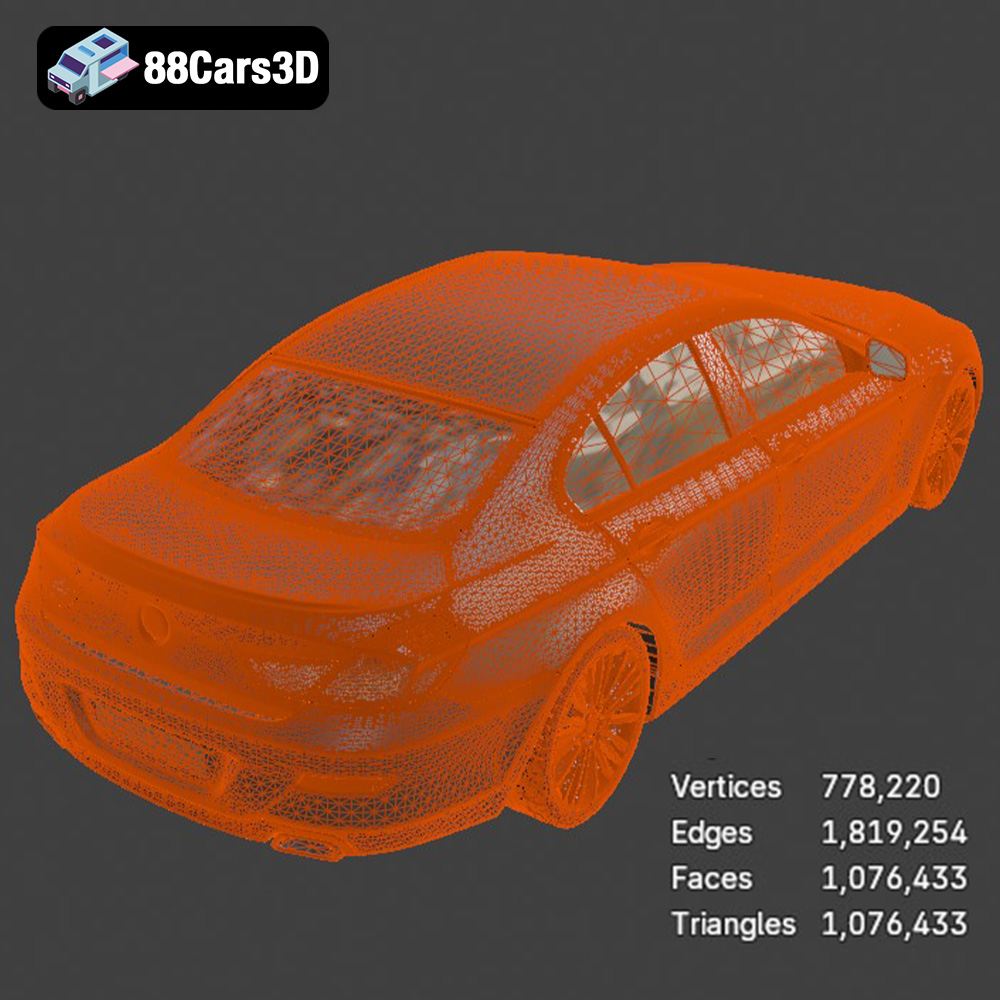
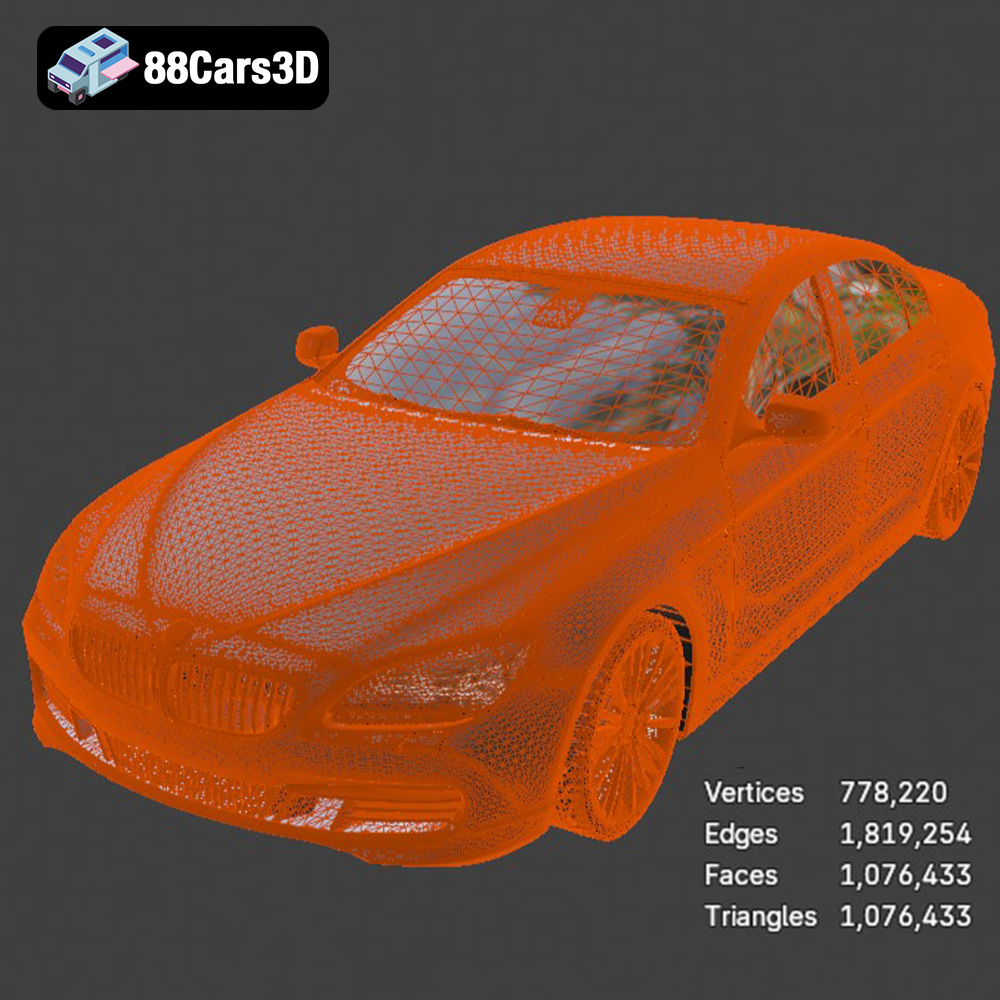
At the heart of any high-quality 3D model is its topology. The BMW 6 Series Gran Coupe 2013 boasts clean, quad-dominant topology. This means the mesh is primarily made up of four-sided polygons, which are ideal for subdivision, deformation, and animation. Good topology prevents pinching and stretching artifacts when the model is bent or smoothed, ensuring perfect reflections on curved surfaces. Furthermore, efficient UV mapping ensures that textures are applied without distortion, maximizing texture resolution and simplifying material creation. This attention to detail is essential for achieving the glossy, flawless finish expected of a luxury vehicle in any rendering or real-time engine.
Real-World Scale and Asset Hierarchy
Accuracy in 3D modeling extends beyond visual fidelity to practical dimensions. The BMW 6 Series Gran Coupe 2013 3D model is built with real-world scale accuracy, making it incredibly easy to integrate into existing scenes without having to constantly resize or adjust. This is particularly important for architectural visualization, product placement, and AR/VR applications where correct sizing is crucial for believability. Additionally, a logically organized hierarchy with proper pivot points for individual components (doors, wheels, steering wheel) means the model is production-ready for animation and manipulation. This structured approach saves significant time for animators and developers, allowing them to focus on creative tasks rather than wrestling with disorganized assets.
Customization and Modularity
Professionals often require the flexibility to customize assets to fit specific project needs. The BMW 6 Series Gran Coupe 2013 3D model offers extensive customization options. Users can effortlessly adjust paint finishes, experimenting with different colors, metallic flakes, and clear coats to match branding or stylistic requirements. Applying custom graphics or liveries for racing simulations or advertising campaigns is straightforward. Furthermore, modifying material properties for various components like metal, chrome, glass, and rubber allows for fine-tuning the visual style to achieve diverse moods and atmospheric conditions, ensuring the model remains versatile across a wide spectrum of creative endeavors.
Beyond Visualization: Practical Applications and Case Studies
The utility of a premium 3D car model extends far beyond just creating pretty pictures. These assets are powerful tools that facilitate innovation, communication, and efficiency across numerous professional sectors. The BMW 6 Series Gran Coupe 2013 3D model, available on 88cars3d.com, exemplifies this versatility, finding its place in demanding real-world applications.
Automotive Design and Prototyping
In the automotive industry, 3D models are indispensable from concept to production. Before a single physical prototype is built, designers use highly detailed models like this BMW 6 Series Gran Coupe to visualize new designs, evaluate aesthetics, and even test basic aerodynamics. The ability to quickly iterate on paint colors, interior trim, and wheel designs digitally saves millions in manufacturing costs and reduces development cycles. Engineers can use these models for virtual fit-and-finish checks, ensuring all components align perfectly. For 3D printing, the .stl format of the model can be used to create physical scale models or parts for rapid prototyping, bridging the gap between digital design and tangible output.
Marketing and Advertising Campaigns
For advertising agencies and marketing departments, high-quality 3D car models are a game-changer. Instead of costly physical photoshoots, which require transporting actual vehicles, setting up elaborate stages, and often involve extensive post-production, marketers can generate an infinite array of renders in any environment, at any time of day, with perfect lighting. The BMW 6 Series Gran Coupe 2013 3D model can be placed in a bustling city street, a serene countryside, or a futuristic showroom, all rendered virtually. This not only offers unparalleled creative control but also significantly reduces costs and turnaround times for brochures, online advertisements, and even television commercials. The model’s versatility allows for creating stunning visuals that elevate brand perception and drive consumer engagement.
Educational and Training Simulations
Complex machinery like automobiles requires extensive training for technicians, salespeople, and even emergency responders. Detailed 3D car models are becoming central to modern educational and training simulations. Imagine a mechanic learning to identify engine components in a VR environment powered by a precise model like the BMW 6 Series Gran Coupe 2013, or a salesperson demonstrating car features interactively to a potential buyer using an AR application. The model can be used in technical training scenarios, allowing users to virtually disassemble and reassemble parts, understand fluid dynamics, or practice maintenance procedures in a safe, controlled digital space. Its accurate interior and mechanical features make it ideal for such in-depth learning experiences.
Conclusion
The journey from a conceptual design to a compelling visual or an interactive experience in the digital realm is paved with precision, detail, and technical mastery. As we’ve explored, a high-quality 3D car model is more than just an asset; it’s a foundational element that empowers professionals across diverse industries. The BMW 6 Series Gran Coupe 2013 3D Model from 88cars3d.com stands as a prime example of such an asset, meticulously crafted to meet the rigorous demands of automotive rendering, game development, AR/VR, and simulation.
With its clean, quad-dominant topology, real-world scale, optimized material setup, and comprehensive file format support—ranging from .blend and .max for native software integration, to .fbx and .unreal for game engines, and specialized formats like .glb for AR/VR and .stl for 3D printing—this model offers unparalleled versatility. It streamlines workflows for artists and developers, allowing them to focus on creativity rather than overcoming technical hurdles. Whether you’re aiming for photorealistic renders that capture the luxury of a BMW or seeking a performant vehicle for an immersive real-time application, this model provides the robust foundation needed for exceptional results. Investing in such a premium asset from 88cars3d.com is an investment in quality, efficiency, and limitless creative potential for your digital projects.
Featured 3D Model
BMW 6 Series Gran Coupe 2013 3D Model
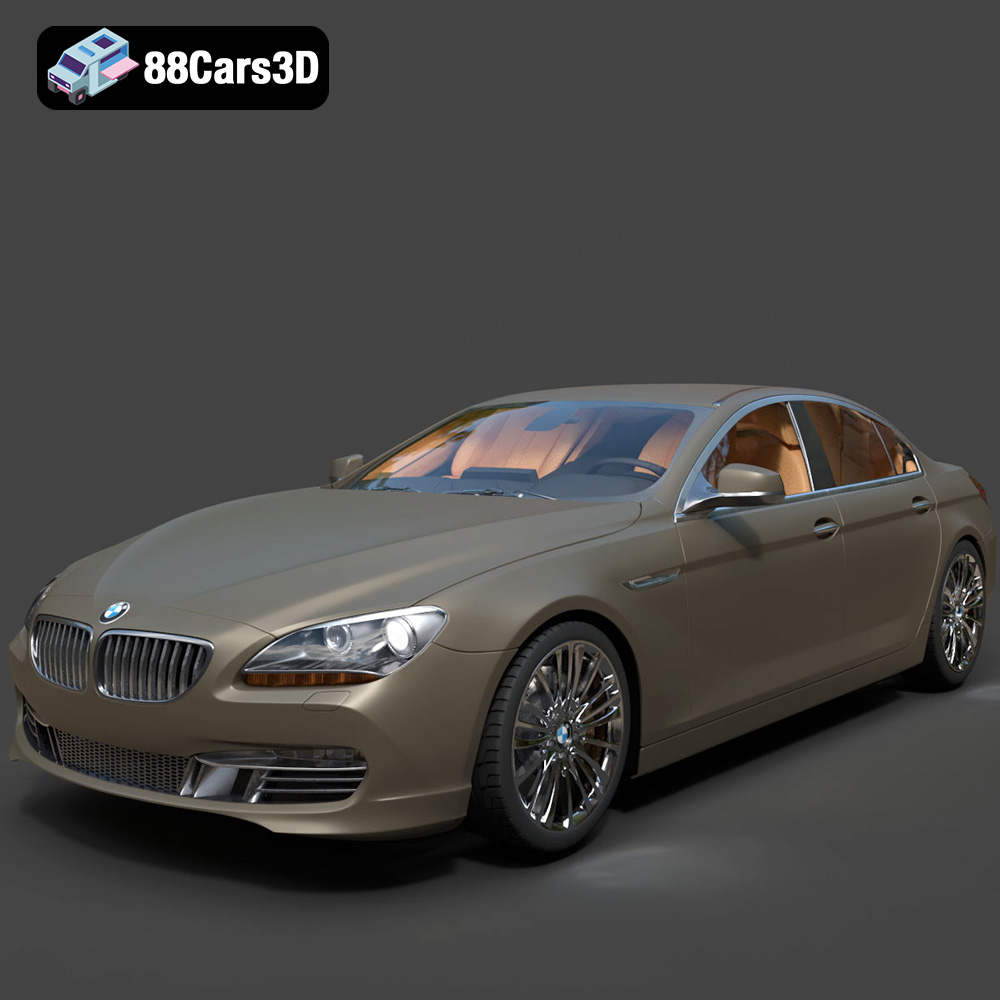
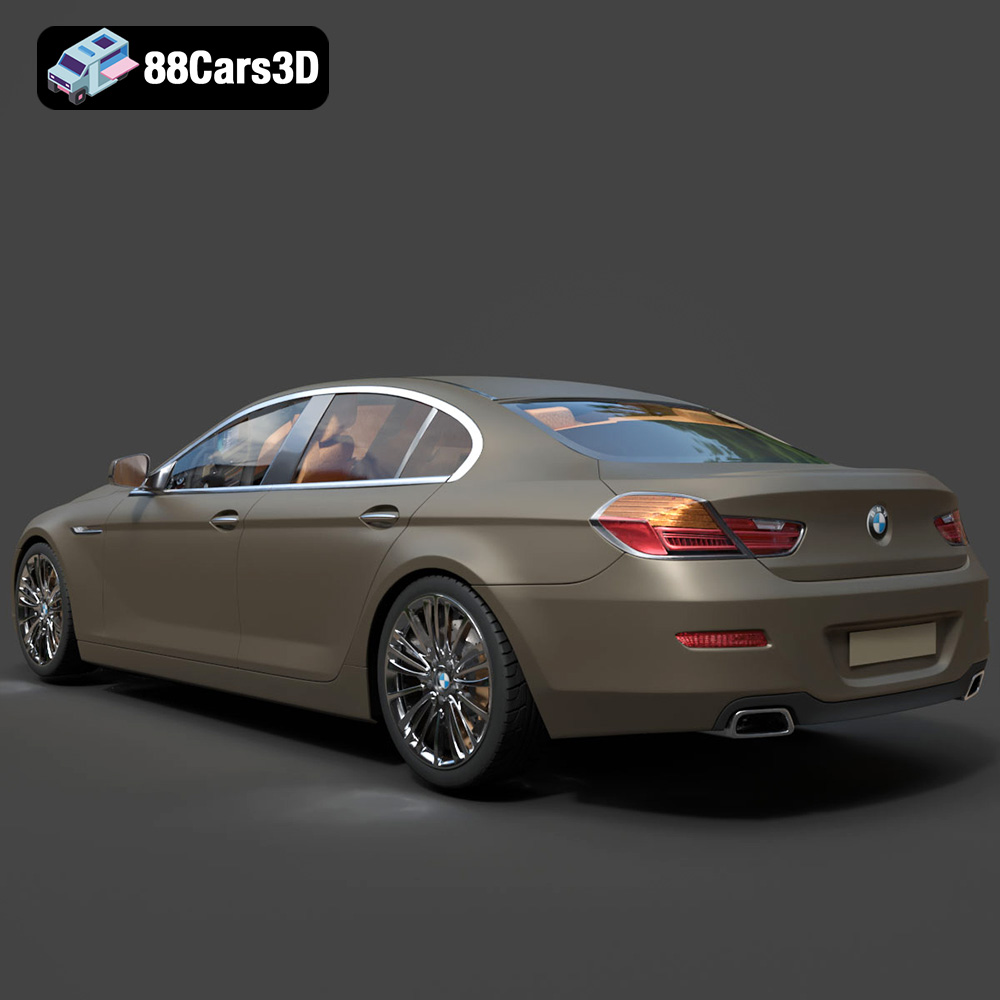
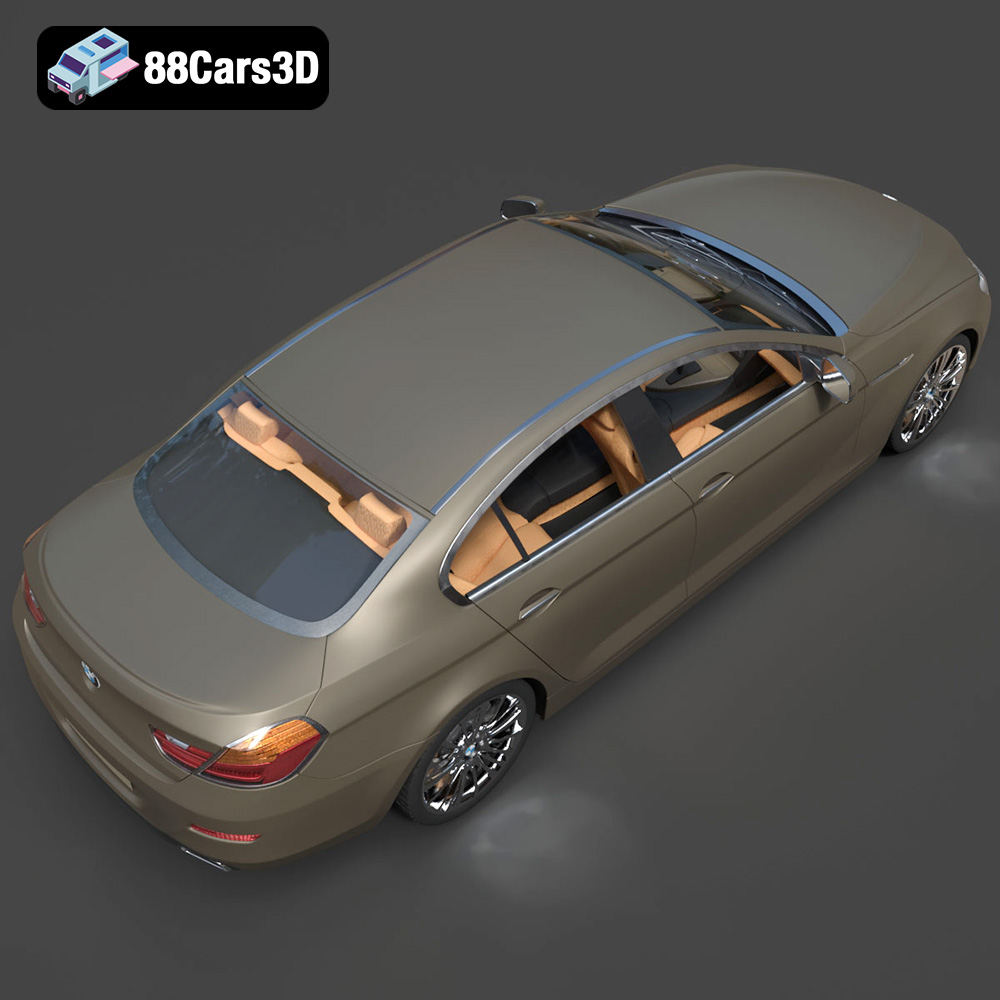
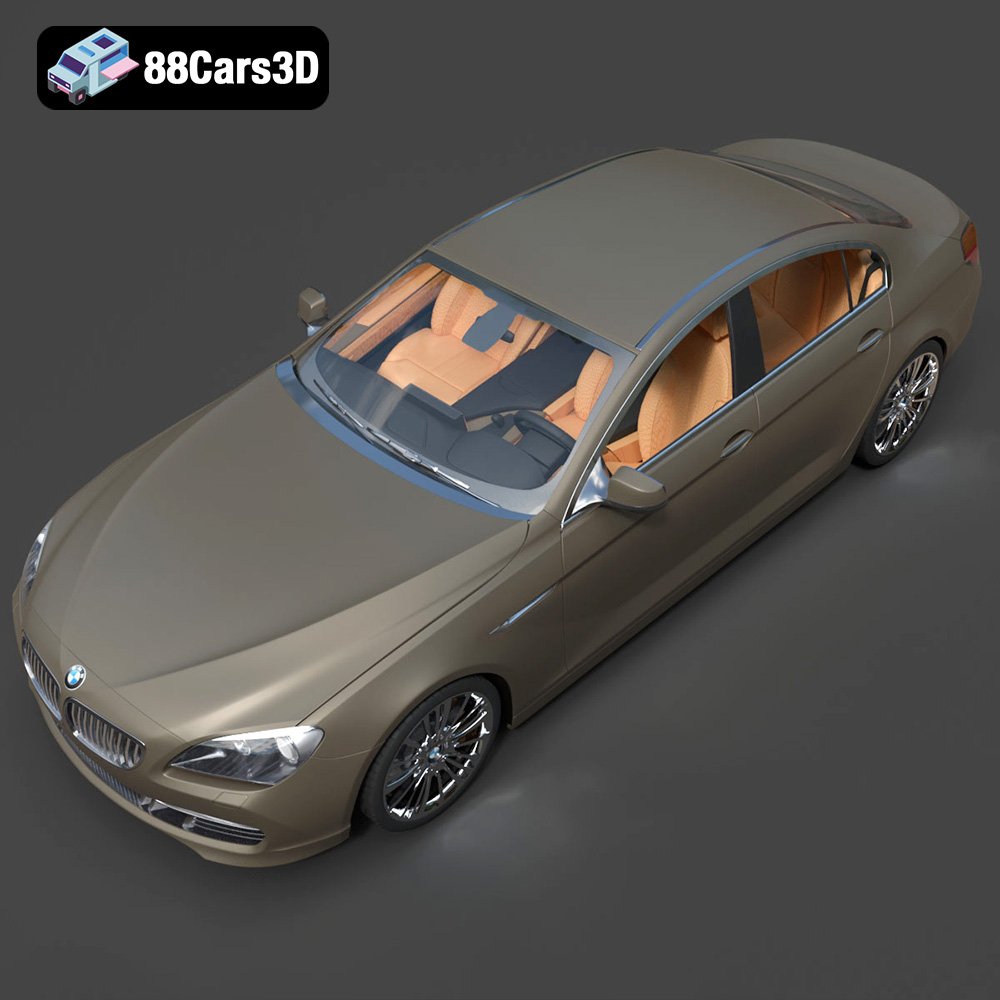
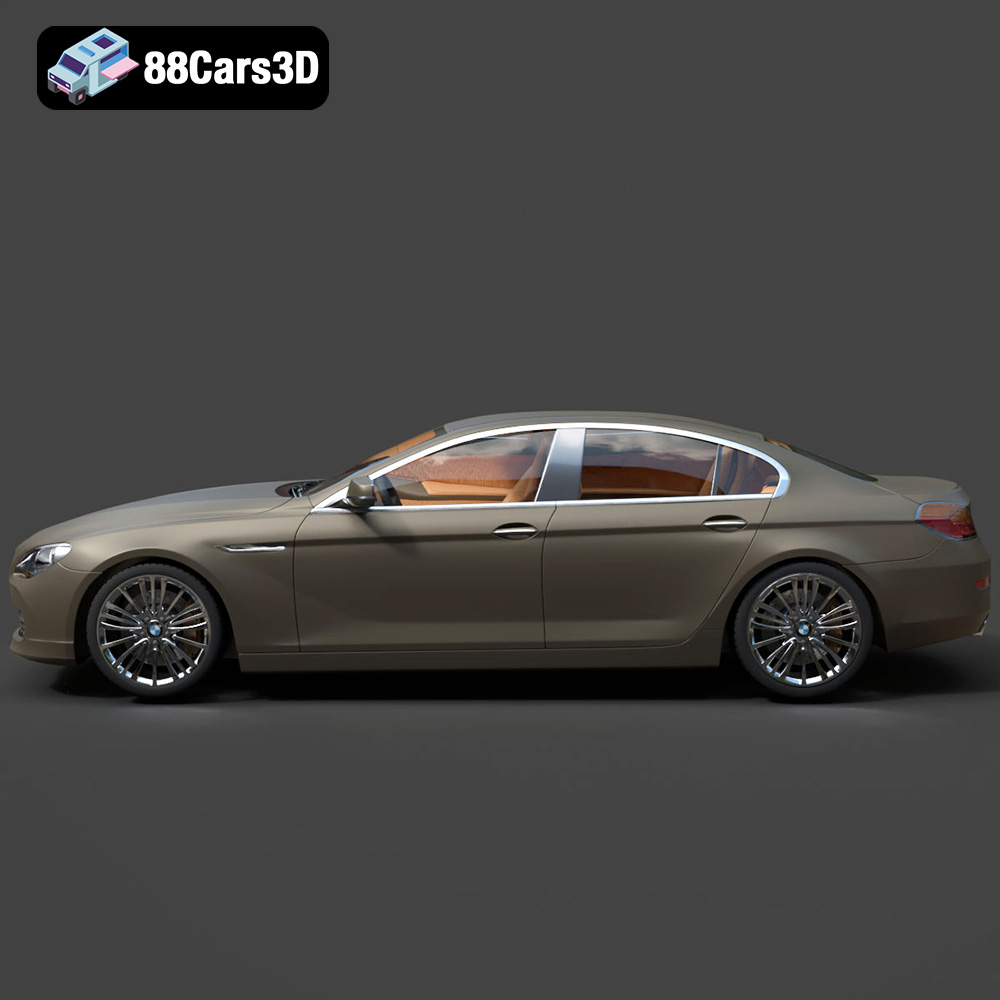
Experience the sophistication and dynamic design of the BMW 6 Series Gran Coupe 2013 with this meticulously crafted 3D model. Representing the pinnacle of luxury sports sedans, this model captures the elegant lines, powerful stance, and distinctive character of the renowned vehicle. Built with clean geometry and balanced detailing, it is optimized for a wide range of applications, from high-fidelity rendering and cinematic animations to real-time simulations and robust game development environments.
$20.79
Product Image Gallery
Related Tags
.6seriesgrancoupe
.arvr
.blend
.bmw
.fbx
.gameasset
.glb
.grancoupe
.luxurycar
.max
.obj
.ply
.rendering
.sedan
.simulation
.stl
.unreal
