Unlocking Automotive Excellence: The Essential Role of High-Quality 3D Car Models in Modern Visualization
In the dynamic world of digital content creation, the demand for realistic, high-fidelity 3D car models has never been greater. From cinematic automotive advertisements and immersive game environments to cutting-edge architectural visualizations and interactive AR/VR experiences, a vehicle’s digital representation can make or break a project’s visual impact. Professionals across industries are constantly seeking assets that not only look authentic but are also technically robust and optimized for diverse workflows. This pursuit of digital perfection is precisely where a meticulously crafted 3D model, such as the BMW 6 Series Convertible 3D Model, demonstrates its invaluable utility, offering a foundation of quality that elevates any project.
A premium 3D car model is more than just a collection of polygons; it’s a detailed digital sculpture representing countless hours of expert craftsmanship. It encapsulates the intricate design philosophy of its real-world counterpart, capturing every curve, panel gap, and luxurious detail with unparalleled accuracy. Such an asset becomes a versatile tool, enabling artists and developers to integrate realism and sophistication into their work, pushing the boundaries of what’s visually possible. Whether you’re a seasoned 3D artist, a game developer, or an architectural visualizer, understanding the nuances of these models and their applications is key to achieving truly professional results.
Understanding 3D Model File Formats: The Backbone of Digital Automotive Assets
Choosing the right file format is a foundational decision in any 3D workflow, dictating compatibility, feature retention, and overall efficiency. High-quality 3D car models, like the BMW 6 Series Convertible 3D Model available on 88cars3d.com, often come in a variety of formats to ensure maximum versatility across professional applications. Each format serves specific purposes, optimized for different software, engines, or end-use scenarios. Understanding these distinctions is crucial for seamless integration and optimal performance.
.blend – The Blender Powerhouse
The .blend format is the native file type for Blender, a powerful and increasingly popular open-source 3D creation suite. When a 3D car model like the BMW 6 Series Convertible is provided in .blend format, it typically means it’s a fully editable Blender scene. This includes not only the mesh data but also the materials, textures, lighting setups, cameras, and even animations if present. For artists primarily working in Blender, this format offers the most flexibility, allowing for direct manipulation of geometry, shader adjustments, and scene composition without any loss of data that might occur during conversion. It’s ideal for deep customization, rendering directly within Blender’s Cycles or Eevee engines, or as a starting point for further scene development.
.fbx – The Industry Standard for Interoperability
.fbx (Filmbox) is one of the most widely adopted proprietary file formats for 3D data exchange, especially prevalent in game development (Unreal Engine, Unity) and animation pipelines. Its strength lies in its ability to store a comprehensive range of 3D data, including geometry, materials, textures, animations, skinning information, and even cameras and lights. While it excels in transferring data between different software applications like Maya, 3ds Max, and game engines, some application-specific features might not translate perfectly. For game-engine ready assets like the BMW 6 Series Convertible 3D Model, .fbx is often the go-to choice due to its robust support for mesh optimization, material assignments, and animation data, ensuring smooth integration into real-time environments.
.obj – The Universal Exchange Format
The .obj (Wavefront OBJ) format is a simple, universally compatible format that has been a cornerstone of 3D data exchange for decades. It primarily stores geometry (vertices, normals, texture coordinates, and faces) and can reference external .mtl (material) files for basic material properties and texture maps. While it lacks support for advanced features like animation, rigging, or complex shader networks, its simplicity makes it incredibly reliable for sharing raw mesh data across virtually any 3D software. For basic model import and use, particularly when a stripped-down, clean mesh is desired, .obj remains an excellent choice for broad cross-software compatibility.
.glb – Optimized for AR, VR, and Web
.glb (GL Transmission Format Binary) is an increasingly important format, especially for the burgeoning fields of Augmented Reality (AR), Virtual Reality (VR), and web-based 3D applications. It’s a binary container format that bundles 3D models, textures, and PBR materials into a single file, making it highly efficient for transmission and loading. Its compact nature and support for modern PBR workflows make it ideal for delivering interactive 3D experiences directly within web browsers or on mobile AR/VR devices. The BMW 6 Series Convertible 3D Model in .glb format would be perfectly suited for an interactive car configurator on a website or an AR app allowing users to “place” the car in their real-world environment.
.stl – The Prototyping and 3D Printing Standard
.stl (STereoLithography) is the most common file format for 3D printing and rapid prototyping. It represents a 3D model as a series of connected triangles, essentially describing the surface geometry without any color, texture, or material information. For precise manufacturing and physical replication, having a 3D car model in .stl format means it’s ready to be sliced and sent to a 3D printer. When preparing an asset like the BMW 6 Series Convertible for 3D printing, ensuring the .stl mesh is “manifold” (watertight, without gaps or self-intersections) is critical for a successful print.
.ply – Precision Mesh for CAD and Analysis
The .ply (Polygon File Format or Stanford Triangle Format) is a file format for storing three-dimensional data from 3D scanners. It can store a variety of data, including color, transparency, surface normals, and range data, alongside geometric information. While less common for general 3D model exchange compared to .fbx or .obj, .ply is often used in scientific, engineering, and CAD applications where precise mesh data, often originating from laser scans, is crucial for analysis, measurement, or reverse engineering. For highly detailed meshes or models intended for specific technical analysis, .ply offers a robust solution.
.unreal – Engine-Ready for Real-Time Environments
The .unreal format, or more accurately, assets packaged and optimized specifically for Unreal Engine, represent models that are pre-configured for direct use within this powerful real-time engine. This goes beyond just an .fbx import; it implies that the asset, like the BMW 6 Series Convertible 3D Model, has been set up with proper material instances, potentially LODs (Levels of Detail), collision meshes, and even blueprints for interactive functionalities. This dramatically reduces setup time for developers, allowing them to drag and drop the car into their virtual worlds with minimal additional configuration, ready for real-time rendering and interaction.
.max – The 3ds Max Native Project File
The .max format is the native file type for Autodesk 3ds Max, a leading software for 3D modeling, animation, and rendering in professional visualization and game development. A .max file contains the complete 3ds Max scene, including geometry, materials, textures, lighting, cameras, animations, and modifier stacks. For users of 3ds Max, this format provides the highest level of editability and control, allowing access to the original modeling history, precise material adjustments, and complex scene management. It’s the preferred format for studios and artists who build their pipelines around 3ds Max for high-end rendering and animation tasks, offering maximum flexibility for project adaptation.
By offering the BMW 6 Series Convertible 3D Model in such a comprehensive array of formats, 88cars3d.com ensures that professionals can seamlessly integrate this high-quality asset into virtually any production pipeline, optimizing for specific software and project requirements.
Mastering Automotive Rendering Workflows with High-Fidelity Assets
Achieving photorealistic automotive renders is an art form, demanding a combination of artistic skill, technical understanding, and, crucially, high-quality source assets. A premium 3D car model, such as the BMW 6 Series Convertible from 88cars3d.com, provides the essential foundation for these stunning visuals. Its “meticulously recreated” details and “clean, optimized geometry” are not merely aesthetic boasts but fundamental technical specifications that directly impact rendering quality and efficiency.
The Role of PBR Materials and Optimized Geometry
At the heart of modern photorealistic rendering lies Physically Based Rendering (PBR). The BMW 6 Series Convertible 3D Model comes with “realistic PBR materials configured for immediate use,” which means its surfaces behave like real-world materials when interacting with light. This saves countless hours of material setup, allowing artists to focus on lighting and composition. The PBR pipeline relies on well-defined textures (albedo, roughness, metallic, normal maps, etc.) and a clean UV layout, which ensures these textures wrap seamlessly around the model.
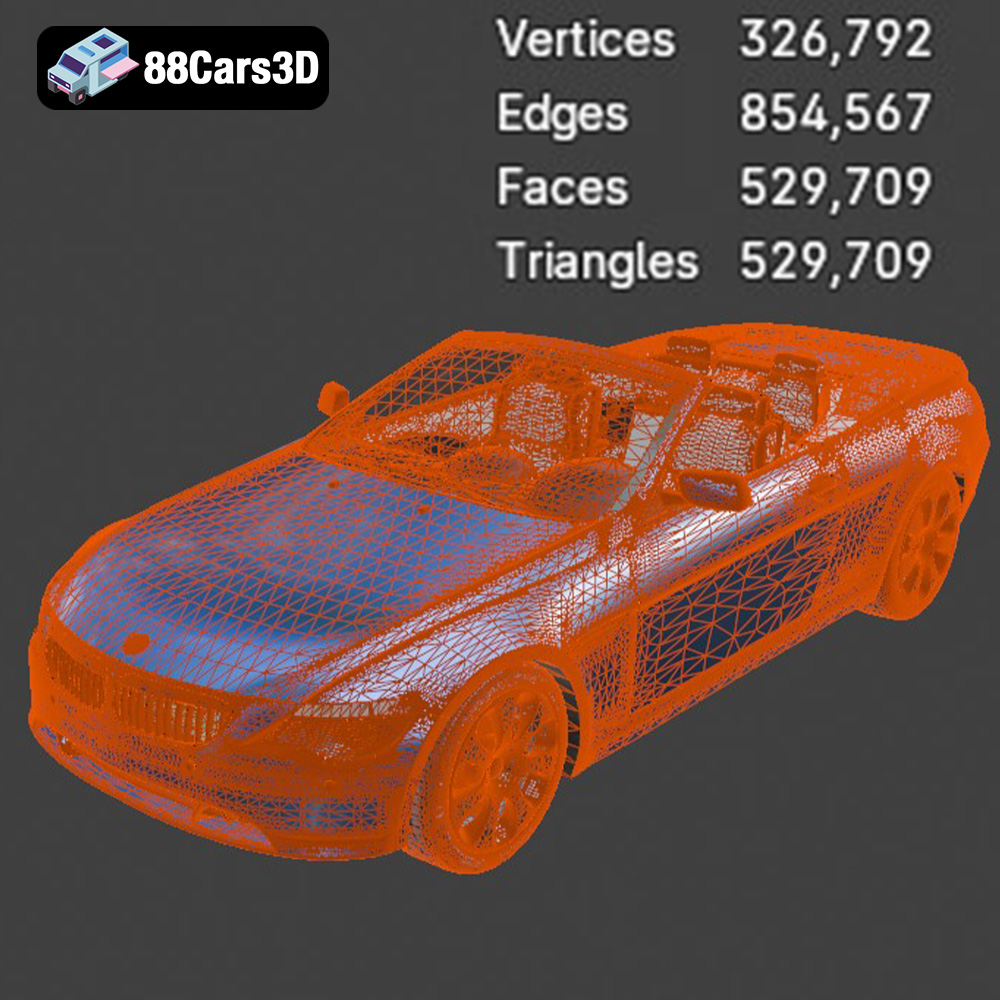
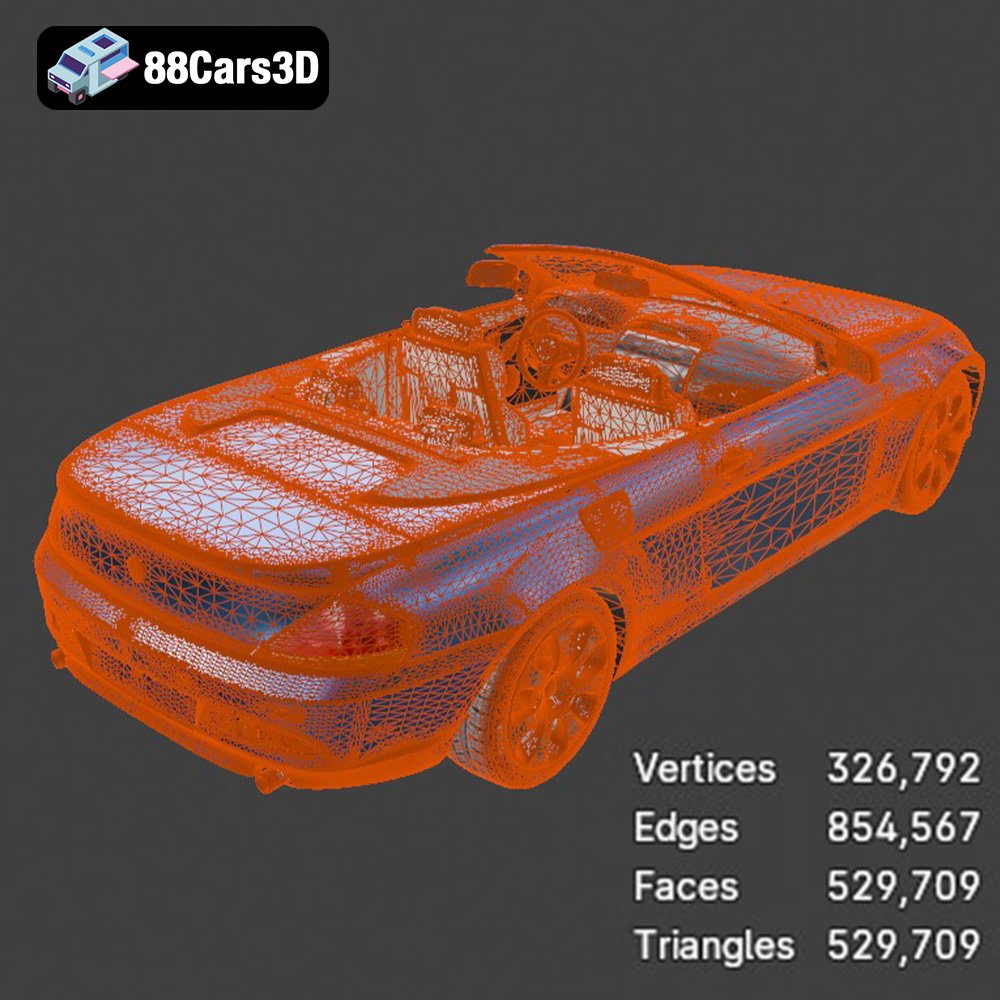
Beyond materials, the geometry itself is paramount. “Incredibly clean, optimized geometry” implies a mesh with excellent topology – primarily quads, minimal triangles, and no egregious n-gons – which is crucial for smooth subdivision surfaces, distortion-free deformation, and efficient processing by rendering engines. For detailed close-ups, where every curve and reflection must be perfect, the model’s precise construction prevents artifacts and delivers the sharp, believable lines expected of a luxury vehicle. The “fully modeled interior and detailed chassis elements” further amplify its utility for intricate scene compositions or virtual showroom experiences.
Leveraging 3ds Max and Blender for Cinematic Renders
For professionals using industry-standard software like 3ds Max or Blender, integrating a high-fidelity asset like the BMW 6 Series Convertible 3D Model is straightforward. In 3ds Max, the provided .max file offers native compatibility, allowing direct access to the model’s hierarchy, materials, and any pre-configured scene elements. Artists can quickly set up advanced rendering engines like V-Ray, Corona Renderer, or Redshift, leveraging their powerful physically-based lighting and camera systems. This allows for intricate studio lighting setups, realistic environmental reflections, and deep control over render passes for post-production.
Similarly, Blender users benefit from the .blend file, which often includes a ready-to-render scene with optimized materials for Cycles or Eevee. This enables artists to immediately begin composing shots, experimenting with lighting, and rendering high-resolution images or animations. The clean topology of the BMW 6 Series Convertible 3D Model ensures that subdivision modifiers work perfectly, allowing artists to effortlessly dial in the desired level of detail for any render, from distant shots to extreme close-ups showcasing paint imperfections or intricate stitching in the interior. These workflows are essential for automotive advertising and cinematic sequences where visual fidelity is non-negotiable.
Integrating 3D Car Models into Game Development and Real-Time Applications
The demand for realistic vehicles in game development and other real-time applications is soaring. Whether it’s an open-world racing game, an architectural walkthrough, or a training simulator, seamlessly integrating high-quality 3D car models is a technical challenge that requires optimized assets. The BMW 6 Series Convertible 3D Model is specifically designed with real-time performance in mind, making it an excellent candidate for Unreal Engine, Unity, and similar platforms.
Optimization for Real-Time Performance
Real-time environments operate under strict performance budgets, demanding highly optimized assets. While the BMW 6 Series Convertible 3D Model boasts “incredibly clean, optimized geometry,” further steps are often taken in game development. This includes creating Levels of Detail (LODs) – lower-polygon versions of the model that automatically swap in at a distance to reduce rendering overhead. The clean base mesh of the 88cars3d.com model makes generating these LODs much easier and more effective, ensuring consistent visual quality across various viewing distances without sacrificing performance.
Another critical aspect is collision geometry. In game engines, separate, simplified collision meshes are used for physics interactions to prevent the complex visual mesh from causing performance bottlenecks. The “detailed chassis elements” of the BMW 6 Series Convertible 3D Model, while perfect for visuals, would typically have a separate, invisible collision mesh for efficient physics calculation. Efficient UV mapping is also paramount, allowing for texture atlasing (combining multiple textures into one sheet) to minimize draw calls and improve rendering efficiency.
Seamless Integration with Unreal Engine and Unity
For game developers, the inclusion of .fbx and .unreal file formats for the BMW 6 Series Convertible 3D Model is a significant advantage. The .fbx format is a universally accepted standard for importing complex 3D assets into both Unreal Engine and Unity. It ensures that geometry, UVs, and basic material assignments translate accurately.
However, the specific .unreal format goes a step further. This indicates that the asset is likely pre-configured with Unreal Engine’s specific conventions in mind. This might include:
- Material Instances: Ready-to-use PBR materials set up as instances, allowing for easy color changes or material variations without recompiling shaders.
- Proper Scale: The model is scaled correctly to Unreal Engine’s coordinate system (usually centimeters).
- Pivot Points: The pivot point is correctly placed, typically at the center base of the vehicle, for ease of manipulation.
- Optional LODs: Potentially pre-generated LODs for performance optimization.
- Collision Primitives: Basic collision meshes already set up, saving significant development time.
These pre-configurations dramatically streamline the integration process, allowing developers to quickly populate their virtual worlds with high-quality automotive assets, whether for a racing simulator, an immersive virtual tour, or simply adding background vehicles to a dynamic scene.
Beyond Visualization: AR, VR, and 3D Printing with Detailed Automotive Assets
The utility of a highly detailed 3D car model extends far beyond traditional rendering. Emerging technologies like Augmented Reality (AR), Virtual Reality (VR), and 3D printing are increasingly leveraging these sophisticated assets to create interactive experiences and physical prototypes. The BMW 6 Series Convertible 3D Model, with its versatile file format support and meticulous detailing, is perfectly positioned for these advanced applications.
Creating Immersive AR and VR Experiences
AR and VR platforms demand high-performance 3D assets that can be rendered in real-time while maintaining visual fidelity. The “optimized for AR/VR and web-based visualization” .glb format included with the BMW 6 Series Convertible 3D Model is crucial here. .glb files are highly efficient, bundling all necessary data (geometry, textures, PBR materials) into a single, compact file, which is essential for rapid loading and smooth performance on mobile devices or VR headsets.
Imagine a luxury car manufacturer offering a virtual showroom experience in VR, allowing potential buyers to “walk around” the BMW 6 Series Convertible, open its doors, and explore the interior in full 3D. Or an AR app that lets users “place” the car in their driveway via their smartphone, viewing it from any angle and even changing its color. The detailed interior and accurate exterior modeling of this asset make such immersive, interactive experiences possible, blurring the lines between the digital and physical worlds. The robust structure mentioned in the product description ensures reliable performance, which is key for a fluid user experience in AR/VR.
Precision Prototyping and 3D Printing
For engineers, designers, and enthusiasts, the ability to translate a digital model into a physical object via 3D printing is invaluable. The inclusion of the .stl format with the BMW 6 Series Convertible 3D Model directly facilitates this. .stl is the standard for additive manufacturing, describing the surface geometry as a collection of triangles, ready for slicing software. This allows for:
- Prototyping: Creating physical scale models for design review, aerodynamic testing, or aesthetic evaluation before committing to full-scale production.
- Replica Creation: Producing highly detailed miniature replicas for collectors or display.
- Educational Tools: Using physical models to understand automotive design and engineering principles.
When preparing for 3D printing, ensuring the model’s mesh is “watertight” or “manifold” is critical, a characteristic that often comes naturally with a professionally modeled asset like this. Additionally, the .ply format offers even more precise mesh data, potentially useful for specialized additive manufacturing processes or for detailed analysis of the model’s surface if derived from scan data. The detailed nature of the model ensures that even at a small scale, the essence of the BMW 6 Series Convertible’s design integrity is maintained.
The 88cars3d.com Advantage: Quality and Efficiency for Professionals
In the competitive landscape of digital content creation, time is money, and quality is king. Sourcing high-caliber assets from a trusted marketplace can provide a significant advantage for professionals. 88cars3d.com distinguishes itself by offering a curated selection of premium 3D car models, designed to meet the rigorous demands of various industries. The BMW 6 Series Convertible 3D Model exemplifies this commitment to excellence, offering both technical robustness and artistic fidelity.
Saving Time with Production-Ready Assets
One of the most compelling benefits of acquiring a professional 3D car model is the immense time savings it offers. Modeling a complex vehicle like the BMW 6 Series Convertible from scratch, to the “exacting standards” described, would consume hundreds of hours of a skilled artist’s time. This includes intricate detailing, precise topology, UV mapping, and PBR material setup. By purchasing a production-ready asset from 88cars3d.com, artists and studios can bypass this labor-intensive initial phase, allowing them to allocate resources to other critical aspects of their projects, such as scene composition, lighting, animation, or interactive development.
The “realistic PBR materials configured for immediate use” and the inclusion of engine-specific formats like .unreal mean that the asset is ready to be dropped into a scene with minimal fuss. This ‘plug-and-play’ capability is invaluable for meeting tight deadlines and maintaining project momentum across architectural visualization, game development, and cinematic rendering pipelines.
Ensuring Technical Reliability and Visual Fidelity
The product description highlights “incredibly clean, optimized geometry” and meticulous recreation of “every curve and panel gap.” These aren’t just marketing phrases; they are assurances of technical reliability. Clean geometry ensures that the model will behave predictably under subdivision, deform correctly during animation, and render without artifacts. Optimized geometry means it performs efficiently, whether in a real-time game engine or a high-end offline renderer.
The visual fidelity, or photorealism, is directly tied to this technical foundation. When every detail, from the subtle curvature of a headlight to the texture of an interior trim piece, is accurately modeled, the end result is indistinguishable from reality. This level of authenticity is crucial for automotive advertising, product configurators, and any scenario where the brand image and luxurious appeal of a vehicle must be perfectly conveyed. 88cars3d.com ensures that assets like the BMW 6 Series Convertible 3D Model are vetted for this blend of technical quality and artistic accuracy, providing peace of mind for professional users.
Conclusion: Driving Innovation with Premium 3D Car Models
The landscape of digital visualization and interactive experiences is continuously evolving, placing ever-increasing demands on the quality and versatility of 3D assets. From stunning automotive renders that grace magazine covers and screens to immersive virtual realities and functional 3D prints, high-fidelity 3D car models are at the forefront of this innovation. The ability to seamlessly integrate a vehicle into diverse pipelines, from 3ds Max and Blender for cinematic quality to Unreal Engine for real-time interactivity, is a testament to the power of well-crafted digital content.
The BMW 6 Series Convertible 3D Model stands as a prime example of such an asset, meticulously designed to meet the rigorous standards of professional production. Its comprehensive file format support – including .blend, .fbx, .obj, .glb, .stl, .ply, .unreal, and .max – ensures unparalleled flexibility, allowing artists and developers to pick the perfect format for their specific workflow. Whether you’re aiming for photorealistic automotive rendering, building an engaging game environment, developing an AR configurator, or creating a physical prototype, this model provides the essential foundation for success.
Investing in a high-quality 3D asset from a trusted source like 88cars3d.com not only guarantees visual excellence but also significantly boosts efficiency, allowing creative professionals to focus on innovation rather than laborious asset creation. As the digital realm continues to expand its boundaries, the strategic use of premium 3D car models like the BMW 6 Series Convertible will remain a critical factor in driving projects to their fullest potential.
Featured 3D Model
BMW 6 Series Convertible 3D Model
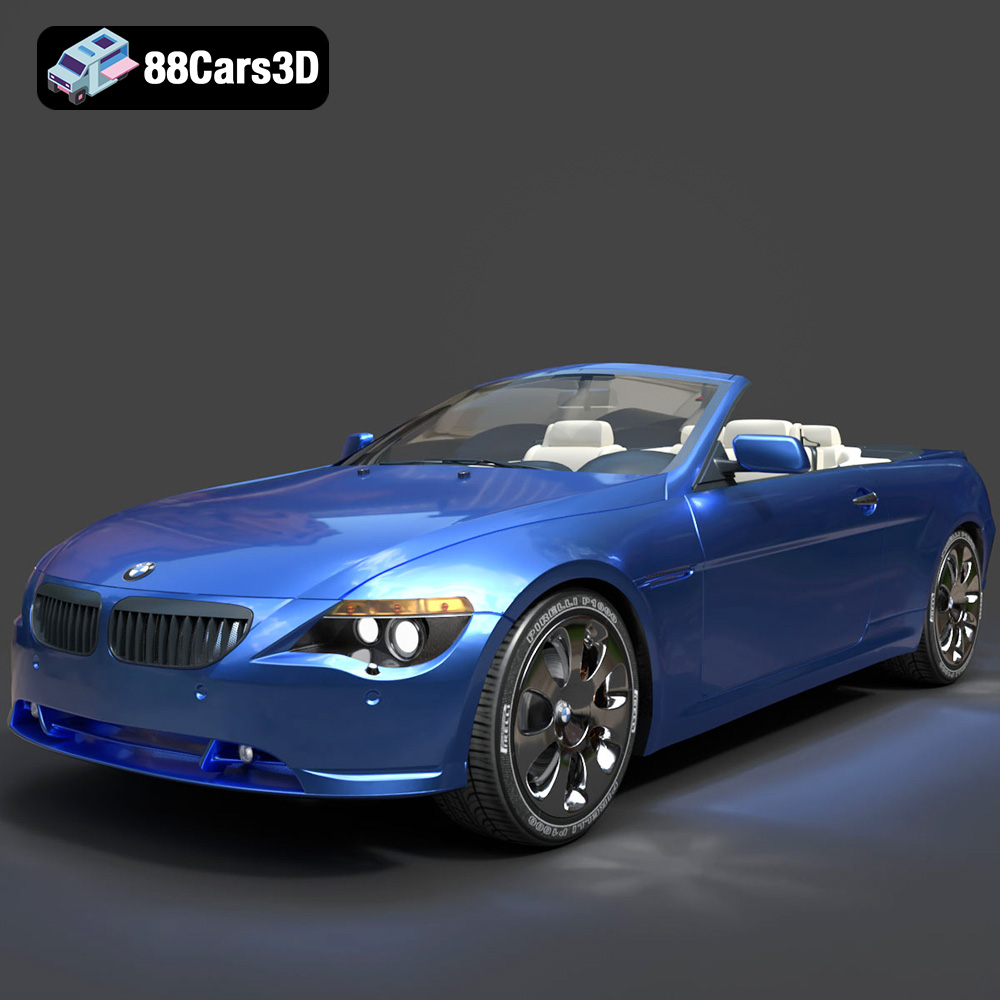
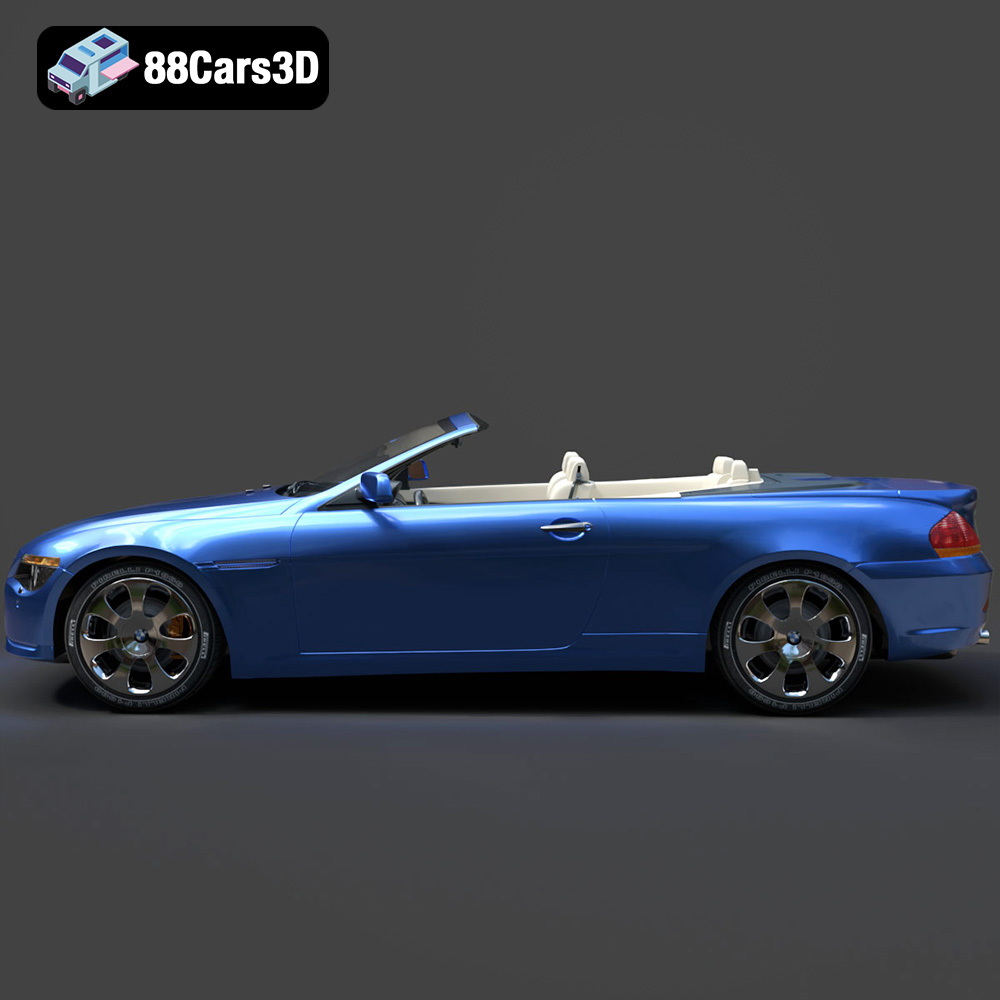
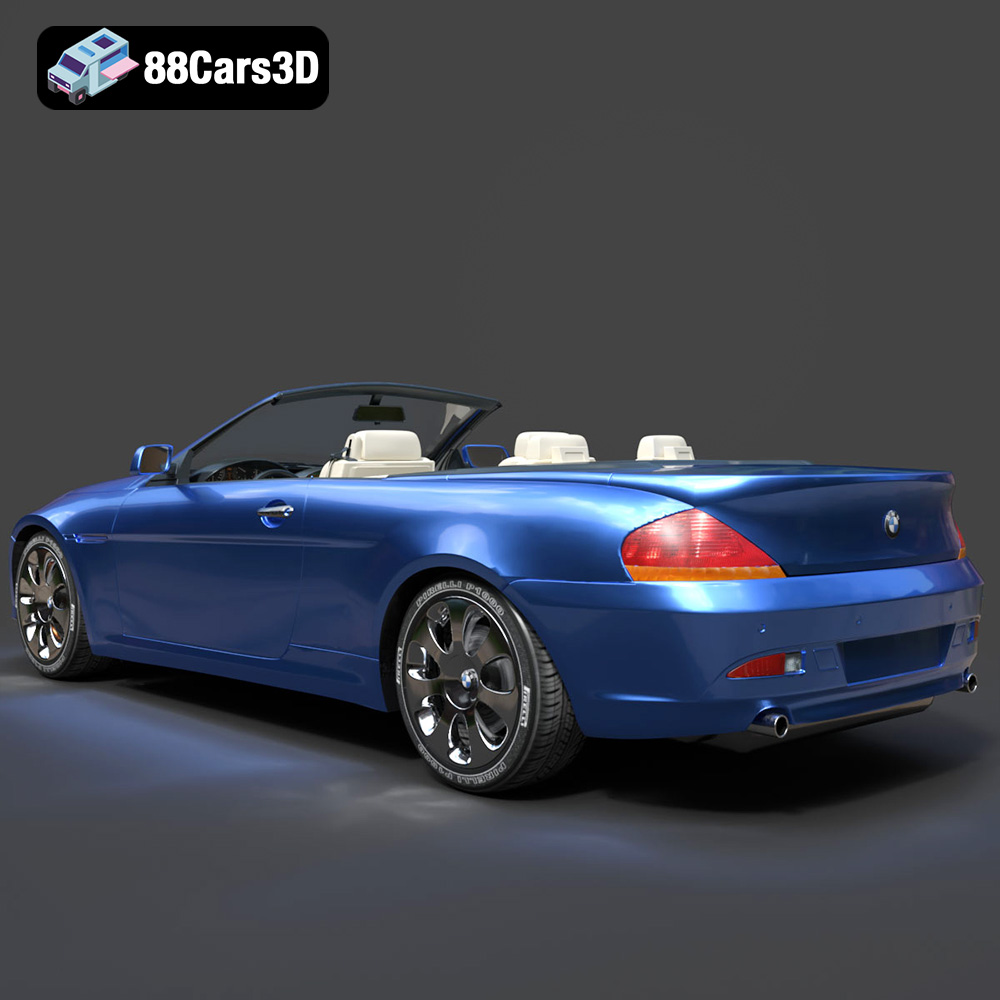
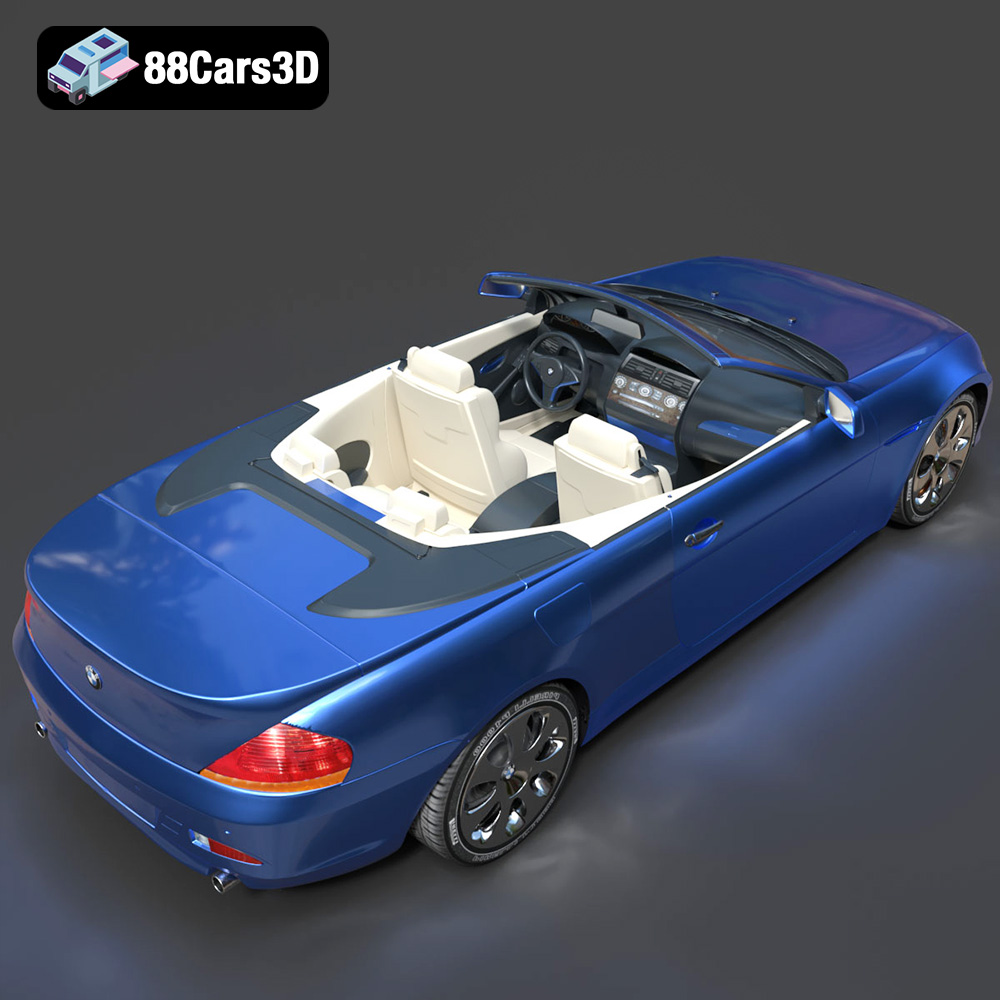
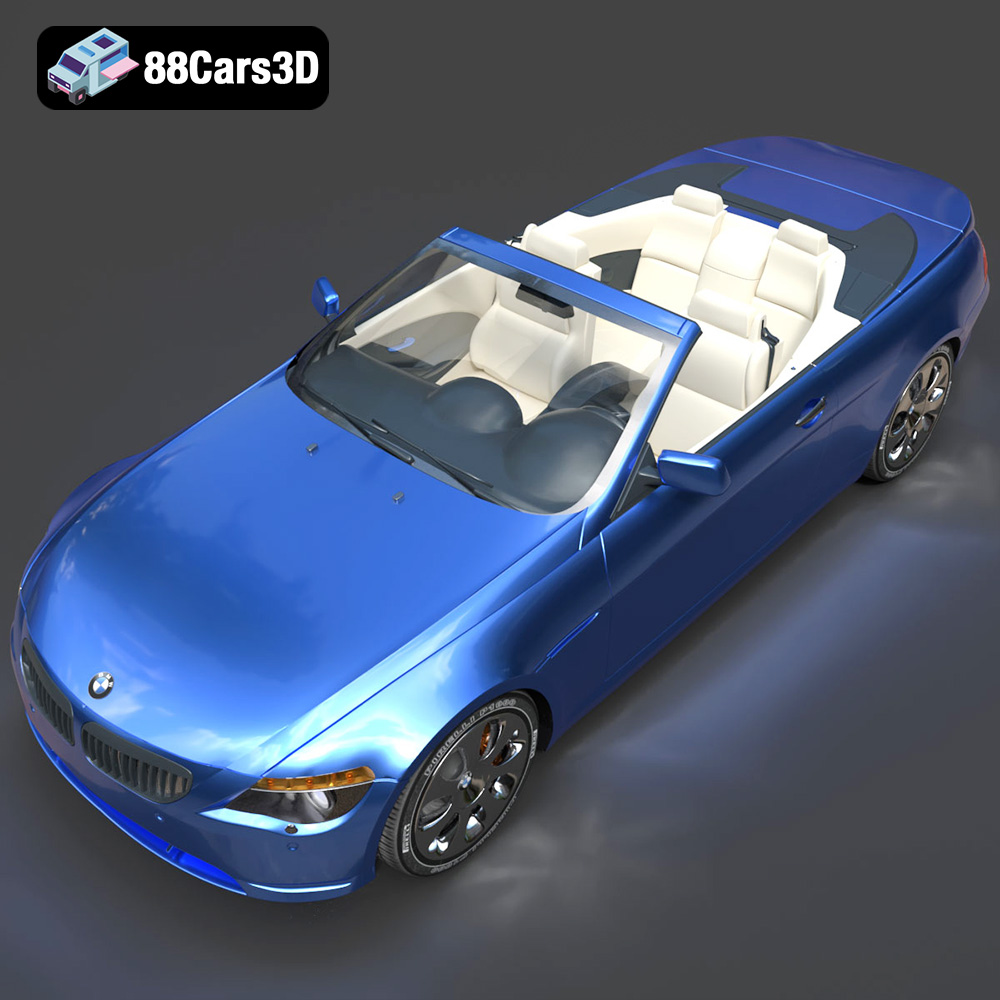
Capture the essence of German luxury performance with this detailed 3D model of the BMW 6 Series Convertible. Modeled to exacting standards, this asset delivers visual fidelity suitable for professional projects requiring authentic vehicle representation. Every curve and panel gap has been meticulously recreated to ensure photorealistic results in any rendering environment. This automotive asset features incredibly clean, optimized geometry, designed to perform efficiently across various digital platforms. It includes realistic PBR (Physically Based Rendering) materials configured for immediate use, reducing setup time significantly. The model boasts a fully modeled interior and detailed chassis elements, making it versatile for close-up shots, simulations, and virtual walkthroughs. The BMW 6 Series Convertible 3D Model is ready for integration into numerous professional applications, including cinematic rendering, architectural visualization, automotive advertising, real-time game development (Unreal Engine, Unity), virtual reality (VR), and augmented reality (AR) experiences. Its robust structure ensures reliable performance regardless of the target platform.
$14.99
Product Image Gallery