Beyond the Horizon: Elevating Your 3D Projects with Authentic Environmental Assets
In the vast landscape of 3D visualization, the difference between a good project and an unforgettable one often lies in the meticulous attention to detail. Whether you’re crafting a cinematic masterpiece, developing an immersive game world, or designing a compelling architectural visualization, the quality of your assets directly dictates the realism and emotional resonance of your final output. While high-performance 3D car models and intricate architectural elements often take center stage, the subtle yet powerful impact of environmental props and background assets cannot be overstated.
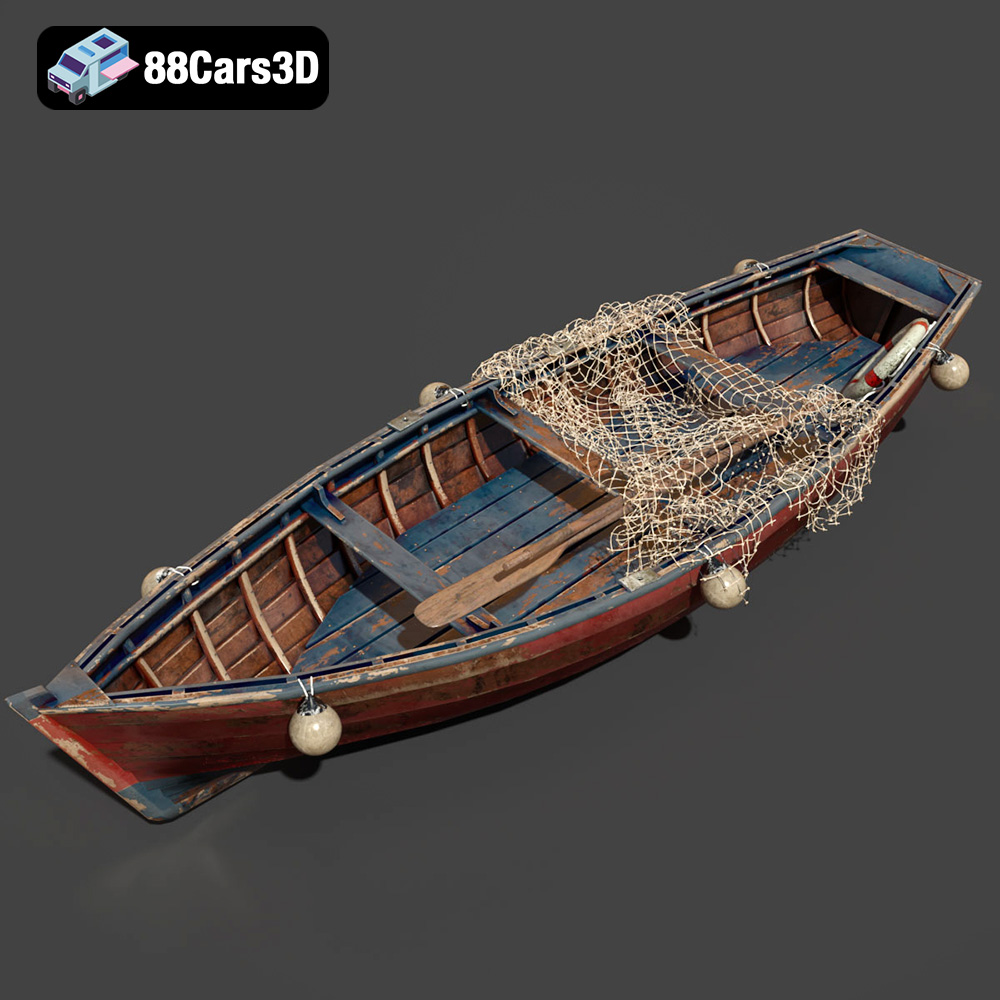
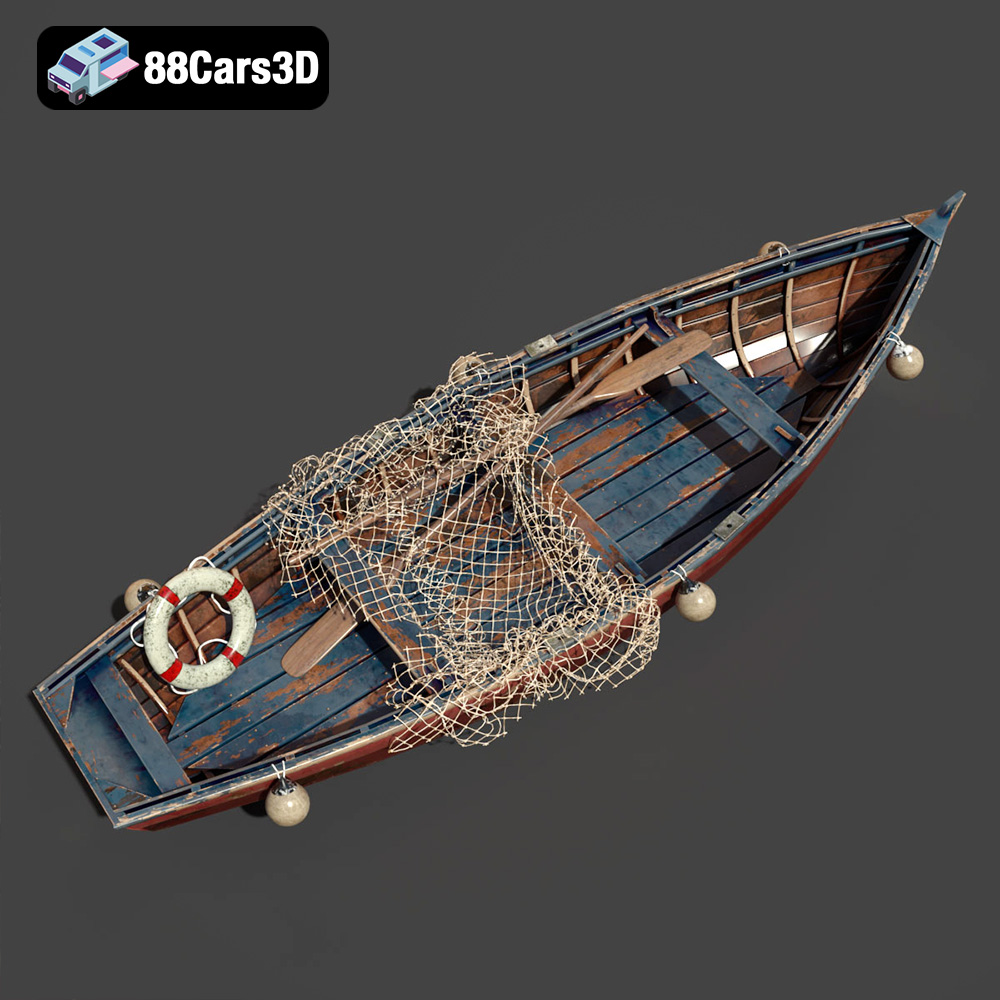
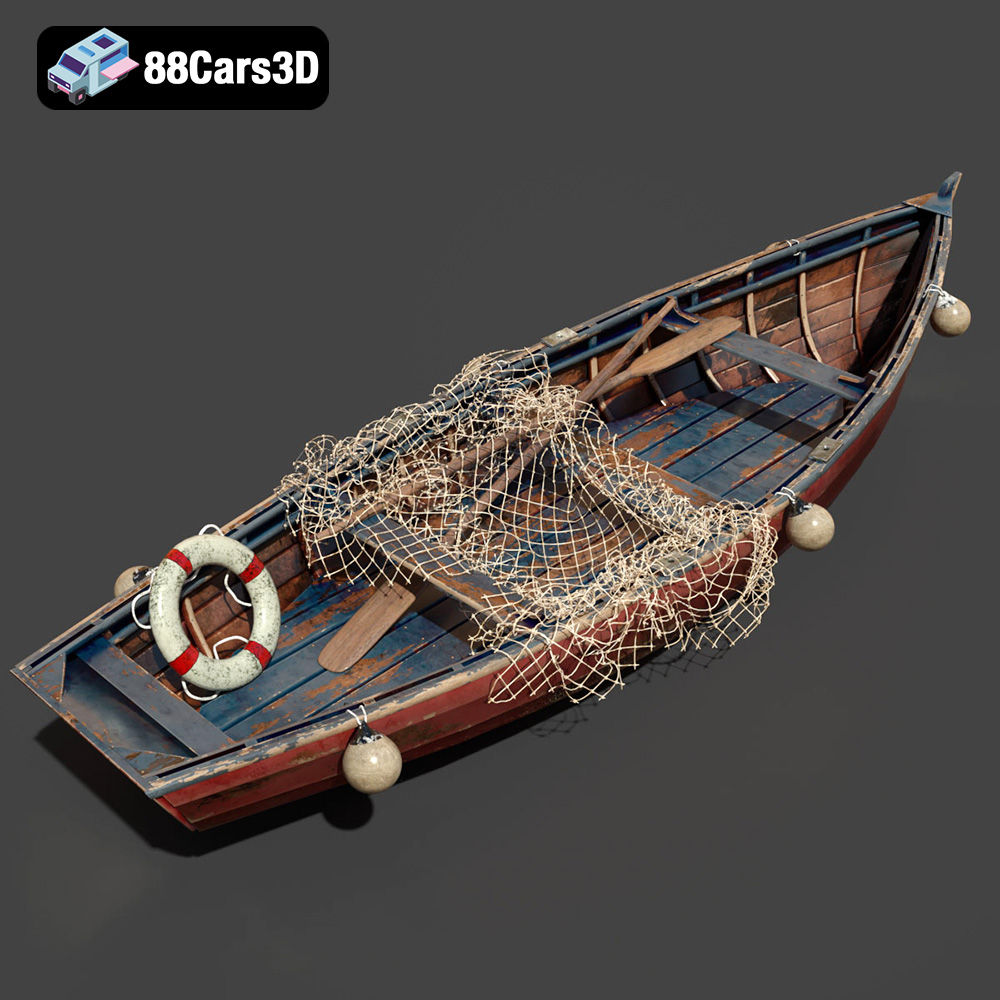
Consider the power of a single, well-crafted asset to tell a story or anchor a scene in reality. Imagine a bustling harbor scene, a desolate coastal stretch, or a historical reenactment – what better element to convey character and history than a truly authentic vessel? This is precisely where the Old Fishing Boat 2014 3D Model distinguishes itself. Available at 88cars3d.com, this asset isn’t just a model; it’s a meticulously detailed piece of digital history, designed to infuse professional realism into any project.
Capturing the weathered character and functional structure of a classic maritime vessel, this model offers clean geometry and professional textures simulating aged wood, rust, and worn paint. It’s a prime example of how specialized 3D assets can significantly enhance your creative endeavors, providing immediate integration into diverse pipelines, from high-resolution rendering to real-time game development and AR/VR experiences. Let’s delve into the technical intricacies and creative potential that such a specialized asset brings to the modern 3D workflow.
Understanding 3D Model File Formats: Choosing the Right Tool for the Job
The journey of a 3D model, from creation to final render or in-engine deployment, often involves navigating a diverse ecosystem of file formats. Each format is designed with specific use cases, compatibilities, and data structures in mind. Understanding these nuances is crucial for any 3D professional to ensure optimal performance, fidelity, and workflow efficiency. The Old Fishing Boat 2014 3D Model, for instance, comes equipped with a comprehensive suite of formats, catering to virtually every professional application.
.blend – The Blender Powerhouse
The .blend file is Blender’s native format, acting as a complete snapshot of your Blender project. This format is invaluable because it stores not just the mesh data, UVs, and textures, but also materials, lighting setups, camera positions, animation data, physics simulations, and even custom scripts. When you purchase a .blend file like that of the Old Fishing Boat 2014, you’re getting a fully editable scene, allowing for deep customization. Artists can easily adjust materials, modify geometry, or integrate the boat into an existing Blender scene with minimal effort, leveraging Blender’s robust toolset for rendering with Cycles or Eevee.
.fbx – The Universal Exchange Standard
Autodesk’s .fbx (Filmbox) format is arguably the most widely adopted exchange format in the 3D industry. It excels at transferring complex scene data, including geometry, PBR materials (with texture paths), animations, bone structures (rigging), and even light and camera information, between different 3D software applications and game engines. For assets like the Old Fishing Boat 2014, the .fbx is ideal for immediate integration into Unreal Engine, Unity, and other real-time pipelines, ensuring that the model’s structure, UVs, and material assignments are preserved accurately upon import. Its versatility makes it a cornerstone for collaborative projects and cross-platform development.
.obj – The Foundation of Geometry
The .obj (Wavefront Object) format is a simpler, yet highly effective, universal format primarily focused on geometry and UV mapping. While it doesn’t typically store complex PBR material definitions, animation data, or rigging, it is exceptionally compatible across virtually all 3D software. When you need to export just the raw mesh data and its corresponding UV coordinates for texturing in external applications like Substance Painter, or for integration into a highly specialized renderer, .obj is often the go-to choice. It’s a robust, foundational format for ensuring maximum cross-software compatibility, making the Old Fishing Boat 2014 accessible to almost any 3D artist.
.glb – Optimized for AR, VR, and Web
.glb (GL Transmission Format Binary) is the binary version of the glTF format, specifically designed for efficient transmission and loading of 3D scenes and models in web, AR, and VR environments. It’s a self-contained format that bundles geometry, materials (using PBR workflows), textures, and animation data into a single file, making it incredibly performant and easy to deploy online or in mobile AR/VR applications. For showcasing the Old Fishing Boat 2014 on a website or integrating it into a mobile AR experience, the .glb format provides an optimized, lightweight solution without compromising visual quality.
.stl – Precision for 3D Printing
The .stl (Stereolithography) format is the industry standard for 3D printing. It represents 3D surfaces as a collection of unconnected triangles, essentially defining the surface geometry of an object without color, texture, or material information. For designers and hobbyists looking to physically manifest the Old Fishing Boat 2014, perhaps as a miniature prop or a display piece, the .stl file provides the necessary data for slicing software and 3D printers to accurately reproduce the model in the physical world. It emphasizes surface integrity and manifold geometry for successful prints.
.ply – Precision Mesh for CAD or Analysis
The .ply (Polygon File Format or Stanford Triangle Format) is another format for storing 3D data, particularly useful for capturing and representing scanner data, point clouds, and mesh geometry with additional properties. Unlike .stl, .ply can store color, transparency, and even normal vectors per vertex or face, offering a higher level of detail for visual fidelity in scientific visualization, CAD, or reverse engineering applications. For analytical visualization or precise reproductions of the Old Fishing Boat 2014, the .ply format offers a robust and detailed representation of its mesh structure.
.unreal – Engine-Ready for Real-time Environments
The .unreal file (often referring to a specific asset structure or package within Unreal Engine, rather than a standalone export format like .fbx) signifies that an asset has been pre-configured, imported, and optimized specifically for Unreal Engine. This means materials are set up with PBR shaders, textures are correctly applied, and often, collision meshes, LODs (Levels of Detail), and other engine-specific optimizations are already in place. For developers working with the Old Fishing Boat 2014, this format ensures a seamless drag-and-drop experience, saving significant time on setup and optimization, allowing immediate use in stunning real-time environments.
.max – The 3ds Max Project File
Similar to .blend for Blender, the .max file is Autodesk 3ds Max’s native project format. It encapsulates the entire 3ds Max scene, including all geometry, modifiers, materials (especially V-Ray or Corona setups), lighting, cameras, animation, and scene settings. For those rooted in the 3ds Max ecosystem, having the Old Fishing Boat 2014 in .max format means gaining full access to the original project, enabling advanced rendering, animation, or integration into complex visualization scenes with maximum flexibility and control.
Crafting Realism: The Art of Weathered 3D Assets
The appeal of an asset like the Old Fishing Boat 2014 3D Model lies not just in its accurate form but in its tangible sense of history. Achieving this level of realism requires a deep understanding of PBR (Physically Based Rendering) texturing, meticulous geometry, and an artist’s eye for detail. This particular model excels in presenting the authentic character of a boat that has seen years of service, battling elements and telling stories through its weathered surfaces.
The Geometry Foundation: Clean Topology for Performance and Detail
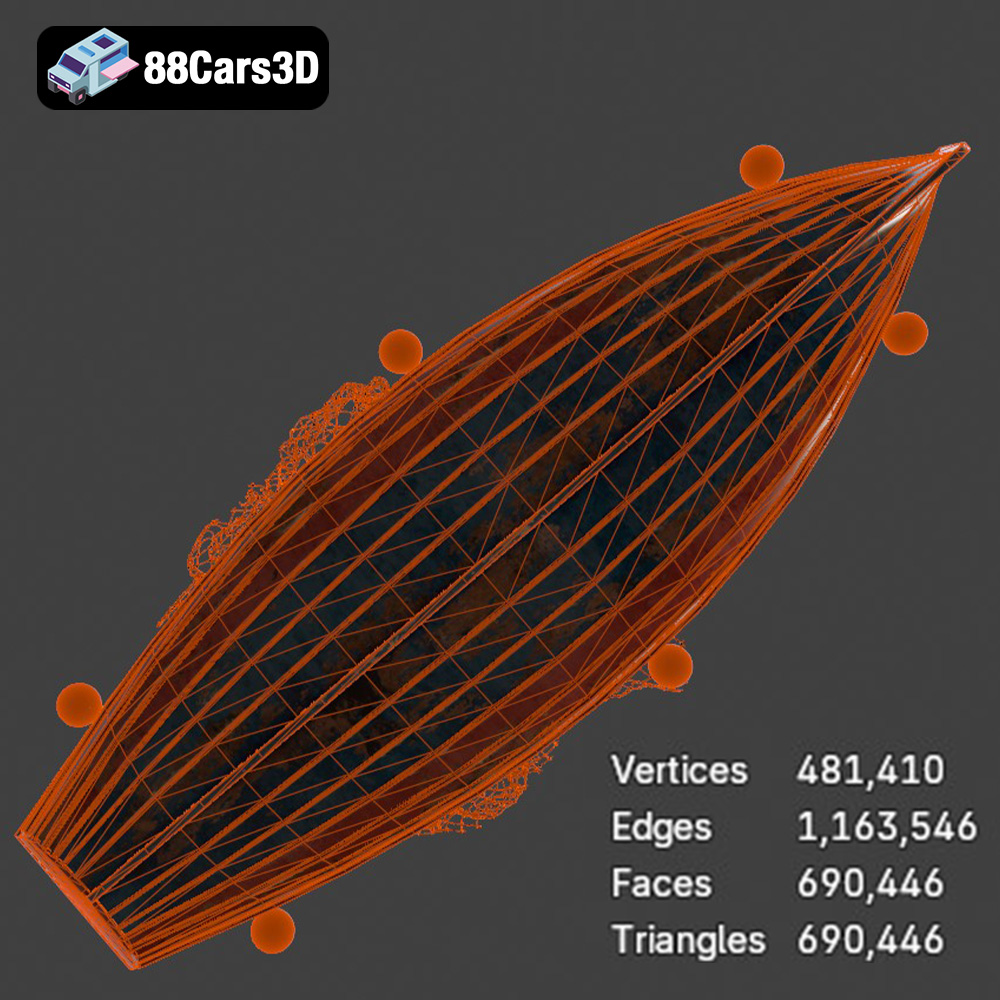
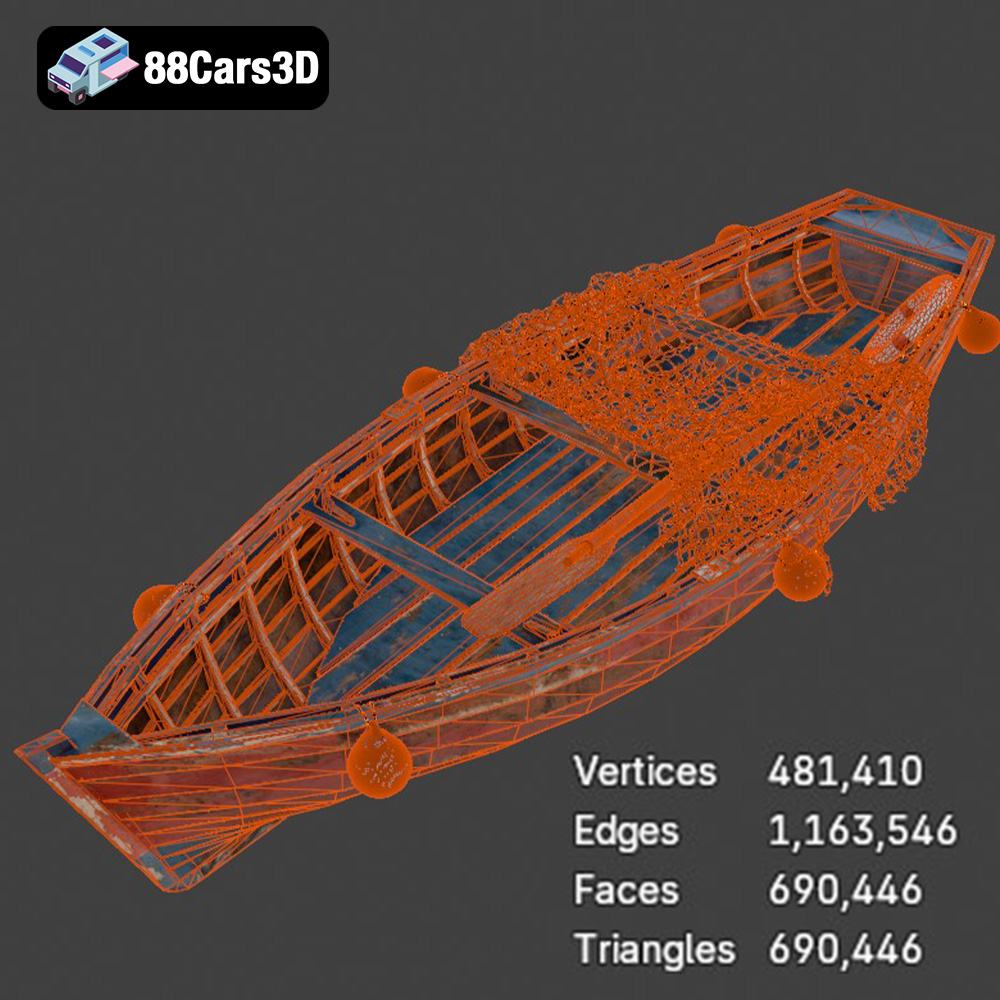
At the core of any high-quality 3D model is its geometry. The Old Fishing Boat 2014 boasts “professional, clean geometry,” which means its mesh is organized, efficient, and free of common issues like overlapping faces, non-manifold edges, or excessive polygon counts where not needed. Clean topology is crucial for several reasons: it ensures smooth deformations if animated, facilitates efficient UV unwrapping, and minimizes rendering artifacts. For complex assets with intricate details like a fishing boat, balancing detail with polygon efficiency is key, allowing for close-up renders without sacrificing performance in real-time applications.
PBR Texturing for Authentic Appearance
The magic of modern 3D rendering largely relies on PBR workflows. Instead of traditional diffuse maps, PBR utilizes multiple texture channels—such as Albedo (base color), Roughness, Metallic, Normal, and Ambient Occlusion—to accurately simulate how light interacts with a surface. For the Old Fishing Boat 2014, this means that the “aged wood, rust, and worn paint” aren’t just painted on; they are physically accurate representations. The roughness map dictates how shiny or dull a surface appears, the metallic map defines metallic properties, and the normal map adds intricate surface detail without increasing polygon count. This approach ensures the boat looks convincing under any lighting condition, from harsh sunlight to a foggy dawn.
Detailing with Wear and Tear: Storytelling Through Surface Imperfections
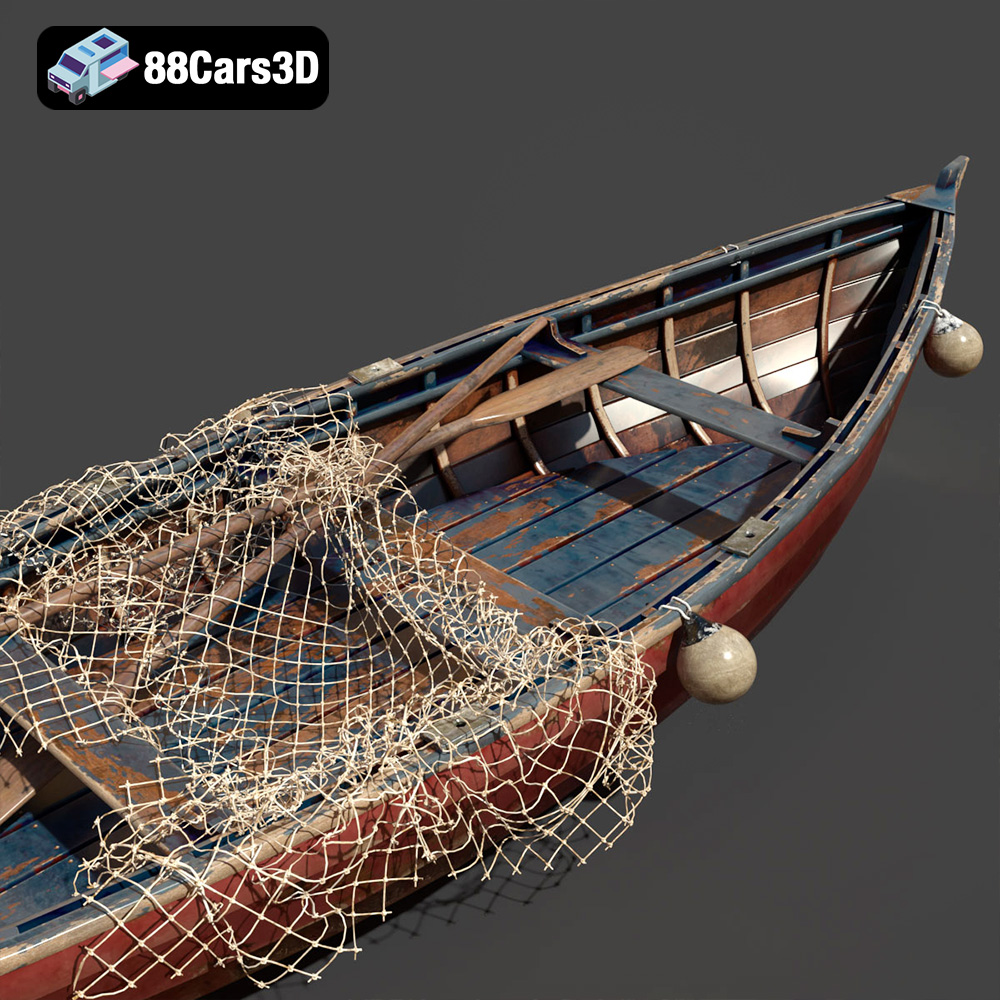
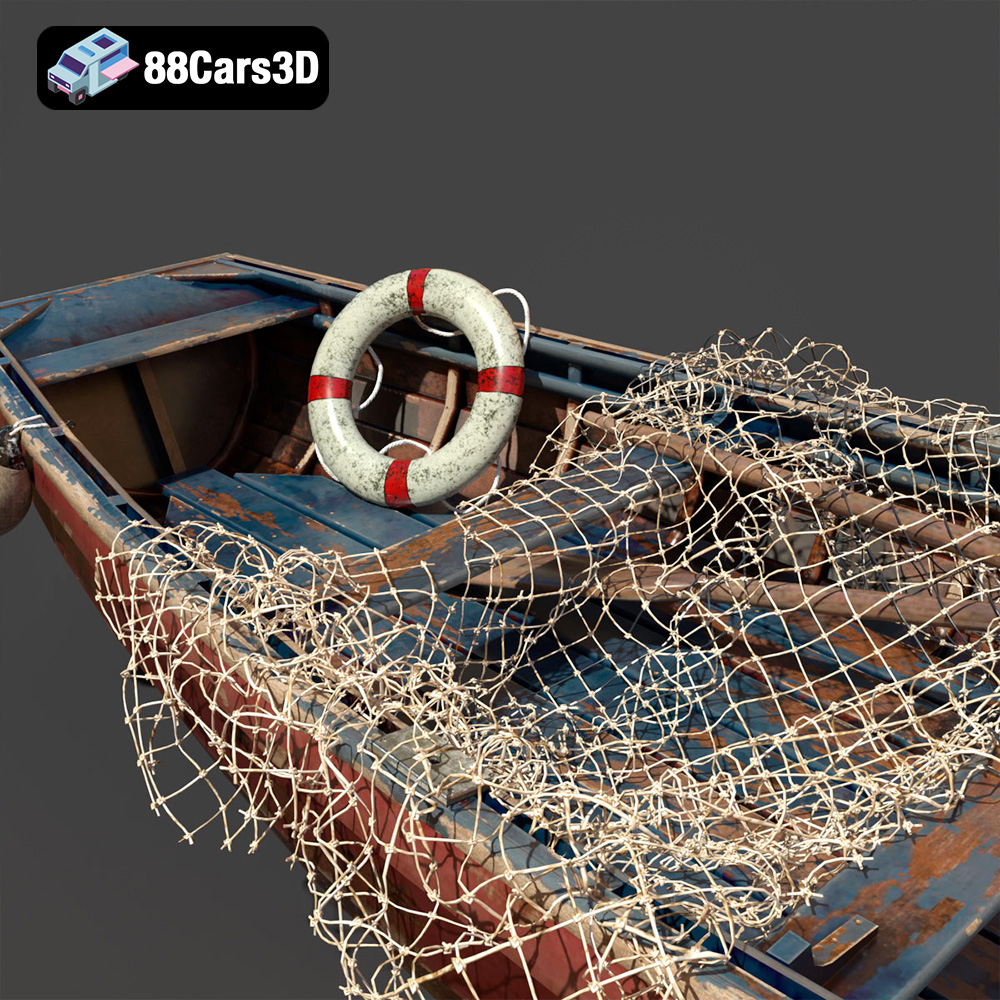
What truly brings a weathered asset to life are its imperfections. The Old Fishing Boat 2014’s worn paint, chipped wood, and patches of rust are not random; they are carefully considered details that tell a story. Rust typically forms where paint has chipped away, exposing metal to the elements. Worn paint often occurs on edges, corners, and frequently touched areas. These details are achieved through careful texture painting, often utilizing procedural masks and hand-painted layers in software like Substance Painter or directly within Blender or 3ds Max. This level of granular detail makes the model not just look real, but feel real, immersing the viewer in its simulated history. Such rich details are paramount for professional automotive rendering and high-fidelity game assets, where every surface tells part of the scene’s narrative.
Integrating into Professional Workflows: From Static Renders to Dynamic Scenes
A truly versatile 3D asset is one that can be easily integrated into a myriad of professional pipelines. The Old Fishing Boat 2014 3D Model is engineered precisely for this, offering broad compatibility across industry-standard software. Its inclusion of .blend, .max, .fbx, and .unreal formats underscores its readiness for diverse applications, from high-fidelity rendering to real-time engine deployment. This flexibility makes it an invaluable addition to any asset library, particularly for those working across multiple disciplines.
Blender: From Import to Render Perfection
For Blender artists, the provided .blend file is a direct gateway to immediate use. Importing the Old Fishing Boat 2014 is seamless, with all materials, textures, and even a basic lighting setup likely intact. Artists can then easily integrate it into their existing scenes, whether it’s an expansive ocean vista or a desolate dock. Leveraging Blender’s Cycles or Eevee render engines, users can achieve photorealistic results with minimal setup. The model’s clean geometry and PBR textures will respond accurately to Blender’s powerful lighting and shading capabilities, allowing for fine-tuning of reflections, refractions, and atmospheric effects to create breathtaking renders. This level of detail makes it perfect for adding realism to a scene that might feature 3D car models parked nearby or architectural elements.
3ds Max: Mastering Architectural and Cinematic Scenes
3ds Max users benefit from the dedicated .max file, ensuring native compatibility and access to the model’s full structure within their preferred environment. This is particularly advantageous for professionals in architectural visualization, product rendering, or cinematic pre-visualization. The Old Fishing Boat 2014 can serve as an excellent environmental prop, adding character and context to exterior architectural renders or populating a detailed waterfront scene alongside detailed 3D car models or other vehicles. With 3ds Max’s robust rendering capabilities (V-Ray, Corona Renderer), artists can extract exceptional detail from the boat’s weathered textures, simulating everything from the subtle glint of aged metal to the nuanced reflections on damp wood.
Unreal Engine: Real-time Immersion with Ease
The inclusion of both .fbx and .unreal formats makes this model a standout for real-time applications. For game developers and virtual experience creators, importing the Old Fishing Boat 2014 into Unreal Engine is designed to be a streamlined process. The .fbx format ensures all mesh data, UVs, and material assignments transfer correctly, while the .unreal specific format suggests pre-optimization for the engine. Developers can quickly set up PBR materials using Unreal’s powerful material editor, apply correct collision meshes, and even implement LODs (Levels of Detail) to ensure optimal performance across various hardware specifications. This makes the boat an ideal game asset for open-world environments, nautical simulations, or interactive virtual tours, adding depth and authenticity to any digital landscape.
Beyond Rendering: Game Development & Interactive Experiences
While high-fidelity renders showcase the visual prowess of a 3D model, its true versatility shines in interactive environments. The Old Fishing Boat 2014 3D Model is not just a static display piece; it’s a dynamic asset designed for optimal performance in game development, AR/VR, and complex simulations. Its clean geometry and optimized textures are specifically tailored to meet the rigorous demands of real-time applications, where every polygon and texture call can impact frame rates and user experience.
Optimizing for Game Engines: LODs, Collisions, and Performance
Game development necessitates a delicate balance between visual fidelity and performance. An asset like the Old Fishing Boat 2014, while detailed for close-up renders, also needs to perform efficiently at various distances within a game engine. This is achieved through several optimization techniques:
- Levels of Detail (LODs): The model would typically feature multiple versions of its mesh, each with a progressively lower polygon count. When the boat is far from the player’s camera, a low-poly LOD is rendered, saving computational resources. As the player approaches, higher-detail LODs are swapped in seamlessly.
- Collision Meshes: For interactive gameplay, accurate collision meshes are crucial. These simpler, invisible meshes define the physical boundaries of the boat, allowing players to walk on its deck, interact with its sides, or navigate around it without complex physics calculations on the high-detail visual mesh.
- Texture Atlases & Instancing: Combining multiple smaller textures into a single, larger texture (an atlas) can reduce draw calls, improving rendering performance. Furthermore, if multiple instances of the boat are used, engine instancing techniques can render them efficiently with minimal overhead.
These considerations ensure that the Old Fishing Boat 2014 can be seamlessly integrated as a high-quality game asset, enriching environments without burdening the engine.
AR/VR: Bringing Digital Assets to Life in New Realities
Augmented Reality (AR) and Virtual Reality (VR) experiences demand highly optimized assets that can maintain fluid frame rates while delivering immersion. The .glb format, specifically included for the Old Fishing Boat 2014, is a testament to its AR/VR readiness. In VR, users can walk around, on, or even inside the boat, examining its weathered details up close. In AR, the boat could be placed virtually in a real-world environment, creating interactive scenes on a tabletop or within a real body of water. The optimized geometry and PBR materials translate beautifully into these immersive mediums, providing a palpable sense of presence and realism, whether for educational tours, virtual museums, or interactive narratives.
Nautical Simulation and Training: Functional Realism
Beyond entertainment, highly accurate 3D models like the Old Fishing Boat 2014 are invaluable for professional simulations. For nautical training, maritime engineering visualization, or even historical preservation projects, a detailed model ensures fidelity to real-world conditions. Imagine a scenario where cadets learn knot-tying on a virtual deck, or engineers study fluid dynamics around a precisely modeled hull. The accurate scale and proportions, combined with realistic material representations, make this model suitable for demanding simulations where visual accuracy is paramount, adding functional realism that complements even the most technical visualizations.
Optimizing for Performance and Detail in 3D Asset Creation
Creating a 3D model that looks stunning yet performs efficiently across various platforms is an intricate art. It involves strategic decisions about geometry, texturing, and shading. The Old Fishing Boat 2014 3D Model exemplifies a balanced approach, delivering high visual fidelity through optimized techniques, making it suitable for both cinematic renders and real-time game assets.
Poly Count Management and Levels of Detail (LODs)
Poly count, or the number of polygons (triangles or quads) that make up a 3D mesh, is a critical factor in performance. While a high poly count allows for intricate details, it can severely impact real-time rendering speed. The professional approach, as seen in models like the Old Fishing Boat 2014, involves intelligent poly distribution—more polygons where detail is needed (e.g., the boat’s main structure, intricate ropes) and fewer where it isn’t (e.g., flat surfaces). Crucially, the concept of Levels of Detail (LODs) allows for further optimization. By creating multiple versions of the model with varying polygon counts, the renderer can dynamically swap between them based on distance from the camera, ensuring visual quality up close and optimal performance from afar. This makes the asset robust for demanding real-time projects.
Efficient UV Mapping and Texture Atlases
UV mapping is the process of flattening the 3D surface of a model into a 2D space, allowing textures to be applied. “Clean geometry” often implies efficient and organized UVs, which are essential for preventing texture stretching and ensuring pixel density. For a complex asset like a fishing boat with aged wood, rust, and worn paint, multiple textures are often required. Grouping these textures into a single “texture atlas” can significantly improve rendering efficiency, especially in game engines. By reducing the number of materials and texture calls, the GPU can process the scene more quickly. The Old Fishing Boat 2014 likely employs such techniques to ensure its detailed textures are rendered efficiently, delivering visual richness without undue performance costs.
Shader Optimization and Material Instancing
Shaders define how a material looks under different lighting conditions. Complex shaders with many calculations can be performance-intensive. Optimizing shaders involves minimizing instructions, using efficient mathematical operations, and leveraging material instancing. Material instancing allows multiple objects to share a single base material while having unique parameters (like color variations or texture offsets) applied to each instance. For scenes featuring multiple similar assets or for efficiently rendering various parts of the boat with slightly different wear and tear, material instancing can drastically reduce draw calls and memory usage, making the Old Fishing Boat 2014 a highly efficient asset even in crowded scenes.
Real-World Applications and Creative Potential
The true measure of a high-quality 3D asset lies in its versatility and its ability to empower creators across various industries. The Old Fishing Boat 2014 3D Model, with its detailed craftsmanship and flexible file formats, opens up a world of creative possibilities, extending its utility far beyond basic rendering.
Cinematic Storytelling and Film Production
In film and animation, environmental assets are crucial for establishing setting, mood, and narrative depth. A weathered fishing boat isn’t just a prop; it’s a character in itself, suggesting a life lived, stories untold, and the harsh realities of the sea. For filmmakers, this model can be a focal point in a dramatic scene, a background element adding authenticity to a coastal town, or a key asset in a period piece. Its high-resolution textures and accurate geometry ensure it holds up even in extreme close-ups, making it ideal for visual effects (VFX) shots and detailed cinematic sequences. Imagine it subtly rusting beside a historical 3D car model on a dusty dock, creating a rich visual tapestry.
Environmental Design in Games and Virtual Worlds
Game developers constantly seek assets that can quickly populate their virtual worlds with believable detail. The Old Fishing Boat 2014 is a perfect game asset for adding character to open-world games, nautical-themed adventures, or even post-apocalyptic settings. Its optimized nature ensures it integrates seamlessly into game engines like Unreal and Unity, enhancing environmental storytelling without compromising performance. Developers can use it to create abandoned shipyards, bustling harbors, or as a quest objective, transforming a generic water body into a vibrant, lived-in space. Its detailed construction lends itself to interactive elements, allowing players to explore its deck or discover hidden items within its hull.
Educational, Historical, and Architectural Visualization
Beyond entertainment, precise 3D models serve significant roles in education, historical preservation, and architectural visualization. The Old Fishing Boat 2014 can be utilized to:
- Educational Simulations: Teach maritime history, boat construction, or naval mechanics in an interactive 3D environment.
- Historical Reconstruction: Contribute to digital reconstructions of historical ports or coastal communities, providing an authentic element that reflects the era.
- Architectural Context: Enhance architectural visualizations of marinas, waterfront properties, or resort developments. Placing a realistic, weathered boat in the foreground can ground a modern building design in a believable, lively context, demonstrating how the new structure integrates with its surroundings. This is especially useful for clients who appreciate a broader environmental scope, beyond just the building itself, perhaps even showing how it might complement other 3D car models in a simulated street scene.
The versatility of this asset ensures it can provide invaluable detail and realism across a broad spectrum of professional and creative applications.
Conclusion: The Value of Precision and Versatility in Your 3D Asset Library
In the dynamic world of 3D modeling, rendering, and game development, the foundation of any truly compelling project rests upon the quality and versatility of its assets. The Old Fishing Boat 2014 3D Model stands as a prime example of an asset that delivers both precision and flexibility. From its meticulously crafted, clean geometry and PBR-textured surfaces simulating aged wood and rust, to its comprehensive suite of file formats (.blend, .fbx, .obj, .glb, .stl, .ply, .unreal, .max), it is designed to seamlessly integrate into virtually any professional workflow.
Whether you’re an environmental artist aiming for photorealistic renders in Blender or 3ds Max, a game developer building an immersive world in Unreal Engine or Unity, or an AR/VR creator pushing the boundaries of interactive experiences, this model provides the authentic detail needed to elevate your work. Its robust construction and optimized features ensure that it performs flawlessly, whether as a center-piece in a cinematic production, a high-fidelity game asset, or a functional element in a detailed simulation.
Investing in high-quality 3D assets like the Old Fishing Boat 2014 from 88cars3d.com not only saves invaluable production time but also ensures that your projects resonate with a level of realism and immersion that sets them apart. Explore the potential of this versatile maritime asset and discover how adding a touch of weathered authenticity can transform your visualizations and interactive experiences. At 88cars3d.com, you’ll find a curated selection of assets, from detailed 3D car models to unique environmental props, all designed to meet the highest professional standards and fuel your creative endeavors.
Featured 3D Model
Old Fishing Boat 2014 3D Model
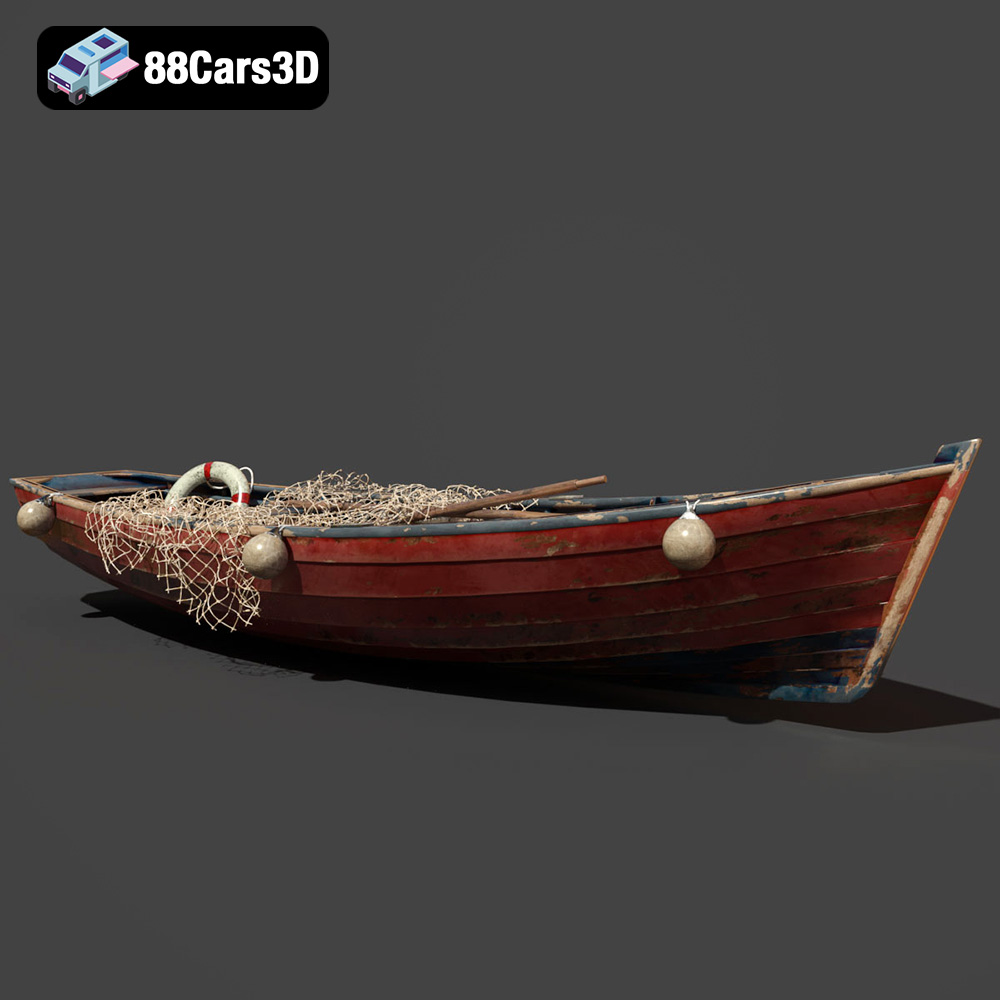
Introduce professional realism to your visualizations and projects with the Old Fishing Boat 2014 3D Model. This detailed asset captures the weathered character and functional structure of a classic maritime vessel, modeled precisely to ensure accurate scale and proportions. This 3D model features professional, clean geometry optimized for performance across various platforms. All surfaces and components are textured with realistic materials, simulating aged wood, rust, and worn paint, making it suitable for close-up renders and demanding simulations. The Old Fishing Boat 2014 model is a versatile asset engineered for immediate integration into multiple pipelines. It is perfect for nautical simulation, environmental scene creation, virtual reality (VR) and augmented reality (AR) experiences, high-resolution rendering, and commercial game development.
$9.99
Product Image Gallery