Beyond the Showroom: Unlocking Creative Potential with High-Fidelity 3D Car Models
In the dynamic world of 3D visualization, the demand for authentic and highly detailed assets is ever-increasing. From blockbuster game titles and compelling automotive advertisements to immersive VR experiences and intricate architectural renderings, the quality of a 3D model can significantly impact a project’s overall success and perceived realism. Artists and developers are constantly seeking assets that not only look good but are also technically robust, offering flexibility and ease of integration into diverse workflows. This pursuit of excellence often leads professionals to specialized marketplaces where quality is paramount.
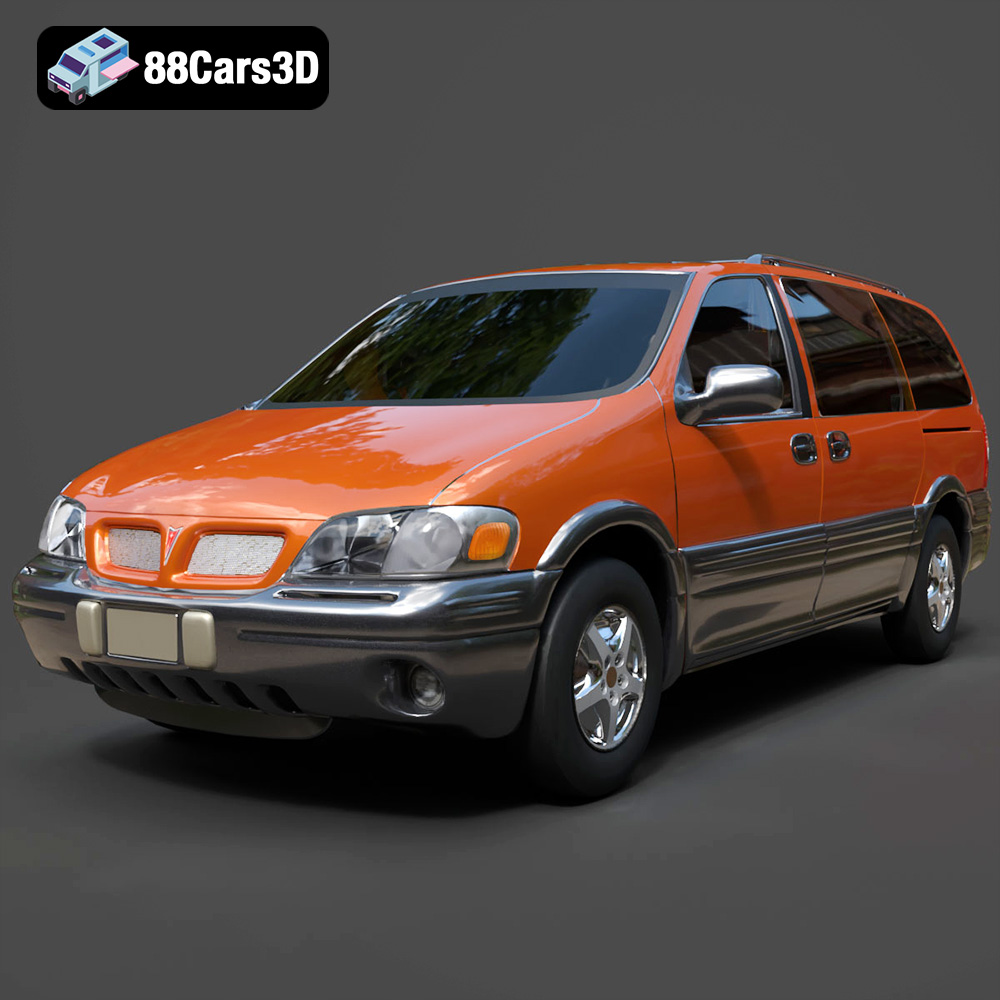
Today, we delve into the multifaceted utility of expertly crafted 3D car models, exploring how they serve as foundational elements for a myriad of creative and technical endeavors. We’ll examine the intricate details that transform a simple mesh into a professional-grade asset and discuss the essential considerations for integrating such models into complex projects. Through this exploration, we’ll specifically highlight the Pontiac Montana 1998 3D Model, a stellar example of a meticulously designed asset from 88cars3d.com, showcasing how even a seemingly everyday vehicle can become a powerful tool in the hands of a skilled artist or developer.
Understanding 3D Model File Formats: The Backbone of Digital Assets
The choice of a 3D model’s file format is far more critical than many initially realize. It dictates compatibility, workflow efficiency, and the preservation of crucial data like materials, animations, and scene hierarchies. Understanding the strengths and weaknesses of each common format is essential for any professional working with 3D car models or any other complex digital asset.
.blend – The Native Blender Ecosystem
The .blend format is the native file type for Blender, an incredibly powerful and popular open-source 3D creation suite. A .blend file typically contains an entire Blender scene, including all meshes, materials, textures, lighting, cameras, animations, and even physics simulations. Its primary advantage is that it preserves all Blender-specific data, making it ideal for artists who primarily work within Blender or for projects that require full editability and access to advanced Blender features. When acquiring a .blend file, you’re not just getting a model; you’re often getting a fully set-up environment ready for rendering or further animation within Blender.
.fbx – The Industry Standard for Interoperability
Autodesk’s .fbx (Filmbox) format has become the de facto industry standard for exchanging 3D data between different software applications. It’s incredibly versatile, capable of storing models, materials, textures, animations, skinning, and even camera data. Its robust support across major 3D packages like 3ds Max, Maya, Cinema 4D, and especially game engines like Unreal Engine and Unity, makes it indispensable for complex pipelines. When working with 3D car models, .fbx is often preferred for game development and animation due to its excellent support for skeletal animation and efficient data transfer, ensuring that the Pontiac Montana 1998 3D Model, for instance, can transition smoothly into a real-time environment.
.obj – The Universal Exchange Format
The .obj (Wavefront OBJ) format is one of the oldest and most widely supported 3D file formats. It’s a universal standard, compatible with virtually every 3D software package. An .obj file primarily describes geometry (vertices, normals, texture coordinates, and faces) and can reference external .mtl (material) files for basic material definitions. While it doesn’t support animation or complex scene hierarchies, its simplicity and widespread compatibility make it excellent for transferring static mesh data reliably between different platforms. It’s a safe bet when you need to ensure a model can be opened and worked on in almost any 3D application.
.glb – Optimized for AR, VR, and Web
.glb (GL Transmission Format Binary) is a modern, compact, and efficient format designed for real-time delivery of 3D scenes and models. It’s the binary version of glTF and bundles everything—geometry, materials, textures, and animation—into a single file. This makes .glb highly optimized for web-based 3D viewers, AR/VR applications, and mobile platforms, where file size and loading speed are crucial. Its adoption is growing rapidly due to its efficiency and PBR (Physically Based Rendering) material support, making it an excellent choice for deploying interactive 3D car models like the Pontiac Montana in immersive experiences or online showrooms.
.stl – The Gateway to 3D Printing
The .stl (Stereolithography) format is the standard for 3D printing. It represents a 3D model as a series of connected triangles (a tessellation) defining its surface geometry. While it lacks color, texture, or material information, its simplicity makes it ideal for additive manufacturing. When a 3D car model is destined for physical production, converting it to .stl is the crucial step. The Pontiac Montana 1998 3D Model, with its clean geometry, is perfectly suited for conversion to .stl for creating scale replicas.
.ply – Precision Mesh for CAD and Analysis
The .ply (Polygon File Format or Stanford Triangle Format) is a versatile format often used for storing 3D data from 3D scanners, CAD software, and scientific applications. It can store a wide range of properties, including color, transparency, normals, texture coordinates, and even reliability information for each vertex and face. It’s particularly useful when precision and detailed attribute storage are important, such as in reverse engineering, quality control, or mesh analysis workflows.
.unreal – Engine-Ready for Real-Time Environments
While not a standalone file format in the traditional sense, an .unreal asset usually refers to a packaged or imported asset within an Unreal Engine project. This implies that the model has been correctly imported, scaled, had its materials and textures set up, and is ready for use directly within Unreal Engine. This pre-configured state saves significant development time, as the artist doesn’t need to spend hours troubleshooting imports, setting up materials, or optimizing meshes. For game developers, having an “Unreal-ready” 3D car model like the Pontiac Montana means it’s almost plug-and-play.
.max – The 3ds Max Project
The .max format is the native file type for Autodesk 3ds Max, a leading software for 3D modeling, animation, and rendering. Similar to .blend, a .max file contains the complete scene data, including geometry, modifiers, materials, lighting, cameras, and animation keyframes. It offers full editability within 3ds Max and is essential for projects that leverage 3ds Max’s powerful modeling tools, extensive plugin ecosystem, or advanced rendering capabilities with V-Ray or Corona Renderer. For complex automotive rendering and animation tasks, having the .max file of the Pontiac Montana 1998 3D Model provides maximum flexibility.
Crafting Automotive Realism: The Details That Define a High-Quality 3D Model
Creating a truly convincing 3D car model goes far beyond simply replicating its shape. It involves a meticulous attention to detail, a deep understanding of automotive design, and technical expertise in 3D software. The Pontiac Montana 1998 3D Model exemplifies this dedication, offering a compelling case study in professional asset creation.
Exterior Authenticity and Form Language
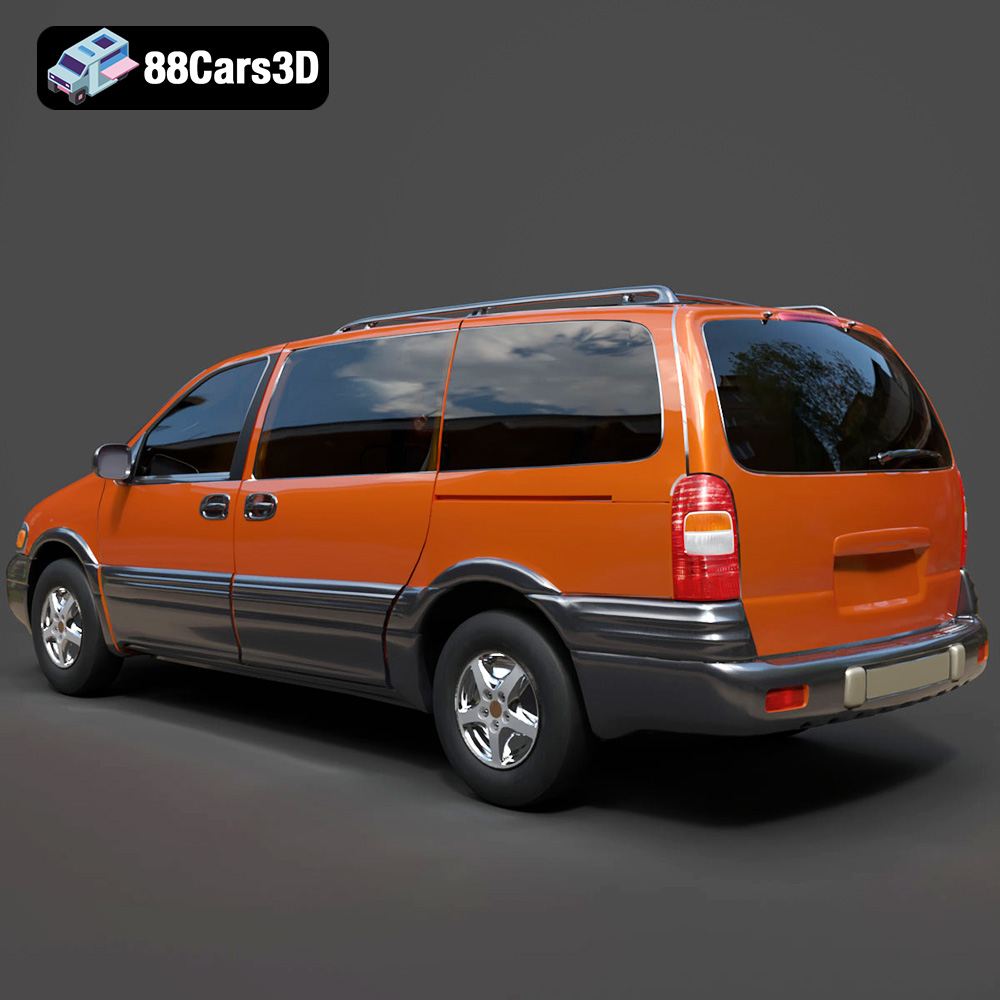
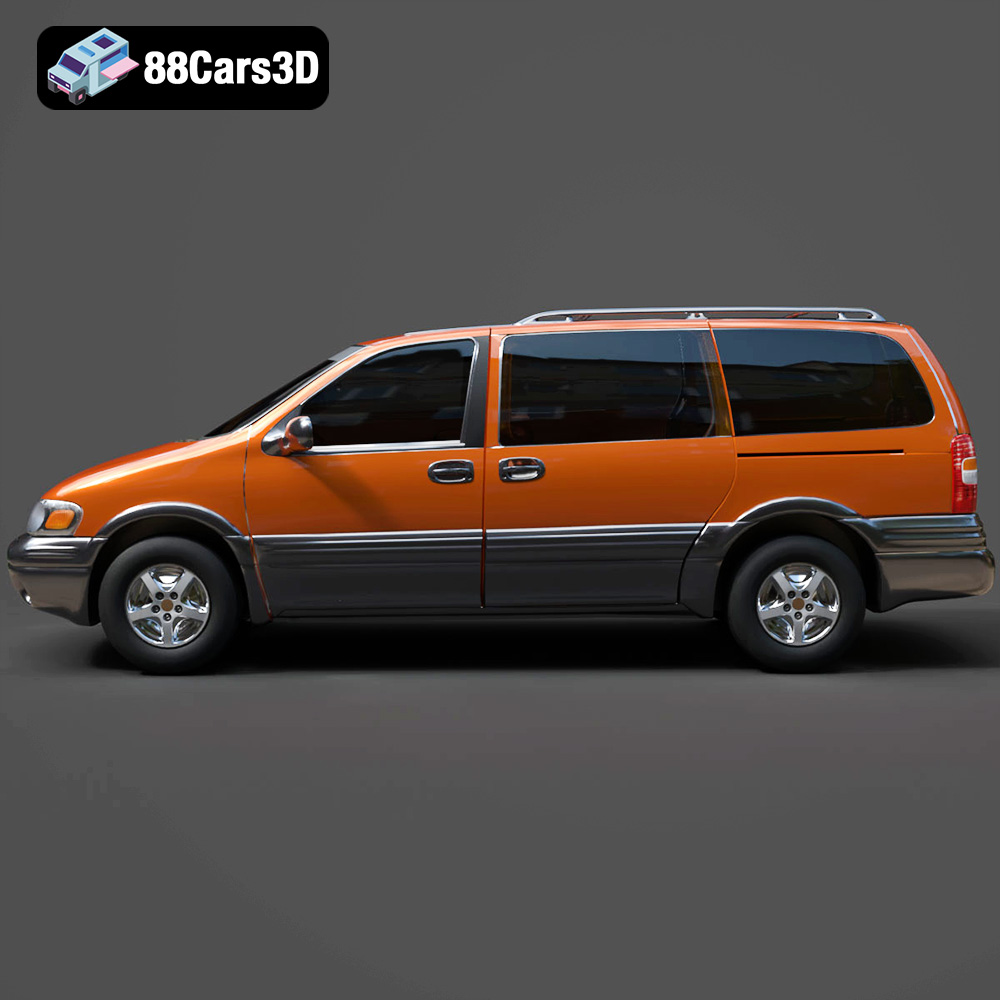
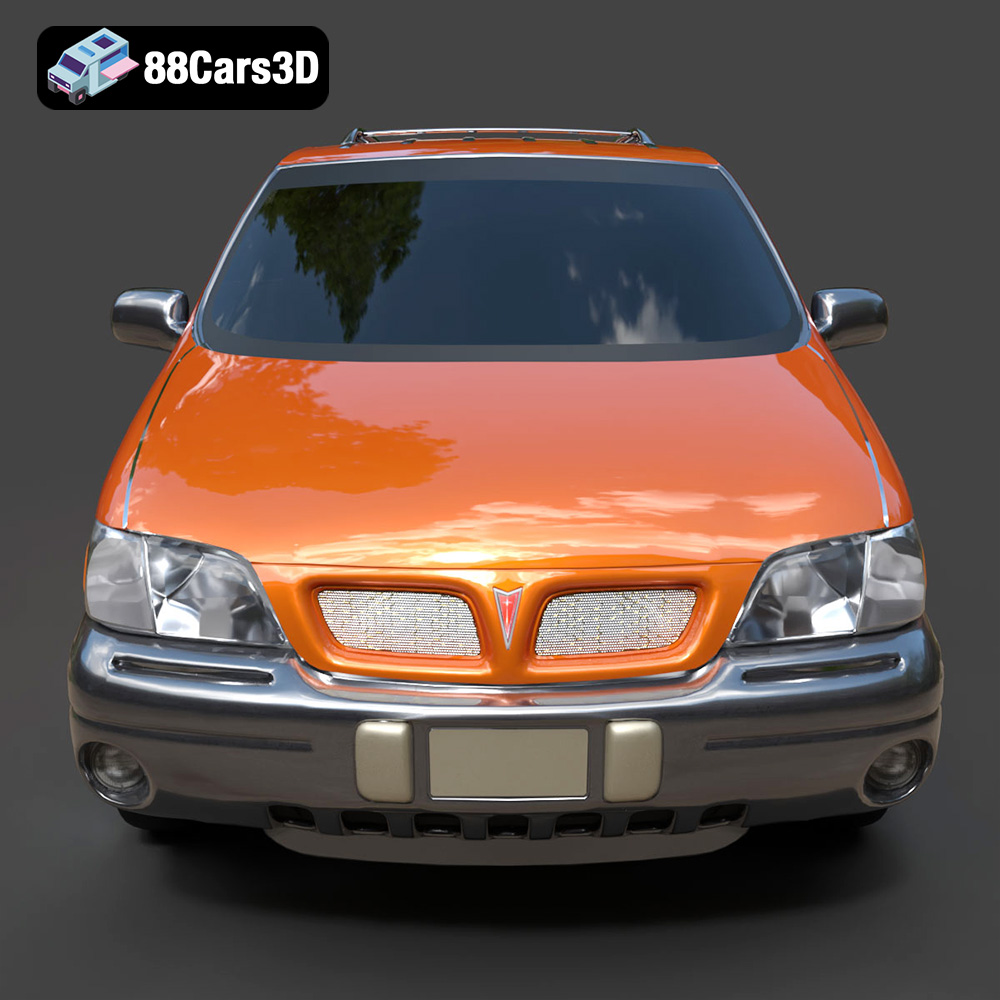
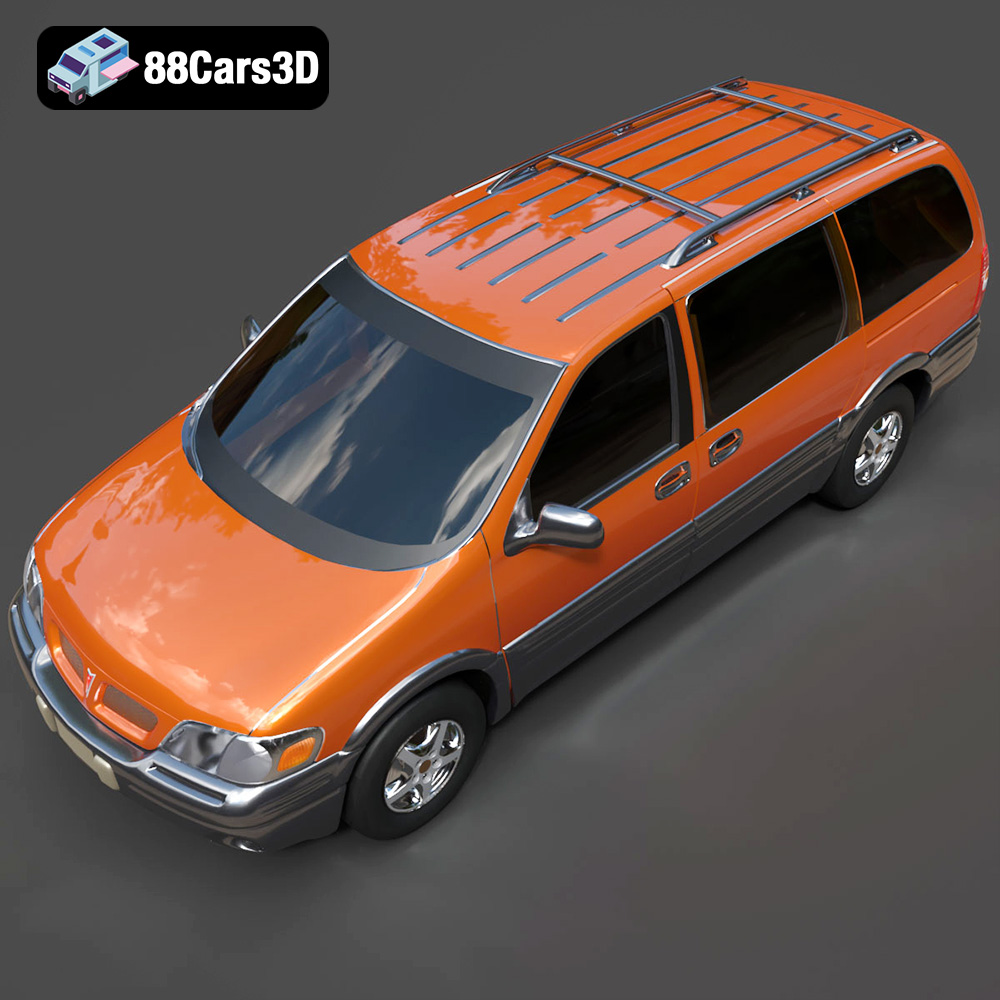
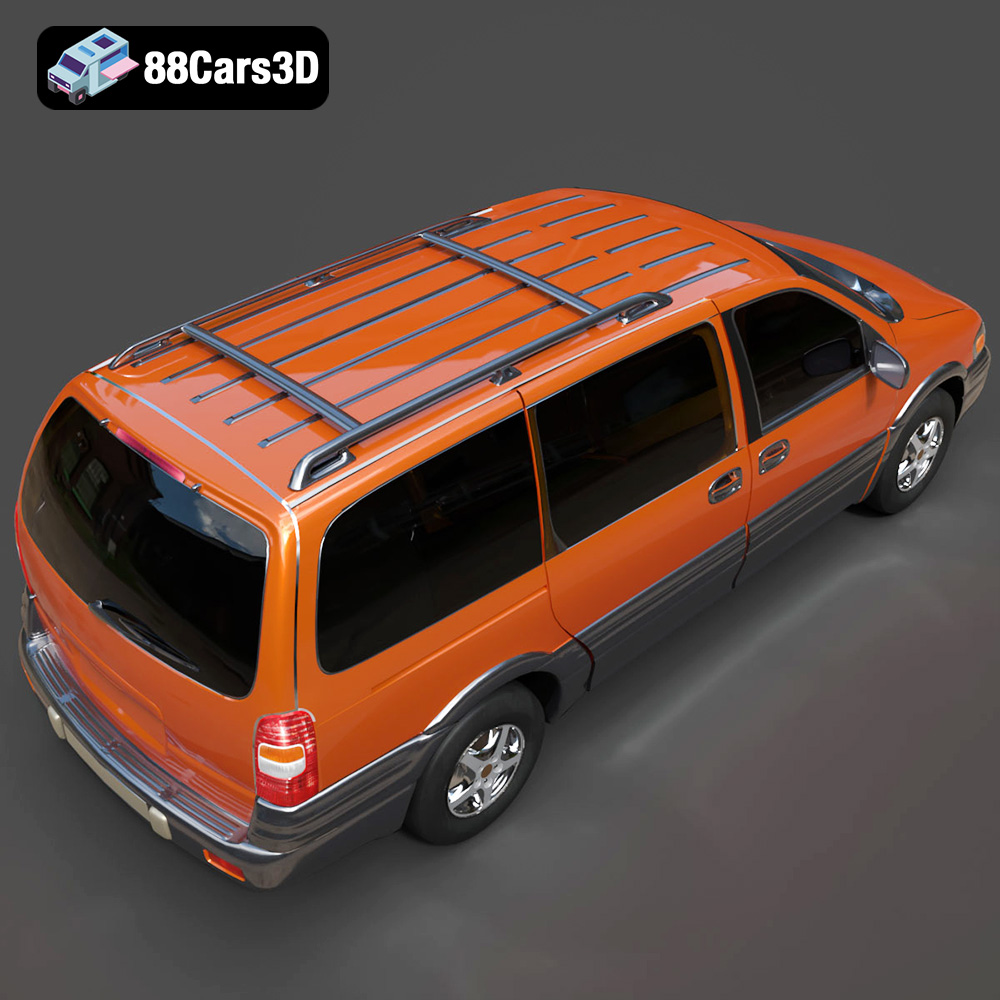
The first impression of any 3D vehicle comes from its exterior. For the Pontiac Montana 1998, this means faithfully capturing its distinctive minivan silhouette, from the gentle curves of its body panels to the subtle creases that define its fenders and doors. Accurate body panels are crucial for realistic reflections and lighting, while precisely modeled headlights, taillights, and turn signals – complete with transparent materials – add depth and believability. The wheels and tires, often overlooked, are critical for grounding the vehicle in reality, requiring true-to-era designs and appropriate tread patterns. Separated components for doors, hood, and wheels are not just aesthetic choices; they are fundamental for animation and interactive applications.
Interior Fidelity and Mechanical Nuances
While often less visible in exterior renders, a detailed interior significantly elevates the model’s versatility. The Pontiac Montana 1998 3D Model includes a faithfully replicated dashboard, steering wheel, and seating arrangement. These elements are vital for close-up shots, interior views, and especially for simulation or AR/VR experiences where the user might ‘sit’ inside the vehicle. Furthermore, basic undercarriage and visible suspension components add a layer of realism for those projects requiring more comprehensive visualizations or even vehicle dynamics studies. This balance of detail ensures the model holds up under scrutiny from multiple angles.
Technical Rigor: Geometry, Scale, and Hierarchy
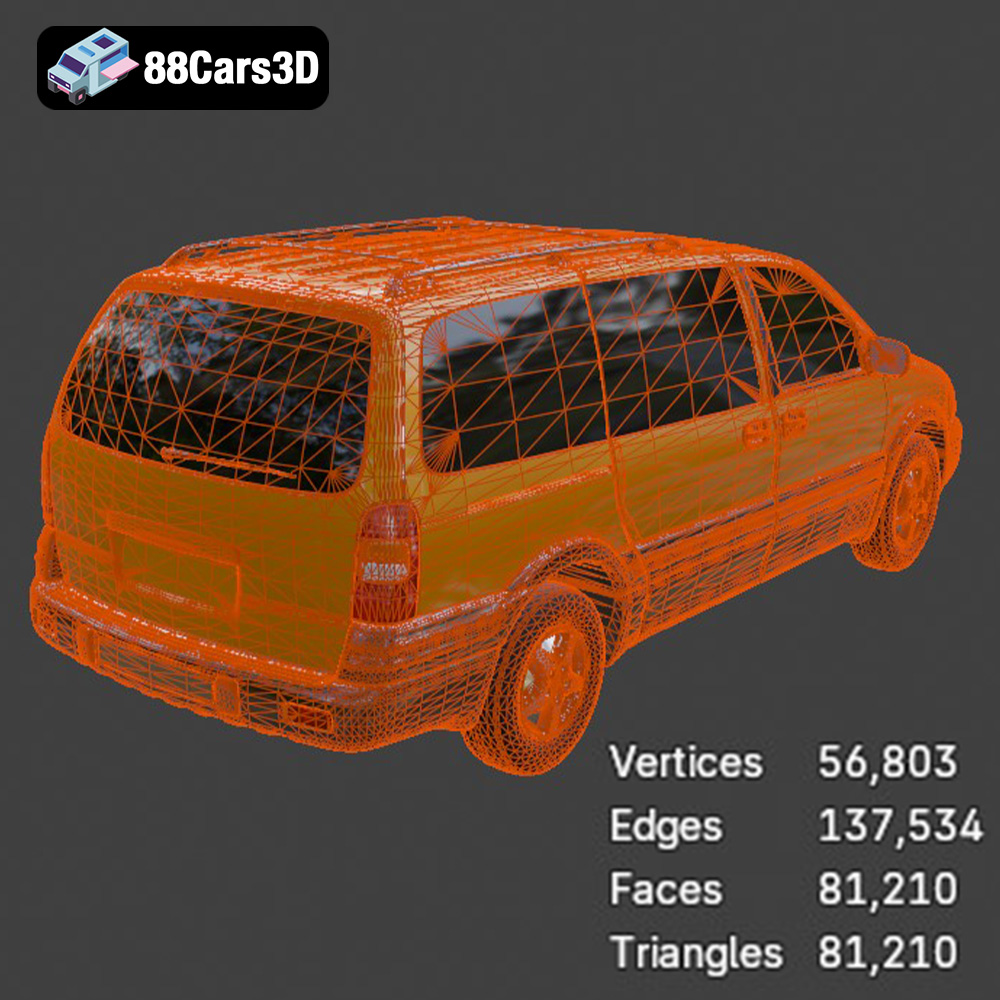
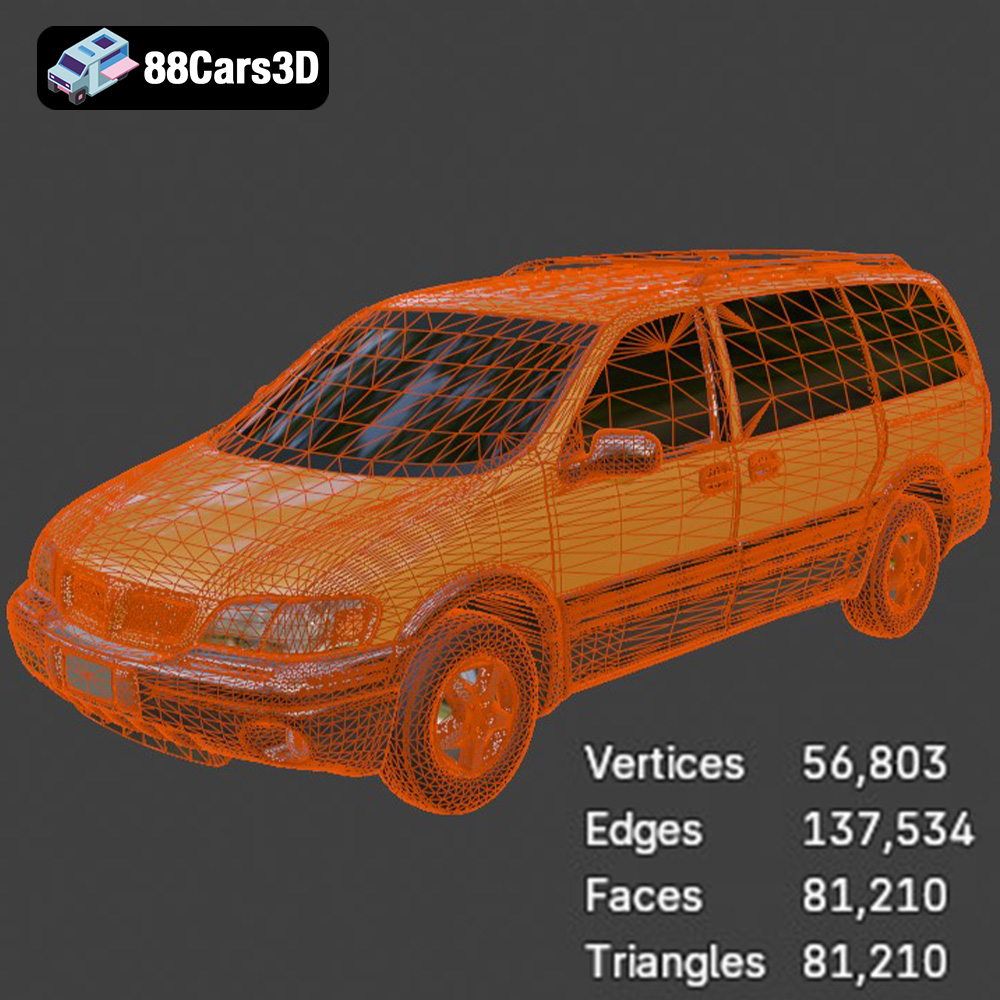
Beyond visual accuracy, the technical underpinnings of a 3D model are paramount. Clean, quad-dominant topology is a hallmark of professional work, enabling smooth subdivision for high-resolution renders and preventing deformation issues during animation or rigging. Real-world scale accuracy ensures seamless integration into existing scenes, whether for architectural visualization or game environments, eliminating the headache of manual resizing. An organized hierarchy with proper pivot points for moving parts (like doors and wheels) is indispensable for animators and riggers, saving countless hours of setup time. This robust technical foundation is what truly differentiates a consumer-grade model from a professional asset, making the Pontiac Montana model from 88cars3d.com a reliable choice.
Integrating 3D Car Models into Professional Workflows
The versatility of a well-crafted 3D car model like the Pontiac Montana 1998 extends across numerous professional applications, each demanding specific technical considerations and artistic approaches.
Automotive Rendering & Visualization
For automotive advertising, studio renders, or architectural visualizations, the Pontiac Montana 1998 3D Model is an excellent asset. High-quality rendering demands optimized mesh quality to support smooth subdivisions, realistic materials (metal, glass, rubber, plastics), and accurate reflections. Artists using software like 3ds Max or Blender can leverage the model’s clean topology to apply advanced shaders, integrate it into complex lighting scenarios (from sunny exteriors to dramatic night scenes), and compose compelling shots. The ability to easily adjust paint finishes and material properties means designers can rapidly iterate on different visual styles, crucial for client presentations and marketing campaigns.
Game Development & Real-Time Environments
In game development, performance is as critical as visual fidelity. The Pontiac Montana 1998 3D Model, optimized for integration into racing games, open-world simulations, or virtual environments, is designed with this balance in mind. Its quad-dominant topology supports various levels of detail (LODs) for efficient rendering across different distances. The inclusion of .fbx and .unreal formats specifically caters to popular engines like Unreal Engine and Unity, allowing developers to quickly import the model, apply collision meshes, and integrate it into game logic. Its organized hierarchy is a boon for game programmers who need to attach scripts for physics, damage, or interactivity.
AR/VR and Immersive Experiences
Augmented Reality (AR) and Virtual Reality (VR) experiences require 3D models that are lightweight yet visually appealing. The .glb format, included with the Pontiac Montana model, is specifically optimized for these applications, ensuring quick loading times and smooth performance on mobile and standalone VR devices. Developers can use this model to create immersive driving simulators, interactive product showcases, or period-specific virtual environments. The real-world scale accuracy is particularly important here, as it helps maintain a sense of immersion and believability for the user.
Simulation, Training, and 3D Printing
Beyond entertainment, 3D car models play a vital role in practical applications. The Pontiac Montana 1998 can be invaluable for vehicle dynamics studies, driving simulators, or educational programs due to its accurate representation and underlying mechanical components. For those looking to bring the digital into the physical realm, the model’s clean geometry makes it suitable for conversion to an .stl format for 3D printing. This allows for the creation of physical scale models, prototypes, or educational tools, bridging the gap between digital design and tangible objects.
Optimization Strategies for High-Fidelity Rendering and Real-Time Performance
Whether aiming for photorealistic renders or smooth real-time experiences, optimizing 3D car models is a continuous process. Professional assets like those found on 88cars3d.com, including the Pontiac Montana 1998 3D Model, are designed with many of these optimizations built-in.
Efficient Mesh Geometry and Topology
The foundation of an optimized model is its mesh. Clean, quad-dominant topology, as featured in the Pontiac Montana model, ensures predictable subdivision and deformation. This allows artists to easily create multiple Levels of Detail (LODs) – lower poly versions of the model that are swapped in at greater distances from the camera, significantly reducing polygon count and improving performance in game engines. Furthermore, avoiding unnecessary geometry and ensuring manifold meshes are critical for both rendering efficiency and successful 3D printing.
Material and Texture Management
Physically Based Rendering (PBR) workflows are standard in modern 3D. High-quality PBR materials, using texture maps for albedo, roughness, metallic, normal, and ambient occlusion, are crucial for achieving realism. Optimizing textures involves ensuring appropriate resolutions – not too high to waste memory, not too low to pixelate – and using efficient compression formats. For the Pontiac Montana, the ability to modify material properties for metal, glass, rubber, and plastics means artists can fine-tune its appearance for specific lighting conditions or artistic styles, from a showroom gleam to a weathered, authentic look.
Scene Setup and Lighting Techniques
An optimized model also thrives in an optimized scene. For rendering, efficient lighting setups can dramatically reduce render times. Utilizing instancing for repeating elements, optimizing global illumination settings, and managing ray tracing parameters are all part of the process. In real-time engines, careful consideration of light types (static vs. dynamic), shadow maps, and reflection captures helps maintain high frame rates. The Pontiac Montana’s authentic window glass and trim, for example, allow for versatile lighting setups, creating realistic reflections and refractions that enhance the overall visual quality without excessive computational cost.
Leveraging Pre-made Assets for Project Efficiency and Quality
In today’s fast-paced production environments, time is money. Building every single asset from scratch is often impractical, especially for complex objects like detailed 3D car models. This is where high-quality pre-made assets prove their immense value.
Accelerating Production Timelines
The most immediate benefit of utilizing professional 3D car models is the dramatic reduction in production time. Modeling a complex vehicle from the ground up, with clean topology, accurate dimensions, and detailed interior/exterior features, can take weeks or even months for a skilled artist. By purchasing a ready-to-use asset like the Pontiac Montana 1998 3D Model from a reputable marketplace like 88cars3d.com, artists and developers can skip this laborious phase and jump straight into integration, texturing, rigging, or animation. This allows teams to focus their resources on unique elements of their project, enhancing overall efficiency.
Ensuring Consistent Quality and Detail
Not all 3D models are created equal. Buying pre-made assets from trusted sources ensures a baseline of quality, technical accuracy, and consistency. These models are typically vetted for clean geometry, proper scale, organized hierarchies, and sometimes even pre-configured materials or LODs. This eliminates the uncertainty of creating assets in-house, especially for studios with varying levels of artistic skill or tight deadlines. The Pontiac Montana model, with its clean geometry and balanced level of detail, assures a professional-grade starting point for any project.
Cost-Effectiveness and Resource Allocation
While purchasing a 3D model involves an upfront cost, it is almost always more cost-effective than commissioning a custom model or allocating internal resources to build one from scratch, particularly for non-hero assets. The cost of artist time, software licenses, and potential revisions far outweighs the price of a high-quality, ready-made solution. This allows smaller studios or individual freelancers to access assets that would otherwise be out of reach, democratizing access to professional-grade content and allowing them to compete with larger players.
Conclusion: The Enduring Value of Expertly Crafted 3D Car Models
The journey through the intricacies of 3D car models reveals a landscape where technical precision meets artistic vision. From the critical role of file formats in determining compatibility and workflow to the meticulous details that define true automotive realism, every aspect contributes to a model’s utility and impact. Whether destined for a hyper-realistic render, an immersive game environment, or a practical simulation, a high-quality 3D asset serves as a cornerstone for creativity and efficiency.
The Pontiac Montana 1998 3D Model stands as a testament to this philosophy. It’s not just a digital representation of a classic American minivan; it’s a versatile tool engineered for professional applications. With its accurate design, optimized mesh quality, organized hierarchy, and comprehensive file format support (.blend, .fbx, .obj, .glb, .stl, .ply, .unreal, .max), it offers designers, artists, and developers a reliable and efficient solution for their projects. By leveraging such expertly crafted 3D car models, professionals can significantly enhance their production pipelines, achieve higher levels of fidelity, and unlock new creative possibilities, all while focusing their precious time and resources on their project’s unique vision. Discover this and other high-quality 3D car models at 88cars3d.com, where excellence meets accessibility.
Featured 3D Model
Pontiac Montana 1998 3D Model
Presenting the Pontiac Montana 1998 3D Model, a meticulously crafted representation of the classic American minivan, renowned for its spaciousness and family utility. This model captures the distinctive design and practical aesthetic of the Montana, built with clean geometry and a balanced level of detail. It is an ideal asset for a wide range of applications, from high-quality rendering and cinematic animation to detailed simulations and immersive game development projects.
$21.99
Product Image Gallery