

Elevating Digital Realism: The Essential Role of High-Quality 3D Models in Professional Workflows
In the rapidly evolving landscape of digital content creation, the demand for meticulously crafted 3D assets is at an all-time high. From breathtaking cinematic sequences and immersive virtual reality experiences to high-fidelity architectural visualizations and hyper-realistic game worlds, the foundational element remains the quality of the 3D models themselves. Professional studios and individual artists alike understand that investing in superior assets not only saves invaluable production time but also elevates the overall fidelity and impact of their projects.
This pursuit of perfection extends across every imaginable digital domain, but it finds a particularly critical home in the realm of `automotive rendering` and simulation. Vehicles, whether sleek sports cars or robust public transport, are often focal points, requiring impeccable detail and realistic behavior. Today, we delve into the significance of such assets by spotlighting a prime example: the Emt Avtobus 007 3D Model. This professional-grade asset embodies the meticulous crafting and technical foresight necessary to meet the stringent demands of modern production pipelines, offering unparalleled versatility for everything from detailed close-up renders to complex urban simulations and real-time game environments.
Understanding 3D Model File Formats: A Technical Deep Dive
The choice of a 3D model file format is far more than a minor technicality; it’s a critical decision that dictates compatibility, workflow efficiency, data integrity, and ultimately, the success of a digital project. When sourcing `3D car models` or any other asset, understanding the strengths and weaknesses of various formats is paramount. The Emt Avtobus 007 3D Model, for instance, comes equipped with a comprehensive suite of file types, ensuring maximum flexibility across diverse professional applications. Let’s explore these essential formats in detail:
.blend – Fully Editable Blender Scene with Materials
The `.blend` file is Blender’s native format and offers a complete, editable scene. For users of Blender, this is often the most desirable format as it preserves all aspects of the original creation, including mesh data, materials (Cycles, Eevee), textures, lighting, cameras, animation rigs, modifiers, and even custom scripts. This means that if you need to make extensive modifications to the Emt Avtobus 007 3D Model, such as altering its geometry, changing material properties, or setting up new animations within Blender, the `.blend` file provides the highest degree of flexibility and fidelity to the source.
.fbx – Ideal for Unreal, Unity, and Real-time Pipelines
Developed by Autodesk, the Filmbox (`.fbx`) format is an industry standard for interoperability between 3D software applications and, critically, game engines. It’s renowned for its ability to store not just mesh data but also materials (though often simplified, requiring re-setup in the target engine), textures, animation, skeletal data, and sometimes even basic lighting. For `game assets` like the Emt Avtobus 007, `.fbx` is the go-to for seamless import into Unreal Engine or Unity, facilitating efficient transfer of complex scenes and animated elements, making it an indispensable tool for real-time development.
.obj – Universal Format for Cross-Software Compatibility
The Wavefront Object (`.obj`) format is one of the oldest and most universally supported 3D file formats. It’s a simple, text-based format primarily used for transferring geometric data (vertices, normals, UV coordinates) and can reference external material (`.mtl`) files. While `.obj` files are excellent for mesh interchange due to their wide compatibility across virtually all 3D software (from 3ds Max to ZBrush), they generally do not support animation, rigging, or complex material definitions. For static `3D car models` where geometry is the main concern, `.obj` serves as a reliable fallback.
.glb – Optimized for AR, VR, and Browser-based Display
GL Transmission Format Binary (`.glb`) is the binary version of glTF (GL Transmission Format), a relatively new open standard designed for efficient transmission and loading of 3D scenes and models in web and real-time applications. `.glb` packages all asset data – geometry, materials, textures, animations – into a single binary file, making it incredibly easy to use for AR/VR experiences, web viewers, and social media. The Emt Avtobus 007 in `.glb` format is perfectly optimized for these interactive, lightweight environments, ensuring quick load times and broad device compatibility.
.stl – Suitable for 3D Printing Output
Stereolithography (`.stl`) is the native file format for stereolithography CAD software and is the de facto standard for 3D printing. It represents a 3D model as a collection of unconnected triangular facets, defining only the surface geometry without color, texture, or other CAD attributes. While not suitable for `automotive rendering` or game development, the `.stl` version of the Emt Avtobus 007 3D Model is crucial for prototyping, creating physical scale models, or integrating it into manufacturing workflows.
.ply – Precision Mesh Format for CAD or Analysis
The Polygon File Format (`.ply`), also known as the Stanford Triangle Format, is primarily used for storing 3D data from 3D scanners and other precision capture devices. It can store a wide range of properties for each vertex and face, including color, transparency, normals, texture coordinates, and even reliability information. While less common for general 3D asset exchange compared to `.fbx` or `.obj`, `.ply` is valuable for applications requiring high geometric precision or scientific analysis, providing a robust representation of the Emt Avtobus 007’s detailed mesh.
.unreal – Engine-ready Asset for Real-time Environments
A `.unreal` file typically refers to a pre-packaged asset or project file specifically configured for Unreal Engine. This format often includes not only the mesh but also Unreal-specific materials, collision meshes, blueprints, and sometimes even level-specific setup. Having the Emt Avtobus 007 pre-configured as a `.unreal` asset significantly streamlines the import process into an Unreal Engine project, reducing setup time and ensuring that the model behaves as intended within the engine’s ecosystem, ready for immediate use in interactive simulations or games.
.max – Editable 3ds Max Project for Animation and Rendering
The `.max` file is the native project file for Autodesk 3ds Max, a powerful 3D modeling, animation, and rendering software widely used in architectural visualization, design, and entertainment. Like `.blend`, the `.max` format saves the entire scene, including geometry, modifiers, materials (V-Ray, Corona, Standard), lighting, cameras, animation data, and plugins. For professionals working within the 3ds Max environment, the `.max` version of the Emt Avtobus 007 provides full editability and allows for deep customization, complex animation setups, and high-quality rendering using 3ds Max’s robust rendering engines.
The provision of such a comprehensive array of file formats for the Emt Avtobus 007 3D Model underscores its professional-grade nature and commitment to interoperability, making it a truly versatile asset for any digital endeavor.
The Art and Science of Automotive Rendering with Professional 3D Models
Creating photorealistic `automotive rendering` is a delicate blend of artistic vision and technical mastery. It involves more than just a good model; it requires a deep understanding of light, materials, and environment. When you start with a high-quality `3D car model` like the Emt Avtobus 007, the path to stunning visuals becomes significantly smoother, allowing artists to focus on the nuances that truly bring an image to life.
Realistic PBR Materials and Texturing
At the heart of modern rendering lies Physically Based Rendering (PBR). This methodology simulates how light interacts with surfaces in the real world, producing consistent and believable results under any lighting condition. The Emt Avtobus 007 3D Model comes with realistic PBR materials applied throughout, meaning its glass, metal, paint, and interior fabrics will react accurately to light. This is achieved through meticulously crafted texture maps – Albedo (color), Normal (surface detail), Roughness (micro-surface imperfections), Metallic (material type), and Ambient Occlusion (contact shadows). Clean UV mapping is also critical here, ensuring textures are applied without stretching or distortion across the model’s surfaces, which is a hallmark of professional assets.
Lighting and Environment Setup for Impact
Even the most perfectly textured model will fall flat without compelling lighting. For `automotive rendering`, artists often utilize High Dynamic Range Images (HDRIs) to simulate real-world lighting environments, such as a city street at dusk or a bright sunny day. Paired with carefully placed virtual light sources (like area lights or spotlights to highlight specific features of the Emt Avtobus 007), HDRIs can create stunning reflections and realistic shadows. Render engines like V-Ray, Corona Renderer, and Blender’s Cycles are designed to leverage these setups, producing incredibly lifelike results that capture the sheen of paint and the depth of glass.
Post-Processing for Cinematic Appeal
The rendering process doesn’t end when the image is complete. Post-processing in tools like Adobe Photoshop or Nuke adds that final layer of polish. This can involve color grading to set the mood, adding depth of field for artistic focus, implementing subtle lens flares, or enhancing atmospheric effects. For renders featuring the Emt Avtobus 007, post-processing can accentuate its robust form, integrate it seamlessly into a background plate, or add dynamic motion blur to suggest movement, transforming a raw render into a cinematic masterpiece.
Integrating 3D Car Models into Game Development: From Asset to Interactive Experience
Game development demands a unique balance of visual fidelity and performance optimization. `Game assets`, especially complex ones like vehicles, must be designed to look great while maintaining fluid frame rates. The Emt Avtobus 007 3D Model, with its optimized mesh density and game-engine-ready formats, is a testament to this crucial balance, making it an ideal choice for both indie and AAA projects.
Optimization for Real-time Performance
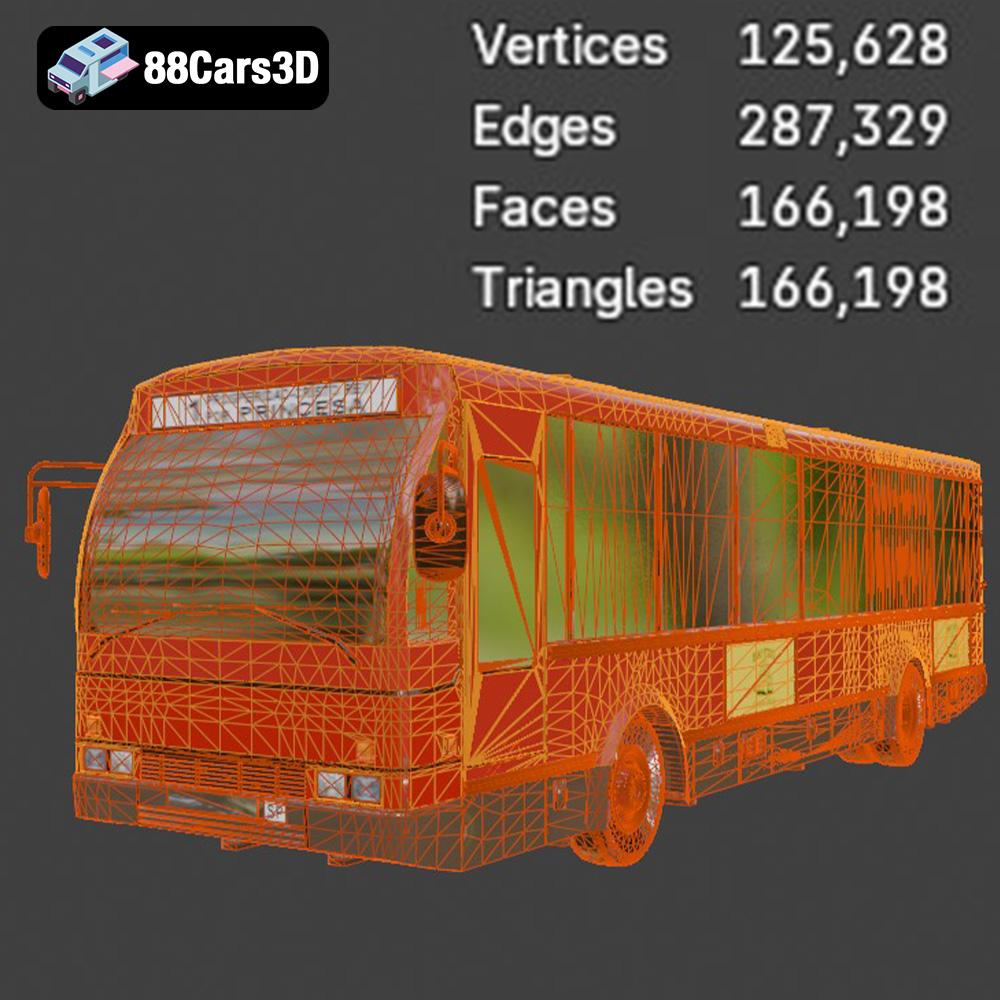
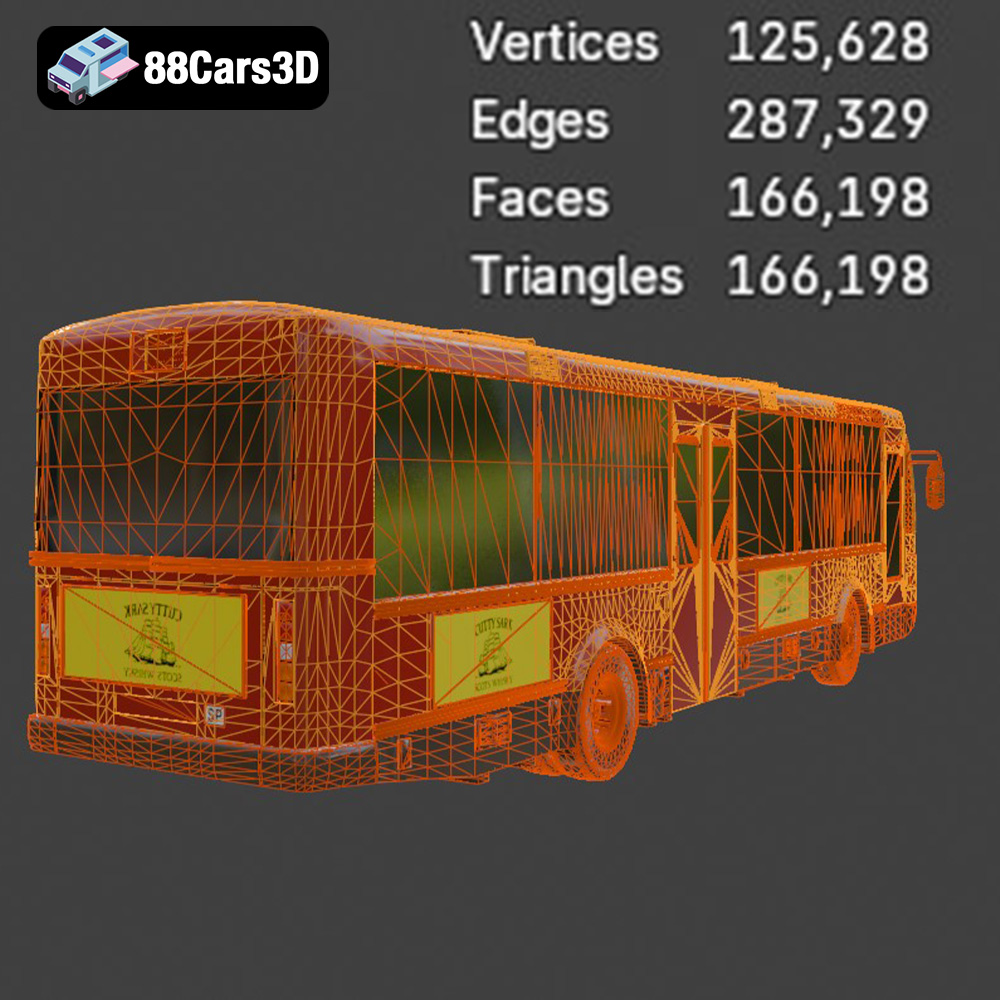
One of the primary considerations for `game assets` is polygon count. While high-poly models are fantastic for `automotive rendering`, real-time engines require efficiency. Professional models like the Emt Avtobus 007 are crafted with clean, optimized topology, meaning polygons are distributed efficiently, avoiding unnecessary density. Additionally, Level of Detail (LOD) models are often provided or can be easily generated. LODs allow the engine to switch to simpler versions of the model when it’s further from the camera, drastically reducing draw calls and improving performance without noticeable visual degradation. Efficient UV mapping is also critical for texture atlasing and reducing material calls.
Unreal Engine Workflow
Unreal Engine is a powerhouse for creating immersive games and simulations. Importing the Emt Avtobus 007 into Unreal is streamlined by its `.fbx` and dedicated `.unreal` formats. Once imported, artists typically set up Unreal-specific PBR materials, ensuring textures are correctly applied and parameters like metallicness and roughness are finely tuned. Collision meshes are then added to define the physical boundaries of the bus, crucial for player interaction and physics simulations. For animated elements like doors or wheels, skeletal meshes and control rigs can be integrated using Unreal’s robust animation tools, allowing for interactive elements within the game world.
Unity Integration and Scripting
Unity, another widely adopted game engine, also benefits greatly from professionally prepped `3D car models`. Importing the Emt Avtobus 007’s `.fbx` file allows for easy scene integration. Unity’s material system, compatible with standard PBR workflows, makes setting up the bus’s appearance straightforward. For functional elements, Unity’s component-based architecture and C# scripting allow developers to add vehicle physics, engine sounds, operational doors, or even AI driver behaviors. The clean topology of the Emt Avtobus 007 simplifies the process of attaching colliders, rigidbodies, and custom scripts, transforming it from a static model into a fully interactive game object.
Architectural Visualization and Urban Simulation with the Emt Avtobus 007
In architectural visualization (Arch-Viz) and urban planning, context is king. Empty streetscapes or deserted plazas simply don’t convey the realism needed to sell a vision. Populating these scenes with lifelike elements, especially accurate `3D car models` and public transport, is crucial for creating believable environments. The Emt Avtobus 007 3D Model excels in this role, providing an essential piece of urban fabric.
Populating Digital Cityscapes with Realism
For architects and urban planners, the ability to visualize how people and vehicles interact with a proposed design is invaluable. Placing an Emt Avtobus 007 in a rendered street scene immediately anchors the environment in reality. Its accurate scale and realistic proportions ensure that other architectural elements, pedestrian flows, and even traffic simulations feel genuine. This bus isn’t just a static prop; it’s a vital element that communicates scale, function, and the dynamic pulse of a city. Whether it’s showcasing a new bus terminal, illustrating traffic impact, or simply adding background life to an exterior render, the detail of this model makes all the difference.
Real-time Walkthroughs and Interactive Experiences
Beyond static renders, Arch-Viz has embraced real-time interactive experiences, often powered by game engines or specialized visualization software. Clients can “walk through” a virtual building or explore an entire urban development. In these scenarios, the optimized `.fbx` and `.glb` formats of the Emt Avtobus 007 are incredibly useful. The `.glb` format, in particular, is perfect for web-based interactive tours or AR/VR applications, allowing stakeholders to view the bus in a proposed street layout on their mobile device or VR headset. This level of immersion provides a much deeper understanding of a project than traditional blueprints or static images.
The Role of Detail in Contextual Realism
The description of the Emt Avtobus 007 highlights “meticulously crafted to ensure accurate scale and realistic proportions.” This level of precision is paramount in Arch-Viz. An inaccurate vehicle model can inadvertently distort the perception of space and scale within a scene. From the subtle curvature of the body panels to the accurate representation of chassis components, every detail contributes to the overall believability, ensuring that the bus integrates seamlessly into the digital environment rather than standing out as an artificial element. Such quality from resources like 88cars3d.com ensures professional output every time.
Advanced Workflows: 3ds Max and Blender for Customization and High-End Production
While ready-to-use `3D car models` are efficient, professional pipelines often require flexibility for deep customization, complex animation, or integration into existing proprietary frameworks. The availability of native project files like `.max` for 3ds Max and `.blend` for Blender with the Emt Avtobus 007 3D Model provides artists with the ultimate control over their assets, allowing for tailored solutions in high-end production.
Leveraging .max for Animation and Rigging
Autodesk 3ds Max remains a cornerstone in many animation and visualization studios. The `.max` file for the Emt Avtobus 007 means animators can open the exact scene as it was created, complete with original mesh data, modifiers, and potentially pre-configured hierarchies. This allows for advanced rigging, such as setting up complex suspension systems, door opening mechanisms, or interactive components controlled by sliders or scripts. For cinematic sequences or detailed simulations, 3ds Max’s robust animation tools can bring the bus to life, depicting realistic movement, turning wheels, and passenger interactions, all with full control over every parameter.
Blender’s Versatility for Scene Assembly and Cycles Rendering
Blender’s `.blend` file offers similar advantages within its ecosystem. Artists can leverage Blender’s comprehensive toolset to further refine the Emt Avtobus 007. This could involve integrating it into larger scenes with custom environments, adding specific characters for bus stop interactions, or applying unique procedural textures using Blender’s powerful node editor. For rendering, Blender’s Cycles engine, known for its unbiased, physically accurate results, can produce stunning `automotive rendering` with minimal setup, taking full advantage of the model’s PBR materials and clean topology for photorealistic output.
Ensuring Cross-Software Compatibility and Data Integrity
The inclusion of multiple native and interchange formats (like `.fbx` and `.obj`) alongside the `.max` and `.blend` files highlights the importance of data integrity across different software packages. While native files offer the most flexibility within their respective applications, formats like `.fbx` are crucial for transferring animated data and basic material information between 3ds Max and Blender, or into game engines like Unreal. This multi-format approach ensures that regardless of the studio’s primary software, the Emt Avtobus 007 can be seamlessly integrated, modified, and utilized without significant data loss or re-work, a testament to its professional design.
Conclusion: The Undeniable Value of Professional 3D Assets
The digital creative industries are in a constant state of innovation, with increasingly higher expectations for realism and efficiency. Whether you are an architectural visualizer, a game developer, an animator, or a product designer, the foundation of any successful project is the quality of its `3D car models` and other `game assets`. As we’ve explored, a professionally crafted asset like the Emt Avtobus 007 3D Model provides not just a visual representation, but a robust, versatile, and optimized foundation for a multitude of applications.
From its meticulously clean topology and realistic PBR materials, designed for stunning `automotive rendering`, to its comprehensive suite of file formats ensuring seamless integration into game engines like Unreal and Unity, or detailed customization in 3ds Max and Blender, the Emt Avtobus 007 stands as an example of what high-quality means in the 3D world. It empowers artists and developers to save precious production time, elevate their visual standards, and deliver truly impactful digital experiences.
Investing in such assets from reputable sources like 88cars3d.com is not merely a purchase; it’s an investment in the quality, efficiency, and professional credibility of your projects. The Emt Avtobus 007 is ready for immediate deployment, poised to drive realism and functionality into your next digital endeavor. Discover this model and more high-quality 3D assets to accelerate your creative process.
Featured 3D Model
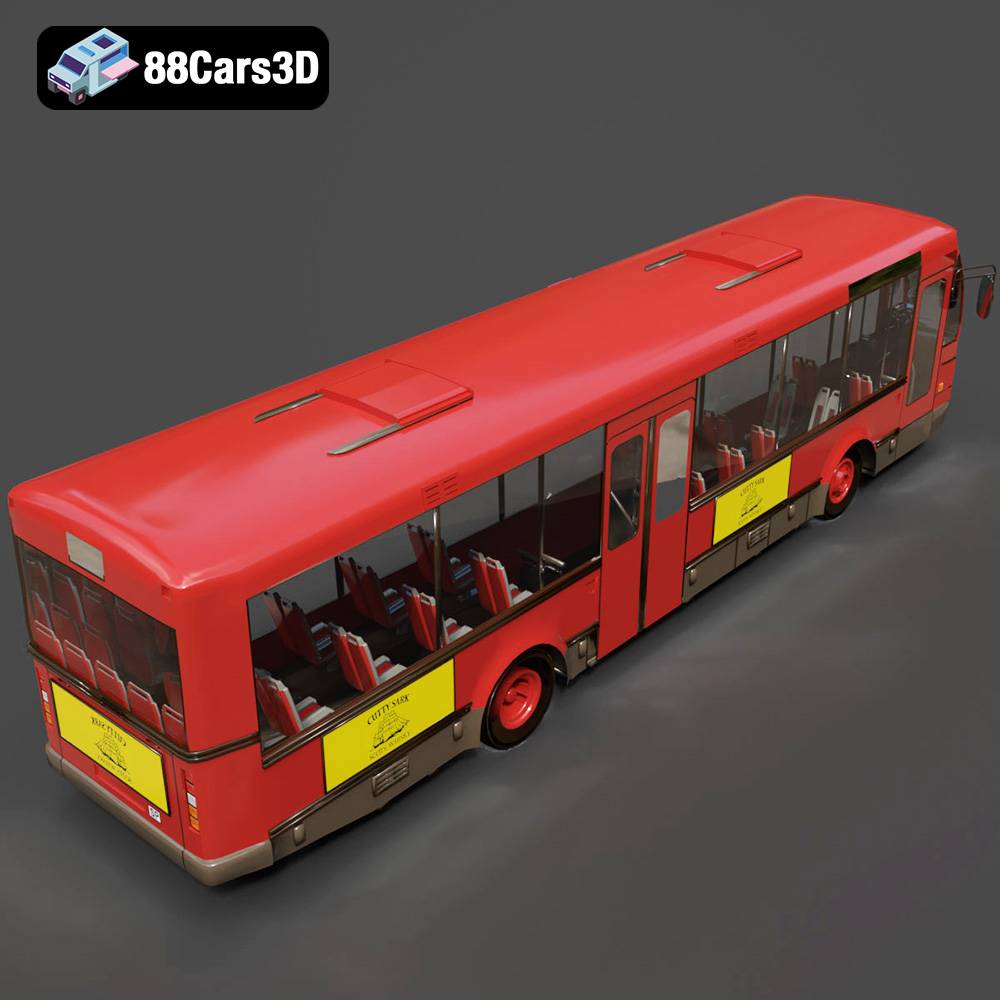
Emt Avtobus 007 3D Model
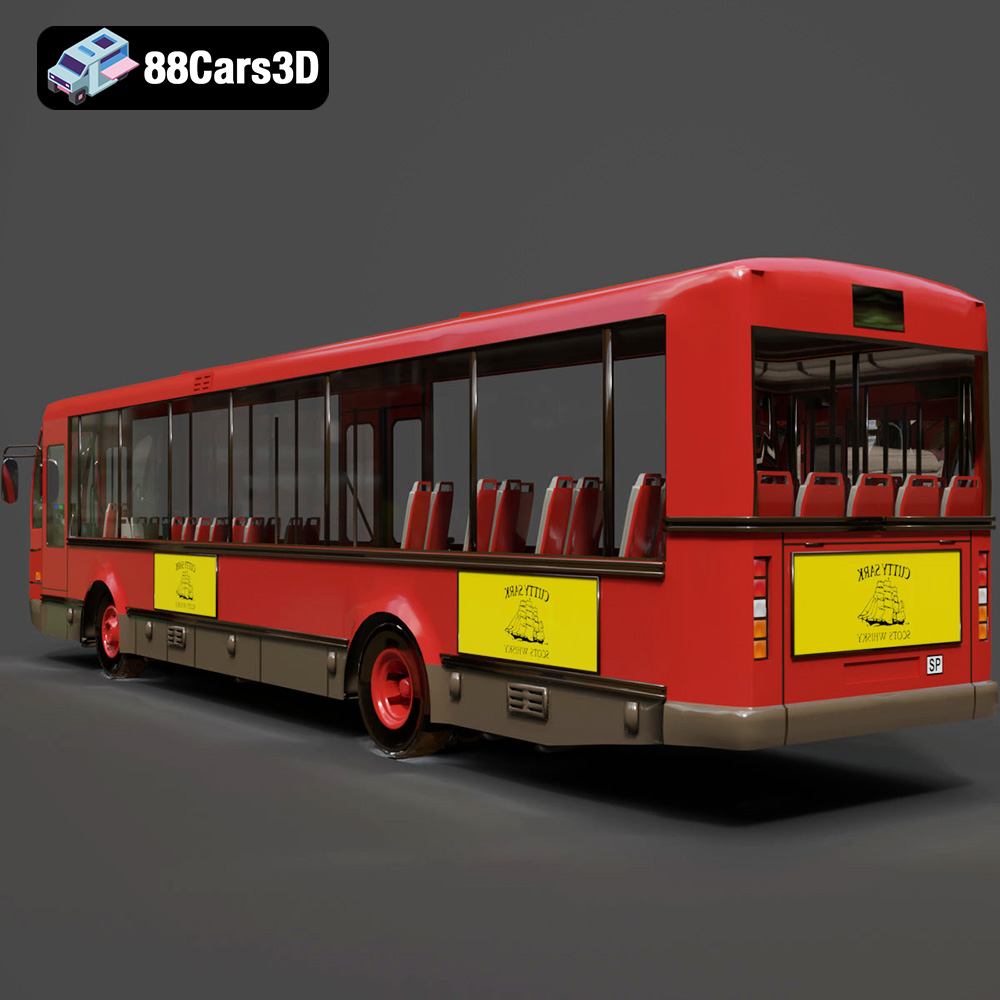
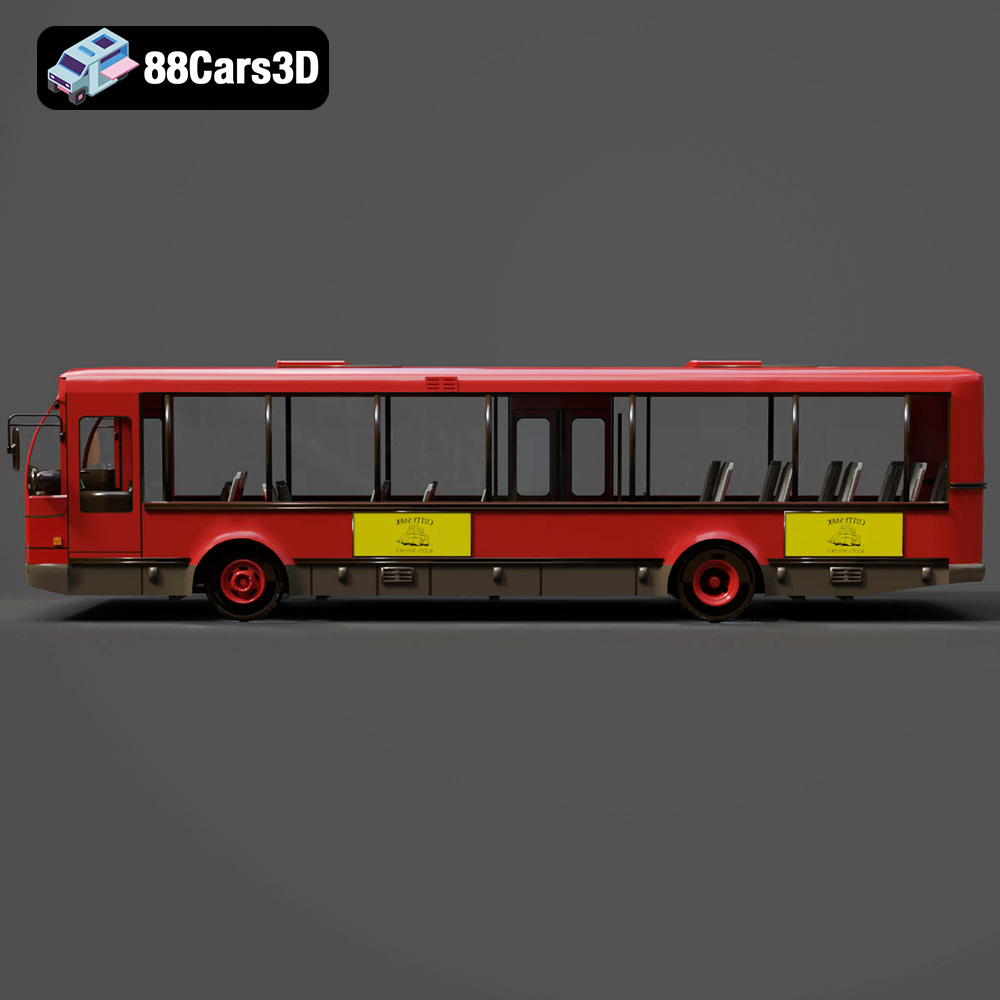
Introduce the Emt Avtobus 007 into your next digital project. This professional 3D vehicle model is meticulously crafted to ensure accurate scale and realistic proportions, making it ideal for close-up renders and detailed scene integration. From the exterior body panels to the chassis components, every aspect of this city bus has been modeled with precision.
The model features exceptionally clean topology and optimized mesh density, ensuring smooth subdivision and fast rendering times across various platforms. Realistic PBR materials are applied throughout, providing accurate representation of glass, metal, and interior fabrics under diverse lighting conditions. This asset is ready for immediate deployment in professional visualization pipelines.
The Emt Avtobus 007 3D Model is highly versatile, serving as an essential asset for architectural visualization, urban simulation, game development (Unity/Unreal Engine), real-time AR/VR experiences, and high-fidelity cinematic rendering.
Included File Formats:
- .blend – Editable Blender file with materials and lighting setup
- .fbx – Game-engine ready format for Unreal Engine and Unity
- .obj – Standard 3D model format compatible with all major software
- .glb – Optimized for AR/VR and web-based visualization
- .stl – Suitable for 3D printing and prototyping
- .ply – Detailed polygon mesh for analysis and visualization
- .unreal – Pre-configured for Unreal Engine use
- .max – Editable 3ds Max file for rendering and animation
Tags:
.emt, .avtobus, .avtobus007, .bus, .citybus, .commercialvehicle, .car3dmodel, .rendering, .simulation, .gameasset, .arvr, .blend, .fbx, .obj, .glb, .stl, .ply, .unreal, .maxLamborghini Diablo SV 1995 3D Model
$19.99
Product Image Gallery



Related Tags
.arvr
.avtobus
.avtobus007
.blend
.bus
.car3dmodel
.citybus
.commercialvehicle
.emt
.fbx
.gameasset
.glb
.max
.obj
.ply
.rendering
.simulation
.stl
.unreal
