In the dynamic world of 3D visualization, game development, and high-fidelity simulations, the demand for exceptionally detailed and accurate 3D car models has never been higher. Professionals across various industries, from automotive rendering studios to emergency services training academies, require assets that not only look realistic but also perform flawlessly within complex pipelines. Generic models simply won’t suffice when the goal is to create immersive experiences, precise architectural visualizations, or critical training scenarios where every detail counts.
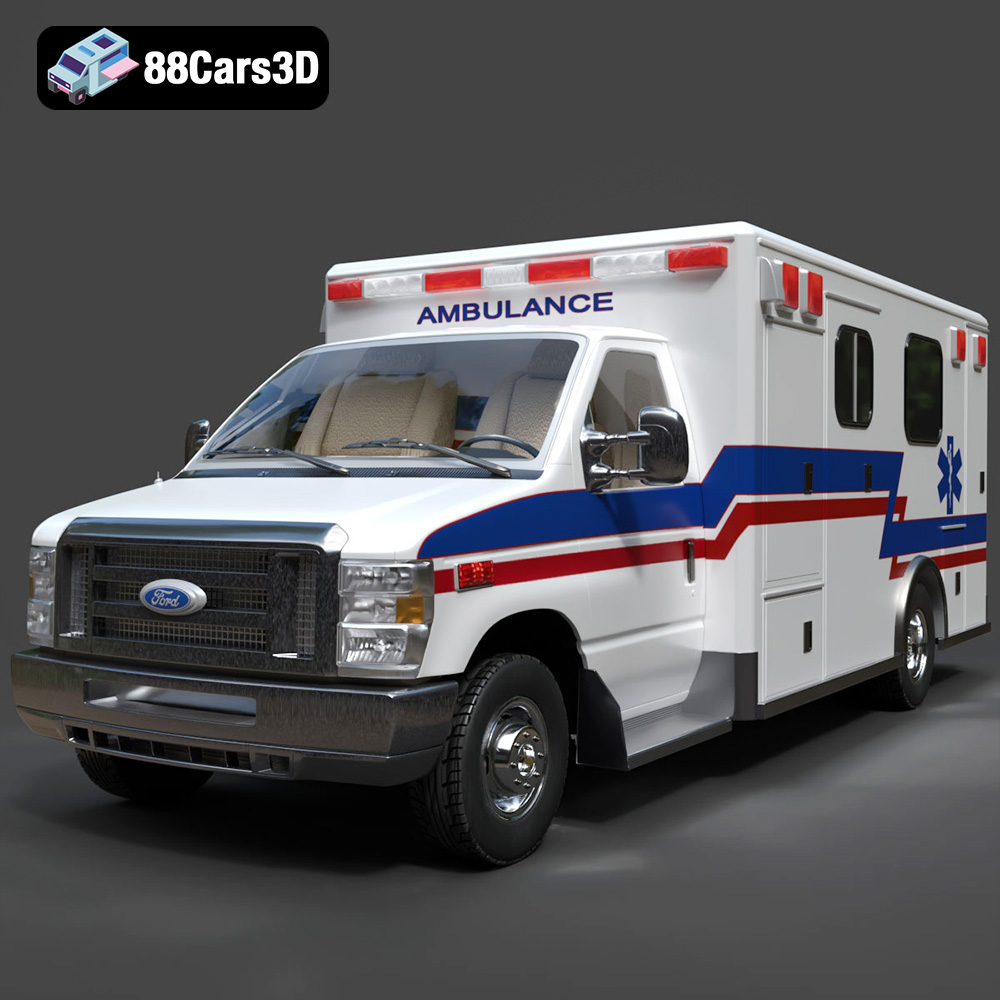
This is where specialized, production-ready assets truly shine. Today, we’re taking a deep dive into an exemplary model that meets these stringent requirements: the Ford E-450 Ambulance 3D Model. This meticulously crafted asset brings unparalleled realism to projects demanding a modern emergency response vehicle. Whether you’re building a next-generation game, developing an AR/VR training module, or producing stunning marketing renders, this model offers the fidelity and flexibility needed to elevate your work. It’s a testament to the quality available at marketplaces like 88cars3d.com, where designers and developers can find a comprehensive range of premium 3D car models.
Understanding 3D Model File Formats
The versatility of a 3D model often hinges on the file formats it supports. Professional assets, like the Ford E-450 Ambulance 3D Model, are typically provided in multiple formats to ensure maximum compatibility and utility across diverse software and pipelines. Understanding these formats is crucial for optimizing your workflow and achieving your project goals.
.blend – Native Blender Scene
The .blend file is Blender’s native format, offering a complete scene package. When you receive a .blend file, you’re not just getting the mesh; you’re getting the entire Blender project, including materials, textures, lighting setups, cameras, and even animation data if present. This format is ideal for users who primarily work in Blender, as it allows for immediate editing, scene manipulation, and rendering within the same ecosystem without any conversion losses. Technical users appreciate its ability to preserve modifiers, constraints, and intricate node-based materials, making it a powerful starting point for advanced customization.
.fbx – Interchange Format for Real-Time and Animation
.fbx (Filmbox) is arguably the most widely used interchange format in 3D, particularly prevalent in game development (Unreal Engine, Unity) and animation studios. It’s a proprietary format developed by Autodesk but widely supported. .fbx files are excellent for transferring geometry, materials, textures, animations, and skeletal data between different 3D applications. Its binary nature makes it efficient for real-time engines. For assets like our ambulance, the .fbx version is optimized for performance, often containing baked textures and simplified material setups suitable for immediate integration into game environments or virtual production pipelines, making it a go-to for game assets.
.obj – Universal Geometry Exchange
The .obj (Wavefront Object) format is a venerable and highly compatible format, often considered the “universal” format for exchanging pure geometric data. It stores polygon mesh data (vertices, normals, UVs, and faces) and can reference external material (.mtl) files for basic color and texture information. While it doesn’t support advanced features like animation, rigging, or complex PBR materials directly within the file, its simplicity and widespread support make it an indispensable format for ensuring cross-software compatibility. If you need to import a mesh into almost any 3D software for a fresh start with materials, .obj is a reliable choice.
.glb – Optimized for AR, VR, and Web
.glb (GLB Transmission Format) is a binary version of glTF (GL Transmission Format), designed for efficient transmission and loading of 3D scenes and models in web and real-time applications. It packages all model data (geometry, materials, textures, animations) into a single file, making it incredibly convenient for AR/VR experiences, browser-based viewers, and social media integration. The Ford E-450 Ambulance in .glb format would be perfect for deploying quickly onto a webpage for an interactive preview or integrating into an augmented reality app for a virtual walkthrough, thanks to its optimization for smaller file sizes and quick parsing.
.stl – The Standard for 3D Printing
.stl (Stereolithography) is the de facto standard for 3D printing. This format represents a 3D model as a series of connected triangles (a tessellated surface) without color, texture, or material information. It’s essentially a shell. For the Ford E-450 Ambulance, the .stl file would be generated for physical prototyping, allowing you to print a miniature version of the vehicle for display, concept validation, or even functional testing if scaled appropriately. Precision in mesh integrity is critical for .stl files to ensure successful print outcomes.
.ply – Precision Mesh for CAD and Analysis
.ply (Polygon File Format) is another format for storing 3D data, particularly useful for scanned data and models requiring high precision. It can store not only vertices, faces, and normals but also additional properties like color per vertex, transparency, or confidence values. While less common for general rendering, the .ply format is valuable in scientific visualization, CAD workflows, and precise measurement applications where detailed geometric analysis or reconstruction is paramount. Its ability to retain complex data makes it useful for engineering or historical preservation projects.
.unreal – Engine-Ready Asset for Real-Time Environments
The .unreal format signifies an asset specifically prepared and optimized for Unreal Engine. This isn’t a single file extension in the traditional sense but rather indicates an asset that has been properly imported, configured with materials, textures, collision meshes, LODs (Levels of Detail), and potentially Blueprints within an Unreal Engine project structure. For the Ford E-450 Ambulance, this means the asset is ready for immediate drag-and-drop deployment into an Unreal project, saving developers countless hours on setup and optimization, allowing them to focus on scene assembly and interactivity.
.max – Editable 3ds Max Project
Similar to .blend for Blender, .max is the native project file format for Autodesk 3ds Max. It contains the complete 3ds Max scene, including geometry, materials, textures, lighting, cameras, animation, and scene setup. Professionals using 3ds Max for high-end automotive rendering, architectural visualization, or complex animation will find the .max file invaluable. It allows for full artistic control, enabling modifications to the model, materials, or lighting to perfectly match specific project requirements without loss of fidelity, making it ideal for broadcast-quality rendering and detailed animation sequences.
The Core of Realism: Why High-Fidelity 3D Car Models Matter
In today’s visually driven industries, realism isn’t just a luxury; it’s a necessity. For applications ranging from cinematic productions to surgical training simulations, the authenticity of a 3D model directly impacts immersion and credibility. High-fidelity 3D car models, such as the Ford E-450 Ambulance from 88cars3d.com, are engineered to deliver this crucial realism.
Precision in Design and Functionality
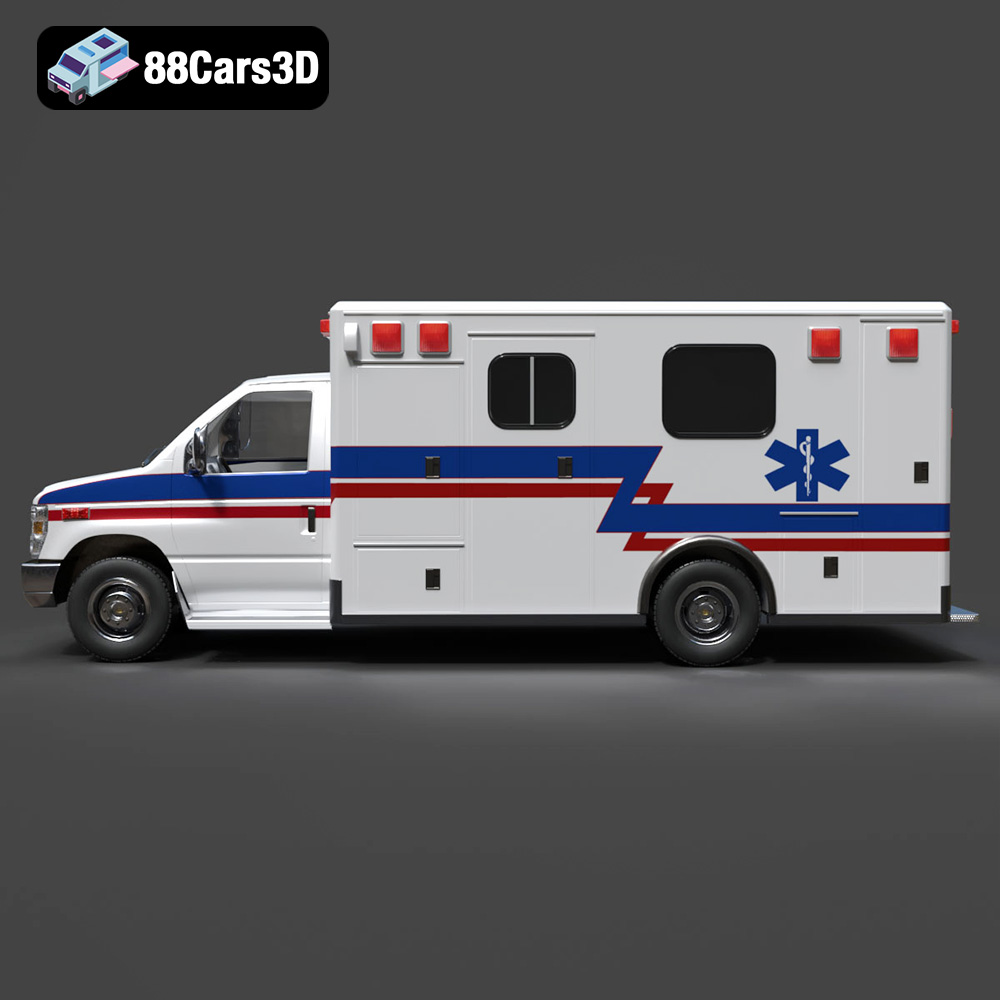
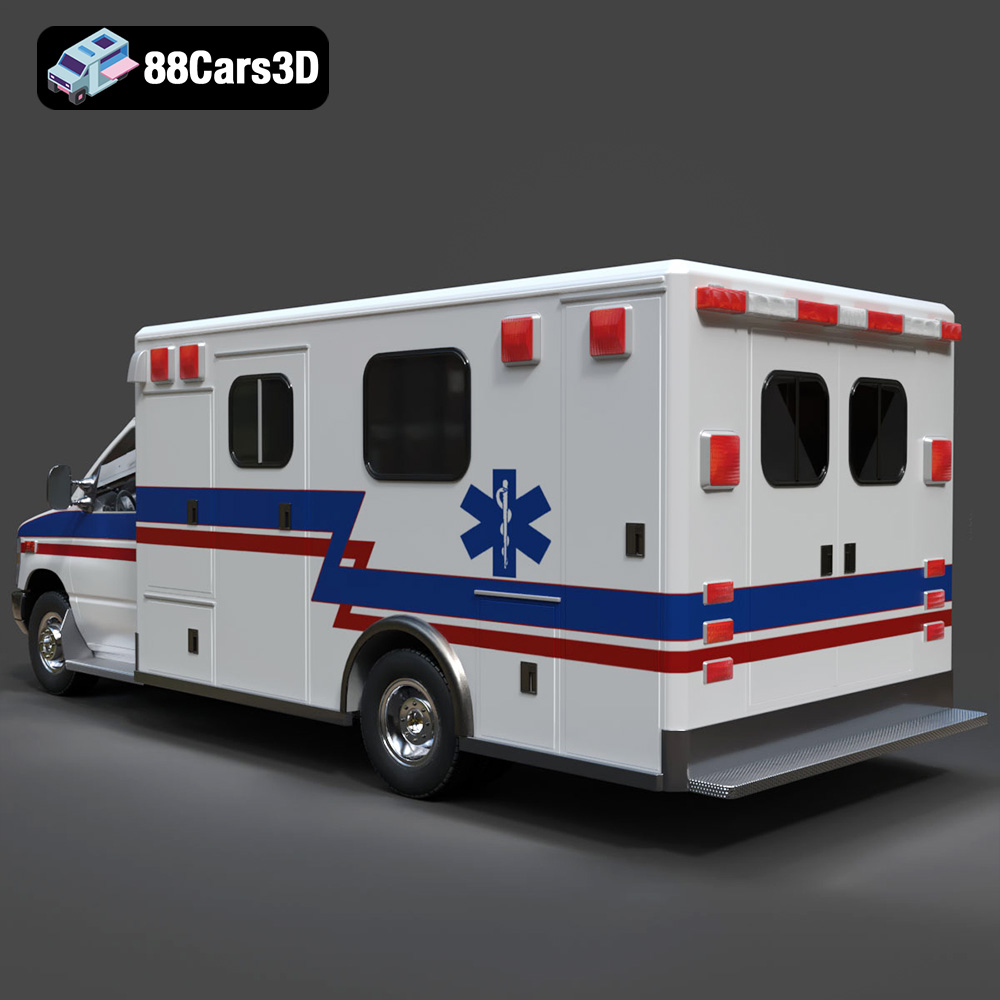
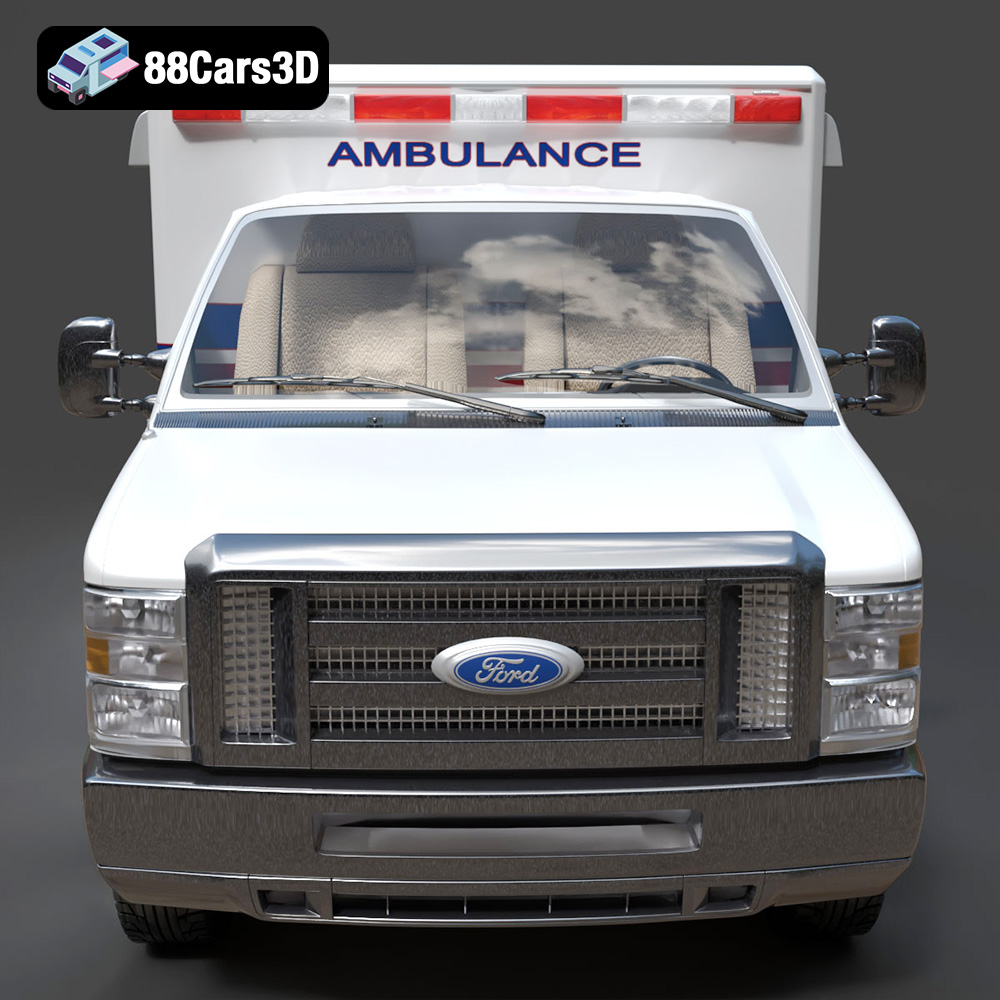
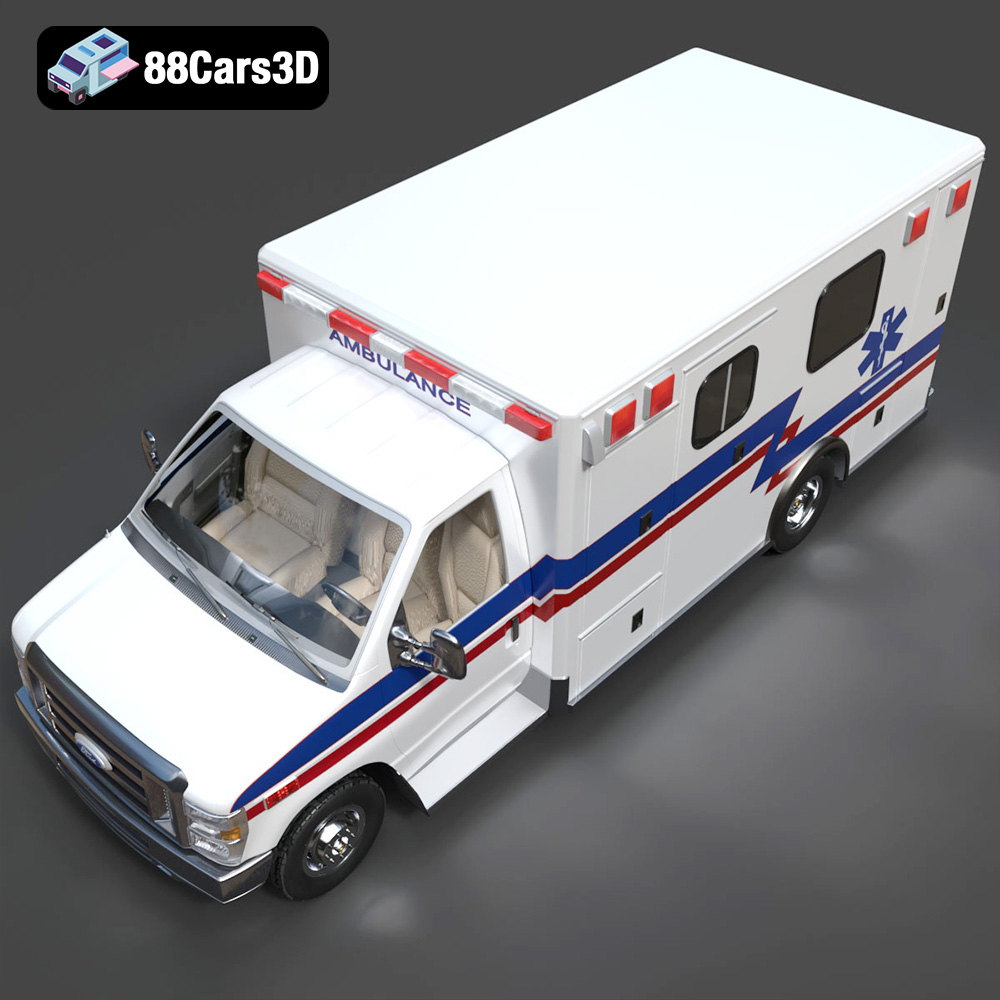
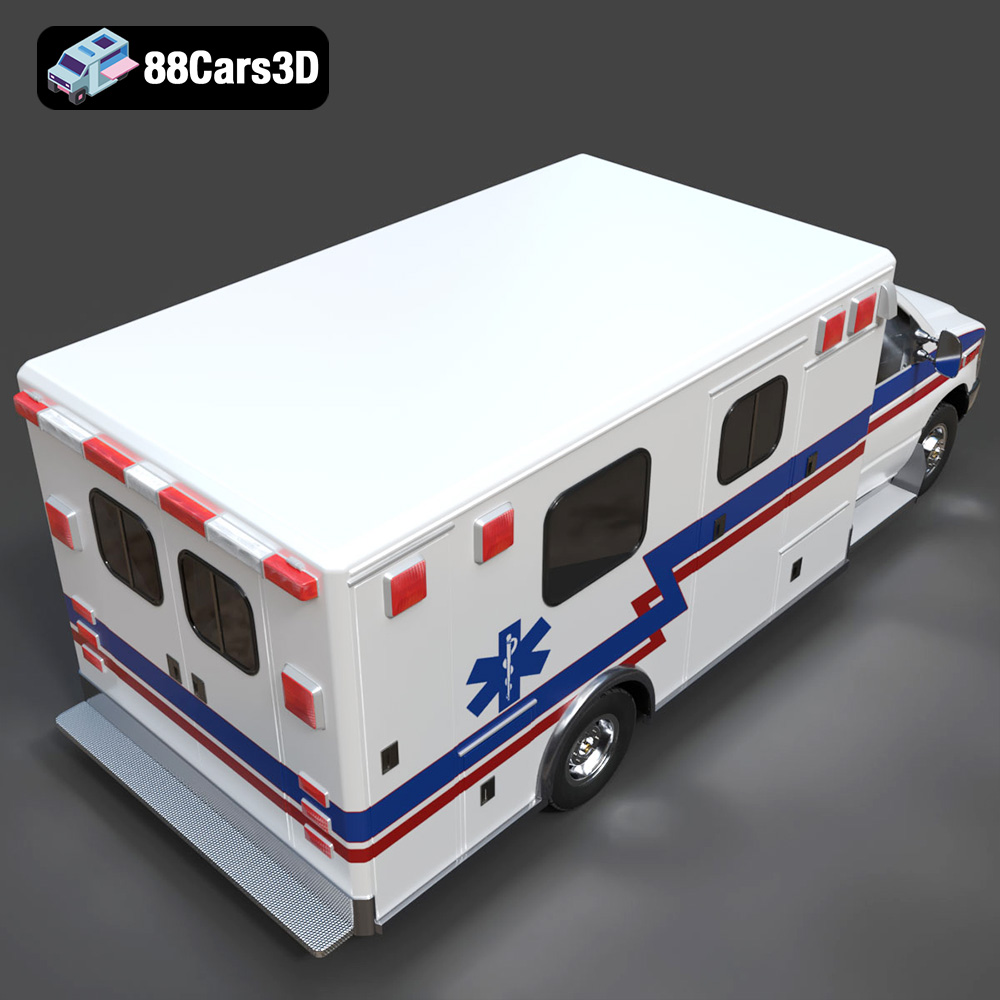
A truly professional 3D car model doesn’t just mimic the silhouette of its real-world counterpart; it meticulously recreates every subtle curve, panel gap, and functional component. For an emergency vehicle like the Ford E-450 Ambulance, this means accurate replication of external markings, the specific array of emergency lights, sirens, and even the detailed tread patterns on the tires. Inside, a fully modeled cabin and patient compartment ensure that interior shots or interactive virtual experiences maintain an unwavering level of detail. This precision is vital for emergency services training modules, where trainees need to interact with an environment that mirrors real-world conditions as closely as possible.
Optimizing for Performance without Compromise
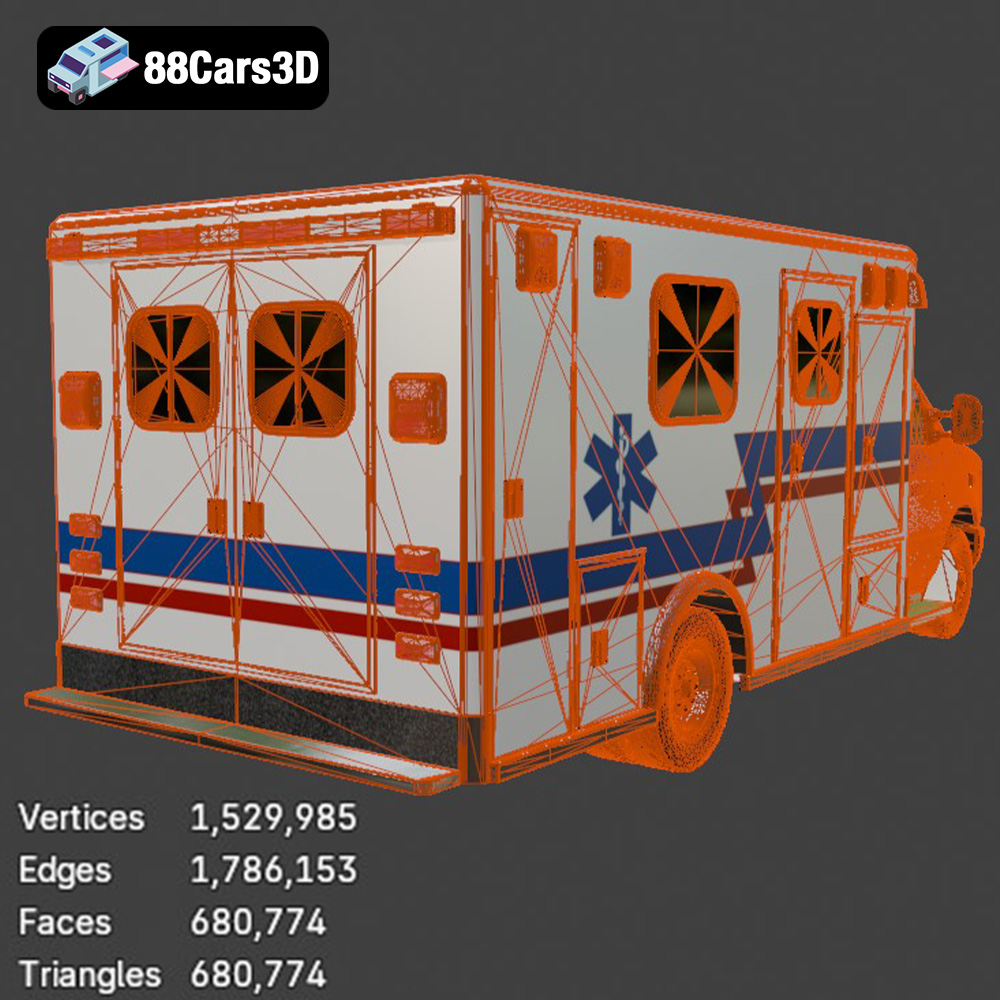
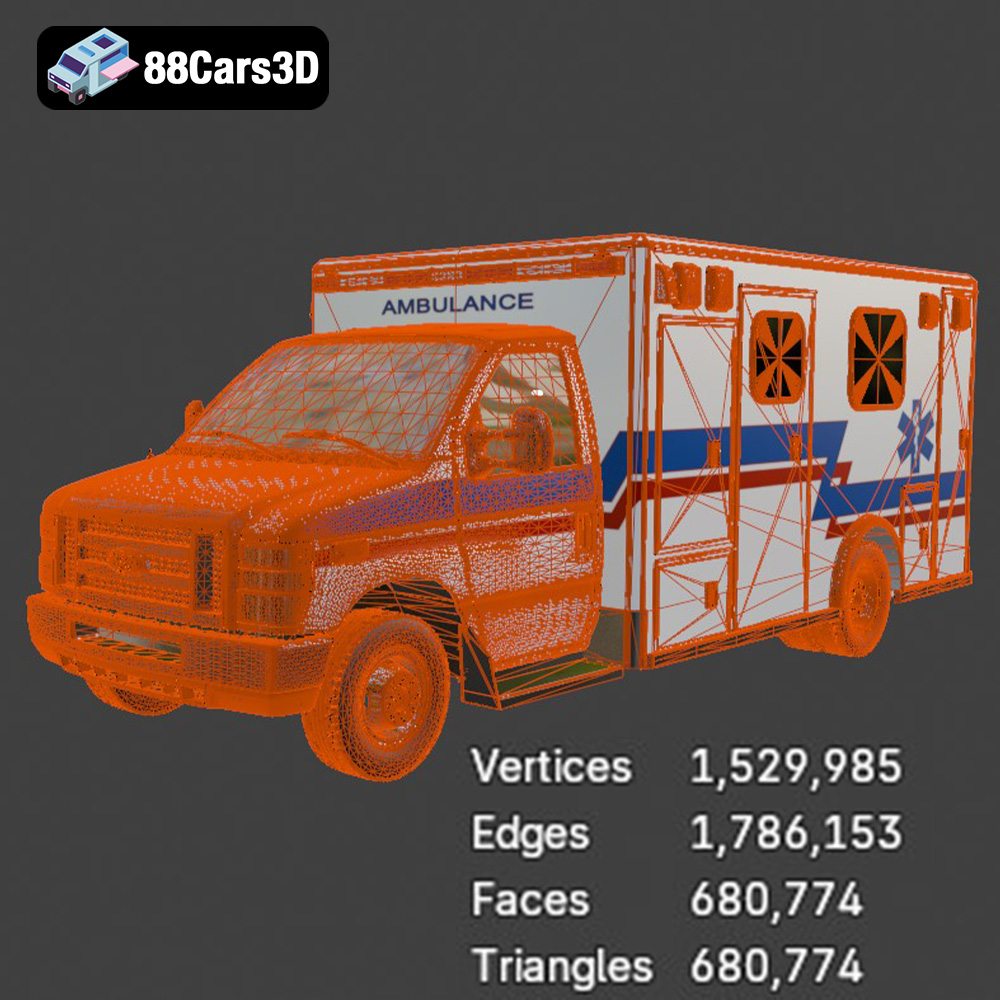
Achieving visual fidelity while maintaining optimal performance is a delicate balancing act. High-quality 3D car models are built with clean, optimized geometry. This typically involves efficient polygon distribution, careful use of edge loops to define form, and ensuring proper topology for deformation if animation is required. The Ford E-450 Ambulance, designed for both real-time applications and demanding ray-traced rendering, exemplifies this balance. Its optimized mesh allows it to be rendered efficiently in game engines while holding up to the scrutiny of high-resolution stills and animations. UV mapping is also critical, allowing for crisp, detailed textures without stretching or distortion, contributing significantly to the model’s overall realism and performance.
The Value of a Ready-to-Use Asset
Creating a detailed 3D car model from scratch is a monumental task, often requiring hundreds of hours of work from skilled artists. For studios and individual developers, investing in a pre-made, professional-grade asset like the Ford E-450 Ambulance 3D Model offers immense value. It bypasses the time-consuming modeling, texturing, and optimization phases, allowing teams to integrate the model directly into their projects. This accelerates production pipelines, reduces costs, and ensures a consistent standard of quality across all assets. It’s a strategic choice for projects with tight deadlines or limited resources, allowing creative energy to be focused on narrative, interaction, or overall scene composition.
Professional Workflows: Integrating the Ford E-450 Ambulance Model
The Ford E-450 Ambulance 3D Model is engineered for seamless integration into diverse professional pipelines, offering flexibility for various project requirements. Its comprehensive file format support ensures that artists and developers can leverage it within their preferred software ecosystems.
Architectural Visualization and Urban Planning
In architectural visualization, adding realistic vehicles is crucial for grounding a scene in reality and conveying scale. The Ford E-450 Ambulance can be a pivotal element in urban planning visualizations, emergency route simulations, or even hospital campus renderings. Using the .max file in 3ds Max, artists can easily import the model, adjust its materials with V-Ray or Corona Render for photorealistic output, and place it within an urban environment. Its detailed interior even allows for close-up shots demonstrating functional layouts around a building. Similarly, with the .blend file, Blender artists can achieve stunning results for their architectural concepts, depicting the flow of traffic or the presence of critical services around new developments.
Game Development and Real-Time Environments
For AAA game development and other real-time applications, the Ford E-450 Ambulance is a game-changer. Provided as an .fbx file and a pre-configured .unreal asset, it’s immediately ready for integration into Unreal Engine or Unity projects. Game developers can drag and drop the ambulance into their virtual worlds, whether it’s an open-world emergency simulator, a mission-critical objective in a city environment, or a detailed backdrop for interactive storytelling. The optimized geometry ensures efficient rendering performance, while properly set up UVs allow for texture streaming and LOD generation, vital for maintaining high frame rates across different platforms. Collision meshes would be pre-configured in the Unreal asset, enabling realistic physics interactions within the game engine.
High-Fidelity Simulation and Training
One of the most impactful applications for the Ford E-450 Ambulance 3D Model is in high-fidelity simulation and training programs. Emergency services organizations can utilize this model to create immersive virtual reality (VR) training modules for paramedics, firefighters, and police. Trainees can practice responding to accidents, navigating urban environments in an ambulance, or even performing procedures within the detailed patient compartment. The realism provided by this asset, coupled with interactive elements, dramatically enhances learning outcomes. The .fbx and .glb formats are particularly useful here, facilitating integration into custom simulation platforms or web-based VR experiences, allowing for hands-on, risk-free practice of critical skills.
Technical Deep Dive: Geometry, Materials, and Textures
The true mark of a professional 3D asset lies not just in its visual appeal but in its underlying technical craftsmanship. The Ford E-450 Ambulance 3D Model is built on a foundation of robust technical specifications designed for versatility and performance.
Optimized Topology and UV Mapping
At its core, the model features clean, optimized geometry. This means the mesh is constructed with an intelligent balance of polygon count and detail, typically favoring quads where possible for better deformation and subdivision, while utilizing triangles efficiently in areas where they are most suitable. This clean topology is crucial for maintaining visual integrity across various render distances and for potential future modifications. Complementing this is meticulous UV mapping. The model’s UVs are laid out efficiently, ensuring minimal distortion and optimal use of texture space. This allows for the application of high-resolution PBR (Physically Based Rendering) textures that accurately depict materials like painted metal, glass, rubber, and the reflective surfaces of emergency lights, without noticeable seams or pixelation.
Realistic Material Definition and PBR Workflows
The material definitions for the Ford E-450 Ambulance are crafted using modern PBR workflows. This approach simulates how light interacts with surfaces in the real world, producing highly convincing results. Materials include detailed maps for albedo (base color), roughness (how diffuse or shiny a surface is), metalness (whether a surface is metallic or dielectric), normal (for fine surface details), and potentially emissive maps for the emergency lights. These PBR materials ensure that the ambulance looks accurate under various lighting conditions, from bright daylight to moody nighttime scenes, and across different rendering engines, from V-Ray in 3ds Max to real-time rendering in Unreal Engine. The consistency of PBR materials is a cornerstone for achieving believable results in any production pipeline.
Scalability and Performance Considerations
A high-quality 3D car model must also be scalable. While the Ford E-450 Ambulance is highly detailed, it’s designed to be adaptable. For demanding real-time applications, it can be easily configured with Levels of Detail (LODs) – progressively lower-polygon versions of the model that swap in as the camera moves further away. This significantly reduces the computational load on the GPU without a noticeable drop in visual quality. Furthermore, the clean mesh and well-organized material IDs facilitate instancing, allowing multiple ambulances to be placed in a scene with minimal performance overhead. These considerations are vital for large-scale simulations, open-world games, and complex visualization projects where performance is paramount.
Beyond the Screen: AR, VR, and 3D Printing Applications
The utility of a versatile 3D model extends far beyond traditional screen-based rendering and game development. The Ford E-450 Ambulance 3D Model is also perfectly suited for emerging technologies like Augmented Reality (AR), Virtual Reality (VR), and even physical production through 3D printing.
Immersive Experiences with AR/VR
Augmented Reality (AR) and Virtual Reality (VR) are transforming how we interact with digital content. For these immersive platforms, a lightweight, optimized model like the Ford E-450 Ambulance is invaluable. The .glb format is specifically designed for these environments, offering an efficient, single-file solution that can be easily loaded into ARKit, ARCore, WebXR, or other VR/AR frameworks. Imagine an AR app where a virtual ambulance appears in your driveway for a product showcase, or a VR training scenario where paramedics can walk around and even inside the vehicle to familiarize themselves with equipment layout and operational procedures. The detailed interior and realistic exterior facilitate highly engaging and interactive experiences, providing unparalleled engagement for training, marketing, or educational purposes.
Prototyping and Physical Models via 3D Printing
The digital asset can also transcend the screen and become a tangible object. With the inclusion of the .stl file, the Ford E-450 Ambulance 3D Model is ready for 3D printing and physical prototyping. Engineers, designers, or even hobbyists can print miniature versions of the ambulance for concept validation, scale model displays, or as educational tools. While the .stl format loses material and texture information, it accurately preserves the geometric form. When preparing for 3D printing, users would typically ensure the model is “watertight” (no holes in the mesh) and consider the appropriate scale and material properties for the chosen 3D printer and filament. This capability allows for a unique bridge between digital design and physical manifestation, extending the model’s value into product design and manufacturing workflows.
Conclusion
The demand for high-quality, technically robust 3D assets continues to grow across industries, from game development and film production to specialized training and architectural visualization. The Ford E-450 Ambulance 3D Model stands out as a prime example of such an asset, meticulously crafted to meet the stringent requirements of professional pipelines. Its unparalleled realism, combined with optimized geometry and extensive file format support, makes it an exceptionally versatile tool for a wide array of applications.
Whether you’re developing an immersive AR/VR experience, rendering a photorealistic scene in 3ds Max, building a dynamic environment in Unreal Engine, or even creating a physical prototype through 3D printing, this model provides the foundation for excellence. Its detailed exterior and fully modeled interior ensure that every angle and interaction delivers maximum impact. By choosing assets like the Ford E-450 Ambulance from reputable sources such as 88cars3d.com, professionals can streamline their workflows, save valuable production time, and achieve outstanding visual results that truly resonate with their audience. Elevate your projects with 3D car models that deliver both visual splendor and technical precision.
Featured 3D Model
Ford E-450 Ambulance 3D Model
Bring unparalleled realism to your projects with the Ford E-450 Ambulance 3D Model. This meticulously crafted asset captures the essential details of a modern emergency response vehicle, making it ideal for high-fidelity simulations, emergency services training modules, and detailed visualization scenarios.
This model is built to professional standards, featuring clean, optimized geometry suitable for real-time applications and demanding ray-traced rendering. All external markings, lighting configurations, and material definitions are realistically replicated to ensure immediate utility in any production pipeline. The cabin and patient compartment are fully modeled, providing comprehensive detail for interior shots or interactive environments.
The Ford E-450 Ambulance asset is ready for deployment across various media, including AAA game development (using Unreal Engine or Unity), architectural and urban planning visualization, augmented reality (AR) experiences, and large-scale public safety simulations.
$19.99
Product Image Gallery