

Mastering Digital Automotive Excellence: A Deep Dive into Premium 3D Car Models
In the expansive realm of 3D visualization, the demand for highly detailed, technically sound, and versatile assets is ever-growing. From cinematic automotive rendering to immersive game development and sophisticated AR/VR experiences, the quality of a 3D model can define the success of a project. Nowhere is this more apparent than with meticulously crafted 3D car models, which serve as the backbone for countless digital endeavors.
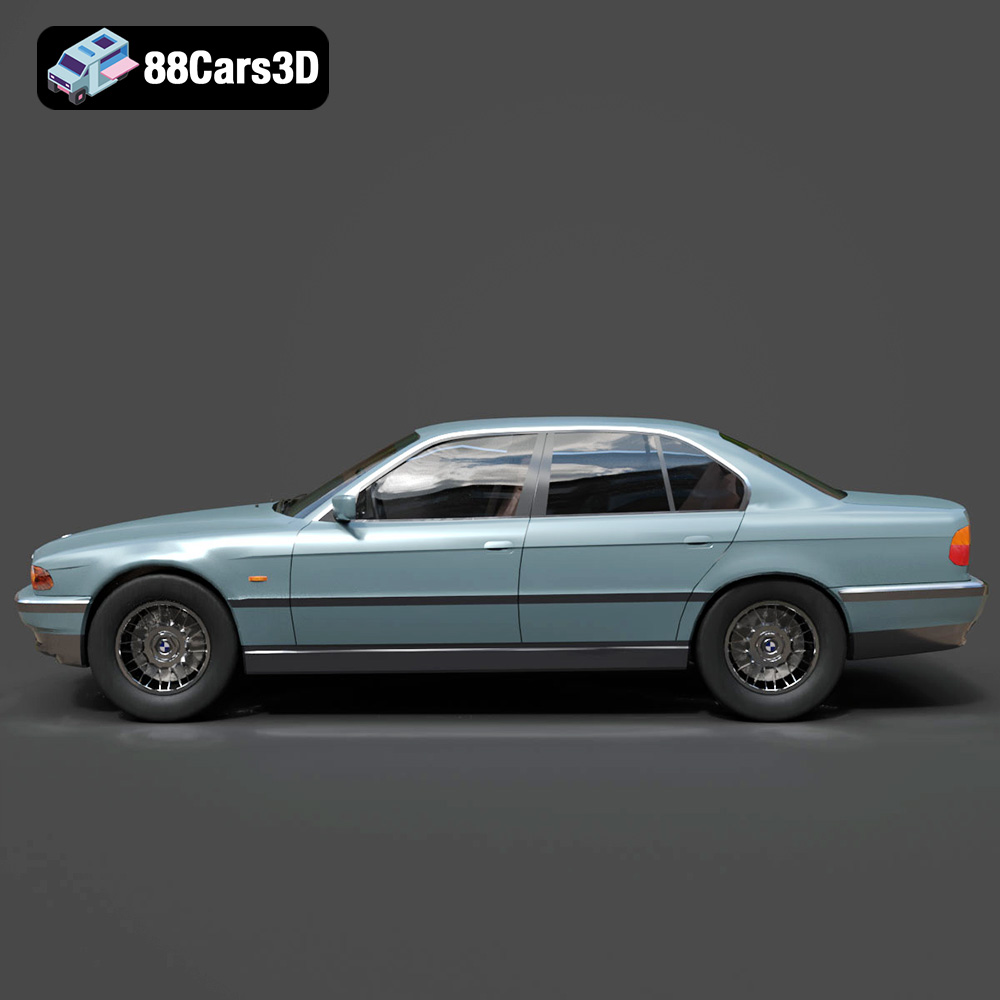
Consider the timeless elegance of a classic like the BMW 7 Series E38. Its distinctive lines and refined presence, spanning its production from 1994 to 2001, embody a specific era of luxury and sophisticated engineering. Recreating such an icon in the digital space requires not just artistic skill, but a deep understanding of geometry, materials, and optimization for various platforms. A professional-grade BMW 7 Series E38 3D Model, such as the one available on 88cars3d.com, encapsulates this blend of historical accuracy and technical prowess, offering a powerful asset for any discerning professional.
This blog post will embark on a comprehensive journey through the intricate world of premium 3D car models, exploring the technical foundations, professional workflows, and diverse applications that elevate digital automotive content. We’ll examine the critical role of file formats, delve into the artistry of accurate modeling, and uncover how high-quality assets like the BMW 7 Series E38 streamline production across a multitude of industries.
Understanding 3D Model File Formats
The choice of a 3D model file format is far more than a simple preference; it dictates compatibility, workflow efficiency, and the final quality of your project. Each format is engineered with specific strengths, making it crucial to select the right one for your intended application. A truly versatile asset, like the BMW 7 Series E38 3D Model, provides a comprehensive suite of formats to cover every professional need.
.blend – The Native Blender Ecosystem
The .blend format is the native file type for Blender, an open-source 3D creation suite. When a model is provided in .blend, it offers the ultimate flexibility for Blender users. It encapsulates not just the mesh data, but also all scene information: materials, textures, lighting setups, animation rigs, and even custom scripts. This means a fully editable Blender scene, ready for immediate modification, rendering, or integration into a larger project. For those deeply entrenched in the Blender workflow, this format is invaluable for its completeness and ease of iteration.
.fbx – The Industry Standard for Interchange
Autodesk’s .fbx (Filmbox) format has become the de facto industry standard for 3D model interchange across different software and game engines. It’s incredibly robust, capable of storing geometry, materials, textures, animations, and camera data. For pipelines involving Unreal Engine, Unity, 3ds Max, Maya, or Cinema 4D, .fbx is the ideal choice. Its strength lies in its ability to maintain complex scene hierarchies and animation data, making it perfect for transferring animated game assets or complex rigged vehicles between various professional applications.
.obj – The Universal Workhorse
The .obj (Wavefront Object) format is one of the oldest and most universally supported 3D file formats. While it doesn’t typically store animation or advanced material definitions like .fbx, it excels at representing mesh geometry, UV coordinates, and basic material group information. Its widespread compatibility makes it a safe bet for cross-software integration, ensuring your model can be opened and worked on in virtually any 3D application. For static scenes, rendering, or as a base for further detailing in different programs, .obj remains an indispensable format.
.glb – Web and XR Optimization
.glb (GL Transmission Format Binary) is a modern, compact, and efficient format designed specifically for web-based 3D, AR, and VR applications. It’s a binary version of glTF, embedding all model data (geometry, materials, textures, animations) into a single file. This “all-in-one” characteristic makes it incredibly fast to load and ideal for experiences where performance and file size are critical, such as interactive product viewers, augmented reality apps, and metaverse environments. For showcasing your BMW 7 Series E38 in an immersive web experience, .glb is the definitive choice.
.stl – The Path to Physical Creation
The .stl (Stereolithography) format is the standard for 3D printing. It represents a 3D model as a series of connected triangles, describing only the surface geometry without color or texture information. While not suitable for rendering or animation, its simplicity makes it universally compatible with 3D printers and slicing software. For those wishing to bring their digital 3D car models into the physical world, perhaps as a scale replica of the BMW E38, the .stl format is essential for producing high-quality physical prints.
.ply – Precision for Technical Applications
The .ply (Polygon File Format or Stanford Triangle Format) is another format for storing 3D data, particularly useful for scanned data and scientific applications. It can store a wider range of properties than .obj, including color, transparency, normals, texture coordinates, and even reliability information for each vertex and face. It’s often used in reverse engineering, CAD, and precise mesh analysis, offering a detailed representation of the geometry for technical and analytical workflows.
.unreal – Seamless Unreal Engine Integration
The .unreal format, or more accurately, an Unreal Engine project setup, implies a model specifically prepared and potentially integrated within an Unreal Engine environment. This means the asset is not just an .fbx import, but often includes proper material setups, collision meshes, LODs (Levels of Detail), and potentially even Blueprint integrations. This “engine-ready” state significantly accelerates development for interactive experiences and real-time simulations, providing a plug-and-play asset for rapid deployment in Unreal Engine projects.
.max – The 3ds Max Professional’s Choice
The .max format is the native file type for Autodesk 3ds Max, a powerful software widely used for architectural visualization, automotive design, and animation. A .max file contains the complete 3ds Max scene, including all geometry, modifiers, materials (especially V-Ray or Corona setups), lighting, cameras, and animation data. For professionals using 3ds Max for high-end automotive rendering, detailed animation, or complex scene construction, the .max file provides full access to the original project, allowing for extensive customization and advanced rendering techniques.
The Art and Engineering Behind Premium 3D Car Models
Creating a truly outstanding 3D car model is a sophisticated endeavor that marries artistic vision with rigorous technical execution. It’s about more than just replicating shapes; it’s about capturing the soul of the vehicle while ensuring its digital counterpart performs flawlessly across various applications.
Achieving Authenticity Through Meticulous Modeling
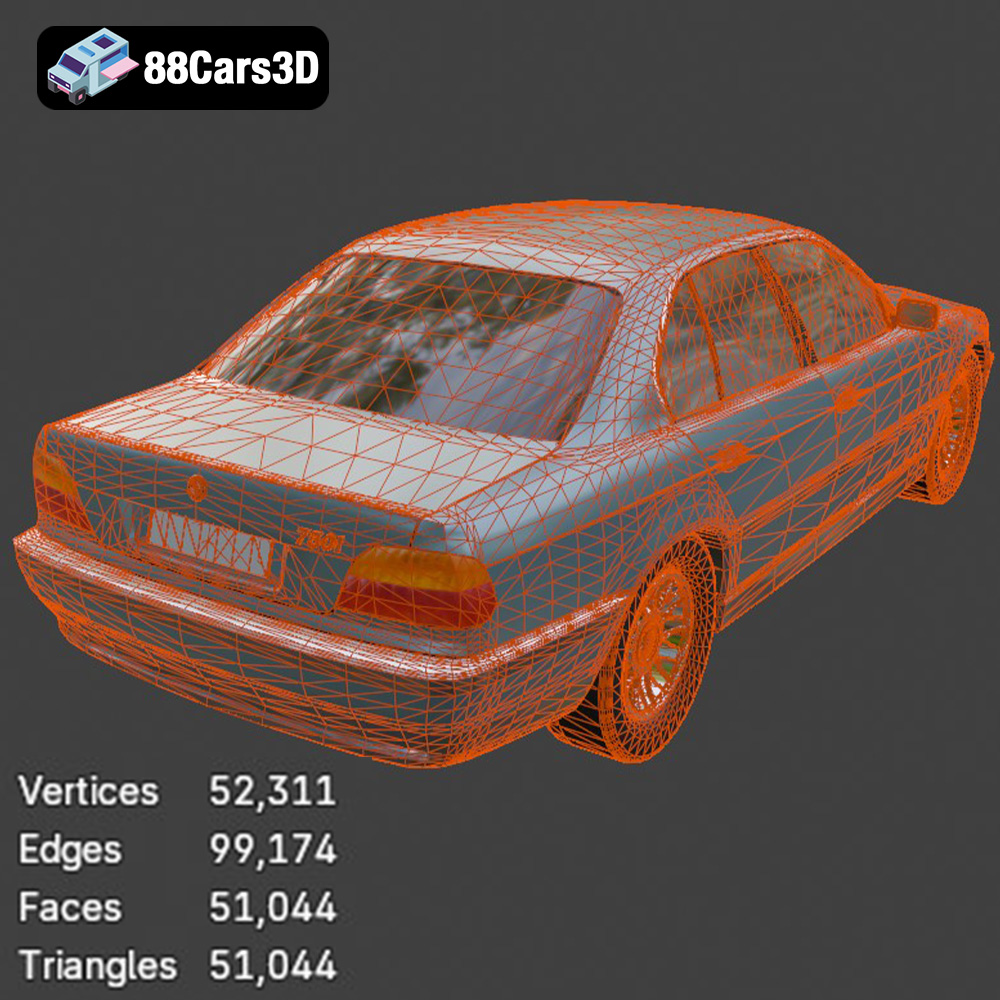
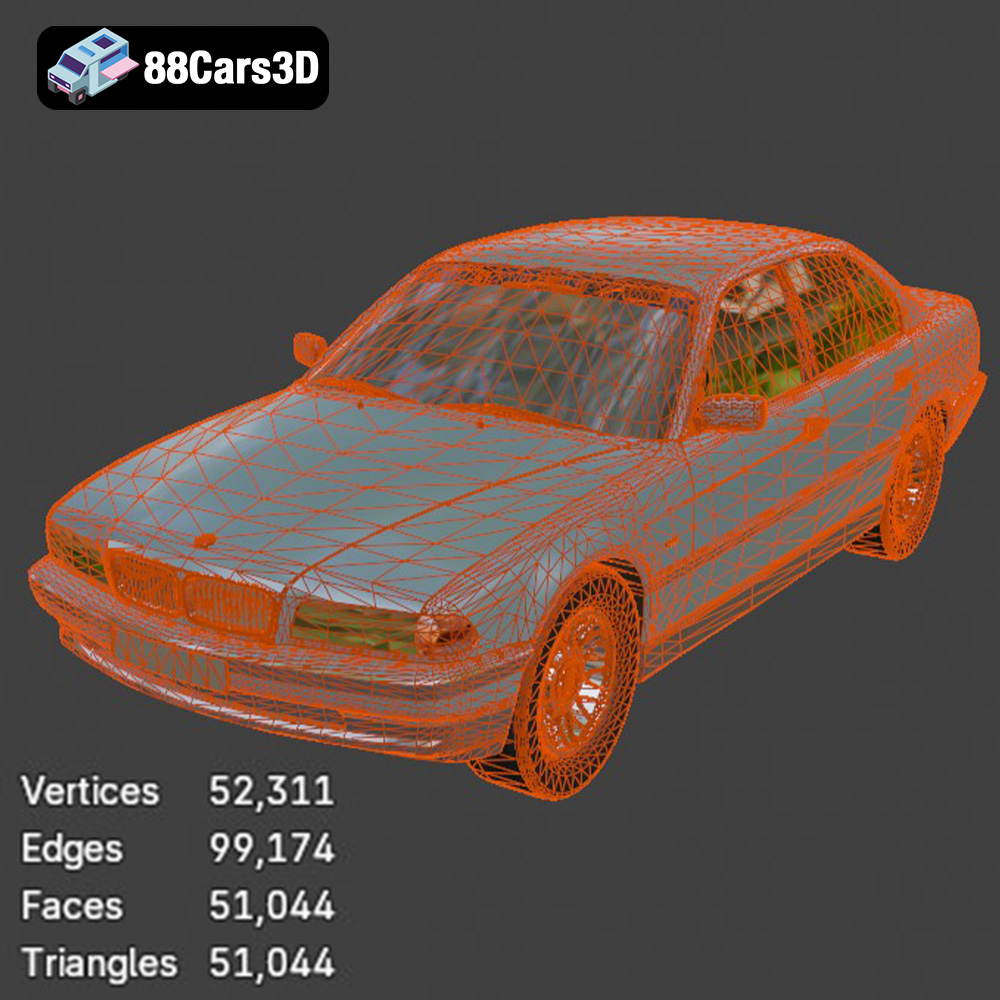
The foundation of any high-quality 3D car model lies in its geometry. For the BMW 7 Series E38, this means accurately translating its distinctive body panels, signature grille, and subtle curves into a digital mesh. Professional models prioritize clean quad-dominant topology. Quads (four-sided polygons) are essential for smooth subdivision, preventing unsightly pinching or artifacts when the model is smoothed or deformed. Furthermore, modeling to real-world scale is crucial for accurate integration into scenes, ensuring correct proportions and interaction with environmental elements like lighting and physics. Every component, from the headlights to the door handles, is precisely measured and replicated to ensure the digital model is a faithful representation of the real vehicle.
Texture and Material Fidelity for Photorealism
Beyond the mesh, realistic textures and materials are what truly bring a 3D car model to life. Advanced techniques like PBR (Physically Based Rendering) workflows are employed to simulate how light interacts with different surfaces. This involves carefully crafted materials for metals (chrome, brushed aluminum), glass (windows, headlights), rubber (tires), and plastics (trim). The BMW 7 Series E38 model features detailed headlights and taillights with transparent materials for realistic light refraction, and authentic wheel designs with realistic tire profiles. Proper UV unwrapping ensures that textures are mapped precisely without stretching or distortion, allowing for high-fidelity renders that are virtually indistinguishable from photographs.
Optimizing for Performance and Scalability
A premium 3D car model must strike a delicate balance between visual detail and performance efficiency. While a high polygon count can provide exquisite detail for close-up renders, it can bog down real-time applications like games or AR/VR. This means the mesh quality is optimized to balance detail with performance. Furthermore, a well-structured model includes an organized hierarchy with proper pivot points for easy manipulation and animation of parts like doors, hood, and trunk. This structured approach ensures the model is not only beautiful but also practical for animators, game developers, and visualization specialists, allowing for seamless integration and customization.
Professional Workflows: Integrating the BMW E38 3D Model
The true value of a versatile 3D asset like the BMW 7 Series E38 3D Model from 88cars3d.com becomes apparent when integrated into various professional pipelines. Its diverse file formats and meticulous construction cater to a spectrum of specialized workflows, accelerating production and enhancing creative output.
Automotive Rendering in 3ds Max and V-Ray/Corona
For high-end automotive rendering, 3ds Max coupled with renderers like V-Ray or Corona remains an industry staple. The provided .max file for the BMW E38 is invaluable here. It typically comes pre-setup with optimized geometry, PBR materials, and sometimes even basic lighting environments, giving artists a powerful starting point. Professionals can leverage 3ds Max’s robust modeling tools for further customization, adjust material properties (paint finishes, chrome reflections, glass refraction), and craft intricate lighting setups to achieve cinematic realism. Whether it’s for studio shots, environmental renders, or architectural visualizations where a classic car adds a touch of class, the .max file provides the flexibility and quality required for top-tier visual output.
Real-time Game Development with Unreal Engine
In the realm of game development, efficiency and visual quality must go hand-in-hand. The .fbx and dedicated .unreal project files for the BMW E38 are engineered specifically for this demanding environment. Game artists can import the .fbx into Unreal Engine, where its clean topology and optimized mesh make it an excellent base for creating Levels of Detail (LODs) – lower polygon versions that are swapped in at a distance to save performance. The .unreal file goes a step further, potentially providing engine-ready materials, collision meshes, and even basic physics setups, drastically reducing the setup time for creating a fully functional game asset. This allows developers to focus on gameplay mechanics and environmental design rather than laboriously preparing the car model for real-time interaction in racing simulations or open-world games.
Immersive Experiences: AR/VR and the .glb Format
Augmented Reality (AR) and Virtual Reality (VR) platforms present unique technical challenges, primarily demanding highly optimized assets that can run smoothly on mobile devices or VR headsets. The .glb format of the BMW 7 Series E38 3D Model is tailor-made for these applications. Its single-file structure and efficient data compression ensure quick loading times and minimal overhead, crucial for maintaining high frame rates in immersive environments. Developers can integrate the .glb model into AR apps for interactive product showcases or use it in VR simulations for virtual test drives, offering users a rich and responsive experience without sacrificing visual quality.
Case Studies and Applications: Beyond the Render
The utility of a high-fidelity 3D car model extends far beyond static renders or basic game integration. Its versatility unlocks a myriad of advanced applications, transforming the digital landscape of automotive interaction and visualization.
Cinematic Visualization and Advertising
For television commercials, feature films, or promotional videos, a photorealistic 3D car model can be an indispensable asset. Imagine the BMW 7 Series E38 gliding through a pristine digital city or taking center stage in a period drama. Thanks to its meticulous detailing, including accurately modeled body panels, detailed grille, and functional mirrors, the model can withstand extreme close-ups. Animators can leverage the separated components like doors, hood, and trunk, along with proper pivot points, to create dynamic sequences – a hood opening to reveal a basic engine bay, or doors gently closing. This level of control allows for the creation of compelling narratives and stunning visual effects that would be costly or impractical with physical vehicles.
Driving Simulators and Automotive Training
Realistic driving simulators are crucial for training, entertainment, and even engineering analysis. A 3D model like the E38, built to real-world scale and optimized for performance, serves as the ideal visual component for such systems. Its accurate representation allows for precise collision detection and believable physics integration. Developers can use the model to create virtual environments where drivers can practice maneuvers, experience different driving conditions, or learn about the car’s interior features through interactive walkthroughs. The detailed dashboard with instrumentation, steering wheel, and center console controls provides a high level of immersion, enhancing the training experience significantly.
3D Printing and Physical Prototyping
The digital realm often bridges back to the physical. For enthusiasts, collectors, or designers, the ability to 3D print a highly accurate scale model of their favorite car is a compelling proposition. The inclusion of an .stl file within the BMW 7 Series E38 3D Model package makes this transition seamless. While .stl focuses purely on surface geometry, the underlying clean topology of the original model ensures that the generated .stl is manifold and printable without errors. This opens up possibilities for creating physical prototypes, desk models, or even components for larger builds, transforming a digital asset into a tangible object.
Customization and Future-Proofing Your 3D Assets
Investing in a premium 3D car model is not just about acquiring a pre-made asset; it’s about gaining a foundation for limitless creative expression and ensuring the longevity of your digital library. The BMW 7 Series E38 model is designed with customization at its core, enabling artists to adapt it to diverse project requirements.
Tailoring Aesthetics: Paint, Livery, and Interior Details
A key advantage of a professionally crafted 3D model is its adaptability. Artists can easily modify paint finishes, colors, and add custom graphics or liveries to suit specific branding or artistic visions. Whether it’s transforming the E38 into a classic racing livery or giving it a contemporary metallic flake finish, the clean UV unwrapping and PBR-ready materials allow for seamless texture application and material adjustments. Similarly, the ability to adjust material properties for metals, chrome, rubber, glass, and plastics means the car can be made to look brand new, weathered, or stylized to match any scene mood or visual effect, providing unparalleled creative control over its appearance.
Animating Vehicle Components
Dynamic scenes often require animated elements. The BMW 7 Series E38 3D Model is specifically built to facilitate this. With its separated components like doors, hood, and trunk, and the crucial inclusion of proper pivot points, animators can effortlessly open and close these parts. This is essential for creating realistic car entry/exit animations, showcasing engine bay details, or even for damage simulation in game environments. The organized hierarchy further simplifies the animation process, allowing for efficient rigging and keyframing without complex setup.
The Longevity of High-Quality 3D Models
In the fast-evolving world of 3D technology, investing in high-quality, versatile assets like those found on 88cars3d.com is a strategic decision. A model with clean geometry, proper UVs, and multiple format options ensures it will remain relevant and usable across future software updates and platform changes. The technical advantages of the BMW 7 Series E38 3D Model – its quad-dominant topology, real-world scale, and optimized mesh – mean it can be easily subdivided for ultra-high-resolution renders or decimated for efficient real-time use, truly future-proofing your investment and making it an indispensable addition to any professional 3D asset library.
Conclusion
The journey from a timeless automotive classic like the BMW 7 Series E38 to a meticulously crafted 3D model is one paved with technical precision and artistic dedication. As we’ve explored, the depth of detail, the variety of file formats, and the optimization for diverse applications are what truly distinguish a premium 3D car model. From the intricacies of file formats like .blend and .unreal to the demanding workflows of automotive rendering and game assets, every aspect contributes to its utility and value.
Whether your project demands cinematic realism, real-time interactivity, or a tangible 3D print, the professional-grade BMW 7 Series E38 3D Model stands ready to exceed expectations. Its versatility, combined with its historical significance and elegant design, makes it more than just a model; it’s a powerful tool for visual storytelling, simulation, and immersive experiences. By choosing high-quality assets such as this, available on 88cars3d.com, professionals can streamline their creative processes, achieve unparalleled results, and elevate their digital automotive projects to new heights.
Featured 3D Model
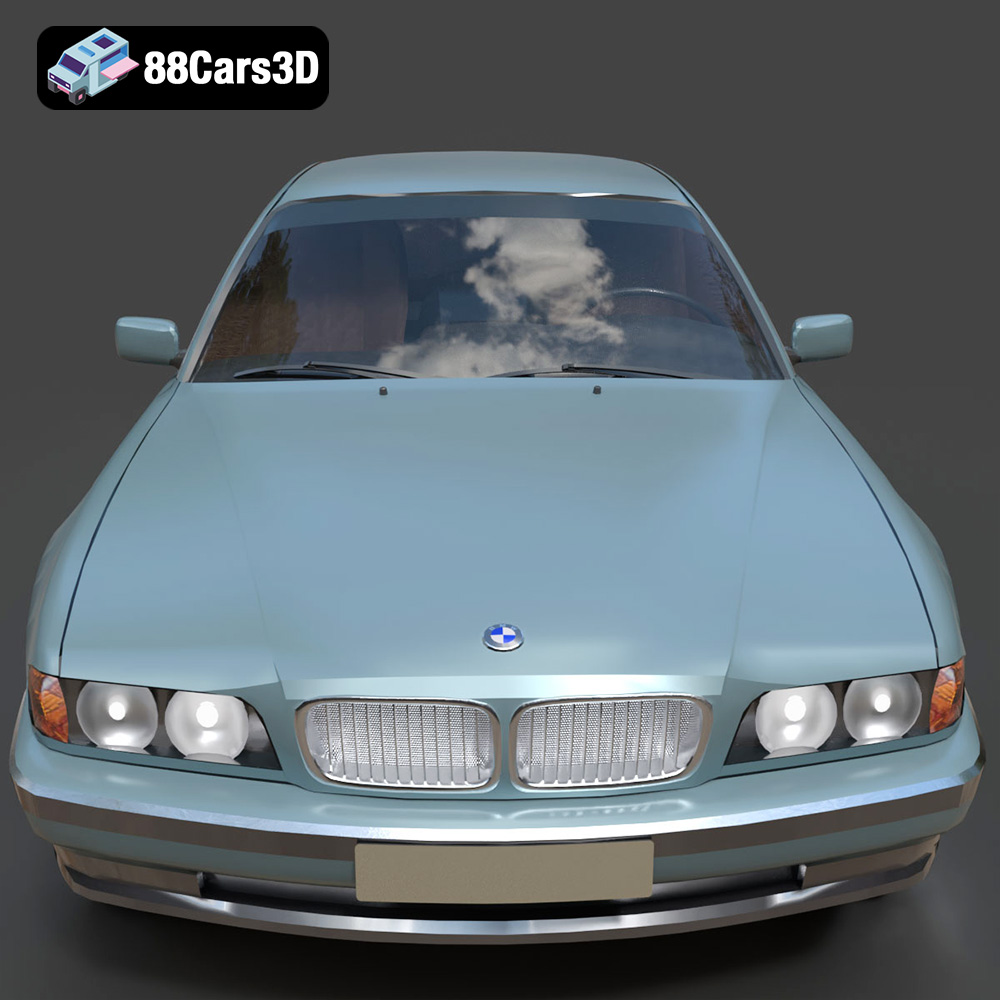
BMW 7 Series E38 3D Model
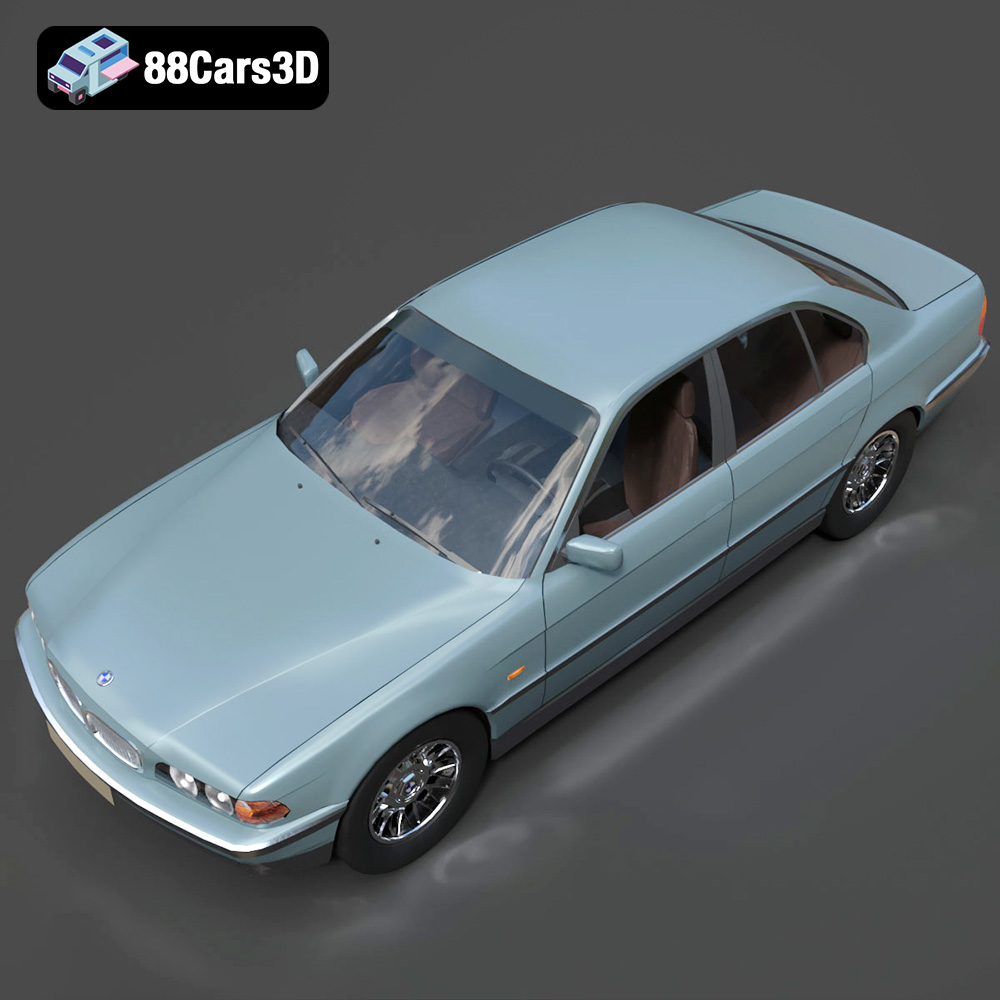
Experience the timeless elegance and sophisticated engineering of the BMW 7 Series E38 with this meticulously crafted 3D model. Representing the iconic luxury full-size sedan produced from 1994 to 2001, this model captures the distinctive lines and refined presence of a true automotive classic. Built with clean geometry and balanced detailing, it is optimized for high-quality rendering, realistic animation, immersive simulation, and efficient integration into game development projects.
Exterior Features:
- Accurately modeled body panels reflecting the E38’s signature design
- Detailed front grille, headlights, and taillights with transparent materials for realistic lighting
- Authentic wheel designs and realistic tire profiles
- Separated components like doors, hood, and trunk for ease of animation and customization
- Clear window glass and functional mirrors
Interior / Mechanical Features:
- Detailed dashboard with instrumentation, steering wheel, and center console controls
- Comfortable seating and door panel textures reflecting the luxury interior
- Optimized mesh quality to balance detail with performance, suitable for various applications
- Basic undercarriage and engine bay details for exterior renders
Technical Advantages:
- Clean quad-dominant topology ensures smooth subdivision and deformation
- Modeled to real-world scale for accurate integration into scenes
- Organized hierarchy with proper pivot points for easy manipulation and animation of parts
- UV unwrapped with appropriate texture mapping for high-fidelity renders
Applications:
- Rendering & Visualization: Perfect for high-resolution studio renders, cinematic scenes, and architectural visualizations
- Game Development: Optimized as a game asset for racing simulations, open-world environments, and interactive experiences
- AR/VR: Ideal for creating immersive augmented and virtual reality automotive showcases
- Simulation & Training: Suitable for driving simulators, automotive training modules, and engineering visualizations
- 3D Printing: Can be easily converted to .stl format for physical model production
Customization Options:
- Easily modify paint finishes, colors, and add custom graphics or liveries
- Adjust material properties for metals, chrome, rubber, glass, and plastics to match specific rendering styles
- Adapt lighting setups to achieve diverse scene moods and visual effects
This BMW 7 Series E38 3D model offers a professional-grade asset for any project requiring a blend of luxury, detail, and historical automotive significance. Its versatility across multiple platforms and applications makes it an indispensable addition to your 3D asset library.
Included File Formats:
- .blend – Blender project with materials
- .fbx – Compatible with Unreal, Unity, and major 3D engines
- .obj – Universal format for nearly all 3D software
- .glb – Optimized for AR, VR, and web-based visualization
- .stl – Ready for 3D printing
- .ply – Mesh format for analysis and CAD workflows
- .unreal – Unreal Engine project setup
- .max – Editable 3ds Max scene for rendering and animation
Tags:
.bmw,.7seriese38,.luxurycar,.sedan,.classiccar,.rendering,.simulation,.gameasset,.arvr,.blend,.fbx,.obj,.glb,.stl,.ply,.unreal,.maxLamborghini Diablo SV 1995 3D Model
$10.79
Product Image Gallery



Related Tags
.7seriese38
.arvr
.blend
.bmw
.classiccar
.fbx
.gameasset
.glb
.luxurycar
.max
.obj
.ply
.rendering
.sedan
.simulation
.stl
.unreal
