

Elevating Digital Worlds: The Power of Versatile 3D Models in Professional Workflows
In the vast landscape of digital content creation, the demand for high-quality, ready-to-use 3D assets is ever-growing. From crafting immersive virtual realities to populating realistic architectural visualizations, the foundation of any compelling scene lies in the quality and versatility of its constituent models. While 3D car models often capture the spotlight for their intricate detail and dynamic appeal, the unsung heroes of many digital environments are the everyday objects that add realism and narrative depth. These can range from street furniture and foliage to the subject of our focus today: a meticulously crafted bicycle.
Today, we delve into the technical excellence and broad applicability of the Generic Bicycle_02-007 3D Model, an asset that exemplifies professional-grade design and optimization. Available through marketplaces like 88cars3d.com, this model is far more than just a static prop; it’s a versatile tool engineered to seamlessly integrate into diverse professional pipelines, from detailed automotive rendering projects (where a bicycle might feature prominently in a garage scene or street environment) to serving as a robust game asset.
This comprehensive exploration will uncover the critical aspects that make such an asset invaluable, including its underlying topology, material definitions, animation readiness, and cross-platform compatibility. We will examine how this model can enhance your projects, streamline your workflows, and provide an exceptional foundation for creativity across various industries.
Understanding 3D Model File Formats: The Backbone of Digital Asset Exchange
The utility of any 3D model is often determined by its flexibility across different software environments and applications. This flexibility is largely facilitated by the various file formats it supports. The Generic Bicycle_02-007 3D Model stands out by offering a comprehensive suite of formats, each tailored for specific professional use cases. Understanding these formats is crucial for optimizing your workflow and ensuring seamless integration into your projects.
.blend – Fully Editable Blender Scene with Materials
The .blend format is native to Blender, one of the most popular open-source 3D creation suites. When you acquire a .blend file for the Generic Bicycle_02-007, you’re getting a fully editable scene, complete with all textures, materials, lighting setups, and potentially even basic animation rigs defined within Blender itself. This is ideal for artists who primarily work in Blender, offering the highest level of control for modifications, material adjustments, or further development. It preserves the model’s clean quad-dominant topology, organized hierarchy, and real-world scale, making it a perfect starting point for customization or integration into larger Blender projects.
.fbx – Ideal for Unreal, Unity, and Real-Time Pipelines
The .fbx (Filmbox) format is a proprietary file format owned by Autodesk, but it has become an industry-standard for exchanging 3D data between various applications. Its strength lies in its ability to encapsulate not just geometry, but also materials, textures, animations, and even rigging information in a single file. For developers working with game engines like Unreal Engine and Unity, .fbx is often the go-to format. It ensures that the Generic Bicycle_02-007 3D Model, with its optimized mesh and separated components, can be imported with its hierarchy intact, ready for collision setup, animation, and real-time rendering. Its widespread support makes it invaluable for collaborative projects.
.obj – Universal Format for Cross-Software Compatibility
The .obj (Wavefront Object) format is one of the oldest and most universally supported 3D file formats. While it primarily stores geometric data (vertices, normals, texture coordinates) and references to material files (.mtl), it is incredibly robust for simple mesh exchange. The Generic Bicycle_02-007 in .obj format guarantees maximum compatibility across virtually all 3D software packages, from CAD applications to traditional rendering suites. It’s an excellent choice when you need to ensure that the core geometric structure of the bicycle model can be opened and manipulated in any environment, albeit often requiring manual reapplication of materials and textures.
.glb – Optimized for AR, VR, and Browser-Based Display
The .glb (GL Transmission Format Binary) is a modern, compact 3D file format designed for efficient transmission and loading of 3D scenes and models, particularly in web-based applications, augmented reality (AR), and virtual reality (VR) experiences. It packages the 3D model, textures, and animation into a single binary file, making it incredibly easy to deploy. For integrating the Generic Bicycle_02-007 3D Model into AR product viewers, VR environments, or interactive web experiences, the .glb format provides excellent performance and ease of use, maintaining visual quality while minimizing file size.
.stl – Suitable for 3D Printing Output
The .stl (STereoLithography) format is the standard for 3D printing. It represents a 3D model as a series of connected triangles, describing only the surface geometry of an object. When preparing the Generic Bicycle_02-007 for physical prototyping or model creation, the .stl format is essential. While it doesn’t store color or texture information, its simplicity makes it ideal for direct import into slicing software for 3D printers. The model’s clean topology ensures a watertight mesh, which is critical for successful 3D printing without errors.
.ply – Precision Mesh Format for CAD or Analysis
The .ply (Polygon File Format, or Stanford Triangle Format) is another common format for storing 3D data, particularly useful for scan data and scientific applications. It can store a wider range of properties than .stl, including color, transparency, and even specific normal information per vertex. For applications requiring precise mesh analysis, CAD integration, or where the model might undergo specific simulation tasks, the .ply format for the Generic Bicycle_02-007 offers a robust and accurate representation of its geometry.
.unreal – Engine-Ready Asset for Real-Time Environments
The inclusion of an .unreal file signifies that the Generic Bicycle_02-007 3D Model has been specifically pre-packaged and optimized for direct use within Unreal Engine. This often means that the asset comes with pre-configured materials, textures, collision meshes, LODs (Levels of Detail), and potentially even basic Blueprints for interactive elements. This format drastically reduces setup time for Unreal Engine developers, providing an immediate, drop-in solution for populating game levels, architectural visualizations, or cinematic sequences within the engine.
.max – Editable 3ds Max Project for Animation and Rendering
Similar to the .blend format for Blender users, the .max format provides a fully editable scene for users of Autodesk 3ds Max. This includes the complete model with all its parts, materials, textures, and hierarchy set up within a 3ds Max project. For professionals relying on 3ds Max for high-end rendering, complex animation, or integration with other Autodesk tools, the .max file offers native access to the model’s construction. It allows for advanced customization, detailed lighting setups, and the full power of 3ds Max’s rendering capabilities to be leveraged for the Generic Bicycle_02-007.
The availability of such a diverse array of formats for the Generic Bicycle_02-007 underscores its professional-grade versatility, ensuring that artists and developers can integrate it into virtually any workflow with minimal friction.
Modeling Excellence: Topology, Scale, and Structural Integrity
The foundation of any high-quality 3D asset lies in its core modeling principles. For the Generic Bicycle_02-007 3D Model, these principles have been rigorously applied to ensure not only visual appeal but also functional robustness across various applications. This attention to detail in its construction is what sets it apart as a premium asset.
Clean, Quad-Dominant Topology for Production
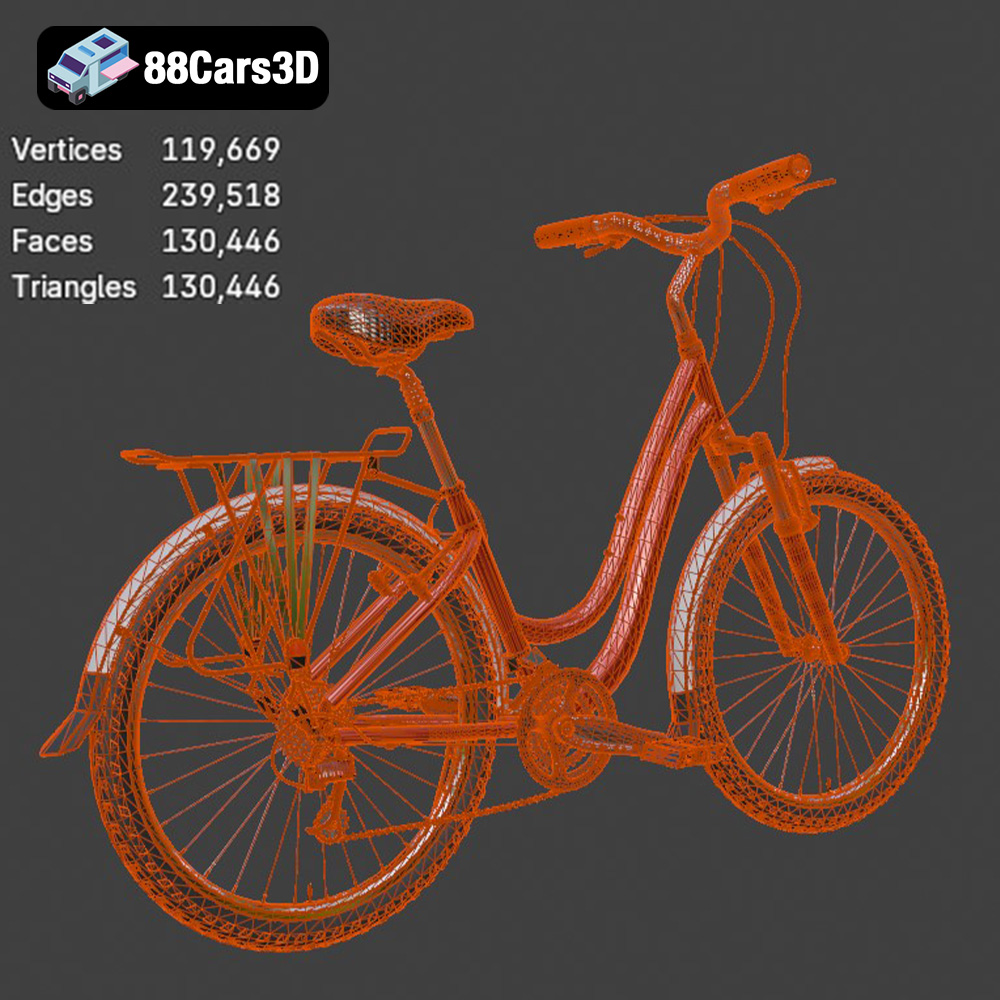
A critical technical advantage of the Generic Bicycle_02-007 is its “clean, quad-dominant topology.” This means that the vast majority of the mesh surfaces are constructed using four-sided polygons (quads). Quads are preferred in professional 3D modeling for several reasons: they deform predictably during animation, subdivide smoothly (e.g., using subdivision surface modifiers in Blender or 3ds Max), and are easier for artists to manipulate and optimize. This approach prevents artifacts, pinching, or undesirable stretching that can occur with poorly managed triangles or N-gons (polygons with more than four sides), especially crucial for close-up renders or dynamic camera movements around the bicycle.
The carefully managed edge flow ensures that details like the frame curvature, handlebar grips, and seat contours are rendered accurately and allow for easy future modifications. This makes the model highly adaptable for artists who might need to tweak specific elements or integrate it into complex scenes where mesh integrity is paramount.
Real-World Scale and Seamless Scene Integration
Adherence to “real-world scale” is another testament to the professional quality of this 3D model. When working on projects like architectural visualizations, urban planning simulations, or realistic game environments, objects must maintain accurate proportions relative to one another. A bicycle that is oversized or undersized compared to its surroundings can immediately break immersion and detract from the realism of a scene.
By being modeled to real-world dimensions, the Generic Bicycle_02-007 ensures immediate and accurate integration. Artists don’t need to waste time scaling the asset or worrying about incorrect physics calculations in simulation environments. This precision is invaluable, especially when combining the bicycle with other assets from libraries or creating intricate scenes where every detail contributes to the overall believability, much like the precision required for high-fidelity 3D car models.
Material Definitions and Customization for Visual Fidelity
Beyond its geometric accuracy, the visual impact of a 3D model heavily relies on its material properties and texturing. The Generic Bicycle_02-007 3D Model has been designed with “realistic material definitions” that allow for a high degree of customization, making it suitable for a wide array of visual styles and lighting conditions.
PBR Workflow and Material Setup
The model likely utilizes a Physically Based Rendering (PBR) workflow for its material definitions. PBR materials accurately simulate how light interacts with surfaces in the real world, producing highly convincing results regardless of the lighting environment. This means the frame, rubber tires, metallic components, and seat textures would have distinct albedo/base color, metallic, roughness, normal, and potentially ambient occlusion maps.
This approach ensures that whether the bicycle is lit by a bright sun in an outdoor scene, the soft glow of interior lighting, or the dramatic illumination of a studio render, its materials will react realistically. The detailed texture maps bring out the subtle imperfections, wear, and specific characteristics of each component, elevating the overall realism of the Generic Bicycle_02-007.
Customization and Branding Potential
The product description highlights “easily modify paint finishes and add custom graphics or decals to the frame” and “adjust material properties.” This level of customization is crucial for professionals. Imagine using the bicycle in an advertisement where it needs to carry specific brand colors, logos, or unique graphics. Or perhaps in a game where bicycles are collectible items with distinct skins. The well-separated material IDs and clean UV mapping of the Generic Bicycle_02-007 allow artists to quickly apply new textures, adjust metallic sheen, tire grip, or seat fabric without extensive re-UVing or complex material node setups. This flexibility transforms a generic asset into a bespoke element perfectly tailored to any project’s aesthetic and narrative requirements.
Animation-Ready: Hierarchy, Pivots, and Dynamic Potential
For many applications, especially game development, simulation, and cinematic rendering, a static model simply isn’t enough. The Generic Bicycle_02-007 3D Model has been engineered with animation in mind, providing the necessary groundwork for dynamic integration into moving scenes.
Pre-Rigged for Dynamic Scenes
The description notes “separated components for easy animation of wheels, handlebars, and pedals” and an “organized hierarchy with proper pivot points.” This is a significant advantage. A well-structured hierarchy means that components are grouped logically (e.g., wheels are separate from the frame, handlebars are independent of the fork). More importantly, correct pivot points are set for each animated part.
For instance, the wheels’ pivot points are precisely at their centers, allowing for accurate rotation. The handlebars’ pivot point is at the steering axis, enabling realistic turning. The pedals’ pivot points are set at their rotational axes on the crank arms. This meticulous setup saves animators countless hours, eliminating the need to manually adjust pivots or re-parent objects, making the Generic Bicycle_02-007 a true plug-and-play animation asset.
Animating the Drivetrain and Steering
The “simplified yet accurate representation of the drivetrain, including chain and gears,” further enhances its animation potential. While not a fully functional CAD model, the visual representation allows for convincing rotations of the chainring, chain, and rear gears in sync with pedal and wheel rotation. This level of detail, combined with the pre-set pivot points, makes it straightforward to create realistic cycling animations, whether for a character riding the bicycle or for it to be part of an animated sequence in a cinematic or advertisement.
The brake calipers and cables, though simplified, also contribute to the visual narrative, allowing for believable braking animations or simply adding to the overall realism of the stationary model.
Integration into Real-Time Engines: Games and Interactive Experiences
The realm of real-time rendering, encompassing video games, AR/VR experiences, and interactive applications, places unique demands on 3D assets. The Generic Bicycle_02-007 3D Model is specifically designed to excel in these demanding environments, proving its worth as an invaluable game asset.
Optimizing for Game Development
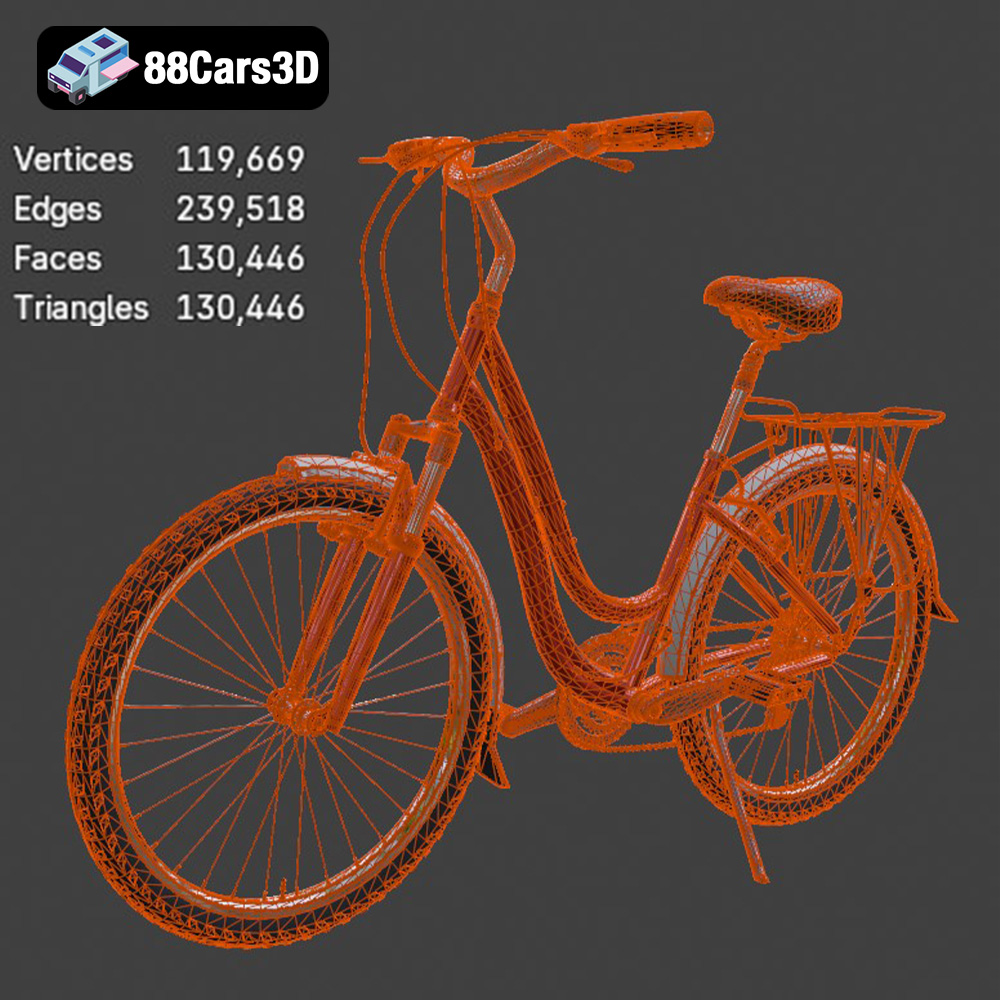
With “optimized mesh quality ensures smooth performance in real-time environments,” the model addresses a key concern for game developers: performance. An optimized mesh typically means a balanced poly count that provides sufficient detail without overburdening the rendering engine. While specific poly counts aren’t provided, the emphasis on clean, quad-dominant topology usually correlates with a manageable poly budget.
Furthermore, the organized hierarchy and separated components are crucial for game engines. They enable efficient culling (not rendering parts that aren’t visible), simplify collision detection setup, and facilitate dynamic interactivity, such as a player character mounting the bicycle or interacting with its parts. The model’s efficiency makes it an ideal candidate for populating vast open-world games, urban environments, or even mobile AR applications where performance is paramount.
Unreal Engine Workflow with the Bicycle
The inclusion of a dedicated .unreal file format underscores its readiness for professional game development, especially within Unreal Engine. This often means the asset is delivered as a pre-packaged Unreal Engine project, containing all necessary components like static meshes, materials, textures, and even potentially basic Blueprints for immediate integration. This significantly reduces the overhead for developers, allowing them to drag and drop the Generic Bicycle_02-007 into their levels, set up physics, and integrate it with character systems much faster than importing a generic .fbx and configuring everything from scratch.
For projects requiring high visual fidelity similar to automotive rendering, but within a real-time context, this pre-optimized Unreal asset accelerates the development cycle, letting artists focus on creative iteration rather than technical setup. This could range from populating street scenes in an open-world driving game to showcasing a bicycle in an interactive product configurator.
Beyond Traditional Rendering: AR/VR and 3D Printing Applications
The versatility of the Generic Bicycle_02-007 extends beyond conventional rendering and game development, reaching into the cutting-edge domains of augmented reality (AR), virtual reality (VR), and even physical fabrication through 3D printing.
Immersive Experiences with AR/VR
The .glb file format specifically caters to the burgeoning AR/VR market. Its optimized nature ensures quick loading and smooth performance in immersive environments, whether it’s an architectural walkthrough where a bicycle is parked outside a building, an interactive product showcase in VR, or an AR app that lets users visualize the bicycle in their real-world space. The model’s clean geometry and PBR materials translate beautifully into these real-time, interactive settings, providing a realistic and engaging experience.
For designers creating virtual showrooms or developers building interactive training modules, the ability to seamlessly integrate a high-quality, lightweight bicycle model like this into AR/VR platforms is a significant advantage, reducing development time and enhancing the end-user experience.
Prototyping and Physical Models
The inclusion of the .stl format opens up an entirely different avenue: 3D printing. While digital assets are primarily for virtual worlds, the ability to convert them into physical prototypes or miniature models can be incredibly valuable. Industrial designers, hobbyists, or educators might use the .stl version of the Generic Bicycle_02-007 to print physical representations for design reviews, educational purposes, or simply as collectible figurines. The model’s clean geometry ensures that it can be easily converted into a watertight mesh suitable for any modern 3D printer, allowing for a tangible manifestation of the digital asset.
Furthermore, the .ply format offers precision for situations where the mesh might undergo analysis or further CAD integration before printing, making it a robust option for engineers and product developers.
Real-World Case Studies and Professional Workflows
To truly appreciate the value of an asset like the Generic Bicycle_02-007 3D Model, it’s helpful to envision its application in various professional scenarios. Its design and versatility make it a flexible component in a multitude of creative pipelines.
Architectural Visualization: Enhancing Urban Scenes
Consider an architectural firm developing a new urban housing complex. They need to create hyper-realistic renderings and animations to showcase the proposed design to clients and stakeholders. While the main focus is on the buildings, the surrounding environment plays a crucial role in conveying a sense of place and livability. Placing a few instances of the Generic Bicycle_02-007 parked against a building, leaning on a bike rack, or even being ridden by an animated character, immediately adds life and context to the scene. Its real-world scale ensures it fits naturally, and its high-quality materials reflect the ambient light convincingly, boosting the overall realism of the automotive rendering quality of the architectural scene.
Using the .max or .blend format, an arch-viz artist can easily import the model, adjust its materials to match specific design schemes (e.g., adding a vibrant color to contrast with a minimalist building), and integrate it seamlessly into their V-Ray or Corona renders.
Urban Game Environments: Populating Dynamic Worlds
For a game studio building an open-world adventure title set in a bustling city, environmental assets are key to immersion. The Generic Bicycle_02-007 serves as an excellent game asset for populating streets, alleys, and parks. Developers can scatter dozens of these bicycles as static props, or integrate the pre-rigged version for AI characters to ride, or even as interactable vehicles for the player. The optimized mesh ensures that even with multiple instances, performance remains stable.
The .unreal or .fbx formats would be primarily used here, allowing artists to quickly drop the bicycle into their Unreal Engine or Unity levels. Its customizable materials mean different “skins” or damage variants can be easily created, adding visual variety and narrative depth to the game world.
Product Visualization: Accessories and Lifestyle Integration
Beyond being a standalone product, the bicycle can also serve as an accessory in product visualization. Imagine a project where a new line of athletic wear or a specialized backpack is being showcased. Having the Generic Bicycle_02-007 in the background or being used by a model wearing the product instantly creates a lifestyle context. Its detailed design lends credibility to the scene, implying an active, modern lifestyle associated with the primary product.
Using the .blend or .max file, a product visualization specialist can easily adjust the bicycle’s finish to complement the featured product’s color palette, ensuring a cohesive and visually appealing marketing asset.
Conclusion: The Enduring Value of a Premium 3D Asset
The world of 3D content creation is dynamic and ever-evolving, but the core principles of quality, versatility, and efficiency remain paramount. The Generic Bicycle_02-007 3D Model stands as a shining example of an asset that embodies these principles. From its meticulously crafted, quad-dominant topology and real-world scale to its comprehensive array of file formats and animation-ready setup, it is designed to empower artists and developers across a spectrum of industries.
Whether you are producing stunning automotive rendering scenes that require realistic environmental props, developing immersive game assets for the next big title, or creating compelling AR/VR experiences, this bicycle model provides a robust and reliable foundation. Its ease of customization, coupled with its technical excellence, ensures that it can adapt to your specific project needs, saving valuable production time and elevating the visual fidelity of your work.
Investing in high-quality 3D models like the Generic Bicycle_02-007 from trusted sources such as 88cars3d.com is an investment in efficiency, realism, and creative freedom. It enables professionals to focus on artistic vision and innovation, confident that the underlying assets are technically sound and ready for any challenge. Explore this model and many other premium 3D car models and assets to enhance your digital creations.
Featured 3D Model
Generic Bicycle_02-007 3D Model
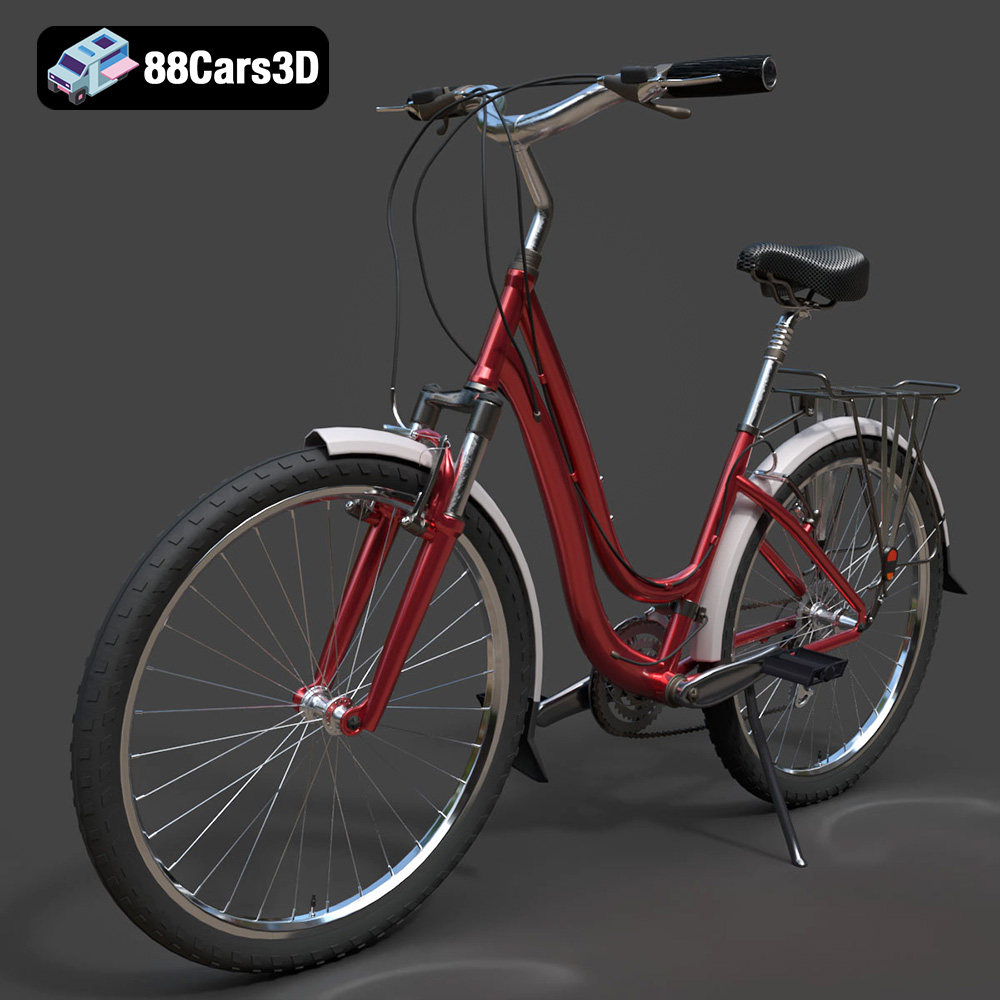
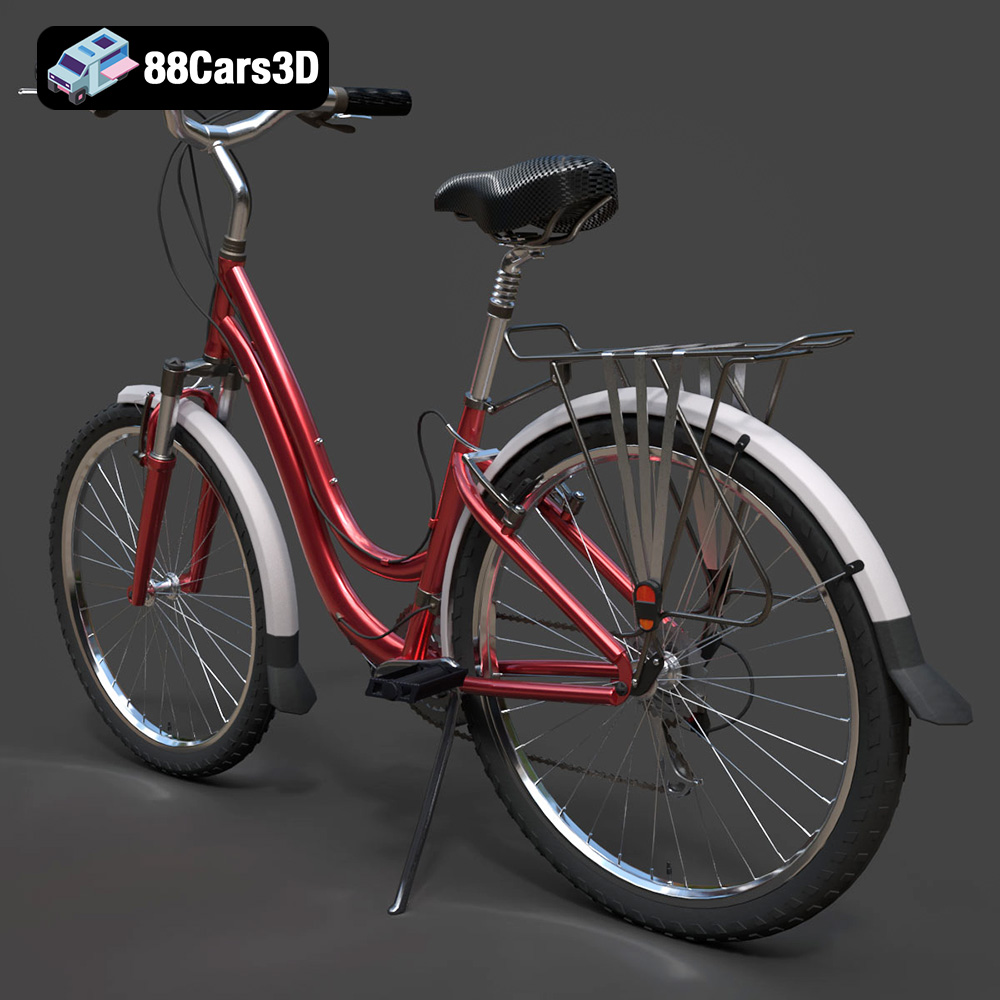
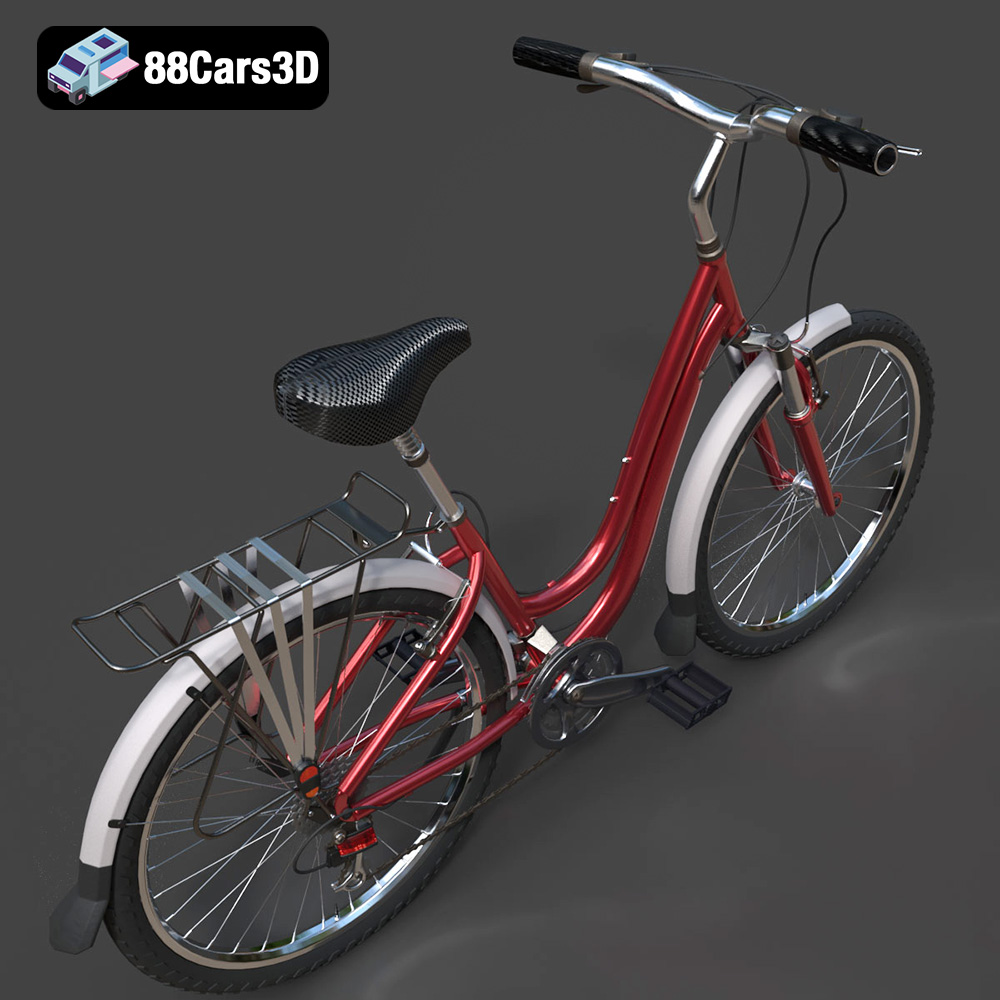
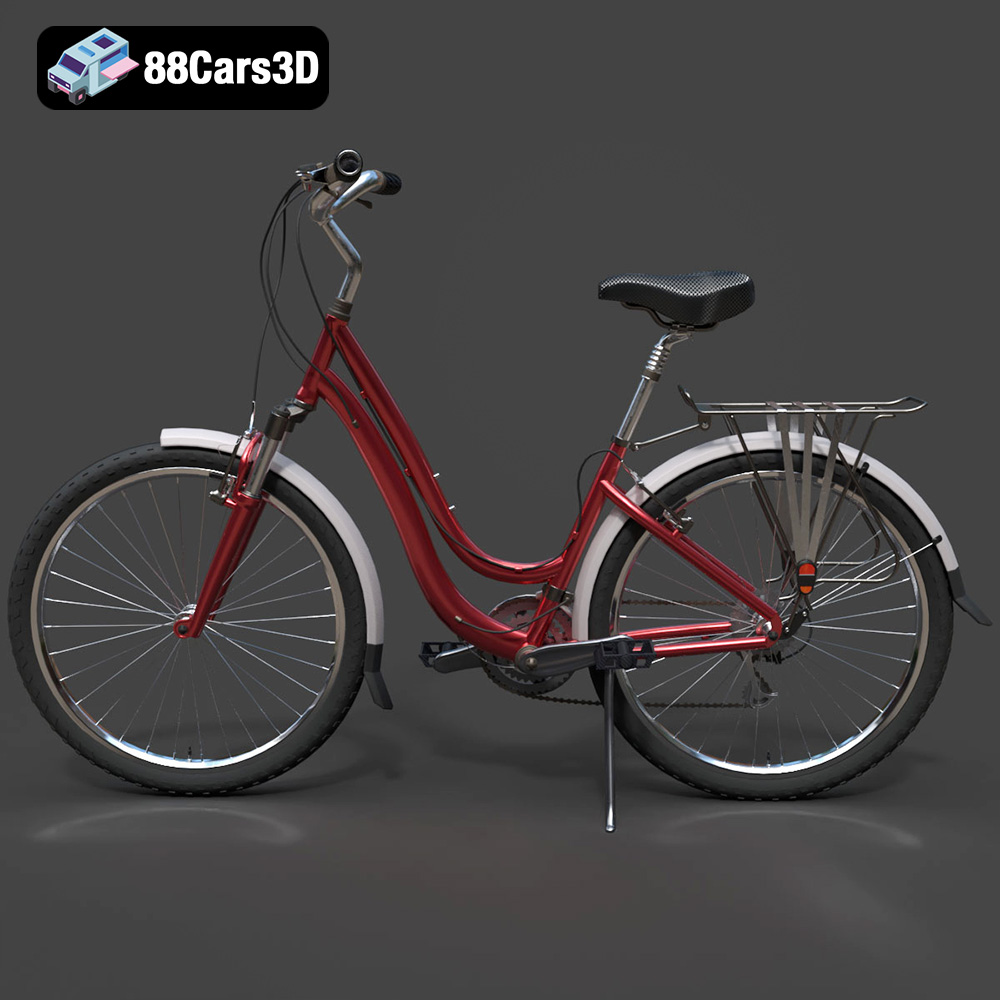
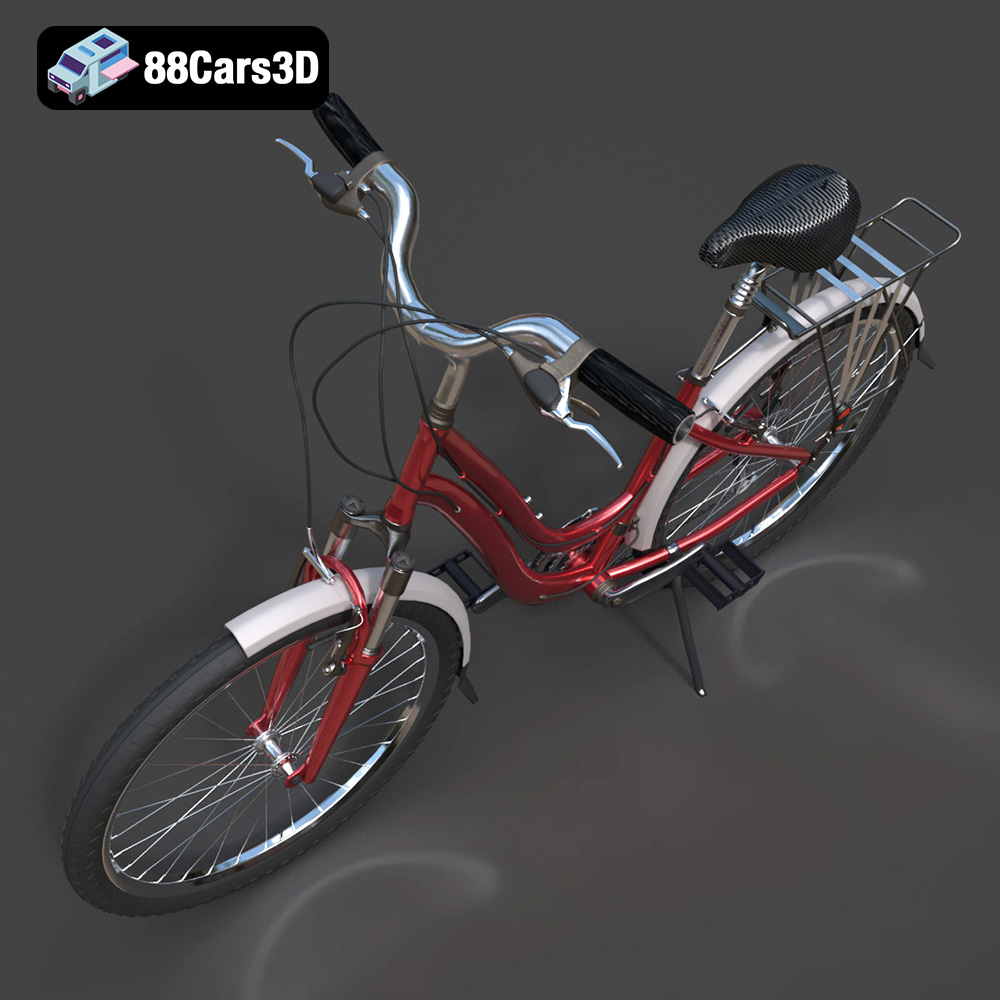
Presenting the Generic Bicycle_02-007 3D Model, a meticulously crafted digital asset designed for a wide range of creative and technical applications. This model captures the essential form and function of a modern bicycle with clean geometry and a balanced level of detail. Built for efficiency and realism, it is ideal for professionals in rendering, animation, simulation, and game development seeking a high-quality bicycle asset.
Exterior Features:
- Accurately modeled frame, handlebars, and seat
- Detailed wheels with spokes, tires, and hubs
- Functional pedals and chainring system
- Separated components for easy animation of wheels, handlebars, and pedals
- Realistic material definitions for frame, rubber tires, and metallic components
Interior / Mechanical Features:
- Simplified yet accurate representation of the drivetrain, including chain and gears
- Modeled brake calipers and cables for added realism
- Optimized mesh quality ensures smooth performance in real-time environments
Technical Advantages:
- Clean, quad-dominant topology ensures smooth subdivisions and deformations
- Modeled to real-world scale for accurate integration into scenes
- Organized hierarchy with proper pivot points for animation of wheels, steering, and pedals
Applications:
- Rendering & Visualization: Perfect for studio renders, architectural visualizations, and cinematic scenes.
- Game Development: An optimized asset suitable for various game genres, from open-world simulations to racing games.
- AR/VR: Integrate into immersive augmented and virtual reality experiences.
- Simulation & Training: Utilize in physics simulations, educational modules, or technical training scenarios.
- 3D Printing: Convert to .stl for creating physical models and prototypes.
Customization Options:
- Easily modify paint finishes and add custom graphics or decals to the frame.
- Adjust material properties for metallic components, rubber tires, and seat textures.
- Adapt lighting setups to achieve different atmospheric effects and visual styles.
Elevate your projects with the Generic Bicycle_02-007 3D Model. Its professional quality, optimized structure, and broad compatibility make it an invaluable asset for any digital content creator looking for a versatile and reliable bicycle model.
Included File Formats:
- .blend – Blender project with materials
- .fbx – Compatible with Unreal, Unity, and major 3D engines
- .obj – Universal format for nearly all 3D software
- .glb – Optimized for AR, VR, and web-based visualization
- .stl – Ready for 3D printing
- .ply – Mesh format for analysis and CAD workflows
- .unreal – Unreal Engine project setup
- .max – Editable 3ds Max scene for rendering and animation
Tags:
.generic, .bicycle_02-007, .bicycle, .bike, .transport, .vehicle, .urban, .rendering, .simulation, .gameasset, .arvr, .blend, .fbx, .obj, .glb, .stl, .ply, .unreal, .max
$19.99
Product Image Gallery
Related Tags
.arvr
.bicycle
.bicycle_02-007
.bike
.blend
.fbx
.gameasset
.generic
.glb
.max
.obj
.ply
.rendering
.simulation
.stl
.transport
.unreal
.urban
.vehicle
