

The Power of Precision: Elevating Visual Projects with Professional 3D Car Models
In the dynamic worlds of automotive design, architectural visualization, game development, and high-fidelity rendering, the quality of your 3D assets can make or break a project. Achieving photorealism and immersive experiences hinges on models that are not only aesthetically accurate but also technically robust. This demand for excellence drives artists and developers to seek out superior assets that can withstand the scrutiny of close-up renders and the performance demands of real-time environments.
Today, we delve into the critical role of high-quality 3D car models in modern workflows, using a prime example of German engineering prowess: the Mercedes-Benz Viano 2010 3D model. This meticulously crafted asset, available on 88cars3d.com, encapsulates the essence of professional-grade design, offering unparalleled versatility and technical precision for a myriad of applications, from detailed cinematics to interactive AR/VR experiences.
Throughout this article, we will explore the technical intricacies that define a truly professional 3D vehicle, discuss essential file formats, walk through integration strategies, and highlight how models like the Mercedes-Benz Viano 2010 streamline complex creative processes, delivering exceptional results every time.
Understanding 3D Model File Formats: Choosing the Right Asset for Your Project
One of the most crucial aspects of working with 3D car models is understanding the various file formats available. Each format is designed with specific use cases, compatibility, and technical considerations in mind. The Mercedes-Benz Viano 2010 3D model stands out by offering a comprehensive suite of formats, ensuring seamless integration into virtually any professional pipeline.
.blend – The Heart of Blender Workflows
The .blend file is native to Blender, a powerful and increasingly popular open-source 3D creation suite. When you receive a .blend file for the Viano, you’re not just getting the model; you’re gaining access to an entire editable Blender scene, complete with configured materials, lighting setups, and sometimes even animation rigs. This format is ideal for artists who primarily work in Blender, allowing for direct manipulation, customization of textures, fine-tuning of shaders, and quick rendering using Cycles or Eevee. Its self-contained nature ensures that all associated data – meshes, materials, textures, scene settings – are packaged together, simplifying project management.
.fbx – The Industry Standard for Interoperability
.fbx (Filmbox) is arguably the most widely used proprietary file format for 3D asset exchange between different software applications and game engines. It supports geometry, materials, textures, animations, and rigs, making it incredibly versatile. For the Mercedes-Benz Viano 2010 3D model, the .fbx version is optimized for stability and performance, making it the go-to choice for real-time pipelines like Unreal Engine and Unity. Its robust data structure ensures that complex hierarchies and PBR material assignments translate accurately, minimizing conversion issues and accelerating development in game environments and simulations.
.obj – The Universal Language of 3D
The .obj (Wavefront OBJ) format is a simple, universal geometry definition file. It stores only the model’s vertex positions, UV coordinates, normals, and material group information. While it doesn’t support animations or advanced material properties directly within the file (it references external .mtl files for basic material definitions), its widespread compatibility makes it a staple for cross-software transfers. The .obj version of the Viano model is perfect for users who need to import the core geometry into almost any 3D software for further processing, texturing, or rendering with their preferred proprietary shaders.
.glb – Optimized for AR, VR, and Web
.glb (GL Transmission Format Binary) is the binary version of glTF, a royalty-free specification for the efficient transmission and loading of 3D scenes and models by applications. This format is specifically optimized for web-based 3D, AR (Augmented Reality), and VR (Virtual Reality) experiences due to its compact size and efficiency. The .glb version of the Viano model ensures quick loading times and accurate material representation in browsers, mobile AR apps, and immersive VR environments, making it invaluable for interactive product showcases or digital showrooms.
.stl – Precision for Physical Production
.stl (Stereolithography) is a fundamental file format for 3D printing and rapid prototyping. It represents a 3D model as a series of connected triangles (a tessellated surface) without color, texture, or other CAD attributes. While not suitable for rendering or animation, the .stl version of the Viano is crucial for engineers, designers, and hobbyists looking to produce a physical replica or prototype of the vehicle, allowing for precise manufacturing and dimensional accuracy.
.ply – Detailed Mesh for Analysis and Visualization
The .ply (Polygon File Format) is designed to store geometric models, particularly those originating from 3D scanners. It can store a wider range of properties than .obj, including color, transparency, and sometimes even confidence values for each vertex. For the Viano, a .ply export offers a precision mesh format suitable for CAD applications, detailed analysis, or scientific visualization where robust geometric data is paramount, especially for complex surface properties or environmental scans.
.unreal – Engine-Ready for Real-Time Environments
The .unreal format signifies an asset specifically pre-configured and optimized for Unreal Engine. This often means the model has already been imported, scaled correctly, had collision meshes generated, and PBR materials set up within an Unreal project. For developers working with the Viano, this format dramatically reduces setup time, allowing for immediate integration into game levels, simulations, or architectural walkthroughs within the powerful Unreal Engine ecosystem, ensuring optimal performance and visual fidelity straight out of the box.
.max – The Professional’s Choice for 3ds Max
The .max file is native to Autodesk 3ds Max, a leading software for 3D modeling, animation, rendering, and compositing. Like the .blend file, a .max file provides a fully editable project scene. It includes the Viano model’s geometry, all materials, textures, lighting, cameras, and potentially animation setups. This format is indispensable for professionals deeply integrated into the 3ds Max ecosystem, offering maximum flexibility for custom modifications, complex scene setups, and high-end rendering using engines like V-Ray or Corona.
The availability of these diverse formats for the Mercedes-Benz Viano 2010 3D model underscores its professional-grade utility, ensuring that artists and developers can access and utilize this high-quality asset regardless of their preferred software or project requirements.
Engineering Precision: The Mercedes-Benz Viano 2010 Model’s Technical Excellence
The true value of a professional 3D car model lies beyond its visual appeal; it resides in its underlying technical structure and adherence to industry best practices. The Mercedes-Benz Viano 2010 3D model exemplifies this dedication to technical excellence, designed from the ground up to meet the rigorous demands of professional production pipelines.
Real-World Scaling and Intricate Detailing
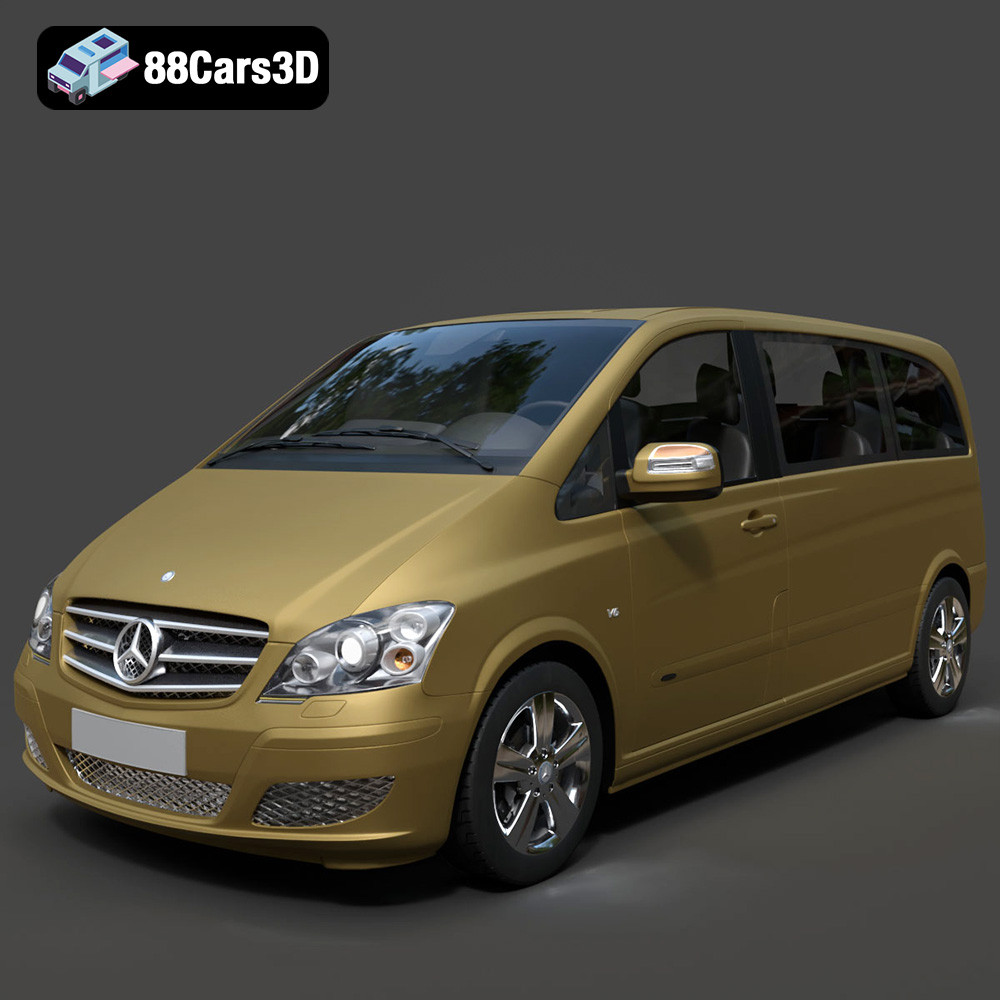
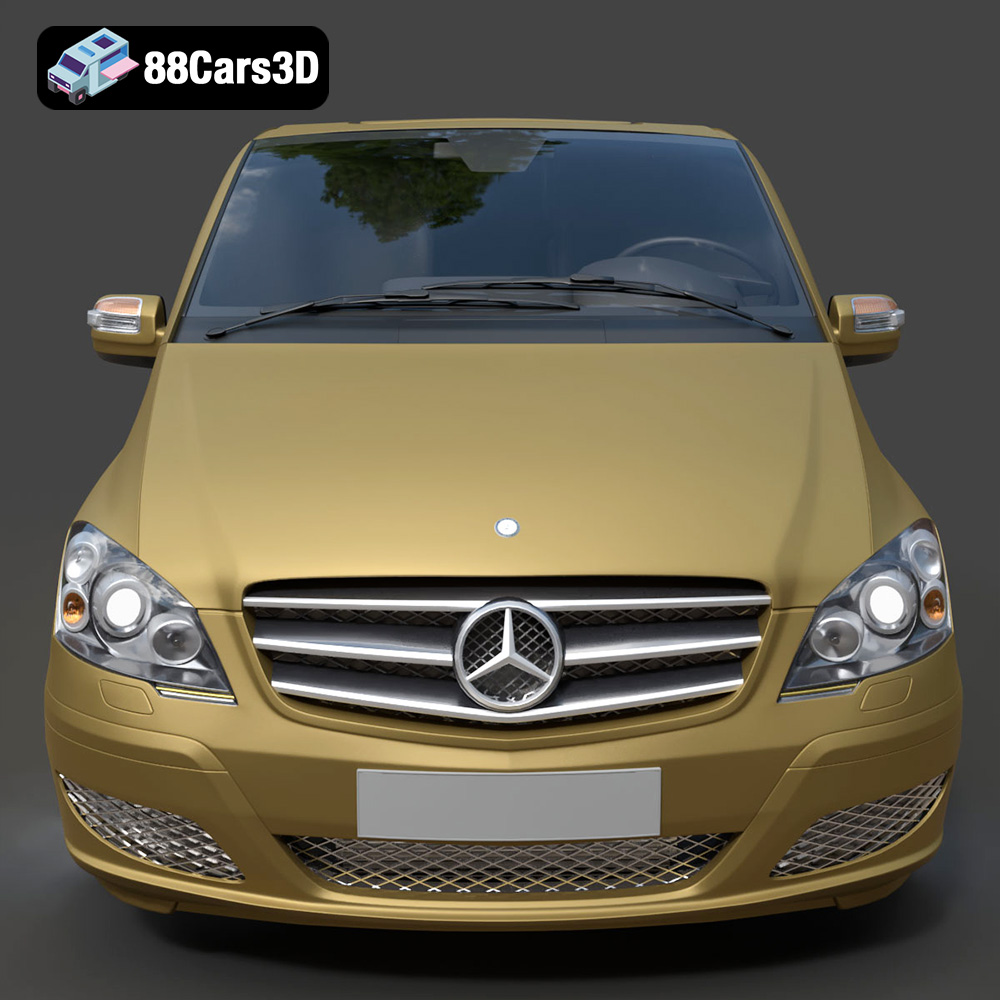
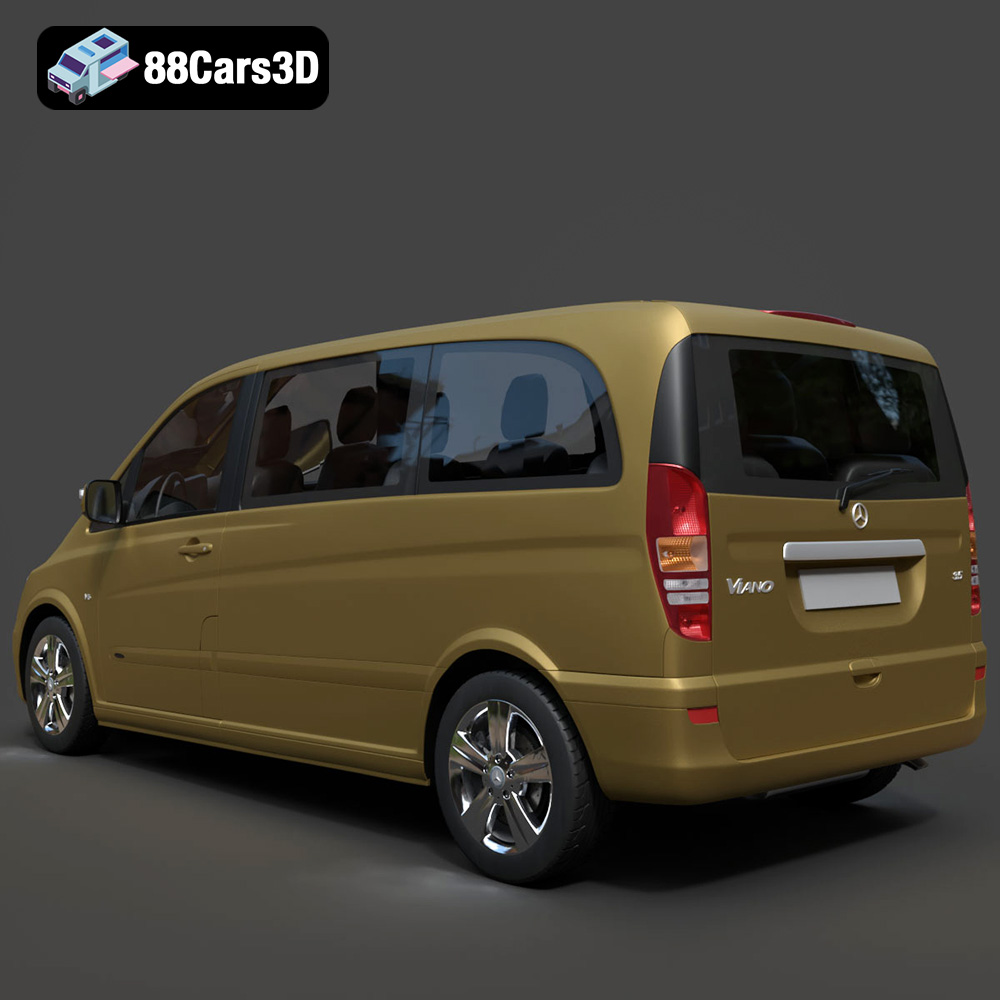
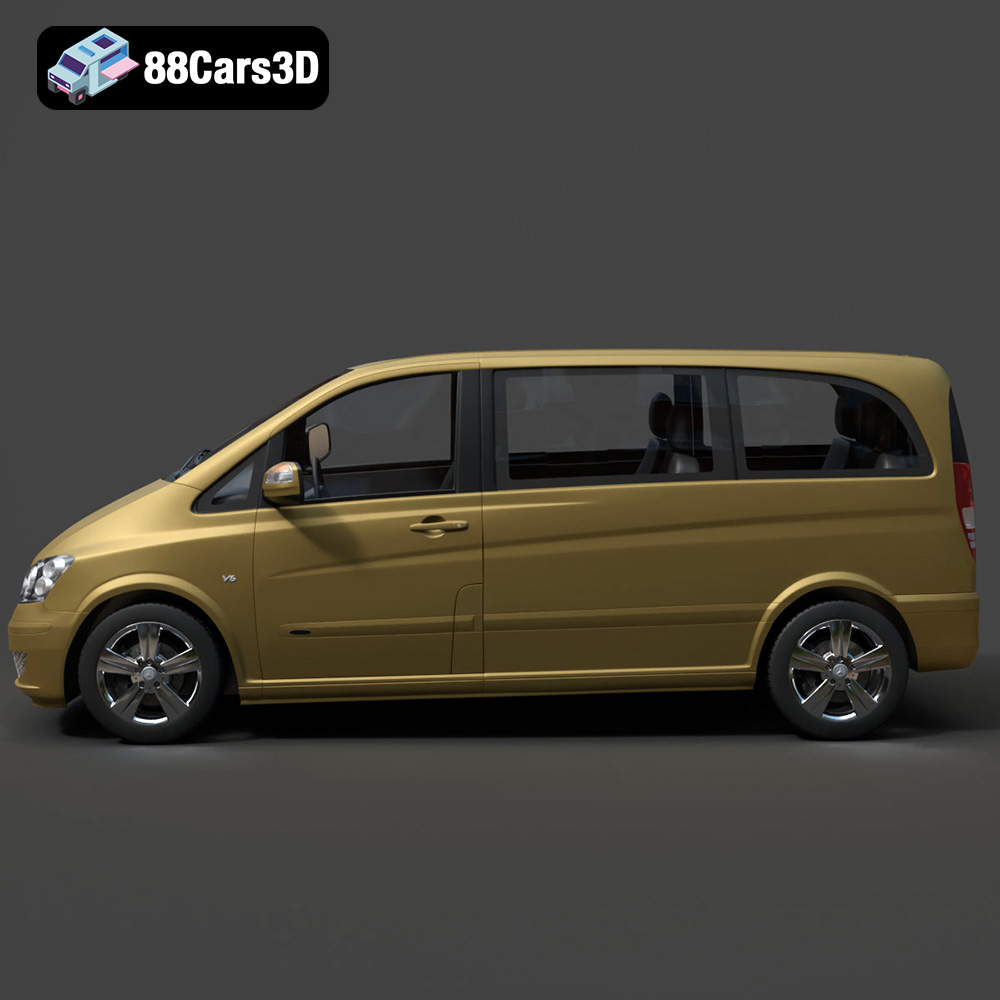
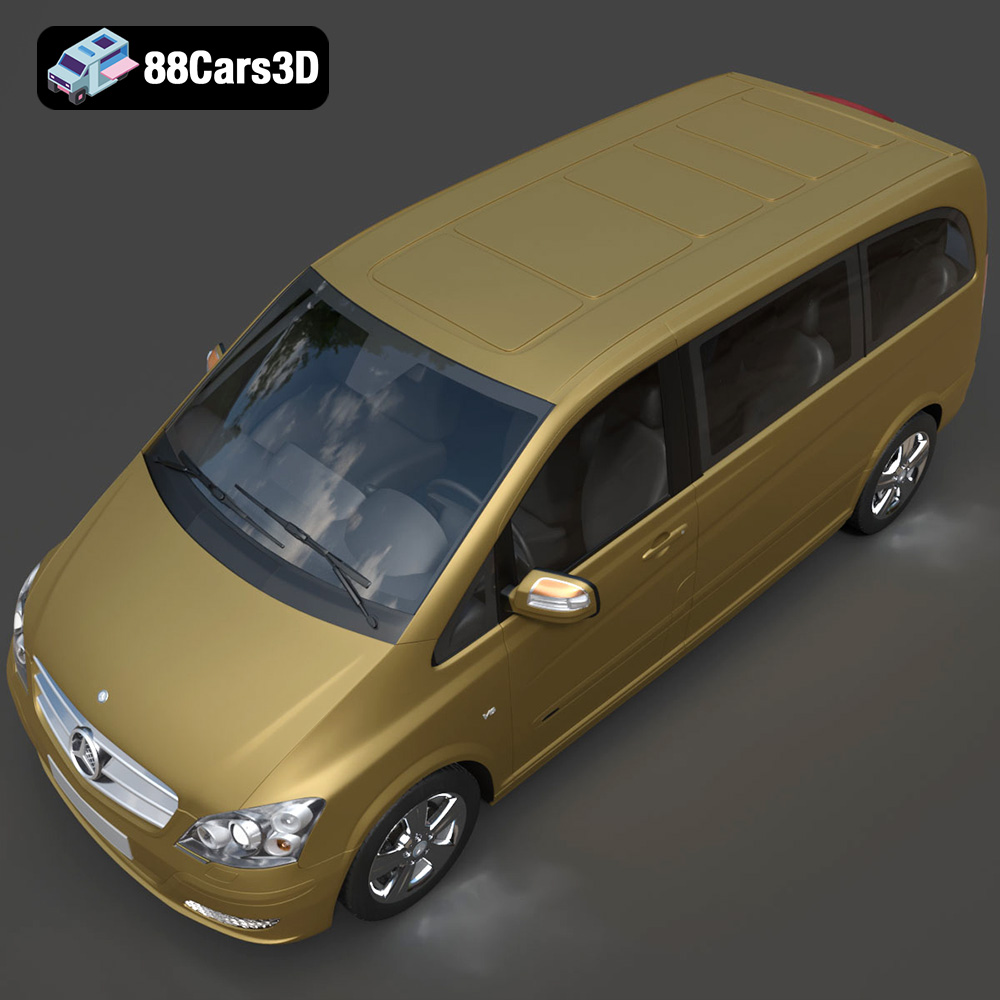
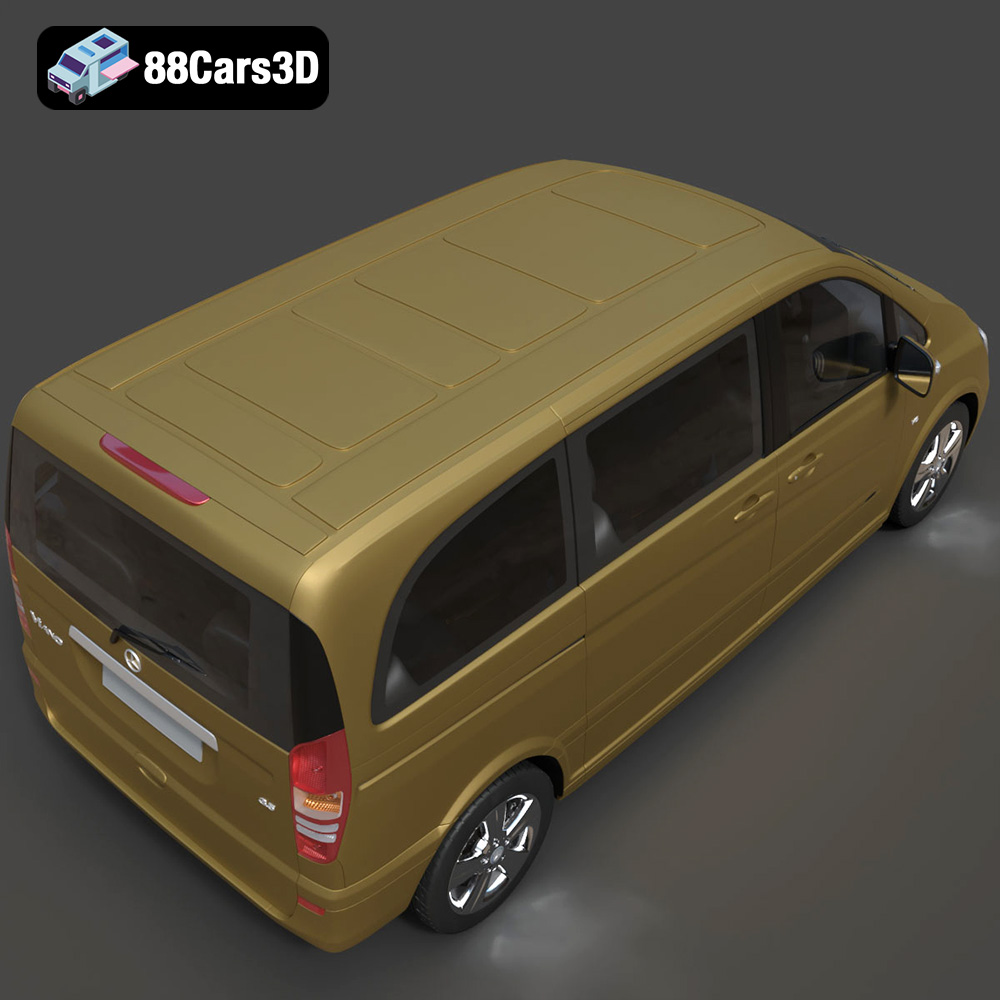
Accuracy is paramount in high-fidelity 3D modeling. The Viano model is crafted with precise, real-world scaling, ensuring that it integrates seamlessly into architectural visualizations, vehicle simulations, or any scene where dimensional accuracy is critical. Every curve, panel gap, and functional element of the versatile W639 minivan has been meticulously replicated, capturing the intricate detailing expected of German engineering. This includes accurate exterior contours, realistic tire treads, detailed badging, and even subtle panel lines that enhance realism without compromising performance. Such attention to detail is crucial for close-up renders and for maintaining believability in simulations.
The Power of PBR Materials and Clean Topology
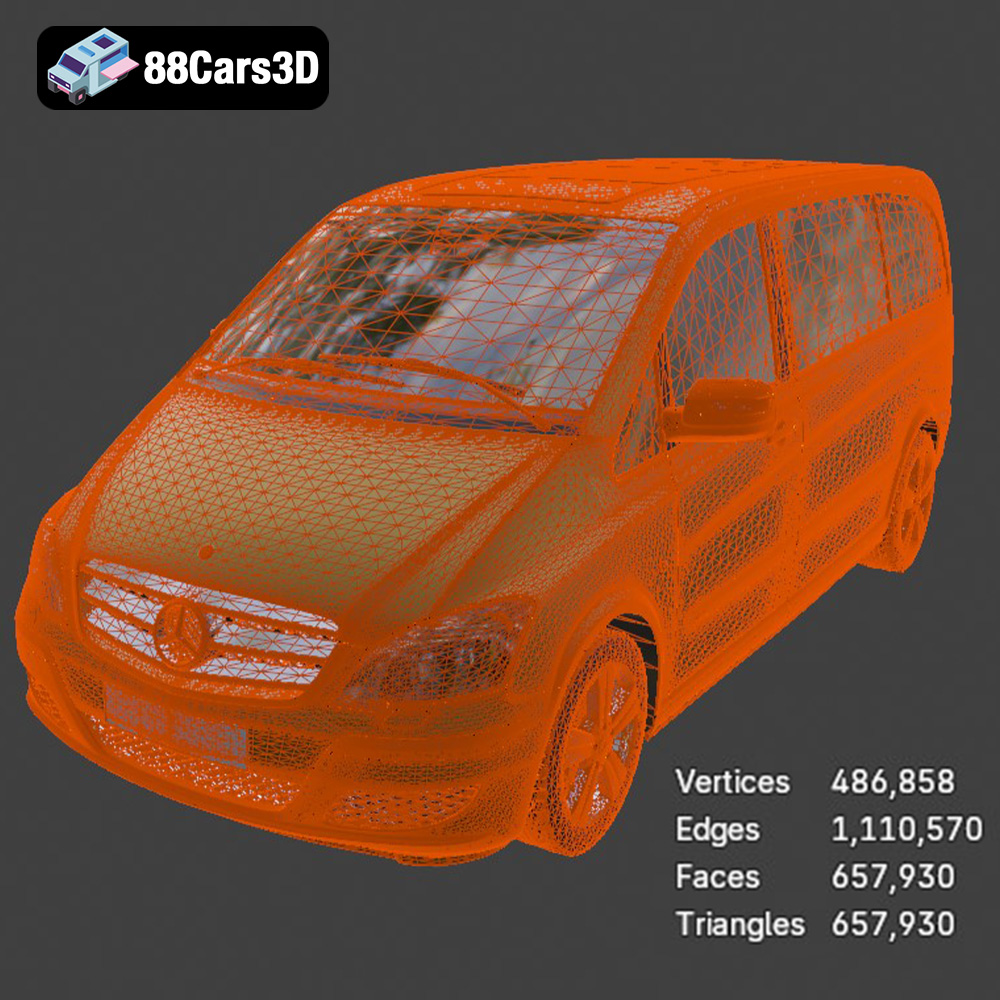
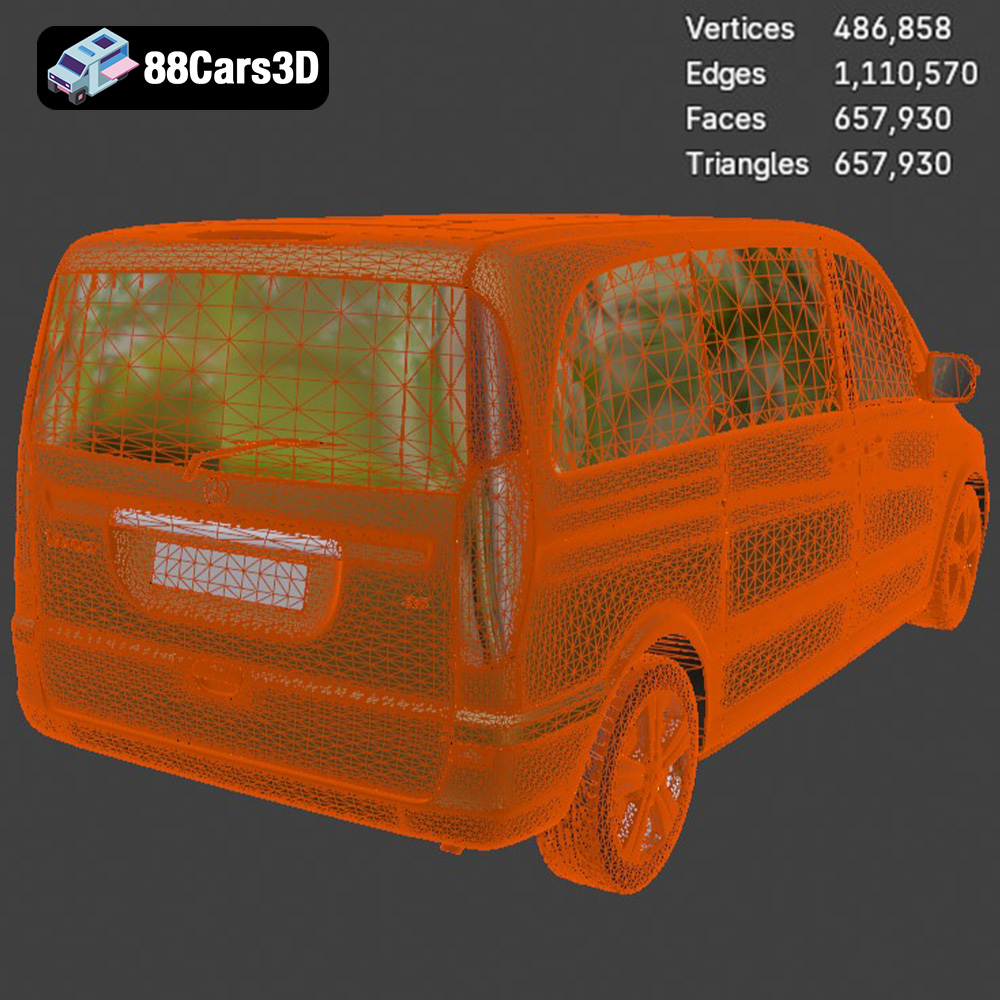
At the heart of modern rendering lies Physically Based Rendering (PBR), a workflow that simulates how light interacts with materials in the real world. The Mercedes-Benz Viano 2010 3D model comes equipped with all materials configured for PBR workflows, providing realistic reflections, accurate paint shaders, and detailed textures. This means the metallic flake in the paint, the subtle roughness of plastic trim, and the reflectivity of glass surfaces will react to light sources in a physically correct manner, resulting in stunning, lifelike renders. Furthermore, the geometry boasts clean, quad-based topology. This ensures stable deformation for animation, easy subdivision for higher detail, and smooth shading without artifacts. Efficient UV mapping is also a cornerstone of this model’s quality, allowing for consistent texture application across the entire vehicle and making it straightforward to customize or re-texture elements as needed. This combination of PBR materials and optimized geometry makes the Viano an ideal asset for any professional project.
Integrating Automotive Assets into Diverse Professional Workflows
The versatility of a high-quality 3D car model like the Mercedes-Benz Viano 2010 allows it to serve as a cornerstone in various professional creative and commercial applications. Its robust design and multiple file formats ensure seamless integration across different industries.
Architectural Visualization and Simulation Training
For architectural visualization studios, the inclusion of realistic vehicles like the Viano is essential for breathing life into static building renders. Whether showcasing a new residential complex, a commercial parking garage, or an urban planning project, the Viano can populate scenes, add a sense of scale, and ground the architecture in reality. Its accurate scaling and PBR materials mean it will look perfect under any lighting condition, complementing the photorealism of high-end arch-viz renders produced in software like 3ds Max with V-Ray or Corona. In the realm of simulation training, particularly for driving simulators or logistics planning, a dimensionally accurate model like the Viano is critical. It provides a realistic visual component for training scenarios, allowing trainees to interact with a familiar vehicle type in a simulated environment, whether for driver education, fleet management, or even emergency response training.
Game Development and Real-Time Environments
The demands of game development and real-time environments (like those powered by Unreal Engine or Unity) are unique, requiring assets that are not only visually impressive but also highly optimized for performance. The Mercedes-Benz Viano 2010 3D model, with its optimized geometry and game-engine-ready .fbx and .unreal formats, is perfectly suited for this. Developers can quickly import the model, set up its materials using the engine’s PBR shader systems, and integrate it into game levels as a static prop, a drivable vehicle, or an NPC car. The clean topology and efficient UVs ensure smooth LOD (Level of Detail) transitions and minimal draw calls, contributing to stable frame rates even in densely populated scenes. From open-world games needing realistic traffic to racing simulations demanding accurate vehicle physics, the Viano offers a reliable foundation.
AR/VR and Web-Based Experiences
As immersive technologies continue to evolve, the need for efficient, high-quality 3D assets for Augmented Reality (AR), Virtual Reality (VR), and web-based 3D viewers grows exponentially. The .glb format of the Mercedes-Benz Viano 2010 model is a game-changer here. Its optimized structure allows for quick loading and rendering on a wide range of devices, from smartphones for AR apps to high-end VR headsets. Imagine an interactive web configurator where potential customers can explore the Viano in full 3D, changing colors and viewing details, all rendered smoothly in a browser. Or an AR experience that places the virtual Viano directly into a real-world setting through a smartphone camera. The Viano model empowers creators to build these cutting-edge, interactive experiences, pushing the boundaries of digital engagement and product visualization.
From Concept to Render: A Workflow Example with the Mercedes-Benz Viano
To truly appreciate the utility of a high-quality 3D car model, let’s walk through a simplified workflow example, demonstrating how the Mercedes-Benz Viano 2010 3D model can be integrated into a professional rendering and real-time environment pipeline.
Setting Up a Cinematic Render in 3ds Max with V-Ray
Imagine a scenario where an advertising agency needs a photorealistic render of the Mercedes-Benz Viano for a brochure or a short animated sequence. Their primary tool is 3ds Max, paired with V-Ray for rendering.
- Import and Scene Setup: The project begins by opening the .max file provided with the Viano model. This immediately loads the vehicle with its pre-configured PBR materials, saving significant setup time. The artist then models a simple studio environment or imports an existing outdoor scene, paying attention to accurate scale.
- Lighting and Camera: A V-Ray Sun and Sky system or an HDRI (High Dynamic Range Image) is introduced to simulate realistic lighting conditions. V-Ray Physical Cameras are set up to mimic real-world camera properties, such as aperture, shutter speed, and ISO, allowing for cinematic depth of field and motion blur effects.
- Material Refinement: While the Viano’s PBR materials are already excellent, the artist might want to fine-tune them. This could involve adjusting the paint’s metallic flake intensity, adding subtle dust maps to the tires, or enhancing the reflectivity of the windows to match specific artistic direction. V-Ray’s powerful material editor allows for precise control over every aspect of the Viano’s surfaces.
- Rendering and Post-Production: Once lighting and materials are dialed in, V-Ray is used to render high-resolution images or animation frames. Render passes (like reflections, refractions, and diffuse) are often generated to provide flexibility in post-production. In software like Adobe Photoshop or After Effects, these passes can be composited, color graded, and enhanced with effects to achieve the final, polished cinematic look for the Mercedes-Benz Viano.
This workflow leverages the Viano’s ready-to-render .max file and PBR materials to accelerate the creation of stunning visuals.
Real-Time Integration with Unreal Engine
Now, consider a different project: a new driving simulation or a virtual showroom experience developed in Unreal Engine.
- Importing the Asset: The ideal starting point here is the .unreal or .fbx file. If using .unreal, the model might already be packaged with basic materials. If using .fbx, the developer imports it directly into Unreal Engine, ensuring correct import settings for PBR materials, mesh smoothing, and potentially auto-generating collision meshes.
- Material Setup and Optimization: Unreal Engine’s powerful material editor is used to create or refine the PBR materials. Textures provided with the Viano model (Albedo, Normal, Roughness, Metallic, AO) are plugged into the appropriate PBR channels. Instanced materials are often created from master materials to allow easy variations (e.g., different paint colors) without increasing draw calls.
- Blueprint Integration: For interactive scenarios, the Viano model can be integrated into a Blueprint class. This allows developers to add functionalities like turning wheels, opening doors (if rigged), and integrating it with Unreal Engine’s vehicle physics system for a drivable experience.
- Lighting and Environment: Unreal Engine’s real-time lighting capabilities (e.g., Lumen or dynamic lighting with ray tracing) are utilized to create a compelling environment. The Viano’s PBR materials will react realistically to the engine’s global illumination and reflections, ensuring it looks visually consistent within the scene.
- Performance Optimization: Throughout the process, developers will focus on optimization. This includes generating appropriate LODs for the Viano model (if not already provided by 88cars3d.com), ensuring efficient texture sizes, and managing material complexity to maintain smooth frame rates in real-time.
The pre-optimized nature and comprehensive format support of the Mercedes-Benz Viano 2010 3D model greatly simplifies these complex integration processes, allowing creators to focus on artistic and interactive aspects rather than technical hurdles.
The Strategic Advantage of High-Quality 3D Car Models from 88cars3d.com
In a competitive digital landscape, efficiency and quality are paramount. Sourcing pre-made, high-quality 3D car models like the Mercedes-Benz Viano 2010 offers a significant strategic advantage to studios and individual artists alike.
Accelerating Project Timelines and Ensuring Accuracy
Developing a complex 3D vehicle from scratch is an incredibly time-consuming and labor-intensive process, requiring specialized skills in modeling, UV mapping, texturing, and material creation. By leveraging assets from a trusted marketplace like 88cars3d.com, project timelines can be dramatically accelerated. Artists can bypass the initial modeling phase entirely, jumping straight into scene integration, lighting, and rendering. This not only saves hundreds of hours but also ensures a level of accuracy and detail that might be difficult to achieve within tight deadlines, especially for specific, real-world vehicles like the Mercedes-Benz Viano.
The 88cars3d.com Quality Assurance
Purchasing 3D assets comes with an inherent need for trust in their quality and reliability. 88cars3d.com prides itself on providing professional-grade assets that meet rigorous standards. The Mercedes-Benz Viano 2010 3D model is a testament to this commitment, featuring clean, quad-based topology, efficient UV mapping, real-world scaling, and PBR-configured materials. This quality assurance means less time spent on cleaning up messy geometry, fixing broken UVs, or re-creating materials. Artists can be confident that the models they acquire will perform as expected, integrate smoothly, and deliver the photorealistic results demanded by high-end projects. This reliability translates directly into saved resources and a smoother, more predictable production pipeline.
Conclusion: Empowering Your Creative Vision with the Mercedes-Benz Viano 3D Model
The journey through the intricacies of professional 3D car models reveals a clear truth: the right assets are not just visual elements; they are foundational tools that empower creativity, streamline workflows, and elevate the final output. The Mercedes-Benz Viano 2010 3D model stands as a shining example of this principle, offering unparalleled technical quality, versatility across numerous applications, and comprehensive format support.
Whether your project demands photorealistic renders for advertising, high-performance assets for game development, dimensionally accurate models for simulation, or optimized content for immersive AR/VR experiences, the Viano model delivers. Its meticulous detailing, PBR material configuration, and clean topology ensure it will integrate flawlessly into your preferred software, from Blender and 3ds Max to Unreal Engine and Unity. By choosing professional-grade assets from reputable sources like 88cars3d.com, you invest in efficiency, accuracy, and ultimately, the success of your creative endeavors. Explore the possibilities and bring your visions to life with assets designed for excellence.
Featured 3D Model
Mercedes-Benz Viano 2010 3D Model
Capture the essence of German engineering with the meticulously crafted Mercedes-Benz Viano 2010 3D model. Developed specifically for professional use, this asset features precise, real-world scaling and intricate detailing that accurately replicates the versatile W639 minivan. The geometry is optimized for stability, ensuring smooth performance across various 3D applications and real-time environments.This product delivers professional-grade quality with clean, quad-based topology and efficient UV mapping. All materials are configured for PBR workflows, providing realistic reflections, accurate paint shaders, and detailed textures suitable for the closest renders and immersive visualizations.The Viano 3D model is perfect for diverse creative and commercial applications, including architectural visualization, advanced simulation training, detailed cinematics, high-fidelity game development (Unreal Engine, Unity), and interactive AR/VR experiences.
$19.99
Product Image Gallery
Related Tags
.arvr
.blend
.car3dmodel
.commercialvehicle
.fbx
.gameasset
.glb
.max
.mercedesbenz
.minivan
.mpv
.obj
.ply
.rendering
.simulation
.stl
.unreal
.van
.viano
.w639
