

Driving Digital Dreams: The Enduring Appeal of the BMW E36 Cabrio 325i in 3D
In the expansive landscape of automotive design and digital content creation, certain vehicles transcend mere transportation to become cultural touchstones. The BMW 3 Series E36 Cabrio 325i, a quintessential German convertible from the late 90s, is undeniably one such icon. Its blend of sporty elegance, precision engineering, and open-air freedom captured the hearts of a generation, and today, its allure continues to inspire digital artists, game developers, and visualization specialists worldwide.
Crafting a truly authentic and high-fidelity 3D car model of such a beloved vehicle requires an intricate understanding of both artistic detail and technical precision. From the sweep of its body lines to the nuances of its interior instrumentation, every element must be painstakingly recreated to deliver a convincing digital counterpart. This challenge is precisely what makes a professionally developed asset so invaluable. Imagine bringing the distinctive styling of the E36 Cabrio 325i into your next cinematic render, a thrilling racing simulation, or an immersive AR/VR experience. The BMW 3 Series E36 Cabrio 325i 1998 3D Model offers this capability, providing a meticulously crafted digital twin ready for a diverse array of applications.
Whether you’re an automotive designer seeking to integrate a classic for comparison, a game developer building an authentic virtual world, or an architect populating a scene, the demand for high-quality 3D car models is constant. This article will delve into the technical intricacies, versatile applications, and professional workflows that leverage such assets, illustrating how a model like the E36 Cabrio 325i can elevate your projects to new heights. We’ll explore the critical role of file formats, the journey from mesh to photorealistic render, and how acquiring premium assets from platforms like 88cars3d.com can be a strategic advantage in today’s fast-paced digital production environment.
The Art and Engineering of High-Fidelity 3D Car Models
The creation of an exceptional 3D car model is a fusion of artistic interpretation and stringent engineering principles. It’s not merely about replicating shapes, but about capturing the soul of a vehicle, ensuring that its digital form performs optimally across a spectrum of professional uses.
Capturing Automotive Authenticity: From Chassis to Chrome
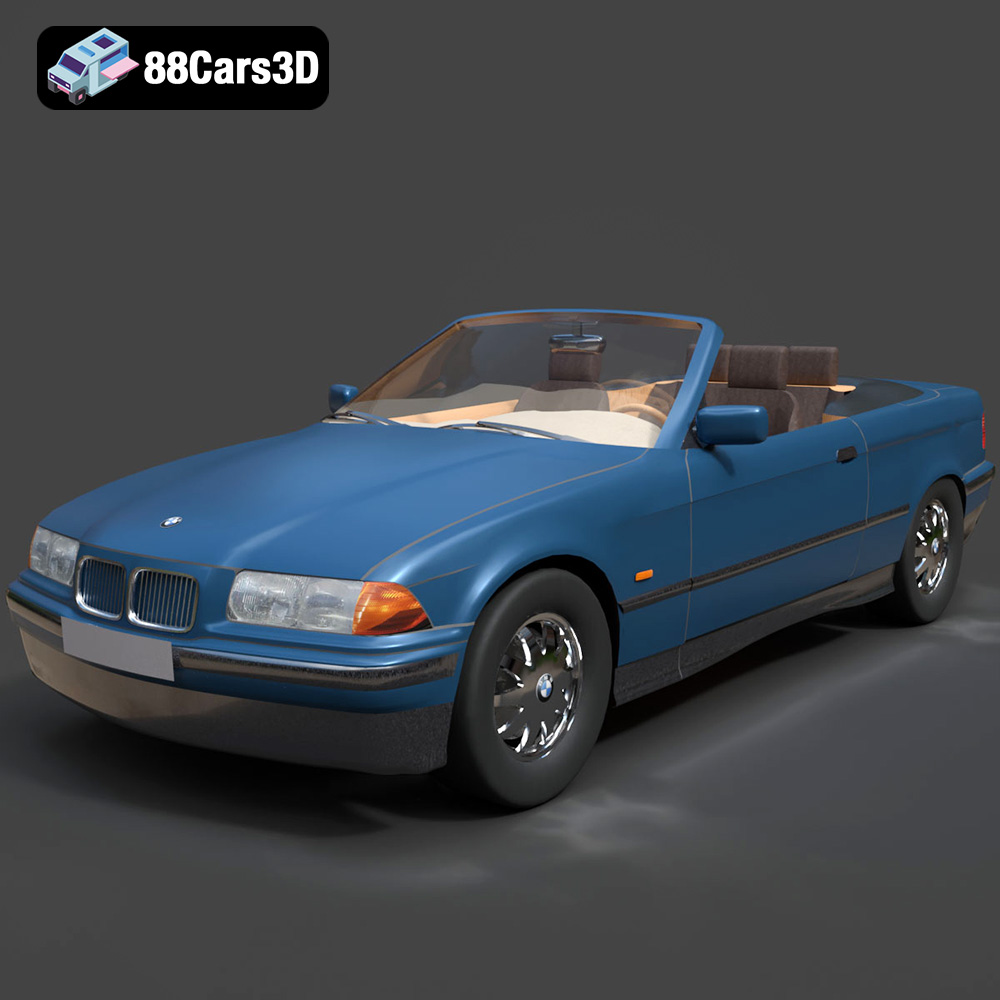
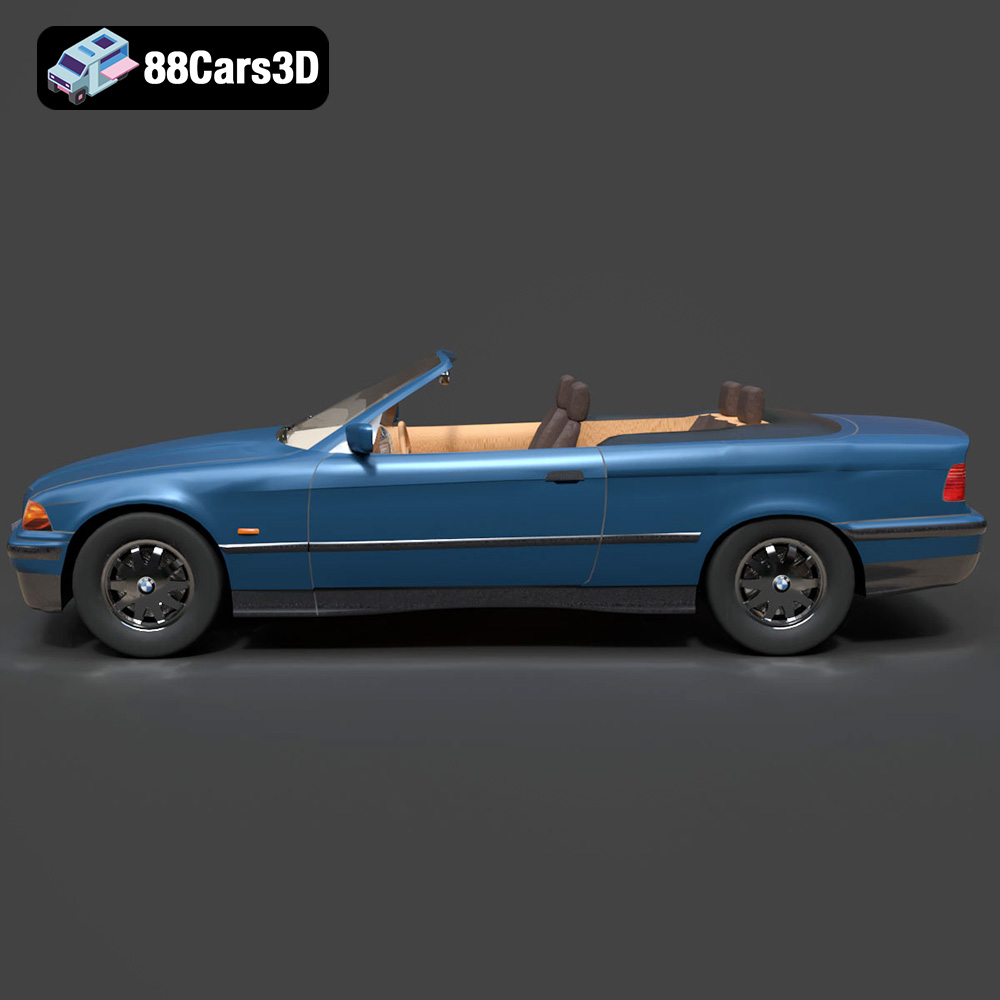
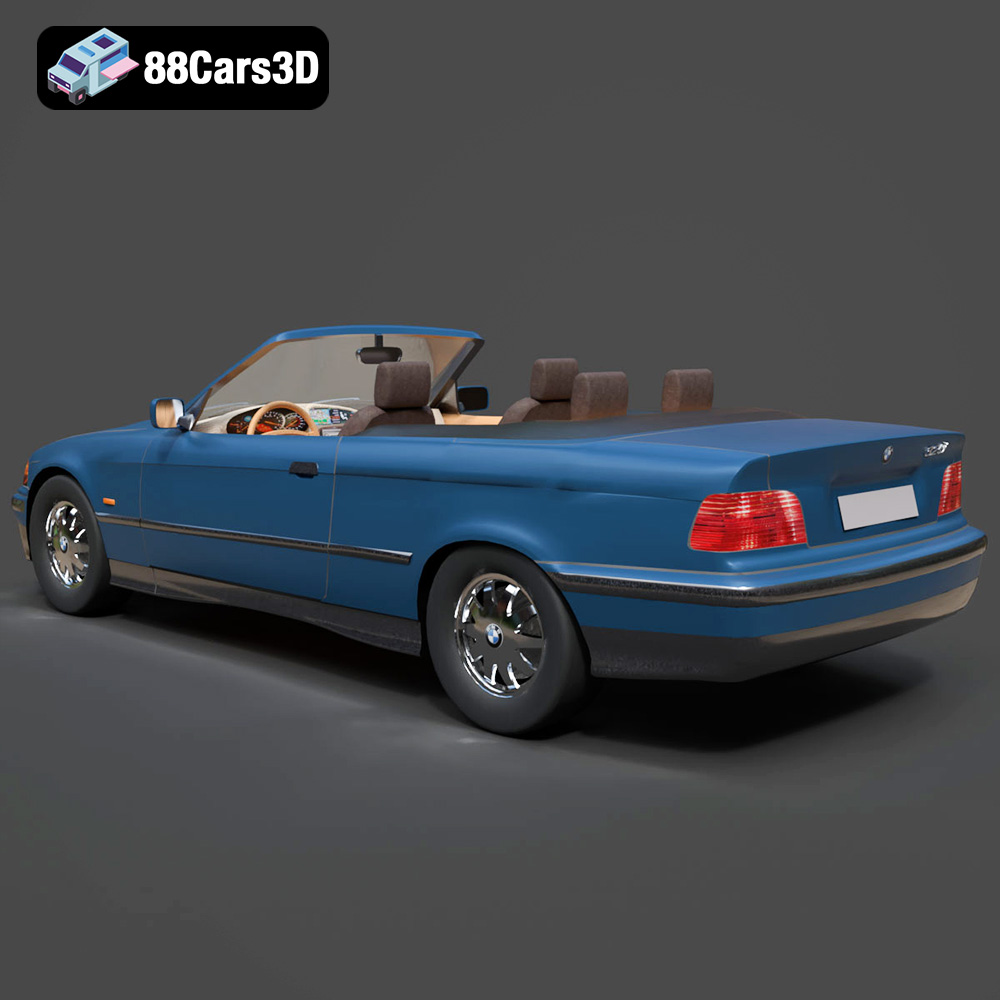
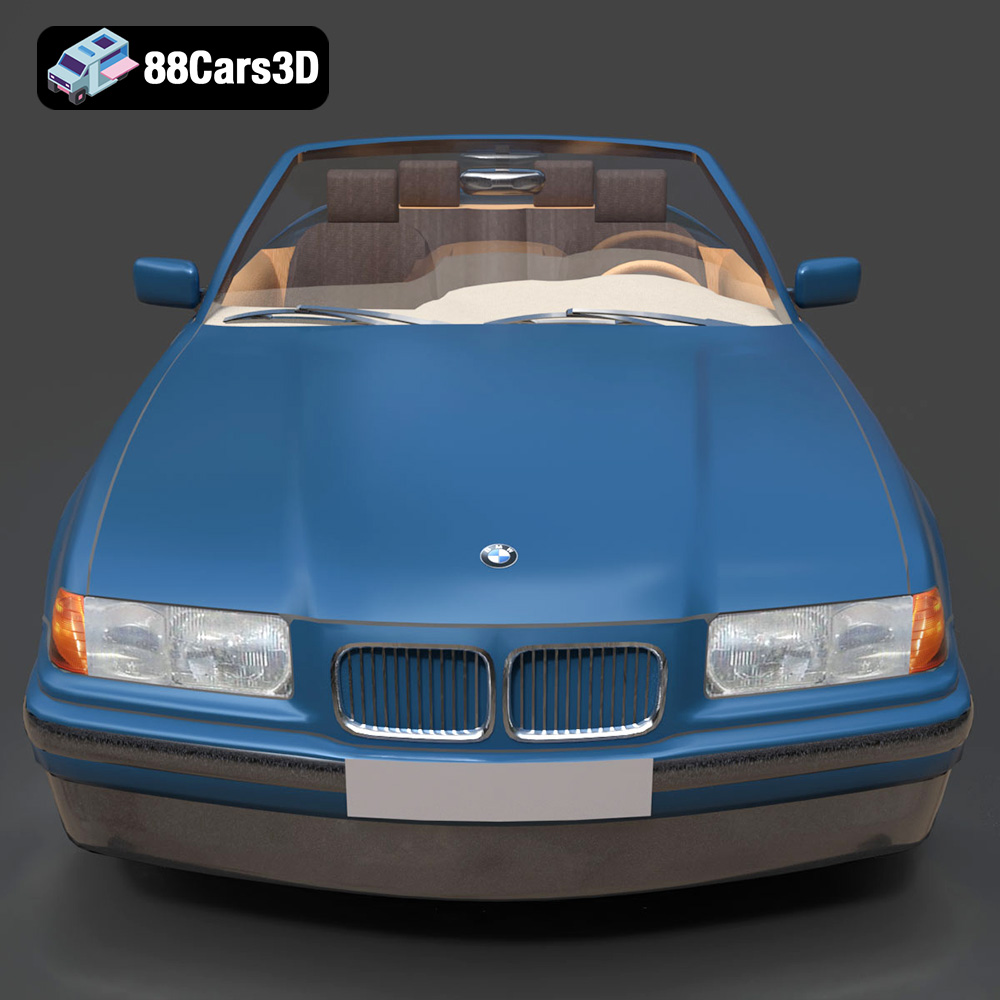
Authenticity in a 3D car model begins with meticulous attention to real-world dimensions and visual details. For a model like the BMW E36 Cabrio 325i, this means faithfully recreating its iconic body panels, the characteristic kidney grille, and the precise curves that define its sporty yet elegant profile. Every crease, every shadow line, and every panel gap must be accurate. Details extend to the exterior, encompassing the realistic material definitions for headlights and taillights, the intricate spoke patterns of alloy wheels, and the texture of high-profile tires. The challenge is particularly acute with a convertible, where the soft top itself presents unique modeling considerations for realism and potential animation.
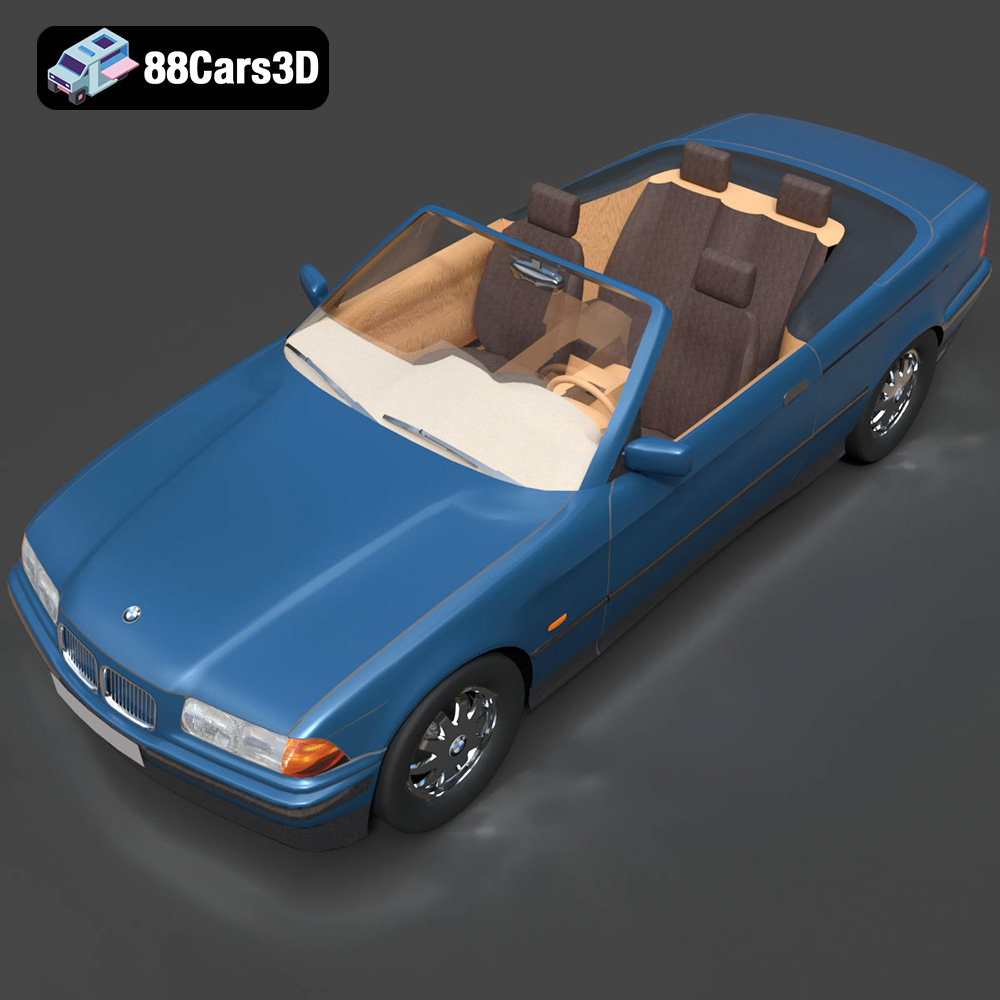
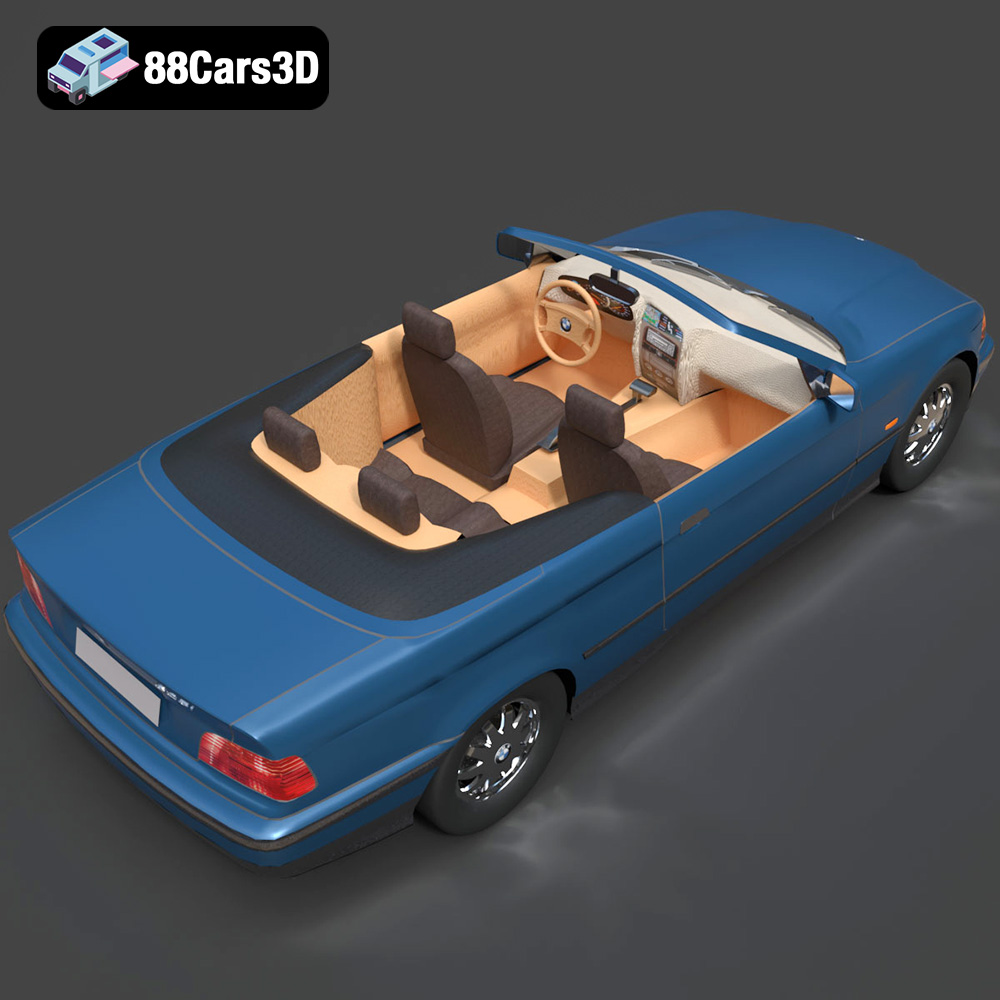
Equally important is the interior. A truly professional model delves into the cockpit, replicating the dashboard’s layout, instrument clusters, controls, and even the subtle textures of seating upholstery and door panels. A steering wheel and gear shifter, replicated with precision, contribute significantly to immersion, especially in close-up renders or interactive simulations. The BMW 3 Series E36 Cabrio 325i 1998 3D Model excels in this regard, offering “optimized mesh quality suitable for close-up renders” for both interior and exterior components.
Topology, Mesh Quality, and Real-World Scale
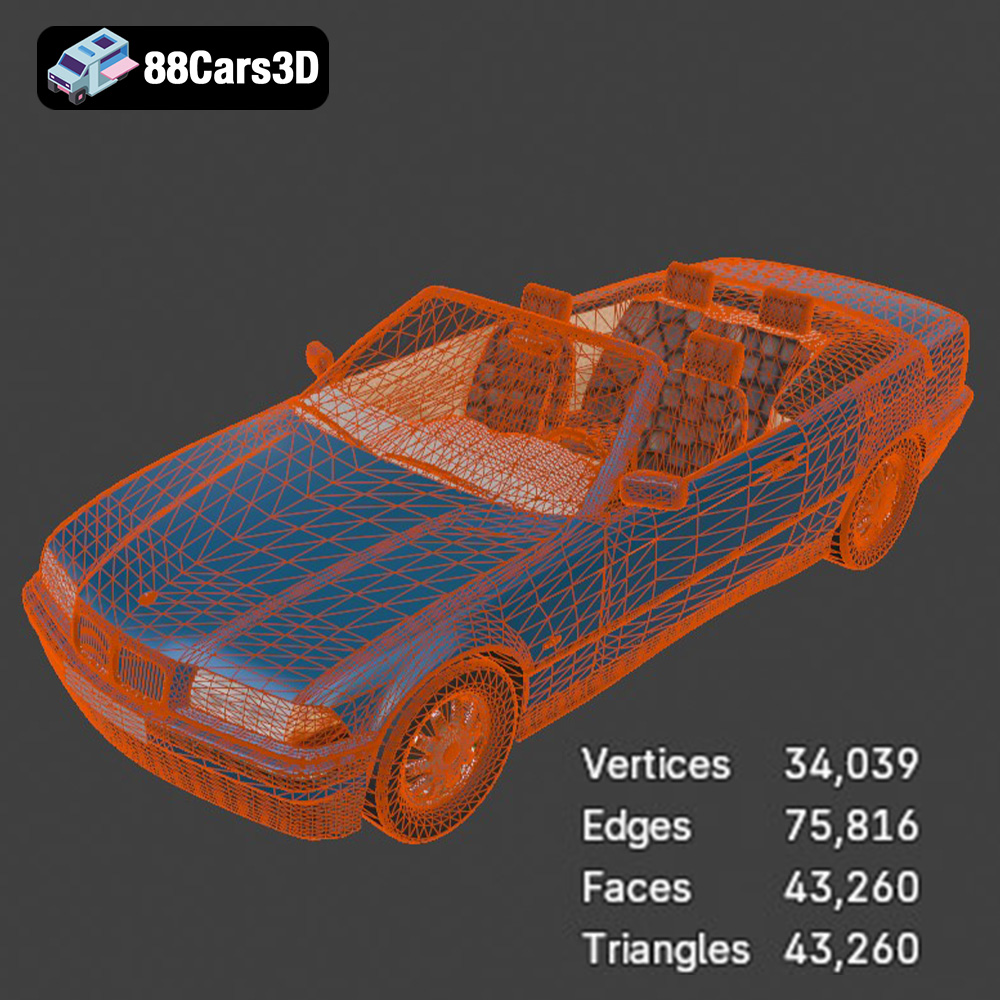
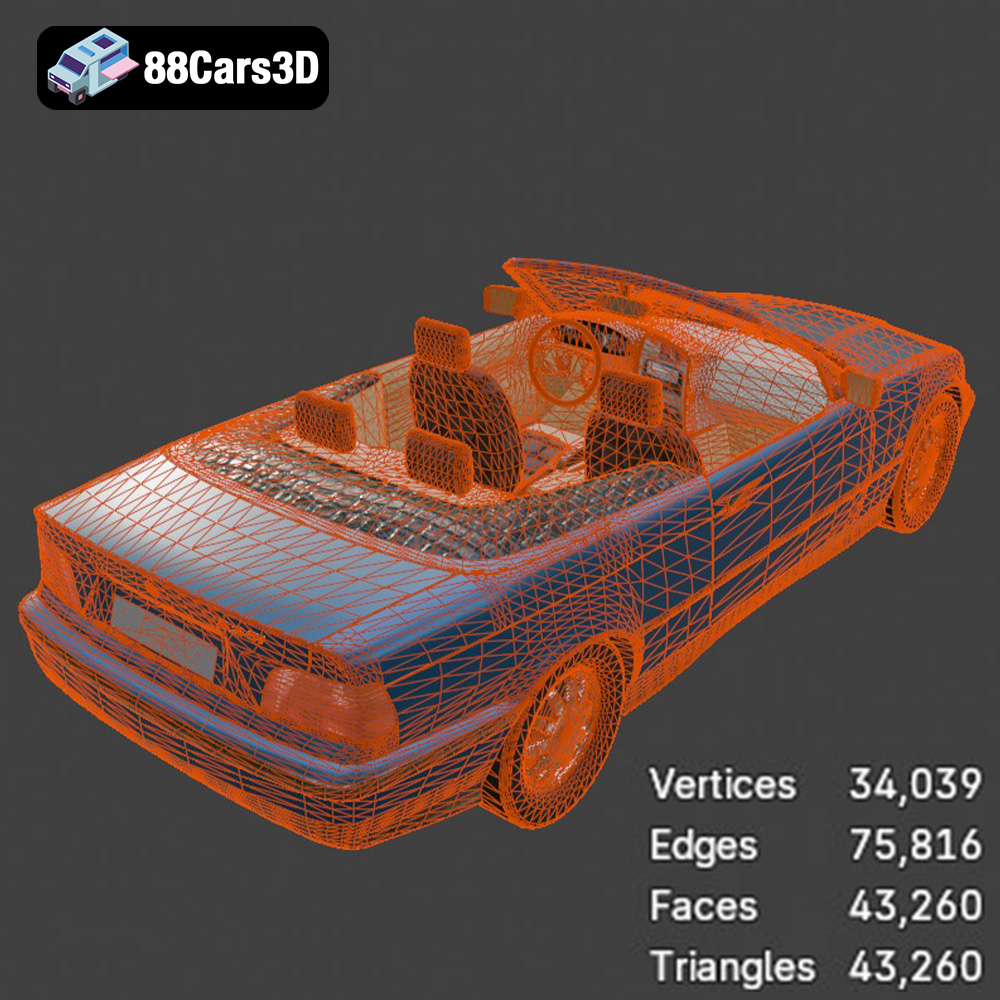
Beneath the surface aesthetics lies the fundamental technical integrity of the 3D model: its topology and mesh quality. “Clean, quad-dominant topology” is a hallmark of professional 3D car models. This ensures smooth subdivision, predictable deformation during animation (such as opening doors or rotating wheels), and easy modification by the artist. A clean mesh also optimizes rendering performance and minimizes artifacts.
Poly counts are another critical consideration, balancing visual fidelity with performance requirements. A model destined for cinematic rendering might have a higher polygon count than one optimized for real-time game engines, but a well-constructed base mesh can be efficiently adapted. Furthermore, “accurate real-world scale” is non-negotiable. This ensures seamless integration into existing scenes, environments, and physics simulations without needing constant rescaling, saving valuable production time and maintaining realism.
Understanding 3D Model File Formats
The versatility of a 3D car model is often defined by the range of file formats it supports. Each format serves a distinct purpose, optimized for different software, engines, or end-use applications. The BMW 3 Series E36 Cabrio 325i 1998 3D Model comes packaged with a comprehensive suite of formats, ensuring maximum compatibility and utility across diverse professional pipelines. Understanding these formats is crucial for selecting the right asset for your specific project.
.blend – Blender Project with Materials
The .blend file is the native format for Blender, a powerful open-source 3D creation suite. When a 3D car model is provided as a .blend file, it means you get a fully editable Blender scene. This typically includes the model’s mesh, materials (with all textures and shaders correctly applied), lighting setups, camera positions, and any scene-specific settings. For artists primarily working in Blender, this format offers the most flexibility for modifications, rigging, animation, and rendering directly within their preferred environment without any loss of data or conversion issues.
.fbx – Ideal for Unreal, Unity, and Real-Time Pipelines
.fbx (Filmbox) is one of the most widely adopted proprietary file formats for 3D data exchange, especially within the game development industry. Developed by Autodesk, it excels at storing not just mesh data, but also animation, cameras, lights, and materials in a single package. This makes it the go-to format for importing 3D car models into game engines like Unreal Engine and Unity. Its robust support for skeletal animations and blend shapes ensures that detailed components like doors, wheels, and suspension can be easily animated and integrated into interactive experiences.
.obj – Universal Format for Cross-Software Compatibility
.obj (Wavefront Object) is a classic and highly universal 3D file format. It’s renowned for its simplicity and broad compatibility, making it readable by almost every 3D modeling, animation, and rendering software available. An .obj file primarily stores geometric data (vertices, normals, texture coordinates, and faces). Material definitions are usually stored in a separate .mtl (material template library) file, which references texture maps. While it doesn’t typically support animation or complex scene data, its widespread support makes it an excellent choice for basic mesh transfer and cross-platform collaboration.
.glb – Optimized for AR, VR, and Browser-Based Display
.glb (GL Transmission Format Binary) is the binary version of .gltf, an open standard for 3D scenes and models. Designed for efficient transmission and loading of 3D assets, it’s increasingly becoming the standard for augmented reality (AR), virtual reality (VR), and web-based 3D applications. A .glb file packages the model’s geometry, materials, textures, and even animations into a single, self-contained file, making it incredibly easy to deploy in real-time web viewers, mobile AR apps, and VR experiences. Its compact size and optimized structure are crucial for performance in these demanding environments.
.stl – Suitable for 3D Printing Output
.stl (Standard Tessellation Language or Stereolithography) is the de facto file format for 3D printing. It represents a 3D model as a series of connected triangles (a tessellated surface) without any color, texture, or material information. While lacking visual richness, its simplicity makes it ideal for defining the surface geometry that 3D printers use to build physical objects layer by layer. For hobbyists or professionals looking to create physical replicas of the BMW E36 Cabrio 325i 3D Model, converting to .stl is the essential first step.
.ply – Precision Mesh Format for CAD or Analysis
.ply (Polygon File Format or Stanford Triangle Format) is another format that stores 3D data, primarily focusing on polygon meshes. It can store various properties beyond just geometry, such as color, transparency, normals, and even confidence values. While less common for general artistic workflows than .fbx or .obj, it’s often used in scientific, engineering, and CAD applications for precision mesh data, especially when dealing with scanned data or detailed analysis where additional vertex or face attributes are important.
.unreal – Engine-Ready Asset for Real-Time Environments
The inclusion of an .unreal file or an Unreal Engine project setup indicates that the 3D car model has been specifically prepared and optimized for direct integration into Unreal Engine. This often means pre-configured materials, collision meshes, LODs (Levels of Detail), and a proper asset hierarchy within the engine’s content browser. This significantly streamlines the workflow for Unreal Engine developers, as much of the tedious setup work for a game asset is already completed, allowing immediate deployment and interaction.
.max – Editable 3ds Max Project for Animation and Rendering
The .max file is the native project file for Autodesk 3ds Max, a leading software in architectural visualization, product design, and cinematic rendering. Similar to .blend, a .max file provides a fully editable scene, preserving all aspects of the model including geometry, materials (with V-Ray, Corona, or standard shaders), lighting, cameras, and animation data. For professionals utilizing 3ds Max for high-end automotive rendering or detailed animation sequences, this format offers complete control and ensures the highest quality output.
The availability of the BMW 3 Series E36 Cabrio 325i 1998 3D Model in this comprehensive array of formats underscores its professional quality and incredible versatility, making it a truly valuable asset for any digital project.
Professional Workflows: Integrating the BMW E36 Cabrio into Your Projects
A premium 3D car model, such as the BMW E36 Cabrio 325i 1998 3D Model, is not just a static object; it’s a dynamic asset designed to integrate seamlessly into a multitude of professional workflows. Its clean geometry, organized hierarchy, and real-world scale are critical features that enable efficient and high-quality production across various industries.
Rendering and Visualization with 3ds Max and Blender
For high-quality automotive rendering, artists typically turn to powerful software like Autodesk 3ds Max or Blender, paired with advanced rendering engines such as V-Ray, Corona, Cycles, or Eevee. The BMW E36 model’s “optimized mesh quality” and “accurate real-world scale” provide an excellent foundation.
- Studio Setup: In 3ds Max or Blender, the model can be placed within a virtual studio environment, complete with softbox lighting, reflective ground planes, and HDR (High Dynamic Range) image-based lighting for realistic reflections and global illumination.
- Material Definition: Leveraging the included materials, artists can further refine shaders for paint finishes (metallic, clear coat, pearl), glass (refraction, tint), chrome, plastic, and rubber. This allows for precise control over reflections, refractions, and surface imperfections to achieve photorealism.
- Cinematic Shots: The model’s “separated components for easy animation of doors, wheels, and suspension” are invaluable for creating cinematic sequences. Imagine a dramatic camera pan revealing the E36’s iconic lines, with its soft top retracting, or a subtle suspension compression as it corners. These animations bring life and dynamism to automotive showcases.
Game Development with Unreal Engine and Unity
In game development, performance is paramount. The BMW 3 Series E36 Cabrio 325i 1998 3D Model, optimized as a game asset, is perfectly suited for racing simulations, open-world environments, and interactive experiences. The inclusion of .fbx and .unreal formats directly caters to this need.
- Engine Integration: Importing the
.fbxor the pre-configured.unrealfile into Unreal Engine or Unity provides an immediate head start. The model’s “clean, quad-dominant topology” is crucial for efficient real-time rendering and creating Levels of Detail (LODs) to optimize performance based on distance from the camera. - Physics and Interaction: With its “accurate real-world scale” and “separated components,” developers can easily attach physics assets for realistic driving dynamics and implement interactive elements such as opening doors, turning wheels, or operating the convertible roof in-game.
- Material and Texture Optimization: Game engines require efficient material setups, often utilizing PBR (Physically Based Rendering) workflows with texture maps for albedo, normal, roughness, metallic, and ambient occlusion. The model’s detailed material definitions provide a strong base for these optimizations.
AR/VR and Web-Based Experiences
The demand for immersive augmented and virtual reality experiences, alongside interactive web-based 3D, is rapidly growing. Here, lightweight yet visually rich assets are key. The .glb format, included with the BMW E36 model, is specifically tailored for these applications.
- Optimized Delivery:
.glbfiles bundle geometry, materials, and textures into a single file, optimized for rapid loading and display in web browsers and AR/VR platforms. This makes the E36 Cabrio 325i an ideal candidate for product configurators, virtual showrooms, or educational AR applications where users can interact with the vehicle in their real-world environment. - Interactive Portals: Imagine a virtual portal on a website where customers can explore the E36’s interior and exterior, or an AR app that places the classic car on their driveway. The model’s balanced detailing ensures a compelling visual experience without bogging down device performance.
Beyond Visualization: Advanced Applications and Customization
The utility of a high-quality 3D car model extends far beyond simple rendering. It becomes a versatile tool for advanced simulations, physical prototyping, and unleashing boundless creative expression through extensive customization.
Simulation, Training, and 3D Printing
Precision 3D car models are foundational for technical and practical applications:
- Driving Simulators: For professional driving schools or automotive engineering firms, accurate 3D models are integrated into sophisticated driving simulators. These require precise geometry, realistic physics properties, and the ability to interact with the vehicle’s components, making the BMW E36’s authentic details and separated parts invaluable. The
.plyformat might even be used for integrating highly precise mesh data for engineering visualizations or aerodynamic analysis. - Educational Content: Visualizing complex mechanical systems, vehicle dynamics, or historical automotive design becomes significantly more engaging with an accurate 3D model. Exploded views or interactive diagrams of the E36’s engine bay or suspension can be created.
- 3D Printing: The inclusion of the
.stlformat signifies that this model is ready for physical creation. Artists, enthusiasts, or product designers can convert the digital model into tangible prototypes or collector’s items. Imagine a perfectly scaled, 3D-printed replica of the iconic E36 Cabrio gracing a desk. This bridge between the digital and physical realms highlights the comprehensive nature of this 3D model.
Unleashing Creative Potential Through Customization
One of the most powerful aspects of working with a professional 3D car model is the inherent flexibility it offers for customization. The BMW 3 Series E36 Cabrio 325i 1998 3D Model provides extensive “customization options” that empower artists to tailor the asset to their specific vision:
- Paint Finishes and Liveries: Easily adjust paint finishes from classic metallic to vibrant solids, modify reflections to simulate showroom gleam or weathered patina, and apply custom decals or liveries. This allows the E36 to be transformed into a classic show car, a retro racer, or a personalized street machine.
- Material Properties: Fine-tune material properties for various components. Enhance the metallic sheen of chrome accents, adjust the roughness of plastic trims, or alter the specularity of rubber seals. This level of control ensures that every material responds realistically to lighting, achieving a desired mood or environment.
- Lighting and Environments: Adapt lighting setups to achieve diverse moods and environments. From the crisp highlights of a midday outdoor scene to the dramatic shadows of a twilight urban setting or the soft glow of a studio photoshoot, the model’s robust material definitions respond beautifully to different lighting scenarios, enabling a vast range of artistic expressions.
The Strategic Advantage of Premium 3D Assets
In the competitive world of digital content creation, the choice between building assets from scratch and acquiring high-quality pre-made 3D car models is a significant strategic decision. Platforms like 88cars3d.com specialize in providing professional-grade assets, offering distinct advantages that can profoundly impact project timelines and overall quality.
Time and Resource Efficiency
Creating a detailed, production-ready 3D car model like the BMW 3 Series E36 Cabrio 325i from scratch is an incredibly time-consuming and resource-intensive endeavor. It involves extensive research, blueprint matching, precise polygonal modeling, complex UV mapping, texture creation, material setup, and optimization for various platforms. For even an experienced 3D artist, this can take weeks or even months.
By investing in a pre-made premium asset, studios and individual artists can dramatically reduce development cycles. This allows teams to focus their valuable time and expertise on creative direction, scene composition, animation, and project-specific customizations, rather than the foundational modeling work. The cost-effectiveness of purchasing an already perfected model often far outweighs the labor costs associated with building one internally.
Ensuring Professional-Grade Quality and Consistency
Quality is paramount when working on professional projects. Acquiring 3D car models from reputable sources like 88cars3d.com guarantees a certain standard of excellence. These models are typically developed by expert artists with years of experience, ensuring:
- Accurate Details: Meticulous replication of real-world vehicles, capturing the authentic lines, proportions, and intricate features of the original car. The E36 Cabrio 325i 1998 3D Model is a testament to this, with its “meticulously crafted” details.
- Clean Topology and Optimized Meshes: Models are built with clean, quad-dominant geometry, properly UV-mapped, and often include features like organized hierarchies and correctly set pivot points, which are essential for smooth animation, rigging, and seamless integration.
- Versatile File Formats: A comprehensive array of file formats ensures compatibility across various software and engines, maximizing the asset’s utility and minimizing conversion issues.
- Reliable Support: Reputable marketplaces often offer support for their products, providing assistance with integration or technical queries.
Choosing to leverage such assets ensures consistency in quality across your projects, elevates the overall visual fidelity, and provides a dependable foundation upon which to build your digital creations. The BMW 3 Series E36 Cabrio 325i 1998 3D Model represents a strategic acquisition for any professional aiming for efficiency without compromising on visual excellence.
Conclusion: Accelerating Your Projects with Classic Excellence
The digital realm offers unprecedented opportunities to recreate, visualize, and interact with the world around us, and few subjects captivate the imagination quite like iconic automobiles. The BMW 3 Series E36 Cabrio 325i 1998 3D Model stands as a testament to this, embodying the perfect blend of nostalgic appeal and cutting-edge technical execution. From its “meticulously crafted” exterior to its “optimized mesh quality” and “clean, quad-dominant topology,” this asset is engineered for superior performance across diverse applications.
As we have explored, whether your focus is on achieving breathtaking automotive rendering in 3ds Max or Blender, developing immersive game assets for Unreal Engine or Unity, creating dynamic AR/VR experiences with .glb, or even producing physical replicas via 3D printing, this model offers the versatility and quality required by demanding professional workflows. Its comprehensive suite of file formats ensures broad compatibility, while its customizable features empower artists to inject their unique creative vision into every project.
In a world where time is money and quality is paramount, investing in pre-made, high-fidelity 3D car models from trusted sources like 88cars3d.com is a smart strategic move. It allows creators to bypass the intensive initial modeling phase, directly accelerating their projects towards completion with assets that are already optimized, detailed, and ready to perform. Unlock the potential of this iconic BMW E36 Cabrio 325i 3D model to elevate your projects with its professional quality and versatile design, bringing a touch of classic automotive excellence to your digital world. Explore this exceptional asset and many other premium 3D car models at 88cars3d.com today, and drive your digital dreams into reality.
Featured 3D Model
BMW 3 Series E36 Cabrio 325i 1998 3D Model
Experience the timeless appeal of the iconic BMW 3 Series E36 Cabrio 325i with this meticulously crafted 3D model. Representing a quintessential German convertible from the late 90s, this model captures the distinctive styling and sporty elegance that defined a generation. Built with clean geometry and balanced detailing, it ensures optimal performance for various applications. Ideal for high-quality rendering, immersive animation sequences, realistic simulations, and integration into game development projects.
$10.79
Product Image Gallery
Related Tags
.1998
.325i
.3series
.arvr
.blend
.bmw
.cabrio
.car
.classiccar
.convertible
.e36
.fbx
.gameasset
.glb
.max
.obj
.ply
.rendering
.simulation
.sportsCar
.stl
.unreal
