

Elevating Digital Worlds: The Art and Science of High-Quality 3D Models
In the expansive and ever-evolving landscape of digital content creation, the demand for high-fidelity 3D assets has never been greater. From cinematic blockbusters and immersive video games to cutting-edge architectural visualizations and advanced simulations, the underlying quality of 3D models dictates the success and realism of any project. Creators continually seek assets that not only look stunning but are also technically robust, optimized for diverse pipelines, and adaptable to specific creative visions. This pursuit of excellence is particularly evident in the realm of vehicles, where intricate mechanics and aesthetic nuances demand meticulous craftsmanship.
Whether you’re populating a bustling urban scene, developing a racing simulation, or crafting an interactive AR experience, the right 3D model can be a game-changer. It’s not merely about having a representation; it’s about possessing an asset that seamlessly integrates, performs efficiently, and stands up to close scrutiny. Today, we delve into the technical intricacies that define a superior 3D model, using the versatile and meticulously crafted Bicycle 01-007 3D Model as a prime example of what professional-grade assets offer to modern digital artists and developers. This model, available on 88cars3d.com, is a testament to the blend of artistic precision and technical optimization required in today’s demanding production environments.
The Foundation of Digital Realism: Why Quality 3D Assets Matter
The visual impact of any 3D scene hinges on the quality of its individual components. A stunning render or a fluid game environment doesn’t happen by chance; it’s the result of carefully selected and expertly integrated assets. For vehicles, whether it’s a sleek car or a detailed bicycle, several factors contribute to a model’s professional utility and overall realism.
Clean Topology and Optimization
At the heart of any high-quality 3D model is its topology – the arrangement of vertices, edges, and faces that form the mesh. The Bicycle 01-007 3D Model, for instance, boasts a “clean quad-dominant topology.” This isn’t just a buzzword; it’s a critical technical feature. Quad-dominant meshes are preferred because they deform predictably during animation, make UV unwrapping significantly easier, and allow for smooth subdivision (adding more detail without introducing artifacts). This clean structure also implies a balanced polygon count, ensuring that the model is detailed enough for close-up renders while remaining optimized for real-time applications like game engines. An overly dense mesh can cripple performance, while an overly sparse one sacrifices detail. Striking this balance is key, and it’s a hallmark of professional assets designed for versatility.
Material Fidelity and PBR Workflows
Beyond the mesh itself, the materials applied to a 3D model are crucial for visual realism. Modern rendering pipelines heavily rely on Physically Based Rendering (PBR) workflows. PBR materials accurately simulate how light interacts with surfaces in the real world, accounting for properties like roughness, metallicness, and normal maps. The Bicycle 01-007 features “high-quality materials representing metal, rubber, and plastic components,” suggesting adherence to PBR principles. This ensures that the bicycle will look convincing under various lighting conditions, whether it’s a bright outdoor scene or a dimly lit interior. The inclusion of transparent materials for reflectors further enhances its realism, demonstrating attention to subtle yet impactful details.
Understanding 3D Model File Formats
The world of 3D modeling involves a multitude of file formats, each with specific strengths, compatibilities, and intended uses. Understanding these formats is crucial for any professional working with 3D assets, as selecting the right format can significantly streamline workflows, preserve data integrity, and ensure project success. The Bicycle 01-007 3D Model exemplifies this versatility by offering a comprehensive suite of formats, catering to nearly every conceivable application. Let’s break down each one:
.blend – Fully Editable Blender Scene with Materials
The `.blend` format is the native file type for Blender, a powerful open-source 3D creation suite. When you receive a `.blend` file, it’s not just the mesh; it’s the entire Blender project. This includes the model’s geometry, materials (often set up for Blender’s Cycles or Eevee renderers), textures, lighting, camera setups, and even any animation data or modifiers applied. For users who work primarily in Blender, this format offers maximum flexibility. You can dive directly into the scene, modify the mesh, adjust materials, re-rig, or animate the Bicycle 01-007 with ease, leveraging all of Blender’s robust features. It’s the ideal choice for in-depth customization and development within the Blender ecosystem.
.fbx – Ideal for Unreal, Unity, and Real-Time Pipelines
FBX (Filmbox) is a proprietary file format owned by Autodesk, but it has become an industry-standard for exchanging 3D data between various applications, especially in game development. Its strength lies in its ability to store not only geometry but also materials, textures, animations, skinning, and even camera and light data in a single file. The `.fbx` format is highly optimized for game engines like Unreal Engine and Unity, making it the go-to choice for importing assets like the Bicycle 01-007 into real-time environments. Its robust support for skeletal animations and blend shapes makes it perfect for interactive models, where efficient data transfer and accurate representation are paramount.
.obj – Universal Format for Cross-Software Compatibility
The `.obj` (Wavefront Object) format is one of the oldest and most universally supported 3D file formats. It’s a simple, text-based format primarily used to store geometric data (vertices, normals, texture coordinates, and faces). While it doesn’t typically store animation or advanced material properties within the file itself (materials are often described in a companion `.mtl` file), its widespread compatibility is its greatest asset. Almost every 3D software package can import and export `.obj` files, making it an excellent choice for basic mesh exchange when moving the Bicycle 01-007 between different modeling applications where richer formats might cause compatibility issues. It’s a reliable fallback for ensuring your model can be opened anywhere.
.glb – Optimized for AR, VR, and Browser-Based Display
GLB (GL Transmission Format Binary) is the binary version of glTF, an open-standard 3D file format designed for efficient transmission and loading of 3D scenes and models by engines and applications. It’s particularly optimized for augmented reality (AR), virtual reality (VR), and web-based applications because it bundles all necessary assets (geometry, materials, textures, animations) into a single, self-contained file. This reduces load times and simplifies deployment. For displaying the Bicycle 01-007 interactively on a website, in a mobile AR app, or within a VR experience, `.glb` offers the best balance of visual quality and performance.
.stl – Suitable for 3D Printing Output
STL (Stereolithography) is a standard file format widely used for 3D printing and computer-aided manufacturing (CAM). It represents a 3D model as a collection of unconnected triangular facets, defining only the surface geometry without color, texture, or material information. While not ideal for rendering, `.stl` is perfect for manufacturing physical objects. If you plan to 3D print a physical replica of the Bicycle 01-007, converting it to `.stl` format is the necessary step. It ensures that the model’s surface is watertight and accurately represented for the printing process.
.ply – Precision Mesh Format for CAD or Analysis
PLY (Polygon File Format) is a file format for storing 3D data, particularly from 3D scanners. It can store a variety of properties, including color, transparency, surface normals, and range data, in addition to the X, Y, Z coordinates of vertices and the list of faces that form the polygon mesh. PLY files are often used in scientific computing, CAD (Computer-Aided Design), and applications requiring precise geometric analysis. For specialized simulations or detailed measurements of the Bicycle 01-007, the `.ply` format provides a robust and often more precise alternative to `.obj` for certain technical pipelines.
.unreal – Engine-Ready Asset for Real-Time Environments
The `.unreal` designation often refers to assets specifically packaged or configured for direct import into Unreal Engine projects. While Unreal primarily uses `.fbx` for raw asset import, an `.unreal` file might signify a pre-setup asset within an Unreal project structure, complete with proper materials (using Unreal’s material editor), collision meshes, LODs (Levels of Detail), and blueprint configurations. This offers a highly streamlined workflow for game developers, allowing them to drop the Bicycle 01-007 directly into their Unreal scenes with minimal setup, taking full advantage of the engine’s powerful rendering capabilities and physically based shading.
.max – Editable 3ds Max Project for Animation and Rendering
The `.max` format is the native file type for Autodesk 3ds Max, a leading software for 3D modeling, animation, rendering, and visualization, especially prevalent in architectural visualization and product design. Similar to `.blend`, a `.max` file contains the complete scene, including geometry, materials (often V-Ray, Corona, or Arnold specific), textures, lighting, cameras, animation keyframes, and modifiers. For professionals working in 3ds Max, the Bicycle 01-007 provided in this format offers maximum editability and integration into existing 3ds Max scenes, allowing for advanced rendering setups, complex animations, and precise adjustments within a familiar and powerful environment.
This comprehensive array of file formats for the Bicycle 01-007 3D Model underscores its versatility and value. It ensures that users across different software ecosystems and project types can seamlessly integrate and utilize this high-quality asset without unnecessary conversion hurdles or data loss.
Integrating the Bicycle 01-007 into Professional Workflows
A truly valuable 3D model extends beyond its aesthetic appeal; it must be a functional component in diverse professional pipelines. The Bicycle 01-007 3D Model is engineered precisely for this purpose, designed to be a workhorse asset across various industries.
Architectural Visualization and Studio Renders
In architectural visualization (arch-viz), adding realistic context to renderings is paramount. The Bicycle 01-007, with its real-world scale and high-quality materials, is perfect for populating exterior and interior scenes. Imagine it parked against a modern building facade, leaning on a cafe wall, or propped inside a minimalist apartment – it instantly adds a touch of life and scale. For studio renders, artists can place the bicycle in a pristine environment, highlighting its design and material finishes. Using renderers like V-Ray, Corona, or Blender Cycles, artists can achieve photorealistic results, showcasing the model’s detailed frame, spokes, and tire treads, making a strong visual statement in portfolios or client presentations. The .max and .blend formats offer direct integration into these professional rendering setups.
Game Development with Unreal Engine and Unity
Optimized game assets are a core requirement for smooth gameplay and immersive experiences. The Bicycle 01-007 is touted as “game-ready,” indicating a balanced poly count and efficient UV mapping necessary for real-time engines. Developers can use the .fbx or .unreal formats to quickly import it into Unreal Engine or Unity. Its separated components – wheels, handlebars, pedals, and chain – are crucial for rigging and animation, allowing for interactive elements like riding, turning, or even dynamic physics simulations. This model can serve as a static prop in open-world environments, a usable vehicle for player characters, or an integral part of racing game mechanics, enhancing the realism of virtual worlds without burdening performance. The careful organization and pivot points are a huge time-saver for game artists.
Animation and Cinematic Production
For animators and cinematic artists, the ability to easily manipulate and animate a model is non-negotiable. The Bicycle 01-007’s “organized hierarchy with proper pivot points” is a critical feature here. This means the wheels will rotate correctly around their axles, the handlebars can steer, and the pedals can turn naturally with a chain mechanism. This setup drastically reduces rigging time, allowing animators to focus on performance and storytelling. Whether creating a short animated film, a product commercial, or a sequence for a larger cinematic project, the model provides a solid foundation for realistic motion and dynamic scene composition in software like 3ds Max or Blender.
Beyond Visualization: Advanced Applications and Customization
The utility of a premium 3D model like the Bicycle 01-007 extends beyond traditional rendering and game development, touching upon emerging technologies and offering extensive customization capabilities.
AR/VR and Real-Time Interactive Experiences
Augmented Reality (AR) and Virtual Reality (VR) demand highly optimized assets that can render seamlessly in real-time, often on less powerful hardware (like mobile devices for AR). The .glb format, specifically designed for efficient transmission, makes the Bicycle 01-007 an excellent candidate for AR/VR applications. Imagine placing a virtual bicycle in your living room via AR, or exploring a virtual bike shop in VR – the model’s balanced detail and clean geometry ensure a smooth, interactive experience. Its ability to integrate into engines like Unreal and Unity, which are pivotal for VR development, further solidifies its value in this burgeoning field.
3D Printing and Rapid Prototyping
The digital world can often bridge into the physical. With the inclusion of the .stl format, the Bicycle 01-007 can be prepared for 3D printing. This opens up possibilities for creating physical prototypes, miniature models for presentations, or even unique collectible items. While requiring some preparation for printability (checking for watertight meshes, appropriate scale, etc.), the underlying clean geometry ensures a good starting point for converting the digital asset into a tangible object. This capability is particularly useful for product designers or hobbyists looking to bring their digital concepts to life.
Customization and Brand Integration
No two projects are identical, and the ability to customize assets is paramount. The Bicycle 01-007 offers “easily modify paint finishes and add custom graphics or decals to the frame.” This flexibility allows artists to tailor the bicycle to match specific brand aesthetics, integrate it into a branded advertising campaign, or simply change its appearance to suit a different scene mood. Adjusting material properties for metal, rubber, and plastic components further enhances this customizability, enabling stylistic variations from pristine showroom models to weathered urban bikes. Such adaptability significantly extends the lifespan and utility of the asset across multiple projects.
Technical Deep Dive: The Craftsmanship Behind the Bicycle 01-007
The true value of a professional 3D asset lies in the technical thought and craftsmanship embedded within its structure. The Bicycle 01-007 3D Model from 88cars3d.com demonstrates a clear understanding of these technical requirements, making it a reliable choice for demanding projects.
Geometry and Mesh Structure
As highlighted earlier, the “clean quad-dominant topology” is a significant advantage. It suggests a methodical modeling process where triangles are minimized (or converted to quads where possible) to avoid rendering artifacts and simplify edge flow. This also implies that the polygon count is optimized – not excessively high to cause performance issues, yet sufficient to hold detail even in close-up shots. For a complex object like a bicycle, balancing the detail of spokes, chain links, and gear teeth with overall scene performance requires expert judgment. The “optimized mesh quality ensures smooth deformations during animation and efficient rendering,” which is a direct benefit of this careful geometric planning.
Rigging Readiness and Animation Efficiency
Animation is often where a model’s underlying structure is truly tested. The “separated components like wheels, handlebars, pedals, and chain” are essential. Without this, animating complex movements like pedaling or steering would be incredibly difficult, if not impossible, without significant rework. Furthermore, the “proper pivot points set for wheels, handlebars, and pedals” saves countless hours for animators. Correct pivot points mean that rotations happen naturally and predictably around the correct axis, emulating real-world mechanics. This level of preparation ensures that the Bicycle 01-007 is not just a static prop but a fully animatable character in its own right.
Material Systems and UV Unwrapping
Effective texturing relies heavily on clean UV unwrapping – the process of flattening a 3D model’s surface into a 2D space to apply textures. The “clean quad-dominant topology for easy subdivision, unwrapping, and texture application” confirms that the model is prepared for detailed texturing work. This prevents stretching or distortion of textures, leading to crisp, realistic appearances. High-quality materials, likely using PBR textures (Albedo, Normal, Roughness, Metallic maps), are essential for realistic rendering across different engines and renderers. The ability to easily adjust these material properties offers creative freedom without compromising visual fidelity.
Conclusion
In the dynamic world of 3D content creation, the difference between a good project and a great one often comes down to the quality of its assets. The Bicycle 01-007 3D Model stands as a prime example of a meticulously crafted asset, designed not just for visual appeal but for robust performance and versatility across a myriad of applications. From its clean quad-dominant topology and optimized mesh to its comprehensive range of file formats and carefully set pivot points for animation, every aspect of this model speaks to professional-grade craftsmanship.
Whether you are an architectural visualizer needing to add realistic context, a game developer building an immersive open-world, an animator crafting a compelling narrative, or an AR/VR creator pushing the boundaries of interactive experiences, the Bicycle 01-007 offers a reliable and high-quality solution. It integrates seamlessly into leading software like 3ds Max, Blender, Unreal Engine, and Unity, supporting diverse workflows and empowering creators to realize their visions with precision and efficiency. For those seeking premium 3D car models and vehicle assets, 88cars3d.com consistently delivers assets of this caliber, providing the building blocks for exceptional digital content.
Investing in such an asset means investing in efficiency, quality, and the boundless potential of your digital projects. The Bicycle 01-007 isn’t just a 3D model; it’s a foundation for creativity and a testament to the power of well-engineered digital assets.
Featured 3D Model
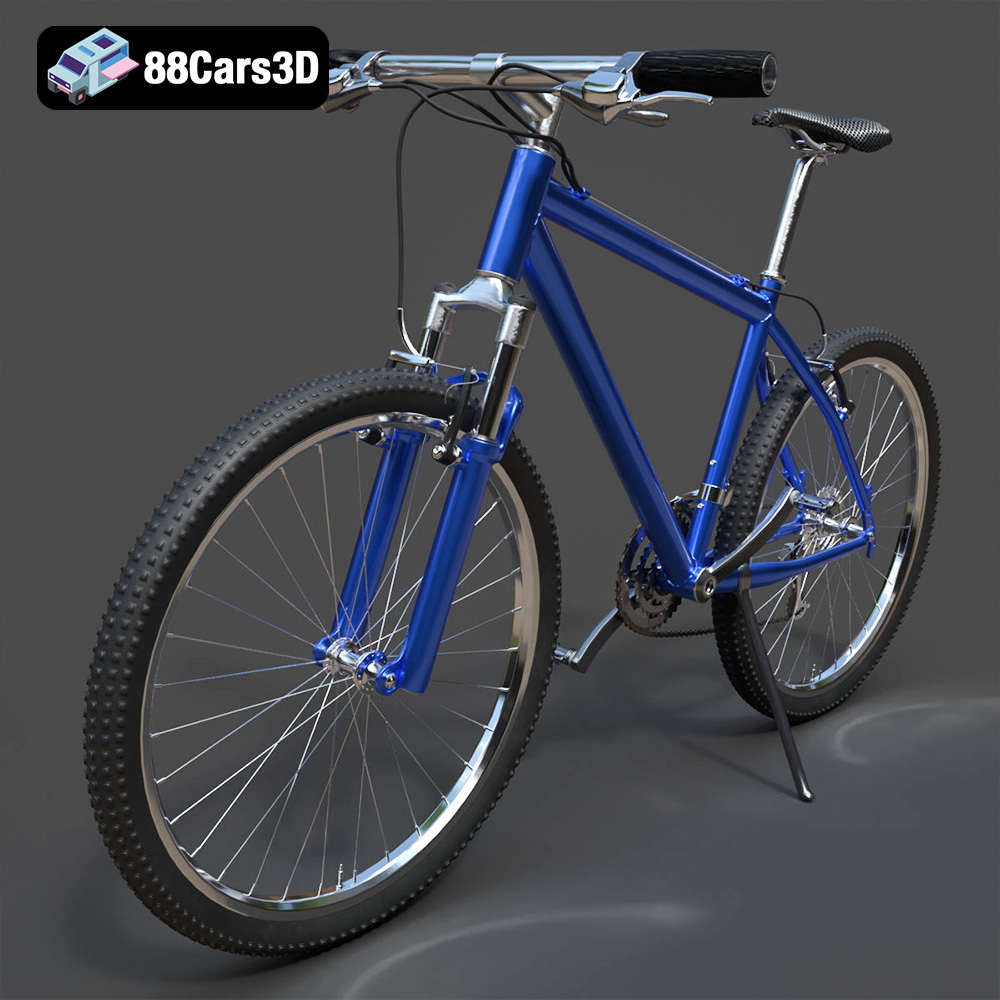
Bicycle 01-007 3D Model
Presenting the Bicycle 01-007 3D Model, a versatile and meticulously crafted asset designed for a wide range of digital projects. This model captures the essence of a modern bicycle, featuring a clean and efficient design suitable for urban commutes, recreational rides, or dynamic action scenes. Built with clean geometry and a balanced level of detail, it ensures optimal performance without sacrificing visual quality. Ideal for high-fidelity rendering, realistic animations, detailed simulations, and immersive game development environments.
$19.99
Product Image Gallery


Related Tags
.bicycle.01-007.commuterbike.mountainbike.urbanbike.rendering.simulation.gameasset.arvr.blend.fbx.obj.glb.stl.ply.unreal.max
