

Unlocking Digital Precision: The BMW 760Li E66 2005 3D Model for Professional Workflows
In the expansive landscape of 3D content creation, the demand for high-quality, meticulously detailed assets is constant. Whether you’re an automotive designer striving for photorealistic renders, a game developer building an immersive open world, or an architect integrating vehicles into a visualization, the foundation of your success lies in the quality of your 3D models. Few vehicles embody luxury, engineering, and iconic design quite like the BMW 7 Series. Today, we delve into the world of premium digital assets with a focus on a standout example: the BMW 760Li E66 2005 3D Model.
This model, available on 88cars3d.com, is not just a digital representation; it’s a meticulously engineered asset designed to meet the rigorous demands of professional production pipelines. It captures the distinctive styling and executive presence of BMW’s flagship sedan from the early 2000s, offering unparalleled versatility for a multitude of applications, from cinematic rendering to real-time game environments and even 3D printing. Join us as we explore the technical intricacies and creative potential this sophisticated 3D car model brings to the table.
The Art and Science of Premium 3D Car Models
Crafting a truly exceptional 3D car model involves a delicate balance of artistic vision and technical precision. It’s about translating the tangible beauty and complex engineering of a real-world vehicle into a digital form that retains all its essence while being optimized for performance across various platforms. The BMW 760Li E66 2005 3D Model exemplifies this fusion, built with clean, optimized geometry and balanced detailing.
Capturing Automotive Heritage Digitally
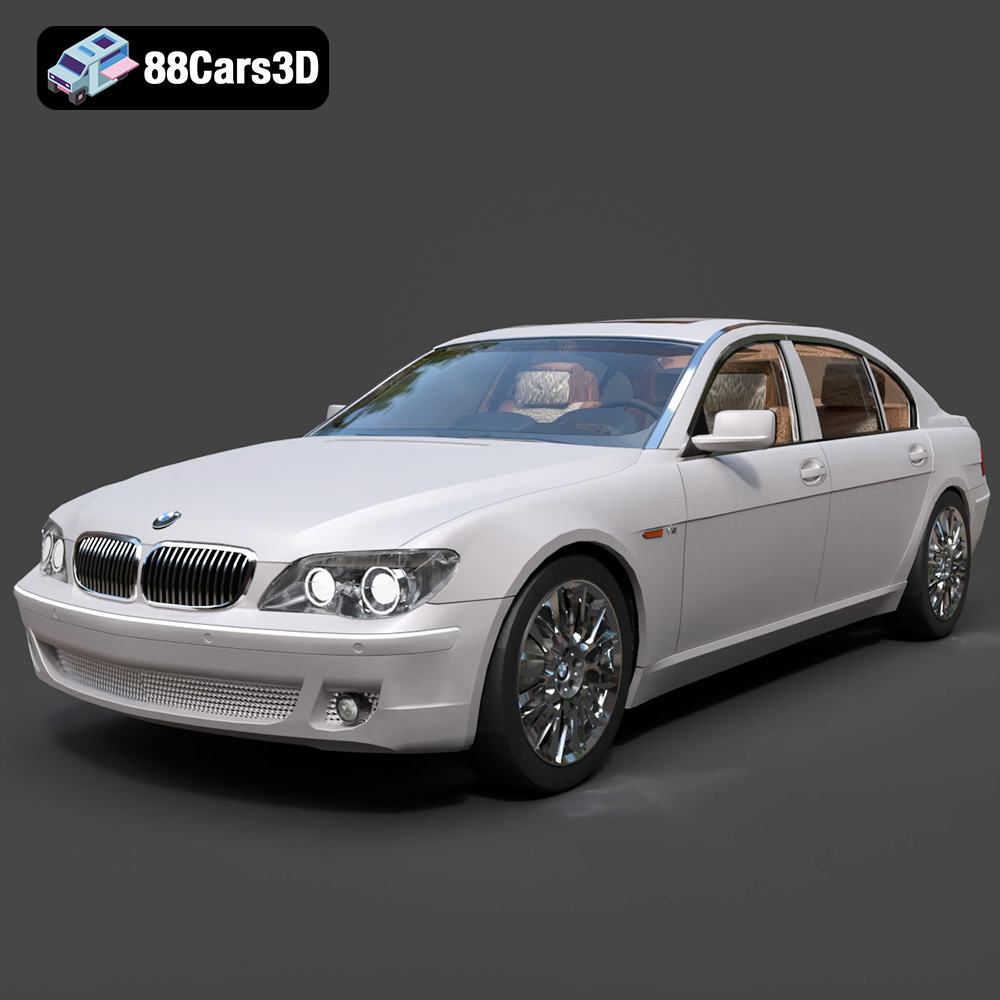
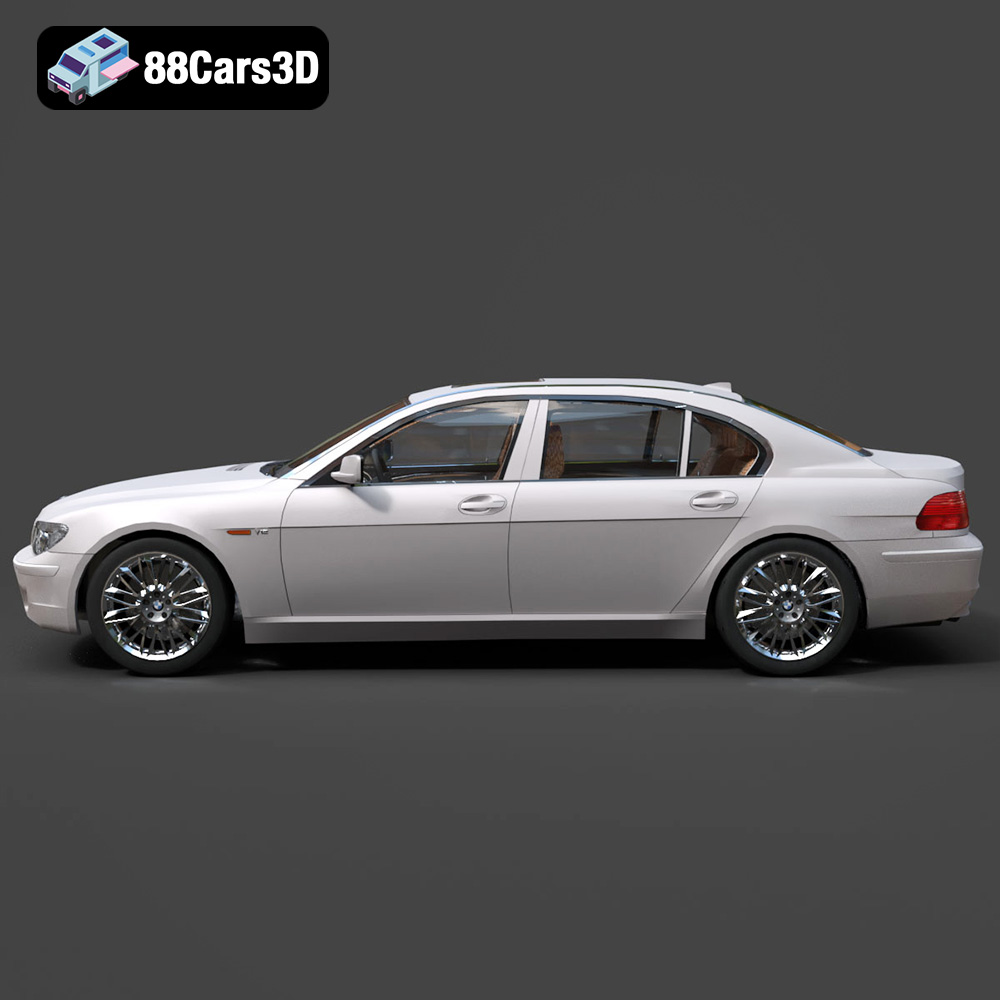
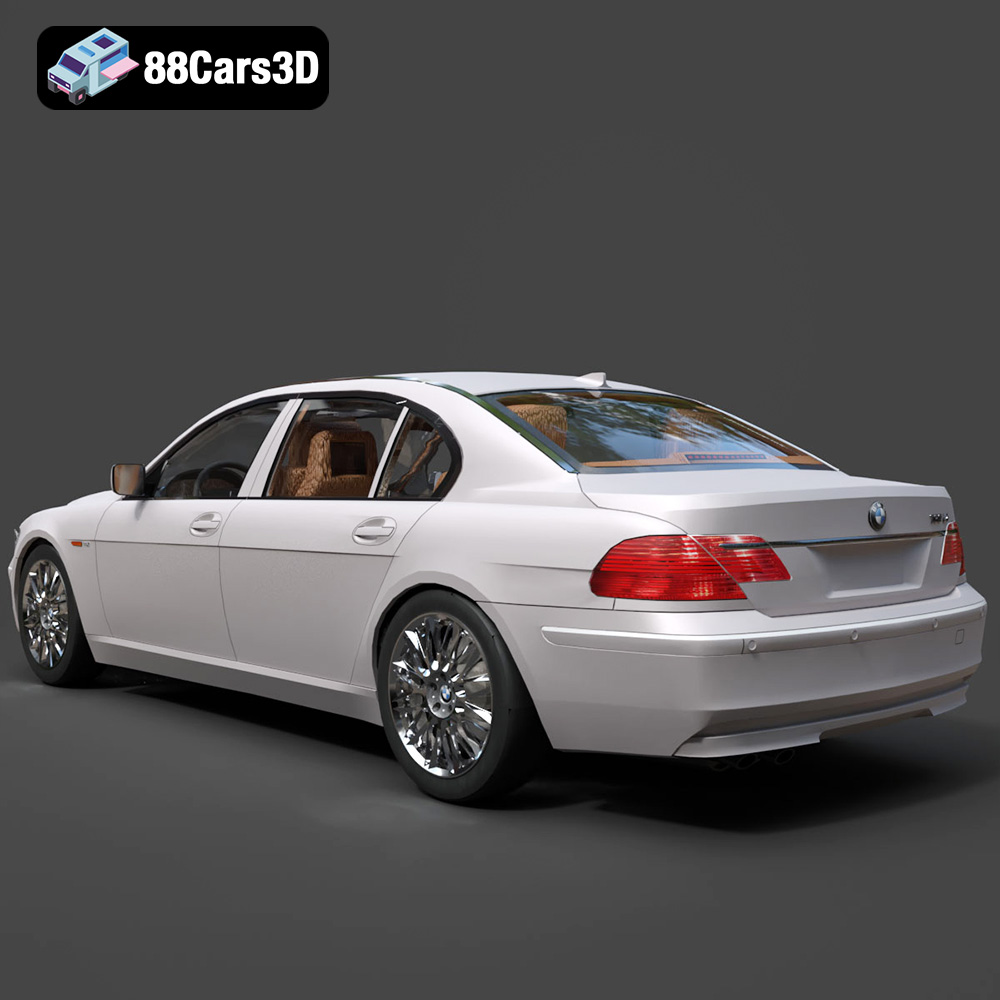
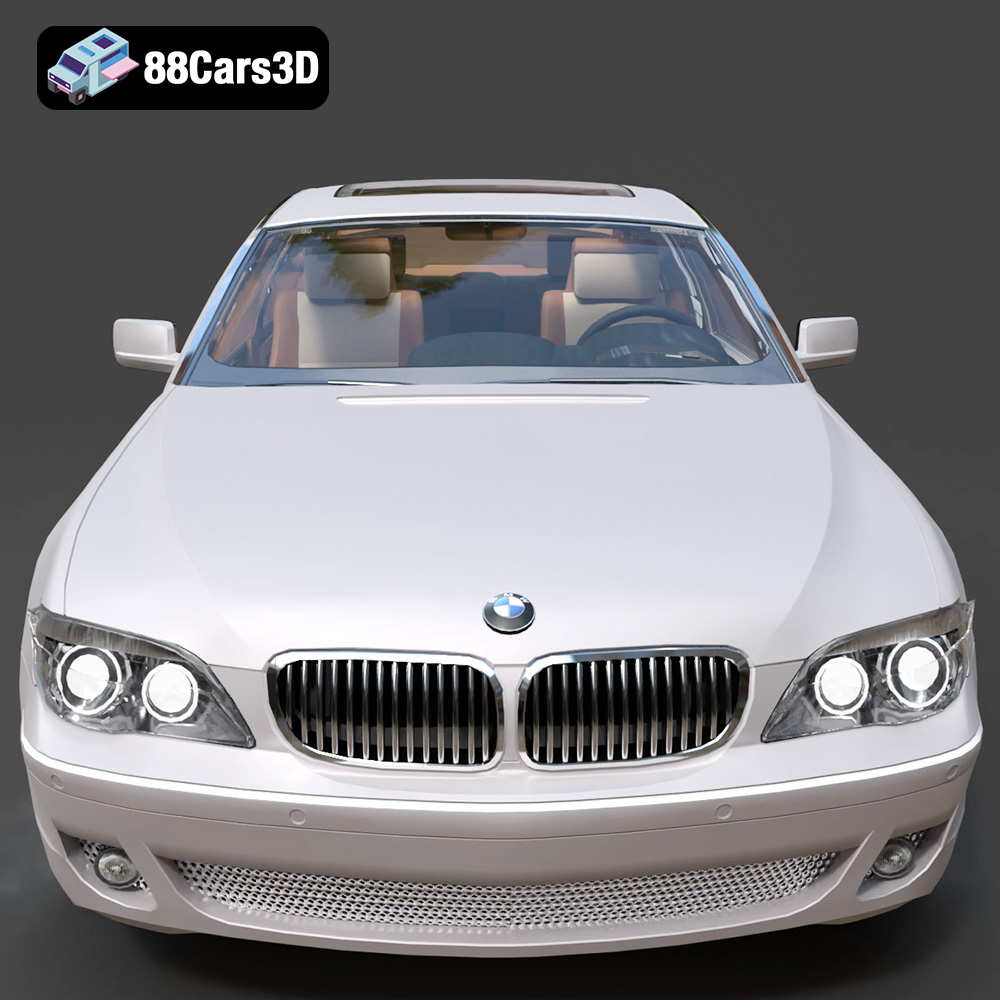
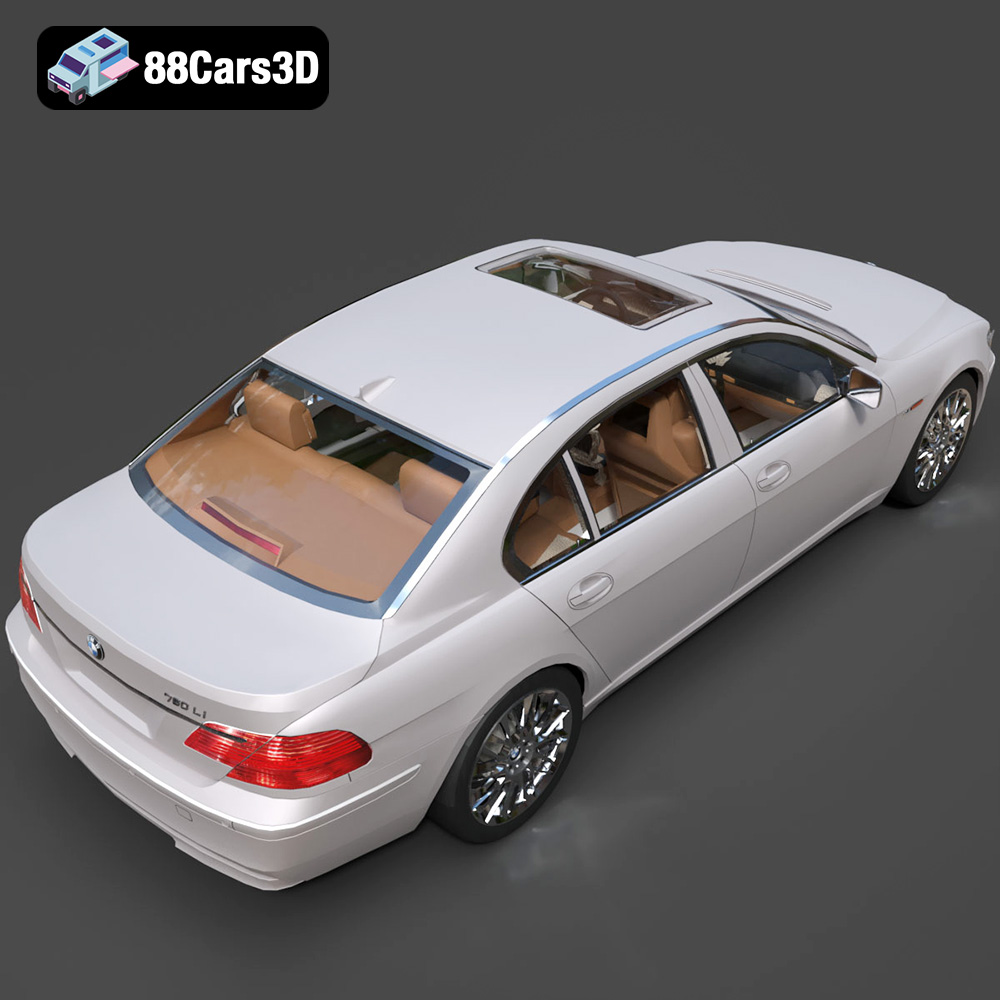
The BMW 760Li E66 generation, produced from 2001 to 2008, was a statement of luxury and technological advancement. Its distinctive “Bangle Butt” design, while controversial at the time, has become an iconic part of BMW’s design history, denoting a period of bold innovation. Recreating such a vehicle in 3D requires an acute eye for detail. The digital rendition must perfectly mirror the elegant lines, the subtle curves of the body panels, and the characteristic stance of the sedan. This model boasts authentic body panels, meticulously detailed headlamps, tail lights, and fog lights with realistic transparent materials, and the signature BMW kidney grille and chrome accents accurately reproduced. These details are crucial for any automotive rendering project aiming for authenticity.
The Foundation of Quality: Mesh Topology and Real-World Scale
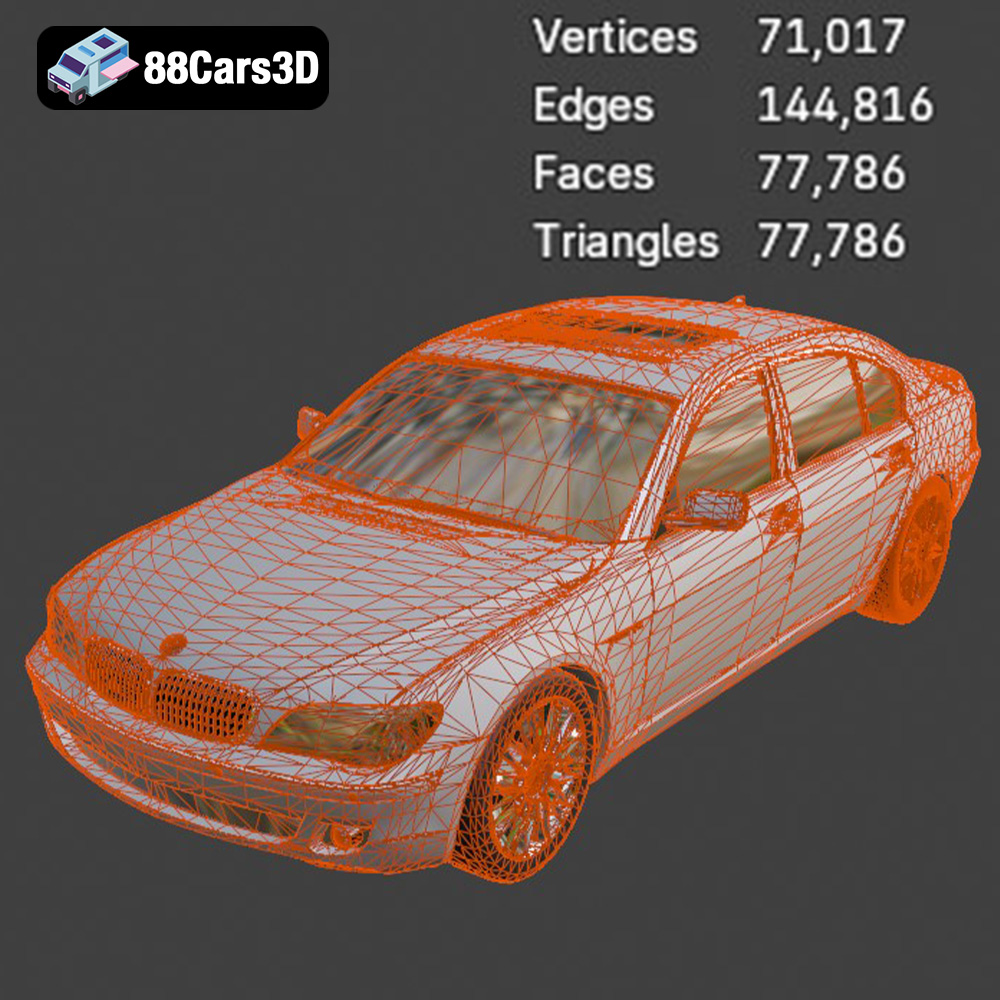
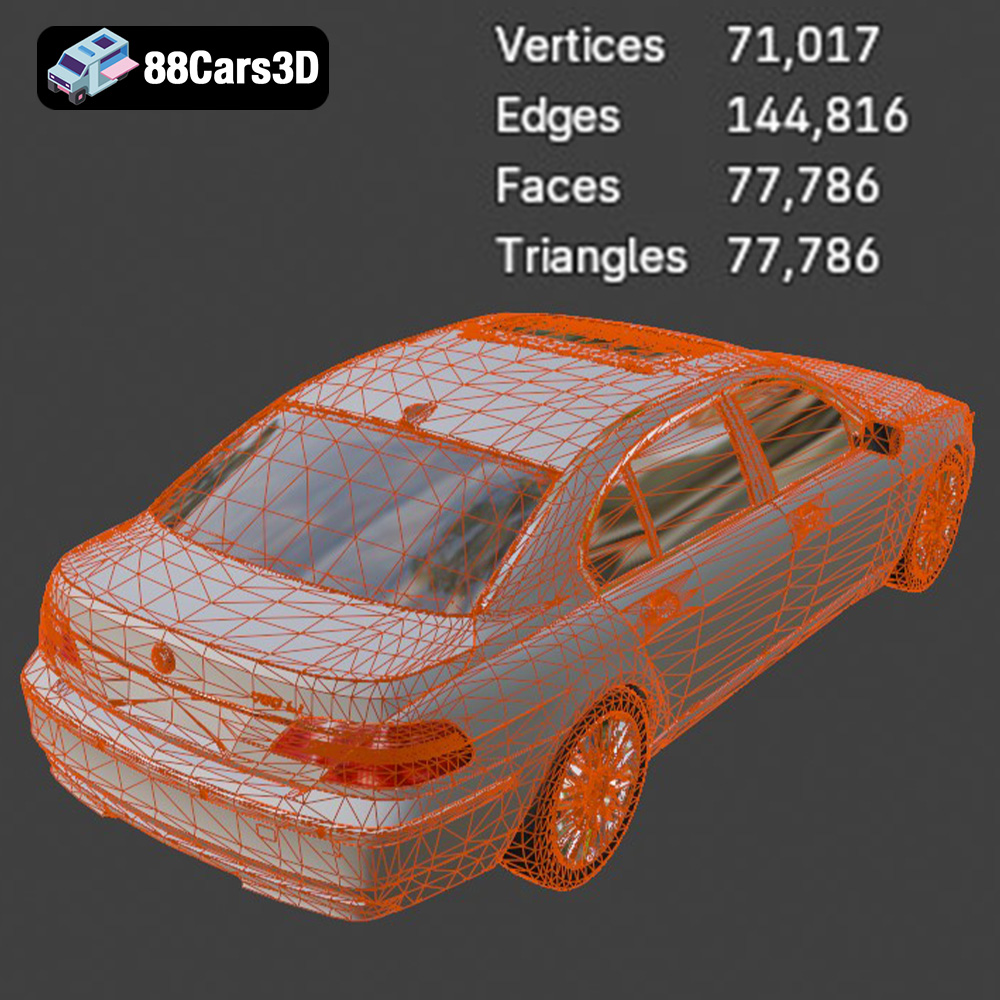
Beyond visual accuracy, the underlying structure of a 3D model dictates its usability and performance. The BMW 760Li E66 3D Model stands out with its clean, quad-dominant topology. This is a critical technical advantage, ensuring smooth subdivision for close-up renders and easy mesh manipulation for customization or deformation. Polygons are consistently spaced, minimizing pinching or artifacts during rendering or animation. Furthermore, its real-world scale accuracy ensures seamless integration into existing scenes, whether for architectural visualization, urban planning, or film production, eliminating the need for tedious scaling adjustments and maintaining dimensional fidelity.
Understanding 3D Model File Formats
One of the most crucial aspects of professional 3D asset management is understanding file formats. The choice of format dictates compatibility, feature retention, and optimization for specific applications. The BMW 760Li E66 2005 3D Model is provided in a comprehensive suite of formats, ensuring maximum flexibility for any digital project. Knowing when and why to use each format is paramount for an efficient workflow.
Blender (.blend) and 3ds Max (.max): The DCC Powerhouses
For artists and studios entrenched in specific Digital Content Creation (DCC) ecosystems, native project files are invaluable. The inclusion of **.blend** and **.max** files for this model means users get fully editable scenes with materials, lighting setups, and object hierarchies intact. A **.blend** file is a complete Blender project, offering full access to modifiers, node-based materials, and any specific Blender-centric optimizations. This is ideal for Blender artists who want to dive straight into rendering with Cycles or Eevee, modify geometry, or even re-rig components. Similarly, the **.max** file provides an editable 3ds Max project, allowing for advanced animation, rendering with V-Ray or Corona, and full control over scene elements within the industry-standard Autodesk environment. These native formats ensure that the artist retains maximum control and fidelity over the asset without loss of information that can occur during format conversions.
Universal Interoperability: .fbx, .obj, .glb, .ply, .stl
While native files are excellent for direct editing, cross-software compatibility relies on more universal formats. The **.fbx** (Filmbox) format is a widely adopted standard, especially ideal for game engines like Unreal Engine and Unity, as well as general 3D software interoperability. It efficiently stores not only mesh data but also materials, textures, animations, and skeletal information. Its robustness makes it a go-to for real-time pipelines. The **.obj** (Wavefront Object) format is a universal standard, highly compatible across nearly all 3D software. While it handles mesh data and UVs exceptionally well, material definitions are often external (.mtl file), and it doesn’t store animation data, making it best for static mesh exchange.
The **.glb** (GL Transmission Format Binary) is increasingly vital for web-based, AR, and VR applications. It’s an optimized, single-file format that contains mesh, materials, textures, and even animation in a highly efficient package, perfect for quick loading and display in browsers or mobile AR apps. For specialized needs, the **.ply** (Polygon File Format) offers precision mesh data, often used in scientific or CAD workflows where vertex color or additional mesh properties are crucial. Finally, the **.stl** (Stereolithography) format is the industry standard for 3D printing output. It defines only the surface geometry of a 3D object using triangles, making it suitable for creating high-quality physical replicas of the BMW 760Li E66 3D Model.
Engine-Ready Assets: .unreal for Real-Time Environments
Beyond generic game engine compatibility, 88cars3d.com offers a dedicated **.unreal** format. This signifies an Unreal Engine project setup, meaning the asset has likely been specifically prepared and optimized for the engine. This could include pre-configured materials using Unreal’s physically based rendering (PBR) system, collision meshes, level of detail (LOD) setups, and perhaps even basic animation blueprints. For game developers, this is a significant time-saver, streamlining the integration process and ensuring the model performs optimally within the real-time environment right out of the box, requiring minimal additional setup.
Professional Workflows: Integrating the BMW 760Li E66 3D Model
The versatility of the BMW 760Li E66 2005 3D Model lies in its adaptability to diverse professional workflows. Its robust construction and varied file formats ensure it can be a cornerstone asset for different creative endeavors.
High-Fidelity Automotive Rendering with 3ds Max and Blender
For cinematic sequences, marketing materials, or architectural visualizations, photorealistic rendering is paramount. The .max and .blend files provide an excellent starting point for this. Artists can leverage the advanced rendering capabilities of V-Ray, Corona Renderer (in 3ds Max), or Cycles (in Blender) to achieve stunning visual fidelity. The model’s clean topology ensures smooth subdivision, crucial for glossy car paint finishes and crisp reflections. Flexible material setups for metals, chrome, glass, and rubber components allow for nuanced customization, while configurable lighting setups can match any environmental condition, from a sun-drenched showroom to a moody night street. Imagine the BMW 760Li E66, rendered with breathtaking realism, cruising through a virtual city or displayed majestically in an interactive showroom experience.
Game Development and Real-Time Applications with Unreal Engine and Unity
In game development, performance and visual quality must go hand-in-hand. The BMW 760Li E66 3D Model is optimized as a game-ready asset. The .fbx format ensures broad compatibility with game engines, while the dedicated .unreal project setup offers a direct, optimized pathway into Unreal Engine. This means developers can quickly integrate the model into racing simulations, open-world environments, or interactive experiences. Optimized mesh quality ensures efficient rendering without compromising visual fidelity, which is critical for maintaining high frame rates. Components like doors, hood, and trunk are separated, facilitating ease of animation for opening/closing, damage states, or interactive elements within the game world. The real-world scale and organized hierarchy with proper pivot points further aid in quick rigging and physics integration.
AR/VR Experiences and Web Visualization
The burgeoning fields of Augmented Reality (AR) and Virtual Reality (VR) demand highly optimized, yet detailed, 3D assets. The .glb format for the BMW 760Li E66 is specifically tailored for these immersive applications, as well as for interactive web-based visualization. Its compact, efficient nature ensures rapid loading times and smooth performance on mobile devices and VR headsets. This makes the model ideal for virtual car configurators, immersive showrooms, or educational AR applications where users can interact with a highly detailed virtual representation of the luxury sedan in real-time, perhaps even scaled down onto their desk or into a full virtual garage.
Beyond Visualization: Simulation, Training, and 3D Printing
The utility of a high-quality 3D car model extends far beyond aesthetic rendering or game environments. Its precision and structural integrity make it suitable for a range of technical applications that require accuracy and robust data.
Driving Simulators and Educational Modules
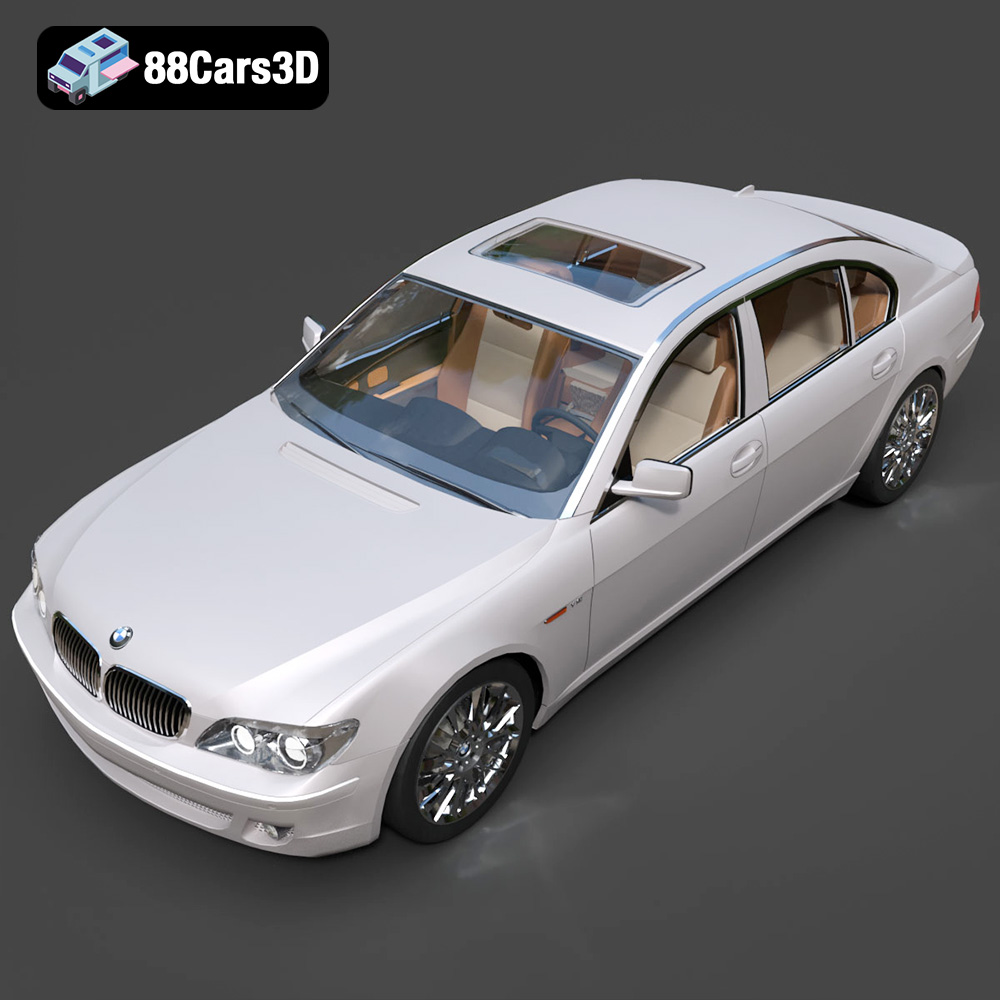
For professional driving simulators or technical training scenarios, accurate vehicle dynamics and visual representation are crucial. The real-world scale and detailed internal components of the BMW 760Li E66 2005 3D Model provide an excellent foundation. Faithfully recreated interiors, including the dashboard, steering wheel, seats, and intricate control details, offer an immersive experience for training pilots or test drivers. Separated components with correct pivot points enable realistic physics interactions and animation for elements like doors, hood, and suspension, making it suitable for engineering simulations or driver training modules that require precise mechanical responses.
Prototyping and Physical Replicas with 3D Printing
The ability to convert a digital asset into a tangible object adds another layer of versatility. With its clean, quad-dominant topology, the BMW 760Li E66 3D Model can be easily converted to the .stl format, making it ready for 3D printing. This opens up possibilities for creating high-quality physical replicas, scale models for display, or even prototypes for design reviews. Imagine holding a perfectly scaled model of this iconic luxury car, printed directly from the same digital data used for renders and games. This blend of digital and physical production showcases the comprehensive nature of this premium 3D asset from 88cars3d.com.
Technical Deep Dive: Optimizing for Performance and Detail
The true measure of a professional 3D car model lies in its technical underpinnings. The BMW 760Li E66 3D Model has been engineered with several key technical advantages that ensure both visual fidelity and optimal performance.
The Role of Optimized Geometry and UV Mapping
As highlighted, the model features clean, quad-dominant topology. This ensures that when the mesh is subdivided, the surfaces remain smooth and free of artifacts, which is crucial for close-up renders where every reflection and curve counts. Good topology also makes the model efficient to render, as redundant polygons are minimized. Complementing this is effective UV mapping, which, while not explicitly detailed in the product description, is a fundamental requirement for any professional asset. Proper UVs ensure textures are applied without distortion, maximizing detail and realism while optimizing texture memory usage, especially vital in game engines. This allows for high-resolution wheels and tires, true to the luxury sedan aesthetic, to be textured flawlessly.
Crafting Realistic Materials and Textures
Realistic automotive rendering heavily relies on sophisticated material setups. The model comes with flexible material setups for various components like metals, chrome, glass, and rubber. This implies a physically based rendering (PBR) workflow, where materials accurately simulate how light interacts with surfaces in the real world. From the subtle sheen of the paint to the intricate reflections on chrome accents and the transparency of glass, each material contributes to the overall realism. Intricate control details and instrument clusters, often requiring specialized PBR textures (Albedo, Normal, Roughness, Metallic maps), further enhance the immersive interior experience, making it feel genuinely luxurious.
Animation-Ready Rigging and Customization
A static model is useful, but an animation-ready model is a professional asset. The BMW 760Li E66 3D Model boasts an organized hierarchy with proper pivot points for animation-ready components. This means parts like doors, hood, and trunk are not only separated but also set up with their rotation points correctly positioned, allowing animators to quickly and naturally open them. This meticulous preparation saves countless hours in a production pipeline and enables complex animations, vehicle damage simulations, or interactive features in games and VR experiences. The ease of adjusting paint finishes and applying custom graphics further enhances its utility for unique client projects or artistic visions.
Conclusion
The BMW 760Li E66 2005 3D Model represents a pinnacle of digital automotive asset creation. From its meticulously crafted exterior and faithful interior recreation to its optimized geometry and extensive file format support, it is engineered for professional success across a myriad of applications. Whether your goal is a stunning automotive rendering, an immersive game experience, a precise simulation, or even a tangible 3D print, this model provides the technical foundation and visual fidelity you need.
By offering essential features like clean quad-dominant topology, real-world scale, animation-ready components, and a comprehensive suite of file formats including .blend, .max, .fbx, .obj, .glb, .stl, .ply, and .unreal, 88cars3d.com delivers an indispensable asset for designers, developers, and artists. Investing in such a high-quality 3D car model from 88cars3d.com significantly streamlines production, enhances visual quality, and expands creative possibilities, allowing you to focus on bringing your visions to life with confidence and precision.
Featured 3D Model
BMW 760Li E66 2005 3D Model
Presenting a meticulously crafted 3D model of the iconic BMW 760Li E66, representing the pinnacle of luxury and German engineering from the early 2000s. This model captures the distinctive styling and executive presence of BMW’s flagship sedan. Built with clean, optimized geometry and balanced detailing, it is engineered for high-fidelity rendering, realistic animations, comprehensive simulations, and robust integration into game development projects.
$10.79
Product Image Gallery
Related Tags
.760li
.arvr
.blend
.bmw
.e66
.executivecar
.fbx
.gameasset
.glb
.luxurycar
.max
.obj
.ply
.rendering
.sedan
.simulation
.stl
.unreal
