

Mastering Automotive 3D: Unlocking Professional Projects with High-Fidelity Car Models
In the dynamic world of 3D visualization, game development, and cinematic rendering, the demand for exceptionally detailed and accurate automotive models continues to accelerate. Crafting a convincing 3D vehicle from scratch is an arduous journey, demanding not only artistic skill but also deep technical understanding of topology, materials, and real-time optimization. Professionals often face the dilemma: invest hundreds of hours into modeling every rivet and curve, or seek out pre-built assets that meet the most stringent quality standards?
The answer, for many, lies in leveraging meticulously engineered 3D car models that serve as a robust foundation for diverse projects. These assets empower artists, developers, and designers to focus on creative execution rather than foundational construction. Today, we’ll delve into the intricacies of what makes a truly professional 3D car model, exploring the technical advantages, versatile applications, and essential workflows involved. We’ll specifically highlight how a product like the BMW 5 Series Touring F11-007 3D Model exemplifies the pinnacle of quality available on marketplaces like 88cars3d.com, offering a seamless integration into high-end automotive rendering, immersive game environments, and cutting-edge simulations.
Understanding 3D Model File Formats
The journey of a 3D model from its creation to its final application involves navigating a complex ecosystem of file formats. Each format serves a specific purpose, excelling in different scenarios due to its structure, data retention capabilities, and compatibility with various software. Understanding these formats is paramount for any professional working with 3D car models, ensuring seamless workflows and optimal performance. The BMW 5 Series Touring F11-007 3D Model offers an exceptional range of formats, making it incredibly versatile for any pipeline.
.blend – Fully Editable Blender Scene with Materials
The native file format for Blender, .blend files encapsulate an entire Blender project. This includes not just the mesh data but also materials, textures, lighting, camera setups, animation data, and even physics simulations. For artists primarily working in Blender, this is the most convenient and powerful format. It allows for complete editability, enabling deep customization of every aspect of the BMW 5 Series Touring F11-007 model, from altering topology to re-rigging components, or adjusting Cycles/Eevee specific materials for photorealistic rendering.
.fbx – Ideal for Unreal, Unity, and Real-Time Pipelines
FBX (Filmbox) is an industry-standard proprietary file format developed by Autodesk, widely used for exchanging 3D data between various applications. It’s particularly favored in game development (Unreal Engine, Unity), animation, and VFX pipelines because it can store extensive data types: geometry, materials (with some limitations), textures, animations, skinning, and camera/light data. For the BMW F11-007, the .fbx format ensures that key elements like separate body parts for animation and basic material assignments are preserved when importing into game engines, providing a solid foundation for real-time applications.
.obj – Universal Format for Cross-Software Compatibility
OBJ (Object) is one of the oldest and most widely supported geometry definition file formats. While it primarily stores mesh data (vertices, normals, UVs, faces) and references external material (.mtl) and texture files, it lacks support for animation, rigging, or scene information like lights and cameras. Its strength lies in its universal compatibility; almost every 3D software can import and export .obj. This makes it an excellent choice for a clean mesh transfer of the BMW F11-007 when you need raw geometric data that can be re-textured and re-materialized from scratch in a new environment, guaranteeing maximum flexibility.
.glb – Optimized for AR, VR, and Browser-Based Display
GLB (GL Transmission Format Binary) is a binary representation of the glTF format, specifically designed for efficient transmission and loading of 3D scenes and models by applications. It’s rapidly becoming the standard for 3D web content, augmented reality (AR), and virtual reality (VR). .glb files pack all necessary data – geometry, materials, textures, animations – into a single file, optimizing loading times and simplifying deployment. The BMW F11-007 in .glb format is perfectly suited for interactive web configurators, AR visualizations on mobile devices, or lightweight VR experiences, offering a streamlined asset for modern immersive platforms.
.stl – Suitable for 3D Printing Output
STL (STereoLithography) is the de facto standard file format for 3D printing and computer-aided manufacturing. It represents a 3D model as a series of connected triangles, describing only the surface geometry without color, texture, or other CAD attributes. While not ideal for rendering, the .stl version of the BMW F11-007 allows users to convert the digital model into a physical prototype or collectible. This format ensures geometric accuracy for manufacturing processes, making it invaluable for product designers or hobbyists looking to bring the F11-007 into the physical world.
.ply – Precision Mesh Format for CAD or Analysis
PLY (Polygon File Format) is a versatile file format for storing 3D data from 3D scanners, CAD applications, and other sources. It can store various properties beyond just geometry, including color, transparency, normals, texture coordinates, and even reliability information. Often used in scientific and engineering fields, .ply offers a precise representation of complex meshes. For the BMW F11-007, this format would be beneficial for advanced analysis, reverse engineering workflows, or integration into specialized CAD systems where detailed polygonal information is crucial.
.unreal – Engine-Ready Asset for Real-Time Environments
The .unreal format specifically refers to an Unreal Engine project setup, often containing the asset pre-imported, textured, and configured within an Unreal project file or packaged as an asset ready for direct import into an existing Unreal project. This is highly advantageous for game developers as it bypasses many setup steps. The BMW F11-007 available in this format means developers can immediately drop the vehicle into their virtual worlds, with materials already assigned, collision meshes potentially generated, and possibly even basic blueprints for vehicle physics implemented, saving significant development time and ensuring engine compatibility right out of the box.
.max – Editable 3ds Max Project for Animation and Rendering
.max is the native file format for Autodesk 3ds Max, one of the leading software packages for 3D modeling, animation, and rendering in the architectural visualization and automotive industries. Like .blend, it contains the full scene: geometry, modifiers, materials (V-Ray, Corona, Arnold), lighting, cameras, animation keyframes, and plugins. The .max version of the BMW F11-007 provides 3ds Max users with the ultimate flexibility to dive deep into the model’s construction, adjust every parameter for sophisticated rendering engines, or integrate it into complex animation sequences, making it perfect for high-fidelity studio renders and cinematic projects.
The inclusion of such a comprehensive array of file formats for the BMW 5 Series Touring F11-007 3D Model underscores its professional-grade versatility, ensuring it can seamlessly integrate into virtually any production pipeline.
The Craft of Automotive 3D Modeling: Beyond Aesthetics
While the visual appeal of a 3D car model is immediately apparent, its true professional value lies beneath the surface in its technical construction. The journey from a conceptual design to a production-ready 3D asset involves rigorous adherence to standards that guarantee performance, flexibility, and longevity across various applications.
Precision in Topology and Scale: The Foundation of Realism
At the heart of any high-quality 3D car model, such as the BMW 5 Series Touring F11-007, is its topology. The model boasts “clean, quad-dominant topology,” meaning its mesh is primarily composed of four-sided polygons. This is critical for several reasons:
- Smooth Subdivision: Quad-dominant meshes handle subdivision surfaces (like those generated by Turbosmooth or Subdivision Surface modifiers) much more gracefully than triangular or N-gon meshes. This results in incredibly smooth, artifact-free surfaces, essential for capturing the subtle curves and reflections of a luxury vehicle’s bodywork.
- Deformation and Animation: Clean quads provide predictable deformation, which is vital if the model needs to be rigged and animated (e.g., suspension compression, door opening). Irregular topology can lead to pinching and unsightly distortions during movement.
- Optimized Mesh Density: “Optimized mesh density” means the model uses just enough polygons to represent its details without becoming overly heavy and performance-intensive. For high-fidelity renders, this allows for intricate details, while for real-time applications, it ensures efficient rendering without sacrificing visual quality.
Furthermore, the model is built to “accurate real-world scale.” This isn’t just a minor detail; it’s fundamental for realistic lighting, physically based rendering (PBR) material accuracy, and seamless integration into architectural visualization scenes or simulation environments. A correctly scaled model behaves predictably with real-world light units and camera settings, eliminating guesswork and ensuring consistency across projects.
The Power of PBR Materials and Textures
Modern 3D rendering relies heavily on Physically Based Rendering (PBR) workflows, which mimic how light behaves in the real world. A professional 3D car model must come equipped with PBR-ready materials and often high-resolution textures. The BMW F11-007’s “realistic material definitions for paintwork, glass, chrome accents, and rubber components” are indicative of this standard. This means:
- Authentic Surfaces: Paint will have appropriate metallic and roughness values, glass will refract and reflect light correctly, chrome will exhibit realistic specularity, and rubber will show subtle surface imperfections.
- Detailing Through Textures: “High-resolution wheels and tires with distinct tread patterns” are a prime example. These details are often achieved through normal maps, displacement maps, and high-fidelity albedo textures, adding incredible realism without significantly increasing polygon count.
- Consistent Across Environments: PBR materials, when properly set up, react consistently to different lighting conditions and rendering engines, ensuring the car looks great whether it’s in a studio render or a sun-drenched game scene.
Elevating Visuals: Rendering and Animation Workflows with the BMW F11-007
Once you have a meticulously crafted 3D car model like the BMW 5 Series Touring F11-007, the next step is to bring it to life through stunning renders and dynamic animations. The inherent quality and structure of this model significantly streamline these professional workflows.
Studio-Quality Renders with 3ds Max and V-Ray/Corona
For high-fidelity architectural visualization, product showcases, or cinematic sequences, 3ds Max remains a cornerstone in many studios, often paired with powerful rendering engines like V-Ray or Corona. The .max file included with the BMW F11-007 is a significant advantage:
- Direct Integration: Users can open the file directly, finding a logically organized scene hierarchy with proper pivot points. This means wheels, doors, hood, and trunk are separated and correctly positioned for easy manipulation or animation.
- Material Setup: The model likely comes with initial material setups for common renderers, requiring minimal adjustment to fit a studio’s specific PBR workflow. Artists can easily “adjust material properties for metals, chrome, rubber, and plastics” to match any desired visual style.
- Lighting and Composition: With the model in place, lighting artists can focus on creating dramatic studio lighting, environment HDRI setups, or complex outdoor scenes. The clean geometry of the F11-007 ensures accurate light bounces and reflections, crucial for photographic realism.
- Camera Work: Cinematic camera angles, depth of field effects, and motion blur can be applied to capture the essence of the vehicle. The detailed dashboard, steering wheel, and seating allow for convincing interior shots, while “basic engine bay and chassis components” enhance exterior realism even in open states.
Dynamic Storytelling through Animation in Blender
Blender has emerged as a powerhouse for independent artists and studios alike, with its robust modeling, animation, and rendering capabilities (Cycles and Eevee). The .blend file format for the BMW F11-007 offers a native, fully editable experience:
- Animation Readiness: The “separated doors, hood, and trunk for easy animation workflows” are perfectly suited for creating opening/closing sequences, revealing the detailed interior or basic engine bay. The “logically organized hierarchy with proper pivot points” means these parts are ready to be keyframed without tedious setup.
- Rigging Potential: For more advanced animations, such as vehicle suspension, steering, or even dynamic body deformation, the clean quad-dominant topology of the F11-007 makes it an ideal candidate for rigging with constraints and drivers.
- Render Versatility: Whether aiming for photorealistic results with Cycles or stylized real-time visuals with Eevee, Blender users can leverage the model’s high-quality mesh and easily modify or apply custom PBR materials. This flexibility extends to “easily modify paint finishes and apply custom graphics or liveries” directly within Blender’s shader editor.
Driving Innovation: Game Development and Real-Time Applications
The burgeoning fields of game development, AR/VR, and real-time visualization demand 3D assets that are not only visually impressive but also highly optimized for performance. The BMW 5 Series Touring F11-007 3D Model is specifically designed as a “high-performance asset” to excel in these demanding environments.
Optimizing for Performance in Unreal Engine and Unity
Game engines like Unreal Engine and Unity are at the forefront of creating interactive experiences. Importing automotive assets into these platforms requires careful consideration of performance. The BMW F11-007 addresses these concerns directly:
- Engine-Ready Formats: The inclusion of
.fbxand a dedicated.unrealproject setup streamlines the import process significantly. The.fbxformat effectively transfers geometry, UVs, and basic material assignments, providing a clean slate for setting up engine-specific PBR materials. The.unrealformat goes a step further, potentially providing a pre-configured asset, saving countless hours of manual setup. - Optimized Mesh Density: A model with “optimized mesh density” strikes a balance between visual fidelity and polygon count. While high-poly for renders, professional game developers often create Level of Detail (LOD) models from such assets. The clean topology of the F11-007 makes generating these lower-poly versions far more straightforward, ensuring the model looks great up close and performs efficiently at a distance.
- Material Efficiency: In game engines, efficient material setup is crucial. The F11-007’s realistic material definitions provide a strong starting point for creating PBR materials using engine-native shader graphs, ensuring optimal draw calls and rendering performance.
This attention to technical detail ensures that the BMW 5 Series Touring F11-007 can be dropped into racing games, open-world environments, or virtual showrooms with minimal fuss, becoming an indispensable asset for developers on platforms like 88cars3d.com.
Creating Immersive Experiences: AR/VR Readiness and Simulation
Augmented Reality (AR) and Virtual Reality (VR) applications, alongside high-fidelity simulation environments, represent another frontier for advanced 3D models. The F11-007 is “ideal for immersive augmented and virtual reality applications” and “suitable for driving simulators, architectural visualizations, and educational modules.”
- GLB for Web & Mobile AR/VR: The
.glbformat is specifically optimized for web-based AR/VR experiences, allowing the BMW F11-007 to be viewed interactively on mobile devices or within web browsers without requiring heavy downloads or complex setups. This is perfect for showcasing car models in interactive product presentations or virtual showrooms. - Simulation Accuracy: For driving simulators, accurate real-world scale and detailed exterior/interior features are critical for immersion and realistic physics. The F11-007’s detailed dashboard, steering wheel, and comfortable seating contribute directly to a convincing in-car experience, while its accurate dimensions ensure physics engines can calculate realistic vehicle dynamics.
- Environmental Integration: In architectural visualizations, placing a lifelike vehicle like the BMW F11-007 can dramatically enhance the realism and scale of a scene, providing context and adding a touch of luxury to a rendering.
Versatility Unleashed: Customization and Future-Proofing Your Projects
Beyond its inherent quality, a truly professional 3D car model offers the flexibility for extensive customization, allowing it to adapt to specific project requirements and future artistic visions. The BMW 5 Series Touring F11-007 3D Model excels in this regard, providing robust options for personalization.
Tailoring the Look: Paint, Liveries, and Material Adjustments
The ability to customize a vehicle’s appearance is paramount, whether for a client presentation, a unique game asset, or a personal artistic project. The F11-007 model is designed with this flexibility in mind:
- Dynamic Paint Finishes: Users can “easily modify paint finishes” to explore an infinite palette of colors, metallic flakes, and clear coat effects. This often involves adjusting PBR material parameters like base color, metallic, and roughness maps, allowing for everything from a showroom-gloss finish to a matte, stealthy look.
- Custom Graphics and Liveries: The clean UV mapping (implied by “high-resolution wheels and tires with distinct tread patterns” and overall professional quality) of the F11-007’s body panels makes it straightforward to “apply custom graphics or liveries.” This could range from subtle pin-striping to full racing decals or brand advertisements, adding unique character to the model without altering its underlying geometry.
- Material Property Tweaking: The fine-grained control over “material properties for metals, chrome, rubber, and plastics” ensures that every component of the vehicle can be fine-tuned. Imagine adjusting the reflectivity of the chrome trim, the subtle texture of the rubber seals, or the sheen of interior plastics to perfectly match a specific visual style or brand aesthetic.
- Lighting and Atmosphere: Beyond surface properties, the model’s adaptability extends to “implement diverse lighting setups to achieve varied atmospheric effects and moods.” This includes studio setups with softboxes, dynamic outdoor lighting with HDRIs, or even dramatic cinematic lighting to emphasize the vehicle’s form.
Physical Prototypes: The Path to 3D Printing
The utility of a high-quality 3D model isn’t confined to the digital realm. The inclusion of the .stl file format for the BMW F11-007 opens up exciting possibilities for physical prototyping and creation. This format is “convertible to .stl for creating physical models and prototypes,” allowing designers, engineers, and hobbyists to:
- Create Scale Models: Produce accurate physical scale models for display, conceptual design review, or even collectible items. The model’s “clean and optimized mesh structure” translates well to the requirements of 3D printers, ensuring printability and detail retention.
- Rapid Prototyping: For automotive designers or enthusiasts working on custom modifications or accessories, printing parts of the F11-007 can provide tangible feedback before committing to physical manufacturing.
- Educational Tools: Use physical models as educational aids to study automotive design, aerodynamics, or component layout.
This tangible application significantly expands the value proposition of the 3D asset, cementing its status as a multi-purpose tool for both digital and physical production.
Conclusion
The journey through the intricate world of automotive 3D modeling reveals that true professional quality extends far beyond surface aesthetics. It encompasses meticulous topology, accurate scale, PBR-ready materials, and a commitment to broad compatibility through diverse file formats. The BMW 5 Series Touring F11-007 3D Model stands as a testament to these principles, offering an unparalleled asset for creators across rendering, game development, AR/VR, simulation, and even 3D printing.
By leveraging such a high-fidelity 3D car model, artists and developers gain invaluable time and resources, enabling them to elevate their projects with stunning realism and robust performance. Whether you’re crafting a cinematic masterpiece in 3ds Max, building an immersive open-world game in Unreal Engine, or visualizing a product in augmented reality, the technical advantages and versatile design of the F11-007 make it an indispensable tool. When seeking premium 3D car models that promise precision and realism, explore the curated selection available at 88cars3d.com, where quality and versatility converge to empower your creative vision.
Featured 3D Model
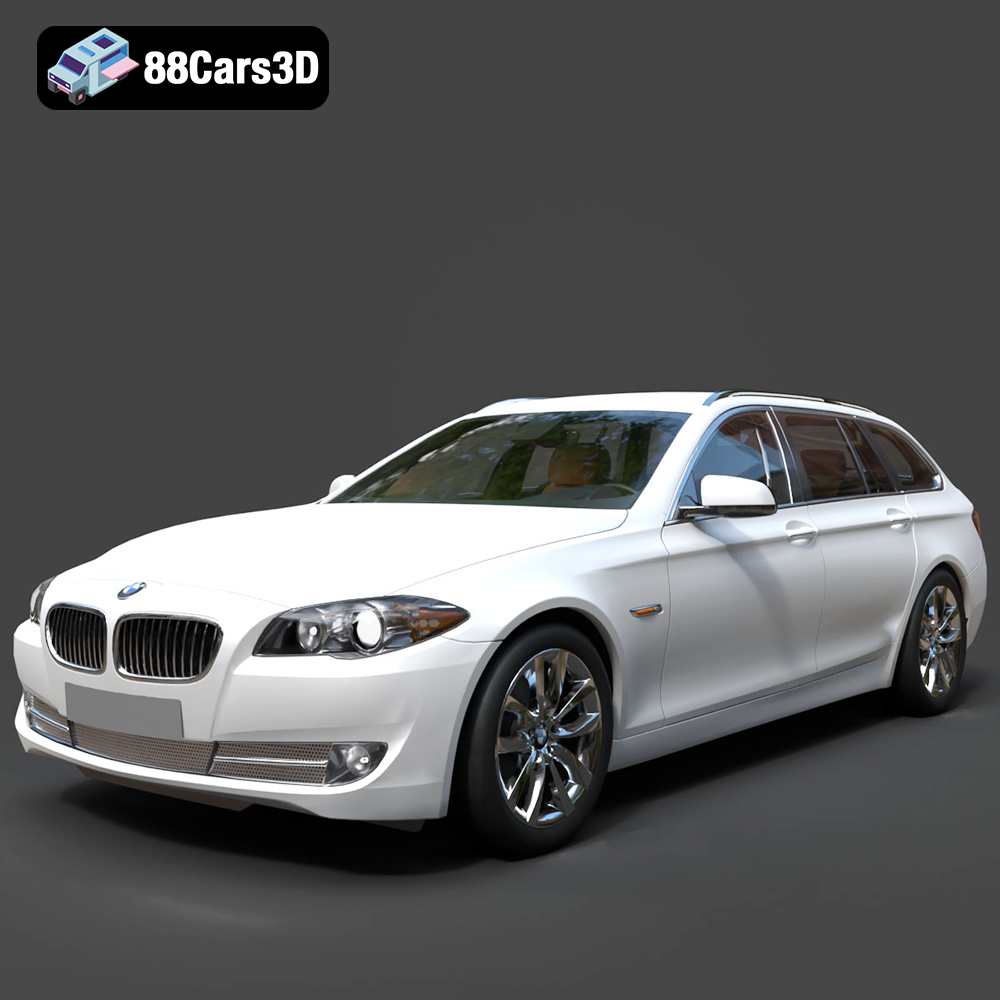
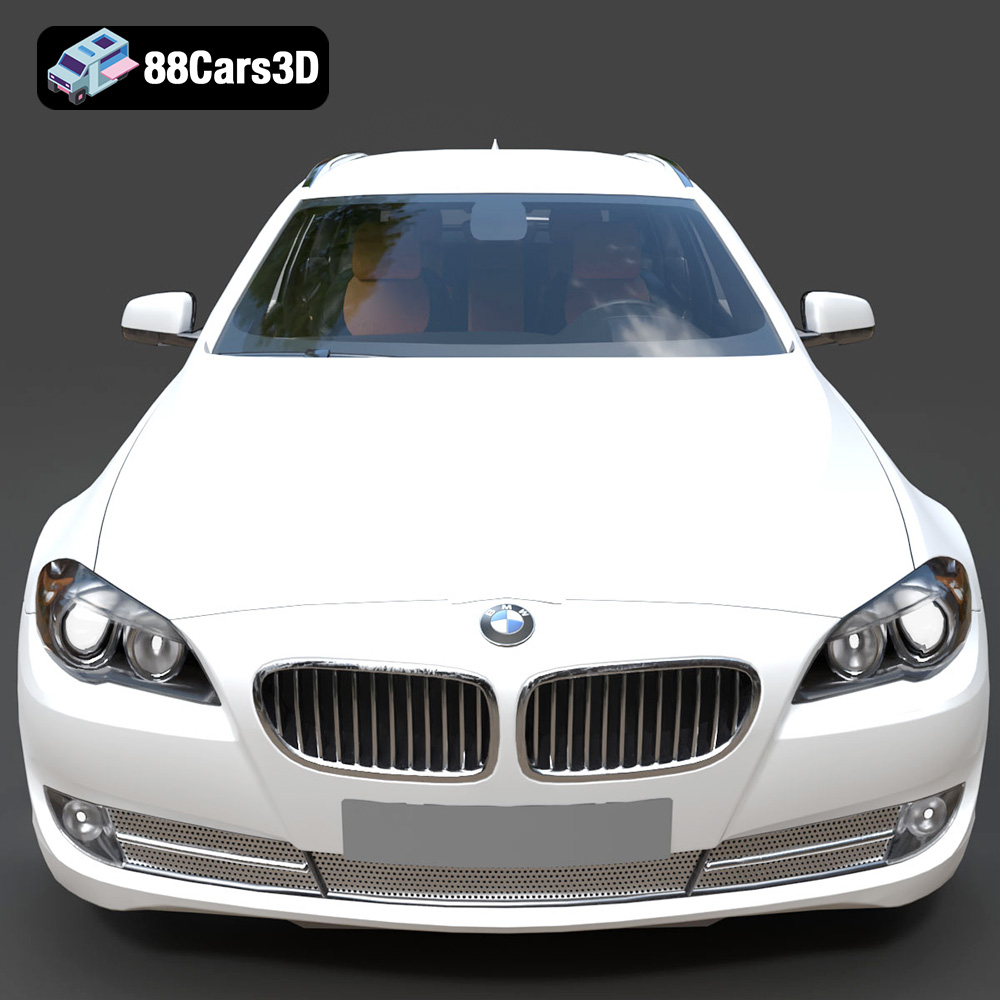
BMW 5 Series Touring F11-007 3D Model
Experience the precision and elegance of the BMW 5 Series Touring F11-007 with this professional 3D model. Meticulously crafted to capture the iconic design and functional aesthetics of the luxury station wagon, this model boasts clean geometry and balanced detailing. It is optimized for a wide range of applications, including high-fidelity rendering, realistic animation sequences, immersive simulation environments, and robust game development.
$10.79
Product Image Gallery




Related Tags
.bmw.5series.touring.f11007.car.wagon.stationwagon.familycar.rendering.simulation.gameasset.arvr.blend.fbx.obj.glb.stl.ply.unreal.max
