

The Enduring Appeal of Iconic Automotive Design: A Deep Dive into the BMW E46
In the vast landscape of automotive history, certain vehicles transcend mere transportation to become cultural touchstones, celebrated for their design, performance, and engineering prowess. The BMW 3 Series E46 stands as a prime example of such an icon. Revered by enthusiasts and praised by critics, this generation of the 3 Series epitomizes the perfect blend of dynamic driving characteristics and sophisticated aesthetics that defined BMW in the late 90s and early 2000s. Its timeless lines, balanced proportions, and driver-focused interior have cemented its place in the pantheon of classic cars.
But what happens when an automotive legend is meticulously recreated in the digital realm? The answer lies in high-quality 3D car models that not only capture the visual essence but also the underlying technical precision of these machines. For designers, game developers, architects, and visualizers, having access to such a faithful digital recreation is invaluable. It opens up a world of possibilities, from photorealistic renders for advertising campaigns to immersive experiences in virtual reality, and dynamic interactions within the latest game engines. Our featured BMW 3 Series E46 3D Model is a testament to this philosophy, offering a robust and detailed asset ready for a multitude of professional applications.
The E46 Legacy in Automotive Culture
The E46 generation of the BMW 3 Series, produced from 1998 to 2006, inherited a rich legacy and further elevated it. It introduced a more refined chassis, advanced engine technology, and a sleeker, more aerodynamic design compared to its predecessors. It quickly became a benchmark for luxury sport sedans, earning accolades for its exceptional handling, responsive steering, and potent engine options. Beyond its technical merits, the E46 cultivated a passionate following, becoming a popular choice for customization, track days, and daily driving alike. Its distinctive headlight design, Hofmeister kink, and understated aggression remain instantly recognizable.
Bridging the Gap: From Physical Icon to Digital Masterpiece
Creating a digital model that truly honors such an automotive icon requires an extraordinary level of attention to detail and technical skill. It’s not merely about replicating shapes; it’s about understanding the subtle curvatures, the precise panel gaps, the material finishes, and the overall “feel” of the car. This is where professional 3D car models distinguish themselves. A high-fidelity model, like the BMW 3 Series E46 3D Model available on 88cars3d.com, begins with extensive reference material, followed by careful polygonal modeling, precise UV unwrapping, and the application of physically based rendering (PBR) materials. The goal is to provide a digital asset that feels as authentic and tangible as the real vehicle, ready to be dropped into any scene and immediately elevate its visual quality.
Understanding 3D Model File Formats
When working with 3D models, especially complex assets like high-quality vehicles, understanding the various file formats is absolutely crucial. Each format serves a specific purpose, offering different levels of compatibility, feature support, and optimization for particular workflows. The BMW 3 Series E46 3D Model provides a comprehensive suite of formats, ensuring maximum flexibility for any project.
Industry-Standard Exchange: .fbx and .obj
- .fbx (Filmbox): Developed by Autodesk, FBX is arguably the most prevalent interchange format in the 3D industry. It’s renowned for its ability to store not just geometry, but also materials, textures, animations, camera data, and skeletal information. This makes it an ideal choice for complex scenes and animated assets. For automotive models, FBX is excellent for transferring rigged vehicles with animated doors or wheels between software like 3ds Max, Maya, Blender, and directly into game engines like Unreal Engine and Unity. Its versatility and robust feature set make it a go-to for professional pipelines where preserving scene integrity is paramount.
- .obj (Wavefront OBJ): As one of the oldest and most widely supported 3D formats, OBJ serves as a universal standard for mesh data. It primarily stores geometric information, including vertices, normals, UV coordinates, and faces, often accompanied by a separate .mtl (material template library) file for basic material definitions. While OBJ doesn’t typically support animation or rigging, its simplicity and widespread compatibility make it an excellent choice for static mesh exchange between virtually any 3D software. For simple renders or when a project requires only the raw geometry, OBJ is a reliable and universally understood format.
Platform-Specific Power: .blend, .max, and .unreal
- .blend (Blender Project): This is the native file format for Blender, a powerful and increasingly popular open-source 3D creation suite. A .blend file contains the entire Blender scene, including all 3D models, materials, textures, lighting, cameras, animations, and even scripts. For users deeply integrated into the Blender ecosystem, a .blend file offers maximum editability and preserves all original setup, ensuring that the model can be fully customized and integrated into existing Blender projects with ease. The BMW 3 Series E46 3D Model‘s .blend file provides a complete, ready-to-render scene within Blender.
- .max (3ds Max Scene): Similar to .blend for Blender, .max is the native file format for Autodesk 3ds Max, a leading software for modeling, animation, and rendering. A .max file contains all scene data, including geometry, materials, lighting, animation, and modifiers specific to 3ds Max. This format is crucial for studios and individuals who use 3ds Max as their primary DCC (Digital Content Creation) tool, allowing full access to the original project hierarchy, modifiers, and specific rendering setups like V-Ray or Corona.
- .unreal (Unreal Engine Project Setup): While not a single file, this refers to a ready-to-use asset package or setup specifically prepared for Unreal Engine. This typically involves pre-imported FBX files, correctly configured materials (using Unreal’s material editor), LODs (Levels of Detail), collision meshes, and potentially even blueprint setups for interactive elements. An engine-ready asset like this significantly reduces the integration time and effort for game developers, providing a plug-and-play solution optimized for real-time performance within Unreal Engine.
Emerging and Specialized Formats: .glb, .stl, and .ply
- .glb (GL Transmission Format Binary): GLB is the binary version of glTF (GL Transmission Format), designed for efficient transmission and loading of 3D scenes and models by engines and applications. It’s particularly optimized for web-based 3D, AR (Augmented Reality), and VR (Virtual Reality) experiences due to its compact size and ability to embed textures and animations directly within a single file. For interactive web viewers or AR applications showcasing the BMW E46, GLB is the format of choice, ensuring fast loading times and broad compatibility across browsers and devices.
- .stl (Stereolithography): STL is the standard file format for 3D printing. It represents a 3D model as a series of connected triangles (a tessellated surface) without color, texture, or other CAD attributes. While not suitable for rendering or animation, an .stl file is essential for converting a digital model into a physical object. If you envision creating a tangible scale model of the BMW E46, the provided .stl format is your starting point for sending it to a 3D printer.
- .ply (Polygon File Format): Also known as the Stanford Triangle Format, PLY is a polygon-based file format designed to store 3D data from 3D scanners. It can store various properties beyond just geometry, such as color, transparency, surface normals, and range data. While less common for general-purpose model exchange than FBX or OBJ, PLY is highly valuable in precision mesh applications, CAD workflows, and scientific visualization where retaining scan data integrity or specific mesh properties is crucial.
Crafting Excellence: The Technical Foundation of Professional 3D Car Models
The distinction between an amateur 3D model and a professional-grade asset lies not just in visual fidelity, but profoundly in its technical underpinnings. A truly high-quality 3D car model, such as the BMW 3 Series E46 3D Model from 88cars3d.com, is built with precision, foresight, and an understanding of the diverse demands of modern digital workflows.
The Importance of Clean Topology and UV Mapping
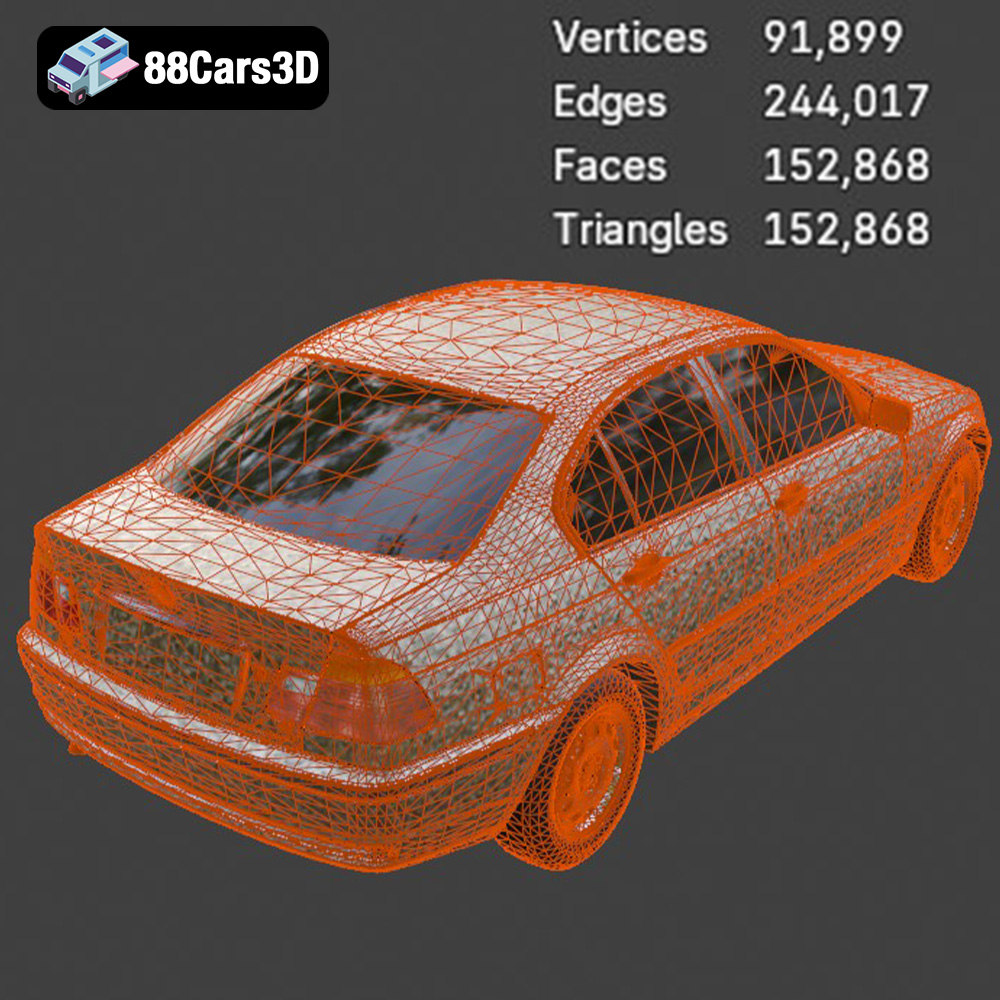
At the heart of any excellent 3D model is its topology – the arrangement of polygons (faces, edges, and vertices) that define its surface. The BMW E46 model boasts “clean, quad-dominant topology,” which is a golden standard in professional 3D art. Quad-dominant means the mesh primarily consists of four-sided polygons (quads), as opposed to triangles. Quads offer several critical advantages:
- Smooth Subdivision: Quads deform predictably when subdivided (e.g., using a TurboSmooth or Subdivision Surface modifier), allowing for easy control over mesh density and creating perfectly smooth, curved surfaces without artifacts. This is crucial for automotive surfaces where subtle reflections and pristine body lines are paramount.
- Clean Deformations: For animated components like doors, hoods, or suspension parts, good quad topology ensures smooth and natural movement without pinching or stretching.
- Easier Editing: Artists find quad meshes much easier to edit, sculpt, and modify, maintaining control over edge flow and surface continuity.
Equally vital is proper UV mapping. UVs are 2D coordinates that tell the 3D software how to project 2D textures onto the 3D surface. “Clean and optimized mesh quality” implies careful UV unwrapping. Well-executed UVs ensure:
- Accurate Texturing: Textures appear correctly stretched, distorted, or seamless, maintaining the integrity of paint, decals, and material details.
- Efficient Texture Usage: Optimal UV packing maximizes the use of texture space, leading to better visual quality with smaller file sizes and improved rendering performance.
- PBR Compatibility: Essential for physically based rendering, where various texture maps (albedo, roughness, metallic, normal) need precise alignment with the geometry.
Material Prowess: Achieving Photorealism with PBR
Modern rendering relies heavily on Physically Based Rendering (PBR) workflows. The description of the E46 model mentioning “transparent materials” for lights and options to “tune material properties for various looks” indicates a PBR-ready setup. PBR materials simulate how light interacts with surfaces in the real world, leading to highly realistic results. Key PBR principles include:
- Energy Conservation: Light reflected off a surface plus light absorbed by the surface equals the total incoming light, preventing unrealistic brightness.
- Accurate Reflection: Surfaces reflect light based on their roughness and metallic properties, yielding lifelike reflections on paint, chrome, and glass.
- Albedo, Roughness, Metallic, Normal Maps: These are standard PBR texture maps that define the base color, surface smoothness, metallicness, and fine surface details (like subtle dents or fabric weaves) respectively.
The ability to easily modify paint finishes, apply custom liveries, and adjust material properties means the model is built with a flexible PBR material system, allowing artists to achieve a vast array of photorealistic looks, from showroom-fresh metallic paint to a weathered, race-ready finish.
Hierarchical Structures and Animation Readiness
A static 3D model is one thing, but a usable, interactive 3D model is another. The E46 model’s “organized hierarchical structure with properly set pivots for easy rigging and animation” is a significant technical advantage. This means:
- Logical Grouping: Components like wheels, doors, hood, and trunk are grouped logically, making it easy to select and manipulate them.
- Correct Pivot Points: Pivot points are the axes around which objects rotate or scale. For a car, the wheels should pivot at their center, doors at their hinges, and the hood at its front pivot. Correctly set pivots are essential for realistic animation and interaction.
- Animation Potential: With separated components and correct pivots, the model is “animation-ready.” This is critical for creating cinematic sequences, interactive game mechanics (like opening doors), or dynamic simulations.
Integrating High-Quality Automotive Models into Diverse Workflows
The versatility of a well-crafted 3D car model like the BMW E46 is truly exceptional, making it an indispensable asset across numerous digital industries. Its meticulous design and robust technical foundation allow it to seamlessly integrate into demanding professional pipelines, from high-fidelity visualizations to real-time interactive experiences.
Elevating Visuals: Automotive Rendering and Visualization
Automotive rendering is an art form that blends technical mastery with creative vision. High-quality 3D car models are the bedrock of this discipline. For advertising agencies, product designers, and architectural visualization studios, the BMW 3 Series E46 3D Model is a powerful tool. Its authentic body panels, detailed lighting components, and realistic materials enable the creation of stunning studio renders, dynamic driving shots, and even historically accurate scene recreations. Artists can utilize software like 3ds Max with renderers like V-Ray or Corona, or Blender’s Cycles/Eevee, to:
- Showcase Product Features: Highlight specific design elements, interior details, or material finishes with precision.
- Develop Marketing Assets: Generate hero shots, promotional videos, and interactive configurators that resonate with potential customers.
- Explore Design Concepts: Integrate the E46 into various environments – urban landscapes, scenic routes, or futuristic settings – to gauge its aesthetic impact.
The ability to “adapt lighting setups to achieve diverse moods and environments” further empowers artists to craft narratives around the vehicle, whether it’s bathed in the warm glow of a sunset or the stark coolness of a professional studio. The clean topology ensures that even extreme close-ups reveal pristine surfaces without artifacts.
Driving Immersion: Game Development and Real-Time Environments
In the realm of game development, 3D car models are central to creating immersive experiences. From realistic racing simulators to open-world adventures, the demand for high-performance, visually rich vehicle assets is constant. The E46 model, optimized for “efficient rendering and real-time performance,” is perfectly suited for game engines like Unreal Engine and Unity. Its .fbx and .unreal file formats streamline integration, providing developers with a ready-to-use asset.
- Racing Simulations: Implement the E46 as a playable car, leveraging its real-world scale and accurate component separation for realistic physics and damage models.
- Open-World Games: Populate virtual cities or landscapes with this iconic vehicle, enhancing environmental realism and player interaction.
- Interactive Experiences: Utilize its hierarchical structure and set pivots to create in-game mechanics for opening doors, hoods, or engaging with the interior.
The “basic representation of the engine bay and undercarriage components, optimized for detail where visible,” is a smart compromise for game assets, ensuring that performance-critical areas remain lean while details visible during gameplay are present. The included .unreal project setup dramatically cuts down on import and configuration time, allowing developers to focus on gameplay.
The Future is Now: AR/VR and Simulation
Augmented Reality (AR), Virtual Reality (VR), and professional simulation platforms are rapidly expanding fields where high-quality 3D assets are paramount. For creating virtual showrooms, interactive training modules, or advanced driving simulators, the E46 model is an excellent candidate. The .glb format, optimized for AR/VR and web-based display, provides a streamlined path for deployment on various platforms.
- Virtual Showrooms: Allow potential buyers to explore the E46 in a fully immersive 3D environment, examine its exterior and interior from any angle, and even customize its paint and materials in real-time.
- Training & Education: Utilize the model in driving simulators for driver training or in technical education programs to illustrate vehicle mechanics and components.
- Augmented Reality Apps: Project the E46 into the real world via a smartphone or tablet, allowing users to “park” the car in their driveway or place it on their desk, creating engaging and interactive marketing experiences.
The model’s “clean and optimized mesh quality” ensures smooth frame rates and a comfortable experience in AR/VR, where performance is critical to user comfort and immersion.
Real-World Impact: Case Studies with the BMW 3 Series E46 3D Model
To truly appreciate the value of a meticulously crafted 3D car model, it’s helpful to envision its application in various real-world professional scenarios. The BMW 3 Series E46 3D Model from 88cars3d.com provides a solid foundation for these diverse use cases, leveraging its detailed design and technical flexibility.
Cinematic Automotive Advertising Campaigns
Imagine a high-end automotive advertisement for a classic car show or a retro-themed driving game. A creative director wants to feature the iconic BMW E46 gracefully navigating a winding mountain road, bathed in the soft glow of a setting sun. Instead of sourcing a physical car, transporting it, and arranging costly location shoots, a studio can utilize this 3D model.
Using 3ds Max and a powerful renderer like V-Ray, artists can:
- Virtual Photography: Position virtual cameras, adjust depth of field, and apply cinematic post-processing effects to capture breathtaking shots without physical constraints.
- Dynamic Animation: Animate the car driving, doors opening, or wheels spinning with perfect precision, thanks to the model’s organized hierarchy and set pivots.
- Environment Integration: Seamlessly place the E46 into a photorealistic 3D environment, adjusting lighting to match the mood and time of day, all from the comfort of their studio.
The ability to “easily modify paint finishes” means they can experiment with different metallic or matte looks, and “apply custom liveries” for special editions, delivering a highly polished final product far more efficiently than traditional methods.
Enhancing Open-World Racing Games
Consider a new open-world racing game aiming for both realism and a diverse vehicle roster. Developers want to include beloved classics, and the BMW E46 is a top contender. Integrating the BMW 3 Series E46 3D Model into their Unreal Engine project is made straightforward with the provided .fbx and .unreal formats.
- Physics Implementation: The real-world scale and clean geometry allow for accurate collision detection and vehicle physics, contributing to a believable driving experience.
- Visual Fidelity in Real-Time: The optimized mesh and PBR materials ensure the E46 looks stunning even at high speeds and under varying in-game lighting conditions.
- Interactive Elements: Game designers can trigger animations for doors or the hood when the player interacts with the car, leveraging the separated components and correctly set pivots.
The “basic representation of the engine bay and undercarriage components” strikes the perfect balance for game assets, providing detail where players might look during a crash or customization screen, without bogging down the game’s performance with unnecessary polygons.
Virtual Showrooms and Interactive Experiences
An automotive dealership group wants to innovate their sales process by offering a virtual showroom where customers can explore classic models that aren’t physically on site. The BMW 3 Series E46 3D Model is crucial here. Leveraging the .glb format, they can build a web-based or VR application.
- Immersive Exploration: Customers can virtually walk around the E46, open its doors, and inspect the interior details as if they were standing next to the real car.
- Real-time Customization: The model’s flexibility allows users to “easily modify paint finishes” and “tune material properties,” letting them visualize their preferred color or wheel options instantly.
- Augmented Reality Integration: An AR app could allow customers to project the E46 into their garage or driveway, seeing how it looks in their own environment before making a purchase decision.
This provides an engaging, interactive, and personalized experience that enhances customer engagement and bridges the gap between digital presentation and real-world interest.
Optimization and Customization: Tailoring Your Digital Automotive Asset
The true power of a professional 3D asset extends beyond its initial visual appeal; it lies in its adaptability and performance. The BMW 3 Series E46 3D Model is designed with both optimization and customization in mind, ensuring it remains a versatile and valuable asset for any project.
Balancing Detail and Performance
In 3D production, there’s often a trade-off between visual detail and computational performance. High-fidelity models, while stunning for cinematic renders, can be too heavy for real-time applications like games or AR/VR. The E46 model’s “clean and optimized mesh quality” speaks to this balance. It means the model is sufficiently detailed for close-ups and high-resolution rendering, yet its topology is streamlined to prevent unnecessary polygon counts that would burden game engines.
- Level of Detail (LOD) Strategy: While not explicitly mentioned, a truly optimized asset often implies the potential for LODs. Lower poly versions can be automatically generated or manually created for distant objects, ensuring smooth performance without sacrificing detail up close.
- Efficient Mesh: The quad-dominant topology is inherently efficient. It ensures that polygons are used effectively to define surfaces, minimizing wasted geometry that doesn’t contribute to visual quality.
- PBR Material Efficiency: Optimized PBR materials use textures effectively, reducing the number of draw calls and computational burden on the GPU, vital for real-time rendering.
This balance allows the same base model to serve multiple purposes, from a hero asset in a cinematic to a background vehicle in a large-scale simulation.
Unleashing Creative Freedom Through Customization
No two projects are identical, and the ability to customize a 3D model is paramount for creative flexibility. The BMW 3 Series E46 3D Model provides extensive customization options, giving artists and developers full control over its appearance and behavior:
- Paint and Liveries: “Easily modify paint finishes, apply custom liveries, and adjust graphic details.” This means changing the car’s color, adding racing stripes, logos, or even rust and wear effects is straightforward. PBR texture maps can be swapped or modified to reflect any desired aesthetic.
- Material Properties: “Tune material properties for various looks, including metallic paint, chrome accents, rubber tires, and interior fabrics.” This allows fine-tuning the reflectivity, roughness, and color of every surface, achieving anything from a showroom shine to a gritty, street-worn appearance.
- Lighting and Environment: “Adapt lighting setups to achieve diverse moods and environments within your scenes.” The model’s robust material system will react realistically to any lighting scenario, from bright sunlight to moody indoor scenes, allowing for versatile storytelling.
The included .blend and .max files are particularly valuable here, providing full editability within their native software environments, allowing for deep modifications beyond simple material tweaks.
Future-Proofing Your Investment
Investing in a high-quality 3D asset like the BMW E46 model is an investment in your project’s future. Its adherence to industry best practices in modeling, texturing, and organization ensures its longevity and compatibility. As software evolves, a clean, well-structured model with standard PBR materials is far more likely to integrate seamlessly into new pipelines and rendering technologies.
The wide array of included file formats (.blend, .fbx, .obj, .glb, .stl, .ply, .unreal, .max) further future-proofs the asset by ensuring compatibility across virtually every major 3D application and use case. Whether your future project involves a cinematic, a cutting-edge game, or an innovative AR experience, this model is prepared to adapt.
Elevating Your Projects with Precision 3D Car Models
The demand for high-quality 3D car models continues to grow across industries, driven by the increasing need for photorealistic rendering, immersive game environments, and compelling AR/VR experiences. The BMW 3 Series E46, a genuine automotive legend, finds a new life and an expanded purpose in the digital realm through meticulously crafted 3D assets.
As we’ve explored, the technical foundations of such a model are as crucial as its visual accuracy. From its clean, quad-dominant topology and robust PBR materials to its organized hierarchical structure and diverse file format support, the BMW 3 Series E46 3D Model stands out as a prime example of professional-grade 3D car models. It’s an asset built not just for aesthetics, but for seamless integration into complex workflows, enabling artists and developers to achieve their creative visions with efficiency and unparalleled fidelity.
Whether you’re crafting a cinematic advertisement, building an interactive game world, developing an immersive AR/VR application, or even creating a physical replica via 3D printing, a high-quality digital representation of this iconic car provides an invaluable starting point. It saves countless hours of modeling, texturing, and optimization, allowing you to focus on the storytelling, interaction, and unique elements of your project. Explore this exceptional model and more high-quality 3D car models at 88cars3d.com, and take your digital automotive projects to the next level.
Featured 3D Model
BMW 3 Series E46 3D Model
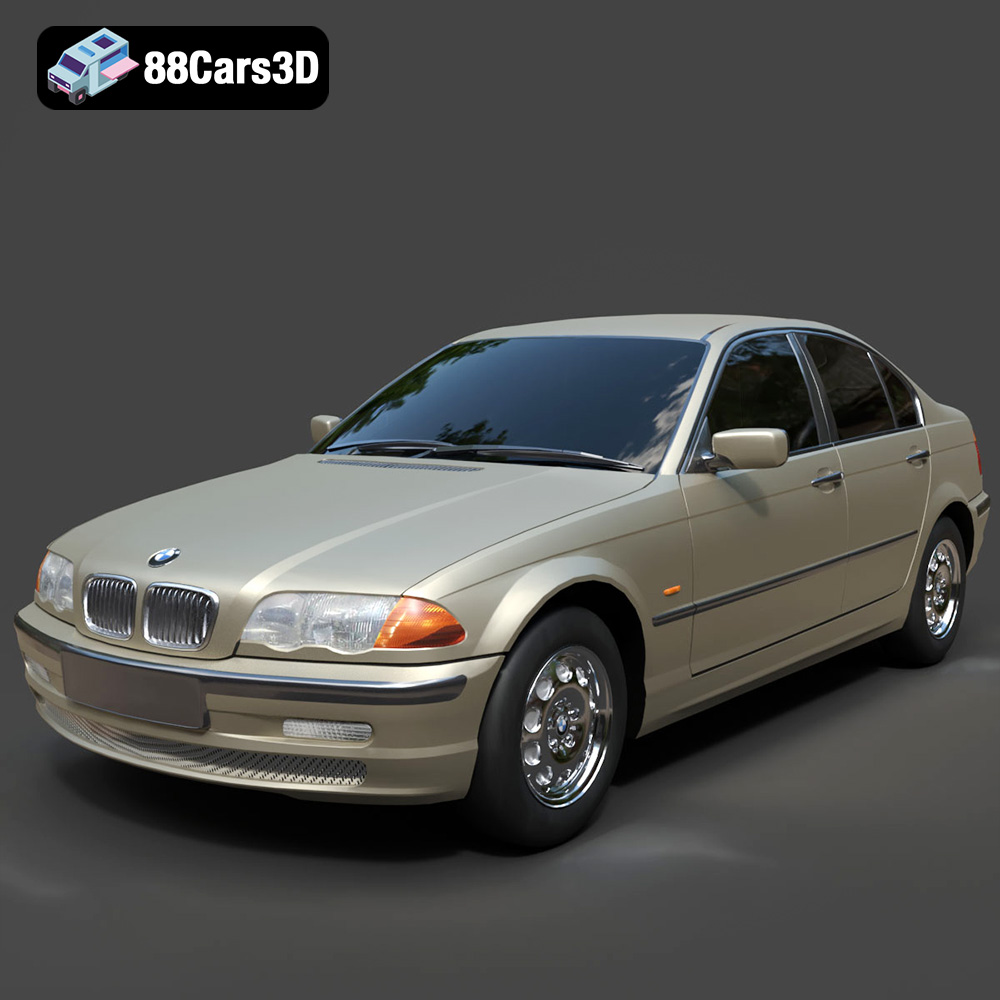
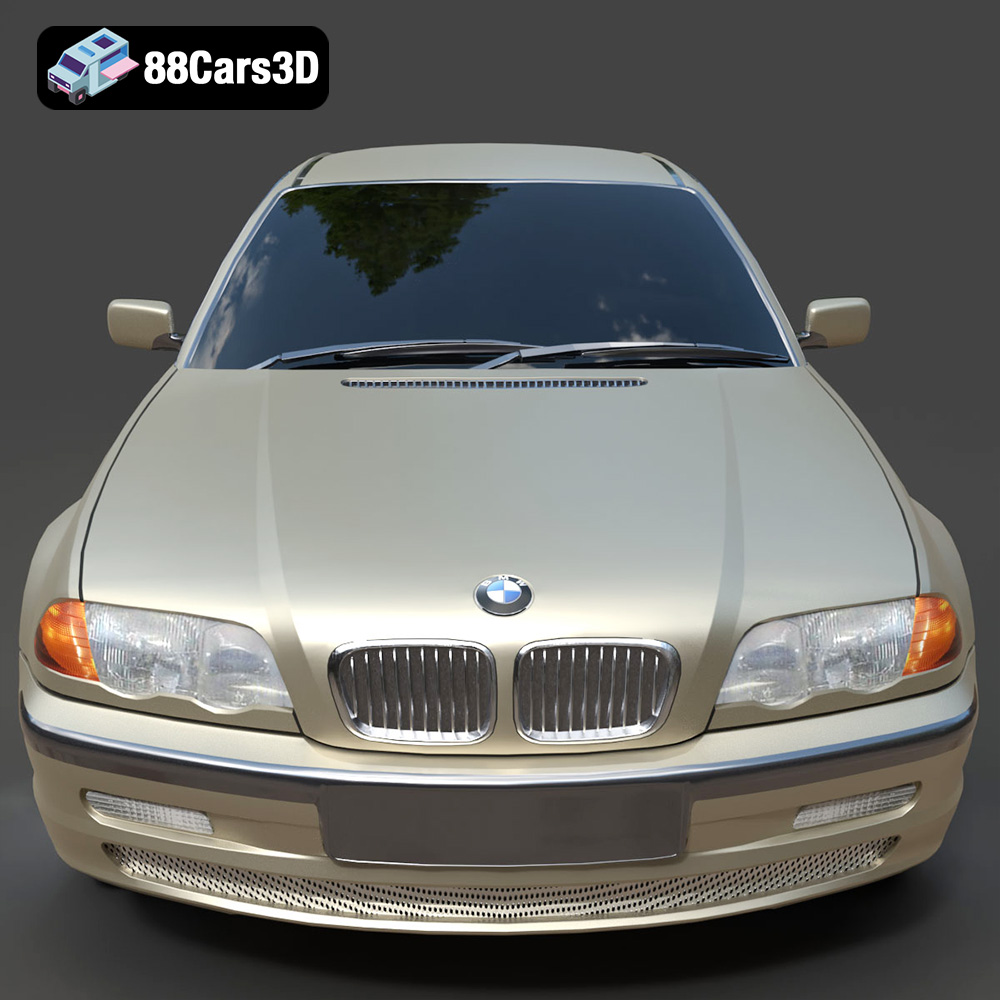
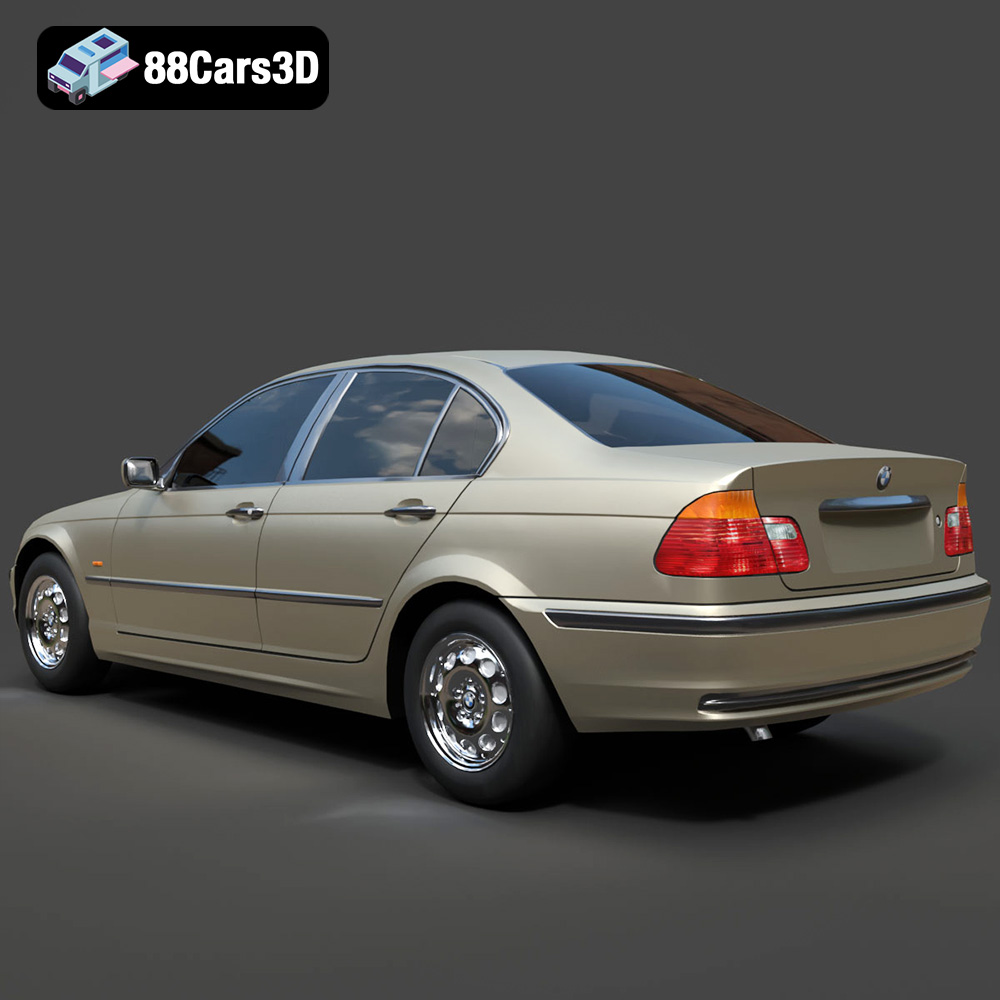
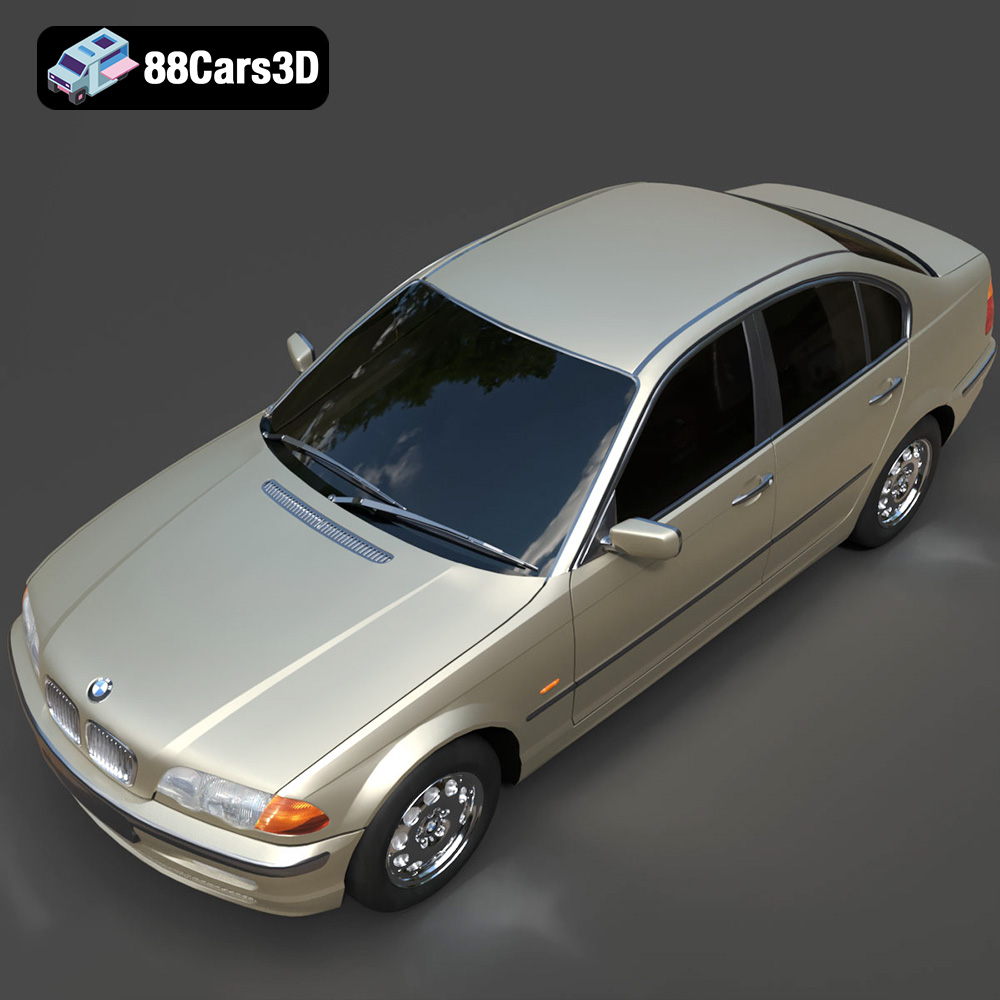
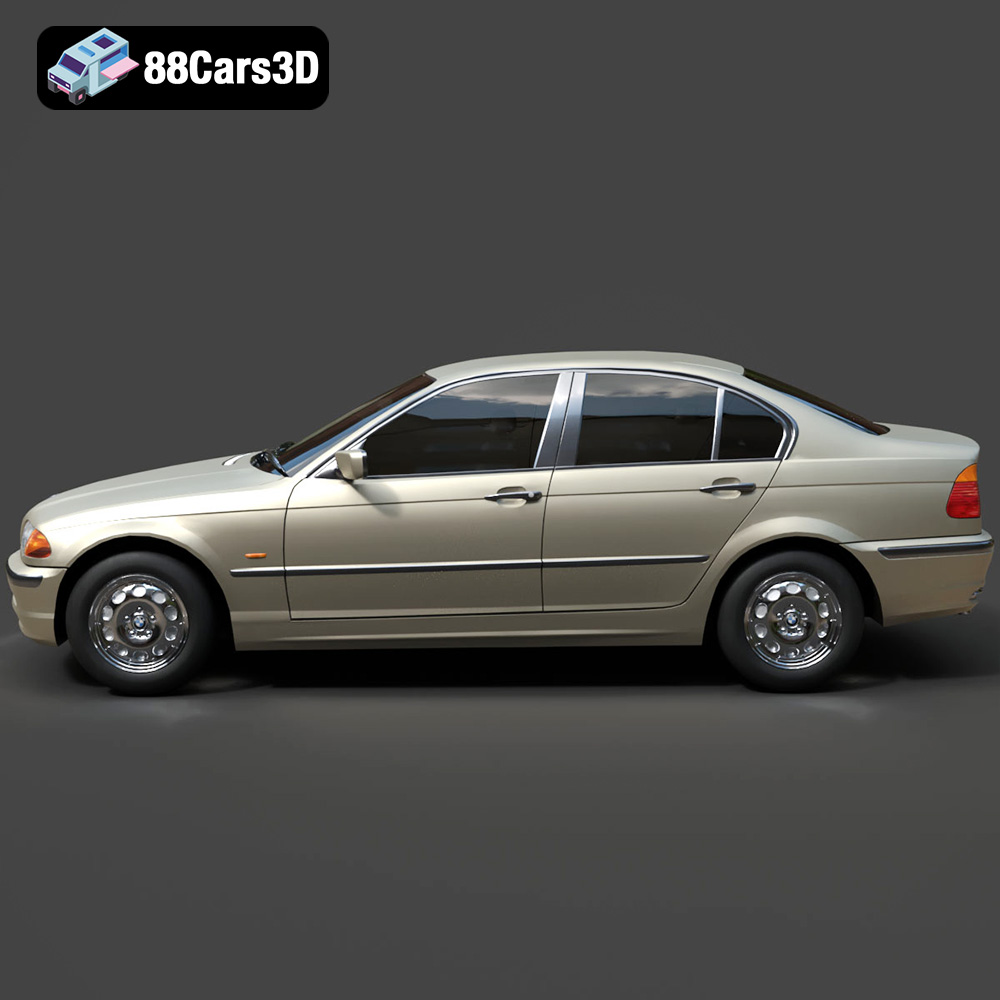
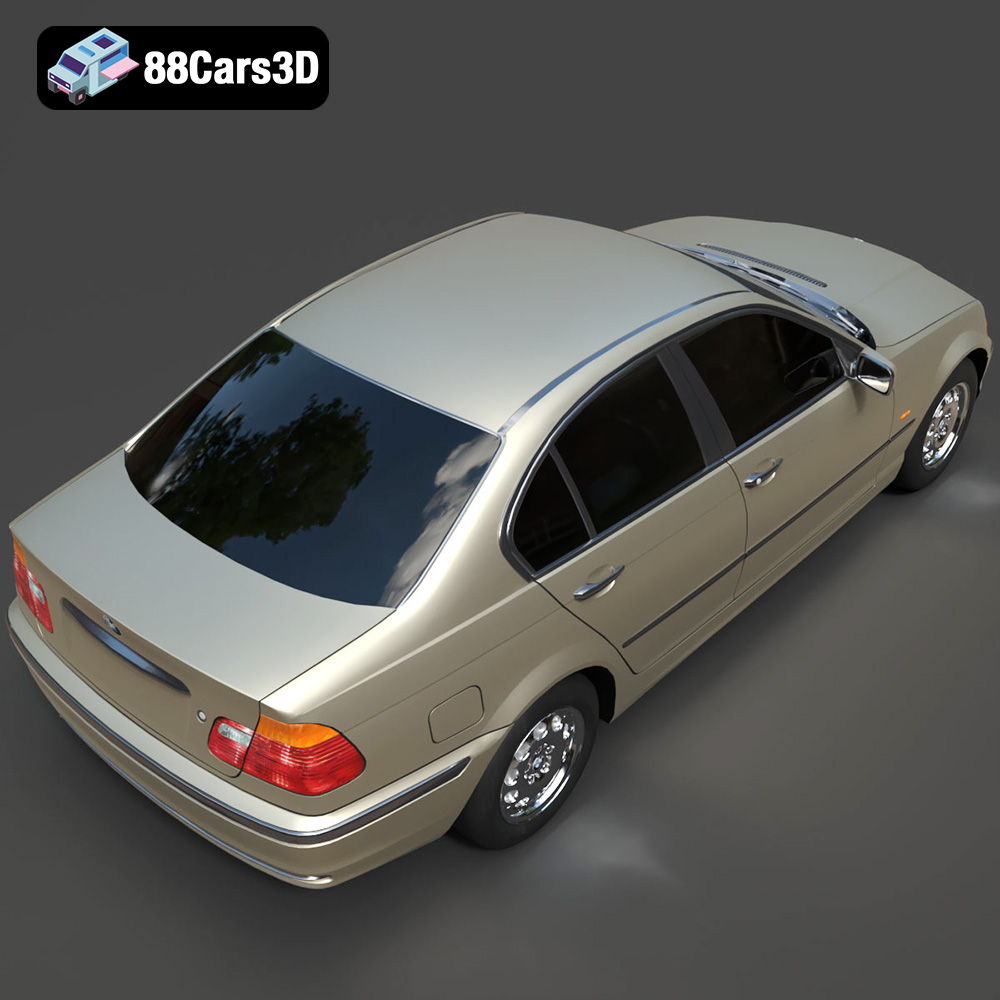
Experience the iconic German engineering with our meticulously crafted BMW 3 Series E46 3D model. This faithful digital recreation captures the timeless design and dynamic presence of the beloved E46 generation, known for its balanced performance and elegant aesthetics. Built with clean geometry and balanced detailing, this model is perfectly suited for a wide array of professional applications, including high-fidelity rendering, realistic animation sequences, detailed simulation projects, and seamless integration into game development environments.
Exterior Features:
- Authentic body panels, grille, and badging reflecting the E46’s classic design.
- Precisely modeled headlights, taillights, and turn indicators with transparent materials.
- Detailed alloy wheels, performance tires, and visible brake calipers.
- Separated components such as doors, hood, and trunk for easy animation and scene interaction.
- Accurate side mirrors, door handles, and window trims.
Interior / Mechanical Features:
- Faithfully recreated dashboard, steering wheel, and instrument cluster.
- Detailed front and rear seating, door panels, and center console with controls.
- Basic representation of the engine bay and undercarriage components, optimized for detail where visible.
- Clean and optimized mesh quality for efficient rendering and real-time performance.
Technical Advantages:
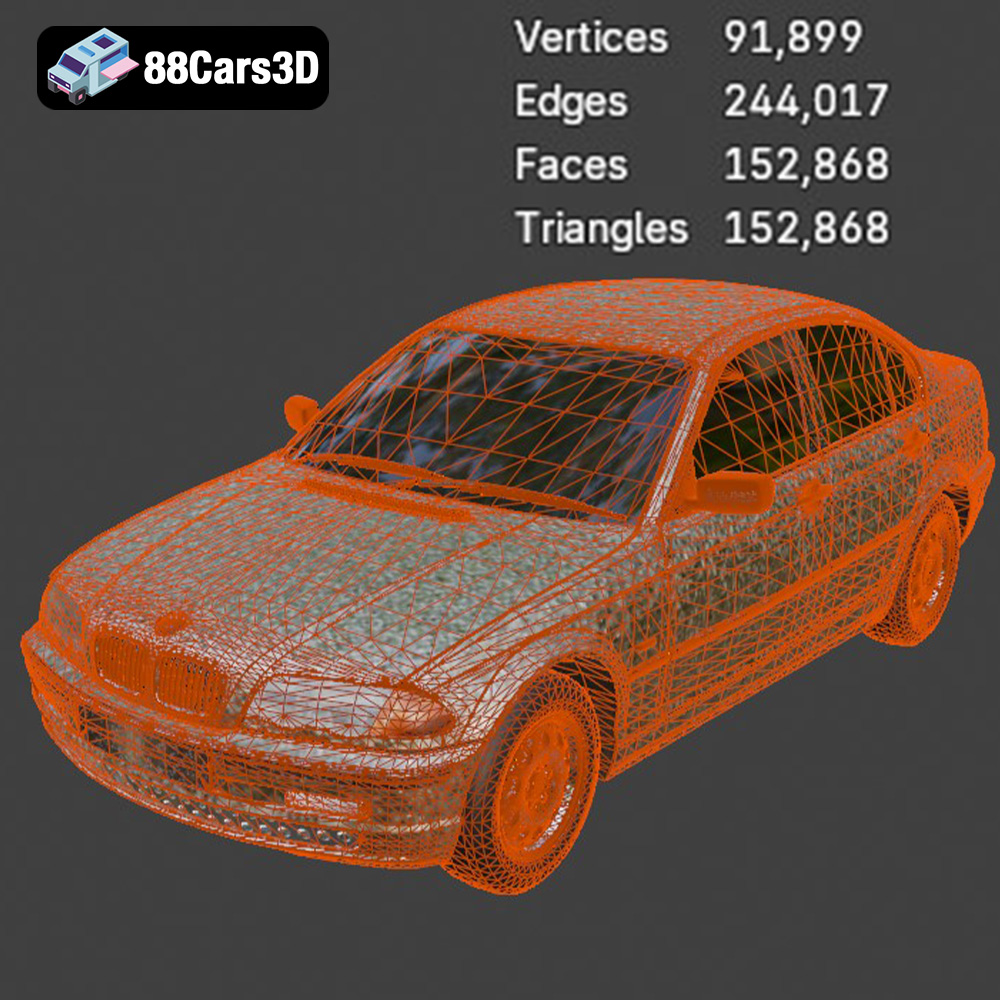
- Clean, quad-dominant topology ensuring smooth subdivisions and deformations.
- Modeled to real-world scale for accurate integration into existing scenes.
- Organized hierarchical structure with properly set pivots for easy rigging and animation.
Applications:
- Rendering & Visualization: Create stunning studio renders, automotive advertising, and cinematic scenes.
- Game Development: Ideal as a highly detailed vehicle asset for racing games, open-world environments, and interactive experiences.
- AR/VR: Develop immersive virtual showrooms, interactive training modules, and augmented reality applications.
- Simulation & Training: Utilize for driving simulators, vehicle dynamics studies, and educational platforms.
- 3D Printing: Ready for conversion to .stl for creating physical scale models.
Customization Options:
- Easily modify paint finishes, apply custom liveries, and adjust graphic details.
- Tune material properties for various looks, including metallic paint, chrome accents, rubber tires, and interior fabrics.
- Adapt lighting setups to achieve diverse moods and environments within your scenes.
Elevate your projects with this versatile and high-quality BMW 3 Series E46 3D model, designed for professional use across various digital media platforms. Its attention to detail and robust technical foundation make it an invaluable asset for any enthusiast or developer.
Included File Formats:
- .blend – Blender project with materials
- .fbx – Compatible with Unreal, Unity, and major 3D engines
- .obj – Universal format for nearly all 3D software
- .glb – Optimized for AR, VR, and web-based visualization
- .stl – Ready for 3D printing
- .ply – Mesh format for analysis and CAD workflows
- .unreal – Unreal Engine project setup
- .max – Editable 3ds Max scene for rendering and animation
Tags:
.bmw,.3series,.e46,.sedan,.car,.sportscar,.automotive,.rendering,.simulation,.gameasset,.arvr,.blend,.fbx,.obj,.glb,.stl,.ply,.unreal,.maxLamborghini Diablo SV 1995 3D Model
$10.79
Product Image Gallery
Related Tags
.3series
.arvr
.automotive
.blend
.bmw
.car
.e46
.fbx
.gameasset
.glb
.max
.obj
.ply
.rendering
.sedan
.simulation
.sportsCar
.stl
.unreal
